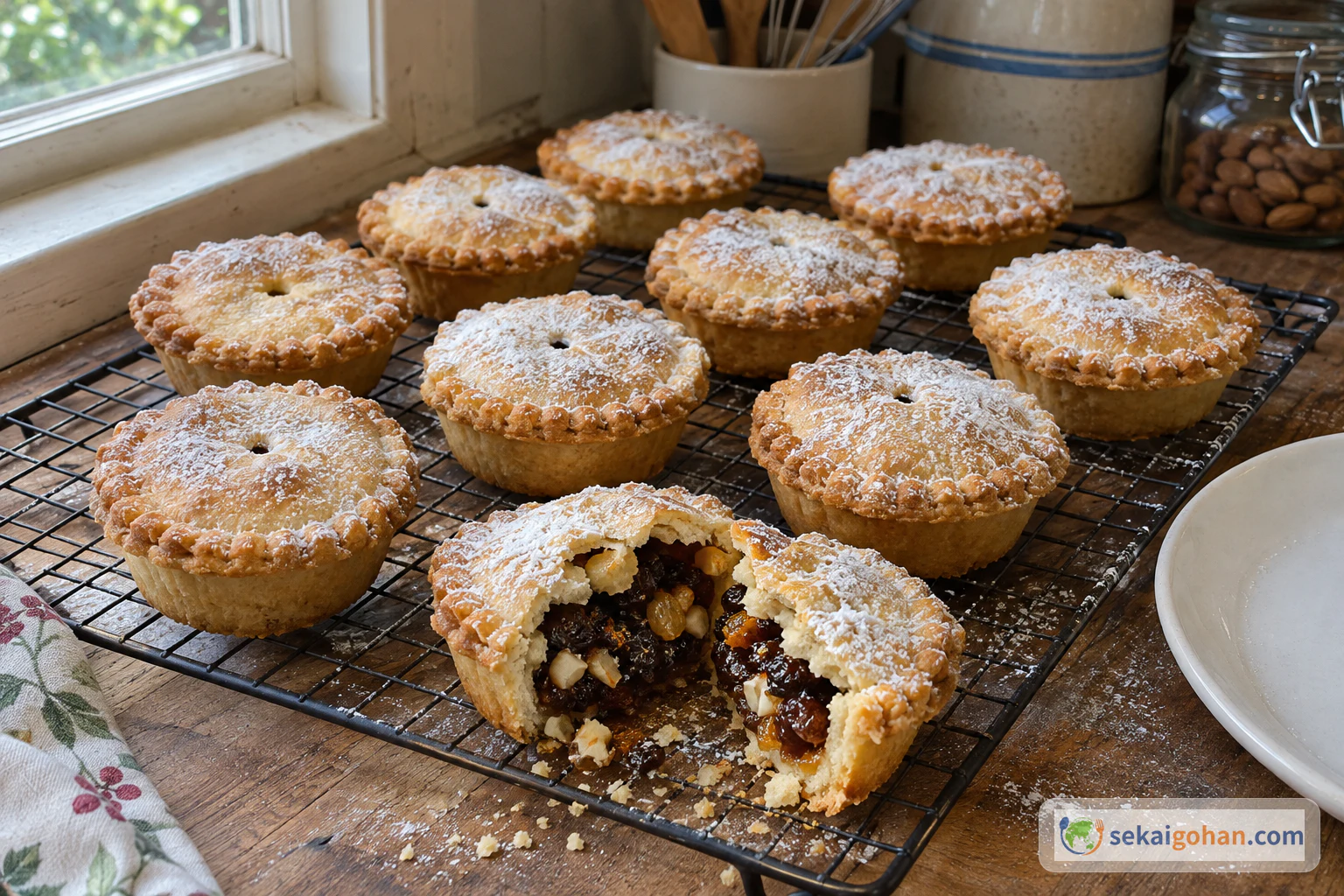
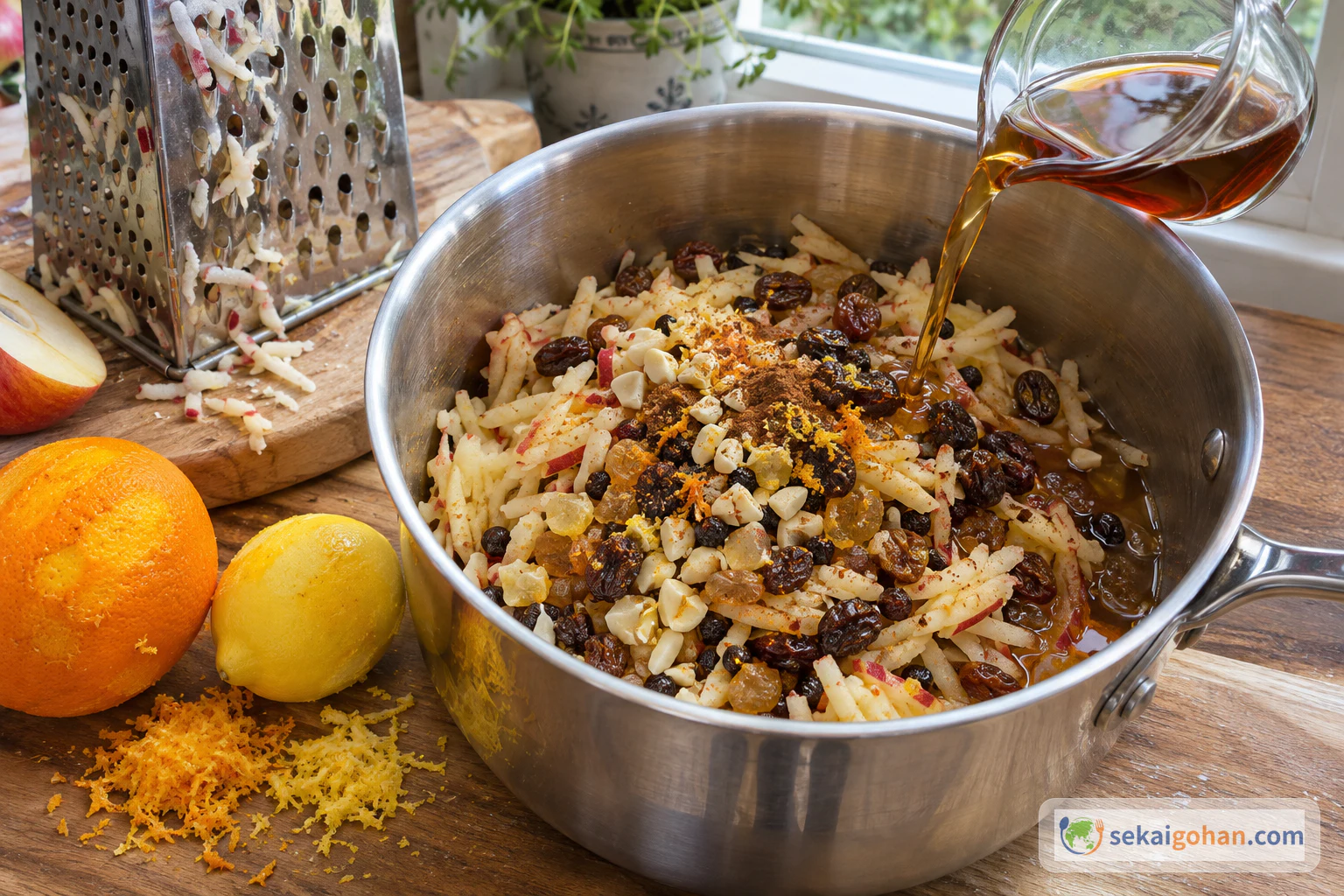
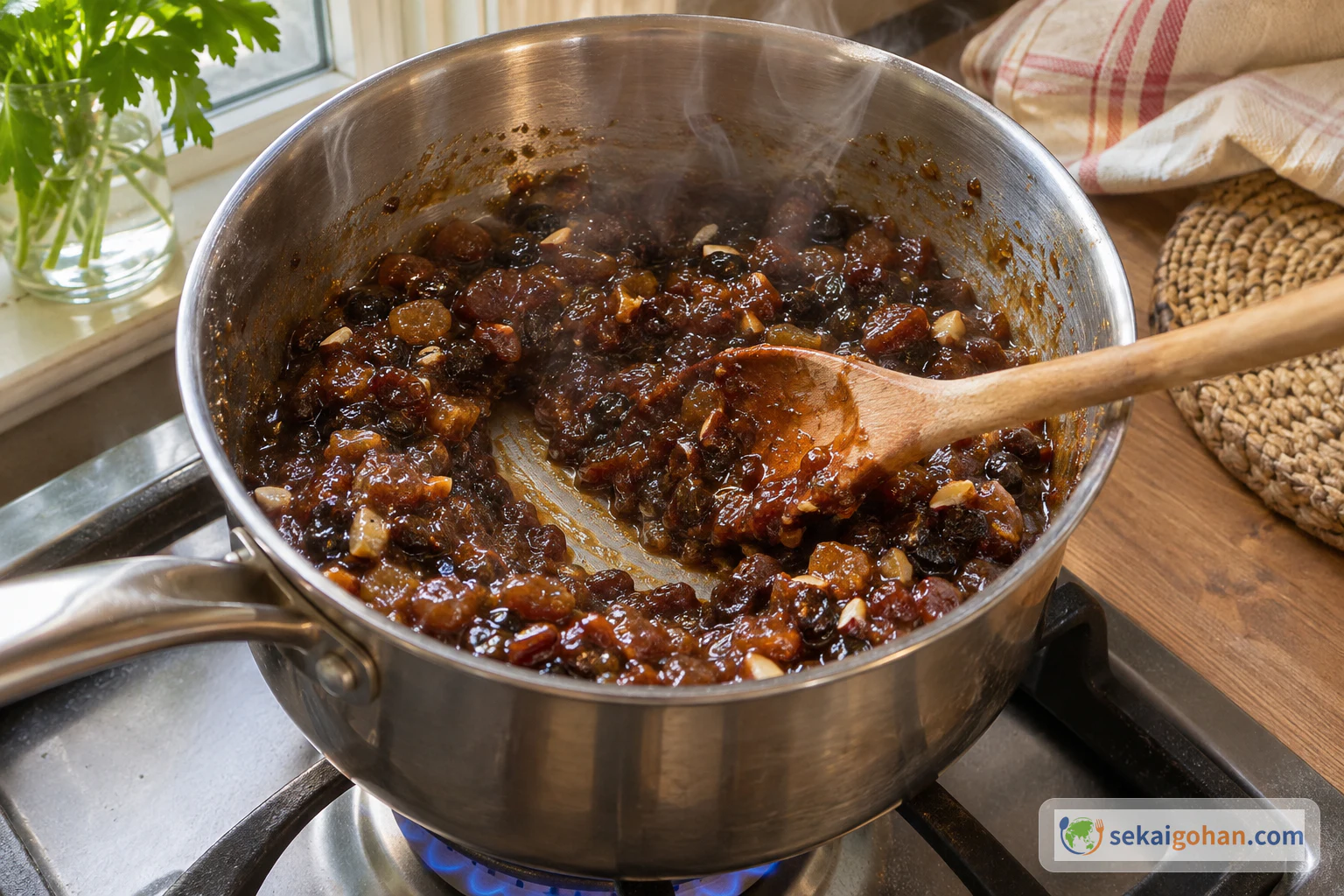
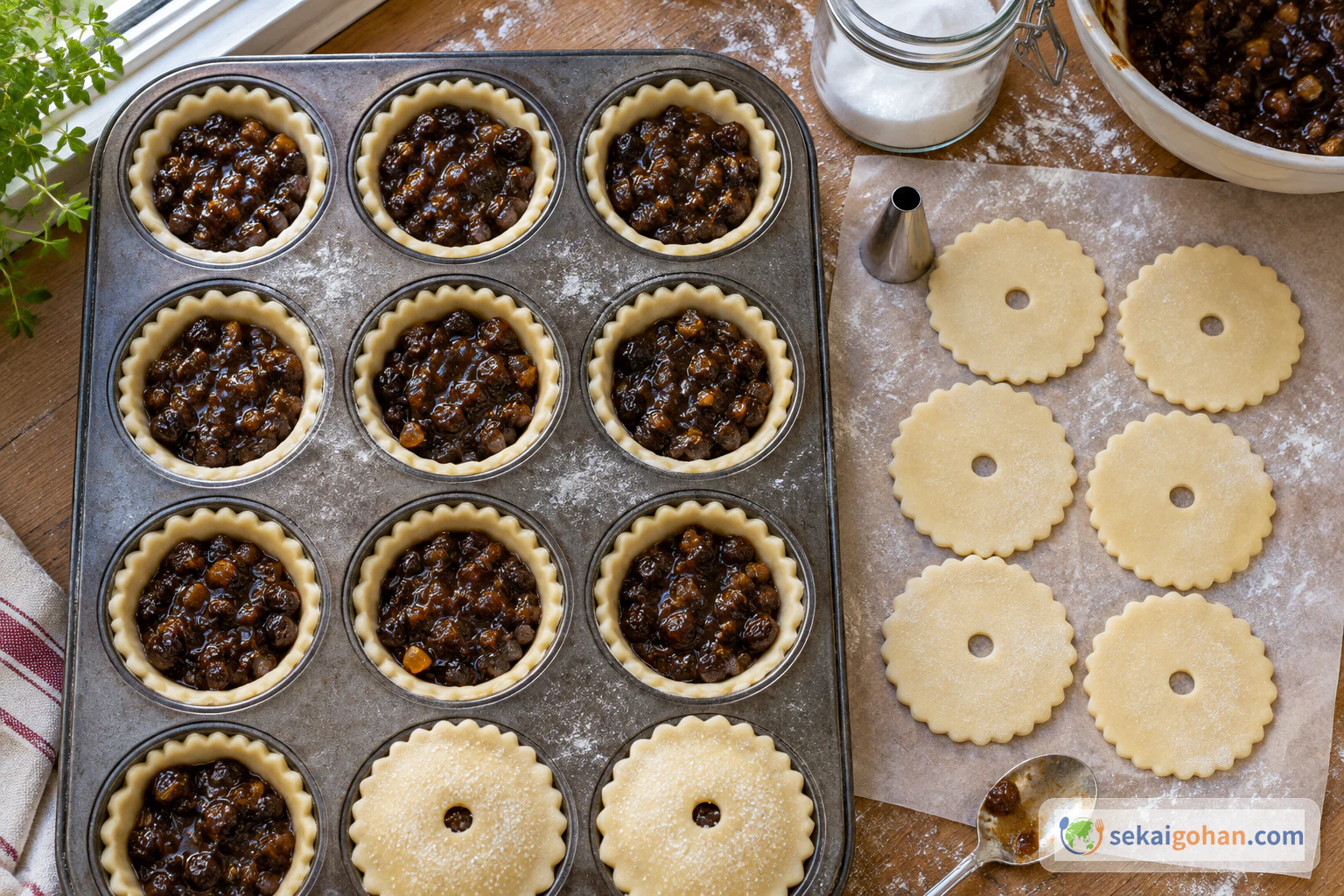
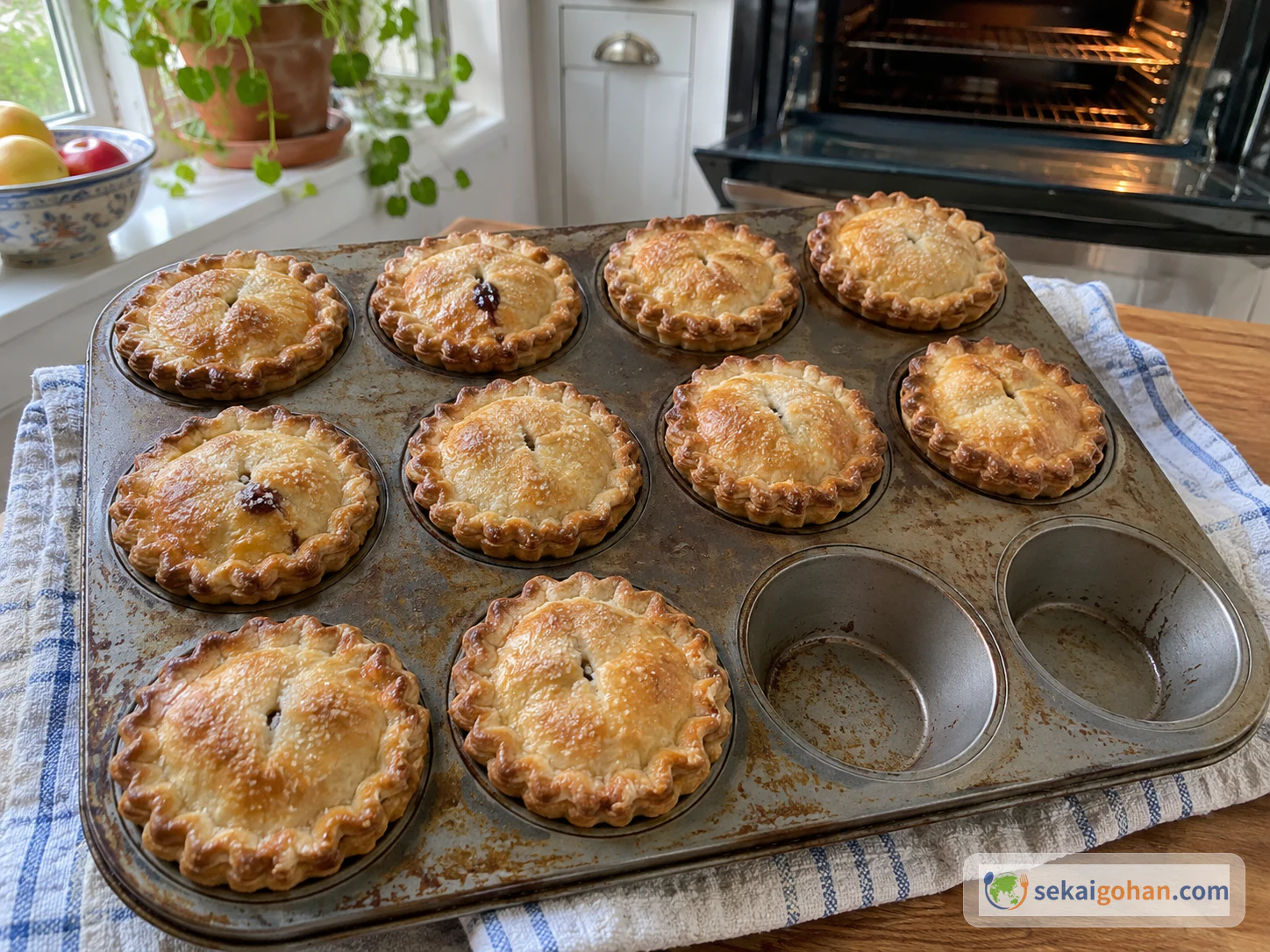
While the tins are in the oven, the kitchen fills with orange zest, clove and warm brandy. Outside, an Australian Christmas can be pushing 95°F (35°C). Fruit mince pies are small, sweet Christmas tarts. Each one is a short, crumbly case filled with grated apple, sultanas, currants, raisins, peel and almonds, simmered in brandy with citrus and spice. The fluted lid has a hole in the middle and a dusting of icing sugar on top. The filling is dark and sticky, sharp from the apple and lemon and deep from the brown sugar, and it tastes best with something cold and creamy on the side.
Sweet Fruit Under a Meaty Name
The word "mince" puts people off before they take a bite. Here it means a finely chopped mixture, called mincemeat, and modern fruit mince has no meat in it. The filling is spiced raisins, sultanas and currants steeped in brandy. The name causes confusion anyway, and an ABC Everyday column has weighed up whether these pies are any good. Part of the argument is about the weather. People ask whether a heavy baked treat belongs at a Christmas held in high summer.
From mutton pie to fruit tart
Where the pie began is not settled. It is usually traced to the 13th century, when crusaders are said to have brought back Middle Eastern recipes, and early versions are described as pies of mutton and suet. Its tie to Christmas is often dated to around the 17th century, and one story says the pies were baked in a manger shape. The meat dropped out in the Victorian era, when the filling became fruit and spice alone. In that same period roast turkey and Christmas pudding became fixtures of the holiday table.
Christmas in the heat
In the 19th century, British settlers in New Zealand brought the whole northern-hemisphere Christmas menu with them and baked it in the southern summer heat. By the 20th century, many New Zealand families and communities were having their Christmas as a picnic. Across Australia, mince pies are made as small tarts dusted with icing sugar. Some cooks make everything from scratch and others start from a jar of bought fruit mince. The pies go to the table with ice cream, cream or custard. Cooks on both sides of the Tasman like to play with the tops, using star-shaped lids, grated pastry or meringue.
In New Zealand, "mince pie" can also mean a savoury pie of beef mince, onion and stock in shortcrust. People eat it as a meal, and it is a different dish entirely. The Christmas pie in this recipe is the sweet fruit one.
One custom says that if you eat a mince pie every day from Christmas to 6 January, Twelfth Night, the year ahead will be a happy one. This batch gives you 20 pies, so you have enough for the twelve days and some to share.
Ingredients (makes 20 pies)
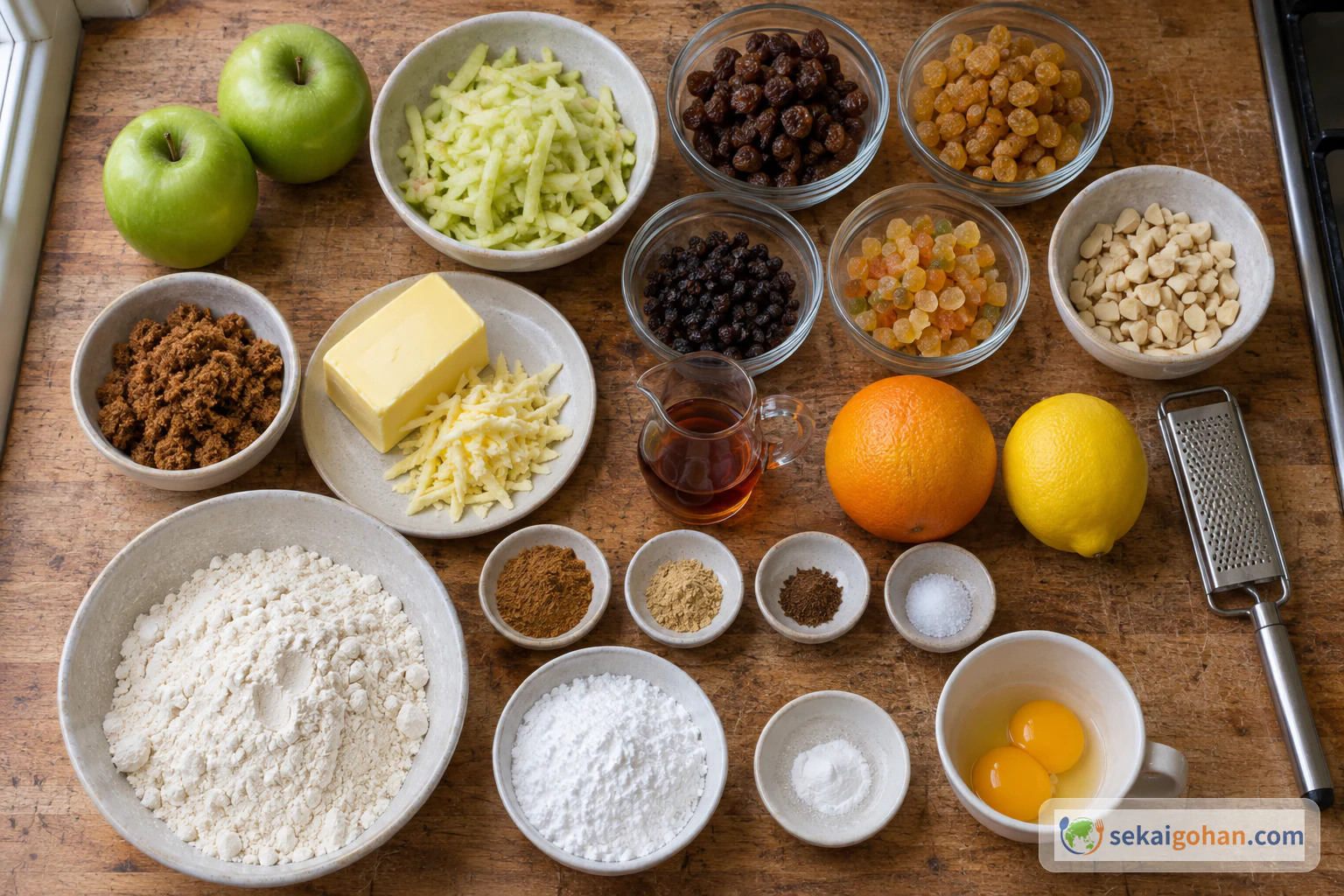
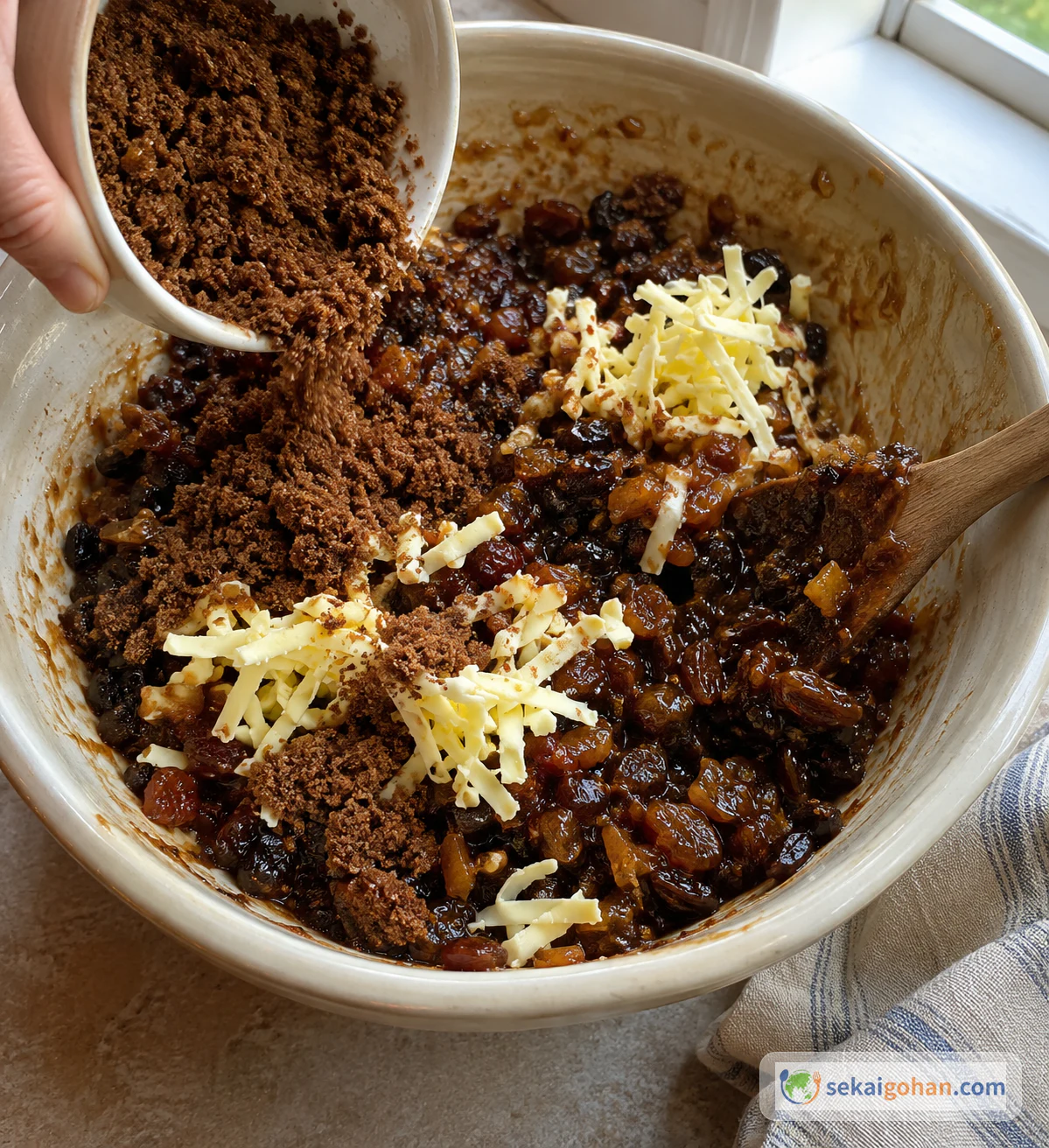
The sugar and butter for the mince stay out of the pan. The fruit cooks first in its own juice and the brandy. Only once it has cooled do the brown sugar and grated butter go in, so the butter melts into the mince instead of separating in a hot pan.
These pies contain wheat, milk, egg and almonds (tree nuts). The brandy is alcohol, and cooking does not drive all of it off. For children, during pregnancy, or for anyone who avoids alcohol, use apple cider or apple juice instead (see below).
Equipment
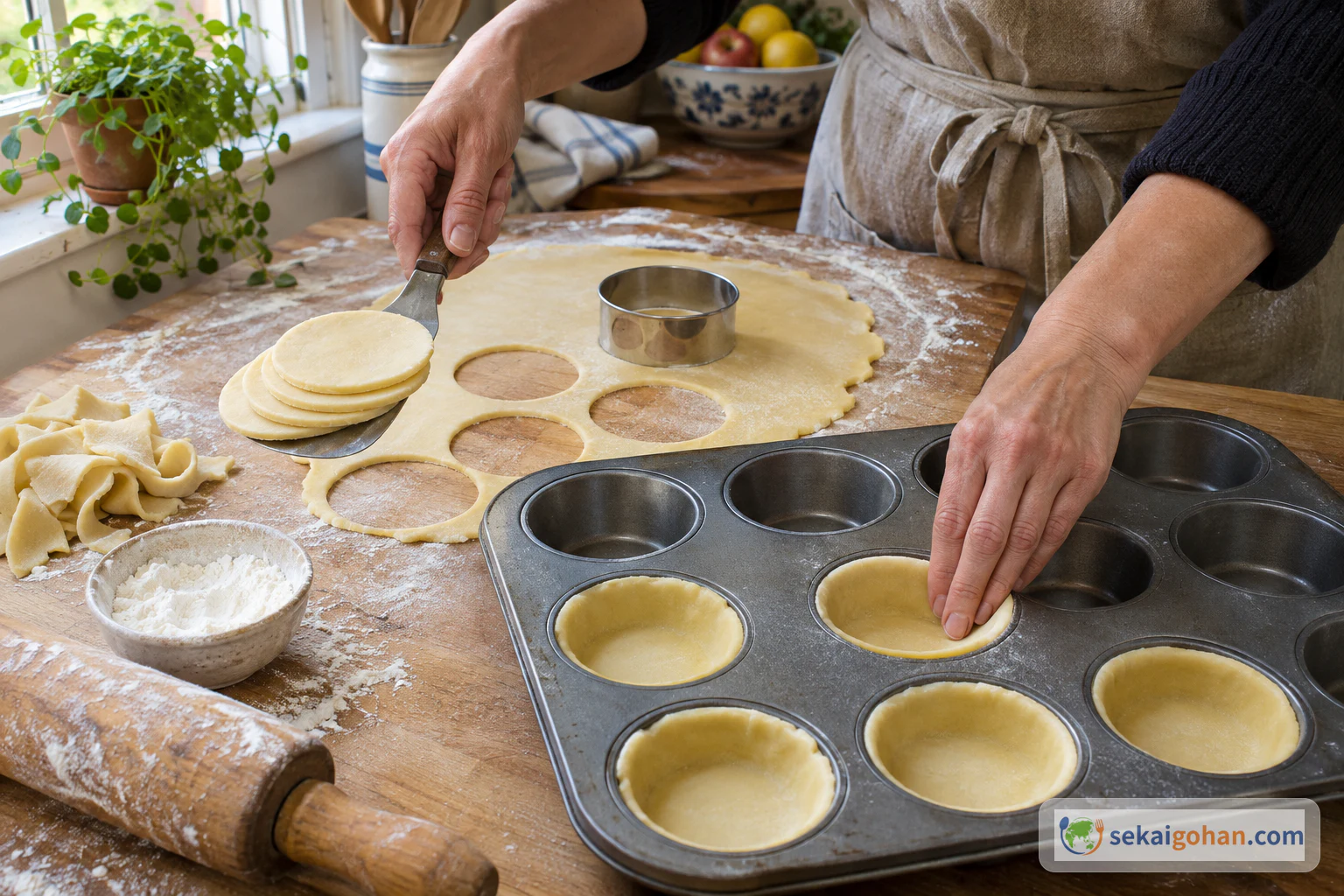
- Two 12-hole muffin tins with ⅓-cup (80 ml) holes
- 3½-inch (9 cm) plain round cutter
- 2½-inch (6.5 cm) fluted round cutter
- Piping nozzle with a ¼-inch (7 mm) opening, or a skewer
- Medium saucepan and wooden spoon
- Box grater and fine zester
- Large mixing bowls and a round-bladed knife
- Rolling pin, flour for dusting, plastic wrap
- Wire cooling rack
Choosing and Substituting
Sultanas and currants are easy to find at baking-supply shops, import grocers and online. Get both if you can. The sharp Granny Smith apple and the citrus are what stop this filling from tasting cloying, so keep those as they are and use the swaps below for the rest.
| If you can't find | Use | What changes |
|---|---|---|
| Currants | Raisins plus dried cranberries | Sharper, and the mince turns redder |
| Sultanas | Raisins | Almost the same. Large raisins give a coarser texture |
| Mixed peel | Chopped candied orange peel plus 2 tsp marmalade | Sweeter, less bitter |
| Blanched almonds | Skin-on almonds, skinned after a soak in hot water | Almost the same |
| Mixed spice | 1 tsp cinnamon, ½ tsp nutmeg, ¼ tsp allspice, ¼ tsp cloves, ¼ tsp ginger | The cinnamon comes forward more than in a bought blend |
| Dark brown sugar | Dark unrefined black sugar | A deeper, more mineral flavor and a darker filling |
| Granny Smith apples | Another tart apple, such as Jonathan | A milder apple lets the sweetness come forward |
| Unsalted butter in the mince | Salted butter | Adds a salty edge |
| Brandy | Apple cider, or apple juice for no alcohol | Juice makes the mince sweeter, and the pies keep less well |
Keep icing sugar in the pastry. Granulated sugar changes how the crust feels in the mouth. Keep the baking powder too, because it helps the cases hold their shape and release cleanly. Check your tin before you start. If the holes are not ⅓ cup (80 ml), the cutter sizes and the baking time both change.
Method
Make the fruit mince first. While it simmers and then cools, make the pastry and chill it. The quiet stretches are the cooling of the mince and the chilling of the dough, so use them to clear the bench and get out your cutters and tins. After the pies come out of the oven they need a rest in the tin and a full cool on a rack.
The filling holds heat much longer than the pastry. Use oven gloves for the tins, and let a pie cool for a while before anyone bites into it.
When It Goes Wrong
| What you see | Why | What to do |
|---|---|---|
| Pale, soft bottoms | Pastry rolled too thick, or not baked long enough | Bake 5 minutes more. Next time roll the base to ⅛ inch (3 mm) |
| Cases crack as they come out | Pastry rolled too thin, or pies moved while hot | Patch thin spots before filling. Rest the pies in the tin for the full 10 minutes |
| Pies stick to the tin | Lifted too early, or the bake was short | Wait out the rest, then check that the lids are deep golden and dry |
| Filling bubbles out of the lids | Cases overfilled | Keep the mince level below the top of the case |
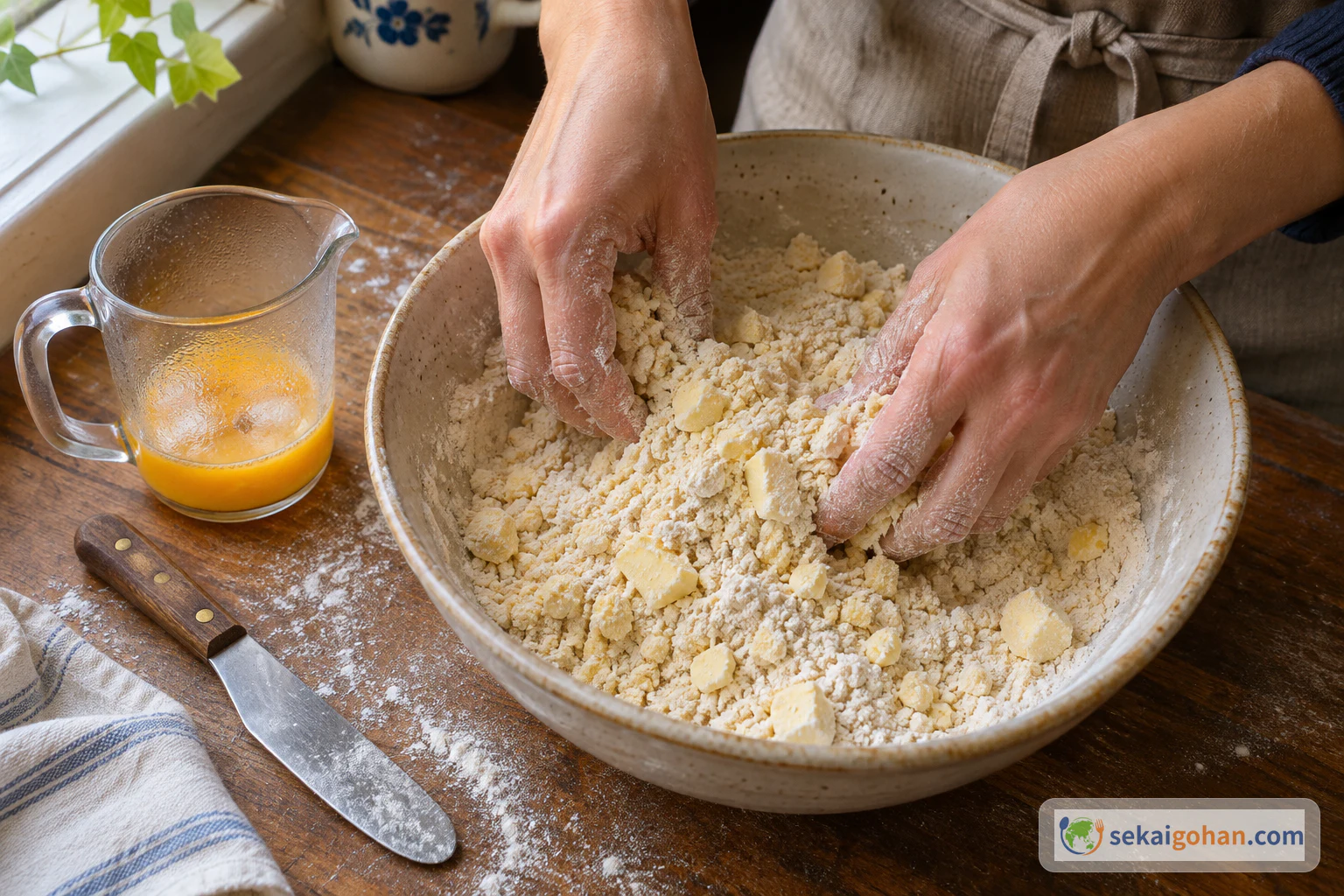
| Pastry shrinks and bakes hard | Overworked dough, or butter too warm | Knead only about 30 seconds and chill the discs before rolling |
| Mince tastes bitter | Simmered over too high a heat and caught | Keep the heat low and stir often. Add a splash of water if it starts to stick |
Serving, Variations and Storage
On the table
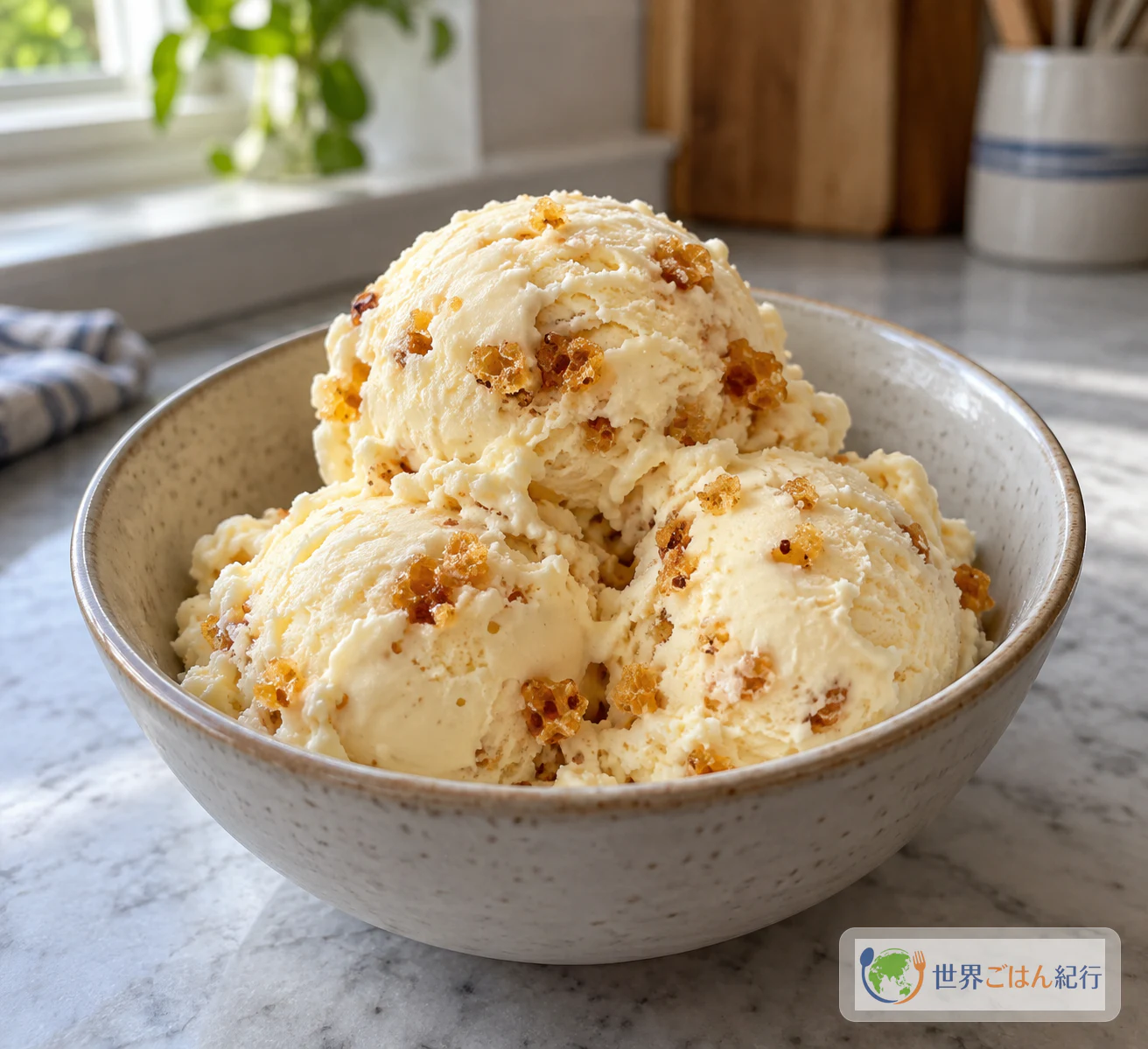
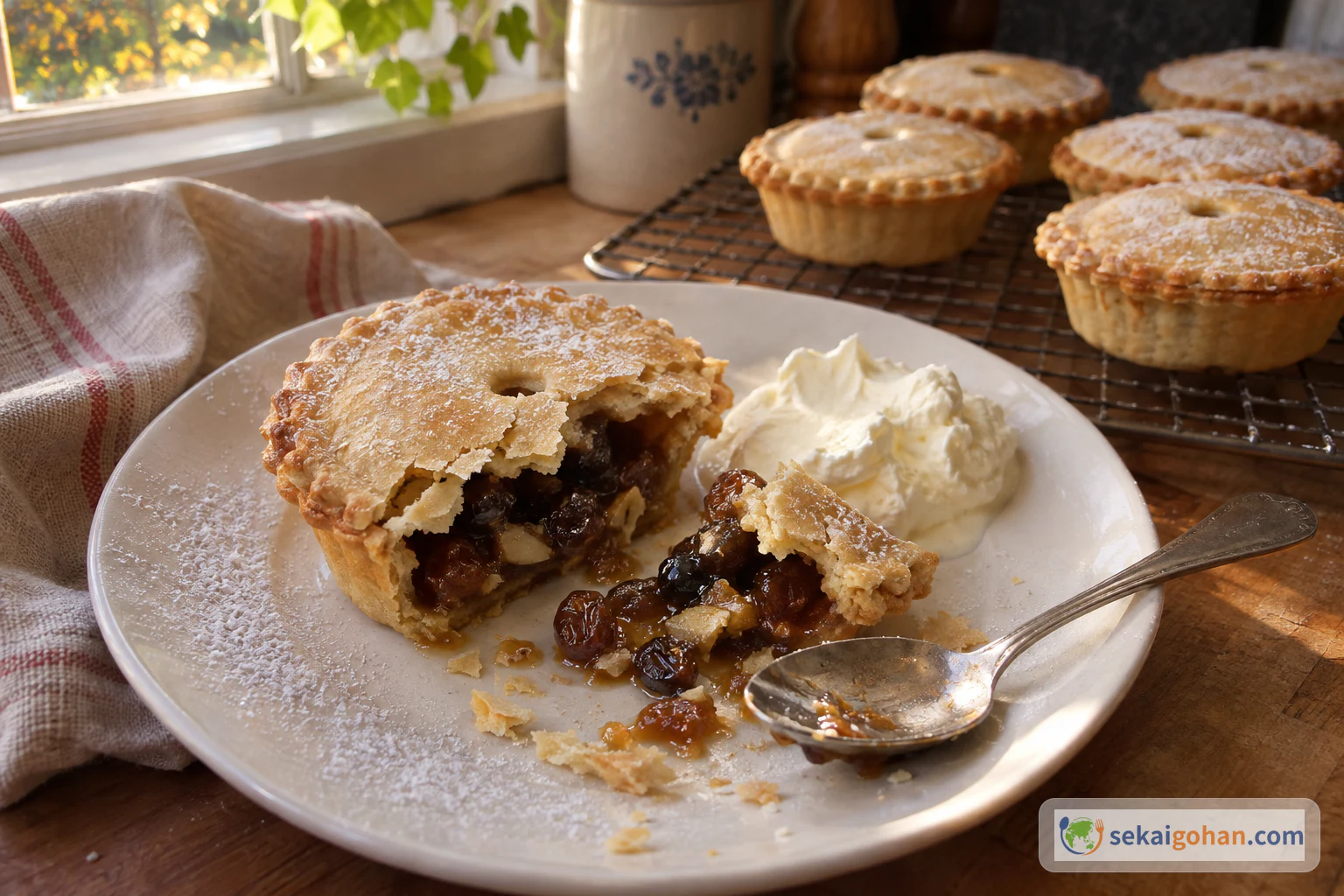
Serve the pies warm or at room temperature, dusted with icing sugar. Australians put out cream, custard or vanilla ice cream alongside, and brandy sauce is another favorite. On a 95°F (35°C) Christmas Day, a cold spoonful of ice cream or whipped cream next to a warm pie suits the weather best.
Variations
- Bought fruit mince. A popular Australian shortcut uses a 17 oz (475 g) jar of bought fruit mince mixed with 1½ oz (45 g) glacé fruit, some almonds, almond meal and a little brandy. It is quicker and sweeter. That version has its own pastry and method, so treat it as a separate recipe rather than blending it with this one.
- Star tops. In New Zealand, cooks cut small 1¼-inch (3 cm) stars to put on the pies instead of a full fluted lid. More of the dark filling shows, and the pies look more festive.
- Alcohol-free. Replace the brandy with apple juice. The mince comes out sweeter and keeps less well, so store these pies in the fridge and eat them soon.
- Minis. Cut the bases with a 3-inch (7.5 cm) cutter and fill each with 1 tsp of mince. Small pies color much sooner, so watch them closely and take them out when they reach the same deep golden brown.
Storing and reheating
Once completely cool, the pies keep in an airtight container at room temperature for 1 week. In hot, humid weather, keep the container in the fridge instead and warm the pies before eating. To reheat, put them back in the muffin tin and warm at 340°F (170°C), or 300°F (150°C) fan, for 10–15 minutes.
Frequently asked questions
I only have one 12-hole tin. Can I still make 20?
Yes. Bake them in two batches. Don't assume each batch needs exactly 35 minutes. Take each tin out when the lids are deep golden and dry and the pies slide free after their rest.
My muffin tin holes aren't ⅓ cup (80 ml). What should I change?
Choose cutters that suit your tin. The base round should line the hole partway up the sides, and the lid should sit just inside the rim. Smaller holes bake faster and larger ones take longer, so judge by color and how the pies release rather than by the clock.
Can I use less sugar in the mince?
You can. The sugar does more than sweeten, though, because it helps the pies keep. If you cut it, store the pies in the fridge and eat them soon after baking. Expect a sharper filling that leans on the apple and lemon.
What is the hole in the lid for?
It lets steam escape from the filling as it heats. Without it, steam forces its way out through the seam between lid and base, and the filling leaks. A skewer works if you don't have a nozzle, but twist it so the hole stays open.