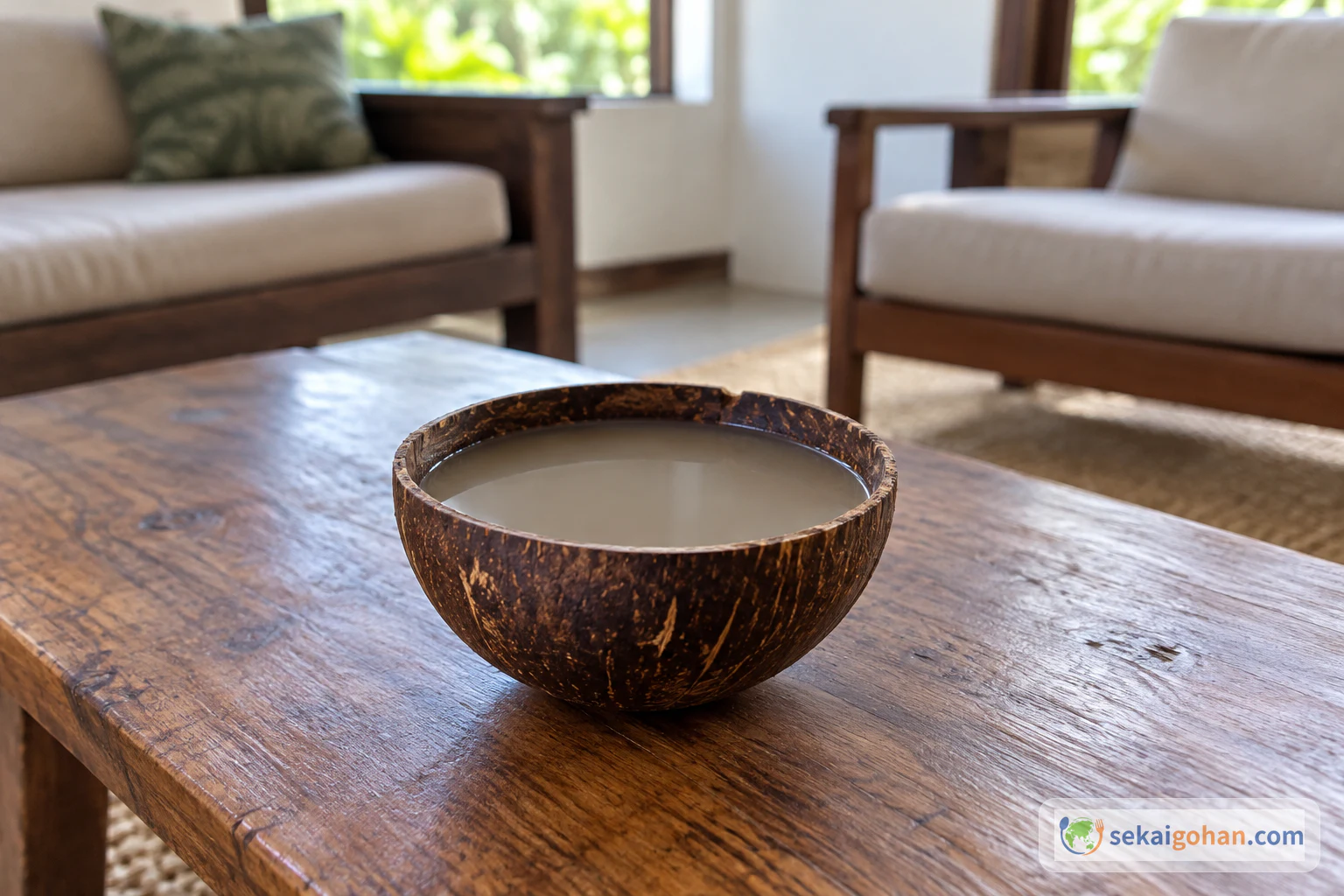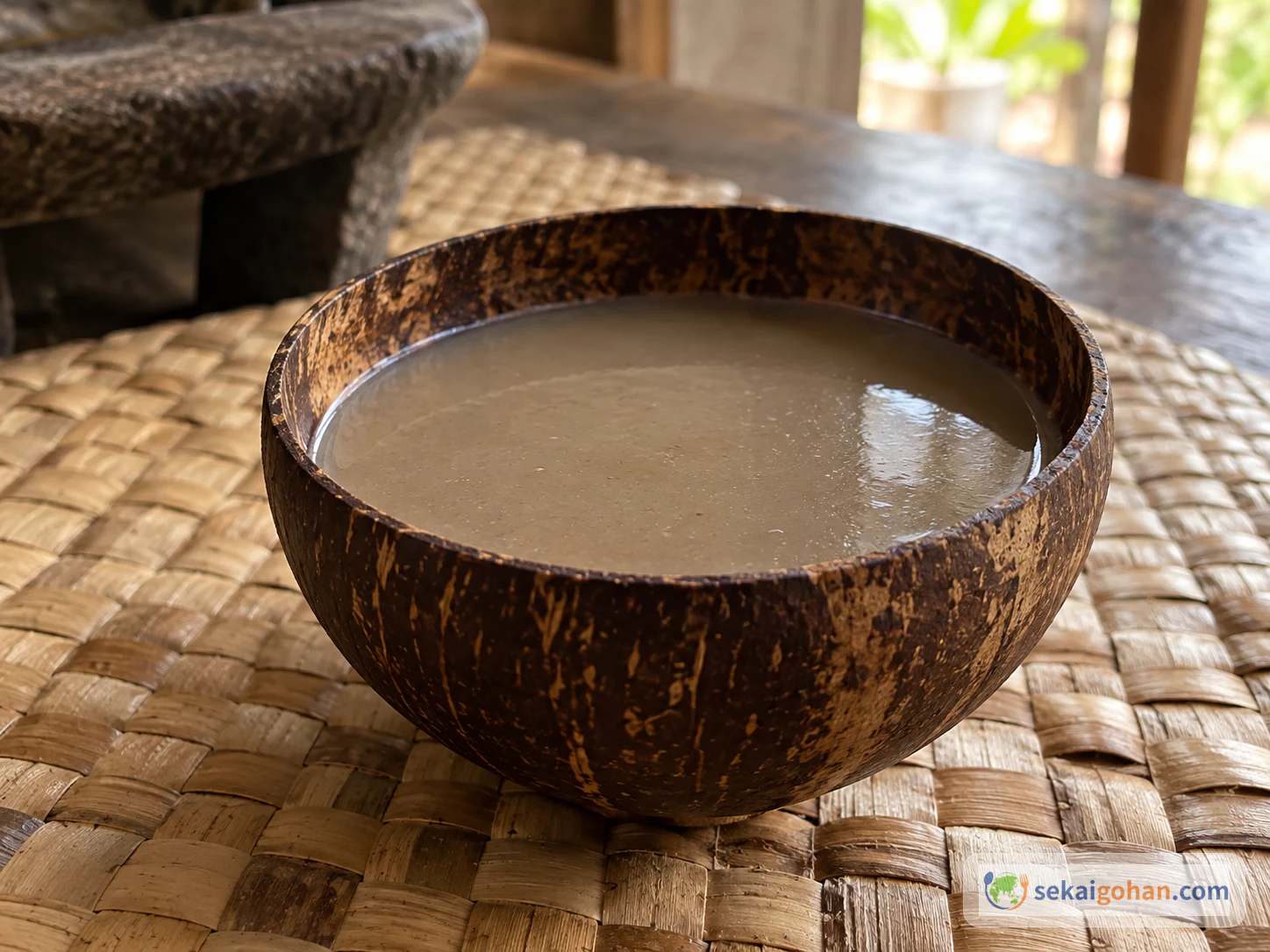
Pohnpei sakau poured into a coconut-shell cup
CuisineMicronesian (Pohnpeian)

Sakau: Pohnpei Kava Root Pounded and Wrung Through Hibiscus Bark

Sakau is Pohnpei's kava, pounded on basalt and wrung through hibiscus bark. Learn the stone-and-bark method, how to add water, and which root and bark to buy.

Cooking flow

Cooking steps

STEP 11 / 6

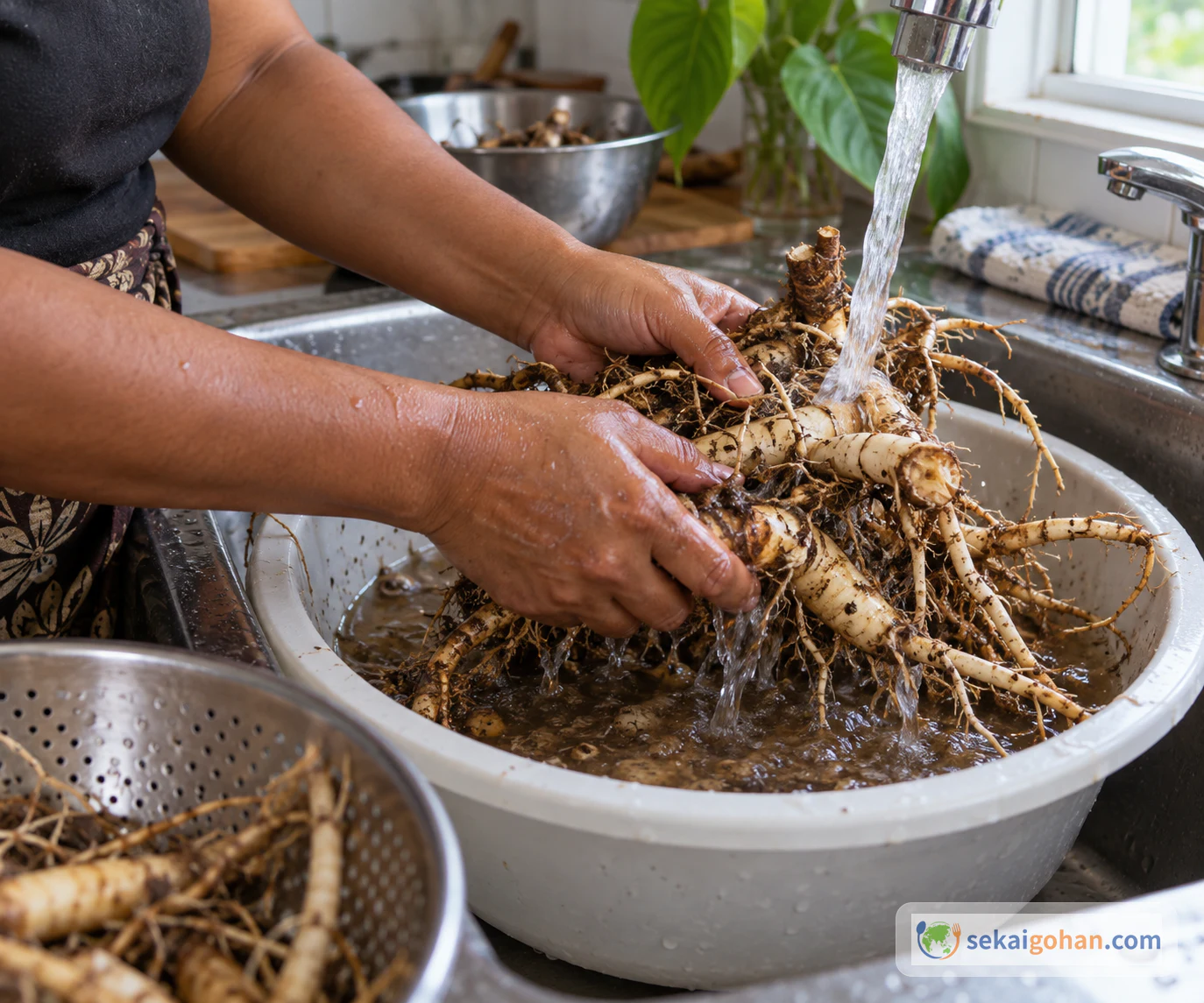
Scrub the root clean

Hands rinsing kava root under running water to remove the soil
Dark soil collects in the branch joints; keep scrubbing until the basin water stays clear

Set the root in a clean basin and scrub it with a stiff brush under drinking water. Work the bristles into the forks between the branches, where soil hides. Lift the root, look into each crevice and scrub again wherever grit remains. If you have the time, let the washed root dry in the sun for 24 hours before pounding, as sakau bars do. The root is ready when the water runs clear off it and no grit shows in the joints.

STEP 22 / 6

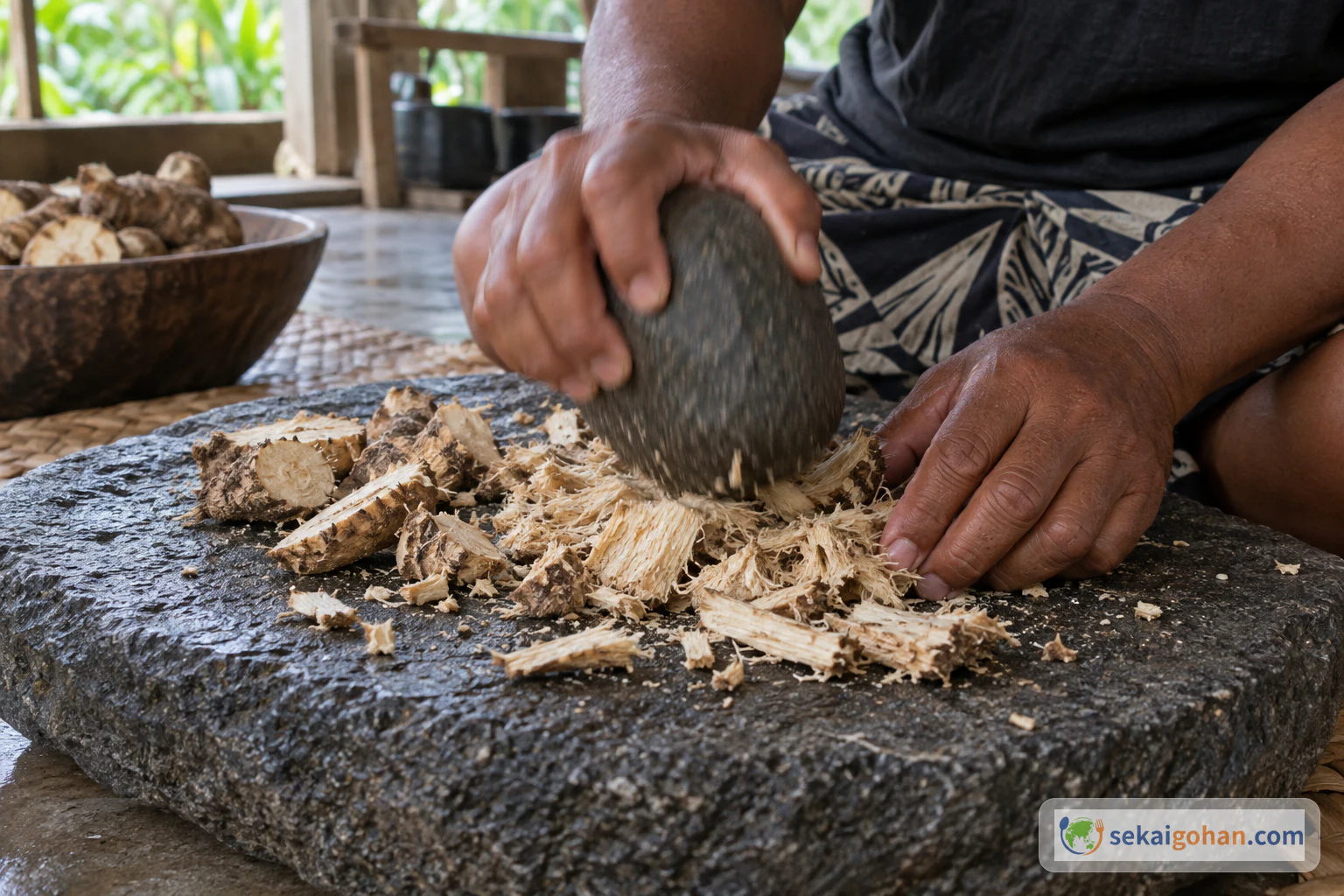
Pound the root on the flat stone

Pounding kava root with a rounded stone on a flat stone
Strike, gather and turn; the root goes from woody pieces to loose strands

Rinse both stones with drinking water and set the flat one on a steady, clean surface. Lay the root on it and strike with the rounded stone, working across the pile. Gather the pieces back to the middle and turn them so every part gets pounded. Keep going until the root has broken into coarse, stringy fibres with no hard chunks left.

STEP 33 / 6

Add water and knead

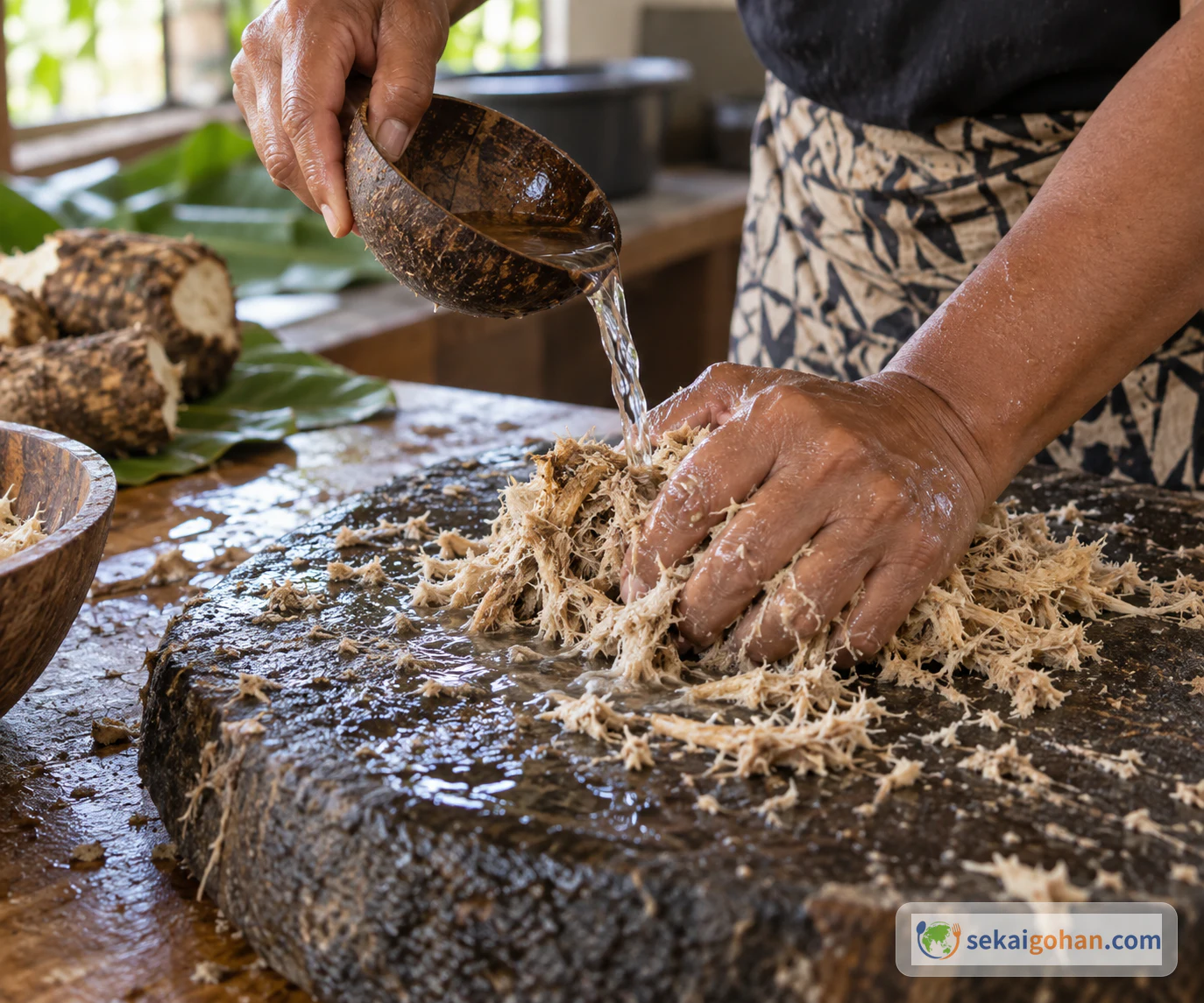
Kneading pounded kava root by hand while adding water from a coconut shell
A small splash at a time; the fibres darken as they take in the water

Scoop half a coconut shell of drinking water over the pounded root. Knead it in with both hands, squeezing and folding the fibres together until the water disappears into them. Add the next half shell and knead again, and repeat as needed. Stop when the fibres are evenly damp and cling together into a soft, heavy mass with no dry strands.

STEP 44 / 6

Soften the bark and lay out the root

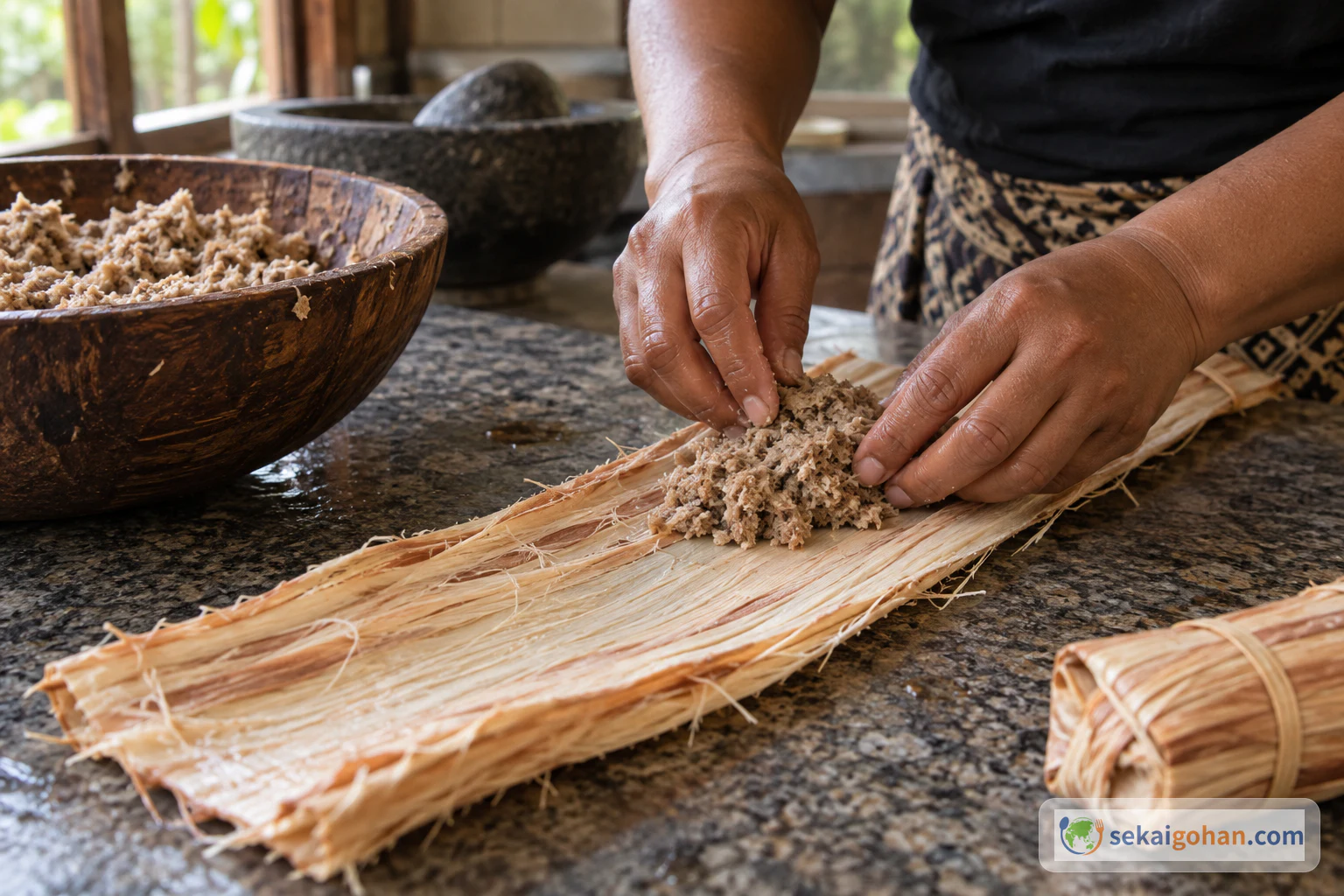
Placing damp pounded root onto a softened strip of hibiscus inner bark
Leave long ends of bark free on both sides so there is something to grip when twisting

Wet the strip of hibiscus inner bark and rub it between your hands until it turns supple. Lay it open and flat on the clean stone, never on the ground. Rinse it once more with drinking water if it has touched anything else. Place the damp root mass along the middle of the strip. The bark is ready when it bends and folds without cracking, and the root sits centred with bark free on both sides.

Soft bark wrings, stiff bark tears

Rub the bark until it moves like a damp cloth before the root goes on. Bark that is still stiff splits under the twist and lets fibres escape into the drink.

STEP 55 / 6

Wrap and wring with two pairs of hands

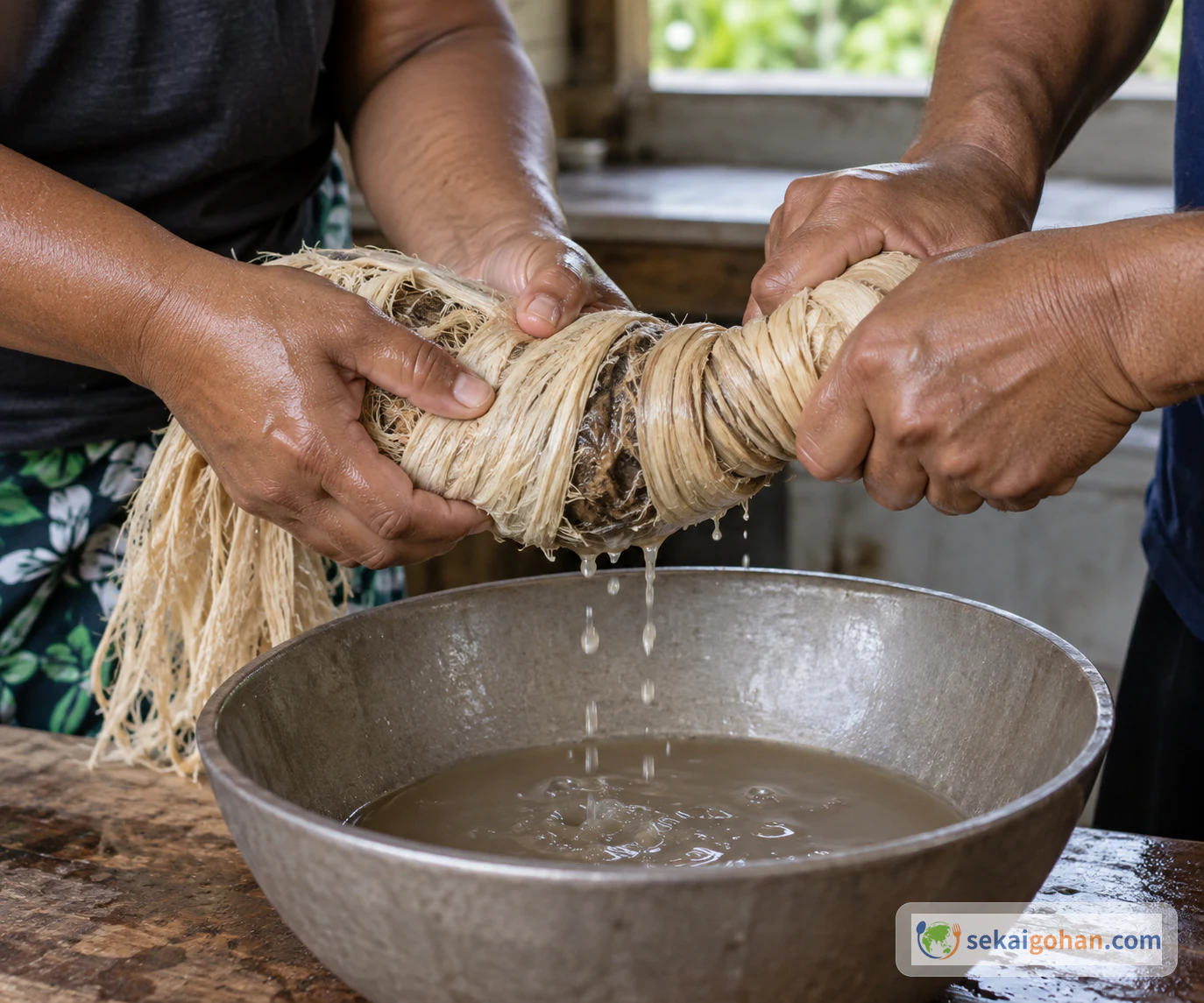
Two people wringing kava root wrapped in hibiscus bark over a bowl
The first liquid runs freely; the last of it comes only as the bundle twists tight

Fold the bark up around the root and close it into a long bundle. One person holds one end firmly over the clean bowl while the other grips the far end and twists. Twist slowly and keep turning as the bundle tightens, squeezing along its length with the free hand. The cloudy, slightly slippery liquid runs out into the bowl, and the bundle is done when the twist yields only a few last drops.

Twist together

One person anchors and one turns. When both pull against each other the bundle tightens evenly from end to end.

STEP 66 / 6

Pour into the coconut cup

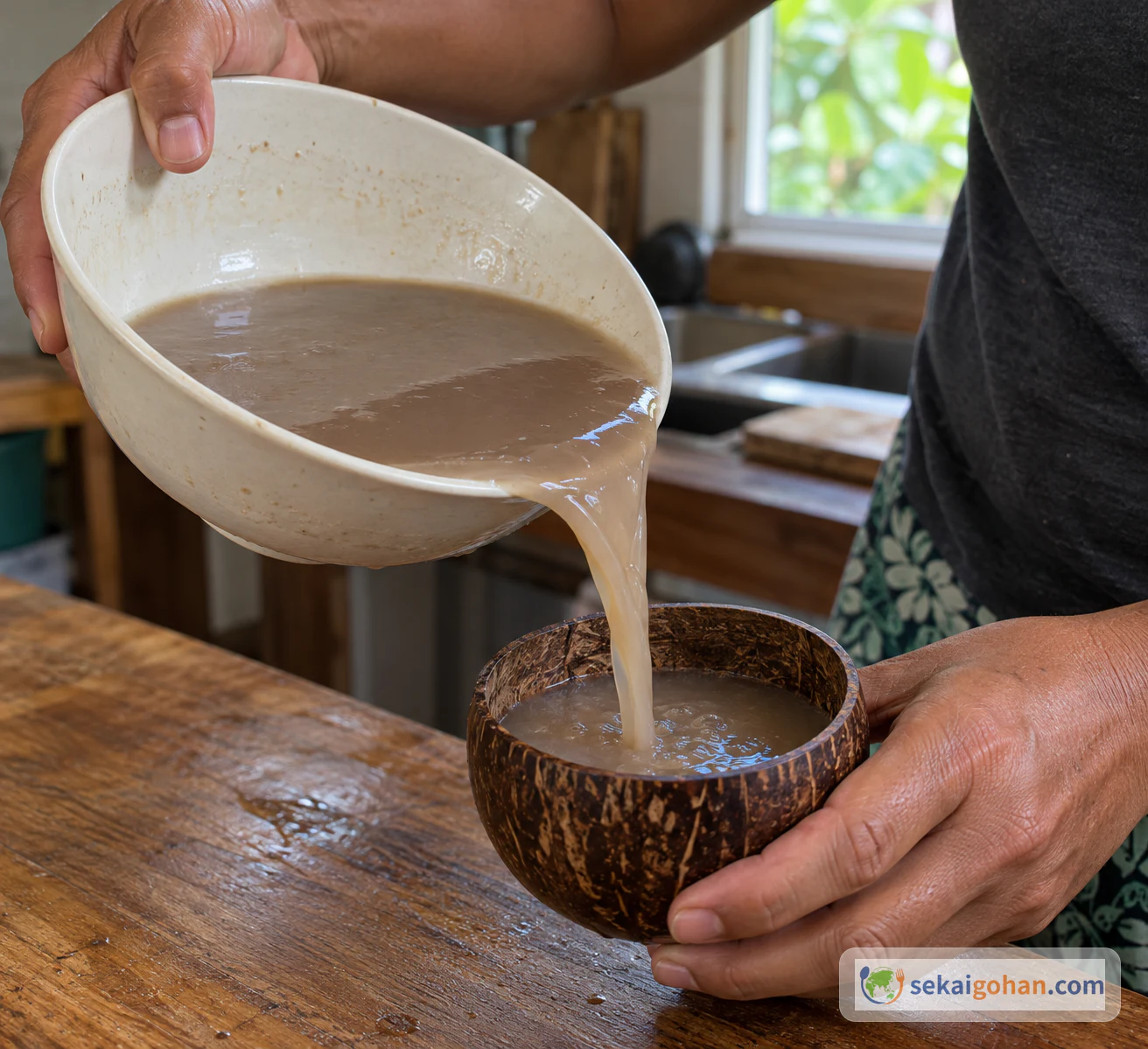
Pouring freshly wrung sakau from a bowl into a coconut-shell cup
A slow pour shows the thickness; the liquid coats the inside of the shell

Pour the liquid from the bowl into a coconut-shell cup and hand it over right away. Give each person their own cup. Throw away the used root fibre and the bark once the batch is finished, and start each new batch with fresh root and freshly rinsed bark. The sakau is right when it pours cloudy grey-brown and slightly thick.

0 / 0
Ingredients

Ingredients

1 / 1

Ingredients

Ingredient Amount Role
Fresh kava root (sakau, Piper methysticum) as needed The drink itself; pounded into fibres on the stone
Drinking water, boiled or disinfected half a coconut shell at a time, as needed Loosens the pounded root so its liquid can be wrung out
Inner bark of sea hibiscus (kohlo, Hibiscus tiliaceus) 1 long strip Wraps the root and squeezes the liquid out; adds a slippery sap
0 / 0

Stone knocks on stone, again and again, as fresh kava root breaks apart on a flat slab of basalt. Water goes onto the fibres half a coconut shell at a time, hands work it in, and then the whole damp mass is wrapped in a long strip of hibiscus bark and twisted until a cloudy grey-brown liquid runs out. That liquid is sakau, the kava of Pohnpei in the Federated States of Micronesia. It pours slightly thick and a little slippery from the bark's sap, and it is drunk from a coconut-shell cup soon after it is wrung.

Sakau on Pohnpei: Stones, Bark and Shared Work

Sakau is the Pohnpeian name for kava, the drink made from the root of the pepper plant Piper methysticum. Across the Pacific, kava turns up in many forms, and on several islands it is made from dried, ground root strained through cloth. Pohnpei works with fresh root. It is pounded on basalt, loosened with water and squeezed through the inner bark of Hibiscus tiliaceus, the sea hibiscus. The stone, the water and the bark, in that order, are what make the drink Pohnpeian.

The making itself is a shared job. One person pounds, the root is kneaded with water, and when the bark bundle is ready two people take hold of it and twist together until the liquid comes.

Where sakau is poured

Sakau has its place at rituals, important events and festivals, and it is part of the occasions that hold a community together: feasts, marriage proposals, and the moment one family asks another for forgiveness. In ceremony, the order in which cups are handed out carries meaning, and it follows the people and the occasion.

Sakau is also part of daily life now. Sakau bars serve it to customers, and the drink has moved from the ceremonial ground into ordinary social life. Both settings exist side by side on the island today, and how a gathering runs depends on who is hosting it.

The names around the stone

Sakau is the drink and the plant on Pohnpei. The flat pounding stone is called peitehl (the spelling varies), and the sea hibiscus whose inner bark does the squeezing is called kohlo. Garden hibiscus with its large flowers is a different plant and plays no part here.


Ingredients
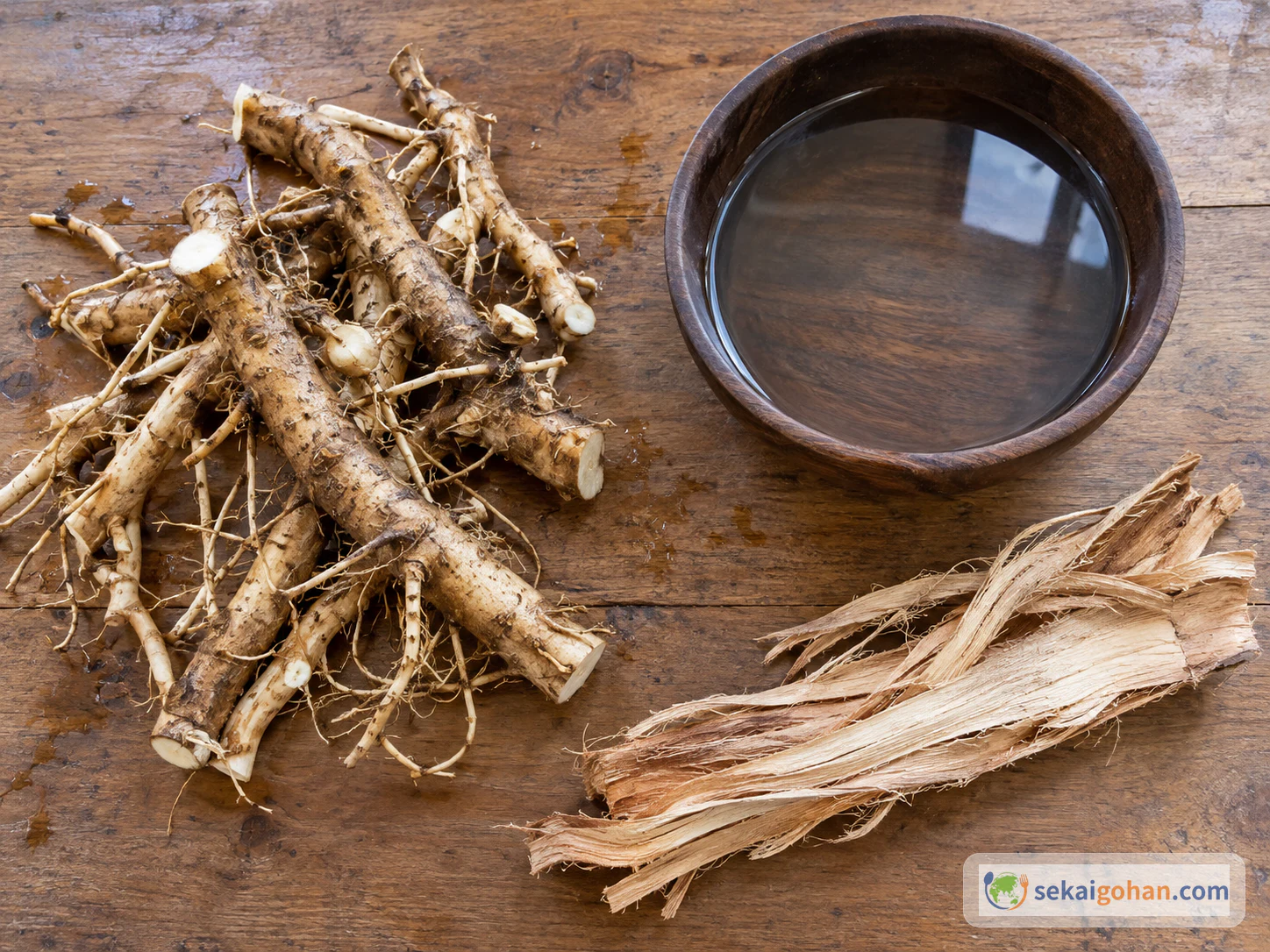
Cleaned kava root, a bowl of drinking water and a strip of hibiscus inner bark for sakau
The bark is a pale, fibrous strip from inside the trunk; no flowers or leaves belong on this board
Water decides the strength

Add the water half a coconut shell at a time and knead it in fully before the next addition. Pouring it all at once floods the fibres and gives a thin, weak drink.

Equipment

  • A broad, flat stone (peitehl) for pounding
  • A rounded hand stone for striking
  • A stiff brush and a clean basin for washing the root
  • A half coconut shell for scooping water
  • A clean bowl to catch the liquid
  • Coconut-shell cups, one per person

Choosing the Root and the Bark

Fresh kava root is what Pohnpei sakau is made from. Choose a noble variety with the skin removed, and buy it only as a product sold as food or drink. Dried kava powder makes kava of a different kind, the style strained through cloth on other islands, and it cannot stand in for the fresh-root, stone-pounded drink.

The bark matters as much as the root. The right material is the inner bark of Hibiscus tiliaceus, a long, pale, fibrous strip from under the outer bark, which softens when wet and gives up a slippery sap into the drink. Flowers and leaves of any hibiscus, ornamental garden hibiscus and the hibiscus sold for tea are other plants or other parts, and none of them replaces it.

Buying plants for drinking

Buy root and bark only from sellers who offer them for food or drink. Never use wild-picked plants, garden plants or ornamental hibiscus, and leave out anything you cannot identify with certainty.


Method

The whole job runs without heat and in one sitting. Wash the root first, then set up the stones, the water and the bark before you start pounding, because once the water goes in the work moves straight on to wrapping, wringing and pouring. Drink it soon after it is made, so start only when the people who will share it are ready.

Before you drink kava

Kava is not sold as a food in Japan, and people with liver problems, who are pregnant or breastfeeding, or who take medicines or alcohol should not drink it.

When It Goes Wrong

What you see Why What to do
The drink is thin and watery Too much water went in at once Add water only half a coconut shell at a time and knead each addition fully before the next
Little liquid comes out of the bundle The root is too dry, or it was pounded too little Open the bark, knead in another half shell of water and wring again; pound longer next time until no hard pieces remain
Fibres and bits float in the cup The bark tore, or the bundle was not closed Soften the bark further before wrapping and fold it fully around the root
Grit on the tongue or at the bottom of the cup Soil was left in the root's joints Discard the batch, then scrub the next root until no grit shows in the crevices
The bark cracks when folded It was not wetted and rubbed long enough Wet it again and rub until it bends like damp cloth

Serving Sakau

A coconut-shell cup of sakau set out at a gathering place
Sakau waits in its shell cup where people gather; it is poured to be passed on, not to stand

Sakau belongs where people gather, whether that is a ceremony, a feast, a family occasion or a visit to a sakau bar. The coconut-shell cup is the vessel, and at a gathering the host decides who drinks first and in what order the cups go round.

The drink is made for the moment. Drink it soon after it is wrung, and make a fresh batch rather than keeping one. Throw away the used root and bark after every batch, and rinse the stones and bowl with drinking water before the next one.

Frequently Asked Questions

Does sakau contain alcohol?

No. The drink is only root, water and the sap of the bark, with nothing fermented or added. It is still a drink with an effect on the body, which is why the precautions above the method matter.

Can I use a cloth bag instead of hibiscus bark?

The bark is what makes the drink Pohnpeian. It does the squeezing and also puts its slippery sap into the sakau, which gives the drink its slight thickness. Straining through cloth belongs to the dried-kava styles of other islands.

Why does it need two people?

The bundle has to be held still at one end while it is twisted at the other, and that is a two-person grip.
Sources

  • Micronesia Promotion Association, "Permanent Edition / Federated States of Micronesia Guide, Local Food & Drink." Pounding the root on basalt, soaking with water, wrapping and squeezing in hibiscus bark; sakau at rituals, important events, festivals and in daily life; sakau contains no alcohol. https://fsmemb.or.jp/wp-content/uploads/2026/05/FSM_guide_E_2023-0830.pdf
  • Hawai‘i Journal of Health & Social Welfare, vol. 81 no. 7 (2022), "The Current Use of Sakau (Kava) in Pohnpei Island, Federated States of Micronesia." Sakau as the Pohnpeian name for kava; feasts, marriage proposals and forgiveness; changing use and sakau bars; root pounding, water mixing and hibiscus sap pressing. https://hawaiijournalhealth.org/past_issues/HJHSW_Jul22.pdf
  • Federated States of Micronesia Government press archive / Kaselehlie Press (2002), "Kava/Sakau en Pohnpei and liver failure." Root cleaning, pounding on stone and squeezing through hibiscus bark; concerns about soil and microbial contamination. https://www.fsmgov.org/press/nw030602.htm
  • Jasmine Taylor, "How to Make and Drink Sakau" (2015). Washing and pounding the root, adding a half coconut shell of water at a time, kneading, wrapping in hibiscus bark and twisting into a coconut cup. https://jasminmicronesia.wordpress.com/2015/07/04/how-to-make-and-drink-sakau/
  • National Tropical Botanical Garden Herbarium Database, "Herbarium Sheet Detail: Hibiscus tiliaceus, PTBG1000010115." Inner bark fibres of Hibiscus tiliaceus used to squeeze pounded sakau root; the bark is wetted and rubbed soft. https://ntbg.org/database/herbarium/detail/PTBG1000010115
  • Ministry of Health, Labour and Welfare (copy published by Yamanashi Prefecture), notice of 5 August 2026 on the classification of food and pharmaceutical ingredients. Kava (Piper methysticum) listed among ingredients used exclusively as pharmaceuticals in Japan. https://www.pref.yamanashi.jp/documents/125286/20260805_syokuyaku.pdf
  • Ministry of Health, Labour and Welfare, "医薬品成分(カバ)が検出されたいわゆる健康食品について" (2003). Kava treated as a pharmaceutical ingredient in Japan; liver damage noted. https://www.mhlw.go.jp/kinkyu/diet/other/030901-1.html
  • FAO / WHO, "Kava: a review of the safety of traditional and recreational beverage consumption" (2016). Pohnpei squeezing with fibrous Hibiscus tiliaceus bark; choosing noble varieties and peeled root. https://www.fao.org/3/i5770e/i5770e.pdf
  • Pohnpei State, "Regulations for Pohnpei Sakau Bar" (2000). Brushing roots with potable water and sun-drying 24 hours before pounding; boiled or disinfected water only; rinsing the wringing material and keeping it off the ground; discarding used sakau and wringers after each preparation; cups not shared between customers. https://fsmlaw.org/pohnpei/regulations/pnisakaubarreg.htm
  • Food Standards Australia New Zealand, "Imported food risk statement: Kava (Piper methysticum) as a food" (2025). No information to assess safety in pregnancy and breastfeeding; kava beverages to be drunk soon after preparation. https://foodstandards.gov.au/sites/default/files/2025-01/Kava%20risk%20advice%202025.pdf