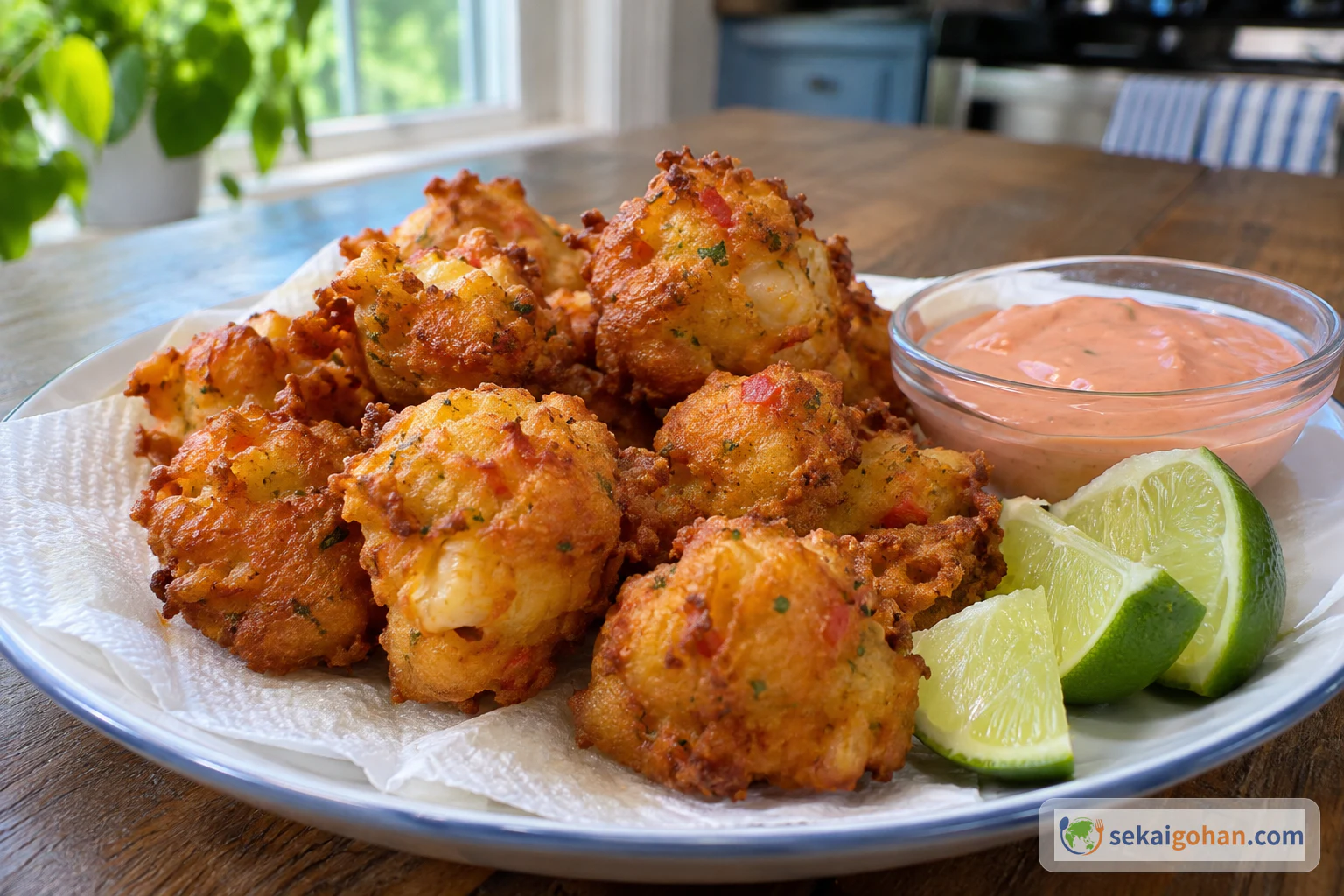
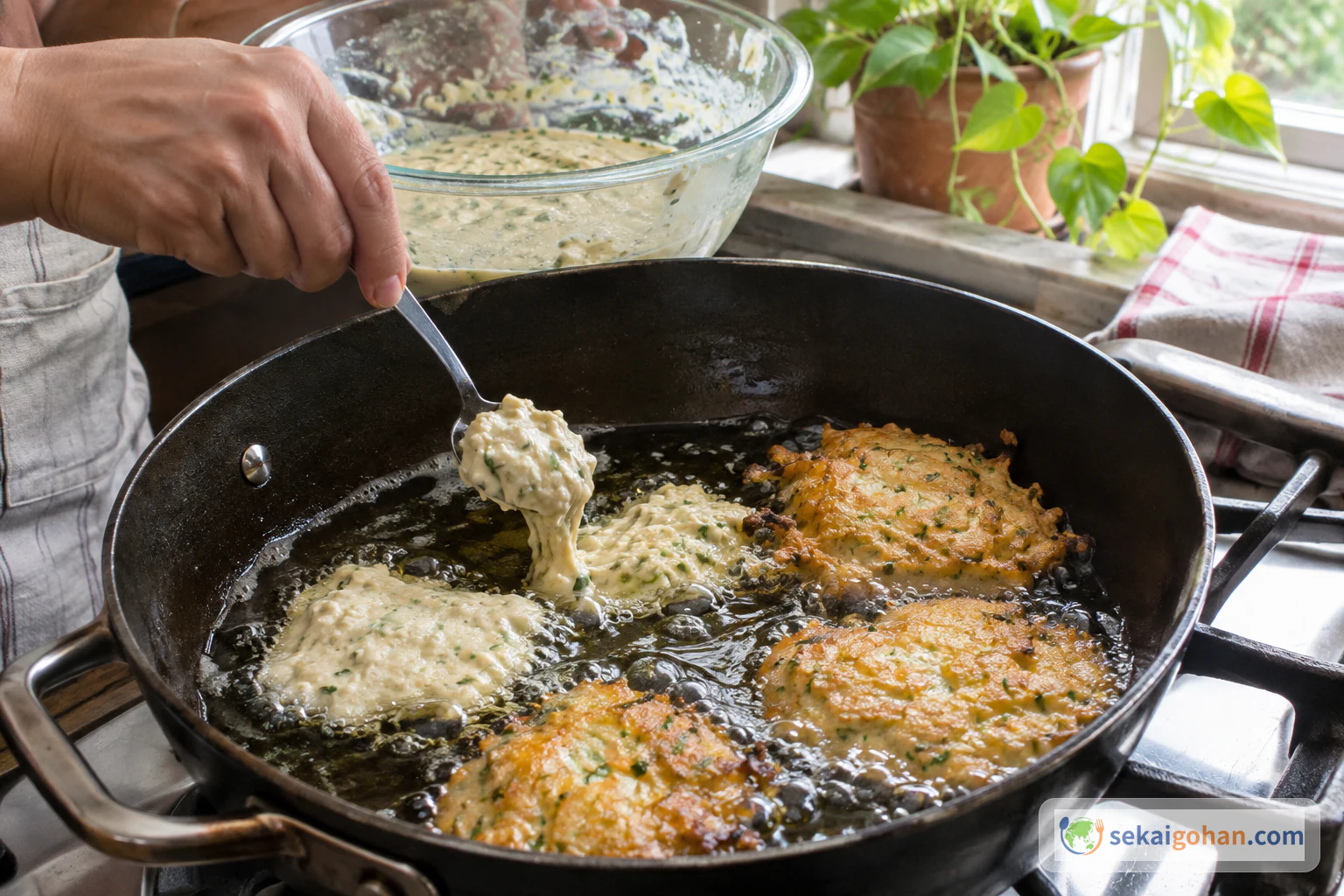
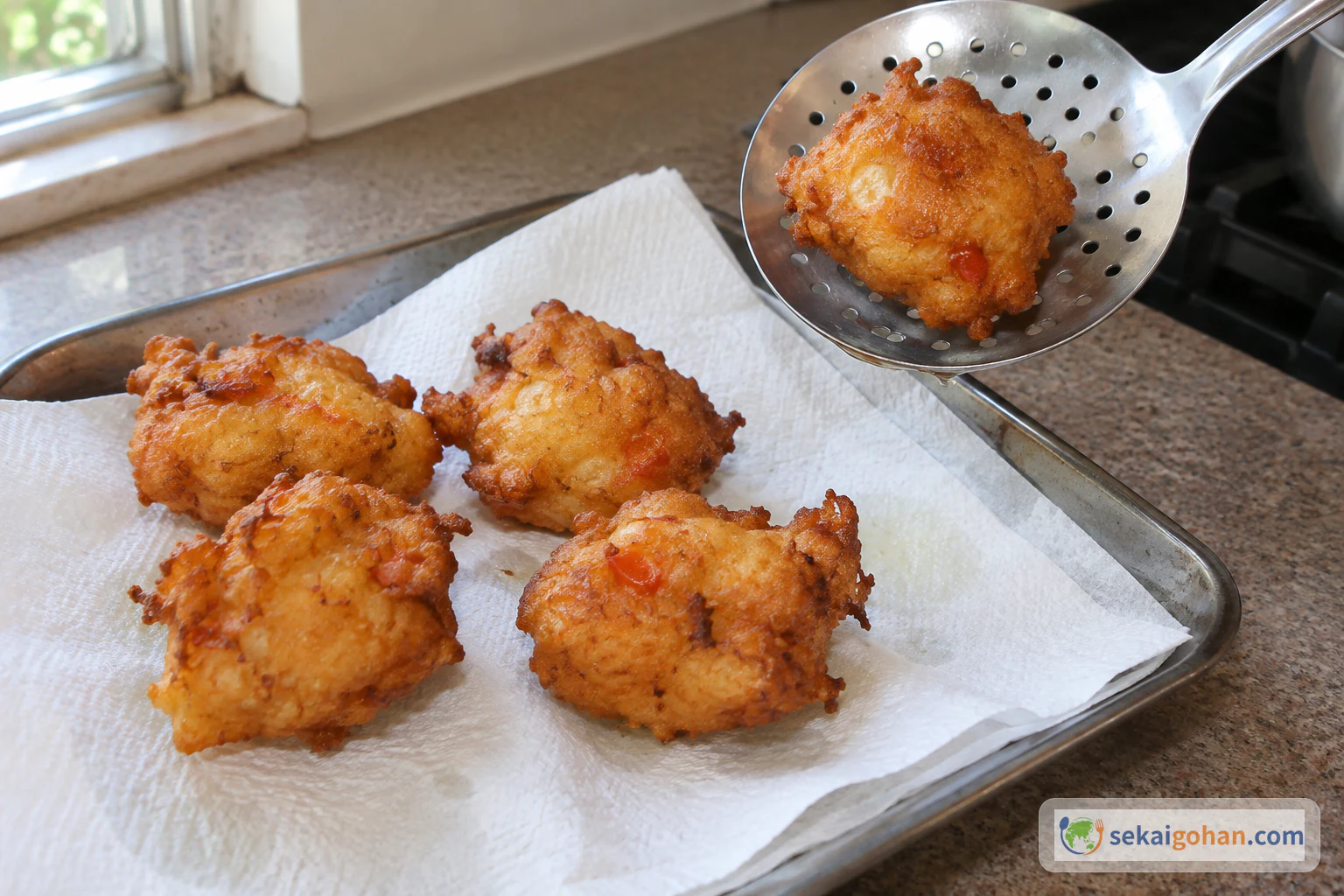
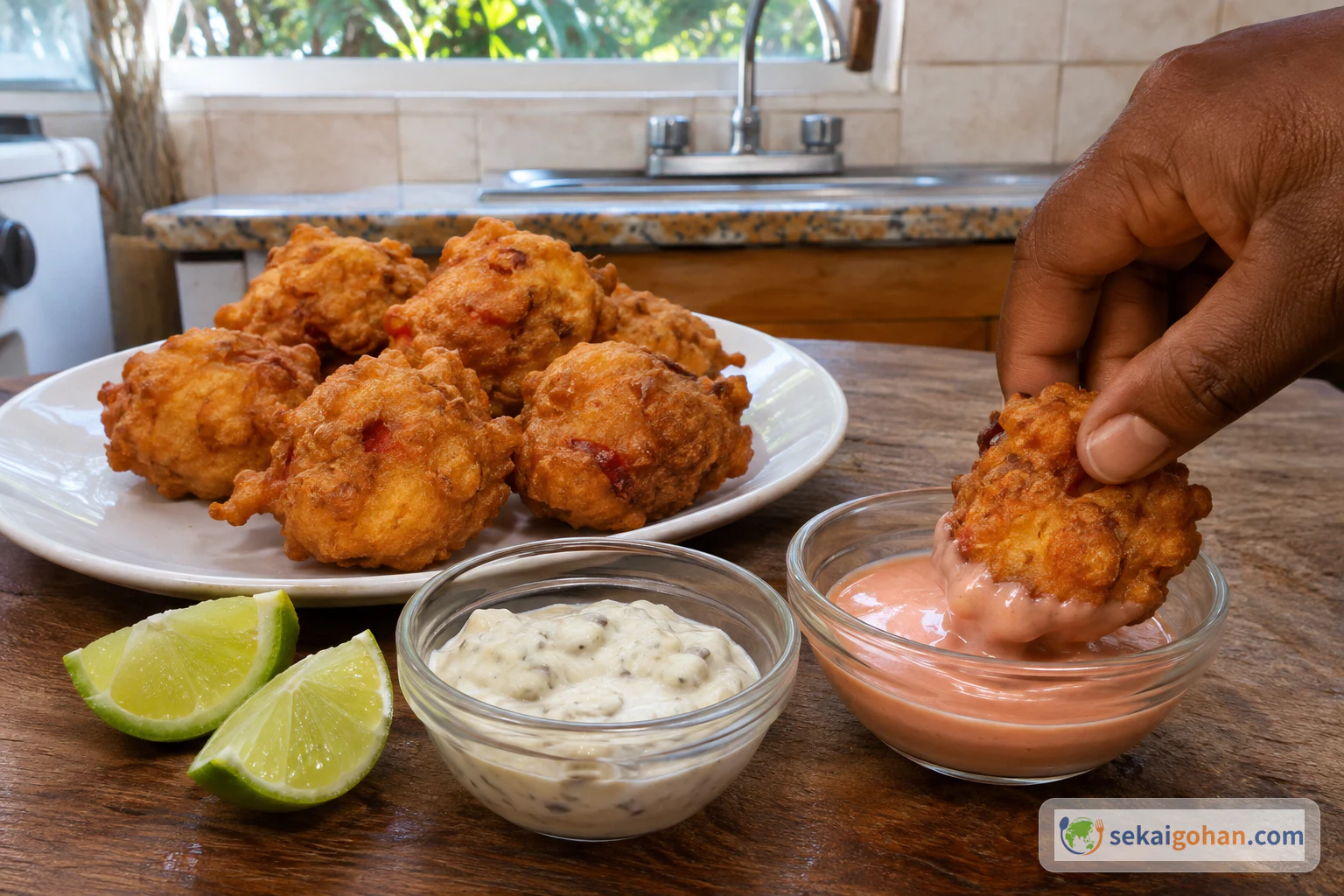
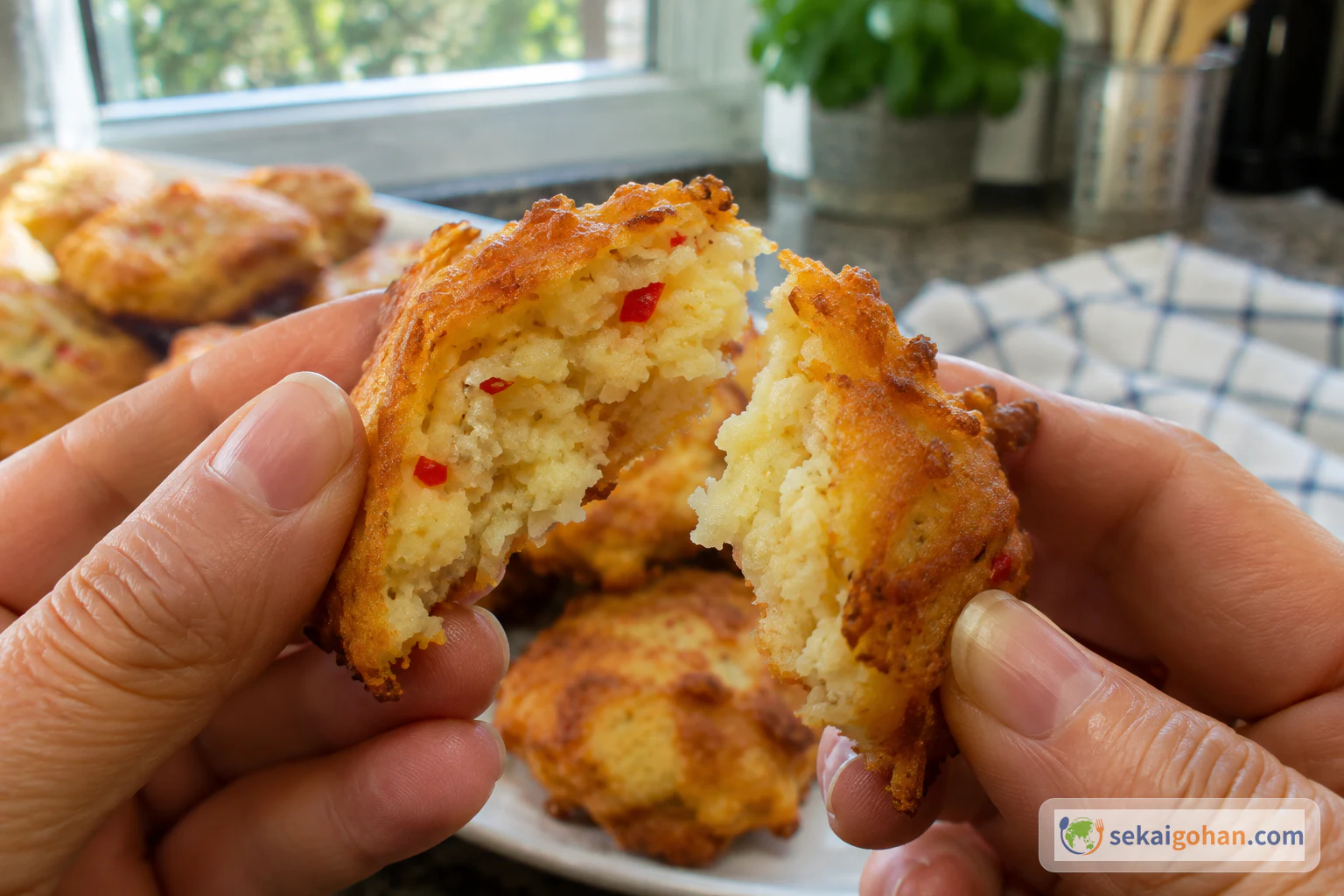
A spoonful of thick, pale batter slides into the hot oil. It sinks, the oil foams around it, and a moment later it bobs up and starts to color. You turn it until it is deep golden brown all over, then lift it out onto paper towels while the next spoonfuls go in. In Belize these conch fritters are an appetizer and a snack. Conch, the big sea snail, is ground smooth with sweet pepper, onion, tomato and fresh habanero, then held together with a baking-powder batter sharpened with lime. Each one has a crisp shell, a soft and springy inside, a fruity habanero heat that builds slowly, and a squeeze of lime to finish.
Conch in Belize: Stew With Rice, Fritters to Start
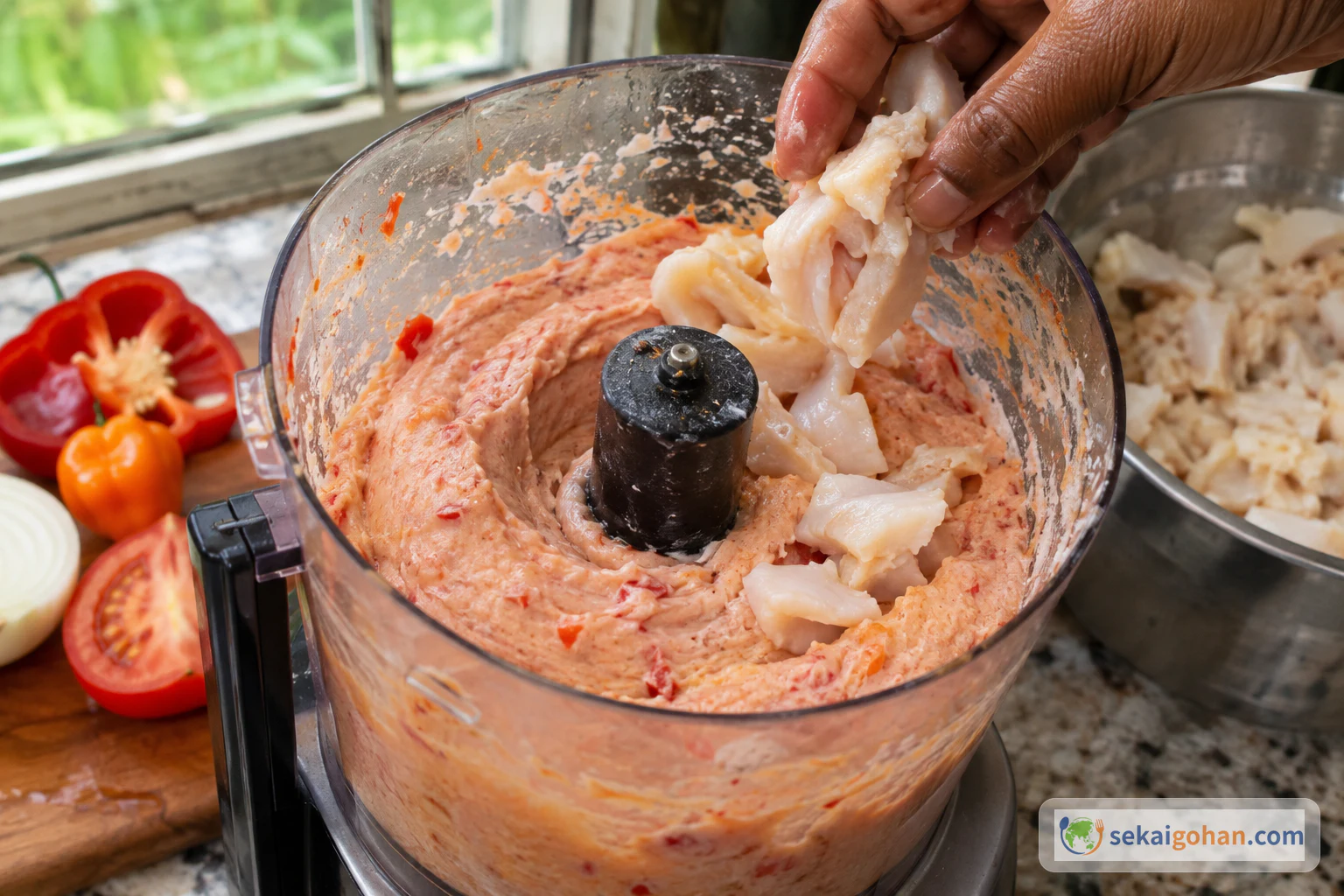
In a Belizean kitchen, conch usually goes into the pot. Conch stew or conch soup, eaten with white rice, is the everyday way to cook it. The fritter is the exception, and a popular one. It is the appetizer that arrives first at a restaurant, the finger food handed around at a party, a snack to order on its own. Grinding the meat smooth is what makes the fritter work. Conch is firm, and once it is pureed and mixed into the batter, every bite is tender and full of the taste of the sea.
Belize has more than one style of conch fritter batter. This version uses baking powder and lime, which makes it puffier and brighter than the plain flour-and-water batters you also find in Belize. There is more about those under variations below.
The conch season
The meat comes from queen conch (Strombus gigas). Belize manages it with a closed season and a catch quota, under Statutory Instrument No. 54 of 2012. In the 2023–24 season the quota was reached and the fishery closed on June 9, 2024; the next season opened on October 1, 2024. Anyone holding conch meat once a closure begins can be prosecuted.
The season opens on October 1 and closes once the year's quota is reached, so the closing date moves from year to year. If you are cooking in Belize, check the current season with the Belize Fisheries Department before you buy conch, and buy only while it is open.
If you want the rest of the country's table around these fritters, start from the Belize country page.
Ingredients
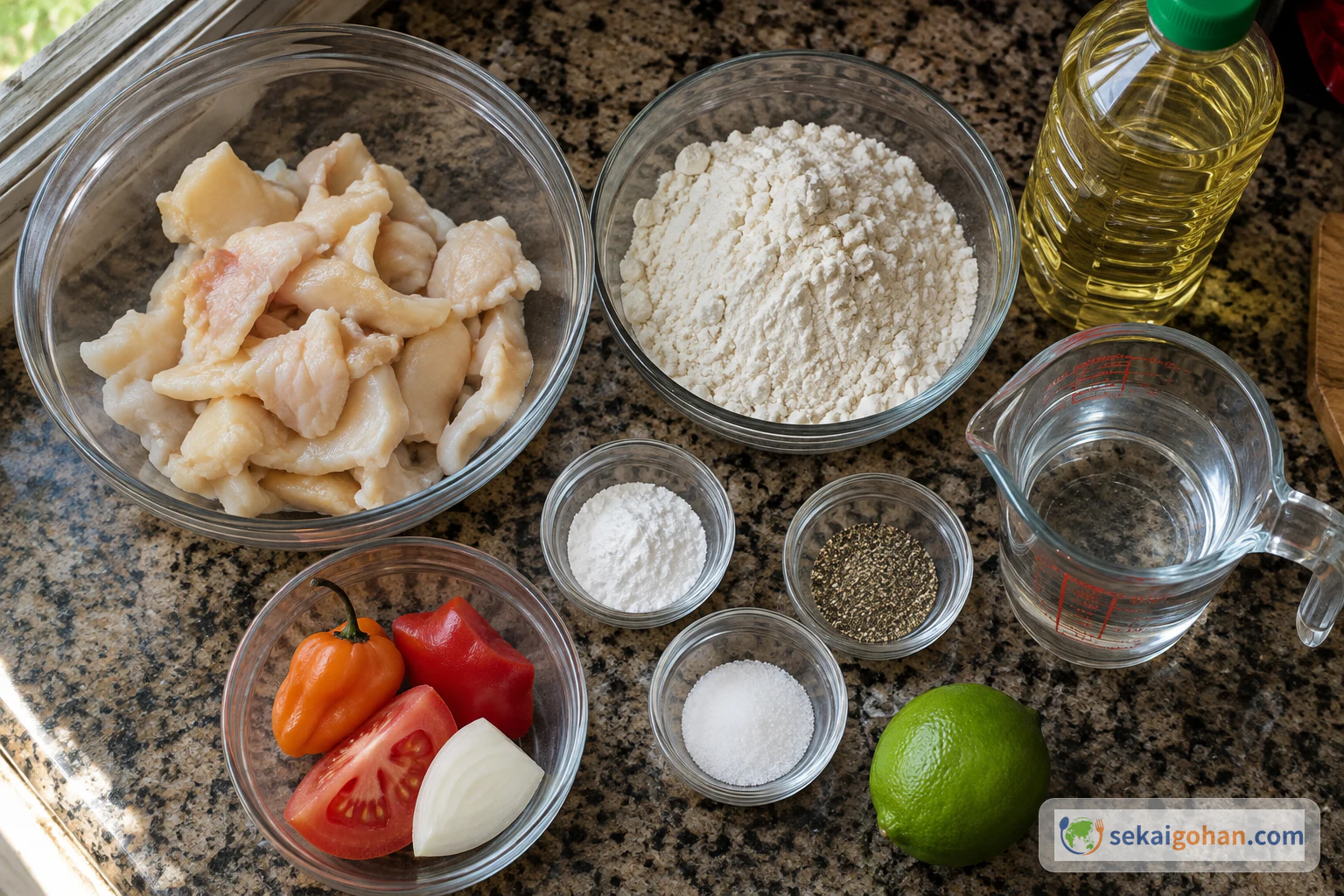
One pound of conch against just an ounce each of pepper, tomato and onion is the right balance. The vegetables season the conch; they do not bulk it out.
These fritters contain shellfish (conch, a mollusk) and wheat (flour). The batter has no egg or dairy. Bottled cocktail and tartar sauces carry their own allergens, so read their labels before serving.
Equipment
- Food processor (or a sharp knife and a mortar and pestle)
- Large mixing bowl
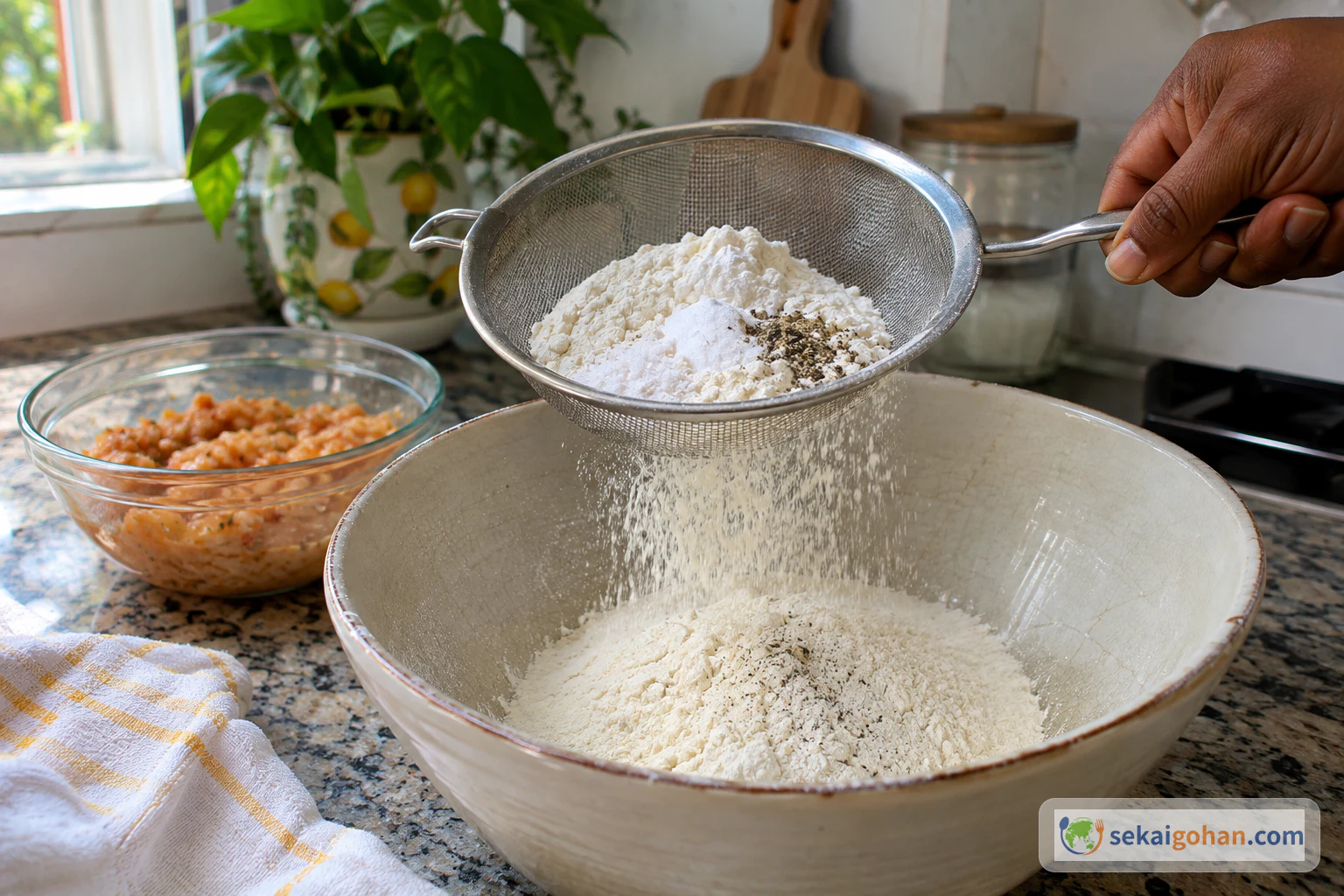
- Sifter or fine sieve
- Deep skillet
- Large spoon (or a ladle for main-course-size fritters)
- Slotted spoon
- Tray lined with paper towels
Choosing and Substituting
Conch decides this dish. Outside the Caribbean, look for frozen cleaned conch meat at seafood specialists, Caribbean or Latin grocers, or online. Choose meat that is already cleaned and filleted, so it can go straight into the processor. Without conch you get a different fritter. The pepper, lime and batter still work, but the sea-sweet flavor and the springy bite are gone.
The rest is easy to find. Green or red bell pepper both work; Fresh habanero gives the fruity heat. If you cannot get one, a few drops of habanero hot sauce keep the heat, but you lose the fresh fruit scent and the heat comes out sharper. Lemon juice can stand in for lime, though the result is softer and less fragrant. For the dips, store-bought cocktail sauce and tartar sauce are exactly what you want.
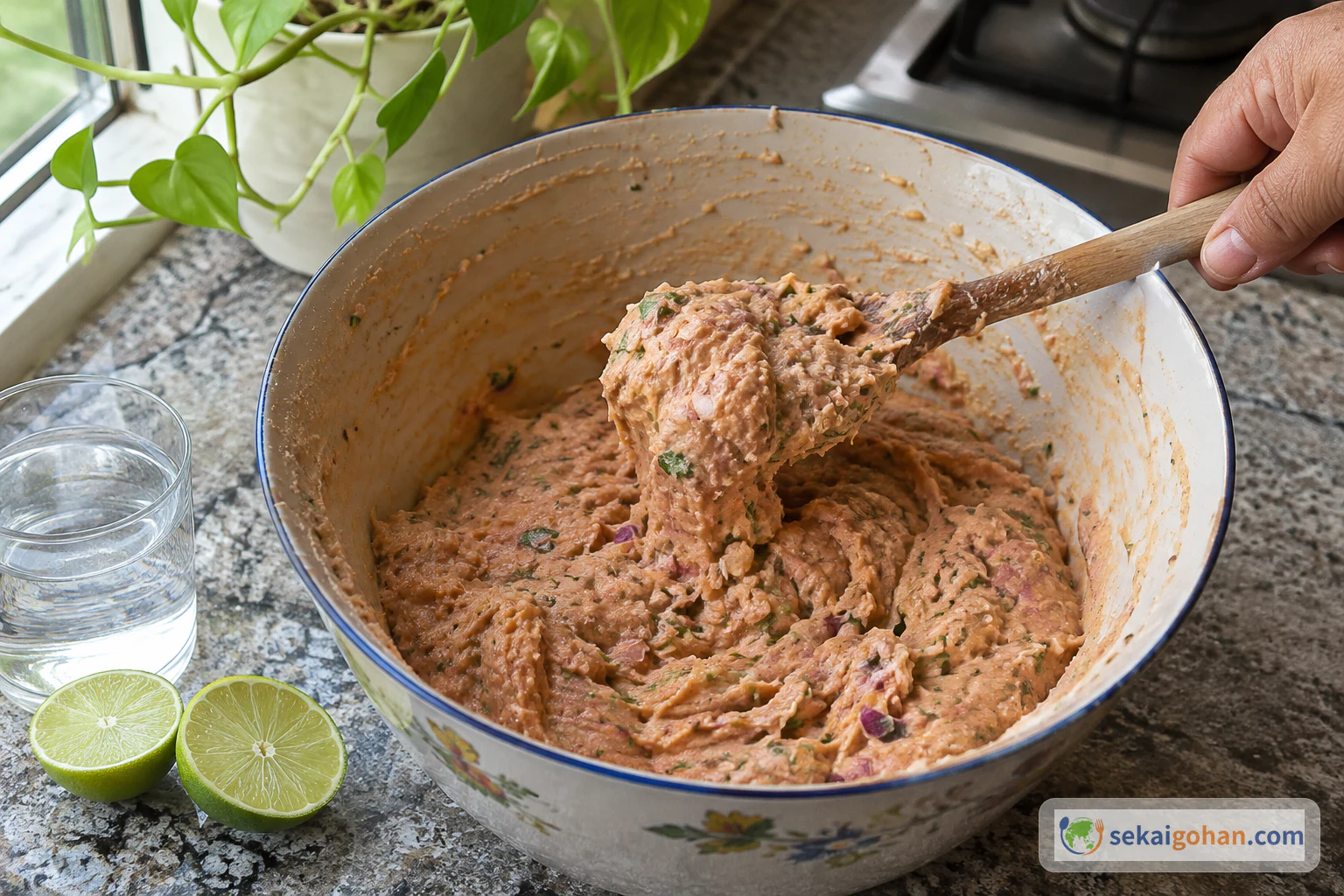
Add water a splash at a time, and stop as soon as the batter is firm but workable. It should hold a mound on the spoon. A loose batter spreads in the oil and soaks up fat.
Method
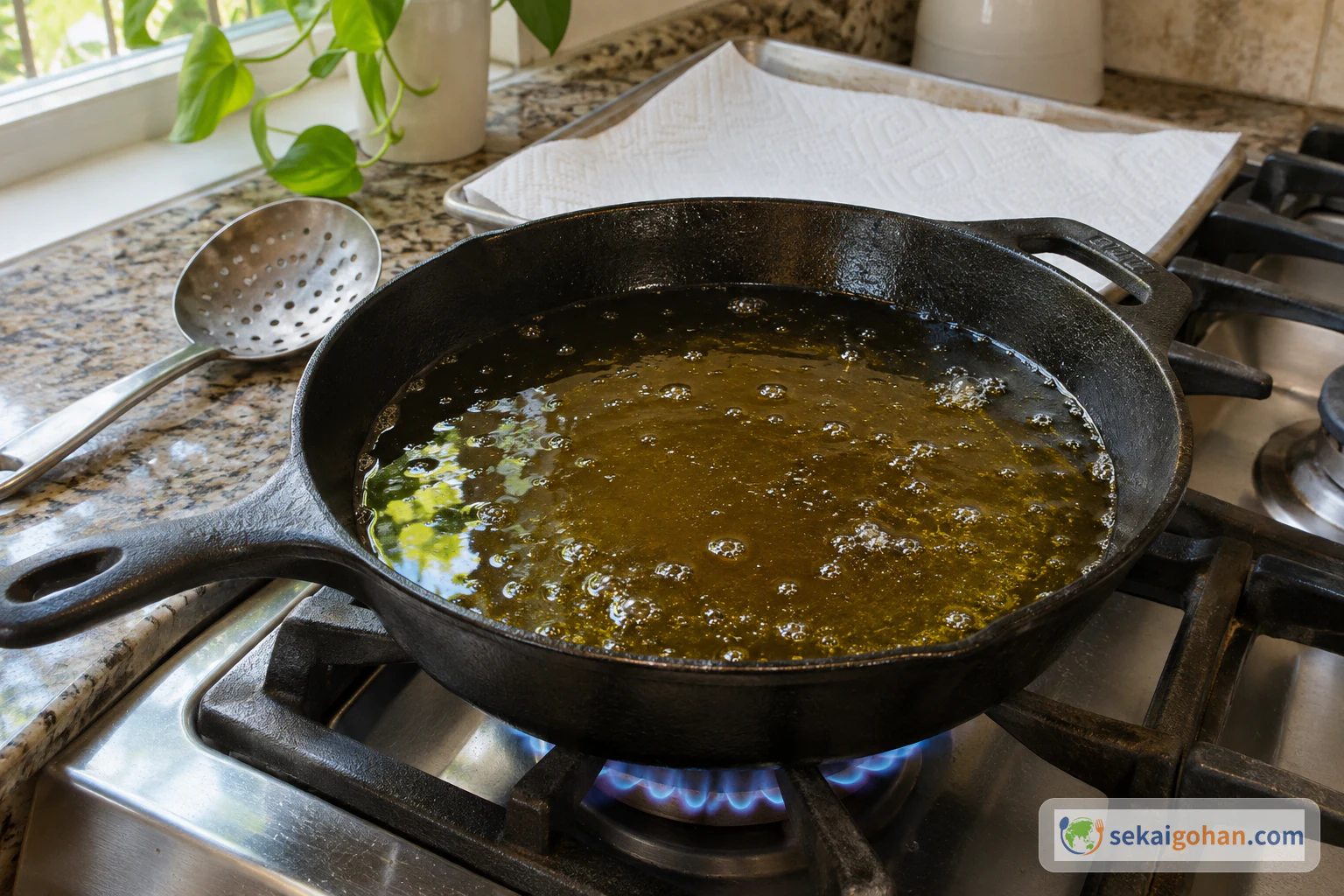
Everything happens in one run. Make the conch puree first, then build the batter in the same bowl. Heat the oil once the batter is mixed, and frying is a short, busy stretch, so have the paper-towel tray and the slotted spoon by the stove before the first spoonful goes in.
Crowding the skillet cools the oil, and the fritters then brown slowly and turn greasy. Keep plenty of space between them and let the oil return to a shimmer before the next round.
Lower the batter in close to the oil surface instead of dropping it from a height, and never leave the pan unattended over high heat. Handle the habanero with gloves, or wash your hands well afterward, and keep your fingers away from your eyes. The fritters must be cooked through to the center. Check each batch before serving.
When It Goes Wrong
| What you see | Why | What to do |
|---|---|---|
| Batter spreads into flat, ragged shapes in the oil | Too much water | Stir in a little more flour until the batter mounds on the spoon again |
| Outside dark brown, center still wet | Spoonfuls too large for the heat, or the oil too fierce | Make smaller spoonfuls, keep turning, and break one open to check before frying the rest |
| Pale, greasy fritters | Oil not hot enough, or too many in the pan | Let the oil shimmer again before each batch and fry fewer at a time |
| Chewy lumps of conch in the bite | Puree stopped too early | Process until completely smooth before adding the flour |
| Fritters dense and heavy | Baking powder not mixed through, or the batter overworked | Sift the dry ingredients together and stir only until the batter comes together |
Serving and Variations
On the table
Conch fritters are starters and party food. Serve them as the first plate before a meal, or as finger food passed around with drinks. The lime cuts through the fried crust. The cold sauces cool the habanero, with cocktail sauce sweet and tangy and tartar sauce creamy and rich. Fry them just before people sit down; they are at their best right out of the oil.
Other Belizean batters
- Flour and water, no baking powder. This is a plainer Belizean style. A little more conch is ground with sweet pepper, onion and celery, plus a few leaves of culantro, cilantro or basil, then mixed with flour, water, salt and pepper into a batter about as thick as cake batter. The fritters come out flatter and chewier, and they taste of herbs.
- Eggs and evaporated milk. This style adds eggs, evaporated milk and celery to the batter. The fritters are richer and softer, closer to a fluffy dumpling, and they lose the egg- and dairy-free advantage of the version above.
- Main-course size. Ladle the same batter into bigger fritters and serve them as the meal. They take longer in the oil, so check a center before frying the rest.
Each batter has its own balance of conch, liquid and leavening. Make one style or another rather than mixing parts of them.
Frequently asked questions
How do I make them less spicy?
Scrape out the habanero's seeds and pale inner ribs before pureeing, or use half the pepper. The fruity scent stays and the heat drops a long way. For guests who like heat, put hot sauce on the table instead.
What sets this Belizean style apart?
This style grinds the conch completely smooth and uses lime and baking powder, so it fries up puffy and bright.
Can I add more vegetables for more flavor?
Keep them at an ounce each. The pepper, onion and tomato are there to season the conch, and more of them adds water, loosens the batter and pushes the conch flavor into the background. For more color at the table, serve a fresh salad or extra lime alongside.
Which sauce goes better, cocktail or tartar?
Put out both. Cocktail sauce brings sweetness and tang that suit the habanero. Tartar sauce brings a cool, creamy contrast to the hot crust. Store-bought sauces of either kind are just what these fritters need.