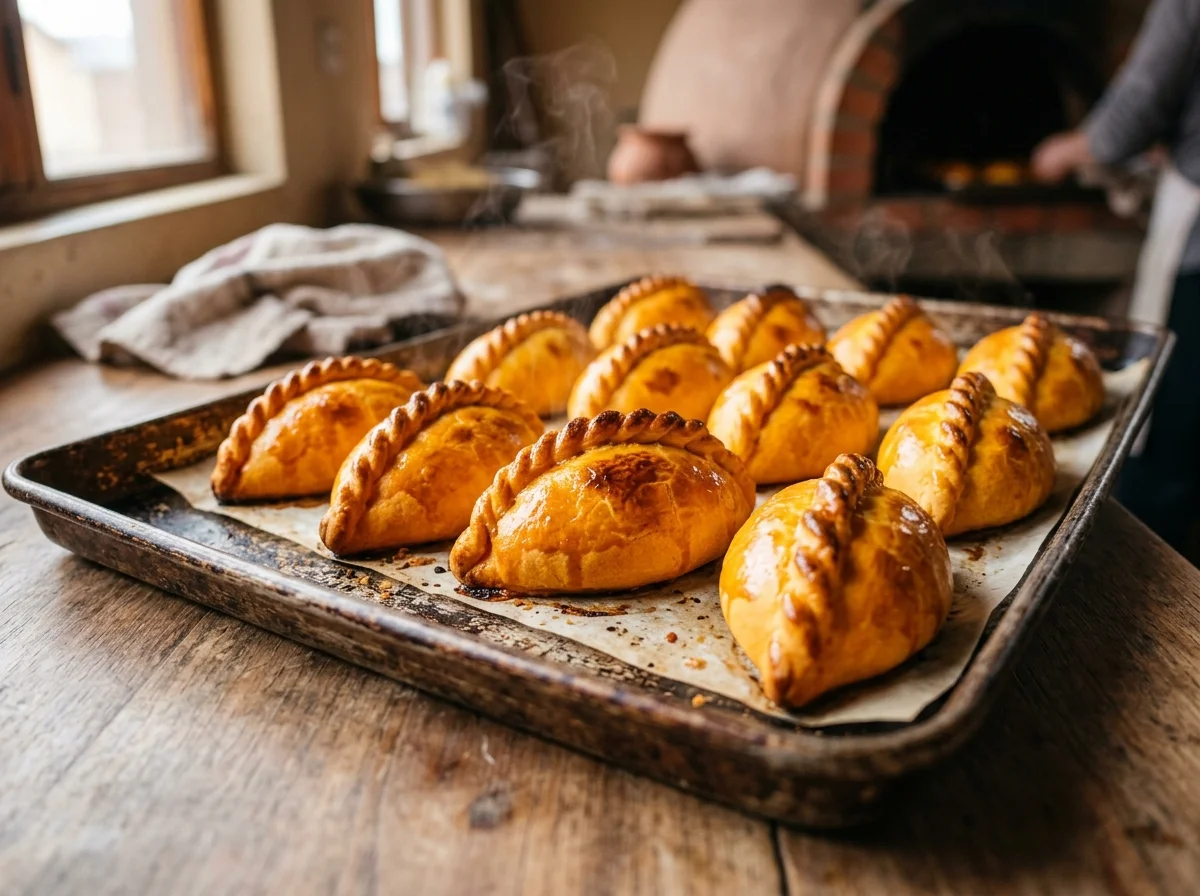
"Soup you can eat": why Bolivians line up at 10 a.m.
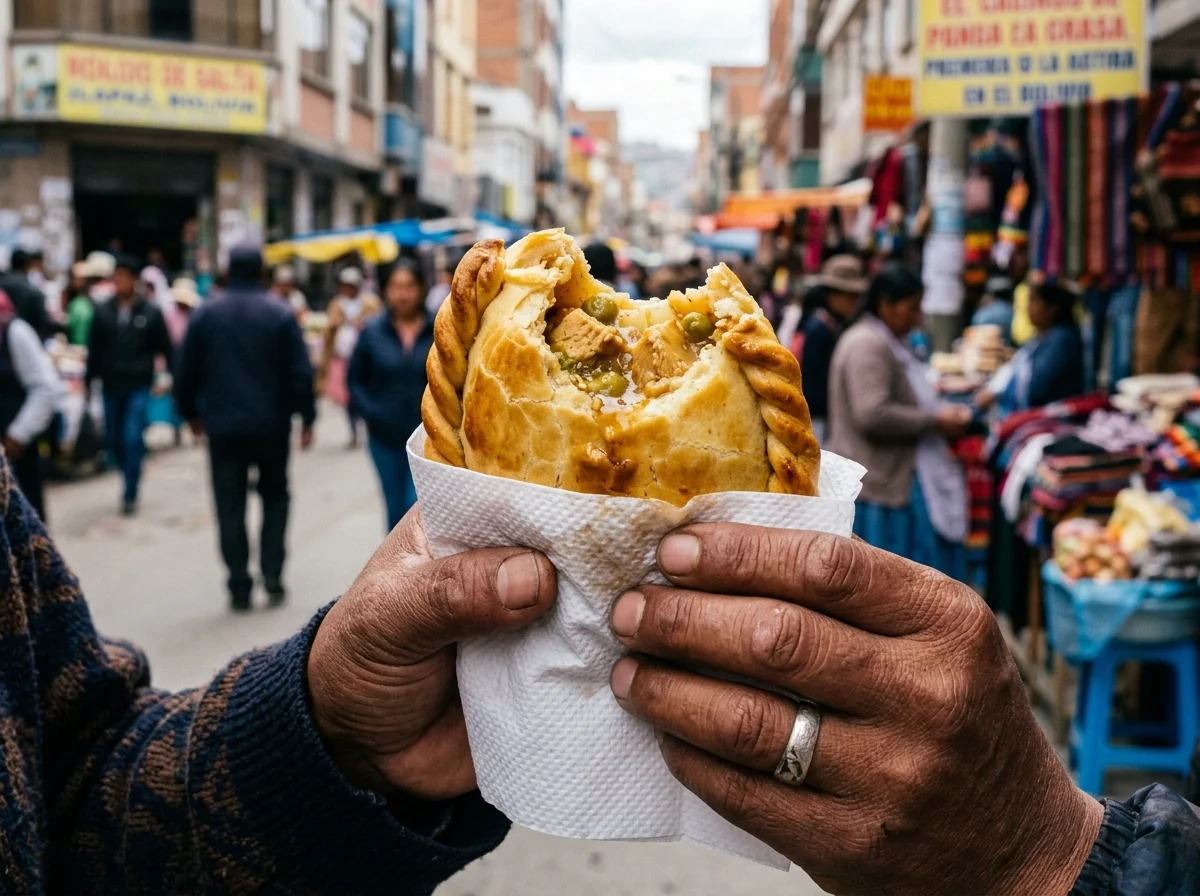
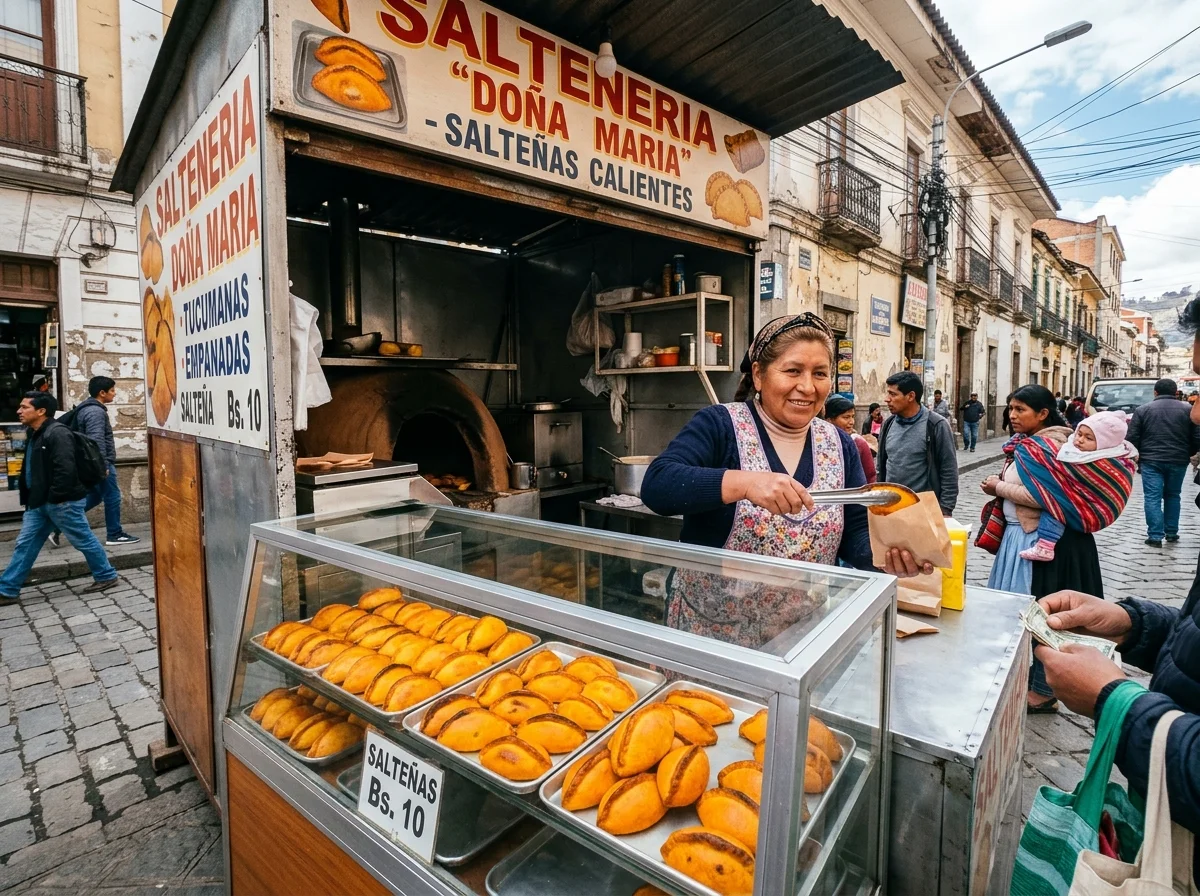
Walk the steep streets of La Paz at 10 in the morning and you'll come across a curious sight. In the alleys behind the office district, long lines form, with everyone from businesspeople in suits to students in uniform. They aren't waiting for a restaurant but for a tiny salteñería, a stall about a meter wide that sells nothing but salteñas.
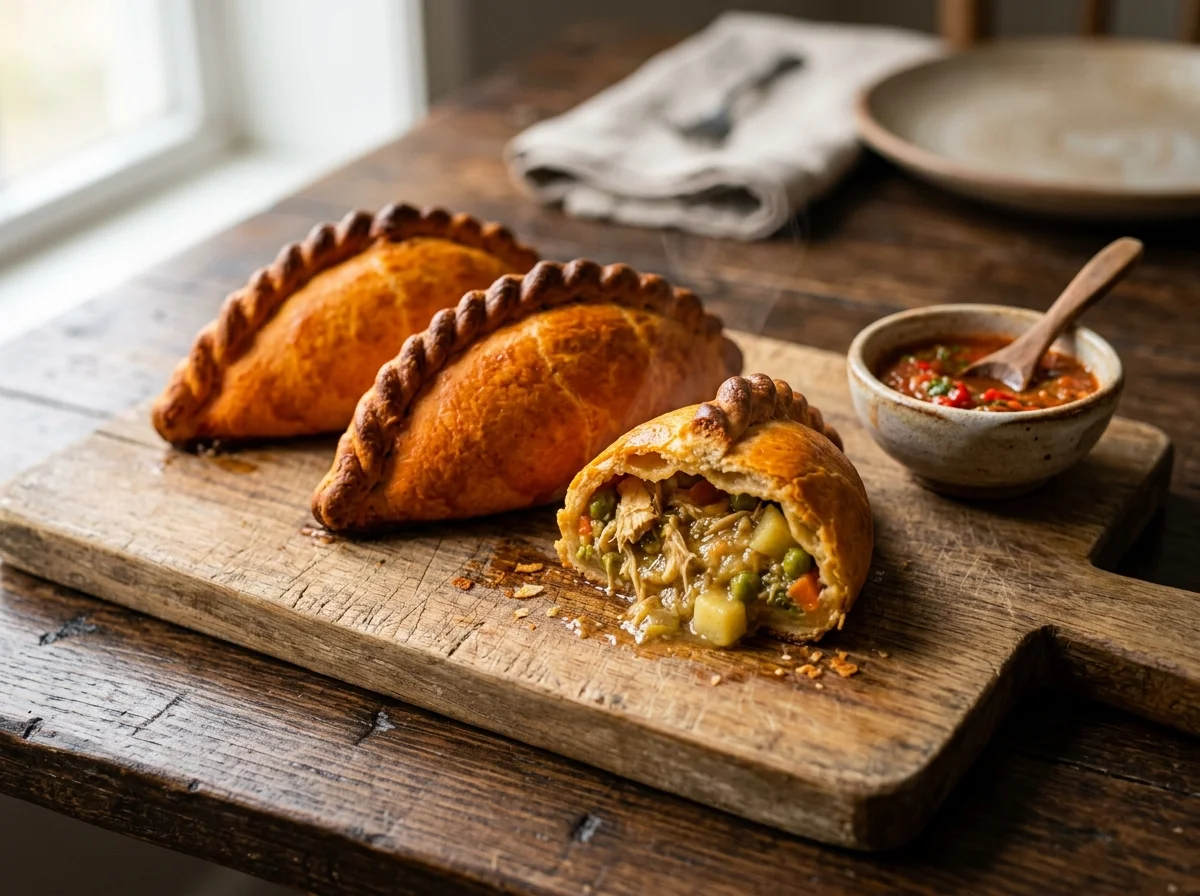
The salteña (Saltena / Salteña) is Bolivia's signature baked empanada. It looks a lot like an Argentine empanada (in Japanese), but there's one decisive difference: a salteña has soup inside.
Take a bite and the faint sweetness of the crust touches your tongue first; a moment later, a silky meat broth comes flooding out. It's a spicy broth deepened with cumin and aji amarillo (a yellow chile). There's the savoriness of chicken or beef, the fluffy bite of potato, and the saltiness of peas and olives, all rolling together in your mouth. A "soup you can eat," on a par with Shanghai's xiaolongbao: that's the salteña.
For Bolivians, the salteña is a mid-morning snack (media mañana). It isn't breakfast and it isn't lunch, but a food culture of its own, eaten around 10 a.m. During breaks at school or work, people hold one in a single paper napkin and eat it standing in the street. Finishing it without spilling the broth is considered the proper "salteña way," a skill Bolivians pick up from childhood.
In Spanish it means "a woman from Salta." According to a well-known story, the Gorriti family (the family of the writer Juana Manuela Gorriti), exiled from Salta in Argentina in the 1830s, sold empanadas in Bolivia, and these came to be called "the Salta woman's (pies)," which is how the name began. Some researchers point out, however, that juicy Bolivian-style empanadas were already being made earlier in places such as Potosí, so the origin remains unclear.
How a salteña differs from an empanada
Many people confuse the salteña with the Argentine empanada (in Japanese), but they are separate dishes.
| Feature | Salteña (Bolivia) | Empanada (Argentina) |
|---|---|---|
| Cooking method | Baked in the oven (not fried) | Fried or baked |
| Filling | Soupy (set with gelatin before wrapping) | Dry (little moisture) |
| Dough | Sweet dough (with sugar) | Savory dough |
| When it's eaten | Mid-morning (around 10 a.m.) | Lunch and dinner |
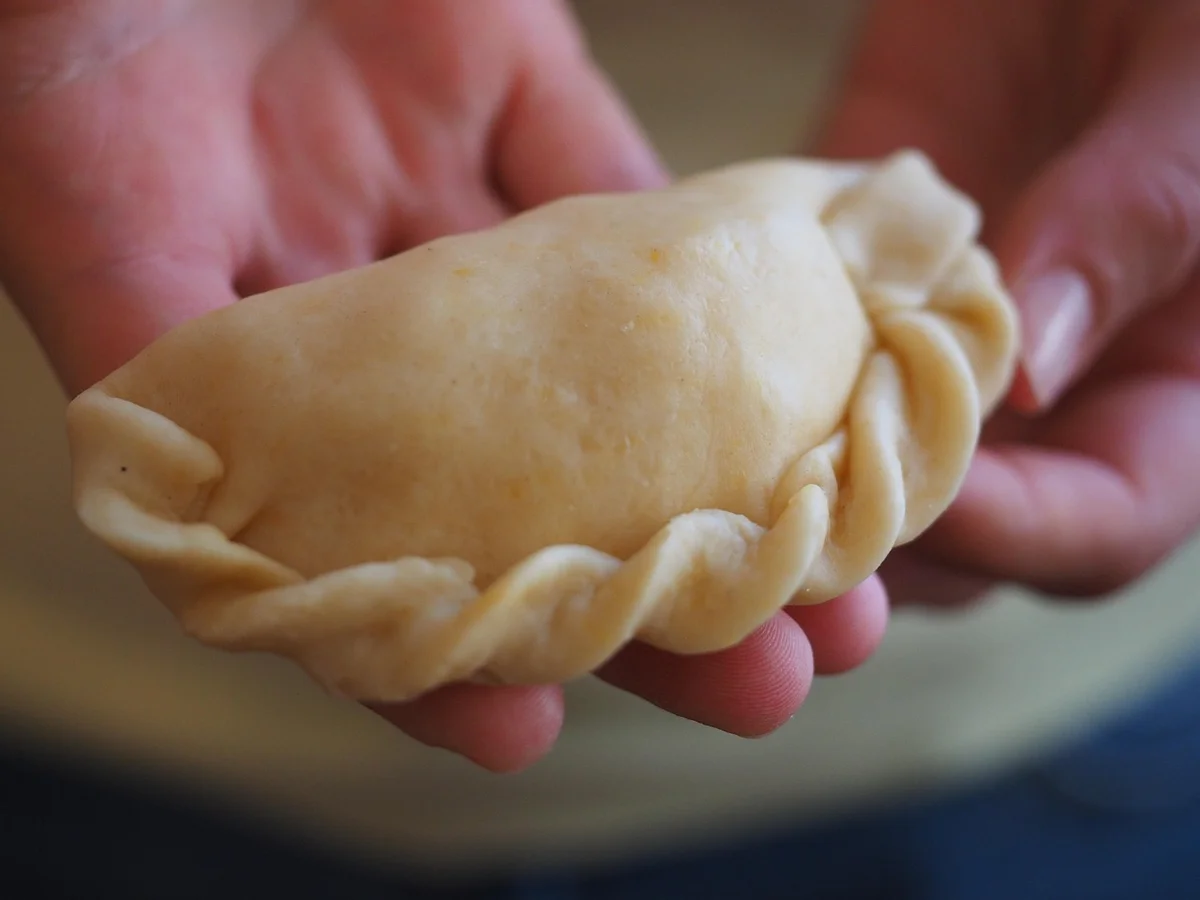
| Shape | Teardrop (thick repulgue along the top) | Half-moon |
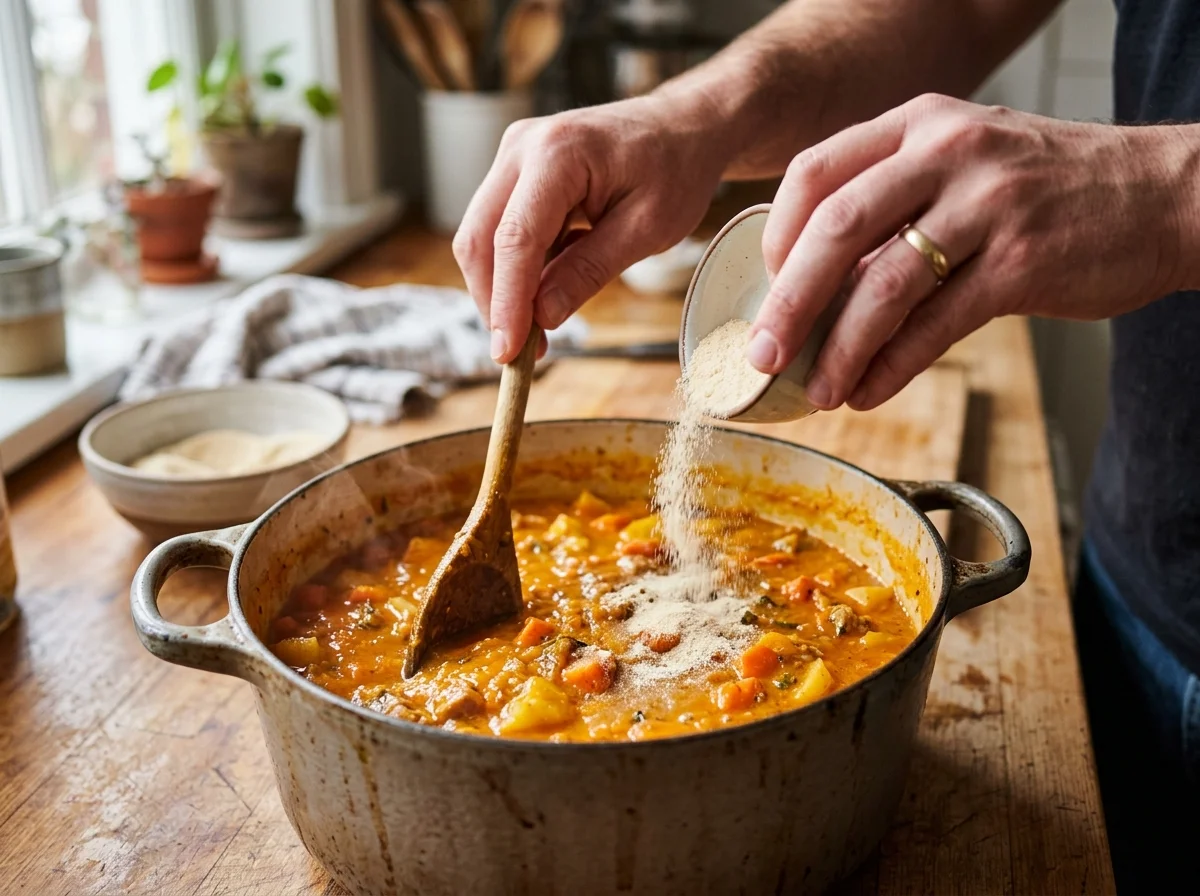
The biggest difference is how much liquid is in the filling. Argentine empanadas keep moisture to a minimum so they can be eaten by hand; salteñas go the other way, and the more broth, the better. To get that broth inside, the filling is set with gelatin before it's wrapped in dough, and as it bakes in the oven the gelatin melts back into soup.
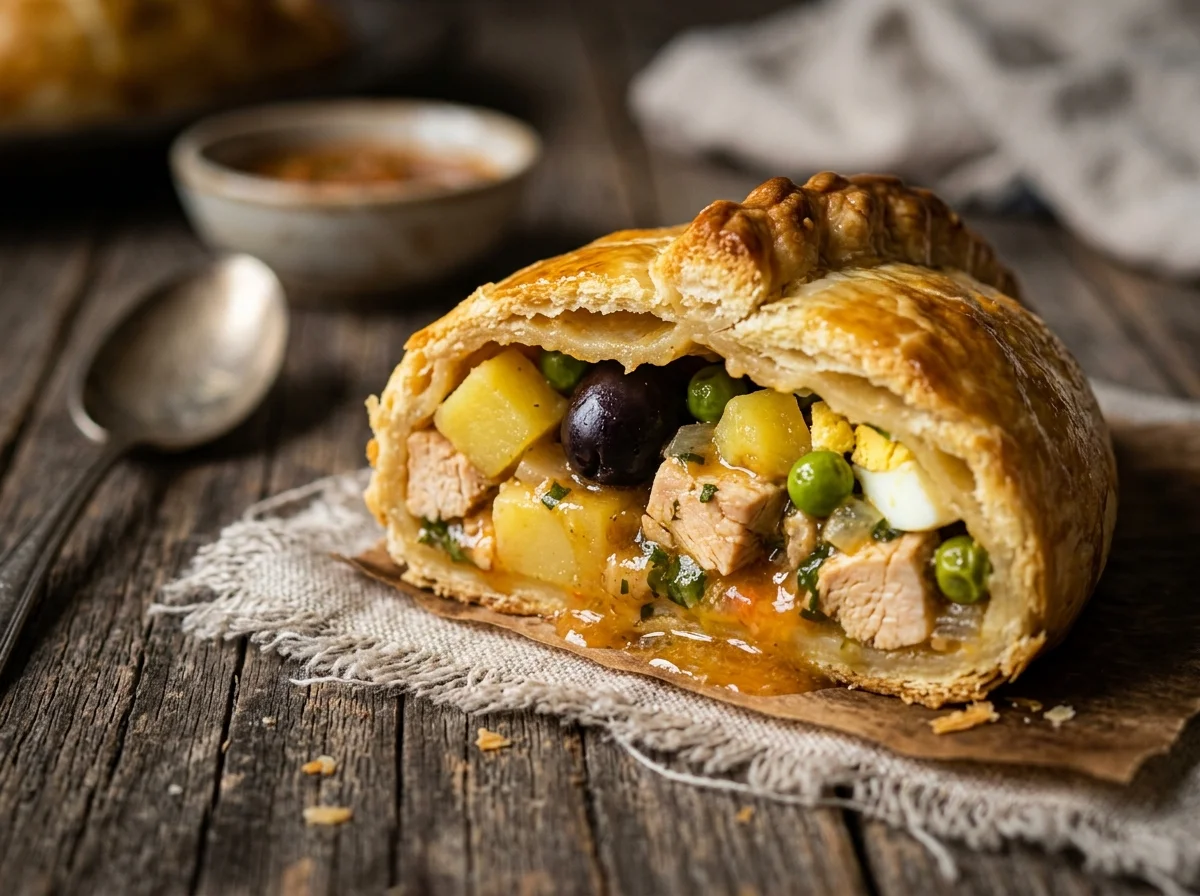
In Bolivia, "buenos jugos" (good juices) is the highest praise a salteña can get. Being called "secos" (dry) is the worst. The ideal is plenty of broth that gushes out the moment you bite in. A salteña with little broth gets dismissed as "no different from an empanada."
Ingredients (makes 12)
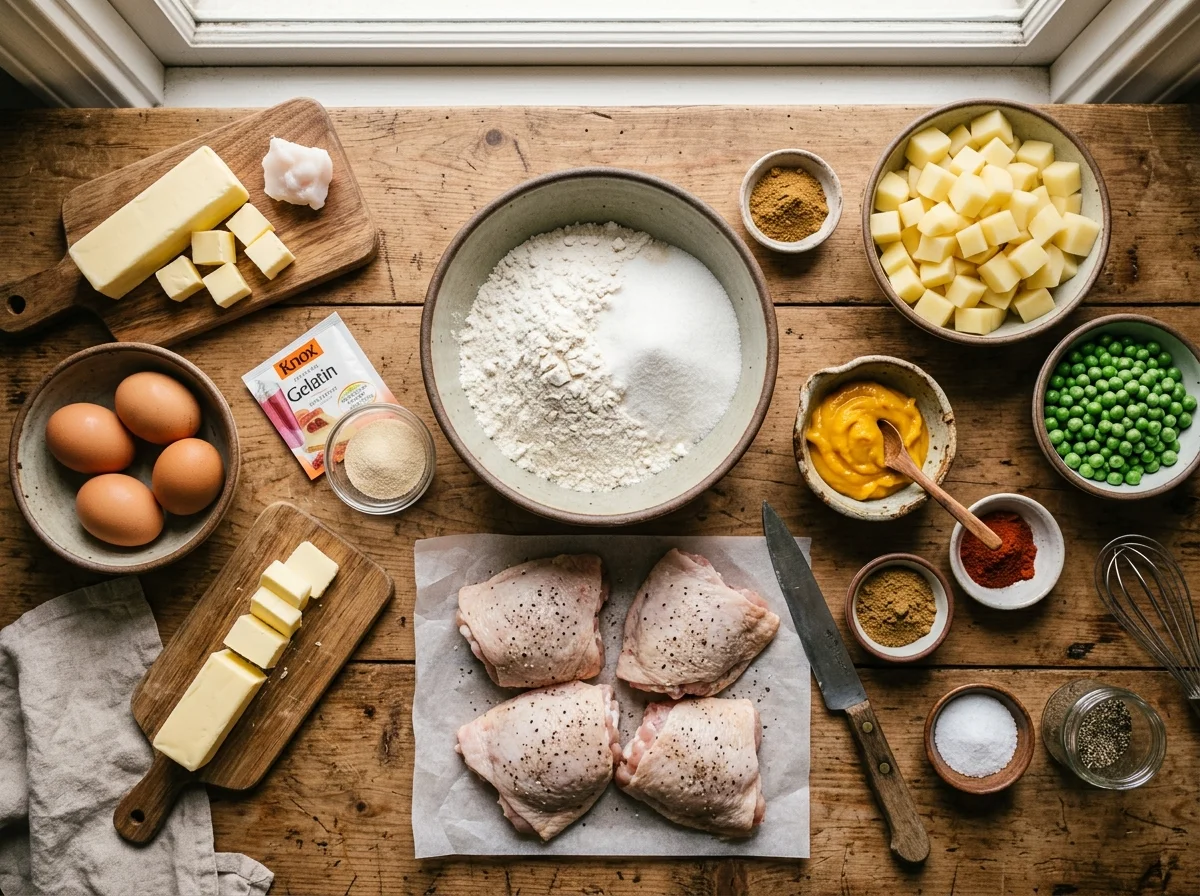
Aji amarillo is a paste of yellow chiles that is essential to Peruvian and Bolivian cooking. Look for it at Latin American grocery stores or online. If you can't find it, you can get close with 1 tsp turmeric (for color) + 1/2 tsp cayenne pepper (for heat) + 1 tsp paprika (for sweetness). It's also a basic seasoning in Peruvian dishes such as lomo saltado (in Japanese), so one jar goes a long way across South American cooking.
Method
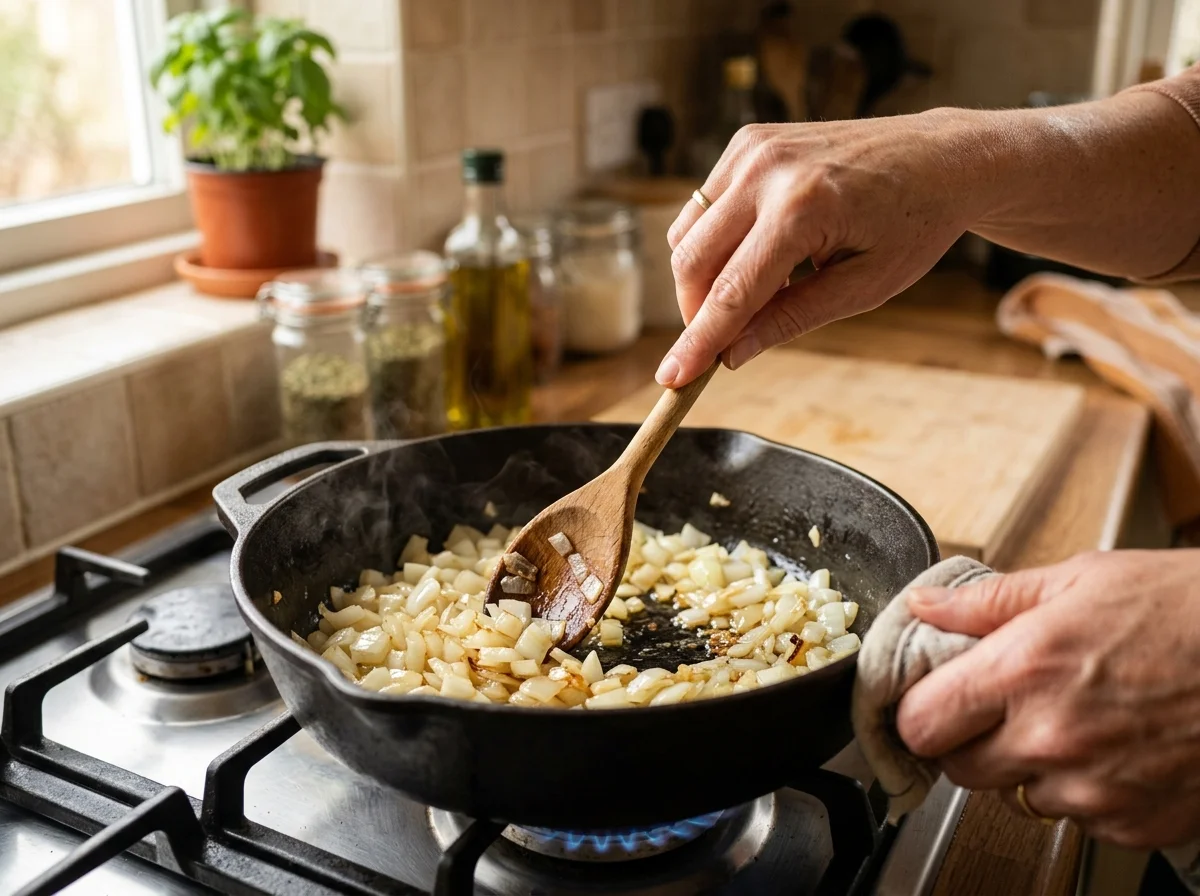
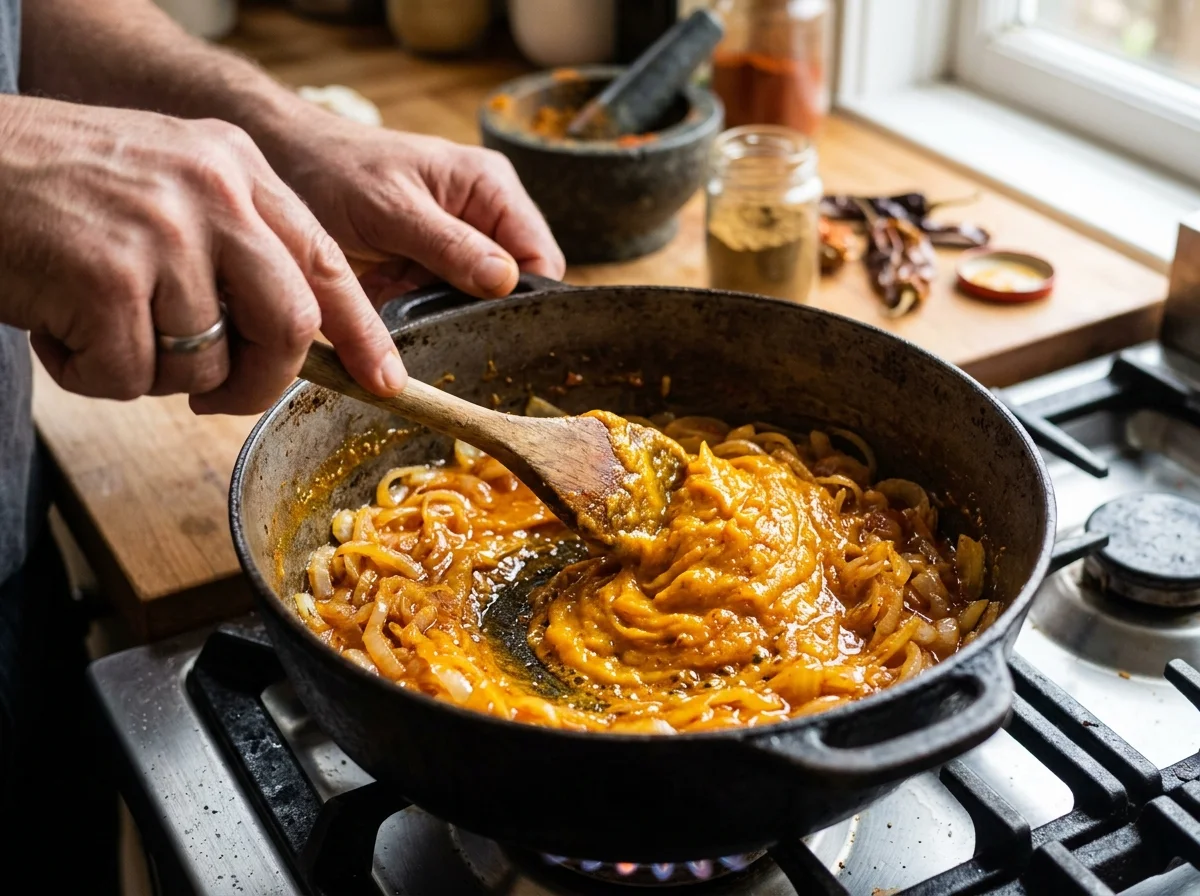
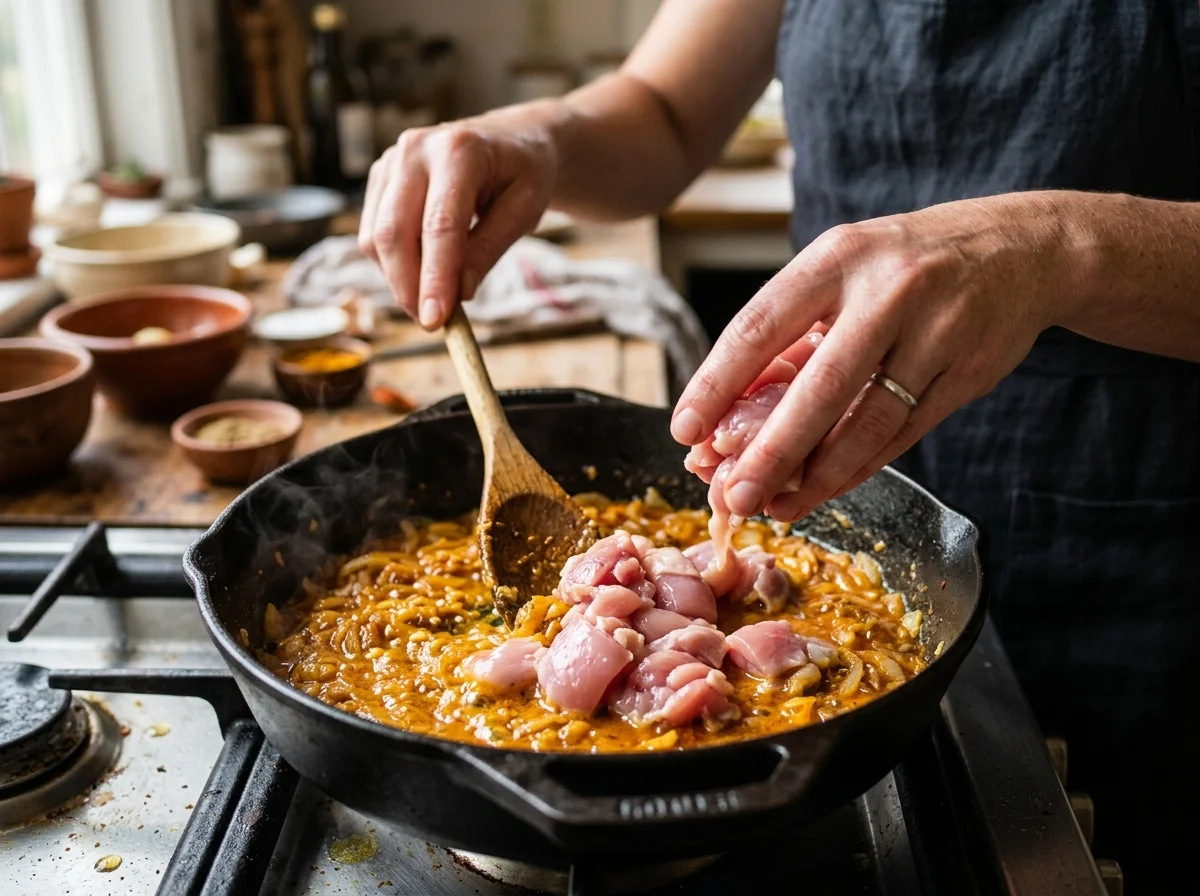
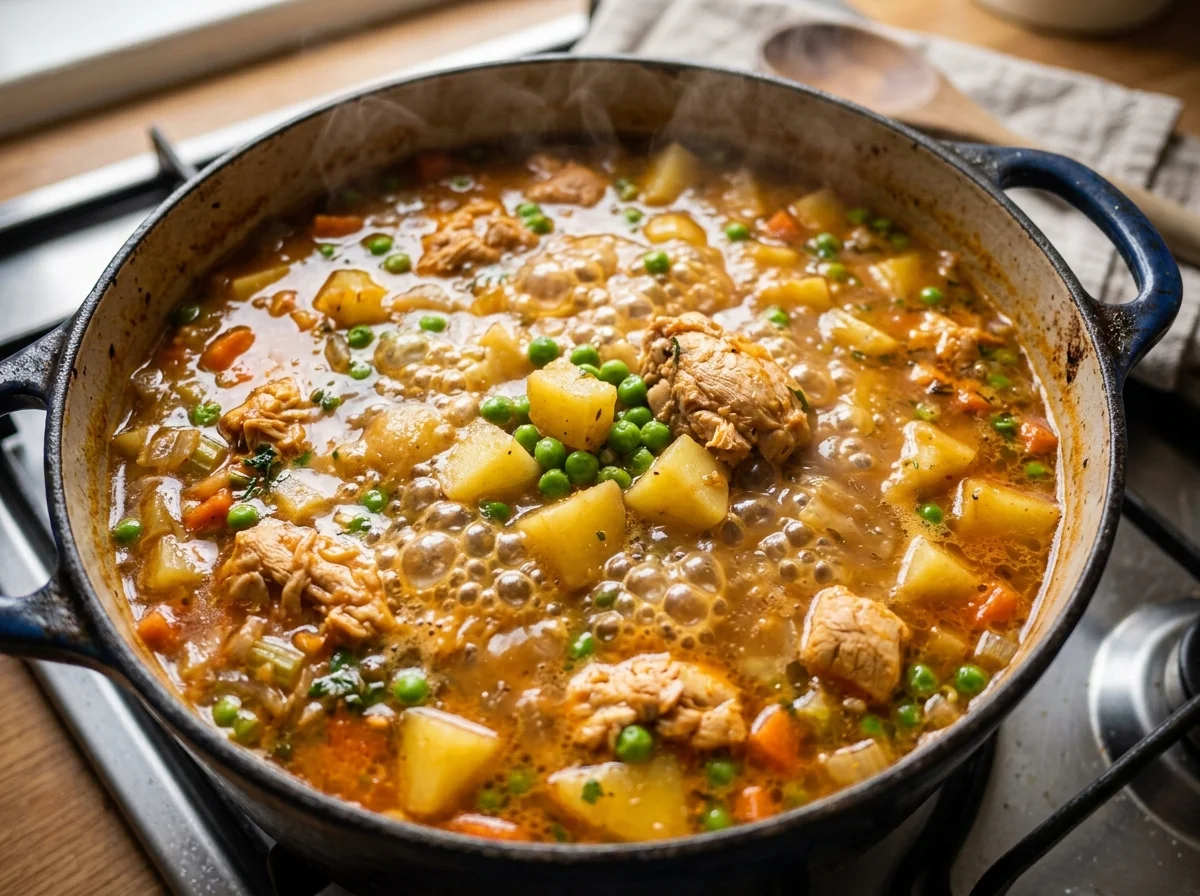
Make the filling (jigote): best done the day before
Ideally, make the salteña filling the day before and let it rest overnight in the refrigerator. The gelatin sets completely, and wrapping it in dough the next day becomes far easier.
The gelatin trick that puts the soup inside a salteña works exactly like it does in Chinese xiaolongbao. Gelatin turns liquid above about 40°C (104°F) and sets solid below about 15°C (59°F). Wrap the filling while it's cold, bake it in a 220°C (425°F) oven, and the gelatin melts into soup. Once you know this, it makes logical sense why the filling is made a day ahead and why it has to be cold.
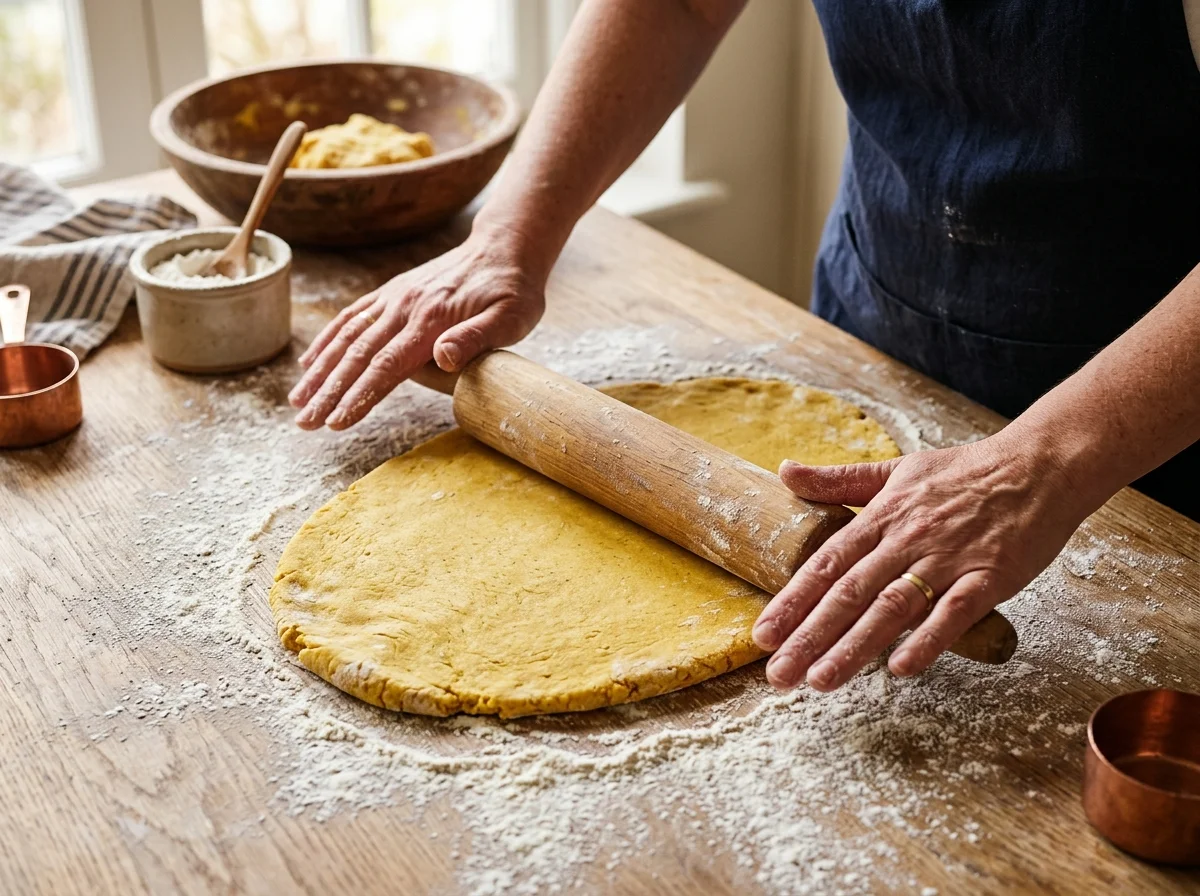
Make the dough
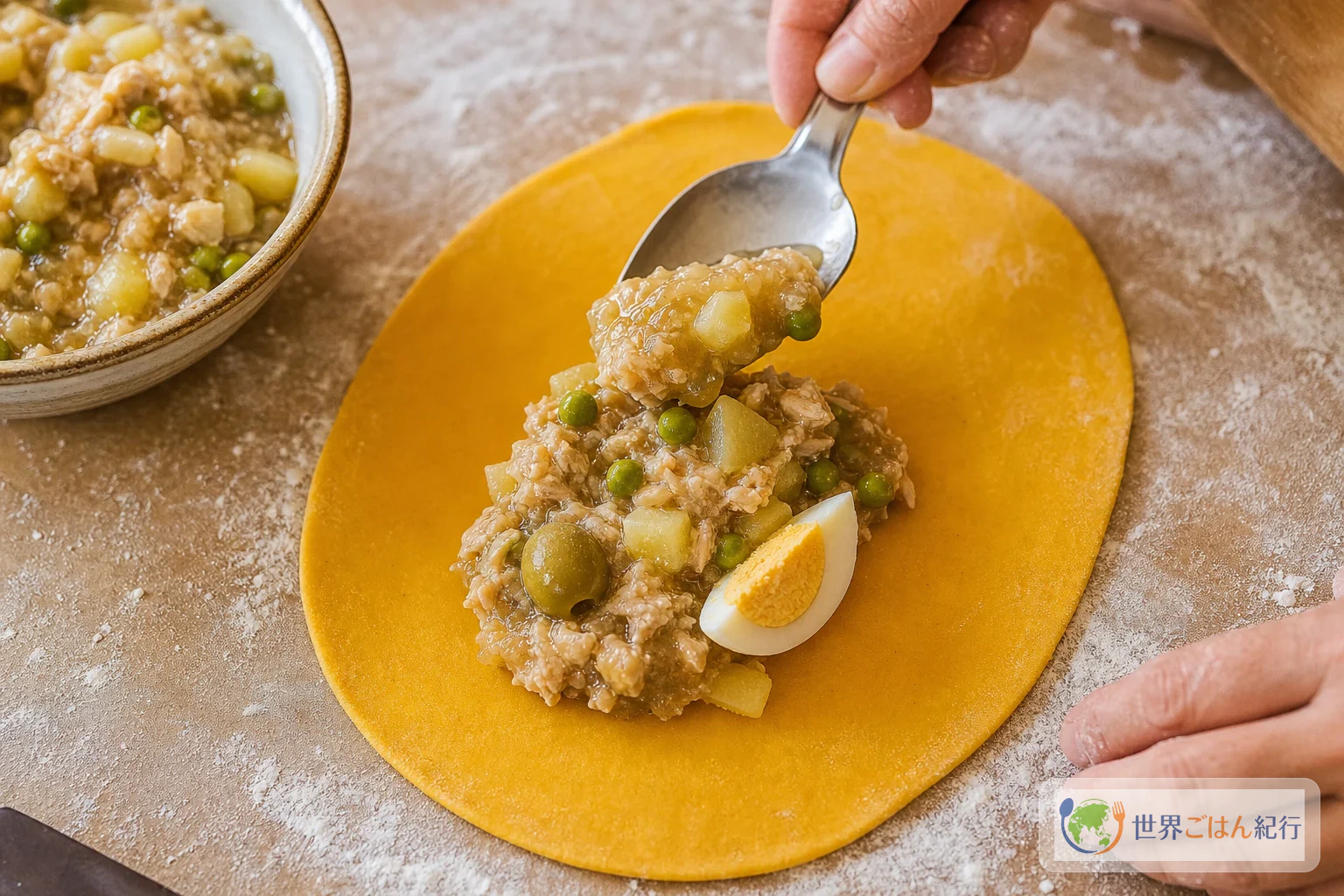
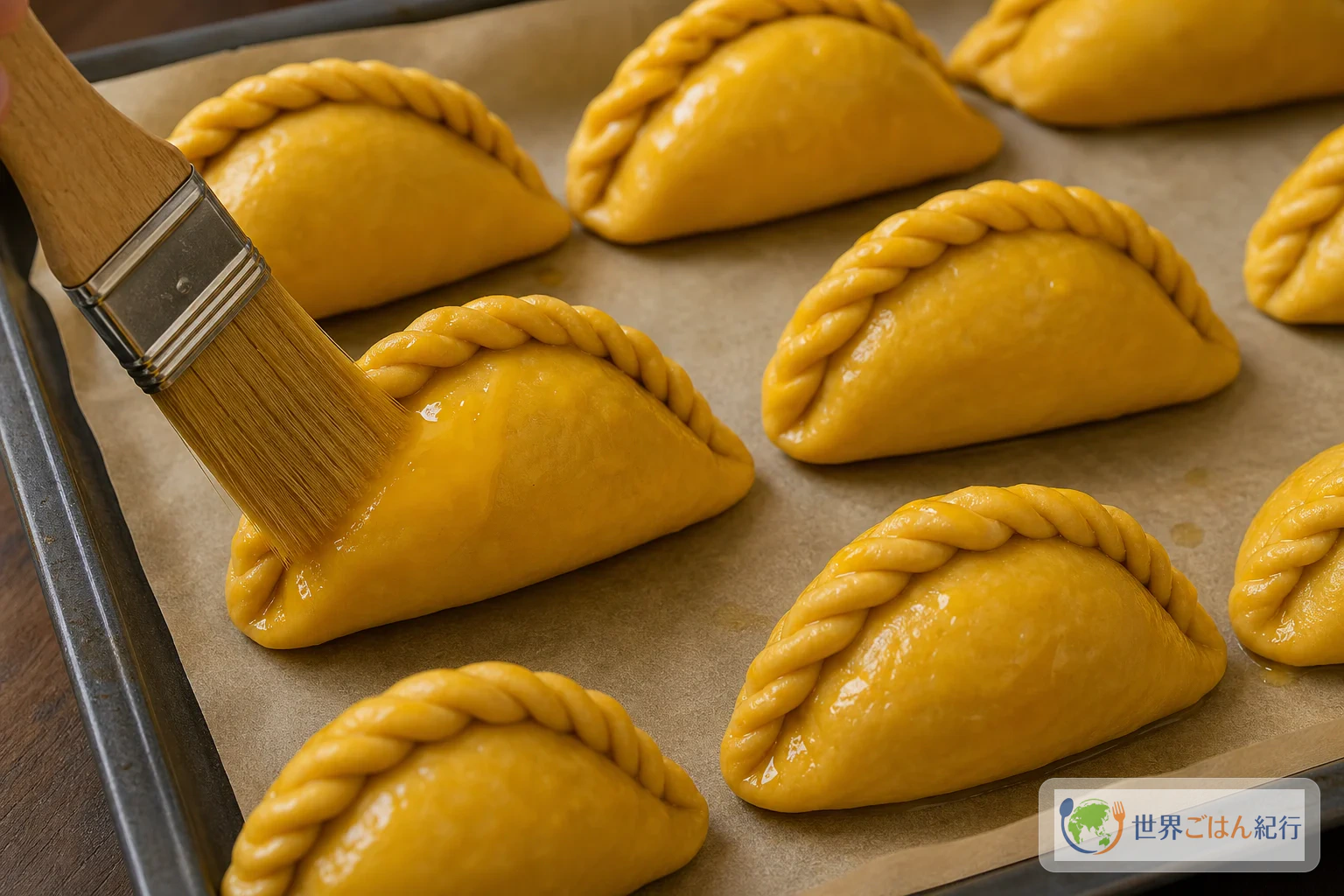
Fill and bake
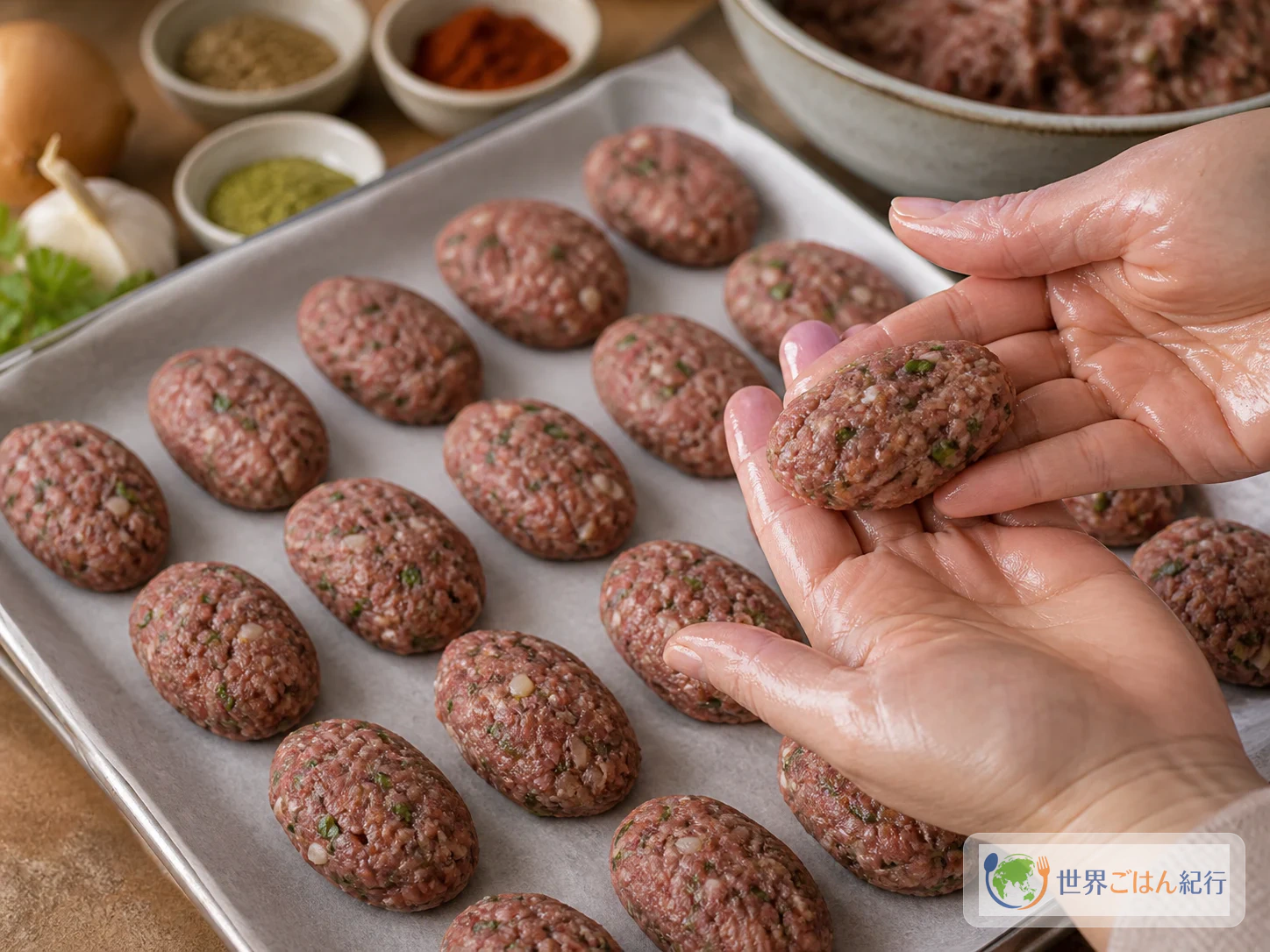
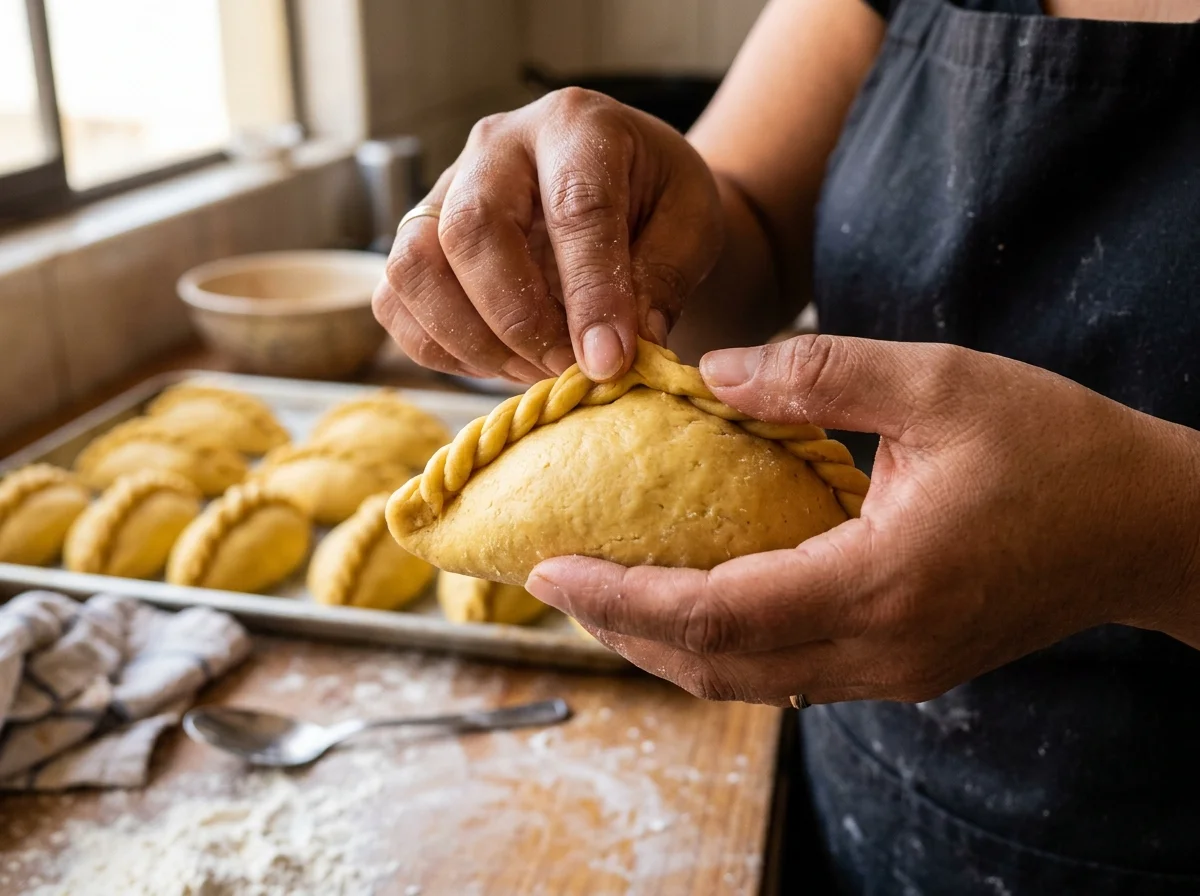
The hardest part of a salteña is baking it without losing the broth. Stick to these three points. (1) Make the repulgue thick and seal it with no gaps: any thin spot can burst open in the heat. (2) Wrap the filling while it's cold: if it has melted, it soaks the dough and makes holes. (3) Bake at 220°C (425°F): long baking at low heat evaporates the broth. Bake hot and fast.
How to eat a salteña: the art of not spilling the broth
In Bolivia, there are unspoken rules even for eating a salteña.
First, hold it upright, with the pointed end of the teardrop up and the round end down. Wrap the bottom half in a paper napkin and bite a small hole in the top.
Next, sip the broth through that hole. The moment the hot broth flows into your mouth is the salteña's greatest pleasure. Drink your fill of the broth, then keep biting your way down.
Finally, eat the crust and filling together. The repulgue (decorative seam) is thick dough, so some people leave it, but traditionally eating the whole thing is considered good manners.
Among Bolivians, staining your clothes while eating a salteña is a bit embarrassing. Finishing it without spilling a drop is a kind of "salteña literacy," and tourists dribbling broth down their shirts are a source of affectionate amusement for locals.
The history of the dish: a national snack with a disputed name
Empanadas spread across almost all of Latin America during the Spanish colonial period. In Bolivia, empanadas wrapped around a juicy filling suited to the cold highlands are thought to have developed in places such as the silver-mining city of Potosí.[1][2]
There's a well-known story behind the name "salteña." The family of Juana Manuela Gorriti (1818–1896), a writer from Salta in northern Argentina, moved to Bolivia to escape the political turmoil of the 1830s and sold empanadas to make a living, and these came to be called "the Salta woman's (empanadas)."[3][4]
Bolivian researchers and newspaper columns, however, also present the view that this story has little evidence behind it. According to that theory, juicy empanadas already existed in Potosí before the Gorriti family arrived, and the name "salteña" was attached later.[2][5] Which account is right hasn't been settled, so this article presents the salteña as a dish whose name has several origin stories.
Today the salteña is a national snack eaten in every one of Bolivia's 9 departments. Fillings and seasoning vary by region, and people from Cochabamba, Sucre and Potosí will each tell you their own city's salteña is the best. In La Paz and Santa Cruz, eating them on Sunday mornings is a particular custom, and many shops sell out before noon.[1]
Bolivia sits in the heart of South America and spans very different climate zones: the Andean high plateau (Altiplano), the subtropical valleys on the eastern slopes of the Andes (the Yungas), and the Amazon lowlands. In the highlands, potatoes and quinoa are staples; in the lowlands, yuca (cassava) and rice. The salteña is eaten nationwide because its filling is flexible enough to adapt to ingredients from any of these zones.
For a Bolivian dish tied to festivals and family memory, the doll-shaped bread tantawawa (in Japanese), offered on All Saints' Day, makes a striking contrast. If the salteña is the mid-morning snack, tantawawa is a sweet bread that carries the meaning of an offering, and reading the two side by side shows the range of the Bolivian table.
Cooking tips: how to keep the broth inside
1. Always make the filling the day before
The biggest factor in whether salteñas succeed is managing the filling's temperature. The gelatin-set filling has to be wrapped while it's cold, straight from the fridge. Left at room temperature, it starts to melt, the dough absorbs the liquid and turns sticky, and sealing becomes difficult.
The surest approach is to make the filling the night before and chill it overnight in a tray in the fridge. On the day, leave the filling in the fridge while you make the dough, and take out only what you need right before wrapping.
2. Don't fear the sweet dough
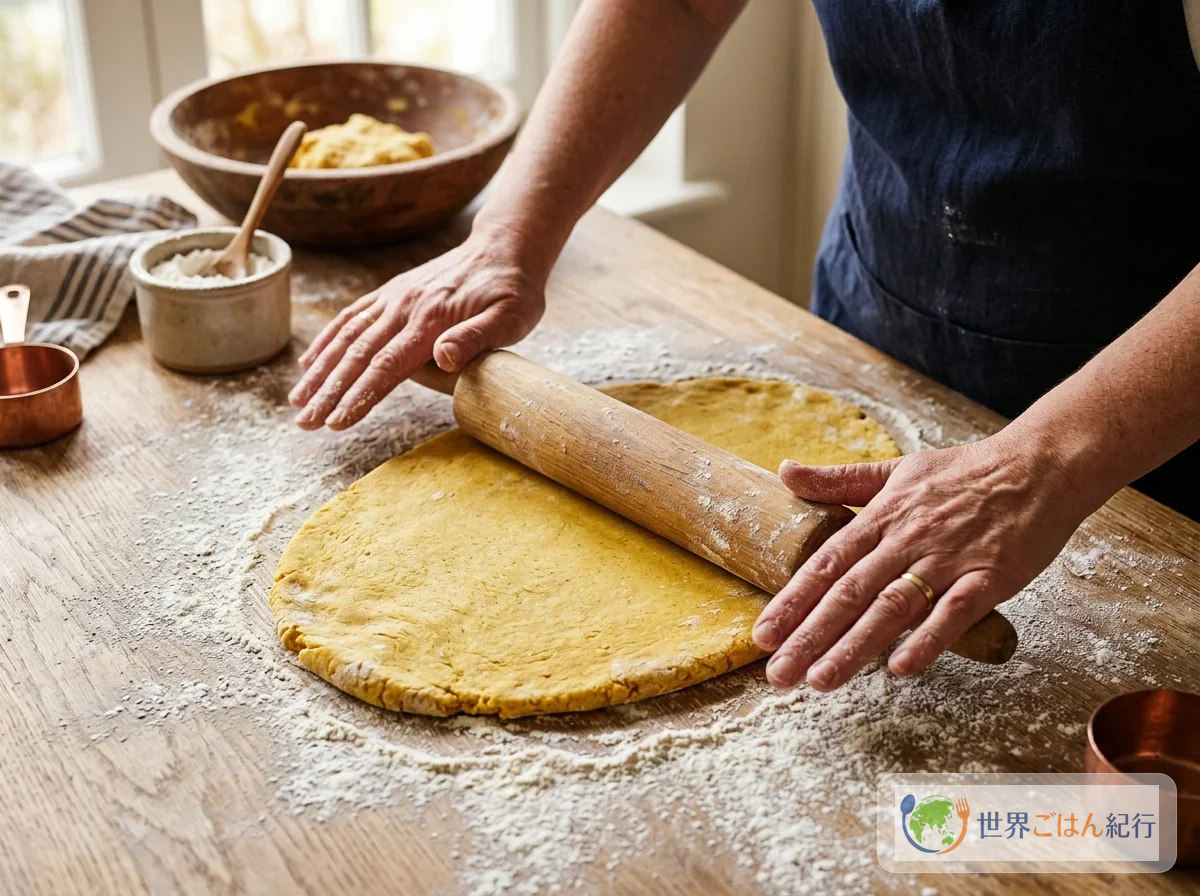
To many home cooks, a "meat pie with sweet dough" may sound odd. But that sweetness is the essence of the salteña. The sugared dough balances the heat of the aji amarillo and the saltiness of the broth, creating a complex harmony of sweet, spicy and salty. It's the Latin American "sweet-and-spicy aesthetic," related to the chocolate-and-chile pairing in mole poblano.
3. Practice the repulgue
The hardest part of shaping salteñas is the repulgue, the decorative seam along the top. The way it's folded varies by region: a thick rope pattern is common in La Paz, and fine pleats in Sucre.
If you're making them for the first time, simply pressing the edge with a fork works fine functionally. If you care about looks, practice a few times with leftover dough before wrapping the filling.
4. Don't skip the aji amarillo
Aji amarillo determines both the flavor and the color of a salteña. Without this yellow chile paste, you can't reproduce the distinctive orange filling. Like leche de tigre (tiger's milk), which is essential to ceviche (in Japanese), aji amarillo is a foundational ingredient of Andean cooking.
If you substitute, a mix of turmeric (color) + cayenne pepper (heat) + paprika (sweetness) comes close, but it won't match the real flavor.
5. Stick to 220°C (425°F)
Salteñas are baked hot and fast. At 200°C (390°F) or below, the dough dries out before the gelatin inside melts, and the result is a "salteña with no broth," in other words just an empanada. At 250°C (480°F) or above, the dough burns. 220°C for 20–25 minutes is the sweet spot.
6. How to recover when things start going wrong
Salteñas take a long time to make, and at some point you may think, "this one's going to leak." Don't give up; fix it according to what's happening.
| Problem | Cause | Fix |
|---|---|---|
| Filling is too loose | Not chilled enough, not enough gelatin | Put it back in the tray and into the freezer for 30 minutes. If it still runs, dissolve 3 g powdered gelatin in a little warm broth, mix it in and chill again |
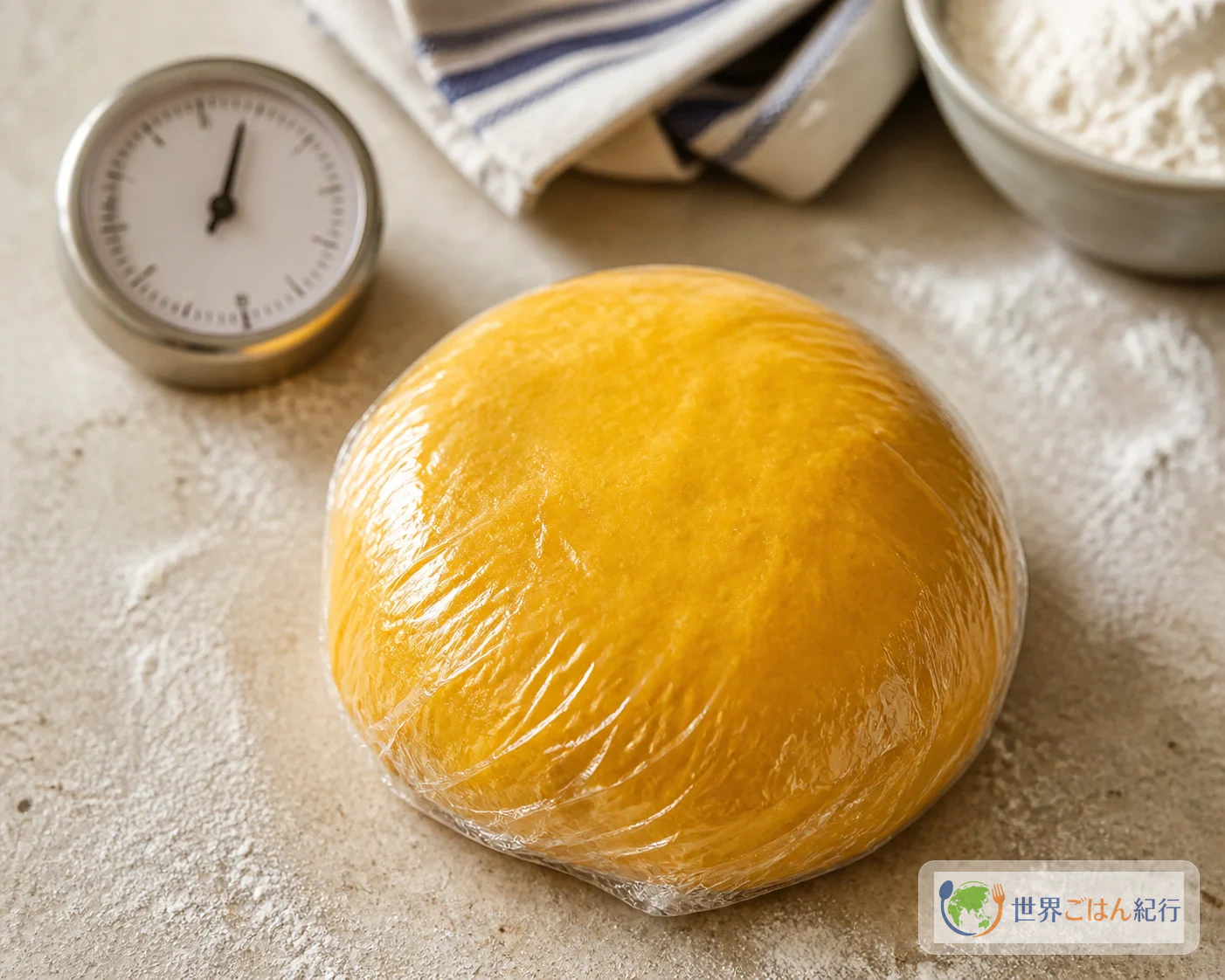
| Dough is sticky | Warm hands, too much water | Add dusting flour 1 tsp at a time. If the whole dough has gone slack, wrap it in plastic and chill in the fridge for 15 minutes |
| Seam lifts | Overfilled, oil on the edge | Use a little less filling, wipe the edge with a dry finger, then brush on a thin layer of water again |
| Broth leaks early in baking | Gaps in the repulgue, a hole in the bottom | Move that one to the edge of the baking sheet and fold up a bit of the parchment to catch the liquid so it doesn't spread. Use less filling in the next batch |
The most important thing is not to wrap all 12 with the same amount from the start. Treat the first 2 as test runs with less filling, check the thickness of the seam and how much broth is left after baking, then wrap the rest. Even with a home oven, your success rate goes up.
Salteña variations
Chicken (Salteña de Pollo)
The recipe in this article is the chicken version. It's the most popular variation in Bolivia and especially loved in Sucre and Cochabamba. The chicken's savoriness melts into the broth for a comparatively light flavor.
Beef (Salteña de Carne)
Use beef shank cut into 1.5 cm cubes. It's known for a richer broth than the chicken version, and in La Paz it rivals chicken in popularity. If you like beef stews, try feijoada as well. For the beef version, extend the simmering time to 30 minutes and cook until the meat is tender.
Spicy (Salteña Picante)
This version doubles the aji amarillo and adds locoto (rocoto), a fleshy, fiery Andean chile. It's popular with young Bolivians, and at a salteñería you just ask for "picante." If you like heat, try adding an extra 1 tsp cayenne pepper.
Vegetarian (Salteña de Verduras)
Use squash, carrots, zucchini and corn instead of chicken, and vegetable broth instead of chicken broth. In recent years, more salteñerías in urban La Paz and Cochabamba have been offering vegetarian salteñas for health-conscious young people. Adding quinoa or beans makes it easy to build a plant-based South American meal.
Bolivian cities for salteñas
La Paz
La Paz, the seat of government at more than 3,600 m above sea level, is the center of salteña culture. Around Plaza Murillo in the old town, salteñerías open from 7 a.m. line the streets. Salteñas in La Paz are especially brothy, and many shops pride themselves on being "jugosas" (juicy).
Sucre
Sucre, the constitutional capital, is another city proud of its salteñas. Salteñas in Sucre are a little smaller than those in La Paz, with a thicker crust.
Cochabamba
In Cochabamba, called "Bolivia's food capital," salteñas get their own twist too. The Cochabamba version is generously filled, with raisins, hard-boiled egg and olives on top of the chicken.
FAQ
Salteñas are among the more difficult dishes in South American cooking. The technique of sealing soup inside and baking it may feel unfamiliar at first. We recommend a trial run of 4–6 to check the firmness of the filling, the thickness of the dough and how well the repulgue seals before tackling a full batch of 12.
Q1. Can I freeze them?
Yes, before baking. Arrange them on a baking sheet, cover with plastic wrap and freeze quickly, then transfer to a zip-top freezer bag. Use within 1 month. Bake straight from frozen, adding 5 minutes to the baking time.
Q2. Can I make them without gelatin?
If you leave out the gelatin, the filling won't turn soupy and you'll end up with a "dry empanada." The broth inside is the heart of the salteña, so we strongly recommend using gelatin. If you need a plant-based gelling agent, agar can be substituted, but it melts at a different temperature, so the result will be different.
Q3. Can I use Argentine empanada dough instead?
You can, but it becomes something different from a true salteña. Salteña dough is sweet with sugar, and that sweetness contrasts with the spicy filling. Using Argentine empanada dough (salt only) makes the flavor balance flat.
Q4. Why are they eaten in the morning?
In Bolivian food culture, lunch is the main meal of the day. Breakfast is light, lunch is a big meal around 1–2 p.m., and dinner is light again. Salteñas became a habit as a bridge between breakfast and lunch, eaten around 10 a.m. They're filling and satisfying, which makes them ideal for curbing mid-morning hunger. It's also fun to compare them with another South American hand pie, the empanada (in Japanese).
Sources
- [1] Wikipedia, "Salteña" https://en.wikipedia.org/wiki/Salte%C3%B1a (accessed 22 October 2026): regional differences in Bolivia, when they're eaten, the Potosí origin theory
- [2] Correo del Sur, "Aclaran cuál es el origen potosino de la salteña" (2020) https://correodelsur.com/cultura/20201113/aclaran-cual-es-el-origen-potosino-de-la-saltena.html (accessed 22 October 2026)
- [3] Correo del Sur, "La jugosa y picante historia de la «salteña»" (2017) https://correodelsur.com/ecos/20170910/la-jugosa-y-picante-historia-de-la-saltena.html (accessed 22 October 2026)
- [4] Wikipedia, "Juana Manuela Gorriti" https://en.wikipedia.org/wiki/Juana_Manuela_Gorriti (accessed 22 October 2026)
- [5] Los Tiempos, "Salteñas" (column, 2019) https://www.lostiempos.com/actualidad/opinion/20190919/columna/saltenas (accessed 22 October 2026)