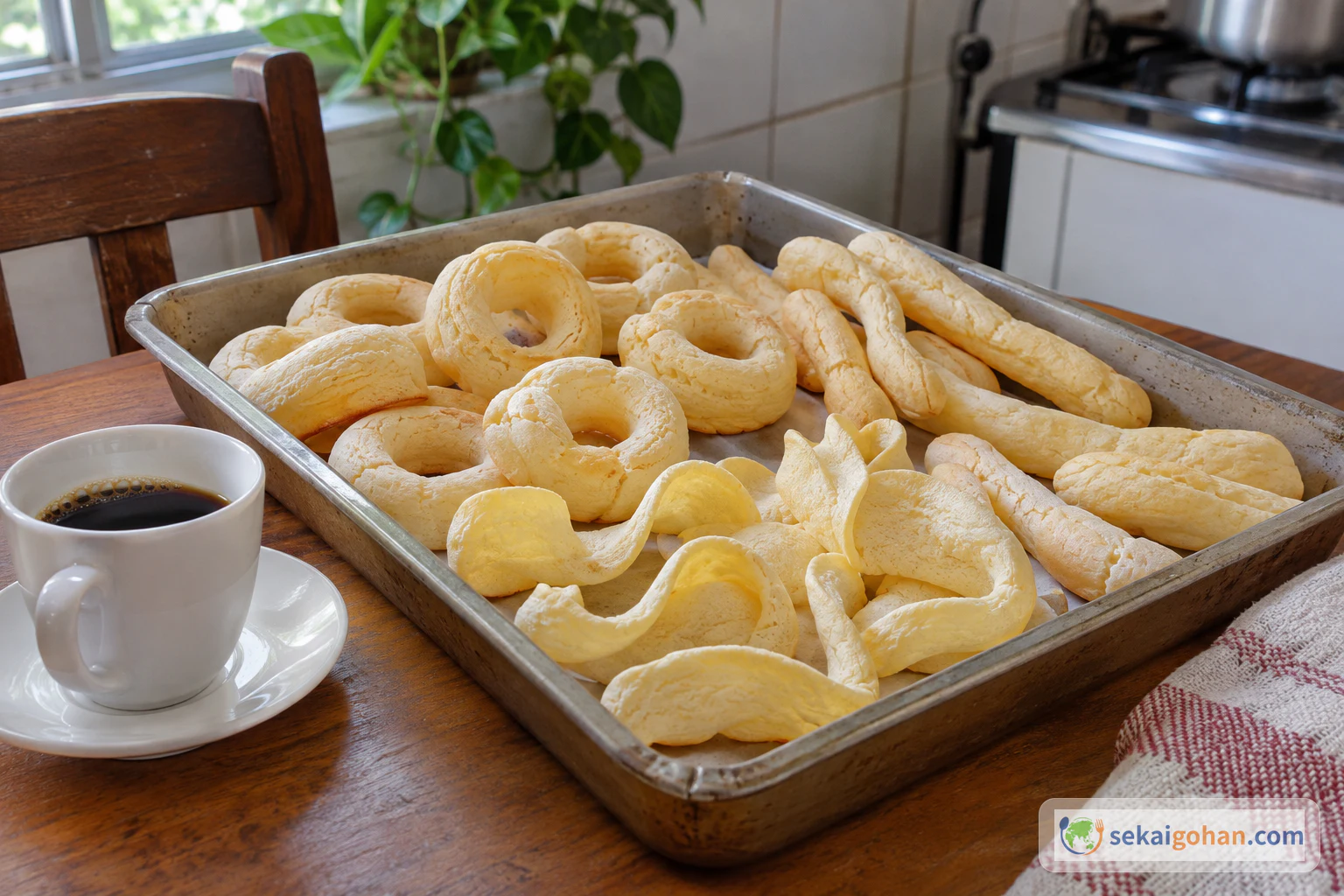
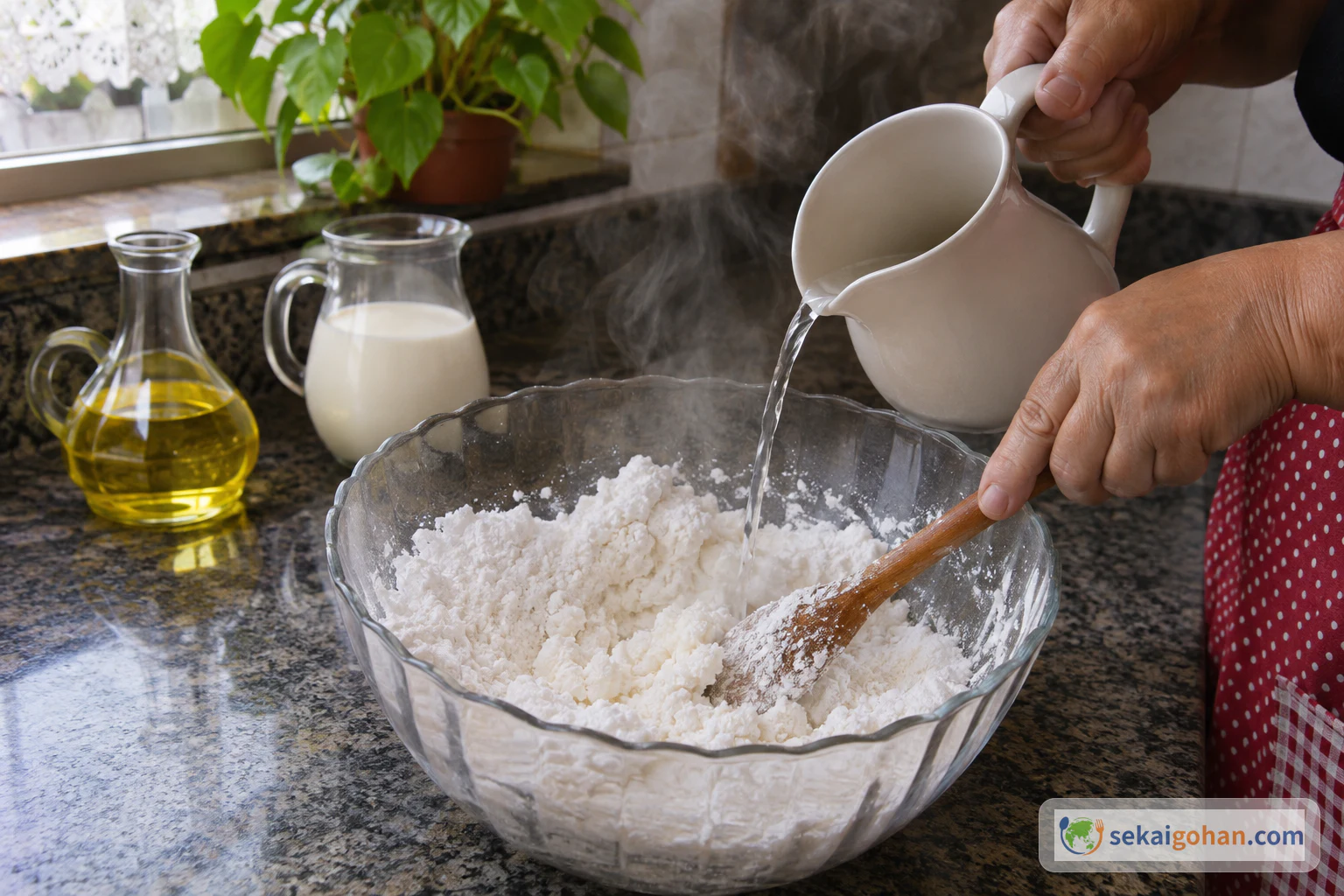
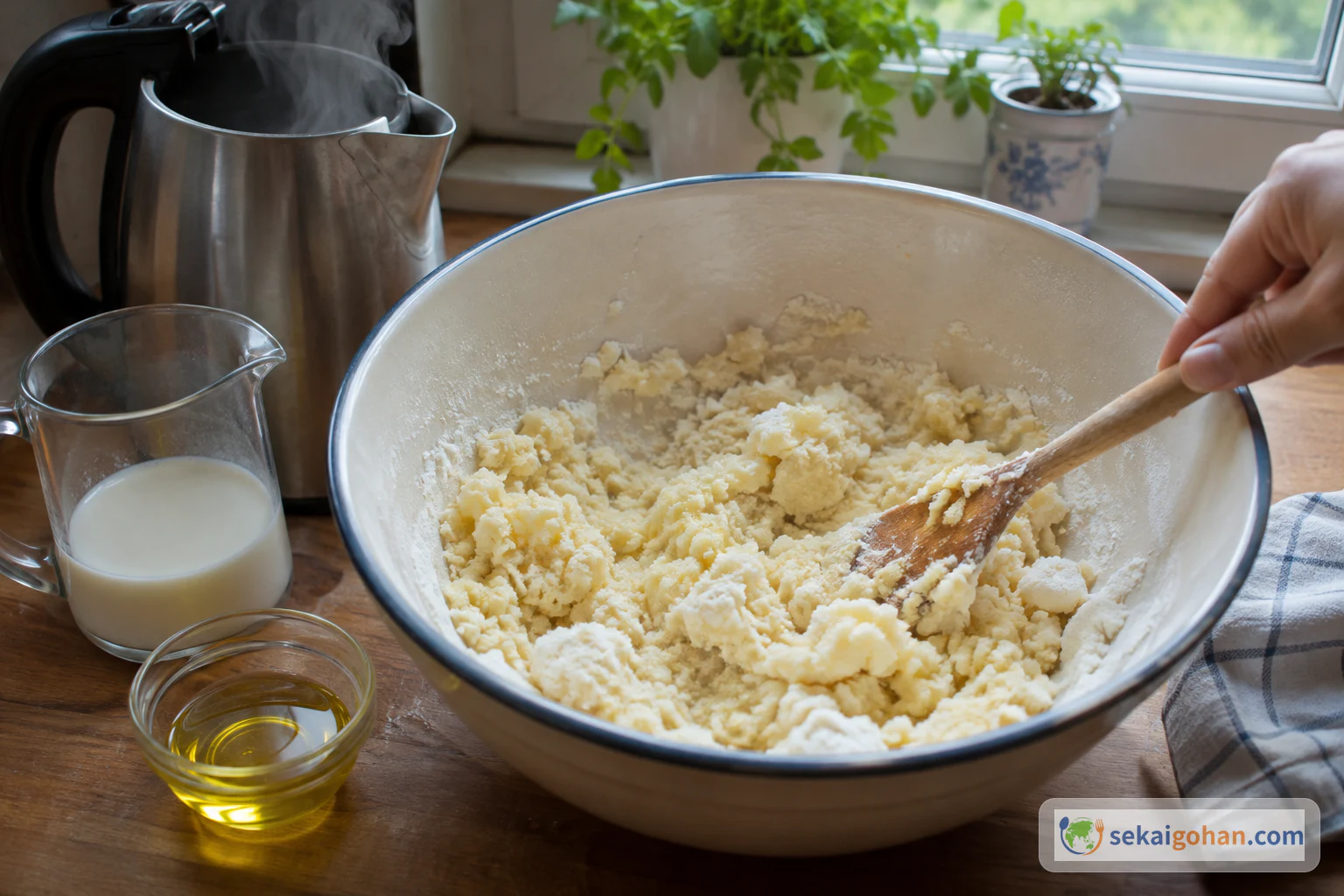
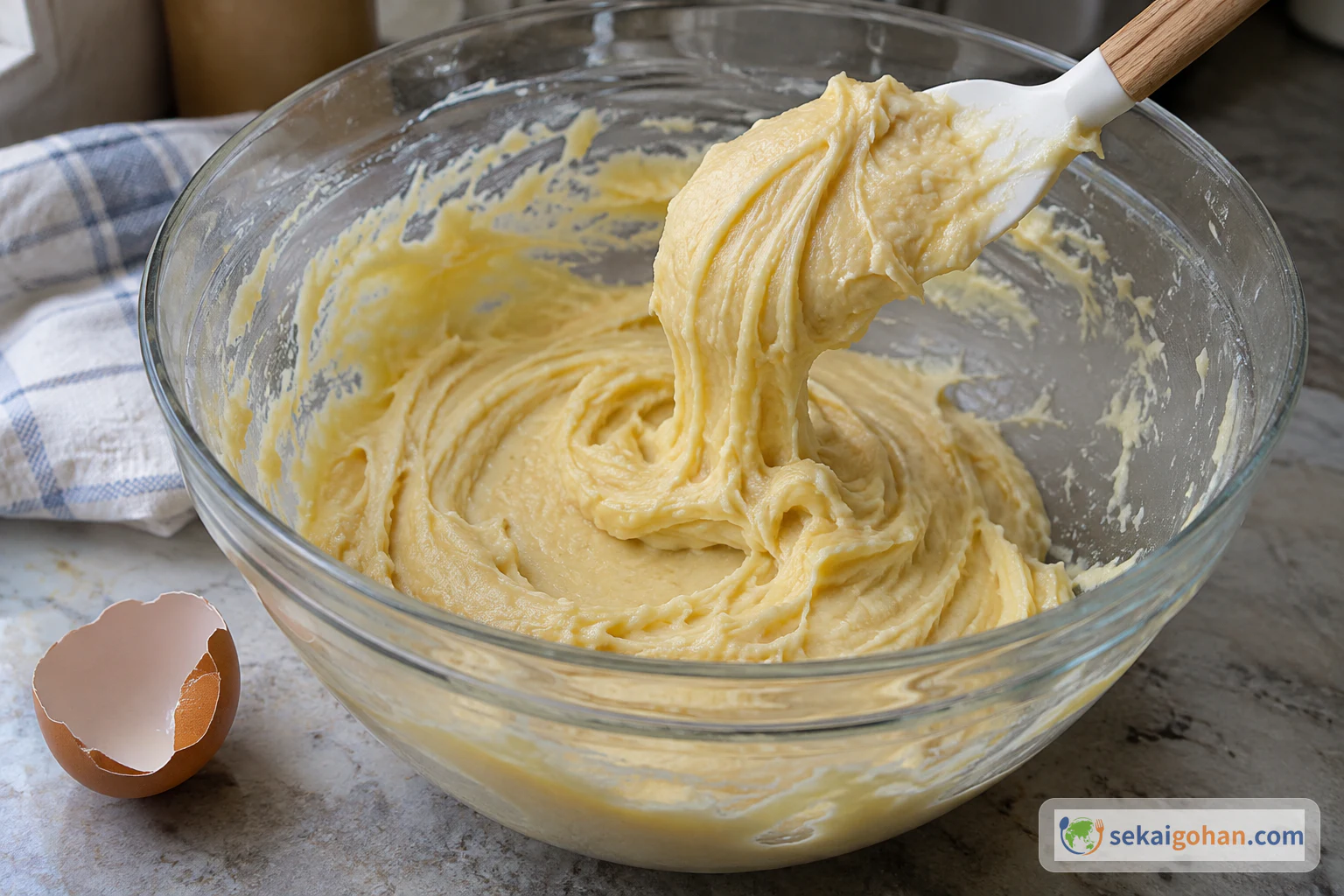
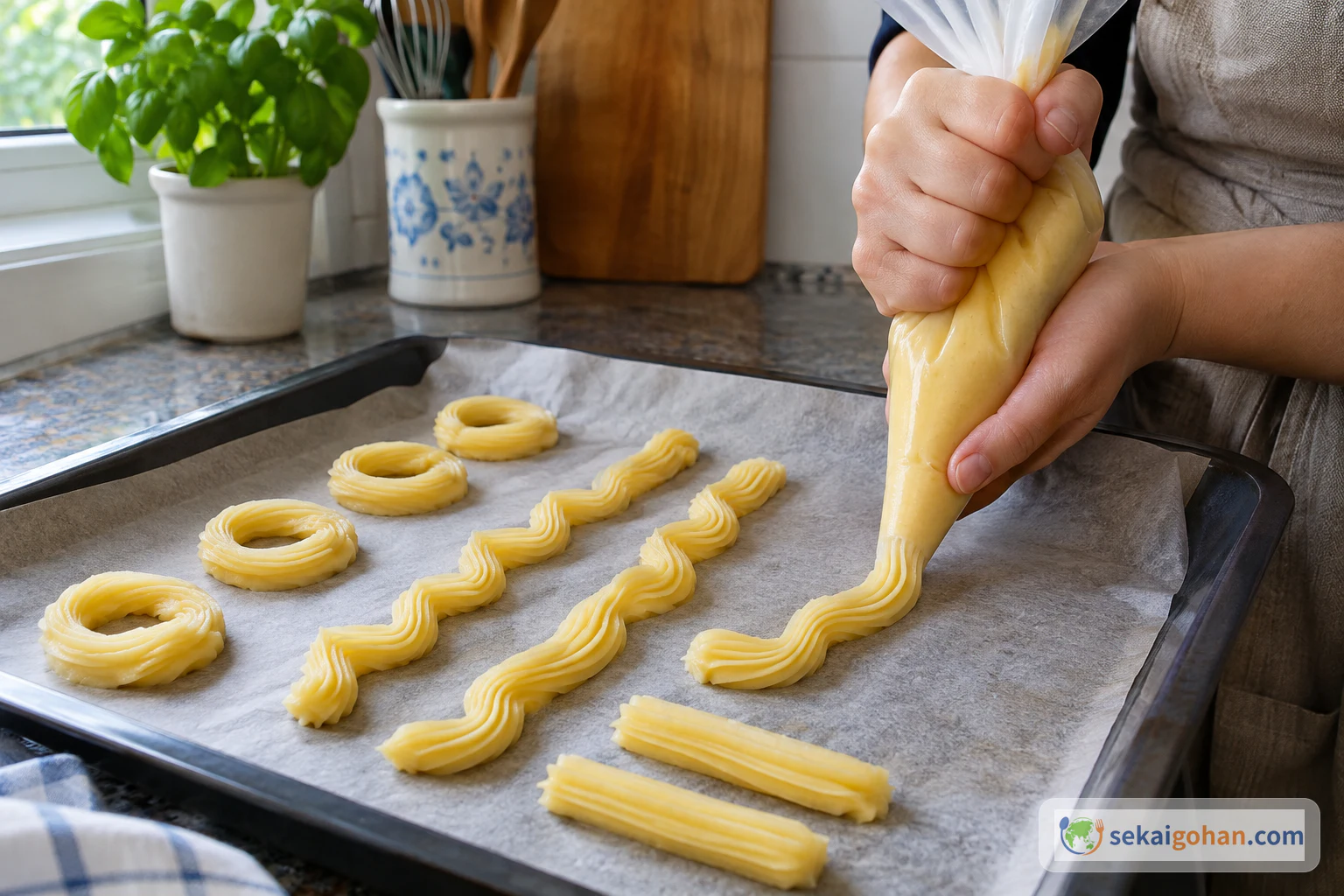
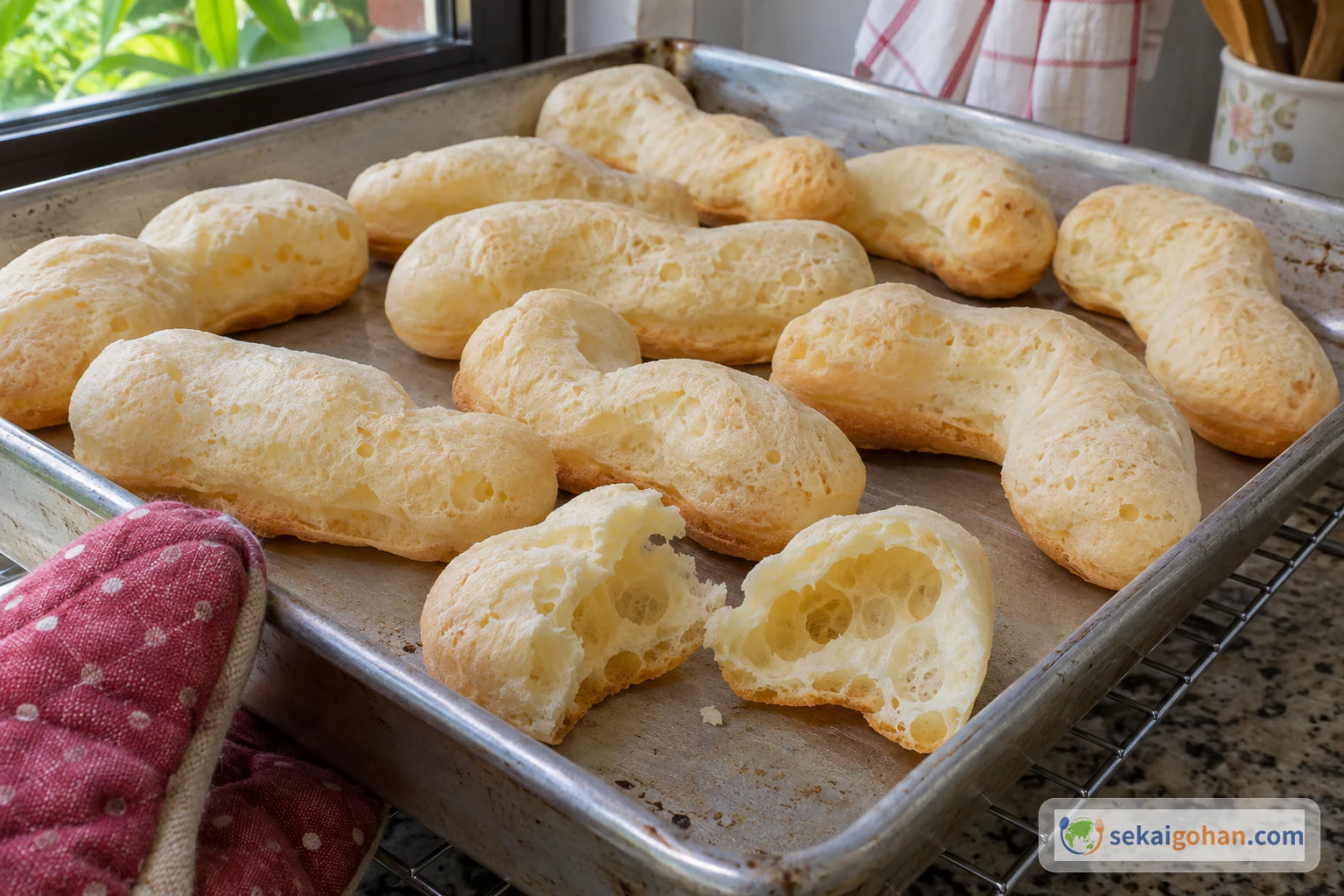
Freshly boiled water goes over a bowl of fine white starch. Under the wooden spoon the powder clumps, steams and turns into damp, uneven crumbs. That moment of scalding the starch is where biscoito de polvilho starts. Oil, milk and one egg follow, and the crumbs loosen into a thick, smooth batter that you pipe onto a tray in rings, sticks and ribbons. In the oven they puff up and come out pale with golden bases. The result is a dry, light Brazilian biscuit that breaks with almost no effort. It is made from sour cassava starch, it contains no cheese, and it is at its best next to a cup of black coffee.
Chimango, the Other Polvilho Classic
Outside Brazil, most people know cassava starch through pão de queijo, the cheese bread rolled into balls that bakes up chewy. Biscoito de polvilho uses the same family of starch and goes the other way. There is no cheese and no kneading. The dough is soft enough to pipe, and the baked biscuit is crisp and airy instead of chewy. It is a snack to keep in a tin and eat by the handful, often with coffee in the afternoon.
The biscuit goes by more than one name. In some places it is called chimango, and you may also hear peta. It is usually linked to Minas Gerais in the eighteenth century, but where it was first made is not settled. Today it is a snack of Brazil, made at home from a single bowl of dough.
Several snacks share the name or look similar, and they are different things. Biscoito de polvilho is mainly a baked biscuit (assado). Fried versions use their own dough. Biscoito de vento leans on sweet starch and its own proportions. The ring-shaped biscoito globo sold on beaches is a separate snack. The recipe below is the baked biscuit made with sour starch, nothing else mixed in.
Polvilho is the Portuguese word for this cassava starch. It comes in two kinds, azedo (sour) and doce (sweet), and the label always tells you which one is inside. This biscuit is made with polvilho azedo. It is not the coarse, toasted cassava flour that goes into farofa.
Ingredients (makes about 65 biscuits)
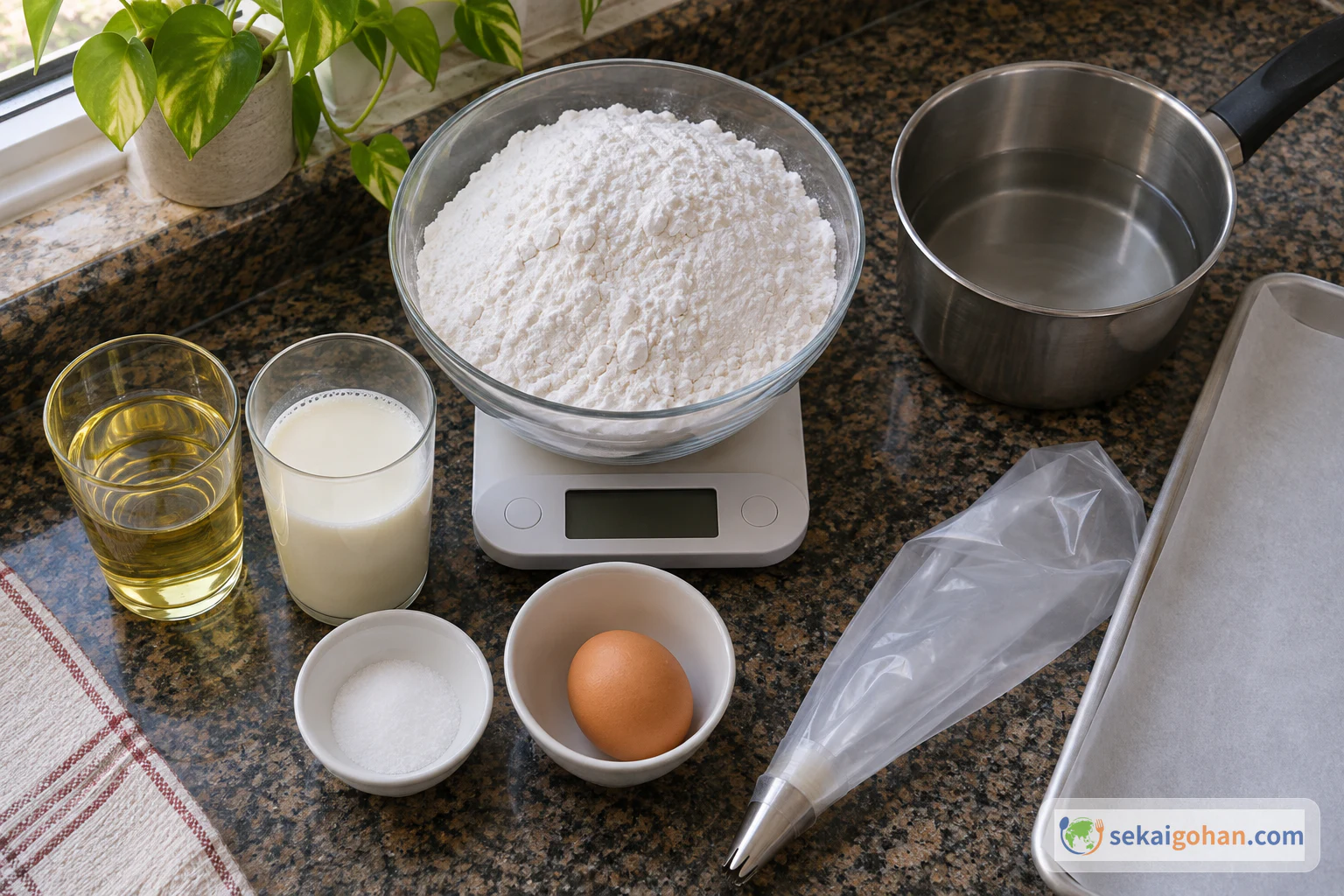
The biscuits are piped thin, so the count follows the size and thickness of your shapes. Use a neutral oil. A strongly flavored oil comes through in a biscuit this plain.
This dough contains milk and egg. Check the labels of the starch and the oil for any other allergens that matter at your table.
The water, oil and milk each go in half at a time, and you may not need all of them. Pour each into its own jug before you start. Then you can add a little, stop and feel the dough without having to measure in the middle of mixing.
Equipment
- Kitchen scale
- Large mixing bowl
- Wooden spoon or sturdy spatula
- Kettle or small pot for boiling water, and a heatproof measuring jug
- Measuring jugs for the oil and milk
- Piping bag, or a strong plastic bag with one corner cut off
- Baking tray
- Oven mitts
Choosing the Starch and What to Swap
The one thing to hunt down is polvilho azedo. Look for it at Brazilian grocers and through online shops that import Brazilian food. The bag will say "polvilho azedo". Sour starch comes from cassava starch that ferments naturally, without any added culture or nutrients, and the fermentation is driven mainly by lactic acid bacteria. Cassava starch itself is about 98% granular starch. Buy a commercial bag. Fermenting the starch yourself is not part of this recipe.
Polvilho doce, the sweet kind, gives a different texture and belongs to other recipes. Keep it out of this one. Tapioca starch (tapioca flour) is a different product from polvilho azedo, and the rise and texture can come out differently. Potato starch, wheat flour and toasted cassava flour are also different products, so do not treat them as the same thing.
Everything else is flexible. Any neutral vegetable oil works, and ordinary milk works as long as it has come to room temperature. A strong plastic bag with a corner cut off can stand in for a piping bag. The scale matters more than any other tool, because the starch is measured by weight.
Method
Everything happens in one bowl and moves quickly. Measure the liquids and heat the oven first, because once the egg is in, the dough goes straight into the bag and onto the tray. The only hands-off time is baking. Mix by hand with a wooden spoon. You judge the dough by how it looks and feels, and the hot water makes a spoon safer than bare fingers at the start.
The water goes in at a rolling boil, and the starch steams and clumps as it hits. Pour slowly, away from your hands, and stir with a spoon, not your fingers. The finished dough contains raw egg. Do not taste it before baking.
Pale biscuits stay a little chewy inside. Biscuits baked until the bases turn golden are dry and light all the way through. If you want the crisp snap, bake by the color of the base.
When It Goes Wrong
| What you see | Why | What to do |
|---|---|---|
| The dough is runny and will not hold a piped line | Too much liquid went in, or it went in too fast. Some starches need less than the full amount | Next time, stop at moist crumbs and hold back the rest of the liquid. Add it only while dry powder remains |
| The crumbs stay dry and powdery before the egg | Not enough liquid for your brand of starch | Add the remaining water, oil and milk a little at a time until all the starch is moist |
| The egg leaves lumps in the dough | It was not mixed in long enough | Keep beating until the dough is smooth and dense like thick cake batter |
| The biscuits merge into one sheet | They were piped too close together | Leave a finger's width between shapes, because they puff a lot |
| The biscuits are pale and chewy inside | They came out before the bases turned golden | Leave them in until the underside is golden, and judge by color, not time |
Serving, Variations and Storage
At the table
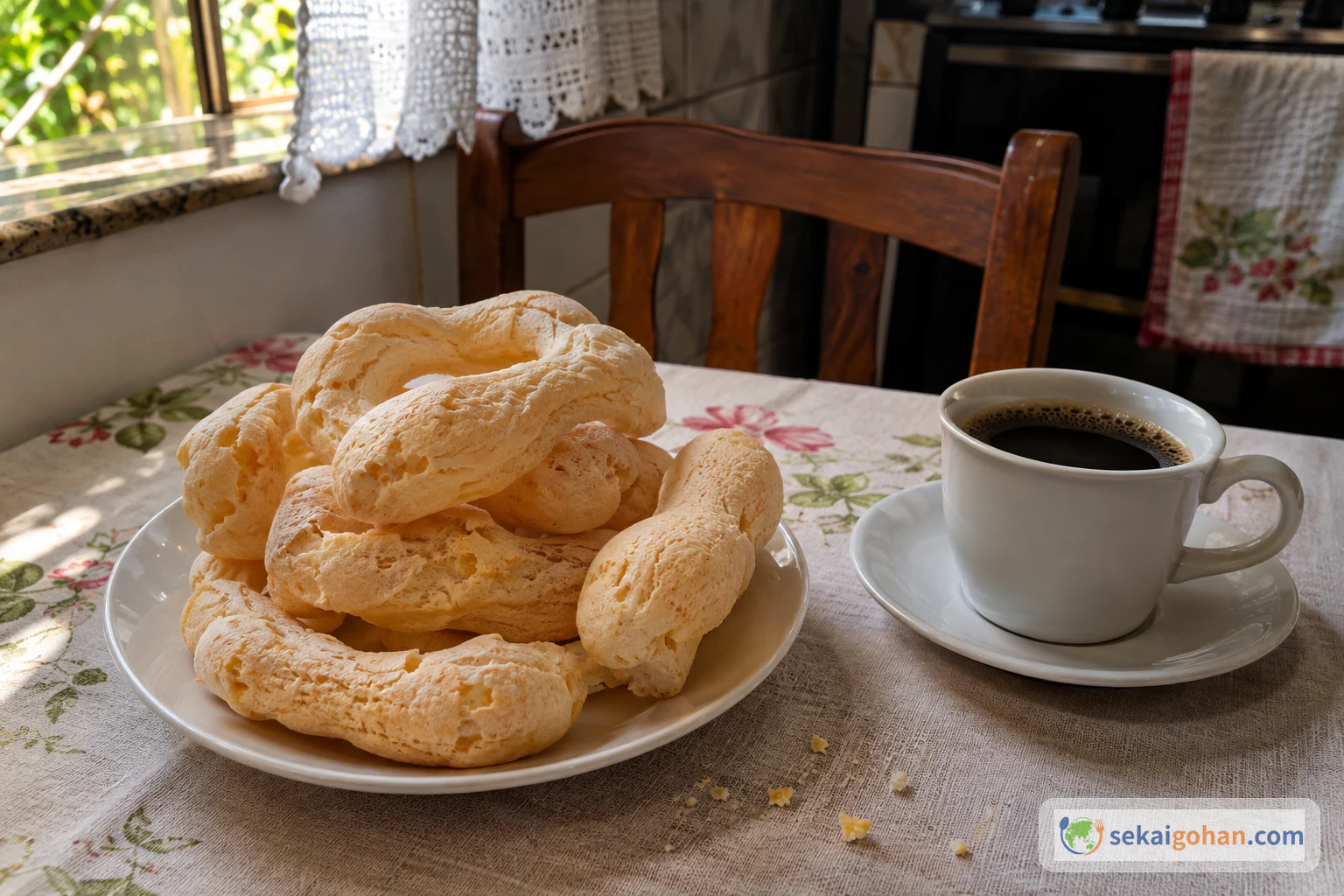
Pile the biscuits on a plate and put out black coffee. They are an afternoon snack, the kind that sits in the middle of the table while people talk and keeps getting picked at until only crumbs are left. They are light enough to eat a handful, and the dry, plain crunch is good next to a strong cup.
Variations
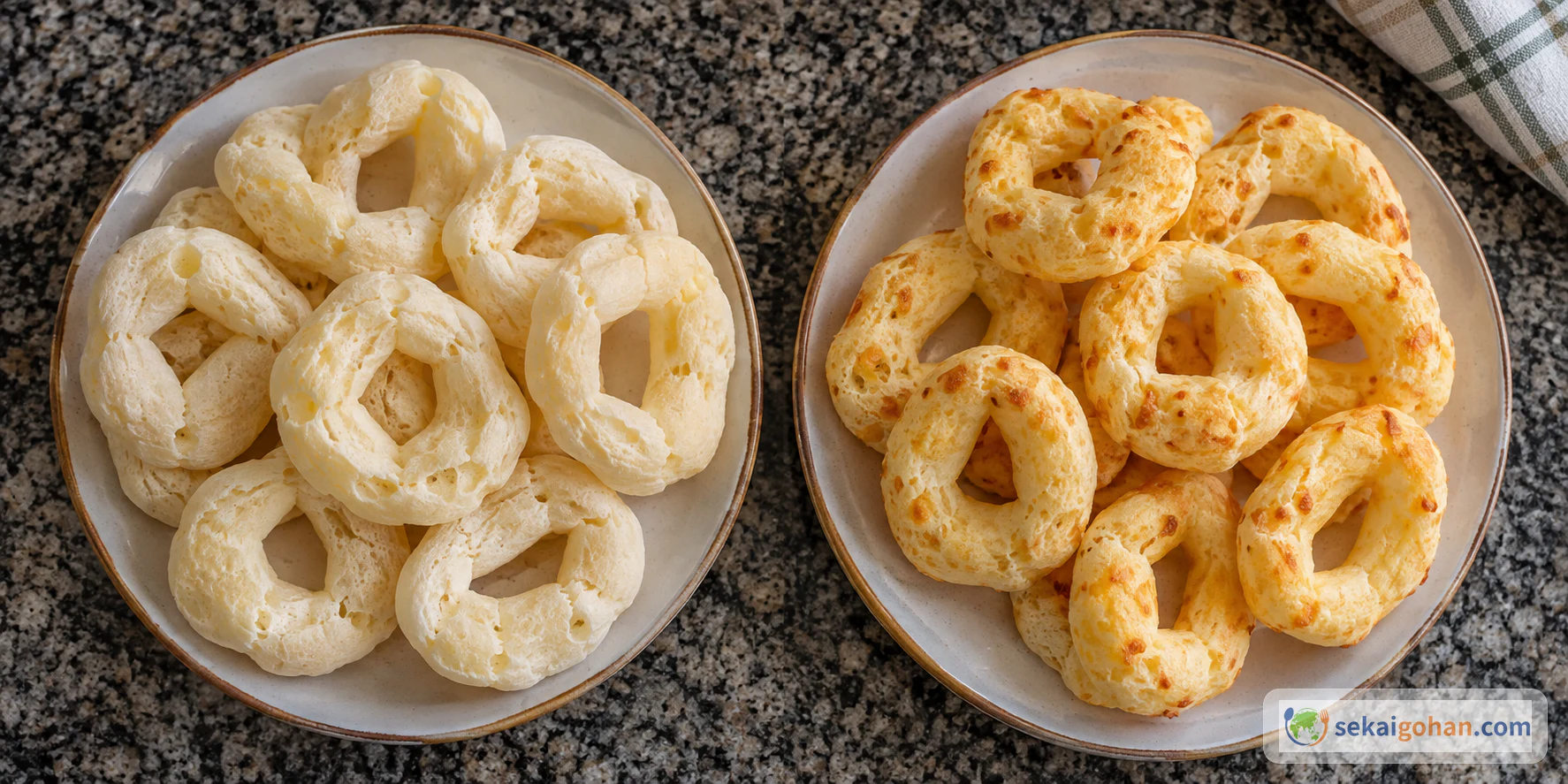
- A little grated cheese. Stir a small amount of grated hard cheese into the finished dough. Start with a little. The biscuit gets a savory edge and stays crisp and piped. It does not turn into the soft, chewy pão de queijo.
- Dried herbs. Mix a pinch into the dough for a herbal note. Keep the amount small so the flavor of the starch still comes through.
- Different shapes. Pipe long, thin sticks for the crispest bite, or rings and ribbons for the classic look. Thin shapes dry out the most evenly.
Keep the main amounts as they are for every variation. The additions go into the batch and do not replace anything in it.
Storage
These biscuits soften in damp air. Once they are cool, store them in an airtight container away from humidity and eat them soon.
Frequently asked questions
Can I fry this dough instead of baking it?
Fried versions of polvilho biscuits exist, but they use their own dough and method. This dough is made for piping and baking. Fry it and you get a different snack from the one described here.
Can I use polvilho doce if that is all I can find?
Sweet starch gives a different texture and belongs in recipes built around it, such as biscoito de vento. Those use their own proportions, so swapping doce into this recipe changes the biscuit. Look for the bag marked azedo.
Can I make sour starch myself?
Use a commercial bag of polvilho azedo. Sour starch is cassava starch that has fermented naturally, and buying it ready-made is the reliable way to start this recipe.