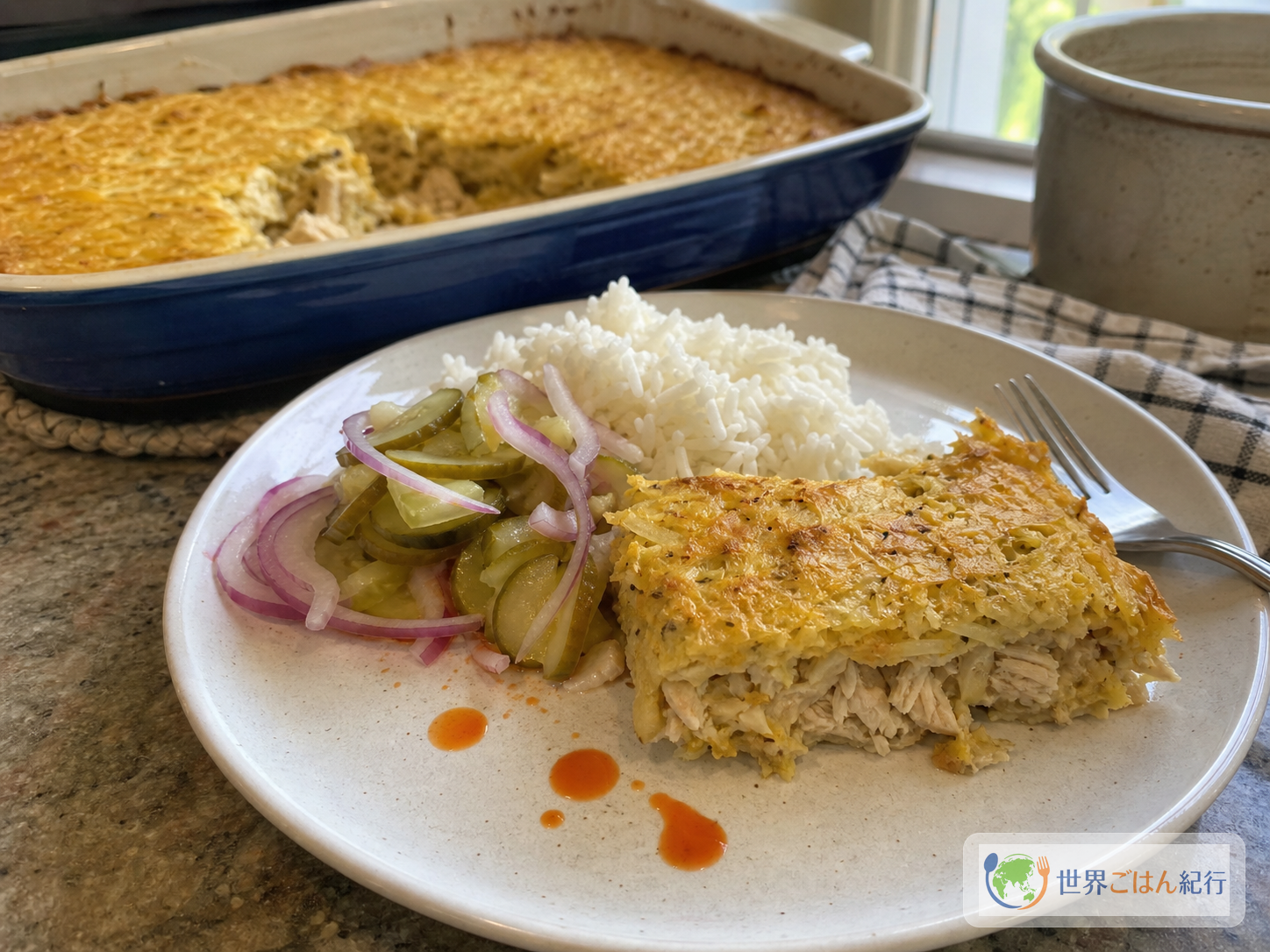
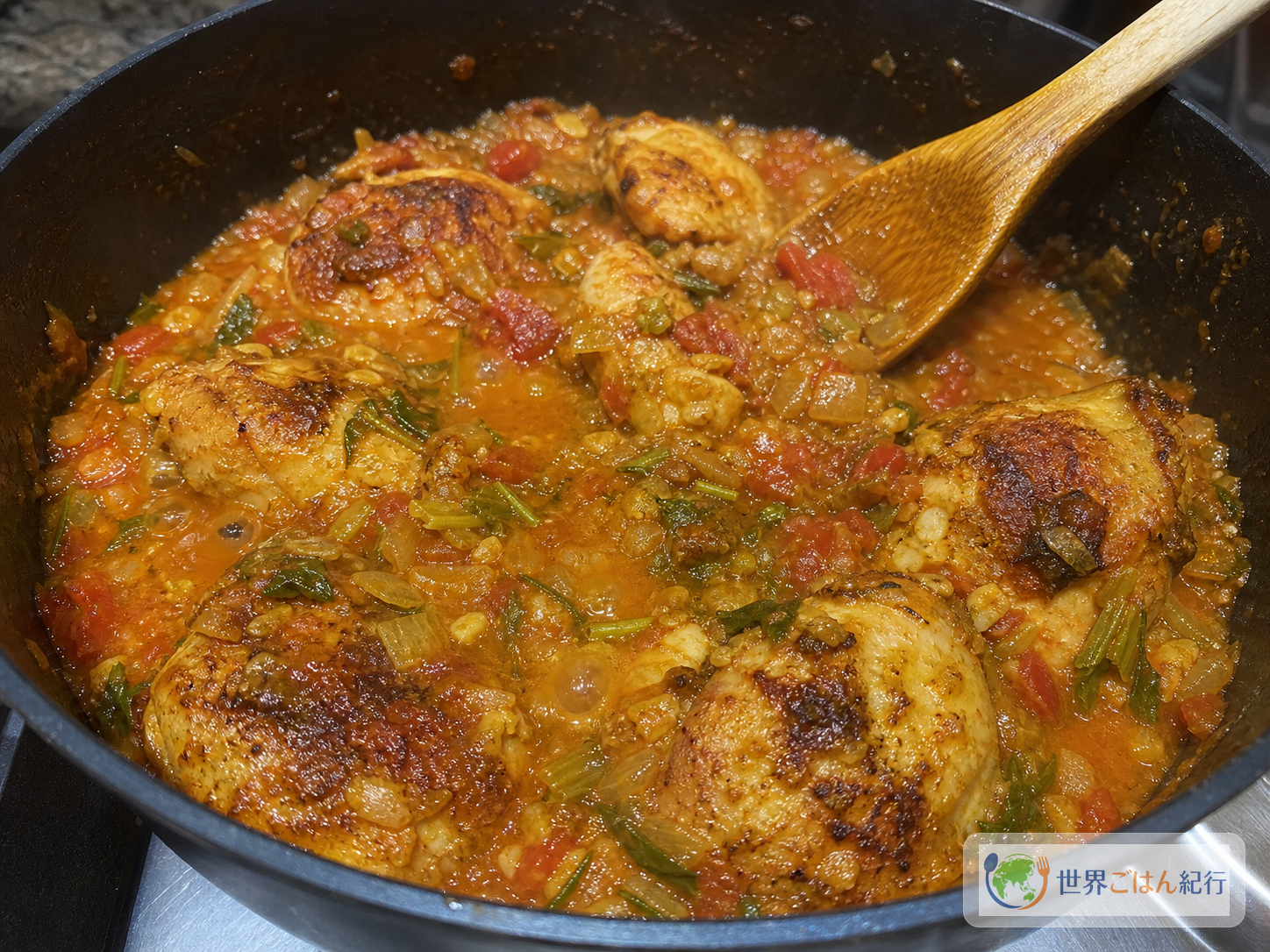
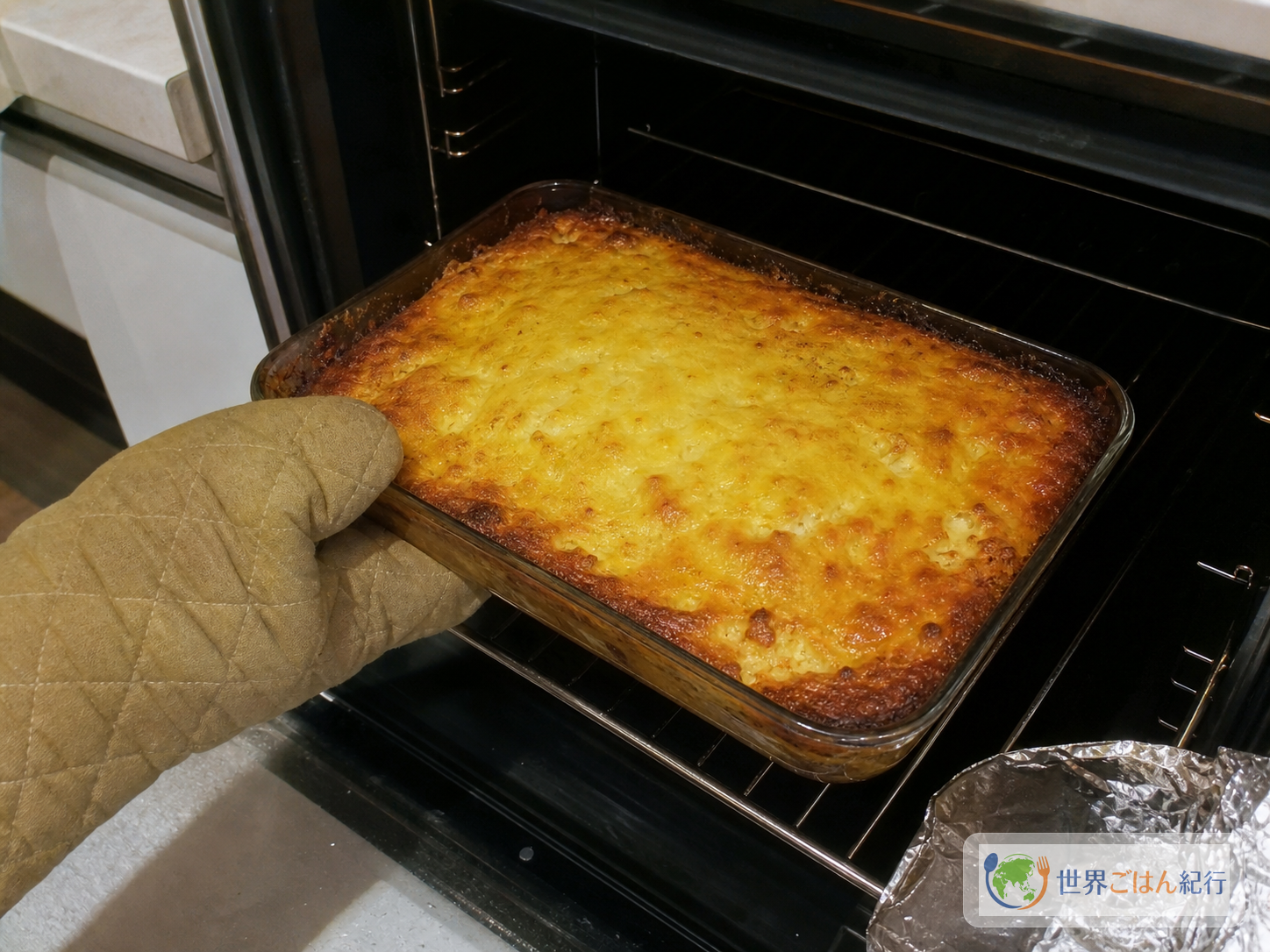
When you open the oven door, a sweet-sour aroma of citrus and chicken fat reaches you first. It looks close to a gratin, yet it is neither potato nor béchamel. The sticky starch of a taro-type root holds the chicken's cooking juices, and only the top is nicely browned. Surinamese pom is the kind of feast that, made in a home kitchen, makes you stop and wonder "what dish is this?"
Pom is known as an oven dish served on holidays and at family gatherings in Suriname. At its core are a root called pomtajer, chicken, citrus and aromatic vegetables. Pomtajer itself is hard to find in many places, so this article settles on practical substitutes using frozen taro, taro root and frozen taro root. It is not a perfect reproduction; the aim is to protect the sourness, the savor of the chicken, the sticky starchiness and the toasty baked surface.
What kind of dish is pom
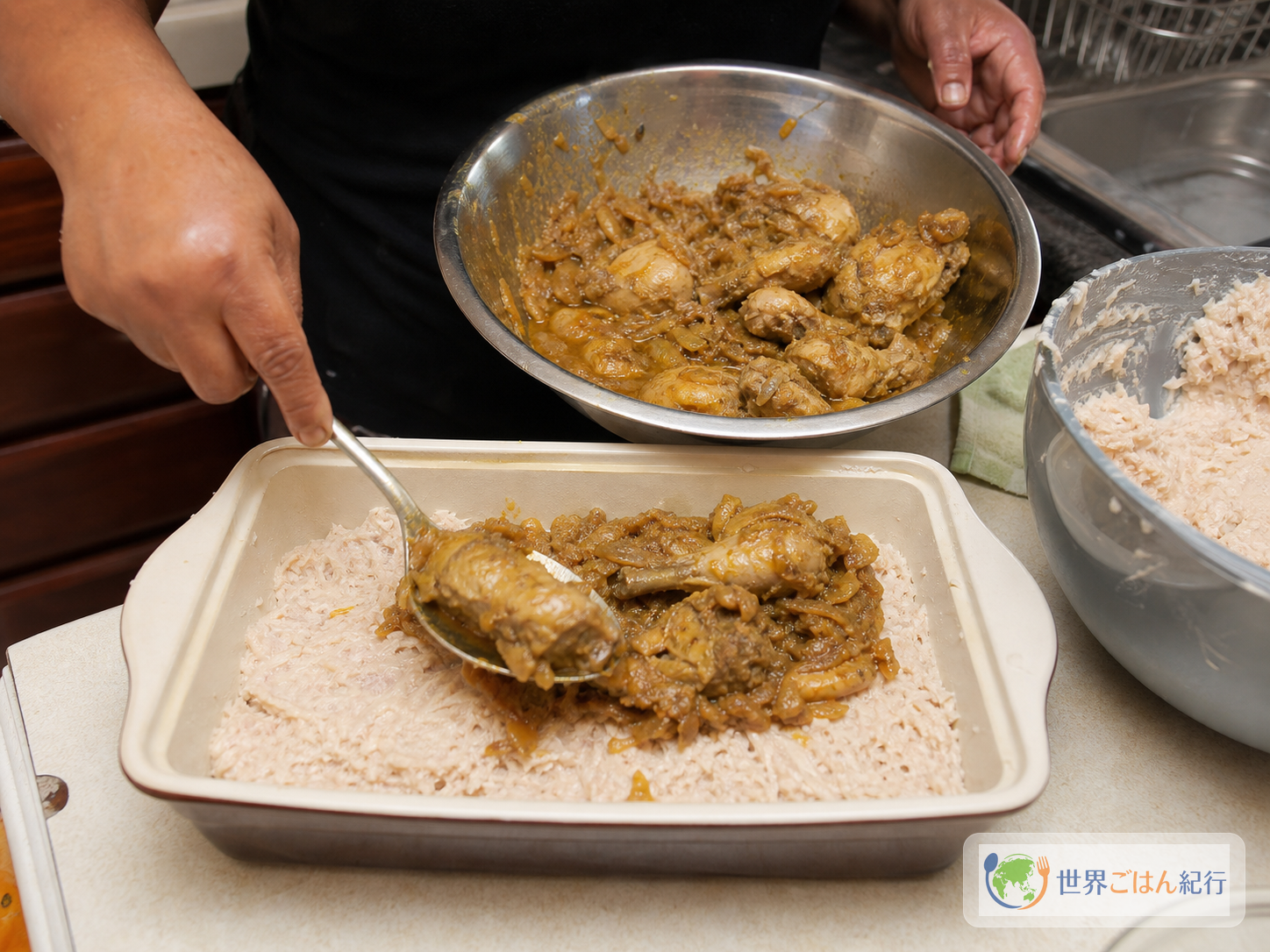
Pom is a dish through which you can easily feel Suriname's multiethnic food culture in one plate. Wikipedia treats pom as a Surinamese dish and describes it as an oven dish whose main ingredients are pomtajer and chicken. In English-language recipes, a common flow combines citrus juice, tomato, onion, butter and spices, and returns the cooking juices of the chicken to the grated pomtajer before baking.
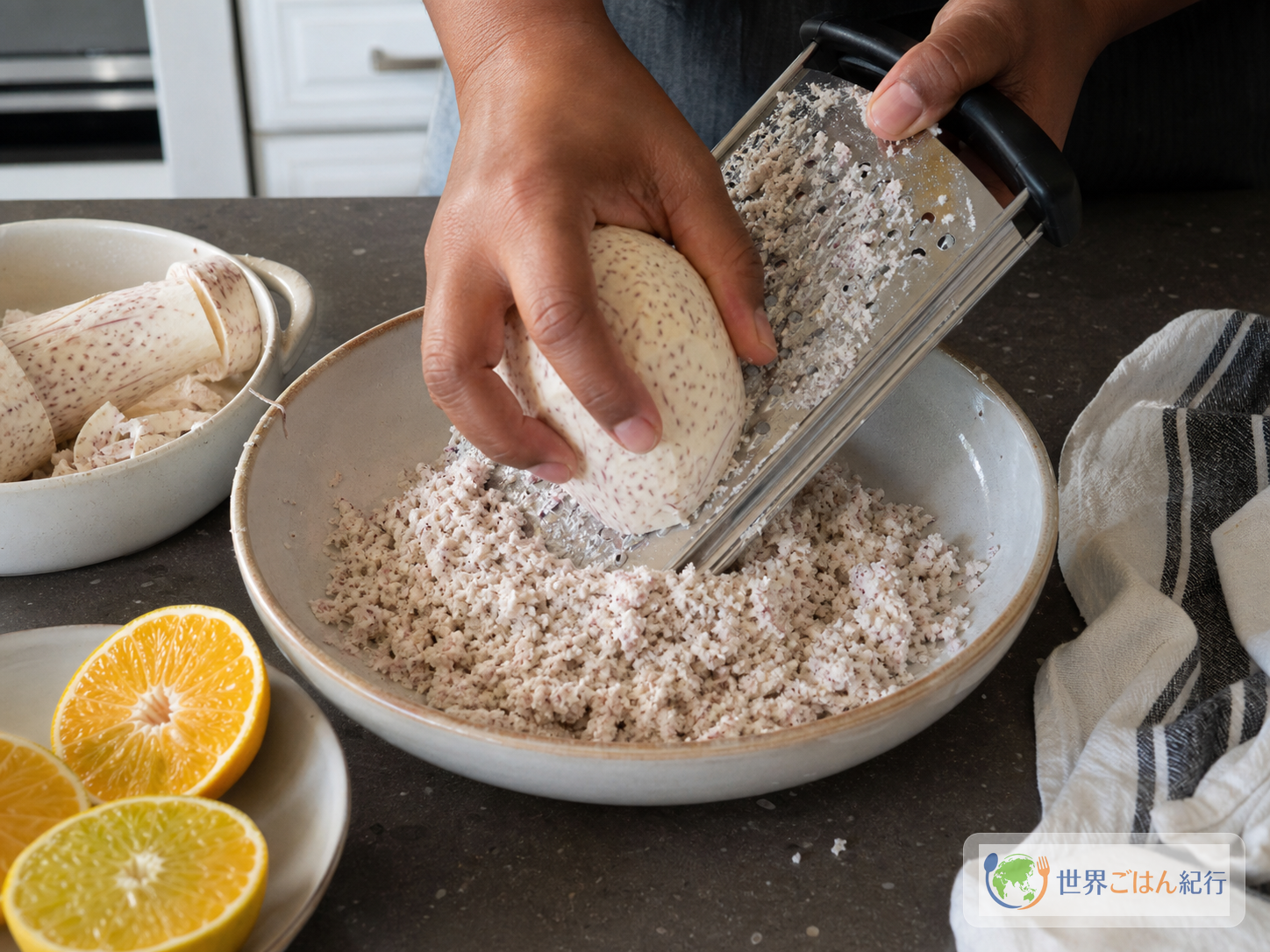
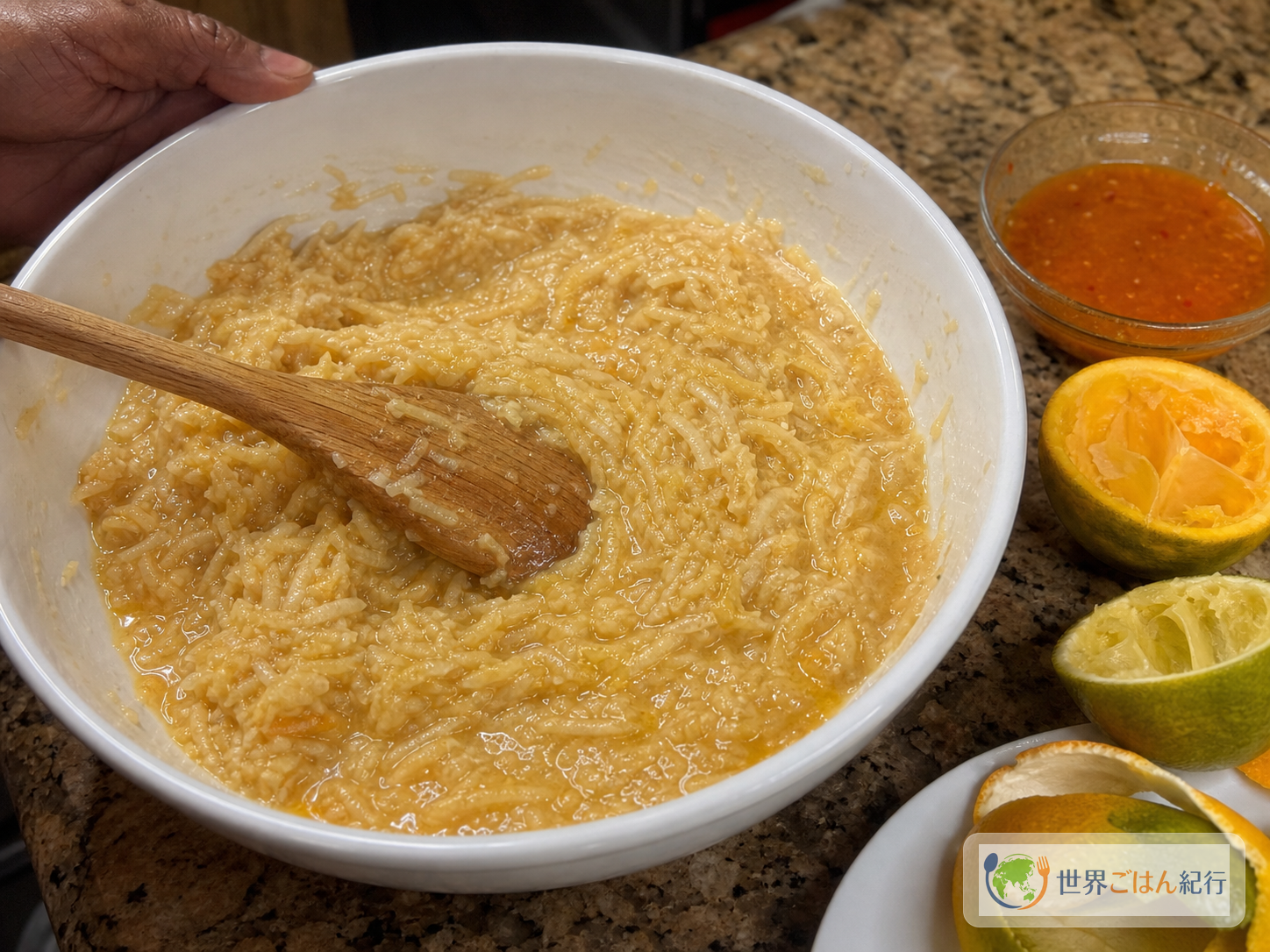
What matters is not to see pomtajer as a "substitute for potato." Made with potatoes, you get a floury mash with baked chicken. The character of pom lies in the stickiness of the root soaking up the chicken's juices, so that it does not fall apart too much when cut. To approach it, grating frozen taro or taro root, or heating frozen taro root and coarsely mashing it, gets closer.
| Local pillar | Role | What to protect when cooking at home |
|---|---|---|
| Pomtajer | Starch, stickiness, cohesion when baked | Build the stickiness with frozen taro, taro root or frozen taro root |
| Chicken | Cooking juices, filling, the satisfaction of a holiday | Bone-in for savor, boneless for easier cutting |
| Citrus | Sourness to lighten the heavy root batter | Use orange and lemon together, and do not cook off the sourness |
| Heat | The outline of Caribbean aroma | Do not put too much Scotch bonnet-type sauce in the whole pot; adjust at the table too |
Ingredients
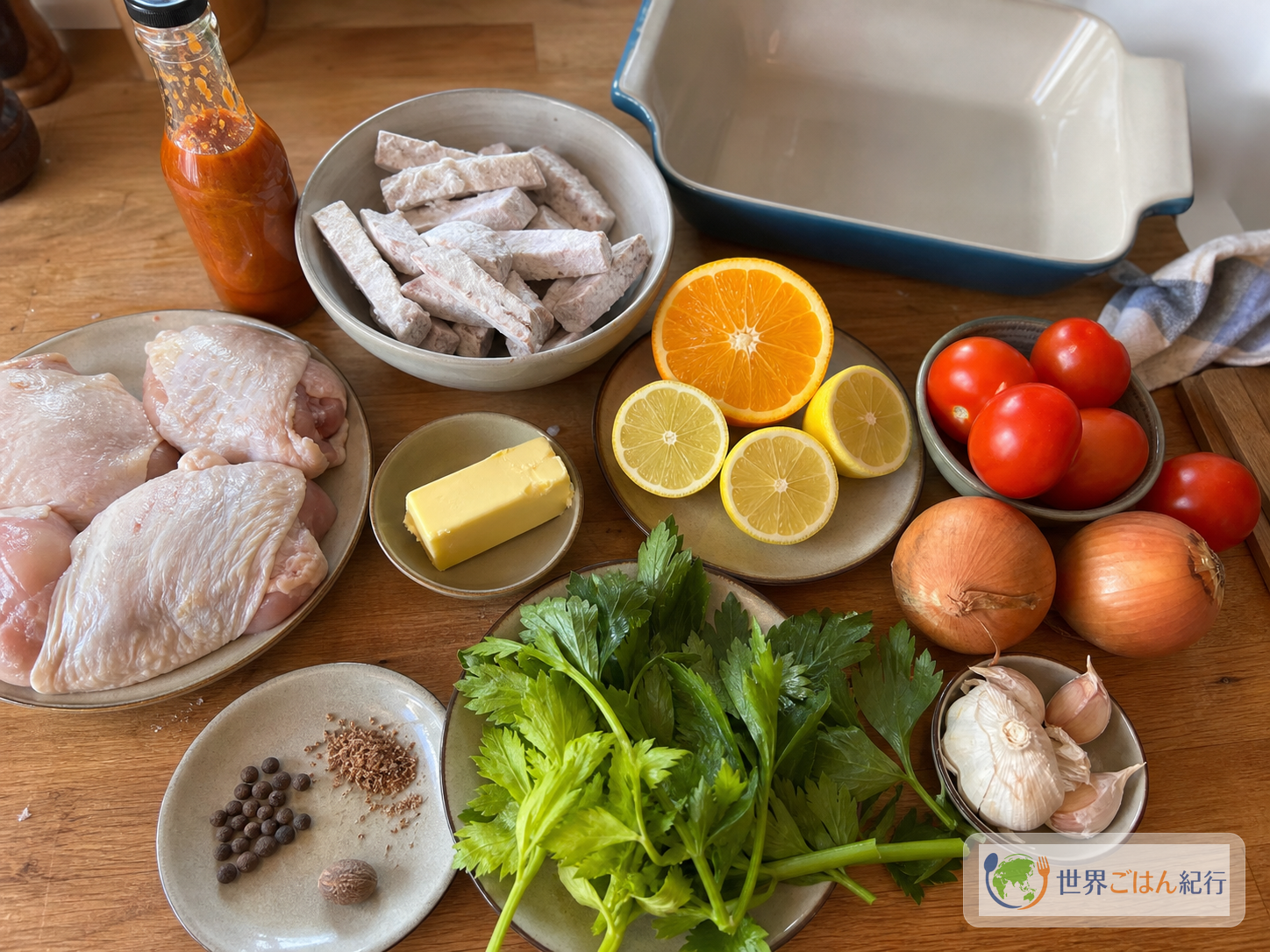
Serves 4. Use a baking dish of about 20 cm square or about 2 L capacity as a guide, not a diameter. Too thick and the heat has trouble reaching the center; too thin and the root batter dries out.
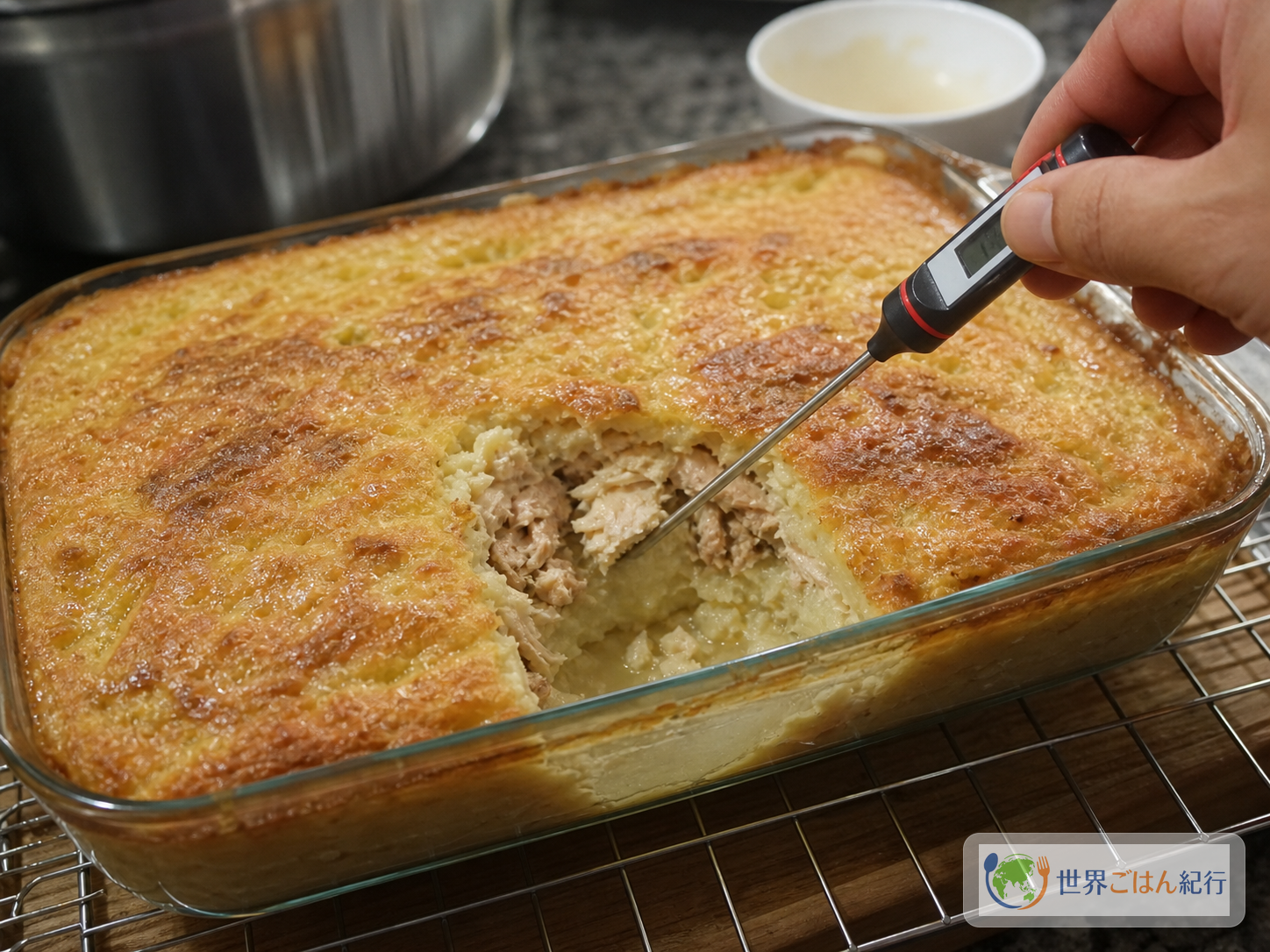
This recipe uses chicken and dairy. Cook the chicken thoroughly to the center, and confirm 74°C or more at the thickest part or at the center where the filling overlaps. Wash the knife, cutting board and hands that touched raw chicken before they touch vegetables or bread for serving. Hot seasoning is strong even in a small amount, so at a table with children or people who dislike heat, do not put it in the pot and adjust plate by plate.
Shopping for making it away from home
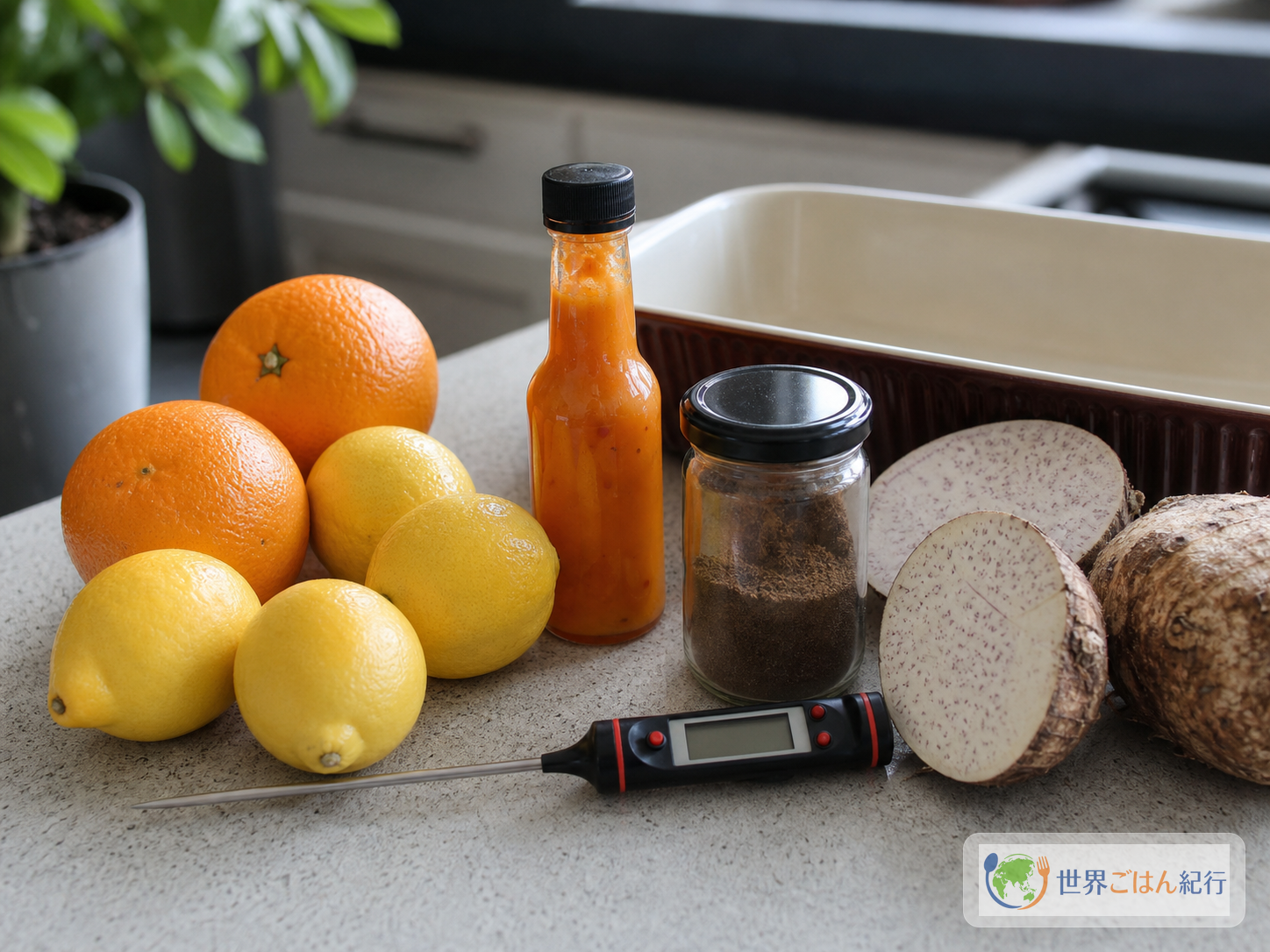
The chicken, onion, tomato and citrus you can get anywhere. What is worth ordering online is the heat that adds the aroma characteristic of Surinamese and Caribbean cooking, allspice that changes the atmosphere with a small amount, and an instant-read thermometer for checking the doneness of an oven dish. Do not go out of your way to look for pomtajer; keep to the shopping explanation of frozen taro from import food stores, taro-type roots from Asian food stores, or frozen taro root from the supermarket.
The heat of Scotch bonnet-type sauce has a fruity aroma close to habanero. Put too much in the pot and the whole family eats the same level of heat, so for a first try use just 1/4 tsp, or design it to be added at the table.
Allspice is not an essential part of the definition of pom. But it easily supplies, in a small amount, the warm aroma found in Caribbean chicken dishes, and if any is left it can go into jerk chicken or rice and peas.
Because pom's surface colors first, judging the center of the chicken by looks alone is hard. The thicker the baking dish, the faster an instant-read thermometer lets you decide on extra cooking.
Substitution table for when you have no pomtajer
The biggest hesitation in cooking this elsewhere is the root. Pomtajer is sometimes translated as taro, but strictly it is not necessarily the same as the taro root or taro commonly seen elsewhere. For that very reason, match it by condition rather than name.
| Substitute | Strengths | Adjustment |
|---|---|---|
| Frozen taro | Starchy and easy to cut and grate | Pat dry, and chop if the fibers are long |
| Taro root | Very sticky, holds together when baked | If too sticky, add 20 ml more orange juice |
| Frozen taro root | Easy to find, no peeling | Heat in the microwave, remove moisture, and do not mash too much |
| Potato | Easy to buy | Alone it makes a different dish. If used, half and half with taro root |
| Nagaimo (mountain yam) | Easy to grate | Very watery, and loose even baked. Avoid using alone |
The least failure-prone substitute is a combination of 600 g frozen taro root and 250 g potato. Taro root alone is heavy, and potato alone is floury. Mixing the two makes a batter that is easy to cut even when bought only at an ordinary supermarket.
Where it tends to go wrong
| Failure | Cause | Fix |
|---|---|---|
| The center is watery | The root held too much moisture, or too little baking time | Add 10 minutes at 180°C. Next time, pat dry after thawing |
| Only the surface scorches | The dish is thin, or the top heat is strong | Put the foil back and prioritize the center at 180°C |
| Too sour | The lemon is strong, or there is too little orange | Add 1 tsp sugar, and serve rice at the table |
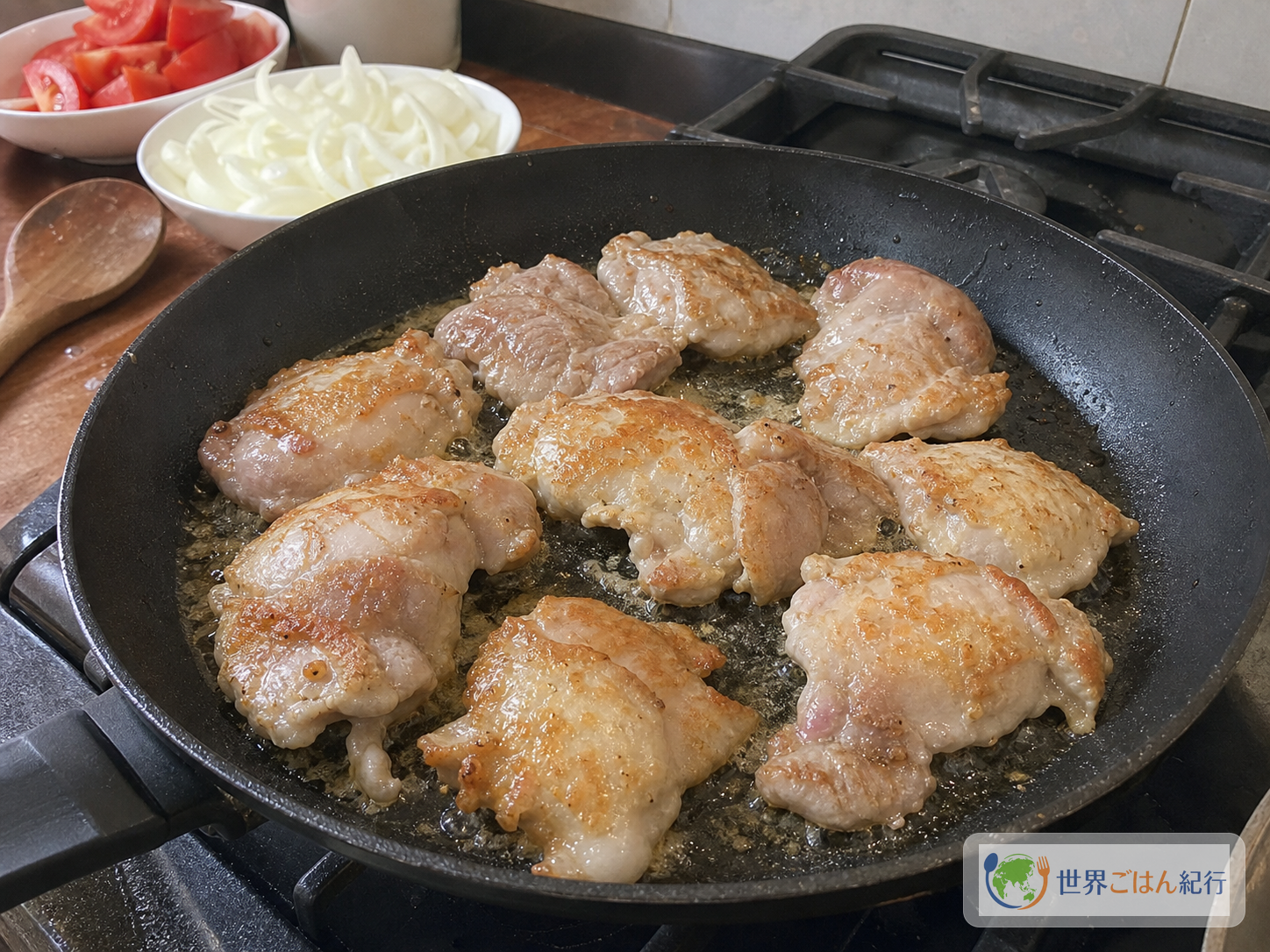
| The chicken is tough | Browned too long at first, or baked too long | Step 2 is surface only. Watch the internal temperature and stop the extra cooking |
| It crumbles when cut | Not rested enough, or the batter is thin | Rest 10 minutes after baking, and make the bottom layer at least 1 cm |
Think of pom not as "done because it has color" but as "done because the center is hot and the batter has settled," and failures decrease. Scoop it piping hot at once like a gratin and it looks hearty, but the layers collapse on the plate. For guests, it looks neater if you leave it about 15 minutes after baking before cutting.
How to eat it and a menu
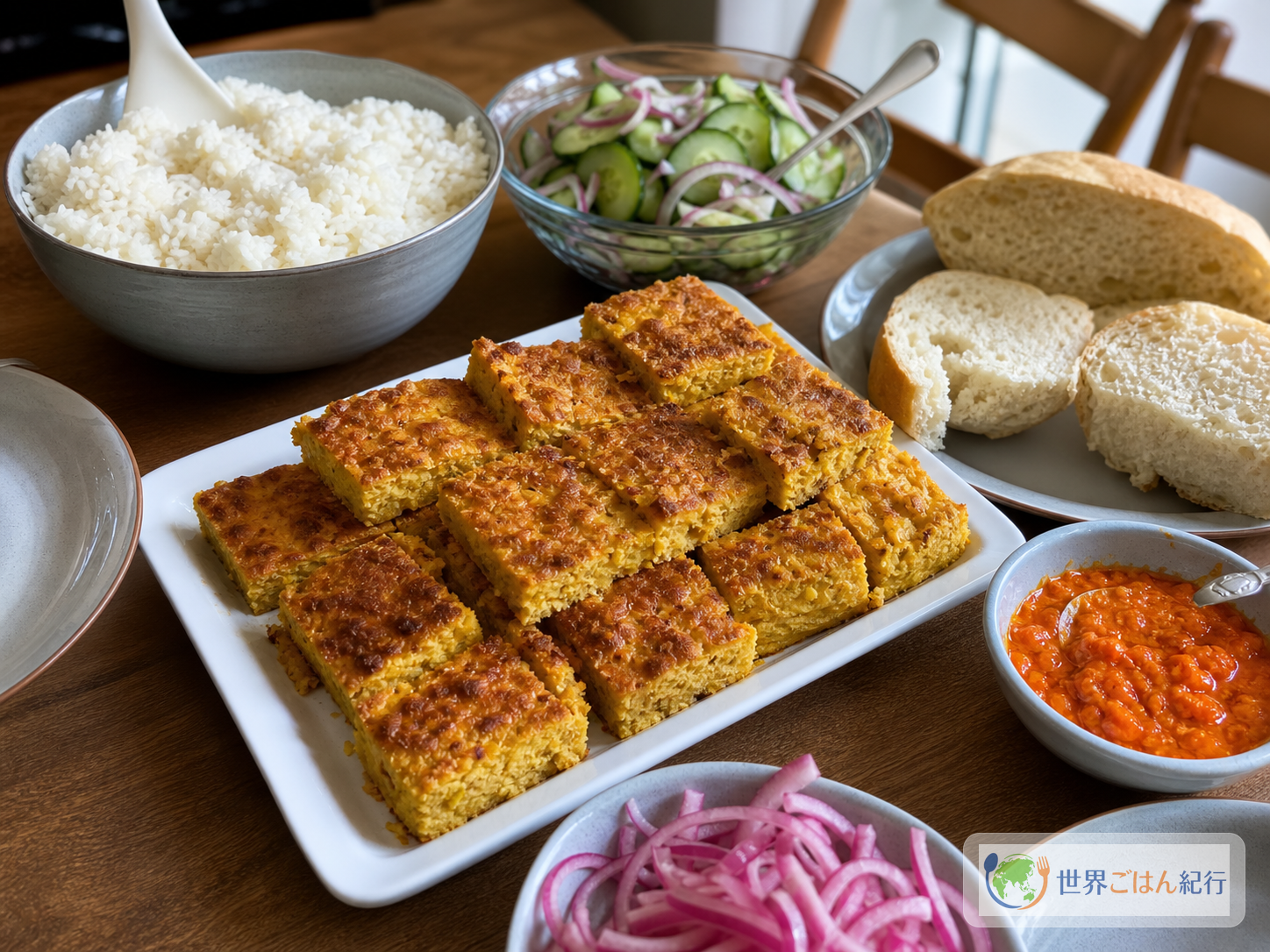
A way of eating it often described locally is broodje pom, pom in a bread roll. To make it elsewhere, a roll or baguette with a slightly firm crust suits better than very soft sandwich bread. Warm a cut piece of pom lightly and tuck in cucumber pickles, red onion and a little hot sauce, and the fat of the chicken and the heaviness of the root are cut just right.
To eat it with rice, plain white rice and a sour side dish is the easiest. For a menu in the same Caribbean vein, rice and peas, a rice with beans, jerk chicken, a strongly aromatic chicken dish, and the light fried pholourie connect with it. Since pom itself is heavy, it is easier to eat if you give the plate a place to breathe with cucumber, cabbage, citrus and green herbs, than if you add another meat dish.
Storage and reheating
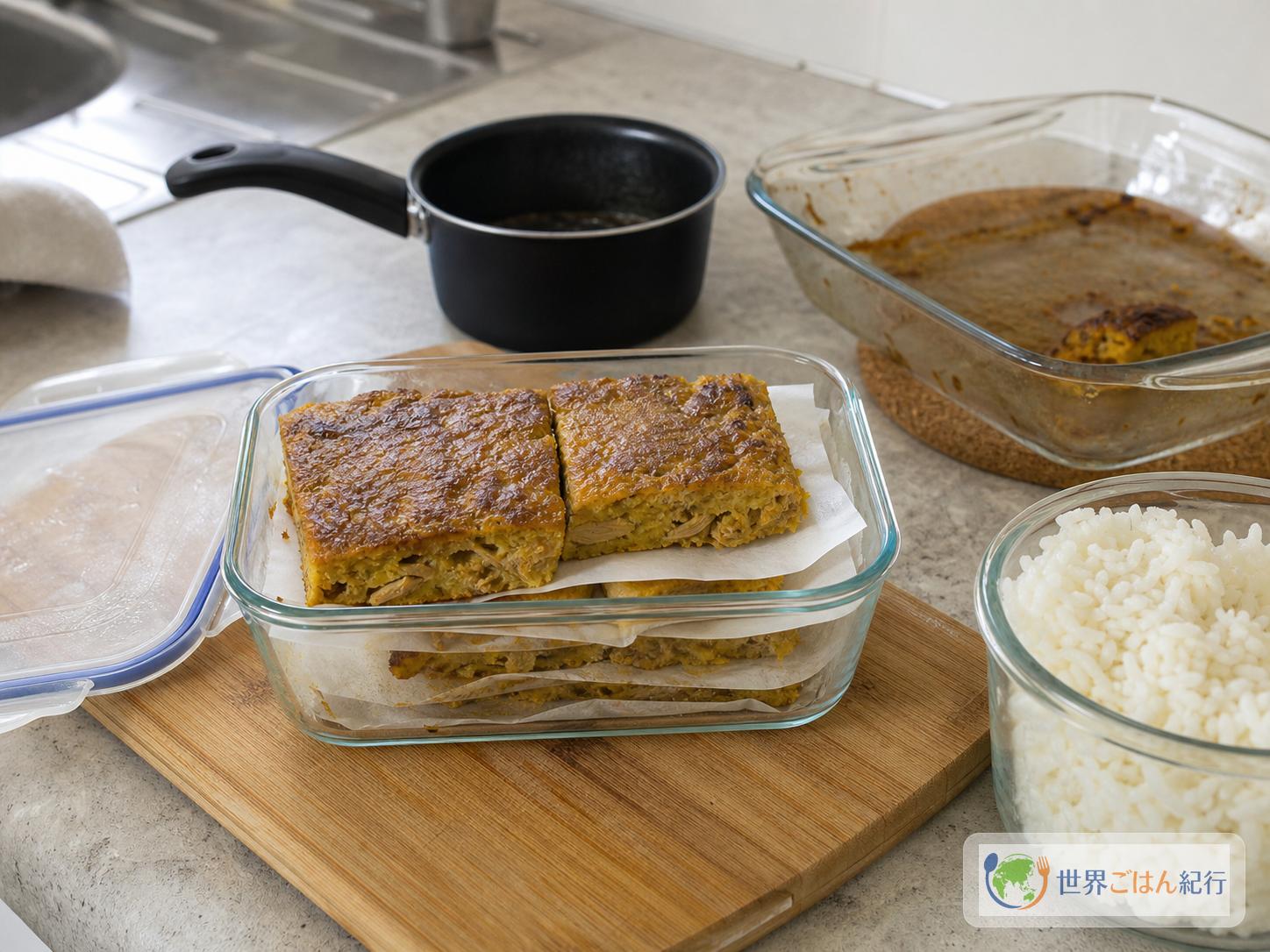
Once the heat is off, cut and store within 2 hours. As a guide, 3 days in the refrigerator and 3 weeks in the freezer. When freezing, wrap each piece in plastic wrap to prevent drying.
| Storage | Guide | Reheating |
|---|---|---|
| Refrigerator | 3 days | 10 to 12 minutes in a 180°C oven or toaster oven |
| Freezer | 3 weeks | Thaw in the refrigerator for half a day, then 15 minutes at 180°C |
| Lunch box | Same day | Reheat thoroughly to the center, then cool before packing |
A microwave alone will warm it, but the toasty surface does not come back easily. Heat for 2 minutes at 600 W and then 3 minutes in a toaster oven, and it is easier to get both a warm center and a browned surface.
Frequently asked questions
Can it be called pom without pomtajer?
As a home reproduction, there is no problem. But the texture differs from a dish that uses pomtajer itself. In this text we state clearly how to replace pomtajer in your own kitchen, and the idea is to bring the stickiness and the set when baked closer with taro root and frozen taro.
Can I make it with chicken breast?
Yes, but there will be less fat and juice. If using chicken breast, cut 600 g into large slices and shorten the browning in step 2 to 2 minutes on one side and 1 minute after turning. Overbaking makes it dry after the oven, so think of finishing it in the sauce.
Do I have to add heat?
You can make it without. The heat of the Scotch bonnet type adds an outline to the aroma, but the center of pom is root, chicken and citrus. If someone dislikes heat, the practical way is to leave it out of the pot and have the adults add a few drops at the table.
Can I make it the day before?
Yes. In fact, it holds together better when cut the next day. If baked the day before, refrigerate it and reheat for about 15 minutes at 180°C before eating. If the surface dries, cover with foil for the first 10 minutes.
Can I make it without an oven?
In a frying pan alone, it becomes quite a different dish. If you must, layer it in a heavy frying pan, cover and cook over low heat for 35 minutes, and finally toast the surface under a broiler or in a toaster oven. But it is hard to check the internal temperature and it scorches easily, so for a first try, an oven or a combination oven is safer.
Sources
- Wikipedia "Pom (dish)" https://en.wikipedia.org/wiki/Pom_(dish): checked the name of the dish, its standing as a Surinamese dish, and the basic information that it uses pomtajer and chicken.
- 196 flavors "Pom" https://www.196flavors.com/suriname-pom/: used as a reference for the cooking structure of pomtajer, chicken, citrus and oven baking, and for how it is eaten in Suriname.
- FoodSafety.gov "Safe Minimum Internal Temperatures" https://www.foodsafety.gov/food-safety-charts/safe-minimum-internal-temperatures: used to confirm the safe internal temperature of chicken.