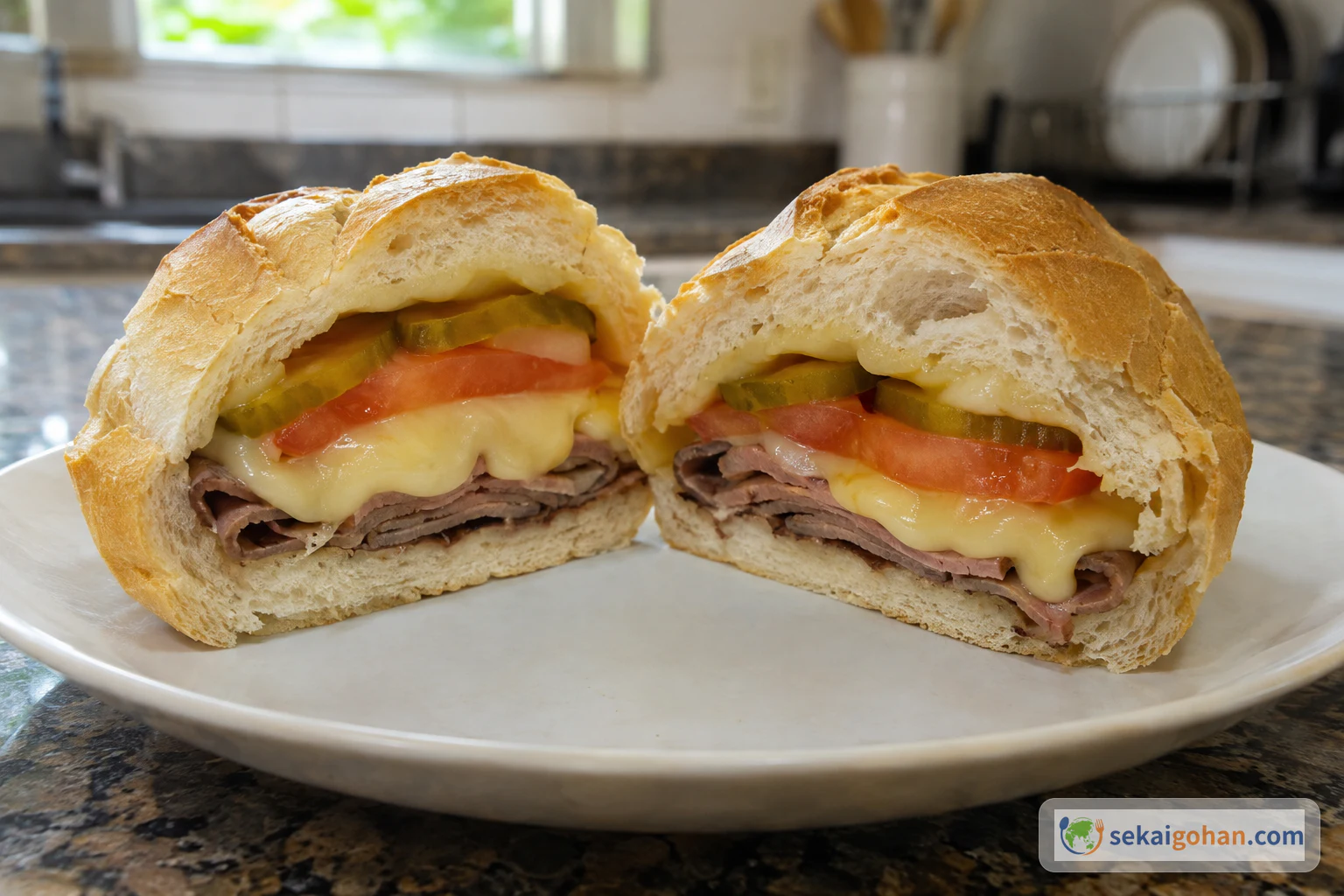
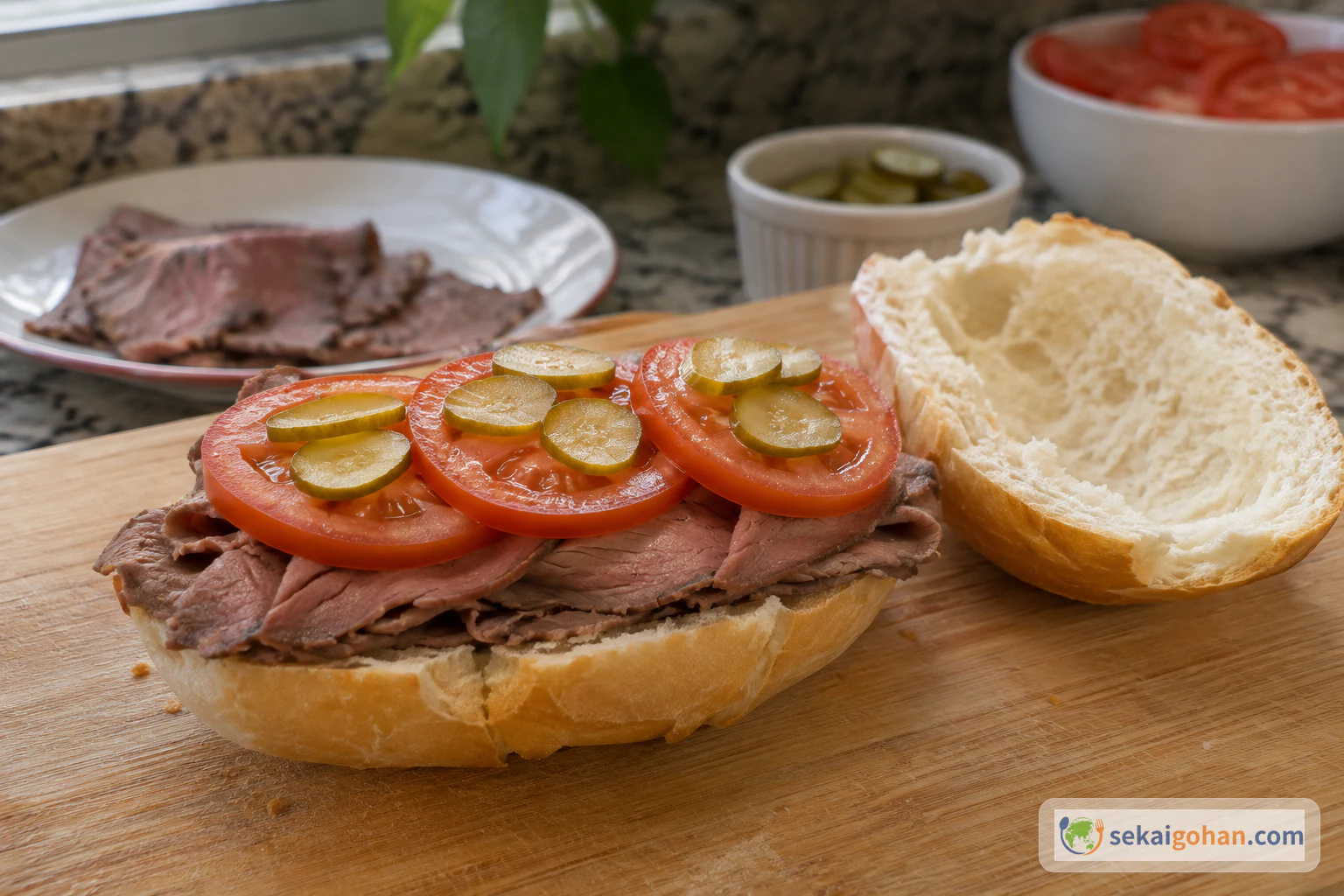
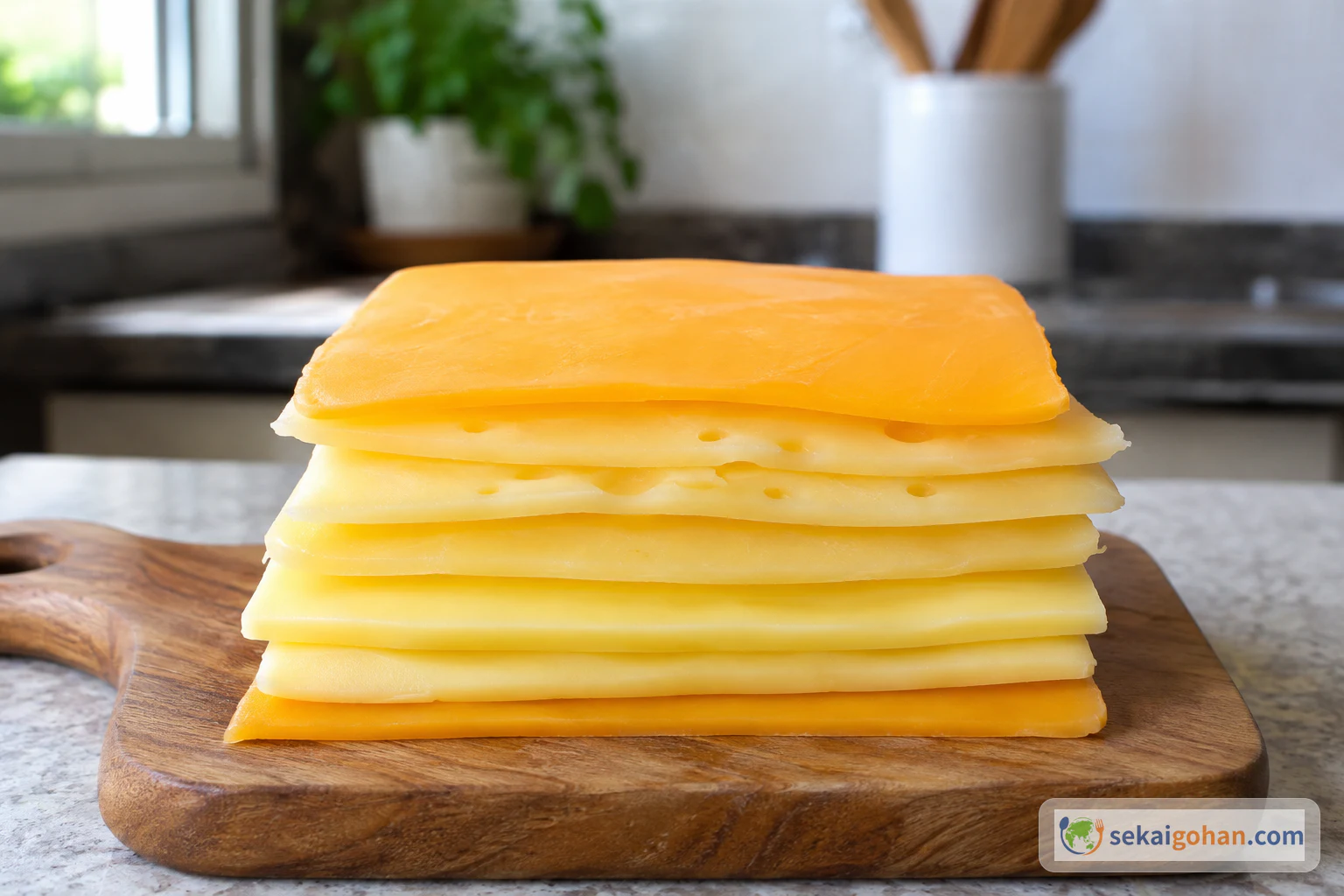
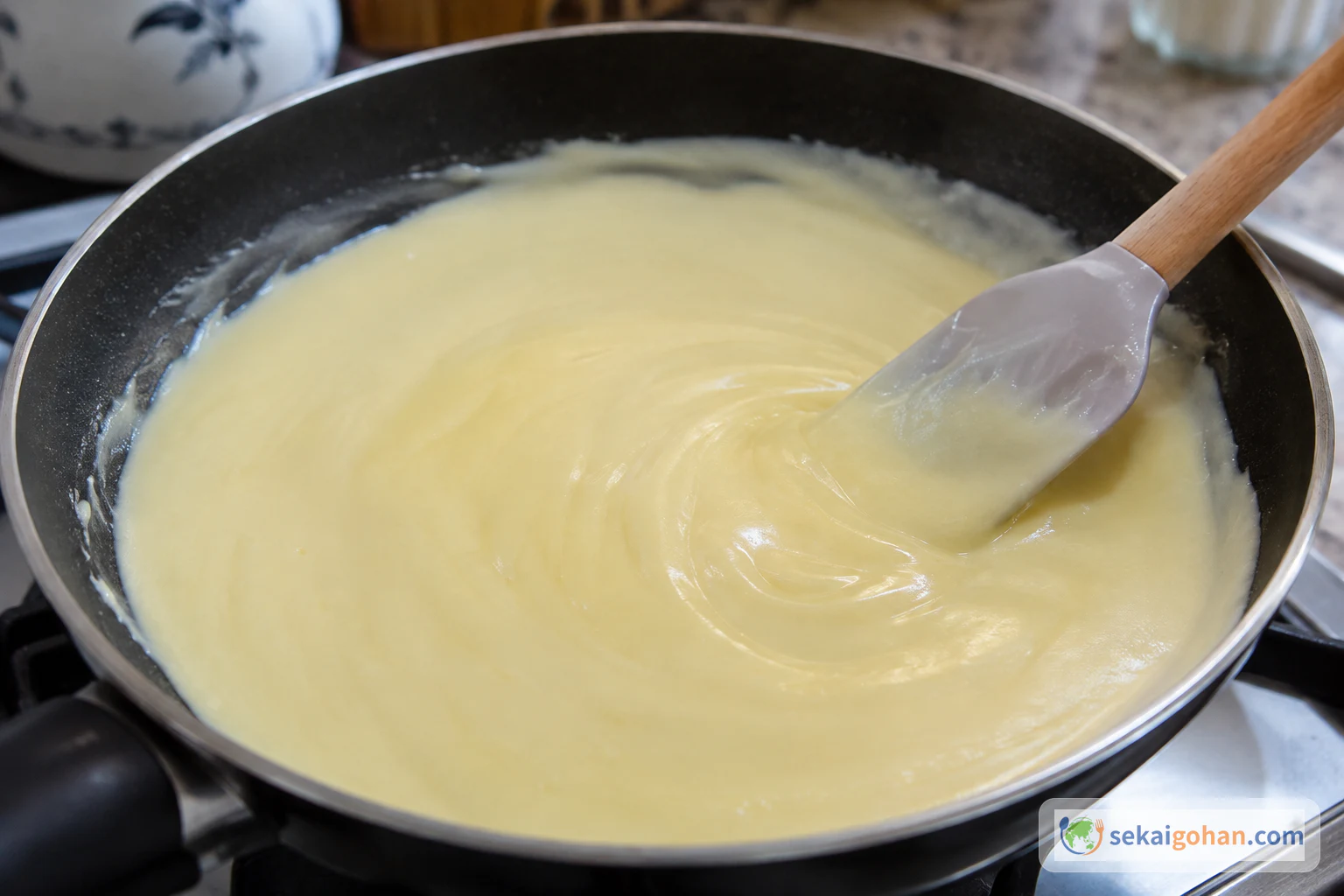
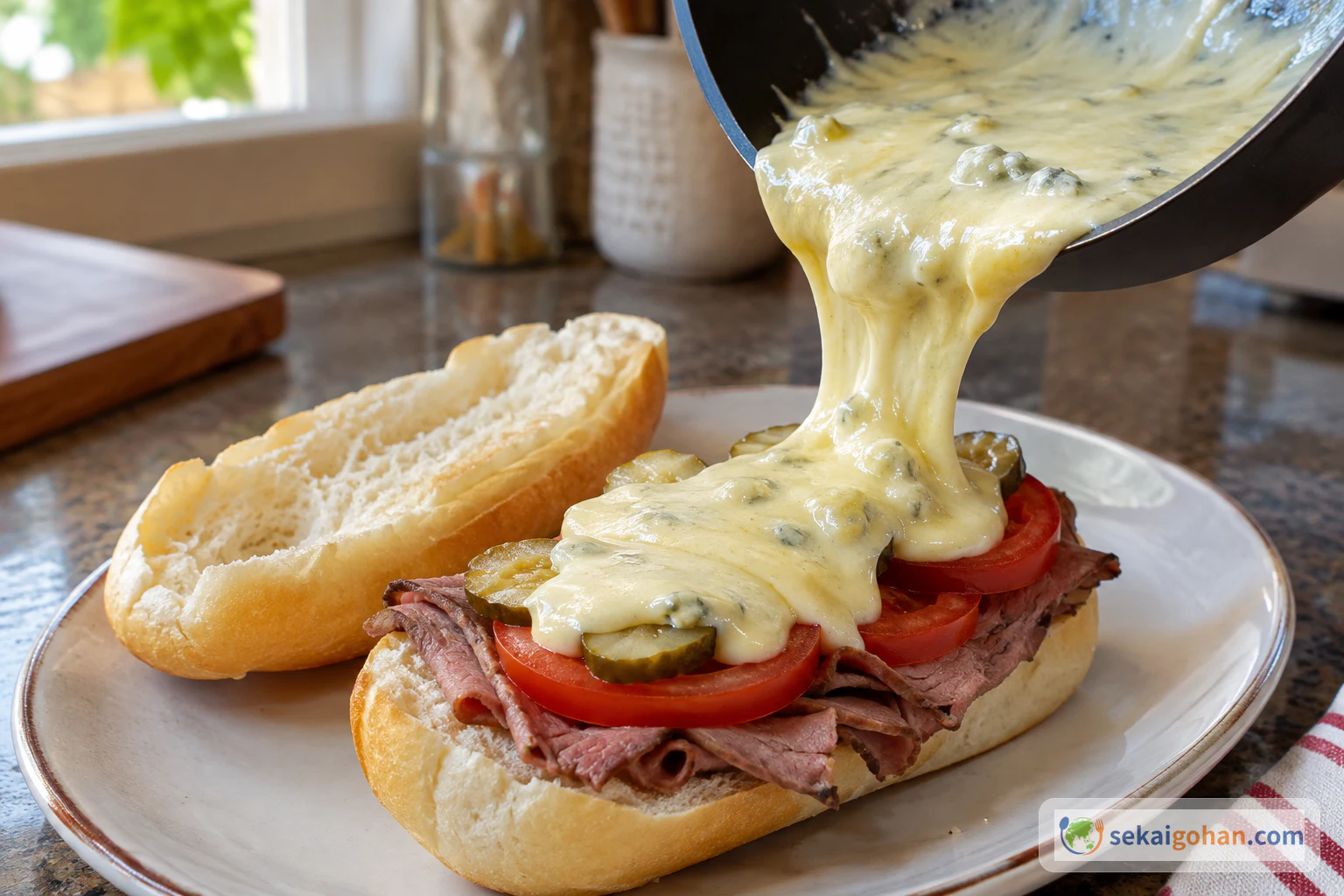
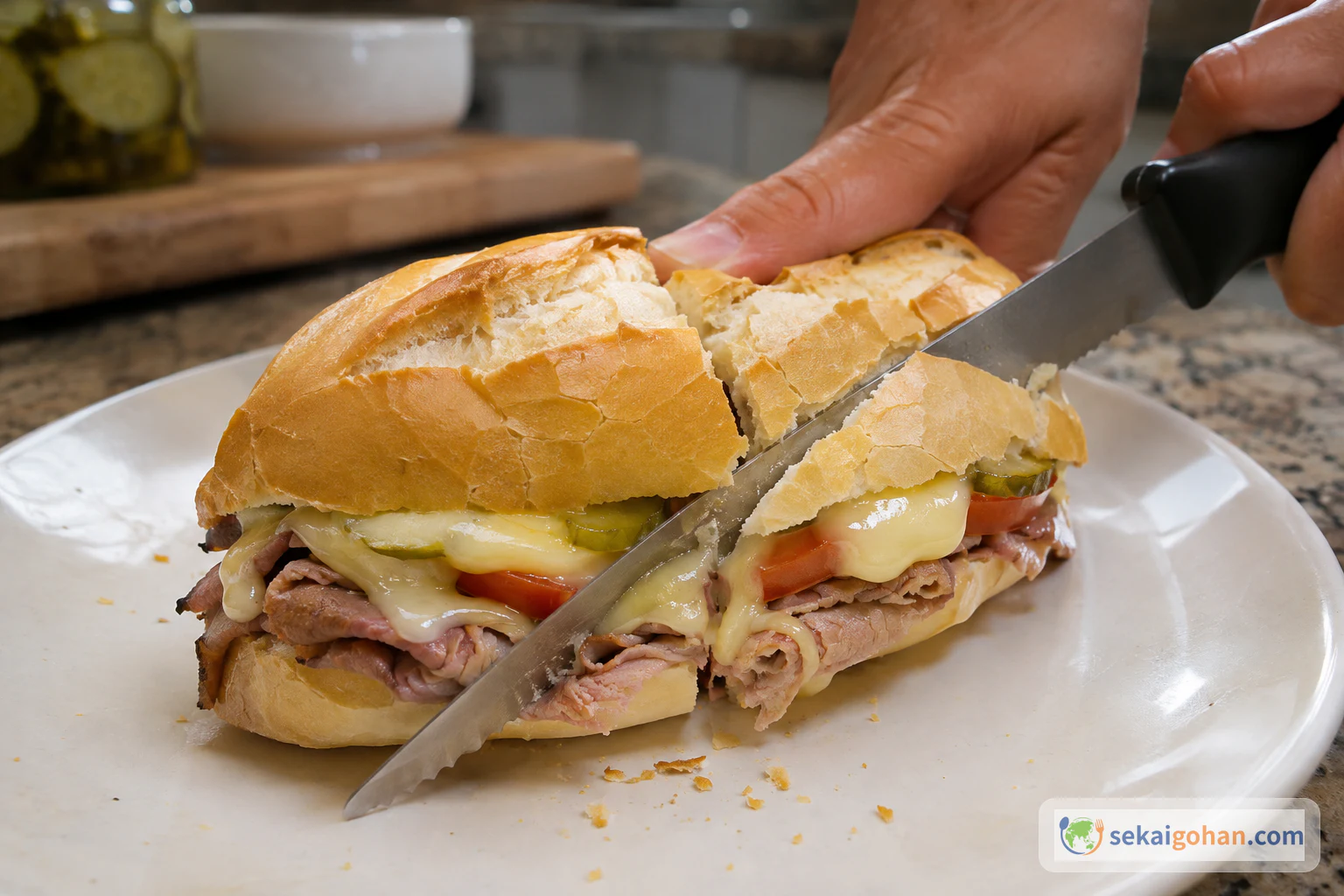
The cheese goes into a pan of barely boiling water, the heat drops, and as the spatula turns slowly, eight slices of four different cheeses lose their edges and run together into one glossy, pale-gold pool. That pool goes straight over thin roast beef, tomato and sharp pickle waiting in a hollowed roll, and the top half closes over it while it is still flowing. This is the Bauru, a sandwich from São Paulo tied to the city's Ponto Chic bar. It tastes of salty, tender meat under a soft blanket of cheese, cut by the sourness of tomato and pickle in every bite.
A Law Student's Order at Ponto Chic
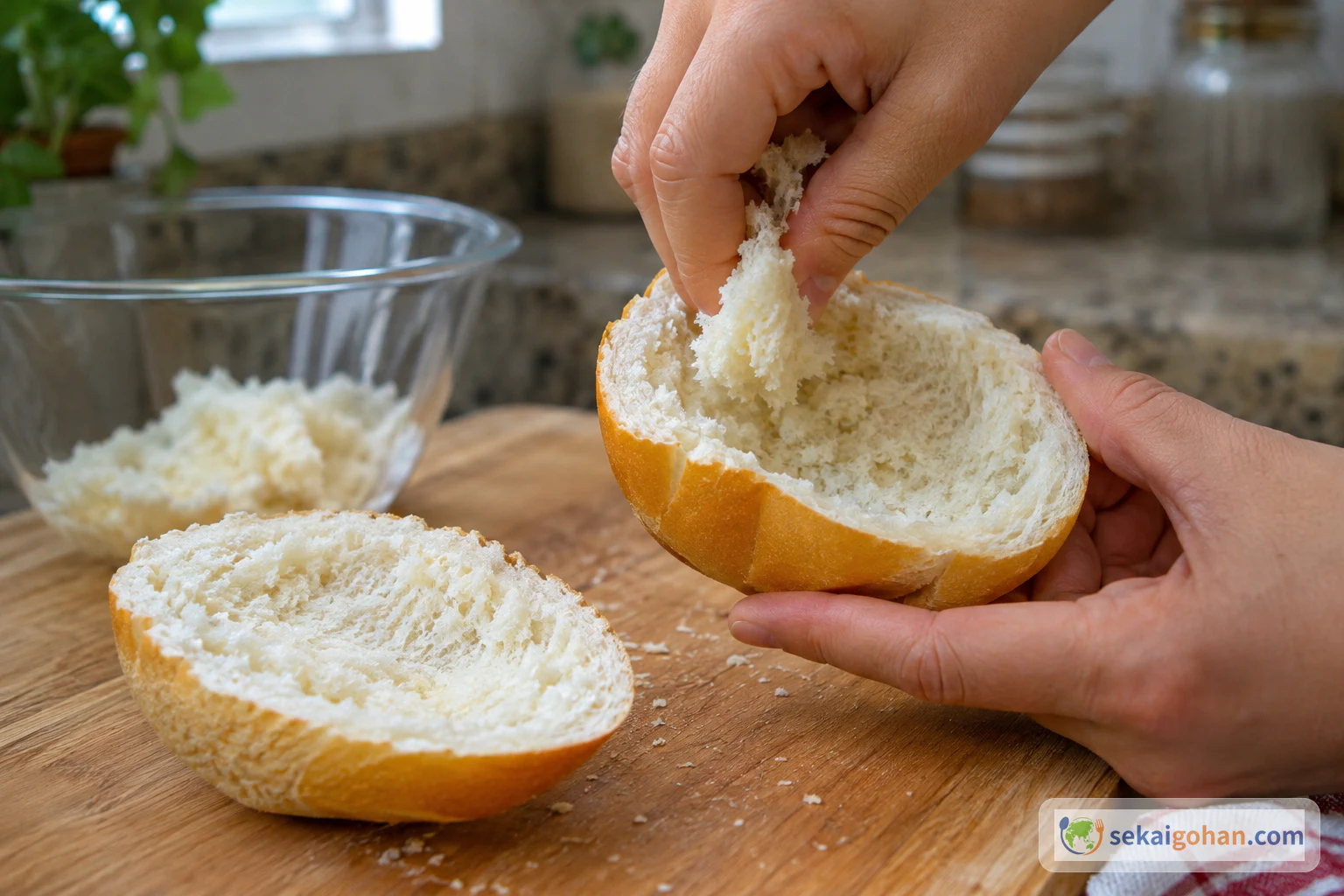
Ponto Chic opened in São Paulo on 22 March 1922, and its regulars included students from the law school of the University of São Paulo. One of them, Casimiro Pinto Neto, asked for a sandwich made his way: a roll with the soft inside pulled out, filled and topped with melted cheese. The other students started ordering it too, and the sandwich took his nickname. That nickname was Bauru, the same name as a Brazilian city, which is why a sandwich invented in the state capital carries the name of another place.
When exactly this happened is not settled. The year is given as 1934, 1936 or 1937, and even single accounts disagree with themselves. What does not change between tellings is the shape of the thing: a pão francês, the small, thin-crusted roll Brazilians buy every morning, filled with roast beef, tomato and pickled cucumber and finished with cheese melted until it pours. Bars across Brazil make their own versions with different cheeses and fillings, and the four-cheese blend of prato, gouda, estepe and Swiss is the one tied to Ponto Chic.
"Bauru" was Casimiro Pinto Neto's nickname among his fellow students. The sandwich he ordered was called by that nickname, and the name stayed on the menu long after his student days.
In 2018 the Bauru was declared part of the intangible cultural heritage of the state of São Paulo by Lei 16.914, signed on 28 December and published in the official gazette the following day. For a sandwich that started as one student's order, that is a long road, and it explains why people in São Paulo speak of it with a certain pride. More dishes from the country are collected on the Brazil page.
Ingredients
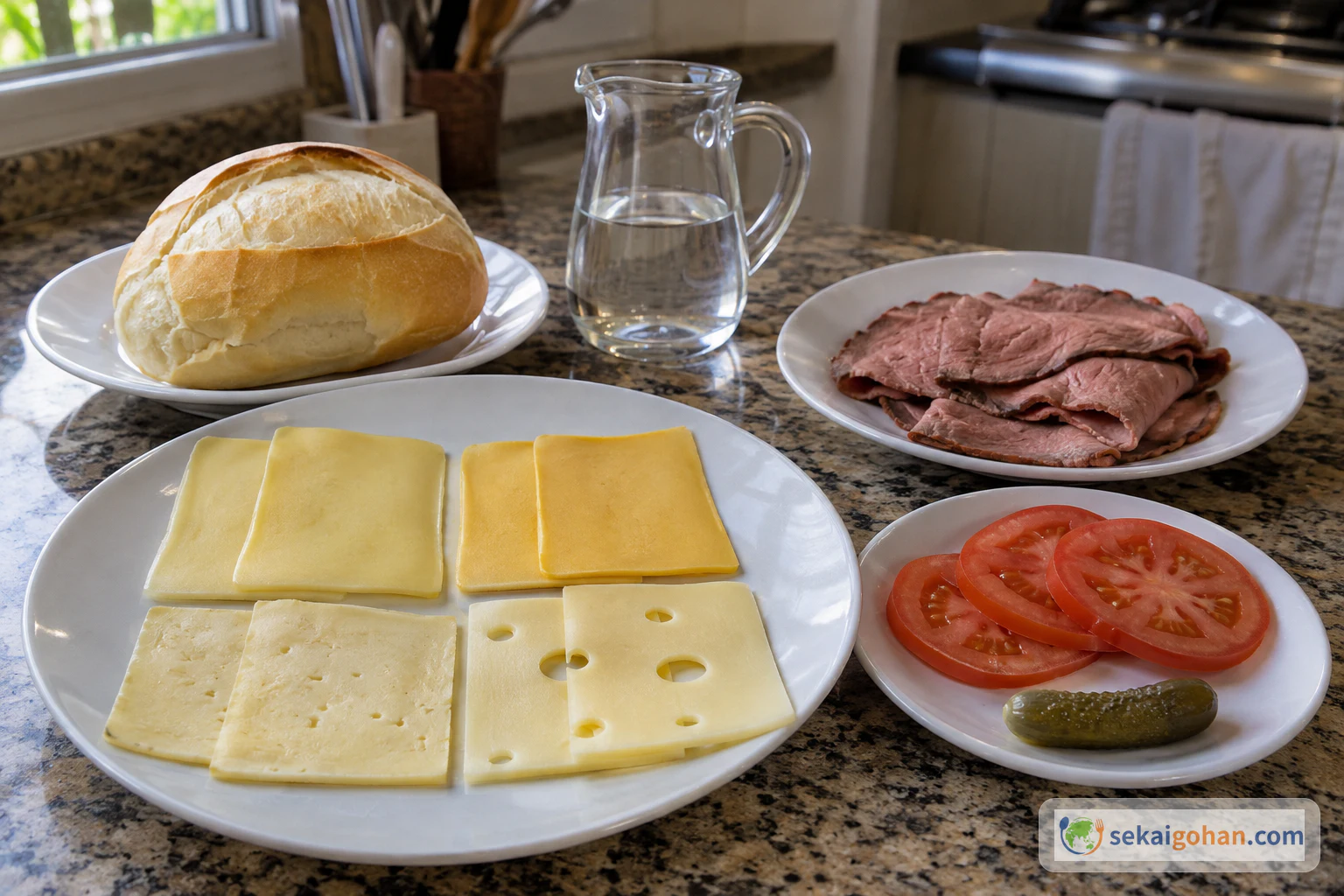
This sandwich contains milk (all four cheeses) and wheat (the roll). Check the labels on the roast beef and pickles for other allergens.
Cut your three rounds from the firm flesh and avoid the watery, seedy centre where you can. Less juice means a roll that stays crisp under the hot cheese.
Equipment
- Nonstick frying pan
- Rubber spatula or small whisk
- Bread knife and cutting board
- Small bowl for the scooped-out crumb
- Plate
Choosing and Substituting Outside Brazil
What makes a Bauru taste like itself is the combination of thin, tender meat, cheese that melts into a smooth sauce, and the sourness of tomato and pickle. Keep those three and the sandwich stays recognisable even when the exact cheeses and bread are out of reach.
| Brazilian ingredient | Swap abroad | What changes |
|---|---|---|
| Pão francês | A short baguette, mini baguette or soft bread roll | The crust and crumb differ; a mini baguette is crustier, a soft roll is chewier and less crisp |
| Rosbife | Ready-to-eat sliced roast beef from the deli counter | Very close; ask for it sliced thin |
| Queijo prato | Gouda, or a natural (non-processed) sliced cheese | Similar mild, buttery melt, a slightly different flavour |
| Queijo estepe | Cheddar-style slices | Estepe is hard to find abroad; cheddar brings more tang and a deeper colour |
| Queijo suíço | Emmental-style Swiss cheese | Easy to find and close in character |
| Pepino em conserva | Gherkins or other small pickled cucumbers | Close; choose sour pickles over sweet ones |
The substitutes give a sandwich in the same spirit, with a melt that tastes a little different from the São Paulo blend. Brazilian grocers and online shops sometimes stock prato, which brings you closer, and estepe is the cheese most worth tracking down if you want the full four.
Method
Everything cold is prepared first: the roll hollowed, the filling layered, the cheese stacked in order. Only then does the pan go on the heat, because once the cheese has melted it goes straight onto the roll and the sandwich is cut and eaten. There is no waiting time anywhere in this recipe, so have the plate and knife ready before you start melting.
Melted cheese clings to skin and holds its heat. Pour away from your other hand, and keep fingers on top of the roll, clear of the blade, when you cut.
When It Goes Wrong
| What you see | Why | What to do |
|---|---|---|
| The cheese turns stringy and lumpy | The heat is too high or the stirring too fast | Keep the heat low and stir slowly; give the slices time to soften into each other |
| Cheese sticks and browns on the pan | The water has boiled away or the pan is not nonstick | Use a nonstick pan and add the cheese as soon as the heat is lowered |
| The cheese thickens before you pour it | It waited in the pan after melting | Pour the moment it is smooth; prepare the roll first so nothing holds you up |
| The bottom of the roll goes soggy | Watery tomato rounds | Cut the rounds from the firmer part of the tomato |
| The filling slides out when cut | Pressing down hard with the knife | Hold the top steady and saw gently |
Serving and Variations
At the table
A Bauru is a one-roll meal, eaten hot, straight after cutting, the way it comes across the counter at a São Paulo bar. Both halves go on one plate; pick them up and eat while the cheese is still soft. Make it only when you are ready to eat it, as the cheese firms up as it cools.
Variations
- Mozzarella alone. Some bars melt a single cheese, mozzarella, in a pot instead of the four-cheese blend. The melt is milder and simpler in flavour.
- Salt and oregano. A pinch of salt and a little oregano over the filling gives the sandwich a more herby, pizza-like note.
Frequently Asked Questions
Can I roast the beef myself?
For this sandwich, use ready-to-eat sliced roast beef from a shop. The hot cheese warms the meat but does not cook it, so the beef must already be safe to eat as it is. Its pink colour tells you nothing about whether it has been cooked safely; the label does.
Why scoop out only the top half?
The hollow top makes room for the filling and the cheese, so the roll closes without squeezing everything out. The lower half stays whole to carry the meat, tomato and pickle.
Can I melt the cheese in the microwave or under the grill?
Stay with the pan and water over low heat. That is the method behind the smooth, pourable cheese that defines this sandwich, and it is quick enough to do while the roll waits beside the stove.