


The story of vinagrete: a small star that shines next to meat
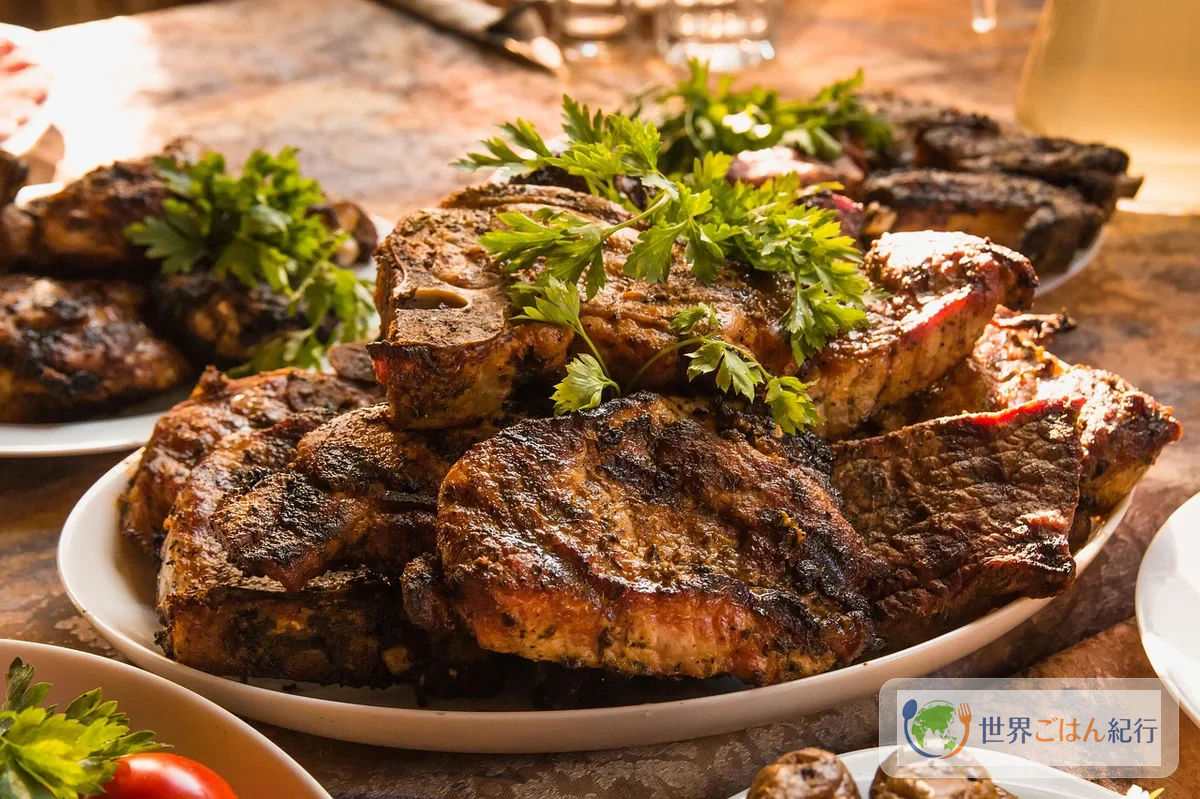
When you grill meat over charcoal, the air changes, whether in a kitchen or a backyard. Beef fat sizzles down, the salted surface chars and turns fragrant. Then a little pile of chopped red, white and green vegetables on the edge of the plate makes the next bite much lighter. Brazilian vinagrete is the small salsa made for exactly that.
The name resembles the French "vinaigrette," but Brazilian vinagrete is not a dressing. Tomato, onion, bell pepper and parsley are chopped fine and mixed with vinegar, oil and salt, closer to a sauce you eat. It is sometimes also called molho à campanha, and is served with churrasco, feijoada, fried foods and bread.
In How to make churrasco (in Japanese) I introduced vinagrete alongside how to grill the meat, but when you actually make it, you often feel "I want this as its own article." Even on days when you aren't grilling meat, it works with grilled fish, chicken thighs, bean stews and rice topped with a fried egg. On a day when the tomatoes in the fridge have gone a bit soft, chopping them and dressing them with acid makes a proper dish.
The things that trip people up at home are the type of vinegar, the sharpness of the onion, the moisture in the vegetables and how long it keeps. In English-language Brazilian recipes you often see white or red wine vinegar and a rest of at least 15 minutes to let the flavors meld. In an ordinary kitchen, what matters is how to use rice vinegar, distilled white vinegar and lemon juice. This article keeps the Brazilian framework while setting quantities that are hard to get wrong at home.
It resembles Mexican pico de gallo, but many Brazilian households leave out chili. Rather than adding heat, the basic idea is to lighten the meat with the aroma of vinegar, salt, onion and parsley. It is an easy sauce for a table that includes children or people who dislike spicy food.
Ingredients (serves 4)
Vinagrete uses almost no special South American ingredients. What you need are near-ripe tomatoes, onion with the sharpness taken out, fragrant green leaves, vinegar, oil and salt. With so few ingredients, the cut and the handling of moisture change the taste.

Basic vinagrete contains no meat, dairy, wheat or egg. But it has the sharpness of vinegar and raw onion. For people with sensitive stomachs and for small children, soak the onion in water and reduce the vinegar a little, adding lemon juice, to make it easier to eat.
If you are going to be particular about one thing, make it the tomatoes rather than the vinegar. Choose red ones with a little aroma over hard green ones. White wine vinegar is closest to the original, but rice vinegar is enough at home. A not-too-fragrant olive oil is easiest to handle.
Once you buy vinegar and oil, you can make vinagrete many times. It works on grilled meat, chicken, bean dishes and sandwiches, so it is easier to use up if you don't think of it as an ingredient only for churrasco days.
Method: chop and rest, and the flavor changes
The less a dish involves heat, the more sloppy steps show. Cut everything the same size. Take the sharpness out of the onion as needed. Salt it and let it rest a little. With just these three things, it stops being chopped vegetables and becomes a sauce that suits meat.
Vinagrete alone should taste a little sour. Together with meat, sausage, bread or bean dishes, the fat and salt bring it into balance. If you make it too mild on its own, it loses its presence next to a dish.
Cooking tips: preventing watery, sharp or blurry
Vinagrete's failures show less in appearance than in a blurry flavor. It's good right after cutting but watery by the time it reaches the table. Only the onion is sharp. It is sour, but weak when eaten with meat. All of these can be fixed with small adjustments.

Very soft tomatoes are sweet and delicious, but release moisture as soon as they are chopped. Choose tomatoes that keep a firmness good for eating raw, and remove a little around the seeds to keep the texture. Cherry tomatoes have less moisture and are easy for beginners.
Soaking too long loses the onion's aroma. Because vinagrete is a sauce to sit next to meat, a little onion aroma suits it better. If you dislike sharpness, red onion or new-season onion is easier than regular onion.
Brazilian home recipes vary: some use more vinegar, some bring the oil close to equal, and some leave it to the moisture from the vegetables. 4 tbsp vinegar to 3 tbsp oil is a workable starting point. Make the vinegar stronger on days you serve it with grilled meat, and add a little more oil on days for fish or beans.
Flat-leaf parsley is ideal, but curly parsley works too. Cilantro gives a South American green aroma, though it moves a little away from the Brazilian style. If you use shiso, about 2 leaves, so the Japanese aroma doesn't take over.
When the flavor is blurry, the first thing to add is not vinegar but salt. Adding vinegar while it lacks salt makes something sour yet flat. Add a pinch of salt and mix, and only if it is still heavy add vinegar 1 tsp at a time. Conversely, if it is too sour, adding tomato or 1 tsp olive oil softens the edge.
How to eat it and use leftovers: it goes beyond churrasco
Vinagrete is too good a sauce to keep as a supporting role for churrasco alone. It cuts the fat of meat, so it works widely with grilled things, fried things, bean dishes and sandwiches. Made ahead, it makes the next day's lunch much easier.

With churrasco
The classic way is a little on freshly grilled meat from churrasco (in Japanese). Beef grilled with coarse salt is superb for the first few slices, but the fat starts to feel heavy as it goes on. With the vinegar and onion of vinagrete, your hand reaches for the next slice. On days when you serve farofa, vinagrete also keeps the mouth from drying out.
With feijoada
It goes well with bean and meat stews like feijoada. Picture adding the brightness of chopped tomato and vinegar to the rich broth of black beans. In Brazil acidity is often placed alongside with oranges and kale, and vinagrete can play that role too.
On grilled fish, chicken and sausage
It suits salt-grilled fish and grilled chicken thighs. It is similar to serving grated daikon with grilled fish, taking up oil and salt. On days you grill sausages, it is lighter than ketchup and also goes well with beer.
In sandwiches and with rice dishes
When putting leftover churrasco or grilled meat in bread, add a little vinagrete with the liquid drained. It suits baguette, rolls and tortillas alike. With rice, a little beside a stir-fried meat and rice dish like lomo saltado also blends well with soy-based flavors.
After the vegetables are eaten, the vinegar and tomato juice that remains need not be thrown away. Add a little olive oil and use it as a salad dressing, or add about 2 tsp when reheating grilled chicken for an acidic sauce.
Storage and making ahead: good until the next day
Vinagrete is a raw-vegetable dish with no cooking. Moisture comes out of the vegetables right after mixing, so it is safer and tastier to think of "the same day to the next day" rather than long storage.

For refrigeration, put it in a clean container and aim for the next day. It may be edible on day 2, but the tomato texture declines and the onion aroma gets stronger. If making it for guests, chop only the vegetables and chill them, and combine the vinegar, oil and salt about 30 minutes before eating to keep the appearance and flavor.
| Timing | What you can do | What to avoid |
|---|---|---|
| The night before | Chop onion and bell pepper (not tomato). Wash the parsley and dry it | Mixing in the vinegar and salt. The onion aroma gets too strong |
| The morning of | Chop the tomato and chill separately. Make only the dressing | Mixing everything and leaving it for a long time. It gets watered down by tomato moisture |
| 30 minutes before eating | Combine vegetables, vinegar, oil, salt and parsley | Right before eating. The onion and vinegar don't meld |
| After the meal | Drain and store; use in the next day's sandwich or on grilled fish | Leaving it at room temperature. Storing it after putting in tongs that held meat |
As the table shows, separating "cutting" from "tossing" works better than finishing everything the day before. At an outdoor barbecue in particular, the person grilling is busy at the fire, so have someone else combine the vinagrete 30 minutes before eating. Rather than putting out one big bowl, divide it into two small bowls and keep one in the refrigerator so that cold acidity can accompany the later meat too.
If moisture comes out, drain lightly in a sieve before using. The drained liquid can go to a dressing. If it has become diluted, add a pinch of salt and 1 tsp vinegar. Olive oil can firm up a little in the refrigerator, so take it out 10 minutes before eating and re-stir.
We do not recommend freezing. The texture of tomato and onion is destroyed, and a lot of water comes out after thawing. If there is leftover you can't finish, rather than freezing it, simmer it briefly in a pan into a tomato-sauce-style topping for chicken or eggs.
Because it uses raw vegetables, don't leave it at room temperature for long. At an outdoor barbecue, serve it in small portions and return the rest to a cooler with ice packs. It is also important not to put chopsticks or tongs that have touched meat into the vinagrete.
Background: Brazil's culture of "placing acidity" at the table
Brazilian cooking is a table strong in meat, beans, rice and flour foods. Feijoada is black beans and meat, churrasco (in Japanese) is charcoal-grilled beef, and farofa is toasted cassava flour. All are satisfying, but also heavy. Place acidity, a green aroma and raw vegetables beside them and the table suddenly comes alive.

On English-language Brazilian cooking sites, vinagrete is sometimes described as "Brazilian vinaigrette salsa" or "Brazilian tomato salsa." Recipes at I Heart Brazil and Brazilian Kitchen Abroad introduce mixing tomato, onion, bell pepper, parsley, vinegar and oil and serving it with churrasco and bean dishes. In Japanese it is often dismissed in one phrase as "Brazilian-style salsa," but in fact it is an all-purpose side that connects to how meat is grilled, to bean dishes and to bread culture.
What's interesting is that names and proportions change a little by region and household. In some homes it is treated more as a "sauce" under the name molho à campanha. Some households emphasize green bell pepper strongly; others sweeten with red pepper. Some add coriander as well as parsley. Just as the ingredients in miso soup differ from home to home in Japan, vinagrete has a range of "this is how we make it."
Knowing this range lowers the bar for making it at home. If you don't have white wine vinegar, rice vinegar is fine. If you dislike green pepper, red bell pepper is fine. If you lack parsley, a little shiso is fine. But keep the framework of finely chopped tomato, onion, vinegar, oil and salt allowed to meld. If that remains, it comes close to its role on the Brazilian table.
Just as ceviche (in Japanese) brightens fish with lime and encebollado (in Japanese) tightens a fish soup with the acidity of onion, South American cooking has a lot of wisdom about "adjusting heaviness with acidity." Vinagrete is the Brazilian version. It looks like a side on a meat-grilling day, but in fact it sets the rhythm of the whole table.
FAQ

Q1. What is the difference between vinagrete and pico de gallo?
They are similar but the flavor axis differs. Pico de gallo is known as a Mexican salsa using lime, chili and cilantro. Vinagrete uses vinegar and oil, and many households leave out the heat. It is easiest to think of it as an acidic chopped-vegetable sauce served with meat and bean dishes.
Q2. Can I make it with rice vinegar and still get an authentic taste?
White wine vinegar is closer in aroma, but rice vinegar works. Rice vinegar has a little sweetness, so omit the sugar or use a very small amount. Distilled white vinegar tends to be sharp, so mixing in a little lemon juice brightens the aroma.
Q3. It got watered down by the tomato moisture. Can I fix it?
Drain it lightly in a sieve, add a pinch of salt, 1 tsp vinegar and 1 tsp olive oil, and mix. Next time, remove a little of the tomato around the seeds or use cherry tomatoes to avoid wateriness.
Q4. Is it OK to make it the day before?
You can eat it, but appearance and texture are better the same day. If preparing the day before, chop only the vegetables and store them, and mix the vinegar, oil, salt and parsley on the day. If storing the finished dish, refrigerate it and finish it by the next day.
Q5. What goes with it besides churrasco?
Grilled fish, chicken thighs, sausages, fried eggs, bean stews and sandwiches. It is especially effective beside fatty or strongly salted dishes, where the acidity and onion aroma tell. A little beside a stir-fried meat and rice dish like lomo saltado is delicious too.
Sources
- I Heart Brazil. "Easy Brazilian Vinaigrette Salsa Recipe." https://www.iheartbrazil.com/brazilian-vinaigrette-salsa/ (accessed 2026)
- Brazilian Kitchen Abroad. "Brazilian Vinaigrette Salsa." https://braziliankitchenabroad.com/brazilian-vinaigrette-salsa/ (accessed 2026)
- Olivia's Cuisine. "Brazilian Vinaigrette Salsa." https://www.oliviascuisine.com/brazilian-vinaigrette-salsa/ (accessed 2026)
- Wikipedia contributors. "Churrasco." https://en.wikipedia.org/wiki/Churrasco (accessed 2026)


