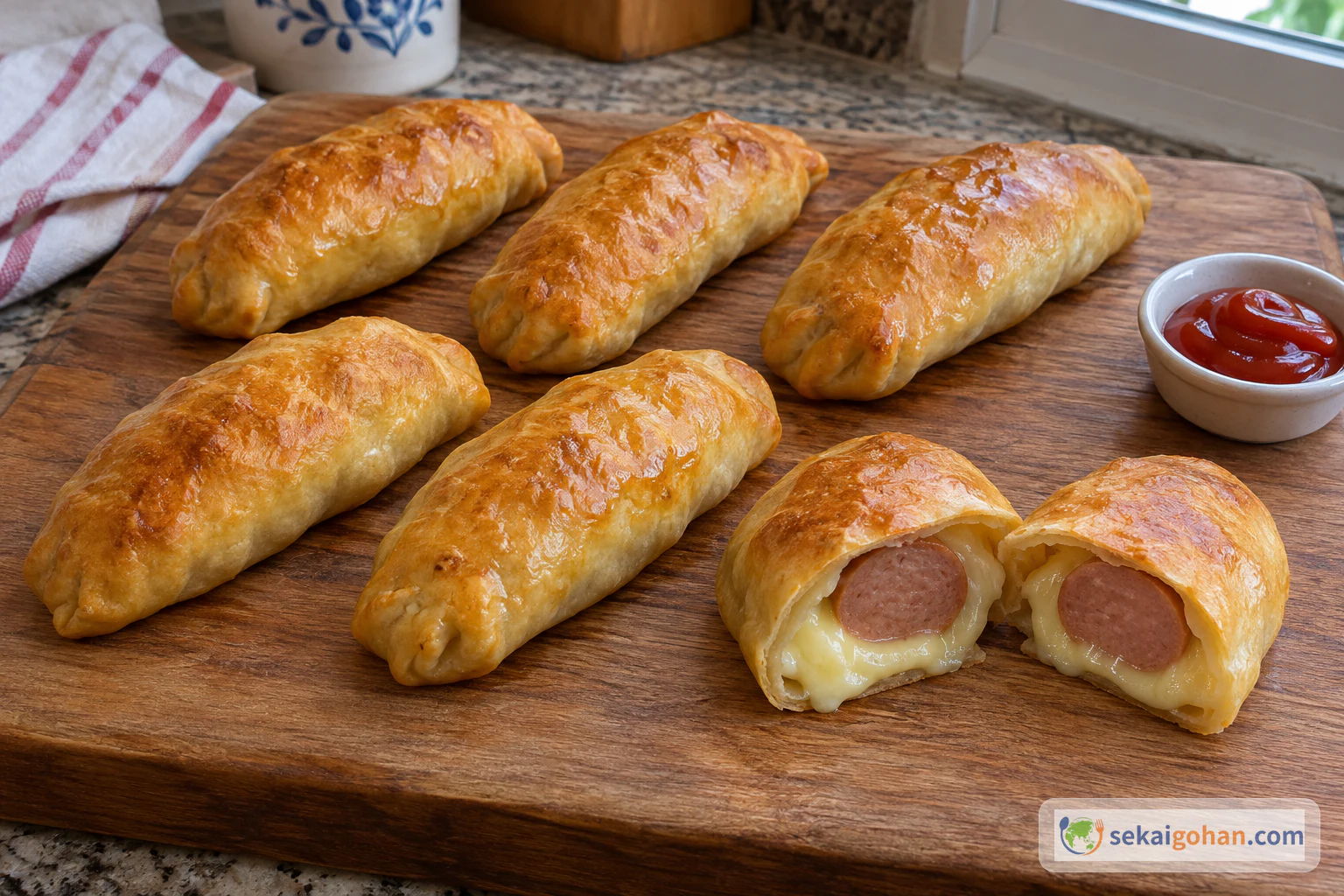
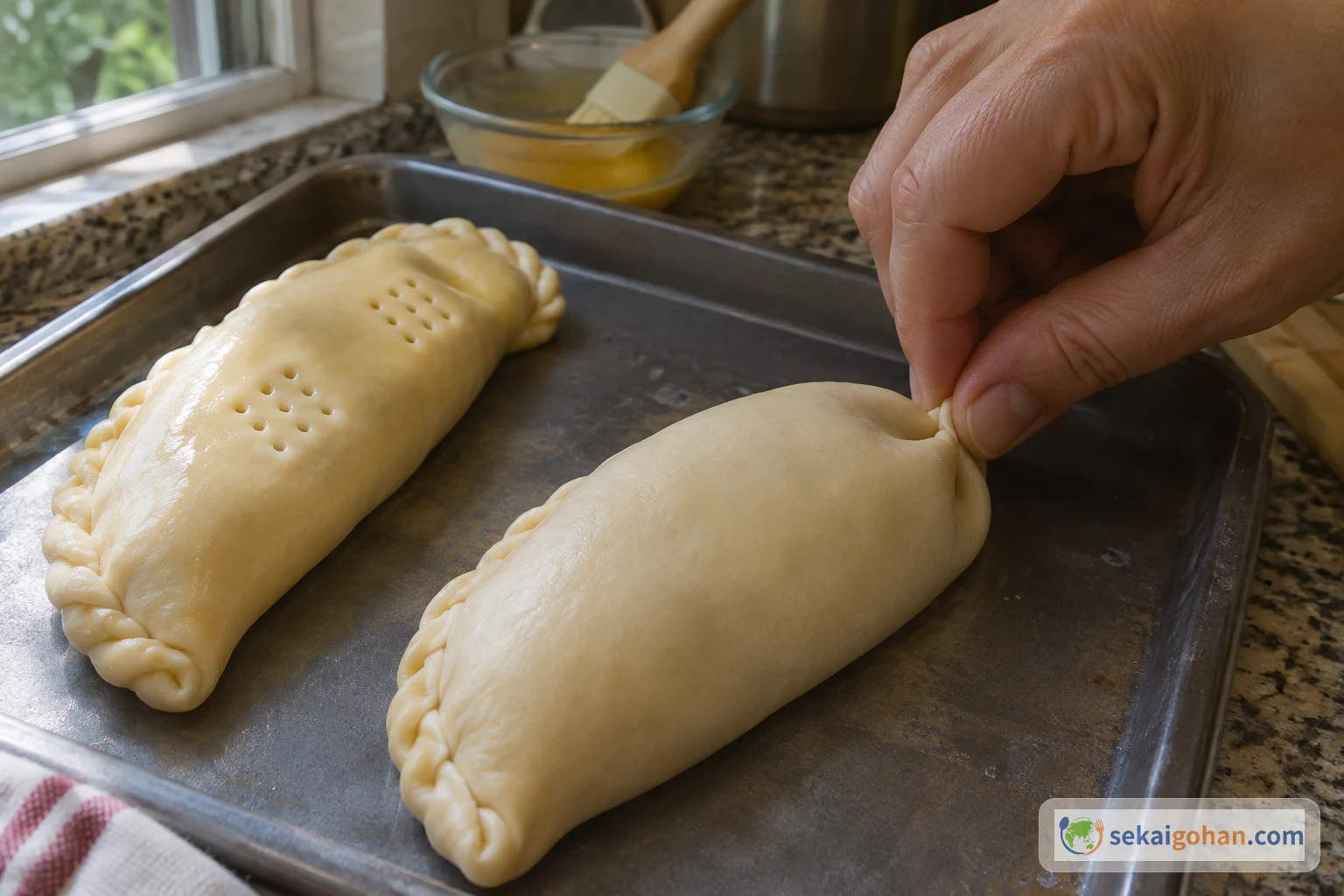
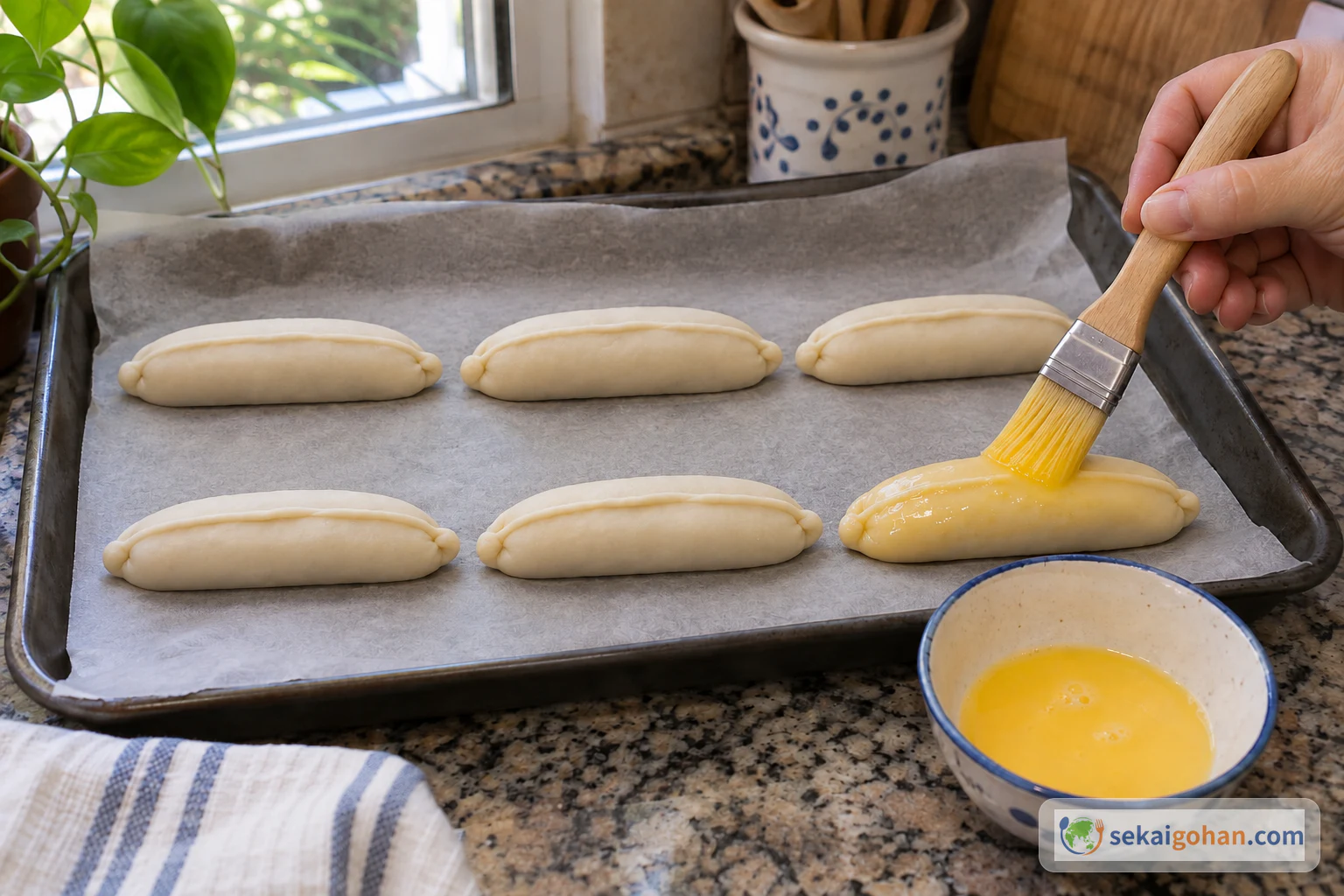
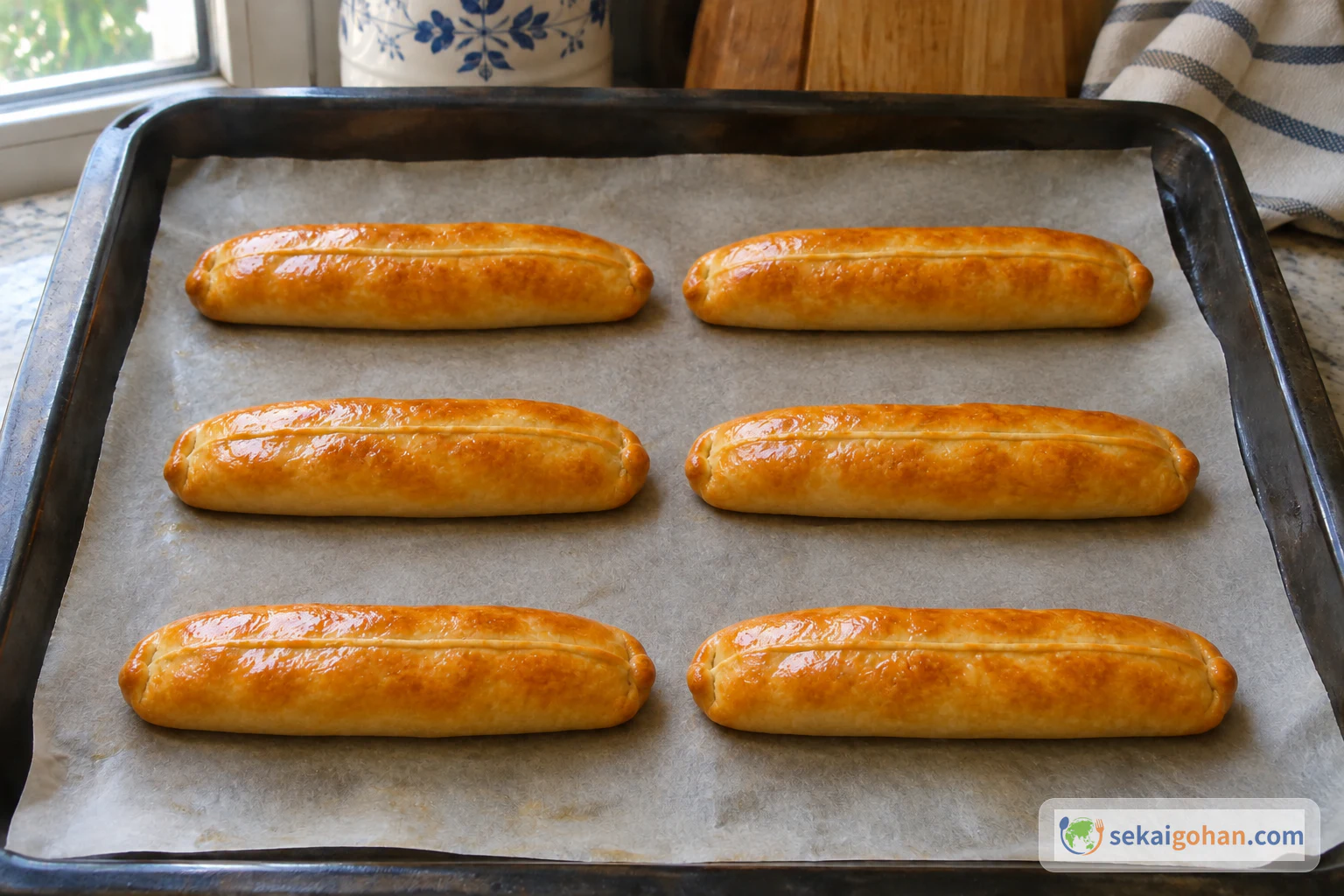
The tray comes out of the oven with six slim golden parcels on it. Each has its ends pinched shut and two fork marks on top. Cut one open and you find a whole sausage in a sleeve of tender crust made with lard, with the cheese melted around it. A chaparrita is just that: a sausage and a piece of cheese wrapped in dough and baked. In Chile it counts as a classic home recipe. It tastes salty and rich, with a crust that is short and savoury.
Sausage, Cheese and a Question of Dough
Chilean food sites treat chaparritas as a classic Chilean recipe and make them at home in the oven. The filling barely changes. You need a vienesa, the slim Chilean wiener, and a piece of soft melting cheese, usually queso mantecoso. The dough is where kitchens split. Some commenters on one Chilean recipe site say it has to be empanada dough, the same kneaded dough of flour, fat, water and salt that wraps Chile's baked empanadas. Others use a soft yeasted bread dough, let the wrapped sausages rise and bake them like small rolls. Some even mention puff pastry. Which dough is the right one is not settled, and households go their own way.
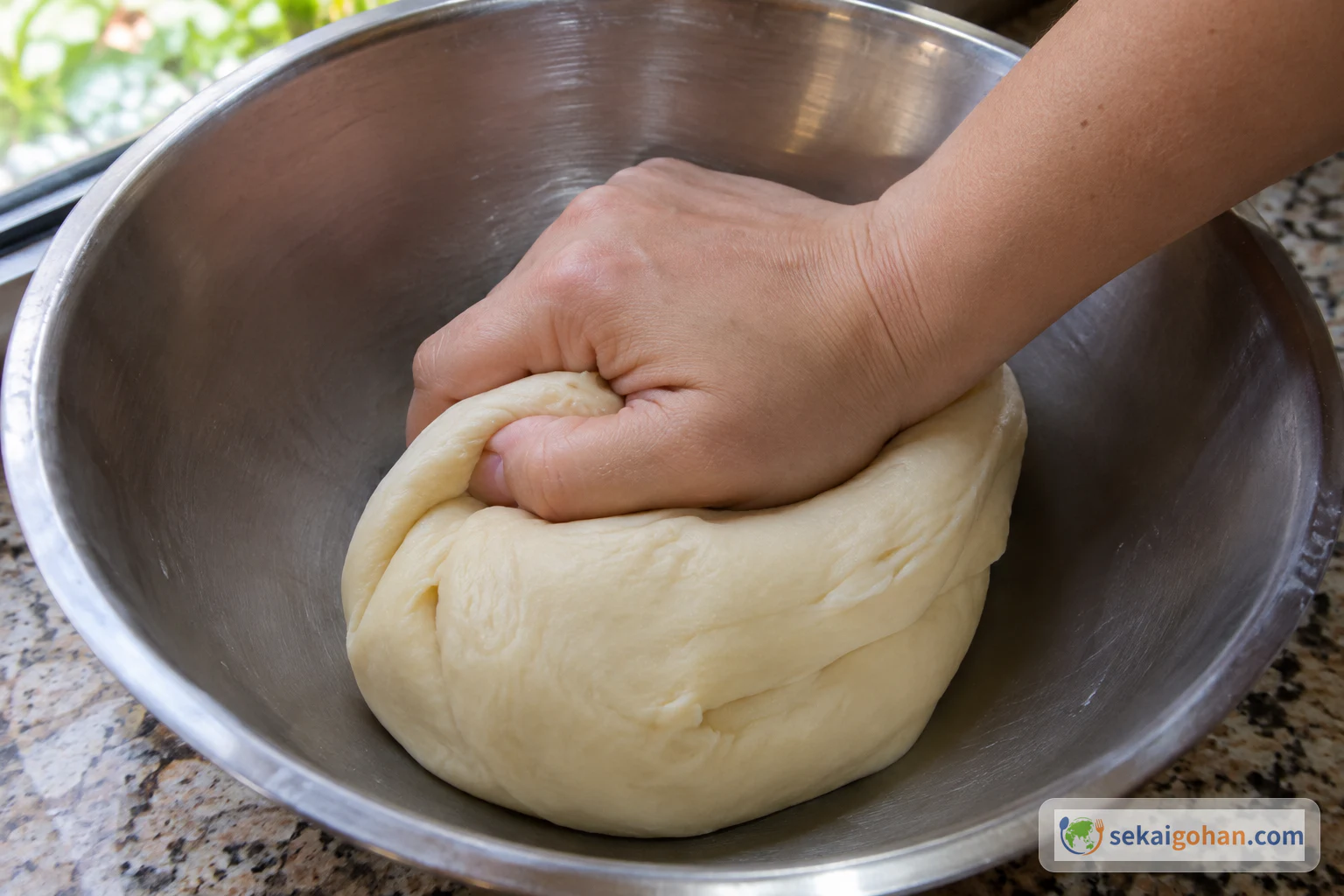
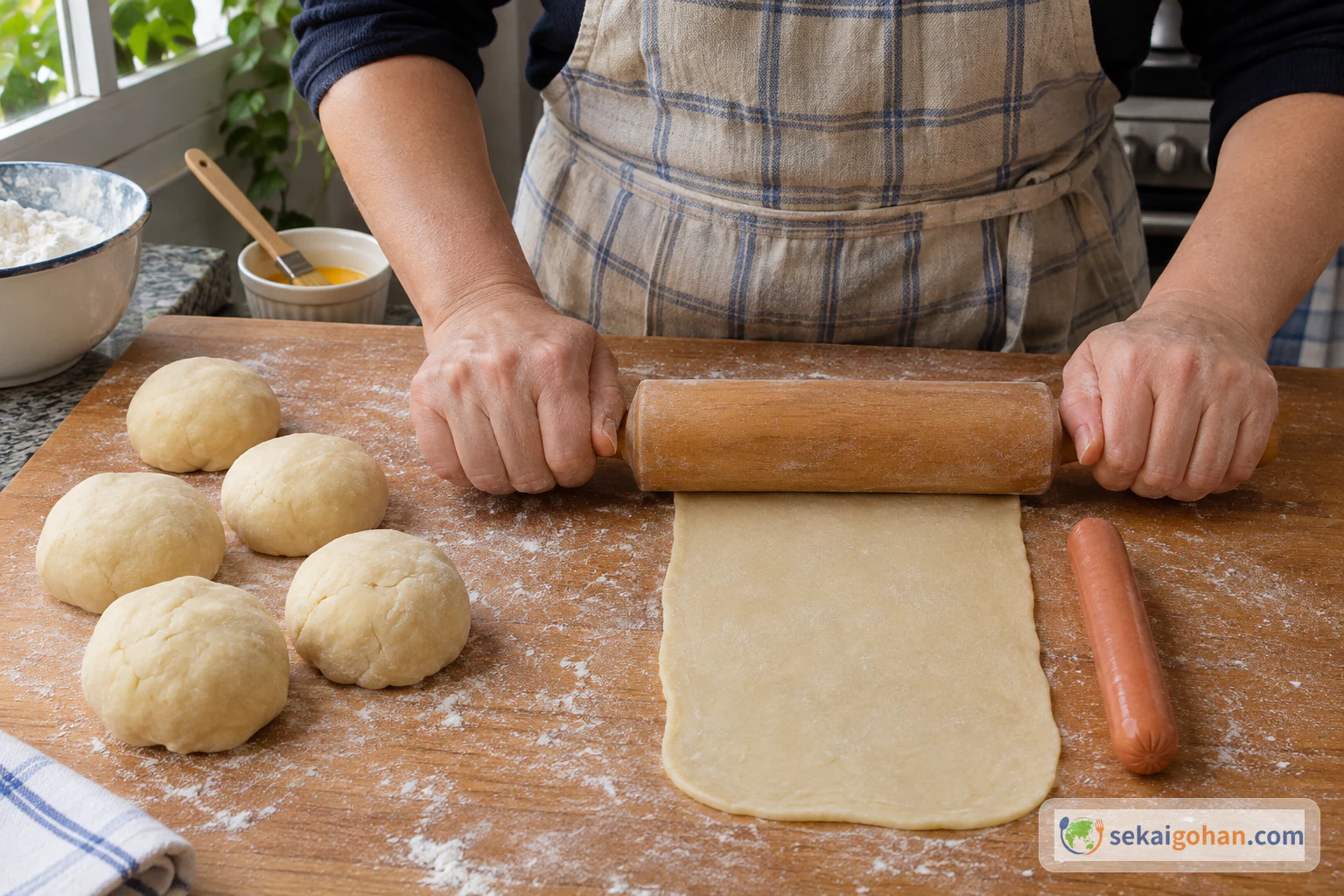
This version uses the empanada-style dough. You knead it from flour, melted lard, hot water and salt, roll it thin, wrap it around the sausage and bake it straight away. Because nothing has to rise, the whole batch goes from bowl to oven quickly. The lard gives the crust its savoury, slightly flaky bite.
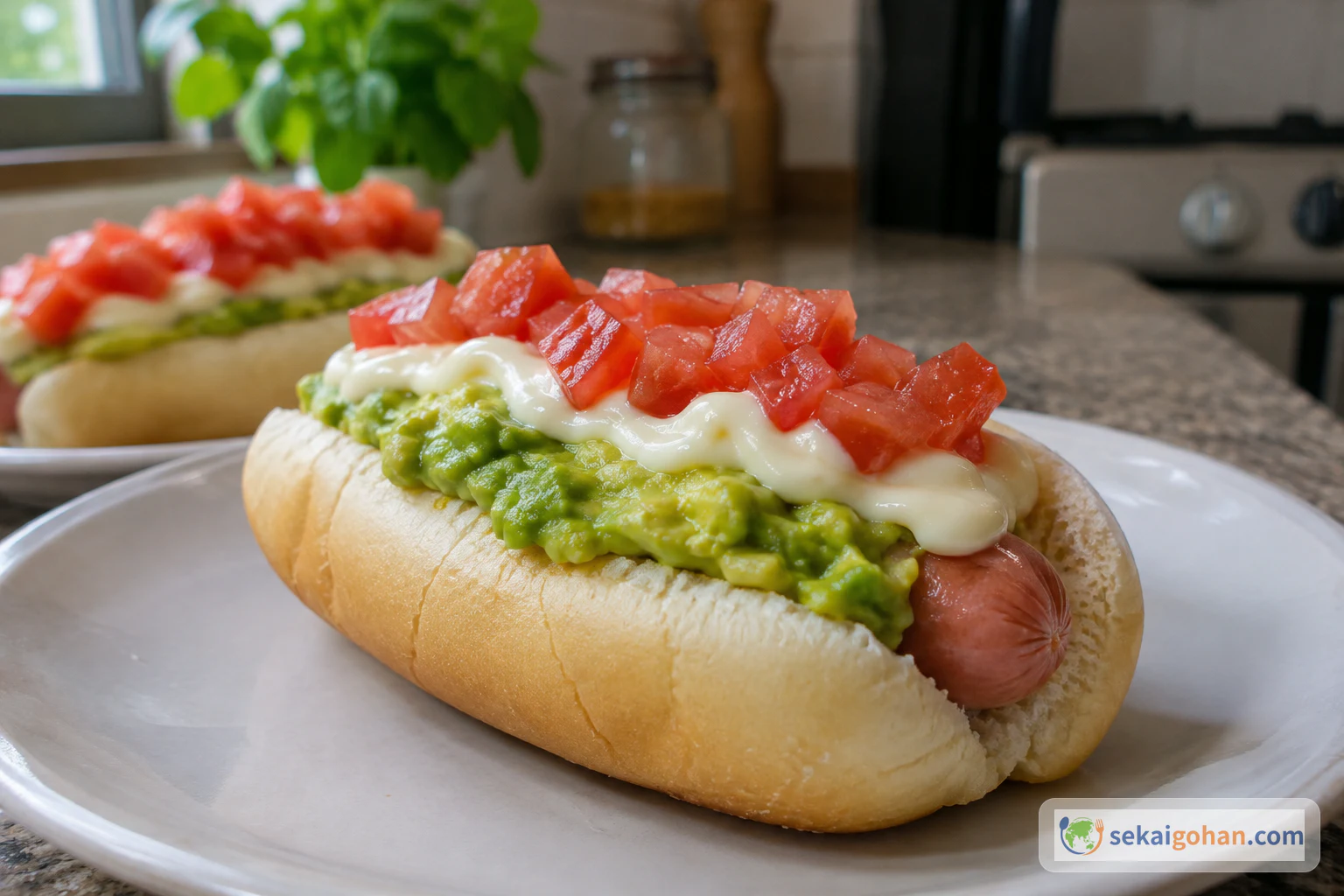
Commenters on one Chilean recipe site set chaparritas apart from the completo, Chile's loaded hot dog, which is made the opposite way. A completo puts the sausage into a bread roll that is already baked. A chaparrita bakes the sausage inside raw dough, so the crust, the cheese and the sausage come out of the oven as one piece.
Some people also call the same snack a montino. If you look for recipes or ask a Chilean friend, try both names.
Ingredients (serves 6)
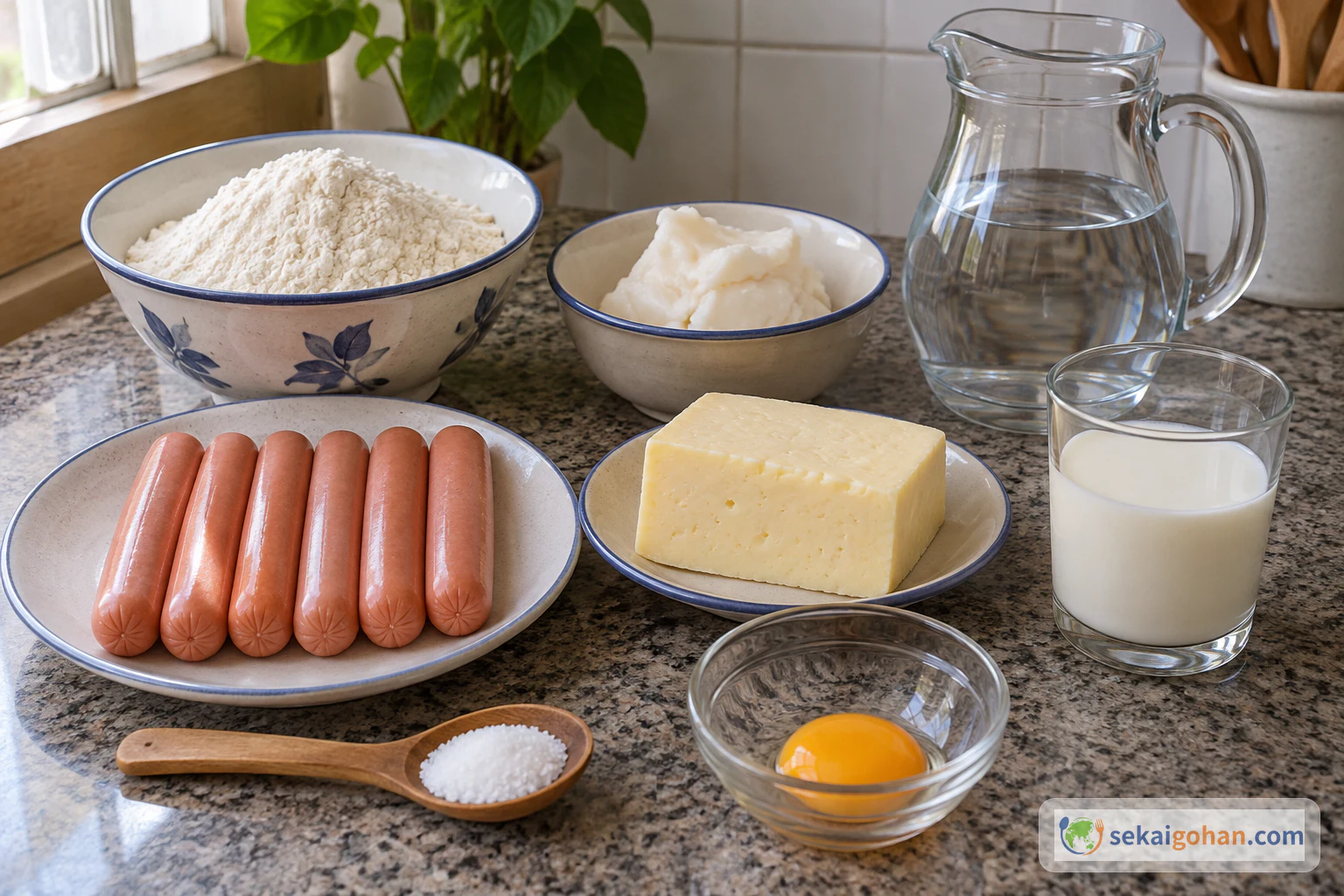
Chaparritas contain wheat, egg, milk (milk and cheese) and pork (lard and sausages). The dough and the egg-yolk glaze are cooked only by baking. Bake them fully and never eat either one raw.
Equipment
- Large mixing bowl and a sieve for the flour
- Kitchen scale, to divide the dough into six even pieces
- Rolling pin and a floured work surface
- Fork
- Small bowl and a silicone pastry brush for the glaze
- Baking tray
Choosing and Substituting
The sausages decide the safety of the bake. Buy fully cooked wieners or frankfurters, the closest match to Chilean vienesas, and follow the label on the pack. The oven only has to heat them through and brown the dough around them.
Queso mantecoso is the traditional cheese. It is soft and buttery and melts readily. Outside Chile, gouda, mozzarella or edam take its place.
Lard sets the flavour of the crust, and in some areas you can only get it online. Butter can replace it gram for gram, and the crust tastes milkier. Vegetable oil works in the same weight too, but an oil dough dries out more easily, so roll it quickly and keep the pieces you are not working on covered.
The dough needs only wheat flour. Nothing else on the list needs a specialty shop.
Method
Make the dough first. After that the work is shaping: six rectangles, six sausages, six seals. Switch the oven on as you start wrapping so it gets at least 10 minutes to preheat. The only hands-off time is the bake itself.
When It Goes Wrong
| What you see | Why | What to do |
|---|---|---|
| The dough cracks as you roll it | It was not kneaded long enough, or the edges have dried | Knead until the ball is smooth, and keep the waiting pieces covered |
| The dough feels dry and stiff | Vegetable oil was used instead of lard | Work quickly and keep it covered. Lard or butter gives a softer dough |
| The ends open and cheese runs out | The seal was weak | Pinch the ends flat and firm, and press along the whole seam |
| The rectangles tear when you lift them | They were rolled thinner than ⅛ inch (3 mm) | Fold the dough up and reroll to ⅛ to a scant ⅛–¼ inch (3–5 mm) |
| The outside is golden but the dough inside is pasty | The bake was too short for your oven | Return the tray to the oven and bake until the cut dough is fully cooked |
Serving and Variations
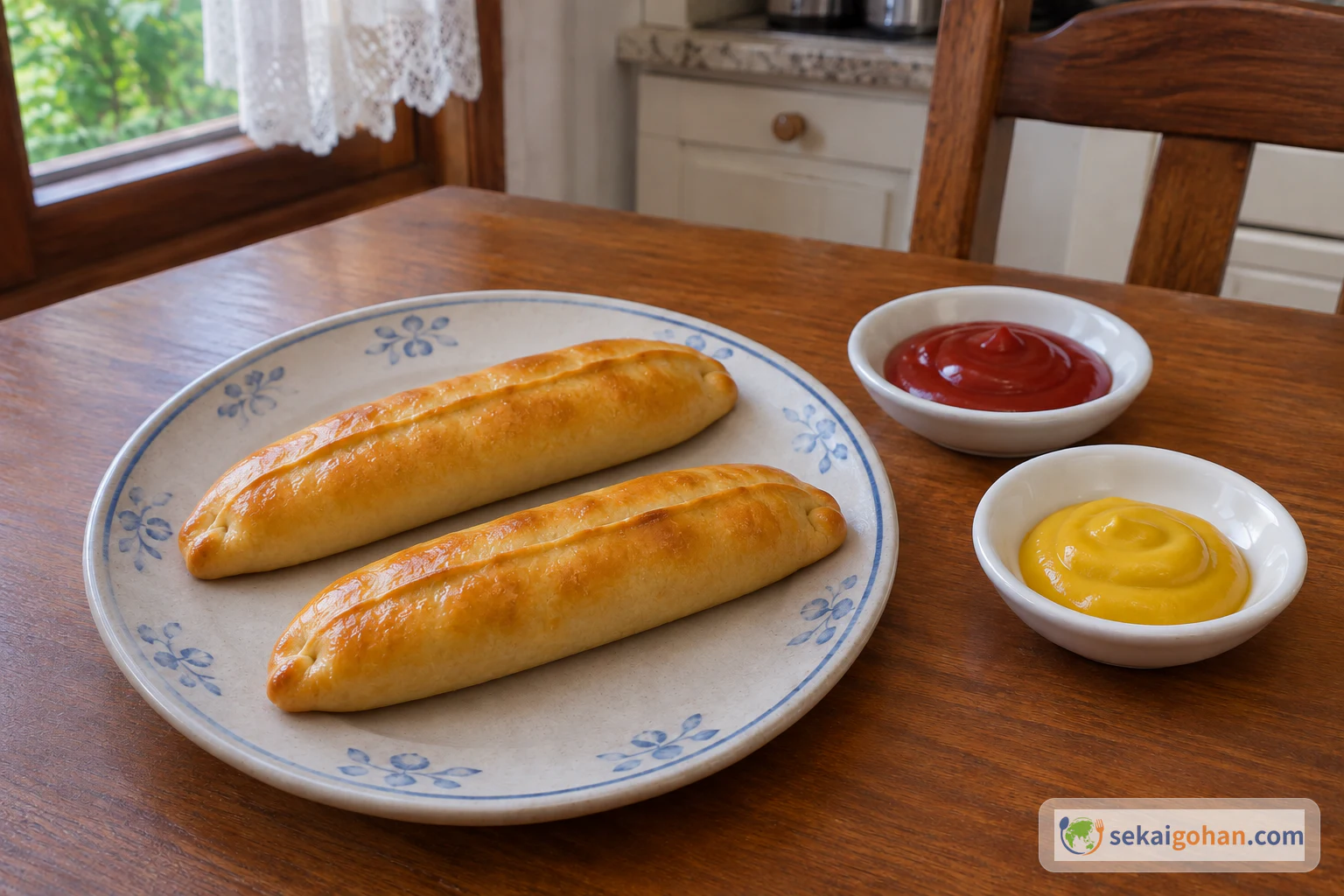
Chaparritas are a snack you eat with your hands, warm from the tray. Some cooks set out ketchup and mustard for dipping, and some add mayonnaise. Eat them soon after baking, while the crust is crisp and the cheese is still soft.
Variations
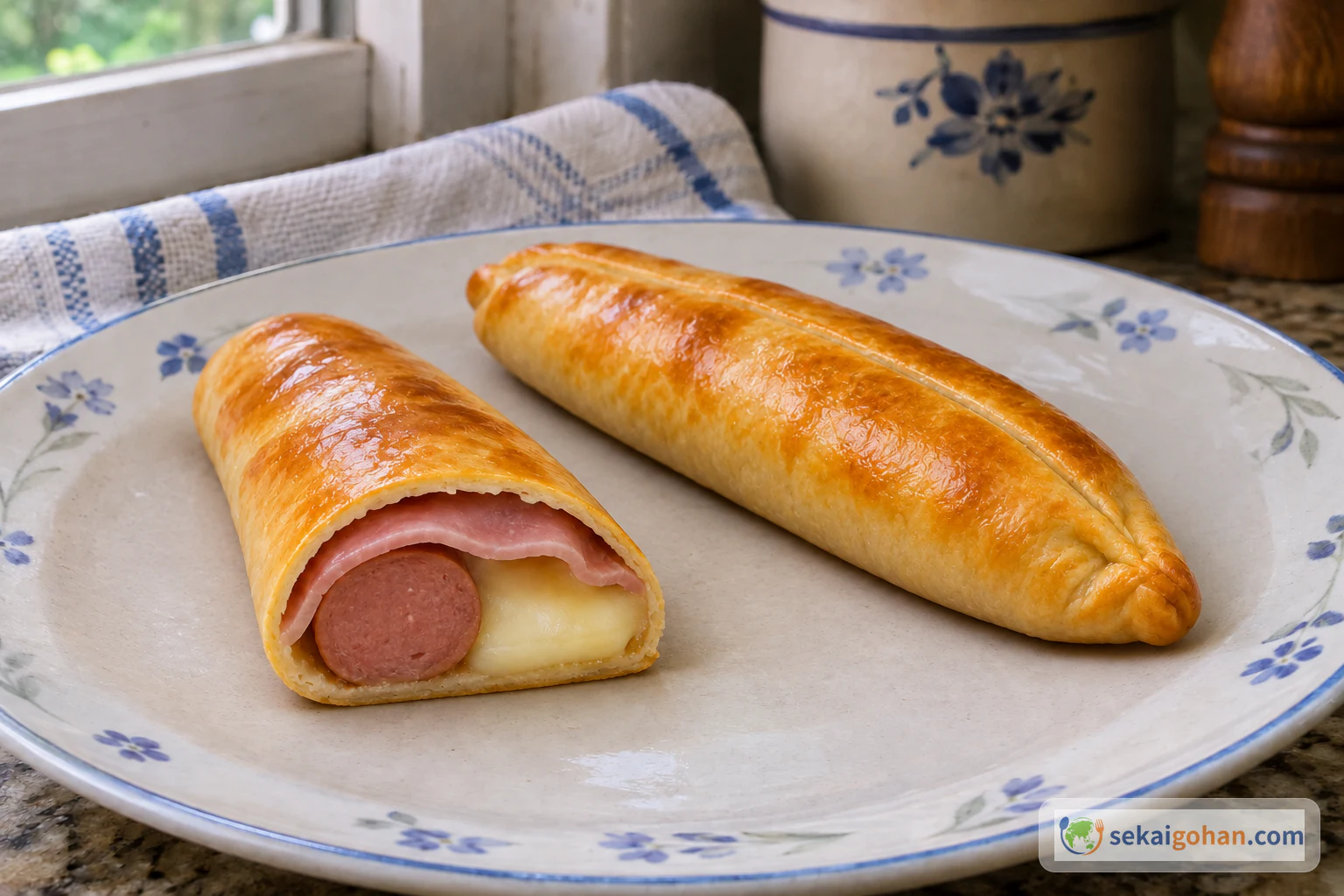
Cheese and ham. Fold a slice of ham around the sausage before you add the cheese. It makes a meatier, saltier bite, and the author of one Chilean recipe site prefers it to the plain version. Seal it just as tightly, because the filling is thicker.
Tomato and oregano inside. Spread a little ketchup or tomato sauce on the dough and sprinkle on dried oregano before you lay down the sausage. The filling turns tangy and herby, a bit like pizza, and the cheese mixes with the sauce as it melts.
Frequently Asked Questions
Can I freeze chaparritas?
Yes. Freeze them unbaked, right after wrapping and sealing. To bake, thaw them in the refrigerator, then glaze and bake as in steps 4 and 5.
Can I use store-bought empanada dough?
Yes, one Chilean recipe uses it. Cut the dough to fit each sausage, add the cheese (or ketchup and oregano), seal, and brush with beaten egg if you like. Bake for about 20 minutes, until the dough is well browned and cooked through.
How does the bread-dough version differ?
It uses a soft yeasted bun dough. Each sausage is wrapped and sealed, then left to rise before baking at 345°F (175°C) for 25–30 minutes. Let the rolls cool for about 10 minutes before eating. That version makes twelve pieces, with a soft, bready crust instead of the short lard crust here.