
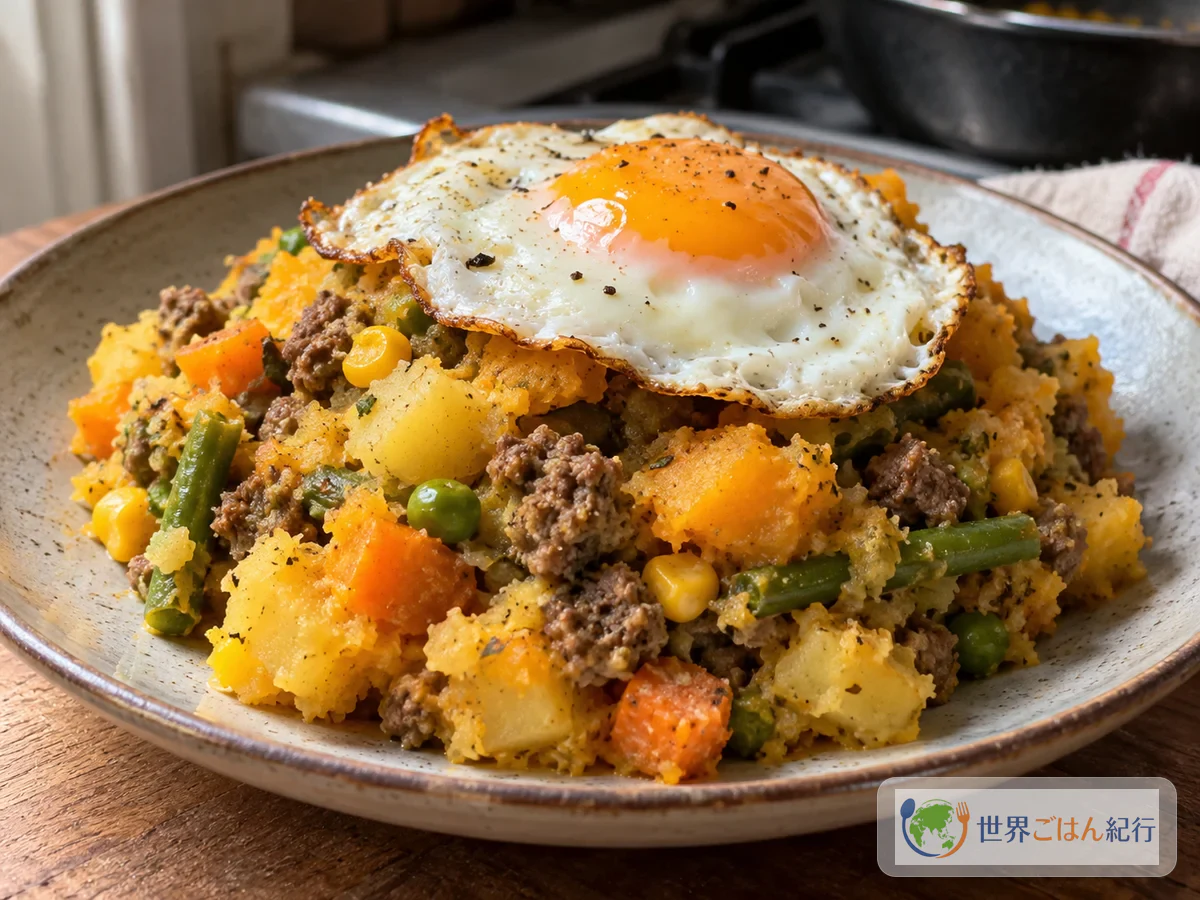
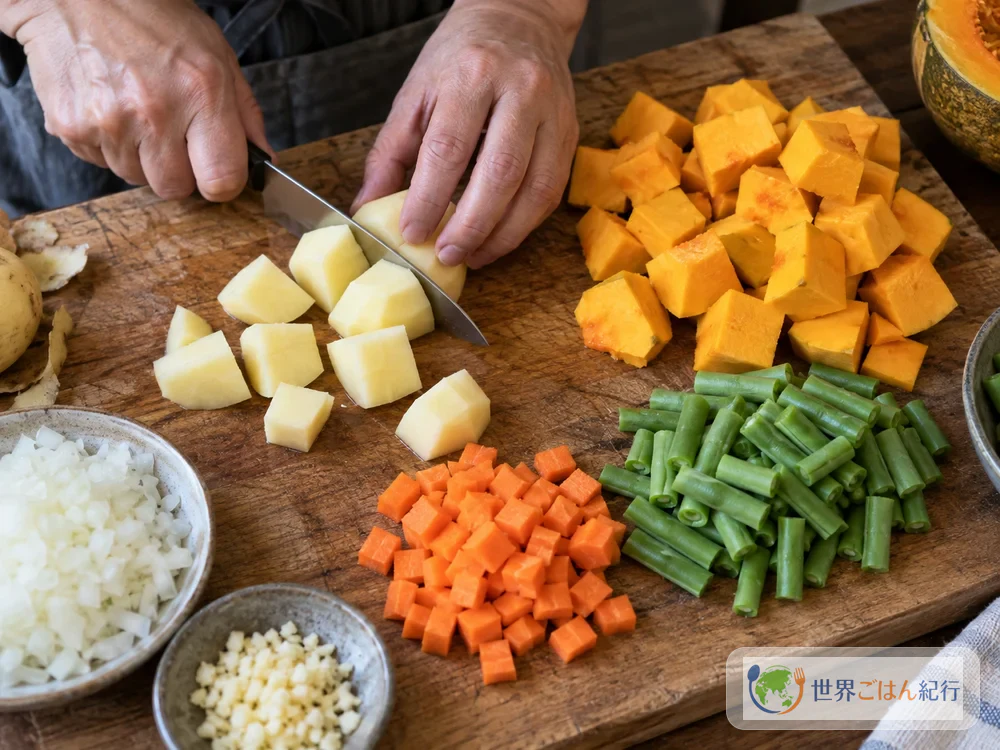
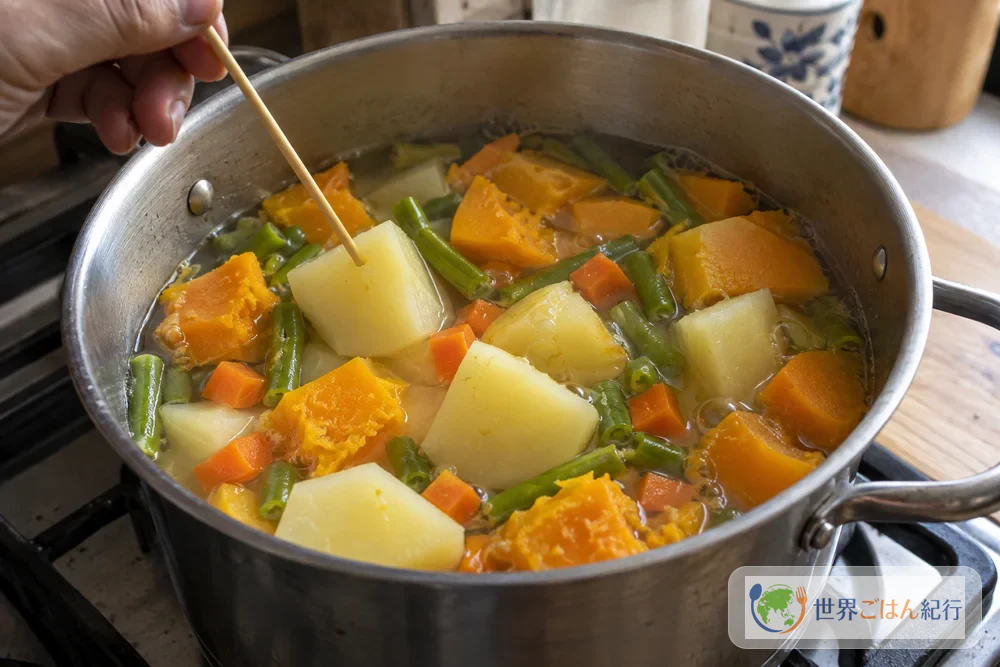
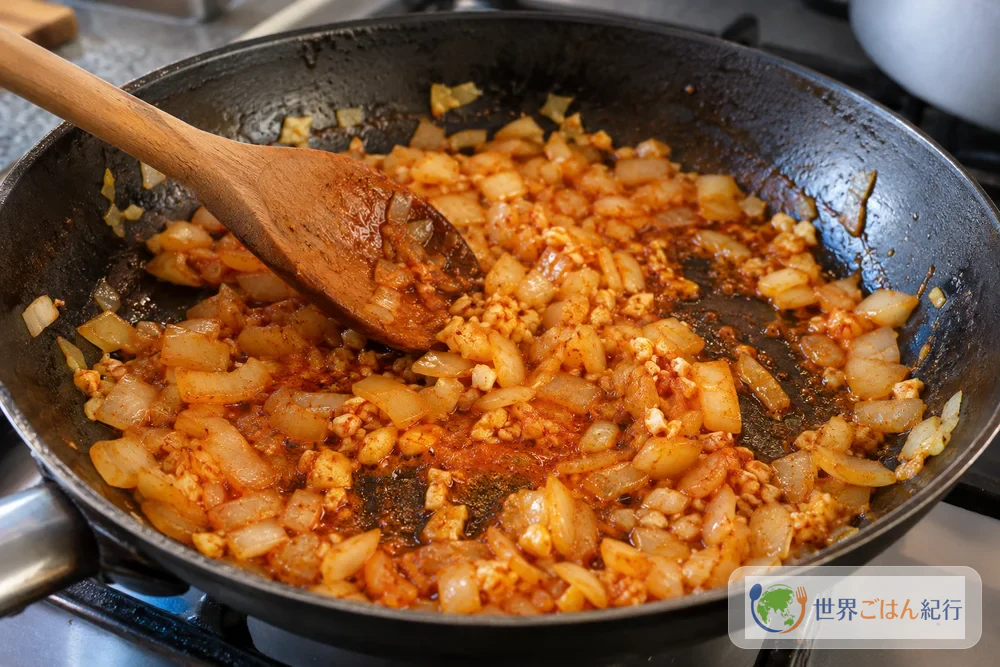
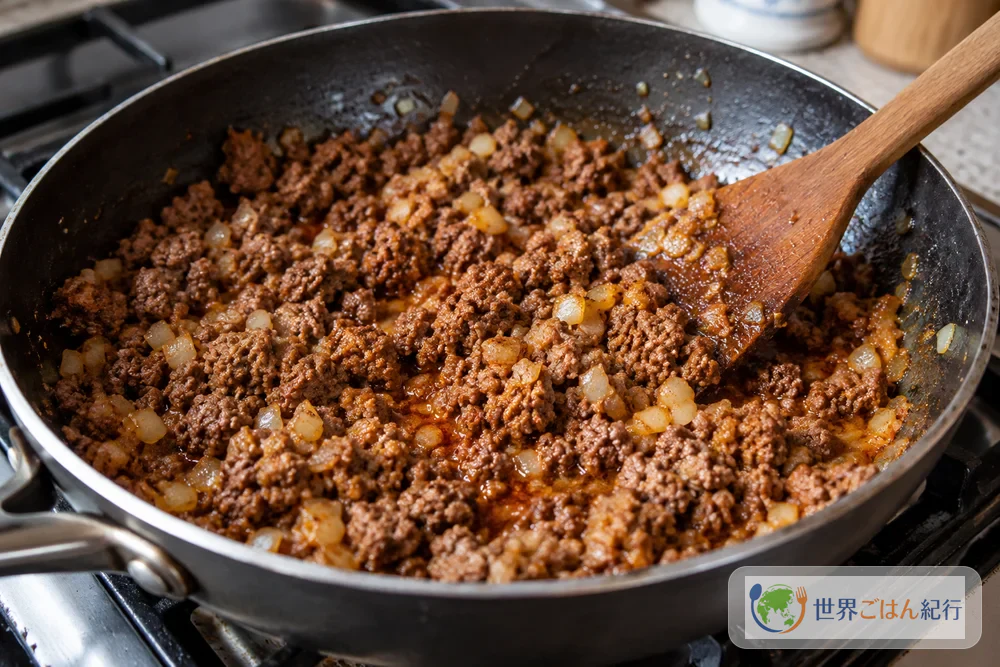
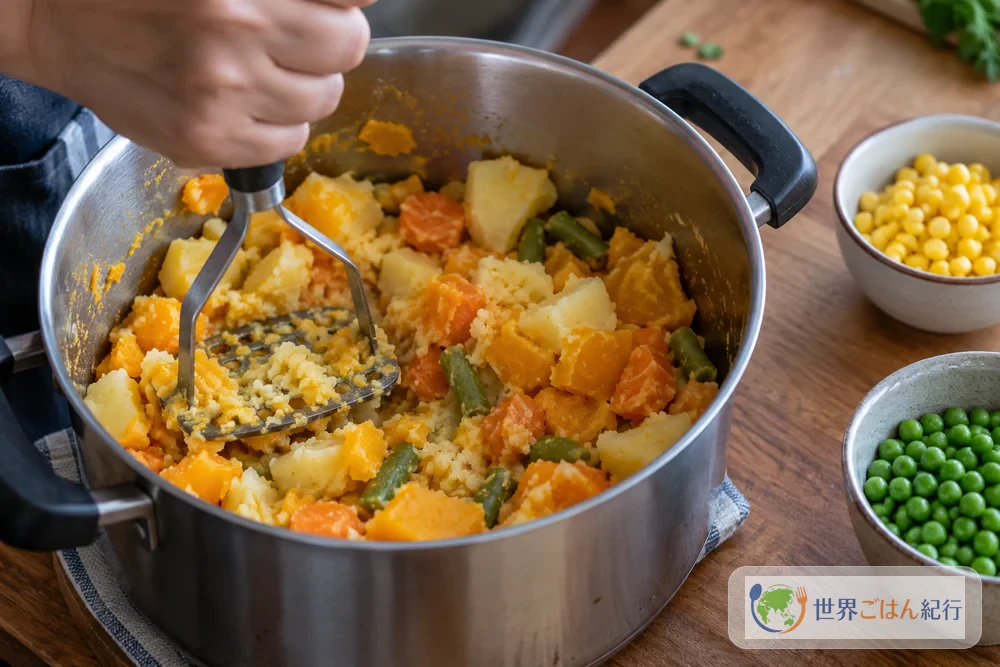
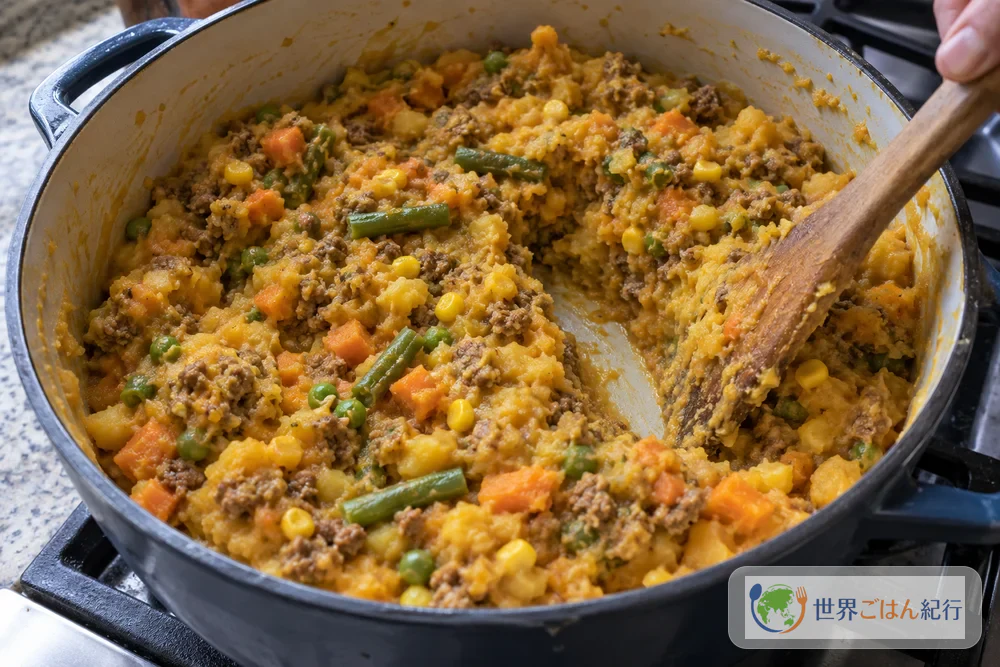
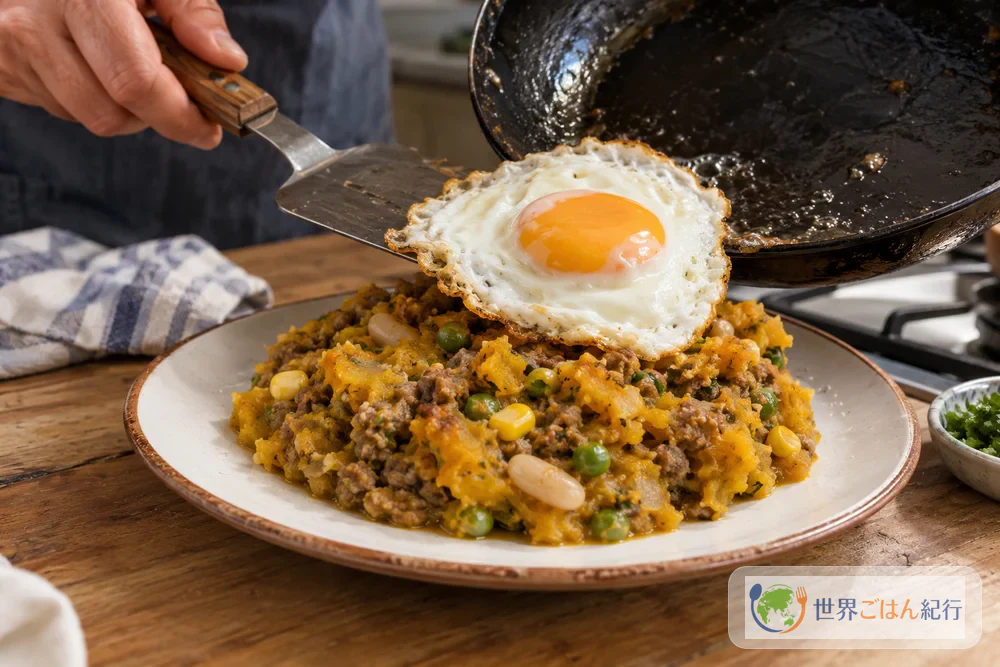
In the pot, the potatoes and squash crumble softly into an orange mottle. Fold in the onion and ground beef stained red with paprika, plate it, and top it with a fried egg in the center. Break the yolk and it runs and soaks into the potatoes. This is charquicán, the potato, squash, and meat stew that Chilean households often make in winter. The "charqui" in the name means dried meat. Today it is generally made with fresh ground beef, and you can reproduce it with ordinary supermarket ingredients.
From a Travel Meal of Dried Meat to a Chilean Household Staple
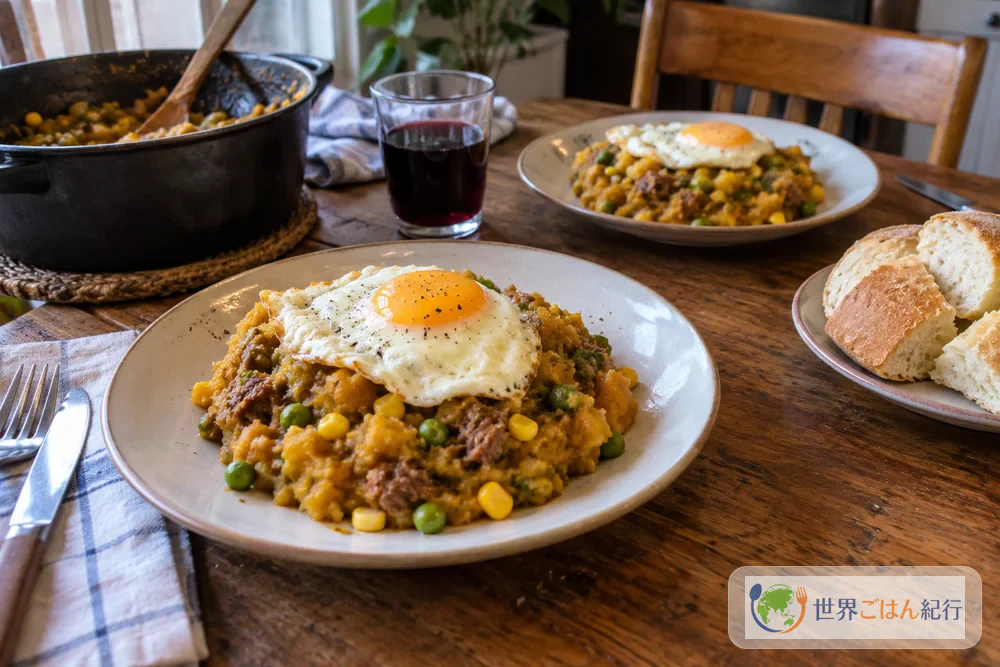
The "charqui" in charquicán is meat that has been salted and dried. In the days before refrigerators, light, long-keeping dried meat was an essential food for people on long journeys. An article in Chile's La Tercera says charquicán was originally a cattle drover's packed meal, the portable food of people called arrieros. Dried meat was simmered with vegetables found along the way. That kind of travel meal later became a staple of Chilean cooking.
Memoria Chilena, run by Chile's National Library, in introducing the diet of colonial Chile, names charquicán alongside squash and corn dishes and empanadas. According to the same page, the center of the common people's diet then was charqui, wheat flour, and beans, with dried chile and salt. Charquicán is a dish that has continued from the common people's kitchen.
There are two theories about the origin of the name. One is that it comes from the Quechua charquikanka, meaning a stew or mixture of charqui. The other, from Mapuche, combines "charqui" (dried meat) and "can" (roasted meat). Neither is settled.
Today's charquicán is normally made with fresh beef rather than dried. An article from the Chilean weather site Meteored describes charquicán as a stew of potatoes, squash, vegetables, and dried meat, and says it has changed into a form made with fresh ingredients. The most popular way is topped with a fried egg, and it is often made in the Chilean winter as a dish to warm you on cold days. It is also reportedly served as a time-honored plate at the eateries of Santiago's central market, La Vega Central.
The Fillings Change by Household: Chile's "Everything Mixed Together"
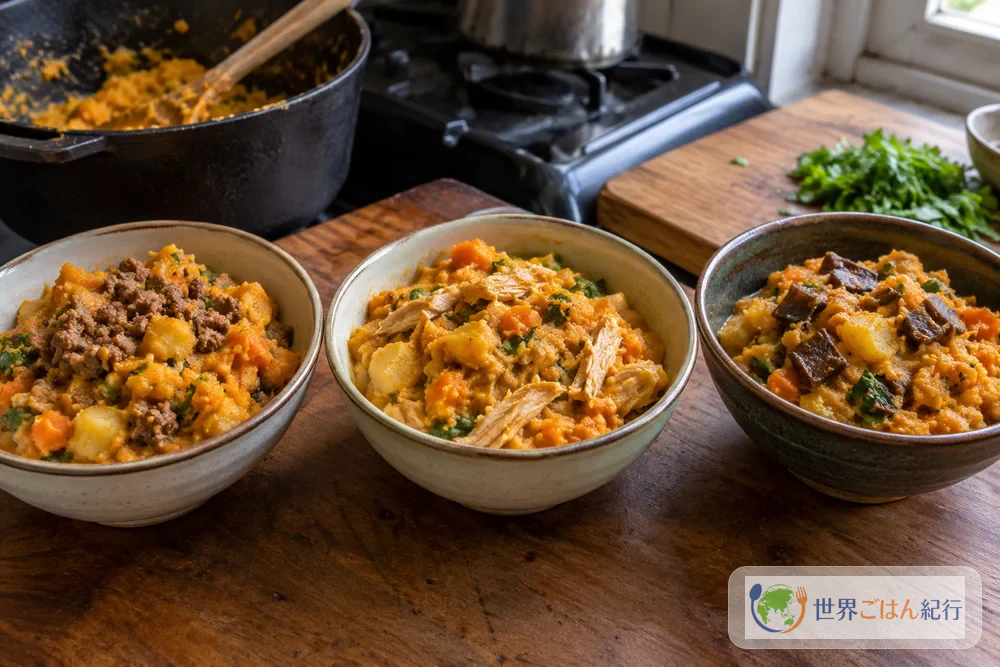
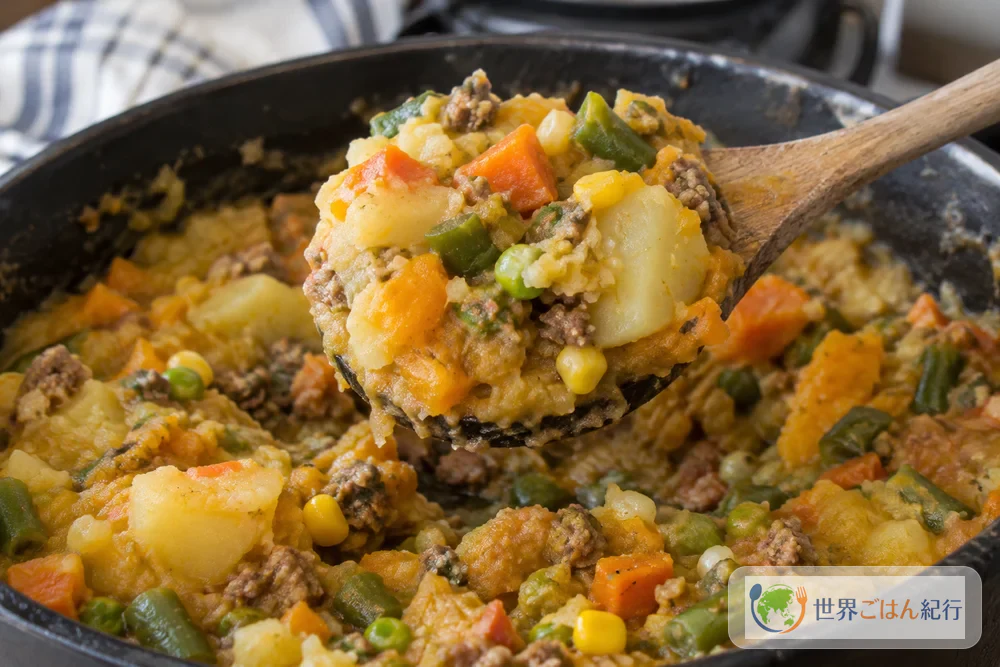
The basic ingredients are meat, squash, and potatoes. To that are added whatever vegetables are at home, such as corn, carrot, green beans, and peas. There is no fixed formula, and it is typical of this dish that how much it is mashed also differs by household. Some homes leave the potatoes about half in shape, and others make it nearly as smooth as a puree.
A meatless version is also well known. The best known is charquicán de cochayuyo, in which cochayuyo, a large brown seaweed from the Chilean coast, is rehydrated in water and finely chopped to replace the meat. There is also a lighter version with boiled and shredded chicken.
In Machalí, in Chile's central O'Higgins region, the city holds a Fiesta del Charquicán. In 2025 it was held on 31 October and 1 November, with events such as folk games and horseback riding alongside traditional food.
The accompaniments also show Chilean character. Pebre, a Chilean salsa of chopped tomato, onion, and cilantro, toasted bread, and the fried bread sopaipilla are listed as traditional sides. Outside Chile, just serving a quick tomato and onion salsa gives the feeling.
Ingredients (serves 4)
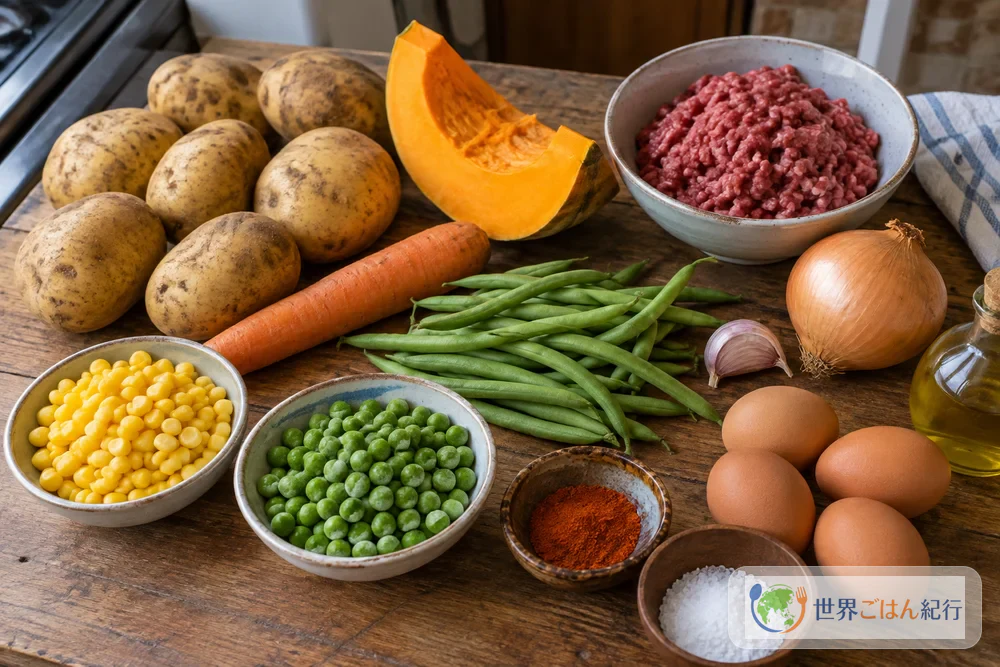
This formula is adapted for home cooks from a recipe by the Chilean home-cooking YouTube channel "Silvana Cocina." With a generous 1 kg of potatoes, it is a complete one-plate dinner that doubles as a staple.
Ají color, commonly used in Chilean homes, is a chile powder that gives dishes a red color, and its job is color and toasty flavor more than heat. Mild paprika is the closest, and frying it in oil brings out a strong red.
How to Make Charquicán
Allow about 20 minutes for prep and about 40 minutes for boiling, sautéing, and finishing. If you make the meat sauté while the vegetables boil, things move quickly.
A fried egg with a soft yolk is undercooked. When serving to small children, older people, pregnant women, or people who are unwell, cook the yolk through until firm.
The Mash and the Liquid Change the Result
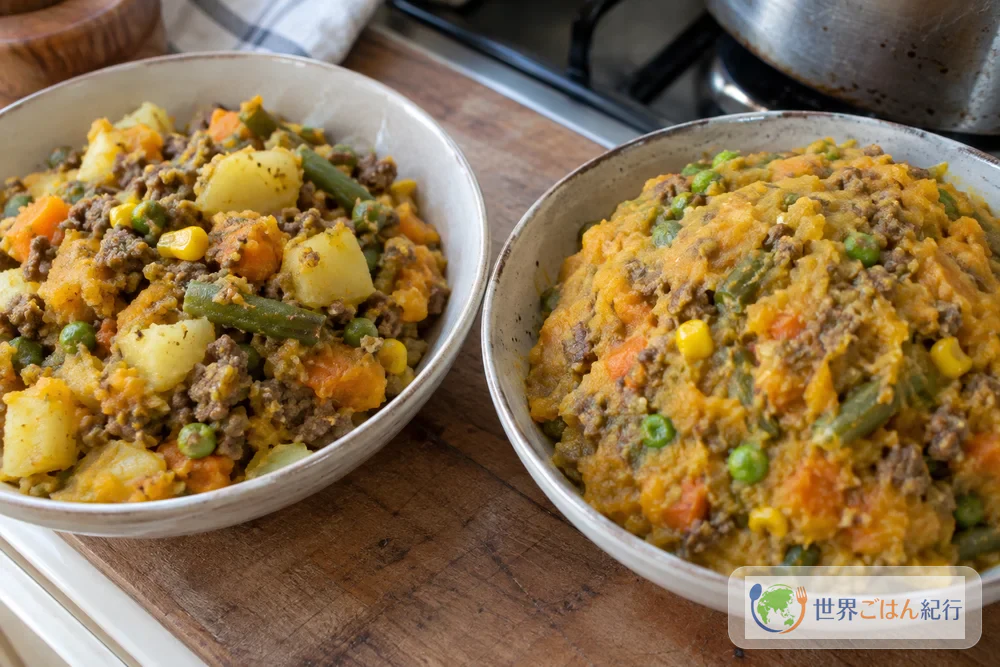
What decides charquicán's texture is how much cooking liquid you leave and how far you mash. Leave a lot of liquid and it is closer to a stew you scoop with a spoon. Leave less and it is a mash that holds a mound on the plate. Start by leaving 1 cup of cooking liquid, then add the liquid you set aside to move toward the firmness you like, and you will not fail.
If you mash too much, the potato's starch comes out and it turns paste-like. Just press the masher down and lift; do not knead it in circles. The force of breaking it up with a wooden spoon is about right.
Winter squash tends to give a stronger sweetness. If the sweetness bothers you, reduce the squash to 200 g and increase the potatoes by that amount. Setting the salt firmly at the end balances the squash's sweetness with the meat's saltiness.
Leftover charquicán absorbs moisture and firms up by the next day. Move it to a small pot, add 2–3 tbsp water, and reheat over low heat, mixing. Top each serving with a freshly fried egg.
Made with Chicken or Seaweed: Variations
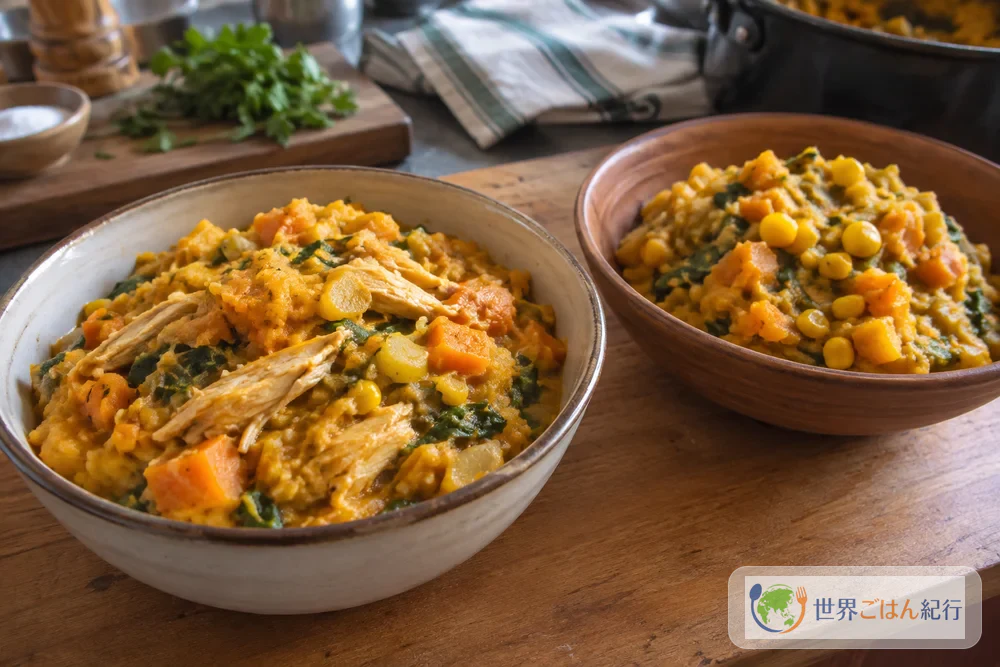
Replacing the ground beef with boiled, shredded chicken breast or thigh gives a lighter taste. Using the chicken's cooking liquid as the vegetable cooking liquid adds savoriness too. For a meatless version, increase the corn to 1 cup and drizzle on more paprika oil at the finish, and it is less likely to feel lacking.
In a home kitchen, finely chopping beef scraps is another option. It is not as much as dried meat, but it keeps more meat presence than ground beef and gives a chewy result. Cochayuyo is a seaweed hard to find outside Chile, so for a meatless version it is realistic to build it from vegetables alone.
How to Eat It
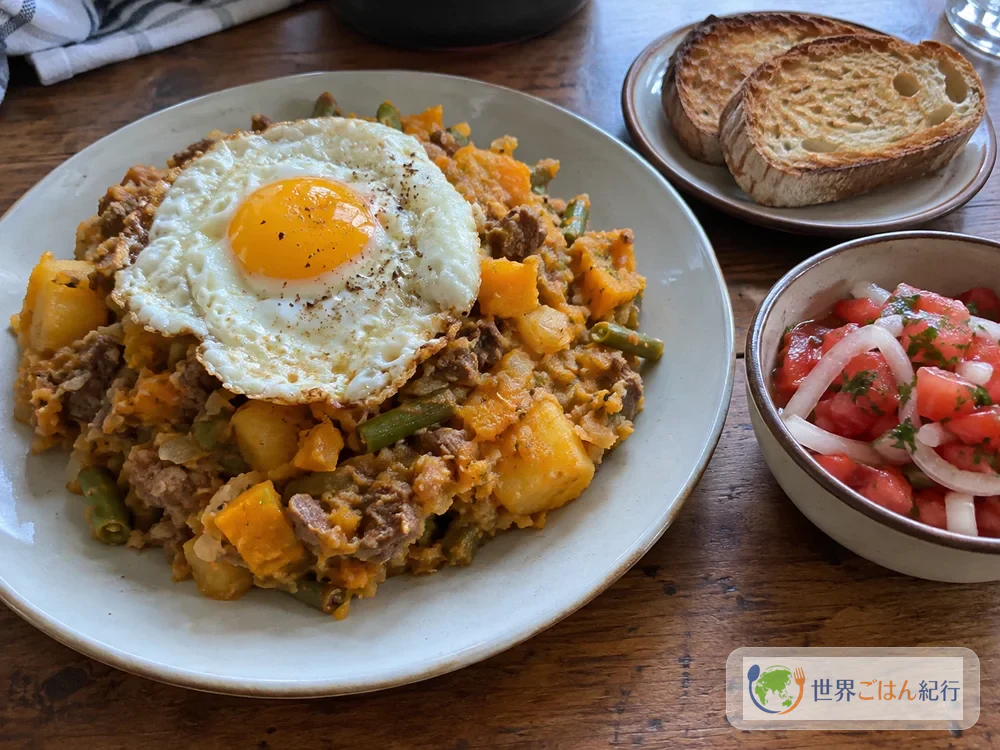
Pile it high on a plate, top with a fried egg, and eat while breaking the yolk. A simple salsa of chopped tomato and onion tossed with salt and lemon juice refreshes the mouth like pebre. If you serve bread, toasted bread goes well. If you are interested in Chilean bread culture, see also how to make Chile's round flatbread hallulla (in Japanese).
For another Chilean home dish, pastel de choclo (in Japanese), in which a corn paste covers a meat filling and is baked, is also a plate loved in Chilean homes. Where charquicán mashes potato and squash, this one grinds corn and bakes it in the oven. Even among dishes that "mash," change the star vegetable and the face of the table is completely different.
FAQ
Can I make it with dried meat (beef jerky)?
Commercial beef jerky is often heavily seasoned and sweet, and is a different thing from local charqui. This recipe uses fresh ground meat, as is common in Chilean homes now. Even if you want to add the flavor of dried meat, it is safest to avoid adding a lot of seasoned jerky.
What if I don't have squash?
You can leave out the squash and increase the potatoes and carrot. But the color and sweetness change a lot. Squash is a basic ingredient of charquicán, so please include it if you can.
Do I have to top it with a fried egg?
You do not have to, but it is the most popular way in Chile. If you leave it off, setting the salt a little stronger keeps the flavor from blurring.
Can I make it spicy?
Replace part of the paprika with cayenne or red pepper flakes, or add hot sauce at the table to adjust.
Can I make it ahead?
You can refrigerate it and reheat it the next day to eat. We cannot give a firm number of storage days, so finish it soon. When reheating, add a little water and heat until hot at the center.
Sources
- Patricio Contreras, "Un plato rendidor: las mil y una caras del charquicán," La Tercera (Paula Cocina), published 30 August 2024. Accessed and checked 22 October 2026. https://www.latercera.com/paula-cocina/noticia/un-plato-rendidor-las-mil-y-una-caras-del-charquican/35VL24QKWFD2XKKE7ZLFDQ6LTM/
- Memoria Chilena, Biblioteca Nacional de Chile, "Las comidas." Accessed and checked 22 October 2026. https://www.memoriachilena.gob.cl/602/w3-article-545665.html
- Carolina Aliaga, "Dónde comer el mejor charquicán con huevo frito en Santiago: tradición chilena para días fríos," Meteored Chile, published 14 June 2025. Accessed and checked 22 October 2026. https://www.meteored.cl/noticias/actualidad/donde-comer-el-mejor-charquican-con-huevo-frito-en-santiago-tradicion-chilena-para-dias-frios.html
- EnCancha, "Confirman tradicional Fiesta del Charquicán a 1 hora de Santiago," published 9 October 2025. Accessed and checked 22 October 2026. https://www.encancha.cl/enlahora/panoramas/2025/10/09/confirman-tradicional-fiesta-del-charquican-a-1-hora-de-santiago-fecha-lugar-y-panoramas-para-toda-la-familia/


