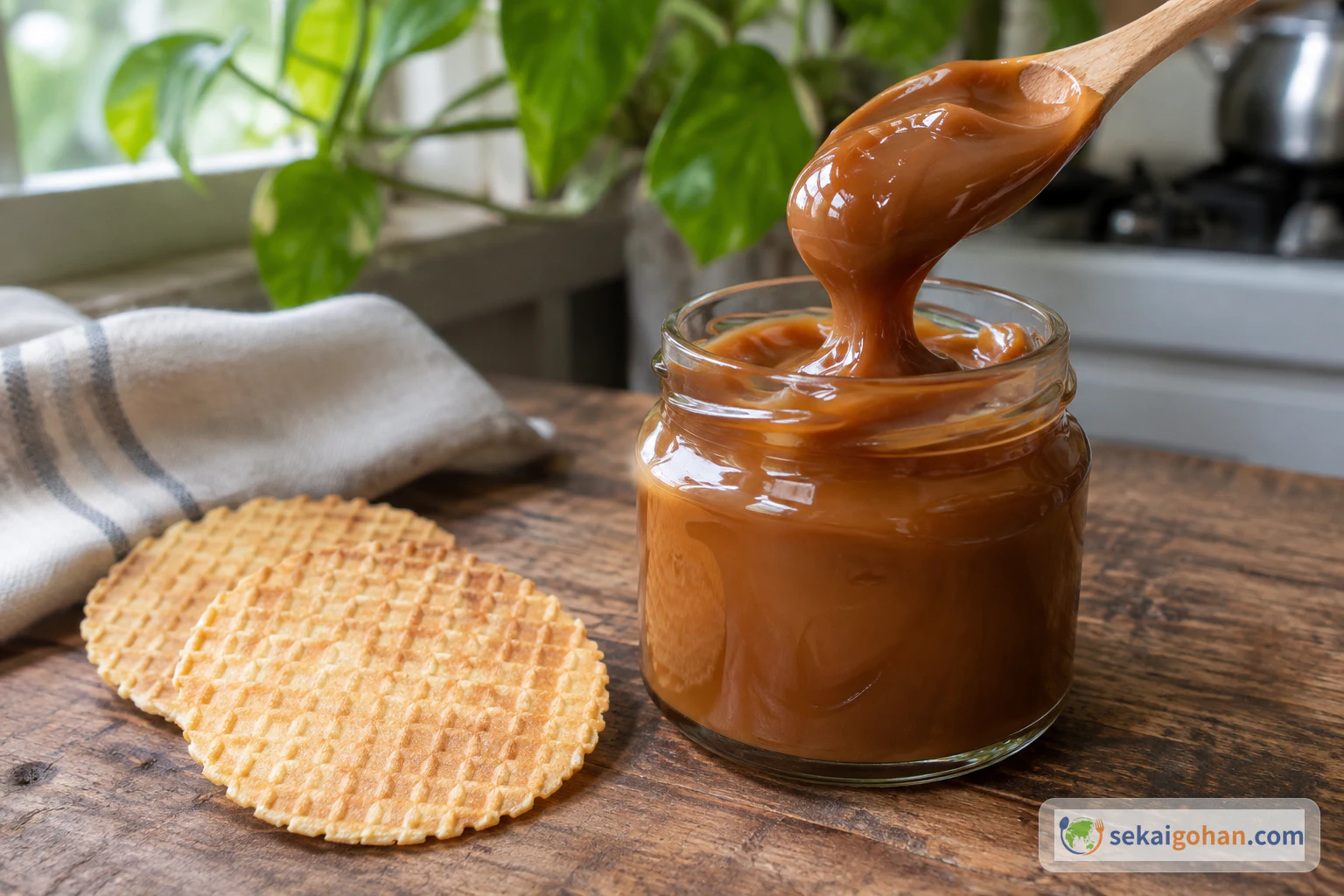
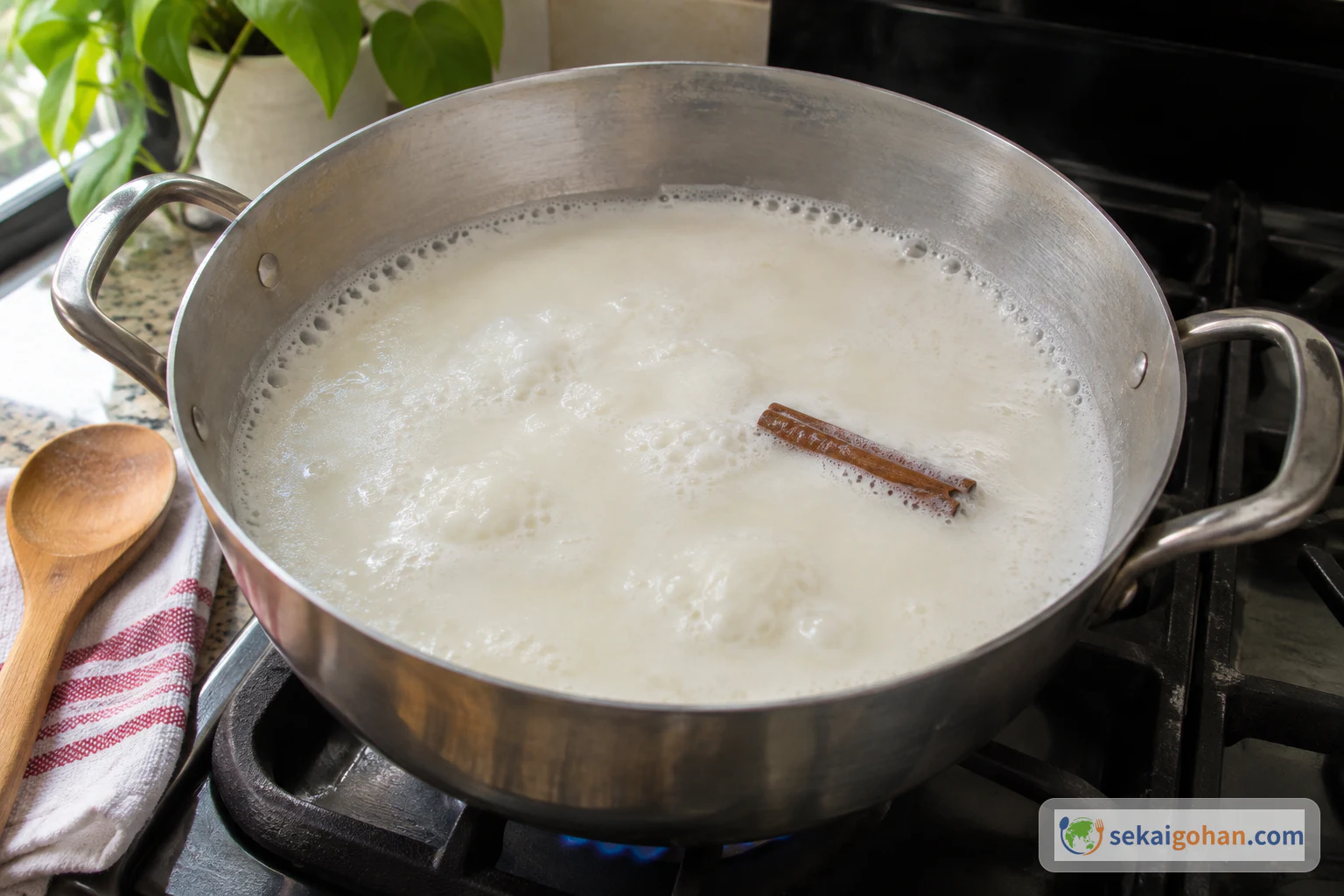
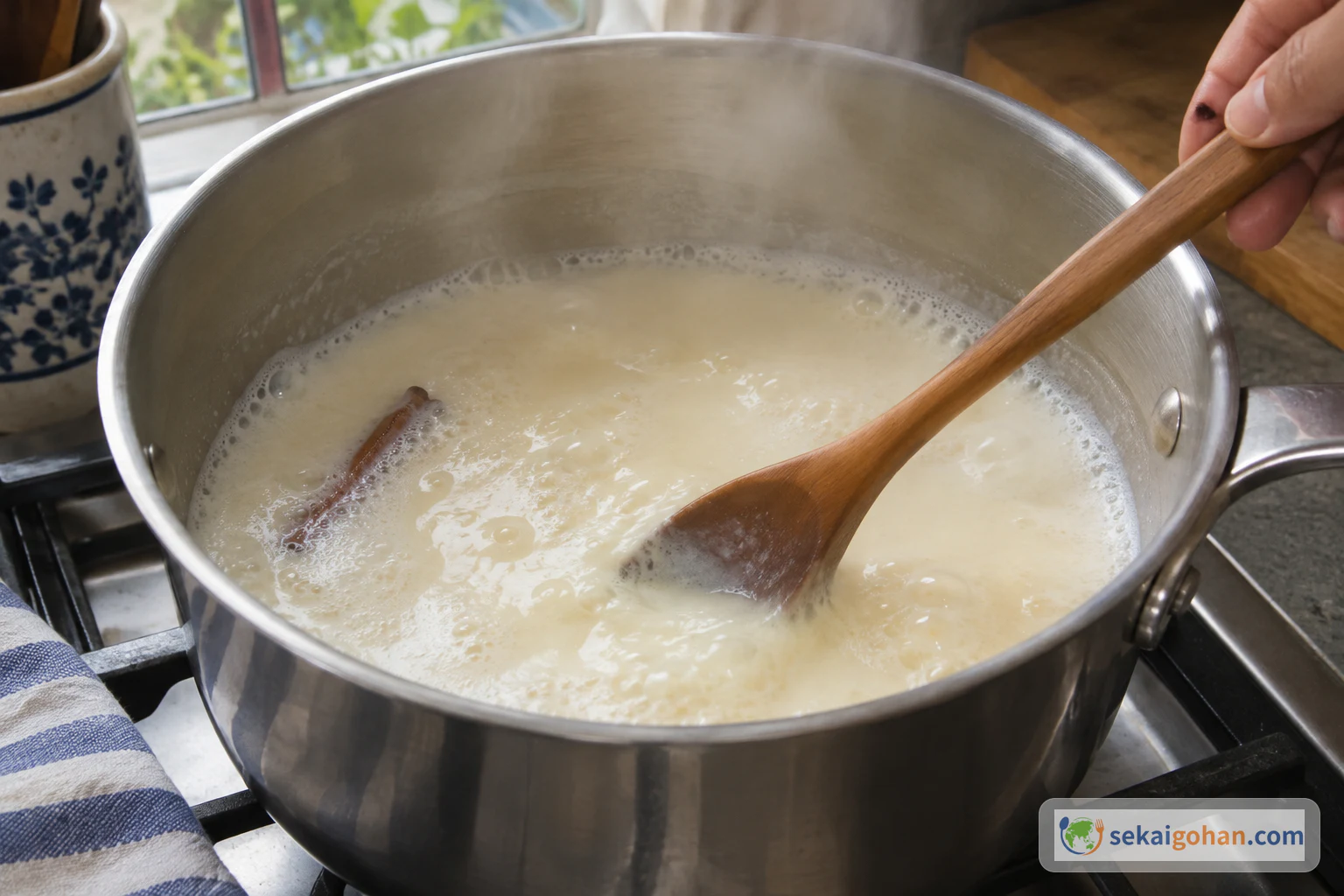
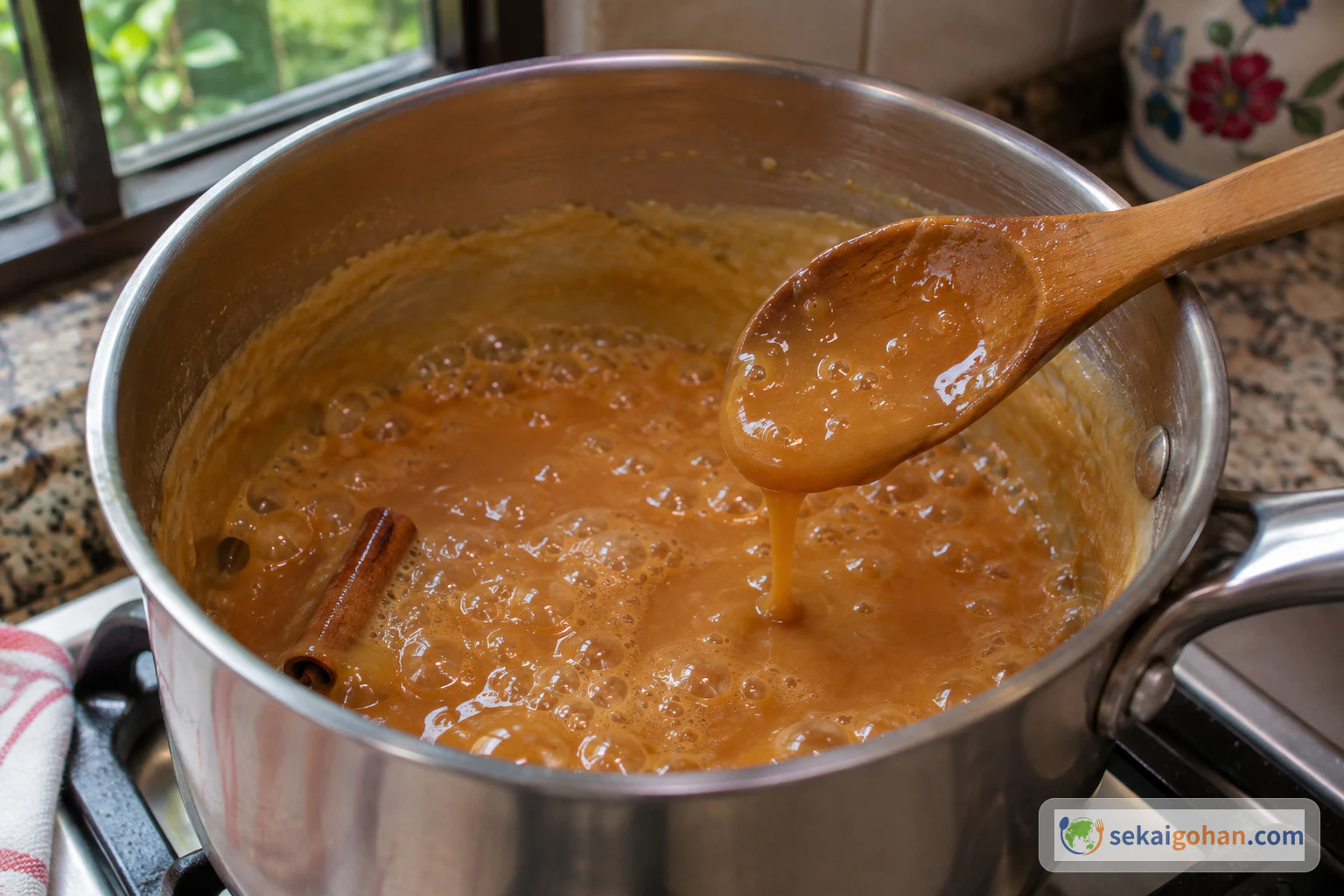
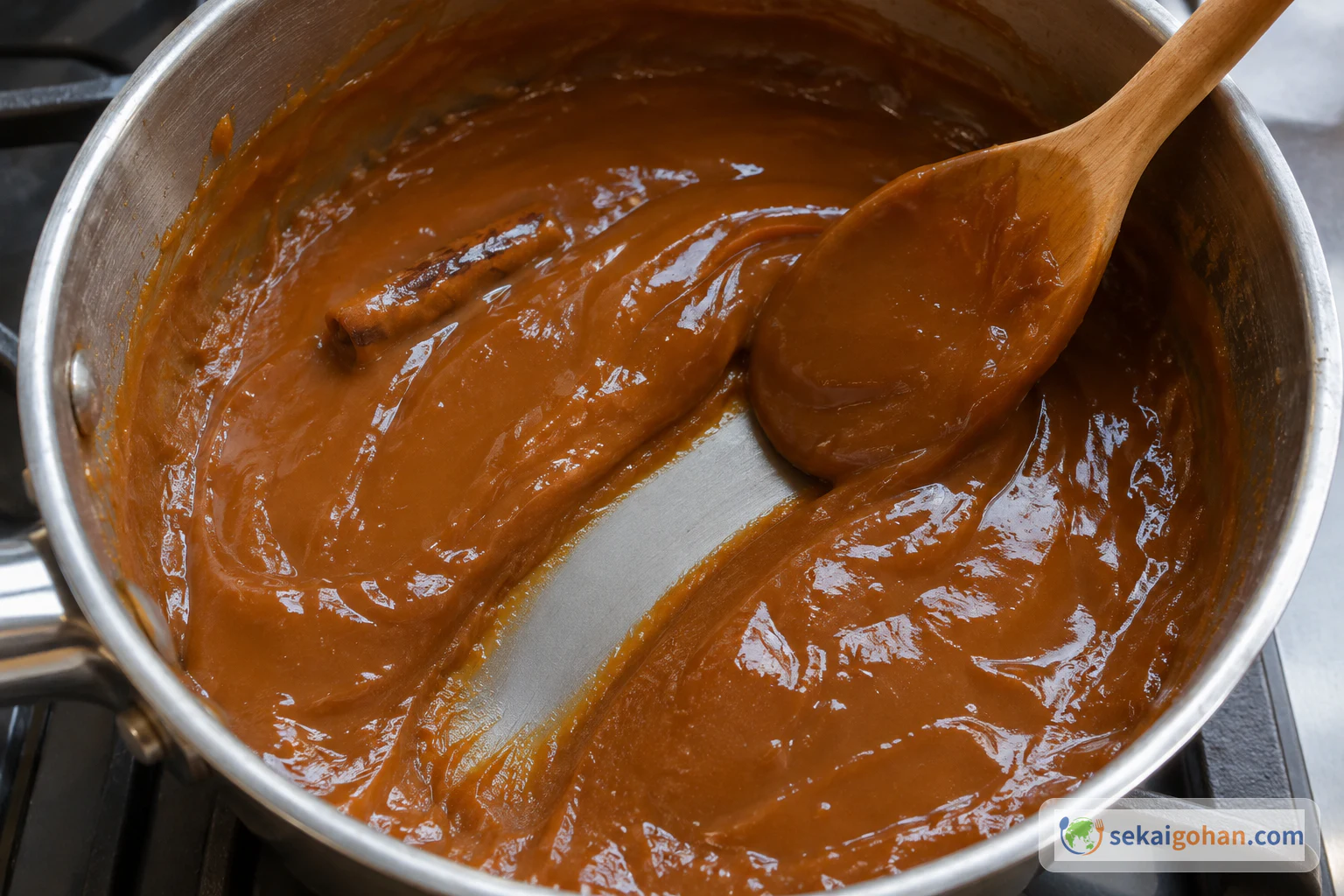
For a long stretch the pot looks like nothing more than sweet milk, pale and foaming at the edges, with a wooden spoon going round and round. Then the color starts to move. It turns beige, then gold, then amber, the level sinks down the side of the pot, and the bubbles grow fat and slow. By the end the spoon drags a trail across the bottom that closes only reluctantly, and what is left is arequipe. It is Colombia's milk caramel, a thick, glossy, deep brown paste of milk cooked down with sugar until it tastes of toffee and warm cream. People spread it on thin wafers, eat it with bread and fresh cheese, or simply take it off the spoon.
One Sweet, Many Names
The same pot of cooked-down milk and sugar answers to a different name almost every time you cross a border, and sometimes within one country. In Colombia it is arequipe, and it is called that in Venezuela and Guatemala too. In Antioquia the word is arequipe; in Cali the same sweet is often manjar blanco, and in parts of Colombia people say dulce de leche, the name used in Argentina. Chile calls it manjar, Peru and Bolivia manjar blanco, and Mexico cajeta.
Where it was first made is not settled. Several places and earlier milk sweets are put forward as its ancestor, and none of the stories wins out. The connection between the name arequipe and any particular place is just as unclear, so the name is best taken simply as the Colombian word for it.
What is clear is how much of it Colombia makes. Production in the country has been estimated at 1,500 to 1,800 metric tons a month, with some of it sent to Central America, the United States and the Caribbean. It can also be cooked at home with only milk, sugar and patience.
If a recipe from Argentina says dulce de leche, a Chilean one says manjar and a Colombian one says arequipe, they are all reaching for milk and sugar cooked slowly until brown and thick.
How it reaches the table
The classic Colombian way is arequipe between obleas, large, paper-thin round wafers, with a generous layer spread between two of them. It also goes on crackers, bread and cookies, beside fresh cheese, over ice cream, and inside or on top of cakes. Brevas, preserved figs, are paired with it, and natilla, the Colombian Christmas pudding, has an arequipe-flavored version. Cooks also use it as the base for other sweets.
The flavor comes from the long cooking. The deep color and the toasty, almost nutty taste come from caramelization and the Maillard reaction between the milk and the sugar, which is why nothing can be rushed here.
Ingredients
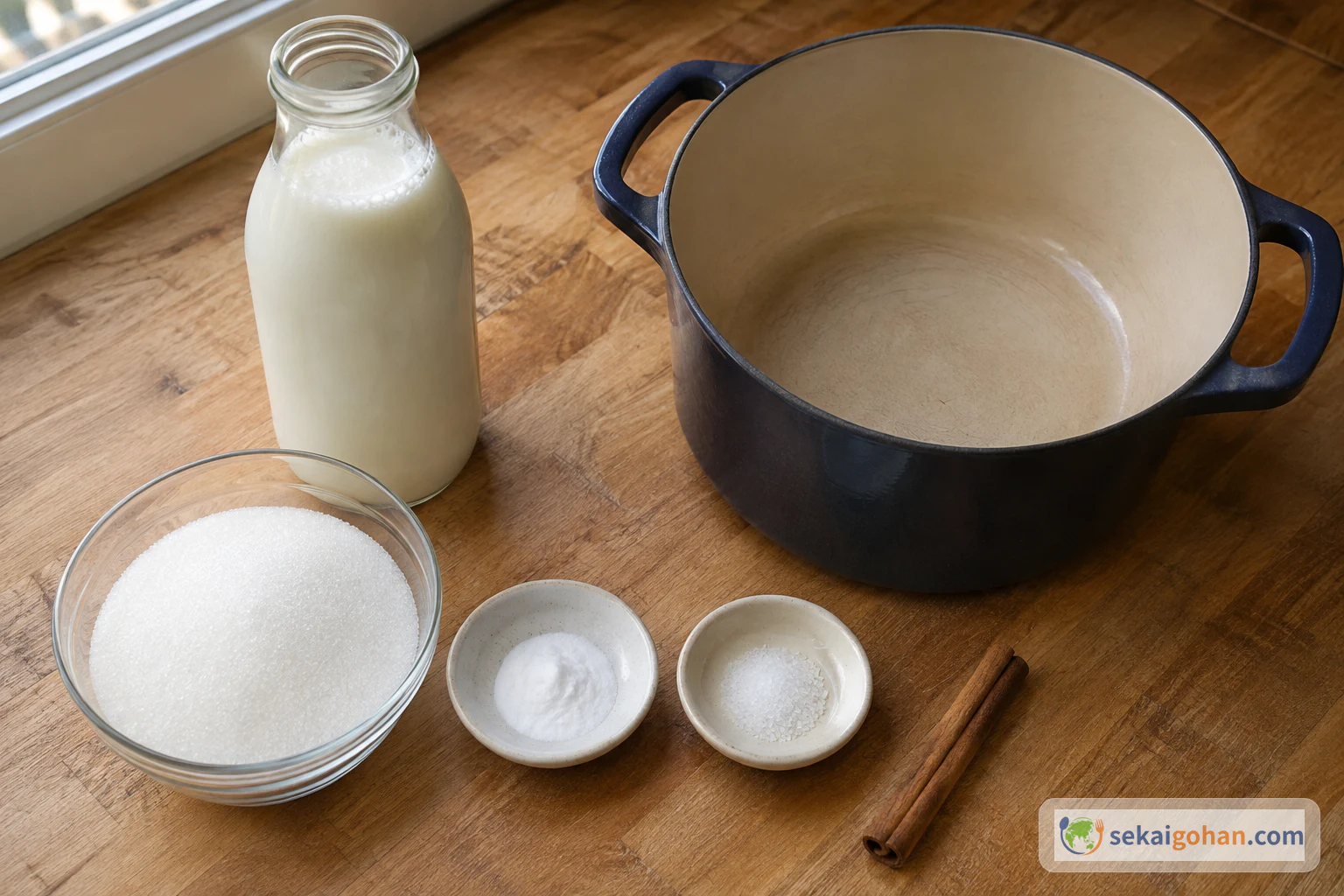
Everything goes into the pot at the start. No water goes in; the milk is the only liquid.
Arequipe is made almost entirely of cow's milk. It is not suitable for anyone with a milk allergy.
Equipment
- A heavy, wide pot with plenty of room above the milk
- A long wooden spoon or a heat-resistant spatula
- A clean glass container with a lid
Choosing and Substituting
Nothing here comes from a specialty shop. Whole milk gives the full, creamy flavor, so choose plain whole milk rather than a flavored or sweetened one. White sugar is what gives arequipe its familiar clean caramel taste. If you swap in panela, the unrefined cane sugar of Colombia, you get something that tastes clearly of panela, a darker, molasses-like sweet that is good in its own right but no longer the classic jar.
The cinnamon stick is the ingredient you can let go. Some cooks hold that arequipe is made without it, so leaving it out keeps the flavor to milk and caramel alone; putting it in adds a soft spice in the background.
Obleas are hard to find outside Latin America. Thin plain wafers or very thin, lightly sweet crackers carry the arequipe the same way, though the crunch and the flavor are different from the real thing.
A heavy pot spreads the heat and keeps the sugar from catching on one hot spot, and a wide one gives the milk more surface to cook off from. A thin, narrow pan scorches easily during the long simmer.
How to Make Arequipe
This is one long, slow simmer in a single pot. All the ingredients go in at once, and from the boil onward the job is to stir often and watch the color. Stay close to the stove the whole time; judge by color and thickness, not by the clock.
The early pale stage is forgiving. The last stretch, when the mixture is amber and thick, is when it scorches, so that is when to stir most and never walk away.
Cooked-down milk and sugar is extremely hot and sticks to skin. Thick bubbles can spit as they burst, so use a long spoon, keep your hands and face back from the pot, and keep children away from the stove. Let it cool before tasting from the pot.
When It Goes Wrong
| What you see | Why | What to do |
|---|---|---|
| Dark specks or a bitter, burnt smell | The bottom caught during the long cook | Stir more often and lower the heat slightly; don't scrape the burnt layer into the rest |
| Milk foams up to the rim at the start | The heat is still high at the boil | Turn down to medium-low as soon as it boils and stir through the foam |
| Still pale after a long simmer | It simply needs more time | Keep simmering and stirring; the color only arrives once much of the water has cooked off |
| Runny, the spoon trail closes at once | Stopped too early | Return to medium-low and cook until the trail closes slowly |
Serving and Storage
On the table
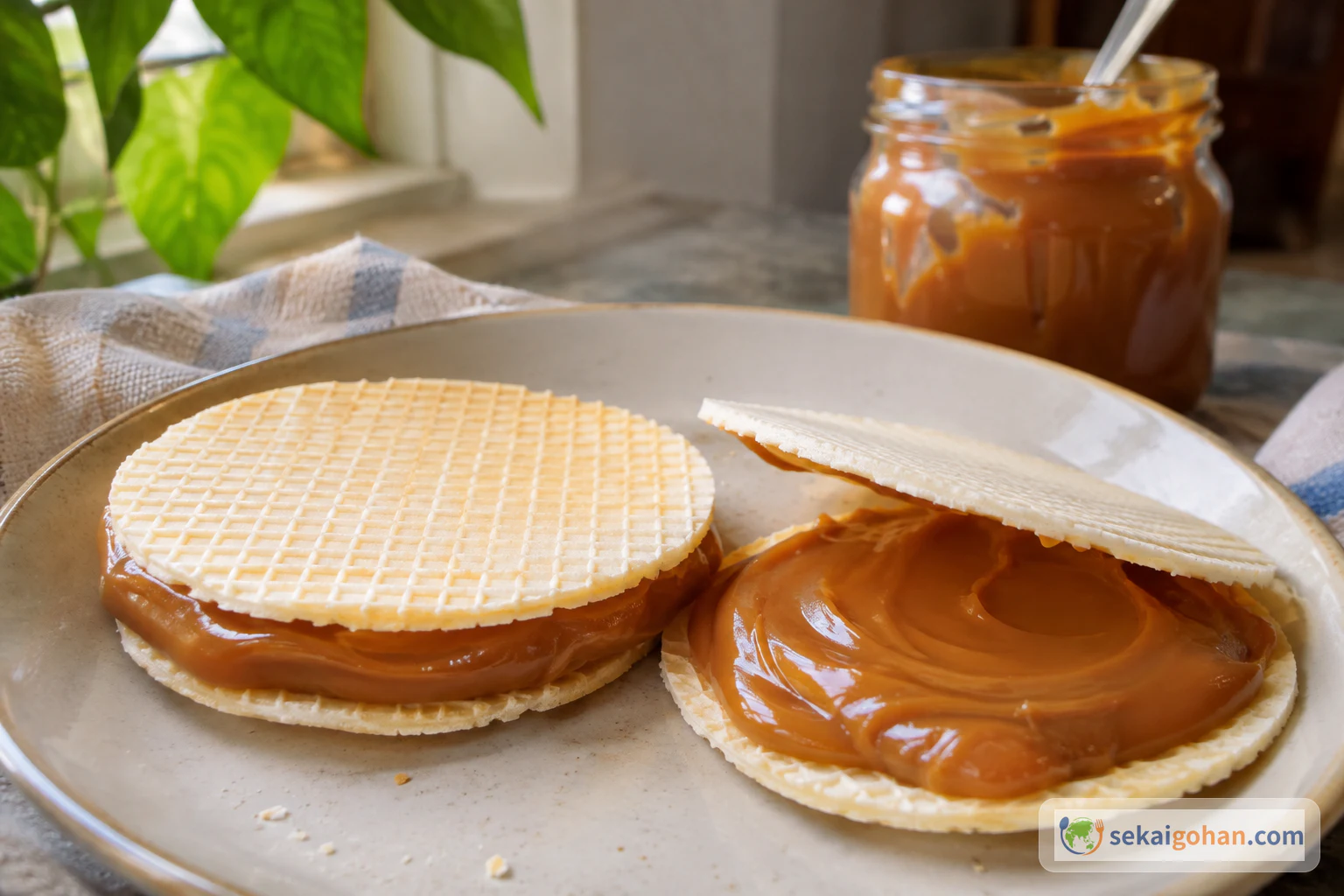
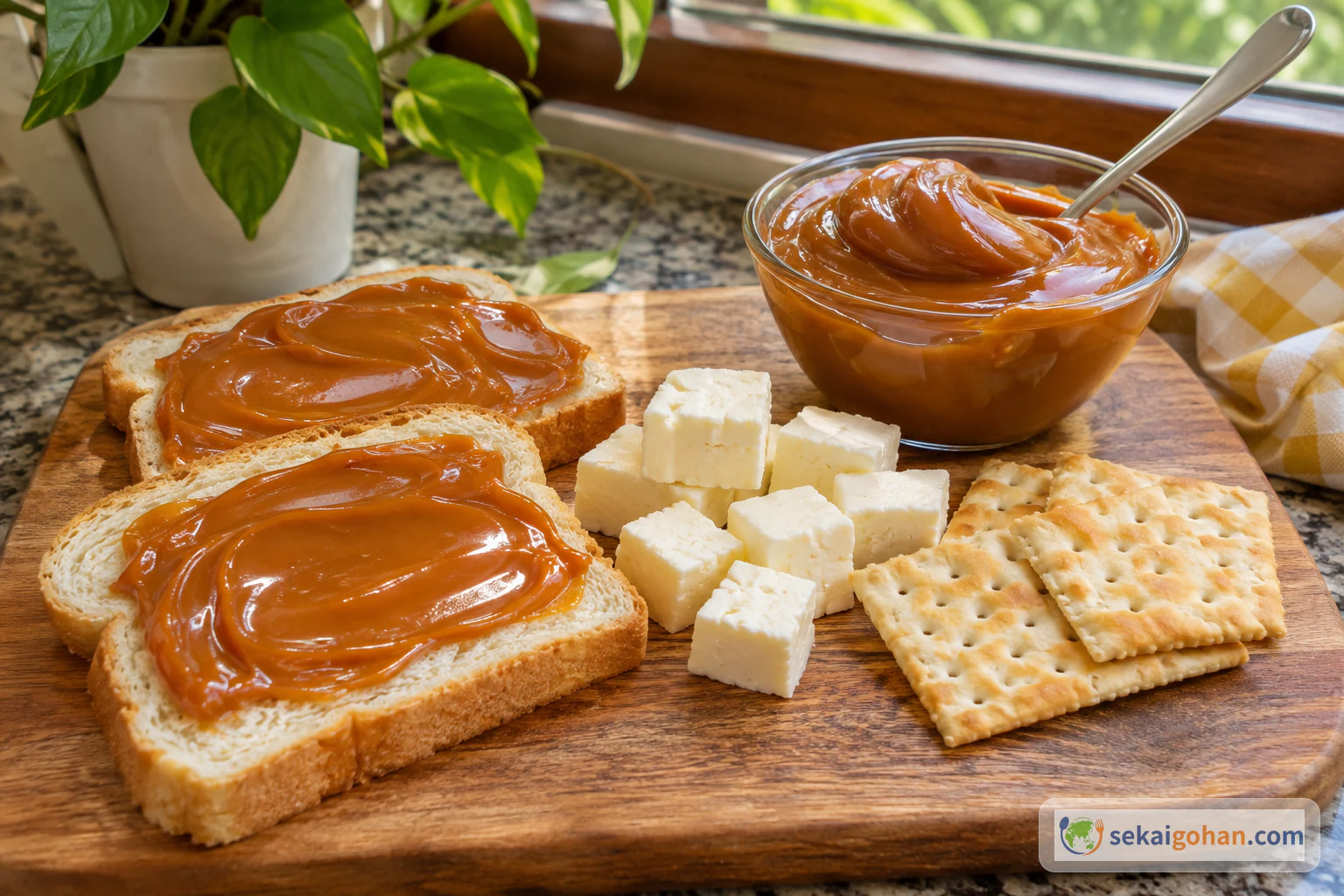
Spread a thick layer on one oblea and press a second on top for the most Colombian way to eat it. For an afternoon snack, put out a board with bread, crackers and fresh white cheese, where the mild, salty cheese cuts the sweetness. It also goes over ice cream, onto cookies, and into cakes as a filling or a topping.
Variations
Panela in place of white sugar gives a darker jar with a distinct cane flavor. Leaving out the cinnamon keeps the taste purely milk and caramel. With preserved figs, the fruit's syrup and the arequipe make one of the classic Colombian pairings.
Storage
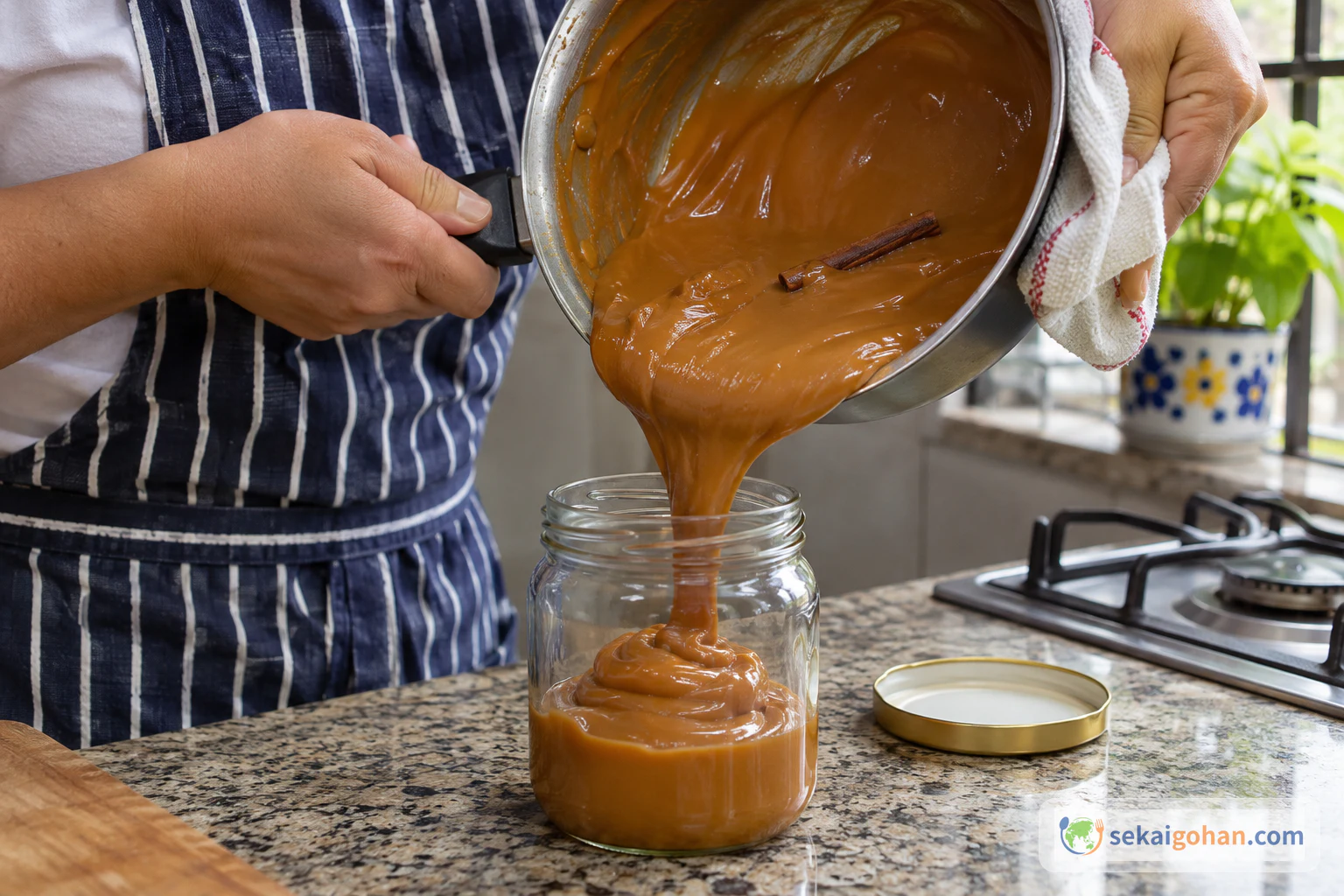
Cool the arequipe, keep it in a glass container with a lid, and store it in the refrigerator. Eat it within one week.
Frequently asked questions
Can I make a double batch?
Yes. Use 12 cups (2.8 L) whole milk, 1½ lb (680 g) white sugar, ½ tsp baking soda, ½ tsp salt and one cinnamon stick, and cook it the same way. At that size the simmer takes about 3 hours. Use the widest heavy pot you have, and finish by the same color and spoon-trail cues.
Can I start from a can of condensed milk instead?
This recipe starts from fresh milk and sugar. Do not heat a sealed can in water to make it; a closed can can burst under heat.
Is the cinnamon traditional?
Some cooks add a stick and some hold that arequipe is made without it. It only contributes aroma, so it is up to you; the texture and color are the same either way.
What does the baking soda do?
It helps the milk take on its brown color during the simmer. The color and the caramel taste themselves come from the sugar and milk browning together over the long cook, so keep it to the small amount in the table.
Sources
More Colombian dishes are collected on the Colombia country page.
- My Colombian Recipes, "Arequipe Colombiano." Ingredients and method (milk, sugar, baking soda, salt, cinnamon stick; boil, then medium-low with frequent stirring for about 3 hours until thick and caramel-colored; cool and refrigerate in a lidded glass container), names by region, serving with obleas and crackers, refrigerated storage up to one week. https://www.mycolombianrecipes.com/es/?p=10490
- Contexto Ganadero, "Los secretos de preparar un buen arequipe." Estimated Colombian production and exports, names in Mexico, Peru, Chile and Bolivia, baking soda helping the color. https://www.contextoganadero.com/reportaje/los-secretos-de-preparar-un-buen-arequipe
- Colombia.com, "Recetas caseras: Cómo hacer arequipe fácil y rápido." Names by region, use on bread and cookies and as cake filling or topping, cooking to a thick caramel color with constant stirring. https://www.colombia.com/gastronomia/noticias/receta-arequipe-en-casa-facil-y-rapido-313278
- Radio Nacional de Colombia, "Doce manjares colombianos que no puede dejar de disfrutar." Arequipe as caramelized milk paste, eaten with bread, cheese, cookies and ice cream, with brevas, and arequipe natilla. https://radionacional.co/cultura/doce-manjares-colombianos-que-no-puede-dejar-disfrutar
- Wikipedia, "Dulce de leche." Unsettled origin, caramelization and Maillard reaction, arequipe as the name in Colombia and Venezuela. https://en.wikipedia.org/wiki/Dulce_de_leche