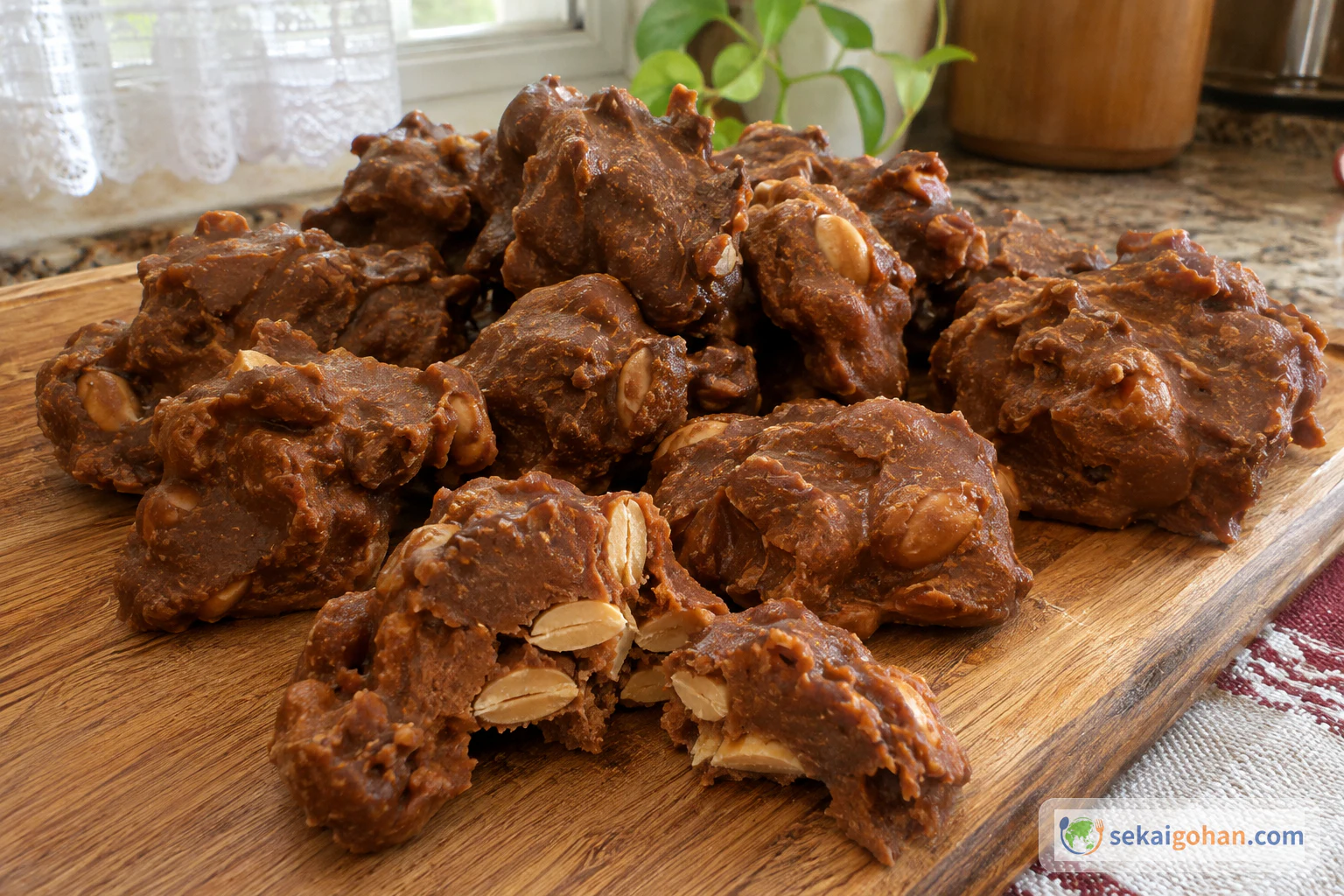
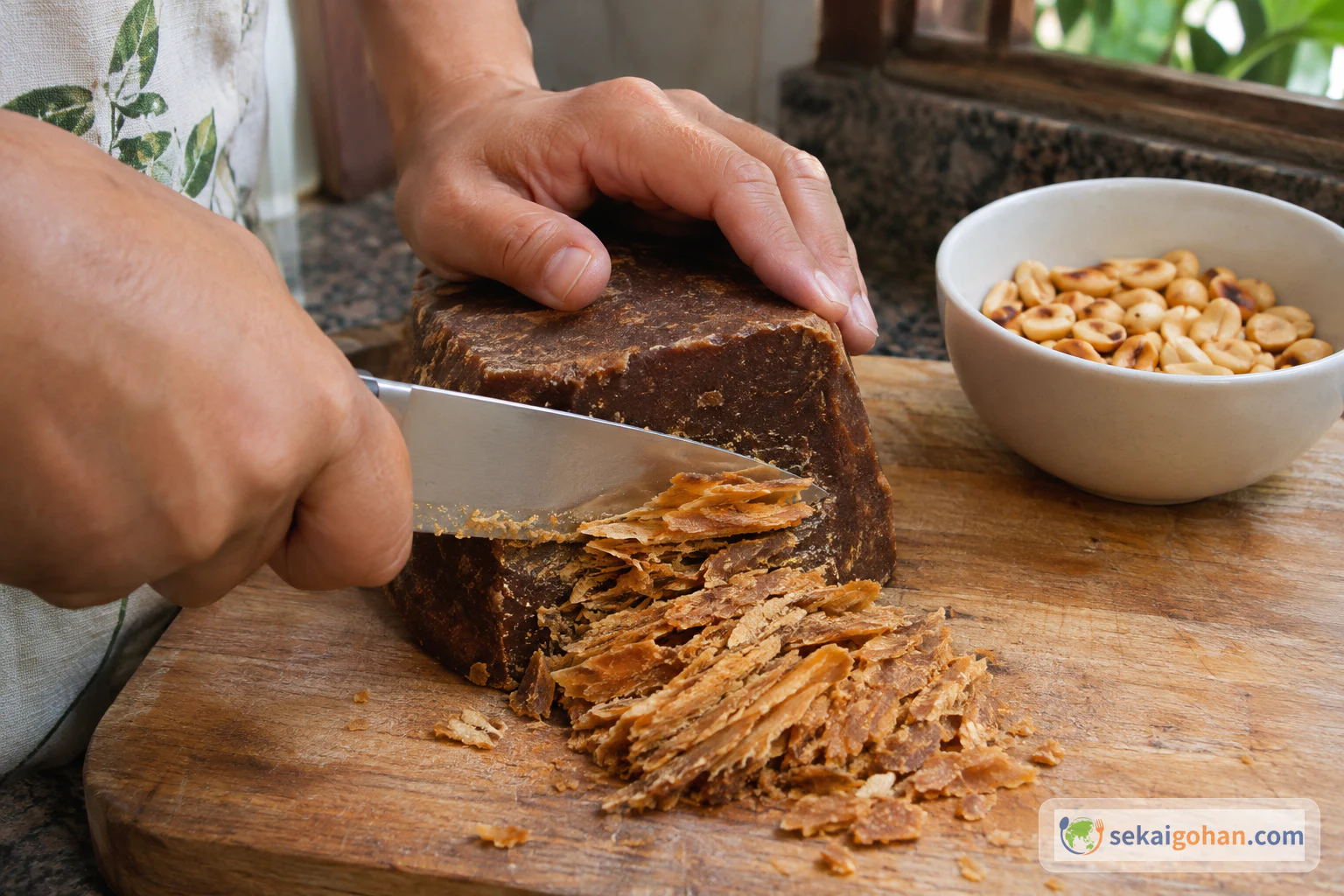
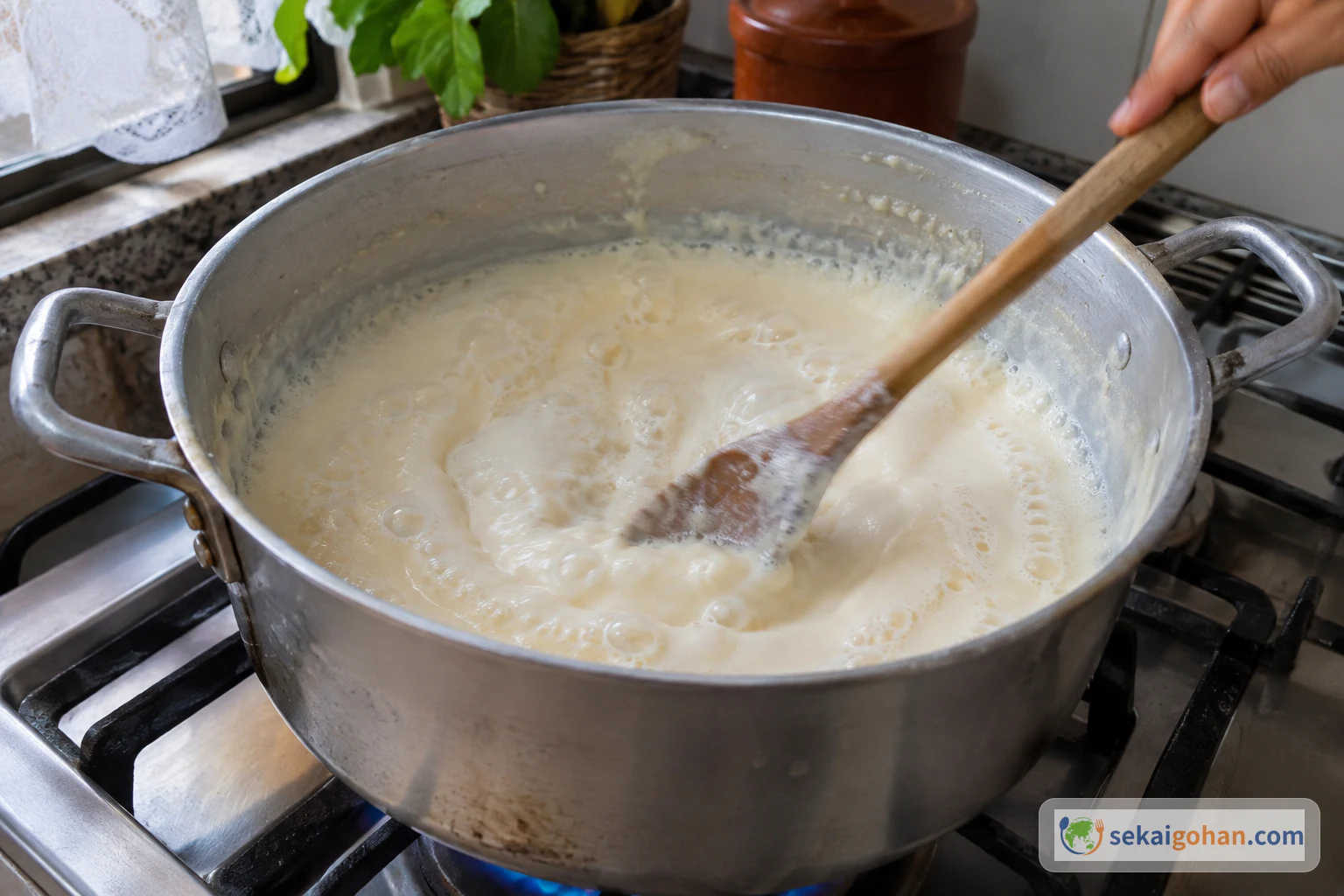
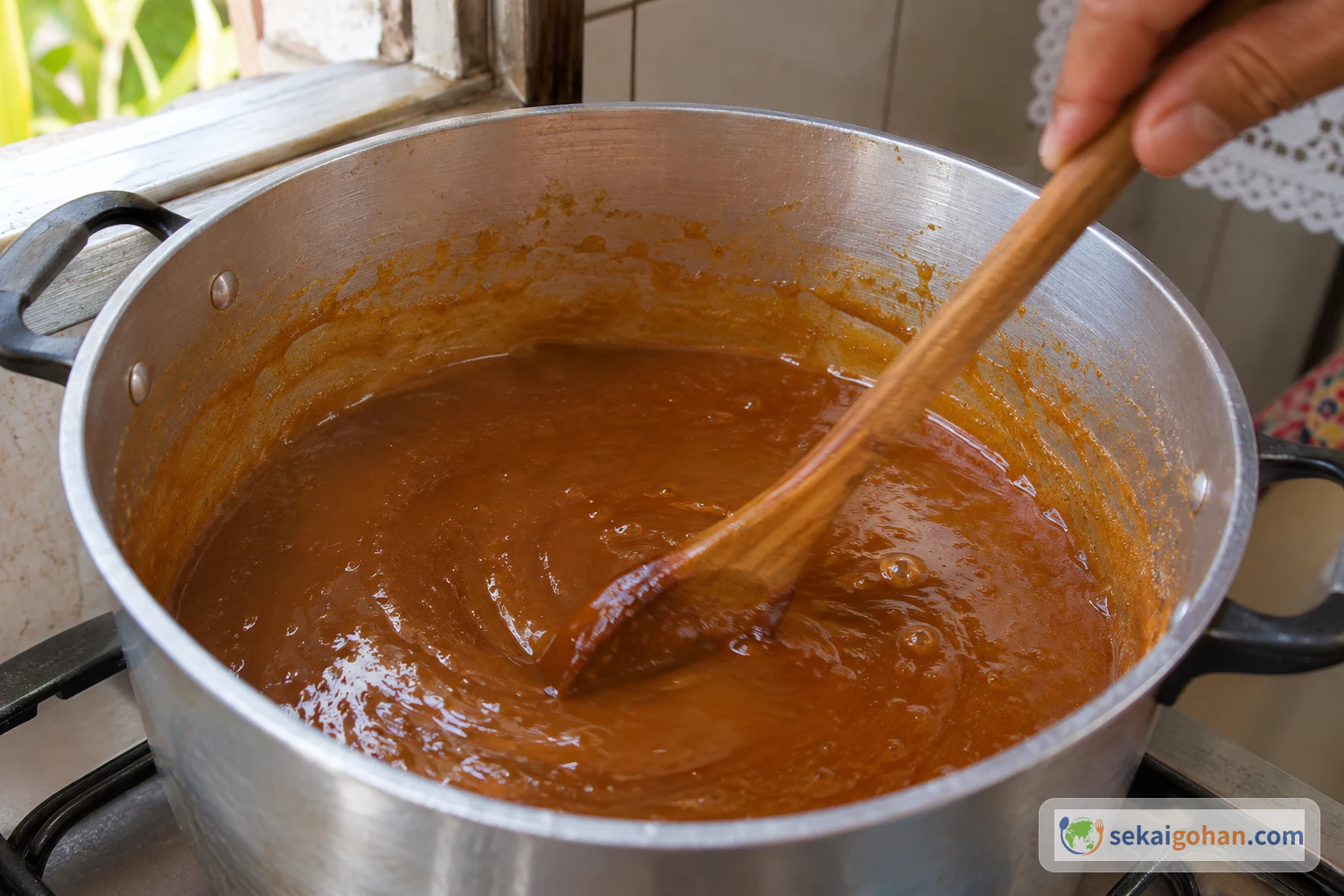
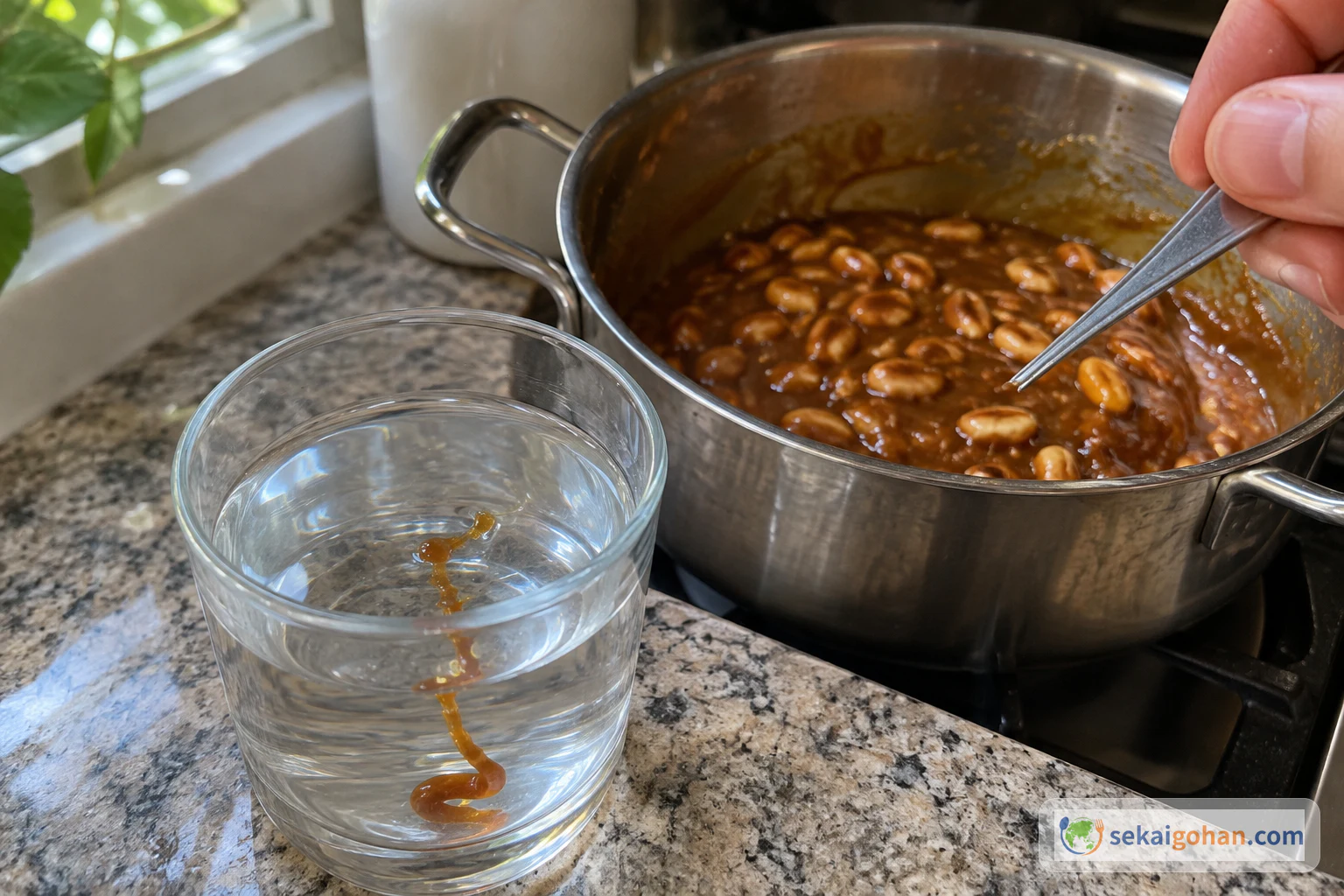
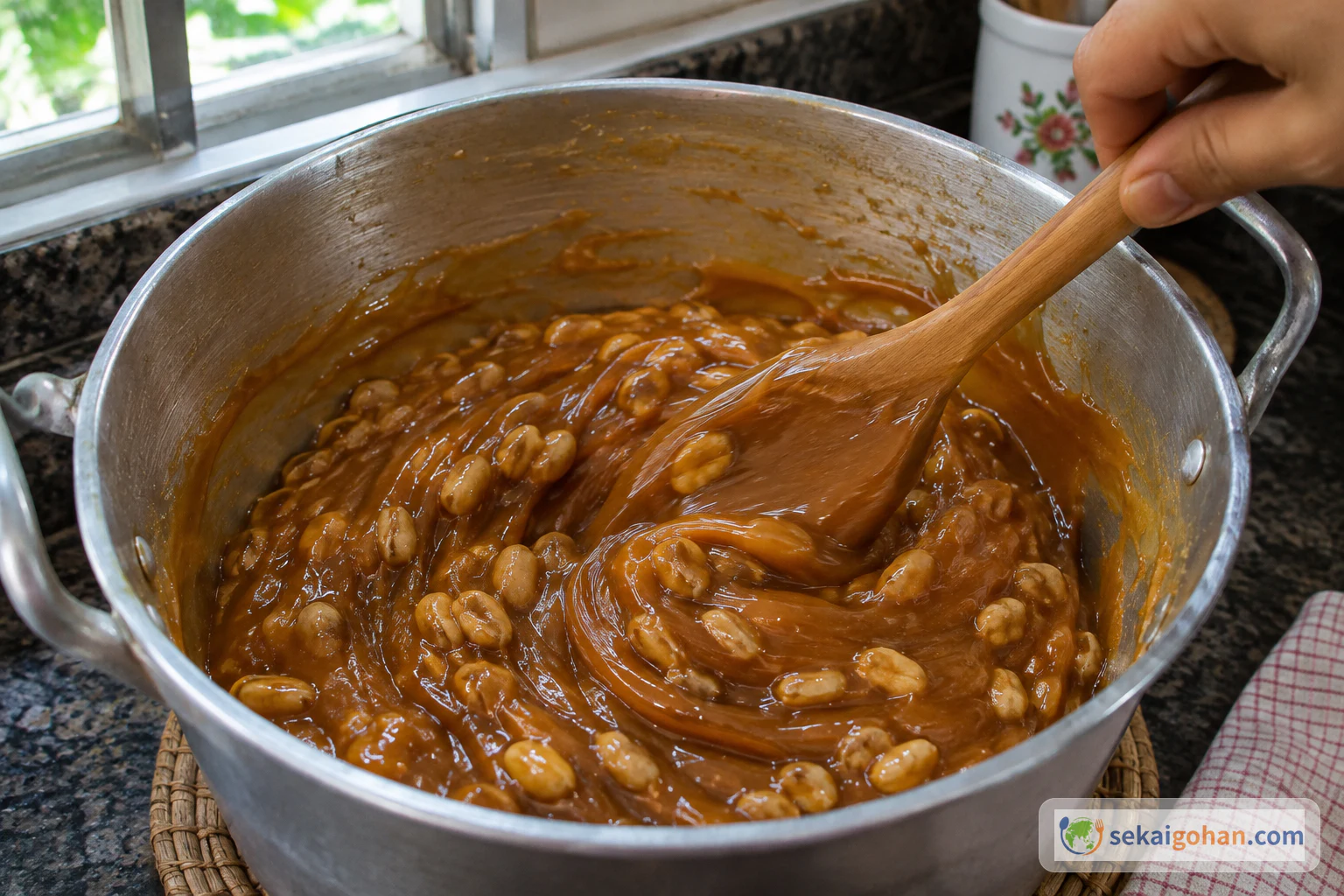
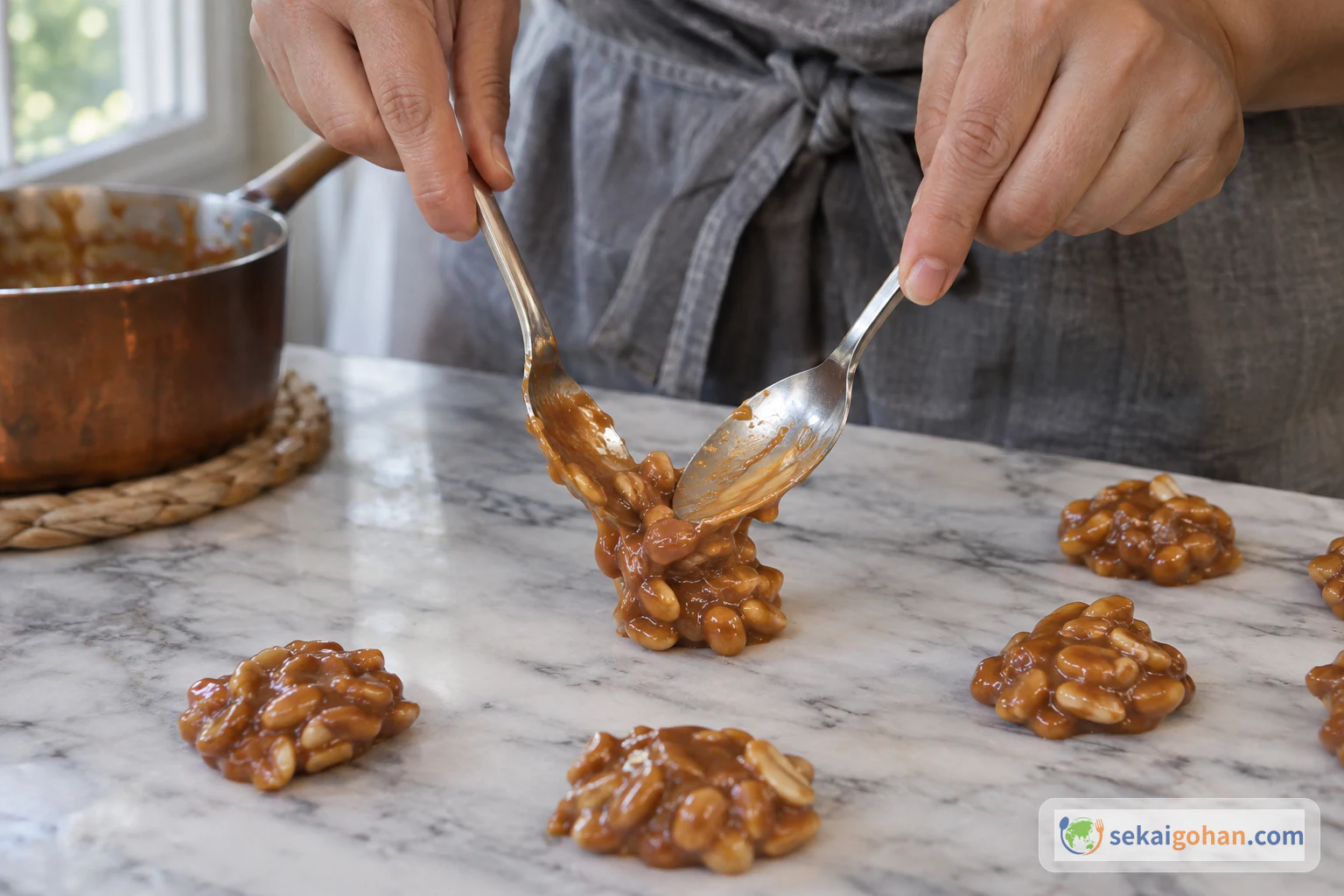
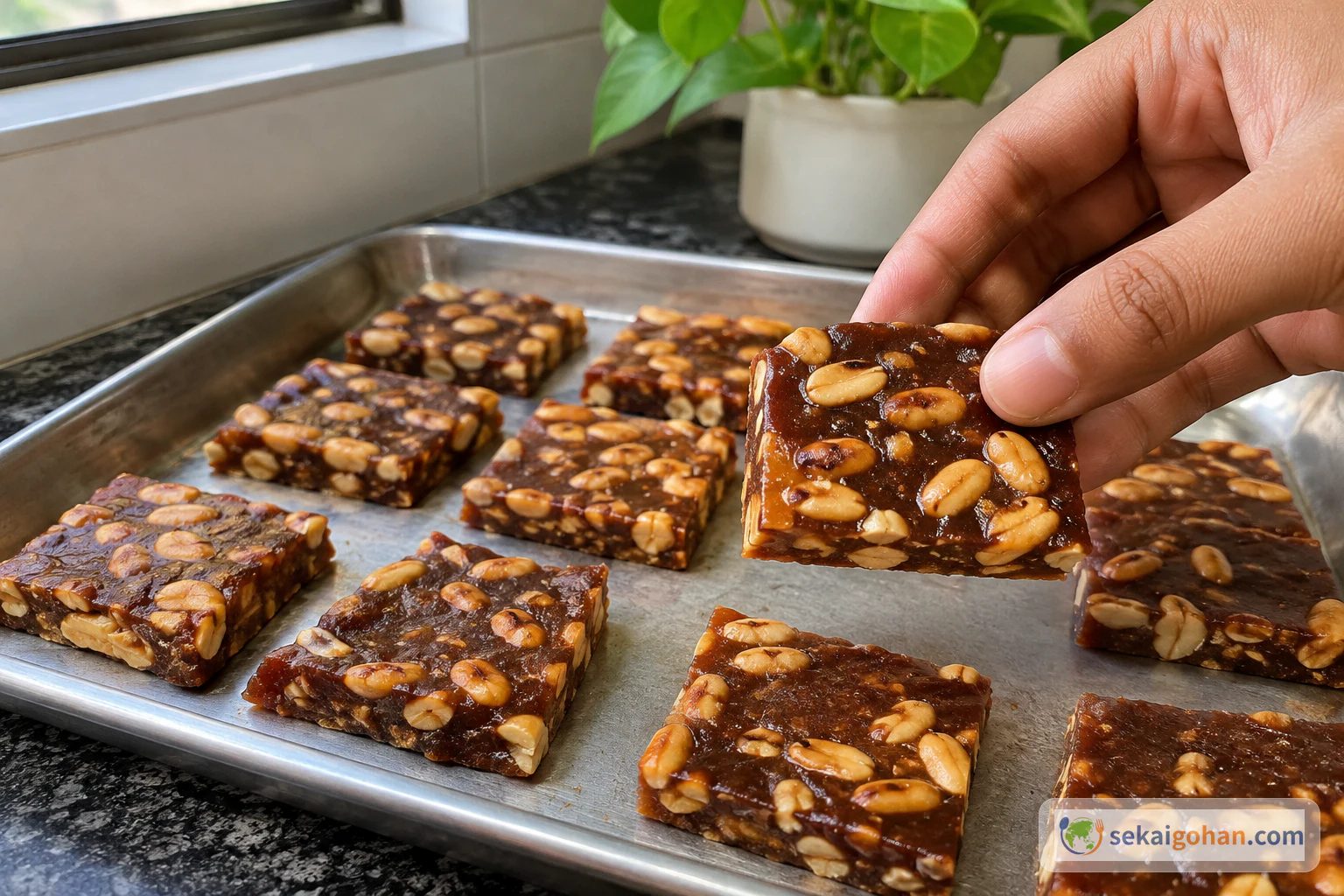
A long wooden spoon moves through a big pot of milk over high heat, round and round, until the milk bubbles thick and creamy. Then the shaved rapadura goes in, the pot turns brown and smells of cane sugar, and the peanuts follow. A spoonful dropped into a cup of water firms into a hard strand, and that is the moment to turn off the flame. Pé-de-moleque is the peanut candy of Brazil's June festivals. Whole roasted peanuts are held in a dark, milky caramel of unrefined cane sugar, and the matte surface cracks to show the nuts inside. It tastes of toasted peanut and deep, dark sugar, rounded out by the milk.
Where Pé-de-moleque Comes From
The candy is a fixture of festa junina, the June festivals of Brazil, and it is most common in São Paulo, Minas Gerais and Paraná. It took hold in colonial times, in places where sugarcane and peanuts were both plentiful. Its two ingredients sit at the centre: peanuts and rapadura, the solid block sugar made from unrefined cane juice. Some versions bind the peanuts in a plain sugar caramel instead. The version here reduces milk first and then cooks the rapadura into it.
The name
Pé de moleque means "kid's foot", and where the name comes from is not settled. One story traces it to a call of "Pede, moleque!", roughly "Ask for it, kid!". The other points to the candy's rough, cracked surface, which looks like the cracked soles of a child running barefoot. Both are told as folk explanations.
Hard, harder and a cake
How hard the candy turns out depends on the ratio of sugar to nuts and on how far the caramel is cooked. Older, harder versions went by blunter names. In the Northeast, the same name belongs to something else entirely: bolo de pé de moleque, also called bolo preto, is a cake eaten at the June festivals there. It is a separate dish. This article covers the candy only.
The hard version was also known by the older names quebra-queixo ("jaw-breaker") and quebra-dentes ("tooth-breaker"). Both names describe what an overcooked batch does to the person eating it.
Ingredients (makes 26 pieces)
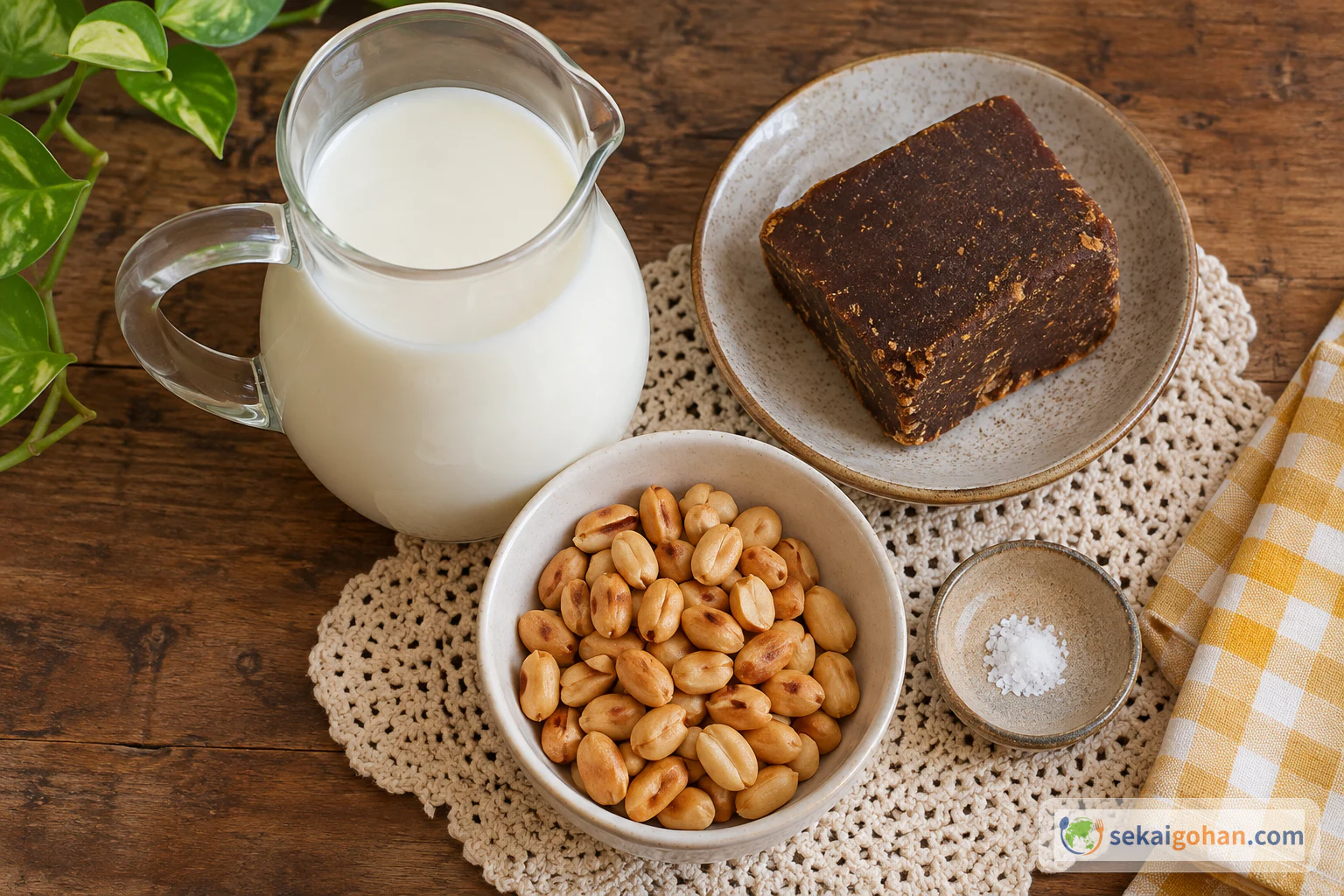
Peanuts are the main ingredient and milk is the base of the caramel. This candy is unsafe for anyone with a peanut or milk allergy.
Equipment
- A large, heavy pot; the bigger it is, the safer the bubbling caramel is to work with
- A long wooden spoon
- A cutting board and a knife for shaving the rapadura
- A clear cup of water for the doneness test
- Two spoons for shaping
- A clean marble surface or tray (a silicone mat works too)
Choosing Rapadura and Peanuts
Rapadura is a hard, dark block. Buy it solid, not powdered, and shave it yourself. If you cannot find it, a solid block of dark unrefined cane sugar, such as Japanese kokuto, can stand in for it. Its flavour and moisture may differ from rapadura, so the caramel may taste a little different and may reach the firm stage at another point; let the water test tell you when it is done.
For the peanuts, buy plain roasted peanuts with the skins removed, unsalted. Seasoned, salted or oil-fried peanuts change the flavour and do not belong here. If you only find raw peanuts with skins, roast them and rub the skins off before you start, so the nuts are ready when the caramel is.
Two things carry the flavour: the toasted aroma of roasted peanuts and the dark sweetness of rapadura. The spices and salt are optional. The peanuts and a solid cane sugar are the parts to keep.
Method
Get everything ready before the milk goes on: the peanuts roasted and skinned, the rapadura shaved, a cup of water and the shaping surface within reach. The long stretch is reducing the milk, and the spoon keeps moving the whole time. After the water test the pace picks up, and the only quiet wait comes at the very end, while the pieces set.
The caramel is extremely hot and causes severe burns. Use a large pot so it has room to bubble, stir with a long spoon, and keep your hands away from the surface. Do not let children shape the pieces.
The milk needs constant stirring across the bottom of the pot from the moment it goes on the heat. Once the rapadura is in, scrape the corners of the pot every time you pass, so nothing sits still there.
Take the pot off the heat as soon as a sample holds as a hard strand. Every minute past that point makes the candy harder, and the old names jaw-breaker and tooth-breaker show where that ends.
When It Goes Wrong
Most problems come down to the water test, and the caramel tells you in the cup before it ever reaches the tray.
| What you see | Why | What to do |
|---|---|---|
| The sample spreads or dissolves in the water | The caramel still holds too much moisture | Keep cooking and stirring, then test again |
| The set pieces are hard enough to hurt your teeth | The caramel cooked too far past the firm-strand stage | Next time, turn off the heat at the first sample that holds as a hard strand |
Serving and Variations
Pé-de-moleque is a party sweet. Set it out at room temperature, piled on a tray for the June festivals or broken and cut small for passing around.
Variations
- Cloves and cinnamon. A few cloves and a cinnamon stick in the milk give the caramel a warm, spiced edge. Lift them out before the rapadura goes in so the sugar cooks into a clean base.
- A pinch of salt. It sharpens the sweetness and brings the roasted peanut forward.
- Cut pieces. Instead of keeping the spooned mounds whole, cut the set candy into small pieces for a tray of uneven bites with the peanuts exposed at the cut edges.
Frequently Asked Questions
Can I make a smaller batch?
Yes. Scale all three main ingredients by the same factor; half is 2 cups (500 ml) milk, 10½ oz (300 g) rapadura and 1 lb 2 oz (500 g) peanuts. Keep using a large pot, since more room makes the bubbling caramel safer. Judge the milk by how thick it looks and the caramel by the water test rather than by the clock.
Do I need a candy thermometer?
The water test does that job here. A sample that holds together as a hard strand in a cup of water is the signal to stop. Keep the cup by the stove and test as often as you like in the final stretch.
How does the water-and-rapadura version compare?
Another common method skips the milk. Rapadura is boiled with water into a syrup to the ponto de bala stage, and the pot comes off the heat before the peanuts go in. The mixture is stirred until it cools and turns yellowish, then poured onto a greased surface. It is a different candy with its own proportions, so keep its amounts separate from the milk version.