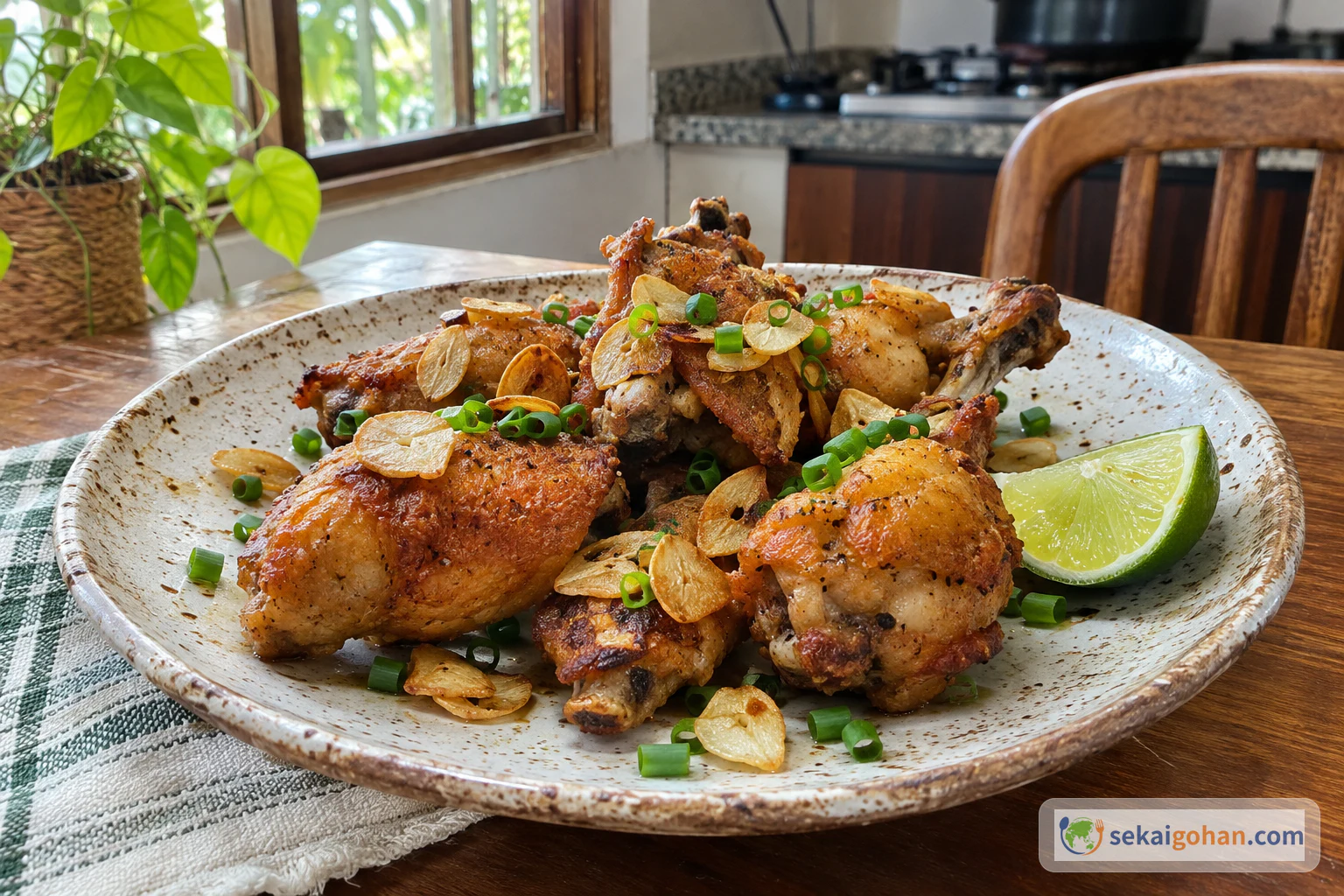
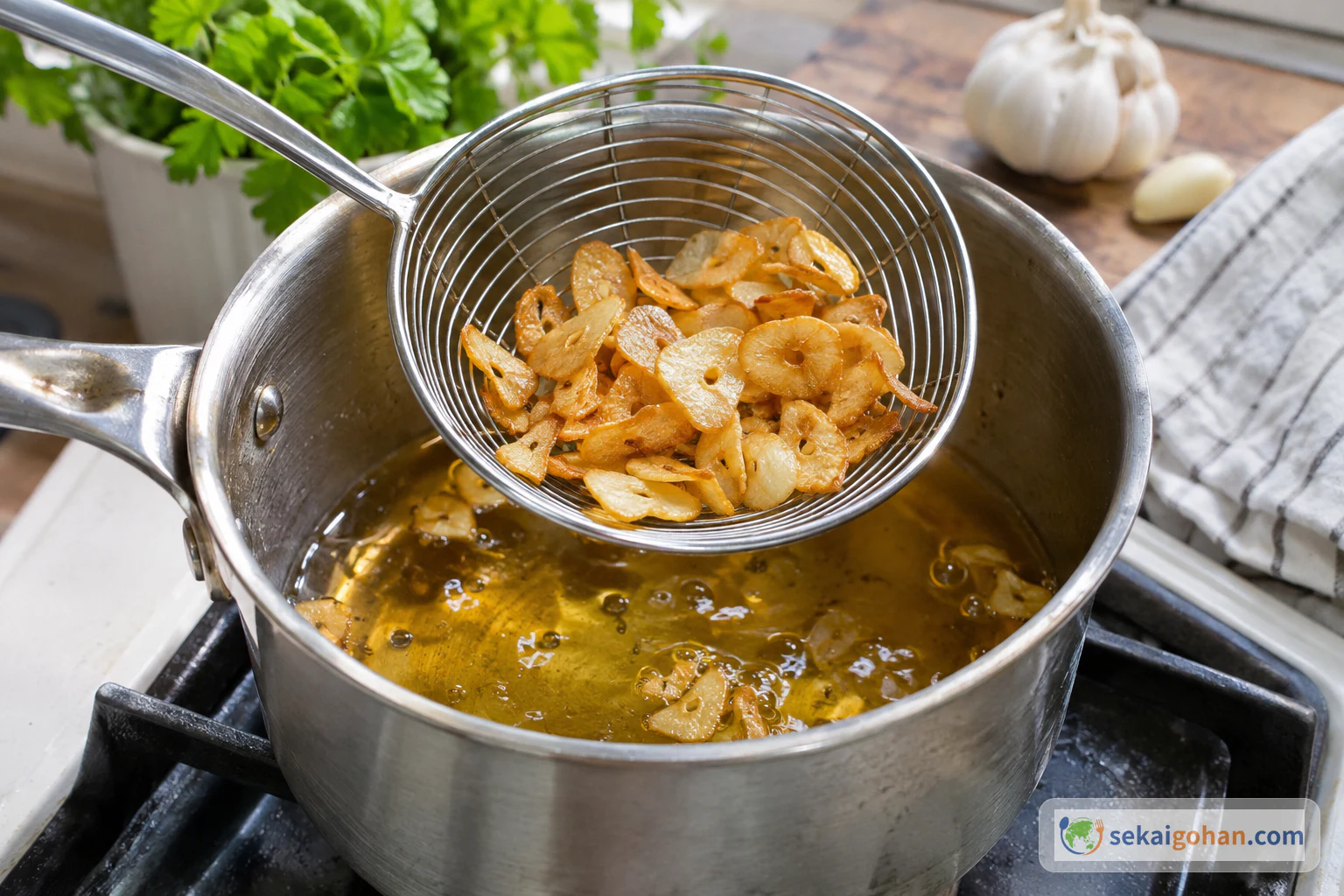
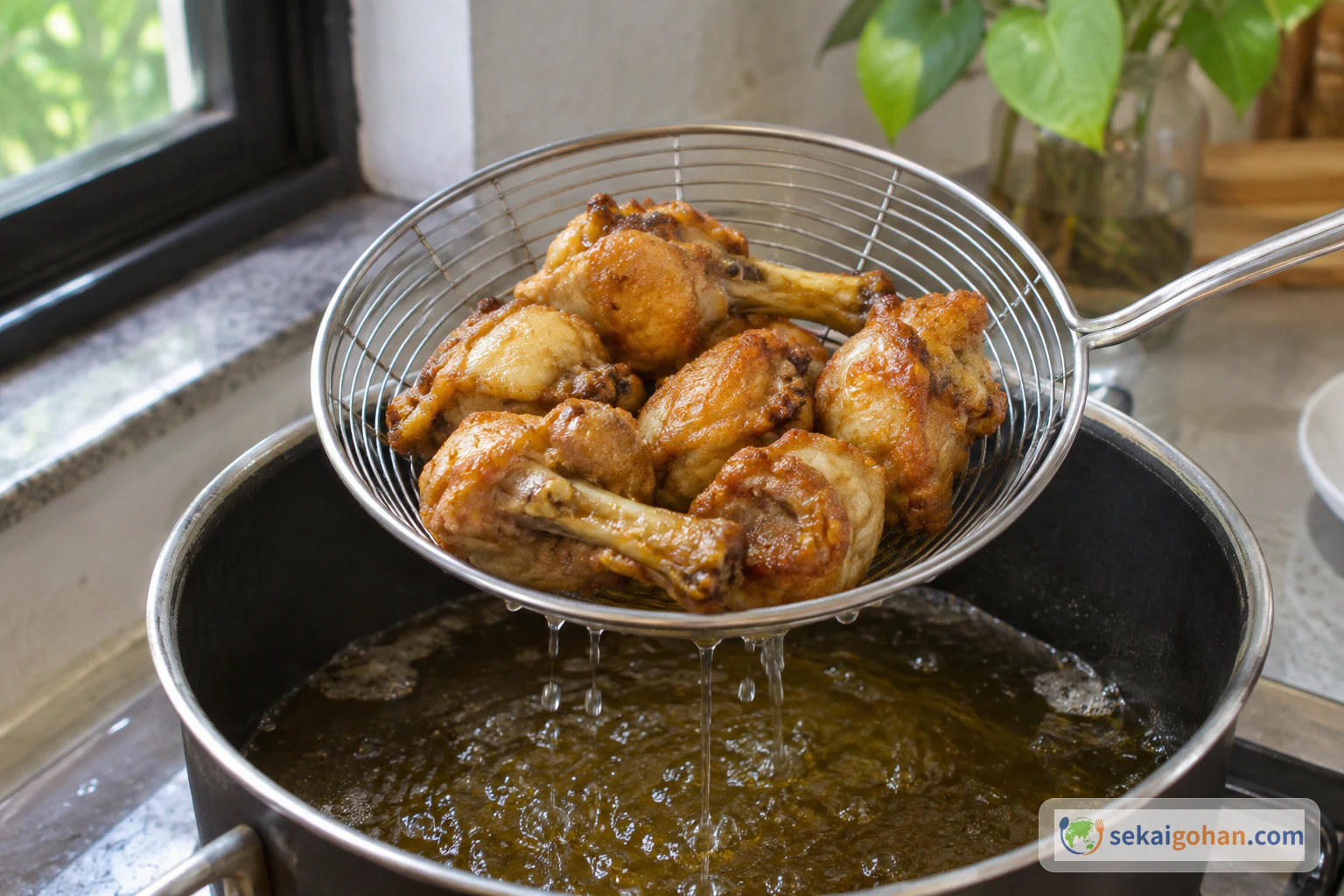
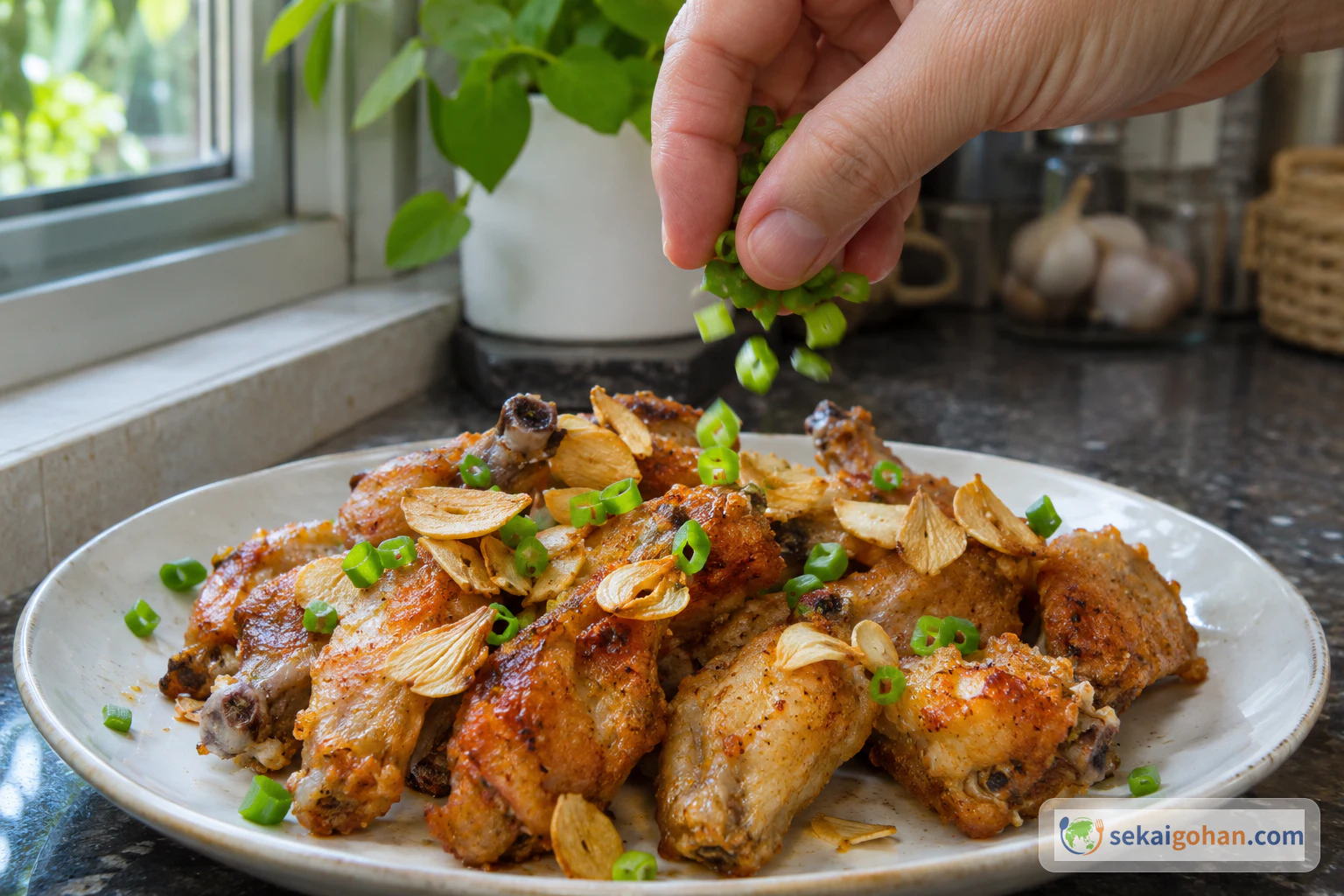
Thin slices of garlic hiss in a small, deep pot, and the kitchen fills with their smell long before any chicken goes in. You lift the slices out pale gold and lower the first pieces of bone-in chicken into that scented oil. They come out small and golden with no batter at all, and you scatter the crisp garlic and chopped green onion over the top. That is frango a passarinho, the plate of little fried chicken pieces found in Portugal and Brazil. It tastes of salt, sharp citrus and toasted garlic, and it goes to the table hot, next to cold beer.
Little Birds at the Bar Counter
A name about size
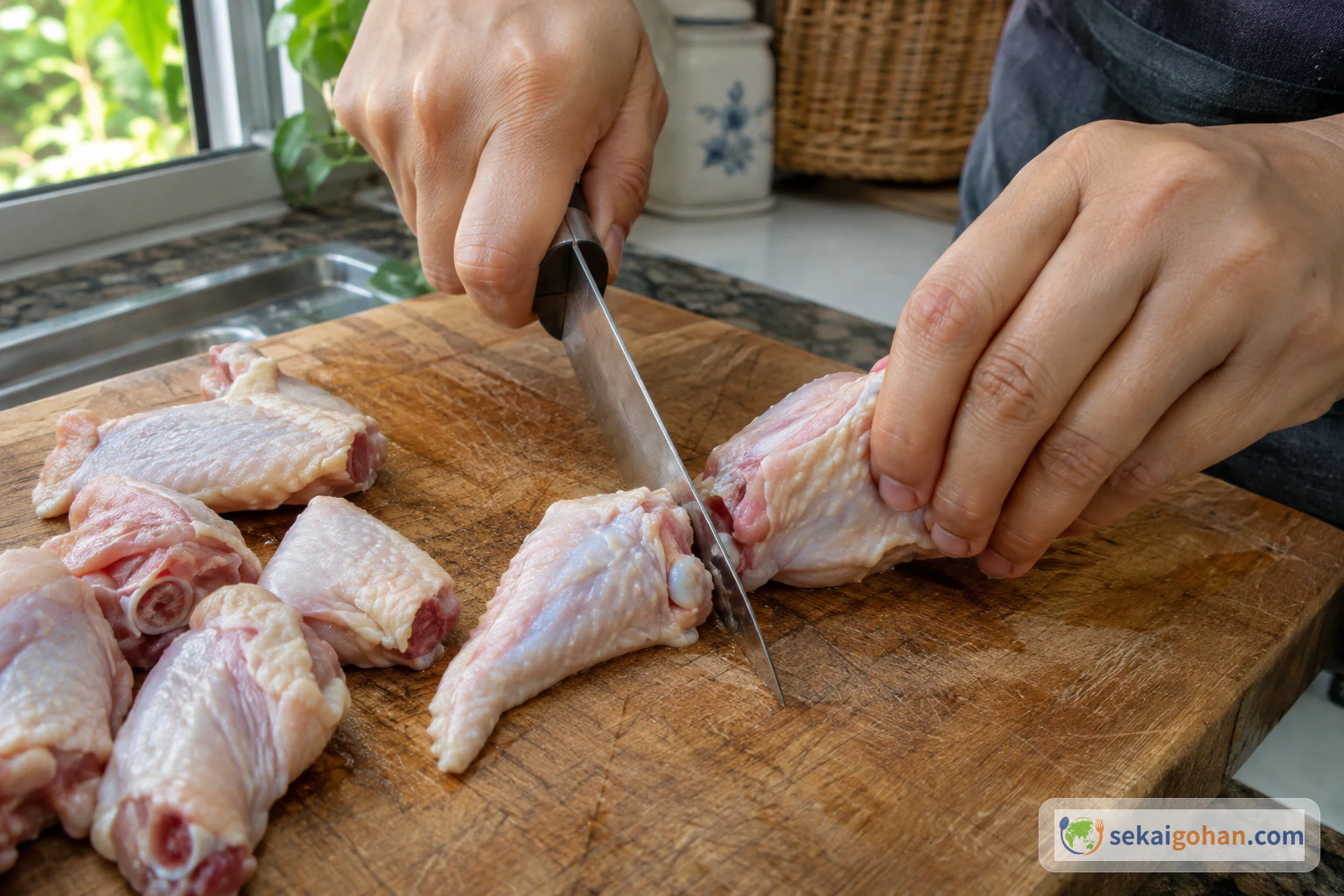
Passarinho means "little bird," and the name is usually read as a description of the cut: chicken broken down at the joints into pieces about as small as one. Wings are the classic choice, cut into three at the joints, and thighs are split the same way. Because the pieces are small and the bone stays in, each bite has crisp skin, meat that is still juicy near the bone, and a little garlic oil on the fingers.
You will see it written both frango à passarinho and frango a passarinho. The form without the accent is considered correct, but both appear on menus and in recipe titles, so search for both when you shop or read up on it.
Where it is eaten
This is bar food first of all. In Brazil it belongs to the boteco, the neighborhood bar, where it comes out as a shared plate with beer. It is not a main course with sides. It is something to pick at between rounds. Frango a passarinho is a typical dish in both Portugal and Brazil, and where it started is unclear. One account places it in São Bernardo do Campo, in São Paulo state, but that is not settled. For more of the country's cooking, see our Brazil page.
One plate, several kitchens
The version here is the plain one: no batter, seasoned only with salt, black pepper and citrus, then fried in oil that has already been flavored with garlic. Other kitchens take the same small cut in different directions, with a flour coating, a longer spice marinade or a garlic sauce for dipping, and all of them still go by the same name. On the same bar counter you might also find coxinha, the teardrop-shaped chicken croquette. That is a different snack built for the same moment.
Ingredients (serves 4)
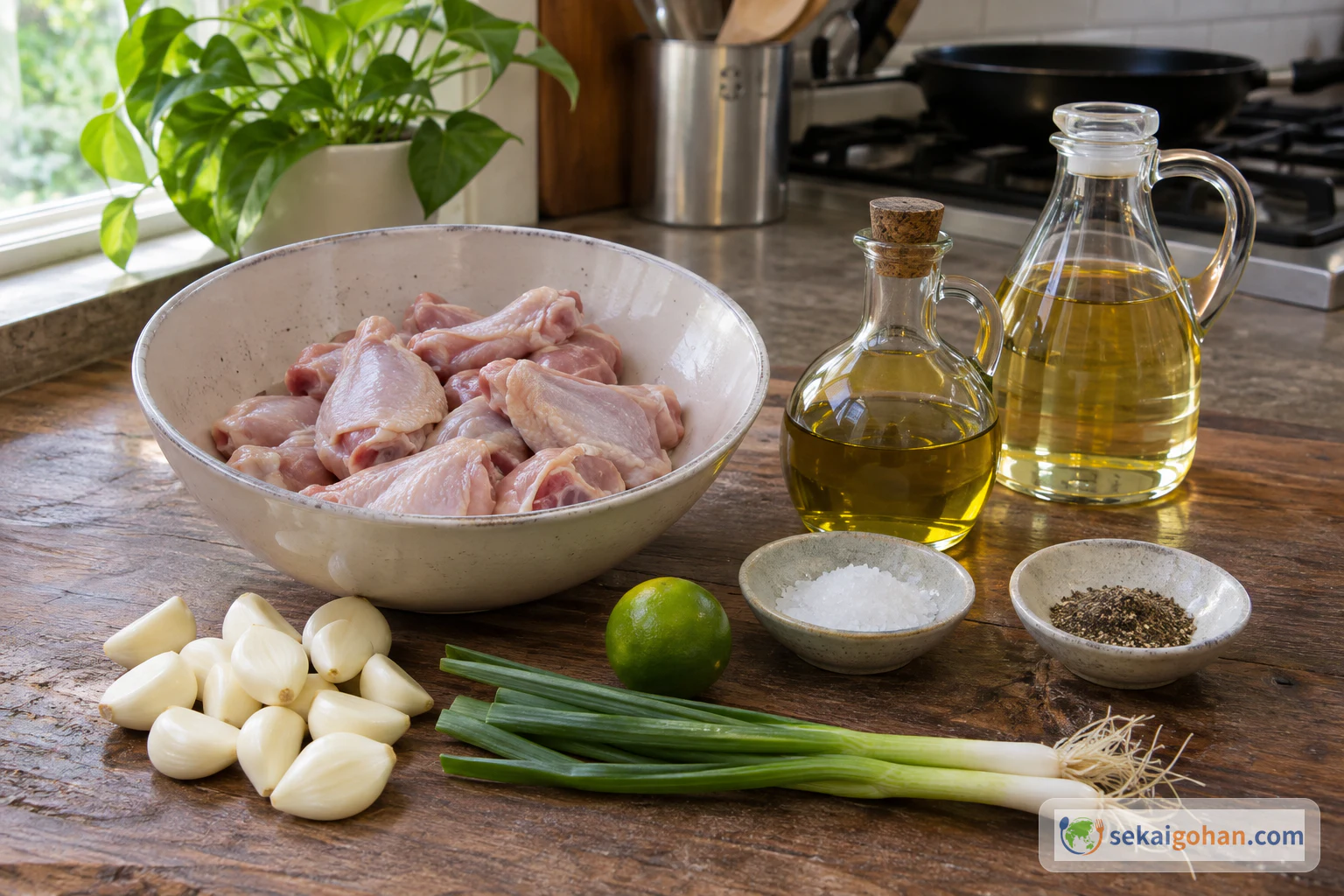
How the chicken is cut decides how long it takes to fry. Wing pieces cut at the joints cook evenly. Larger pieces need longer in the oil before the meat by the bone is cooked through, so if you have a few big ones, split them at a joint or fry them in their own batch.
The base recipe uses only chicken, garlic, green onion, citrus, salt, pepper and oil. The batter variation below adds wheat flour and baking powder, and the garlic sauce variation adds milk. If you buy pre-cut or pre-seasoned chicken, check the label.
Equipment
- Chopping board and a sharp knife
- Mixing bowl
- Small, deep pot
- Wire skimmer
- Paper towels on a plate or tray
- Wooden chopsticks or a wooden spoon handle
- Serving plate
Choosing the Chicken and the Citrus
Chicken wings are the easiest cut to find and the closest to the classic: cut each one at its two joints into three pieces. Wing drumettes on their own work too, and so do bone-in thigh pieces split at the joint. In Brazilian butcher shops the chicken is sold already cut "for passarinho," so you can also ask a butcher to cut a whole chicken into small bone-in pieces. Boneless chicken changes the dish. Without the bone, you lose the juicy meat at the center of each piece.
Green onion is ordinary scallion. Chop only the green and white parts you like, and do it before the frying starts. For frying, use a plain neutral oil. The olive oil is optional. It adds a fruity note to the garlic oil, and leaving it out only makes the garlic flavor a little plainer.
Method
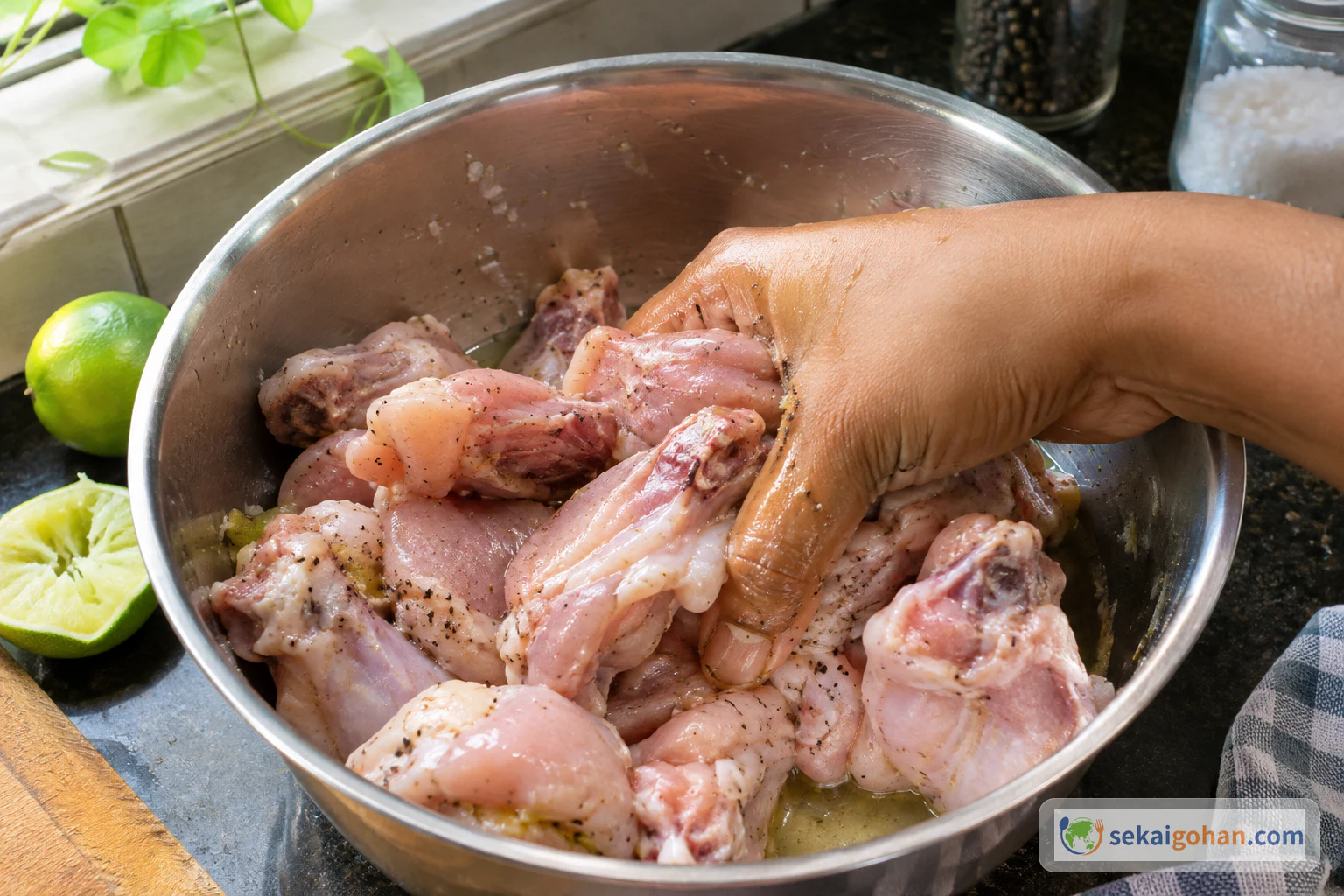
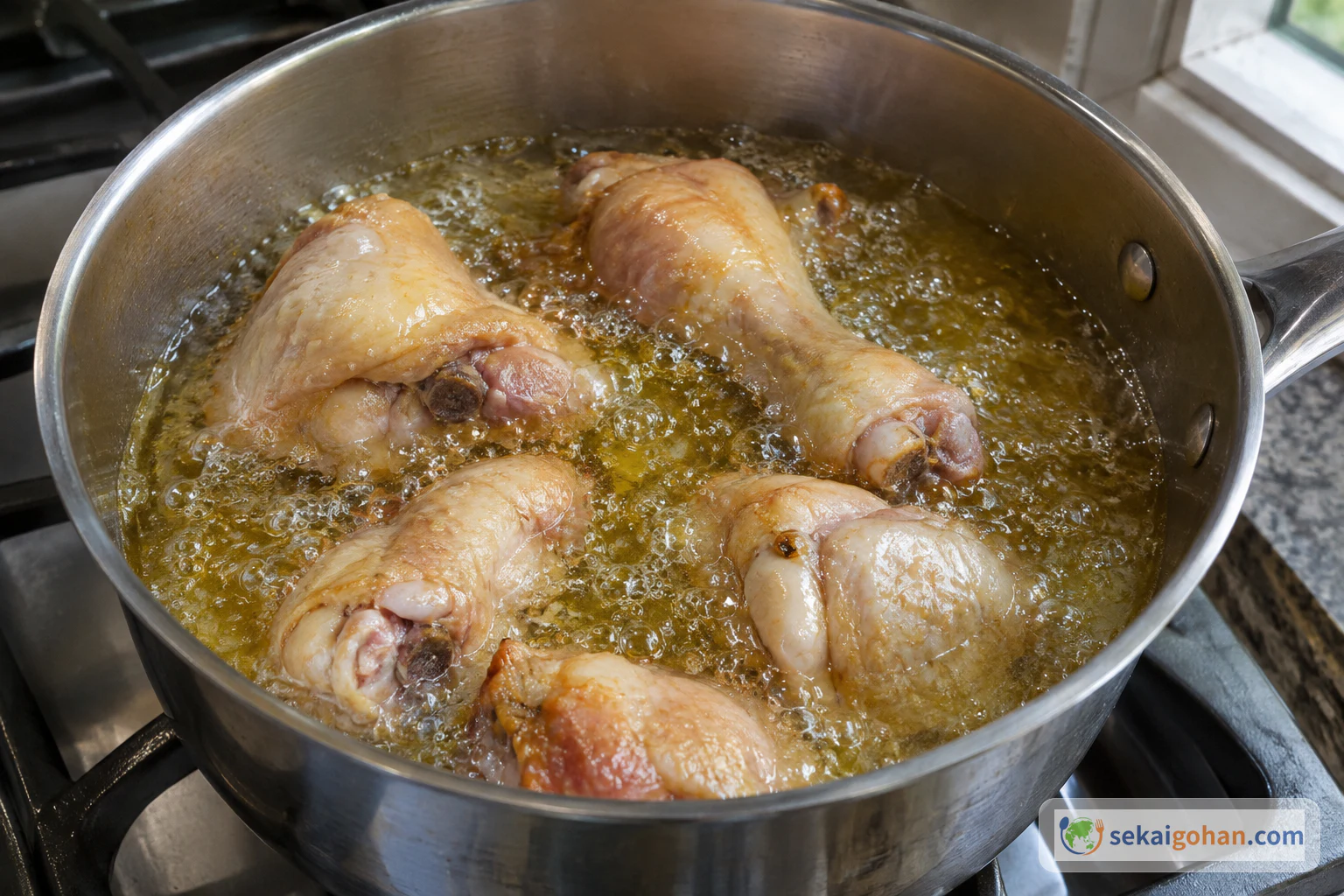
The work goes in a straight line: cut, season, flavor the oil with garlic, then fry the chicken in batches. Allow about 50 minutes from start to finish, about 35 of them at the stove. The marinade takes only five minutes, so have the garlic sliced, the green onion chopped and the paper towels laid out before the chicken goes into the bowl. Once the frying starts, you will not have a free hand.
Stay at the stove the whole time the oil is on the heat, and keep water and wet utensils away from the pot. If the oil catches fire, turn off the heat and cover the pot with a lid. Never pour water on it. Wash your hands, the knife and the board right after handling raw chicken, before you touch the garlic, green onion or serving plate. Let the used oil cool completely before you dispose of it.
When It Goes Wrong
| What you see | Why | What to do |
|---|---|---|
| Pale, greasy chicken; the bubbling dies down when the pieces go in | Too many pieces at once cooled the oil | Fry fewer pieces, and wait for fine bubbles at the chopstick before each batch |
| Dark or burnt outside, raw meat near the bone | Heat too high for the size of the pieces | Lower the heat, split big pieces at a joint, and keep frying until a cut next to the bone shows the meat cooked through |
| Brown, scorched garlic | Left in the oil too long | Lift it out at pale gold next time. Skim out any burnt bits before the chicken goes in |
| Oil spits hard when the chicken goes in | Marinade liquid on the pieces | Let each piece drip over the bowl first, and lower it in gently, away from you |
| Meat still raw when you cut a piece open | Pulled out too soon | Put the batch back in the oil and fry until cooked through to the bone |
Serving and Variations
At the table
Frango a passarinho is a shared snack plate, set out in the middle of the table with cold beer and eaten while it is hot and crisp. For a fuller Brazilian spread, add a bowl of vinagrete, the chopped tomato and onion salsa, for a fresh, sharp contrast, or some farofa, toasted cassava flour, for crunch. If you are cooking a big pot of feijoada for a gathering, a plate of these little fried pieces gives people something to pick at while it finishes.
Variations
- Light batter. Coat the seasoned pieces in wheat flour mixed with baking powder before frying. You get a crunchy shell instead of bare, crackling skin. In this style the marinade usually runs 10 to 30 minutes.
- Spiced and floured. Marinate the chicken in spices for an hour or more, toss it in flour, and start it in oil over low heat. The flavor goes deeper into the meat and the crust turns thicker and more golden.
- Garlic sauce. Serve a garlic sauce made with milk for dipping. It makes the dish richer and softer in flavor, and it adds milk to the allergen list.
- Parsley instead of green onion. Parsley tastes cleaner and more herbal than green onion, and you can use either one or both.
Frequently asked questions
Can I use lemon instead of lime?
Yes. The word limão covers both, and in Brazil it usually means the green Tahiti lime, but the juice of one small lemon works the same way in the marinade. Lemon is slightly milder and more floral, and lime is sharper. Either one gives the chicken the bright edge it needs against the fried garlic.
Can I fry wing pieces and thigh pieces together?
You can, but larger pieces need longer in the oil. Either fry them in separate batches or put the bigger pieces in first. Check the largest piece next to the bone before you take any batch out.
Is the olive oil necessary?
No. A spoonful in the frying oil adds a little fruitiness to the garlic aroma, which carries into the chicken. Without it, plain frying oil still picks up plenty of flavor from the five sliced cloves.