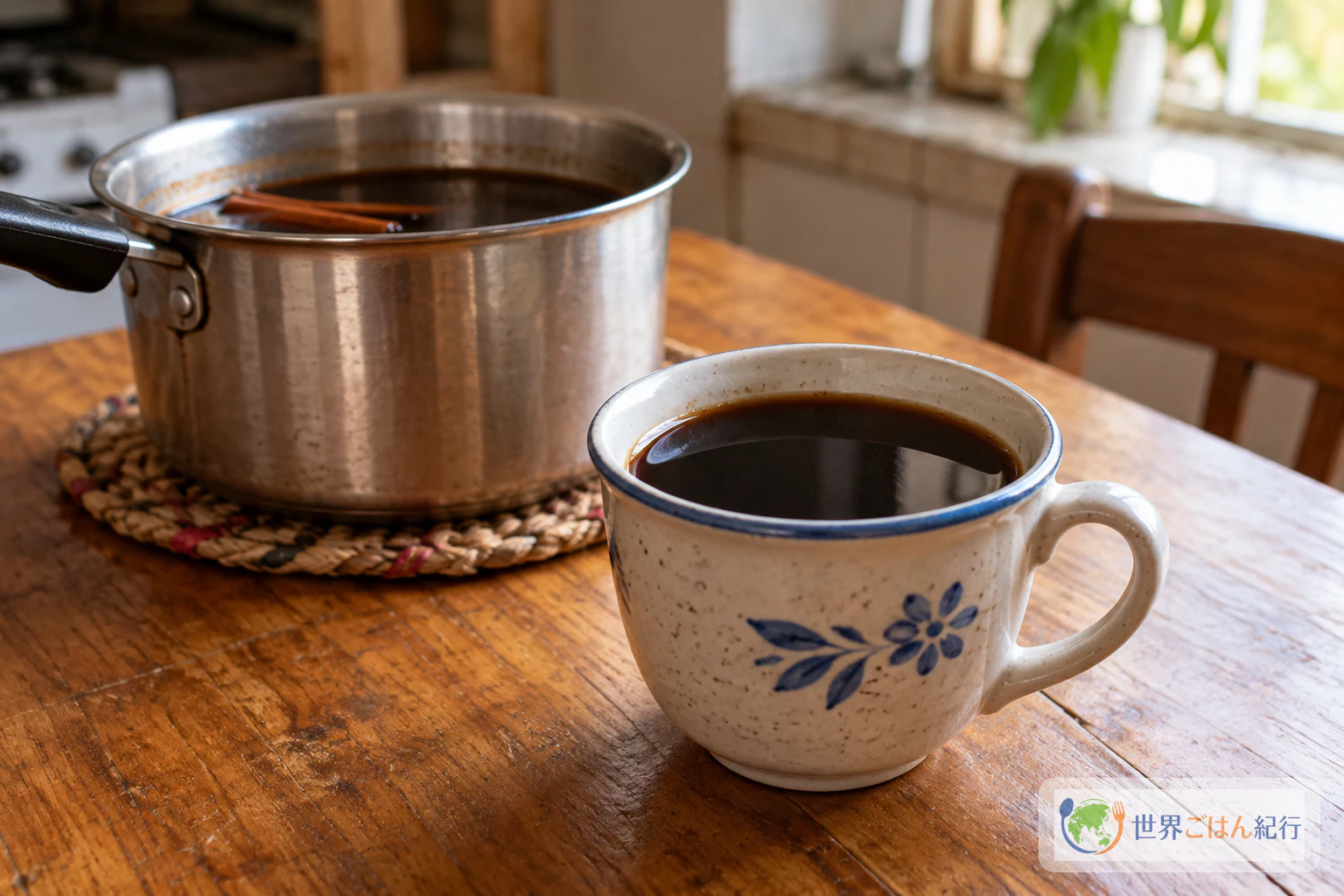
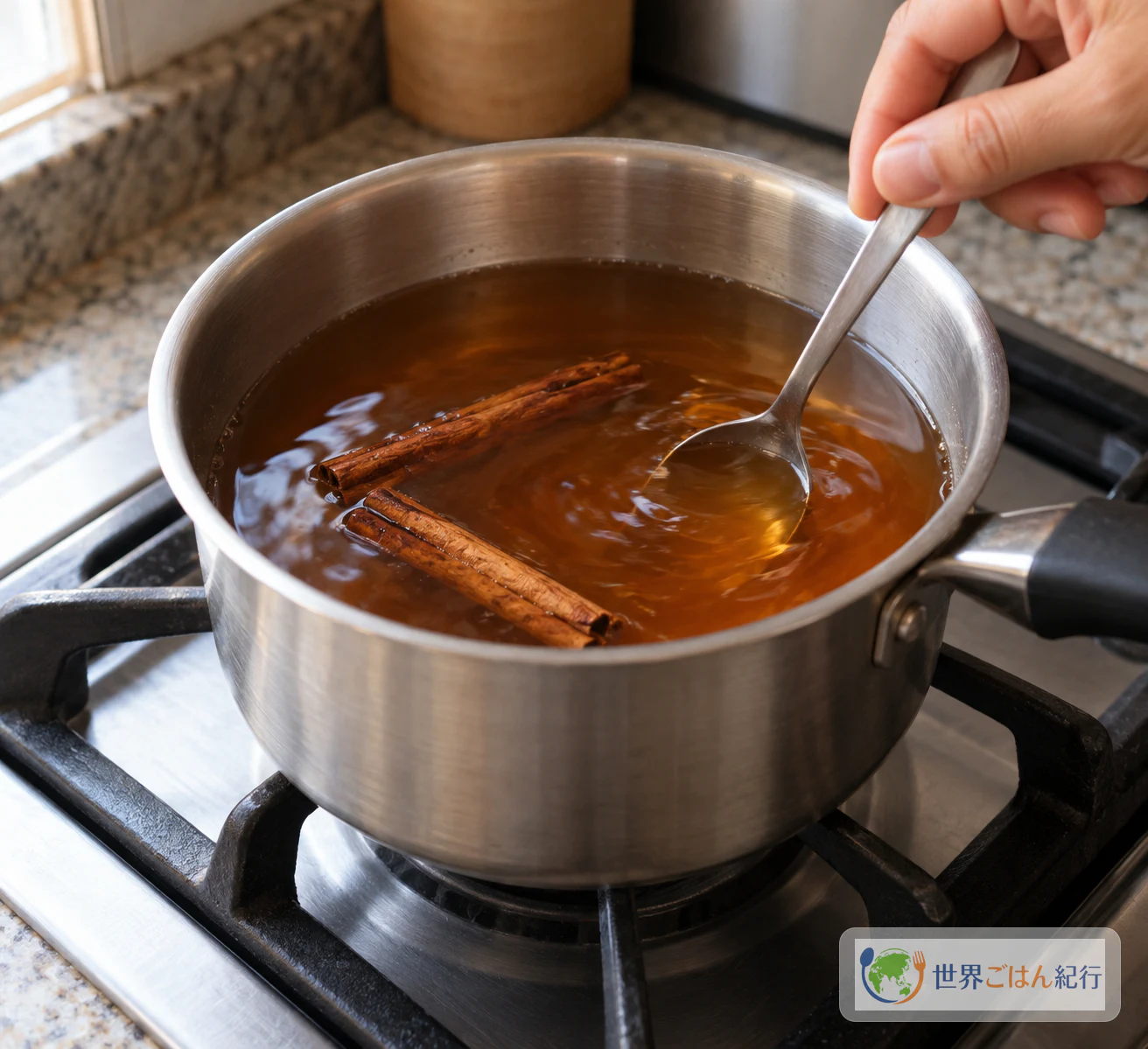
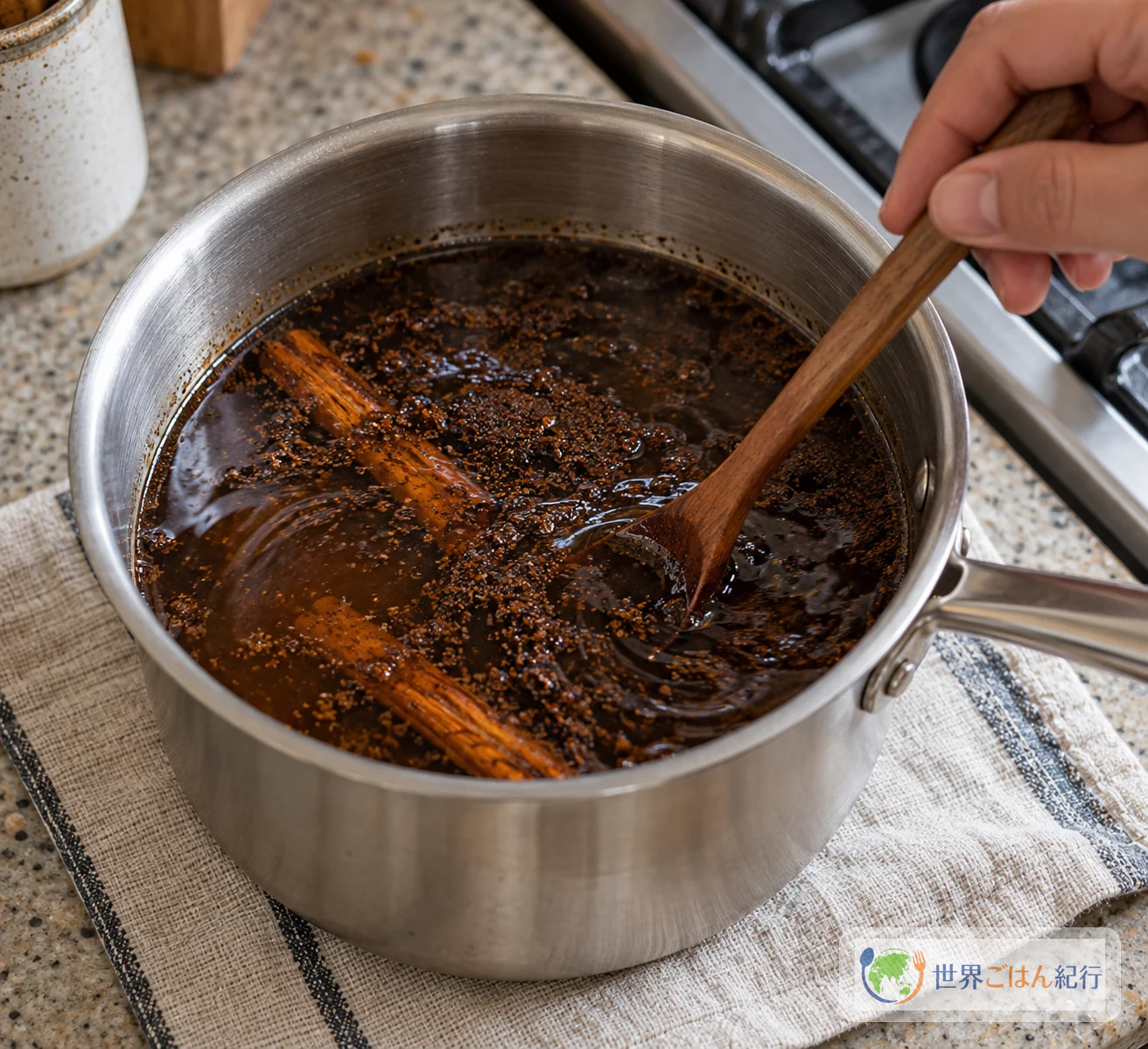
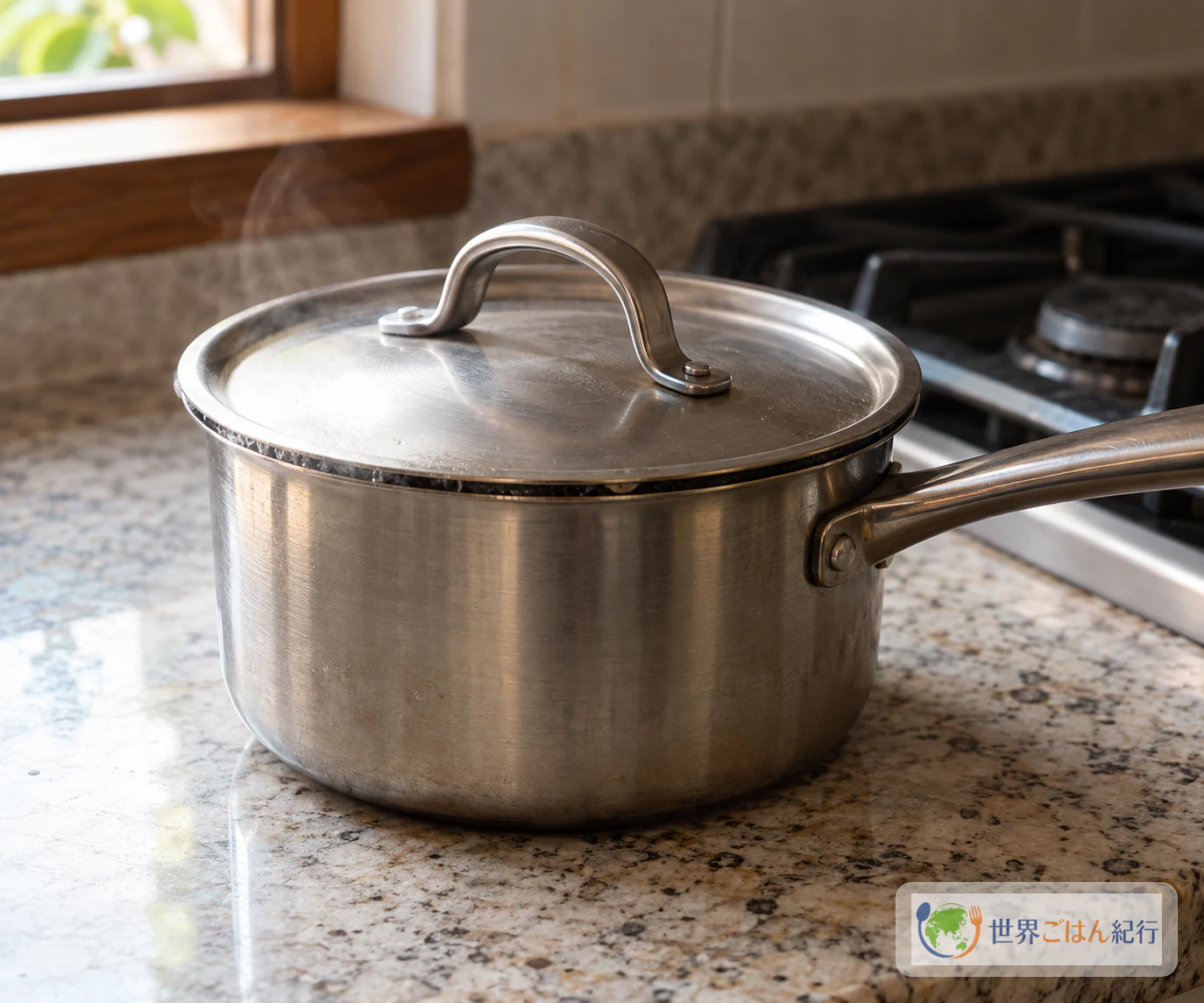
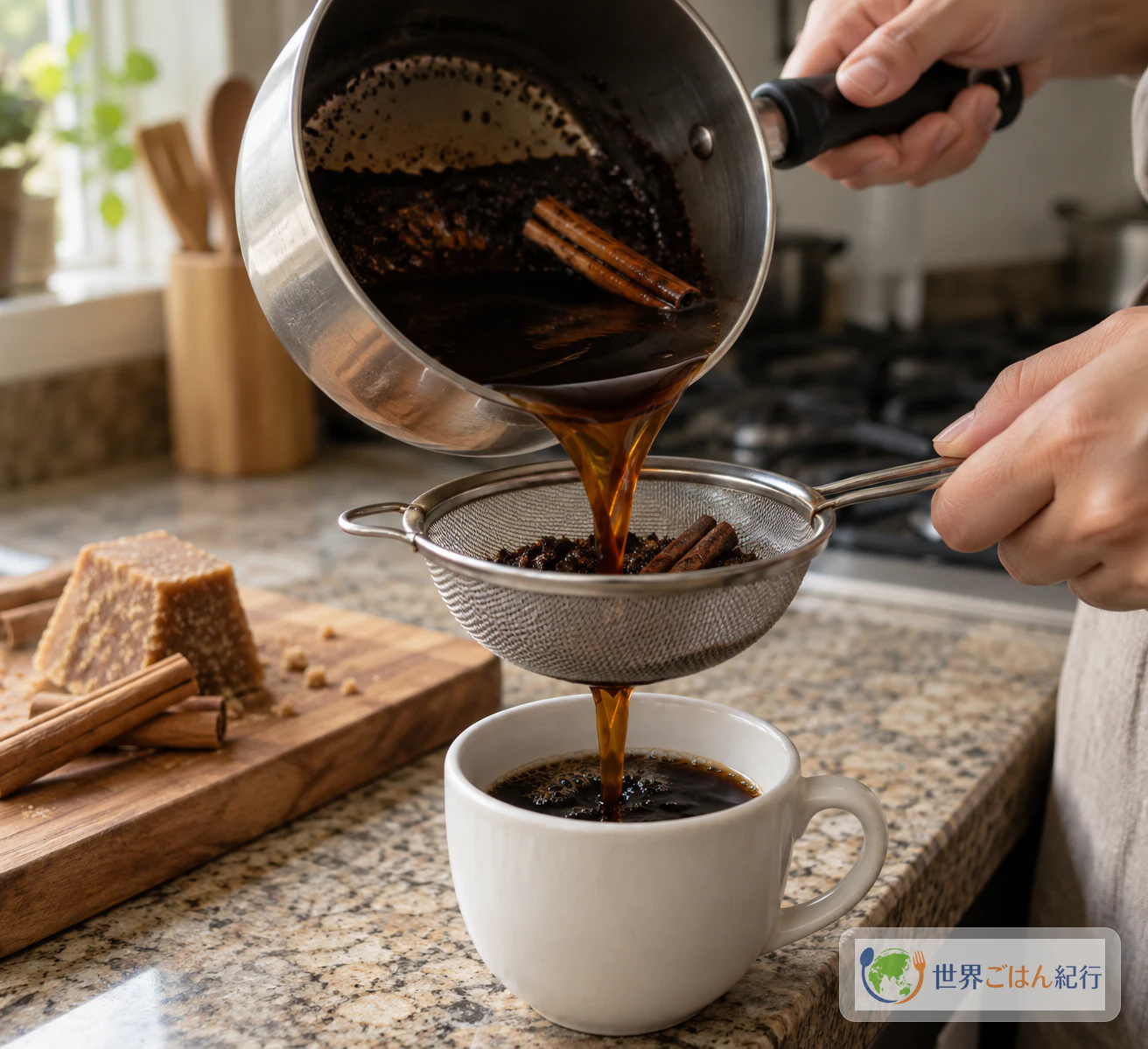
In one farming household in Guática, in Colombia's coffee country, family and friends who drop by are handed a small, hot cup of tinto. It comes black and lightly sweet, with no fuss. Tinto is Colombia's everyday coffee: filtered, served without milk, and sweetened with sugar or panela, the unrefined cane sugar sold in solid blocks. This version dissolves panela with whole cinnamon sticks before the coffee goes in, so it comes out dark and gently spiced, with no grounds in the cup.
What Tinto Is and How It's Served
Tinto isn't saved for special occasions; it's what people drink every day. At home it comes in small cups called tazas tinteras. Out in public spaces, you're just as likely to get the same drink in a little plastic cup.
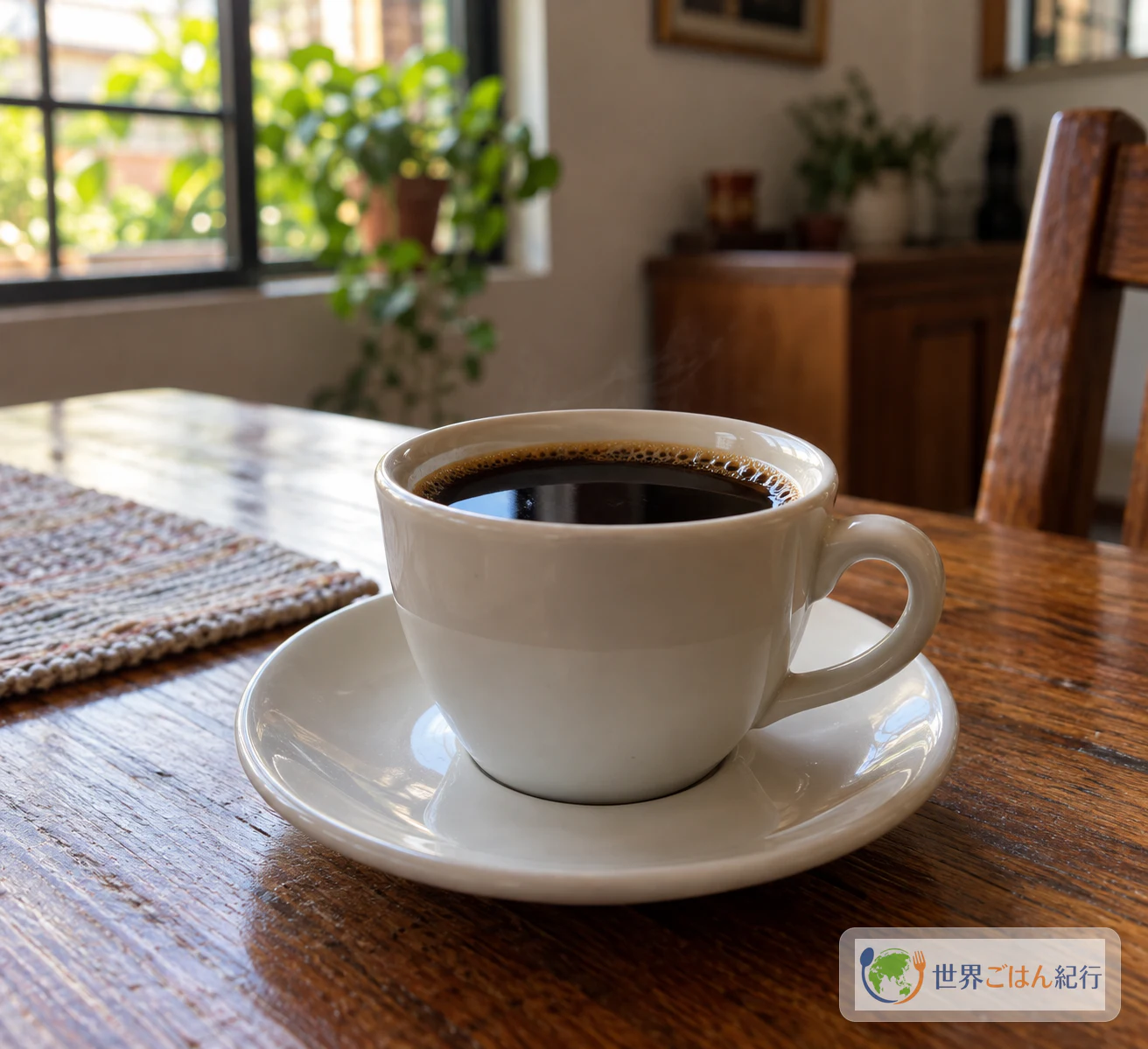
Tinto also has no single national taste. The word covers several kinds of filtered coffee rather than one fixed recipe, and how sweet and how strong it is changes from home to home. In the Guática household, for example, the coffee and the agua de panela (panela water) are made in separate pots and only combined at the end. For more dishes from the same table, see our Colombia page.
Tinto and "Colombian Coffee"
Outside Colombia, "Colombian coffee" usually means the beans: an export product, a label on a bag. Tinto is the brewed drink. Even the beans aren't one flavor, either. Coffee grows in several regions, including the western Andes, where it's closely tied to daily life, and its character shifts from one region to the next.
Tinto brewed in a pot is easy to confuse with Mexico's café de olla, which is a different drink with its own spicing and tradition.
Ingredients and Measures
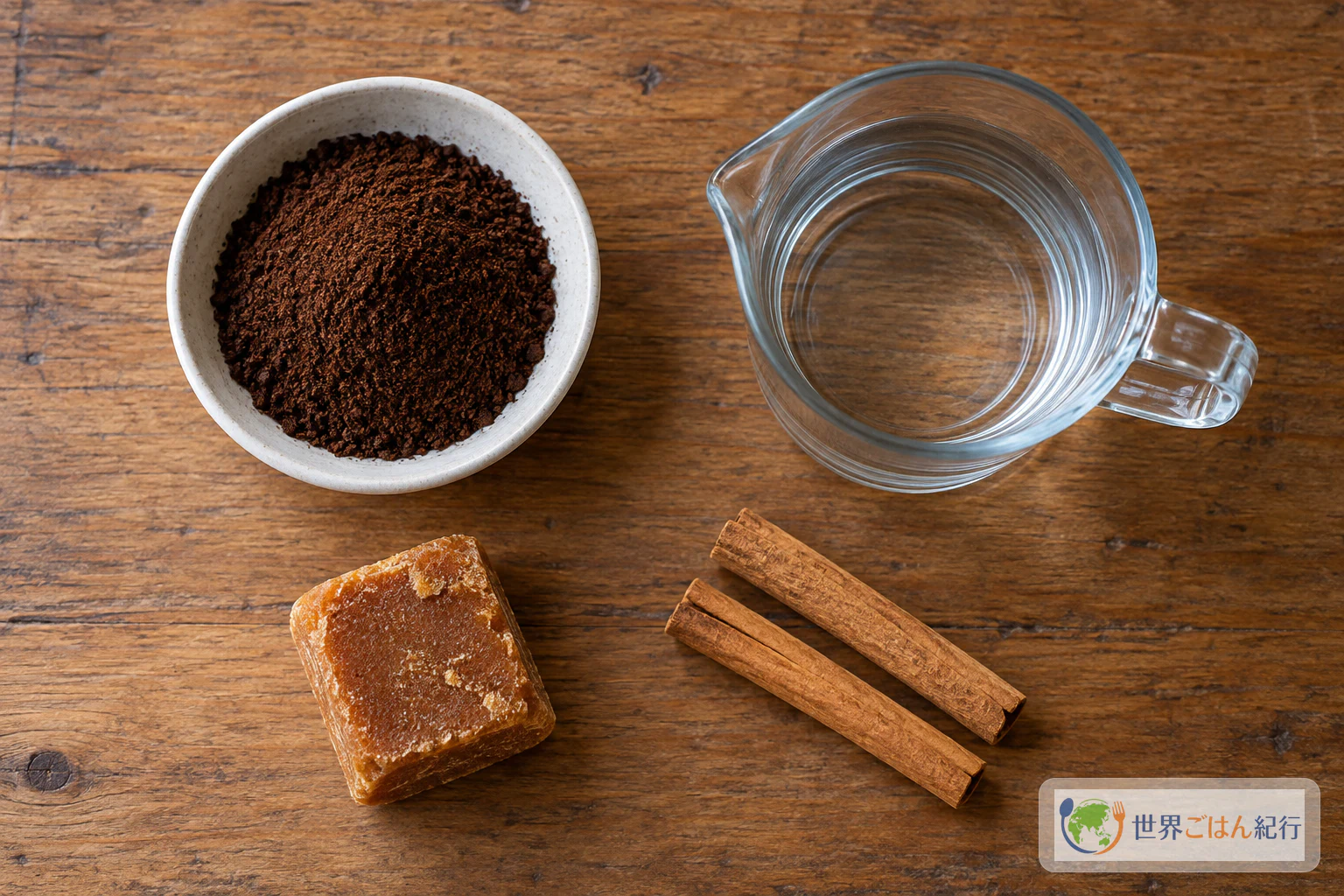
Use the same cup for the water and panela to keep their volume ratio, and keep one spoon consistent so your batches are repeatable.
The only timed step is the 2-minute rest under the lid. How long the water takes to boil depends on your pot and stove.
None of the four listed ingredients is a major allergen, but check the label of each product you buy, including any cross-contact or shared-facility statements.
Equipment
- A small saucepan or olleta (traditional pot), with a lid
- A measuring cup and a tablespoon (use the same cup for the water and the panela)
- A spoon for stirring
- A fine-mesh strainer (a common household choice that holds back the grounds)
- Small cups for serving
Choosing Panela and Substitutes for Tinto
Look for panela first. It's the sweetener here, and it's what gives this tinto its particular sweetness. You'll find the solid blocks at Latin American grocers and online.
Sugar is a legitimate choice, but a different one. Plenty of tinto is sweetened with sugar, and that's fine; the flavor will just be plainer. Dark brown sugar is a workable stand-in, not an equivalent. Expect its aroma, and the way it dissolves, to differ from panela.
If 1/3 taza seems too sweet for you, start with less panela and add more to taste. Use cinnamon as whole sticks, not ground.
How to Make Tinto in a Pot
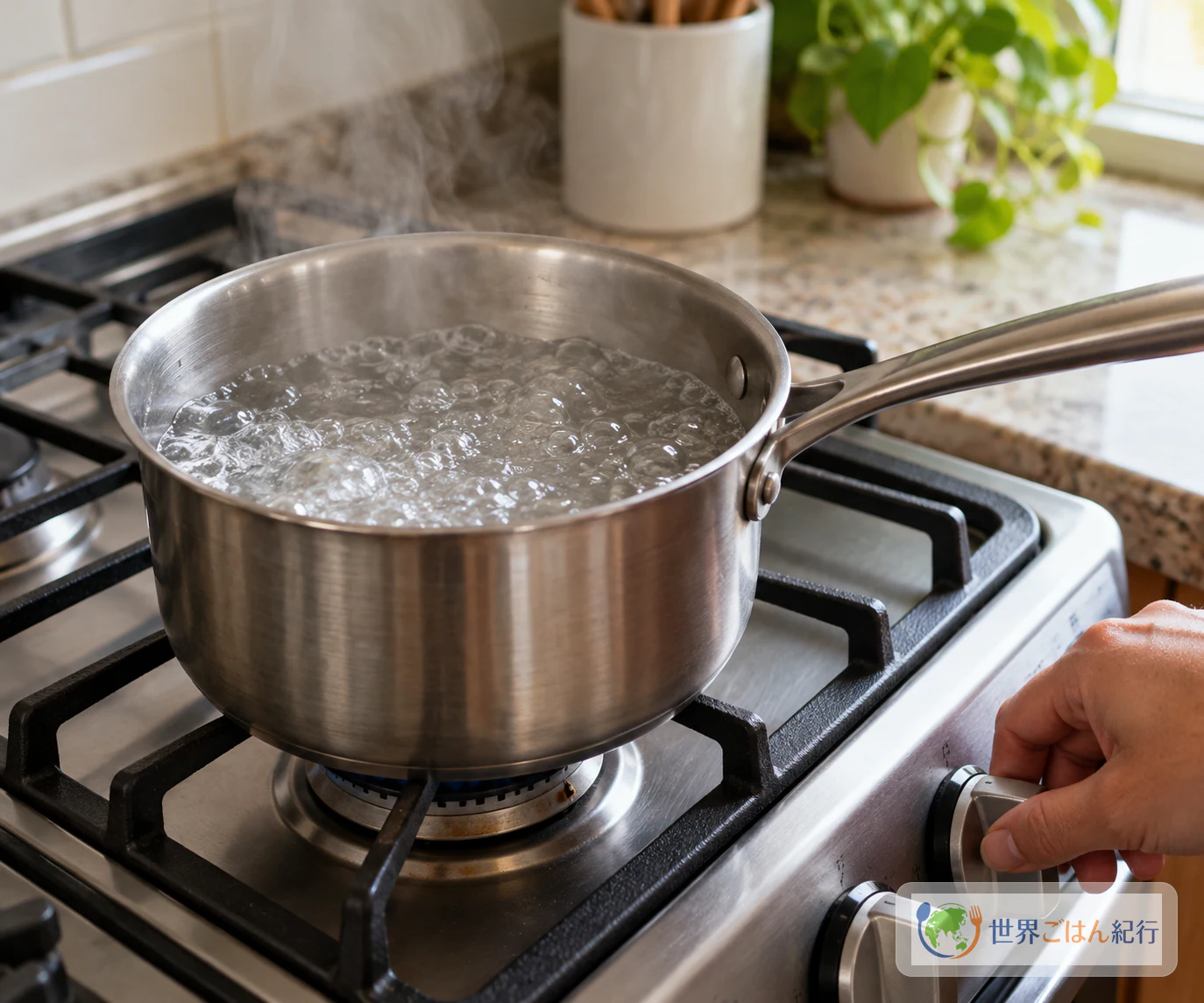
The heat goes off once the water boils, and it stays off. Everything after that happens in hot water off the heat: sweetener and cinnamon first, then coffee. The coffee is never boiled.
Troubleshooting Tinto
If your first pot isn't quite right, change one thing at a time on the next one.
| What you notice | Likely reason | What to try next time |
|---|---|---|
| Too sweet | 1/3 taza of panela is generous for your taste | Start with less panela and add more at the table |
| Too strong or bitter | Your grind or coffee amount is more than you like | Use a little less coffee and keep the 2-minute rest the same |
| Undissolved panela in the pot | The coffee went in before the panela had melted | Stir longer in step 2 and look at the bottom of the pot before adding the coffee |
| Grounds in the cup | The strainer mesh is too coarse | Use a finer strainer, or try a cloth filter |
| Tastes flat | Ground cinnamon was used, or the cinnamon sticks were left out | Use the 2 whole sticks in step 2 |
Tinto Variations
Each of these still tastes like tinto, but changes one thing. You can do it the Guática way and make the coffee and the panela water in separate pots, then combine them. Some cooks brew a much bigger batch with panela and a medium-fine grind, letting it steep a few minutes before straining. And if you're curious about the beans, keep the method the same and compare coffee from different Colombian growing regions. You'll notice the difference in the cup.
Frequently Asked Questions
Should I keep the coffee boiling?
No. The heat goes off as soon as the water boils, and the coffee only rests in the covered pot for 2 minutes before you strain it.
Is this the same as café de olla?
No. Café de olla is a Mexican drink. Tinto is Colombian, and this version uses only water, panela, cinnamon sticks and ground coffee.
What grind should I use?
The recipe doesn't name a specific grind. If your tinto comes out too strong or leaves grounds in the cup, adjust the amount of coffee or your strainer a little at a time.