Caldo de Costilla: Tender Ribs and Whole Potatoes in a Steaming Bowl
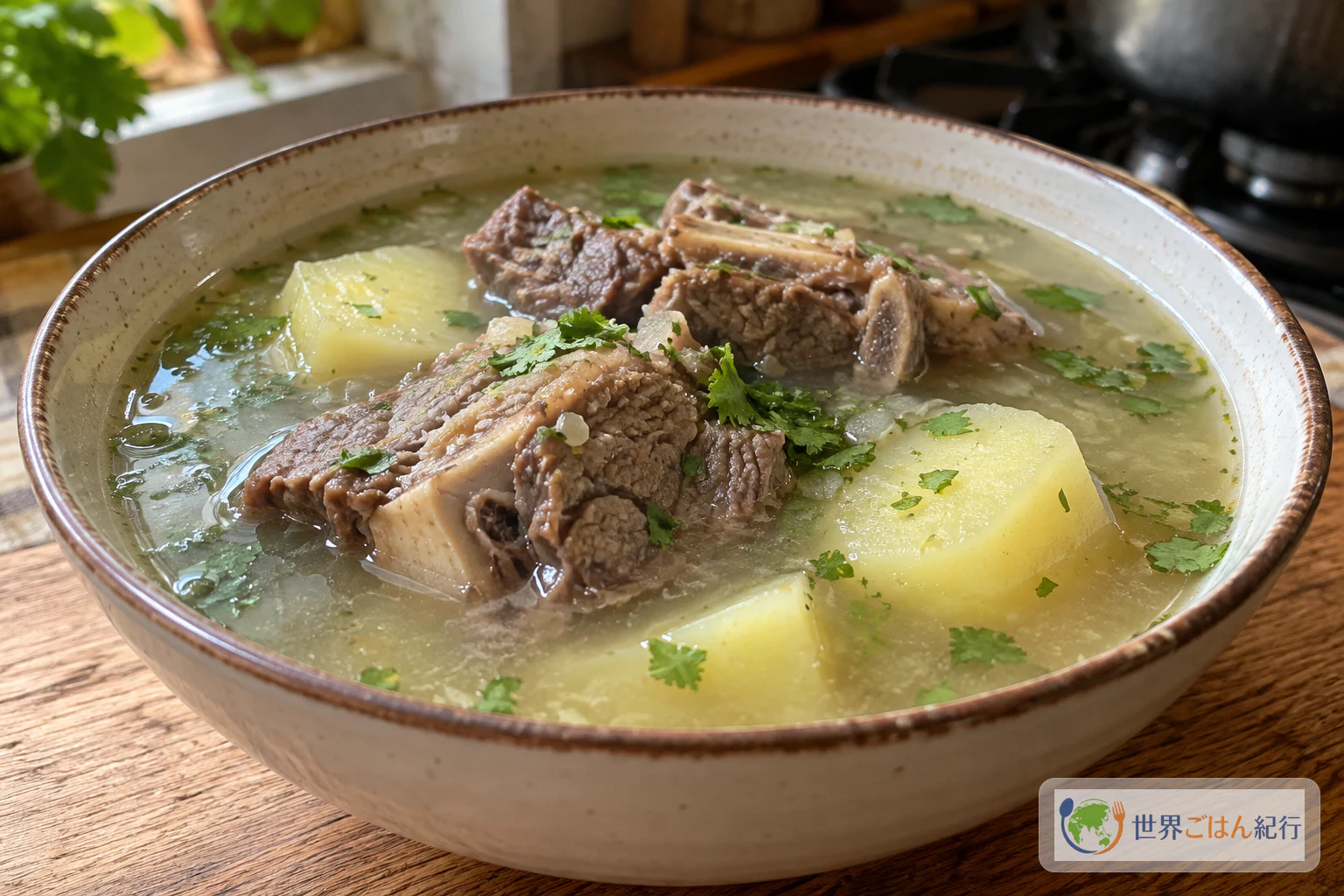
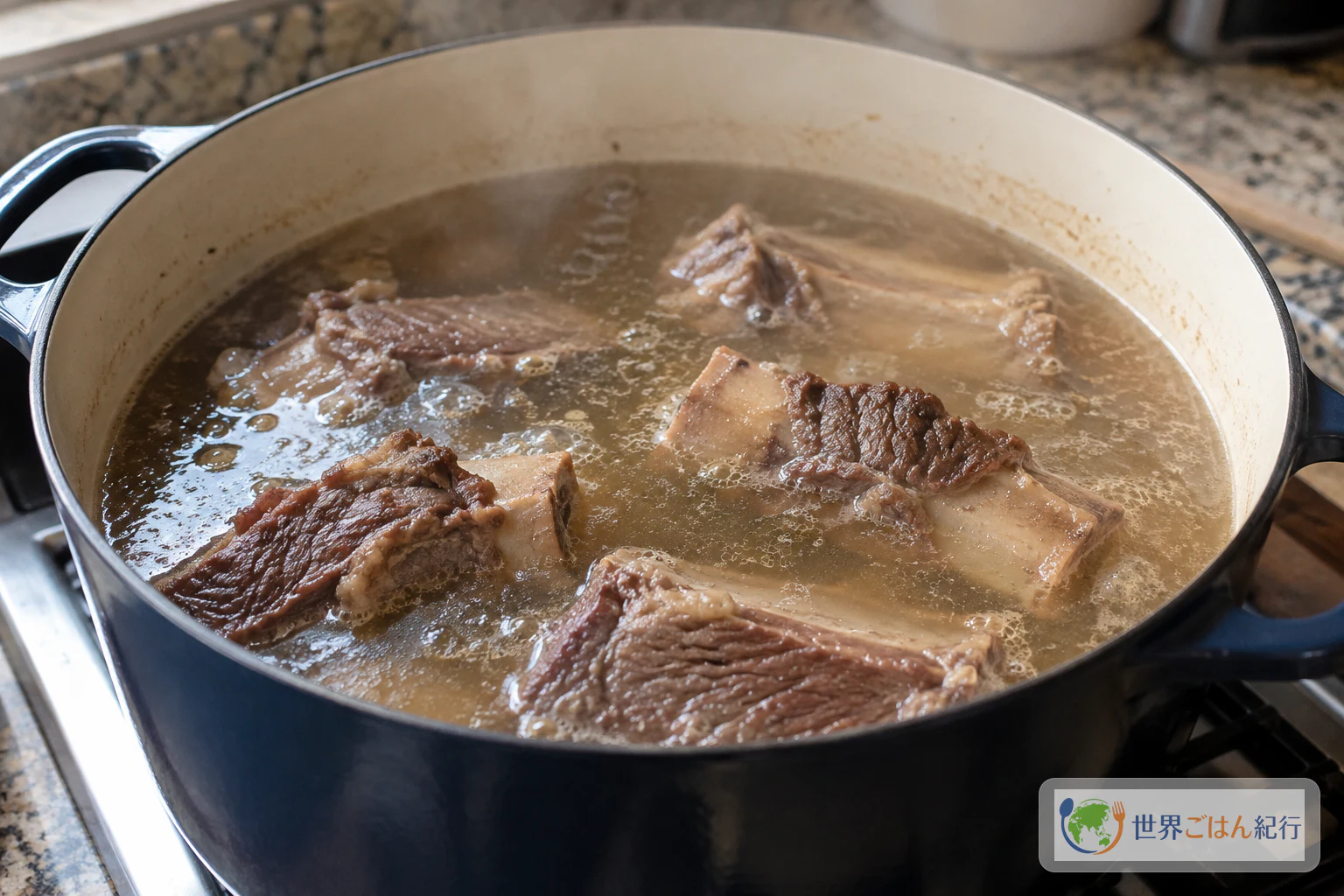
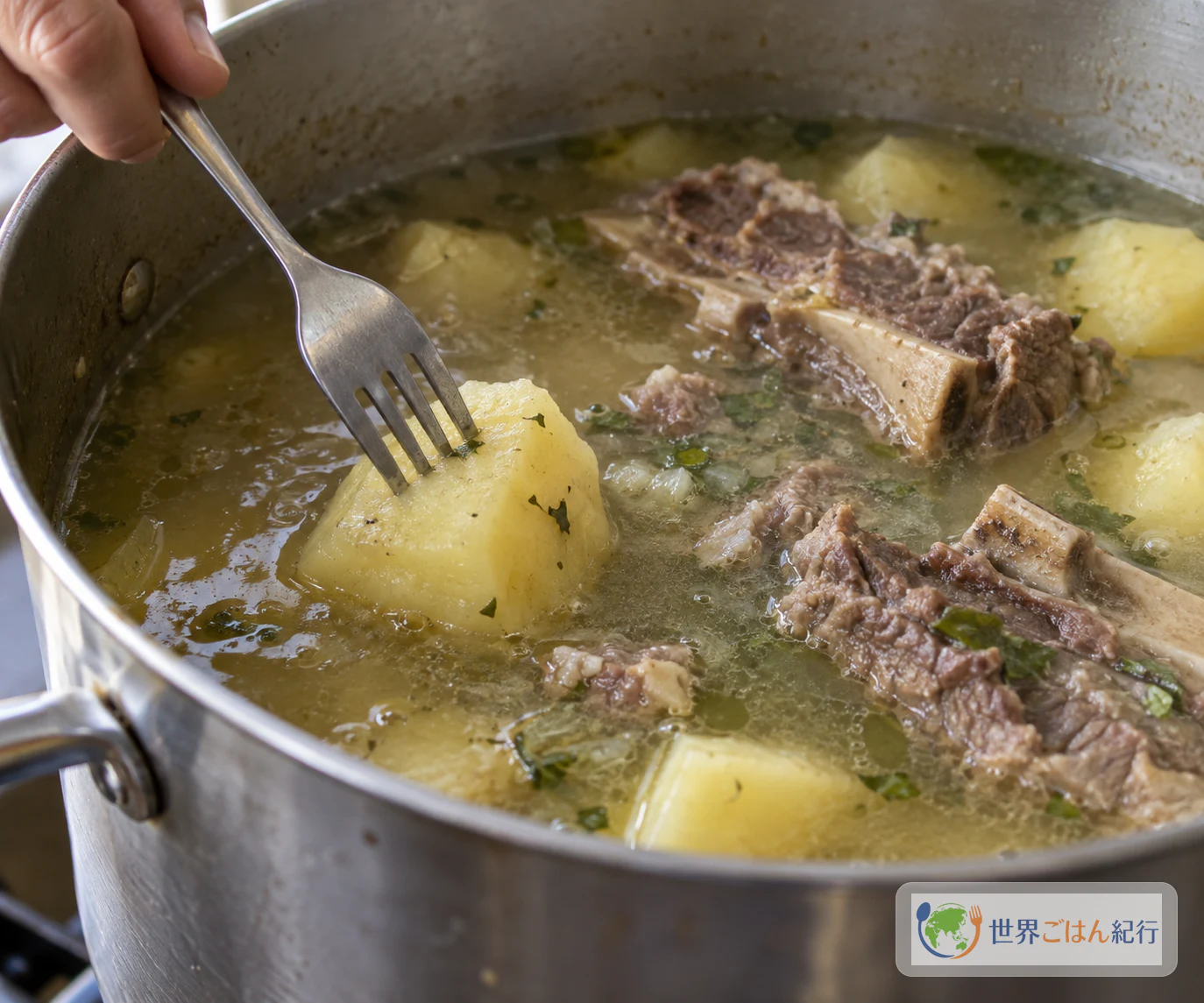
Cook the ribs until tender before the potatoes go in, then stop when the potatoes are soft but still whole. The broth is naturally a little cloudy from the blended onion base. Clarity is not the goal here.
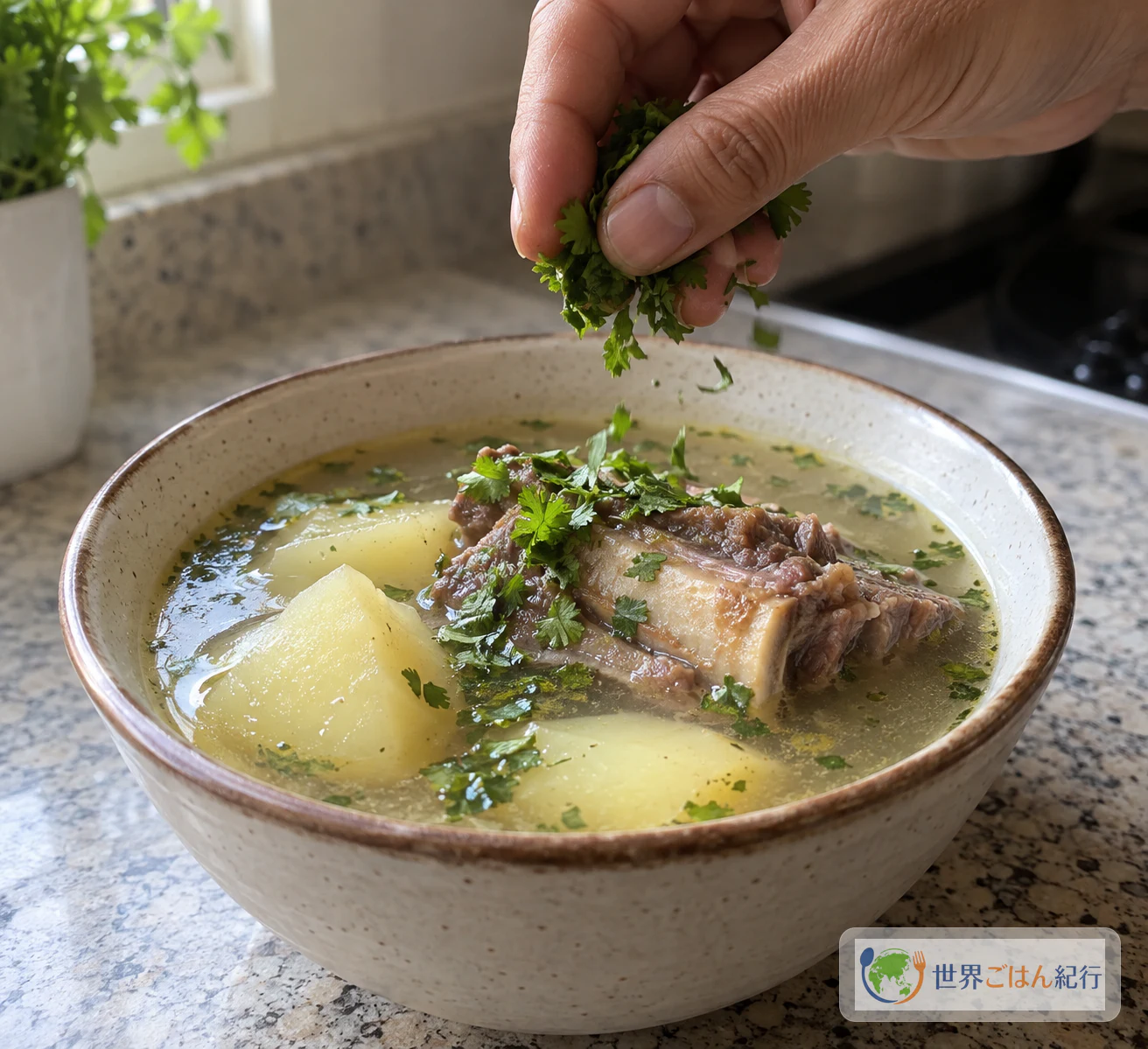
A deep bowl holds a bone-in piece of beef rib, chunks of peeled potato and a scattering of fresh cilantro, with steam rising off a pale, savory broth. In Colombia, caldo de costilla is a soup eaten for breakfast, and Bogotá's tourism authority has featured it alongside the city's breakfast traditions as part of its food culture.
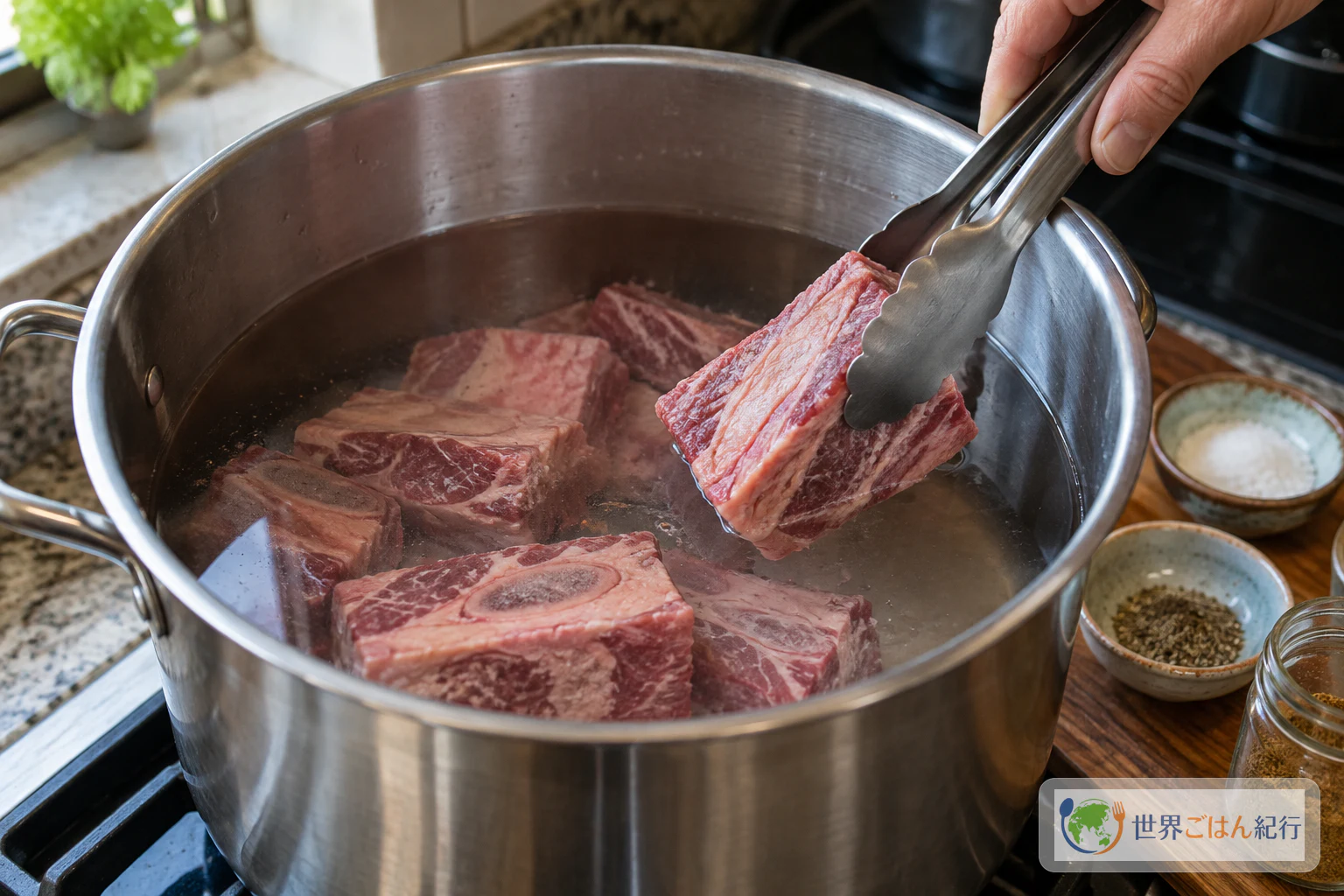
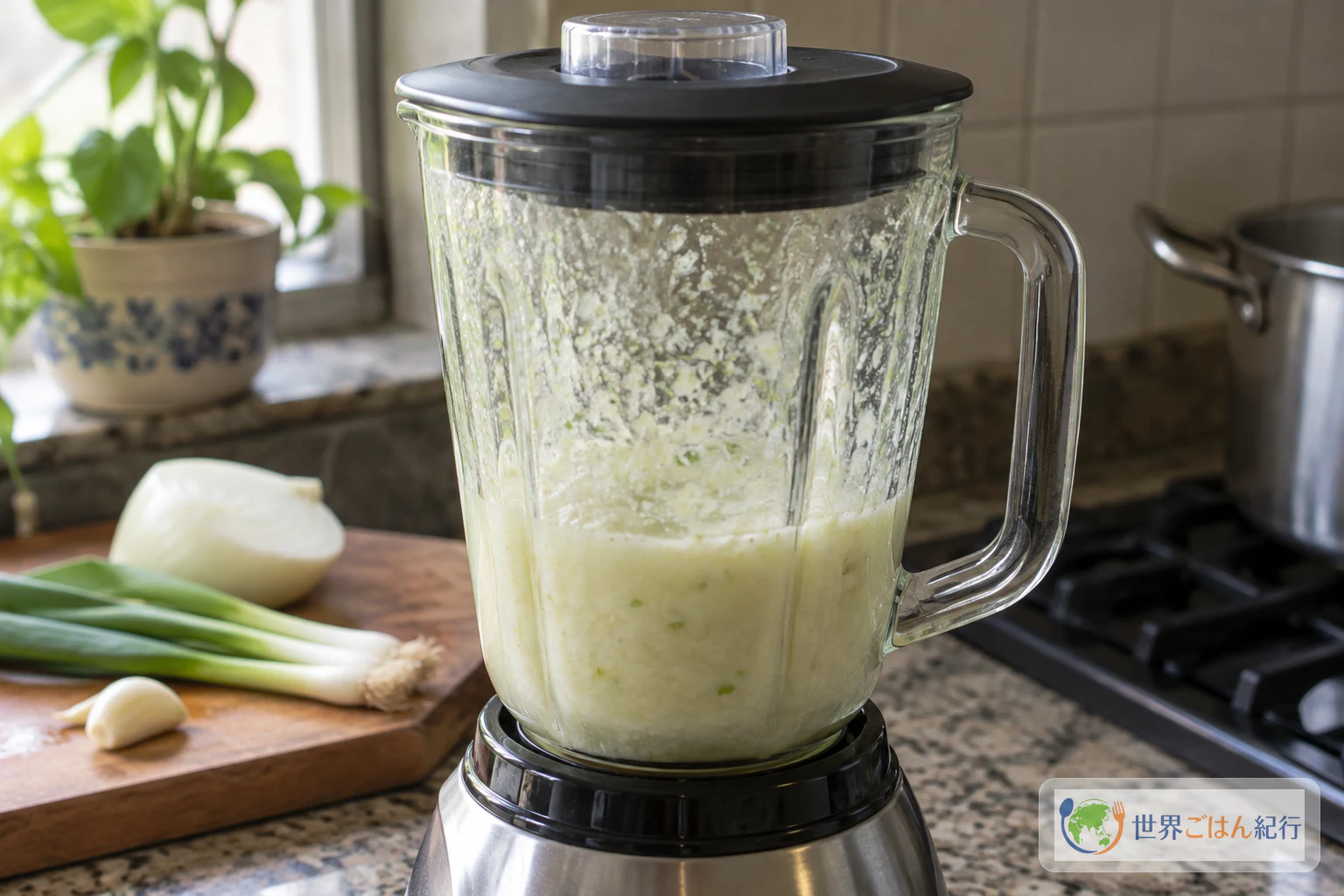
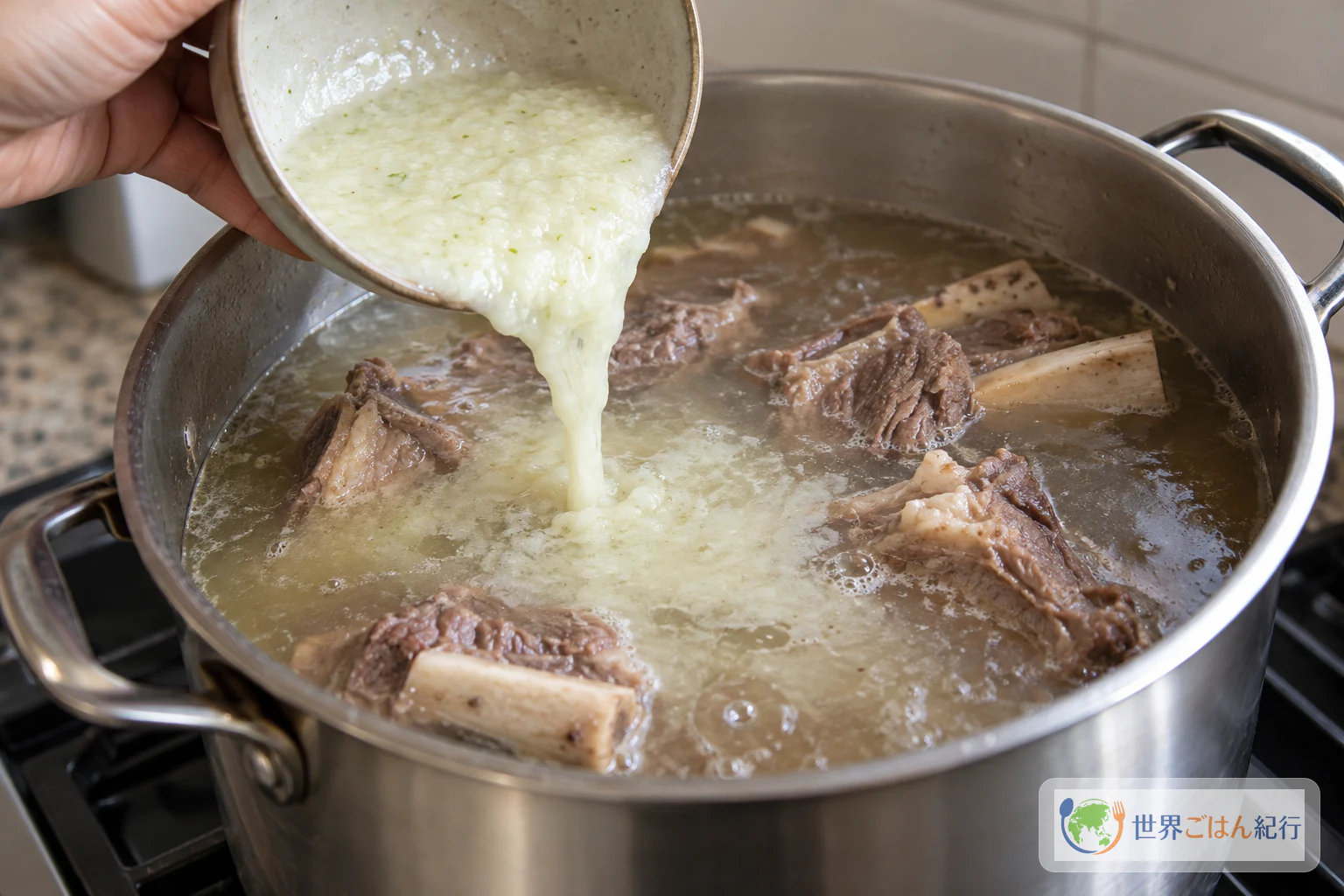
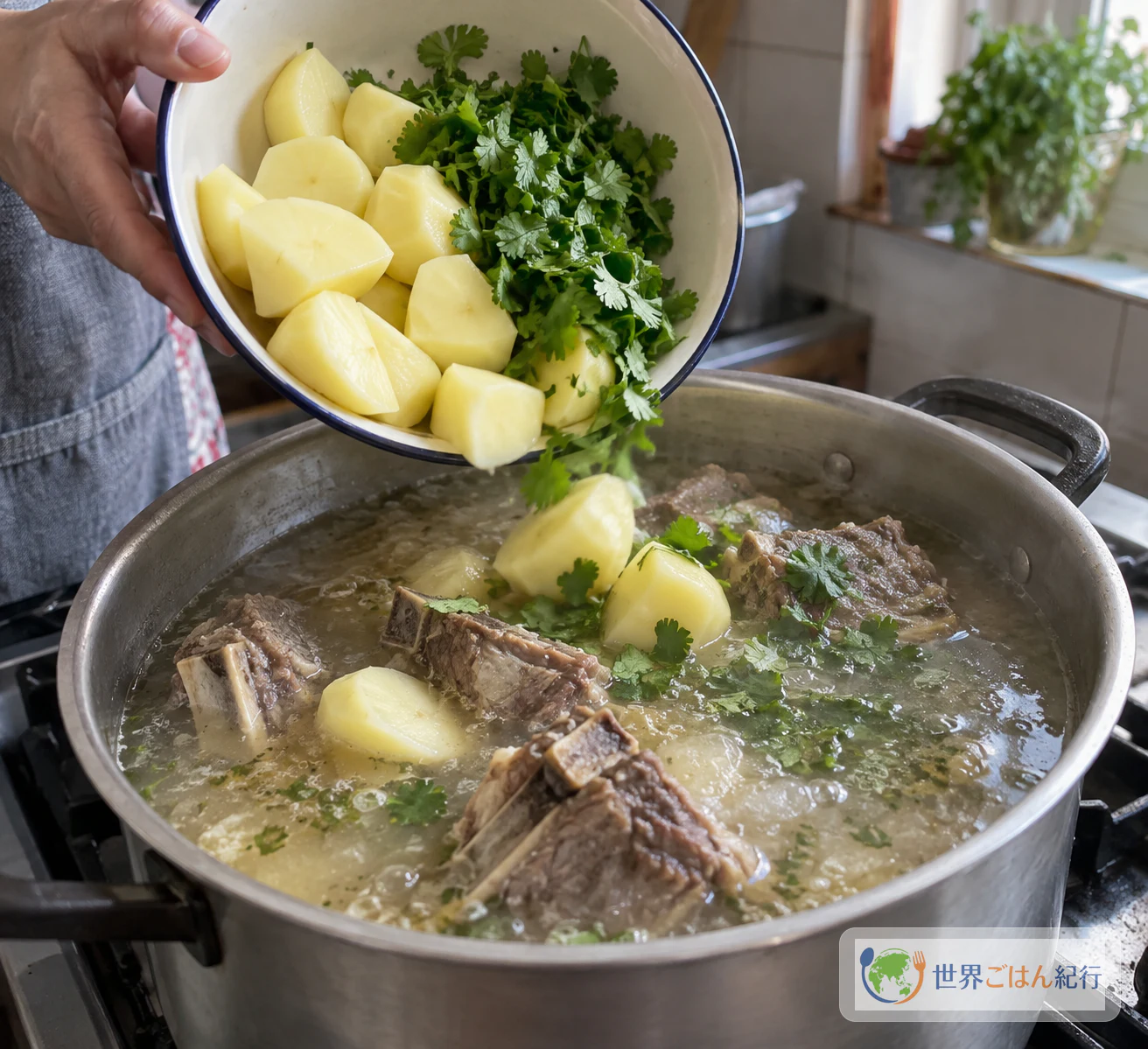
This recipe follows Erica Dinho's version from My Colombian Recipes. The author describes herself as born and raised in Colombia. The method is simple and unhurried. Simmer short ribs with cumin, salt and pepper. Blend onion, scallions and garlic with a little water and stir the mixture into the pot. Finish with potatoes and cilantro. The only real challenge is timing, because you want the meat tender and the potatoes holding their shape at the same moment.
Caldo means broth and costilla means rib, so caldo de costilla is simply "rib broth." Colombian recipes call the cut costilla de res (beef rib) and the potatoes papa. No special story behind the name has been confirmed.
A Beef-Rib Broth at the Bogotá Breakfast Table
Many versions of caldo de costilla exist across Colombian homes. The shared core is water, beef ribs and potatoes. La Nueva Bagatela, a Colombian regional food publication, ties the dish to the Cundiboyacense zone, the highland area around Bogotá. The same publication notes that the soup is widely found outside that region too. It also describes caldo de costilla being served late at night and at places where transport workers gather. This is that publication's framing. It is not settled history, and this article makes no claim about a single place of origin.
Bogotá's official recognition is clearer. The city's Instituto Distrital de Turismo held a gastronomy congress, "El Sabor de Nuestra Casa," and its cooking demonstrations included caldo de costilla next to the Bogotá breakfast. The city's announcement describes the soup as a cultural expression of Bogotá. This shows public recognition. It does not mean every Colombian eats the dish, or eats it the same way.
At home, the details shift. Some cooks add carrot, and the type of onion, the garlic, cumin, herbs and even broth powder vary from recipe to recipe. You may come across claims that the soup cures hangovers or that it arrived with foreign railway workers. Neither claim has reliable support, so this article treats the soup simply as a good, sustaining bowl.
Ingredients: Short Ribs, Potatoes and a Blended Onion Base
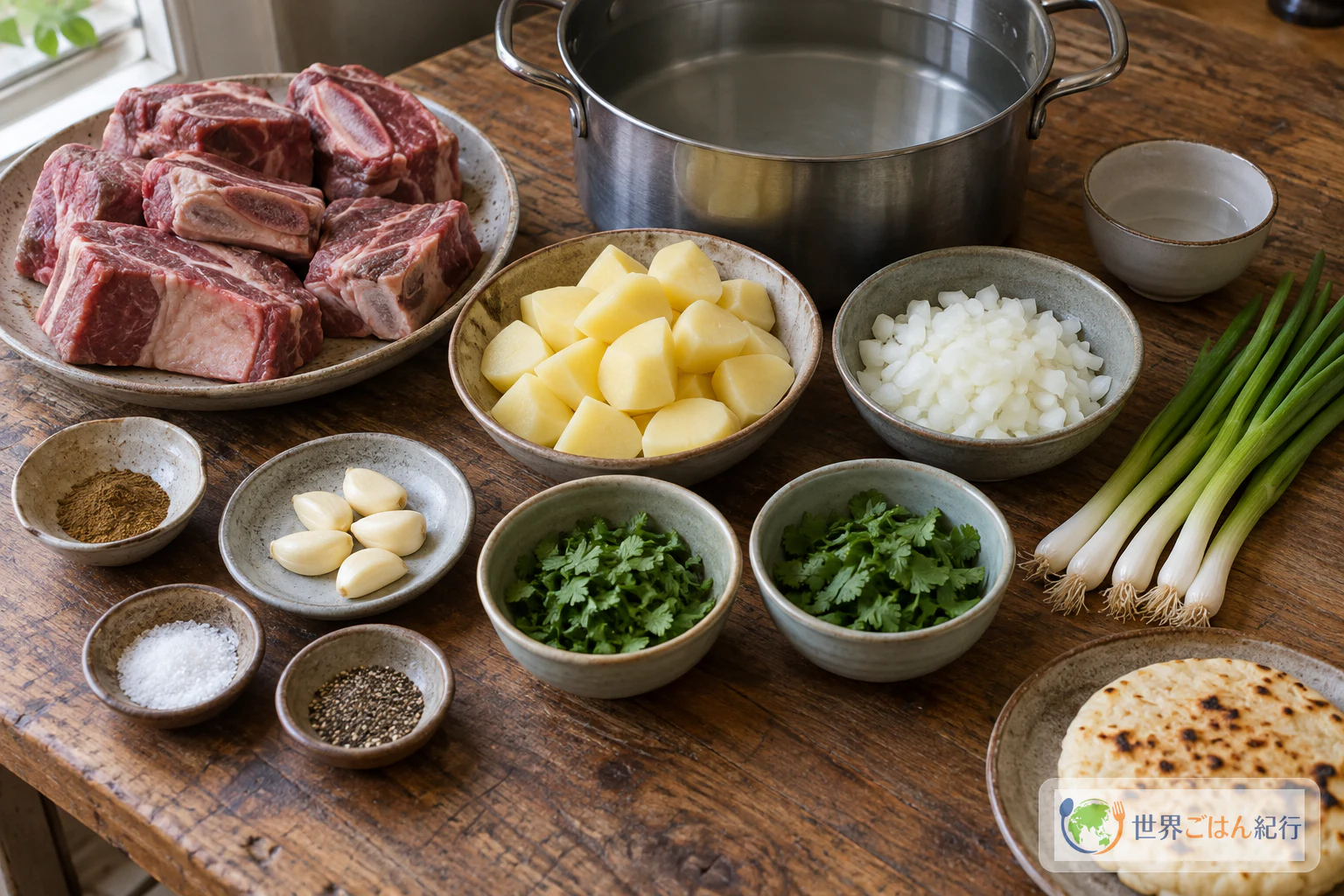
This recipe makes 4 servings. Notice that the recipe uses water twice. The 15 cups go into the pot at the start. The ¼ cup for the blender is extra, so do not take it out of the 15 cups.
The soup ingredients themselves are simple. Still, check the labels on the beef you buy and on any arepa product. Do not assume the meal is allergen-free without reading what is in each product.
Equipment
- A large, deep pot with plenty of room above about 15 cups of water plus the ribs and potatoes
- A blender
- A knife and cutting board
- A ladle, plus a skimmer if you want to remove foam
- A clean fork for testing the potatoes
Measuring and Choosing: Cups, Bone-In Weight and Fresh Herbs
1 cup = 240 ml and 1 teaspoon = 5 ml.
- 3 pounds of ribs is about 1.36 kg, weighed with the bone.
- 1 pound of potatoes is about 454 g.
- 15 cups of water is about 3.6 L.
- ¼ cup of blender water is 60 ml.
- 1 cup of chopped onion is 240 ml.
- ½ cup of chopped cilantro is 120 ml, or 60 ml for each half.
The onion and cilantro amounts are volumes, not weights.
Short ribs. The 3 pounds is the weight of bone-in ribs. Do not buy 3 pounds of boneless meat in its place, because that would be far more meat than the recipe intends. Bone-in beef shank is sometimes suggested as an alternative. It has a different balance of bone and fat, so the broth will not taste the same, and it should not be treated as an identical swap.
Scallions. Use slender green onions. Colombian recipes often call for cebolla larga, a long onion. If you can only find thick long onions or leeks, do not use six of those in place of six slender scallions. The amounts are not equivalent.
Potatoes. The recipe does not name a variety. Potatoes that hold their shape are easier to keep intact. Floury potatoes break down more readily and thicken the broth.
Cilantro. Use fresh coriander leaves. Chop the whole ½ cup at once, then divide it into two equal portions so you don't add a second full ½ cup by mistake.
What this recipe leaves out. There is no carrot, no achiote, no bouillon and no oil. You don't need to sear or rinse the ribs.
Method: Ribs First, Then the Onion Base, Then Potatoes
The times below are guides, and they depend on how thick your ribs are. Before the potatoes go in, check the meat with a fork, not the clock.
This recipe does not set a storage period, and no shelf-life test has been done for this soup. For general guidance, Japan's Ministry of Health, Labour and Welfare advises home cooks to do the following:
- Heat food until the center reaches 75°C for at least 1 minute.
- Keep raw meat from contaminating other foods.
- Divide leftovers into shallow containers, cool them quickly and refrigerate them.
- Reheat to about 75°C or above.
This is general household advice, not a guarantee for this dish.
Tough, Broken, Bland: Fixing Problems in the Pot
| Problem | Likely cause | What to do |
|---|---|---|
| Ribs still tough when it's time for potatoes | Thick ribs, or the simmer was too gentle to make progress | Keep simmering before you add the potatoes, and check again with a fork. There is no fixed extra time, so let tenderness decide |
| Potatoes falling apart | They went in before the meat was ready, or the pot boiled hard | Add potatoes only after the meat is tender, keep a gentle simmer, and start testing them early. Floury varieties break down more easily |
| Broth looks greasy | Fat from the ribs on the surface | Spoon off some surface fat if you like. You don't need to remove all of it |
| Broth looks cloudy | The blended onion base, which is expected | Nothing needs fixing. This version is not meant to be clear. Keep a gentle simmer so it doesn't turn murky |
| Broth tastes flat | Not enough salt for this volume of water | Taste and adjust the salt and pepper when the potatoes go in, and again before serving. This recipe doesn't use bouillon |
| Cilantro tastes dull | All of it was cooked | Keep the second half for the bowls so its fresh aroma stays on top |
Serving and Household Variations
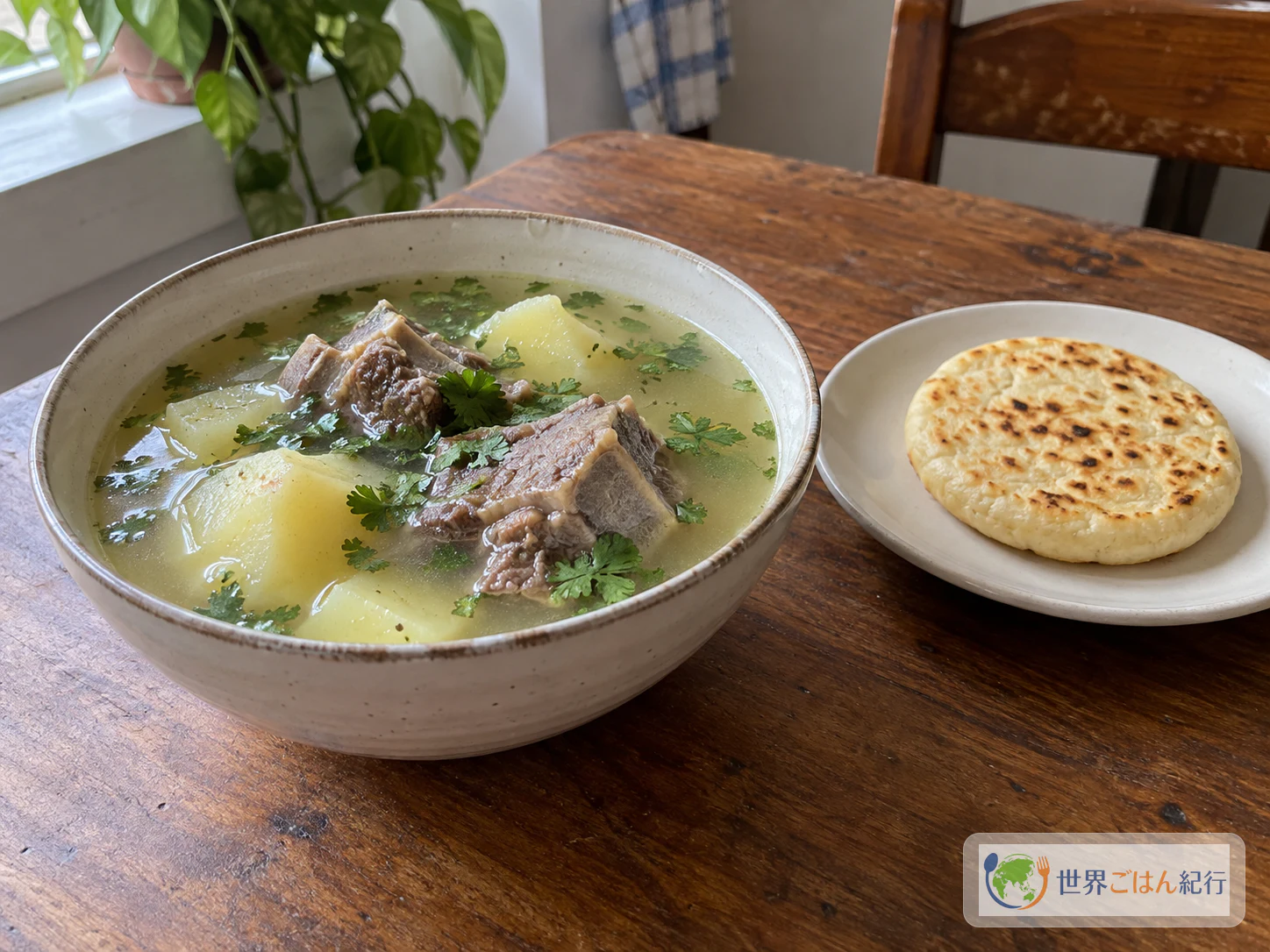
The author enjoys caldo de costilla with arepa, ají, avocado and white rice. These are her serving preferences, not requirements. A plain arepa on the side is the simplest way to turn the bowl into a full breakfast.
Other home cooks change the pot in several ways:
- Carrot. The author notes that some people add carrot. It is not part of this recipe, and no amount is given here. If you add carrot, you are cooking a variation.
- Onion and cilantro on top. Carne y Leche Colombiana, a Colombian beef and dairy producers' site, garnishes its version with chopped onion and cilantro, instead of finishing with cilantro alone.
- Different seasonings. Recipes differ in their onion, garlic, cumin and herbs, and some include broth powder. Each of these is a different formula, so don't mix their amounts into this one.
- Pressure cooker. Some Colombian recipes use one, but the timing depends on the cooker and the cut. This article covers only the ordinary pot.
For more of the country's dishes, explore Colombian recipes.
Frequently Asked Questions
Is caldo de costilla the same as sancocho?
No. Caldo de costilla is a beef-rib broth built around ribs and potatoes. Sancocho is a fuller soup with several ingredients. Chicken sancocho (sancocho de gallina), for example, is built on chicken rather than beef ribs.
Which cut of beef should I buy?
Buy bone-in beef short ribs, 3 pounds weighed with the bone. Bone-in shank is a possible alternative, but its bone and fat balance gives a different broth.
Can I make it in a pressure cooker?
This recipe is written for an ordinary deep pot. Pressure-cooker timing depends on the model and the cut, so it is not covered here.
Why isn't my broth clear?
The onion, scallion and garlic mixture is blended and stirred into the pot, so the broth turns pale and slightly cloudy. That is expected for this version.
Can I add carrot?
Some cooks do, according to the recipe author. It is a household variation and not part of this recipe's ingredient list.
What should I serve with it?
Plain arepas on the side are the simplest choice. The author also enjoys it with ají, avocado and white rice. All of these are optional.
Sources
- Erica Dinho, "Caldo de Costilla (Colombian Beef Ribs Broth)," My Colombian Recipes. The source of the recipe used in this article for 4 servings, including the separate blender water and the divided cilantro, and of its breakfast context. https://www.mycolombianrecipes.com/caldo-de-costilla-colombian-beef-ribs-broth/
- Erica Dinho, "Caldo de Costilla," My Colombian Recipes (Spanish edition). The author's Colombian background, breakfast eating, serving suggestions (arepa, ají, avocado, white rice), the importance of potato and cilantro, and carrot as an addition some cooks make. This page is by the same author, so it is not independent confirmation. https://www.mycolombianrecipes.com/es/caldo-de-costilla/
- Colombia.com, "Caldo de costilla (Región Andina)." A different published version using beef ribs, potatoes, long onion, garlic, cilantro and salt. Its amounts are not used in this recipe. https://www.colombia.com/gastronomia/recetas-colombianas/caldo-de-costilla-r108
- Carne y Leche Colombiana / Fedegán, "Caldo de costilla." A variation with beef ribs, potato, onion, garlic and cilantro. It tenderizes the meat before adding the potatoes and garnishes with chopped onion and cilantro. https://carneylechecolombiana.com/recetas/caldo-de-costilla/
- Instituto Distrital de Turismo, Alcaldía Mayor de Bogotá, "Bogotá celebra el segundo Congreso Gastronómico 'El Sabor de Nuestra Casa'." Caldo de costilla and the Bogotá breakfast as cooking demonstration themes, and the city's description of the soup as a cultural expression. https://www.idt.gov.co/noticias/bogota-celebra-el-segundo-congreso-gastronomico-el-sabor-de-nuestra-casa
- La Nueva Bagatela, "¿Cómo preparar caldo de costilla (colombiano)?" The association with the Cundiboyacense zone and wider availability, water, beef ribs and potato as the core, and examples of where the soup is served. https://lanuevabagatela.com/como-preparar-caldo-de-costilla-colombiano/
- Ministry of Health, Labour and Welfare (Japan), "家庭での食中毒予防" (Preventing food poisoning at home). General household guidance on cooking food through to the center, avoiding cross-contamination, cooling leftovers quickly in shallow portions, and reheating. https://www.mhlw.go.jp/stf/seisakunitsuite/bunya/kenkou_iryou/shokuhin/syokuchu/01_00008.html