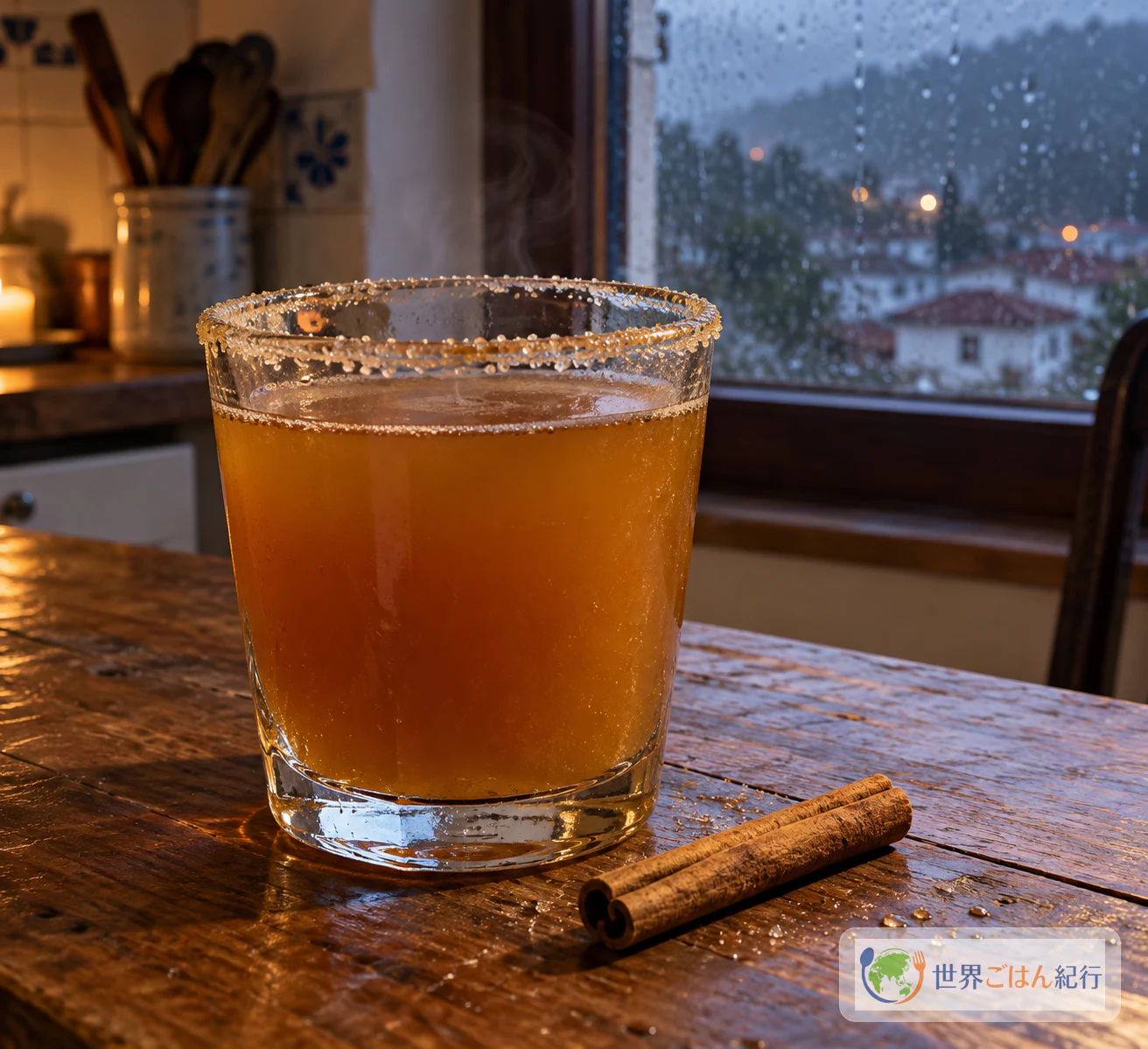
Steam and Cinnamon on a Rainy Evening
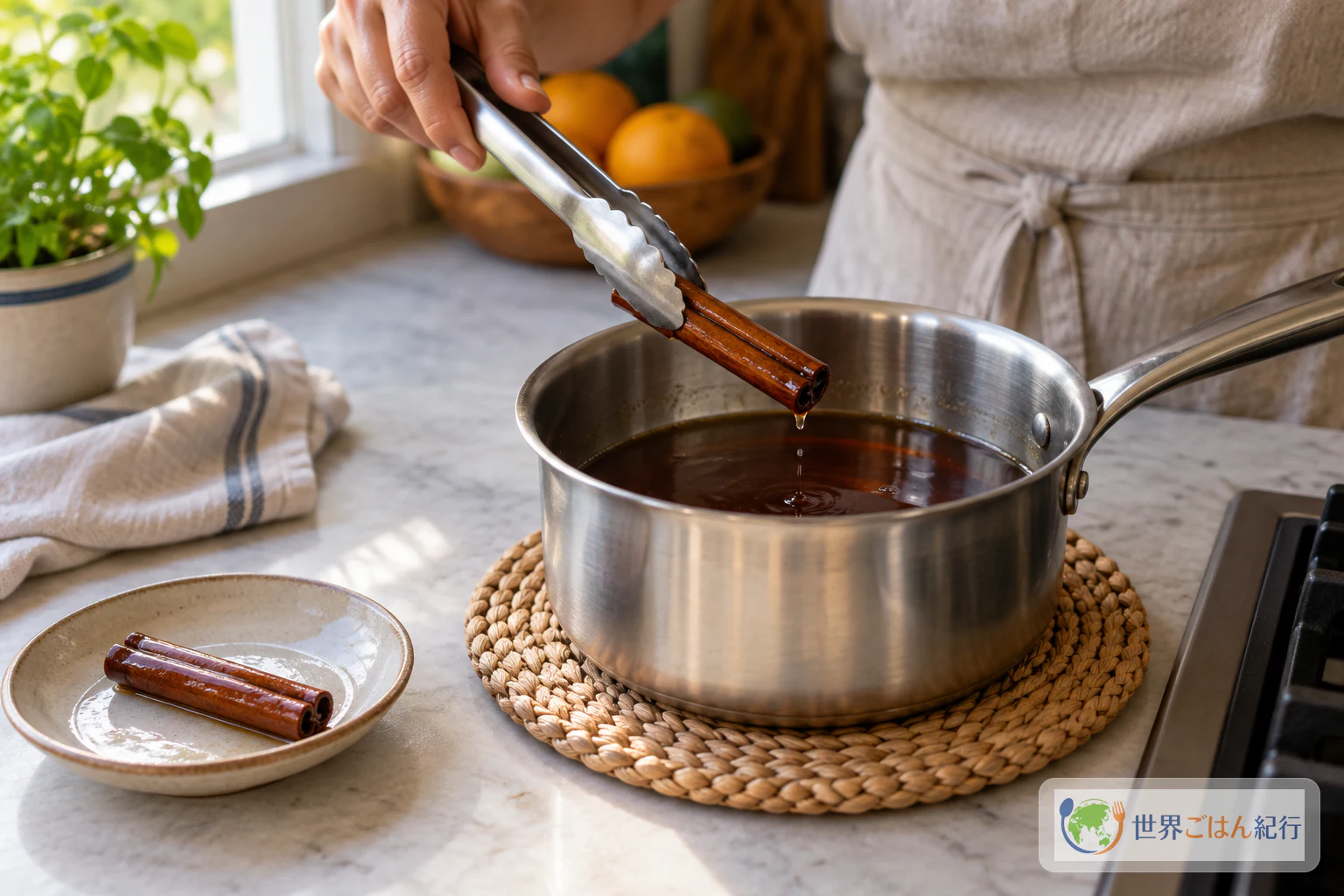
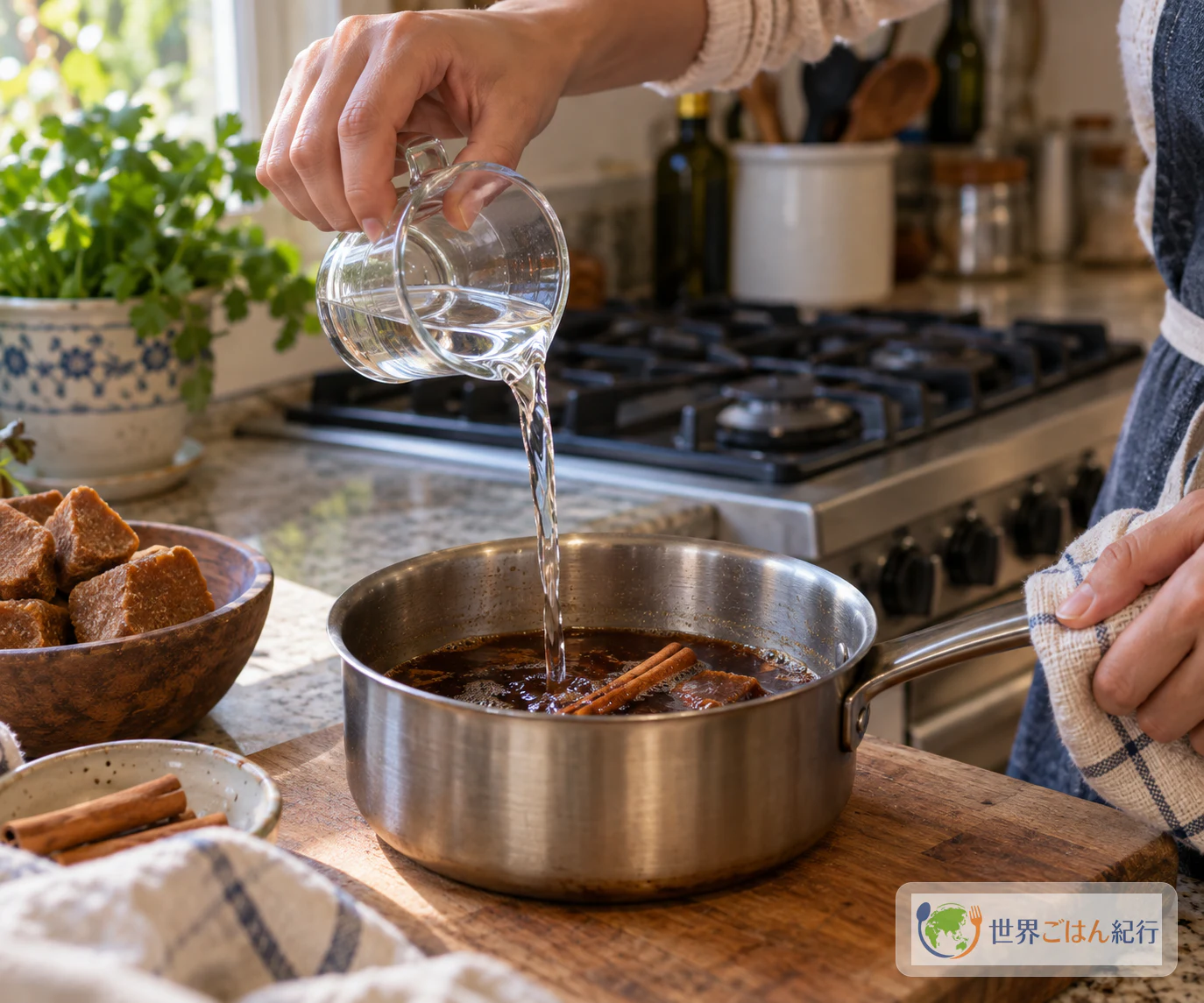
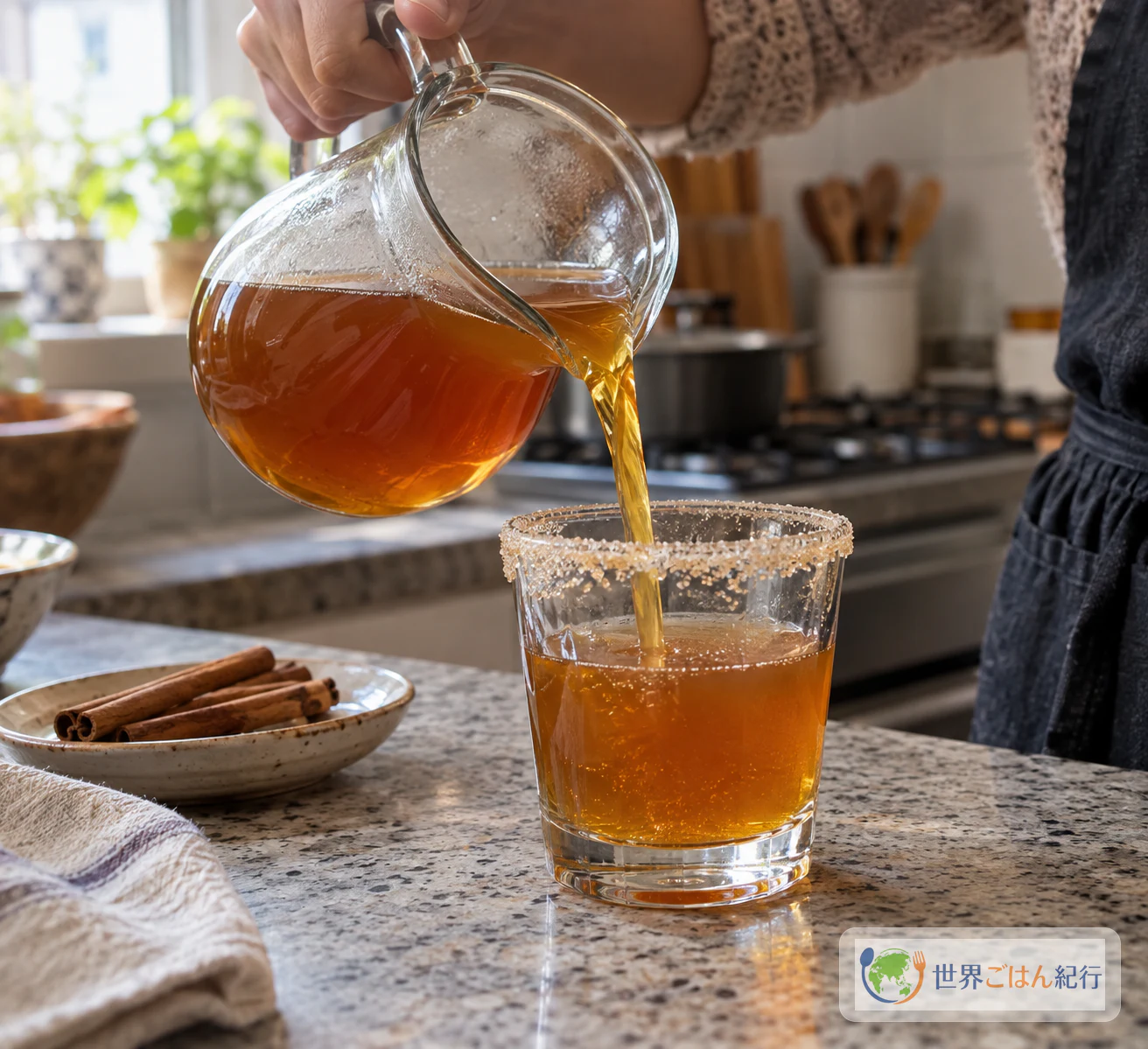
Melt the panela into water with whole cinnamon sticks, take the pan off the heat, then stir in the aguardiente. Nothing more goes back on the burner.
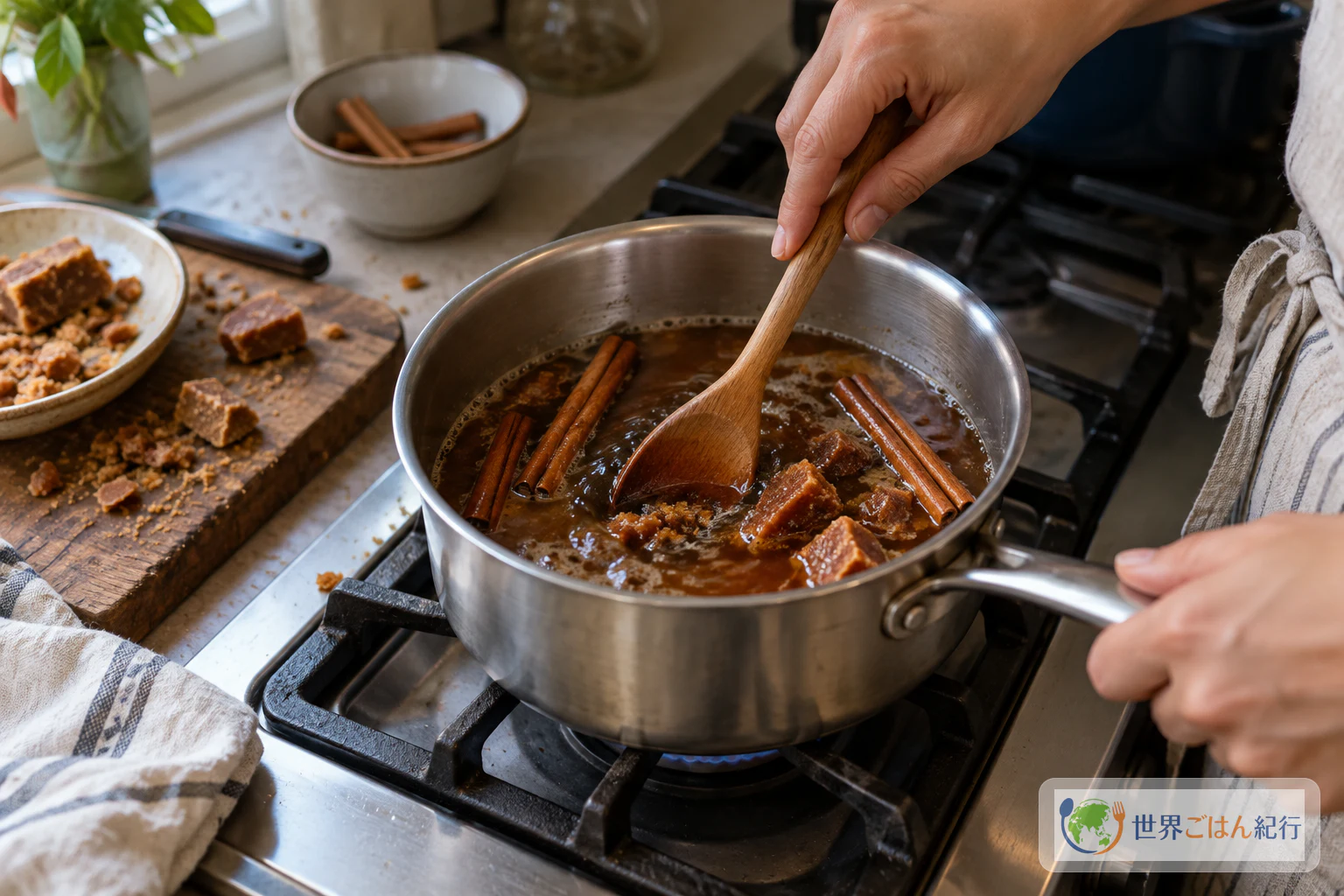
A small pan of water darkens as shaved panela melts into it, and cinnamon sticks loosen their scent into the steam. Canelazo is a hot, sweet drink that pairs that panela-and-cinnamon base with aguardiente, an anise-flavored spirit.
My Colombian Cocina, a Colombian home-cooking site, describes canelazo as a drink that brings to mind Bogotá's cold, rainy days. That is one cook's view rather than a portrait of every Colombian home. The newspaper EL TIEMPO, whose recipe this article follows, presents it as a drink enjoyed in December during the Novena de Aguinaldos, the season of evening prayer gatherings before Christmas.
The same name is used for related drinks beyond Colombia, and even within Colombia the proportions vary. This article stays with one Colombian version published by EL TIEMPO and keeps other versions clearly separate.
Canelazo contains aguardiente, and warming does not make it alcohol-free. Do not serve it to anyone under the legal drinking age. In Japan, drinking under the age of 20 is prohibited. It is also not for anyone who is pregnant or breastfeeding or who will be driving.
Canelazo: Panela, Cinnamon and Spirit, Served Hot
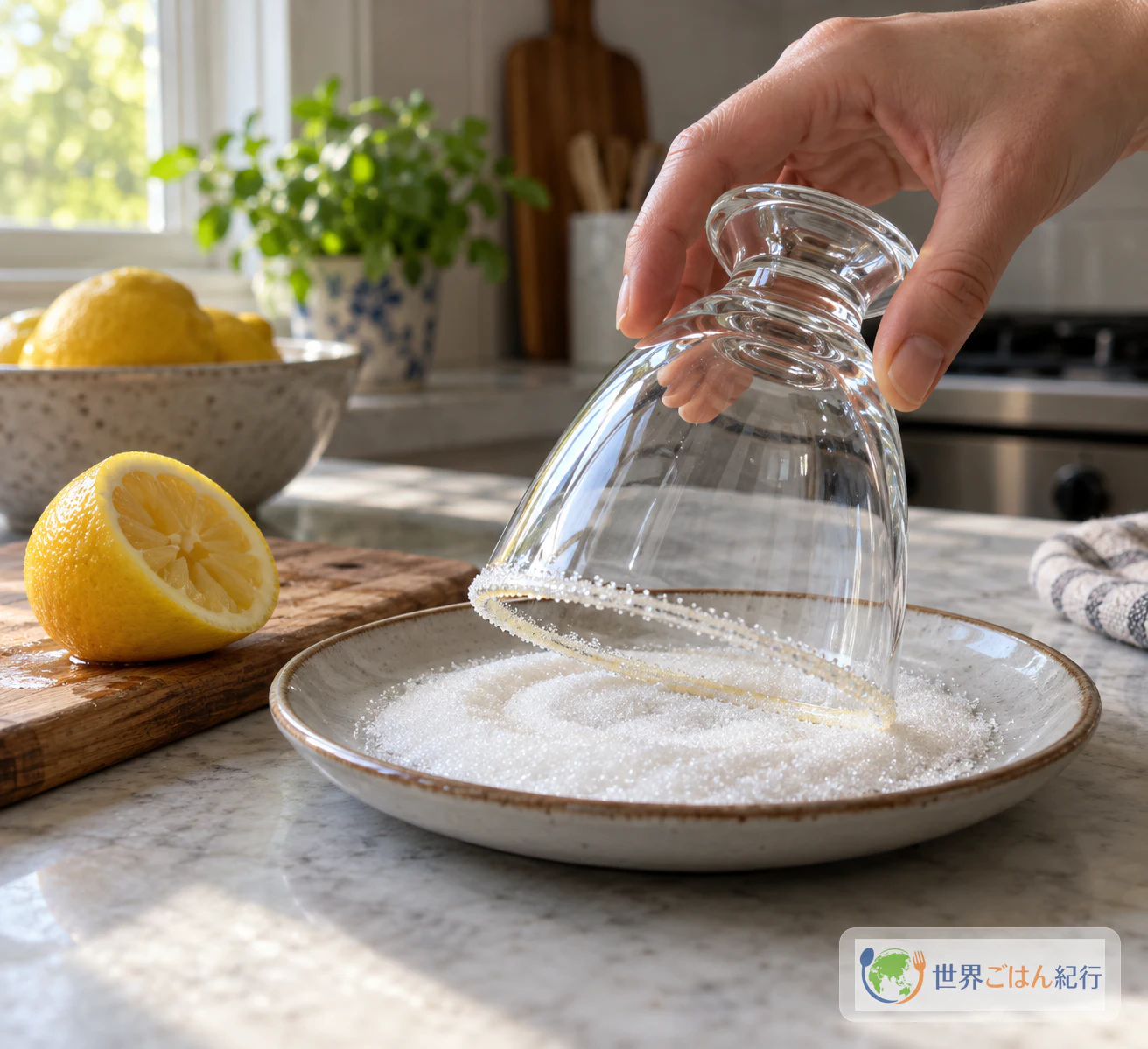
The recipe used here comes from EL TIEMPO and is built from water, shaved panela, cinnamon sticks and aguardiente, with a lemon and sugar for the rim of the glass. Panela, unrefined cane sugar, brings sweetness with a molasses-like depth. The cinnamon gives warmth, and the aguardiente adds a note of anise.
Where canelazo comes from is not settled. EL TIEMPO itself treats the origin as unknown. It mentions possibilities, but none is presented as established history, so this article does not assign the drink a firm starting point.
What is clear is that recipes under this name differ. A book published by Colombia's Ministry of Culture records a Boyacá recipe with far more spirit than the version here, and a Colombian television cook makes it with fruit and extra spices. Those versions appear further down, after the recipe.
Ingredients: One Batch as Published, Number of Cups Not Stated
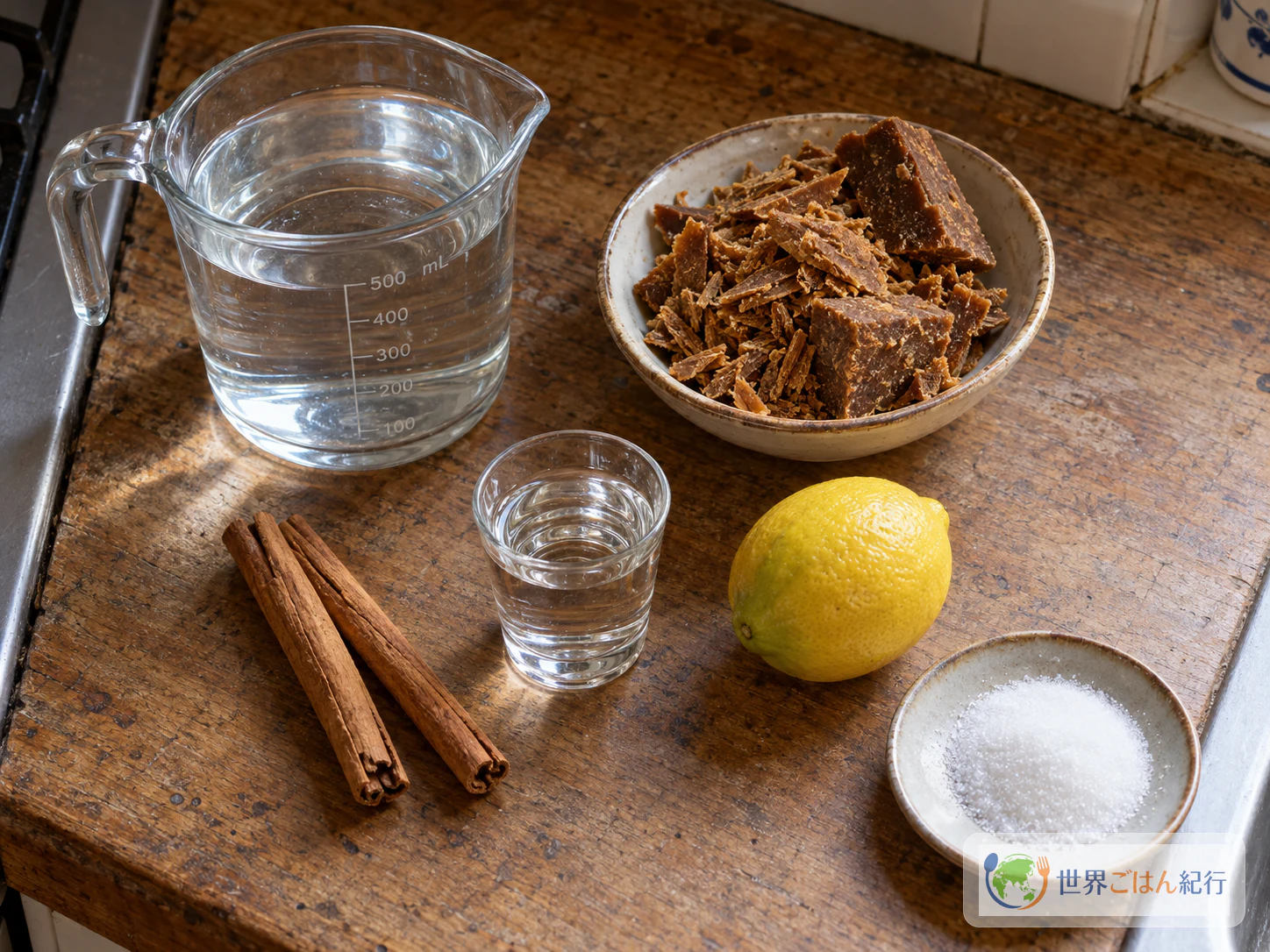
The amounts below make one batch.
1 taza is a 240 mL cup and 1 tablespoon is 15 mL. Measure the panela as level spoonfuls.
Use an ordinary yellow lemon; its juice is not stirred into the drink.
Equipment
- A small saucepan
- A 240 mL measuring cup and a 15 mL tablespoon
- A wooden spoon
- Clean tongs and a small dish for the cinnamon sticks
- A heat-resistant surface to set the pan on away from the burner
- A small plate for the sugar
- Heat-resistant glasses or mugs that the maker labels as suitable for hot drinks
Choosing Panela, the Spirit and Your Glass
Panela. Panela is a specialty ingredient in many places. Kokuto (Japanese unrefined brown sugar) is one possible stand-in, but its aroma, molasses content and texture are not the same. Powdered kokuto is easy to measure, but the drink you make with it is not the same as one made with panela.
Aguardiente. It may be hard to find in an ordinary supermarket. My Colombian Cocina allows Sambuca or another anise liqueur in its own recipe. That does not mean any of them tastes the same as aguardiente, or has the same strength at the same volume. Other spirits, such as rum, are not equivalents either. If you substitute, you are changing the recipe.
Glass. A thick glass alone is not a guarantee that it can take hot liquid. Use a glass or mug that the maker labels for hot drinks, and don't pour a hot liquid into thin glass.
Method: Warm, Take Off the Heat, Then Add the Spirit
This recipe has not been kitchen-tested. Its yield, finished temperature and alcohol strength have not been measured. The steps below use what you can see as your cue rather than a clock.
When Something Seems Off
| Problem | What to check | What to do |
|---|---|---|
| Panela is still undissolved | The panela was a coarse block, or the spirit was added too soon | Before adding the aguardiente, keep stirring until no grains remain |
| The aroma is weak | Ground cinnamon was used, or the sticks were left out | Use whole sticks. Don't make up for it with ground cinnamon or a long boil |
| Too sweet or too strong | Personal taste | EL TIEMPO says sweetness and alcohol can be adjusted to taste. Treat any change as your own variation of the recipe |
| Worried about the glass | Thin glass, or a glass not marked for hot liquids | Use a glass or mug that the maker labels for hot drinks |
Serving, Leftovers and Who Should Not Drink It
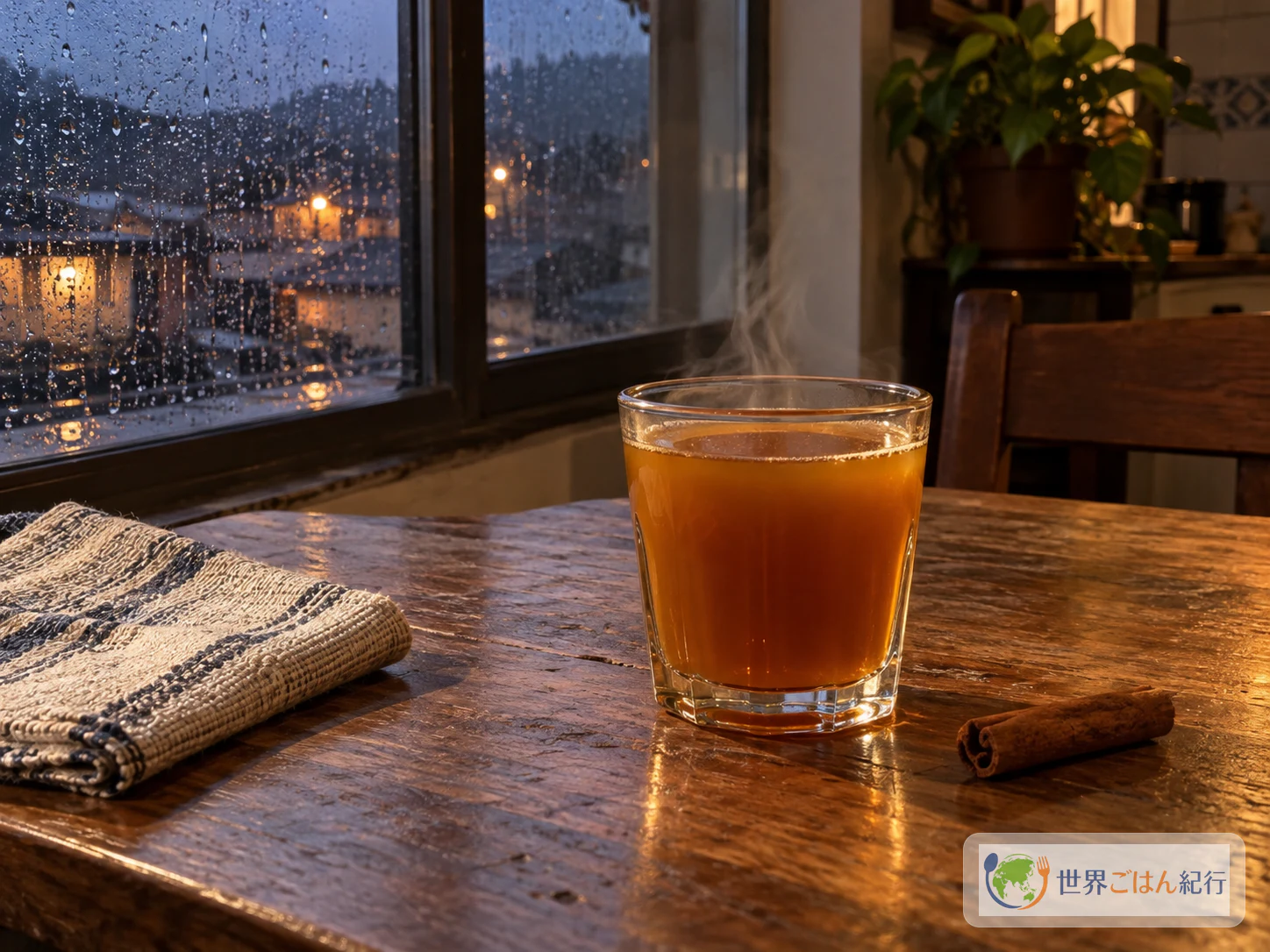
Serve canelazo hot, in a thick heat-resistant glass or mug. The Ministry of Culture book also mentions small earthenware cups for its Boyacá recipe.
The sources give no confirmed guidance on storing or reheating canelazo, so this recipe does not recommend making it ahead. If you need to prepare in advance, one option is to keep the panela liquid and the aguardiente separate until serving. The safety and quality of reheating have not been checked.
Canelazo is an alcoholic drink. Don't offer it to anyone under the legal drinking age, to anyone who is pregnant or breastfeeding, or to anyone who will be driving. In Japan, drinking under the age of 20 is prohibited, separately from the age of adulthood of 18. In Colombia, the sale of alcohol to minors is prohibited by law. A version made without the spirit is a different drink and is not presented here as canelazo.
Same Name, Different Recipes
A recorded Boyacá recipe. Gran libro de la cocina colombiana, published by Colombia's Ministry of Culture, records a canelazo under Boyacá's name. It uses 3 taza aguardiente, 3 taza aguapanela (panela water) and 6 cinnamon sticks. The ingredients are mixed and warmed in a water bath without boiling, then served hot in thick glass or earthenware. With equal parts spirit and aguapanela, it is far stronger than the version above. It is a record that traditional proportions vary, not a recommended home amount.
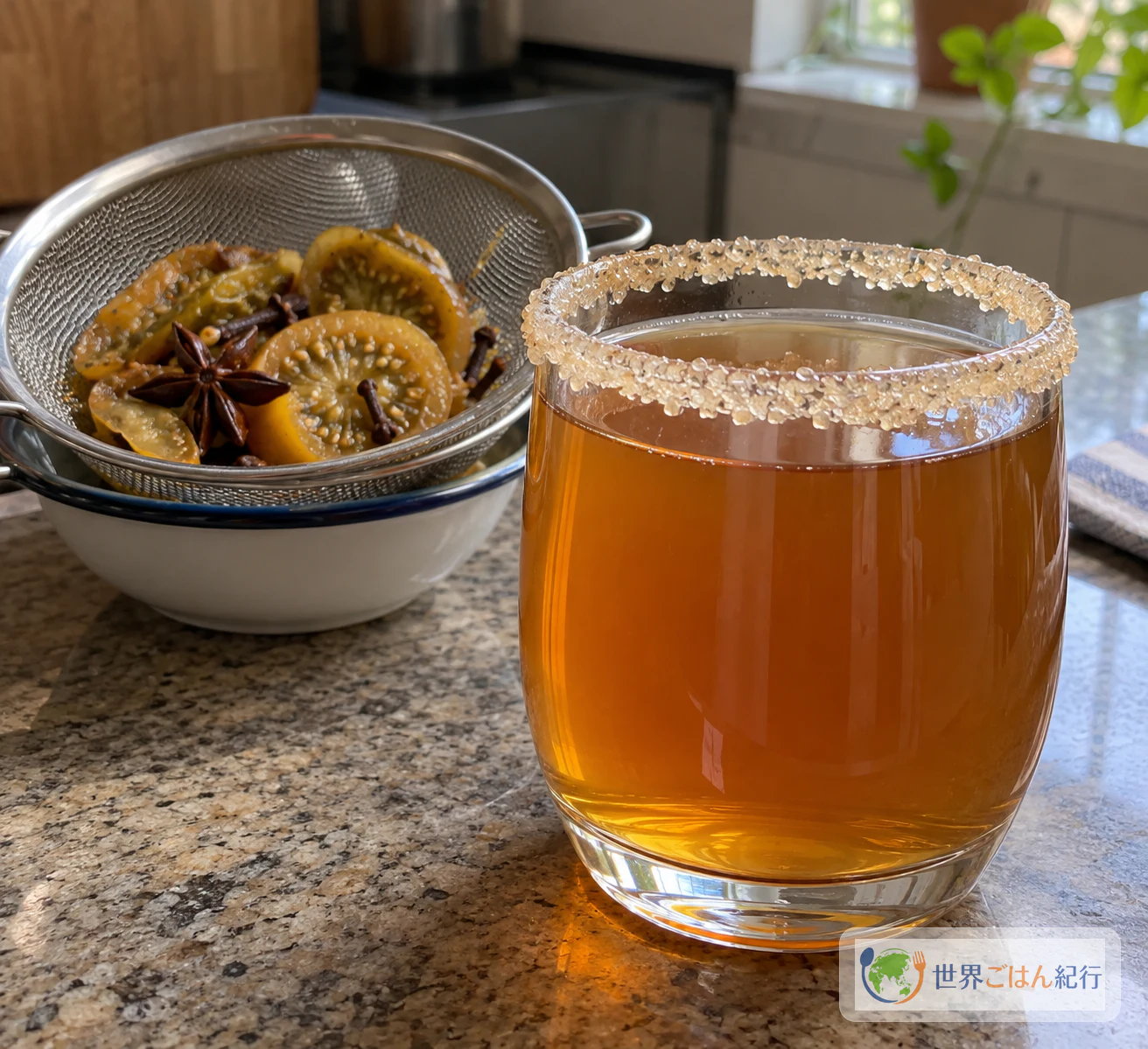
A fruit-and-spice cook's version. On elGourmet, Colombian cook Federico Trujillo (Cómete Colombia) makes a canelazo labeled for 4 servings with 1 L hot water, 1 taza grated panela, 250 cc aguardiente, 3 cloves, 4 star anise, 1 lulo or naranjilla and 2 cinnamon sticks. The spices and fruit are simmered over low heat and strained, and the spirit is added to the hot infusion. The solids are discarded, not returned to the glass. This is a Colombian cook's own recipe, and having fruit in it does not make it an Ecuadorian version. Keep its ingredients out of the basic recipe.
Optional juice in the source. At the end of its recipe, EL TIEMPO allows optional extras such as a little orange or yellow lemon juice, or star anise. The basic version here does not use them. The lemon in the ingredient list is for the rim only.
Ecuador. EL TIEMPO notes that in Ecuador, chapil is used in place of aguardiente. This article does not go further into how chapil is made.
Less spirit. EL TIEMPO allows the alcohol to be adjusted to taste. Using less aguardiente is a change to the recipe and makes a milder drink, but it is still an alcoholic drink.
More dishes and drinks from the same country are collected on the Colombia page.
Frequently Asked Questions
Where is canelazo from?
This article follows a Colombian recipe from EL TIEMPO. A drink by the same name also exists in Ecuador, and EL TIEMPO itself describes the drink's origin as unknown. The recipe here is one Colombian version. It is not presented as the Boyacá recipe; that label belongs to the separate Ministry of Culture recipe described above.
What can I use if I can't find panela?
Kokuto (Japanese unrefined brown sugar) is one possible stand-in, but its aroma, molasses content and texture differ from panela. The result is your own adaptation, not the panela original.
What spirit should I use?
The source uses aguardiente, an anise-flavored spirit. My Colombian Cocina allows Sambuca or other anise liqueurs in its own recipe, but none of them is guaranteed to match aguardiente in flavor or strength at the same volume.
Is it the same as canelazo in Ecuador?
They share a name, but ingredients and spirits differ by region. EL TIEMPO notes that chapil is used in Ecuador.
How long should I heat it?
The source gives no time or temperature. Warm the water, panela and cinnamon until the panela has dissolved, then take the pan off the heat before adding the spirit.
Does heating cook off the alcohol?
Don't count on it. The aguardiente is added off the heat and not warmed further, so treat canelazo as an alcoholic drink.
How many glasses does this make?
The source does not say, and the yield has not been measured.
Sources
- EL TIEMPO, "Canelazo: así lo puede preparar en tan solo 15 minutos." The main recipe (2 taza water, 5 tablespoons shaved panela, 1 lemon, 2–3 cinnamon sticks, 1/2 taza aguardiente), dissolving the panela with water and cinnamon and stirring in the aguardiente while warm, adjusting sweetness and alcohol to taste, the optional extras at the end of the recipe, drinking it in December during the Novena de Aguinaldos, the origin being unknown, and the mention of chapil in Ecuador. https://www.eltiempo.com/vida/recetas/canelazo-una-bebida-insignia-en-los-pueblos-colombianos-747932
- Ministerio de Cultura de Colombia, Gran libro de la cocina colombiana, "Canelazo Boyacá" (PDF hosted by the Gobernación del Quindío; printed page 370). The Boyacá recipe of 3 taza aguardiente, 3 taza aguapanela and 6 cinnamon sticks, warmed in a water bath without boiling and served hot in thick glass or earthenware. https://www.quindio.gov.co/home/docs/items/item_189/2019/Inicio_cultura/LISTADO_DOCUMENTOS_CENTRO_DE_DOCUMENTACION_DEL_PATRIMONIO_CULTURAL/Gran_libro_de_la_cocina_colombiana_I.pdf
- My Colombian Cocina, "Canelazo." A home cook's description of canelazo as a drink for Bogotá's cold, rainy days, the combination of panela water, cinnamon and anise spirit, and the allowance of Sambuca or other anise liqueurs. https://mycolombiancocina.com/canelazo/
- elGourmet, "Canelazo" (Federico Trujillo, Cómete Colombia). A cook's version with lulo or naranjilla, cloves and star anise, simmered, strained and finished with aguardiente. https://elgourmet.com/recetas/canelazo/
- Departamento Administrativo de la Función Pública (Colombia), "Ley 124 de 1994." Supplementary context on Colombia's prohibition of selling alcohol to minors. https://www.funcionpublica.gov.co/eva/gestornormativo/norma.php?i=291
- National Tax Agency (Japan), "20歳未満の者の飲酒防止の推進" (Preventing drinking by people under 20). Japan's drinking age of 20, separate from the age of adulthood of 18. https://www.nta.go.jp/publication/pamph/koho/campaign/r8/Apr/05.htm