Champús: A Thick, Cold Drink of Corn, Panela and Tart Lulo
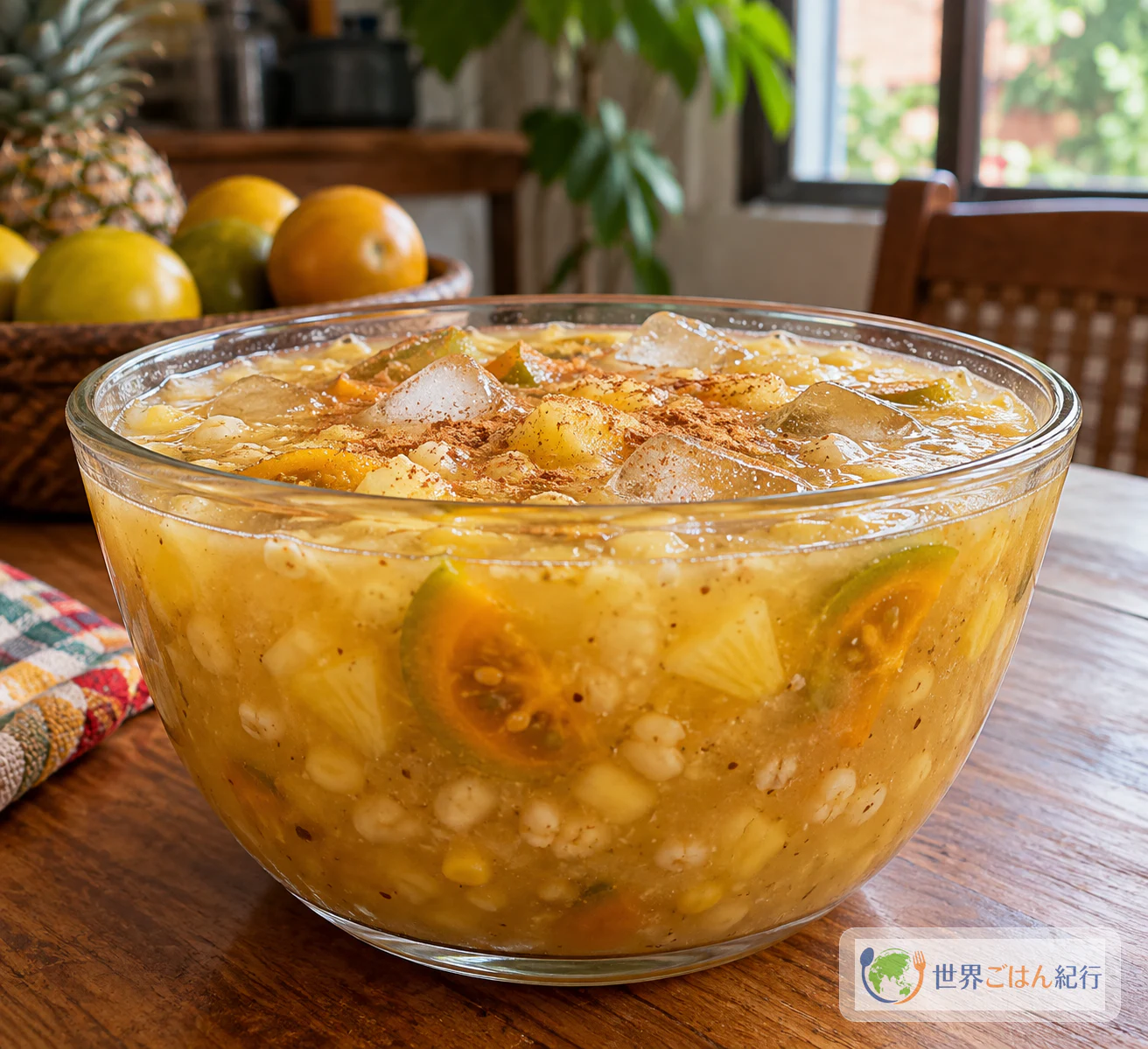
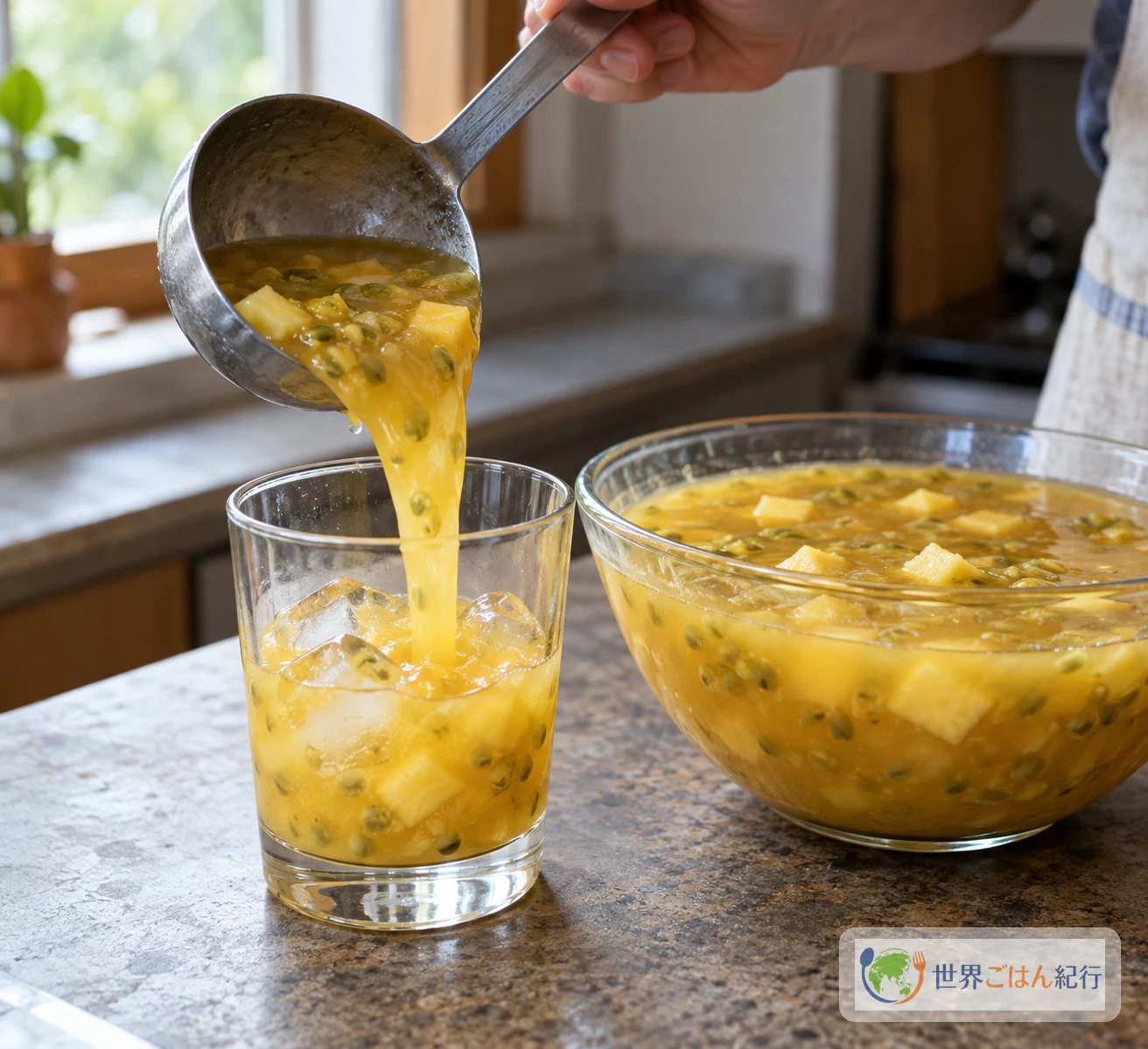
A gentle body from white cornmeal, the molasses-like sweetness of panela, the sharp, fruity tartness of lulo and soft bits of pineapple. Serve it cold, with ice.
In Cali, Evergista Gómez Balanta is known for keeping the tradition of champús alive. In an interview with the Colombian outlet NOTI5, quoted by Tropicana Colombia, she recalls that when she was a child, her grandmother and mother made champús at home during Semana Mayor, Holy Week, and shared it with the family. This is one family's memory, not a description of how every household in the region marks the holiday, but it shows the drink in its natural setting: made in a large pot and poured out for many people.
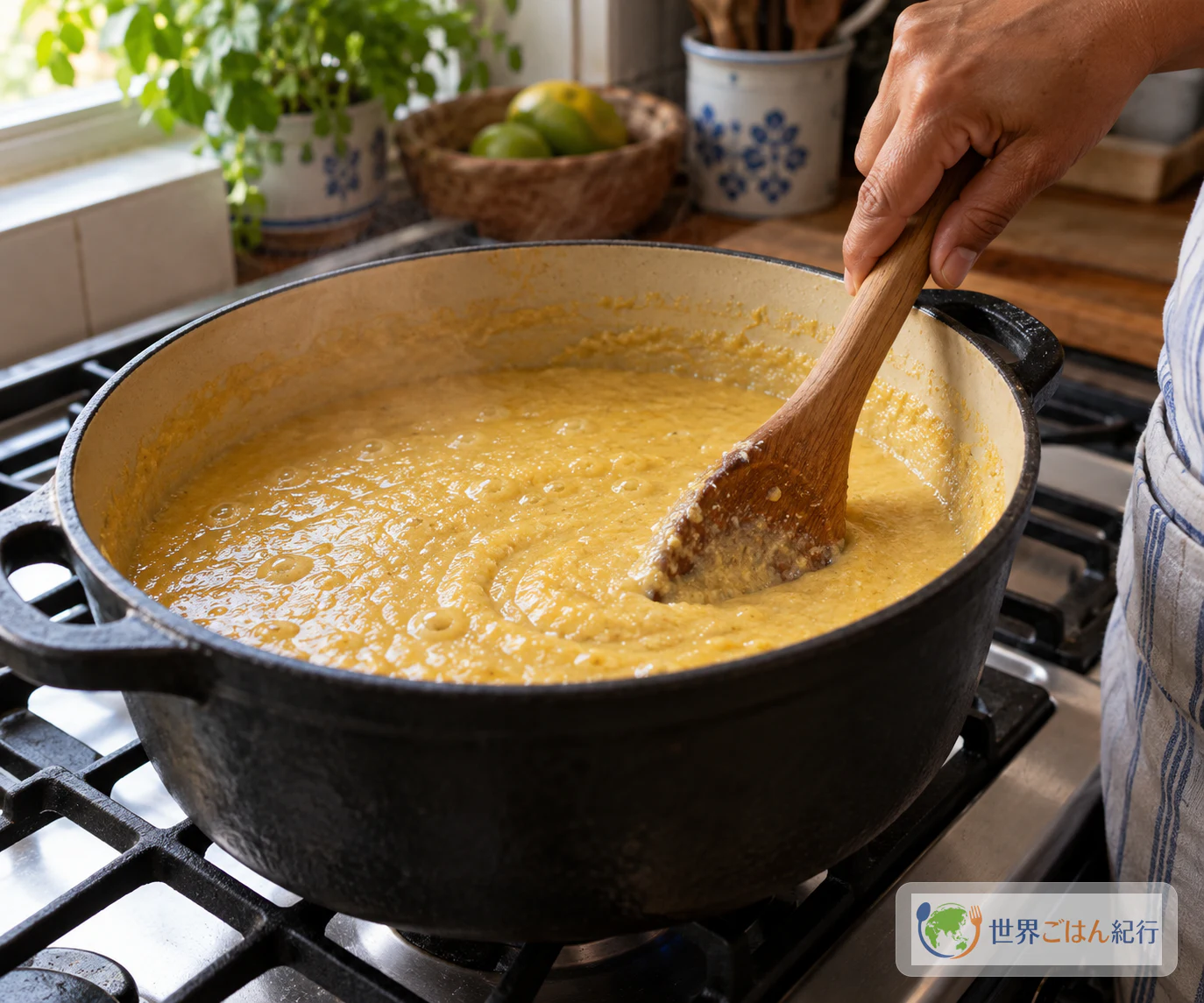
Tropicana Colombia describes champús as a drink people in Cali enjoy cold on hot days. It is thick enough that you notice the corn, yet still drinkable, with lulo's tartness cutting through the sweetness of panela. This article follows one published recipe for champús valluno that uses white cornmeal, and keeps its proportions as written.
The amounts and steps below follow the published source recipe. They have not been tested in our kitchen, so the actual finished volume, glass size and exact cooking time have not been confirmed.
What Kind of Drink Is Champús?
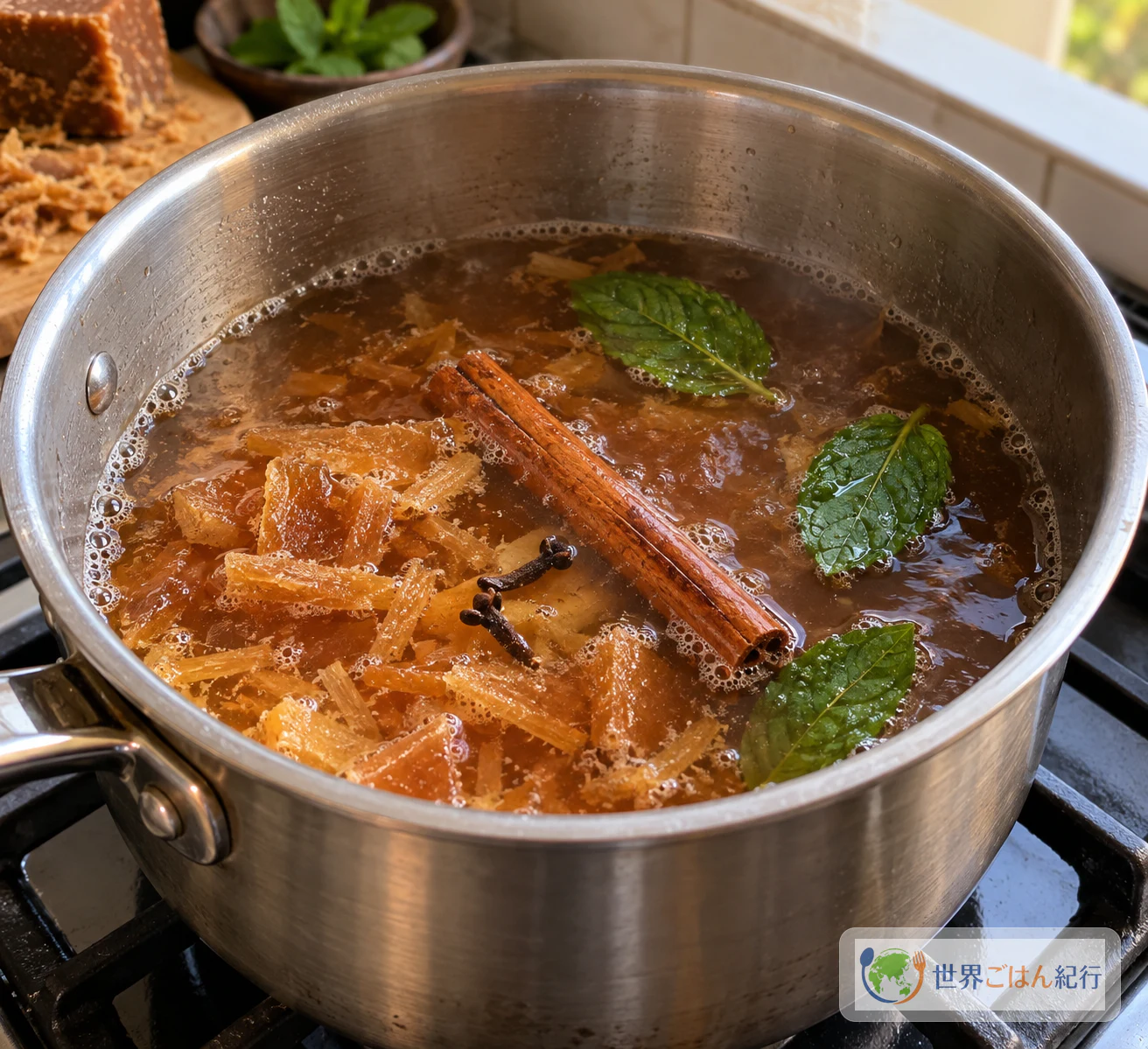
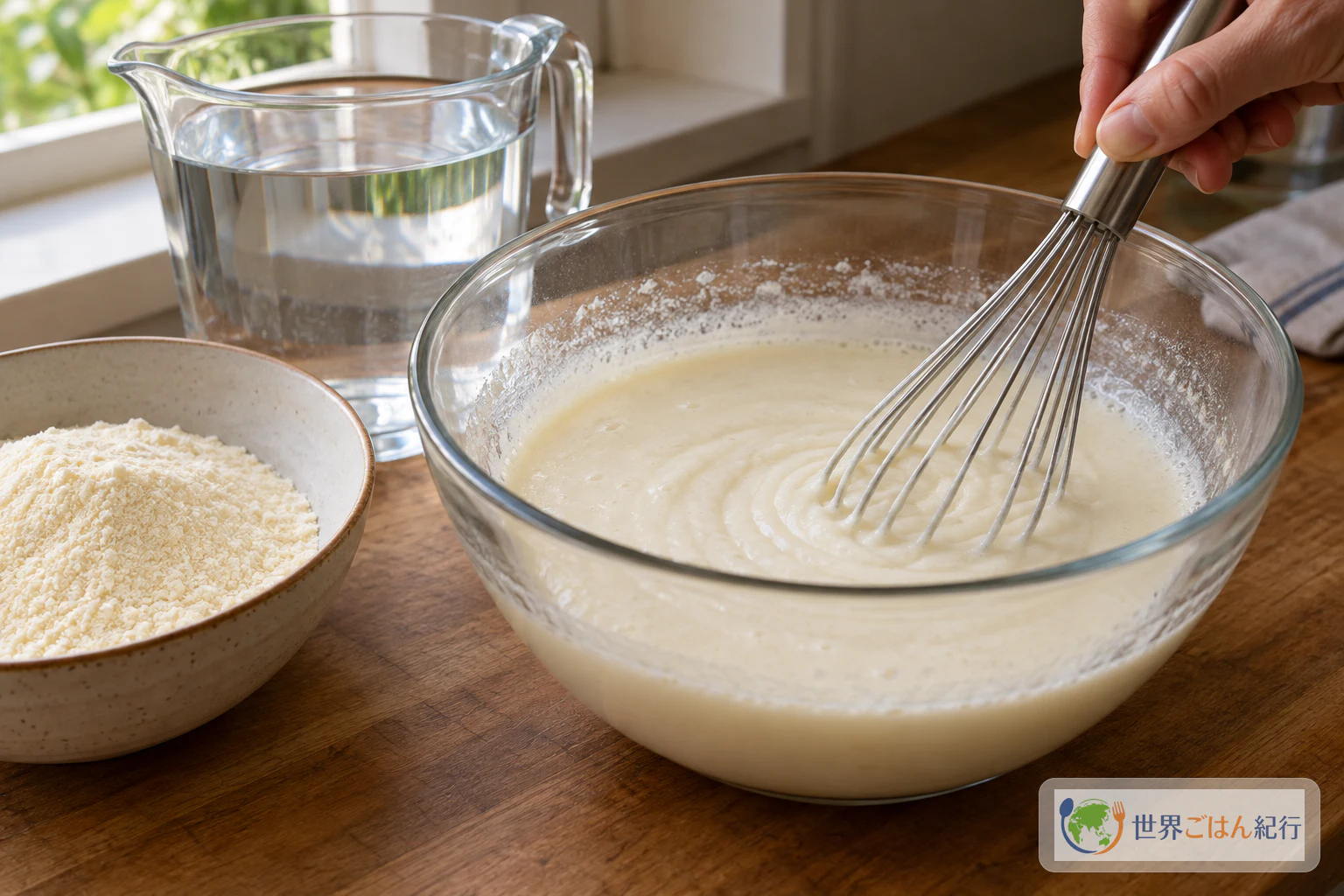
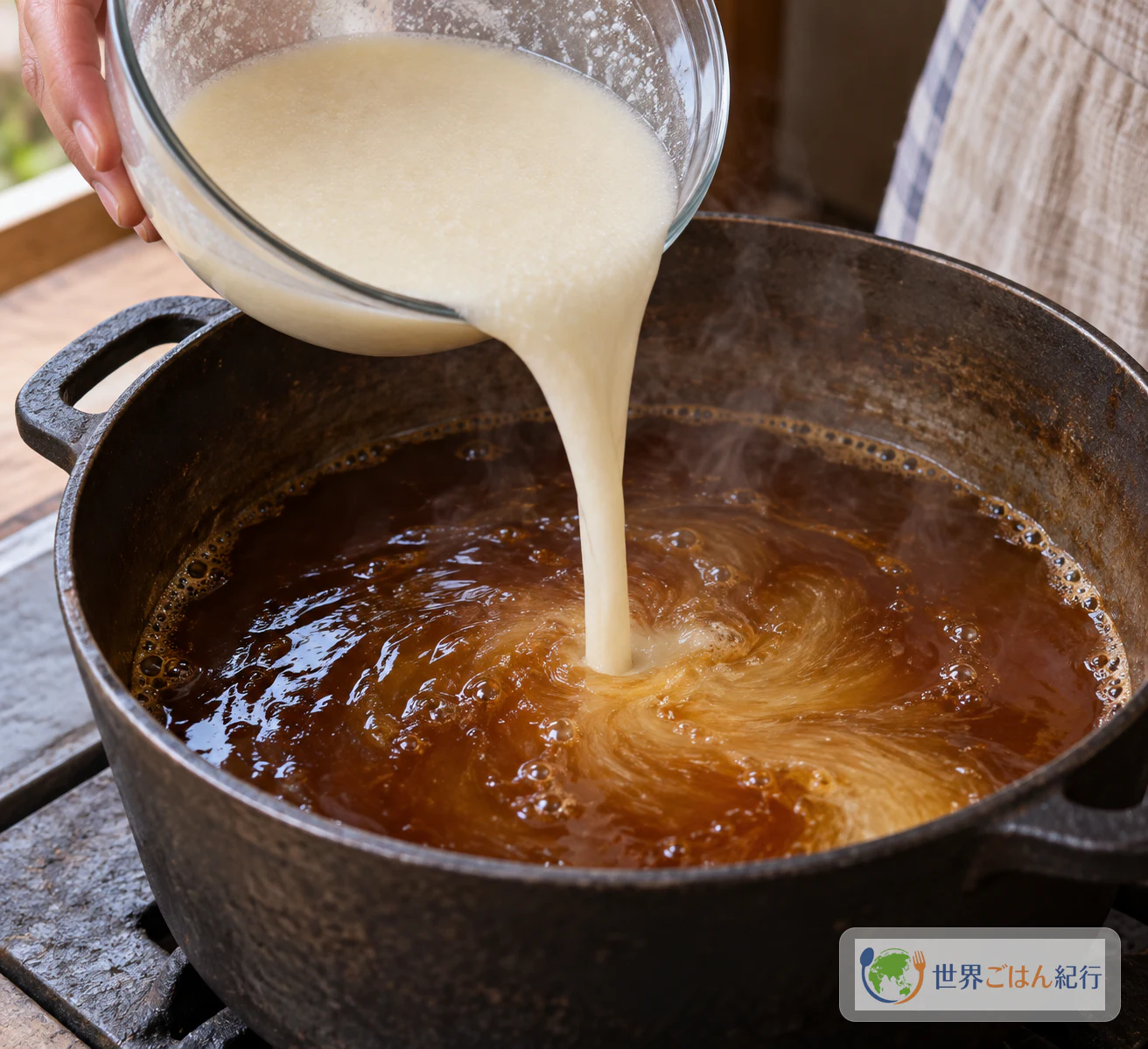
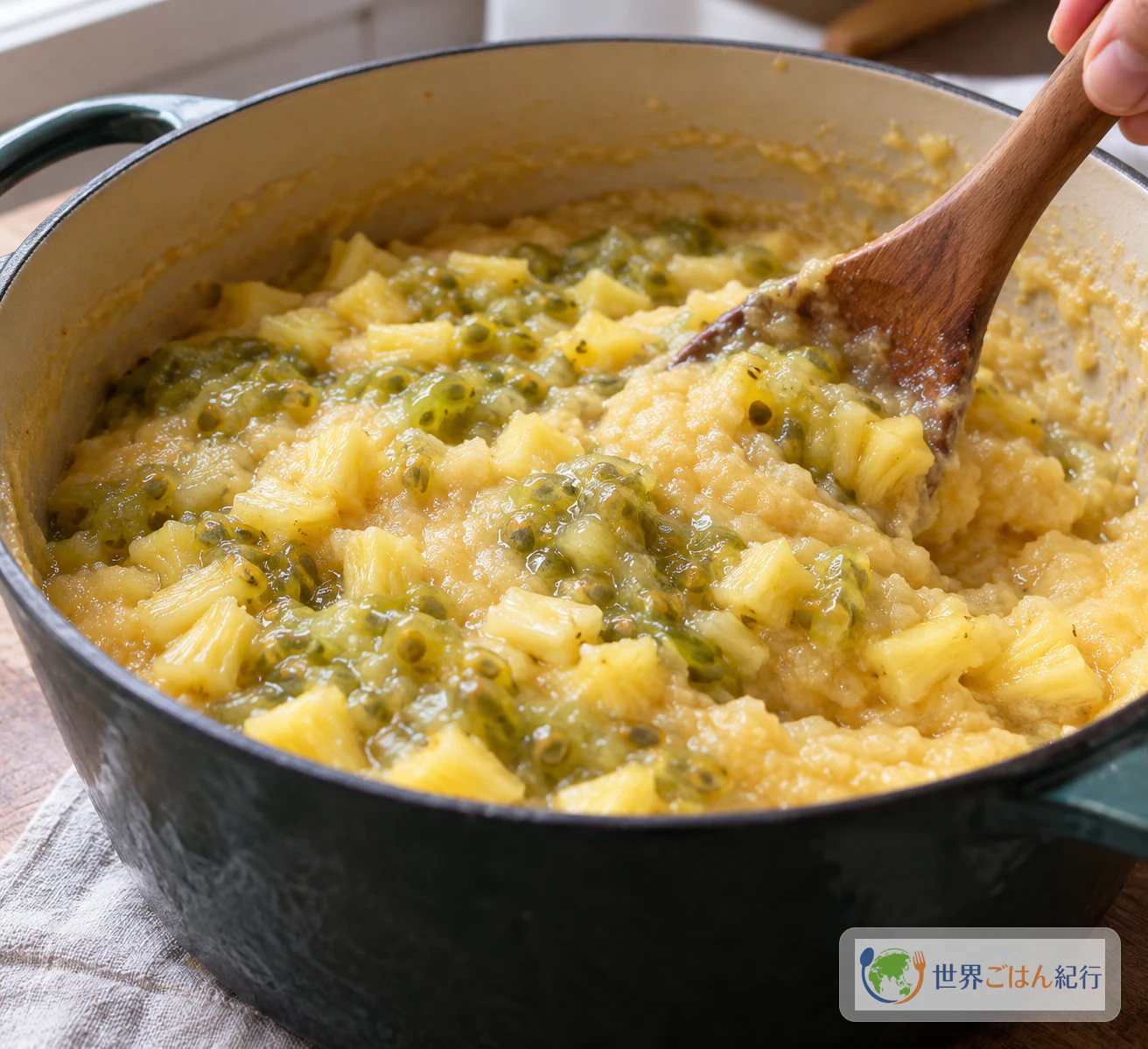
The recipe followed here, champús valluno from My Colombian Cocina, introduces the drink as popular in the Cauca region. Its structure is simple: water, panela and spices simmer into a lightly thickened sweet base called melao; white cornmeal dissolved in a separate measure of water is cooked in that base; and only after the pot comes off the heat and cools a little do lulo and finely chopped pineapple go in. Ice is added at serving.
Each component has a clear job:
| Element | What it brings |
|---|---|
| White cornmeal | Body and a grain base |
| Panela | Sweetness with a molasses-like depth |
| Lulo (naranjilla) | Tartness and fruity aroma, the flavor axis of the drink |
| Pineapple | Fruitiness and soft pieces to bite |
| Cloves, cinnamon, leaves | Warm, sweet spice aroma in the melao |
Champús is not presented here as a fermented drink, and nothing in this method involves leaving it to stand or sour.
Cornmeal Versions and Whole-Kernel Versions
Recipes for champús do not all start from the same corn. The one followed here dissolves white cornmeal in water. A recipe from Boquisabroso instead soaks 2 cups of dried corn overnight and simmers it with cinnamon for about an hour until the kernels are tender, then combines it with a melao of panela, sour orange leaves, clove and water, plus lulo and pineapple, served with ice. Tropicana Colombia also reports a separate recipe published by the Gobernación del Valle del Cauca that uses whole corn (1 libra of maíz), 10 lulos, 150g panela, 3L water, aromatic herbs, pineapple and optional sour orange juice.
The flour version and the whole-kernel versions differ in preparation and texture, and neither is presented here as the only correct one. This article sticks to the cornmeal recipe and does not mix in ingredients or steps from the others.
Choosing Ingredients Outside Colombia
Lulo (naranjilla). The source lists lulo and naranjilla as names for the same ingredient. This version uses the pulp scooped from 5 fresh lulos. The source also accepts lulo pulp, but it does not say whether that pulp is fresh or frozen, or how much it should weigh. If you can only find frozen pulp, don't assume a whole pack equals 5 fruits; the amount of juice released after thawing changes how concentrated the drink becomes. Tartness and aroma also vary by origin and by frozen product.
Panela. The Spanish source specifies 150g panela. It also names muscovado sugar as an option, but this version uses panela, and muscovado should not be treated as identical in sweetness or flavor. If your panela is a solid block, grate or shave it.
White cornmeal. The source does not specify how the cornmeal is processed or how fine it is. Use a food-grade white cornmeal and check the package for its cooking directions. Cornstarch, nixtamalized flour such as masa harina and precooked corn flours are not guaranteed to behave the same way; if you use one, treat it as an untested substitute.
Leaves. The source calls for 3 sour orange leaves (hojas de naranjo agrio) and names mint as the alternative. This version uses 3 mint leaves. Other citrus leaves have not been checked and are not treated as equivalent.
Water and ice. Use drinkable water for cooking and drinkable ice for serving.
Ingredients (as stated in the source: 6–8 servings)
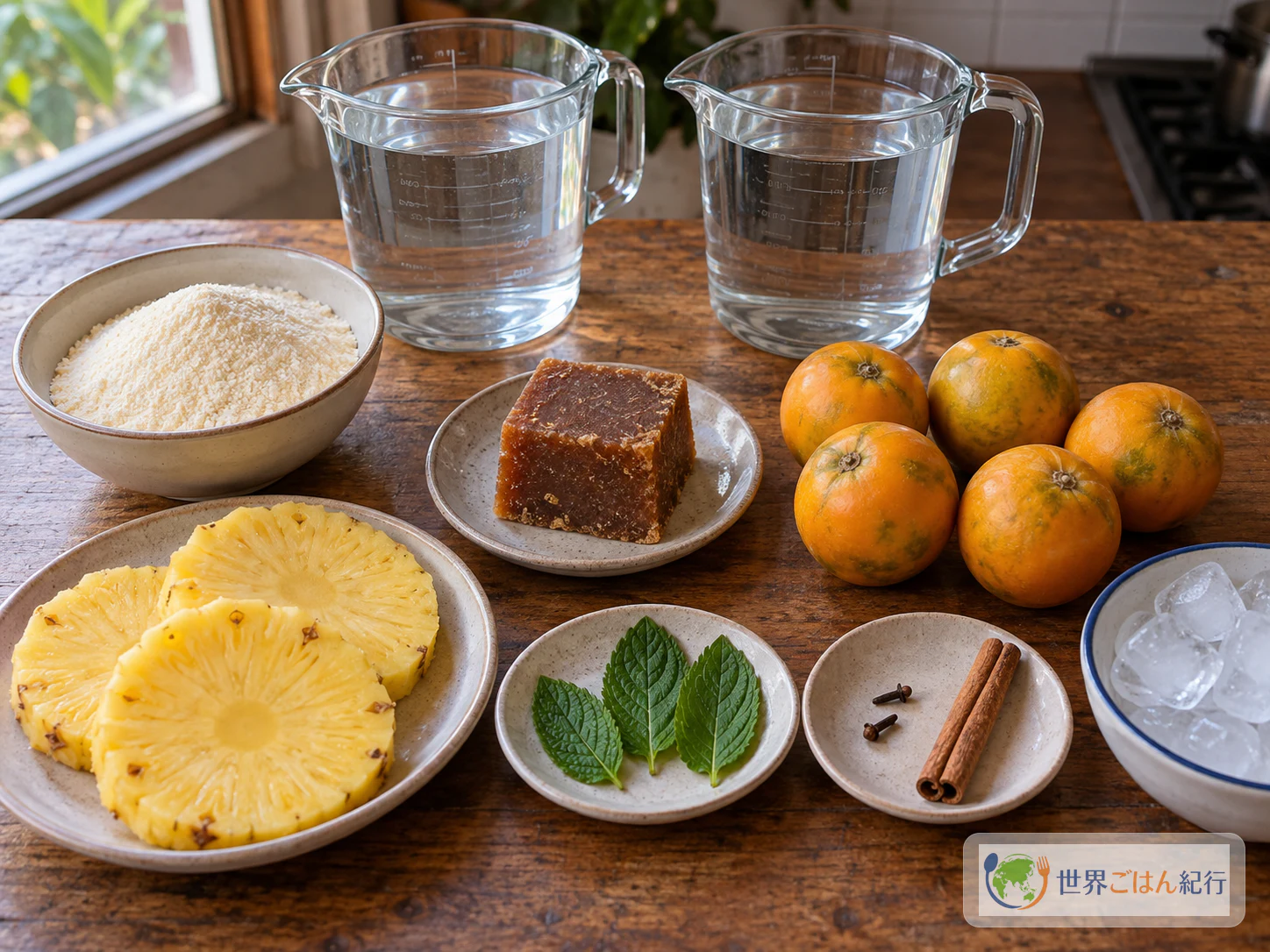
This recipe makes 6–8 servings.
This drink contains corn. For packaged cornmeal, panela or fruit pulp, check the label for allergens and cross-contact statements; this article does not make any broader allergy-safety claim. Work with clean hands and utensils, and wash the fruit before cutting.
Equipment
- A heavy-bottomed pot with plenty of room to spare for 2 L of liquid plus fruit (around 4 L is a practical guide)
- A measuring jug that holds 1 L
- A mixing bowl and a whisk for dissolving the cornmeal
- A wooden spoon for scraping the bottom of the pot
- A spoon or knife for scooping out lulo pulp
- Optional: a fine sieve, only if you extract the lulo pulp yourself and want it smoother
How to Make Champús
Allow about 30 minutes for the melao and about 1 hour after the cornmeal goes in. Use the heat advice below for a home stove.
Checking the Result and Fixing Problems
The source does not describe a target thickness in numbers, so judge by eye and with a spoon: champús should coat a spoon and feel thick, yet still pour from a ladle.
| Problem | Likely cause | What to do |
|---|---|---|
| Lumps | Cornmeal not fully dispersed, or added too fast | Next time, whisk the cornmeal into the 1 L of water a little at a time and pour it in slowly while stirring |
| Scorching or a set layer on the bottom | Heat too high, not enough stirring | Use a heavy pot, keep the heat low-to-moderate and scrape the bottom often (practical guidance; the source gives no heat level) |
| Too thick or heavy | Cooked down more than intended | Turn off the heat and check the texture first. If you thin it, add water only a little at a time; the source gives no amount, so this is an adjustment, not part of the recipe |
| Too sweet | Panela varies in sweetness | Keep the source amounts, and serve the ice in the glass so each drinker can dilute to taste. Avoid rewriting the recipe with less panela from the start |
| No lulo available | Hard to find fresh fruit | Lulo pulp is the source-supported option. Any other citrus is an untested adaptation, separate from this recipe |
If you're worried about ice diluting the drink, serve the ice on the side and let each person add it.
Variations
These are editorial choices, not traditional standards.
- Lulo pulp instead of fresh lulos. The source allows pulp. Since it gives no pulp weight, don't assume you should use a whole pack; add it gradually and taste.
- Sour orange leaves instead of mint. The source's first choice is 3 sour orange leaves; mint, used here, takes the aroma in a different direction.
- Muscovado instead of panela. The source names muscovado as an option. Expect a different sweetness and molasses note from panela.
- Larger pineapple pieces. Cut the pineapple a little larger than the source's "finely chopped" if you want more texture. This is an adjustment, not the local standard.
- Ice on the side. Instead of filling glasses with ice, serve it separately so each drinker controls the strength.
Leftovers and Hygiene
No storage period for this drink has been verified, so none is given here. Follow general home food-safety practice: use clean hands and utensils, and don't leave the champús at room temperature for a long time after cooking. Divide any leftovers into clean, shallow containers so they cool quickly, then refrigerate promptly.
Champús at a Cali Table
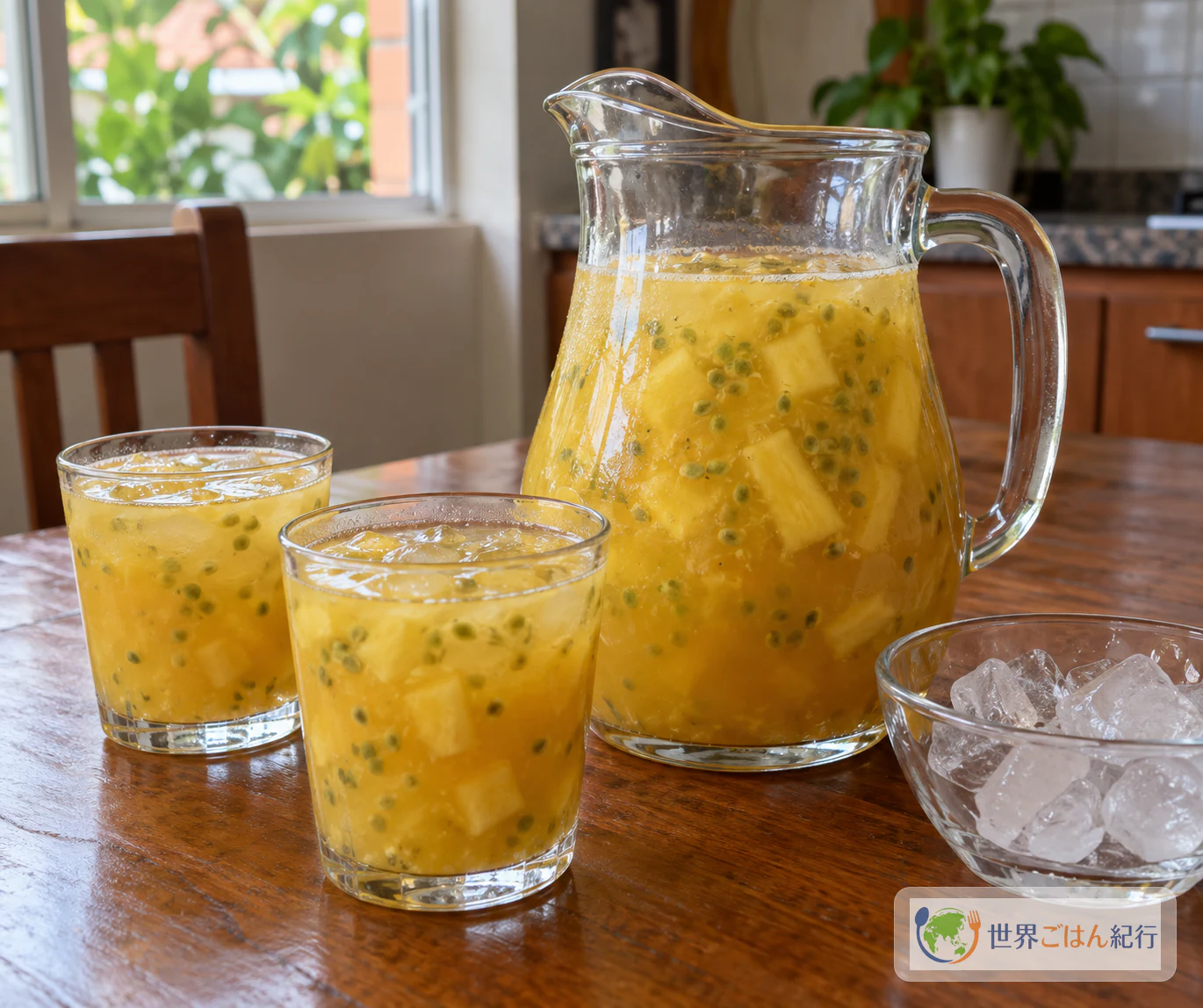
Tropicana Colombia presents champús as a drink of Cali, enjoyed cold on hot days. The memory of Evergista Gómez Balanta, as quoted from her NOTI5 interview, adds a family dimension: the women of her household making it for Semana Mayor and sharing it at home. That is one family's account, and it is told here as such, without extending it to every home in Cali or Valle del Cauca.
What's on the table beside champús varies too. The Boquisabroso recipe page suggests pairing it with empanadas, atollado or arroz con pollo. Across the recipes, the ingredients shift (cornmeal or whole corn, sour orange leaves or mint, different amounts of lulo and water), which is a reminder that champús is made in more than one way. The origin of the drink and its name are not settled by the sources used here, so they are left out.
Frequently Asked Questions
Are lulo and naranjilla different fruits?
The source recipe lists them together as names for the same ingredient. A detailed botanical identification is beyond the scope of this article.
Is champús made with whole corn kernels?
Some recipes do: one soaks dried corn overnight and simmers it until tender, and a state-government recipe reported by Tropicana uses whole corn. This article reproduces only the white cornmeal version and does not mix the two.
Do I need sour orange leaves?
No. The source names mint as the alternative, and this version uses 3 mint leaves.
How many days does champús keep?
That has not been confirmed from a reliable food-safety source, so no number is given. Cool leftovers quickly in clean, shallow containers and refrigerate them promptly.
At what temperature and for how long do I cook it?
The source gives no temperature. It says to simmer the melao for about 30 minutes and cook for about 1 hour after adding the cornmeal. The exact pot temperature and total time have not been confirmed.
More Colombian Food
Champús is one of many corn-based foods in Colombia, alongside dishes like arepas. To keep exploring the country's regional cooking, browse more Colombian recipes.
Sources
- My Colombian Cocina, "Champús Valluno." The recipe followed here: 6–8 servings; 150 g white cornmeal, 2 L water, 150 g panela or muscovado, 5 lulos (or pulp), 3 pineapple slices, 3 sour orange leaves or mint, 2 cloves, 1 cinnamon stick; melao for about 30 minutes, about 1 hour after adding the cornmeal, fruit added after brief cooling, served with ice; described as popular in the Cauca region. https://mycolombiancocina.com/champus-valluno/
- Tropicana Colombia, "¿Qué es el champús? Así se originó esta famosa bebida de Cali." Champús as a cold drink in Cali on hot days; Evergista Gómez Balanta's family memory of Holy Week, quoted from a NOTI5 interview; a separate recipe from the Gobernación del Valle del Cauca, used for comparison only. https://www.tropicanafm.com/2025/que-es-el-champus-asi-se-origino-esta-famosa-bebida-de-cali-427639.html
- Boquisabroso, "Cómo preparar Champús." A separate whole-kernel recipe, used for comparison, and its serving suggestions. https://boquisabroso.com.co/bebidas/champus/
- Ministry of Health, Labour and Welfare (Japan), "家庭での食中毒予防" (Preventing food poisoning at home). General home hygiene: clean hands and utensils, not leaving food at room temperature for long, and cooling leftovers quickly in clean, shallow containers. Not a storage test of this drink. https://www.mhlw.go.jp/stf/seisakunitsuite/bunya/kenkou_iryou/shokuhin/syokuchu/01_00008.html