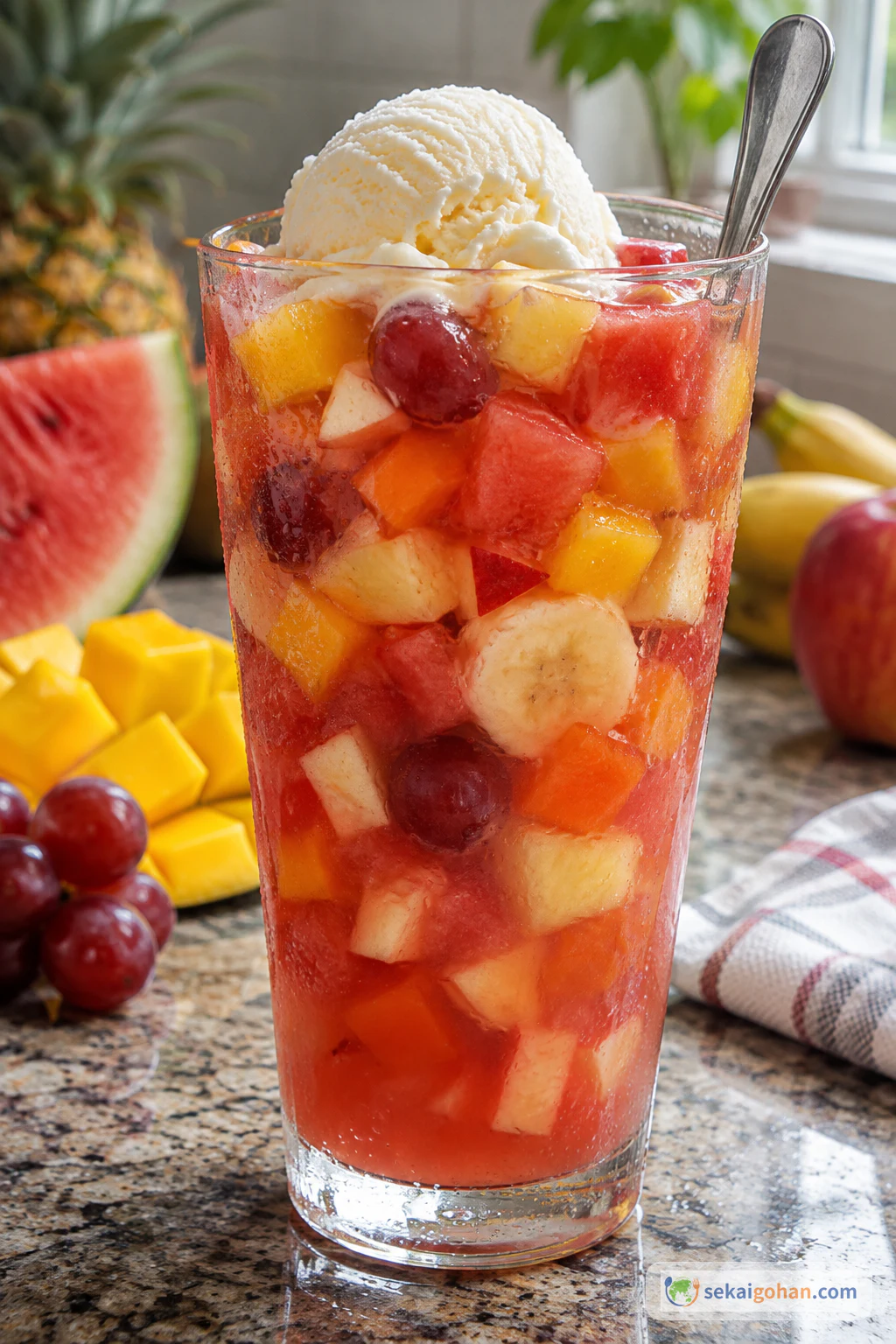
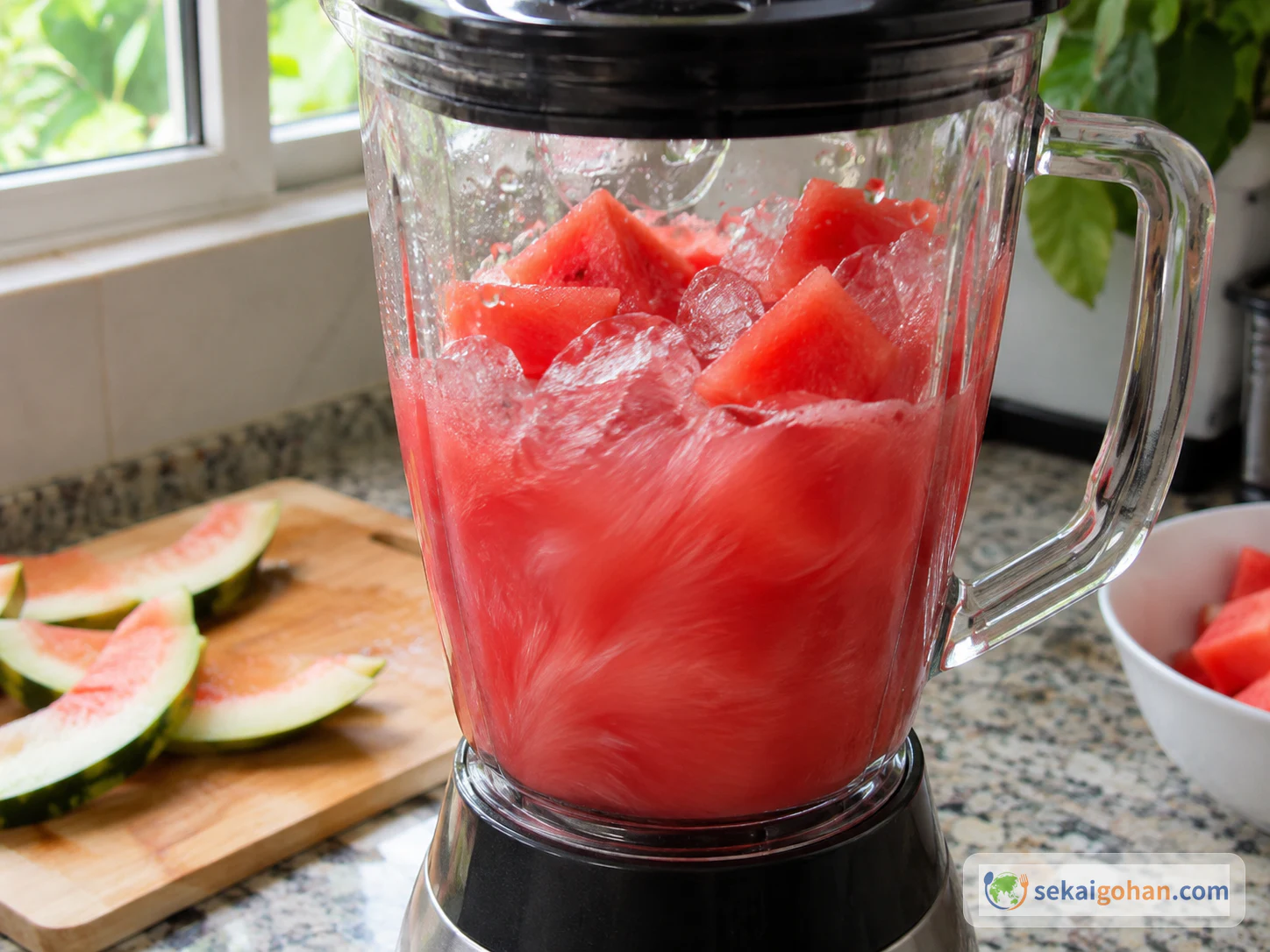
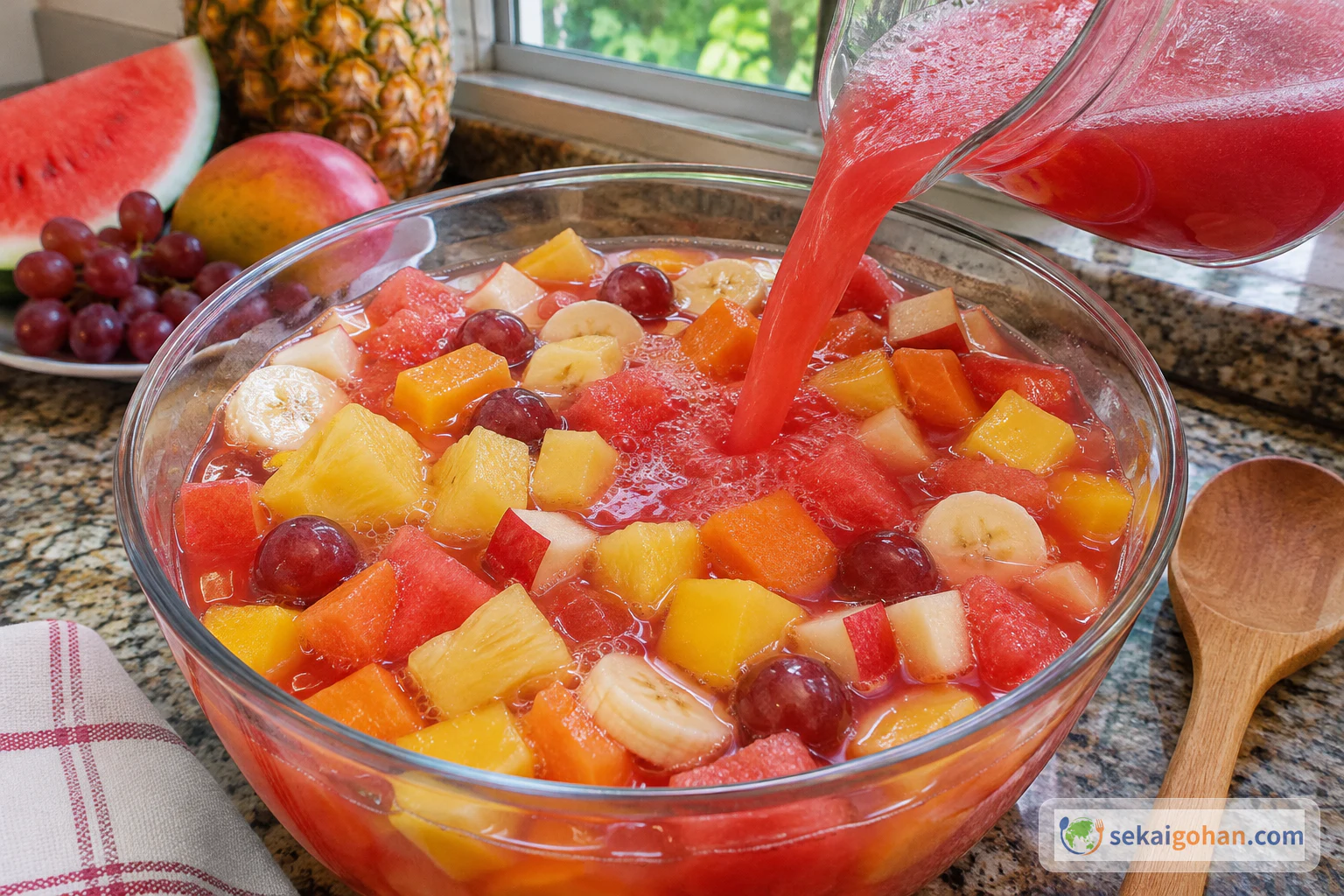
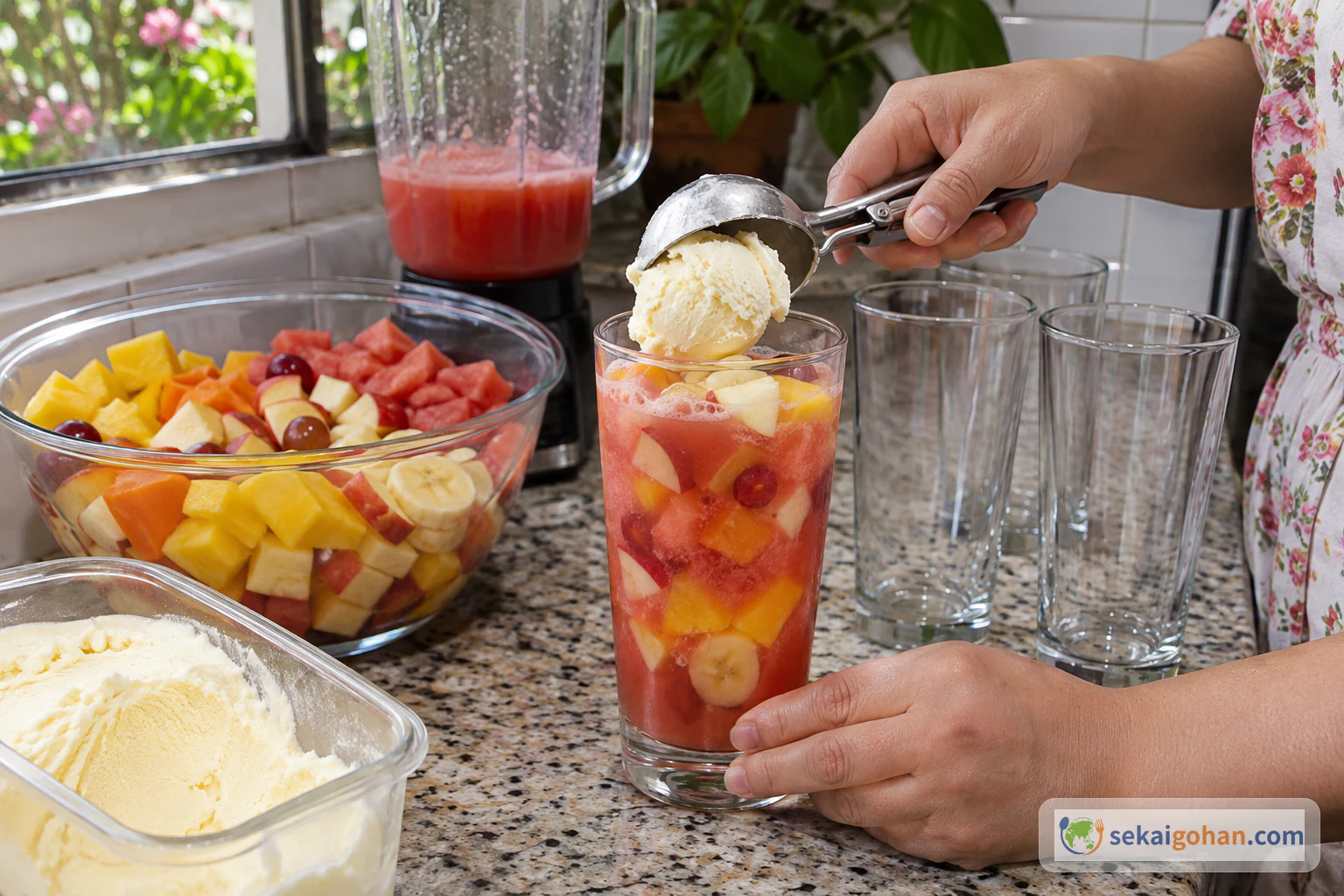
The juice goes in last. Cold, pink-red watermelon juice runs over a bowl of cut pineapple, mango, papaya and grapes, and the pieces lift and drift apart. Ladled into a tall glass with a long spoon, it sits halfway between a drink and a dessert: you sip the juice, then chase the fruit. Salpicón de frutas is what Colombians reach for on a hot day and set out at celebrations. It tastes clean and sweet, with the watery juice of the melon carrying the denser, perfumed flesh of the tropical fruit. A scoop of vanilla ice cream on top turns it creamy as it melts.
Fruit You Drink and Eat: Where Salpicón Comes From
In Colombia, salpicón means fruit and fruit juice served cold together, eaten with a spoon and drunk from the glass in the same sitting. It turns up on hot afternoons and at parties, and it is often sold on the street as a snack, poured into a cup to carry. Everything about it is built for heat: nothing is cooked, the fruit is cut small enough to fit on a spoon, and the juice is chilled with ice.
The name comes from Spain, where salpicón is a cold dish of chopped meat or fish. The Colombian glass shares only the idea of small pieces served cold; the rest belongs to the tropics. Where the fruit version first appeared is not settled, though it is usually placed on the coast, where the heat makes a cold glass of fruit an everyday need.
In Popayán there is an oral tale that connects salpicón to Simón Bolívar and a woman named Baudilia. It is told as local legend, passed from person to person, and it lives at the table as a story rather than as history.
Two juices, one idea
The liquid sets the character of the glass. The version below uses fresh watermelon juice, which keeps the taste light and fruity. The other common form pours in a juice blended from papaya, mango and Colombiana, a sweet Colombian soda, which makes the glass sweeter and gives it a soft fizz. Both are recognisably salpicón, and you will find the soda version described under Variations. For more dishes from the same table, see the Colombia country page.
Ingredients (serves 4)
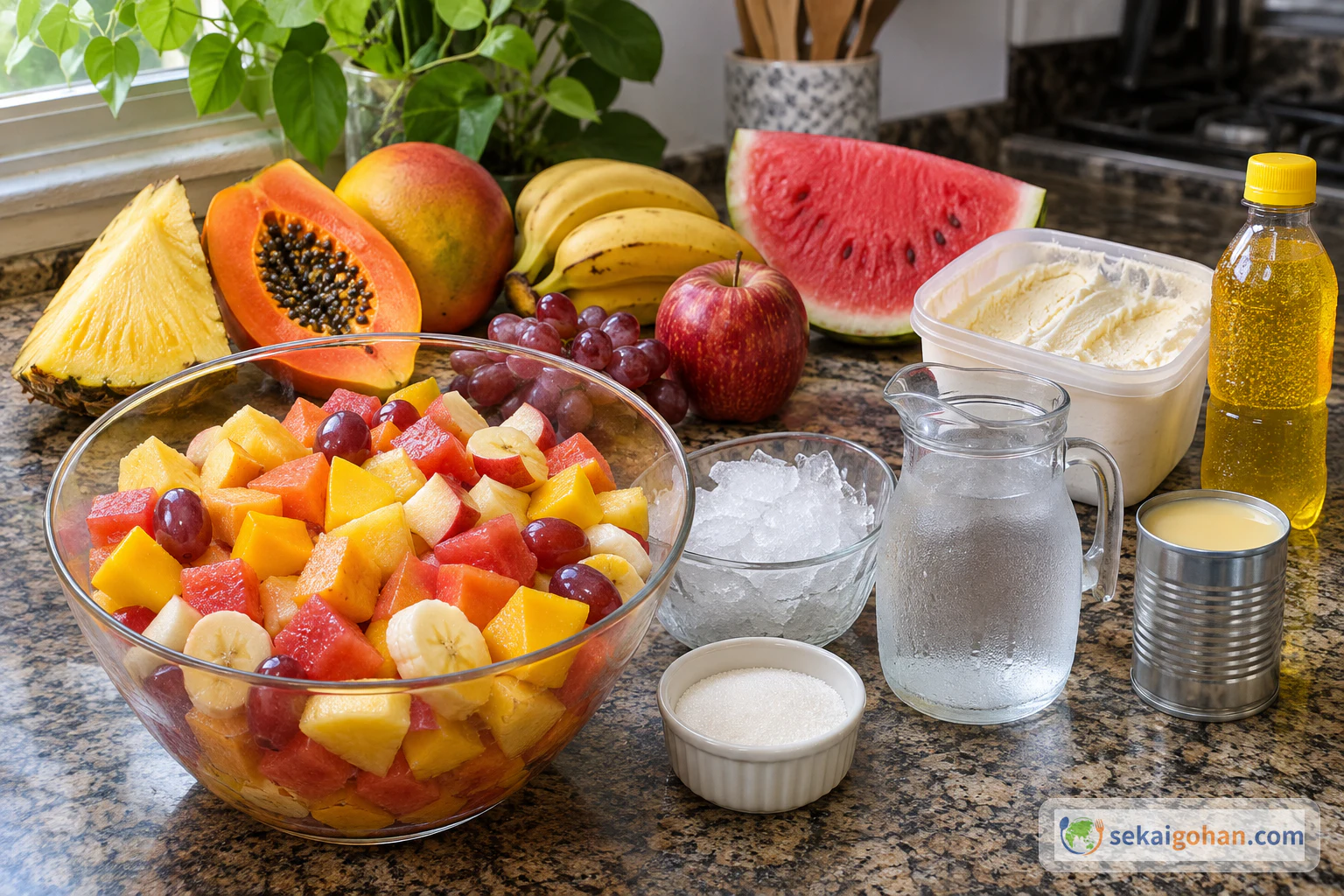
One batch of the watermelon blend makes juice for two, so you will blend more than once to reach 4 cups. Colombiana soda can replace the watermelon juice cup for cup if you can find it.
Banana browns quickly once cut. Prepare every other fruit first and slice the banana straight into the bowl just before the juice goes in, so it stays pale and firm.
Vanilla ice cream and sweetened condensed milk contain milk. If you add wafers, as in the soda version, check them for wheat and other allergens on the label.
Equipment
- Large mixing bowl
- Cutting board and sharp knife
- Vegetable brush
- Blender
- Measuring cups and a measuring jug
- Pitcher for pouring
- Ice cream scoop
- Tall glasses and long spoons
Choosing and Substituting the Fruit
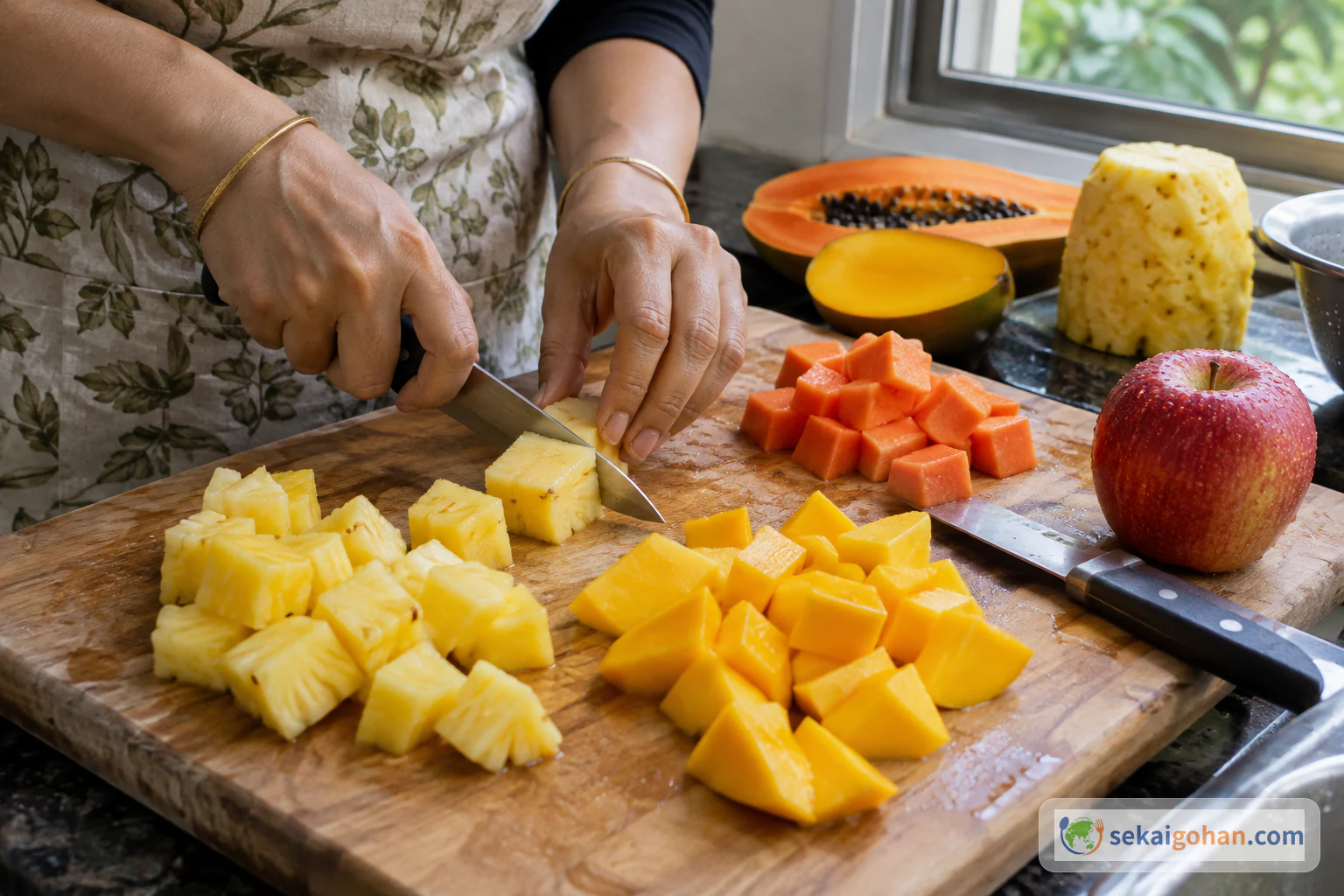
The mix is flexible as long as it stays colourful, ripe and cut to one mouthful. Pineapple brings acidity, mango and papaya bring a soft, perfumed flesh, apple and grapes add crunch and pop, and watermelon in the bowl echoes the juice. Choose seedless red grapes so nobody bites a seed mid-sip.
Papaya is the fruit most often missing from a supermarket shelf. When you cannot find it, melon or kiwi fill its place: melon keeps the soft, juicy texture, while kiwi adds a sharper, greener taste and bright colour.
For the juice, fresh watermelon is the base and the easiest to make anywhere. Colombiana soda changes the glass into the sweeter, fizzier form, though it can be hard to find outside Colombia. Orange juice is another liquid some people pour instead, giving a tangier glass with a citrus edge. Condensed milk in place of ice cream makes the top sweeter and denser, without the cold, melting scoop.
Method: Cut, Blend, Pour
The work runs cold and fast, about 15 minutes in all. Wash the rinds before anything is cut, prepare the fruit for the bowl, then blend the juice in batches while the cut fruit waits in the fridge. The only hands-off time is an optional chill once everything is combined.
When It Goes Wrong
| What you see | Why | What to do |
|---|---|---|
| Brown, soft banana | It was cut too early | Slice the banana last, directly into the bowl just before the juice |
| Thin, watery juice | Ice in the blend kept melting while it waited | Blend in batches and pour over the fruit as soon as you have 4 cups |
| Juice tastes flat | The watermelon is mild | Add the optional 2 tbsp sugar to the next batch and taste before adding more |
| Not enough juice to cover the fruit | One batch makes juice for two | Blend another batch of watermelon, ice and ice water and keep measuring |
| A muddy, melted top before serving | Ice cream went on too soon | Top the glasses only when they are ready to go to the table |
| Mushy fruit | The mixed salpicón sat too long in the juice | Make only what you will eat that day |
Serving, Variations and Storage
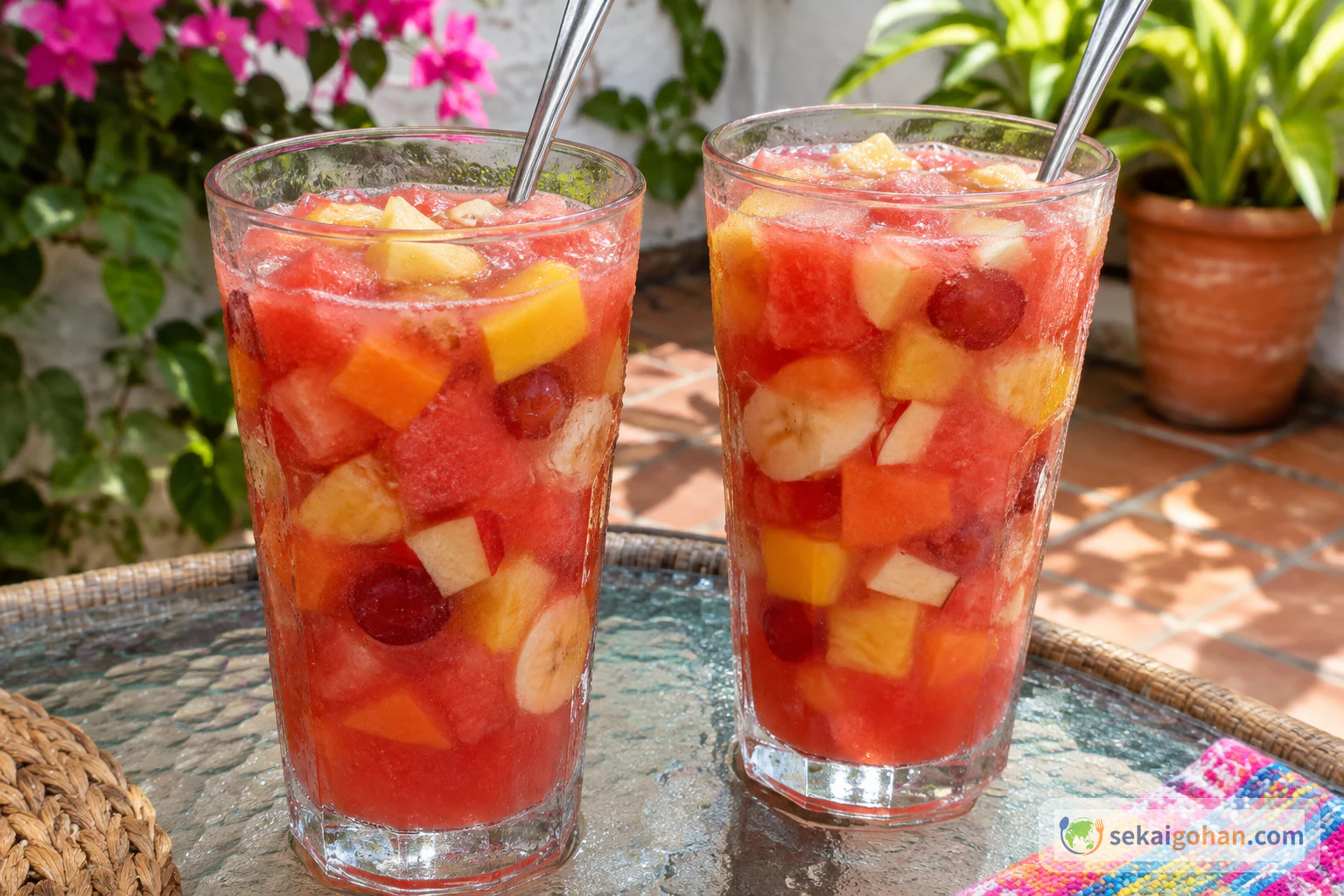
At the table
Salpicón belongs to hot days and celebrations. Serve it in the afternoon as a snack, after a meal as dessert, or in a row of glasses at a party. Tall clear glasses show off the colours of the fruit, and long spoons let everyone reach the last pieces at the bottom.
Variations
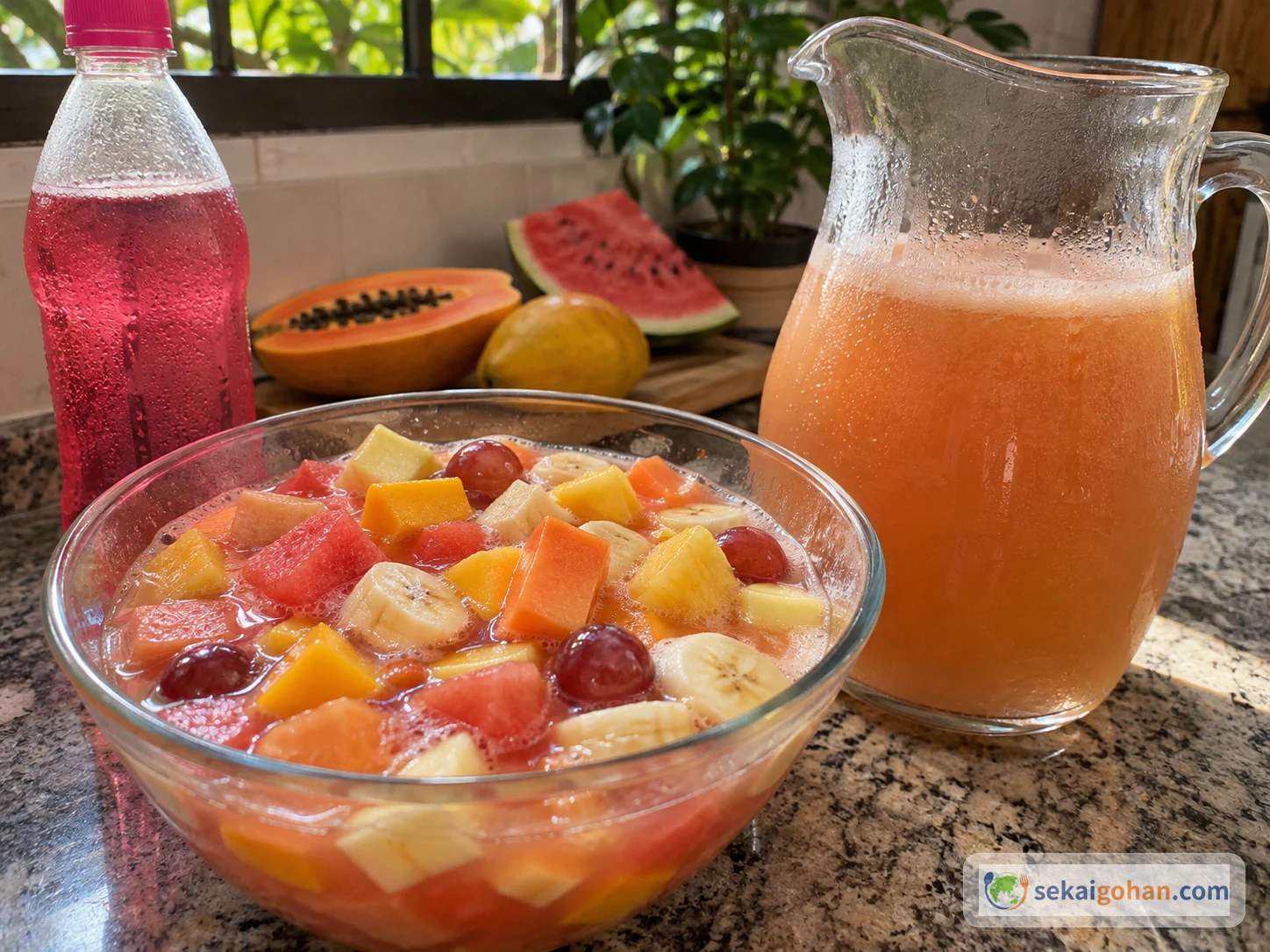
Colombiana soda version. Blend a little less than half a papaya and some pieces of mango with about 2 cups (500 ml) of Colombiana, and pour this golden-pink juice over the cut fruit. For a larger batch serving six, the fruit is pineapple, watermelon, mango, 3 bananas and a medium papaya. The glass comes out sweeter, creamier from the blended papaya, and lightly fizzy.
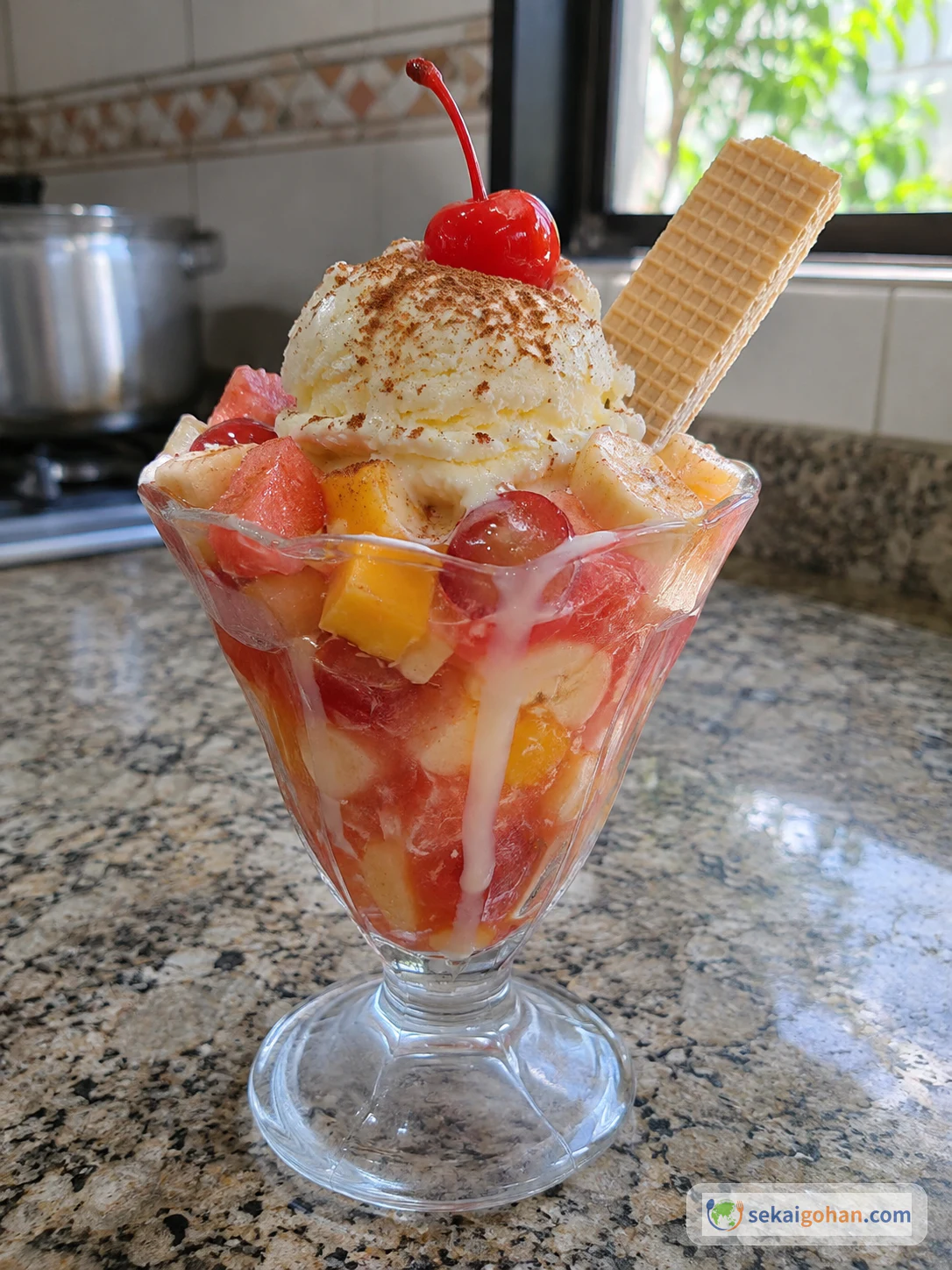
Condensed milk glass. Coat the inside of the glass with sweetened condensed milk before filling it, then top with vanilla ice cream, honey, a dusting of cinnamon, a cherry and a wafer. The condensed milk streaks down into the juice as you eat, making each sip sweeter and richer than the plain watermelon glass.
Medellín style. Around Medellín, the glass is described as built on passion fruit juice and served in a sundae glass with condensed milk, wafers and a little white cheese. The passion fruit makes it sharp and fragrant, and the cheese adds a mild, salty bite against the sugar.
Storage
Keep cut melon at 41°F (5°C) or below, and throw away any cut melon that has sat at room temperature for more than 4 hours. Cut watermelon on its own keeps covered in the fridge for up to 4 days. Once the fruit is mixed into the juice, eat the salpicón the same day, and add ice cream only at serving time. Take extra care with washing and cold-holding when serving small children, older people or anyone pregnant.
Frequently asked questions
Do I have to serve it with ice cream?
No. Without a topping, salpicón is a light, cold glass of fruit and juice, the form often sold on the street. The ice cream makes it richer and turns it into dessert.
Can I set it out for a party?
Yes, as long as it stays cold. Keep the bowl in the fridge and fill glasses as guests arrive rather than leaving it on the table. Anything that has sat at room temperature for more than 4 hours goes in the bin.
Should I add sugar to the watermelon juice?
Taste the watermelon first. A sweet, ripe melon needs nothing, while a mild one benefits from the optional 2 tbsp per batch. Add it at the blender so it dissolves fully.
Can I cut the fruit the night before?
Cut watermelon keeps covered in the fridge, so the melon can be prepared ahead. Leave the banana whole and combine the fruit with the juice only on the day you serve it.