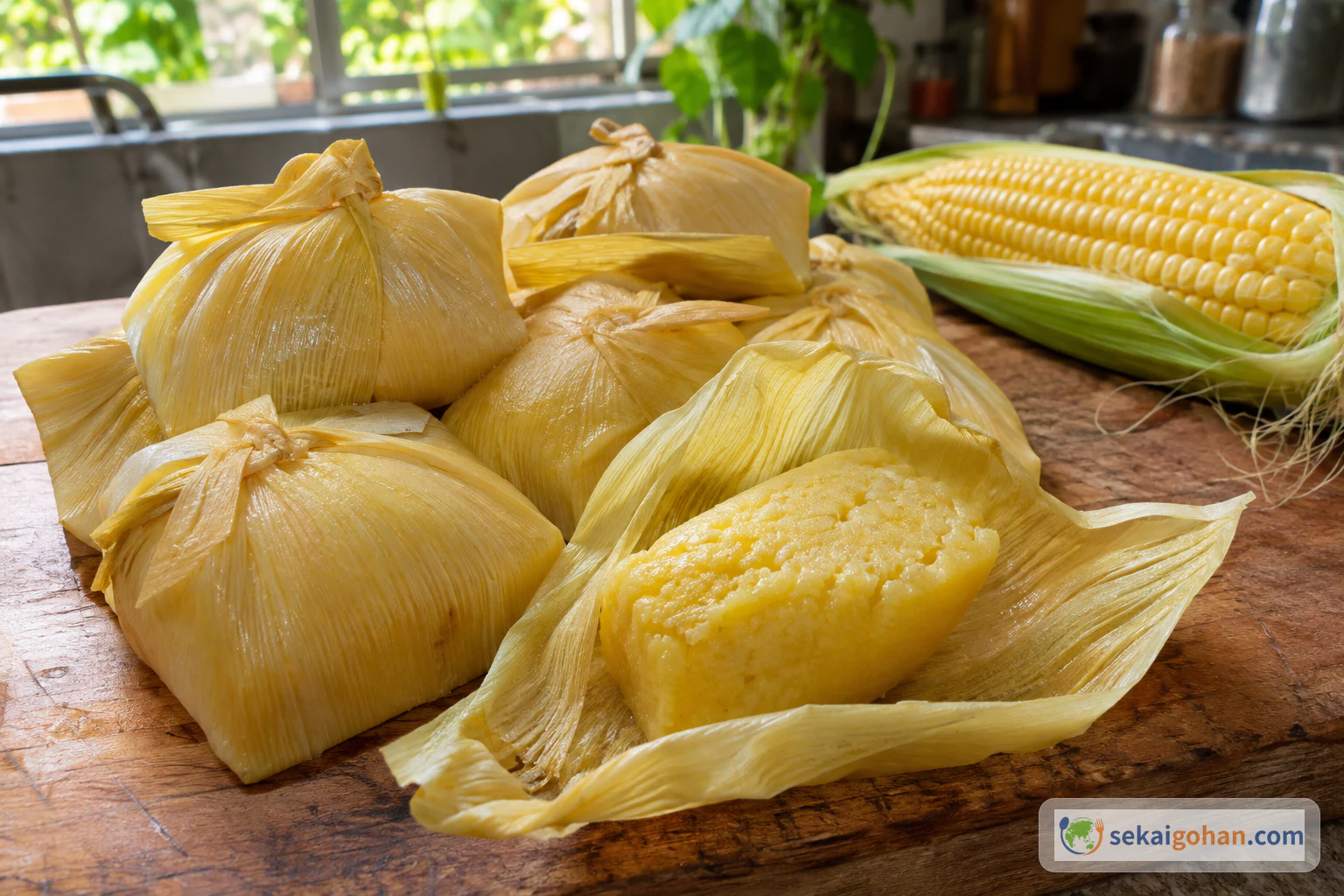
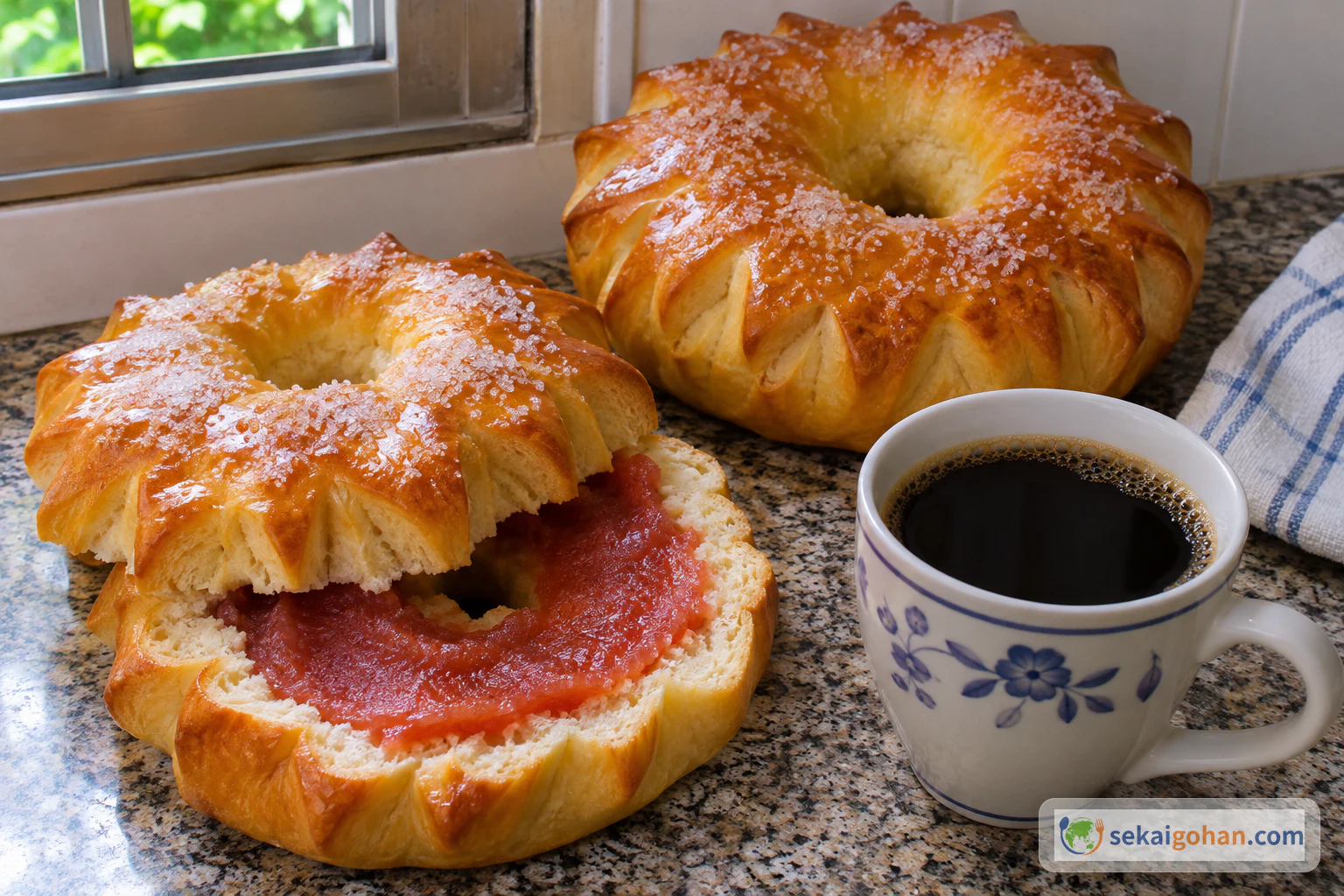
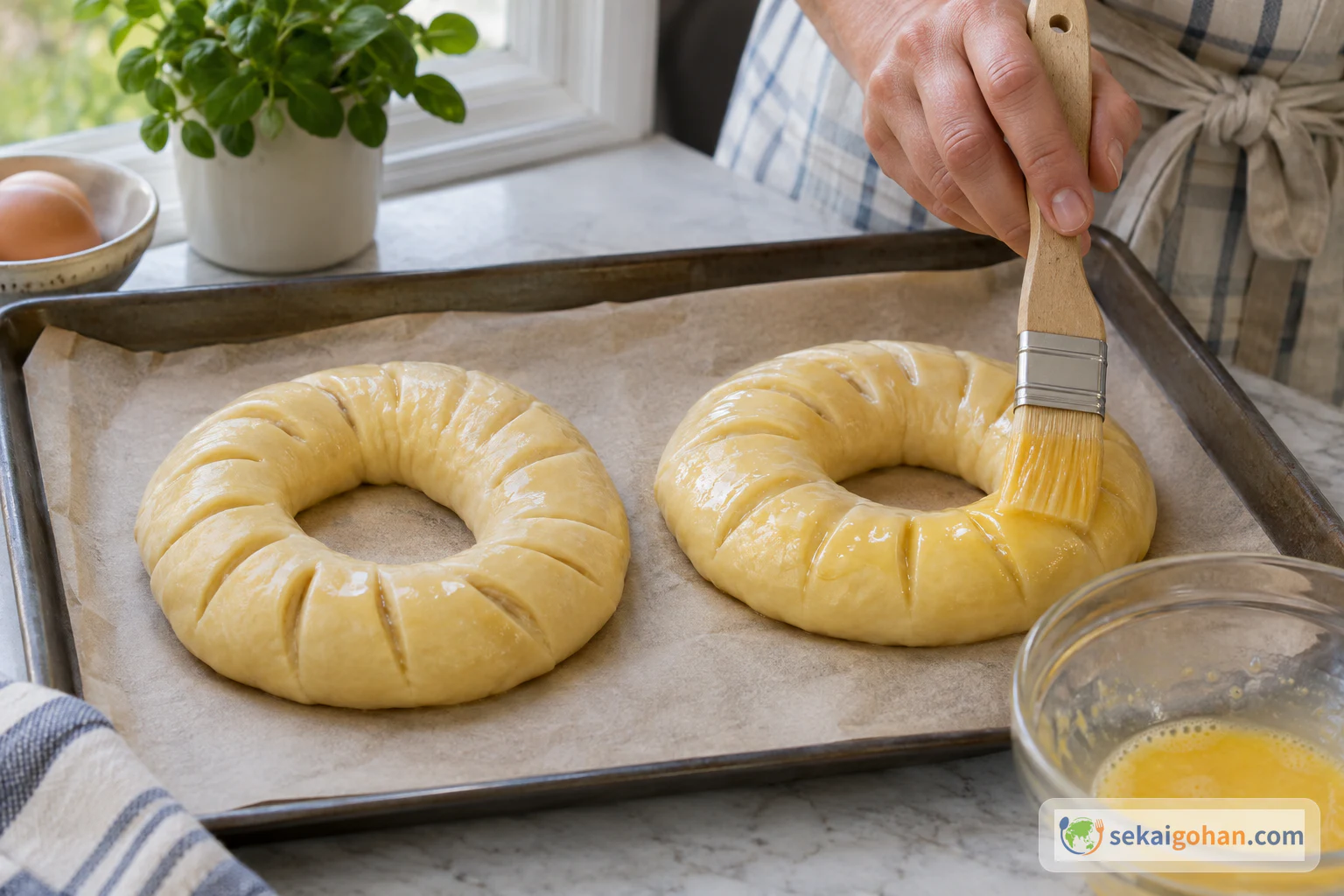
Tear into a roscón while it is still warm. The snipped edge breaks into soft, sugared ridges, and a line of red-pink guava paste runs through the middle of the ring. In Colombia it is bread for sharing: it goes on the table hot, with a cup of coffee or a glass of milk, and everyone pulls off a piece.
The dough is rich with butter, eggs and vanilla. It is rolled around bocadillo de guayaba, the firm guava paste, or around arequipe, the Colombian milk caramel, and then baked under an egg and butter glaze until the crust is golden and shiny.
A Bakery Ring Colombians Put in Their Top Five
When Colombians list their favourite breads, roscón makes the top five, next to pan pinita and mogolla guayatuna. It is very common in bakeries across the country, where the rings sit on the shelves with their cogwheel edges facing out. Bakers fill it one of two ways. Guava paste is the classic, the one most people think of first. Arequipe is the other filling, and it is just as easy to find. In Guatapé, the lakeside town in Antioquia, roscón de bocadillo is is eaten too.
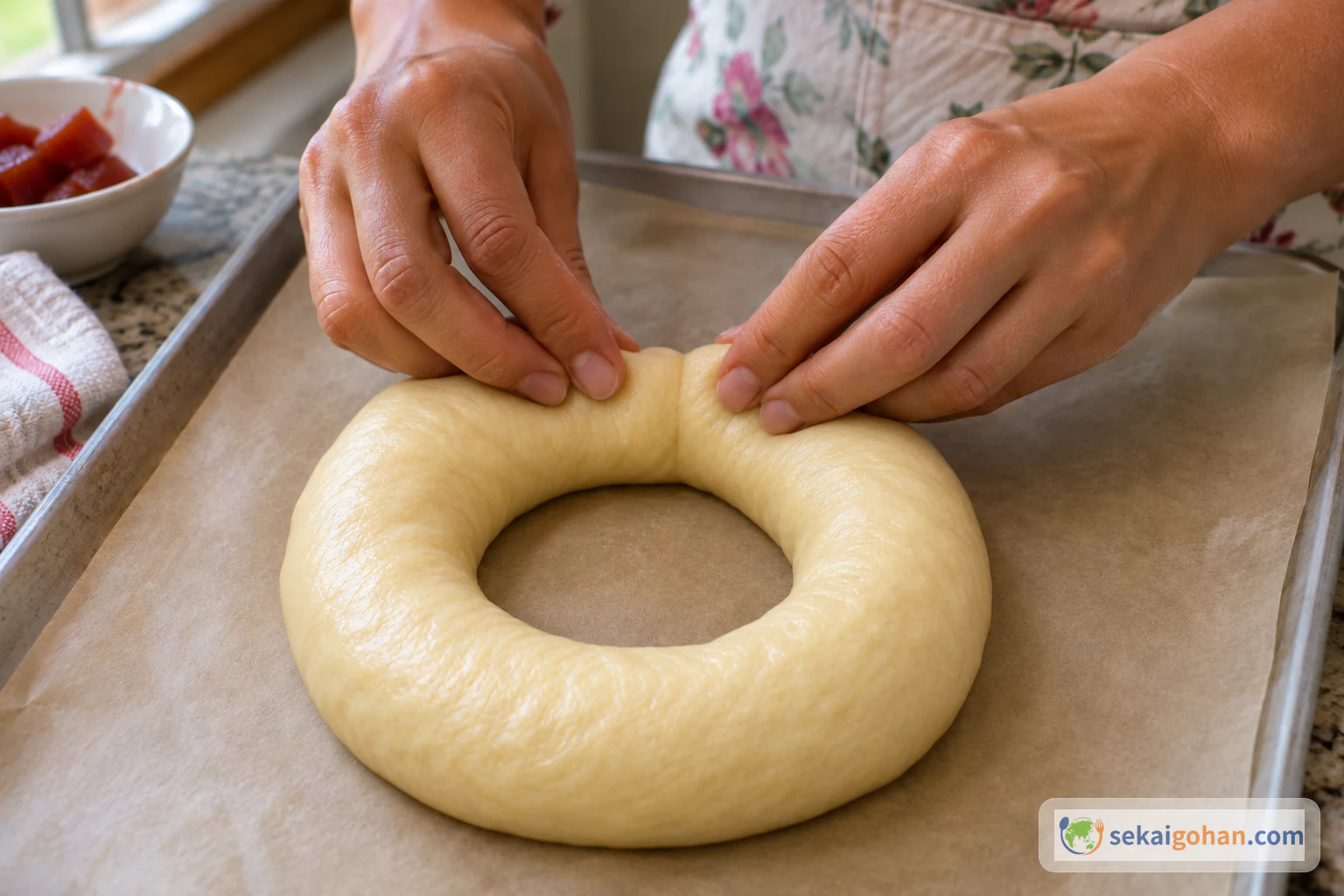
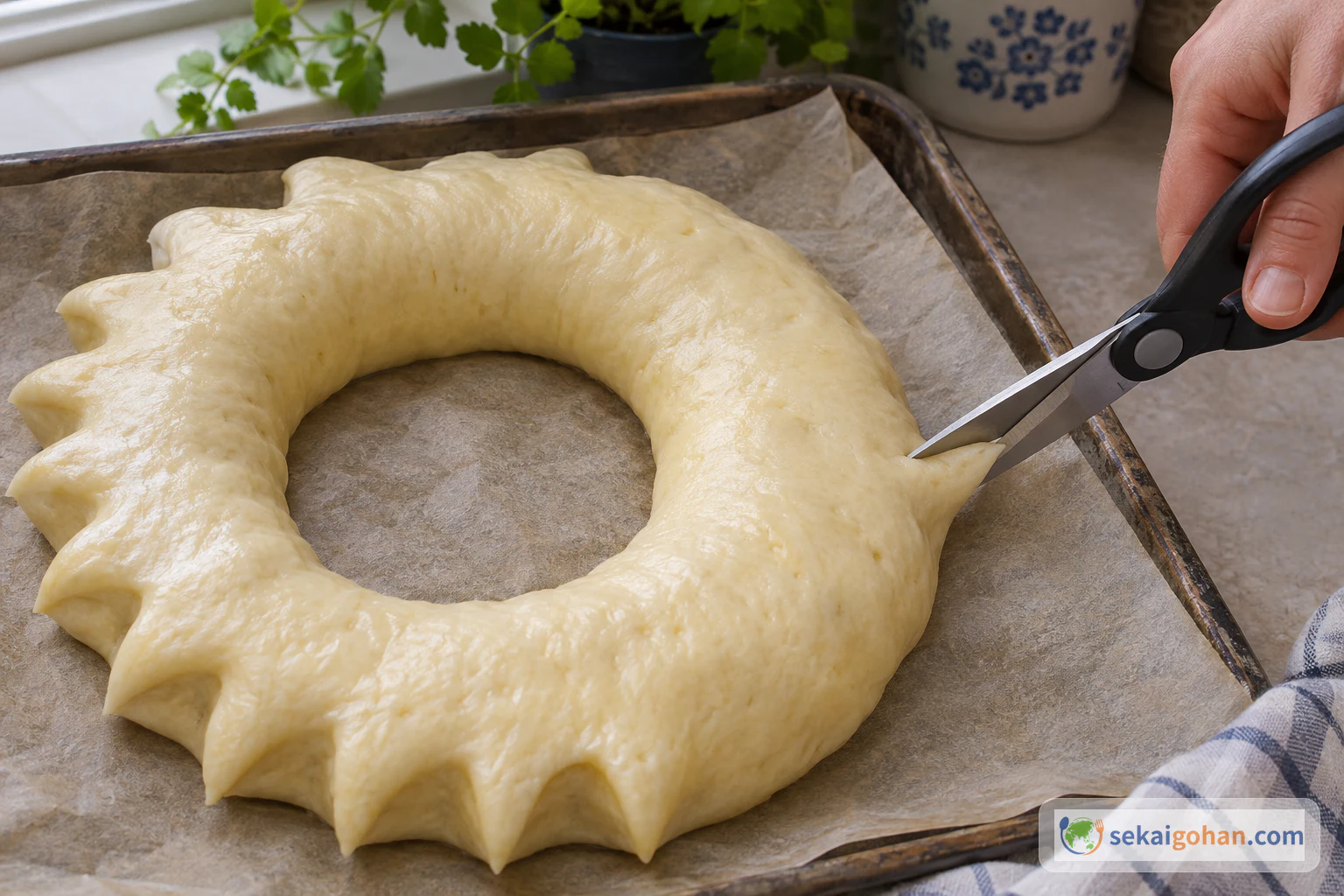
The dough comes from the same family as pan mojicón, a soft, enriched Colombian bread. For roscón it is rolled flat, wrapped around the filling and joined into a ring. Then comes the step that gives the bread its look. With kitchen scissors you snip all the way around the outer edge, so it opens in the oven like the teeth of a gear. Where the edge pulls apart, the paste underneath softens and shines.
Roscón is meant to be shared warm, in the family. Cut it into wedges or tear it by hand at the table, with coffee in the morning or milk for the children. Roscón sits among other Colombian staples like arepas and sancocho, and you can find more of them on the Colombia country page.
Spain also has a bread called Roscón de Reyes. It is a crown-shaped Epiphany cake decorated with candied fruit, and a small token is hidden inside. The Colombian roscón is a different bread: a filled sweet bread ring with a scissor-cut edge, sold in bakeries. Where the name first came from is not settled.
Ingredients
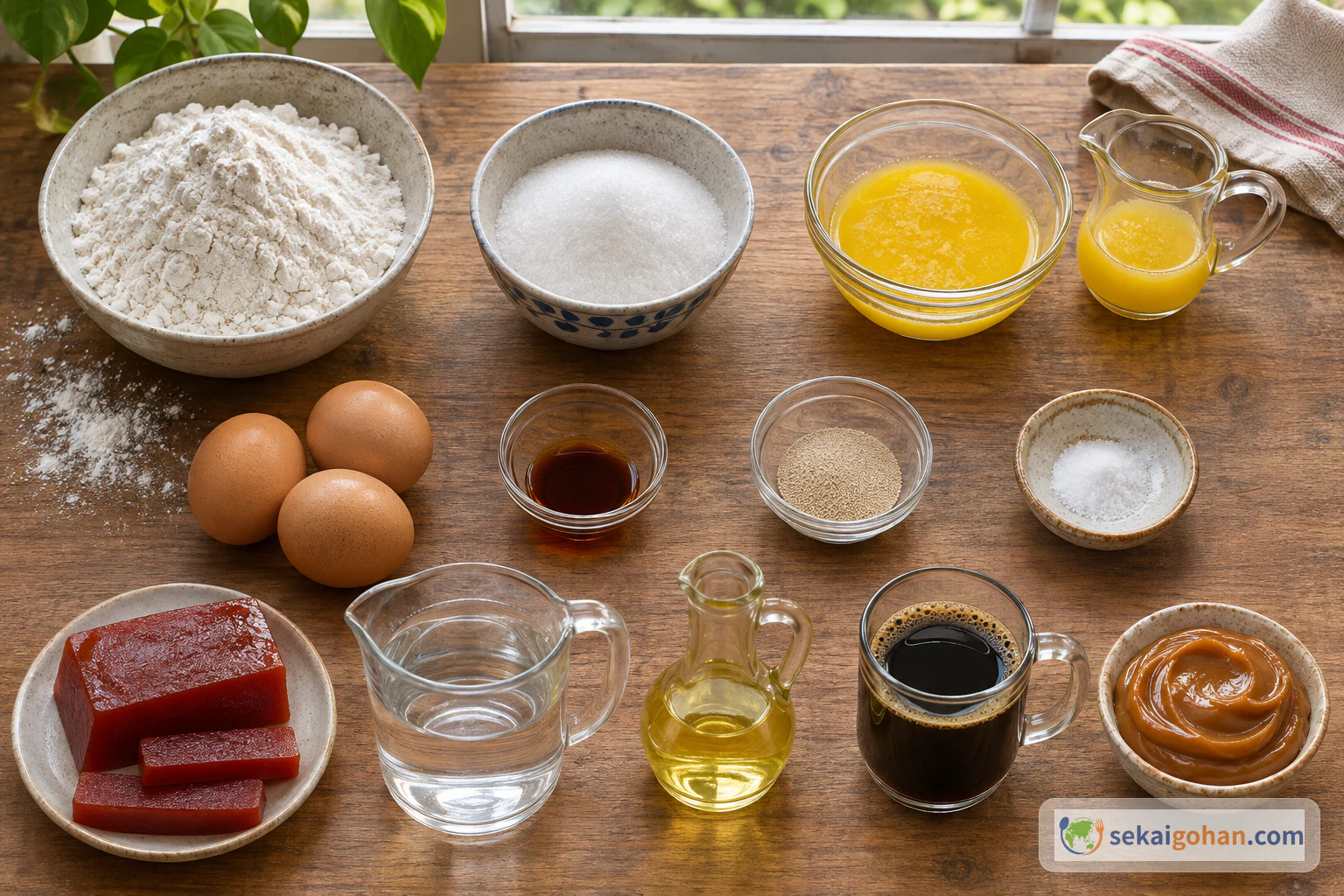
This makes two rings.
There are two separate measures of warm water. The 4 tbsp goes to the yeast and the 7 oz goes into the dough. The butter is split the same way: ½ cup for the dough, and 2 tbsp held back for the glaze. Measure each one into its own cup before you start, so nothing gets added twice.
Roscón contains wheat (flour), egg (in the dough and the glaze) and milk (butter). The arequipe version adds more milk.
Equipment
- Small bowl for the yeast
- Large mixing bowl, lightly oiled for the rise
- Plastic wrap or a clean cloth
- Rolling pin
- Sharp knife for the guava paste
- Kitchen scissors
- Baking sheet lined with parchment paper
- Pastry brush
Choosing the Filling and Making Swaps
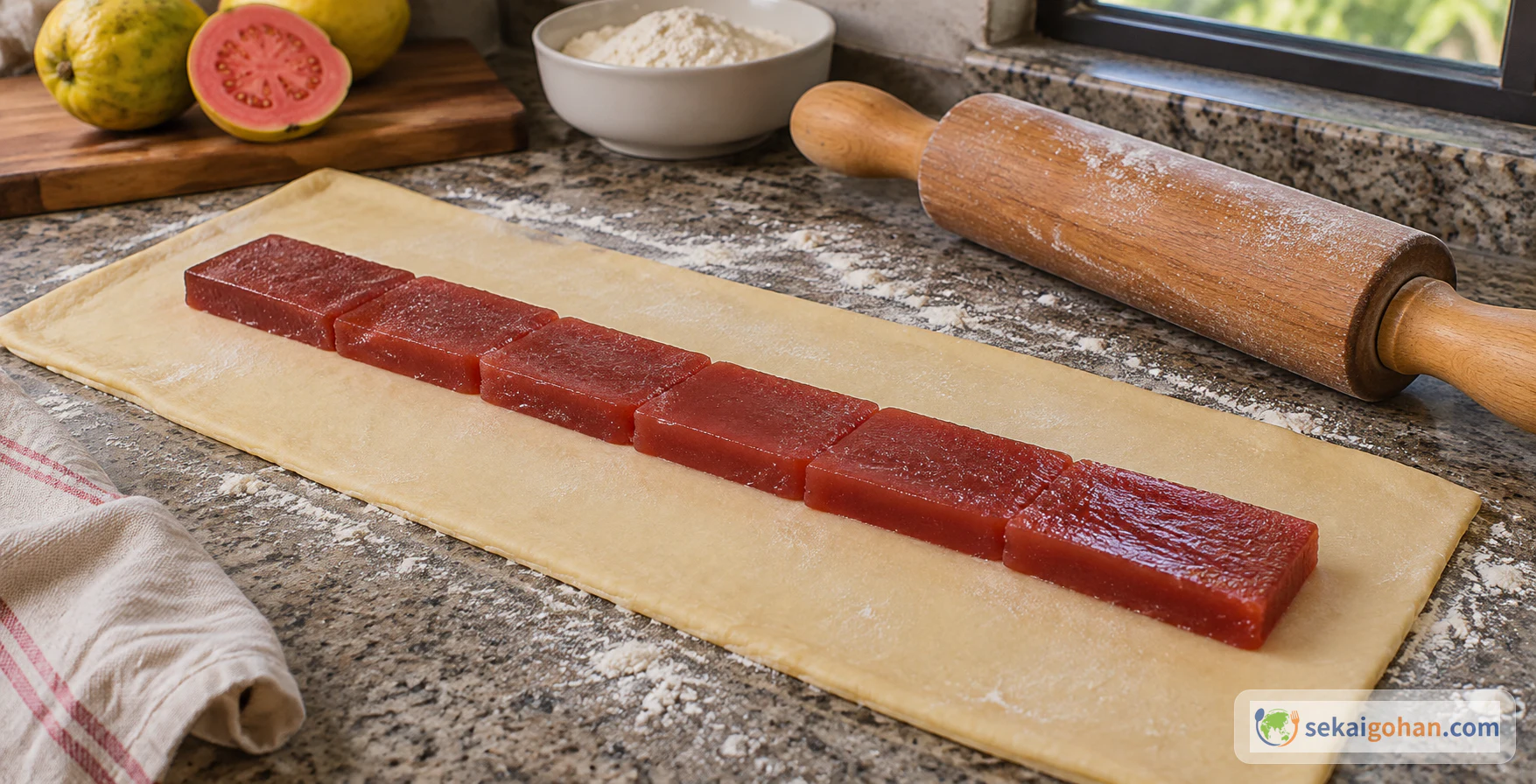
Guava paste is the filling to look for. Latin American grocers and online shops sell it as bocadillo de guayaba, or simply as guava paste. It comes as a firm red to pink block that you can slice with a knife. Firmness is the point. The paste holds its shape while you roll the dough, then softens in the oven without running out.
| If you can't find | Use | What changes |
|---|---|---|
| Guava paste | Quince paste (membrillo) | Just as firm, so the ring shapes and bakes the same way. The fruit tastes of quince, not guava |
| Any firm fruit paste | Thick jam or marmalade, only as a last resort | It is soft enough to run out through the cuts in the oven. Use a thin layer and seal the seam well |
| Arequipe | Dulce de leche or a thick milk caramel spread | Close in taste and texture. The thicker the spread, the better it stays inside the ring |
The dough uses ordinary supermarket ingredients. Use real vanilla extract, because the vanilla is what you smell in the crumb when you tear the ring open.
Method
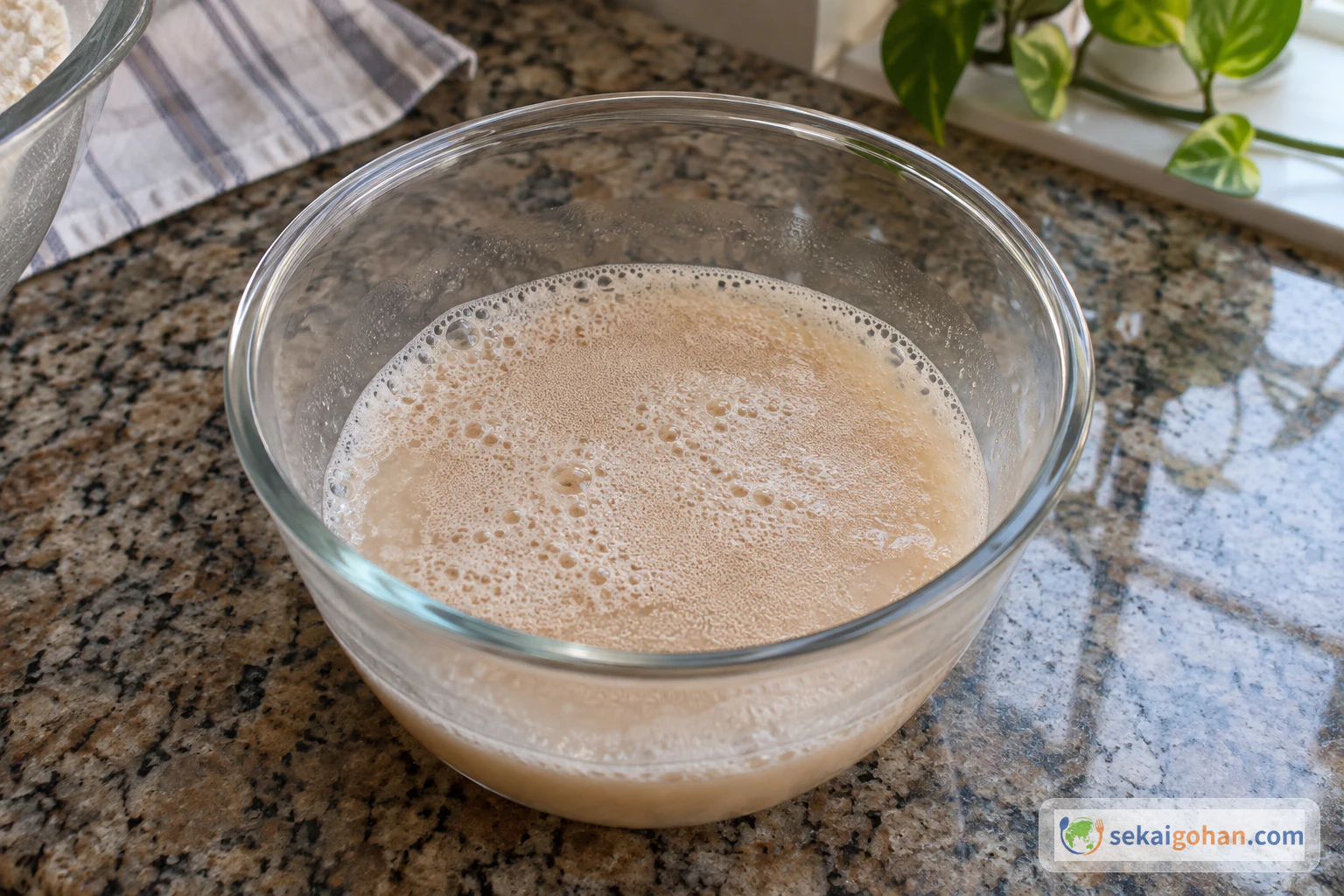
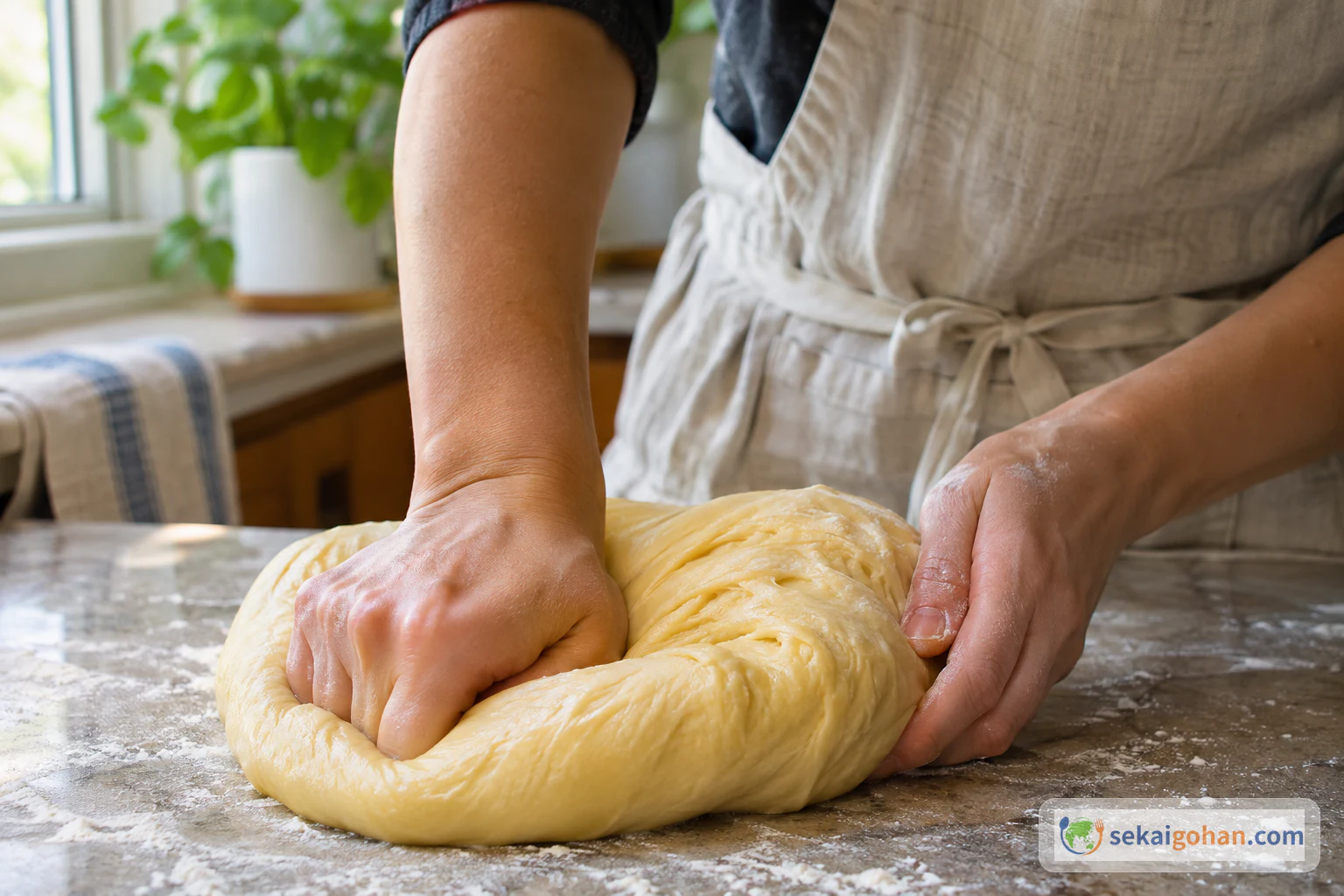
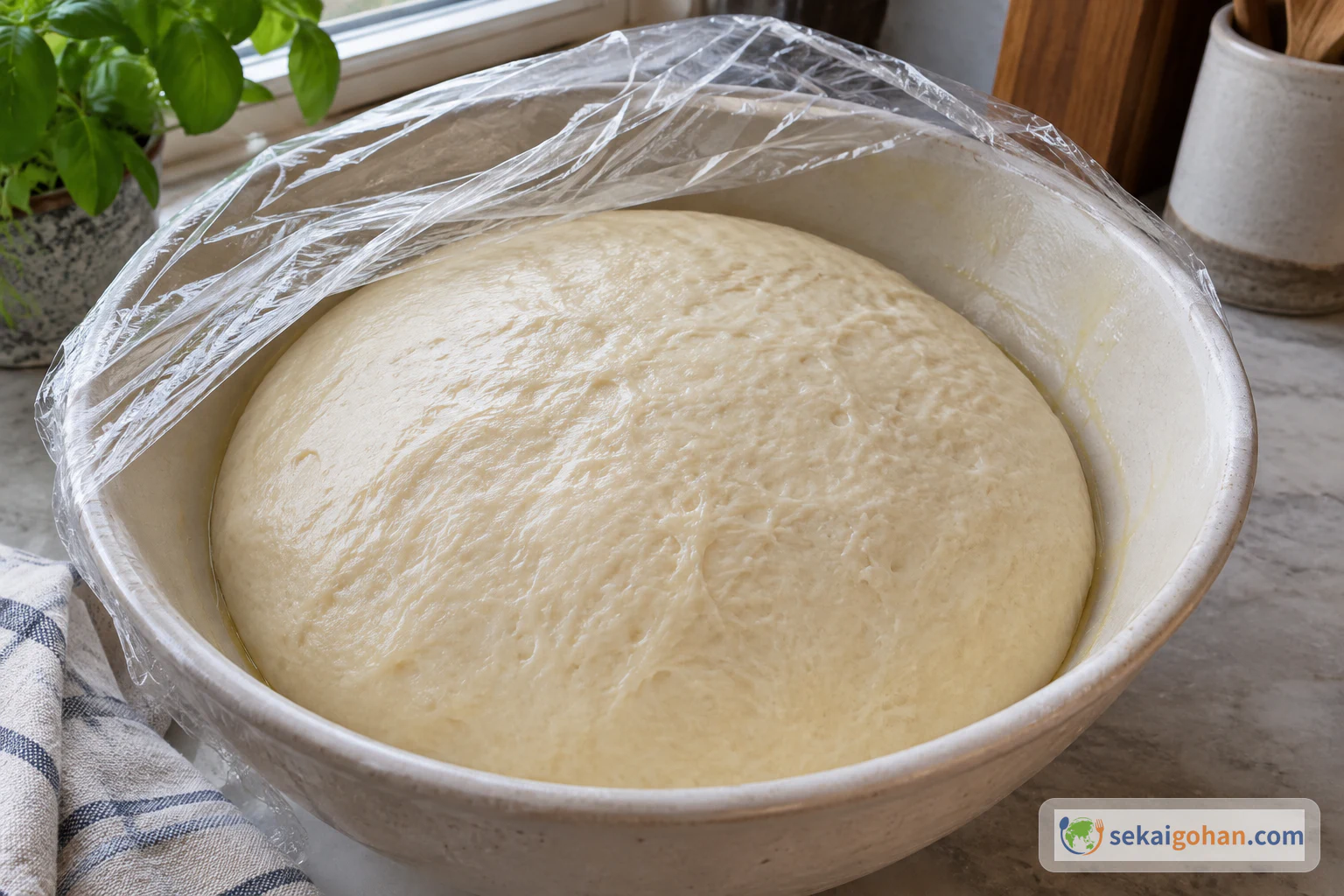
Start with the yeast. While it foams, get your bowl and flour ready. The two long waits are the first rise of about two hours and the second rise of 20 to 30 minutes. Use the first one to cut the guava paste, and use the second to heat the oven. The cuts go in after the second rise, just before the glaze.
When It Goes Wrong
| What you see | Why | What to do |
|---|---|---|
| The crumb is dense and tight | The yeast never foamed, or the dough did not double | Proof the yeast until foamy before mixing, and let the first rise go until the dough has really doubled, even if that takes longer than 2 hours |
| The guava paste is still firm after baking | The pieces were too thick | Next time slice the paste thinly in a single line. Serve this batch warm, when the paste is softest |
| Filling runs out onto the tray | A soft filling such as jam, or a seam that was not pinched shut | Use a firm paste, pinch the seam and the join hard, and bake seam side down |
| The dough shrinks back when you roll it | The dough is still tight from kneading | Cover it and give it the 10-minute rest before rolling |
| The ring looks pale | Not enough glaze, or it came out too early | Glaze generously and bake until deep golden, up to the full 20 minutes |
Serving, Variations and Keeping
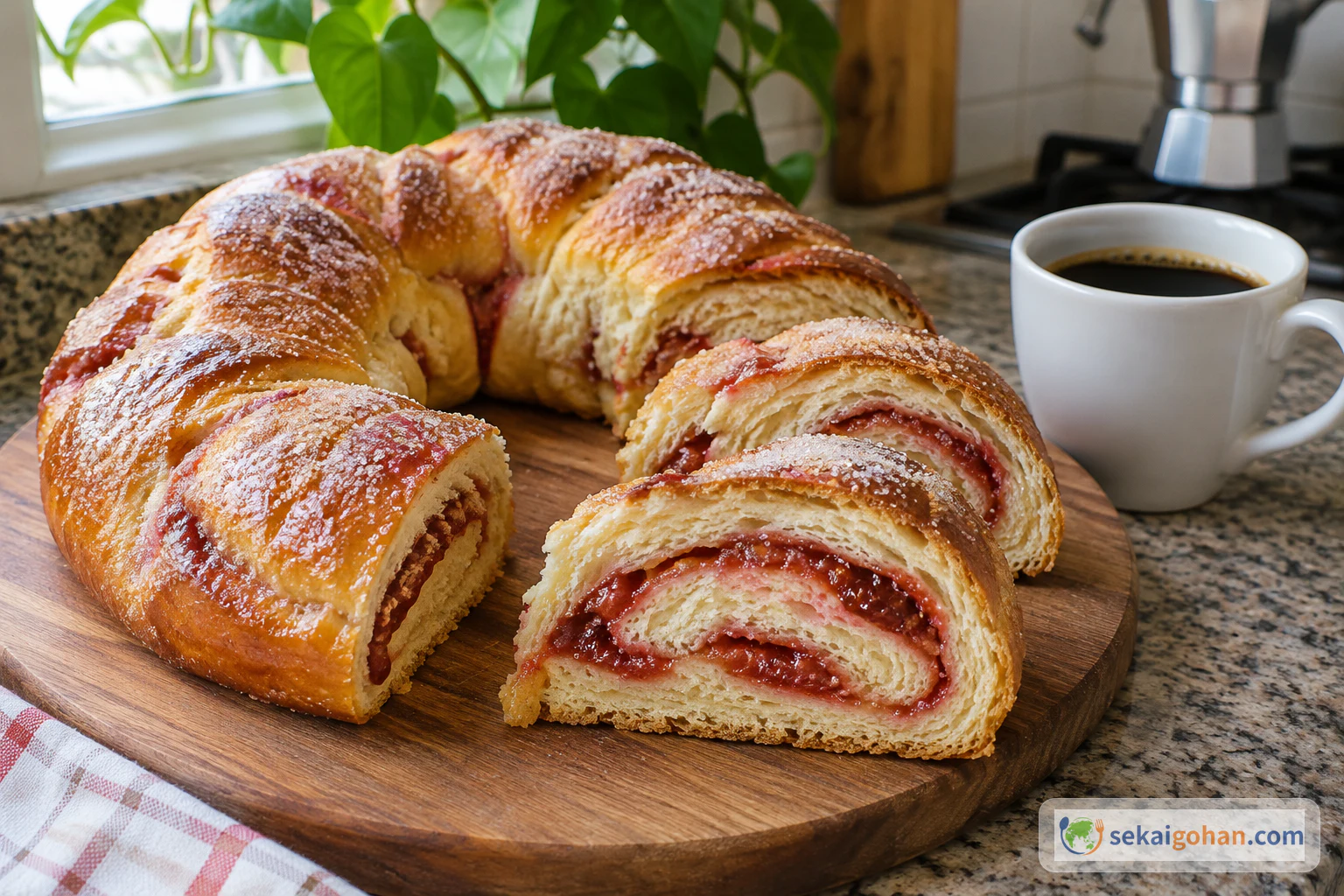
At the table
Bring roscón out hot and share it with the whole family, with black coffee or a glass of milk. It works for breakfast or an afternoon break. One ring goes around a family table, and the second can go to friends or neighbours.
Variations
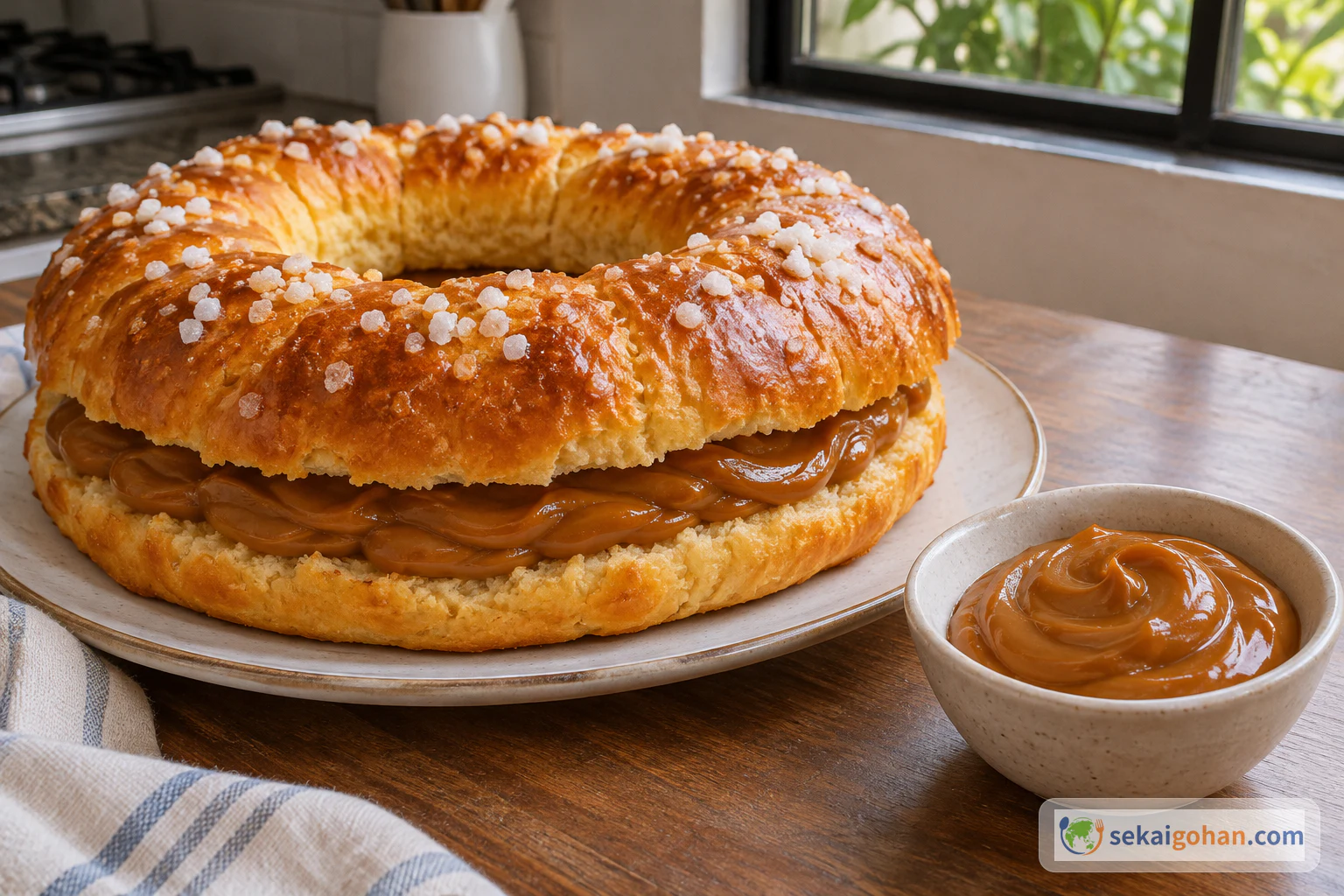
Roscón de arequipe. Fill the rings with 2 cups of arequipe, homemade or store-bought, instead of the guava paste. The filling bakes into a soft, golden-brown caramel that oozes when you tear the ring. Spread it in a thick strip and seal the seam carefully, because it is softer than guava paste.
Eight smaller rings. For individual rings, use a separate dough made by weight. Use 7 oz (200 g) milk, 1½ oz (40 g) sugar, 1 sachet dry yeast, 1¾ oz (50 g) butter, 1 egg and 1 lb (450 g) all-purpose flour. Divide it into about eight pieces and roll each to roughly 10 × 4 inches (25 × 10 cm). Fill each with small pieces of paste about ½ × 1½ inches (1 × 3.5 cm), cut the edge at about ⅜-inch (1 cm) intervals, and bake at 355°F (180°C) for 17 to 25 minutes. Keep this dough separate from the two-ring recipe and don't mix the amounts. The smaller rings bake with more crust and a finer gear edge.
Quince paste. Swap the guava for quince paste. The ring shapes and bakes the same way and comes out with a quince flavour.
Keeping
Yeast dough like this is best on the day it is baked. Plan to bake on the day you serve it and eat it warm.
Frequently asked questions
My yeast didn't foam. Can I carry on?
No. Without foam after about 10 minutes, the yeast is not active, and the dough will not rise. Throw it out and start again with fresh yeast and warm water, not hot. When the yeast foams, the rest of the method works.
Can I fill one ring with guava and the other with arequipe?
Yes. The dough is split in two and each ring is filled on its own, so you can choose a different filling for each. Give the arequipe ring the most careful seam, since that filling is softer. Bake both on the same sheet for the same time.
Why roll the dough into a rope before using the rolling pin?
The rope gives you a long, even shape before you start. Rolling it flat from there produces the long, narrow rectangle a ring needs, with even thickness from end to end. An even sheet rolls up around the filling without thin spots that split in the oven.