Colombo from French Guiana: A Pot Where the Sour Fruits Go In Last
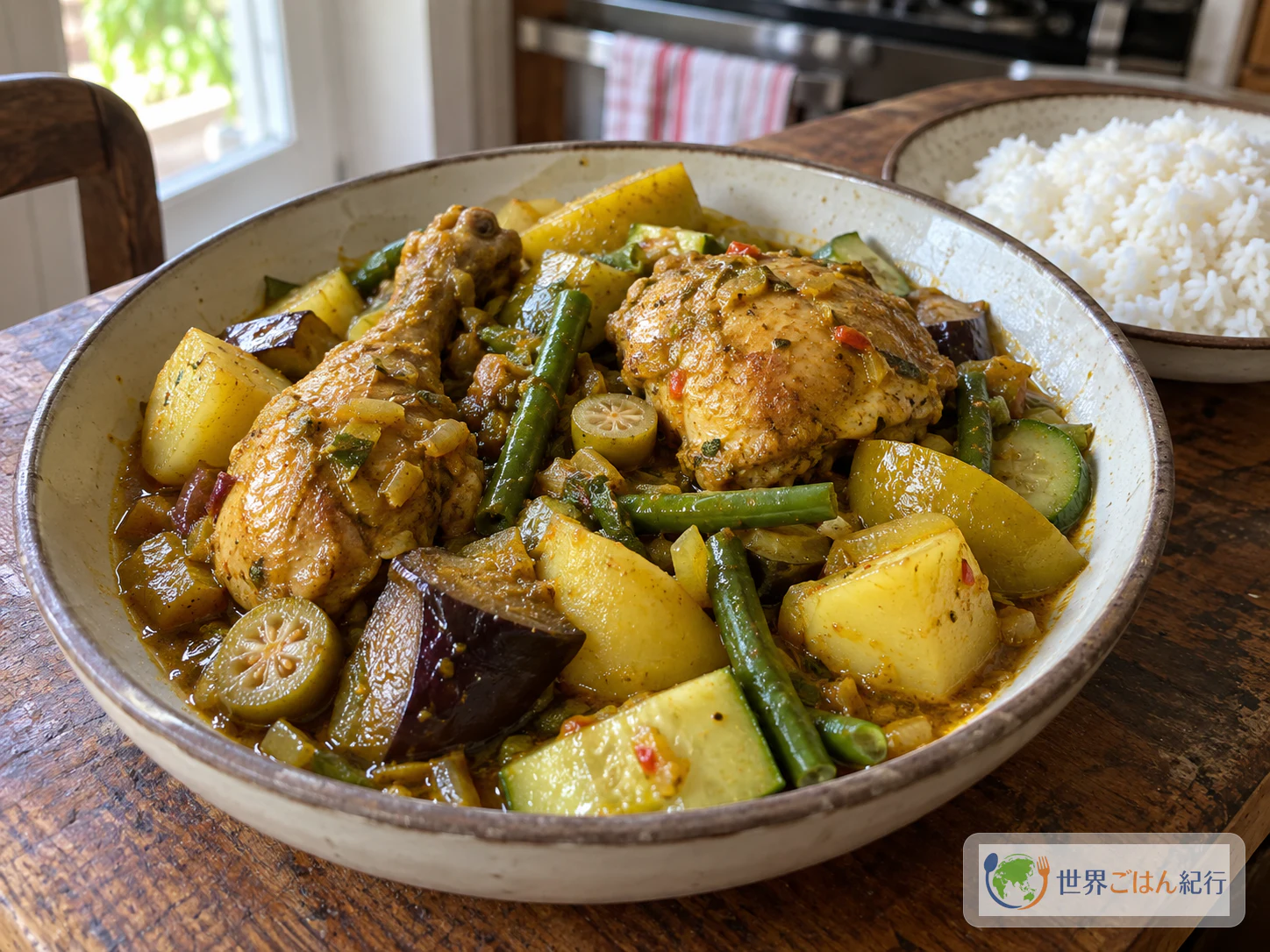
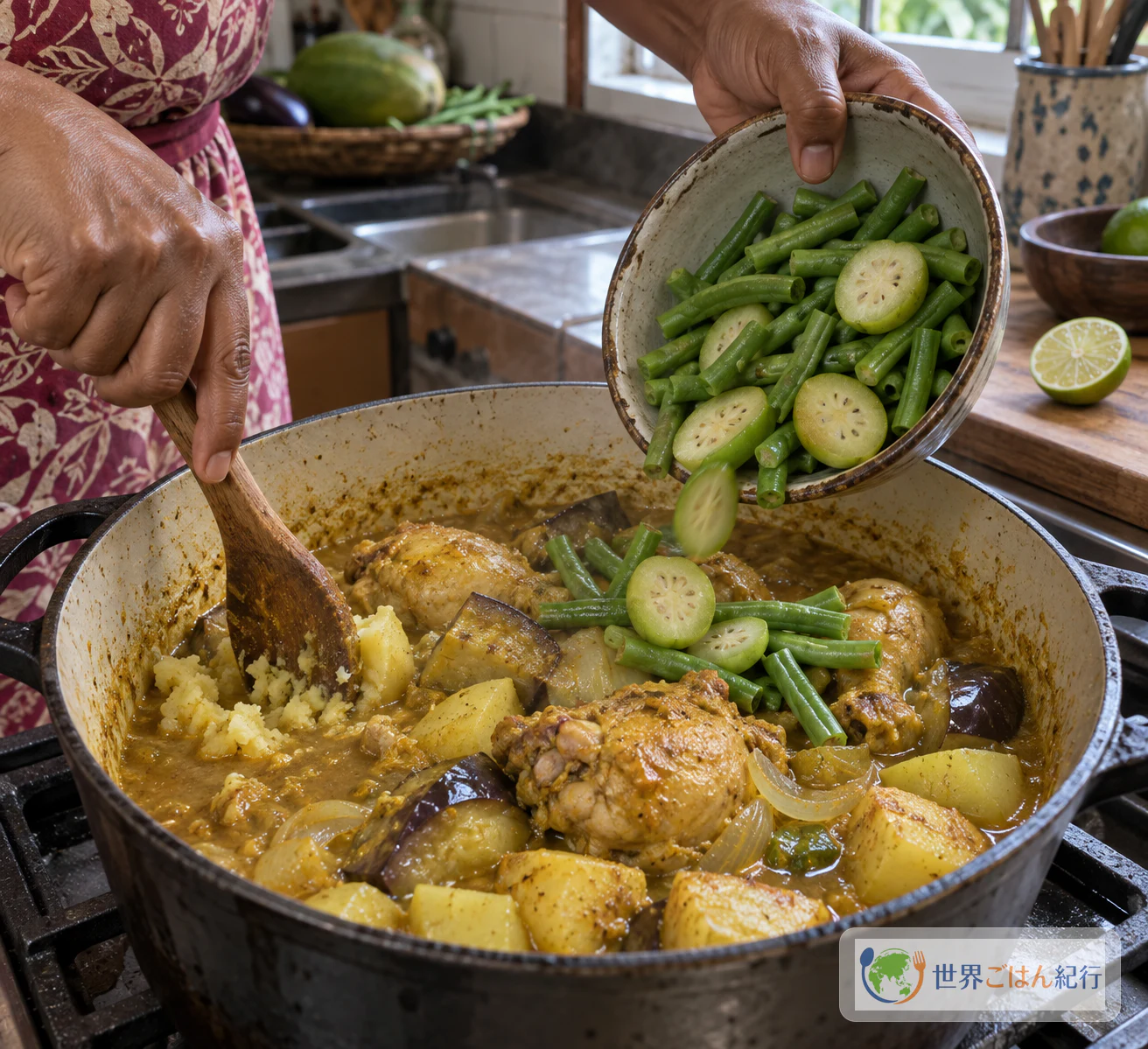
Several vegetables that keep their shape, the scent of colombo powder, and sourness layered from lime, green mango and bilimbi. Colombo powder goes in only after the vegetables are cooked, and the second lime only after the heat is off.
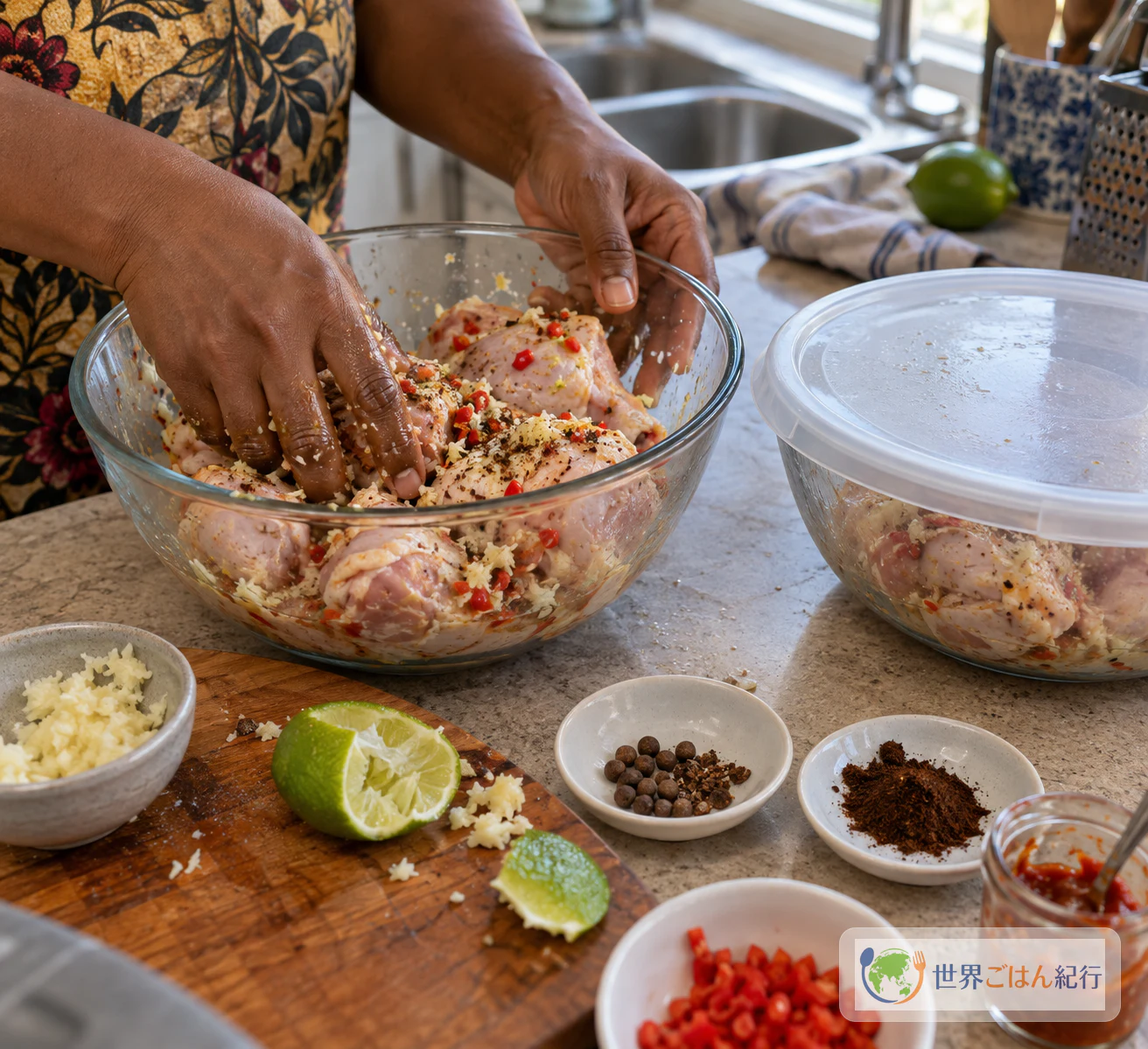
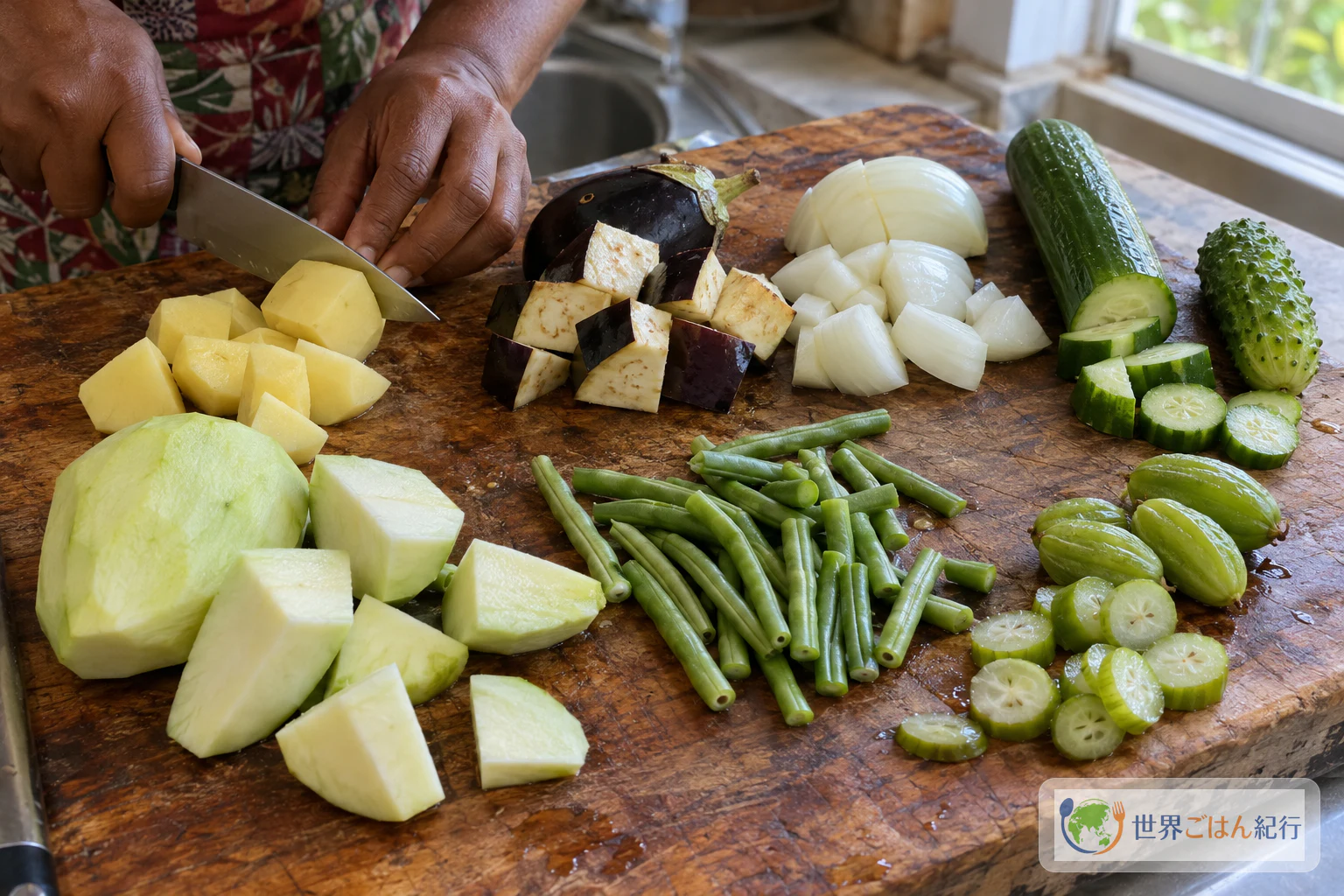
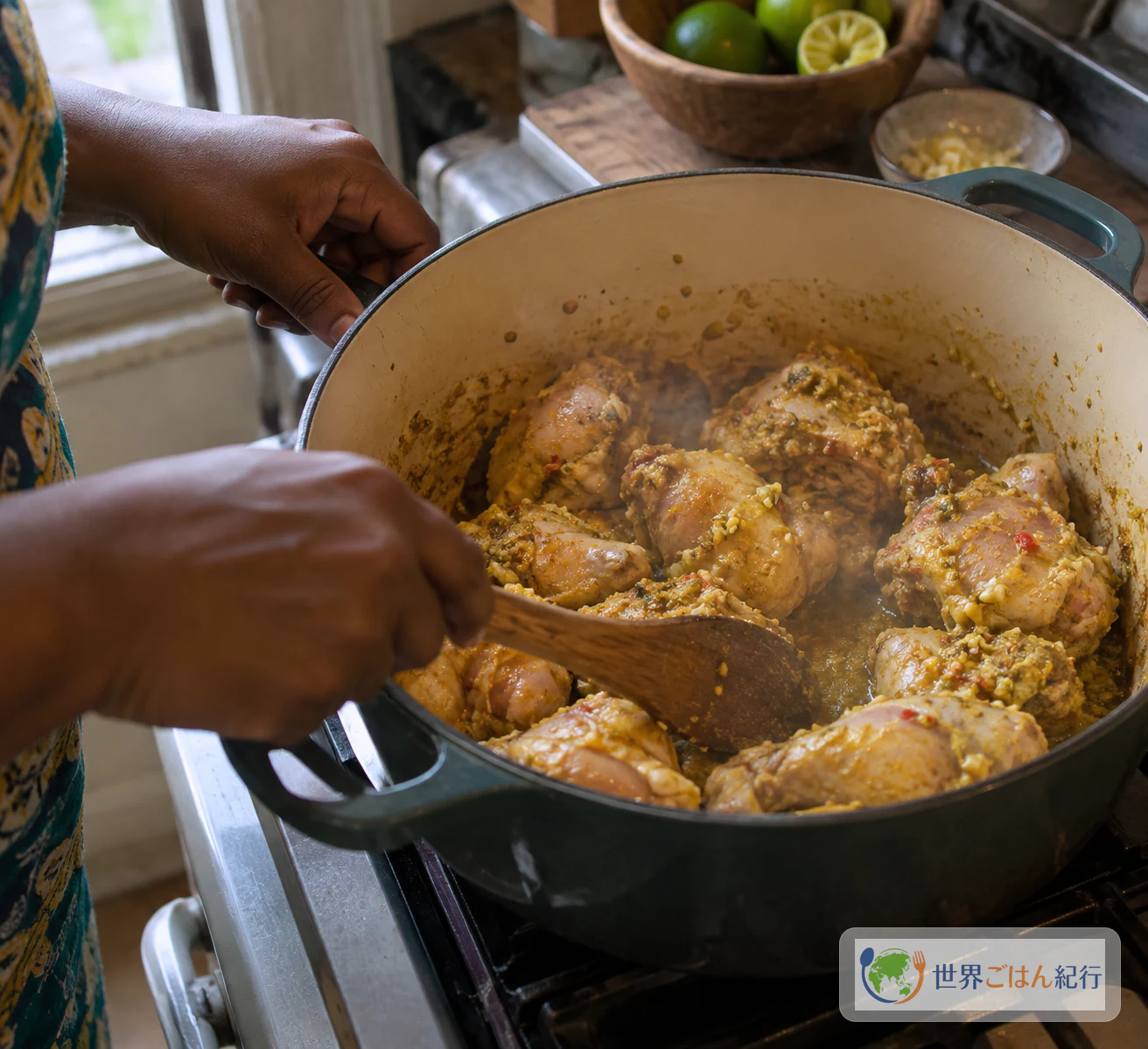
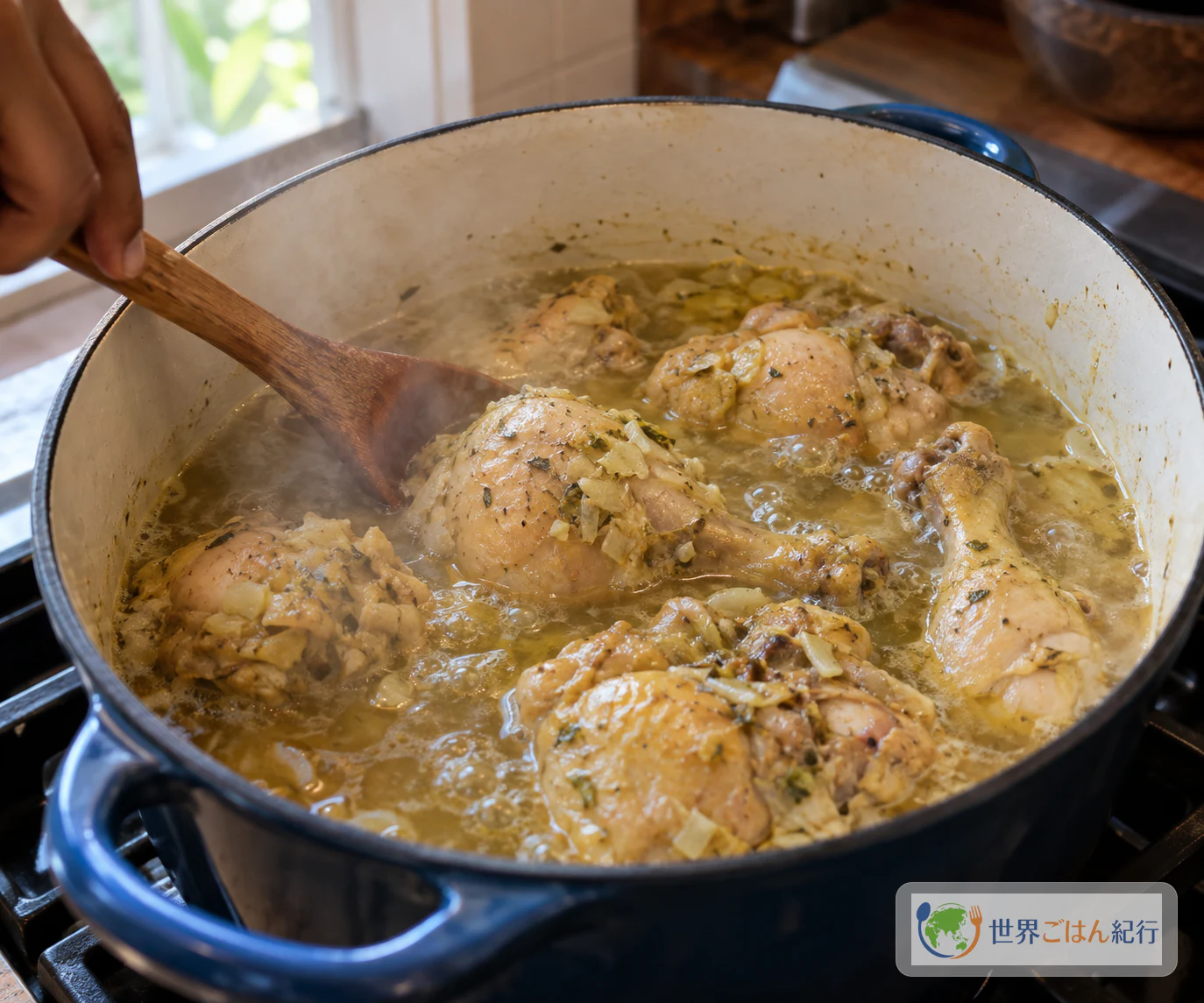
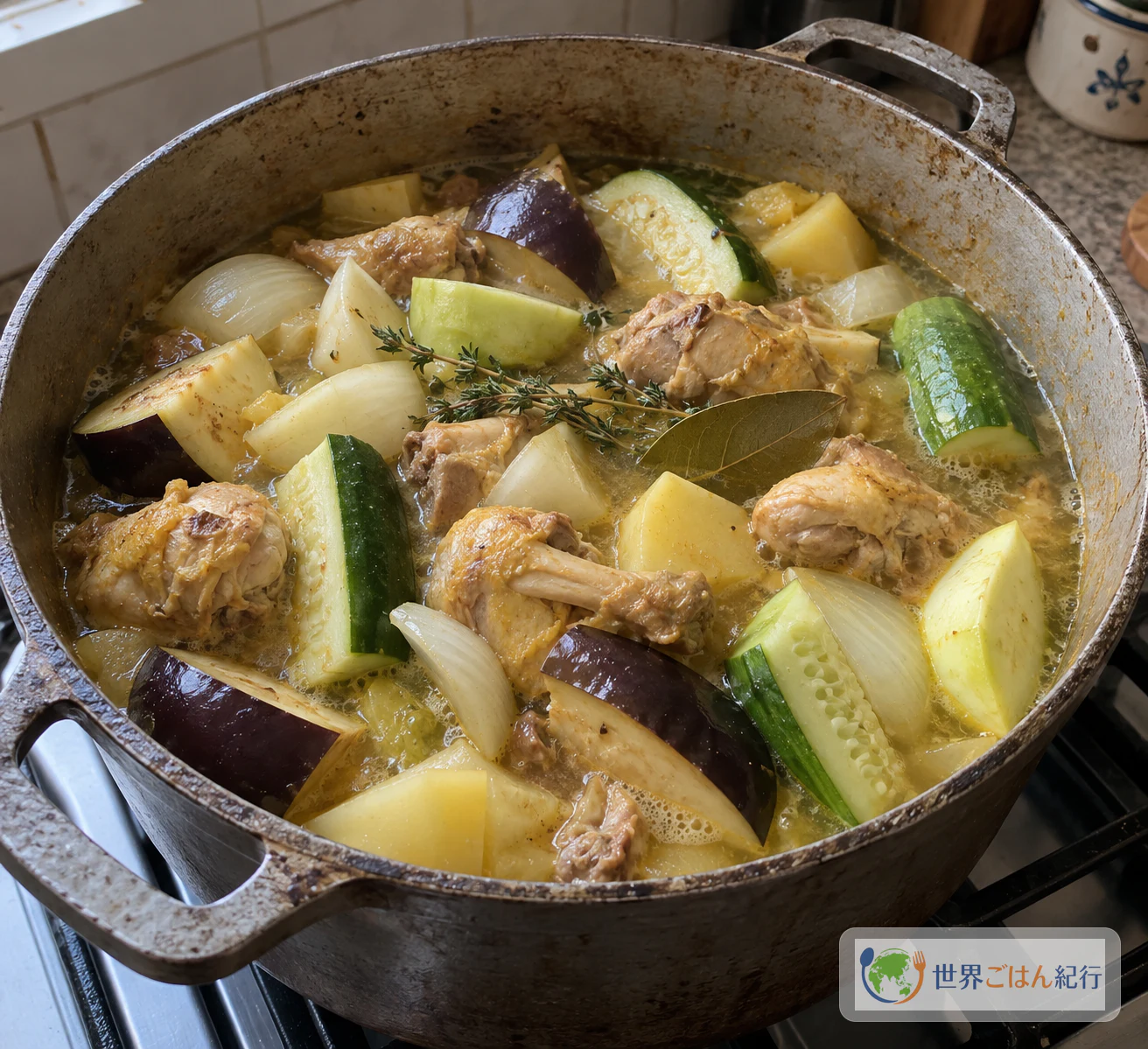
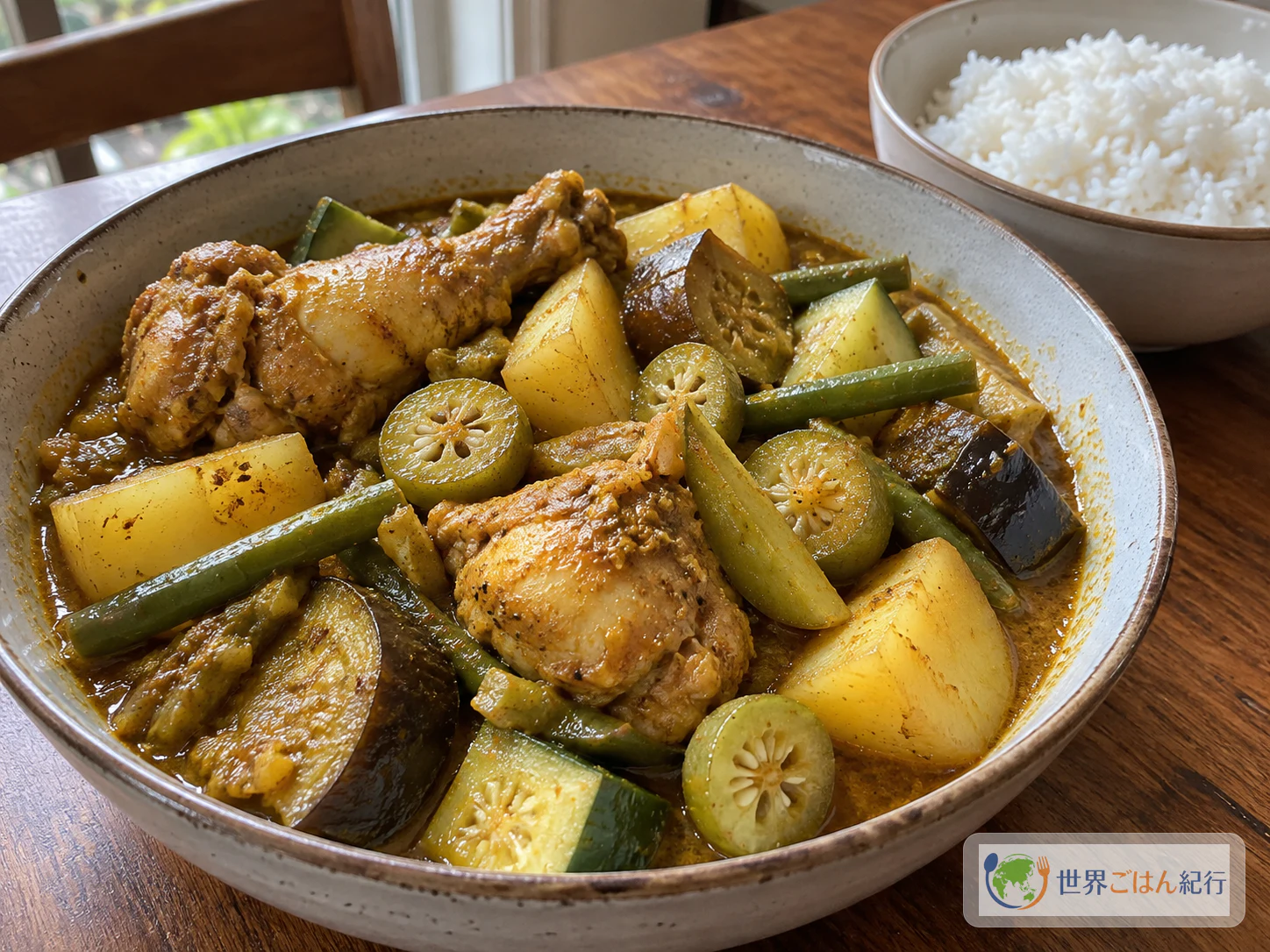
The chicken goes into the pot already fragrant from a night in lime, garlic, cloves and allspice. After a few minutes on the heat, the pot fills up: chunks of potato, skin-on eggplant, onion, a long cucumber and a knobbly spicy one, and broad pieces of unripe green mango. Only near the end do the green beans and the small, star-shaped rounds of bilimbi join, and the last lime is squeezed in once the burner is off.
That order is what gives this colombo its direction. The sourness does not arrive all at once; it is built in stages, and the vegetables are as much a part of the dish as the chicken. This is not a curry-powder chicken curry with a different name, and the sections below explain why the regional name matters.
The recipe here follows one published French Guianese chicken colombo and keeps its ingredients and order intact. It has not been kitchen-tested by our editors, and the source gives neither the weight of the chicken nor a number of servings, so no serving count is given here. For more dishes from the territory, see our French Guiana country page.
What Is French Guianese Colombo?
France's official tourism website lists colombos among the culinary specialties of French Guiana and describes them as a stew of meat and vegetables. French Guiana is an overseas region of France on the South American mainland; it is not the same place as the independent country of Guyana next door.
The name is shared. The tourism boards of Guadeloupe and Martinique also present colombo as part of their own island cooking, and Martinique's describes colombo powder among the spices used in its cuisine. Because the same word covers dishes from different places, it helps to say which colombo you mean.
The Comité du Tourisme de la Guyane addresses this directly. In a food publication from the French Guiana tourism committee, chef Laurent Redlinger describes Guianese cooking as diverse and often confused with Antillean cooking. For the Guianese colombo, he points to concombre piquant (a spicy cucumber) and bilimbi as characteristic, to a sour profile, and to a dish that is not swimming in liquid: in his description, no water is added and the stew cooks in the moisture released by the vegetables.
The Recipe Followed Here, and Where Accounts Differ
The method below follows "Colombo de poulet" by Sabrina François-Vincent on Ti Molokoy (published 2022-04-29, filed under Guianese cooking). It calls for one whole chicken, cut up, along with green mango, two kinds of cucumber, green beans and bilimbi. The portion field on that page is blank and the chicken's weight is not given, so this article does not estimate a yield.
There is one real difference worth knowing before you cook. The Ti Molokoy recipe adds water twice: first just to cover the chicken for a short simmer, then again to come halfway up the vegetables. Chef Redlinger's regional description says the Guianese colombo is made without added water. The materials available do not explain the difference, and neither account is treated here as the only correct one. The recipe is followed as written for the steps; the chef's description is offered as regional background.
A Petit Futé travel-guide recipe for a Guianese chicken colombo uses water and optional coconut milk. It is mentioned only to show that households vary; coconut milk is not part of the recipe below. Délices de Guyane, a local business, also sells a colombo sauce made in French Guiana, which gives a sense of how the dish appears in local products.
Timing also needs a note. The Ti Molokoy page lists about 30 minutes of preparation (not counting the overnight rest) and about 30 minutes of cooking. The times stated inside its steps, however, come to roughly 45–50 minutes of cooking: about 5 minutes for the chicken, about 30 minutes for the vegetables, and 10–15 minutes at the end. Plan around the step times, and judge by how the vegetables look and feel. The overnight marinade is separate from all of these.
Where the name colombo comes from, and how the dish arrived in French Guiana, is not established by the materials used here, so this article does not assert an origin story.
Ingredients for One Whole Chicken
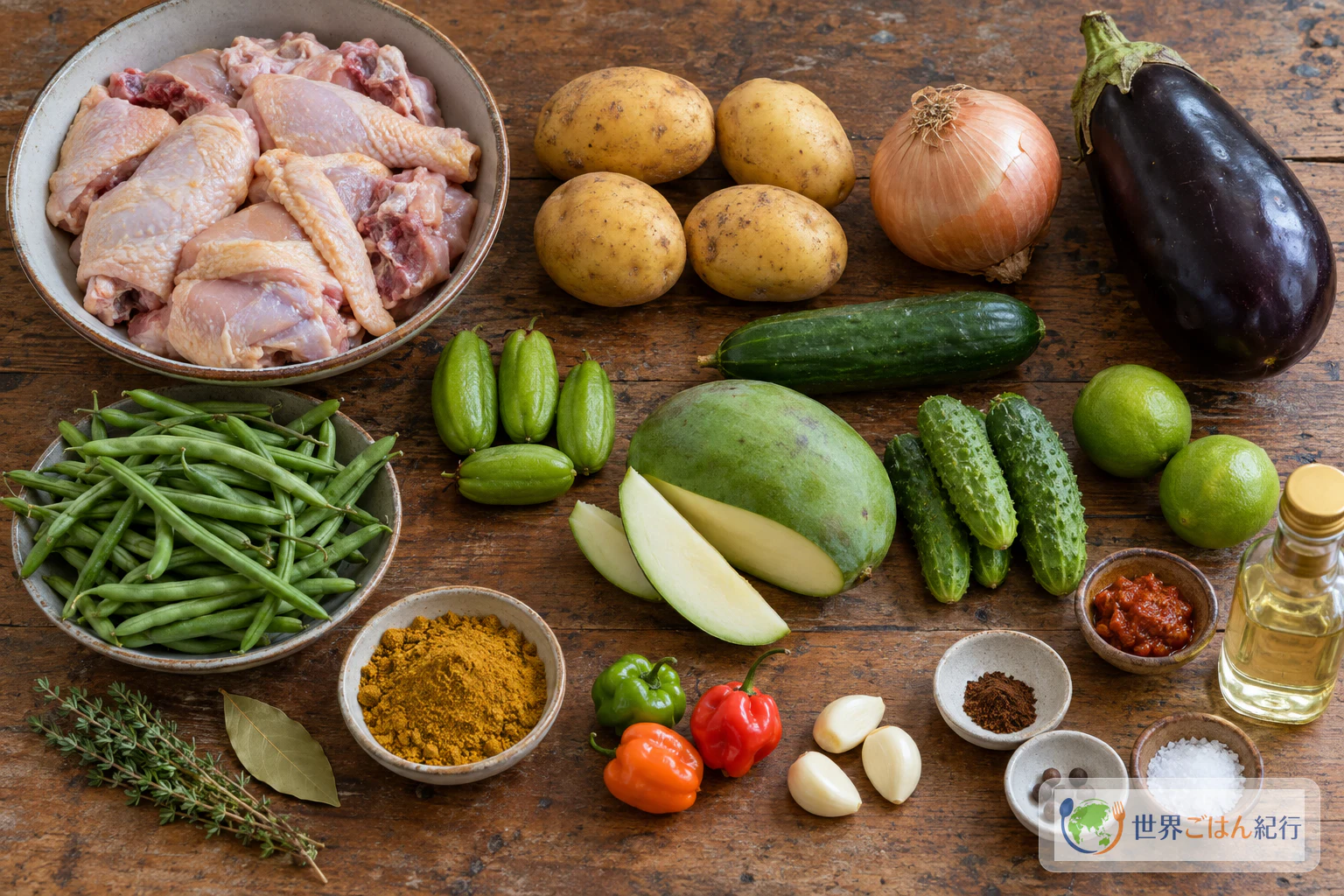
Keep raw chicken covered in the refrigerator while it marinates; do not leave it at room temperature. Make sure the chicken is cooked through before serving. Check the labels of colombo powder and hot pepper paste for allergens and shared-facility statements; spice blends vary by product.
Equipment
- Heavy-bottomed pot large enough for one cut-up chicken and the vegetables
- Bowl or container with a cover, for marinating in the refrigerator
- Cutting board and kitchen knife
- Small bowl for dissolving the colombo powder
- Wooden spoon or spatula
Choosing and Substituting: What Can Change and What Should Not
Spicy cucumber (concombre piquant). An ordinary salad cucumber can be used in its place. The texture will be similar, but the gentle heat and regional aroma that the Guianese colombo is known for will be weaker.
Long cucumber. A salad cucumber can be used instead.
Green beans. Fresh or frozen both work, as long as they are trimmed.
Hot pepper paste. Optional. Leave it out for a milder pot.
Bilimbi. Use bilimbi, fresh or frozen. Lime is not a replacement. Omitting bilimbi makes a different, untested version.
Green mango. This is unripe mango, firm and sour. Ripe, sweet mango is not the same ingredient.
Colombo powder. Do not treat ordinary curry powder as its equivalent. Look specifically for colombo powder (sometimes sold as poudre à colombo) and check the label.
Allspice (bois d'Inde). Allspice is also sold as Jamaica pepper. Check the label to confirm it is the same spice, and use either whole berries or ground, not both.
Piment végétarien. A mild pepper used for aroma rather than heat.
When the Pot Goes Off Course
These are points to watch rather than guarantees; the recipe has not been kitchen-tested.
| What you see | Likely cause | What to do |
|---|---|---|
| Vegetables collapsing into the sauce | Pieces cut too small | Cut medium to large pieces so the vegetables stay distinct; only a few potato pieces should be crushed, on purpose |
| A thin, soupy pot | Too much water added at once | Add water in the stages given: just to cover the chicken, then only halfway up the vegetables |
| Lumps or dry pockets of spice | Colombo powder added dry | Always dissolve it in a little water first |
| Sourness that tastes cooked and flat | Final lime added over the heat | Add the second lime only after the heat is off |
| Not as sour or as aromatic as expected | Spicy cucumber or bilimbi left out or replaced | Expected with substitutes; seek out the regional ingredients next time |
Variations Within the Recipe
- Ordinary cucumber for the spicy one. Expect less heat and a less regional aroma.
- No hot pepper paste. It is optional, so leaving it out keeps the pot milder without changing the method.
- Frozen green beans. Trimmed frozen beans can replace fresh ones.
- Salad cucumber for the long cucumber. Use a salad cucumber instead.
- Without bilimbi. No tested substitute exists here. If you cook without it, treat the result as a separate, unverified version rather than this colombo.
For a version closer to the regional description, without added water, there is no tested recipe in these materials; the steps above keep the two water additions.
Serving
Serve the colombo hot with plain white rice, as needed.
Frequently Asked Questions
How is French Guianese colombo different from the Guadeloupe or Martinique version?
The name is shared, and the tourism boards of Guadeloupe and Martinique both present colombo as part of their cooking. A chef interviewed by the French Guiana tourism committee singles out spicy cucumber and bilimbi, a sour profile, and cooking without added water as Guianese markers, and notes that Guianese cooking is often confused with Antillean. This article does not compare specific Antillean recipes.
What is bilimbi?
Bilimbi (bélimbi in French) is a small, sour fruit that the regional description names as characteristic of the Guianese colombo. Sliced into rounds, it shows a star-shaped cross-section. It goes in near the end of cooking. No substitute is given in the materials.
What if I can't find spicy cucumber?
An ordinary salad cucumber can be used in its place. The texture will be similar, but the heat and aroma of concombre piquant will be missing.
Is coconut milk needed?
Not in this recipe. A Petit Futé recipe for a Guianese chicken colombo includes optional coconut milk, which shows that versions vary, but it is not part of the method followed here.
How many servings does this make?
The source recipe uses one whole chicken but gives neither its weight nor a number of servings, so no yield is stated here.
Can I store leftovers?
The materials used for this article give no storage or reheating guidance, so none is offered here.
Sources
- Sabrina François-Vincent, "Colombo de poulet," Ti Molokoy, 2022-04-29. The recipe followed in this article: ingredients, overnight marinade, preparation, cooking order, listed times, the cucumber substitutions and serving with white rice. Portions and chicken weight are not given. https://timolokoy.com/blog/index.php/recipe/colombo-de-poulet/
- Comité du Tourisme de la Guyane, "Gastronomie Guyanaise – Voyage au pays des saveurs." Interview with chef Laurent Redlinger on the Guianese colombo versus the Antillean one, spicy cucumber and bilimbi, cooking in the vegetables' own moisture without added water, and the diversity of Guianese cooking. https://guyane.media.tourinsoft.eu/upload/Hors-serie-version-compresse.pdf
- Petit Futé, "Cuisine guyanaise – Colombo de poulet." A different Guianese chicken colombo using water and optional coconut milk; used for comparison only. https://www.petitfute.com/v36609-cayenne-97300/guide-touristique/c117728-cuisine-guyanaise.html
- France.fr, "A taste of French Guiana's culinary specialties." Colombos listed among French Guiana's specialties, as a stew of meat and vegetables. https://www.france.fr/en/article/a-taste-of-guiana-culinary-specialties/
- Délices de Guyane, "Colombo de poulet." A French Guiana business's chicken colombo product context and locally made colombo sauce. https://www.delices-de-guyane.fr/fr/blog/plats/colombo-de-poulet
- Guadeloupe Islands Tourism Board, "Tastes of Guadeloupe." Colombo presented as a dish of Guadeloupe. https://www.lesilesdeguadeloupe.com/en/explore/gastronomy-spirits/tastes-of-guadeloupe/
- Martinique Tourism Committee, "Exploring the food of Martinique." Multiple cultural influences in Martinique's cooking and the use of spices such as colombo powder. https://www.martinique.org/en/about/culture/gastronomy