Diddle-dee Jam: Red Berries, Sugar and a Scone at Teatime
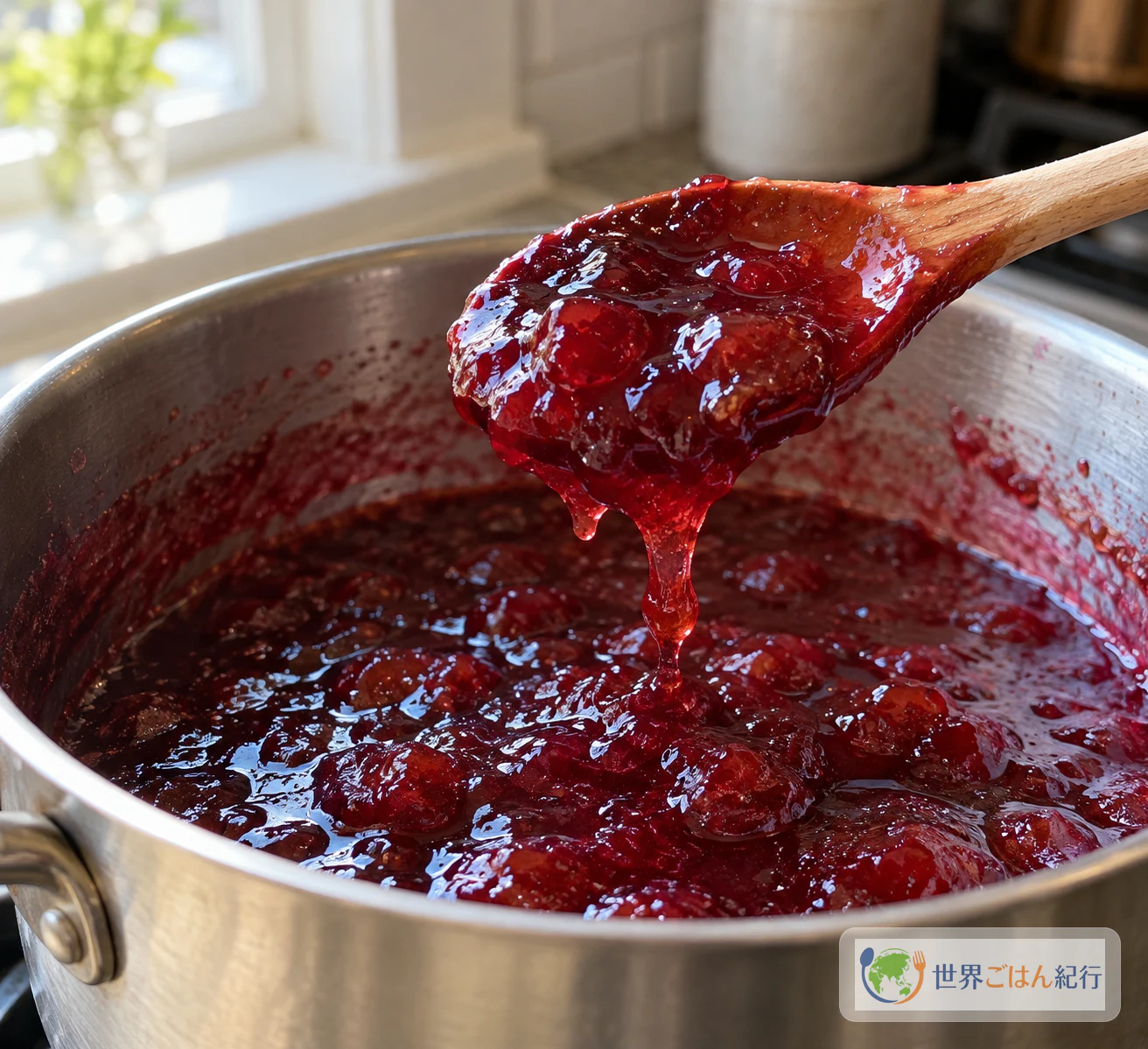
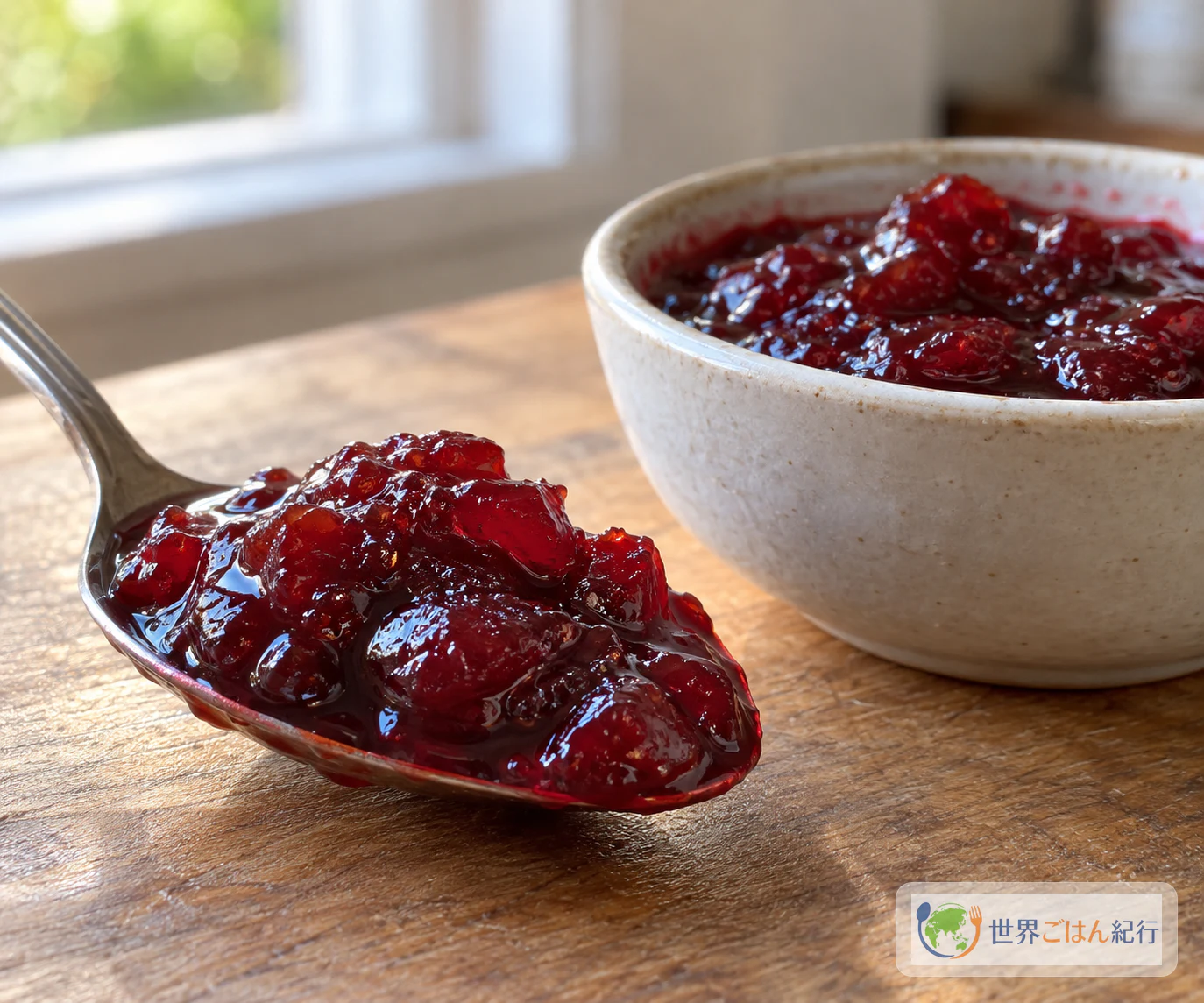
Two ingredients in equal weight, cooked to the setting point. Nothing else goes in, and the finished jam belongs in the refrigerator.
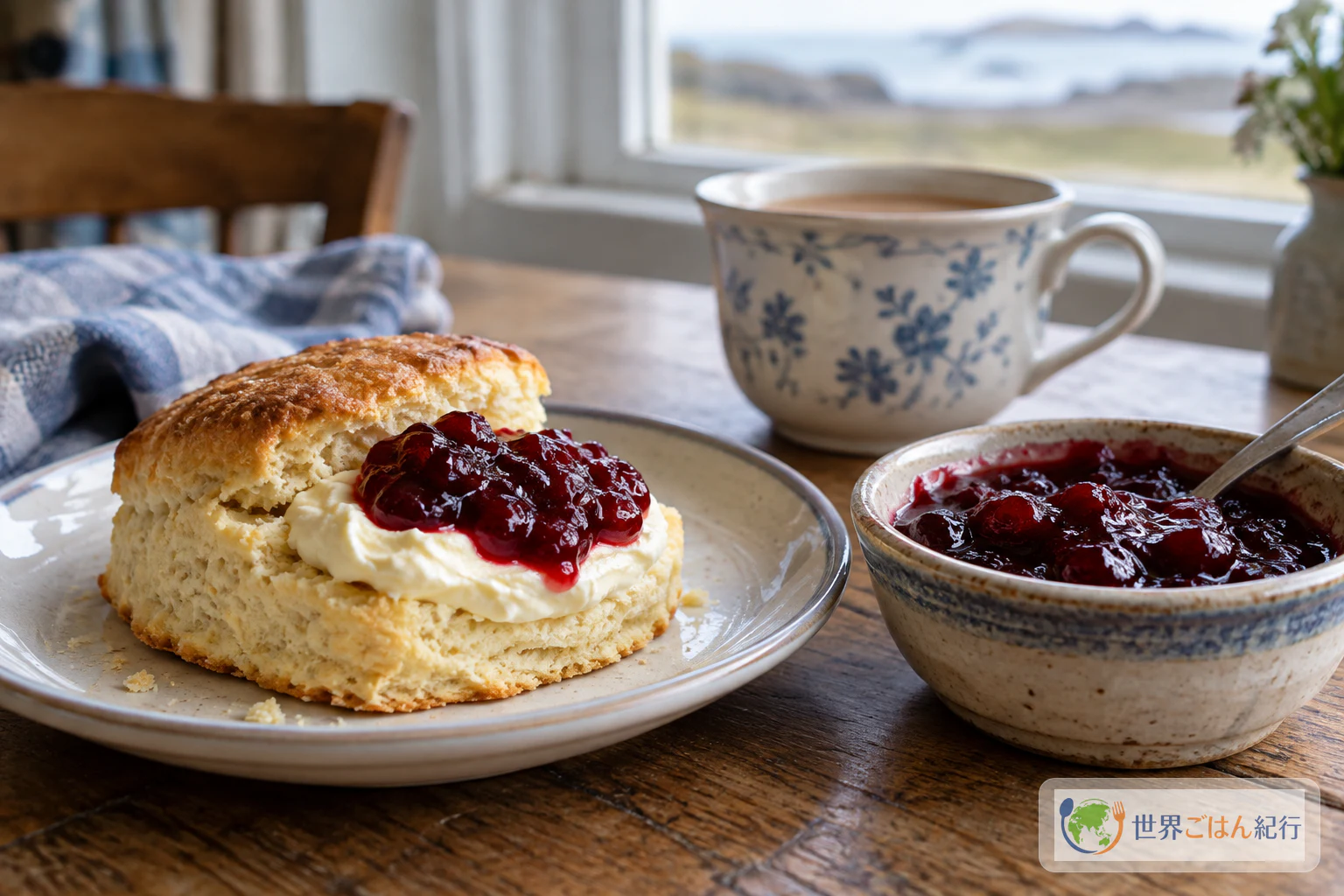
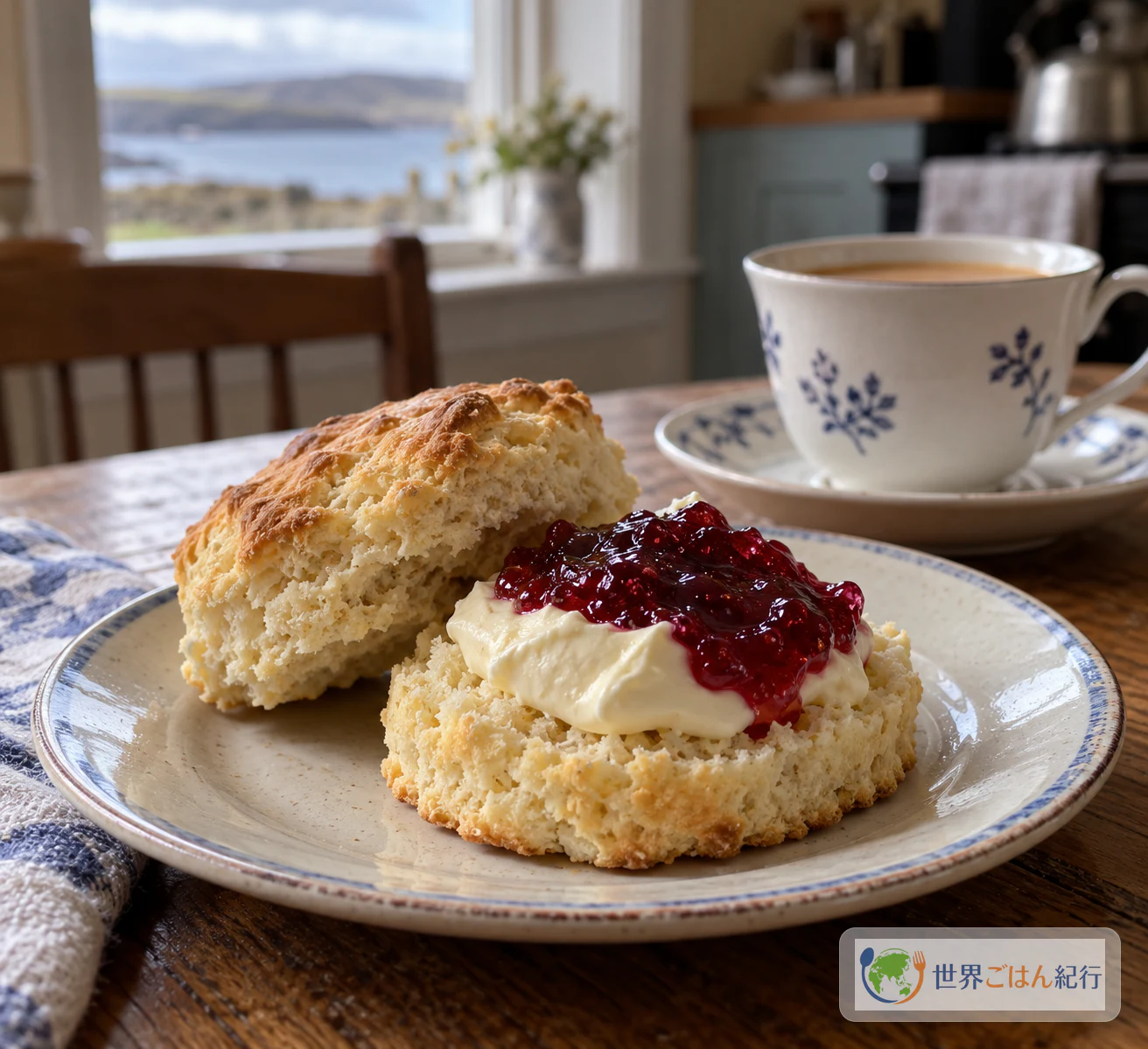
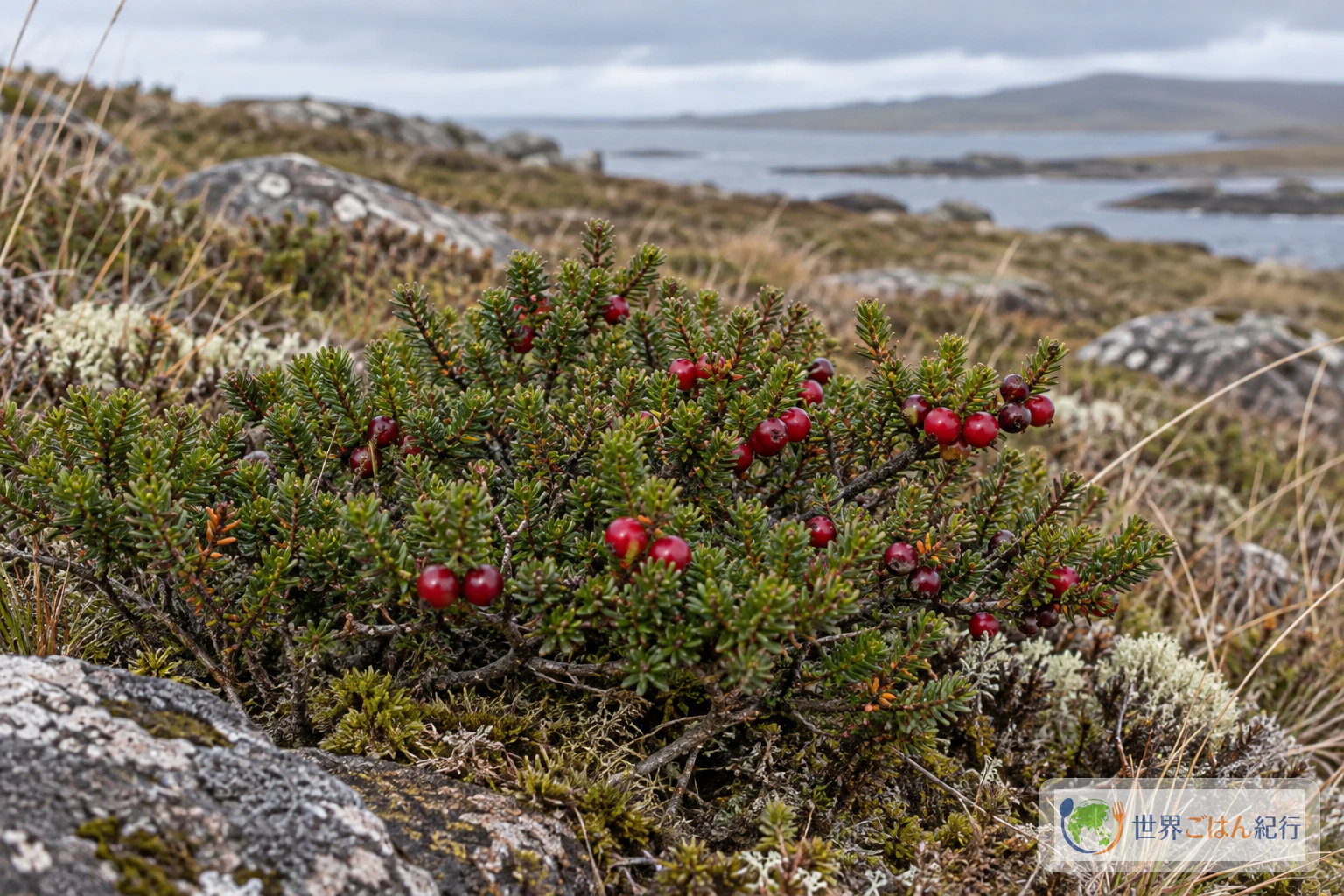
Along the track at Bluff Cove Lagoon in the Falkland Islands, low diddle-dee shrubs carry bright red berries. Upland geese eat them, and so do the visitors to the Sea Cabbage Café, in a different form. The café says that wild berries are hand-picked in autumn and made into jam by Hattie, then served with scones and fresh cream.
The Falkland Islands Tourist Board also recommends trying diddle-dee jam. Its food page mentions smoko, a break with tea or coffee and home-baked treats, and a scone with this jam suits that kind of pause well.
The recipe here rests on one short line from a local newspaper, Penguin News, in its January to April 1995 issues:
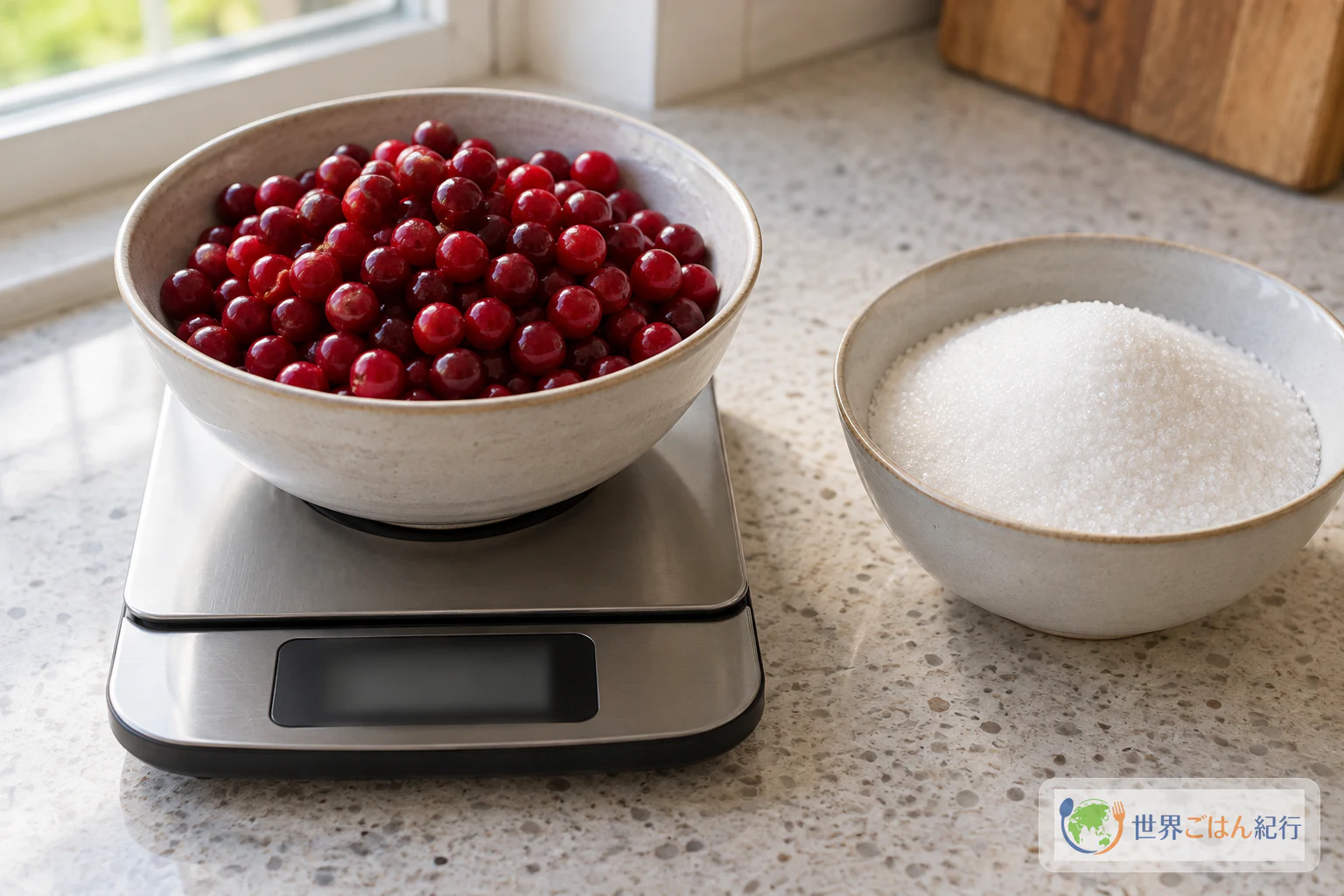
For Diddle-dee jam - per lb. of berries/1 lb sugar and stew until setting point.
We know this line from a search-index excerpt, because the archive's full PDF could not be opened. It gives no time, temperature, water, lemon, pectin, jar treatment, storage directions or yield. It is an archival recipe fragment, not a verified modern standard or the only way the jam is made on the islands.
To make the line usable, we have added two things from the National Center for Home Food Preservation (NCHFP) at the University of Georgia: general ways to check the setting point, and general refrigerated storage guidance. These are editorial additions, not part of the 1995 record. They were not written for Empetrum rubrum, whose pectin content is unverified.
This recipe has not been kitchen-tested. It is not a complete or validated process for long-term preserving in jars, so this article covers refrigerated jam only.
Ingredients: Equal Weights of Berries and Sugar
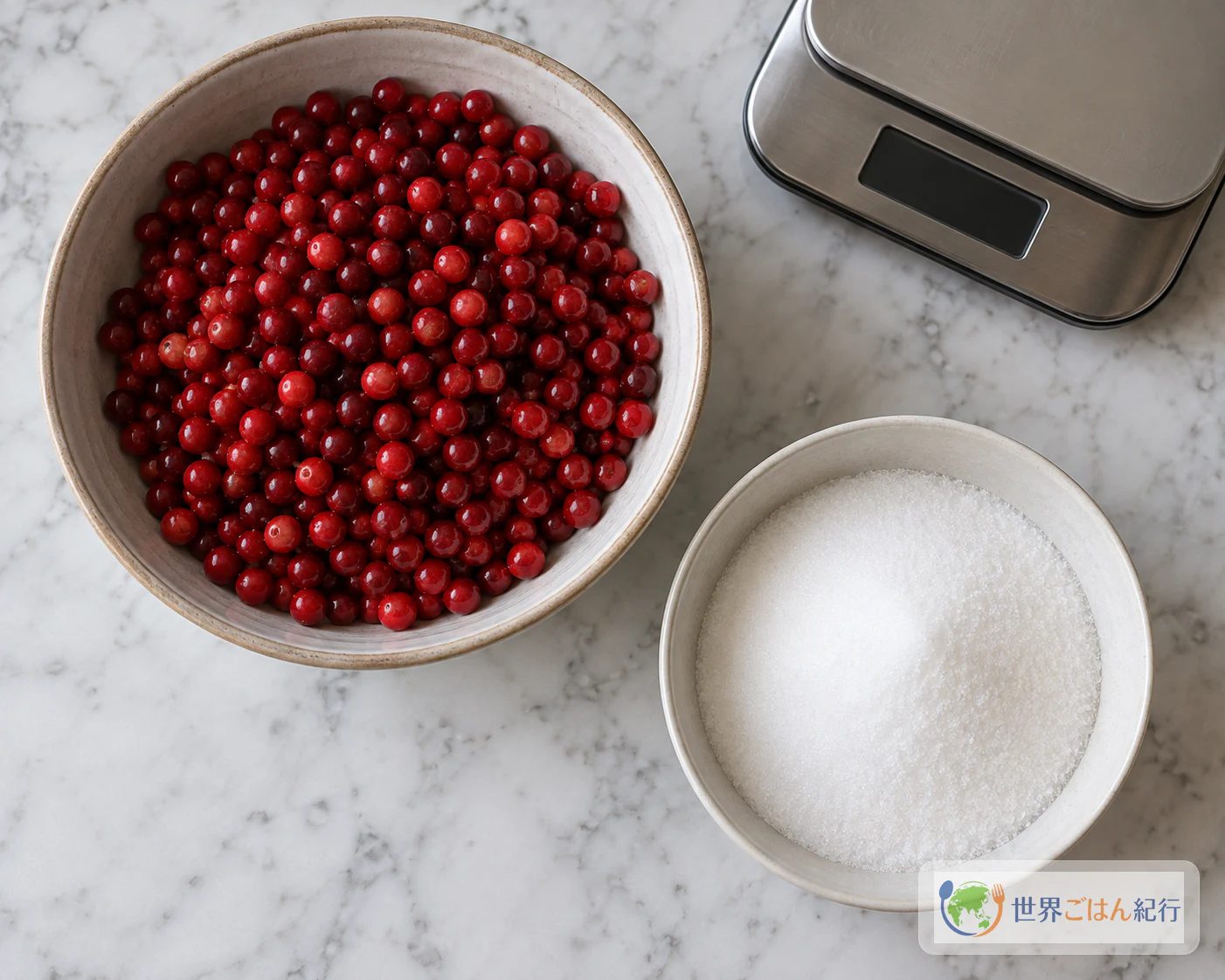
Do not add water, lemon or pectin.
Equipment
- Kitchen scale
- Two bowls
- Saucepan
- Wooden spoon
- Cool metal spoon, for the spoon test
- Small plate, for the freezer test
- Thermometer, for the temperature test (optional)
- Container for keeping the jam in the refrigerator
Finding the Berries and Thinking About Substitutes
We have not confirmed a dependable retail source for these berries, so this article does not assume you can buy them.
Other fruit: Lingonberries, cranberries and red currants may look similar or share some sharpness, but they are different ingredients. We can't promise the same flavor or set from them. Moving the 1:1 ratio across to another fruit doesn't guarantee a finished jam, so treat any such version as a separate recipe that needs its own testing.
Wild picking: We do not recommend foraging for this jam. Identifying the species, having permission to pick on the land and possible contamination are all real concerns. Pictures, including those in this article, are not a basis for deciding that a wild berry is safe to eat.
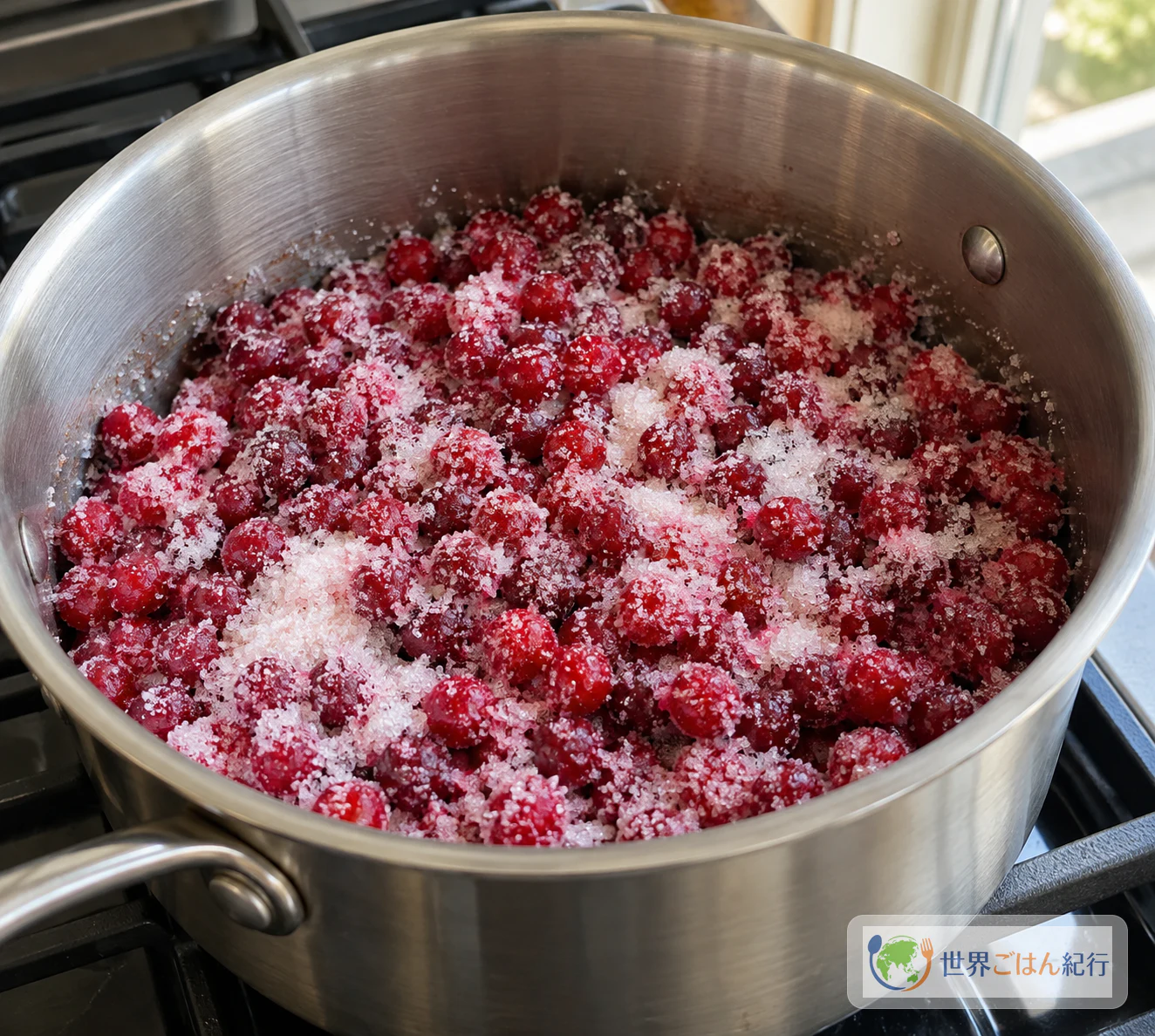
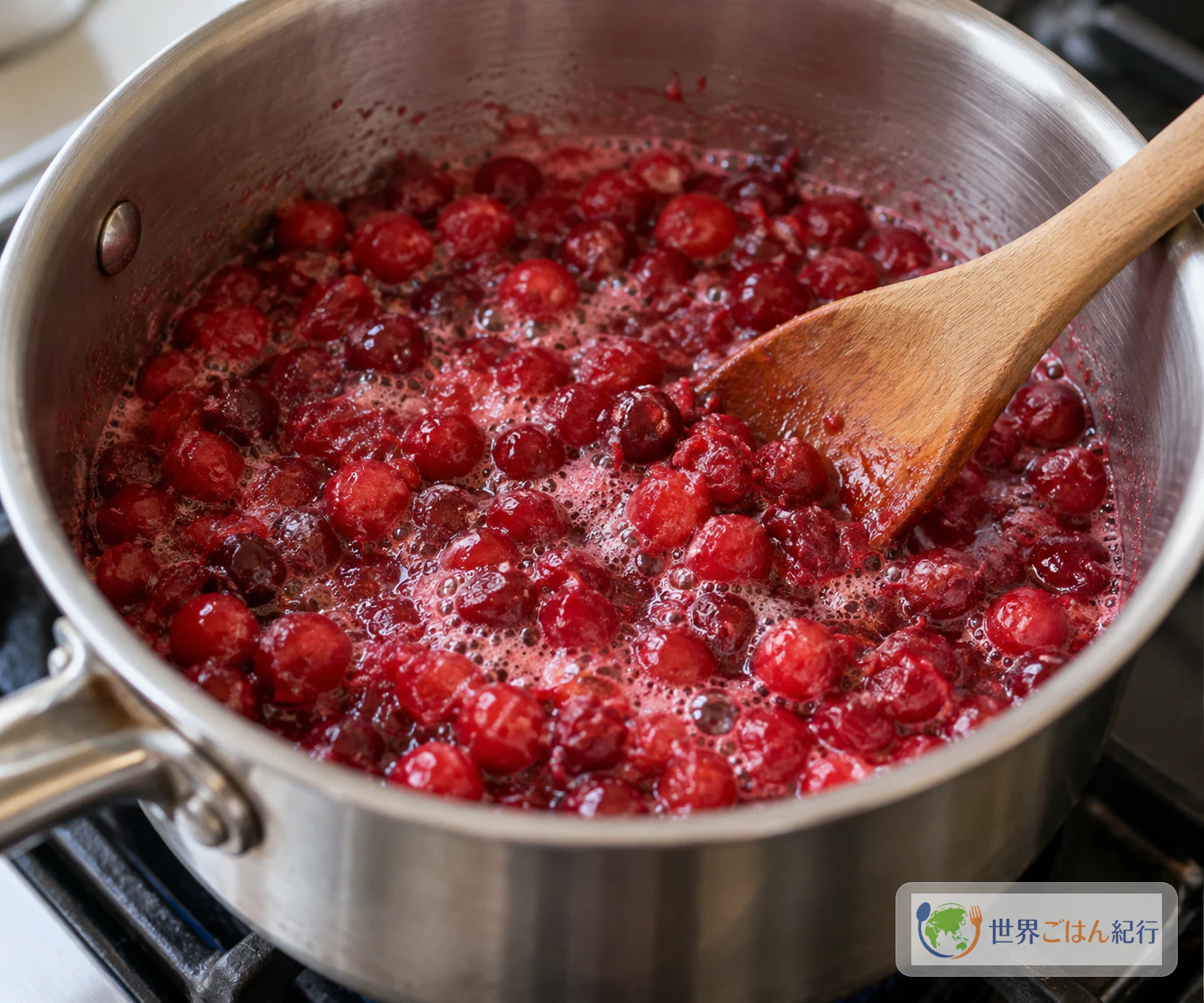
Method: Cook to the Setting Point
Ripeness, pan size and heat all vary, so judge the jam by the checks in step 4, not by the clock.
Storage: Keep It in the Refrigerator
Once the jam is made, refrigerate it at 40°F (about 4°C) or lower. After opening, aim to use it within about 1 month. This comes from NCHFP's general guidance for full-sugar cooked jam, and it is not a guarantee for this particular berry.
If you see mold, or notice a yeasty, alcoholic or fermented smell, discard the entire contents. Don't just scrape off the affected part.
This article does not cover room-temperature storage or boiling-water canning. NCHFP does publish a berry jam recipe with jar processing, but it uses a different ratio, so its processing times are not applied here.
Troubleshooting
| What you see | What it may mean | What to do |
|---|---|---|
| The jam fails the spoon or plate check | It has not reached the setting point yet | Return it to the heat, cook further and check again, without adding water, lemon or pectin |
| You are cooking well above sea level | The 220°F target is too high for your altitude | Subtract 2°F for every 1,000 ft, or use the spoon or plate check |
| The jam still seems loose after repeated checks | The pectin content of these berries is unverified, so a firm set can't be promised | Judge by the checks only, and keep whatever you make in the refrigerator |
| You want a less sweet jam | A reduced-sugar version has not been confirmed | Treat it as a different recipe; the storage guide above is for full-sugar cooked jam |
| You used another fruit and the result is different | It is a different ingredient | Treat it as a separate recipe, not a failed diddle-dee jam |
| You find mold or a yeasty, alcoholic or fermented smell | Signs of spoilage | Discard the entire contents |
Variations: What Stays the Same Jam
There is little to vary in a two-ingredient record, and we have no tested variations to offer. These are the nearby options the sources do show:
- Scones and cream: This is the serving documented at the Sea Cabbage Café, and the simplest way to enjoy the jam.
- Stewed berries with cream: The same 1995 excerpt separately describes stewing a pound of berries with three quarters of a pound of sugar and a little water until tender, then cooling them and serving with fresh cream. This is a different dish, and its water and sugar amounts do not belong in the jam.
- Jelly and bottled fruit: A regional flora page records historic use of the berries for jam, jelly and bottling fruit. It gives no method, so we don't offer one here.
The Berry and Its Place on the Islands
The Falklands South Atlantic flora page identifies diddle-dee as Empetrum rubrum, a heath-like evergreen shrub. It flowers in October, and its juicy red berries ripen from January or February. The café describes hand-picking in autumn, so the harvest is best thought of as starting around the end of summer, not on a fixed date.
The flora page also notes that the plant grows in Fuegia and Patagonia. Diddle-dee jam is closely tied to the Falklands, but the shrub is not unique to them, and we make no claim about where the jam first began or how many households make it today.
The berries have not always been reliable. A notice in The Penguin of 19 March 1937 reported a bad season for them and listed tinned red currants, raspberries, loganberries, goldenberries and apples as pie-fruit substitutes. It is an advertisement and not a jam recipe, but it offers a small glimpse of island cooks adjusting to a poor year.
Frequently Asked Questions
Has this recipe been tested?
No, this recipe has not been kitchen-tested. It combines a short 1995 newspaper record with general home-preservation guidance from NCHFP.
Why is no cooking time given?
The record gives only an endpoint, "setting point," with no time or temperature. Rather than guess at minutes, this article uses the temperature, spoon and freezer-plate checks.
Can I use metric weights?
The ratio is one-to-one by weight, so the sugar should weigh the same as the berries whichever units your scale uses.
Can I use lingonberries or cranberries instead?
You can make a jam from other fruit, but it won't be the same as diddle-dee jam, and this article can't vouch for how it will taste or set. It would need its own recipe and testing.
Can I store it in jars at room temperature?
This article does not offer that option. No jar treatment or shelf storage has been verified for this 1:1 jam, so keep it in the refrigerator.
Can I pick the berries myself?
We do not recommend it. Accurate identification, permission to pick and contamination are all concerns, and pictures can't settle whether a wild berry is safe to eat.
Does it have particular health benefits?
We have not confirmed any nutrition, allergen or health information specific to this jam, so we make no claims.
Sources
- Falkland Islands National Archives, Penguin News, January to April 1995 (search-index excerpt). Source of the 1:1 weight ratio, the setting-point endpoint and the separate stewed-berry passage. The full PDF could not be opened, and the excerpt gives no time, temperature, jar treatment, yield or storage directions. https://nationalarchives.gov.fk/jdownloads/Penguin%20News/1995%20January%20to%20April.pdf
- Falkland Islands National Archives, The Penguin, 19 March 1937 (search-index excerpt). A notice of a poor diddle-dee season, listing substitute pie fruits. It is not a jam recipe, and the PDF itself could not be opened. https://nationalarchives.gov.fk/jdownloads/The%20Penguin/1937%20March%20and%20April.pdf
- Falkland Islands Tourist Board, "Food & Drink In The Falkland Islands | Restaurants, Cafes." Tourism recommendation of diddle-dee jam and description of smoko, read through the search index. https://www.falklandislands.com/things-to-do/eat-and-drink
- Bluff Cove Lagoon / Sea Cabbage Café, "Café." Autumn hand-picking of wild berries, jam made by Hattie, and serving with scones and fresh cream. https://www.falklandpenguins.com/cafe/
- Bluff Cove Lagoon, "Wildlife at the Lagoon." Shrubs and red berries along the track, jam served on scones, and upland geese eating the berries. https://www.falklandpenguins.com/wildlife/
- Falklands South Atlantic, "DIDDLE-DEE Empetrum rubrum, Flora, Falkland Islands." Plant identification, flowering and ripening season, historic uses, and occurrence in Fuegia and Patagonia. https://falklands-southatlantic.com/flower%20diddle%20dee.html
- National Center for Home Food Preservation (University of Georgia), "Testing Jelly without Added Pectin." General temperature, altitude, spoon and freezer-plate checks, not specific to Empetrum rubrum. https://nchfp.uga.edu/how/make-jam-jelly/jams-jellies-general-information/testing-jelly-without-added-pectin/
- National Center for Home Food Preservation (University of Georgia), "Storing Home-Canned Jams and Jellies." General guidance on refrigeration, use after opening and discarding spoiled jam, not specific to Empetrum rubrum. https://nchfp.uga.edu/how/make-jam-jelly/jams-jellies-general-information/storing-home-canned-jams-and-jellies/
- National Center for Home Food Preservation (University of Georgia), "Berry Jams without Pectin." A different recipe and ratio, cited only to explain why its processing times are not applied to this jam. https://nchfp.uga.edu/how/make-jam-jelly/jams/berry-jams-without-pectin/