Yellow Pastry, Spiced Beef: Breaking Open a Jamaican Patty
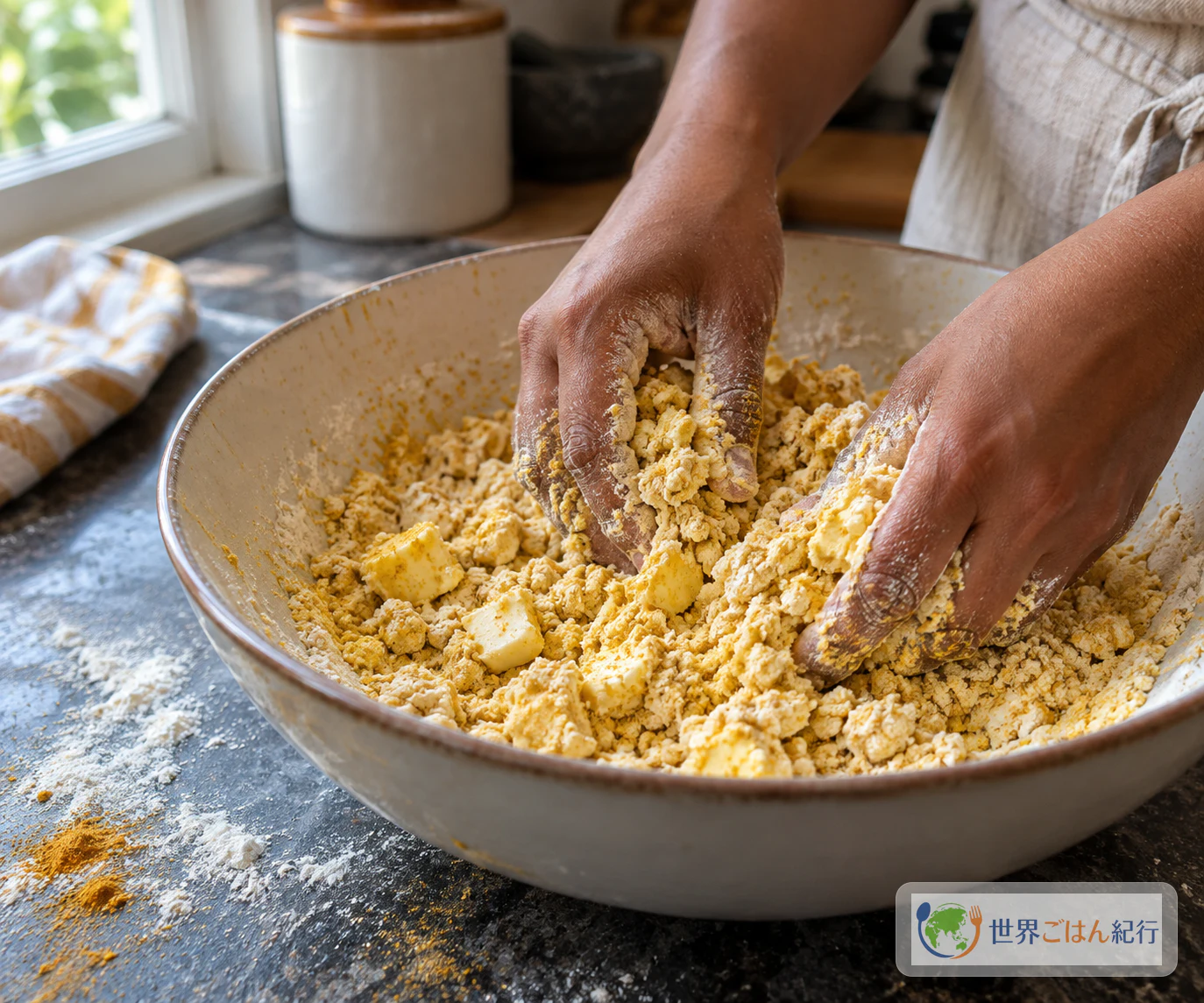
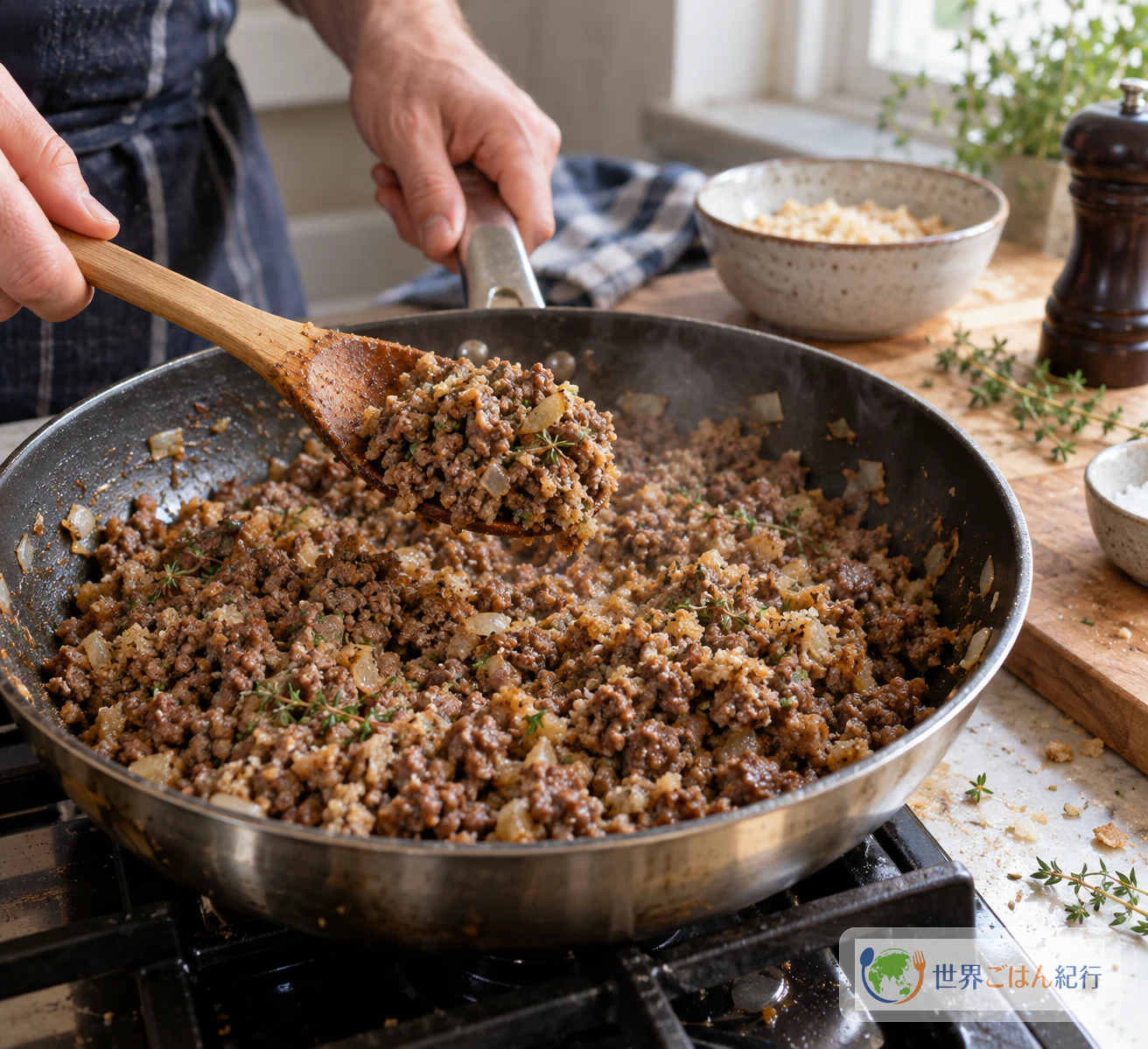
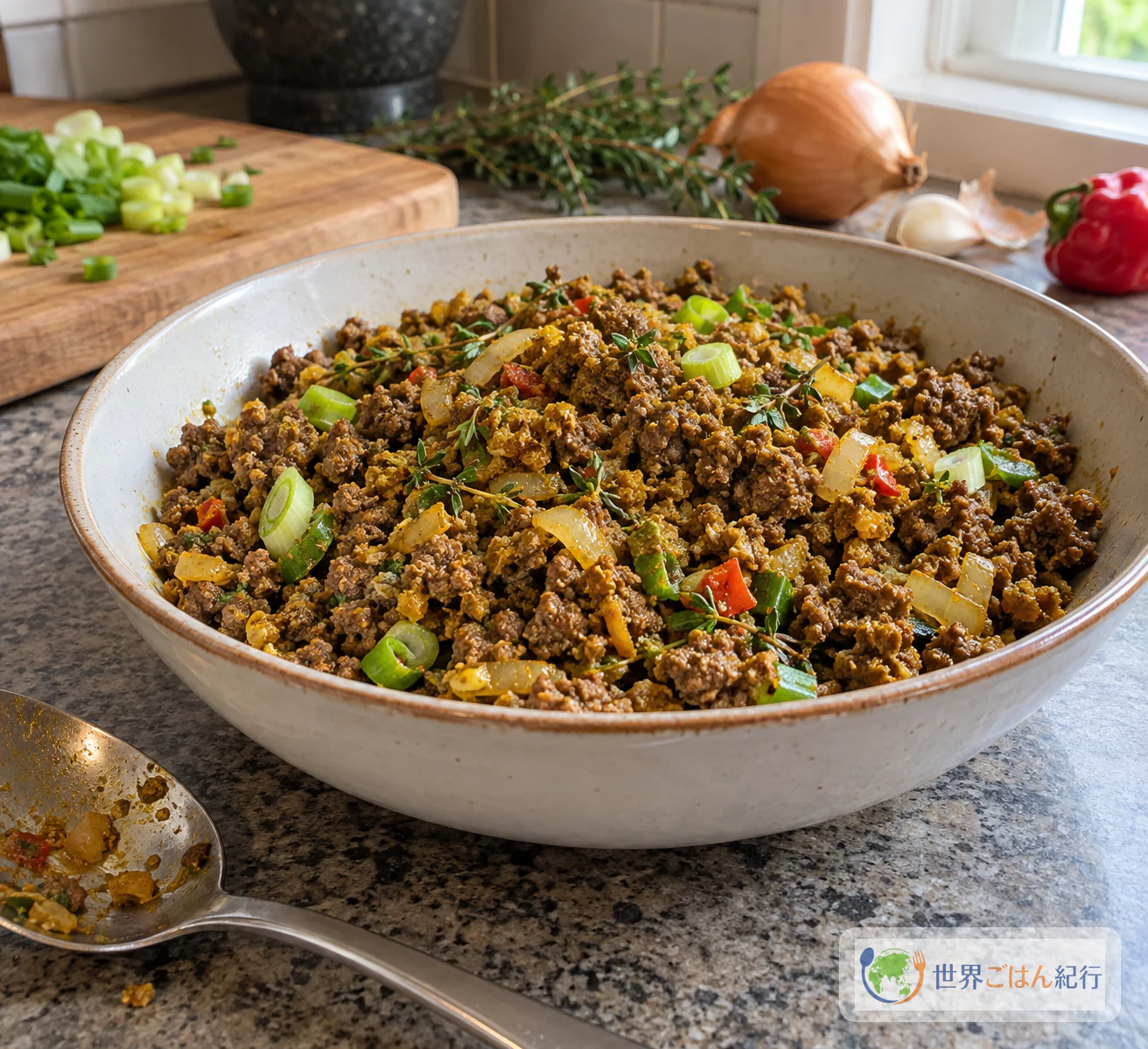
Keep the butter cold so the pastry stays easy to handle. Reduce the filling until it is thick but not dry, and cool it completely before you wrap it.
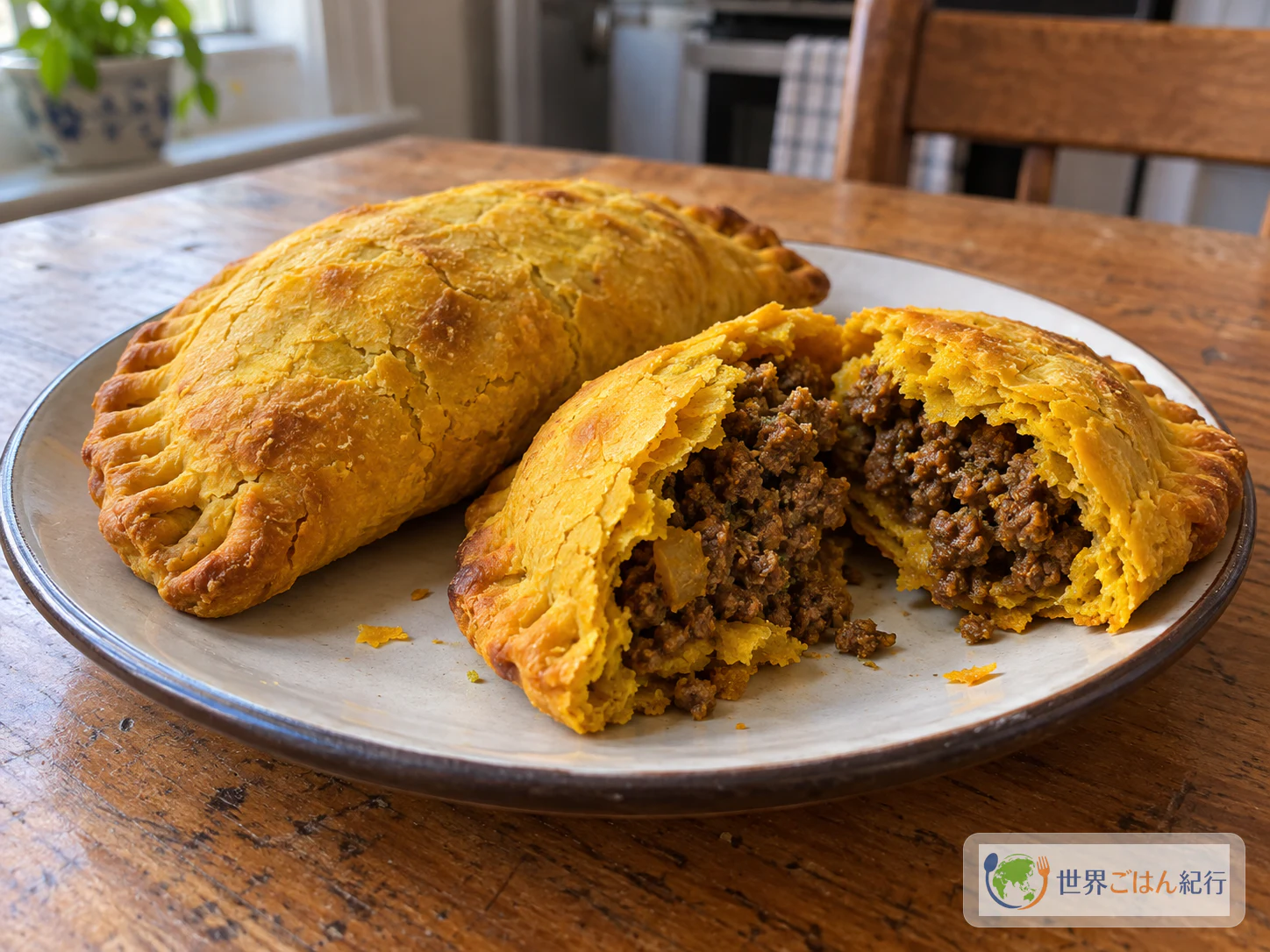
Picture a patty handed over in a paper bag, still hot. Break it in two and the thin yellow pastry gives way to ground beef, with the aroma of curry, thyme and allspice and the fruity heat of Scotch bonnet rising from it. The color comes from turmeric and curry powder worked into the dough itself.
There is no single patty. Ainsley Harriott and Heritage Toronto both describe fillings beyond beef, including vegetables and other meats, and heat levels and pastry that vary from one maker to the next. This article stays with one beef version: Ainsley Harriott's Jamaican Beef Patties, which makes about 10 medium patties. It is one cook's recipe, not the only standard, and it isn't blended with any other formula here.
The amounts, times and yield below are that recipe's published figures. They have not been kitchen-tested for this article, so use the visual cues in each step alongside the clock. For more dishes from the island, see Jamaica.
Ingredients: Pastry and Beef Filling (Makes About 10 Medium Patties)
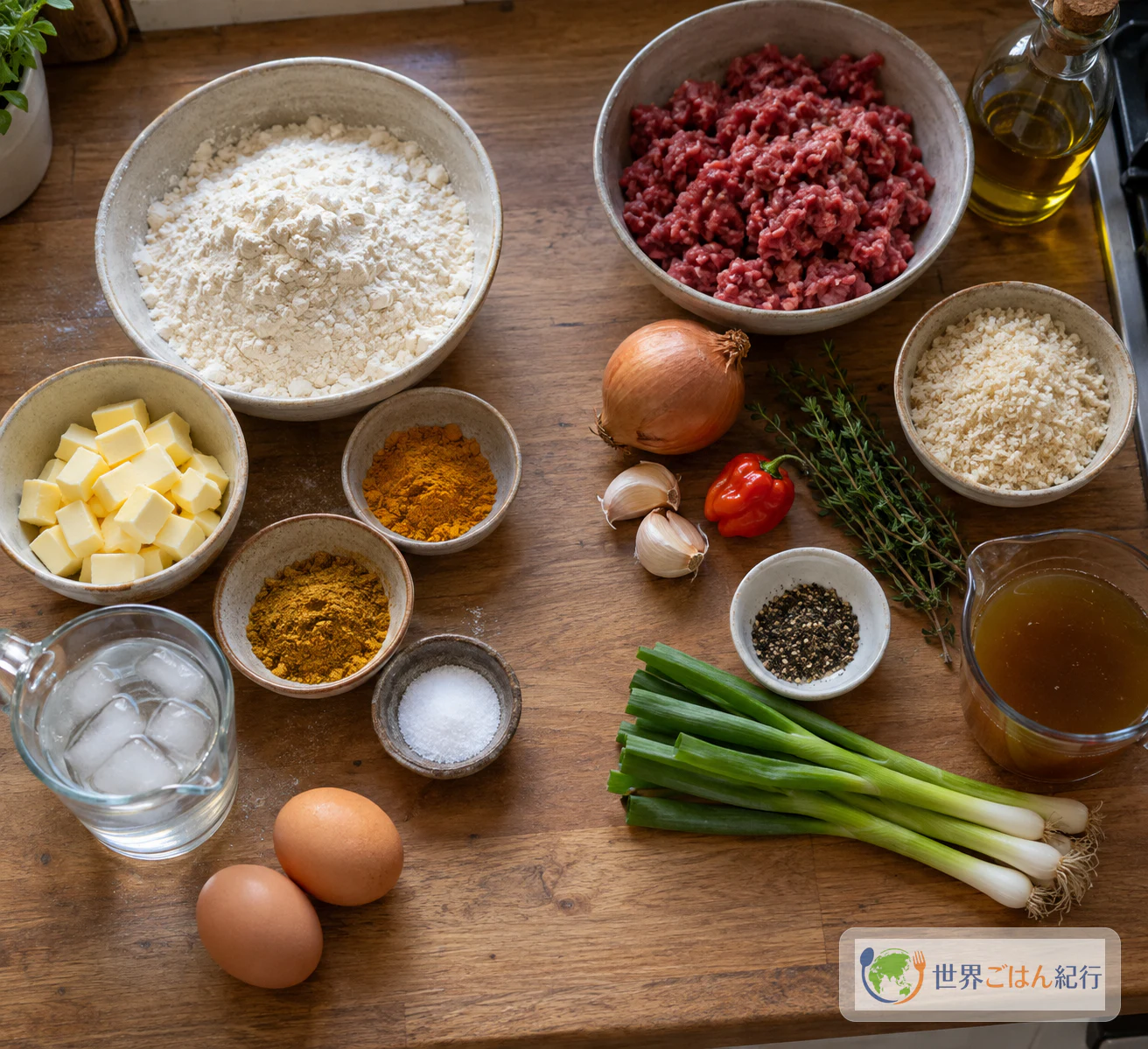
These patties contain egg, wheat and milk (butter). Check the label on your beef stock for its allergens, and check breadcrumbs and curry powder too if you are cooking for someone with an allergy.
Equipment
- Kitchen scale
- Large mixing bowl
- Wrap for chilling the dough
- Frying pan
- Wooden spoon
- Shallow bowl or tray for cooling the filling
- Rolling pin
- Round cutter, 14–15 cm across
- Baking tray and parchment paper
- Pastry brush
- Fork
- Gloves for handling the chili
Choosing the Curry Powder, Chili and Allspice
Most of the shopping is straightforward: flour, butter, eggs, ground beef, onion, garlic, thyme and pepper are everyday items. Three ingredients shape the character of the patty, so they are worth looking for.
- Caribbean or Jamaican curry powder: Ordinary curry powder will work as a stand-in, but blends differ and the aroma will not be the same.
- Scotch bonnet: If you can't find it, another hot chili can supply heat, but its heat and fragrance will differ. Treat this as a different patty, not an exact swap.
- Ground allspice: Five-spice powder and cinnamon are not the same thing and won't reproduce it.
- Thyme: Dried thyme changes the aroma, so don't swap it in for the fresh sprigs in equal measure.
- Breadcrumbs or flour: Fresh breadcrumbs are the base choice here. Plain flour is the alternative, in the same 2 tbsp.
Method: Cold Pastry, Thick Filling
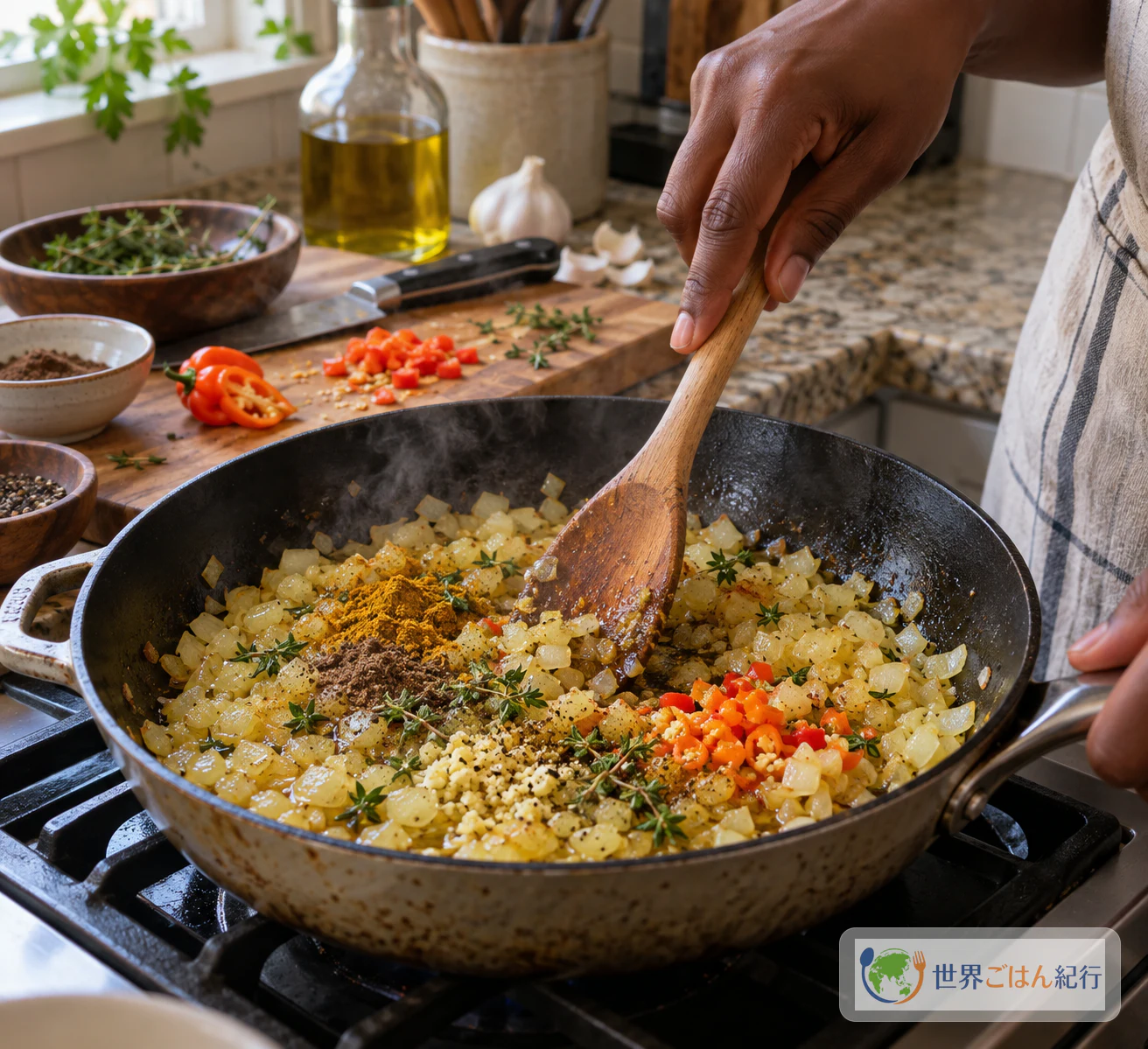
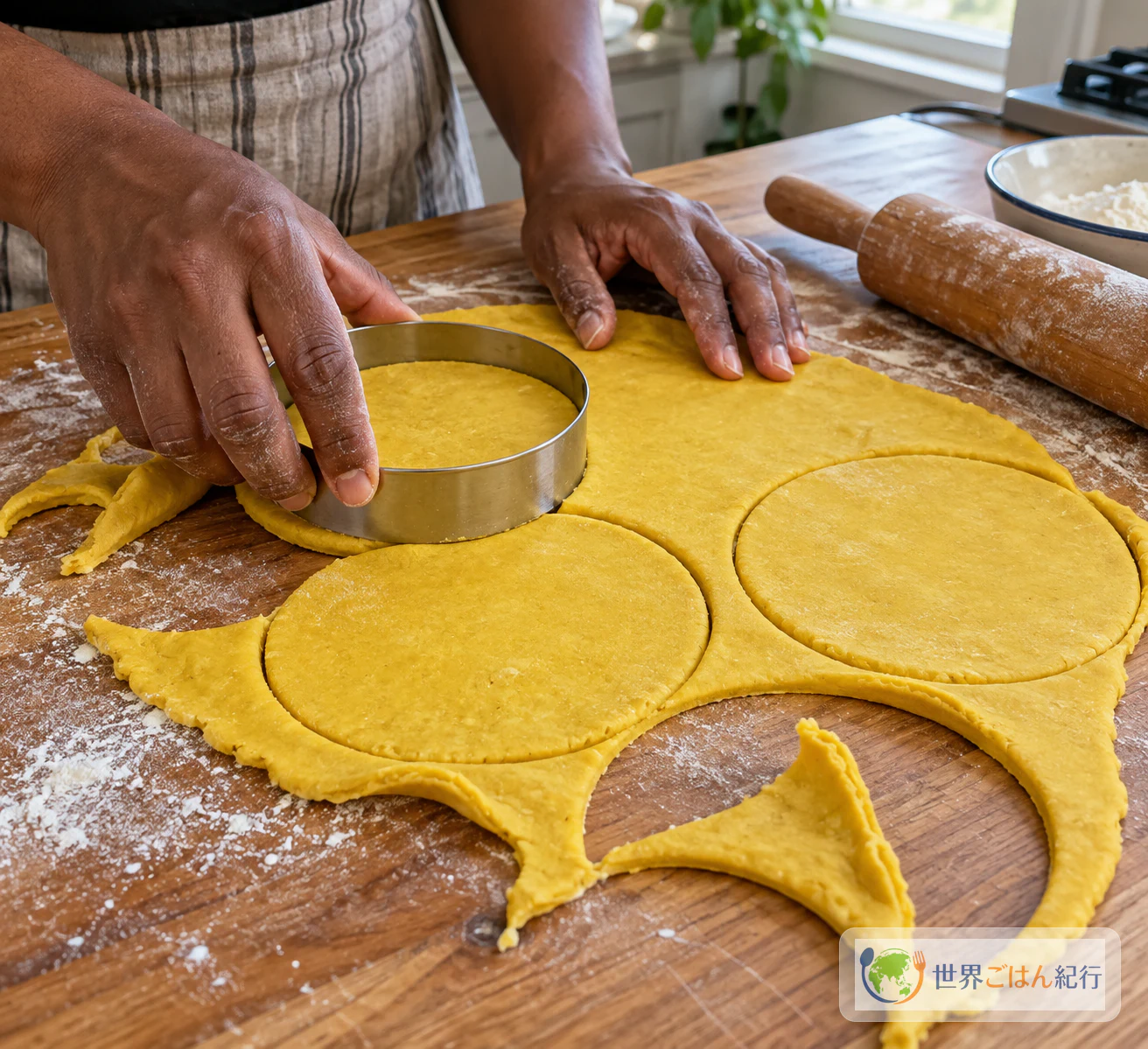
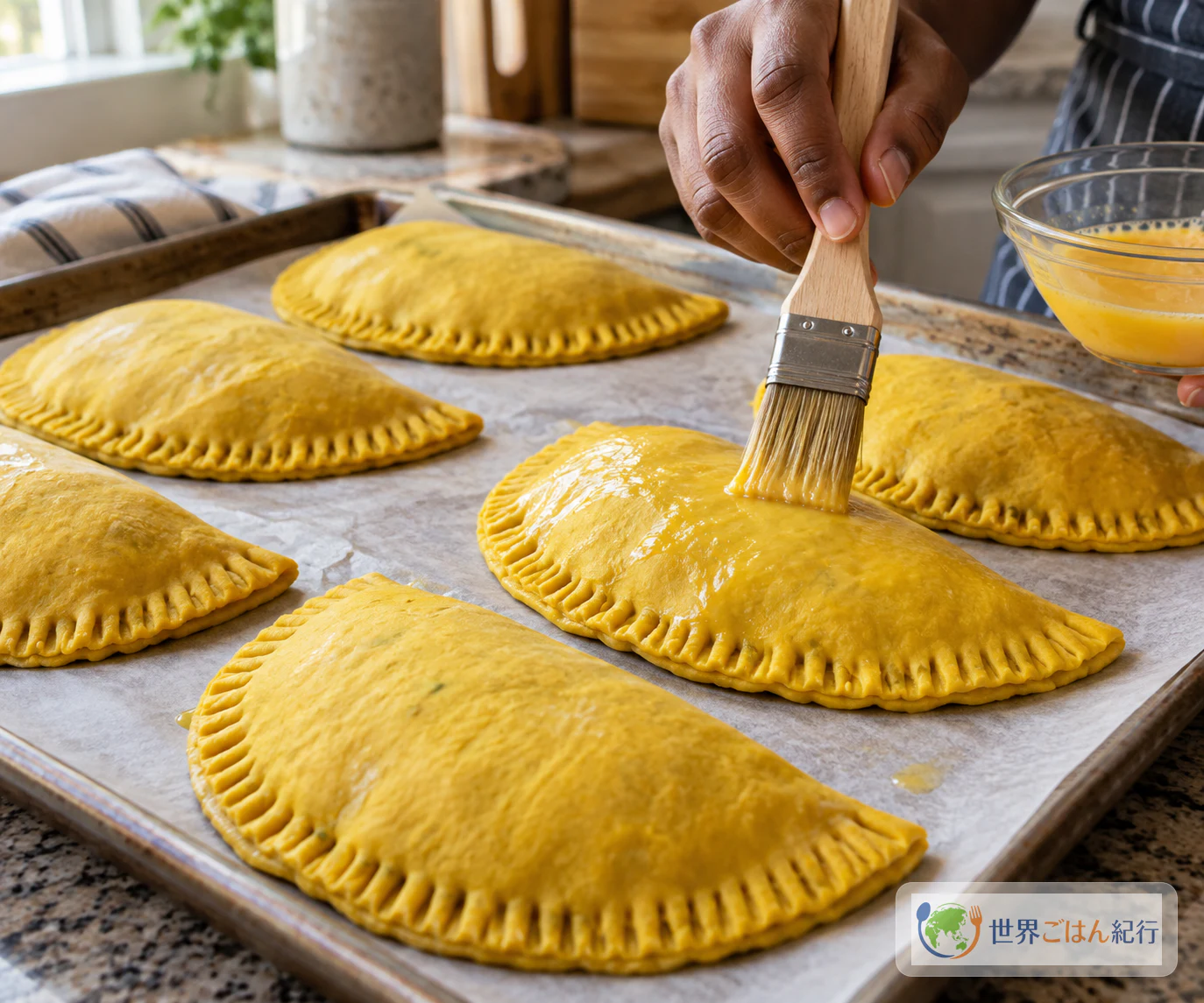
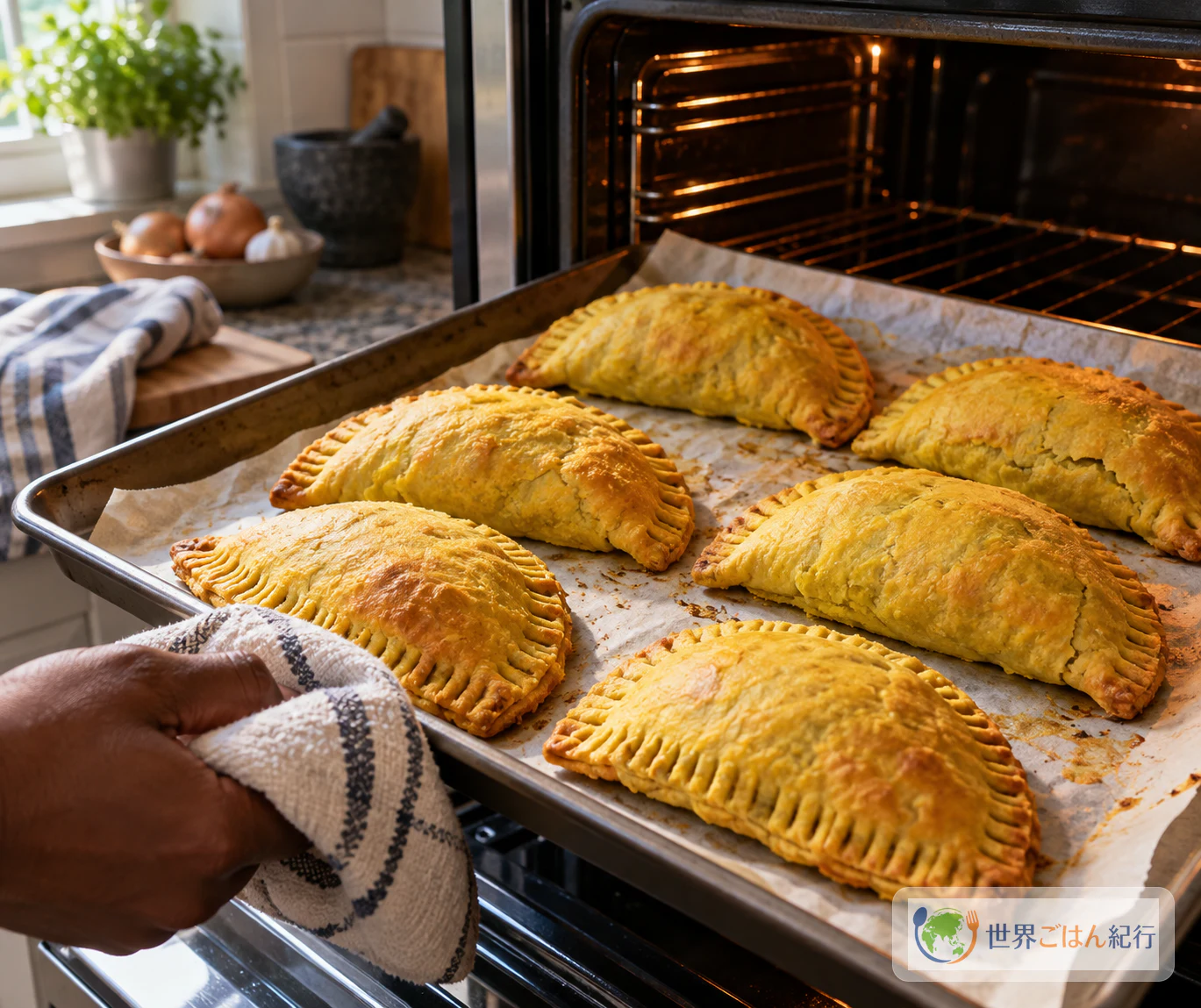
Stop adding water as soon as the dough comes together, and don't wrap the filling until it has cooled completely. Oven times are a guide, so judge the finish by color and crispness.
Troubleshooting: Cracks, Leaks and Soggy Bottoms
| Problem | Likely cause | What to do |
|---|---|---|
| The dough cracks | Too little water, or it is very cold and hard after resting | Add water a little at a time rather than all at once. If it is simply too cold, let it stand briefly before rolling |
| The dough is sticky | The butter may have melted | Return it to the refrigerator, and dust the work surface thinly with flour |
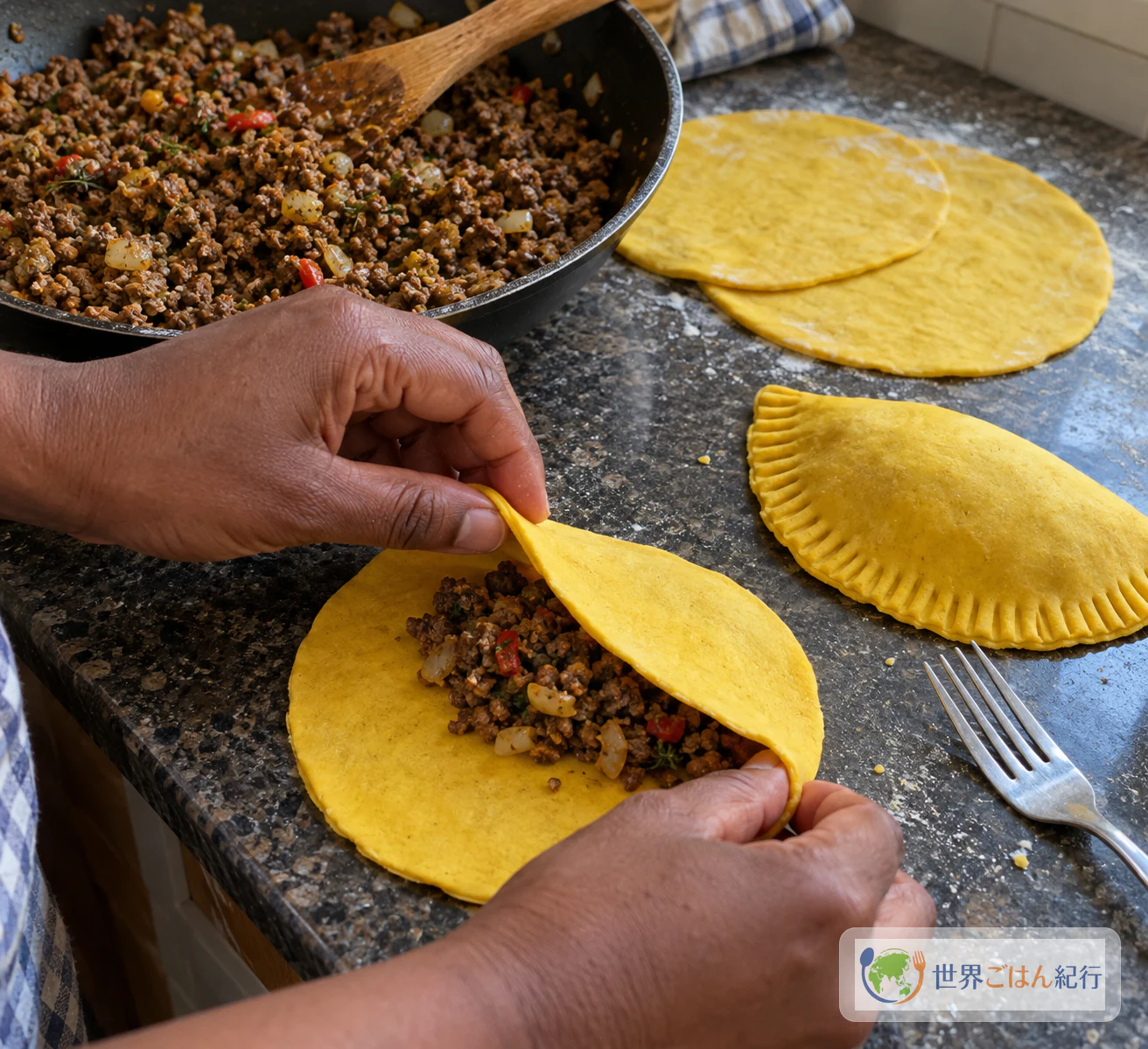
| The filling leaks | Warm filling, overfilling or a messy edge | Cool the filling first, keep the border clean, and press the edges firmly |
| The bottom is damp | The filling was still wet or warm | Give the stock the full 20–30 minutes to reduce, and cool the filling before wrapping |
| Too hot | Too much Scotch bonnet | Next time, start from 1/4 of a chili |
Variations That Stay Separate from the Base Recipe
- Heat level: Stay within 1/4 to 1 Scotch bonnet. The amount changes both the heat and the fragrance, and no amount can promise a mild result.
- Spice balance: You can adjust the spices to your liking while keeping the beef filling. Any change in amounts is your own adaptation and will taste different from the version here.
- Cumin pastry: Add 2 tsp cumin seeds, lightly toasted and bashed, with the flour in step 1. This is an optional, non-traditional addition.
- Spring onion timing: Add the spring onions at the end, as in step 5, to keep their fresh aroma.
Serving: With or Without Coco Bread
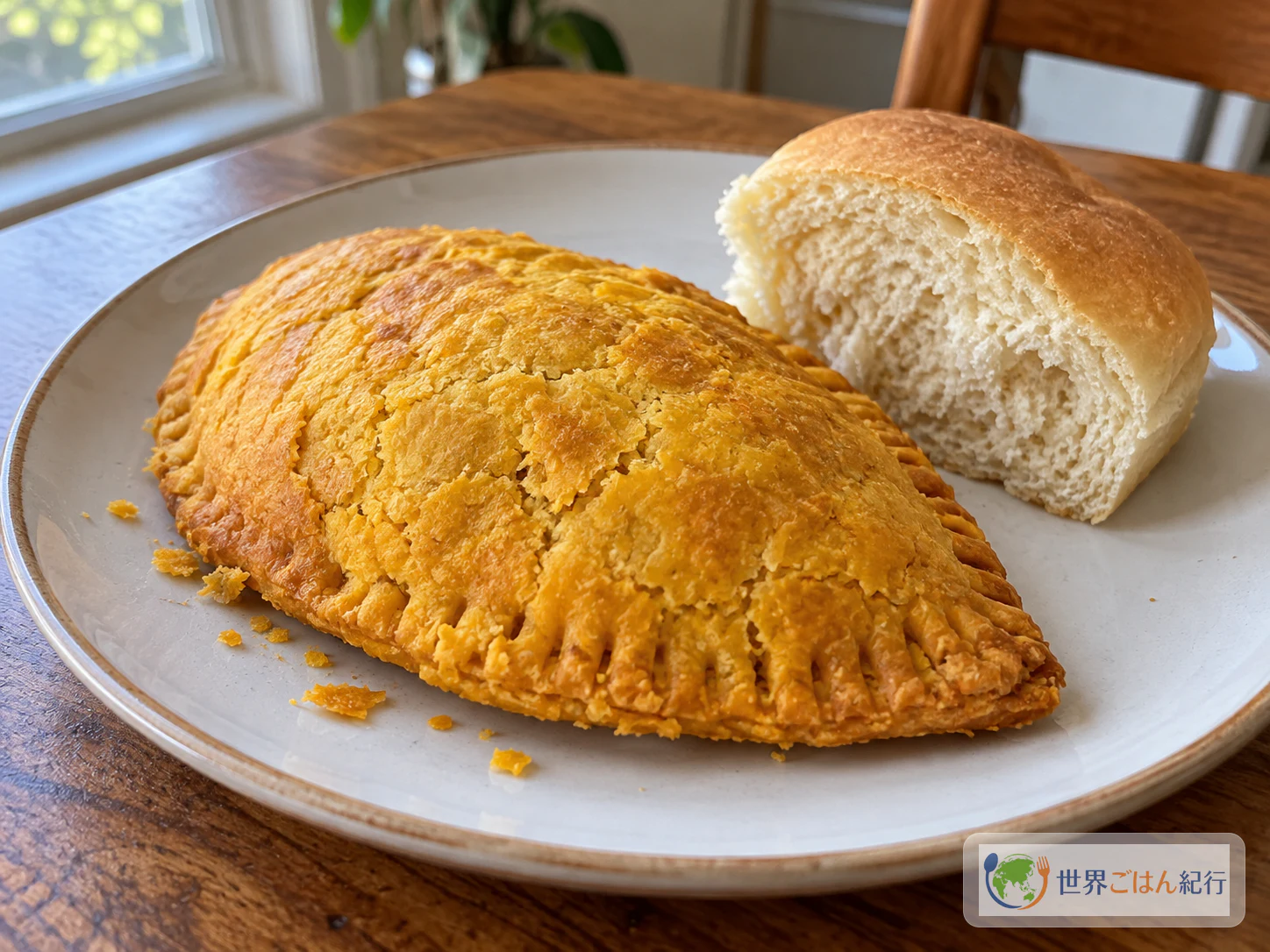
A patty works as a snack or as a meal. Coco bread is one pairing, but you don't need it to complete the dish. It is not part of the pastry or the filling, so serve it alongside.
From Cornish Pasty Links to a Jamaican Flavor
The patty is often connected to the Cornish pasty. The Jamaican Museum & Cultural Center presents that link as an origin many historians point to, and Heritage Toronto also traces the patty along that line. It is best understood as one strand of the story, not as a simple invention tale. These sources tie the patty to Jamaica's colonial history and to the movement of people through forced migration, indentured labor and immigration, with ingredients and techniques crossing along the way.
The museum's article describes spices brought by migrants, along with ingredients such as Scotch bonnet, being taken into the local flavor. Heritage Toronto names Scotch bonnet as one of the traditional sources of heat. The museum's piece is a cultural explainer, not a primary record, so it can't settle exactly when each spice arrived.
The patty also traveled. Heritage Toronto describes Jamaican migrants spreading patties in Canada in the 1960s and 1970s, and patty shops in Toronto's Little Jamaica supporting the community and its local memory. The museum's article likewise describes the patty as a link to home in Jamaican communities abroad, including in North America. The Toronto story is one example from the diaspora, not a picture of eating habits across Jamaica.
Other recipes take different routes. Winsome Murphy's version on Jamaicans.com uses beef, escallion, thyme, hot pepper and paprika, makes about three dozen, and uses bread to bind the meat. It is a separate formula, so none of its amounts are mixed into this one.
Frequently Asked Questions
Why is the pastry yellow?
Ainsley Harriott's pastry includes turmeric and Caribbean curry powder. Leaving them out weakens both the color and the flavor.
What if I can't find Scotch bonnet?
You can use another hot chili as a substitute, but it won't have the same heat or fragrance. This is an editorial suggestion, not part of the Harriott recipe, so add it cautiously and expect a different result.
Do patties have to be served with coco bread?
No. Jamaicans.com gives coco bread as a pairing, but it is optional.
Is cumin in the pastry traditional?
Ainsley Harriott lists lightly toasted, bashed cumin seeds as an optional addition and says plainly that it is not traditional. That is why it is kept out of the base ingredients here.
How many patties does this make?
The recipe gives about 10 medium patties. That is the published figure, not a measured result, and it does not specify the amount of filling per patty or the finished weight.
What internal temperature should the beef reach?
The recipe doesn't state one, and none is added here. Cook the beef thoroughly until no raw red meat remains, and check the public food safety guidance where you live if you want a specific temperature.
How long do patties keep, and how should I reheat them?
The recipe gives no storage or reheating guidance, so this article gives no times or temperatures. Follow the public food safety guidance where you live for cooked ground beef.
Sources
- Ainsley Harriott, "Jamaican Beef Patties." Used for the yield of about 10, the full pastry and filling recipe, the resting, simmering, shaping and baking directions, the variety of fillings between makers, and the optional, non-traditional cumin pastry. https://www.ainsley-harriott.com/recipe/jamaican-beef-patties/
- Winsome Murphy, "Jamaican Beef Patty Recipe," Jamaicans.com. Used for eating patties as a snack or meal, the coco bread pairing, and comparison with a separate formula. https://jamaicans.com/patty/
- Laurel Wong, "Out of Many, One Patty," Jamaican Museum & Cultural Center (Atlanta). Used for the patty's ties to colonial history, migration and cultural exchange, the Cornish pasty origin account, the spices and chilies taken into the local flavor, and its role in the diaspora. https://www.jmccatlanta.com/article-archive/out-of-many-one-patty
- Heritage Toronto, "Living history: randy's patties." Used for the Cornish pasty lineage, the range of fillings and heat, Scotch bonnet as a traditional source of heat, the spread of patties in Canada in the 1960s and 1970s, and the role of shops in Little Jamaica. https://www.heritagetoronto.org/explore/little-jamaica-toronto-history/jamaica-toronto-patty-history/