Congrí: Rice That Takes On the Color of Red Beans
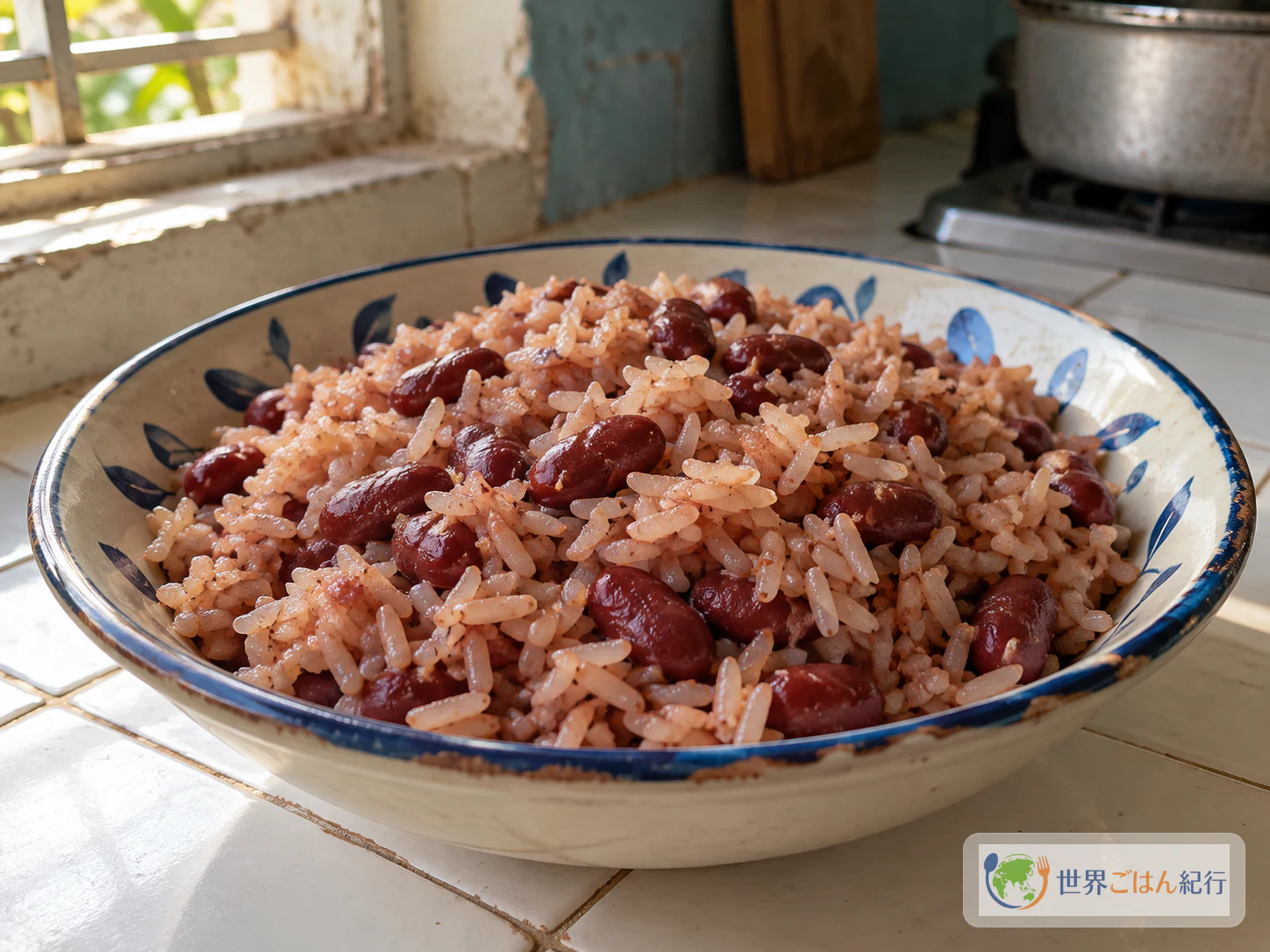
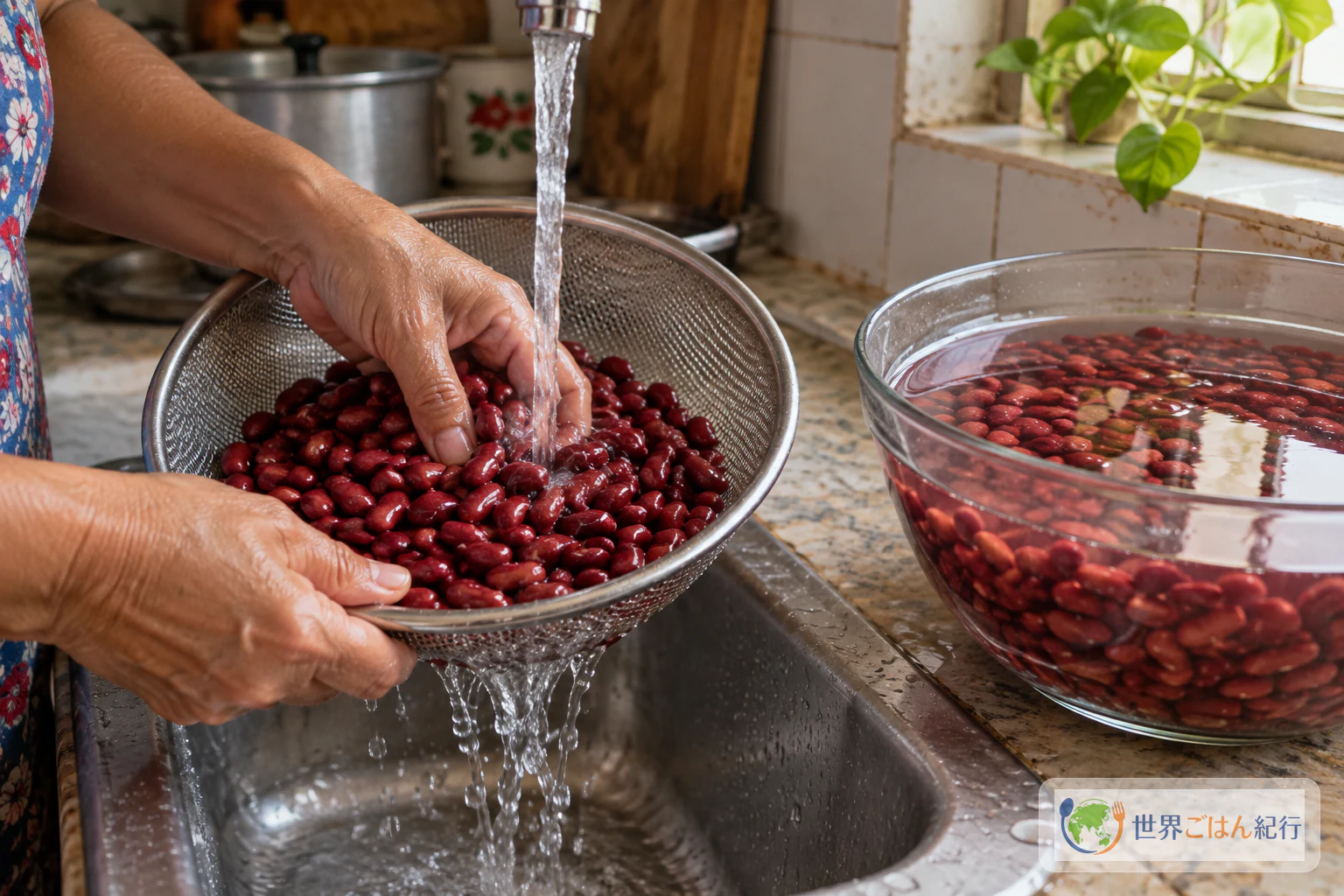
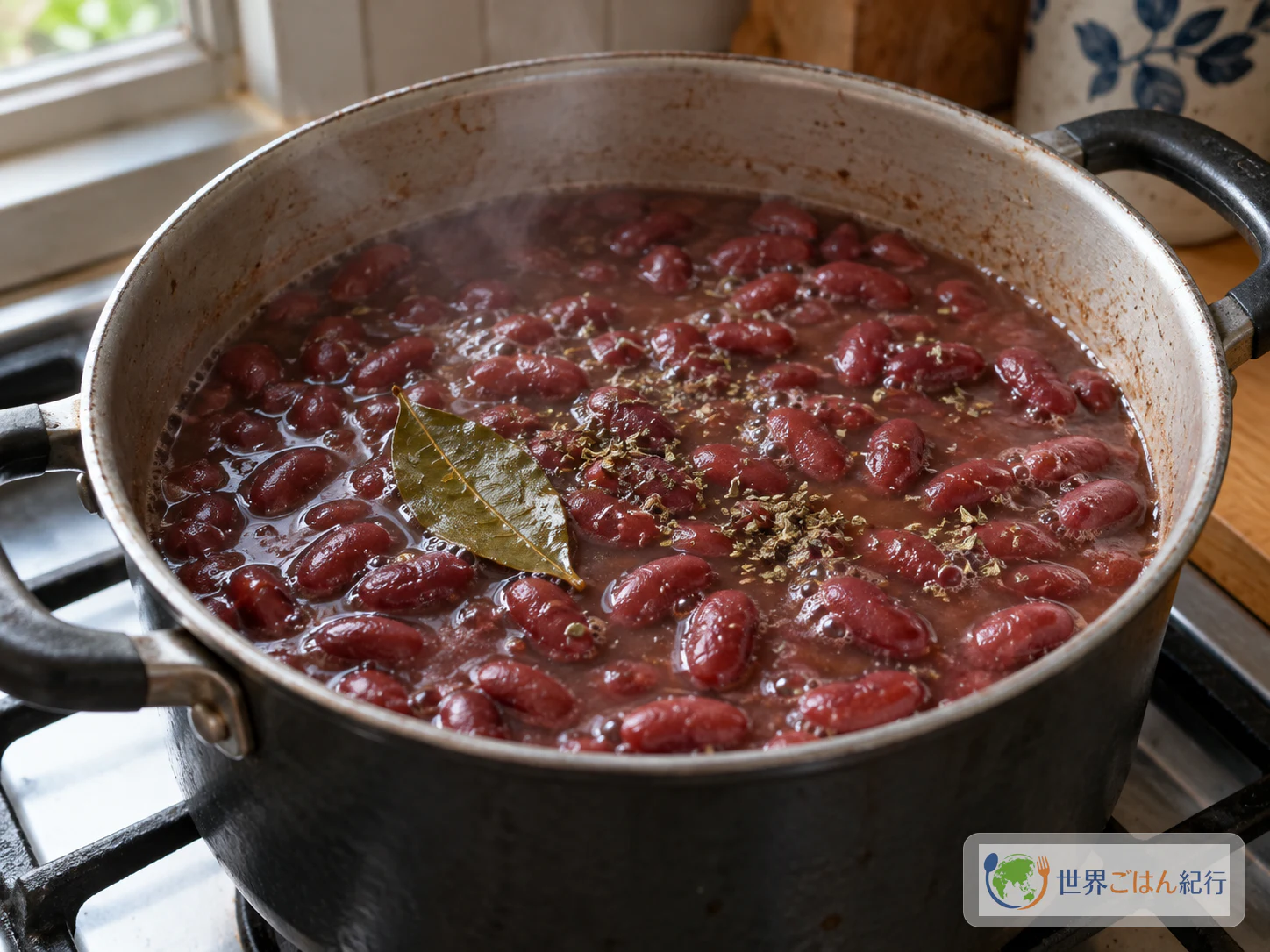
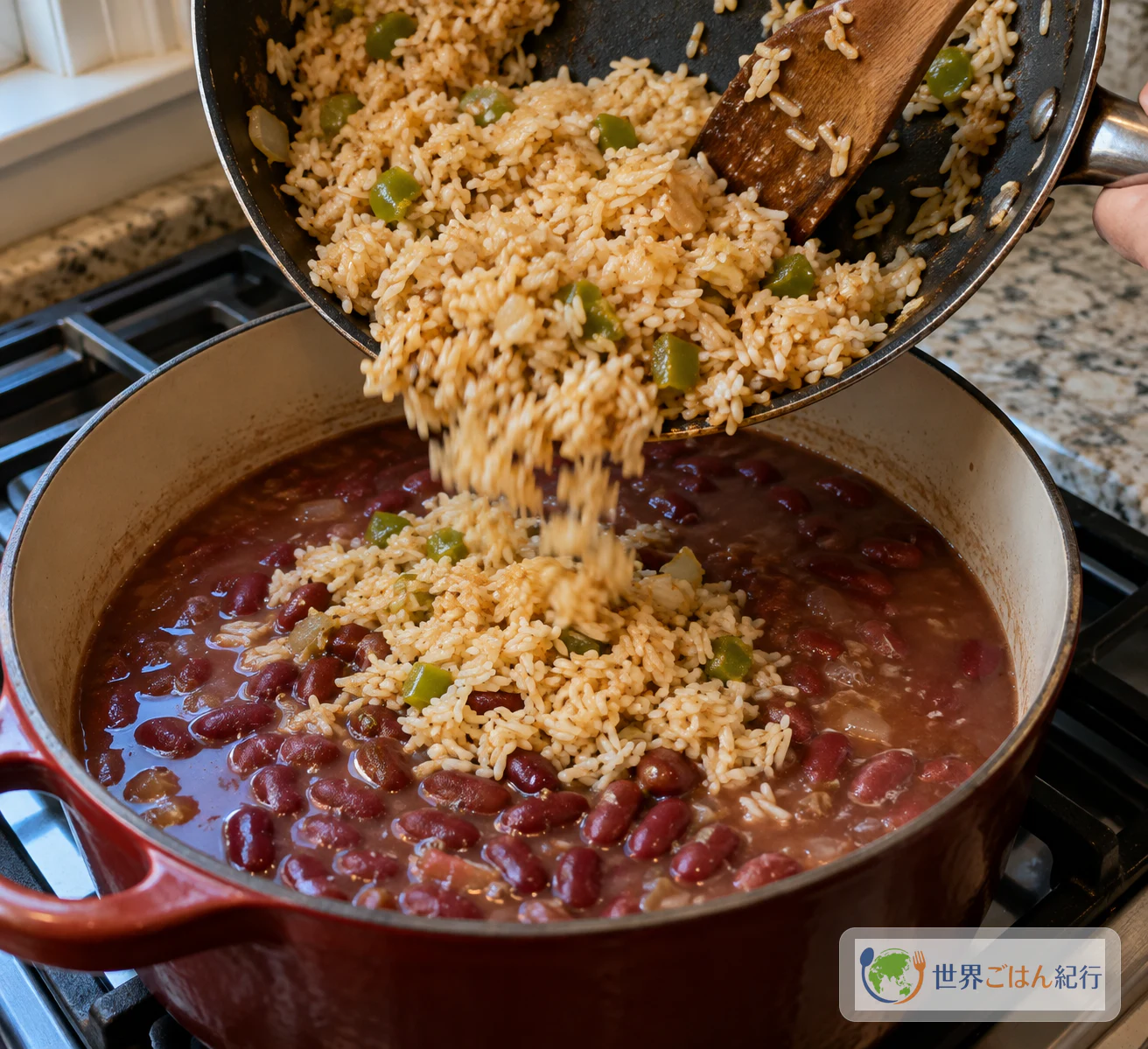
Keep the beans whole and tender, and keep their broth. That broth becomes the rice's cooking liquid, so it carries the color and flavor of the beans through the whole dish.
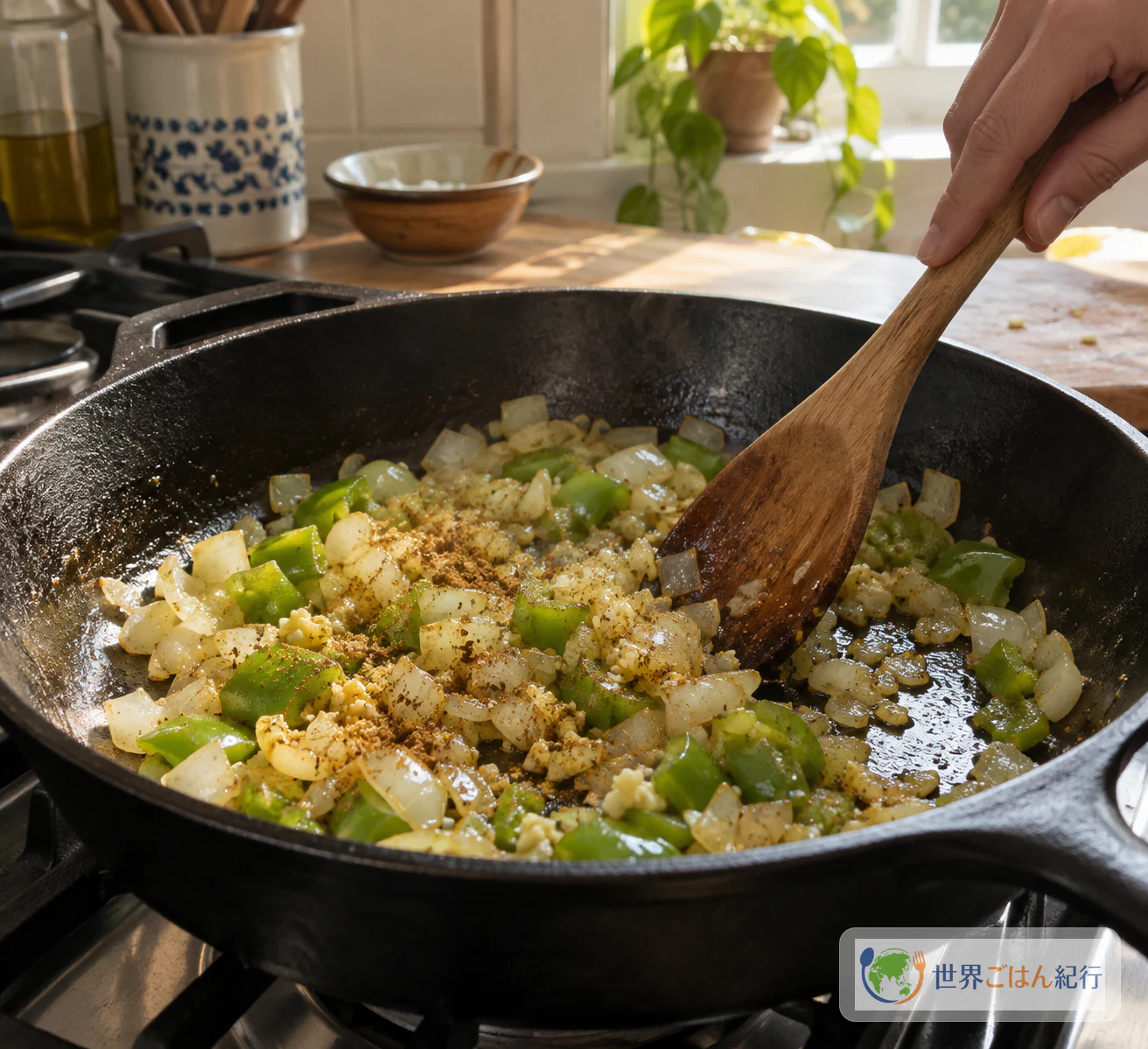
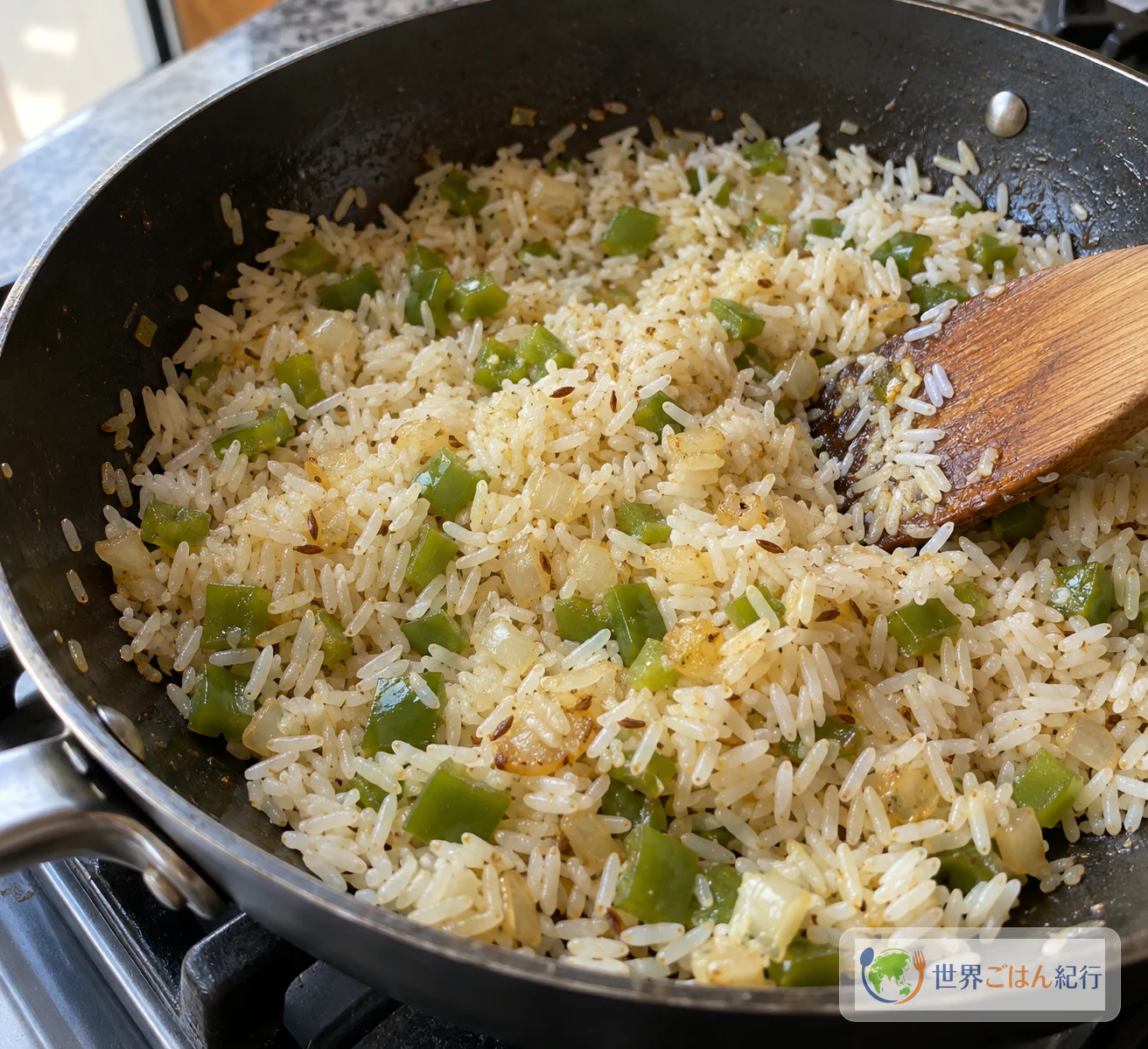
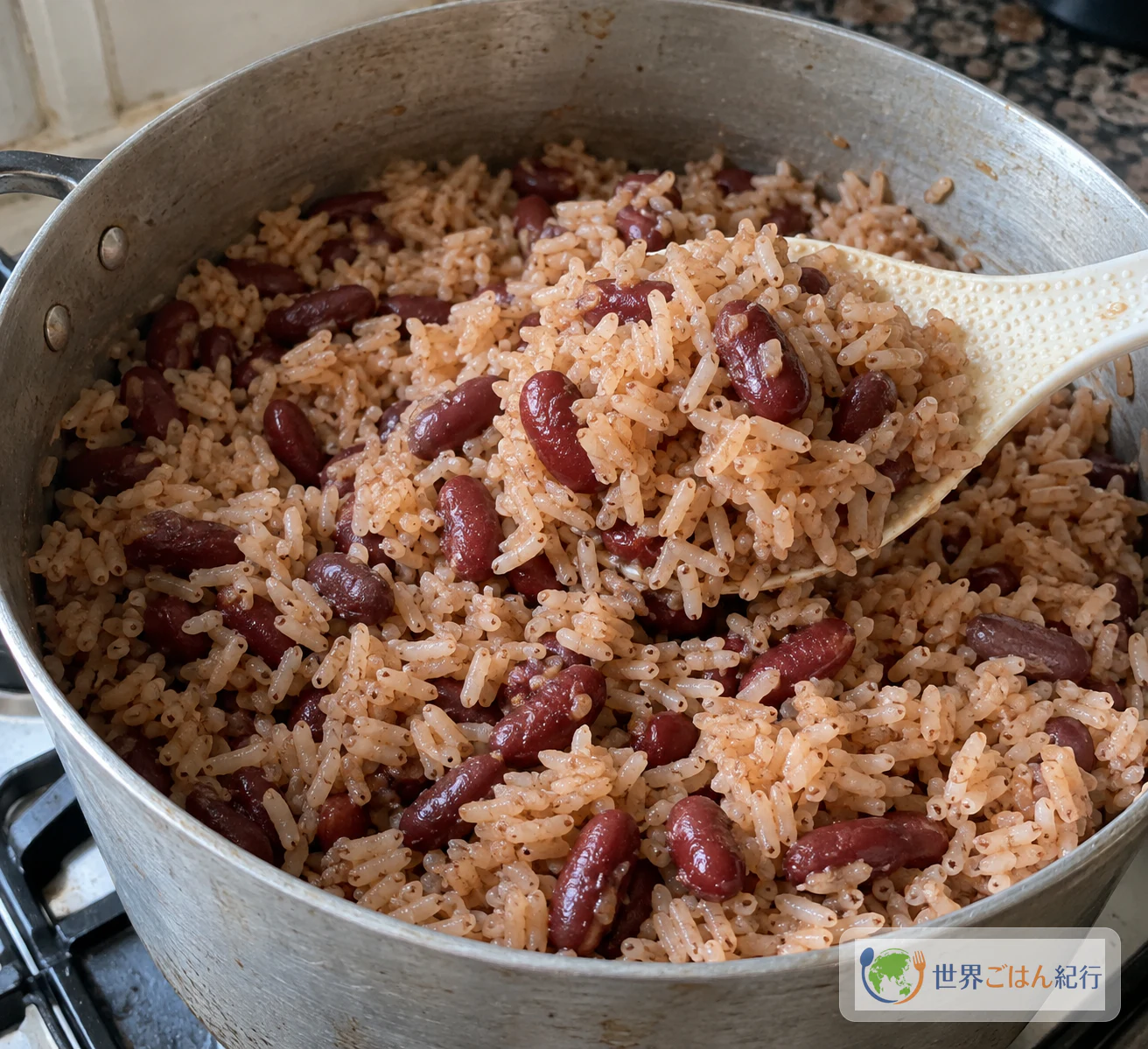
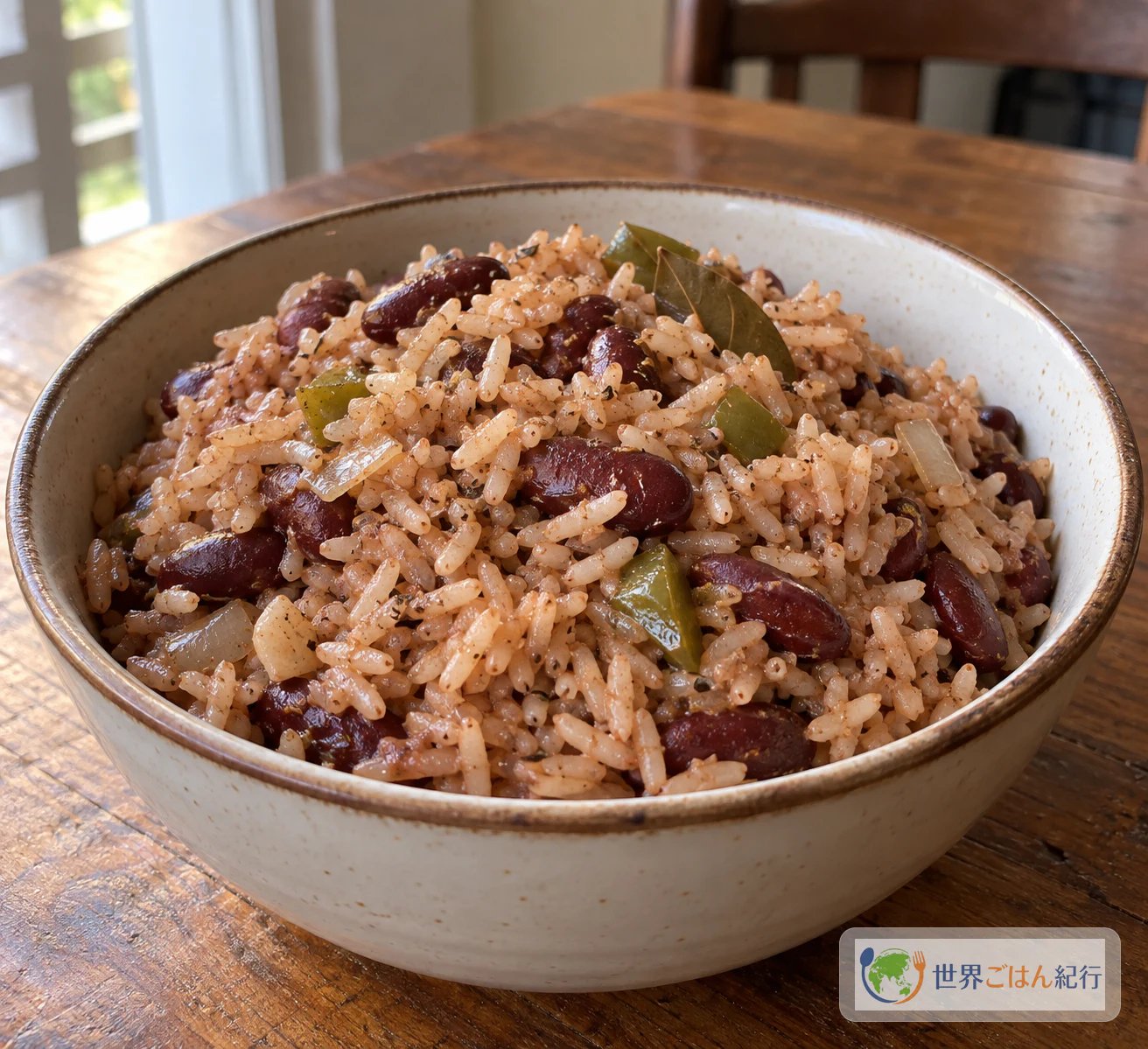
Red beans cook with a bay leaf and a little oregano until the water around them turns into a broth. Rice, already coated in oil, garlic, onion, pepper and cumin, then goes in with them, and everything cooks together. Rice and beans are not served side by side here. They finish as one dish, with the beans tinting the rice.
Cuba's tourism portal, Cuba.Travel, names congrí among the significant typical dishes of Cuba. This article follows one specific version: the eastern Cuban style made with red beans (frijoles colorados), based on the 2-cup rice recipe by Amalia Triana published on Cubago. Other Cuban cooks may use different beans and different names, and this version isn't offered as the only correct one.
This recipe has not been kitchen-tested by Sekai Gohan. Cubago gives no serving count, no bean-cooking time and no way to adjust the liquid after the beans have cooked, so none of those are added here. Results may vary with your rice, pot and rice cooker.
Ingredients for Eastern-Style Red Bean Congrí
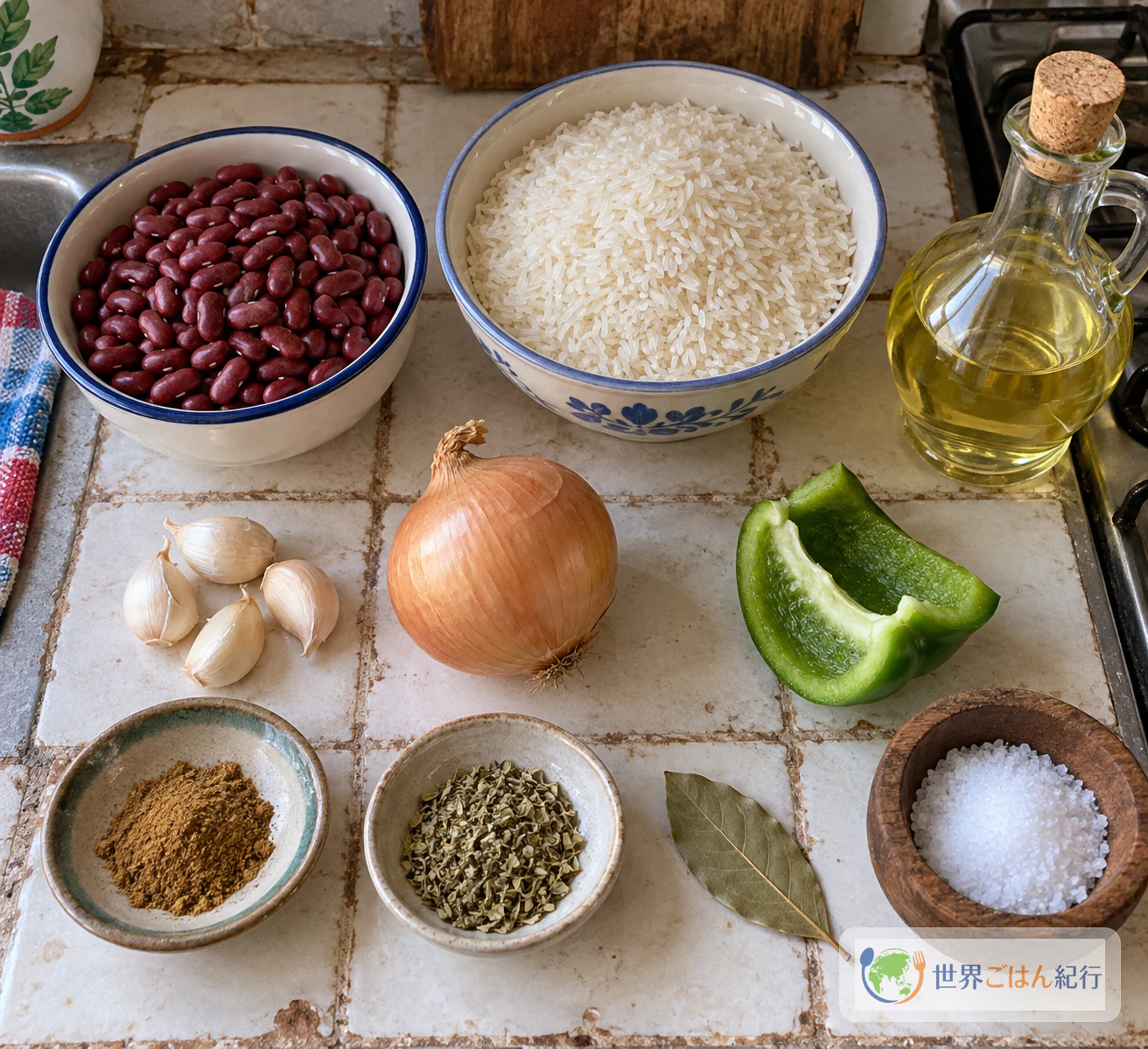
Choosing What Goes in the Pot
- Dried beans, not cooked beans. The 1 cup of beans means dried beans. Using 1 cup of cooked or canned beans would change the balance of beans to rice, and you wouldn't have the broth that cooks the rice.
- One cup for everything. Measure the rice and the water with the same cup.
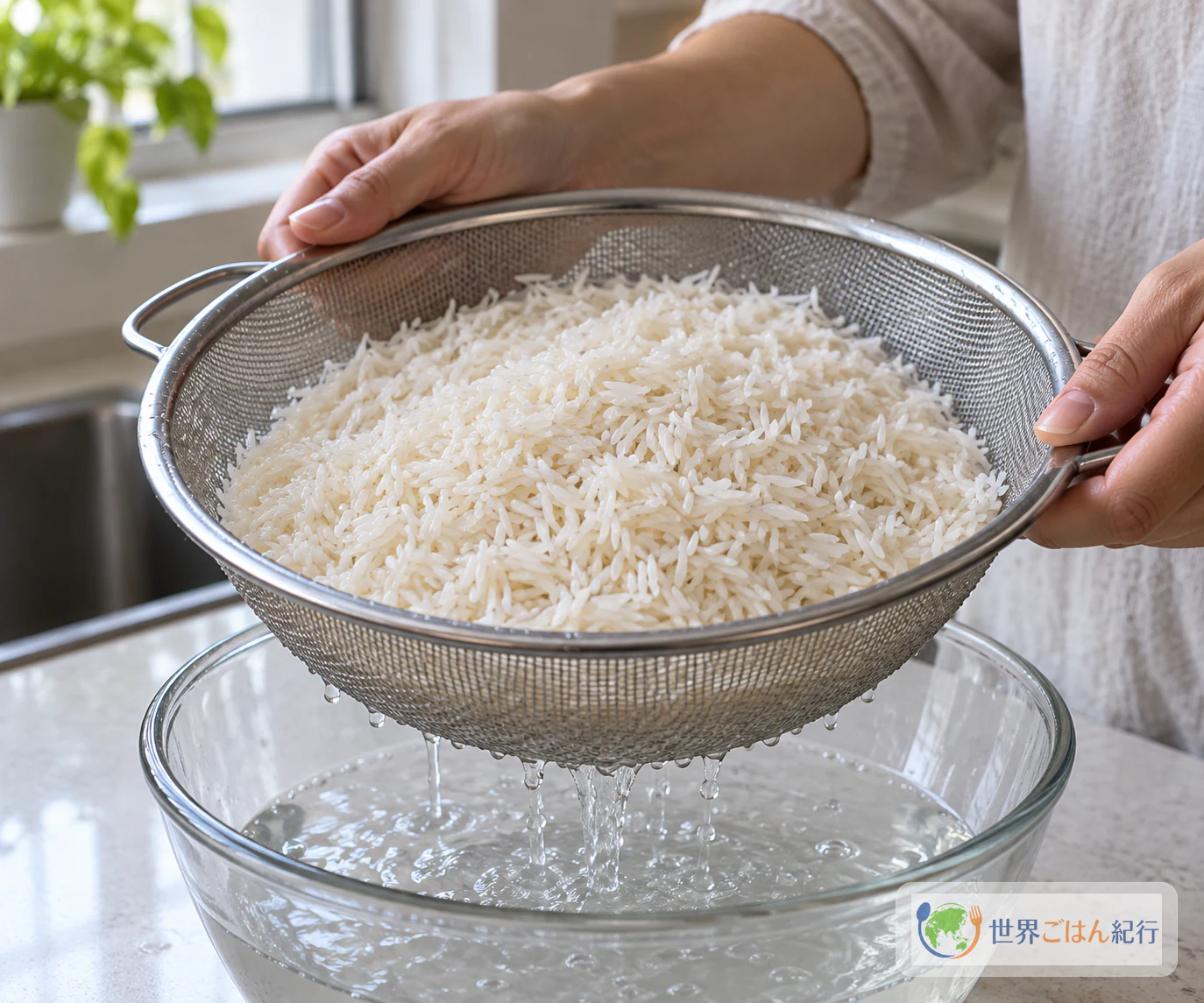
- Long-grain white rice. The goal is loose, fluffy rice, and the type of rice affects how much water it needs. Another kind of rice may not behave the same way with this amount of liquid.
- Red or green pepper. Either color works, and only a quarter of a pepper goes in.
Equipment
- Measuring cup
- Bowl for soaking the beans
- Sieve or strainer
- Pot for cooking the beans
- Skillet for the sofrito
- Rice cooker
- Spoon or rice paddle
Method: Beans First, Then Rice in Their Broth
Cook dried red kidney beans until they are soft all the way through, and don't eat them while they are hard. This article doesn't set a safe boiling time, so follow the package directions or your local food-safety guidance for dried kidney beans. Don't count on the rice cooker to finish beans that are still hard.
If the Pot Doesn't Go as Planned
Cubago's recipe doesn't say how much water the soaked beans absorb, how much broth remains after they cook, or how to adjust for different rice cookers. The fixes below stay within those limits, and none of them comes with a corrected water measurement.
| What you see | What to consider | What to do |
|---|---|---|
| The beans are still hard after a long cook | Cooking time varies with the pot, and Cubago gives no fixed time | Keep cooking and don't move on to the rice yet. Judge by the texture of the beans |
| The pot runs low before the beans are tender | Cubago gives no top-up amount | If you add water, add only what the beans need. Everything left in the pot becomes the rice's cooking liquid |
| The beans are breaking apart | They may have cooked past the target | Next time, stop as soon as the beans are soft through but still whole |
| The rice is softer or firmer than you wanted | Rice type affects water needs, and rice cookers differ | Note your rice, your cooker and how much broth remained, and use that as your guide next time |
| The flavor seems flat | Salt is left to taste | Taste and add a little salt before serving |
Variations
These are the common ways the dish changes. Each one moves away from the base recipe above, so treat them as options rather than steps you need.
| Variation | What changes | What to know |
|---|---|---|
| Added pork | Cubago lists chicharrones (4–5 pieces) and small pieces of tocino, a bacon-like cured pork, and chorizo, sautéed with the sofrito | Piece size for the chicharrones and amounts for the tocino and chorizo aren't defined, so these are left out of the base recipe |
| Black beans | Cubago's ingredient list allows red or black beans, and it associates the black-bean version with Havana | This article's version stays with red beans; see the naming note below |
| Cilantro | Chopped cilantro added at the end | An optional finish, not a required ingredient |
Congrí can also go alongside meat dishes or vegetables. Cuba.Travel describes a typical national meal of rice and black beans with seasonal salad, roast or sauced pork, and fried plantains. That description refers to black beans, so take it as a serving idea and not as a fixed rule for this red-bean version.
Congrí in Cuba: One Name, Several Pots
Cuba.Travel describes Cuba's typical dishes as the result of a mix of Spanish, African, aboriginal, Yucatecan and Asian traditions. It's a tourism overview, so it shows how the dish is presented rather than what every household cooks.
Names and beans don't line up neatly. Cubago describes red-bean congrí as the eastern Cuban version and the black-bean version as Havana's, known there as Moros y Cristianos, while noting that naming varies. CiberCuba Cocina also describes congrí as red and Moros y Cristianos as black, but adds that both may be called congrí. On Food Network, a recipe from Mika Leon uses black beans under the name congri and notes that some Cuban regions use red beans. For that reason, this article states which version it follows and doesn't declare one name correct for all of Cuba.
The origin isn't settled either. Cubago presents several competing ideas about the dish and its name, including a 19th-century preparation, word origins linked to Haitian French and African languages, and the idea that cooking rice with the beans shortened the cooking time. CiberCuba Cocina also treats the origin as a matter without agreement among researchers. These are best read as possibilities, not as established history.
Frequently Asked Questions
Is congrí the same as Moros y Cristianos?
It depends on who you ask. Some sources separate them by bean color, with red for congrí and black for Moros y Cristianos, while CiberCuba Cocina notes that both may be called congrí. This article covers the eastern red-bean style.
How many people does this serve?
Cubago doesn't give a serving count for its 2 cups of rice and 1 cup of dried beans, so this article doesn't state one either.
How long do the beans take?
There's no fixed time here because it varies with the pot. Move on when the beans are soft all the way through but still hold their shape.
Should I add extra water to the rice cooker?
Cubago's recipe adds none beyond the bean broth, and this article doesn't suggest an amount. Because the liquid left after cooking the beans isn't defined, and because rice and cookers differ, the result may vary. This is one of the untested points in the recipe.
Why use all the bean broth?
The broth is the liquid the rice cooks in. It has taken on color from the beans and flavor from the bay leaf and oregano, and using it is what tints the rice and sets congrí apart from plain rice served with beans.
Can I make it in a regular pot on the stove?
The recipe followed here finishes in a rice cooker and gives no stovetop time or water adjustment, so this article doesn't provide a stovetop method.
Sources
- Cuba.Travel Tourism Portal, "Gastronomy. Cuban food to enjoy." Congrí among Cuba's significant typical dishes, the mix of traditions behind Cuban typical dishes, and the typical national meal with rice and black beans. https://www.cuba.travel/en/touristservices/gastronomy
- Cubago (Amalia Triana), "Arroz congrí cubano | Receta original al estilo cubano." The recipe followed in this article, the eastern red-bean and Havana black-bean distinction, naming variation, and competing origin ideas. https://visitcubago.com/receta-hacer-arroz-congri-cubano/
- CiberCuba Cocina, "Recipe for Arroz Congrí." The red-bean convention, the note that both dishes may be called congrí, the goal of loose and fluffy rice, and the effect of rice type on water needs. Its amounts are not used in this recipe. https://en.cibercuba.com/cocina/recetas/arroz-congri
- Food Network, recipe courtesy of Mika Leon, "Congri Cubano." A black-bean version under the name congri, with a note that some Cuban regions use red beans. Used for variation context only. https://www.foodnetwork.com/recipes/congri-cubano-21412829