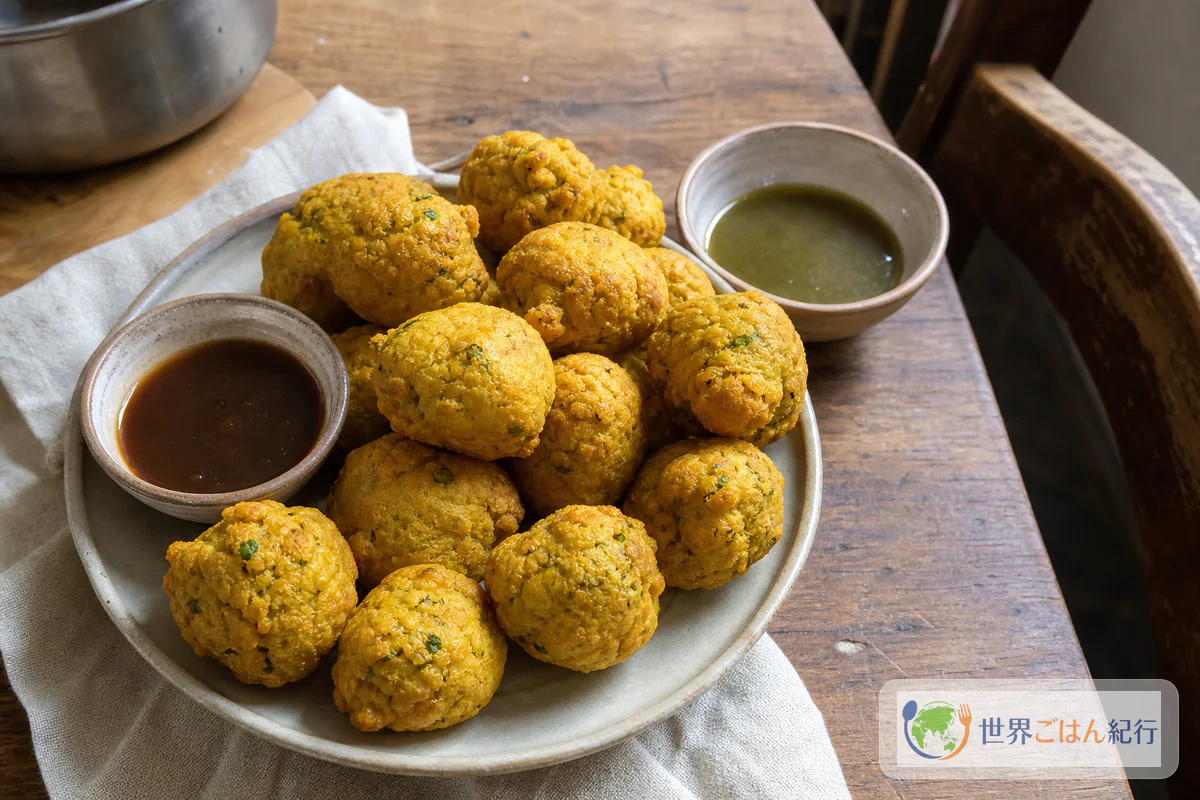
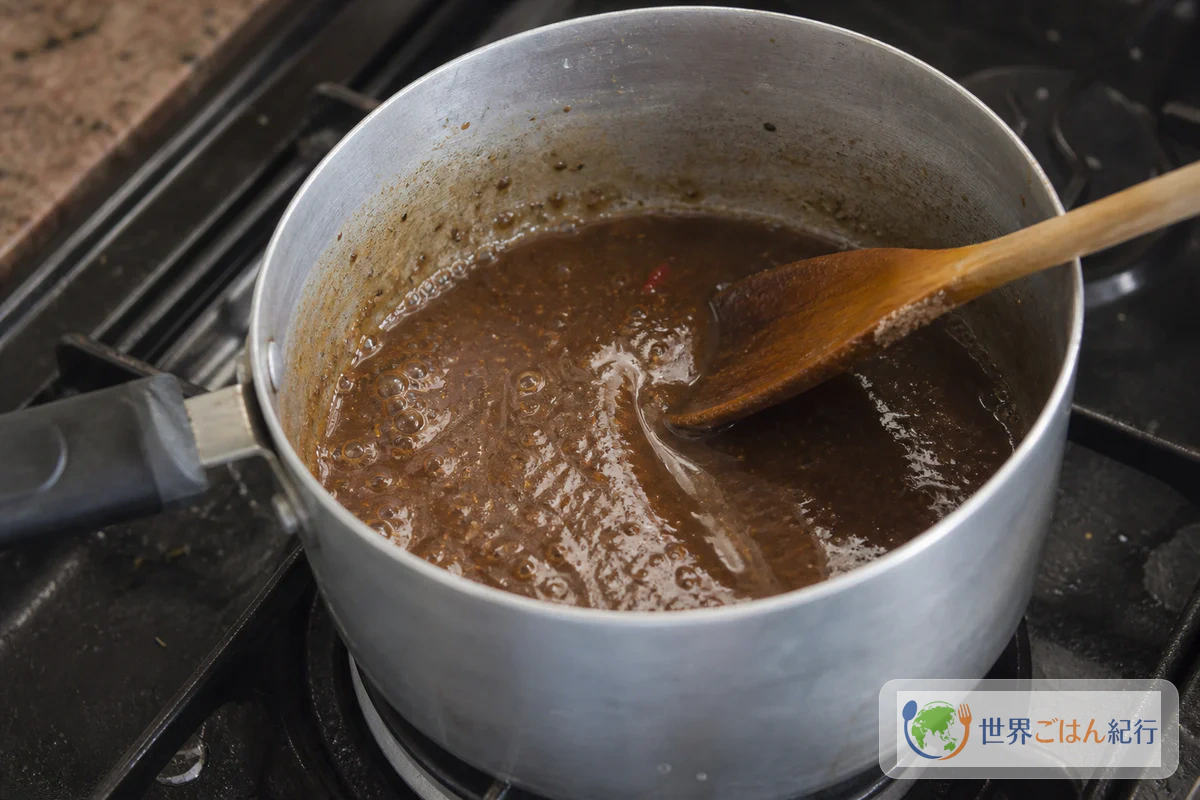
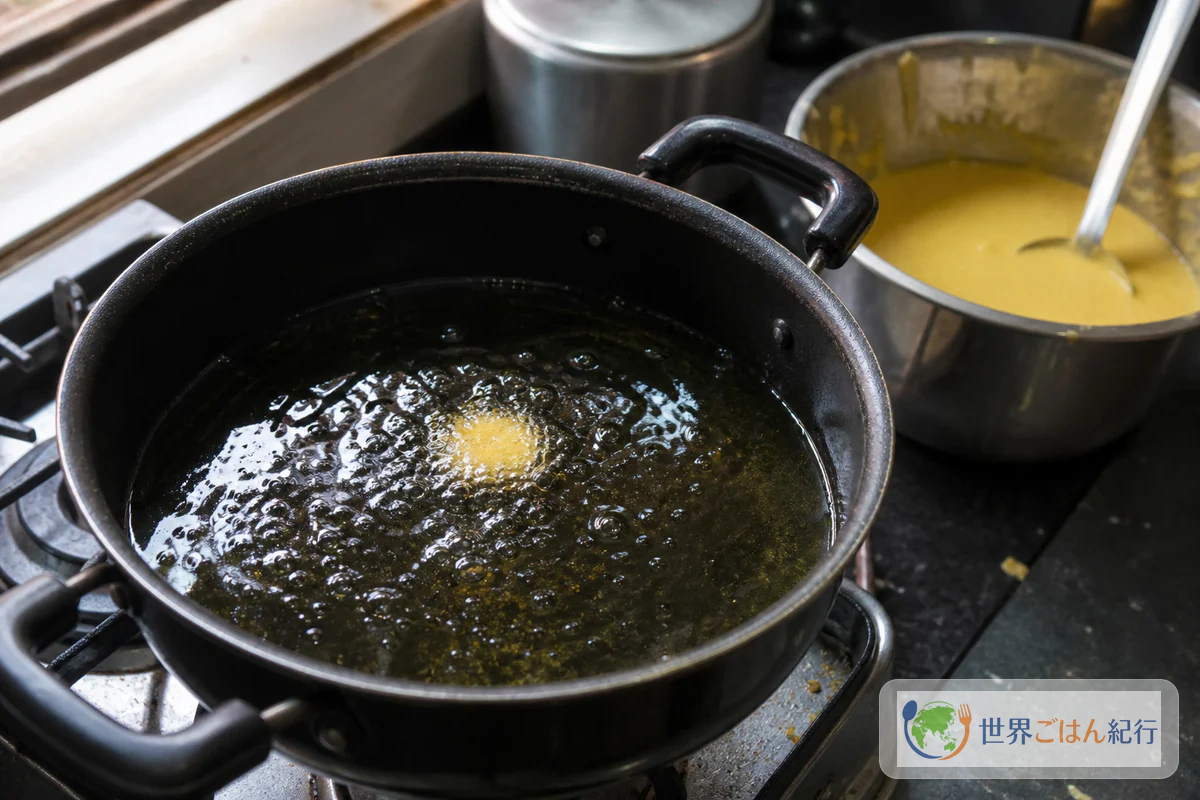
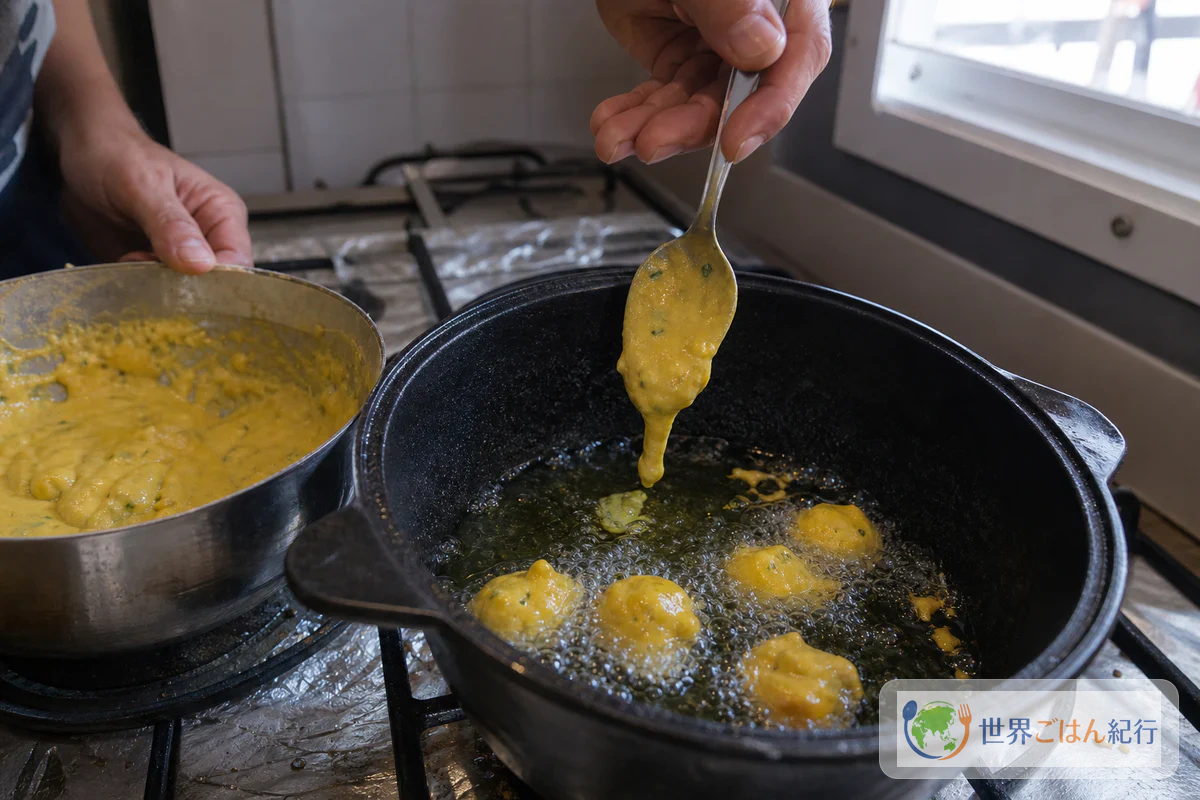
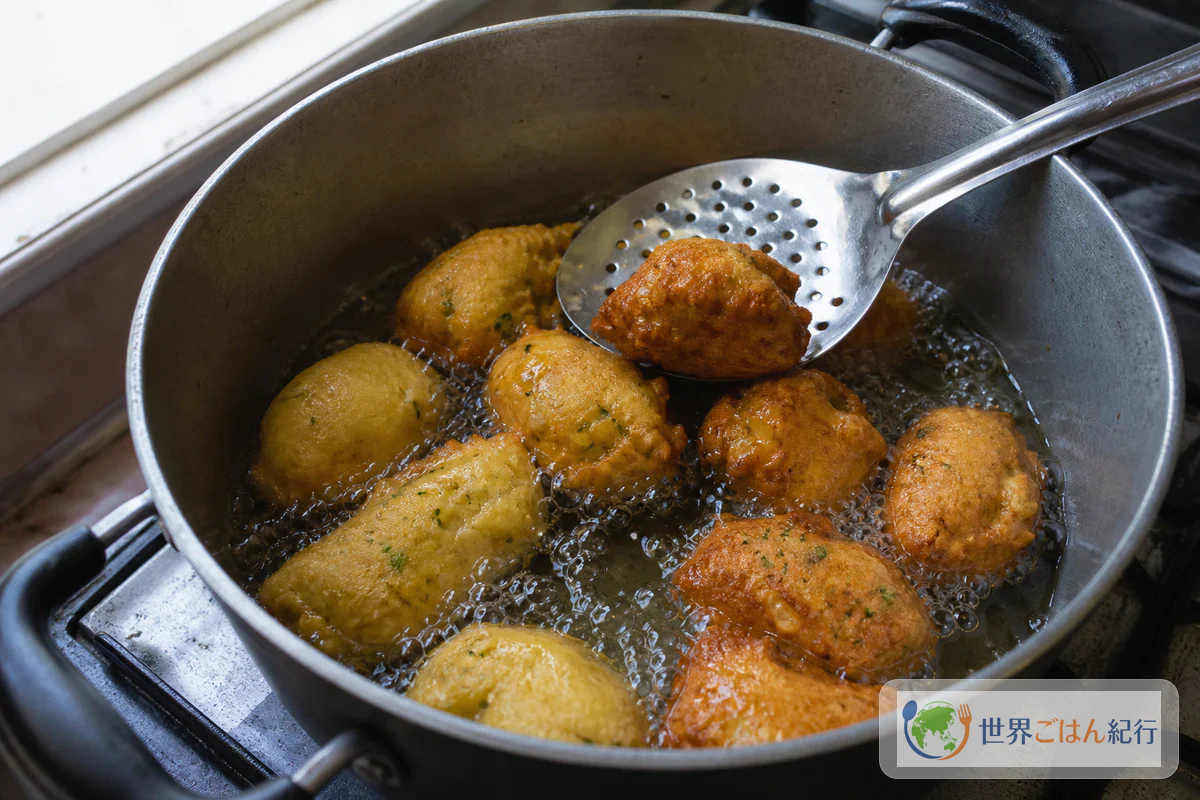
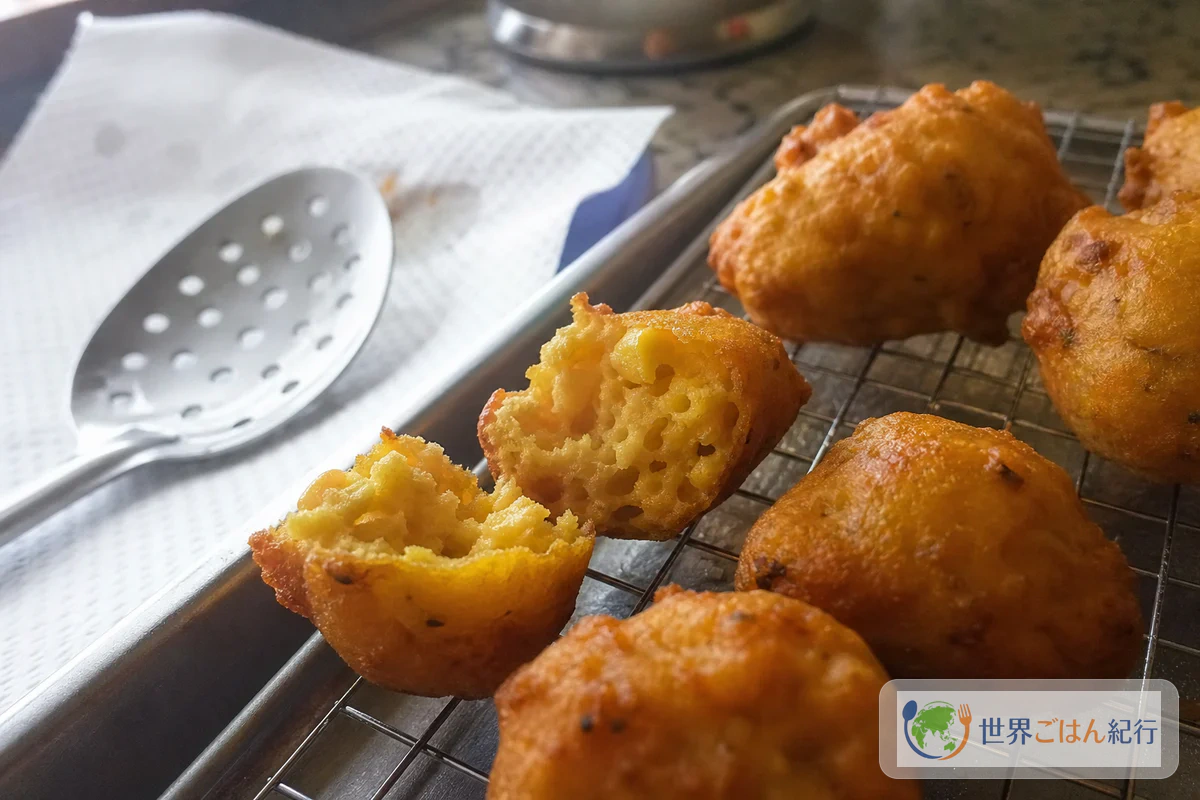
When you heat oil in the kitchen in the evening, the first smell is not curry powder but the green scent of ground beans. Cumin, turmeric and chile layer on top, and each time you drop in a bit of batter, fine bubbles pop around it. Guyana's pholourie looks like nothing more than a round fried puff, but when you bite in, the mellow fragrance of yellow split peas lingers inside.
Pholourie is an Indo-Caribbean snack eaten in Guyana, Trinidad and Tobago, Suriname and elsewhere. In Guyana it is often described as food for family gatherings, birthdays and religious occasions, and as a light snack from street stalls and bakeries, eaten with a sweet-sour tamarind sauce or mango sour.
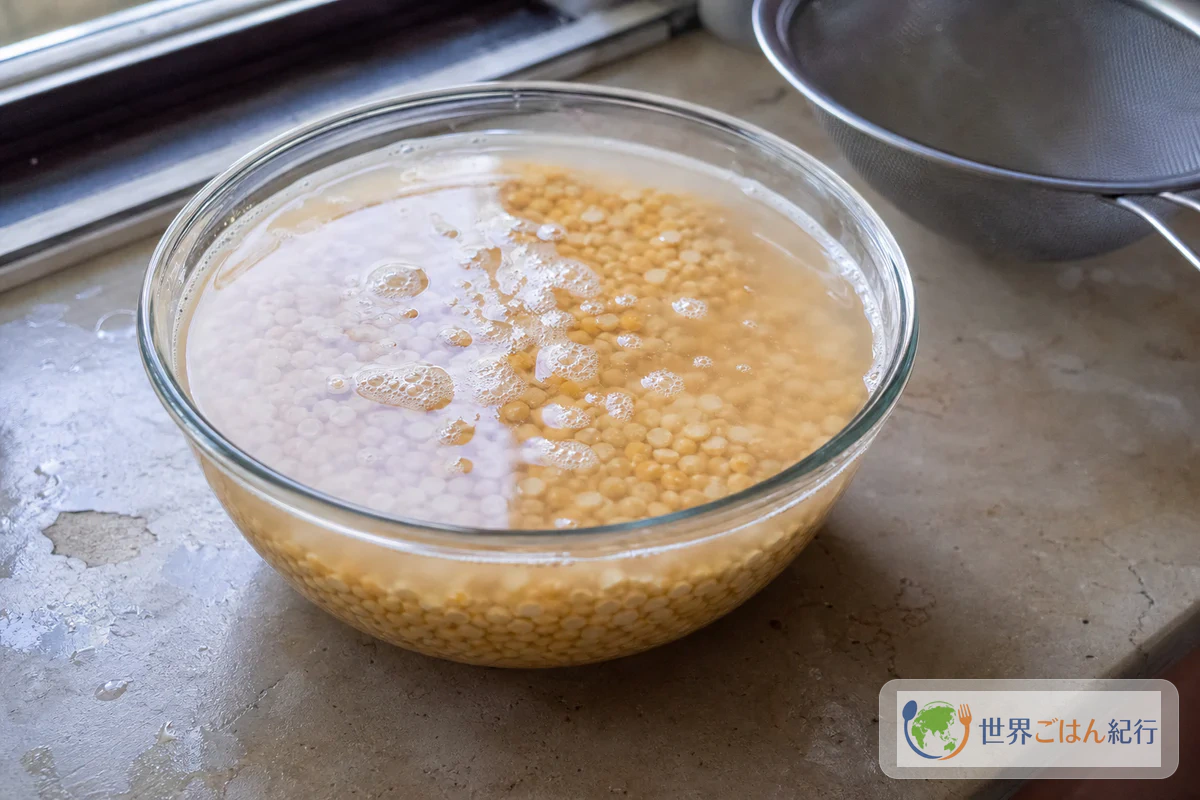
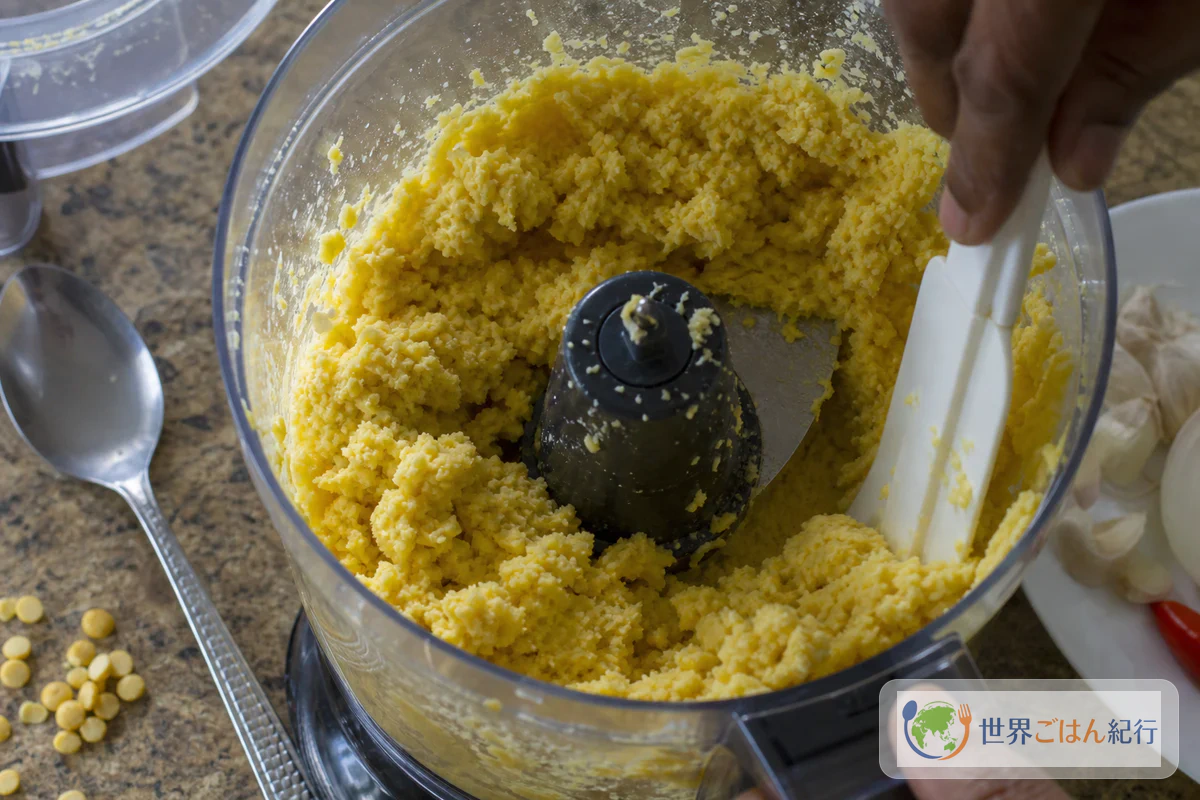
This article leans toward making it from dried yellow split peas, soaked and ground, rather than from a ready-mixed flour. The things that trip people up in a home kitchen are the coarseness of the peas, the looseness of the batter, the oil temperature and the acidity of the sauce. Break these down step by step and you get a fritter that is thin and crisp outside and not too heavy inside.
If Guyanese pepperpot is the dark holiday stew, pholourie is the yellow doorway you pick up by hand. As an Indo-Caribbean street food it is also close to Trinidadian doubles (in Japanese), and once you know the combination of beans, spices and a sour sauce, the Caribbean table becomes much easier to read.
What pholourie is: Guyana's fried split pea balls
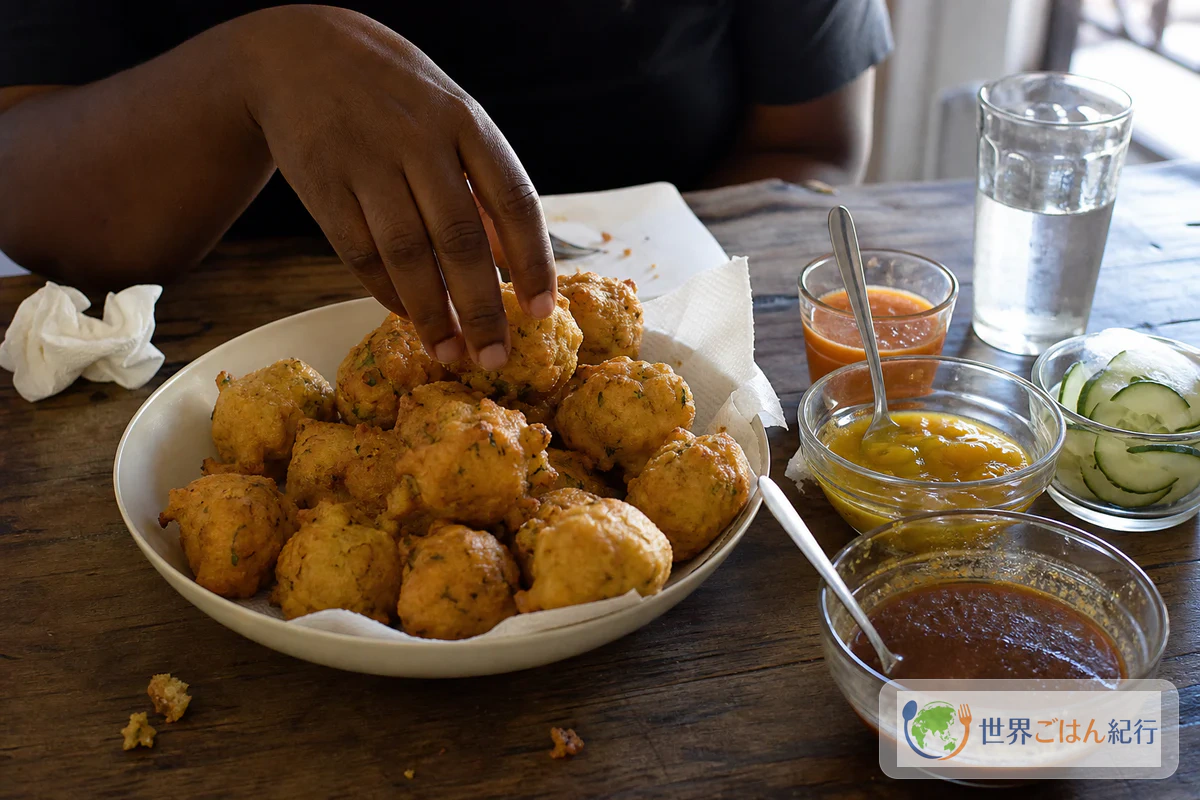
Pholourie is made by frying round balls of batter that combines yellow split peas (or split pea flour) with wheat flour, scented with garlic, onion, chile, turmeric, cumin and so on. In English it is spelled in various ways: pholourie, phulourie, phoulourie.
What makes the Guyanese style interesting is the presence of the peas. Rather than a fry batter of wheat flour alone, peas soaked in water and ground leave a faint fragrance of the grain after frying. The surface is crisp, but the inside does not stretch like bread; it crumbles softly.
| What to look at | What matters in pholourie |
|---|---|
| Local name | Pholourie. Eaten in Guyana, Trinidad and Tobago, Suriname and elsewhere |
| Main ingredients | Yellow split peas, wheat flour, turmeric, cumin, garlic, chile |
| How it is eaten | Picked up by hand and dipped in tamarind sauce, mango sour or pepper sauce |
| What to keep at home | The aroma of peas, a loose batter, oil in the 170s °C, a sweet-sour sauce |
| Limits of substitutes | Chickpea flour or wheat flour alone will work, but the aroma of yellow split peas is weaker |
There are some regional differences. Guyanese home recipes often describe grinding soaked split peas. In Trinidad and Tobago it is called dhal pholourie, and versions using ground pea flour or a ready mix are also seen. In Suriname the same dish is tied to the food culture of Indian immigrants and eaten as a snack with chutney and hot sauce. Rather than fixing on one country and hunting for the "right" version, it is easier to reproduce at home by keeping the pea aroma, the yellow of turmeric, a sour sauce and a size small enough to pick up.
Among Caribbean and South American fried foods, set it beside Brazil's northeastern acarajé (in Japanese) and you can see different cultures of frying beans. Acarajé is strong with black-eyed peas and dendê oil, while pholourie goes in a lighter direction, snacking on yellow split peas and spices.
Ingredients (serves 4)
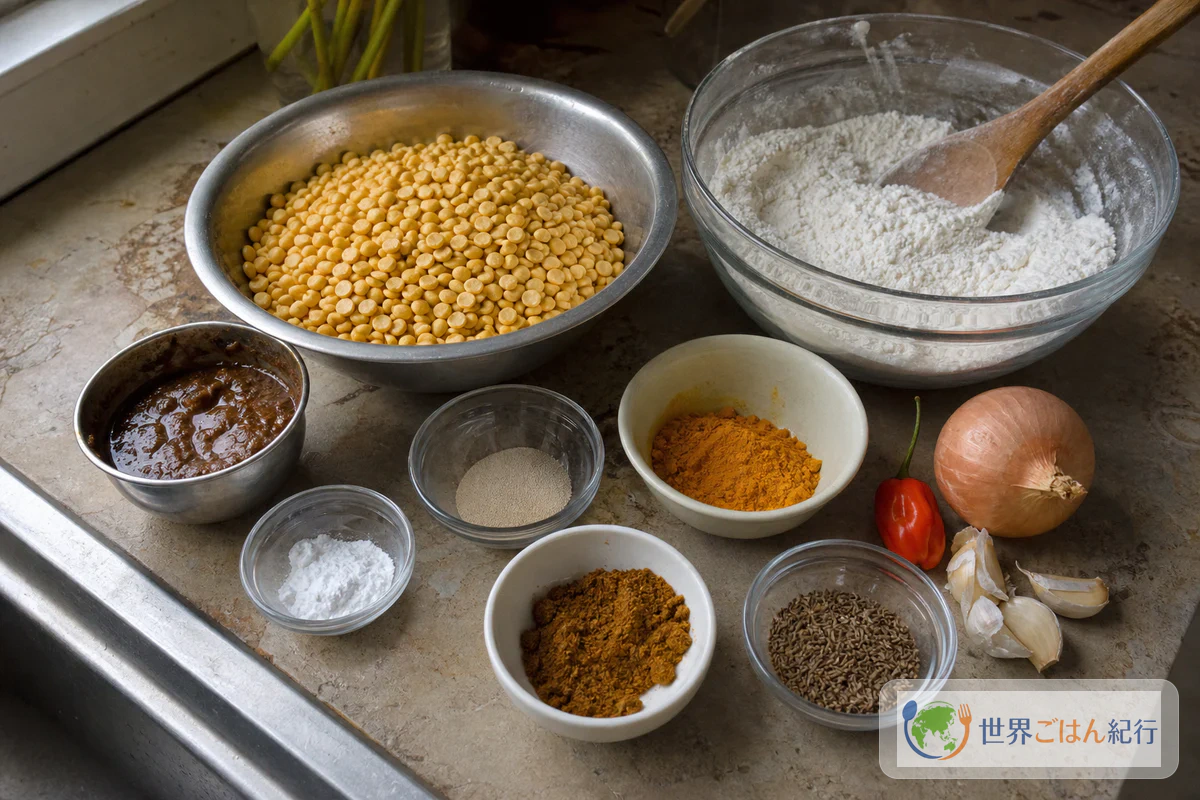
This makes 26 to 30 pholourie, 2.5 to 3 cm across. If you soak the peas the day before, on the day you only make the batter and fry. The soaking time is long, but the time with your hands busy is not.
This recipe uses wheat and legumes. Commercial curry powder contains several spices, so check the label if you have concerns about spices. Scotch bonnet-type chiles have a strong aroma and a sharp heat, so for a first batch keep the amount in the batter to 5 g or less and add heat to the sauce at the table.
What not to skip when shopping
Pholourie changes character more with the yellow split peas, the tamarind and the heat than with the flour or oil. Look for yellow split peas at import grocers or specialty bean shops. If you cannot find them, mixing chickpea flour with all-purpose flour gives a more stable fry batter than yellow lentils would. But the green bean aroma you get from soaking and grinding split peas becomes thin.
Tamarind is a seasoning that is hard to use up if you buy it just for pholourie. It also goes into the chutney for Trinidadian doubles (in Japanese), Thai and Indian sour seasonings, and finishing curries. For heat, fresh Scotch bonnet would be ideal but is not reliably available, so adjusting at the table with a fragrant pepper sauce is realistic.
Batter texture and where it goes wrong
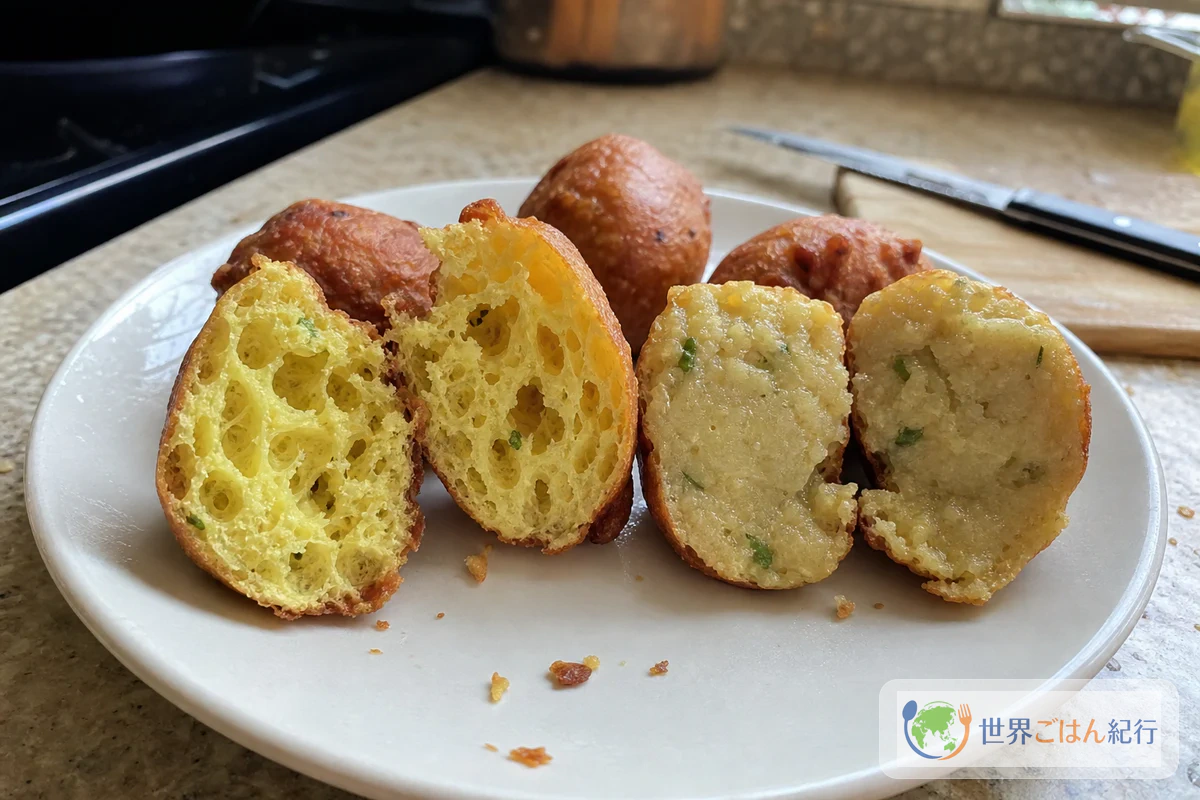
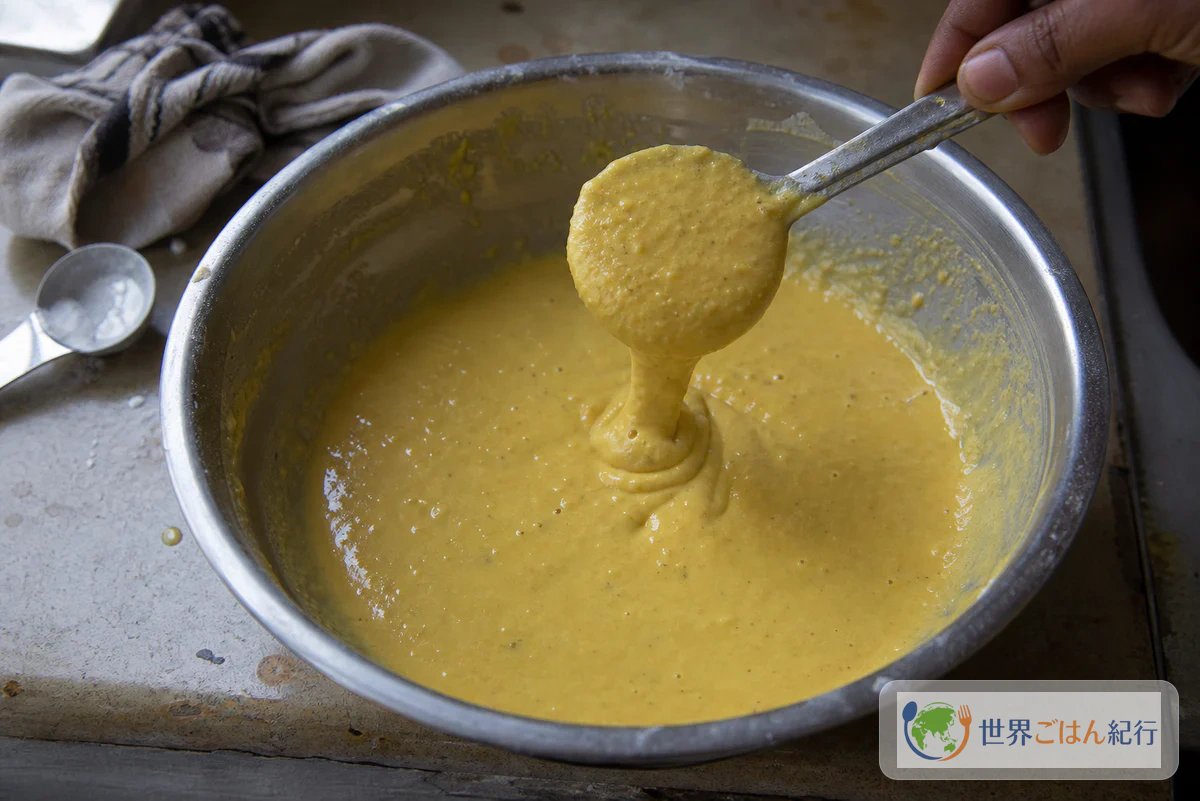
The most common failure with pholourie is not the oil temperature but the water in the batter. Too much flour packs the inside; too loose, and it trails in the oil. Fry one as a test, check its shape and cross-section, and then fry the whole batch; it is easier to recover this way.
| Problem | Cause | Fix |
|---|---|---|
| Heavy, dense inside like a dumpling | Pea paste too fine; too much flour; not enough rest | Mix in 10 ml warm water, rest 10 minutes, then test-fry |
| Spreads flat in the oil | Too much water; oil too cool | Add 1 tbsp all-purpose flour and bring the oil back to the 170s °C |
| Dark outside, damp inside | Oil too hot; balls too large | Lower to 165–170°C and keep to 3 cm or smaller |
| Aroma is blurry | Cumin and chile weak; not enough salt | Add a pinch of salt and 1/4 tsp cumin to the batter, and make up acidity with the sauce |
| Sauce too sour | Tamarind too concentrated | Add 1 tsp sugar and 1 tbsp water and warm over low heat for just 1 minute |
If you cannot buy yellow split peas, 80 g chickpea flour, 160 g all-purpose flour and 180 ml water make a batter that holds together. But it moves away from the aroma of "soaked and ground peas" that Guyanese home cooks talk about, so I recommend using the substitute the first time and finding the peas next time.
How to eat it and how to build a menu
Pholourie is eaten hot, dipped lightly in the sauce. Rather than soaking it, dip only half the surface in the tamarind sauce, and the lightness of the fried surface remains. At the table, put mango sour, cucumber and lime alongside so everyone can adjust the sour and the heat.
In a dinner, keep the meat main course from being too strong, and serve pholourie as a light snack of beans and spices. As a starter before pepperpot it follows a Guyanese flow, and set beside Trinidadian pelau (in Japanese) or jerk chicken it makes a Caribbean street-style table.
Freshly fried is best, but cool leftovers completely, put them in a container and eat them by the next day in the refrigerator. To freeze, freeze them apart from each other, then move them to a storage bag and use within 2 weeks. A microwave alone softens the surface, so warm for 20 seconds at 600 W and then bake 3 minutes in a toaster oven at 180°C to bring them back.
Frequently asked questions
Can I use lentils instead of yellow split peas?
Yellow lentils also make a fry batter, but they soften quickly and absorb water, so the batter tends to loosen. If you use them, shorten the soaking to 2 hours and begin with 60 ml of water for grinding. The aroma is lighter than with yellow split peas.
Can I make it without soaking?
If you use split pea flour you can skip soaking. But a flour-only batter has weak pea texture and tends to get heavy when it absorbs oil. If cooking from dried peas, assuming a soak of at least 8 hours brings you closer to the aroma and texture of real pholourie.
Can I make it in an air fryer or the oven?
It is a dish where the surface of a round fritter is set at once in hot oil, so in an air fryer or oven it tends to become something else. To use less oil, keep 5 cm depth in a smaller pot, reduce the number per batch and keep the oil temperature steady; this fails less often.
What do I serve if I do not like tamarind?
Mix 40 g mango chutney with 2 tsp lime juice, a little cumin and a pinch of salt, and you keep the sweet-sour direction. Worcestershire sauce alone pushes it toward ordinary fried food, so the point is to add acidity and fruit sweetness.
Can I make it ahead?
After resting, the batter keeps up to 6 hours in the refrigerator. Cold batter gets stiff, so before frying bring it back to room temperature for 20 minutes and check that it falls heavily from a spoon. Fried pholourie is best reheated and eaten by the next day.