
From a Lima Kitchen, the Aroma of a Clay Pot
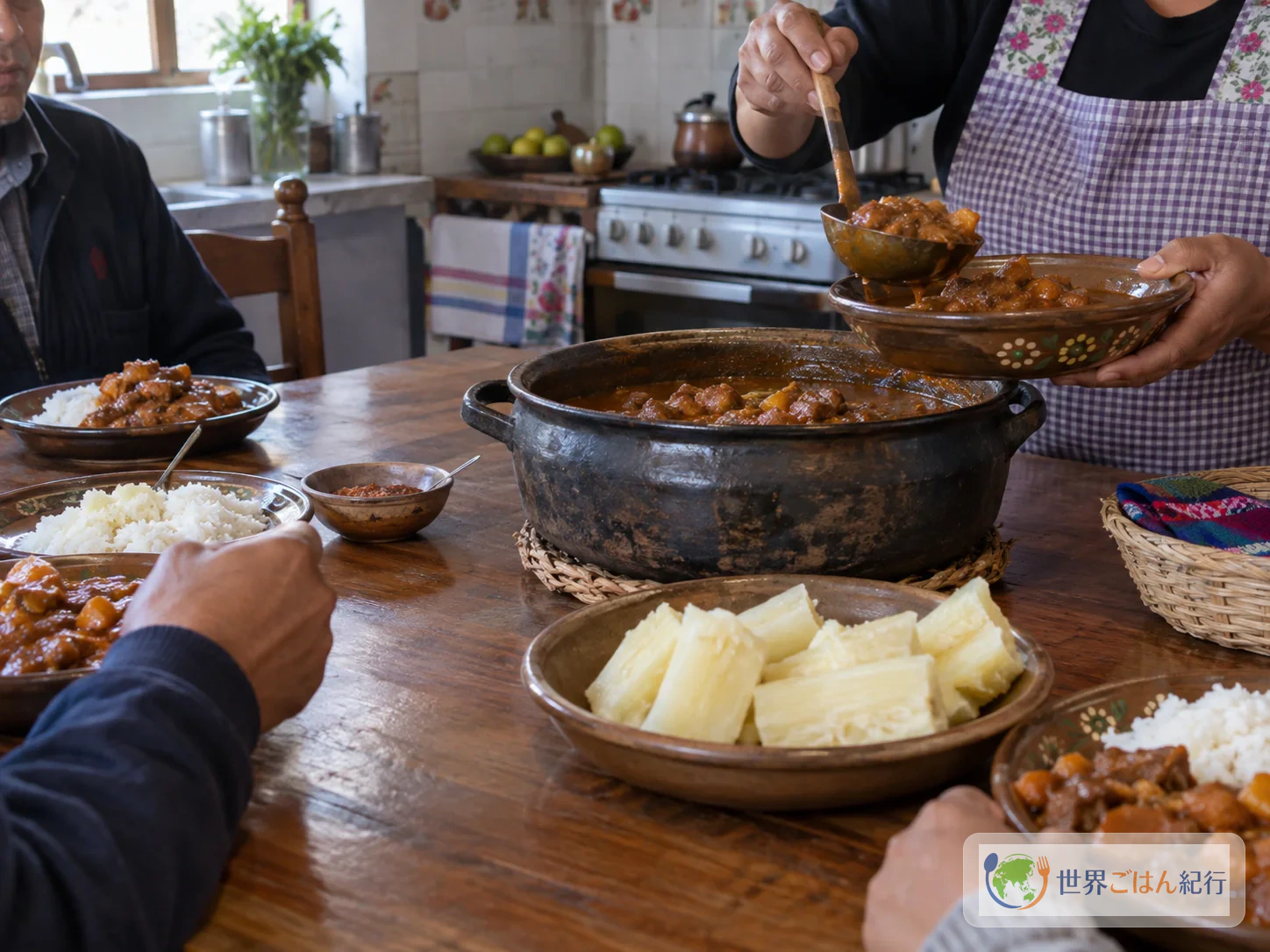
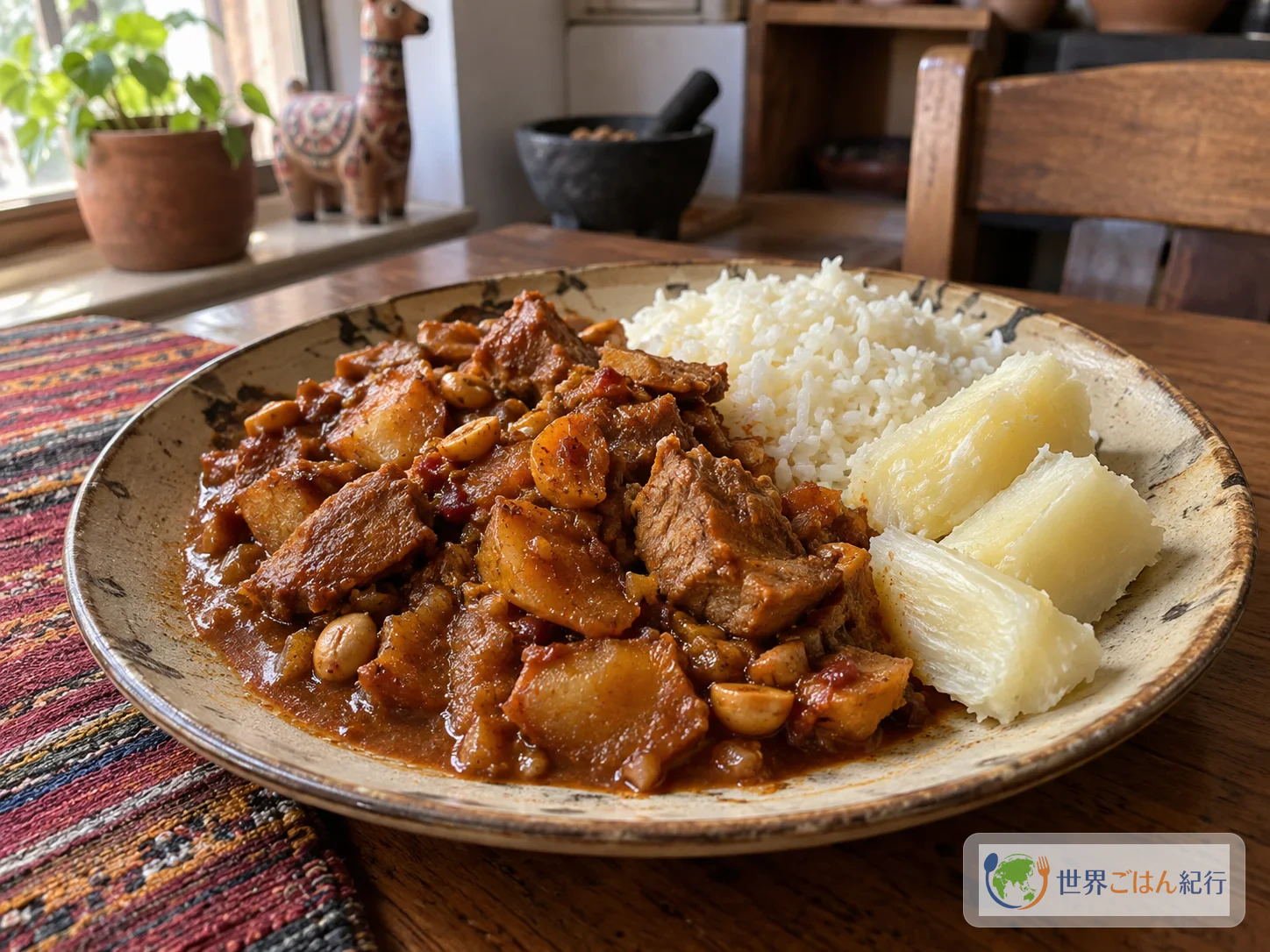
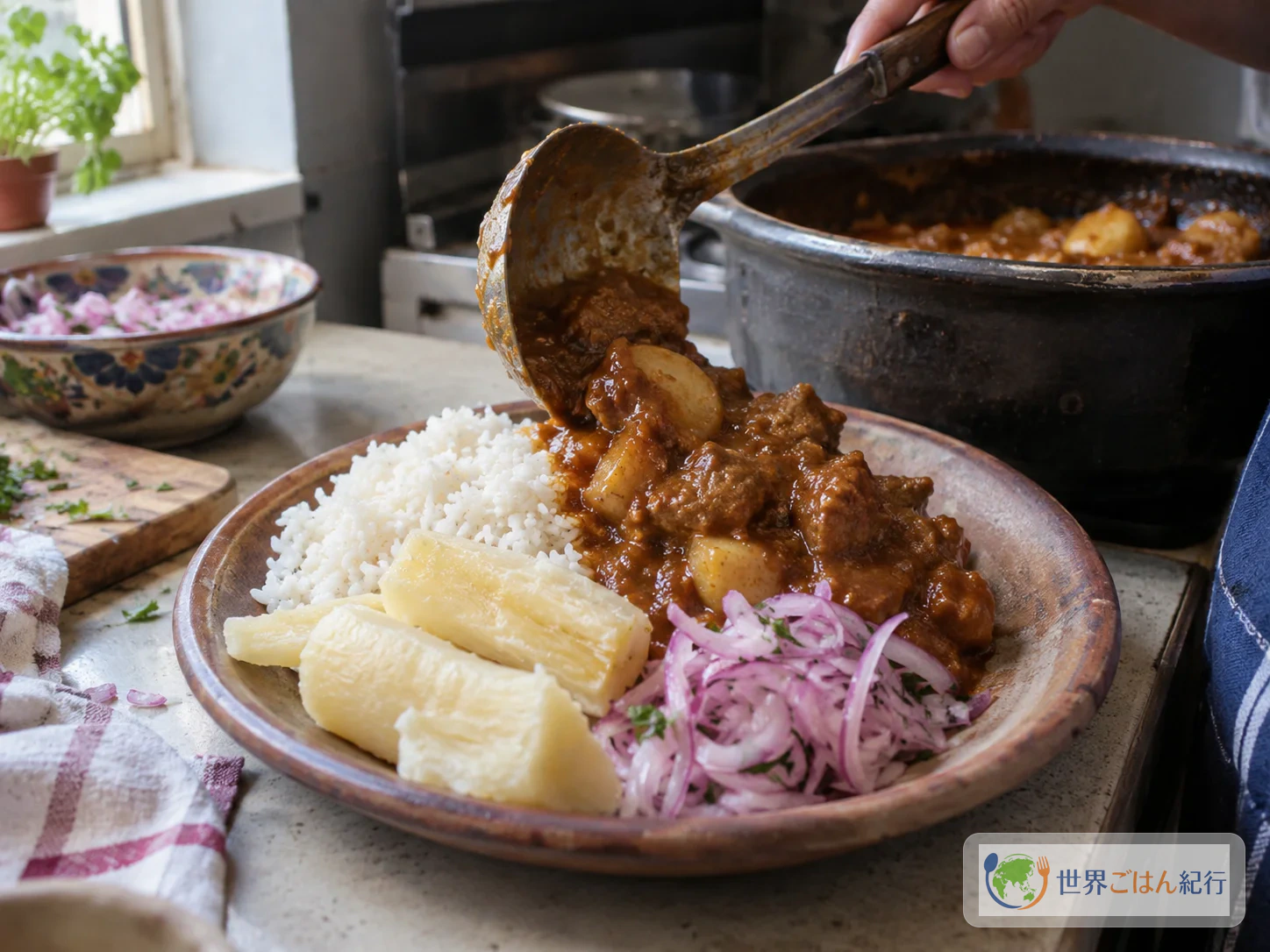
Lift the lid and, with the steam, rise the sweet scent of chili and the toasty aroma of dried potatoes. In the pot is a glossy red sauce, and beside it white rice and boiled yuca. Carapulcra is a Peruvian dish of dried potatoes simmered with pork or chicken, aji panca, spices, and peanuts. Think of it as a red stew with dried potatoes as the star and you can guess the taste.
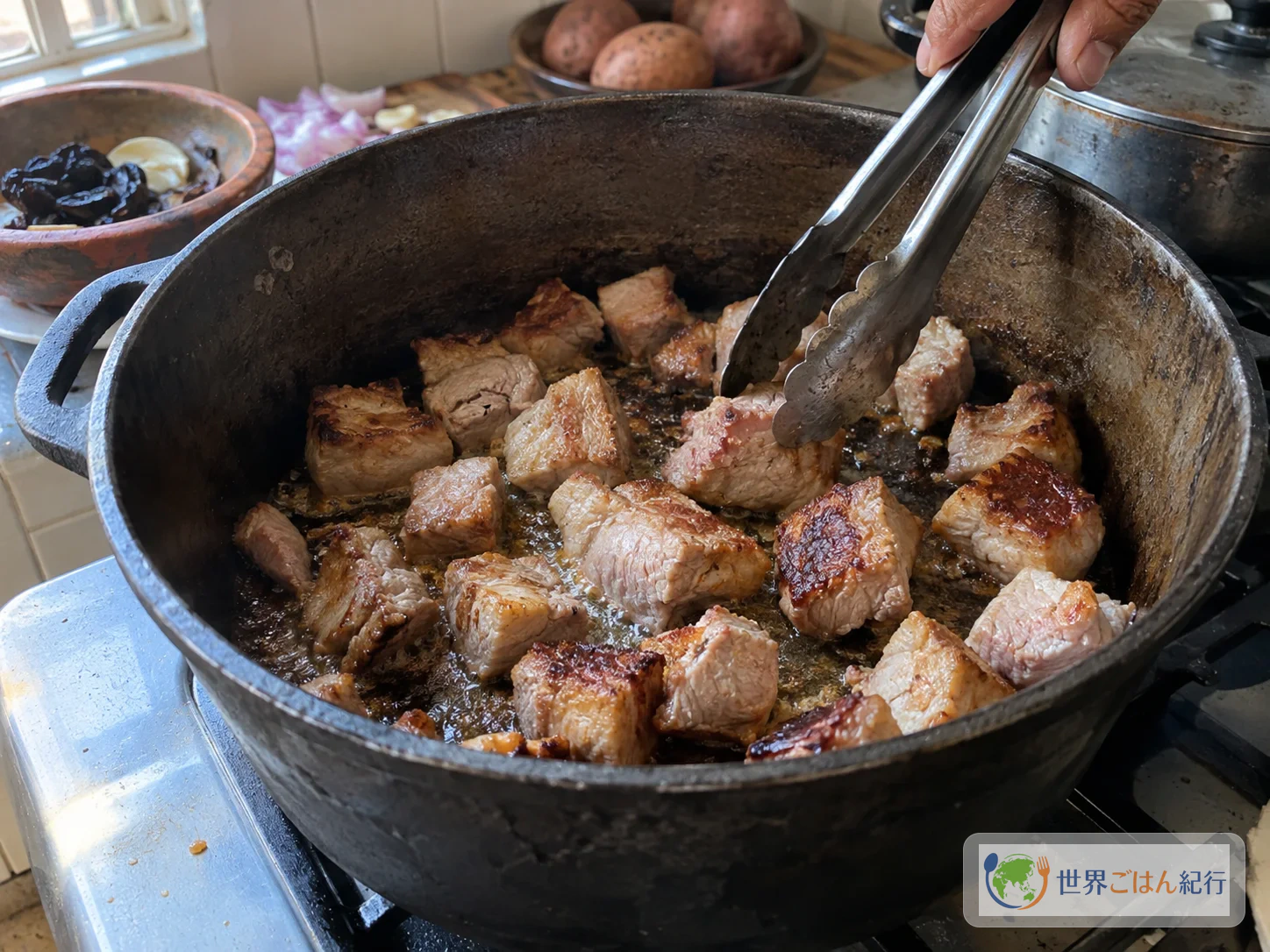
This article, written for the home kitchen, uses pork. The dried potatoes are rehydrated until they are fluffy but hold their shape, then stewed. Aji panca carries not only heat but the red color and a fruit-like aroma, and the peanuts add body and a toasty note at the end. It is the layering of chili aroma and the depth of a stew, not heat, that gives this dish its taste. For serving, white rice is the main partner, with the sourness of yuca and red onion. This is one example put together for ease of gathering ingredients and carrying to the table.
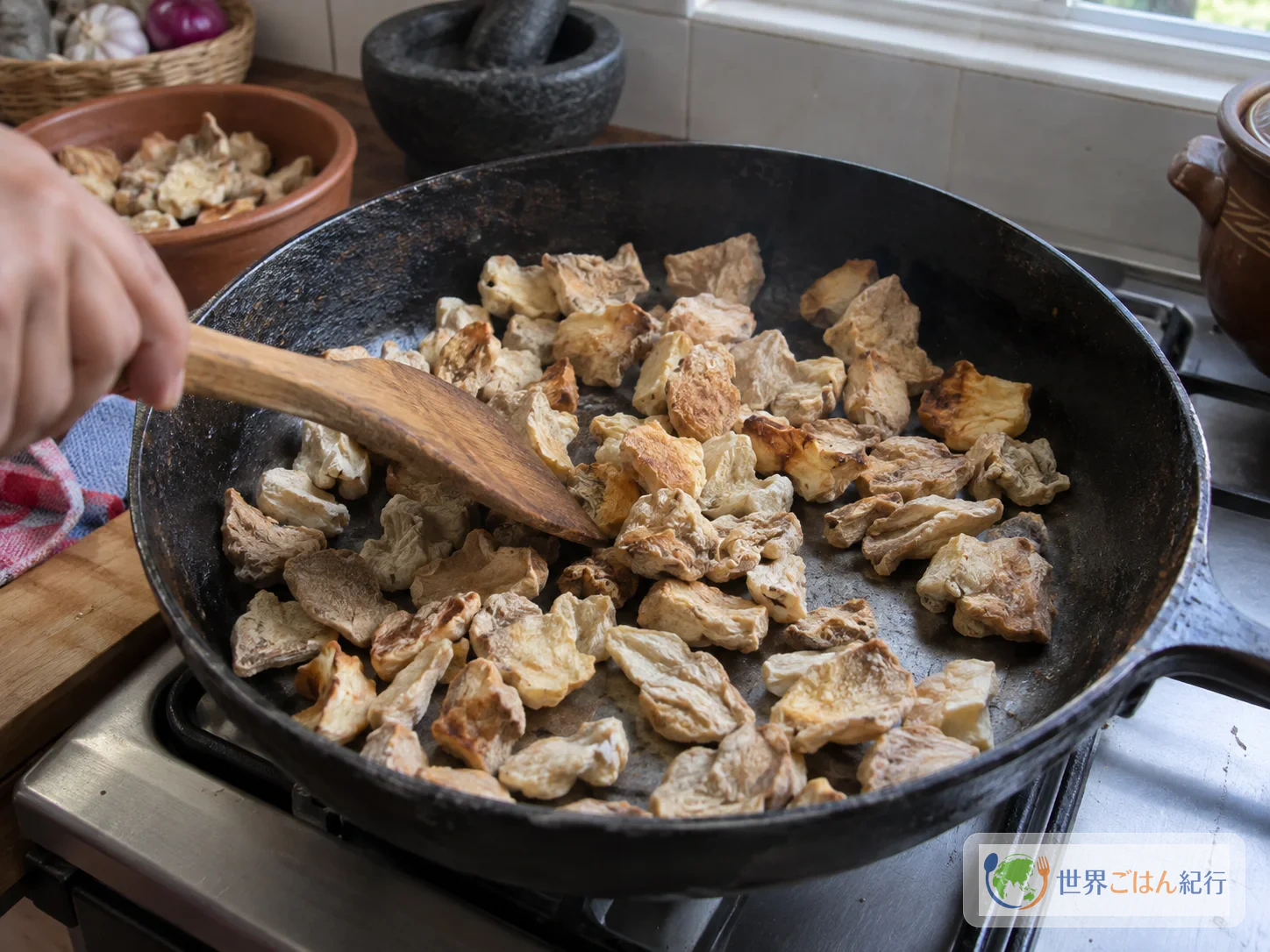
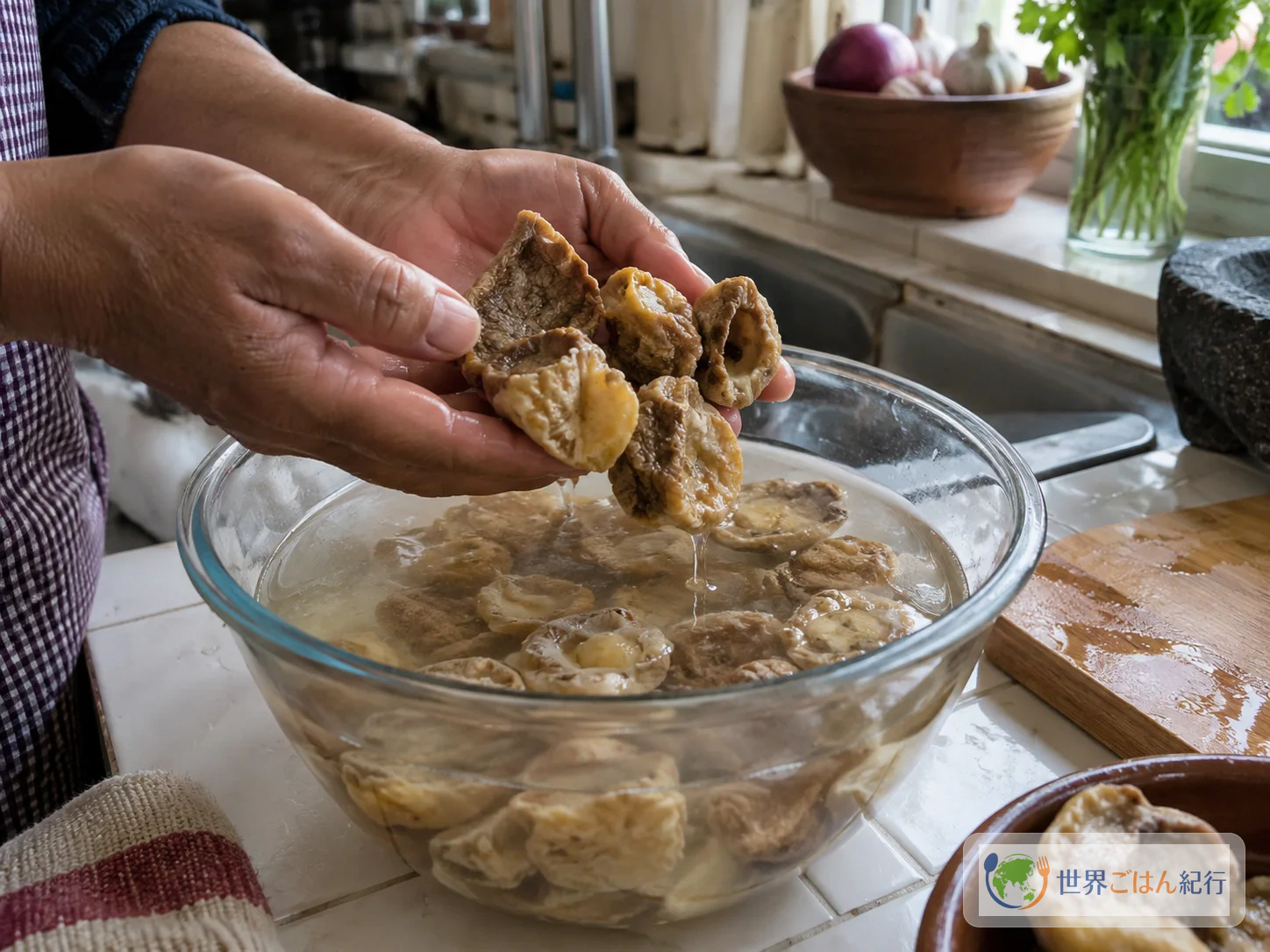
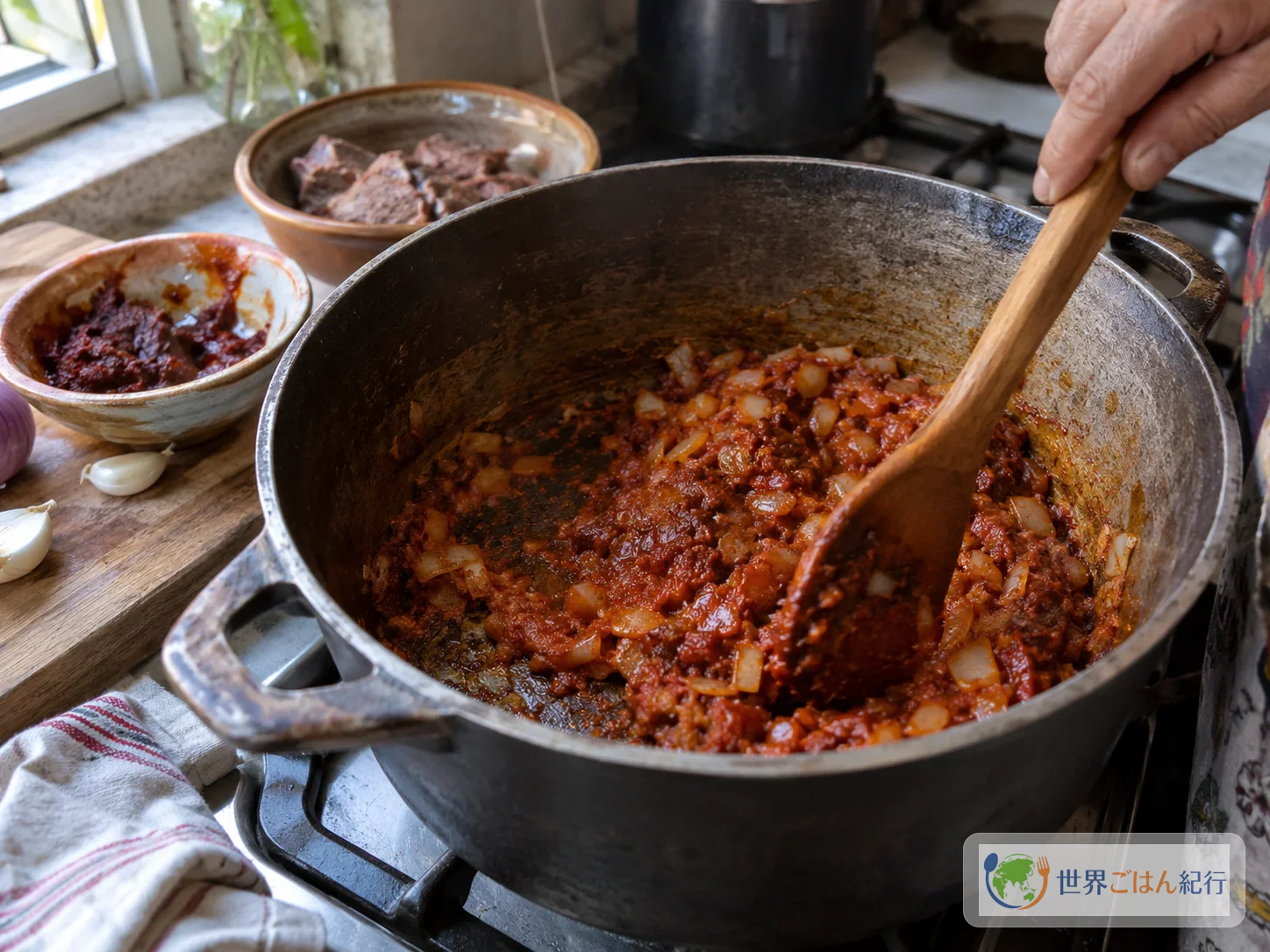
There are three points on the way. Dry-toast the dried potatoes and then rehydrate them overnight, make the flavor base without burning it, and add the peanuts at the end and reduce. The prep takes a night, so rehydrate the dried potatoes the day before you eat. This is not a dish for which you can simply substitute fresh potatoes. I explain why in the ingredients section.
Dried Potatoes: From Preserved Food to a Festive Table
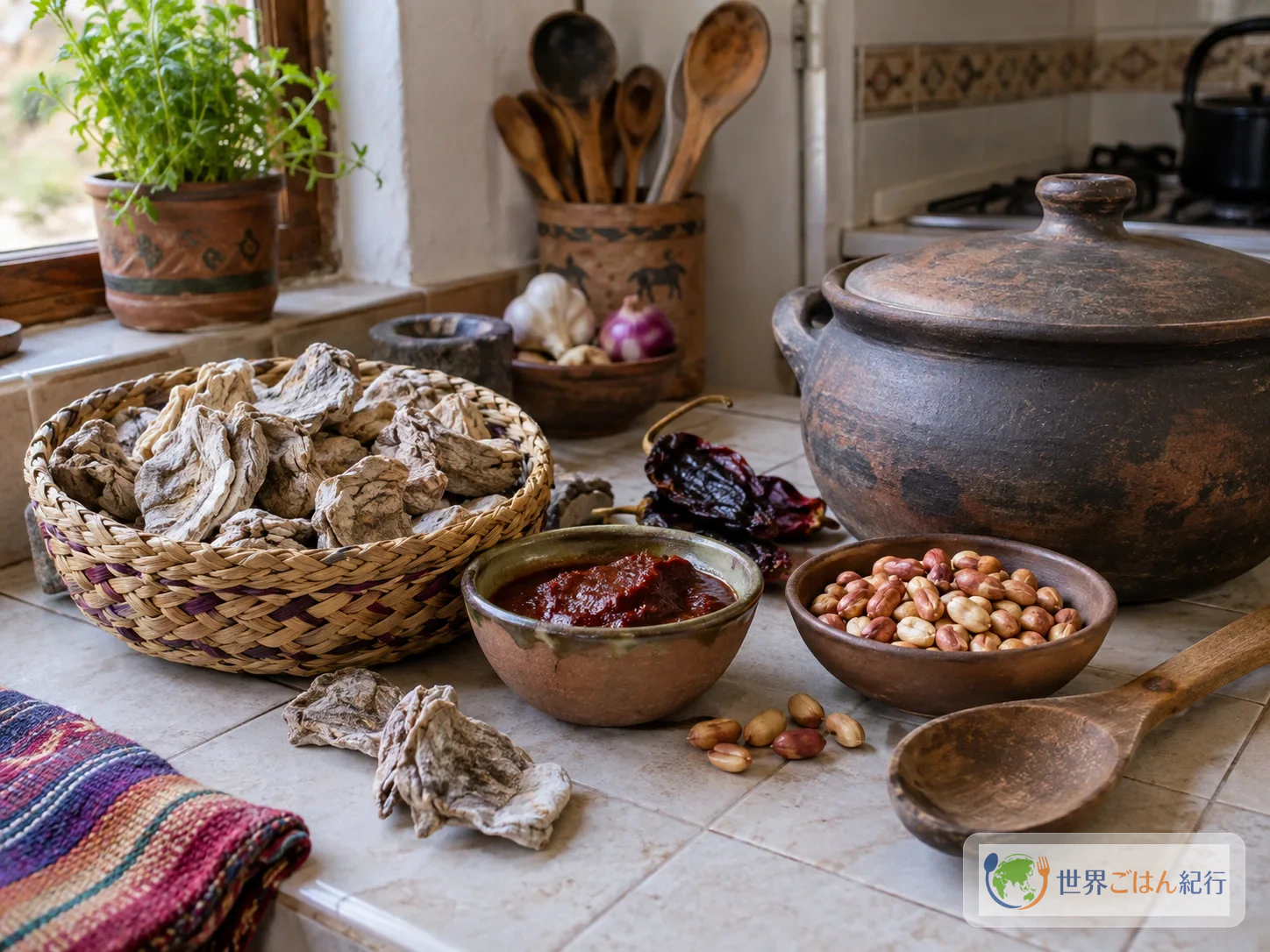
Carapulcra is introduced as an old Peruvian dish that uses dried potatoes. Dried potatoes are a preserved ingredient made by drying peeled potatoes. Drying gives a toasty aroma that fresh potatoes lack, and a texture that does not break down easily in a stew. It is the aroma of dried, not fresh, potatoes that is the backbone of this pot. But no single origin, such as "oldest" or "birthplace," can be asserted, and there are several explanations of where it comes from.
Brand Peru (PROMPERU) touches on "Kalapurca," cooked with hot stones, as an older form of carapulcra. The explanation is that pork, chicken, rice, and yuca were later combined in the dish. This is an account of the path the dish has taken, not a statement that every home cook today follows the same steps. Sources do not agree on the etymology of the name or on a single place of origin, so I do not assert one here.
In official introductions to Peruvian cuisine, carapulcra is treated as a dish tied to family celebrations, Sunday tables, and festivals. Dried potatoes of Andean origin are layered with ingredients that joined over time and by region, such as pork, chicken, rice, and yuca. The wisdom of preservation became a celebratory pot to gather around as a family. A relationship with Afro-Peruvian culture is also mentioned, but that is within the scope of materials introducing Chincha's food culture and combinations of dishes, and does not indicate a single origin for the dish as a whole.
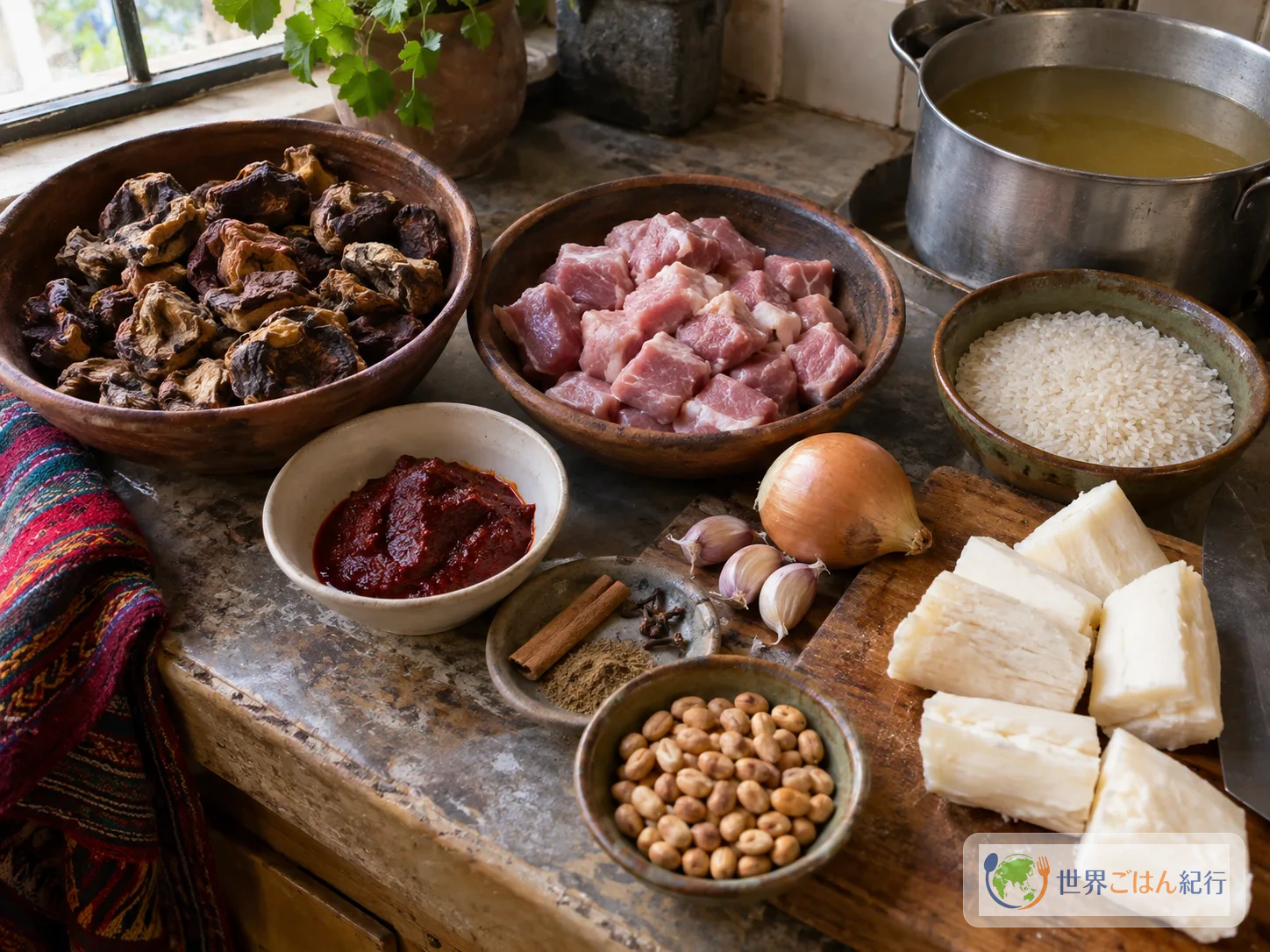
The general names to look for are "aji panca" and "papa seca (dried potatoes)." Aji panca, which decides the aroma of the dish, should be sought by this name rather than by a fixed brand or size. Look for papa seca at import grocers or specialty online shops. Pork, onion, garlic, and an ordinary pot can be whatever you have in your everyday kitchen.
It contains peanuts, so do not serve it to anyone with a peanut allergy. Check the labels of the broth and seasonings as well as the unsalted roasted peanuts. Do not eat yuca raw: peel off the thick skin and cook until the center is soft. Keep the cutting board and knife used for pork or chicken separate from tools for vegetables and plating, or wash them before use.
Ingredients (serves 4)
Judging Thickness by the Pot Bottom and the Spoon
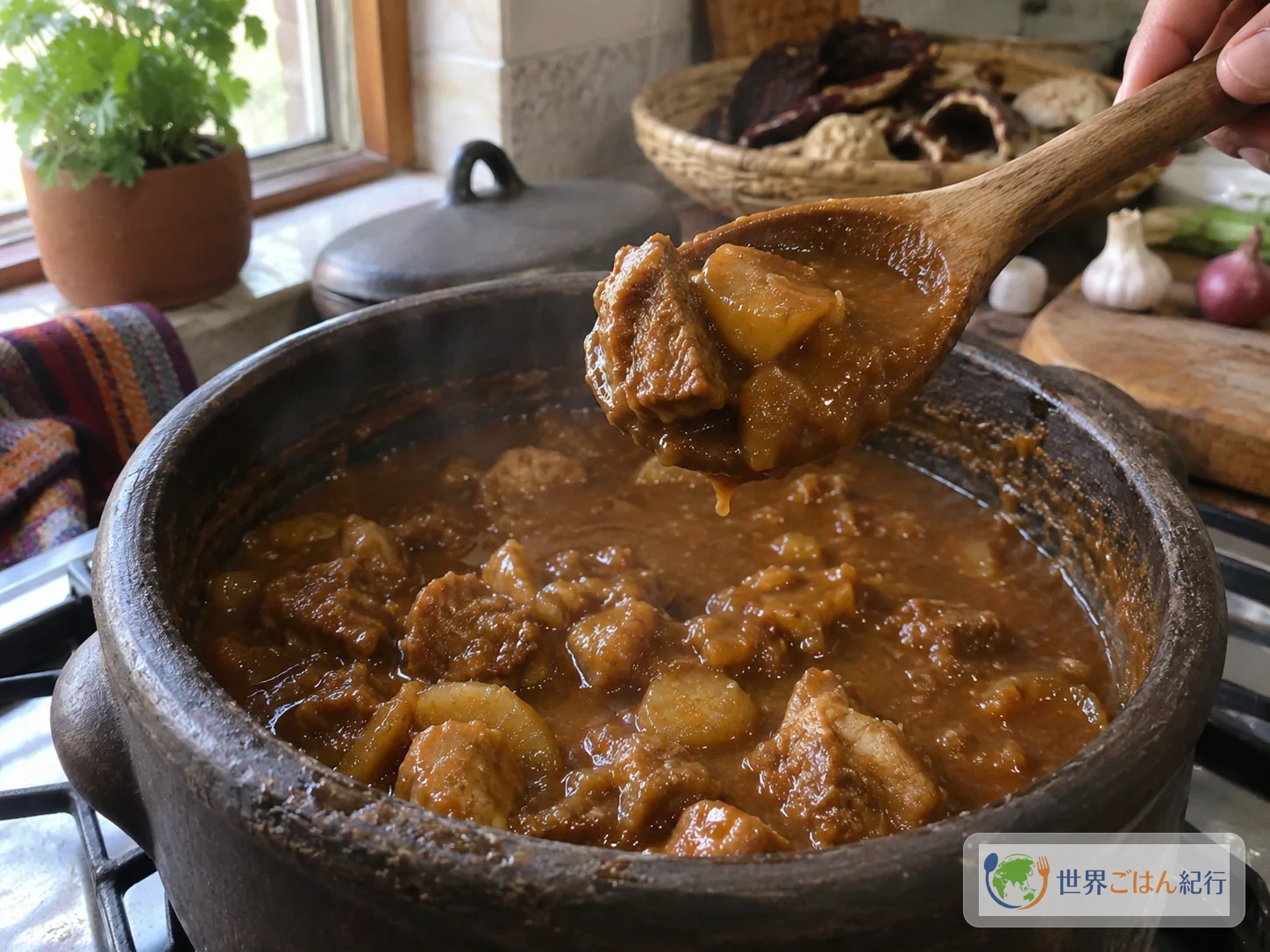
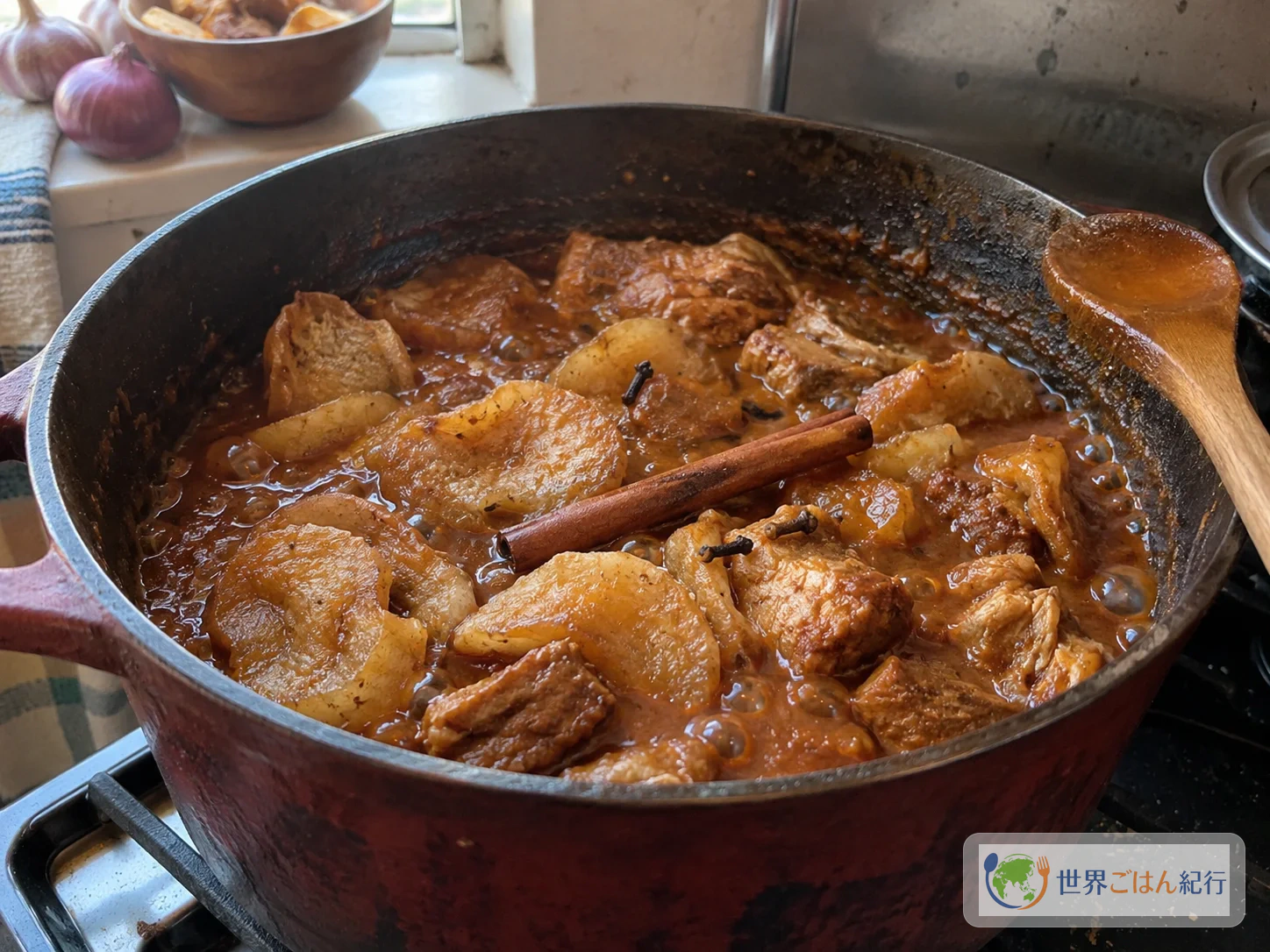
The ideal for the dried potatoes is fluffy to the bite with their shape intact. They should neither stay hard in the center nor break down into a mash. If they are about to turn to mash, stop the heat there. The sauce should not flow like water but be thick enough to remain on the back of the spoon, coating thinly and then slowly dripping off. If the taste is vague, add salt a little at a time; if only the heat stands out, add a little broth and simmer a few minutes. Do not dilute it with a lot of water.
If the liquid reduces so far that you can see the pot bottom, add hot broth 50 ml at a time and wait on low heat until it bubbles again. If only the centers of the potatoes are hard, extend by 10 minutes at a time with the lid slightly ajar, and check after adding broth. Trying to soften them quickly over high heat makes the outsides break down and the meat tough.
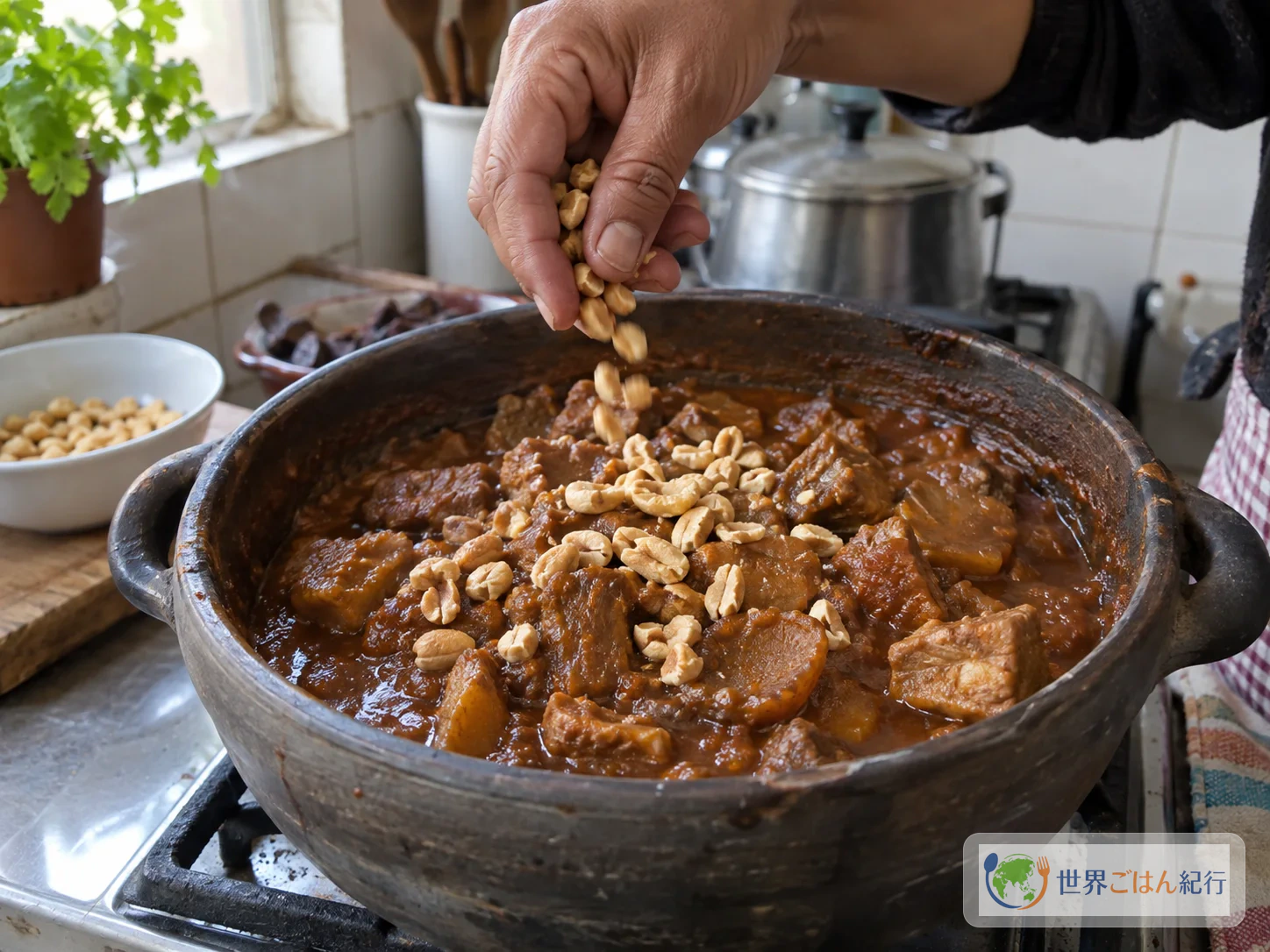
Peanuts at the end, sourness on the plate. Add the peanuts in the last 10 minutes, and the cilantro and lime at plating, so the aromas are not flattened in the stew. The 10 minutes of resting lets the sauce meld with the ingredients, so do not change the liquid or salt greatly just after turning off the heat. The next day the sauce is even thicker, so add a little broth only when reheating.
At the Table in Chincha, It Is Paired with Sopa Seca
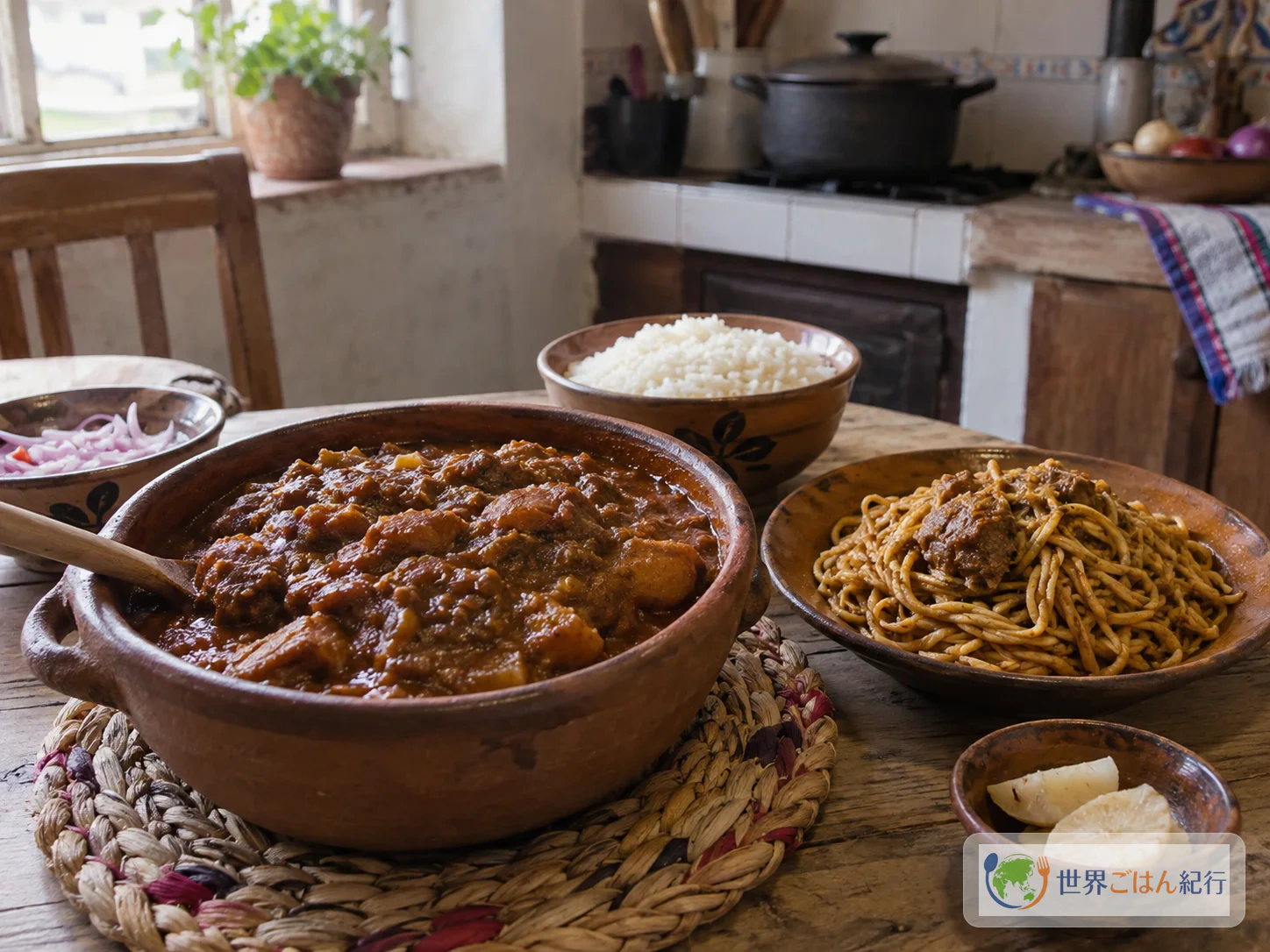
As a dish of Chincha, the pairing of carapulcra and sopa seca, known as "manchapecho," is introduced. Sopa seca is a different dish made with dried noodles, and the noodles are not mixed into this pot. Serve it on a separate plate or beside the carapulcra. The fun of this pairing is in setting it out not as a stew alone but as a regional festive plate. The relationship between Chincha's food culture and Afro-Peruvian culture is spoken of in the context of local dish combinations and cultural introductions, and it does not mean homes across Peru all take the same form.
Brand Peru mentions, for Chincha's carapulcra, celebratory occasions such as weddings, wood fires, clay pots, and local wine. That is the context of the Chincha table in the introductory material, not a requirement for a wood fire or clay pot at home. White rice and yuca alone can keep the structure of the dish, but adding sopa seca brings it closer to the Chincha combination.
When Substituting Ingredients in Your Kitchen
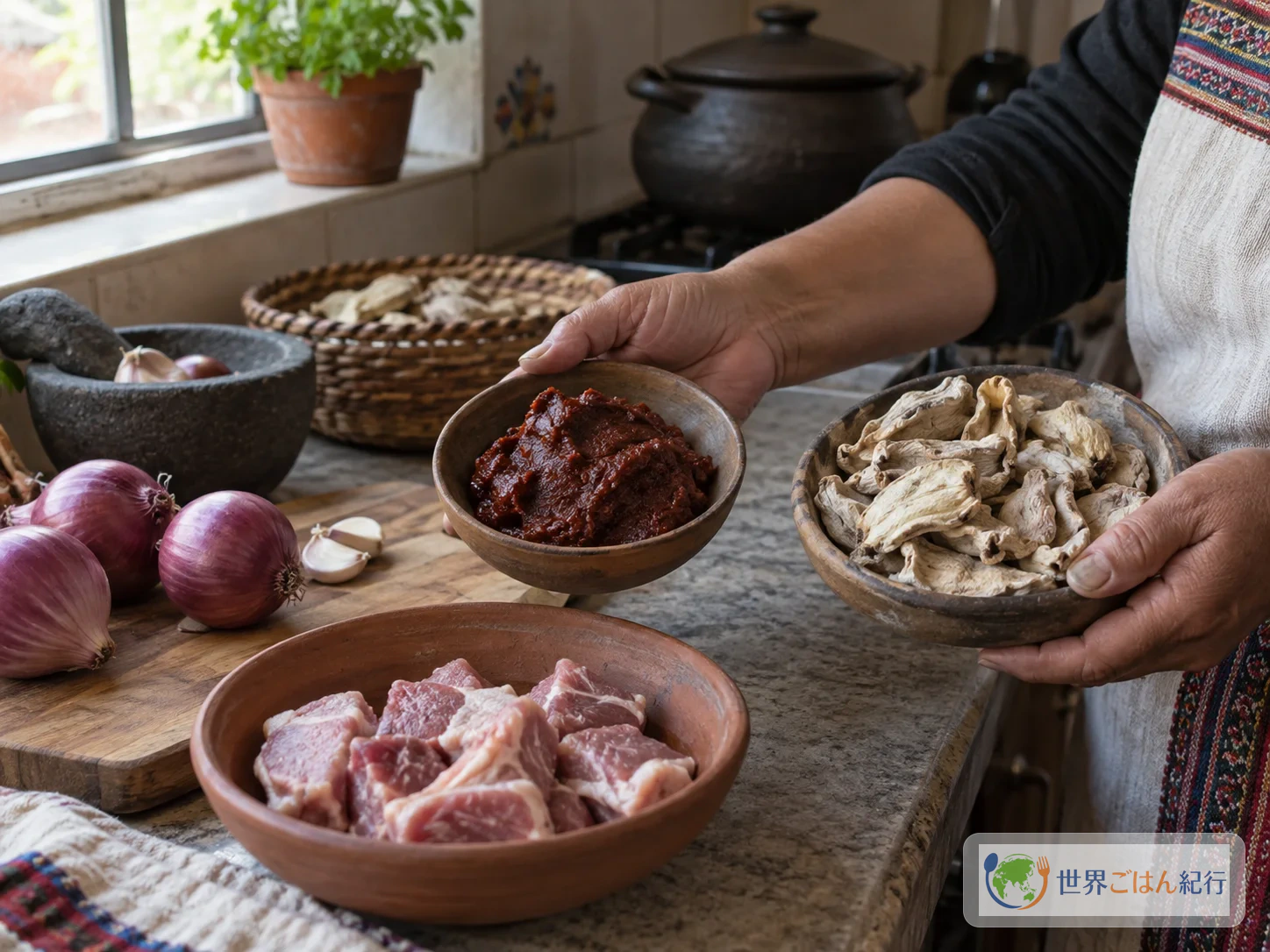
Do not replace papa seca with the same amount of fresh potatoes; look for dried potatoes. They are the center of the texture and toasty aroma, so if you cannot find them you are cooking a different dish. If you have no aji panca, one option is red paprika powder combined with a little heat, but that makes up only the color and mild heat. It will not match the fruit-like aroma. Choose a substitute by whether you are making up the color, the heat, or the aroma, and you can foresee the difference in the result.
Use pork shoulder or pork belly. If you switch to chicken, also check 75 degrees C at the center for at least 1 minute. The body that pork fat and the long simmering give changes with chicken. If you have no port, use red wine, or omit it and replace with the same amount of broth. When using wine, keep the step that cooks off the alcohol.
When searching for the ingredients, use the general name in the ingredient table, "aji panca," as the search term itself. Compare brands, sizes, and model numbers from the results. Search for papa seca too under that name, at import grocers or specialty online shops.
Storage and Frequently Asked Questions
Can I make it the day before?
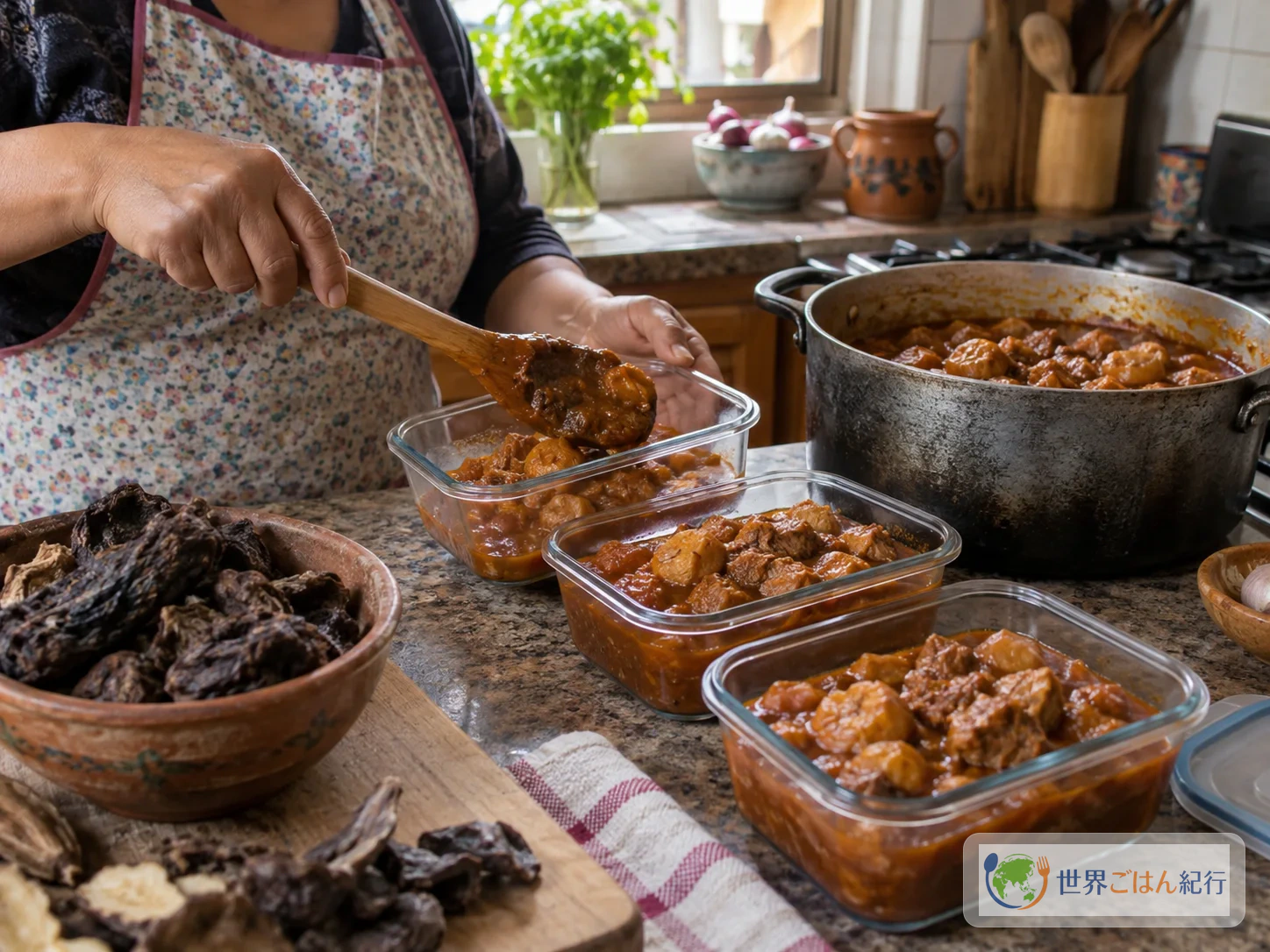
You can. But do not leave it long at room temperature after it has cooled slightly. Divide it into shallow clean containers to cool quickly, and keep the refrigerator at 10 degrees C or below. When eating, reheat thoroughly to the center, until the whole boils or the center reaches 75 degrees C or more. How many days it keeps in the refrigerator cannot be stated uniformly, so do not eat anything that smells or looks off, or whose storage conditions you do not know. The next day the sauce is firm, so add a little broth when reheating and loosen it on low heat.
Can I substitute fresh potatoes for the dried potatoes?
Fresh potatoes differ in water content and how they break down, so they cannot be handled with the same amount and rehydration as papa seca. If you value the preserved-food aroma and texture of carapulcra, get dried potatoes before making it. Making it with fresh potatoes becomes a different stew, with the amounts and the liquid rethought. The steps in this article cannot be transferred as they are.
Can I make it with chicken?
Peruvian introductory recipes include versions using pork or chicken, and it can be replaced with 500 g chicken thighs. Chicken cooks through more easily than pork, so adjust the simmering time by checking, and confirm 75 degrees C at the center for at least 1 minute. The fat, richness, and way it falls apart change, but the axis of dried potatoes and aji panca remains.
What if I cannot eat peanuts?
Leaving out the peanuts changes the toasty note and the light thickness. There is no substitute that guarantees the same finish. For people with an allergy, also check contact with ingredients and utensils containing peanuts, and consider the choice of not serving it, putting safety first.
What other Peruvian dish should I make?
For a dish that also uses aji panca or potatoes, there is aji de gallina (how to make aji de gallina, in Japanese). For a home dish that brings beans and rice together on one plate, see tacu tacu. To learn more widely about Peru's regional dishes, read Introduction to Peruvian cuisine.
Sources
- Carapulcra — Peru Travel / PROMPERÚ (accessed and checked 3 October 2026; publication date unknown)
- Carapulcra: One of the oldest and most delicious dishes in Peruvian cuisine — Brand Peru / PROMPERÚ (accessed and checked 3 October 2026; publication date unknown)
- Afro-Peruvian Culture Day: Celebrating a legacy that shapes Peru's national identity — Andina (published 4 June 2025; accessed and checked 3 October 2026)
- Carapulcra Recipe — Eat Peru (accessed and checked 3 October 2026; publication date unknown)
- Carapulcra — Instant Pot (accessed and checked 3 October 2026; publication date unknown)
- Six points for preventing food poisoning at home — Ministry of Health, Labour and Welfare, Japan (accessed and checked 3 October 2026; publication date unknown)
- Cassava and bamboo shoots — Food Standards Australia New Zealand (page updated 2 October 2025; accessed and checked 3 October 2026)


