


Hold an eggplant over a flame and the skin wrinkles and shrinks, and a faintly scorched, sweet smell rises in the kitchen. Peel it quickly then, and drizzle mustard oil over the still-warm flesh. The moment you stir in red onion and green chili, a small dish to set beside white rice stops being just roasted eggplant.
Begun bhorta (বেগুন ভর্তা) is a flavorful side of coarsely mashed roasted eggplant eaten in homes in Bangladesh and Bengal. It isn't eaten quietly with a dashi-soy seasoning the way Japanese grilled eggplant is. It is dressed with oil, onion, chili and cilantro and eaten by breaking a little at a time into white rice. This article spells out how to get the char flavor, how much oil, and how to let the heat escape, so you can make it under a broiler or in a skillet.
বেগুন (begun) means eggplant, and ভর্তা (bhorta / bharta / vorta) refers to a dish that is mashed and mixed. North India's baingan bharta sometimes takes the form of a spiced stir-fry, but Bangladesh's bhorta has a stronger outline as a small flavoring dish mixed into rice.
What is begun bhorta? Roasted eggplant as a flavoring for rice
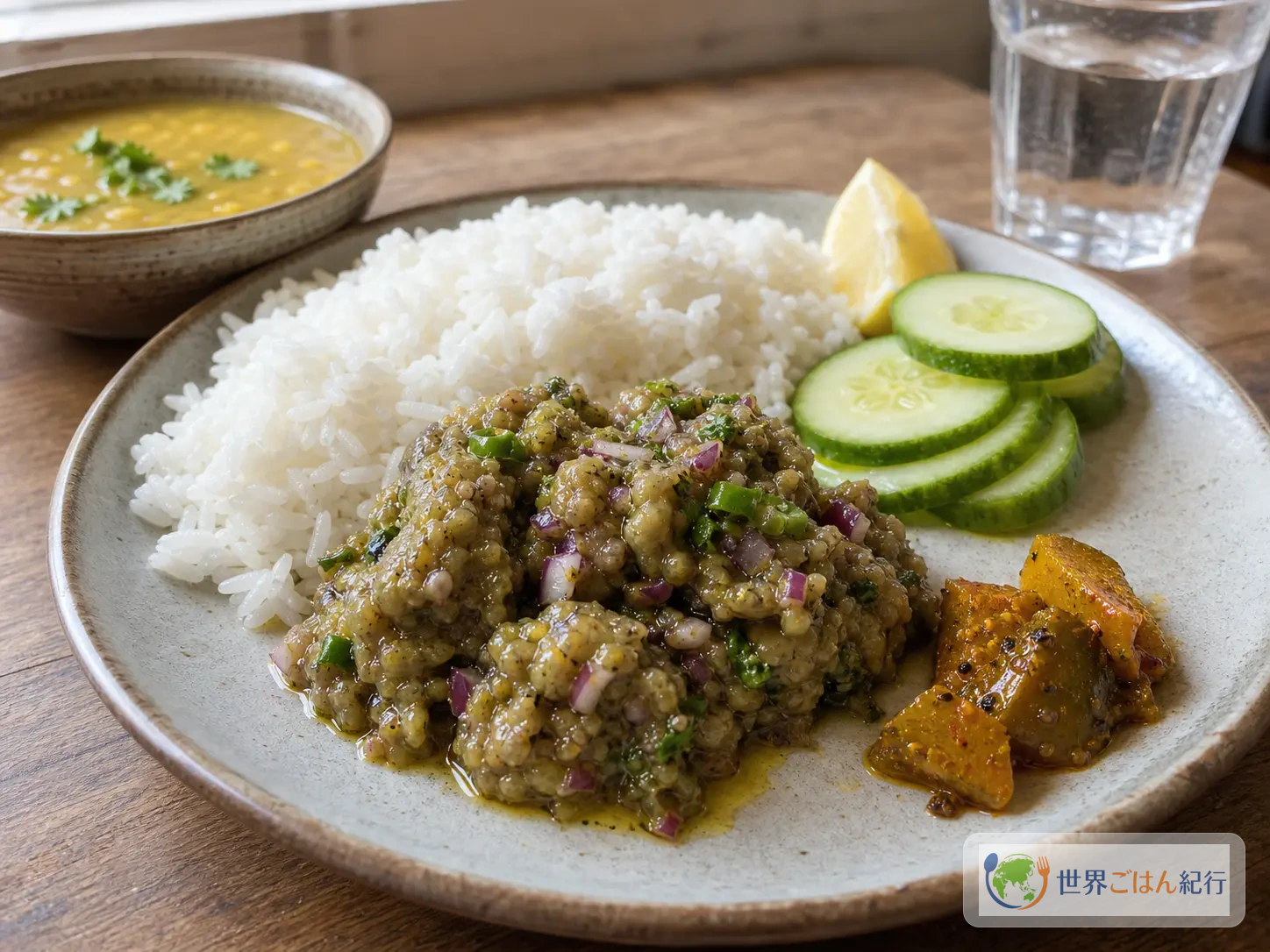
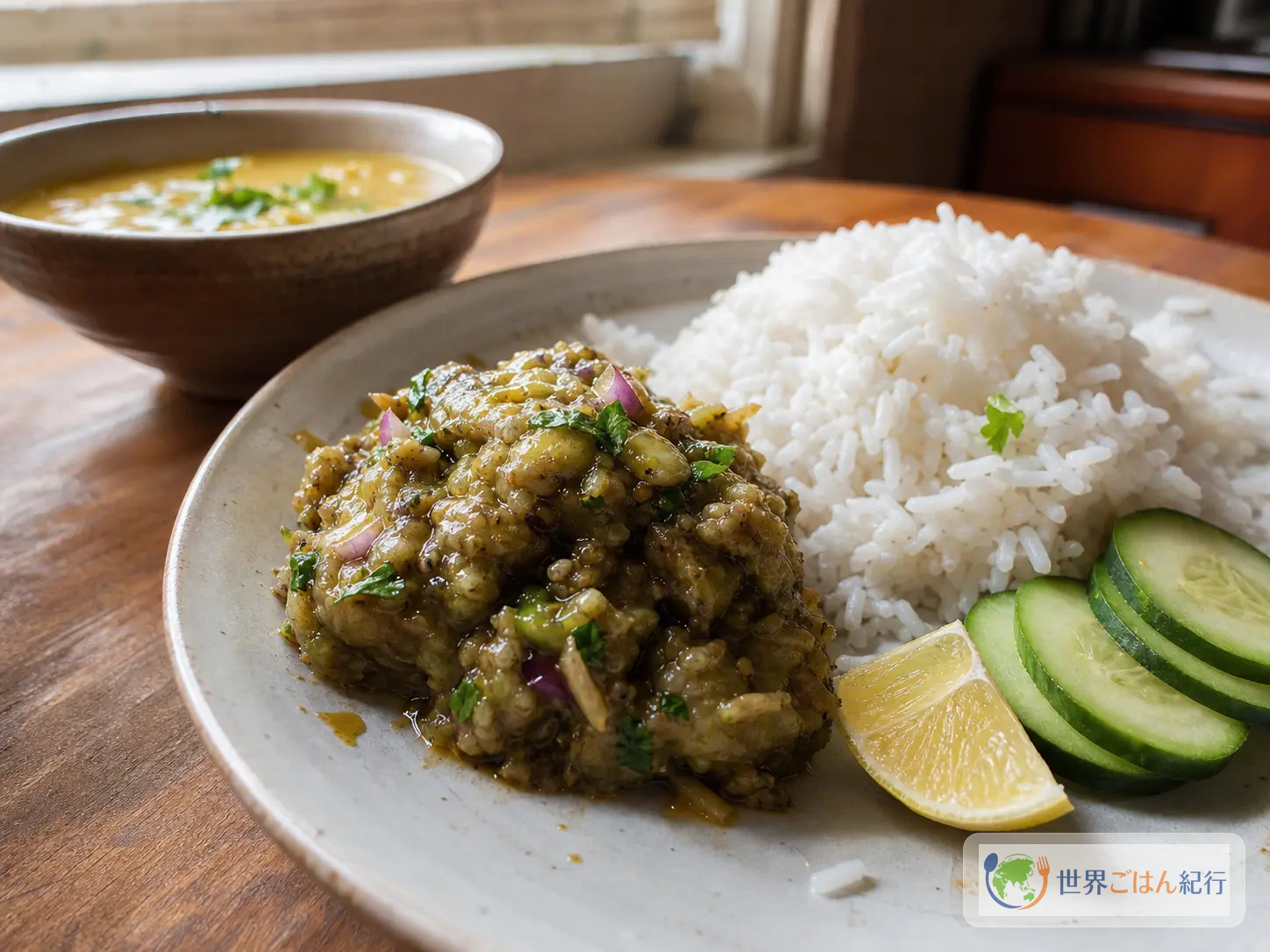
With begun bhorta, making the eggplant soft is not enough to settle the flavor. What matters is charring the skin to give a smoky aroma, not making the flesh a smooth paste, and leaving a little raw red onion and green chili to finish. The aroma is strong even in small amounts, so rather than heaping it in the center of the plate, set 2–3 tbsp beside 150 g of white rice, and it is easier to eat.
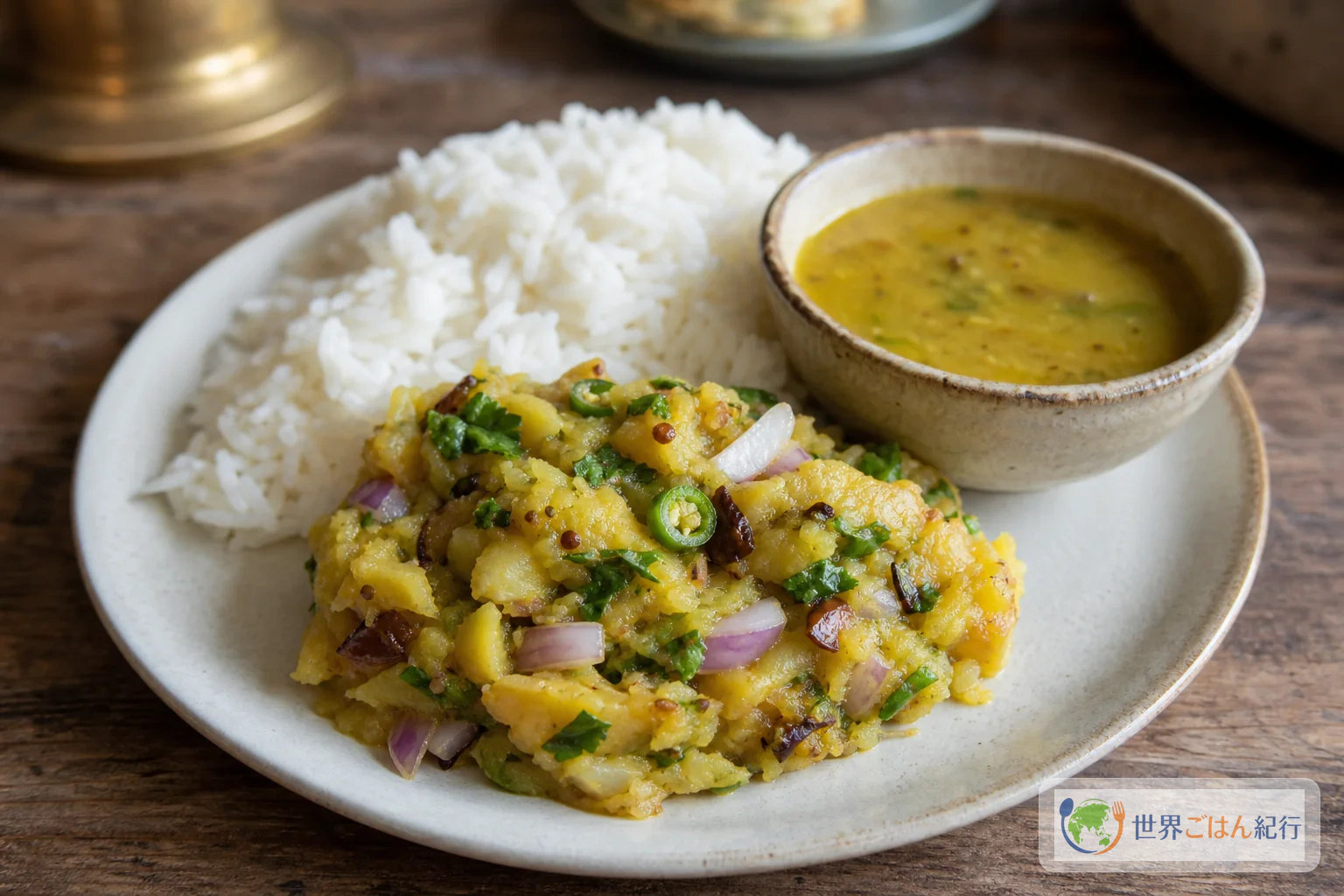
Bhorta is a group of dishes seen widely at Bangladeshi tables. Whether the main ingredient is potato, as in aloo bhorta (in Japanese), fish or dried fish, or lentils or egg, the idea is the same: mash it and bring it to a state that goes with rice using oil and aromatics. Begun bhorta is the one that works with the moisture and char aroma of eggplant.
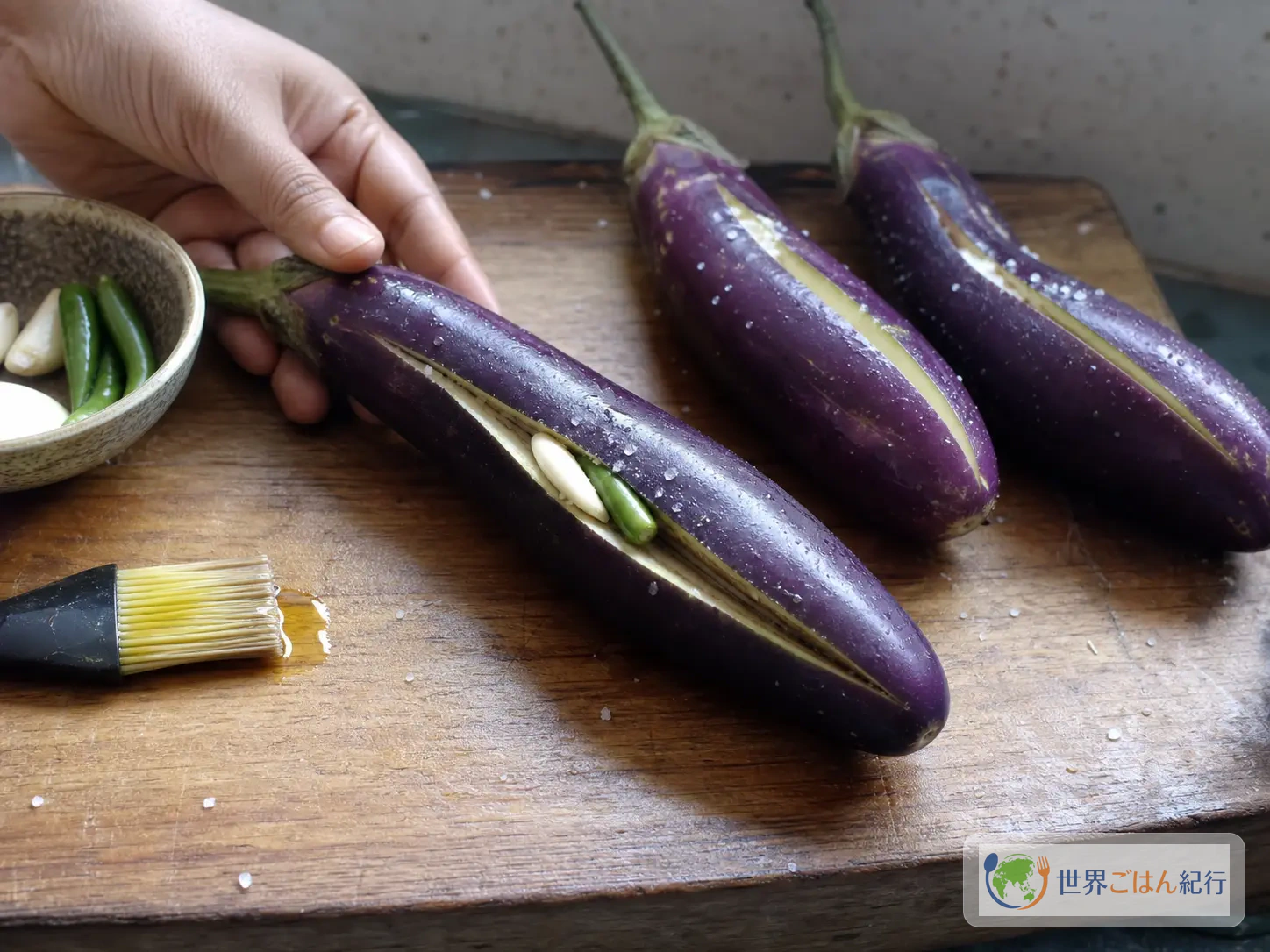
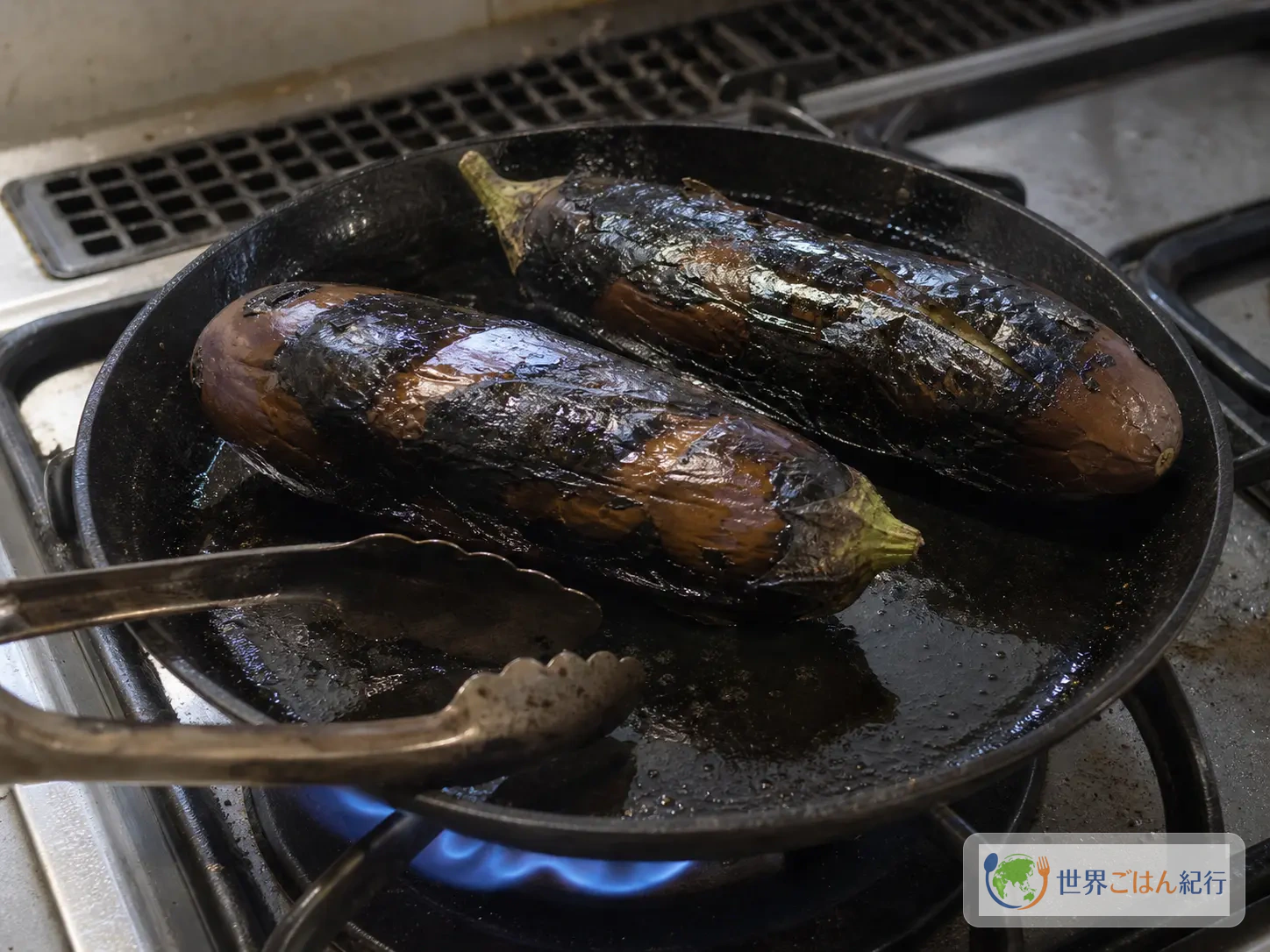
What home cooks get stuck on is whether to roast the eggplant whole or cut. Roasting whole gives a smoky aroma easily but takes time to cook through. Cutting thick and frying in oil is quick, but the char aroma of the skin that makes it roasted eggplant weakens. This recipe's baseline is to score the eggplant shallowly, roast it whole, steam it, and then peel it. Without a broiler, you can also cook it in a heavy skillet with a lid.
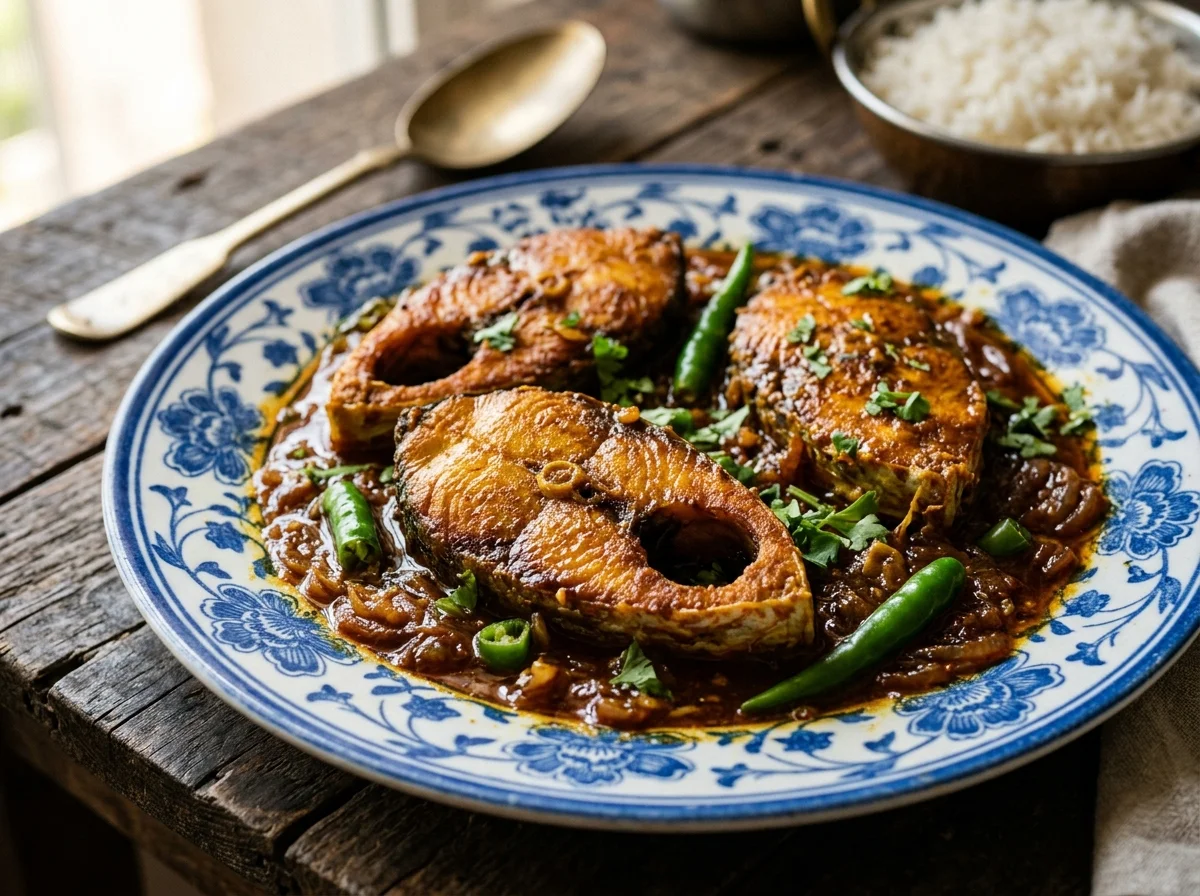
If you build a Bangladeshi table, on a day with ilish bhuna (in Japanese), where fish fat and mustard oil overlap, go easier on the green chili in the begun bhorta. Next to the wheat-and-meat-rich haleem, make the lemon a little stronger and use it like a condiment that resets the palate.
Placing it on the table, and how it differs from other bhortas
What's interesting about bhorta at a Bengali table is that just setting a little beside the main dish changes how the rice is eaten. Think of the role of grated daikon beside grilled fish, or pickles on curry day. But begun bhorta isn't a preserved food; it is a dish eaten the same day, with the moisture and oil aroma of the roasted eggplant.
| Table scene | What to pair it with | How to adjust begun bhorta |
|---|---|---|
| A day of just white rice and dal | Lentil dal, cucumber, lemon | Add the green chili as is and bring the mustard oil aroma forward |
| A fish day | Ilish bhuna, mackerel bhuna | Halve the green chili and add 1/2 tsp more lemon juice |
| A heavy meat or wheat day | Haleem, beef curry | Use more cilantro and set a small portion at the edge of the plate |
| A day to line up several bhortas | Aloo bhorta, egg bhorta | Divide roles: begun for char aroma, aloo for staying power |
If you set it beside potato aloo bhorta (in Japanese), it's more fun not to make them taste alike. Aloo bhorta is a bit round, and begun bhorta a bit sharp. Go lighter on the green chili on the potato side and emphasize the char aroma of the skin and the lemon on the eggplant side, and the flavors won't clash on the rice.
On days when the family disagrees about heat, put only dried red chili aroma oil into the begun bhorta itself, and set the chopped green chili in a small dish. If each person mixes it on the rice, the heat is adjustable even from the same bowl. Leaving that way out at the table is easier to serve to a family not used to Bengali food than mixing everything in from the start.
Ingredients and shopping: serves 4
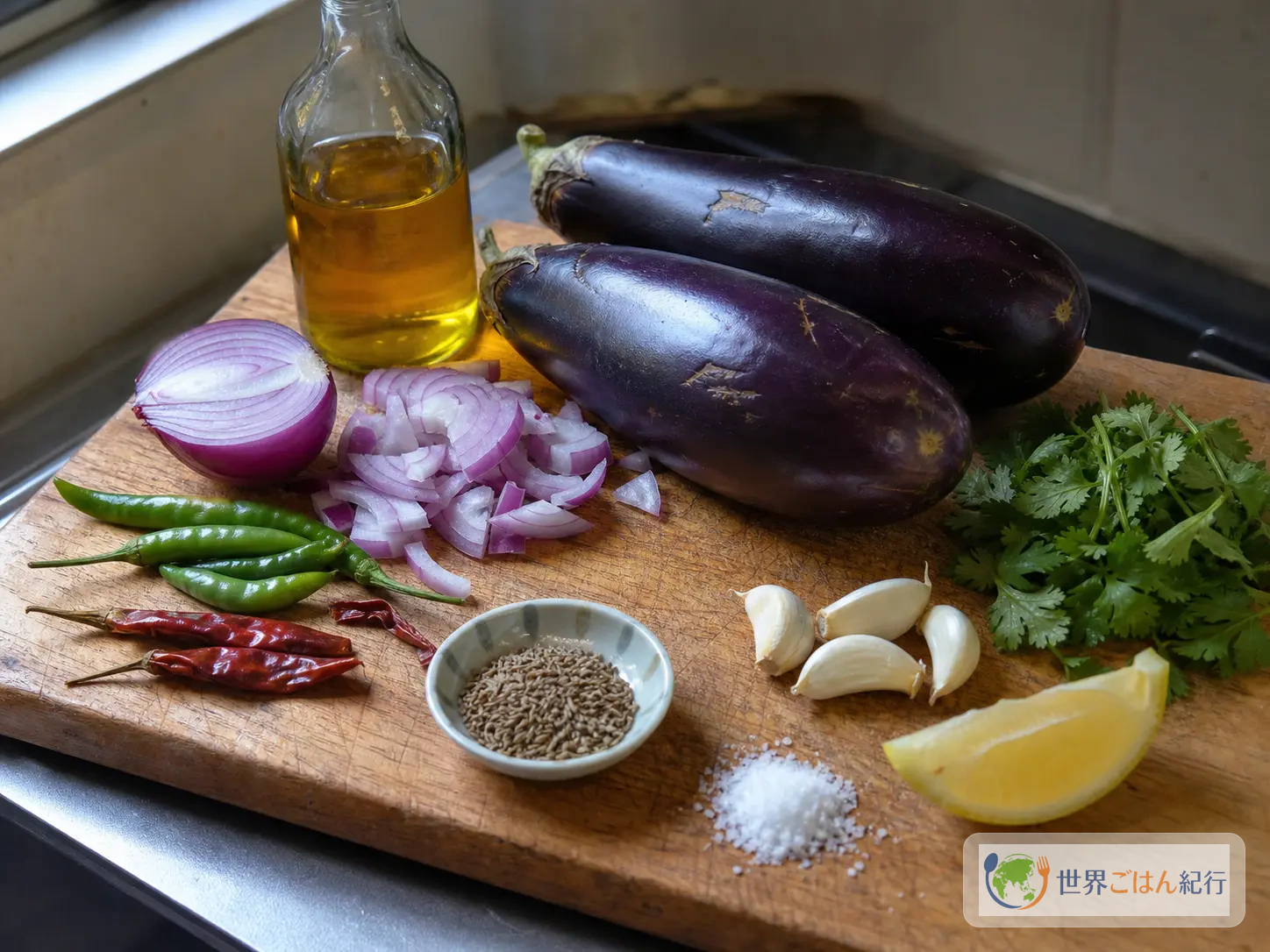
This serves 4 beside white rice and dal. Eggplant shrinks a lot when cooked, so prepare a little more than it looks like you need. If you want to share the heat among the family, don't mix in the green chili; put it in a separate dish at the table.
Mustard oil comes from mustard. Don't serve it to anyone with a mustard allergy. Chilies are strongly irritating, so on days with people sensitive to heat or children, don't mix in the green chili; put it in a separate dish. Soil tends to remain around the stem of eggplants, so wash them well and wipe dry before roasting.
What to look for when shopping
Eggplant, red onion, garlic and lemon are available at any supermarket. The things worth seeking out are the mustard oil that defines Bengali cooking, cumin seeds that can be used in lentil dishes even if there is leftover, and a mortar that makes it easy to get the feel of coarse mashing. Fresh items like eggplant and onions are better chosen locally, where you can check their condition.
Start with the mustard oil. Made with neutral oil alone, the aroma comes out much closer to Japanese-style grilled eggplant. A small amount of food-grade mustard oil brings a pungent aroma that goes up the nose behind the sweetness of the eggplant.
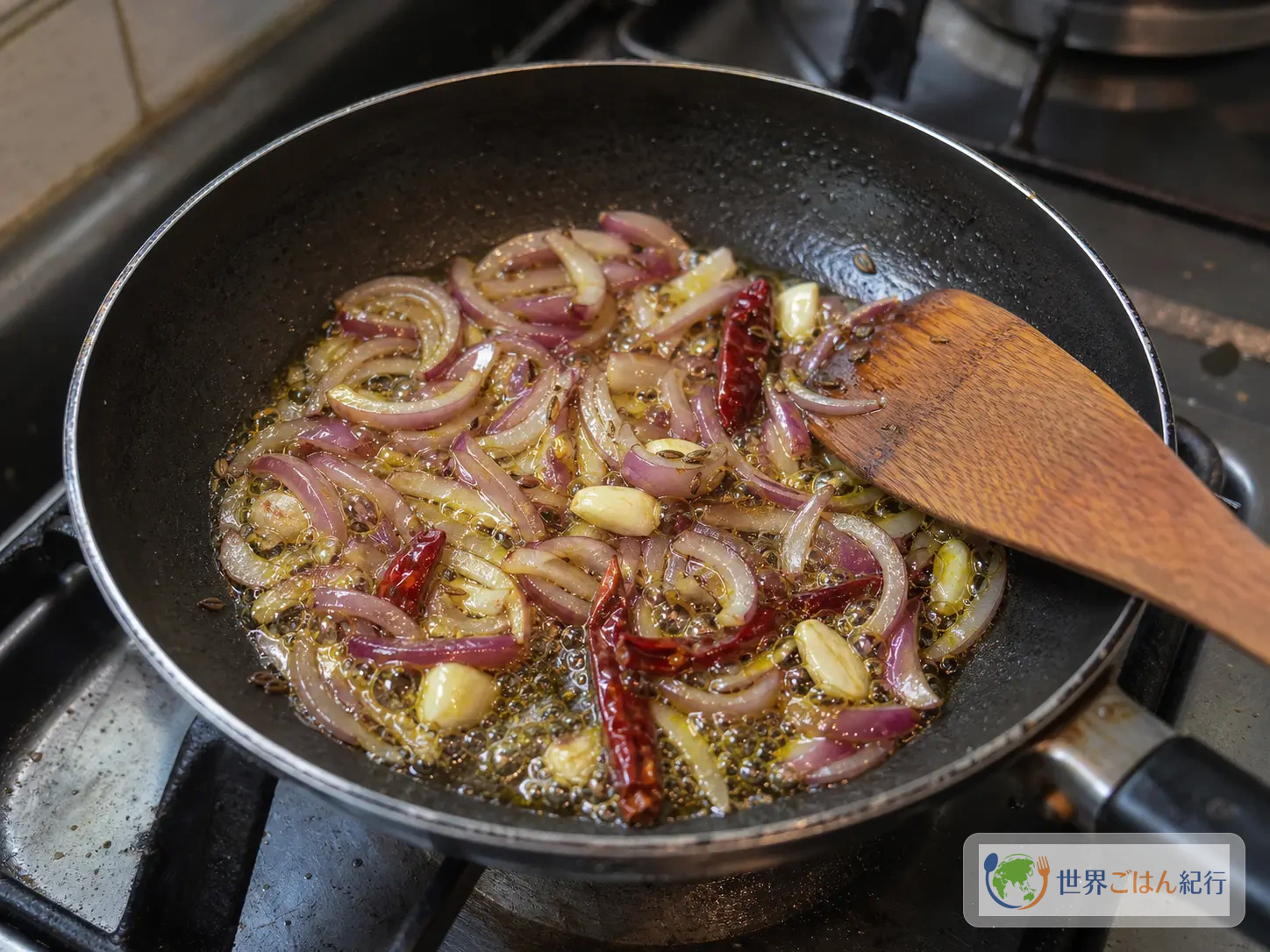
Cumin seeds aren't required. But on days you use a skillet instead of a broiler, the char aroma tends to be weak. Letting 1/4 tsp pop in the oil adds depth to the aroma. Leftovers can go into dal tadka (in Japanese) or aloo gobi (in Japanese).
A mortar is useful not for turning the eggplant into a smooth purée but as a tool for coarsely crushing the roasted garlic and chilies. A fork alone works, but for crushing a small quantity of aromatics so they blend into the oil, a deeper mortar is easier to handle than a shallow grinding bowl.
Method: keep the char aroma and mash coarsely
The crux of this recipe is not letting the eggplant get watery. Peeling it right after roasting is hot, so steam it briefly before handling. When mixing, don't mash the fibers completely; leave a coarseness that falls apart softly when put on rice.
Substitutions and how to fix what goes wrong

With so few ingredients, begun bhorta shows the effect of substitutions clearly. It is a dish that protects the eggplant and adjusts the aromatics. Being afraid of oil and cutting it too far makes it watery, and adding only chili makes the heat float on top. Review in this order: moisture, oil, sourness.
| Ingredient in question | What to protect | Practical substitute |
|---|---|---|
| Mustard oil | The pungent aroma that goes up the nose, and the sheen of oil that binds the eggplant | Mix 2 tbsp neutral oil with 1/2 tsp prepared mustard and add after turning off the heat. The local character is weaker |
| Green chili | The raw green aroma, and the heat that comes later | 2 shishito peppers and 1/8 tsp chili flakes. Makes it easy to share the heat at the table |
| Red onion | The sweetness and bite when chewed raw | 80 g sweet spring onion. It is milder, so add 1/2 tsp more lemon juice |
| Cilantro | A green aroma that lightens the oil and chili | 12 g scallion tops. The aroma differs but it goes with white rice |
| Cumin seeds | The aroma of whole seeds in the oil | Optional. If using ground cumin, up to 1/8 tsp |
| Condition | Cause | How to fix it |
|---|---|---|
| Watery | Not roasted enough, or moisture wasn't drained after peeling | Leave it in a colander for 5 minutes to drain. Taste and add 1 tsp mustard oil |
| Blurry | Not enough salt or sourness, or not seasoned with mixing into rice in mind | Add a pinch of salt, then 1/2 tsp lemon juice, in turn |
| Bitter | Thick charred skin was mixed in, or the garlic burned | Remove hard skin, and bring the aroma back with 1 tbsp fresh red onion and 1/2 tsp lemon juice |
| Only the oil floats | Oil was added after the eggplant cooled, or it wasn't mixed enough | Warm in a 600 W microwave for 30 seconds and turn from the bottom 20 times with a wooden spoon |
| Too hot | The green chili was mixed in with its seeds | Dilute by mixing in 2 tbsp cooked white rice and add 1/2 tsp lemon juice |
When roasted in a skillet, the char aroma is weaker than under a broiler. In that case, fry the dried red chilies a bit more strongly in the aromatic oil and take them out before they blacken, making up the char aroma with oil. Conversely, if you charred it heavily under a broiler, leave out the cumin seeds and increase the lemon a little so the aromas don't pile up.
How to eat it, and storage
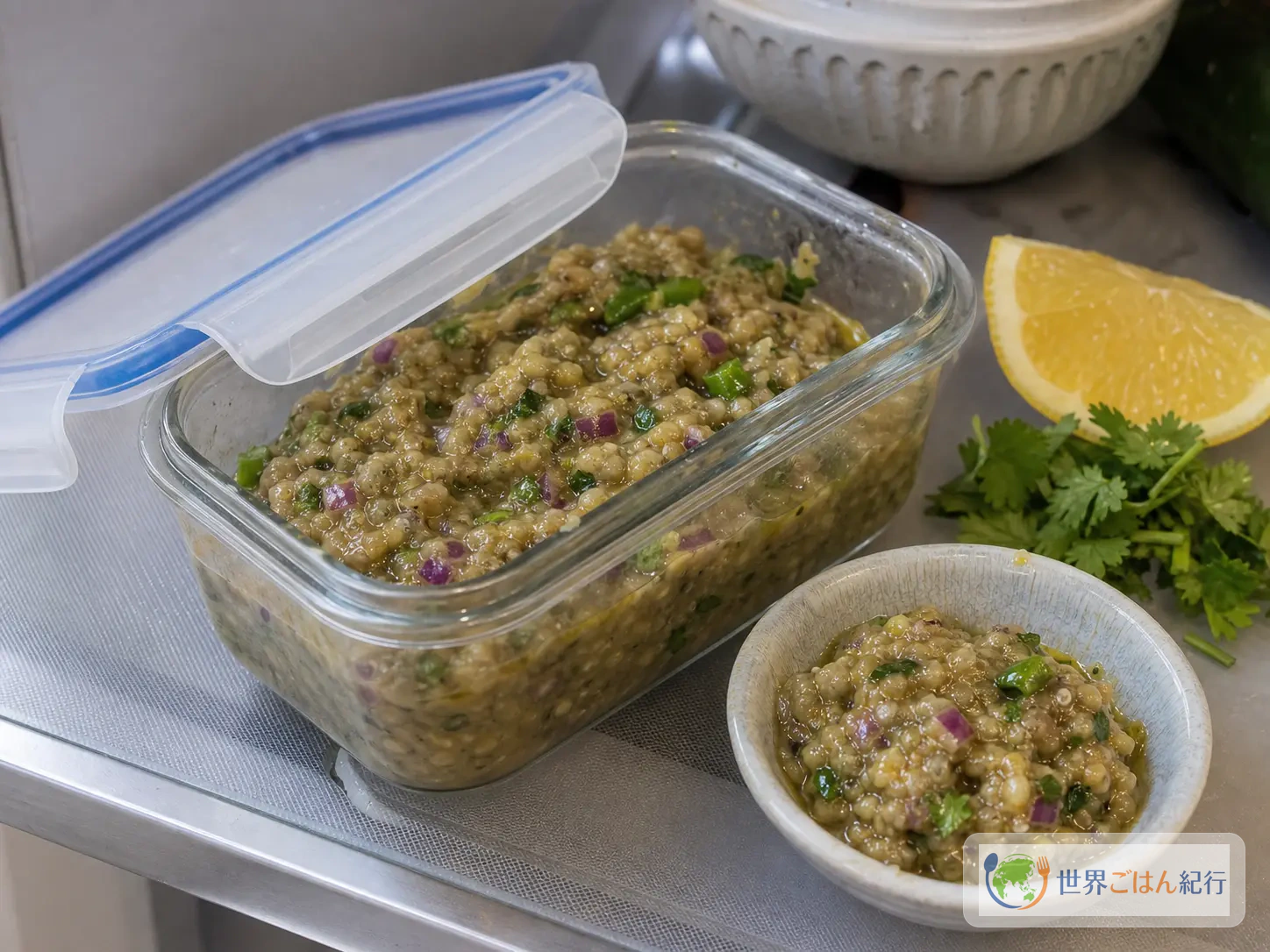
When eating, it's better not to put all of it on the rice from the start. First take a bite of rice and dal, then break about 1 tsp of begun bhorta into it and mix. When the oil and chili have spread through the rice, reset your palate with cucumber or lemon. It's a dish of heat and oil, so don't set too many salty sides beside it, and the balance holds.
On days you want to add sourness, put just 1 tsp of aam er achar (in Japanese), a Bengali green mango pickle, beside it. Begun bhorta gives the smoke aroma, and the achar gives the sourness and oil aroma. Mixing both into the same rice a little at a time keeps the eggplant's sweetness from feeling heavy.
The order you bring things to the table matters a little too. Rather than heaping the begun bhorta on a plate right after making it, spread it thinly in a shallow dish and set it out last, after lining up the white rice, dal, cucumber and lemon. When the steam from hot white rice reaches it, the oil loosens and the aroma of red onion and green chili rises. For guests, dividing about 2 tbsp per person into small dishes rather than putting it in the middle of a large plate makes it easier for people wary of heat to reach for it.
If you eat it for lunch the next day, it tastes better not mixed cold. Take one serving from the container, microwave it for just 30 seconds, and when the aroma has come back, add a few drops of lemon juice. Start with 2 tsp mixed into the rice. After refrigeration the heat of the green chili comes forward, so the same amount as freshly made feels a little strong.
To store, once the steam has gone, move it to a shallow clean container and plan on up to the next day in the refrigerator. Because it contains raw red onion, green chili and cilantro, don't leave it out at room temperature for long. Anything that has been on the table for more than 2 hours is safer not kept in summer or in a heated room.
To reheat, put one serving in a heatproof container, cover loosely with plastic wrap and microwave at 600 W for 30 seconds. Stir, and if some is still cold, add 20 seconds. Overheating brings out the raw-onion aroma strongly, so stop at loosening the oil rather than piping hot. Adding just 1/4 tsp lemon juice after reheating brings back the oil's aroma.
Freezing is not recommended. The eggplant loses its water and turns grainy after thawing. To get ahead, go only as far as roasting the eggplant, peeling it and draining the moisture. Mix in the aromatic oil, raw red onion, green chili and cilantro just before eating to keep an aroma close to fresh.
Frequently asked questions

Q. What do I do if I don't have a broiler?
You can make it in a heavy skillet. Heat the skillet over medium heat, add the eggplant, cover, and roast for 20–24 minutes. Turn every 5 minutes; it is cooked when the skin has black char and the flesh sinks when pressed with tongs. The char aroma is weaker than with a broiler, so make up for it by frying the dried red chilies in the aromatic oil a bit more toastily.
Q. Is mustard oil essential?
It is close to essential. You can make a dressed dish with just eggplant, onion and chili, but the pungent aroma that goes up the nose, typical of begun bhorta, is weaker. For a first try, you can still tell the difference by not swapping all of it: use mustard oil for just 1 tbsp and neutral oil for the rest.
Q. Can I roast the eggplant in rounds?
Yes. Cutting it in rounds cooks it faster and is easier to handle in a skillet. But the flesh absorbs oil before the skin is fully charred, and the smokiness of roasted eggplant weakens. To make it in rounds, cut 2 cm thick, cook 3 minutes per side over medium heat, and finish by covering and steaming for 2 minutes.
Q. Will it be unsatisfying without the heat?
Even if you leave out the green chili, using dried red chili in the aromatic oil keeps the aroma. On days with children or people sensitive to heat, don't mix in the green chili; put the chopped chili in a small dish. If each person mixes it on the rice, the heat can be adjusted within one dish.
Q. Does using cumin seeds make it less authentic?
Using a lot brings the spice aroma ahead of the char of the eggplant. This article makes 1/4 tsp optional. On days the broiler gives plenty of char aroma, skip it; on days it is weak from a skillet, letting it pop in oil for 10–15 seconds is easy to handle.
Q. Can I serve it with bread instead of white rice?
You can eat it that way, but the good of this dish is that the oil and aromatics move into the rice. For a first time, serving with cooked white rice and dal makes the sweetness of the eggplant and the aroma of mustard oil easier to recognize. If serving with bread, go a little lighter on salt and add 1/2 tsp lemon juice to keep it from getting heavy.
Q. Can I serve it on the same day as aloo bhorta?
You can. But making both with the same heat and the same amount of oil makes the meal monotonous. Let aloo bhorta bring the sweetness and staying power of potato, and begun bhorta the char of roasted eggplant and lightness from lemon. Put 1–2 tbsp of each beside the rice, with dal and cucumber in between, and the oil and heat won't continue too long.