Haleem, the Pot Whose Aroma Returns at Dusk
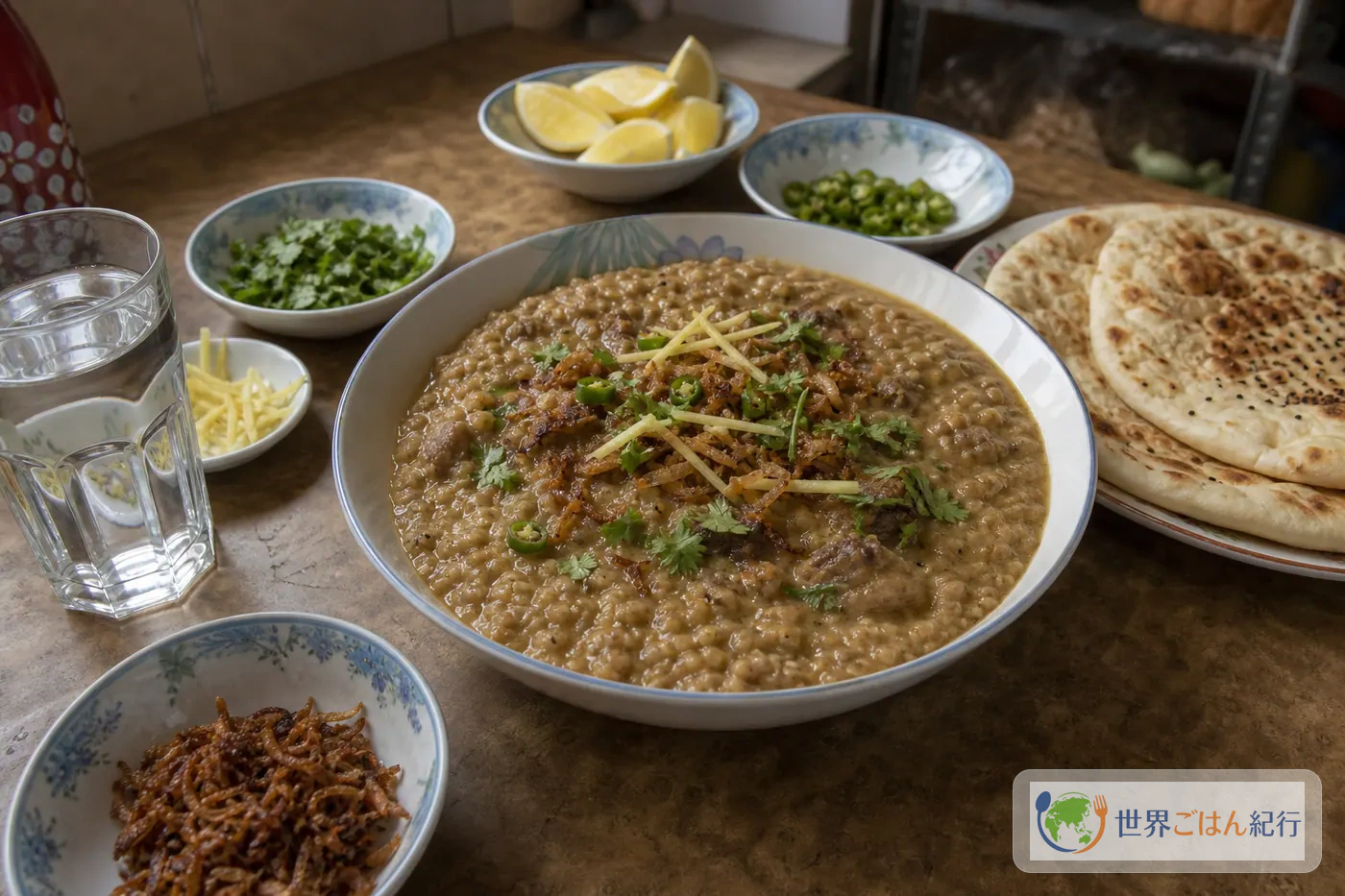
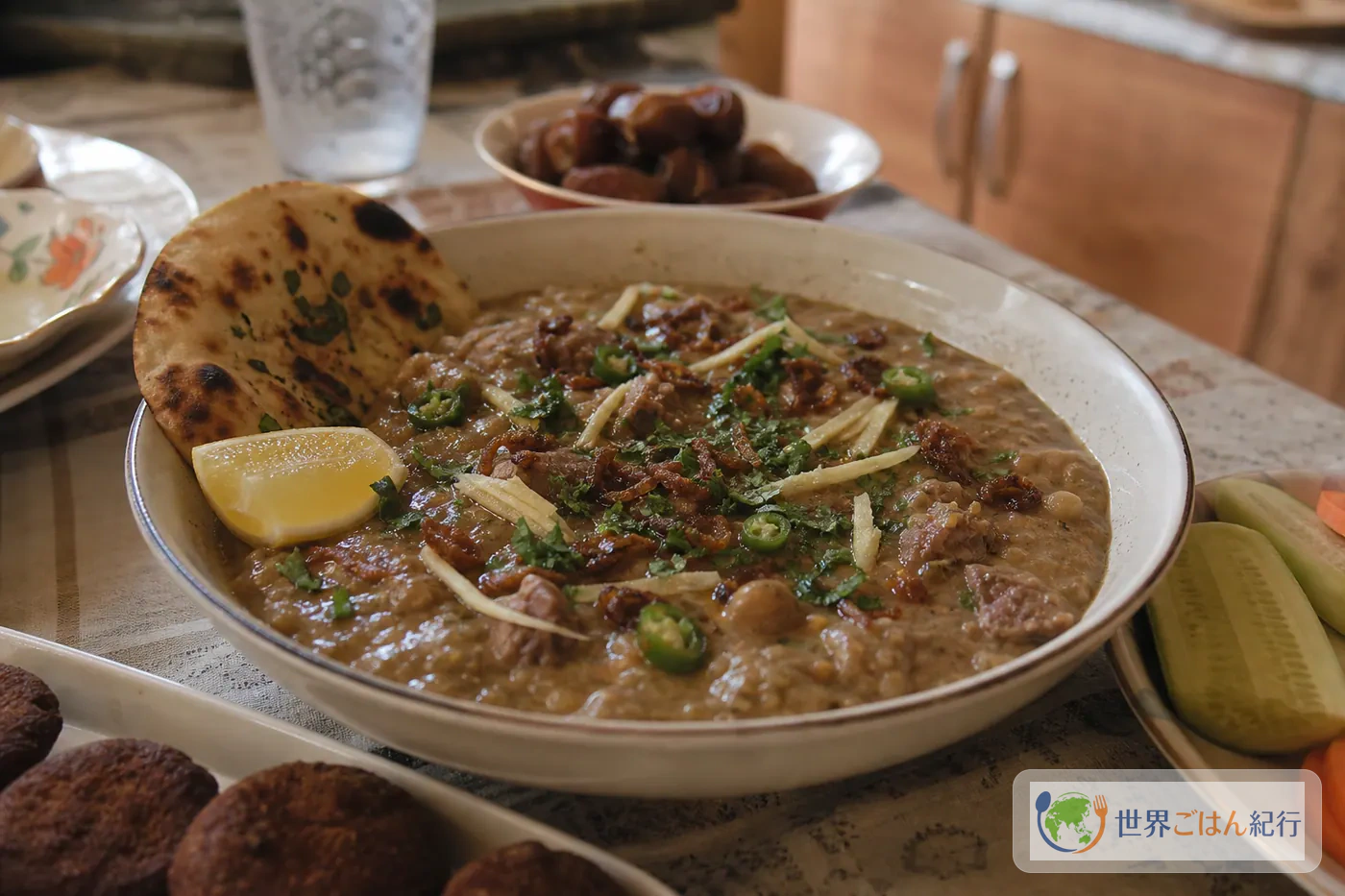
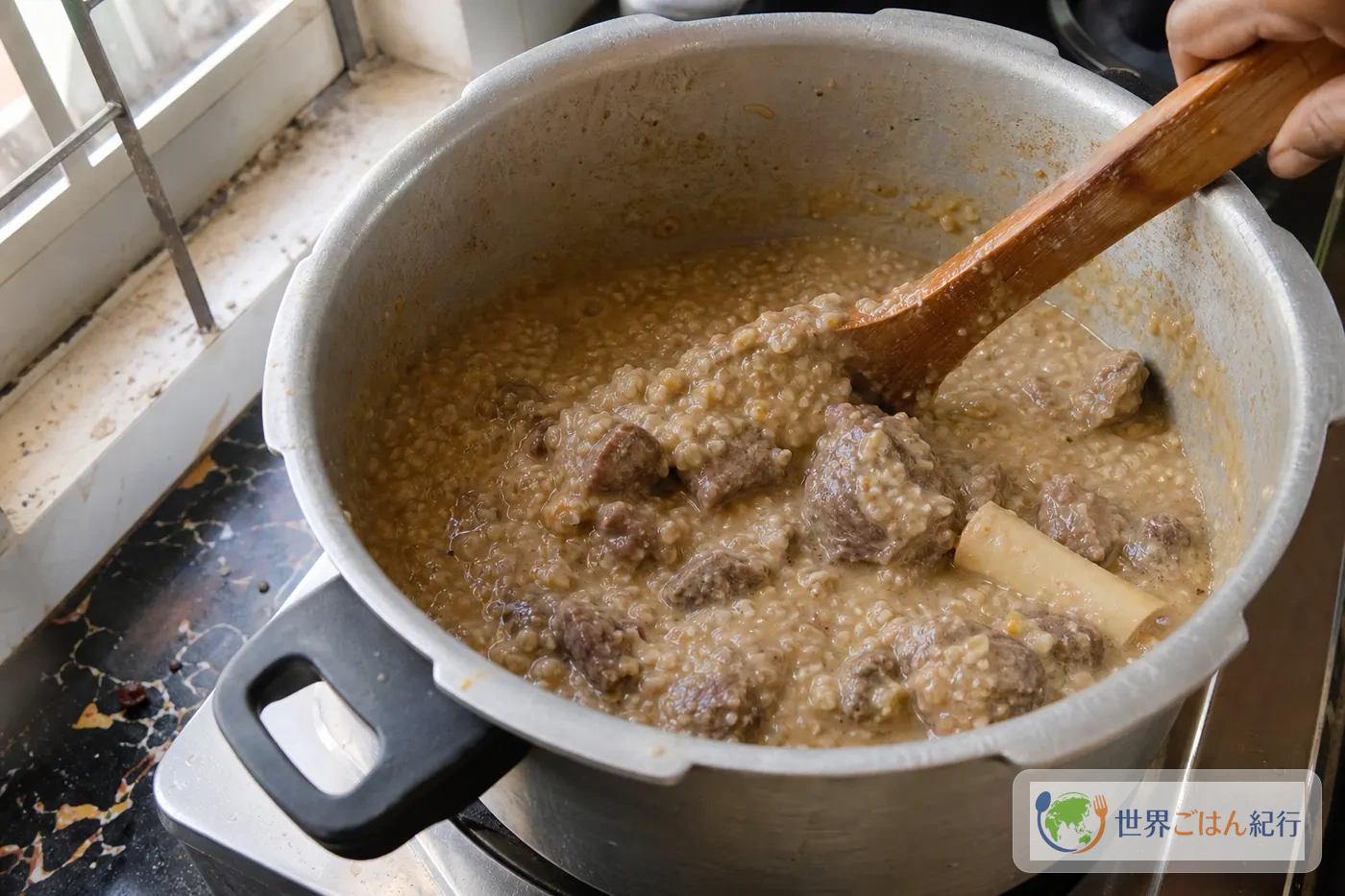
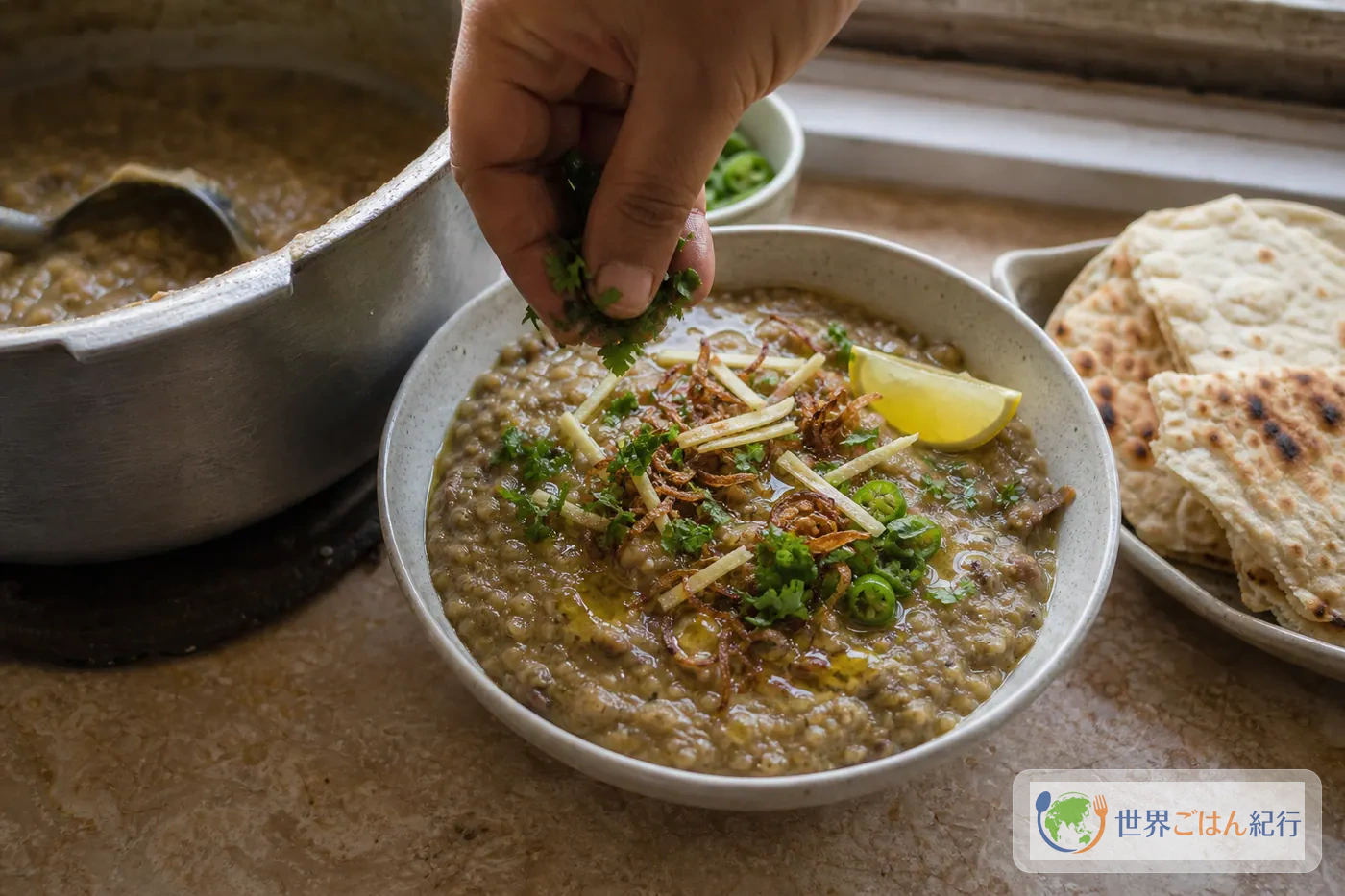
When the sun leans low and the sound of the wooden spoon scraping the bottom of the pot turns heavy, haleem (Haleem) is almost ready for the table. It is not a watery soup and it is not a curry; it is a thick dish in which wheat, lentils and meat come together like a porridge. Served in a bowl it is brown and plain, but top it with fried onion, ginger, green chili, cilantro and lemon, and it suddenly takes on the look of a street-stall plate.
In Bangladesh, the sight of people buying haleem for iftar during Ramadan is often described. The area around Chawk Bazaar in Old Dhaka in particular is known as a place where Ramadan foods are lined up, and haleem is a dish made at home and also a dish bought at shops and shared. The thick consistency is not only for staying power. It lets one mouthful take in the sweetness of collapsed lentils, the thickness of the wheat and the savoriness of bone-in meat, and then loosen it at the end with lemon and green chili.
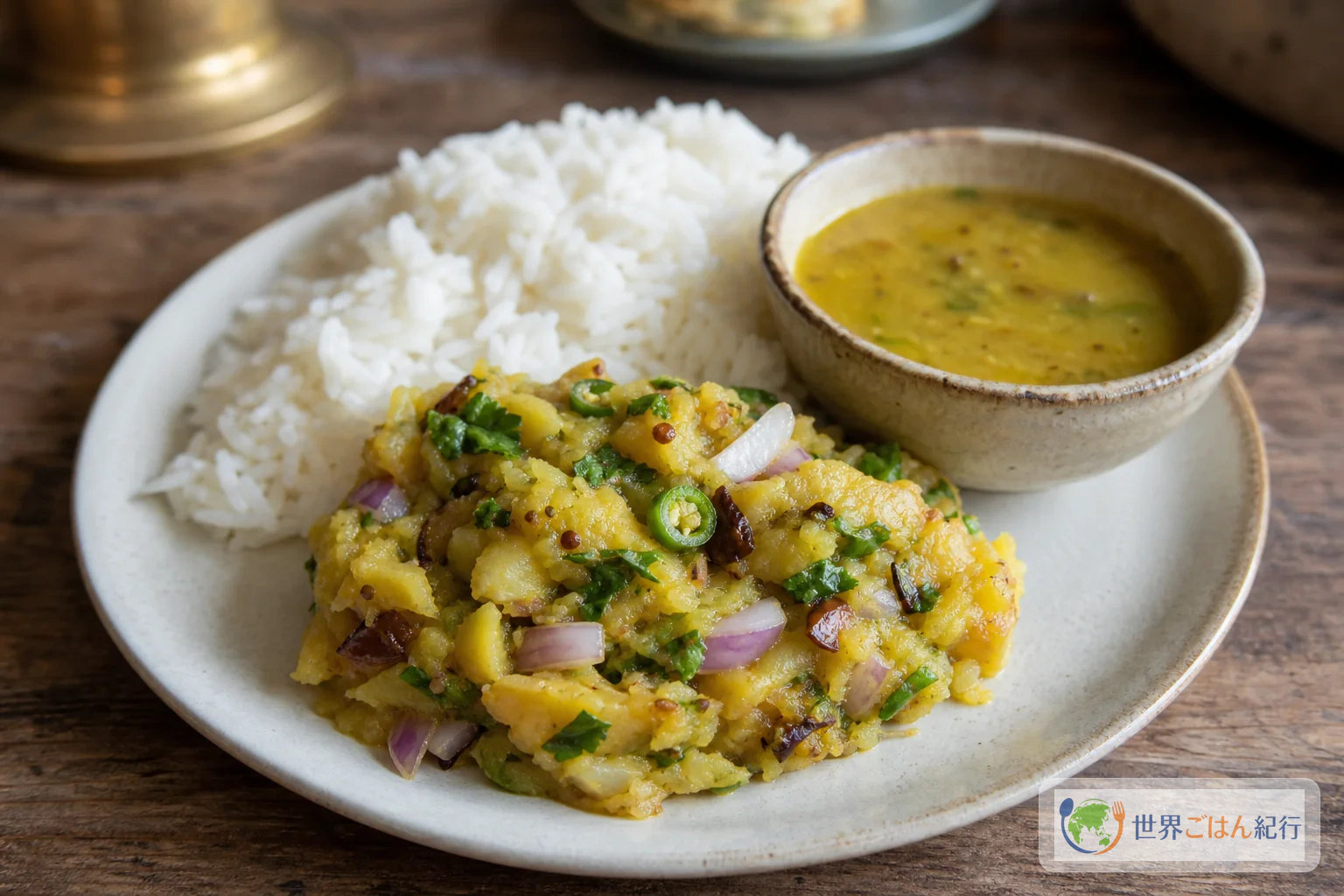
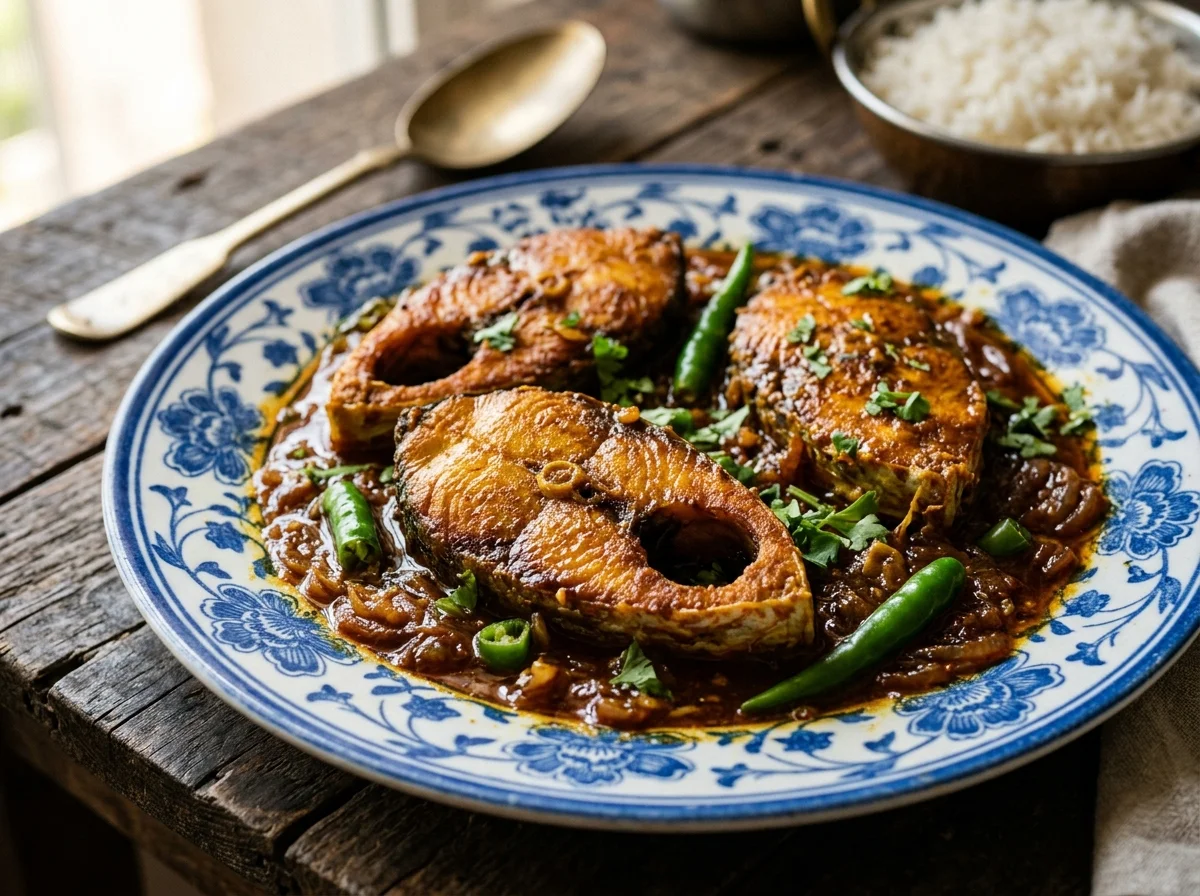
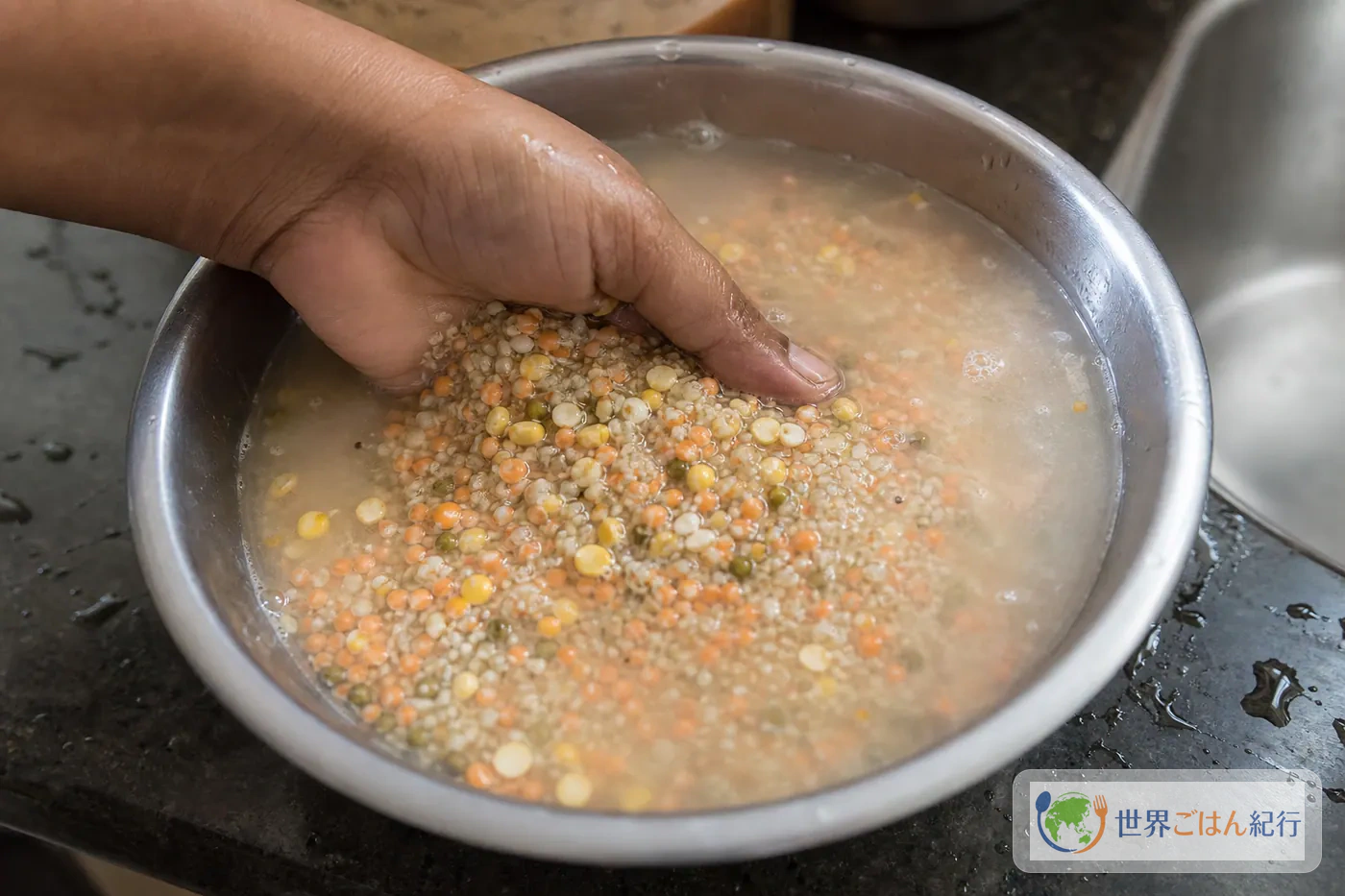
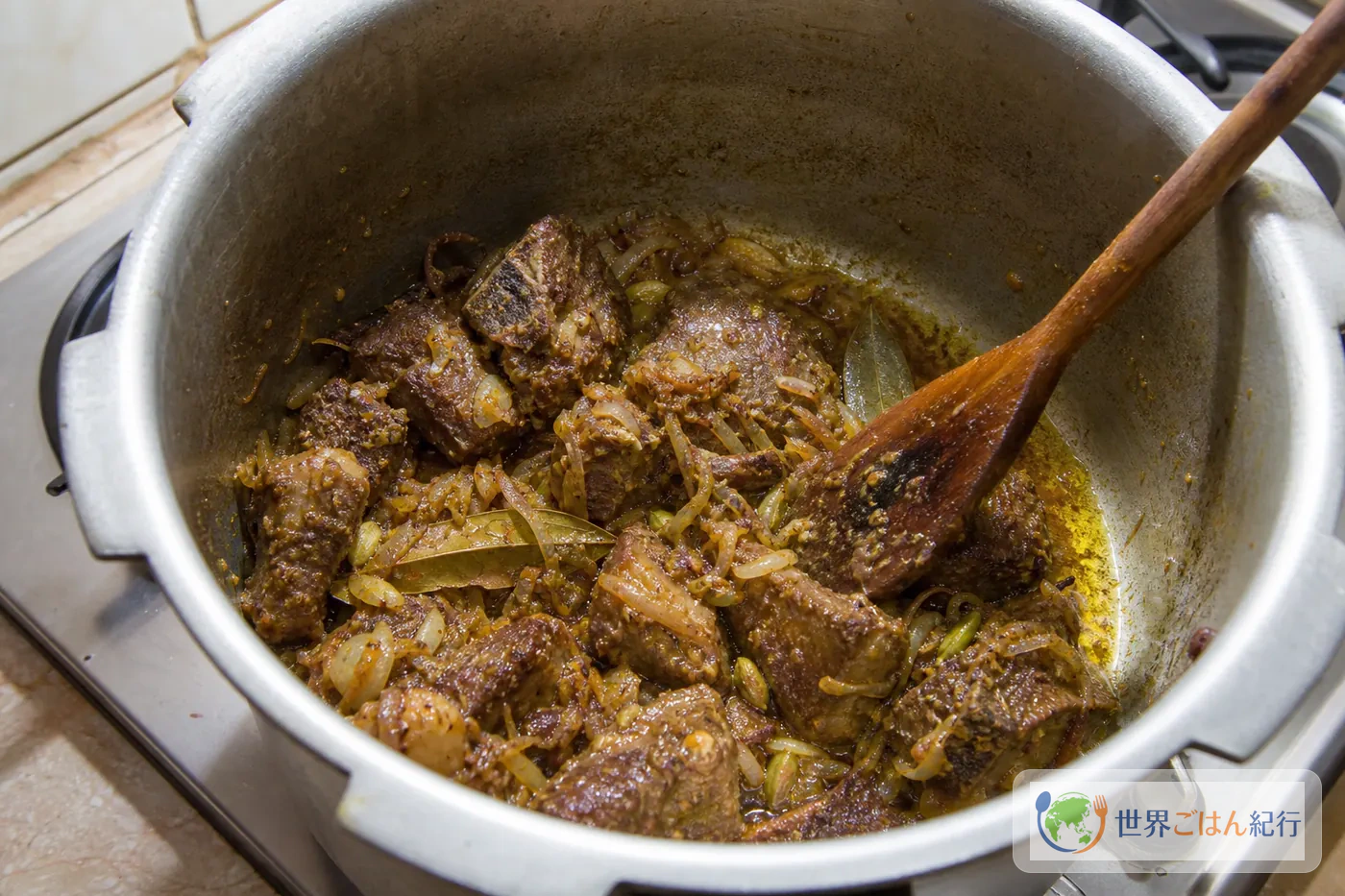
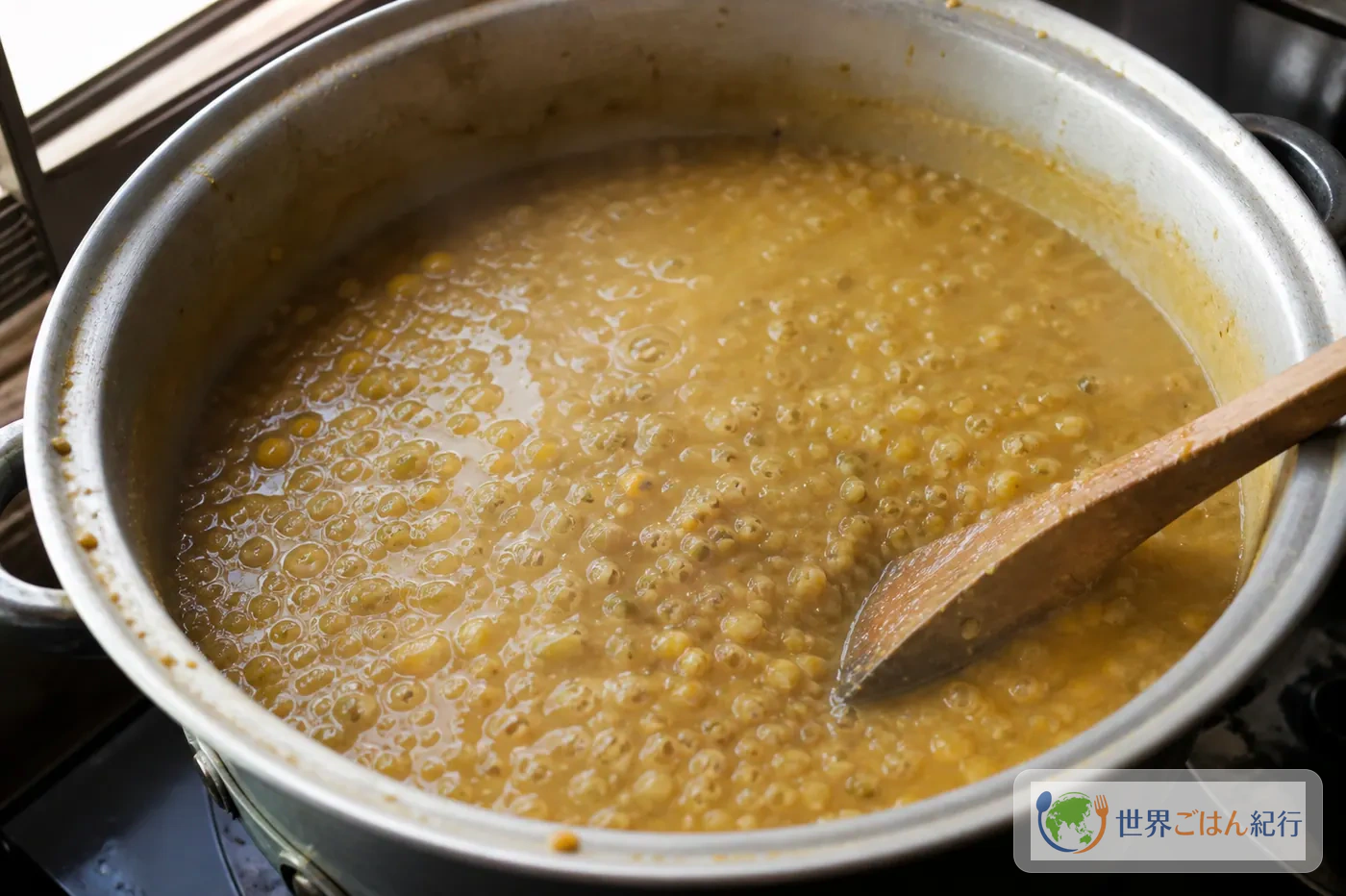
What is easy to stumble on in a home kitchen is the order rather than the ingredient names. If you combine the meat before the wheat and lentils are soft, the grains stay and it turns gritty. If you add a lot of water to avoid scorching, it tastes thin when eaten. This article uses a home method in which the cooking liquid from the bone-in meat is made first, the wheat and lentils are cooked down separately, and the two are finally combined over low heat and worked together. It is built with the toppings a little brighter than Pakistani haleem, as a main dish of meat and grain on a day apart from fish dishes like ilish bhuna (in Japanese). On days when you want small aromatic dishes beside the rice, aloo bhorta (in Japanese), potatoes bound with mustard oil, and begun bhorta (in Japanese), which lightens the mouth with the charred aroma of roasted eggplant, give an escape of heat and sourness between mouthfuls of the heavy stew.
In this article, a perfectly smooth paste is not the only right answer. The aim is a consistency where the fibers of the meat are slightly visible, the grains of wheat linger on the tongue, and the flavor moves when you mix in the toppings. The finish changes from shop to shop and household to household, but in an ordinary pot, "the trail of the wooden spoon stays for 1 second" is an easy guide.
Ingredients: Gather the Cracked Wheat, Lentils and Bone-In Meat Separately
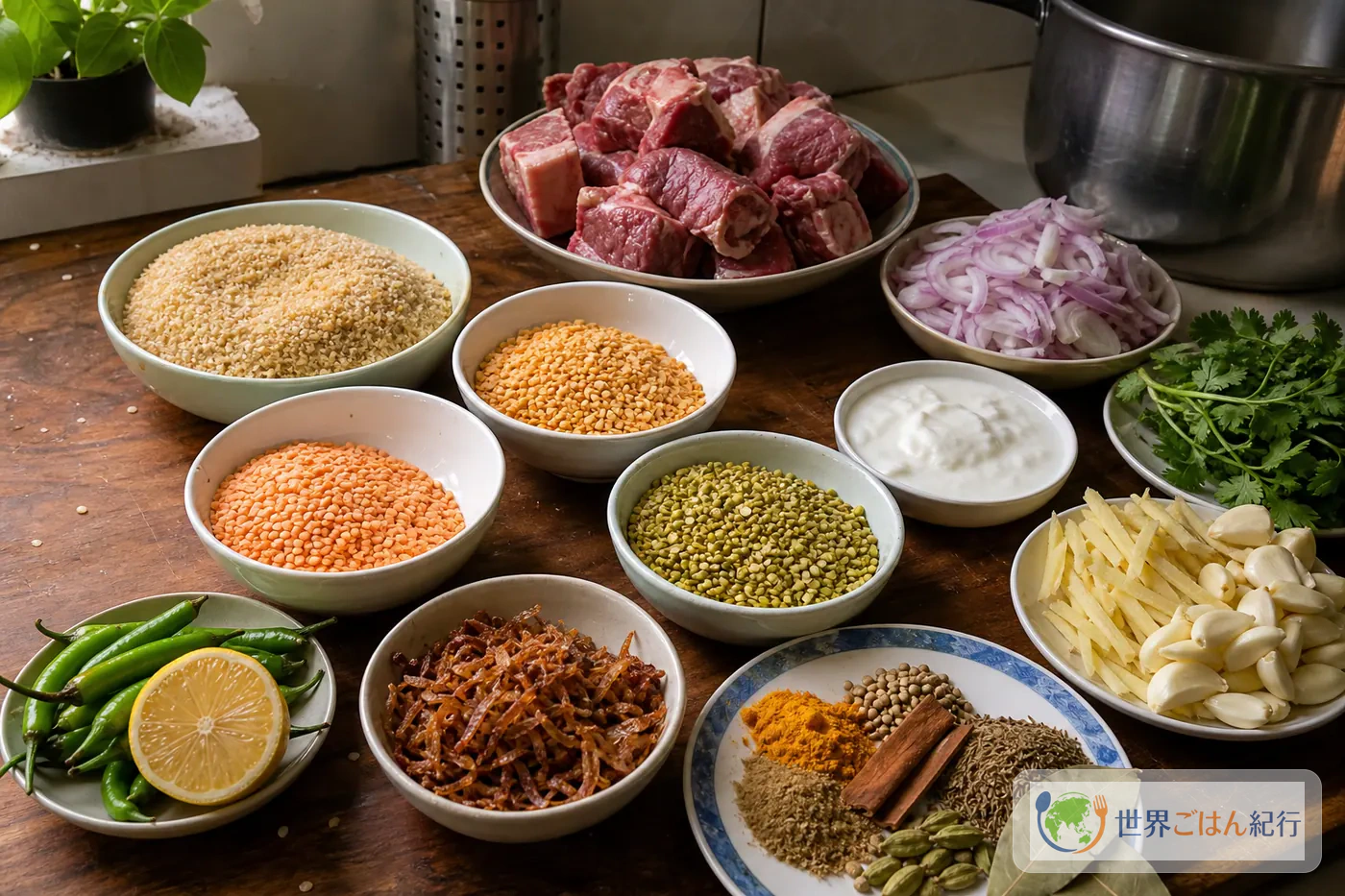
This serves 6. When haleem is made in a small amount, the bottom of the pot scorches easily and the meat's cooking liquid also tends to be thin. It is made for 6 on the assumption of making ahead, and the next day you add a little water to reheat.
This recipe contains wheat, beef and dairy. Store-bought fried onions may be made in factories that handle wheat, milk and nuts. If you avoid dairy, replace the ghee with 4 tbsp neutral oil, leave out the yogurt, and add 2 tsp lemon juice to the meat seasoning.
Bone-in beef, onion, yogurt and lemon are more reliable bought at a nearby supermarket. What is worth looking for farther afield is coarse cracked wheat, red lentils and strongly scented spices. If you keep cooking South Asian food, the same dried goods can go into khichdi and biryani too.
How to read the nutrition information
The nutrition values in the frontmatter are approximations for the whole amount for 6 servings. One serving is about 610 kcal, around 35g protein and around 25g fat. Reducing the ghee and fried onion makes it lighter, but the thickness of the aroma weakens too. On days when it is the main dish of dinner, serve one naan; on days when it is a small starter, halve the bowl and put cucumber, onion and lemon beside it, and it is easier to keep eating.
Method: Combine the Bone-In Meat's Liquid and the Wheat at the End
Cooking everything in one pot looks easy, but with a home burner the wheat sinks to the bottom, and the bottom of the pot tends to scorch before the meat softens. Keeping the meat pot and the wheat pot separate and combining and working them at the end reduces mistakes with heat.
Why It Fails: Watery, Scorched, Grains Remain
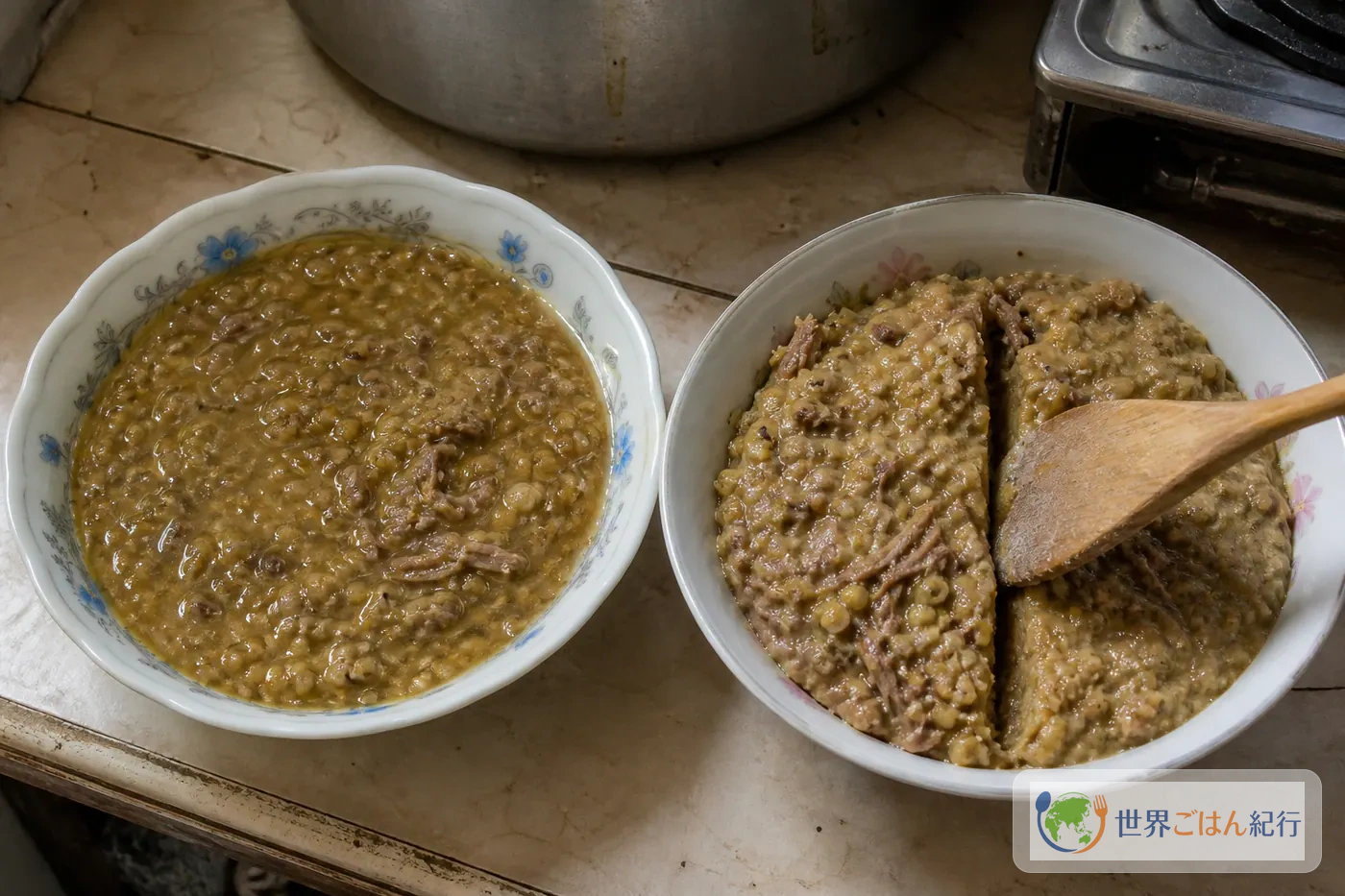
Failures with haleem nearly all show up in the consistency. Runny, a scorched bottom, only the grains remaining. These three look like separate problems, but the cause is either "the water boiled off before things softened" or "it wasn't worked enough after combining."
| Condition | Cause | How to fix it |
|---|---|---|
| Watery | The wheat and lentils are soft, but it was not cooked down enough at the end | Take off the lid and work it over low heat 5 minutes at a time |
| Grains are hard | Not soaked enough, not cooked enough | Add 200ml boiling water and cook 15 more minutes over low heat |
| The bottom scorches | The heat is too high, or the bottom wasn't scraped often enough | Don't scrape the scorched bottom; move only the top to another pot |
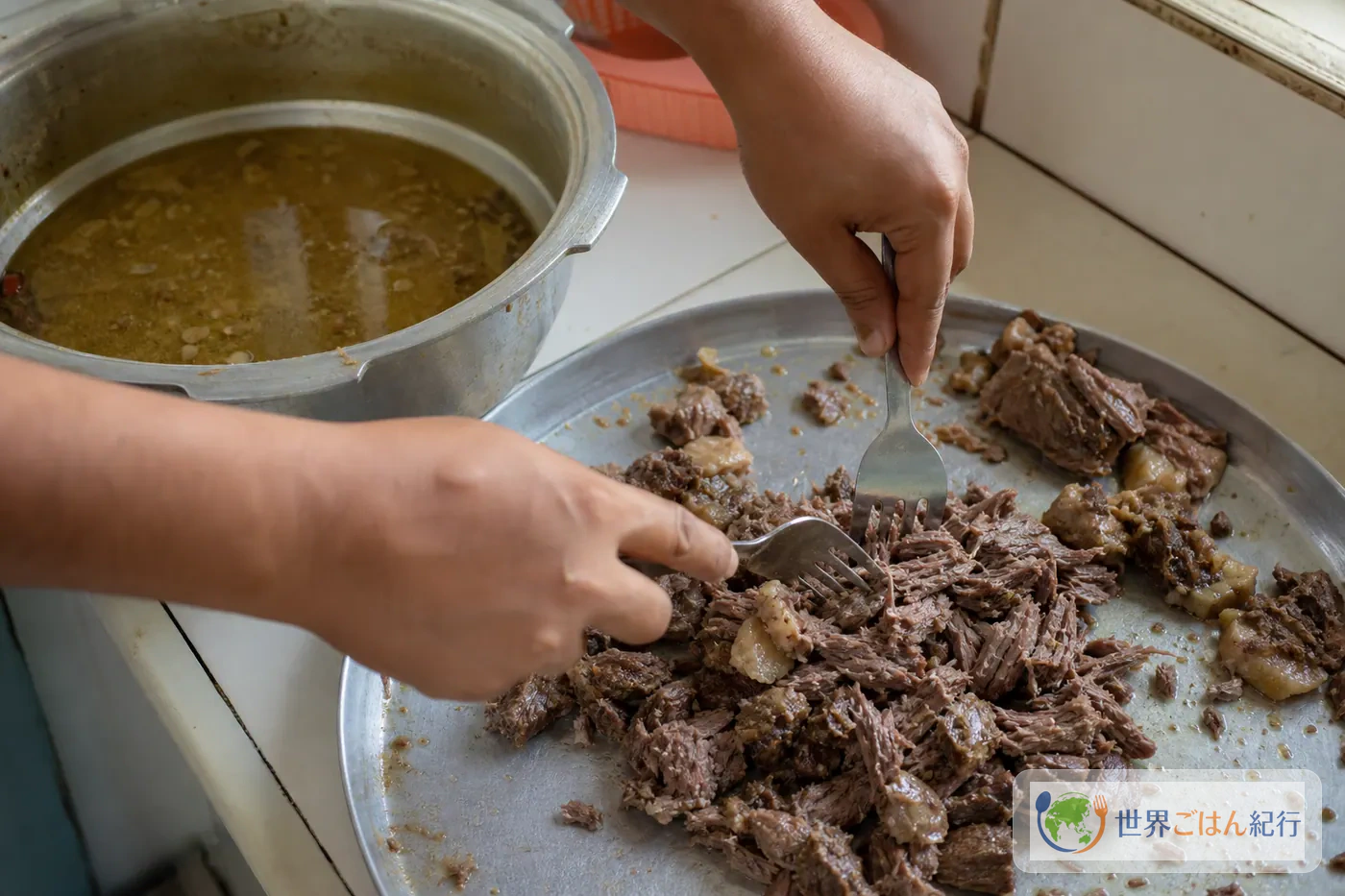
| Meat remains in lumps | Not cooked enough, or torn too large | Take out only the meat and tear it again to about 5 cm long and 3 mm wide |
| The taste is heavy | Too few toppings and acidity | Add lemon, ginger, green chili and cilantro in the bowl |
Blending to complete smoothness is quick, but at home it is easier to eat if you don't overdo it. Haleem is not a potage; it is a dish in which the thickness of the wheat and the fibers of the meat remain a little. If the grains really bother you, crush only the wheat and lentils with a masher and return the meat afterward, which leaves some escape for the texture.
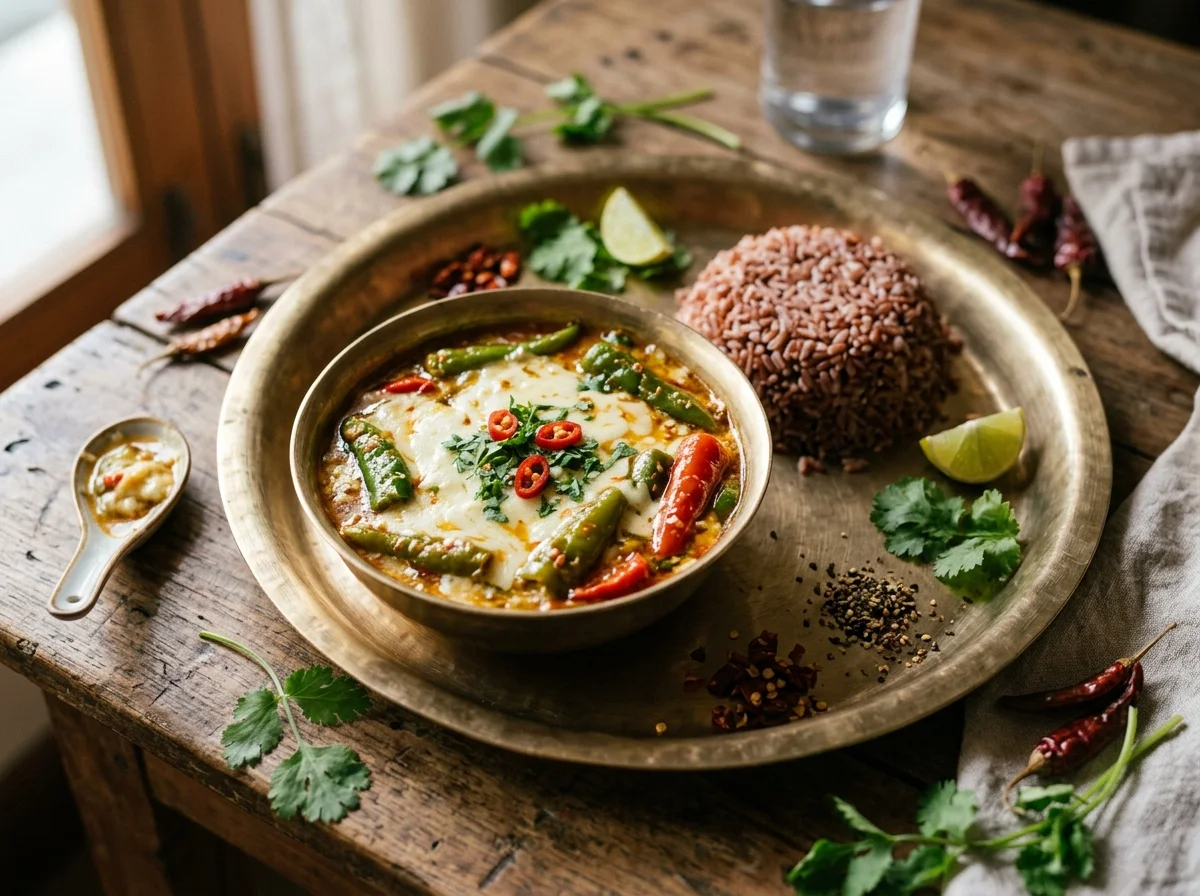
What you want to keep as a Bangladeshi style is not making the whole pot too hot. Hold back the red chili powder for the heat, and add green chili and chaat masala in the bowl. If you keep the big pot mild, it is also easy to serve to someone who likes bean dishes such as dal bhat, and people who like it hot can strengthen it at the table.
How to Eat It, Storage, and Frequently Asked Questions
When eating, serve the haleem in the center of a bowl and layer the toppings on top. Take the first bite without lemon, then squeeze lemon, and finally add a little green chili, and you can follow how the flavor changes. Eating with naan or roti makes it easy to scoop the sticky part and is closer to the local way than white rice.
If you have the Ramadan table in mind, small portions go well with sweet drinks, fruit and light fried foods. If you serve it as the main dish of dinner, put a plate of sliced cucumber, red onion, tomato and lemon beside it so haleem alone doesn't weigh it down. On days when you pair it with samosa, keep the haleem's heat mild and use it as a thick soup-like dish that takes up the toasty aroma of the fried food, and it comes together.
For storage, cool the heat off, divide into clean storage containers, and refrigerate for a guide of 3 days. As it cools, the wheat and lentils absorb moisture and stiffen. To reheat, add 50 to 80ml water per serving to a pot and stir over low heat for 5 to 7 minutes until it bubbles. If you use a microwave, put it in a deep heatproof container, add 2 tbsp water, heat at 600W for 2 minutes, stir, and add 1 minute at a time. When it is hot to the center and the whole thing has returned smooth, it is ready to eat.
What is the difference from Pakistani haleem?
Household differences are large, so the line is not simple. The Bangladeshi style in this article leans toward a finish that makes full use of the liquid from the bone-in meat and cuts the heaviness with toppings and lemon. Pakistani haleem is from the same South Asian line, but depending on the shop or household it may be worked smoother and use chaat masala or aromatic oil more strongly. If you make both, use the same dried goods and change how you present the toppings and cooking liquid, and the difference is easier to see.
What do I do if I can't get bone-in meat?
Combining 650g beef shank with 2 chicken drumettes gives the liquid body. If you leave out bone-in meat entirely and use only thin lean slices, the meat fibers become too fine and the liquid is lighter. If you only have thin slices, it is more reasonable to think of it as a different home version: combine the meat with the wheat and lentils early after browning it, and shorten the cooking time.
Can I make it not spicy?
Yes. Reduce the red chili powder in the pot to 1/2 tsp, and serve the green chili and chaat masala separately at the table. Turmeric, cumin, coriander and garam masala play the role of aroma more than heat, so it is more haleem-like not to cut them too far. On days when there are children or people who don't like hot food, putting out more lemon and cilantro lightens the taste without raising the heat.
Does the flavor drop if I make it ahead?
The next day, the wheat and lentils if anything have blended in. But because it stiffens in the refrigerator, reheating it directly over high heat scorches only the bottom of the pot. Add water, bring it back over low heat, and add fresh lemon and ginger at the end. Storing it with the toppings mixed in dulls the aroma, so put the fried onion, green chili and cilantro on just before eating.
Sources
- The Daily Star, "The origins of haleem"
- The Dhaka Times, "রেসিপিঃ খাসির হালিম"
- Wikipedia, "Haleem"
- USDA Food Safety and Inspection Service, "Leftovers and Food Safety"