Baati: A Rajasthani Bread Meant to Soak Up Ghee
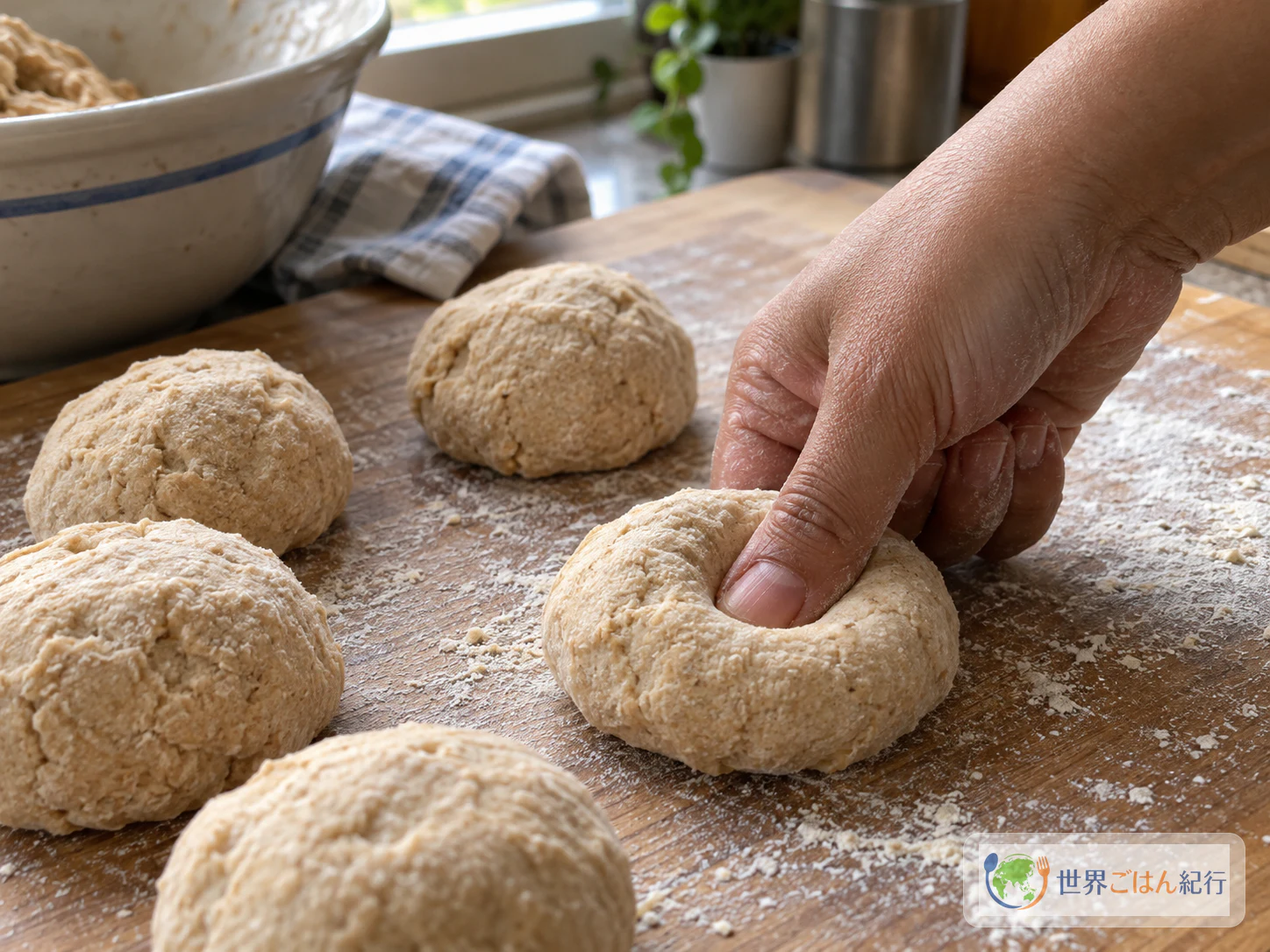
Keep the dough stiff and the shaping rough, and dip the baati in ghee while it is still hot. Those three things matter more than a perfect round shape.
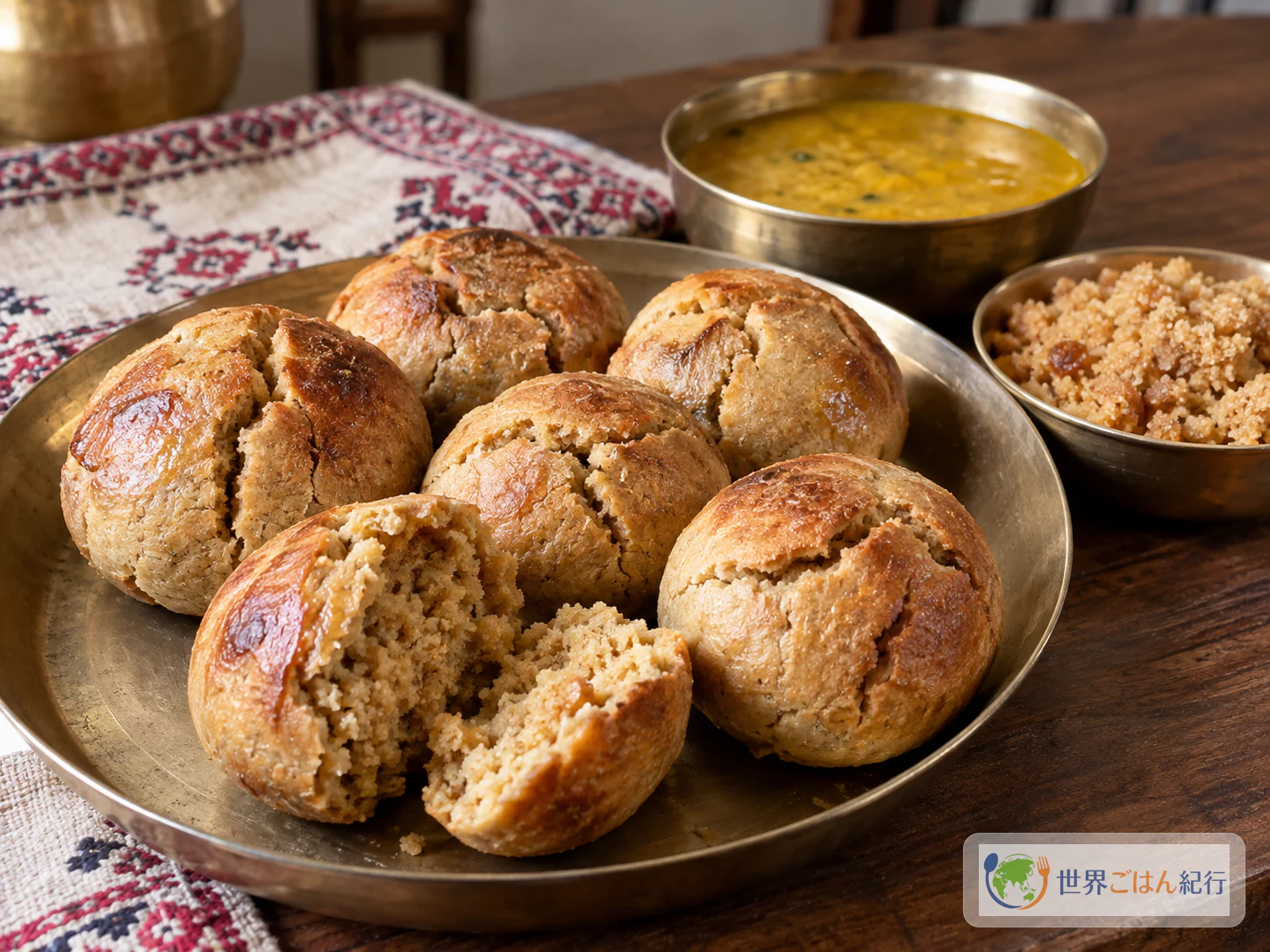
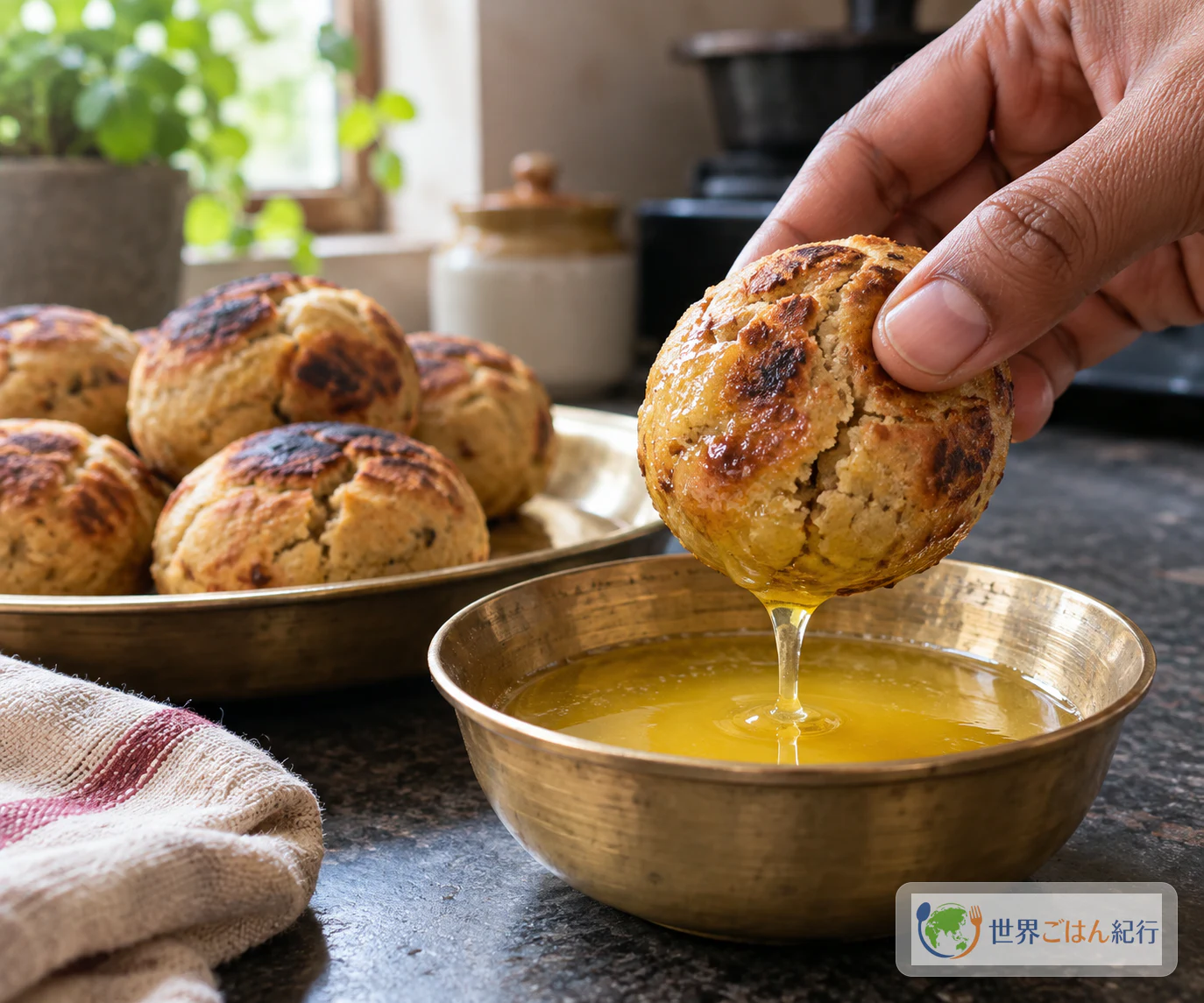
Picture a round, browned ball of bread, lightly cracked on the surface, lifted hot from the oven and lowered into a bowl of golden ghee. Broken open beside a bowl of dal, it carries the aroma of the ghee into every mouthful. Rajasthan Tourism presents Dal Baati Churma as a complete Rajasthani meal, describing baati as wheat bread balls dipped in ghee and served hot, and noting that the meal may come with dal, red chili and garlic chutney. India's Ministry of Tourism, through Incredible India, likewise calls Dal Baati Churma an iconic Rajasthani dish and describes baati as a round wheat-flour bread.
This article focuses on the bread itself: plain, unfilled baati baked in a home oven. Dal and churma are the familiar companions, but they are separate dishes and are not part of this recipe. It is also worth knowing what baati is not. Some versions, such as Bafla (Baafla) and the Saadi Baati found in a university hospitality course, boil the dough before it is baked or grilled; this recipe does not. Litti, from a different culinary tradition, has a sattu filling, while baati is an unfilled wheat dough.
For more dishes from the country, see Indian recipes.
This recipe follows the oven method published by Neha Mathur at Whisk Affair. It has not been kitchen-tested by Sekai Gohan. Amounts, times and the oven temperature are given as they appear in that source.
Ingredients: 12 Baati from Whole-Wheat Flour, Ajwain and Oil
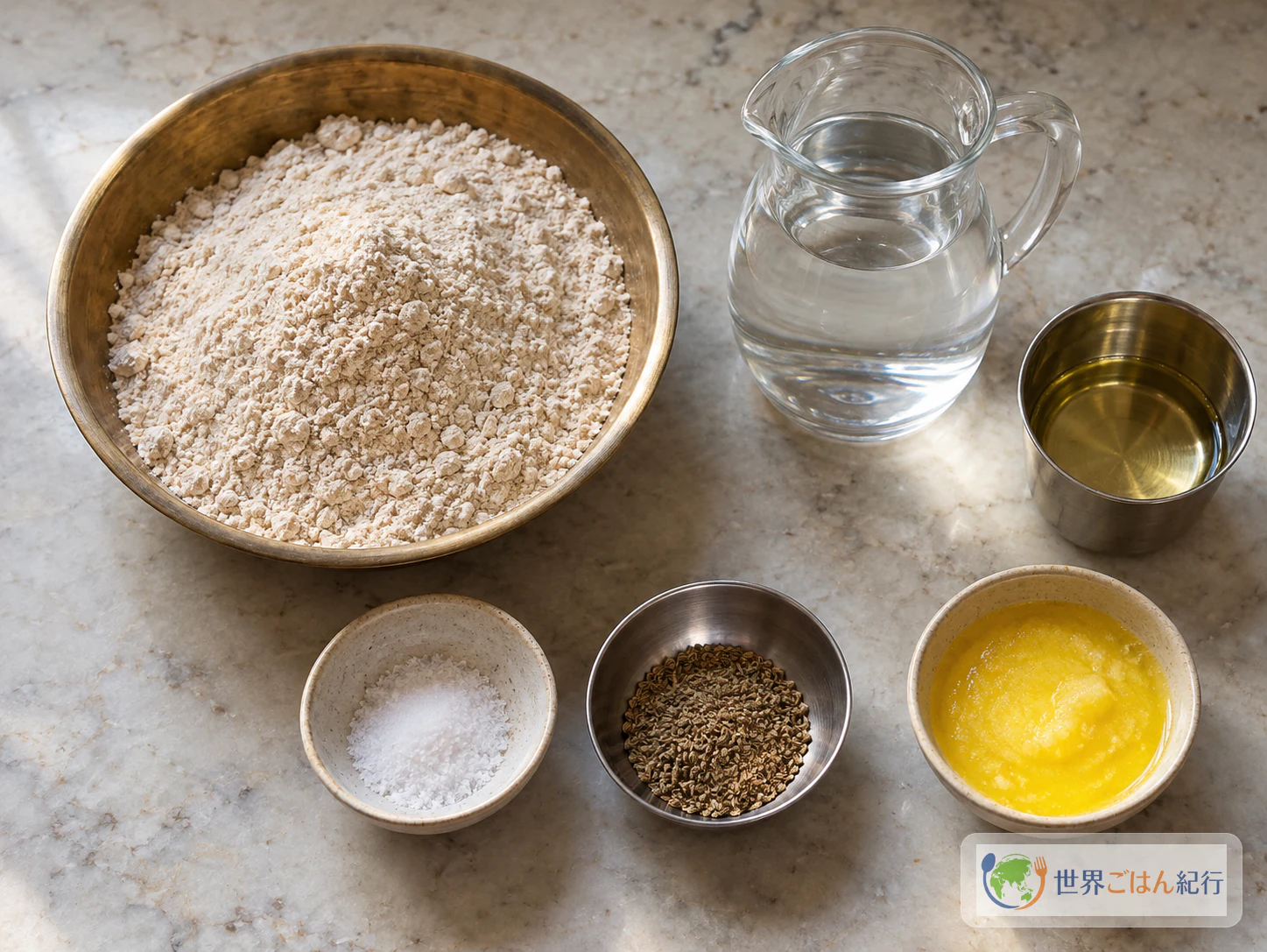
Measure the flour and the oil with the same set of cups. The recipe makes 6 servings, and the dough is divided into 12 baati.
Baati contains wheat (gluten). The ghee used for dipping is a dairy product. Check the labels of the oil and ghee you buy.
Equipment
- Large mixing bowl
- Clean cloth to cover the dough
- Baking tray
- Parchment or baking paper
- Home oven
- Bowl for the ghee, deep enough to dip a baati
- Oven thermometer (useful for checking that your oven actually reaches 200°C)
Choosing Atta, Ajwain and Ghee
Whole wheat flour: Look for Indian chapati flour (atta) at an Indian grocer or online. Ordinary supermarket whole wheat flour can be milled differently and to a different fineness, so it may not give the same texture.
Ajwain: Carom seeds have their own aroma and are not the same as cumin. If you cannot find them, you can leave them out, but the flavor of the bread will change.
Ghee: Clarified butter can stand in for ghee, though the aroma will be different.
Oil: A neutral vegetable oil is the simplest choice.
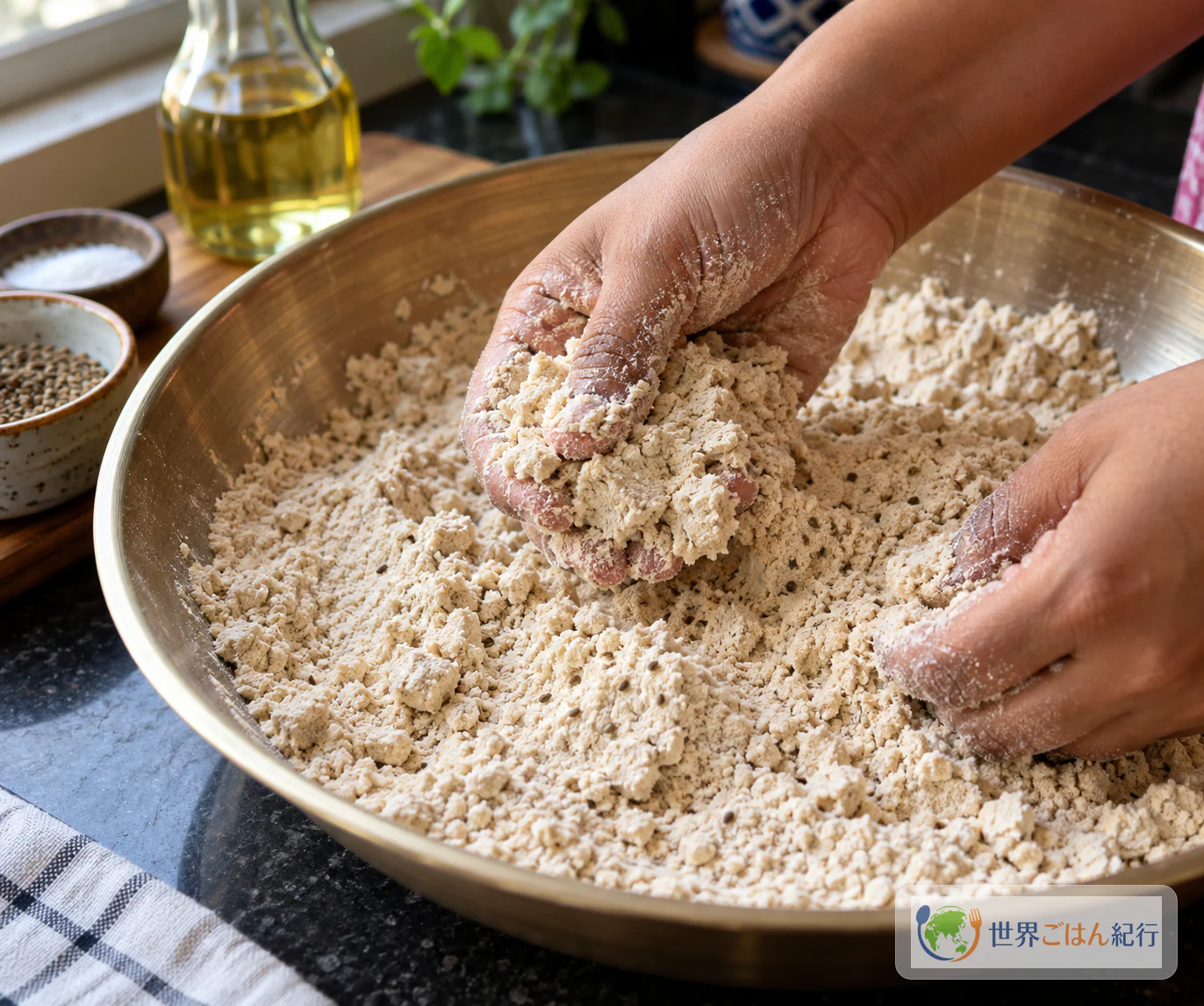
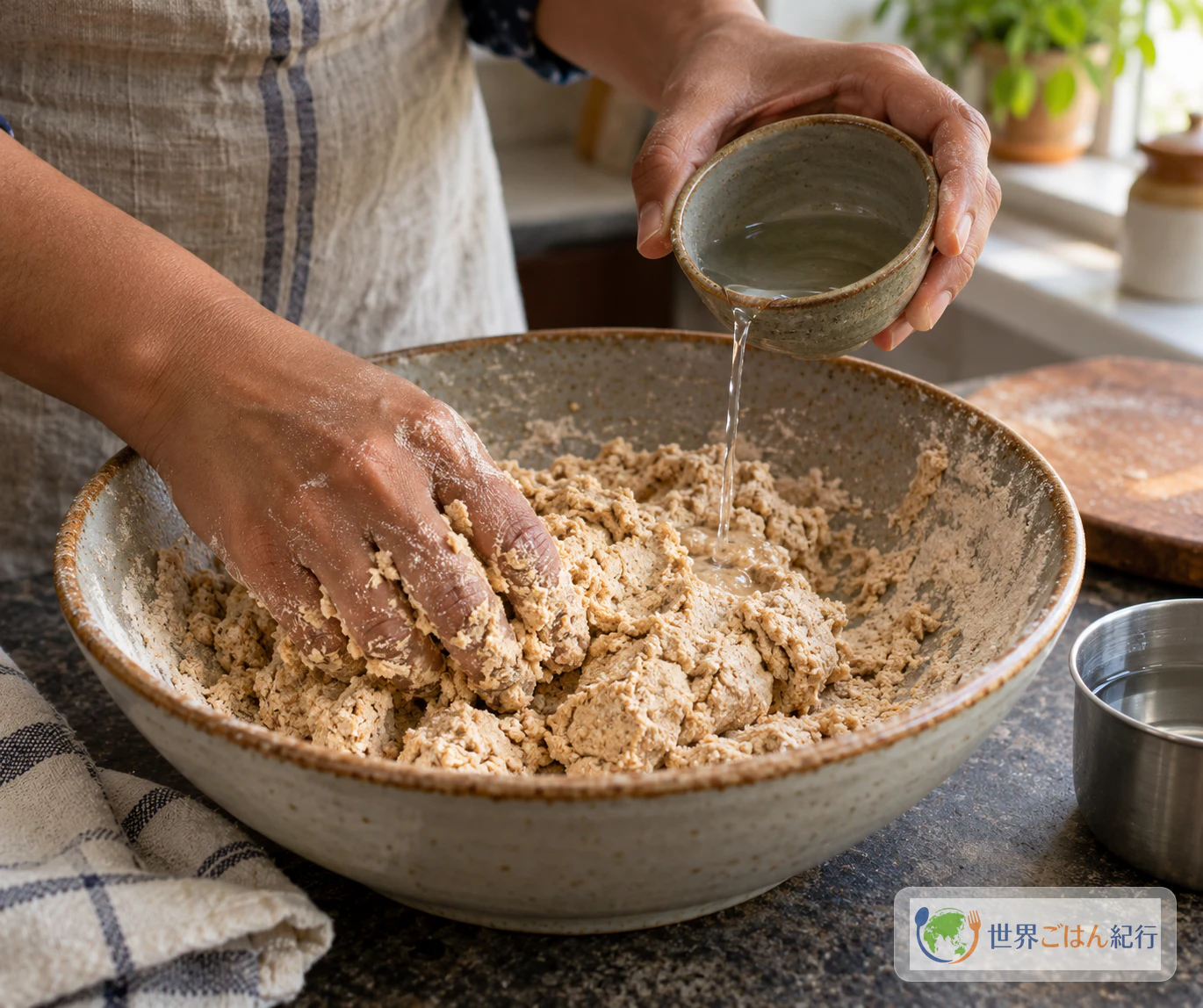
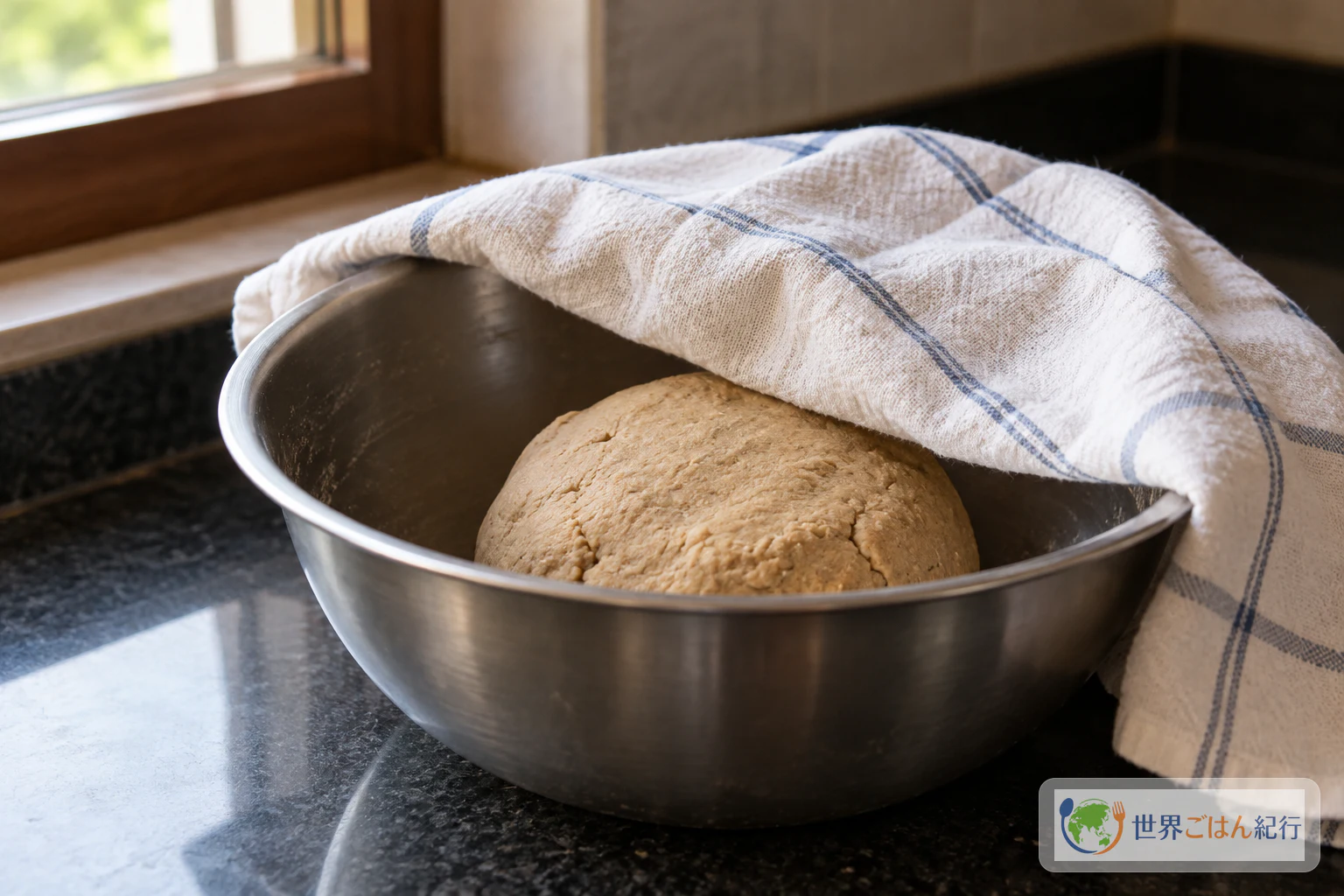
Method: Stiff Dough, Rough Shaping, Hot Ghee
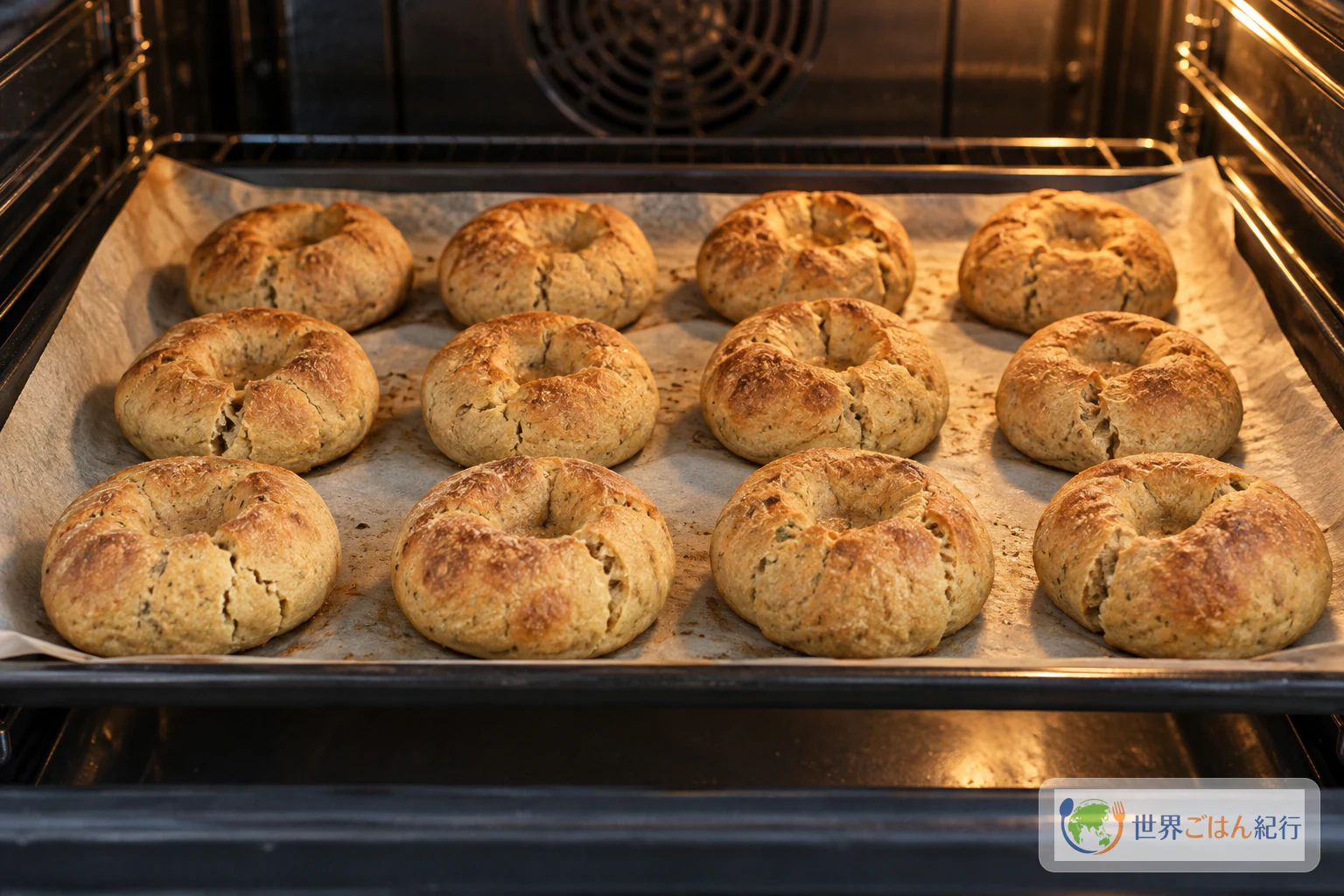
Add the water gradually and judge by the feel of the dough. The bake time is a guide; ovens vary, so look at the baati, not just the clock.
Troubleshooting
| Problem | Likely cause | What to do |
|---|---|---|
| The dough is soft and sticky | Too much water | Next time, check how the dough is holding together before adding more water. Add only as much as you need |
| The baati are smooth and round with few cracks | Less fat, or overly smooth shaping | The source's author explains that a smooth round shape is not the crisp texture they aim for, and that the amount of fat in the dough changes the texture. Rub the oil in fully and keep the shaping rough |
| Dark outside, raw inside | Pieces of uneven size, or an oven running hot | Shape the pieces to a similar size. Judge by the center as well as the surface color, and check your oven's actual temperature with an oven thermometer |
Eating It Fresh and Leftovers
This recipe is designed to be eaten hot, straight after its dip in ghee. The sources give no storage or reheating guidance, so this article doesn't suggest storage times or reheating methods.
Variations: Boiled Baati, Bafla and Litti
Baati is not cooked one single way. The source recipe's author recalls family cooking over dung fuel and on a stovetop tandoor, and Incredible India notes that wood-fired ovens give baati a smoky flavor. A home electric oven won't reproduce that smokiness.
| Name | How it differs | Relation to this recipe |
|---|---|---|
| Saadi Baati | A version in a university hospitality course: the shaped dough is boiled, then grilled until golden and dipped in hot ghee | A different method with a different dough; not mixed into this oven recipe |
| Bafla (Baafla) | A related style that includes boiling before baking | A separate dish from plain baked baati |
| Litti | A baked wheat dough with a sattu filling | Similar only in shape and baking; baati is unfilled |
Baati at the Rajasthani Table
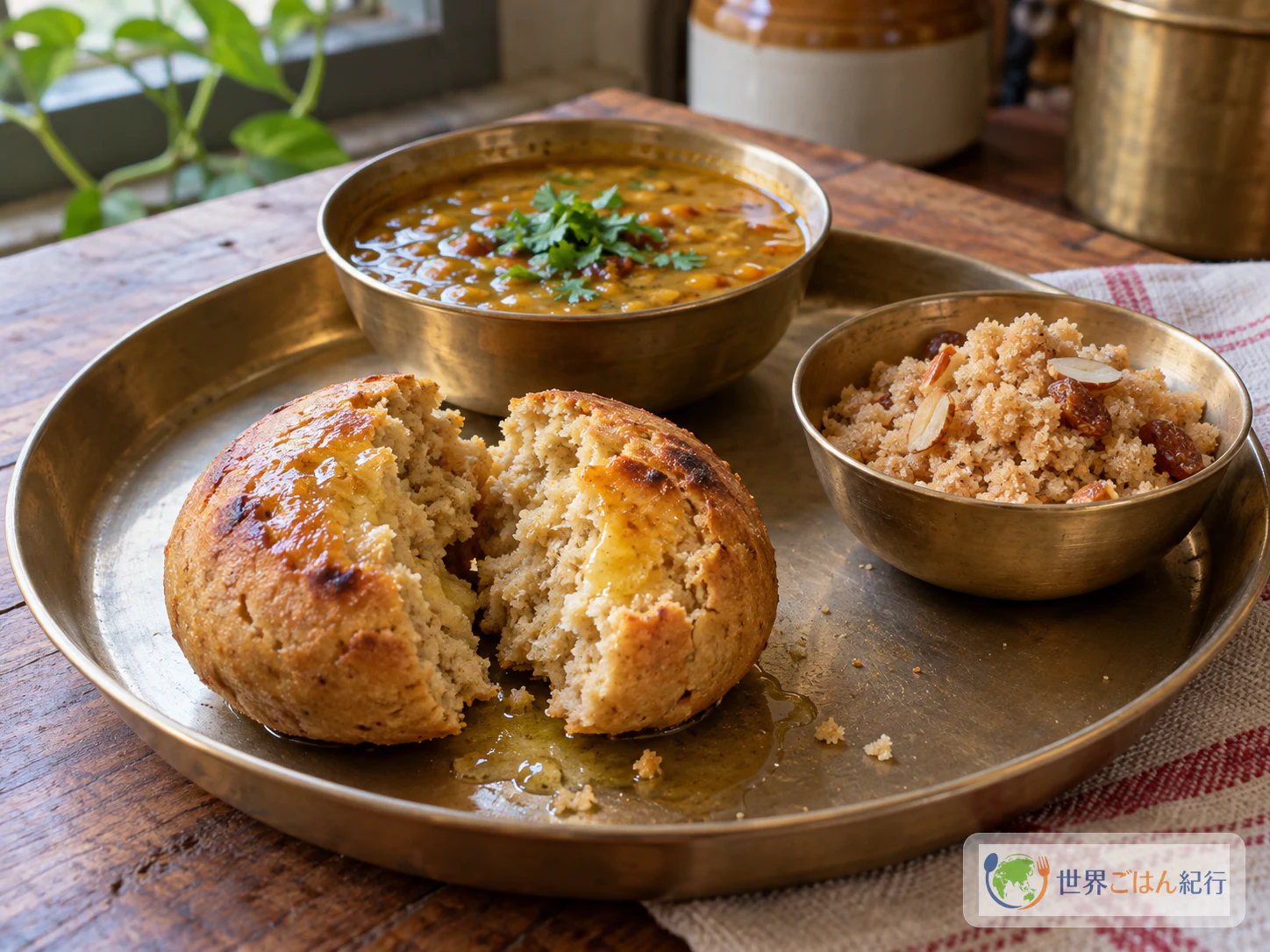
In both Rajasthan Tourism and Incredible India, baati appears as part of Dal Baati Churma, a Rajasthani meal in which the ghee-dipped bread is eaten with dal and churma. Rajasthan Tourism also mentions red chili and garlic chutney with the meal. One way to eat it is to break a hot baati and take it with dal so the ghee and dal mingle, but this is not the only way it is served across the state. This article covers the bread alone; the dal and churma in the picture are accompaniments, not part of this recipe.
Stories about where baati came from are easy to find. A 2015 Indian Express food feature recounts tales of soldiers burying dough in sand and of bread baked by the sun, but it presents them as lore and notes that written accounts of the dish's origin are sparse. No origin date or inventor is confirmed, so this article doesn't give one.
Frequently Asked Questions
What is the difference between baati and Bafla baati?
Bafla includes a boiling step before the dough is baked. Plain baati, as in this recipe, goes straight into the oven after shaping and is then dipped in ghee.
What if I can't find ajwain?
You can leave it out, but the aroma of the bread will change. Cumin is not the same flavor.
Do I have to use all 2 cups of ghee?
No. The 2 cups listed on the source recipe card are what you put in the bowl so the baati can be dipped. Each baati is dipped for 1 minute and lifted out, and the excess drips back. The bread does not absorb the whole bowl.
Can I make it in an ordinary home oven?
Yes. The source method uses a home oven preheated to 200°C, with the tray on the middle rack for 25–30 minutes. Ovens vary, so check that the surface is lightly browned and the center is cooked through.
Can I eat baati without dal or churma?
Baati is its own bread, and this recipe makes it on its own. Dal Baati Churma is the well-known combination, but how you serve it at home is up to you.
Sources
- Rajasthan Tourism, Government of Rajasthan, "Rajasthani Cuisine: Traditional Flavors." Dal Baati Churma as a complete Rajasthani meal; baati as wheat bread balls dipped in ghee and served hot; the meal served with dal, red chili and garlic chutney. https://www.tourism.rajasthan.gov.in/content/rajasthan-tourism/en/rajasthani-cuisine.html
- Neha Mathur, Whisk Affair, "Baati Recipe (Oven + Gas Tandoor)." The recipe followed in this article: ingredients and amounts, 30-minute rest, dividing into 12, baking at 200°C for 25–30 minutes until lightly browned, and dipping hot baati in ghee for 1 minute; also the author's family recollection of traditional cooking and their notes on texture. https://www.whiskaffair.com/rajasthani-baati/
- Uttarakhand Open University, "Regional Cuisines of India-I (BHM-502AT)." Saadi Baati among Rajasthani dishes, as a boiled-then-grilled variant. https://www.uou.ac.in/sites/default/files/slm/BHM-502AT.pdf
- Incredible India, Ministry of Tourism, Government of India, "Explore the Art of Gastronomy in Bharatpur." Dal Baati Churma as an iconic Rajasthani dish; baati as round wheat-flour bread; the smoky flavor of wood-fired ovens. https://www.incredibleindia.gov.in/en/rajasthan/bharatpur/a-gastronomic-journey-through-bharatpurs-flavours
- Madhulika Dash, The Indian Express, "Food Story: The evolution of Daal Baati Churma and Litti Chokha." The sparseness of written accounts of baati's origin, origin stories presented as lore, and the contrast between filled litti and unfilled baati. https://indianexpress.com/article/lifestyle/food-wine/food-story-the-evolution-of-daal-baati-churma-and-litti-chokha/