Til ki Gajak: Jaggery Syrup, Toasted Sesame and a Pan Left to Set
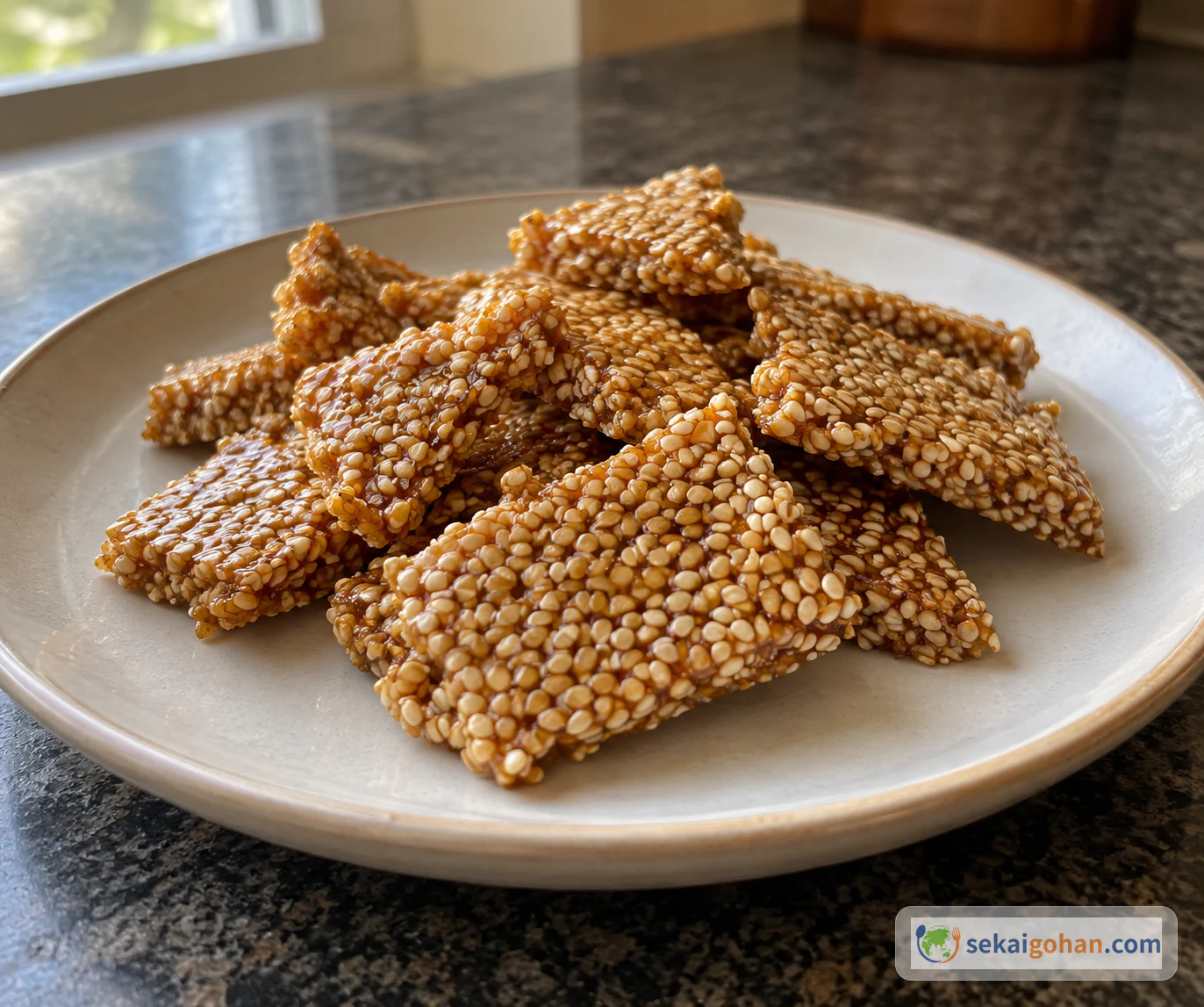
Dissolve the jaggery, boil the syrup without stirring until it reaches its endpoint, then stir in the sesame, cardamom and ghee and let the mixture set firm before cutting.
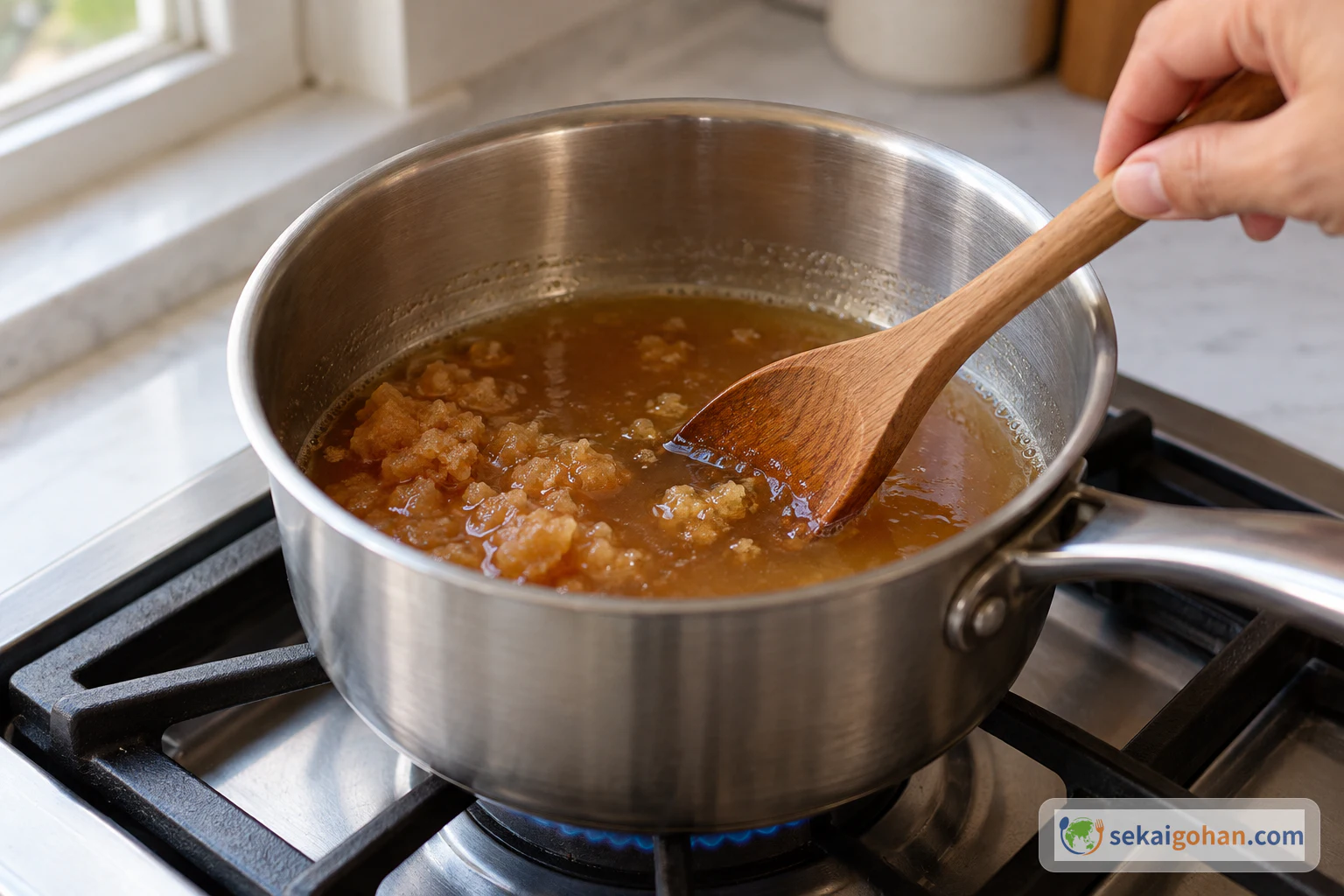
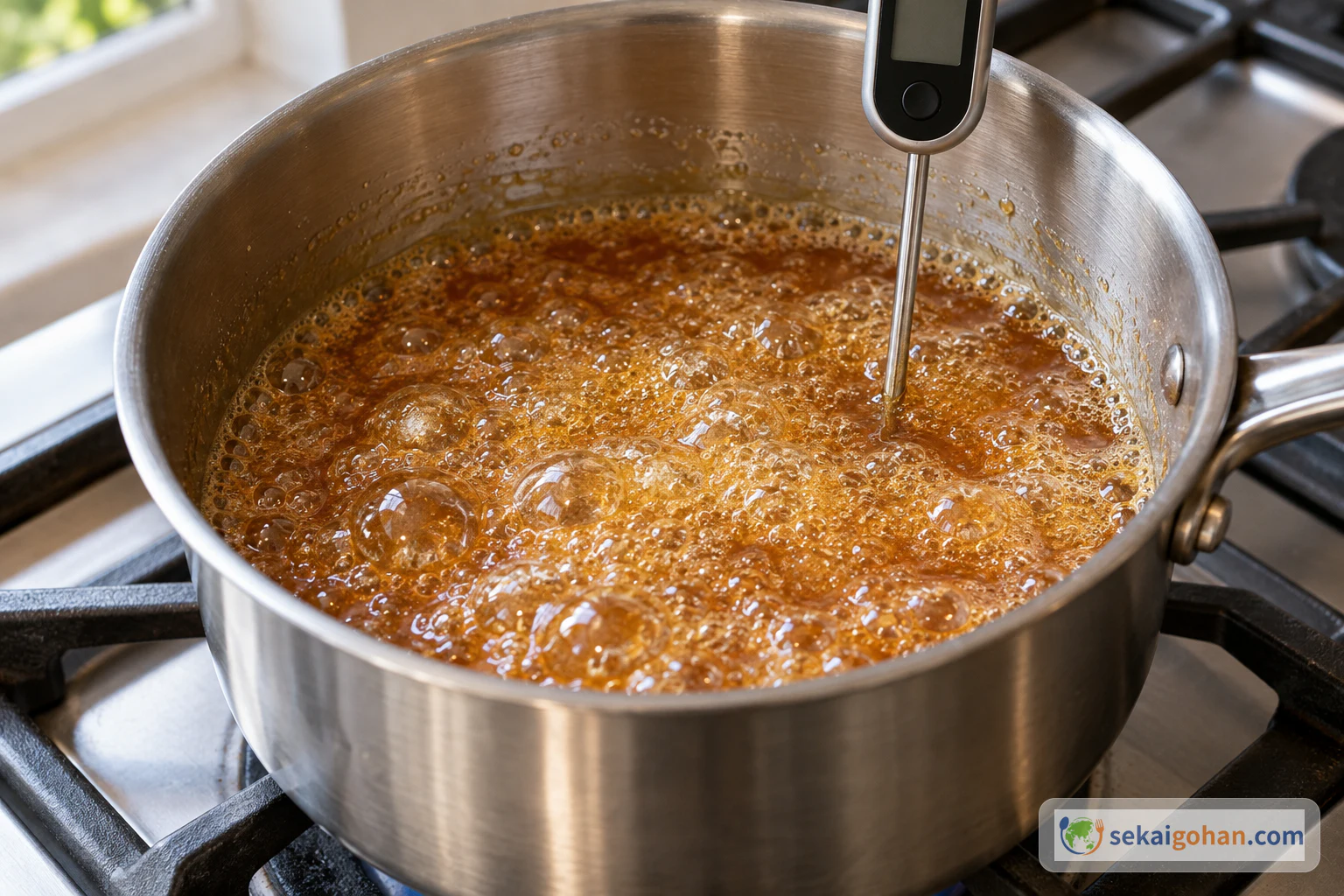
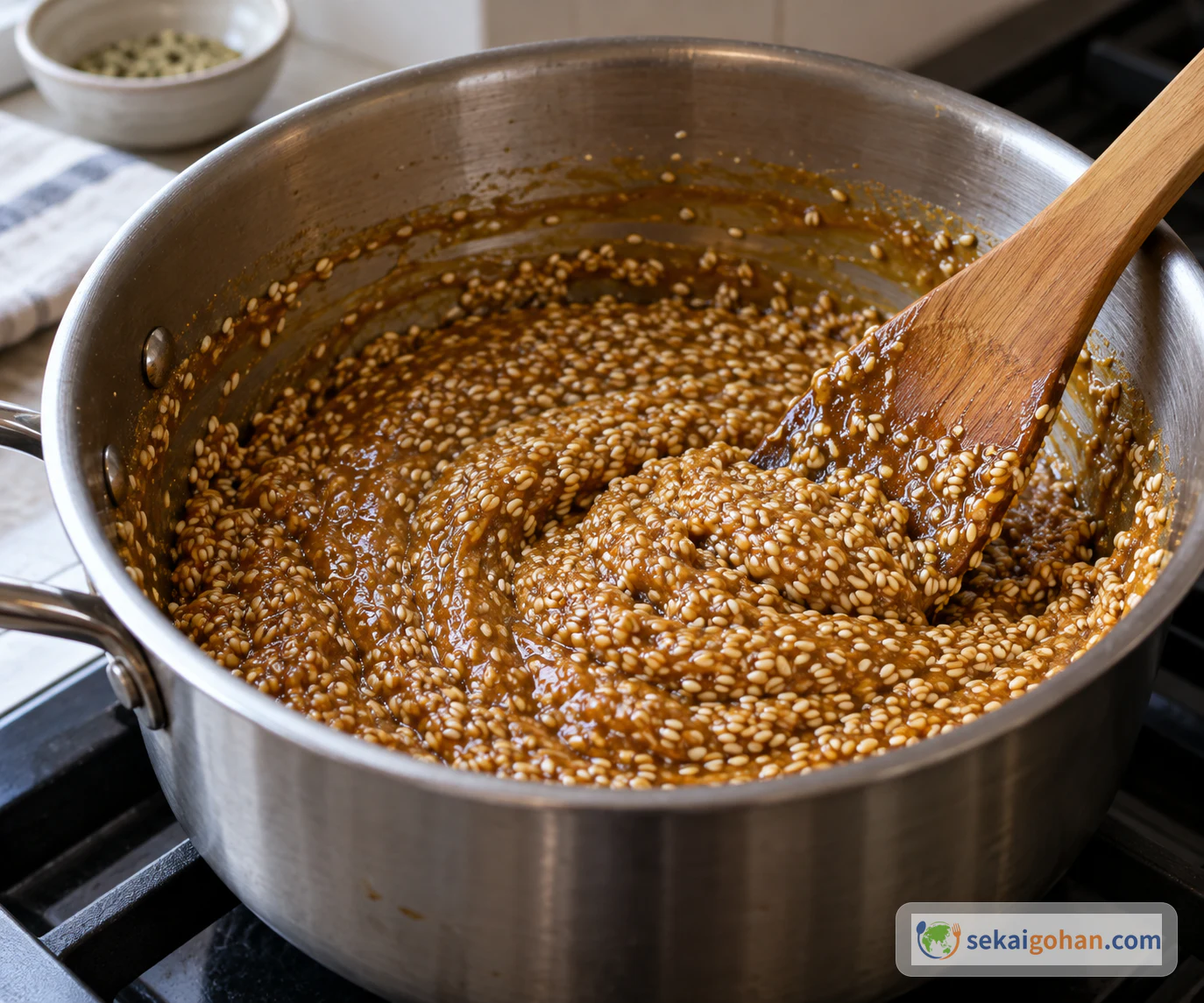
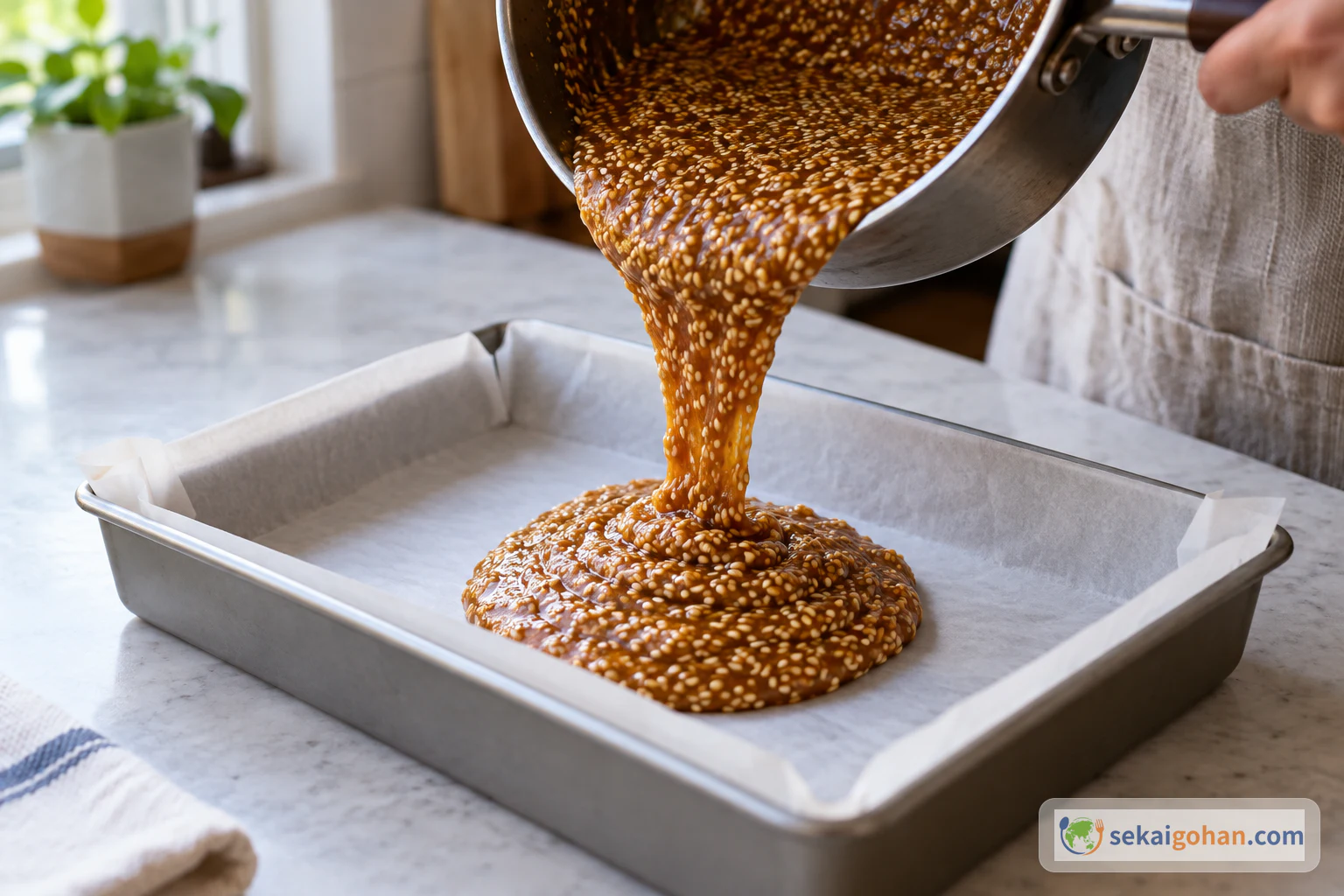
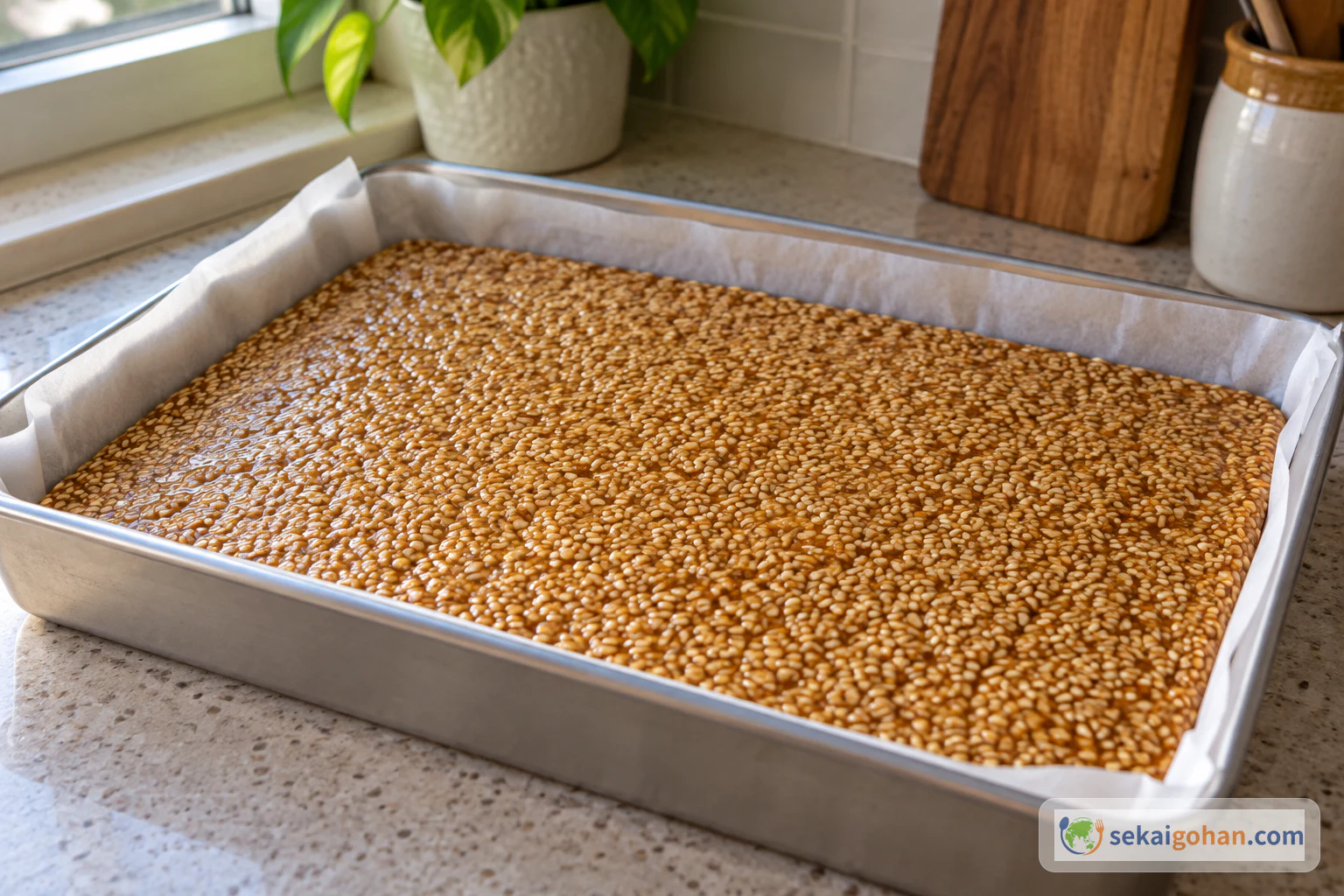
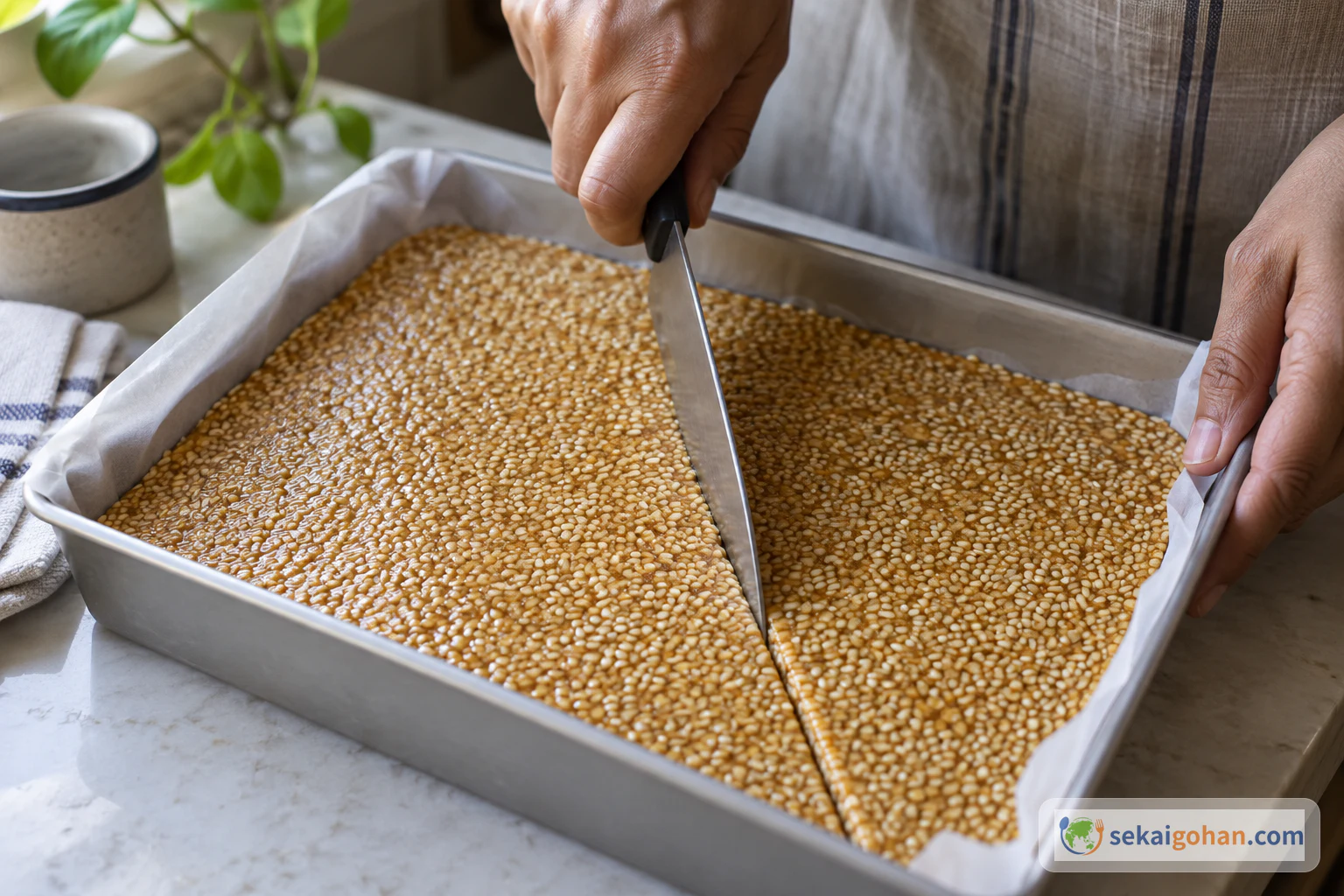
Grated jaggery and water warm together in a saucepan over medium heat and are stirred until the jaggery dissolves. Once the syrup boils, the spoon is put down. The syrup cooks undisturbed for 5 minutes, or until a sugar thermometer reads 135°C. Then toasted sesame, ground cardamom and ghee go in. The mixture is poured into a lined pan and left until it is firm enough to cut into 25 pieces.
This article follows a single recipe: "Sesame brittle (til ki gajak)," published by SBS Food under the name of Angela Nahas. The page credits Feast Magazine, Issue 17, page 55. The byline and magazine credit show where this version was published. They do not establish who first created it. The recipe offers grated jaggery or palm sugar. This article uses jaggery only. Sekai Gohan has not kitchen-tested this recipe.
The page lists 5 minutes of preparation, 10 minutes of cooking and a 4-hour standing period. The standing period is "4 hours or until firm," so the clock is only part of the guide. One detail matters before you shop: the ingredient list on that page leaves out water, but its method uses 250 ml of water to dissolve the jaggery. This article includes the 250 ml in the ingredient table so nothing is missing at the stove.
To see more dishes from the same country, visit the India country page.
One Name, Several Sweets: Where This Til ki Gajak Sits
Gajak is not one fixed recipe. Training material on gajak processing from India's National Institute of Food Technology Entrepreneurship and Management (NIFTEM) describes gajak as a family of dry confections. It names several types, including Gud-Til Gajak, Til Revadi Gajak, Peanut Jaggery Gajak/Chikki and Til Mawa Gajak. The same material notes that names and recipes vary across regions.
One of those types is written "Peanut Jaggery Gajak/Chikki," so the two names overlap in at least one case. That single pairing does not show that every gajak and every chikki is the same sweet. This article does not treat them as one.
The district government of Morena, in Madhya Pradesh, describes gajak as a sweet originating in Morena. It says the sweet is made with sesame and jaggery and is made especially in winter. India's Geographical Indications Registry records "Morena Gajak" as a registered geographical indication. The applicant is the Morena Gajak Nirmata Association, the area is Madhya Pradesh and the certificate number is 436.
The recipe in this article does not name any region. It should not be called Morena Gajak or treated as the registered product. It is one home-style version of a sesame and jaggery sweet, and it sits alongside the Morena tradition rather than inside it.
Similar-sounding names lead to different sweets. One home recipe called Khasta Gaja, presented as an Odisha sweet, rolls and slices a dough of maida, atta, ghee and curd. The pieces are deep-fried and then soaked in sugar syrup. Another post, titled "Odia Recipe: Sweet Gaja," also deep-fries strips of maida dough and dips them in syrup. Chhena Gaja is built mainly on chhena and semolina, fried and then soaked in syrup.
Each of these differs from til ki gajak in both ingredients and method. These examples are individual recipes. They do not define what every dish called "gaja" must be.
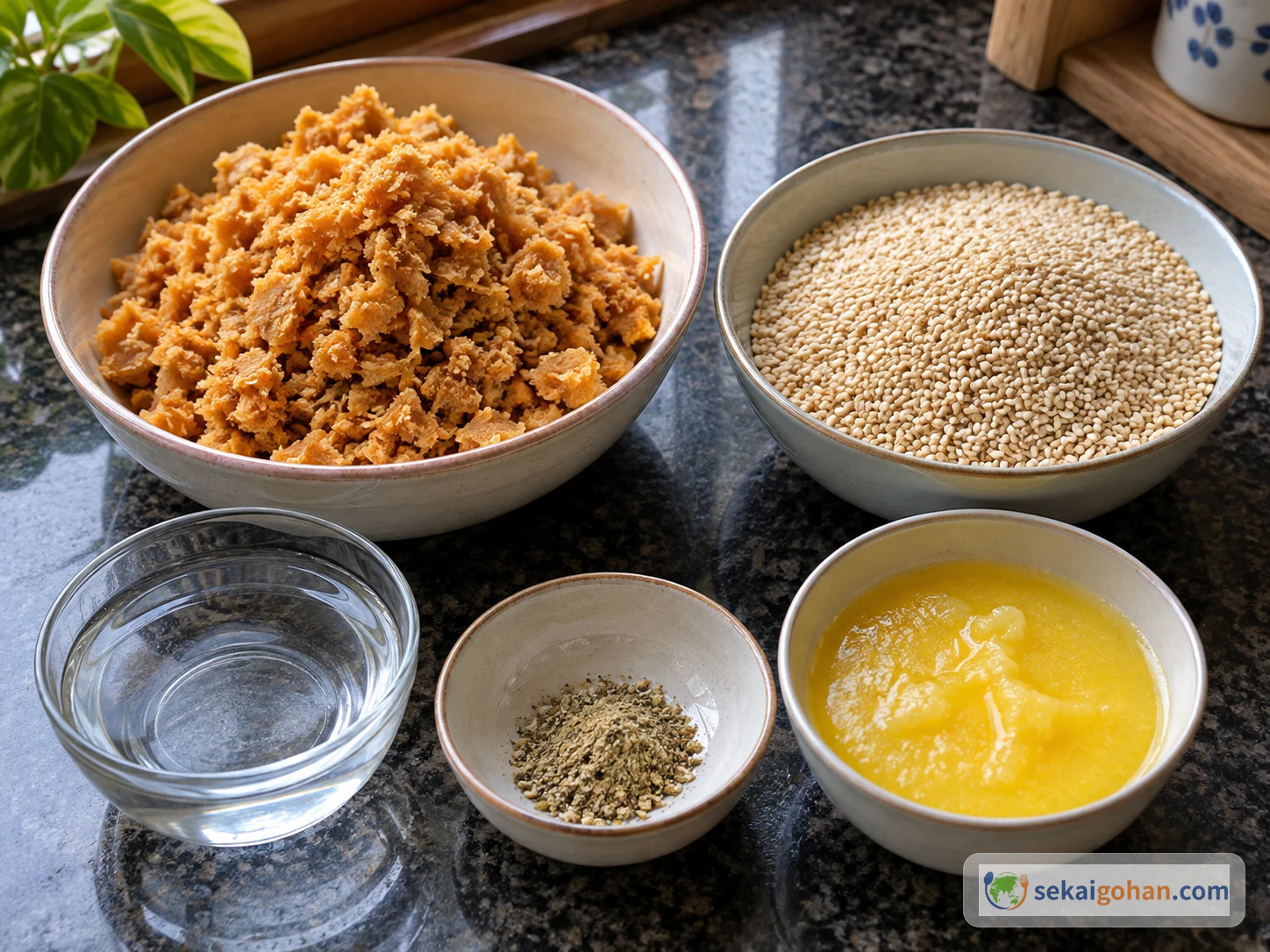
Ingredients: One Batch, 25 Pieces
Equipment
- Saucepan
- Spoon for stirring
- Sugar (candy) thermometer, if you use the 135°C endpoint
- 20 cm × 30 cm slice pan, lined
- Knife for cutting
Choosing Jaggery and Allergy Notes
Jaggery is the ingredient most worth seeking out. Some delis, spice shops and Asian food shops carry it, but no particular shop is guaranteed to stock it. Searching for "jaggery" or "गुड़" (gud) at shops that sell South Asian ingredients can help.
The sesame goes in already toasted, and no toasting step is part of this recipe. Buy seeds sold as toasted.
This recipe contains sesame, and ghee is a dairy product. Keep both in mind when you serve it to others.
Method: From Dissolved Jaggery to 25 Pieces
Boiling sugar syrup is very hot and can cause serious burns. Do not touch it, and take care while you watch the pan and while you pour.
Reading the Cues at Each Stage
This recipe gives only a few signals. It helps to know what each one means and to avoid inventing others. There are no extra color, bubble or thickness tests to rely on here.
| Stage | Cue to watch | What to do |
|---|---|---|
| Dissolving | The jaggery has dissolved in the water | Keep stirring over medium heat until it has, then bring to a boil |
| Boiling | The syrup has come to a boil | Stop stirring from this point |
| Cooking the syrup | 5 minutes have passed, or the thermometer reads 135°C | Use one of the two endpoints, then add the sesame, cardamom and ghee |
| Setting | The slab is firm | If it is not firm at 4 hours, leave it longer before cutting |
The method does not cover a few points. It does not say whether the pan stays on the heat when the sesame goes in, what the liner is made of, or where the pan should stand while it sets. It also gives no shape or size for the pieces beyond making 25 of them. Those details are left open here rather than filled in.
Variations: Other Gajak Types by Name
These are types named in published material. They are listed for comparison and are not alternative recipes for this batch. Do not add their ingredients to the method above.
- Palm sugar instead of jaggery. The recipe this article follows lists palm sugar as an option. This article uses jaggery throughout, and the two have not been compared here.
- Gud-Til Gajak. A jaggery (gud) and sesame (til) type named by NIFTEM. NIFTEM gives no household proportions for it.
- Til Revadi Gajak. Another sesame-based type named by NIFTEM.
- Peanut Jaggery Gajak/Chikki. A peanut and jaggery type, and the case where the names gajak and chikki appear together.
- Til Mawa Gajak. A type named with mawa. No amounts or method are given here.
Frequently Asked Questions
The recipe page doesn't list water. Do I need it?
Yes. The SBS Food ingredient list omits water, but the method on the same page dissolves the jaggery in 250 ml of water. This article uses that 250 ml and lists it in the ingredient table.
Can I make it without a sugar thermometer?
The recipe gives two endpoints after the syrup boils: 5 minutes without stirring, or until a sugar thermometer reads 135°C. You can use either one, so a thermometer is not essential.
Is this Morena Gajak?
No. The Morena district government describes gajak as a sesame and jaggery sweet from Morena, made especially in winter. "Morena Gajak" is also a registered geographical indication for Madhya Pradesh. The recipe here does not name a region, so it should not be called Morena Gajak or the registered product.
Is gajak the same as gaja or chikki?
Not as a rule. NIFTEM's material pairs the names in one type, "Peanut Jaggery Gajak/Chikki," but that does not make every gajak and every chikki the same recipe. Recipes published as Khasta Gaja and Sweet Gaja are deep-fried flour doughs soaked in syrup. Chhena Gaja is built mainly on chhena and semolina. These are different sweets from this sesame and jaggery recipe.
Can I use palm sugar?
The recipe lists palm sugar as an alternative to jaggery. This article follows the jaggery version only. How palm sugar changes the flavor or set has not been compared here.
How long does it keep?
The SBS Food page says to store it for up to 2 weeks. It gives no container, temperature or other storage conditions. Because of that, this article does not present 2 weeks as a safe storage period for a home kitchen.
Sources
- Angela Nahas, "Sesame brittle (til ki gajak)," SBS Food (credited to Feast Magazine, Issue 17, p.55). The recipe followed in this article: ingredients and amounts, the 250 ml of water used in the method but not listed, method order, the 5-minute or 135°C endpoint, pan size, standing time, 25 pieces, the palm sugar option, Australian cup and spoon measures, and the storage line. https://www.sbs.com.au/food/recipe/sesame-brittle-til-ki-gajak/v3jmz7aeq
- National Institute of Food Technology Entrepreneurship and Management (NIFTEM), Ministry of Food Processing Industries, Government of India, "Reading Material for Gajak Processing under PMFME Scheme." Gajak as a family of sesame or peanut and jaggery confections; the types Gud-Til, Til Revadi, Peanut Jaggery Gajak/Chikki and Til Mawa; regional variation in names and recipes. https://niftem.ac.in/newsite/pmfme/wp-content/uploads/2022/08/gajakwriteup.pdf
- District Morena, Government of Madhya Pradesh, "Culture & Heritage." Gajak described as a sweet from Morena, made with sesame and jaggery and especially in winter. https://morena.nic.in/en/culture-heritage/
- Geographical Indications Registry, Intellectual Property India, "Geographical Indication application 681: Morena Gajak." Registered status, applicant, geographical area and certificate number. https://search.ipindia.gov.in/GIRPublicSearch/Application/Details/681
- Pranati Nath, "Khasta Gaja," Pranati's Kitchen. For comparison only: a fried flour-dough sweet soaked in syrup. https://pran-oriya-recipies.blogspot.com/2016/04/khasta-gaja.html
- Bindhyabasini Jena Kitchen, "Odia Recipe: Sweet Gaja." For comparison only: fried maida-dough strips dipped in syrup. https://bindhyabasinijena.wordpress.com/2015/07/14/odia-recipe-sweet-gaja/
- University of Illinois Extension, "4-H Cooking 401: Experiment with Candy." Boiling sugar syrup is very hot and can cause serious burns. https://extension.illinois.edu/sites/default/files/4h_cooking_401_book.pdf
- Wikidata, "gajak (Q5517536)." Used only to match the name gajak and its alias gachak. https://www.wikidata.org/wiki/Q5517536