Koottu: Soft Dal, Distinct Vegetables and a Roasted Coconut Paste
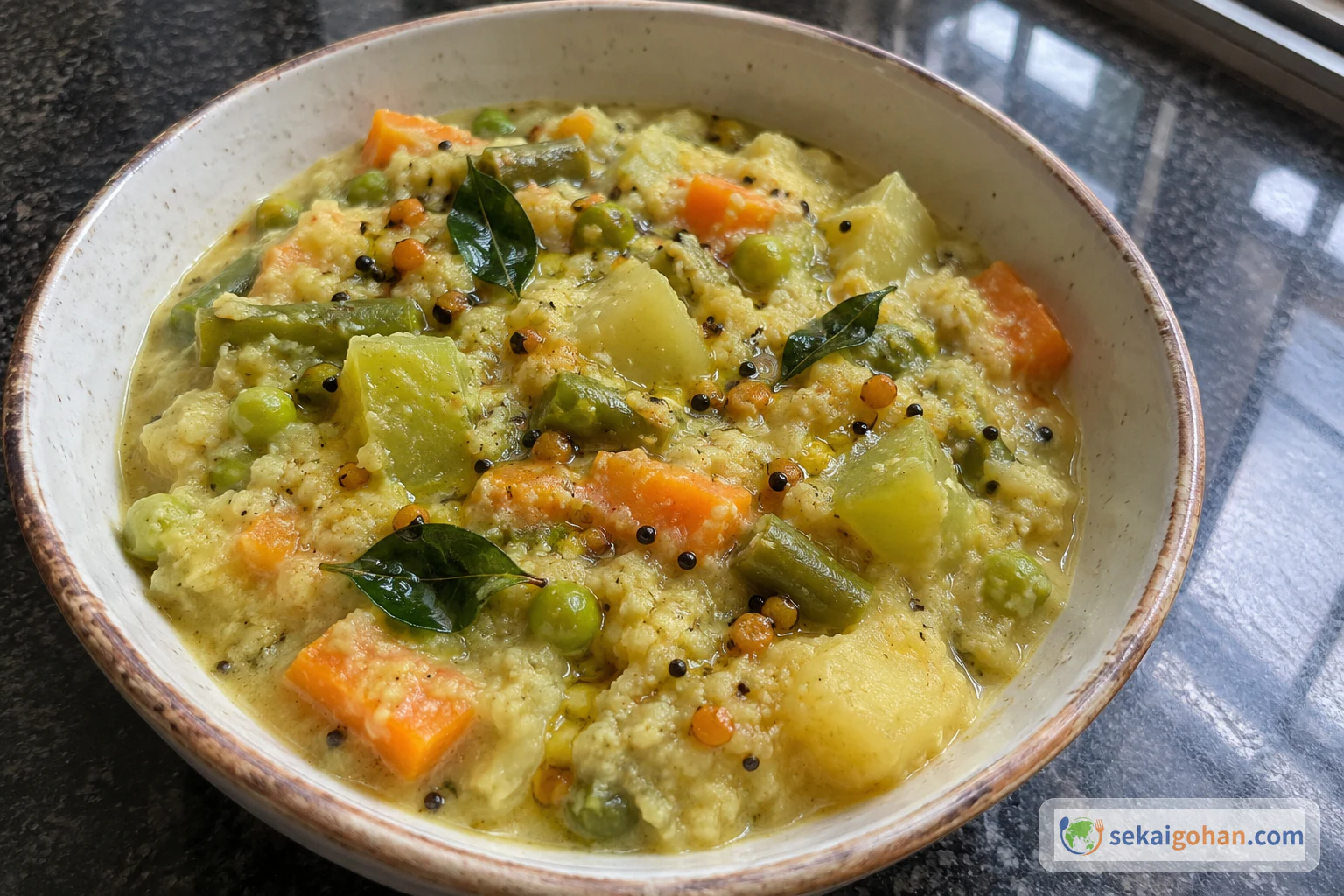
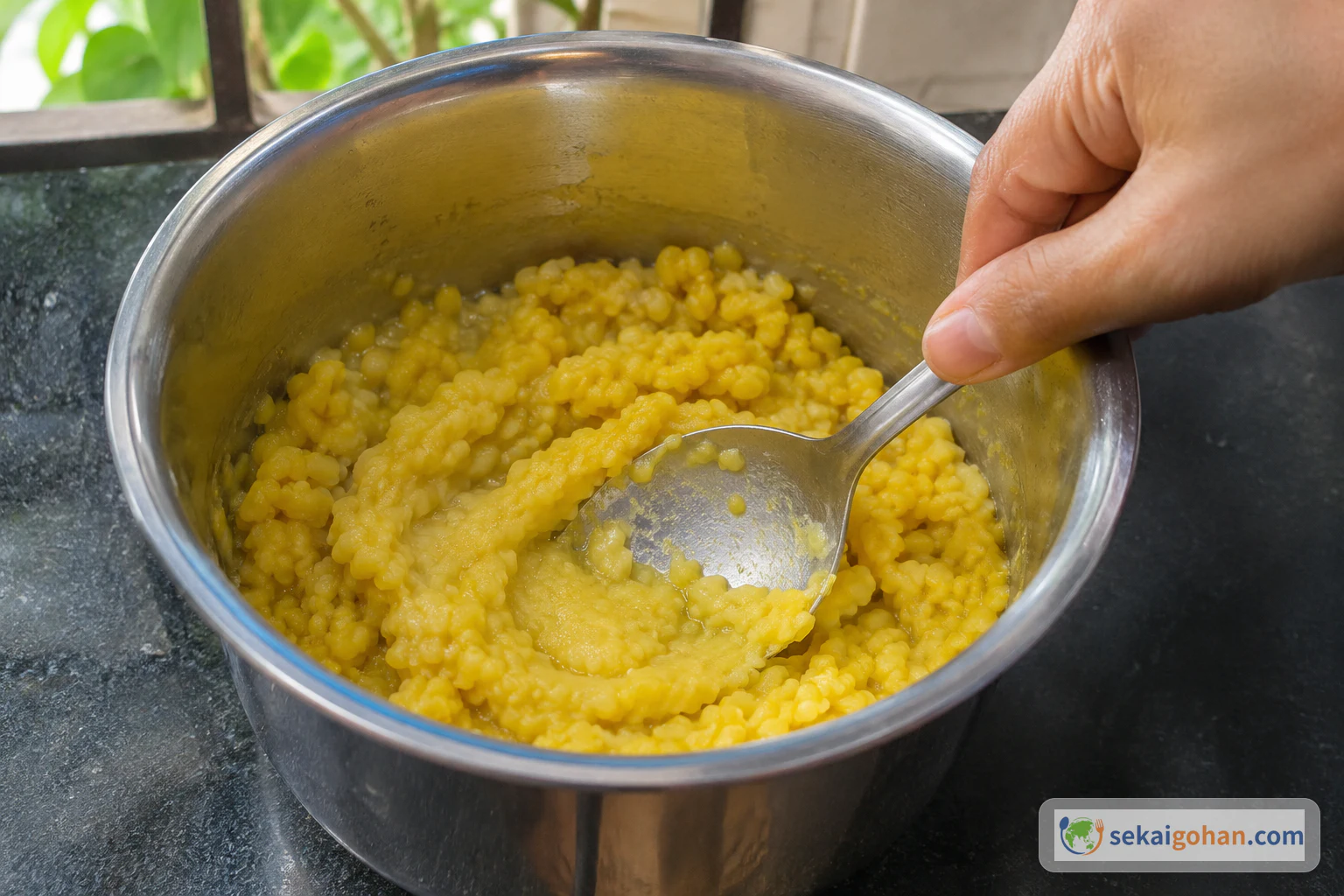
Cook the dal and vegetables separately, so the dal is soft enough to mash and the vegetables keep their shape. The roasted coconut paste and the final tempering then bring them together.
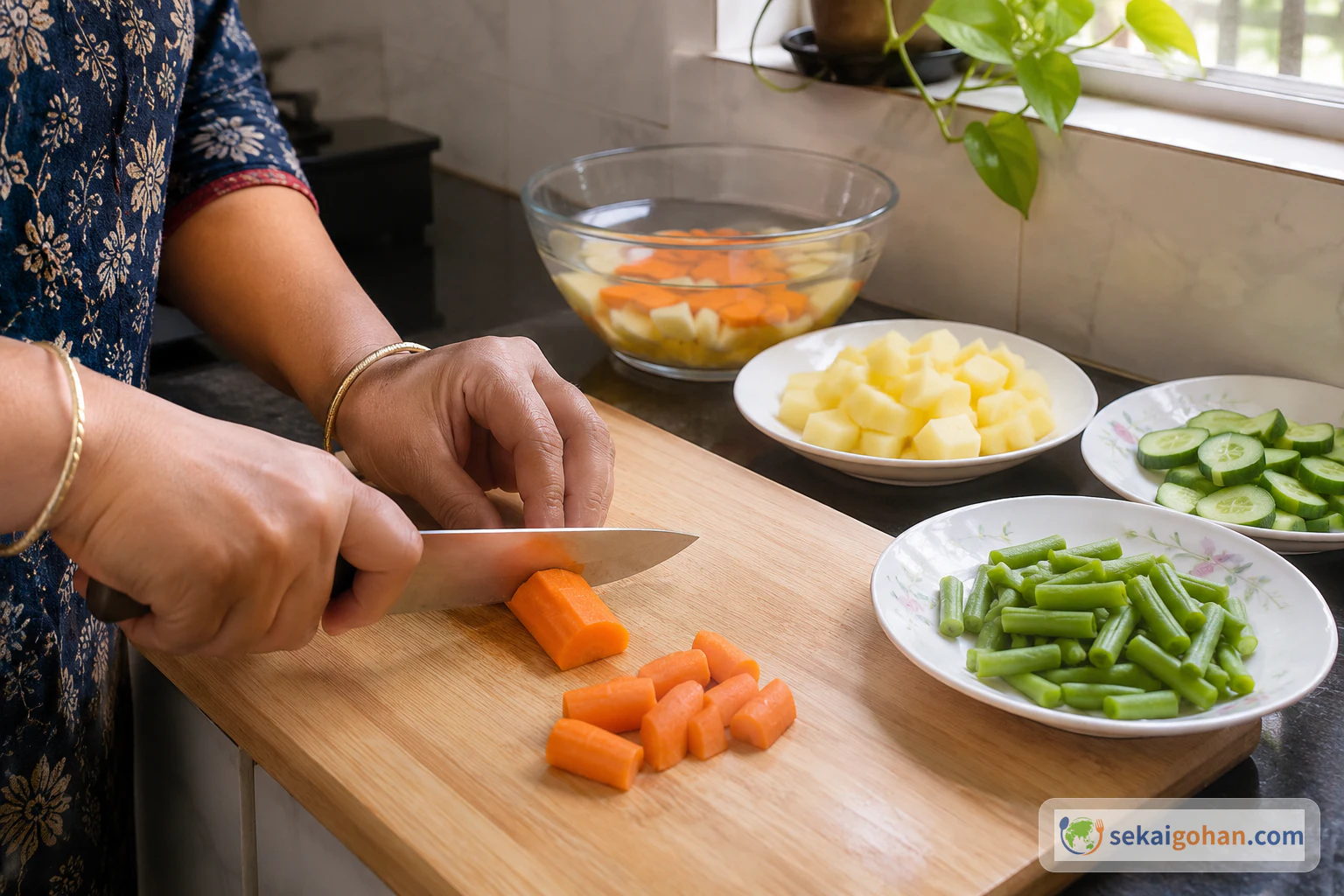
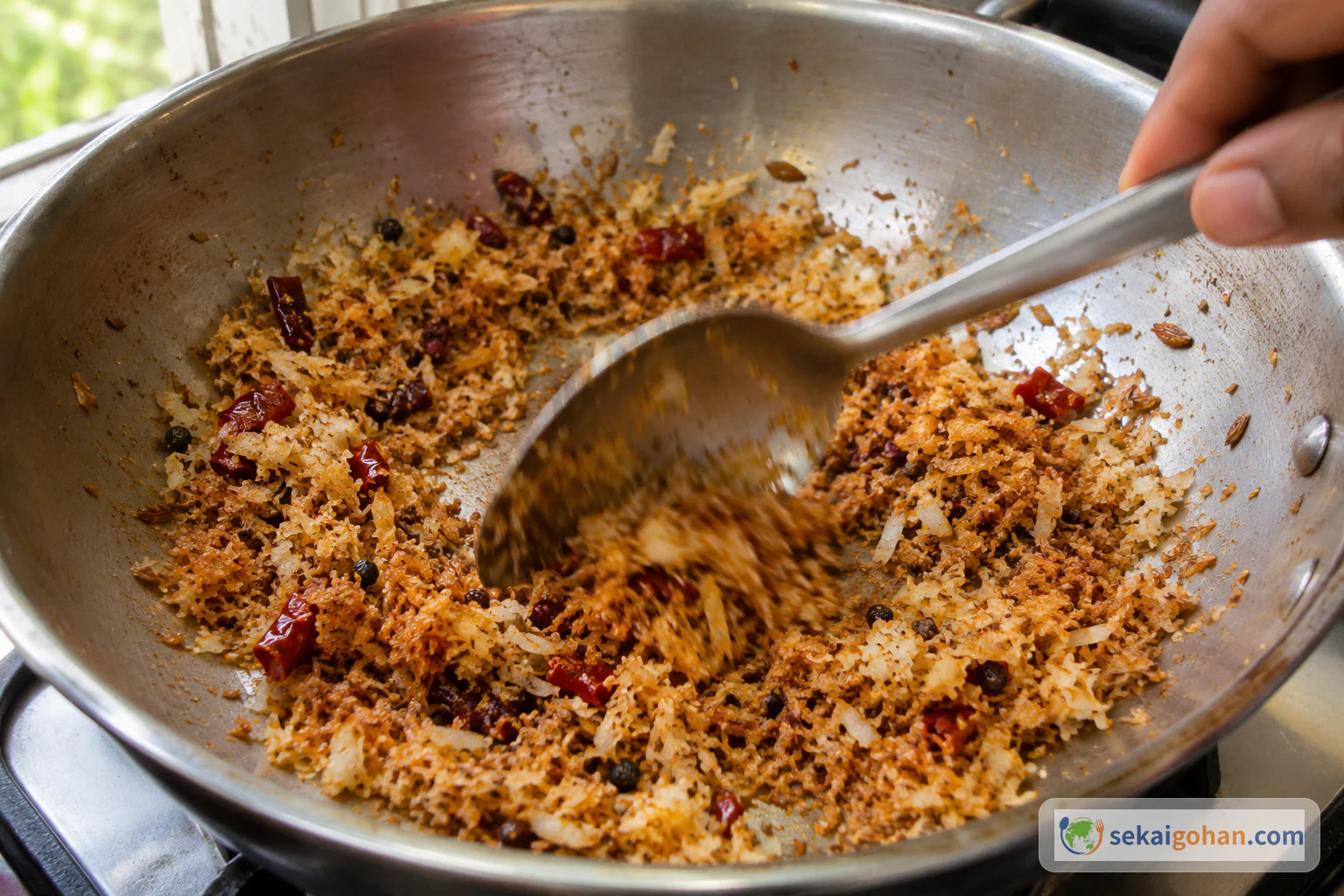
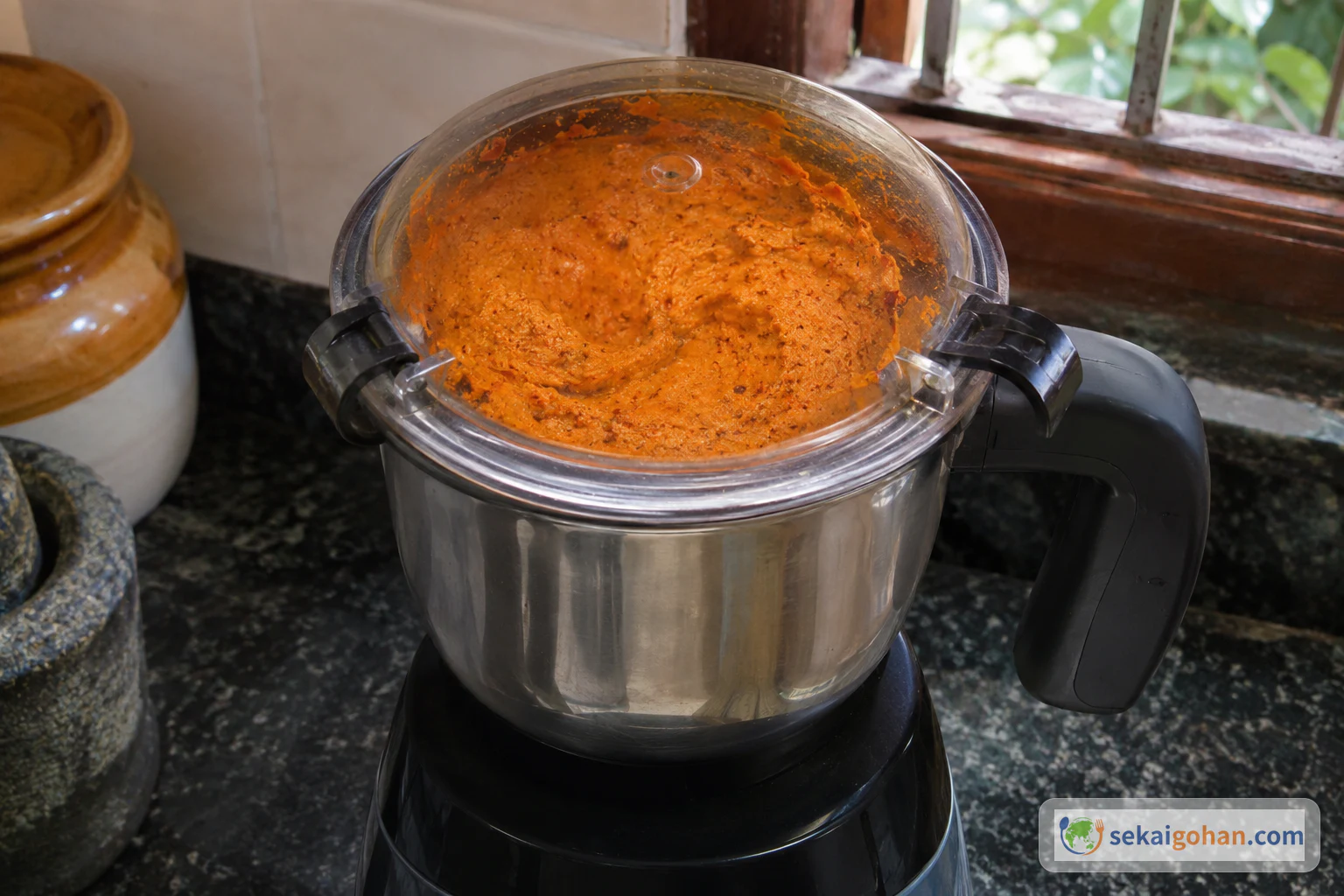
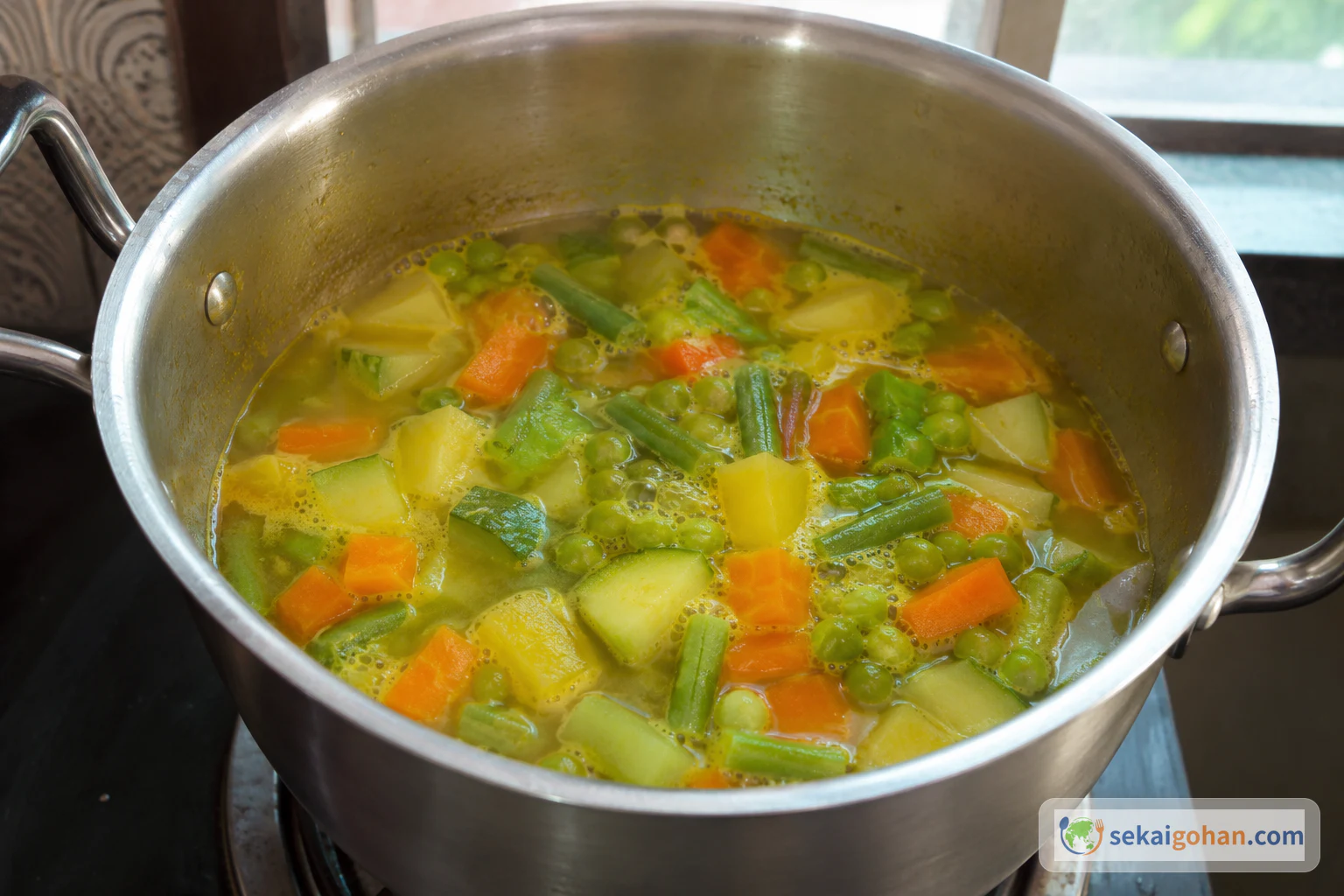
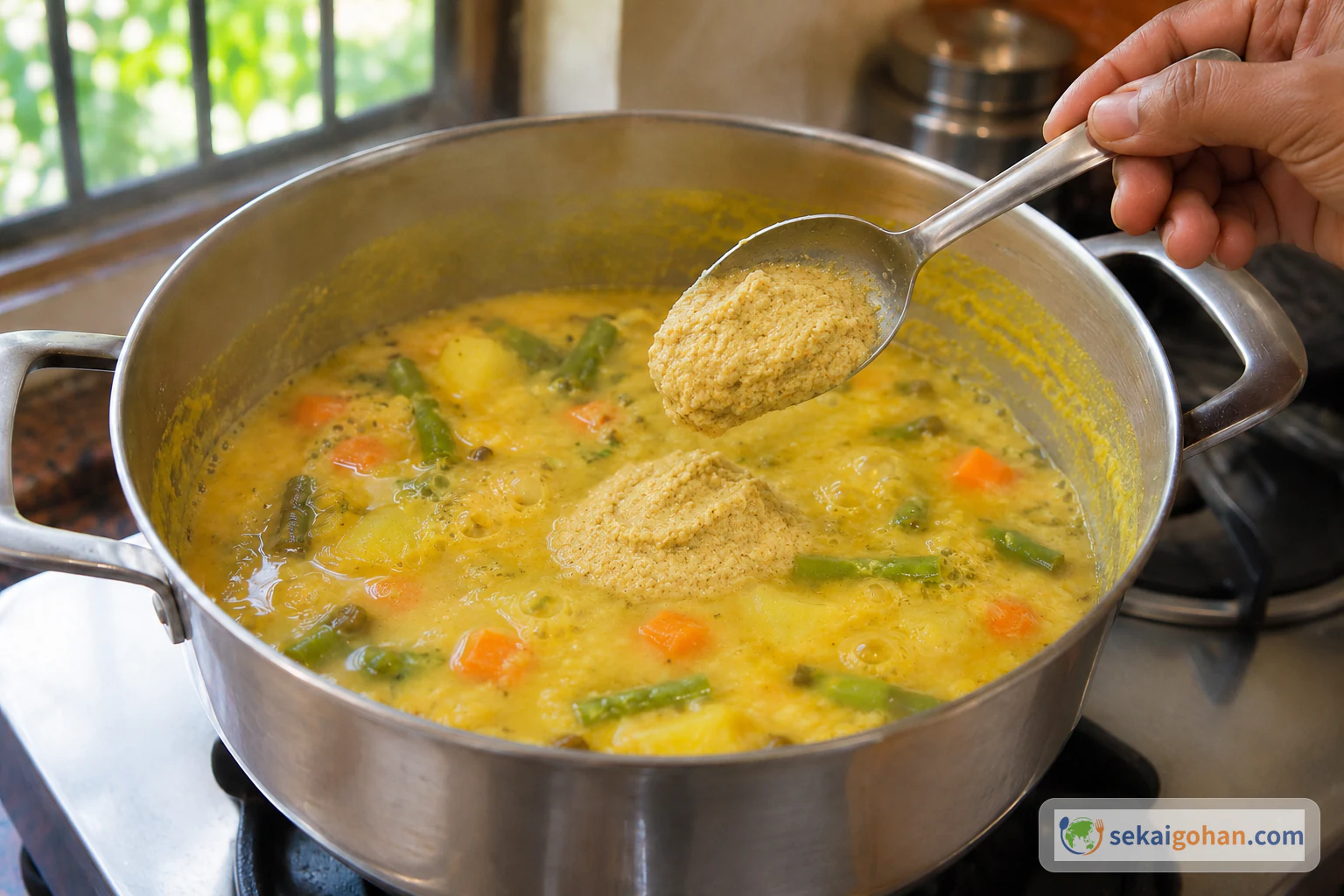
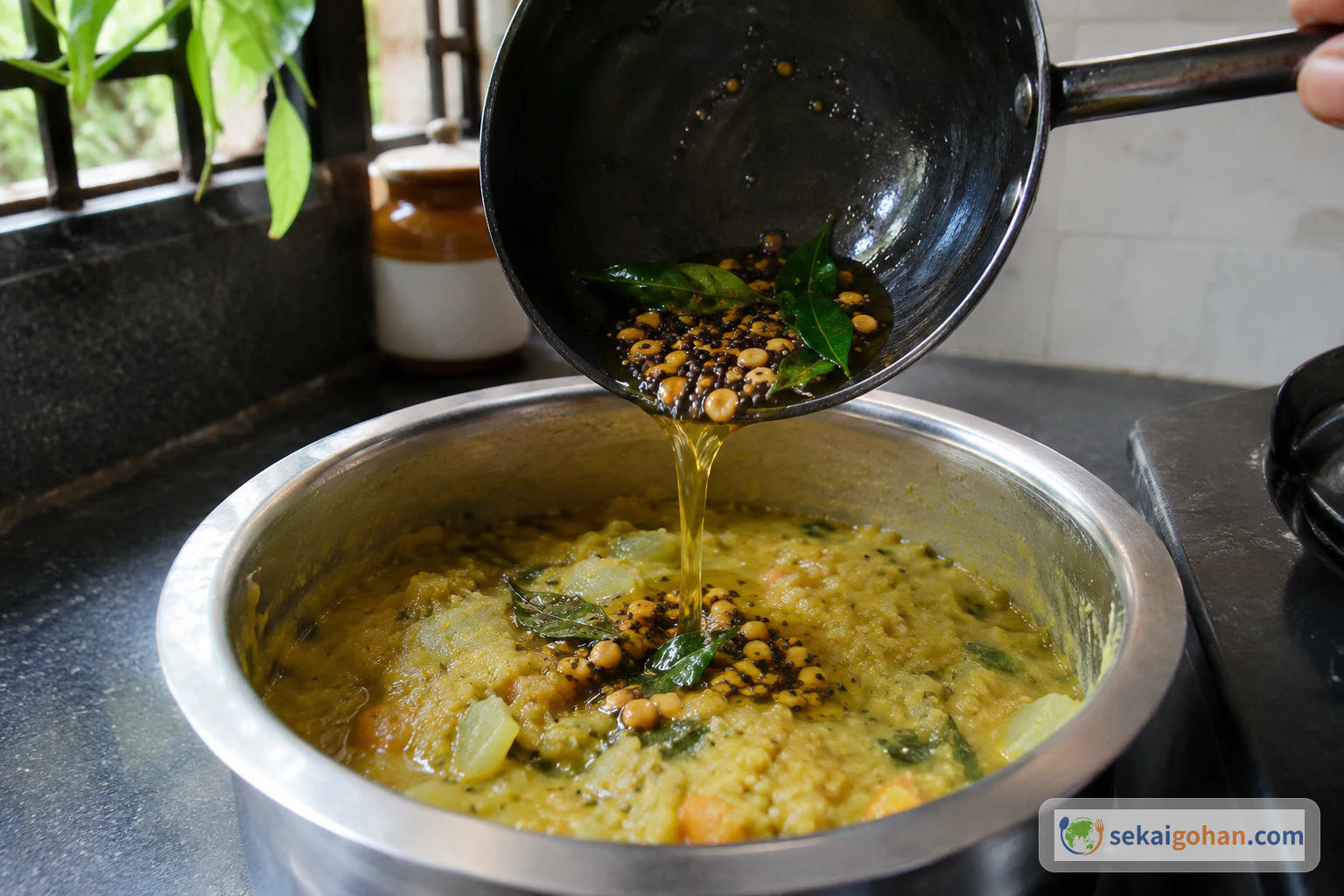
Coconut turns golden brown in a little oil with a red chili, cumin and black peppercorns, then goes into the grinder. In another pot, carrot, potato, green beans, cucumber and peas cook in turmeric-tinted water until tender. Mashed moong dal joins them and the pot comes to a boil. Only then does the paste go in. Mustard seeds, split urad dal and curry leaves, fried in a separate pan, go in last.
Koottu, also spelled kootu, is a family of semi-solid South Indian side dishes made with vegetables and legumes, and Tamil Nadu alone has many types. This article covers just one of them, a mixed vegetable poricha kootu for 4 from Subbus Kitchen. It is not a standard formula for all koottu.
We have not kitchen-tested this recipe. The ingredient amounts and overall order come from the Subbus Kitchen recipe, which pressure-cooks the dal but gives no liquid amount or appliance setup. For that reason, this article cooks the dal in a plain pot instead, borrowing the water ratio, rinsing and timing from a separate yellow moong dal recipe by Feast With Safiya. Treat the time as a guide and go by how soft the dal is.
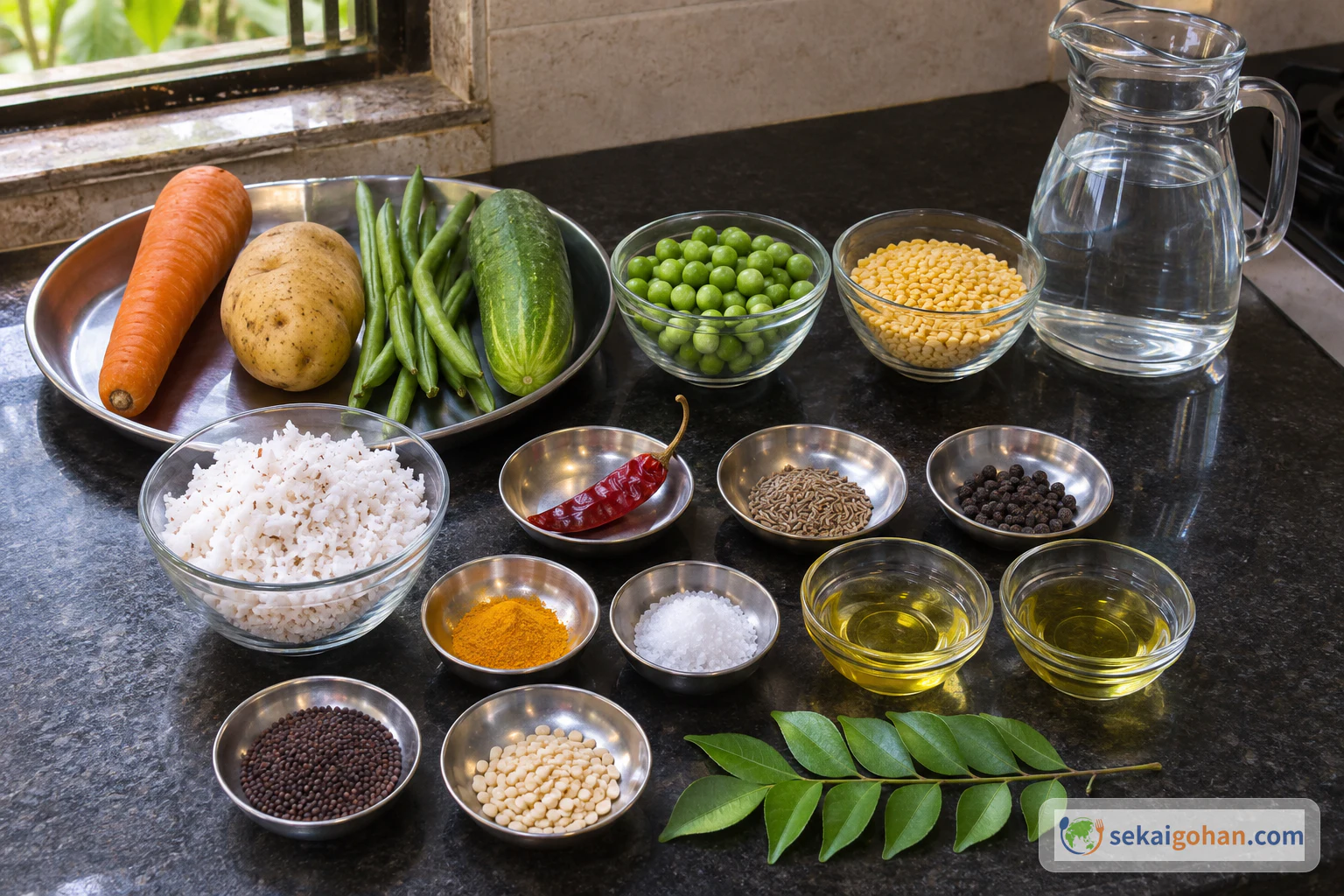
Ingredients: Serves 4
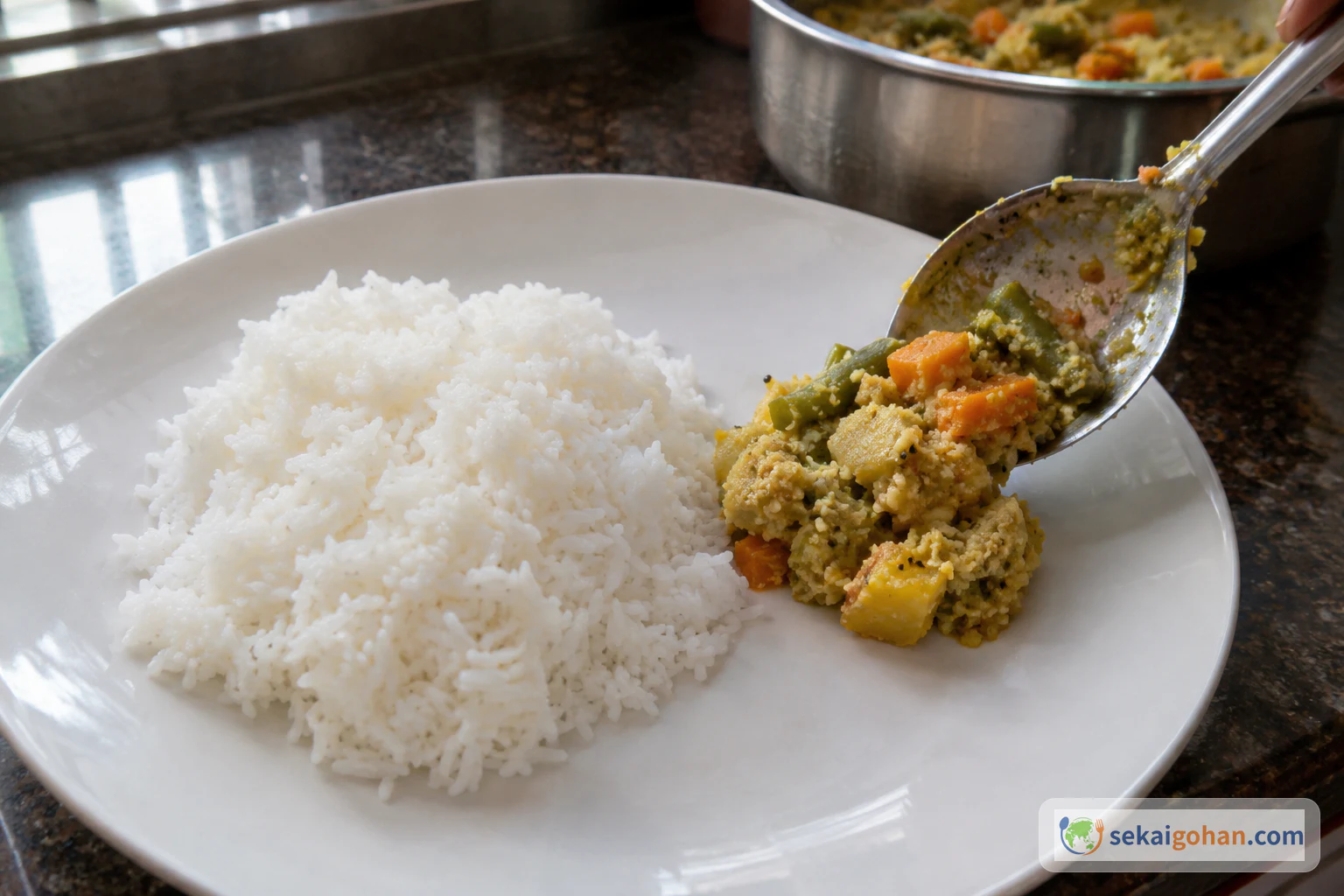
Plain cooked rice is served alongside and is not part of the kootu itself.
Equipment
- Knife and cutting board
- Bowl for holding the cut vegetables in water
- Lidded pot for the dal
- Spoon for mashing and stirring
- Pan for frying the coconut and spices
- Small mixer or grinder with a closed lid
- Separate pot for the vegetables
- Small pan for the tempering
Choosing and Swapping
- Moong dal: Look for hulled, yellow split moong dal. If the package gives its own preparation directions, read them too.
- Curry leaves: Fresh and dried leaves differ in aroma, so don't assume they will taste the same.
- Vegetables: Changing the mix makes a different version. See the variations below.
- Tamarind, tomato and jaggery: These are not part of this formula, so leave them out when making this version.
This dish contains mustard and legumes. Check the labels on packaged spices, dal and other products for your own allergens.
Fixing Problems as You Go
| What you see | What to do |
|---|---|
| The dal won't mash easily | Cover and keep simmering until a spoon mashes it easily |
| The dal pot is running low on water | Add a little water and continue |
| The vegetables are starting to break down | Bring the dal back in as soon as they are tender. Next time, check them sooner |
| The coconut has turned black | Fry a fresh batch rather than grinding the burnt one |
| The paste is still coarse | Turn off the machine, scrape down the jar, close the lid and grind again |
| The kootu is thicker than you like | Stir in a little water, adding more only as needed |
| The kootu is looser than you like | Let it cook a little longer, stirring and watching the texture |
| The flavor seems flat | Add salt a little at a time, tasting as you go |
The water for the vegetables has no fixed amount, so watch the pot rather than aiming for a number. The finished kootu should be thick, with the vegetables still recognizable.
Variations
Each of these makes a different dish, so treat it as its own version rather than a small tweak.
- Other vegetables: You can change the vegetable mix, but no confirmed amounts exist for specific swaps. Judge the water and doneness by eye.
- A different single vegetable: Bottle gourd kootu is one example, with its own build and water.
- A sour kootu: Some mixed vegetable kootu recipes include a souring ingredient. Follow a recipe written for that style rather than adding one here.
- Milder or hotter: Changing the single red chili is your own adjustment. We have no confirmed alternative amount.
Background: Koottu in Tamil Nadu and Where This Recipe Comes From
Koottu is a family of dishes, not one fixed recipe. A Regional Cuisines of India course text from Uttarakhand Open University describes kootu as a semi-solid side dish of vegetables and legumes, with many types in Tamil Nadu. It also describes poricha as a style in which legumes and vegetables are cooked separately and combined with a paste, though its paste differs from the one used here. For more of the country's food, see our India page.
The recipe here is Mixed Vegetable Poricha Kootu from Subbus Kitchen, credited to Sowmya Venkatachalam and displaying an update date of 26 August 2019. The page labels it Tamil Nadu and Tamil Brahmin, gives it for 4 people, and suggests serving it with rice dishes. Its author explains that this poricha version does not use tamarind.
Other recipes show how wide the family is. Archana's Kitchen has another Tamil Nadu mixed vegetable poricha kootu with its own proportions. Hebbars Kitchen has a mixed vegetable kootu with a souring ingredient, and Khaana has a bottle gourd kootu. None of these supplied amounts for this recipe.
We made a few editorial decisions where the Subbus Kitchen recipe needed support:
- Dal cooking: The plain-pot method, 1:4 water ratio, rinsing and 15–18 minute guide come from Feast With Safiya's yellow moong dal recipe, which uses ½ cup dal and 2 cups water. That recipe gives no doneness cue, so the "cooked, then mashed" endpoint comes from Subbus Kitchen. The tomato and other ingredients in Feast With Safiya's recipe are not used.
- Turmeric: The Subbus Kitchen ingredient list gives 1/4 tsp, while its method puts a pinch in the dal and also adds turmeric to the vegetables. We take the pinch from the 1/4 tsp and give the rest to the vegetables. This split is our own choice, not a ratio stated by the author.
- Cooling before grinding: This is our own safety choice for using a closed mixer.
Frequently Asked Questions
Is kootu the same as sambar?
No. Sambar is a separate dish built on legumes and sourness, while this poricha kootu uses no tamarind. Rasam, a sour, peppery soup, and avial, a South Indian vegetable dish, are also separate dishes.
Why cook the dal and vegetables separately?
Separate pots let you bring the dal to soft and mashable while judging the vegetables on their own. This is also how the Subbus Kitchen recipe is built, and the Uttarakhand Open University text describes the same separate cooking for the poricha style.
Can I use a pressure cooker for the dal?
The Subbus Kitchen recipe does, but it gives no liquid amount, vessel or appliance settings. This article therefore gives no pressure-cooker instructions and uses a plain pot. If you use your own cooker, follow its manual.
How much water do the vegetables need?
The Subbus Kitchen recipe adds water to the vegetables without giving an amount, and we don't supply a number from other recipes. Add water as needed and adjust by looking at the pot.
Does the paste need water to grind?
The Subbus Kitchen recipe gives no grinding-water amount, so the method here adds none. If your machine can't turn the mixture, adding a little water is your own adjustment.
Which tablespoon and teaspoon should I use?
The Subbus Kitchen recipe doesn't say which spoon system it uses, so the amounts here remain in its own units, without conversions to grams, milliliters or other cup and spoon standards. Use one set of spoons throughout.
How long does it keep?
We haven't confirmed a storage period, so this article doesn't give a number of days. Follow your local food-safety guidance for cooked food.
Sources
- Subbus Kitchen (page credits Sowmya Venkatachalam), "Mixed Vegetable Poricha Kootu." Main recipe: ingredients and amounts, 4 servings, cooking order, the absence of tamarind in this version, and serving with rice dishes. https://www.subbuskitchen.com/mixed-vegetable-poricha-kootu/
- Uttarakhand Open University, "Regional Cuisines of India – II (BHM-602AT)." Overview of kootu as a semi-solid side dish of vegetables and legumes, its many types in Tamil Nadu, and the poricha method of cooking legumes and vegetables separately before combining them with a paste. https://uou.ac.in/sites/default/files/slm/BHM-602AT.pdf
- Feast With Safiya, "Moong Dal Recipe | Indian Yellow Lentil." Plain-pot dal cooking only: ½ cup yellow moong dal to 2 cups water, simmered covered for 15–18 minutes, and rinsing until the water runs clear. https://feastwithsafiya.com/moong-dal-recipe-indian-yellow-lentil/
- Archana's Kitchen (page credits Archana Doshi), "Mixed Vegetable Poricha Kootu Recipe (Steamed Vegetable in Coconut and Lentil Curry)." Comparison only: another Tamil Nadu recipe with separate components, served with rice. https://www.archanaskitchen.com/recipe/mixed-vegetable-poricha-kootu-steamed-vegetable-in-coconut-and-lentil-curry
- Hebbars Kitchen, "Kootu Recipe | Mixed Vegetable Kootu | Mixed Veg Kootu." Comparison only: a different mixed vegetable kootu with a souring ingredient. https://hebbarskitchen.com/kootu-recipe-mixed-vegetable-kootu/
- Khaana, "Bottle Gourd Kootu." Comparison only: a bottle gourd kootu with a different build and water use. https://khaana.com/recipes/kootu.html