Batata Saung: A Sour, Red-Orange Potato Dish Beside Rice and Dal
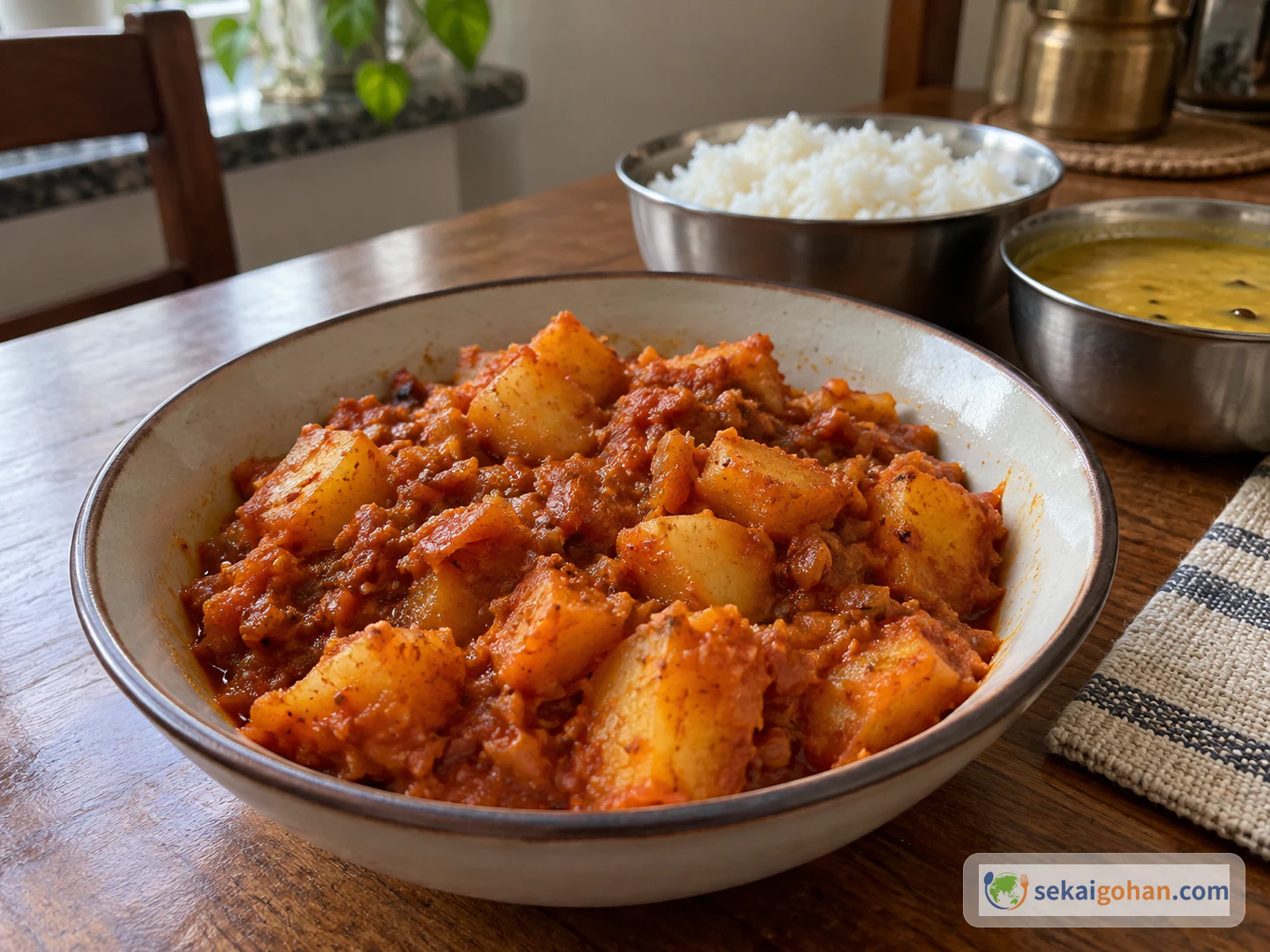
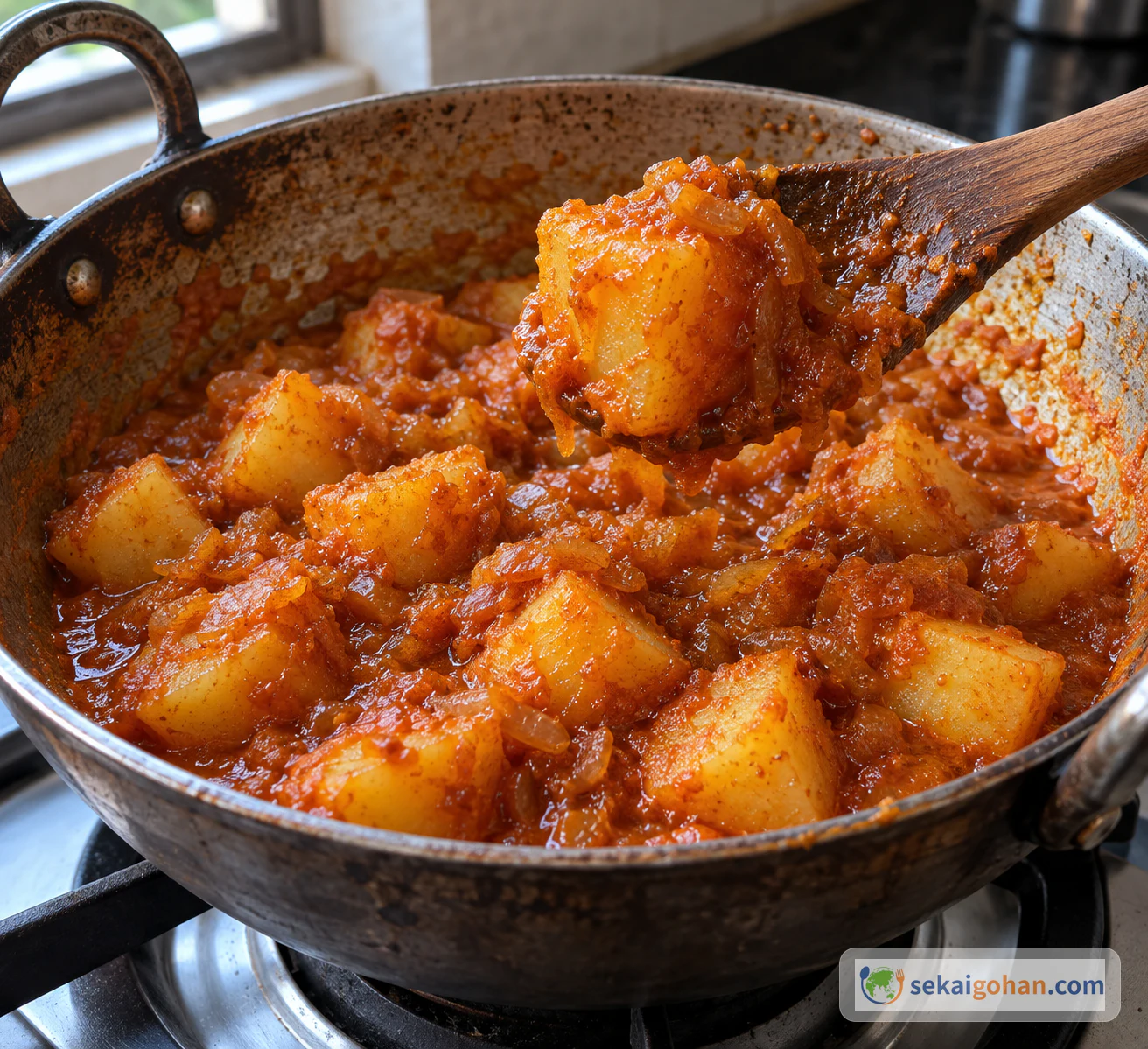
Potato cubes that still hold their shape, coated in a thick orange gravy where the soft sweetness of onion, the sourness of tamarind, the heat of red chili and the aroma of coconut oil meet.
Picture a plate of plain white rice and a bowl of dal, and next to them a small heap of potato cubes glossed in a red-orange gravy that smells sharply of tamarind. That is how batata saung is described on the tables it comes from. The recipe followed here, from The Culinary Konnoisseur's "Tangy Konkani Batata Saung," suggests eating it with Dali Toye (a dal) and rice. A cook writing on Belly On My Mind also pairs it with white rice and dal.
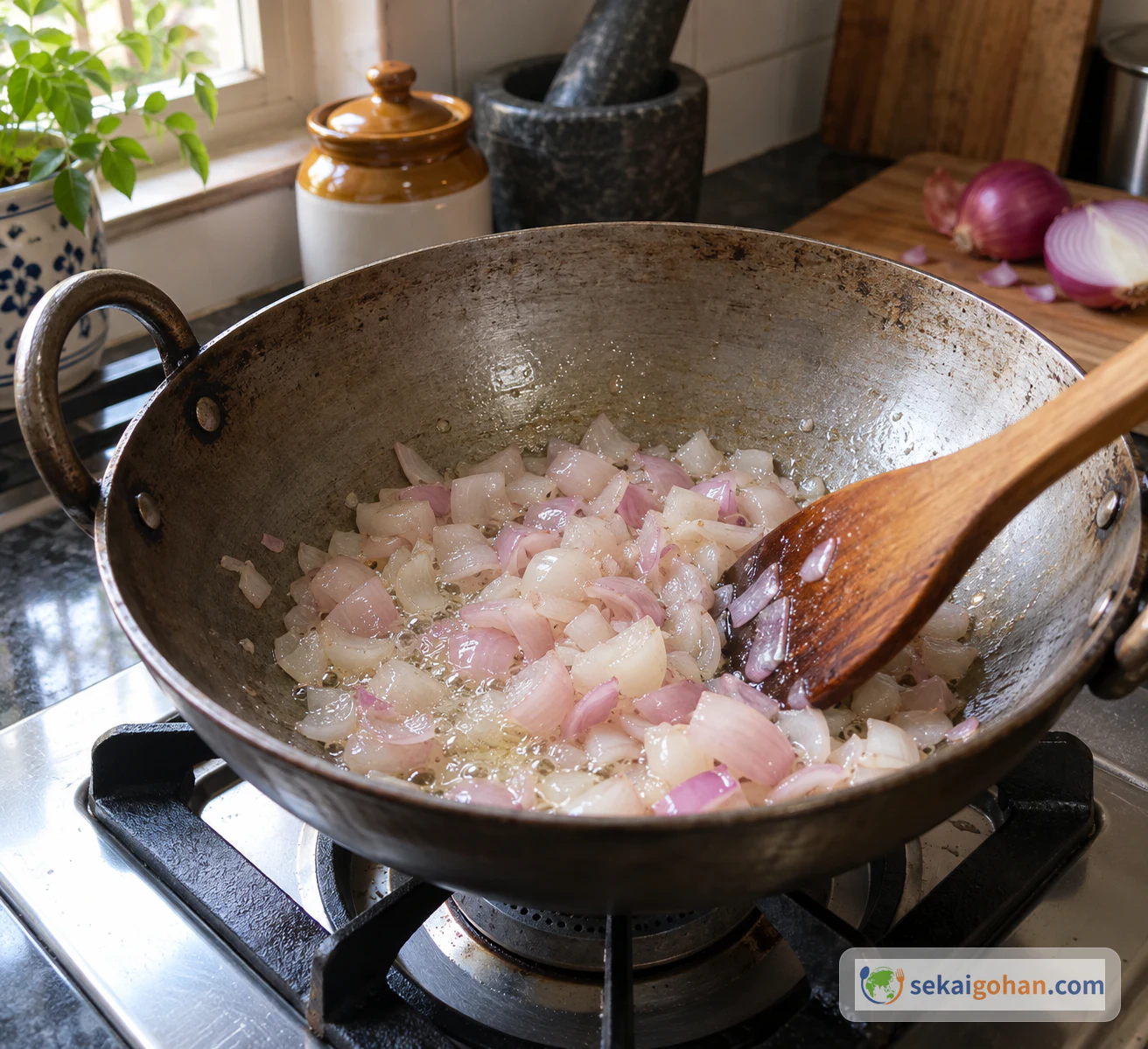
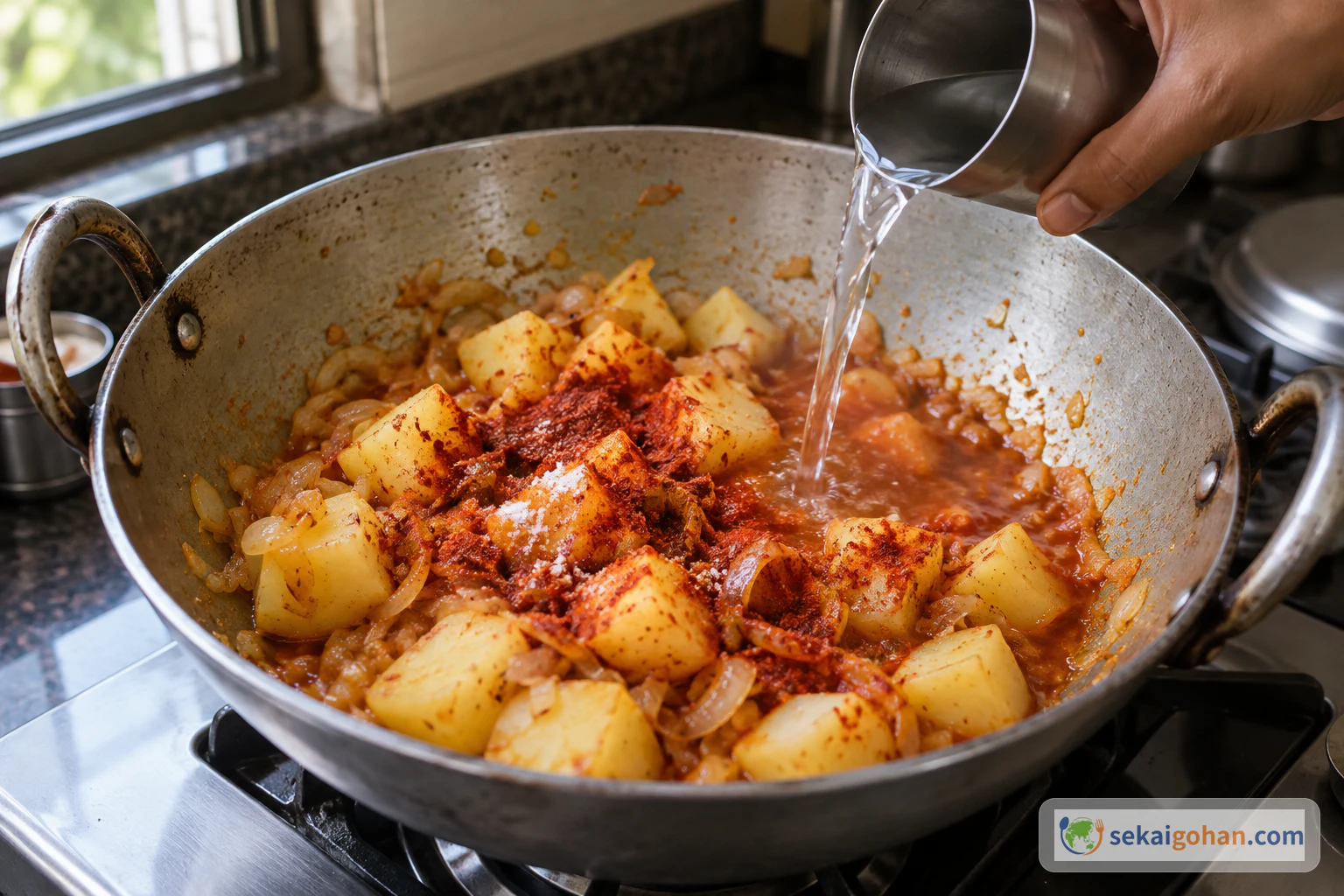
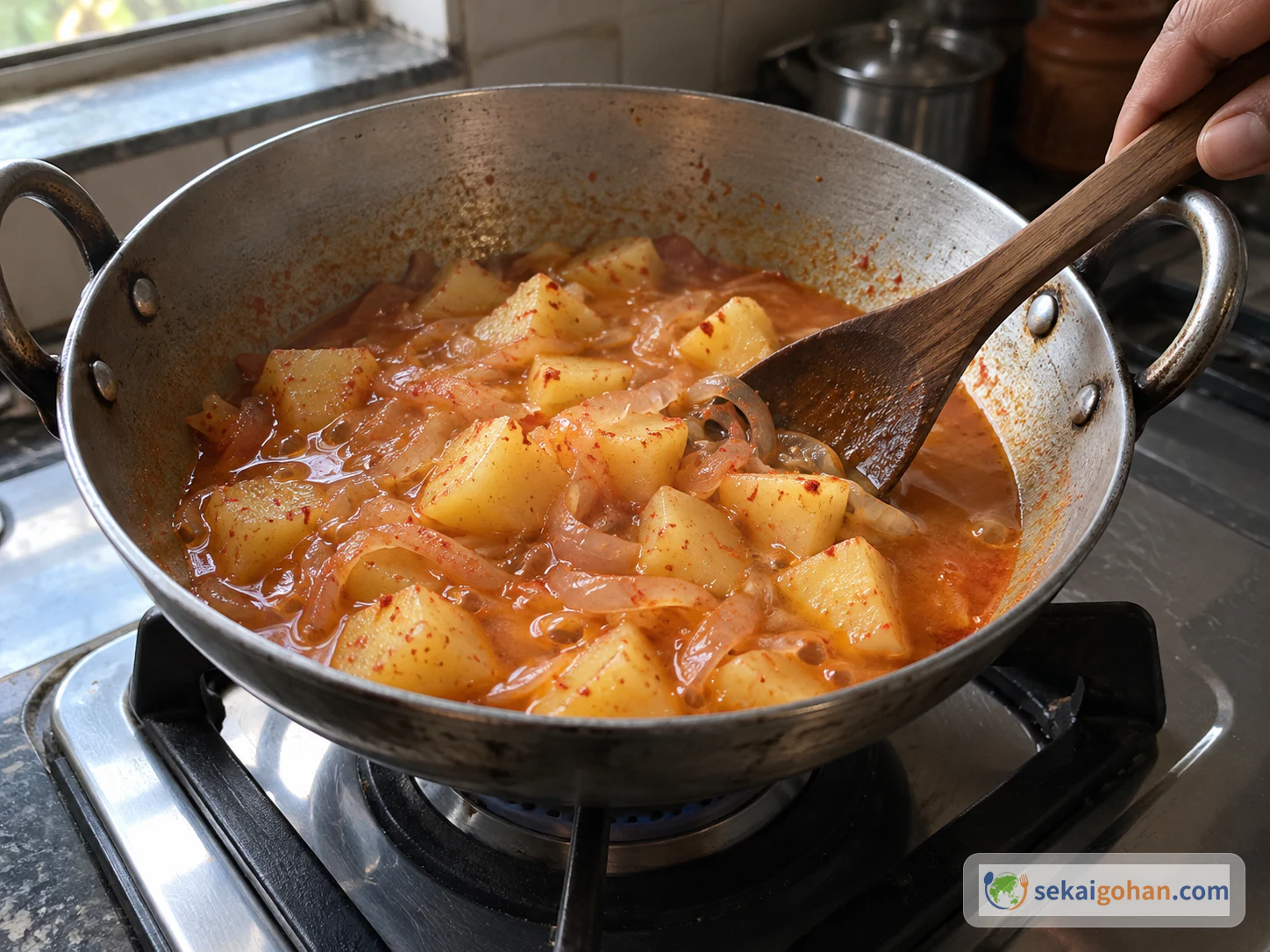
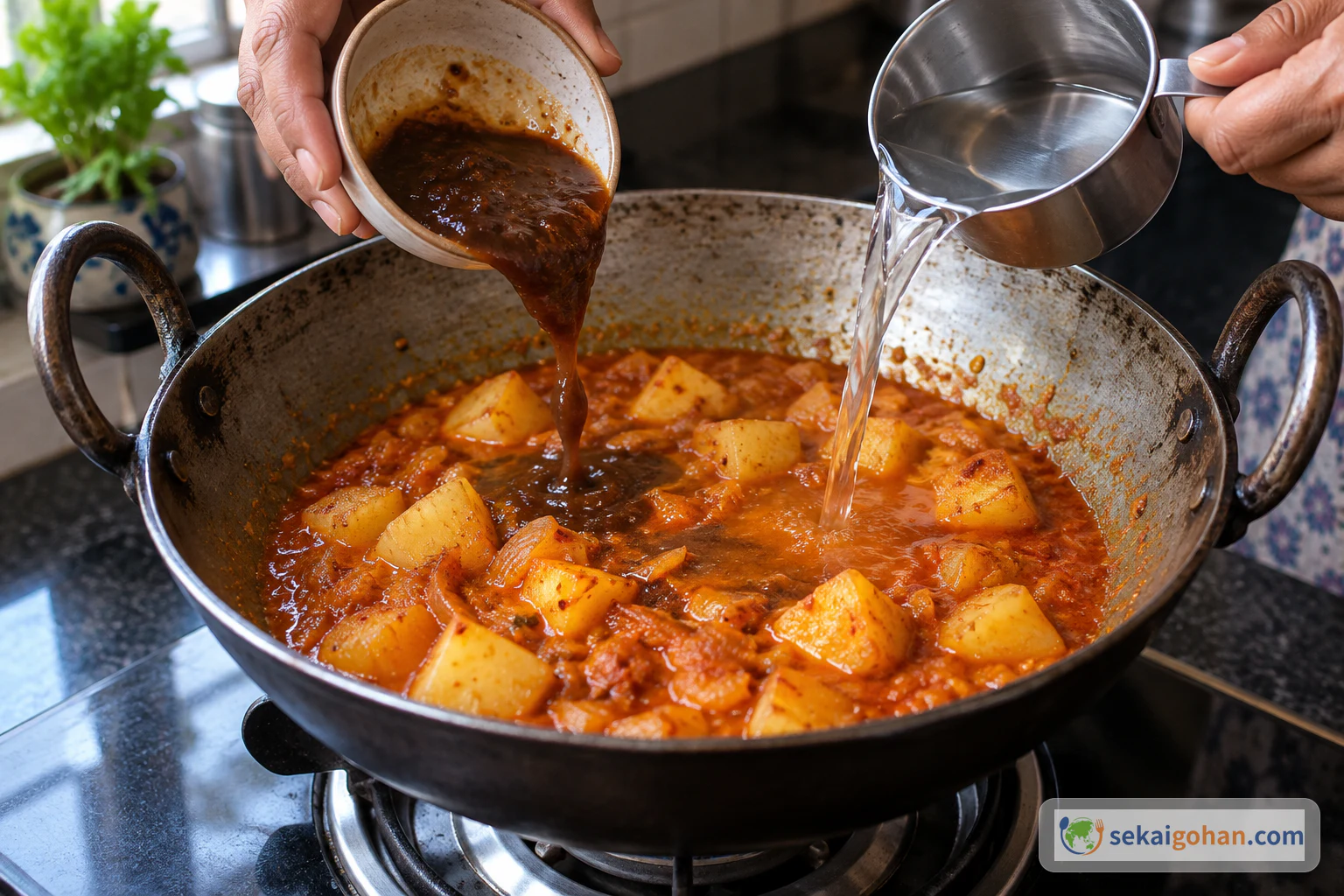
The dish itself is simple: potatoes boiled until just firm, onions fried in coconut oil until translucent, then everything simmered with red chili powder, salt, tamarind and water until the gravy turns thick and clings to the potatoes. There are no whole spices to temper and no long list of ingredients. What matters is the balance of sweet, sour and hot, and keeping the potatoes whole.
The dish appears as both Batata Saung and Batata Song. The Belly On My Mind writer explains that "saung" is pronounced "song." Where the name comes from is not established in the sources used here, so this article does not guess.
Where Batata Saung Is Told From: Konkani Home Cooking on India's Southwest Coast
Batata saung belongs to the Konkani cooking associated with the coastal Canara region of southwestern India. It is not presented here as a dish for all of India, or as one fixed recipe shared by every Konkani household. For more dishes from across the country, see our India country page.
The Belly On My Mind writer introduces themself as coming from a Chitrapur Saraswat Brahmin (Bhanap) background and describes batata saung as a home dish from that community, built around boiled potatoes, tamarind and red chili. This is one person's account of their own family and community, and it is offered here as that, not as a definition for every kitchen.
A 2017 Curly Tales feature on Simply Saraswat, a restaurant in Borivali, Mumbai, gives a glimpse of the dish outside the home. The owner was presenting the food of Chitrapur Saraswat, Bhanap and Amchi tables, and the article describes Batata Song as a mildly spiced gravy on the restaurant's Saraswat thali. That is one restaurant's menu at one point in time; it says nothing about the restaurant today or about eating habits across the region.
Despite the shared word "batata," this is also a different dish from Lebanon's batata harra. They have potatoes in common, and not much else.
The recipe below follows the 4-serving version from The Culinary Konnoisseur, chosen because its amounts are the most complete. This recipe has not been kitchen-tested by Sekai Gohan. Other versions, such as one with cumin and a garlic-heavy dish called batata losne saung, are described under the variations section rather than mixed into the recipe.
Ingredients for 4: Potatoes, Onions, Tamarind and Coconut Oil
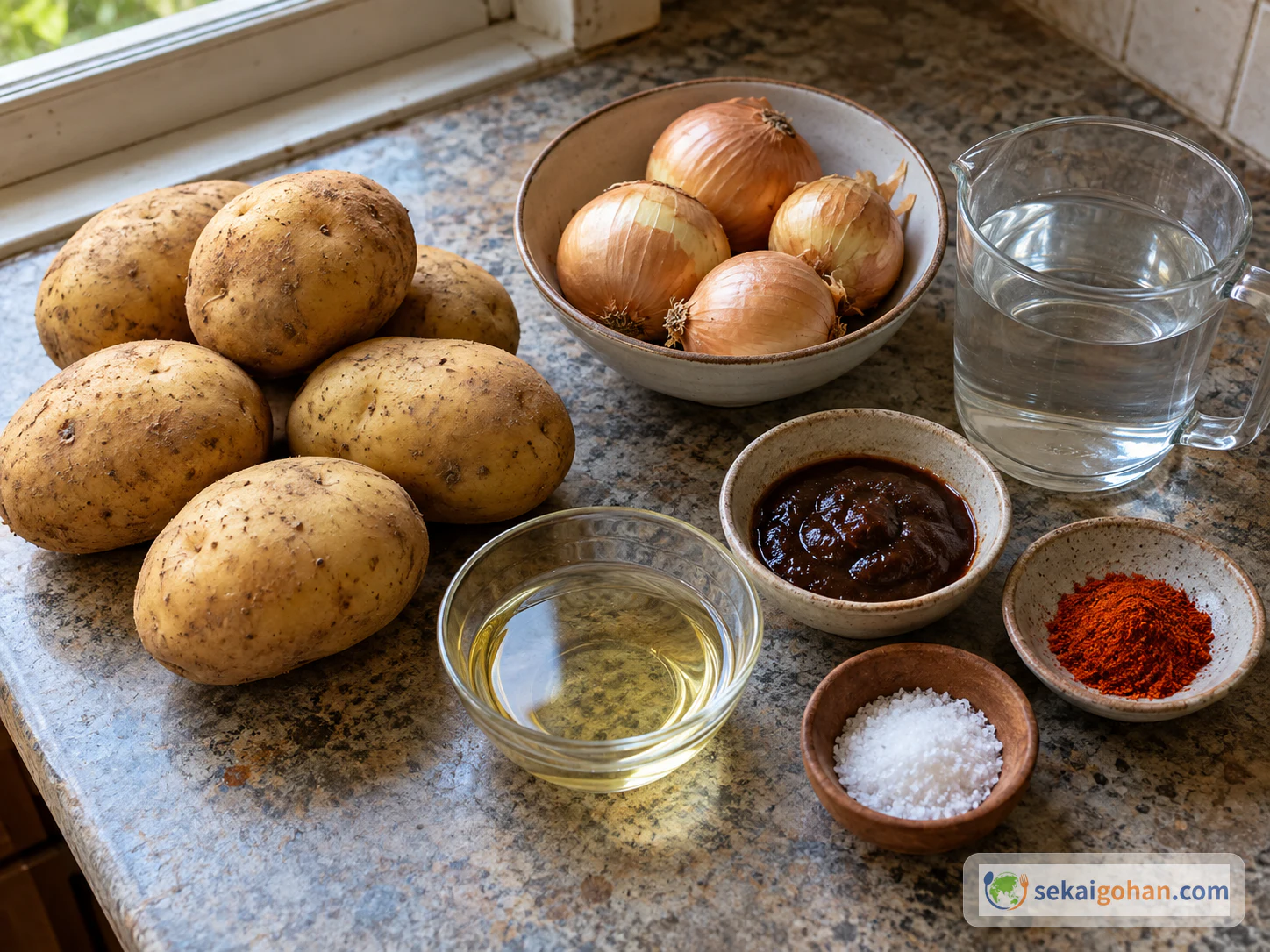
This dish contains coconut (coconut oil). If coconut is a concern, use another cooking oil. Check the label of your tamarind paste and chili powder for any allergen or shared-facility statements.
Choosing and Substituting
Potatoes and onions. Ordinary supermarket potatoes and onions are fine; no particular variety is needed. Weigh them if you can, since potatoes and onions vary a lot in size. Very fresh, juicy onions will add more water to the pot.
Tamarind. Tamarind paste is the easier route because you can measure it. Alternatively, use the liquid extracted from 1 lemon-sized ball of tamarind. The two are not the same strength, so taste as you add rather than treating them as interchangeable.
Red chili powder. Chili powders range widely in heat. If you don't know how hot yours is, start with a little less than 1 tsp and add more once you've tasted the gravy.
Oil. Coconut oil gives the dish its characteristic aroma. A neutral cooking oil works, but the aroma will be milder.
Shopping. Everything except tamarind paste is in an ordinary supermarket. Look for tamarind paste or tamarind concentrate at Asian or Indian grocers or in the international aisle.
Equipment
- Saucepan for boiling the potatoes
- Knife and cutting board
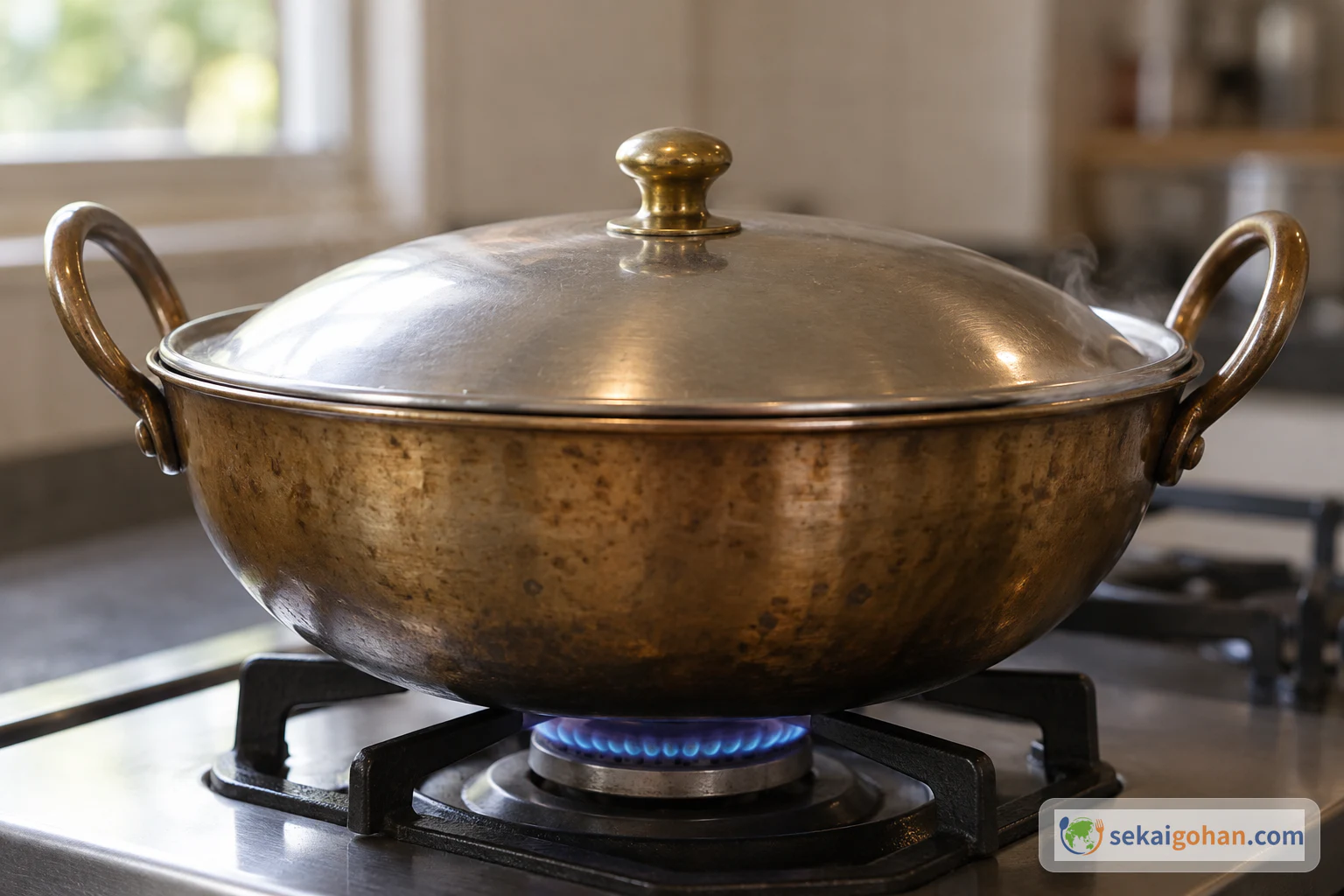
- Heavy-bottomed pot or kadai with a lid
- Wooden spoon or spatula
- Measuring cup and spoons
Method: Keeping the Potatoes Whole While the Tamarind Soaks In
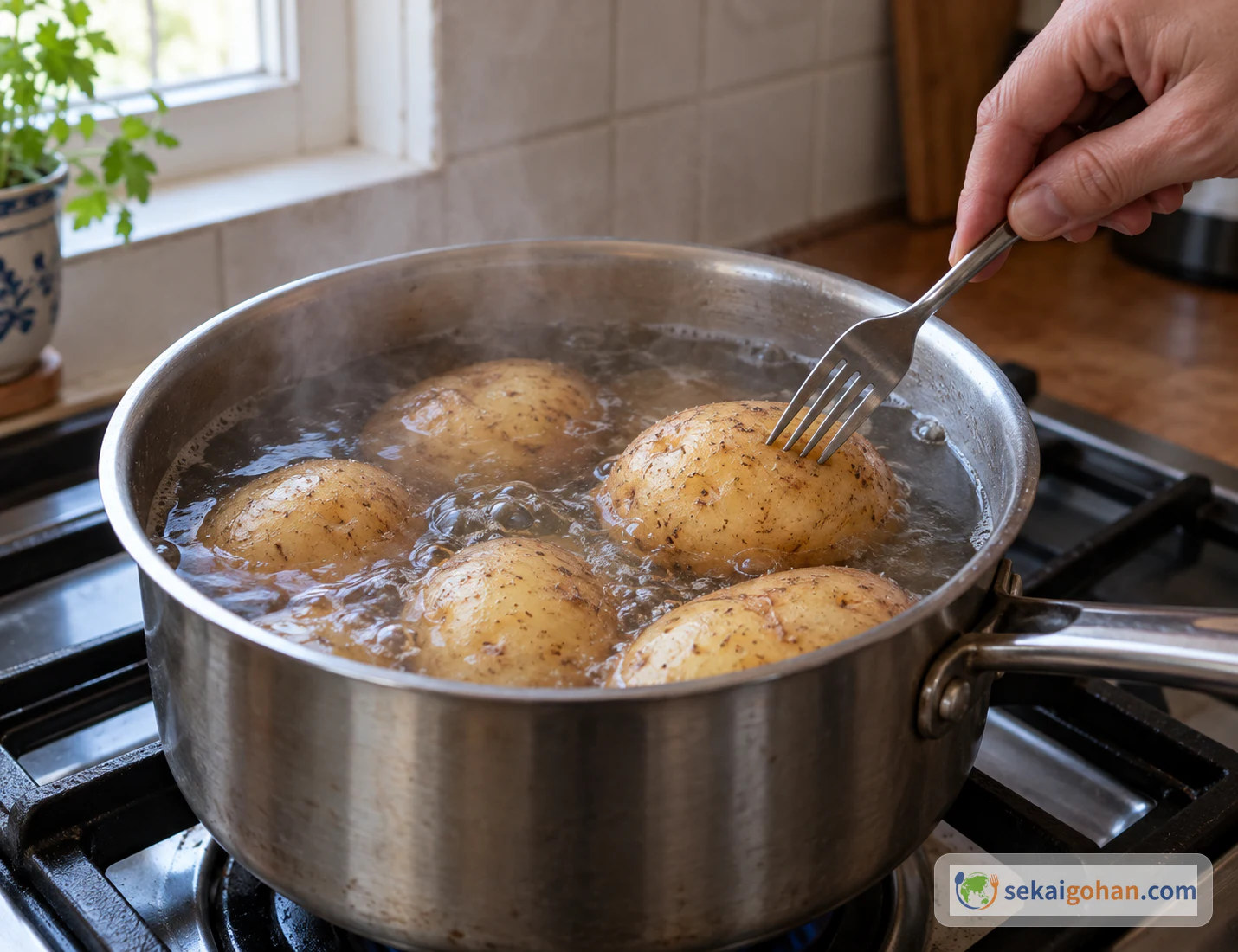
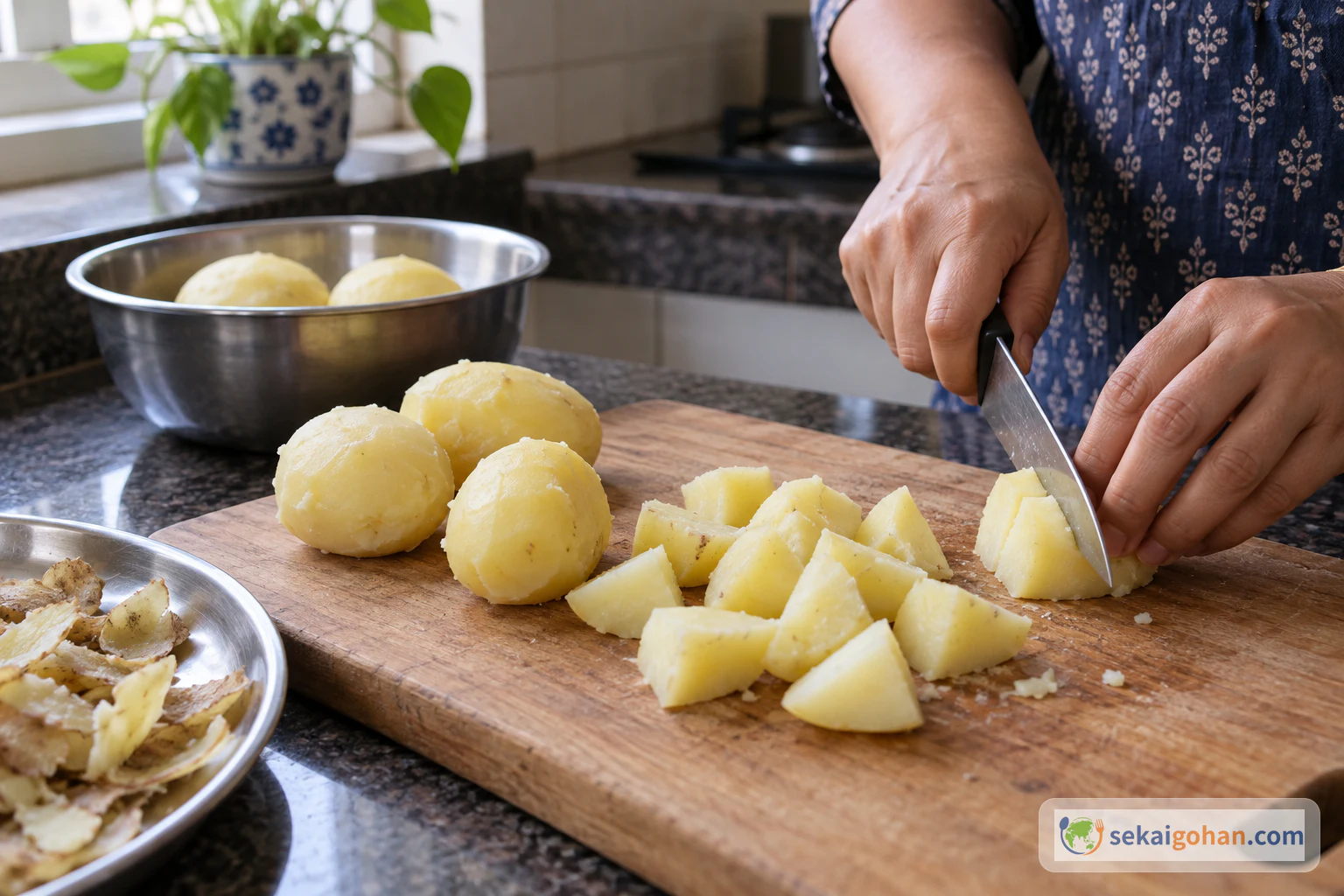
Stop boiling the potatoes while they are still firm, and stir gently once the tamarind is in. Both protect the shape of the cubes.
Fixing Common Problems
| Problem | Likely cause | What to do |
|---|---|---|
| The potatoes break apart | Boiled too soft at the start, or stirred hard | Next time, stop boiling while the potatoes are still firm. Once they're cubed, turn them gently from the bottom instead of stirring |
| Too hot | A hotter chili powder than expected | Start with less chili next time and add more after tasting. Serving with plain rice and dal also softens the heat on the plate |
| Too sour | Strong tamarind, especially from a block | Make the dish with the base amounts first. The optional teaspoon of jaggery adds sweetness alongside the sourness, though it won't remove it |
| Watery gravy or sticking | Heat too high or too low, or a very wide or narrow pot | Keep the covered simmer on low and check and stir now and then. How quickly the gravy thickens depends on your heat and pot |
Variations and Related Versions
Sourness. Tamarind paste and liquid squeezed from a lemon-sized ball of tamarind are given as alternatives in the recipe followed here. No extraction volume is specified, and the two differ in strength, so this article does not convert one into the other.
Gravy thickness. The recipe keeps 2 cups of water in total. The cup size is not defined, so it is left as written rather than converted. How thick the gravy becomes also depends on your heat and the width of your pot; watch the gravy rather than changing the water amount.
Heat. No particular chili variety is named in the recipe. Byadgi or Kashmiri chili may be used in other kitchens, but they should not be read as the required choice for this version.
Oil. Coconut oil sets the aroma, and the recipe allows another cooking oil. Switching makes the dish smell milder.
Sweet-sour finish. The teaspoon of jaggery is an optional addition at the end, separate from the base recipe.
A version with cumin. The Belly On My Mind recipe uses cumin along with red chili powder and tamarind extract, with different proportions. Its cumin quantity is incomplete on the page, so it is mentioned here only for comparison.
Batata losne saung. Cooking With Shobana describes batata losne saung as a separate dish from ordinary batata saung. "Losne" refers to garlic, and that version uses plenty of it, along with small potatoes, roasted and soaked Byadgi chilies and tamarind. The writer notes that Byadgi chilies look very red but are fairly mild. The recipe above contains no garlic.
Serving: Beside Rice and Dal to Catch the Gravy
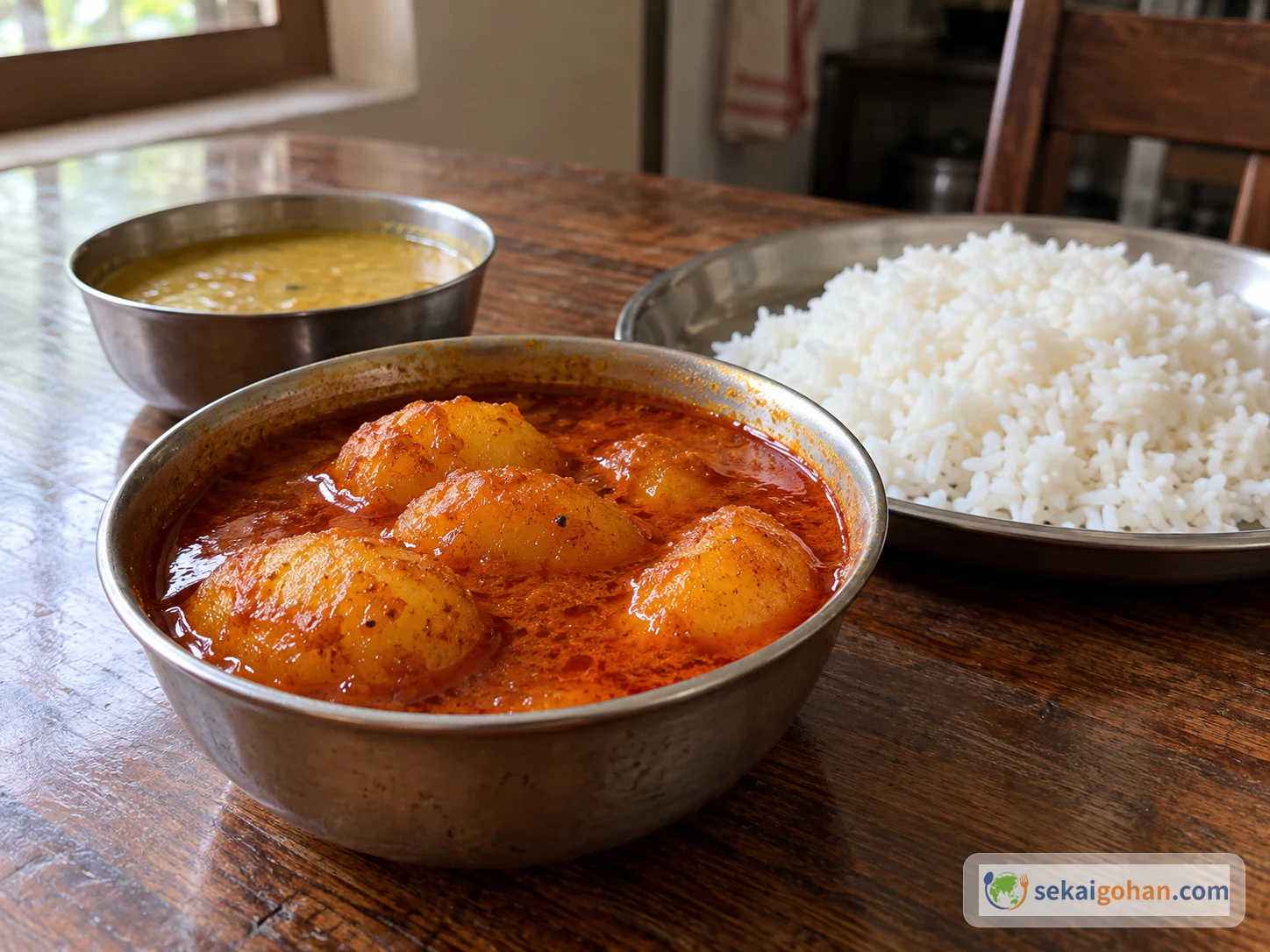
Both The Culinary Konnoisseur and Belly On My Mind serve batata saung with white rice and dal; The Culinary Konnoisseur names Dali Toye as its partner and also mentions ghee as an accompaniment. The plain rice soaks up the gravy, and the dal sits between the bites of sour, spicy potato.
If you're cooking it at home, put it next to steamed rice and any simple dal you already make. A little ghee at the table is optional and is not part of the recipe.
Frequently Asked Questions
Is Batata Song a different dish from batata saung?
They are treated as two spellings of the same dish. The Belly On My Mind writer explains that "saung" is pronounced "song," and the 2017 Curly Tales restaurant feature uses the spelling Batata Song.
Is batata saung very spicy?
It uses 1 tsp of red chili powder for 4 servings, but the chili variety is not specified, so the heat depends on your powder. Curly Tales described the restaurant version as mildly spiced. If you're unsure of your chili, start with less.
What if I can't find tamarind paste?
The Culinary Konnoisseur gives the liquid extracted from a lemon-sized ball of tamarind as the alternative. It does not give the amount of water for extraction, so add the liquid gradually and taste as you go.
How do I keep the potatoes from falling apart?
Boil them firm, not overcooked, before cubing, and turn them gently in the pot instead of stirring hard.
Should I add garlic?
The recipe here has none. A garlic-heavy version exists under its own name, batata losne saung, as described by Cooking With Shobana.
How long does it keep?
None of the sources used for this article give storage or reheating guidance, so no storage period is given here.
Sources
- The Culinary Konnoisseur, "Tangy Konkani Batata Saung." The 4-serving recipe used here: ingredients and amounts, firm-boiled potatoes, the two-part water addition, the covered 5–6 minute simmer, the optional jaggery, the alternative of another cooking oil, and serving with Dali Toye and rice. https://theculinarykonnoisseur.in/2020/11/18/tangy-konkani-batata-saung/
- Belly On My Mind, "Batata Saung | Potatoes in a chilli and tamarind curry." The writer's Chitrapur Saraswat Brahmin (Bhanap) background and description of the dish as a community home dish, the "song" pronunciation, serving with white rice and dal, and a version with cumin (used only for comparison). https://bellyonmymind.com/recipe/batata-saung-potatoes-in-a-chilli-and-tamarind-curry/
- Cooking With Shobana, "Batata Losne Saung." The garlic-heavy batata losne saung as a separate version, with small potatoes, Byadgi chilies and tamarind, and the writer's note on Byadgi chilies' color and mild heat. https://www.cookingwithshobana.com/2014/12/batata-losne-saung.html
- Curly Tales, "Simply Saraswat in Borivali Is Dedicated To Chitrapur Saraswat Cuisine." A 2017 feature on a Mumbai restaurant presenting Chitrapur Saraswat, Bhanap and Amchi food, describing Batata Song as a mildly spiced gravy on its Saraswat thali. https://curlytales.com/simply-saraswat-in-borivali-is-dedicated-to-chitrapur-saraswat-cuisine-we-like-it/