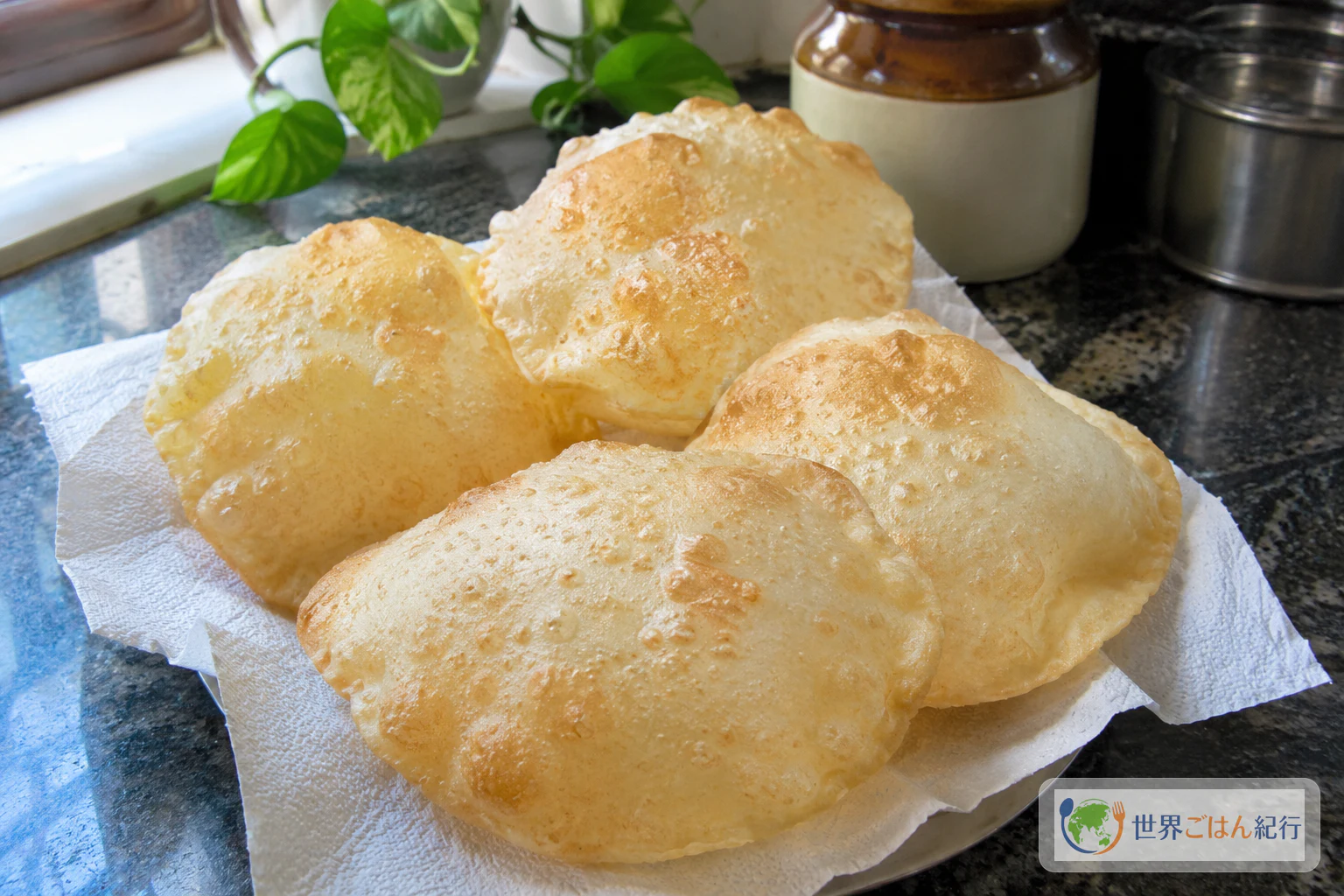
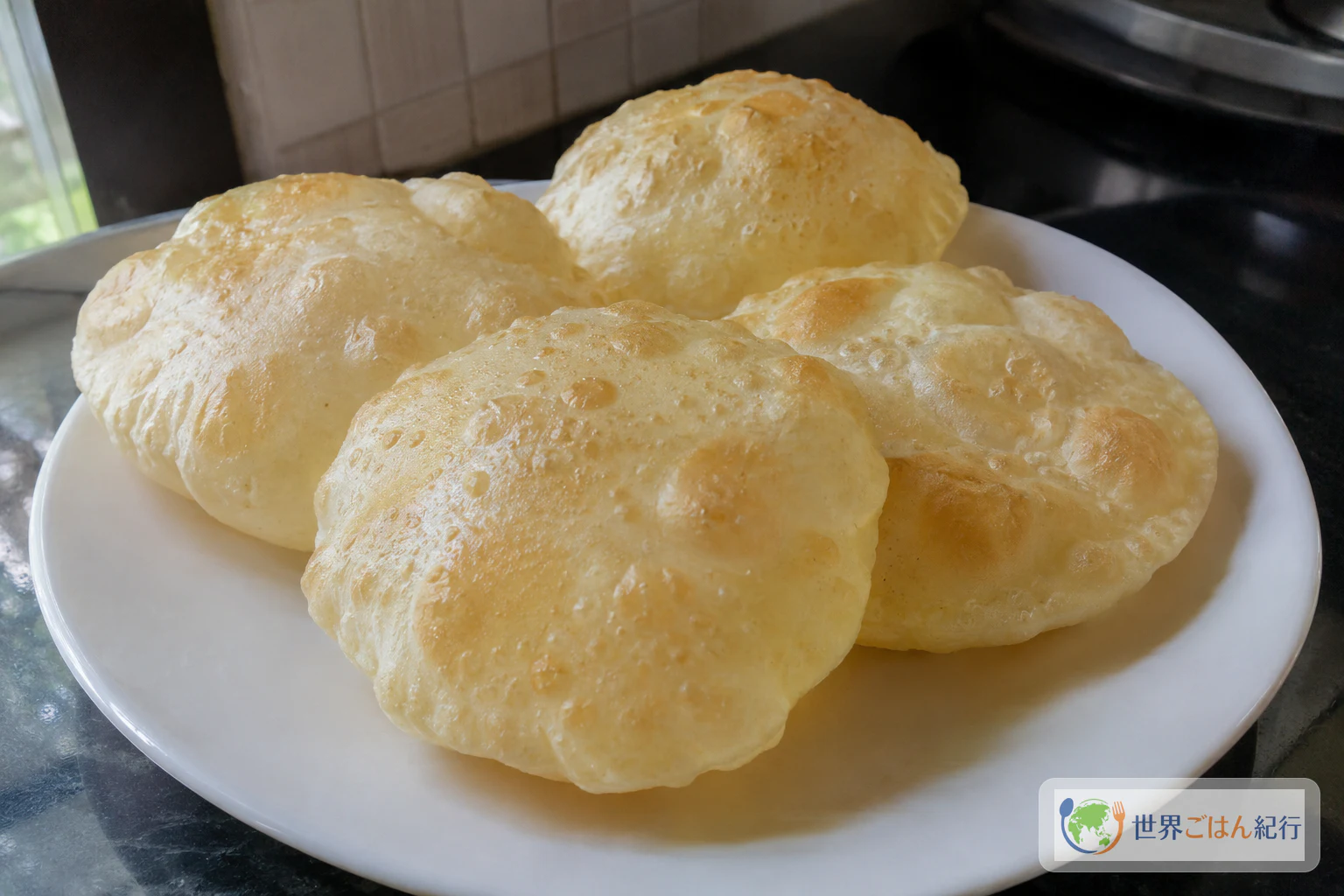
Luchi: A Thin Round of Maida That Puffs in the Oil
Make a soft, smooth dough, roll it evenly with oil instead of dusting flour, and stop frying at a cream color rather than a dark brown.
Sekai Gohan has not kitchen-tested this recipe as a whole.
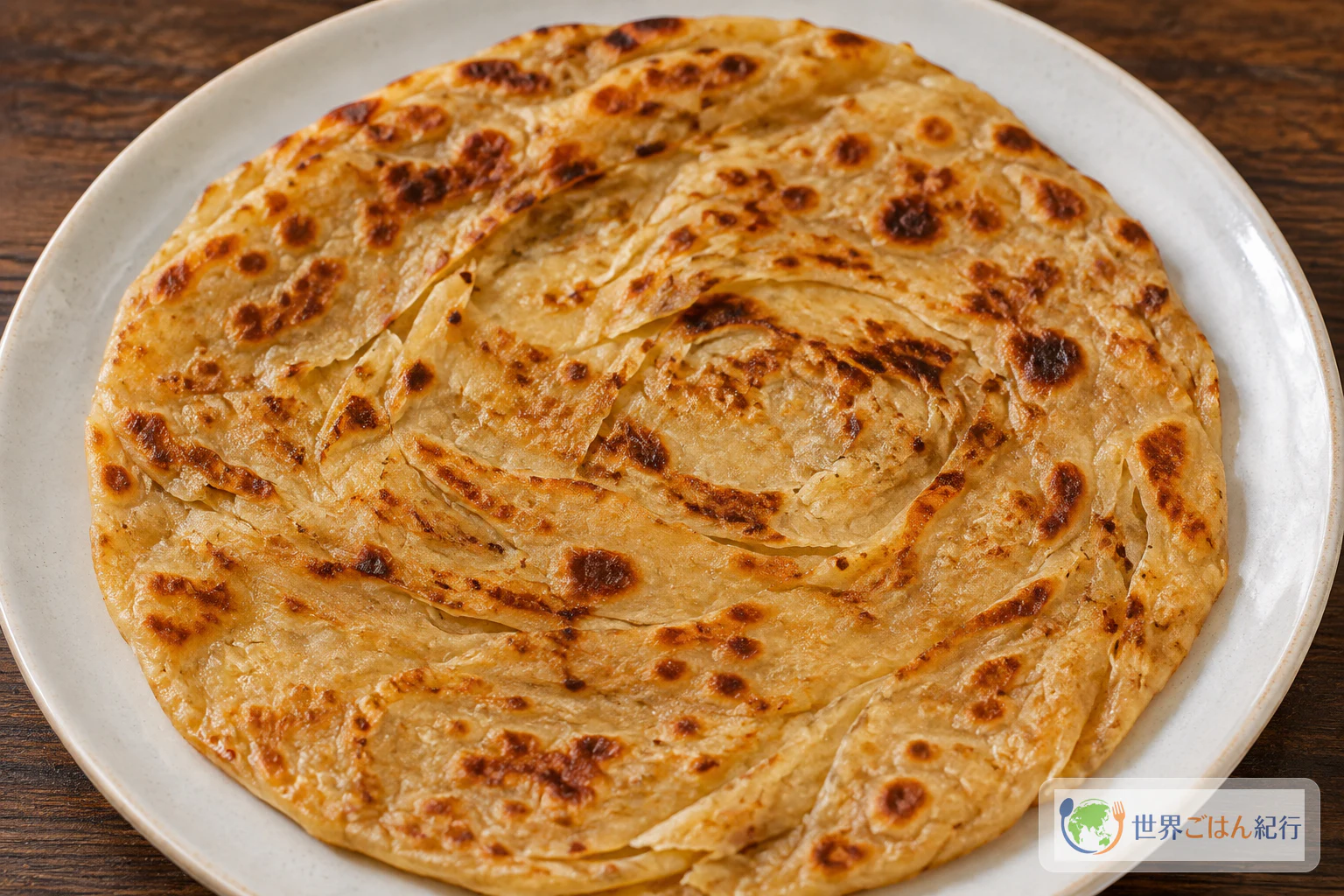
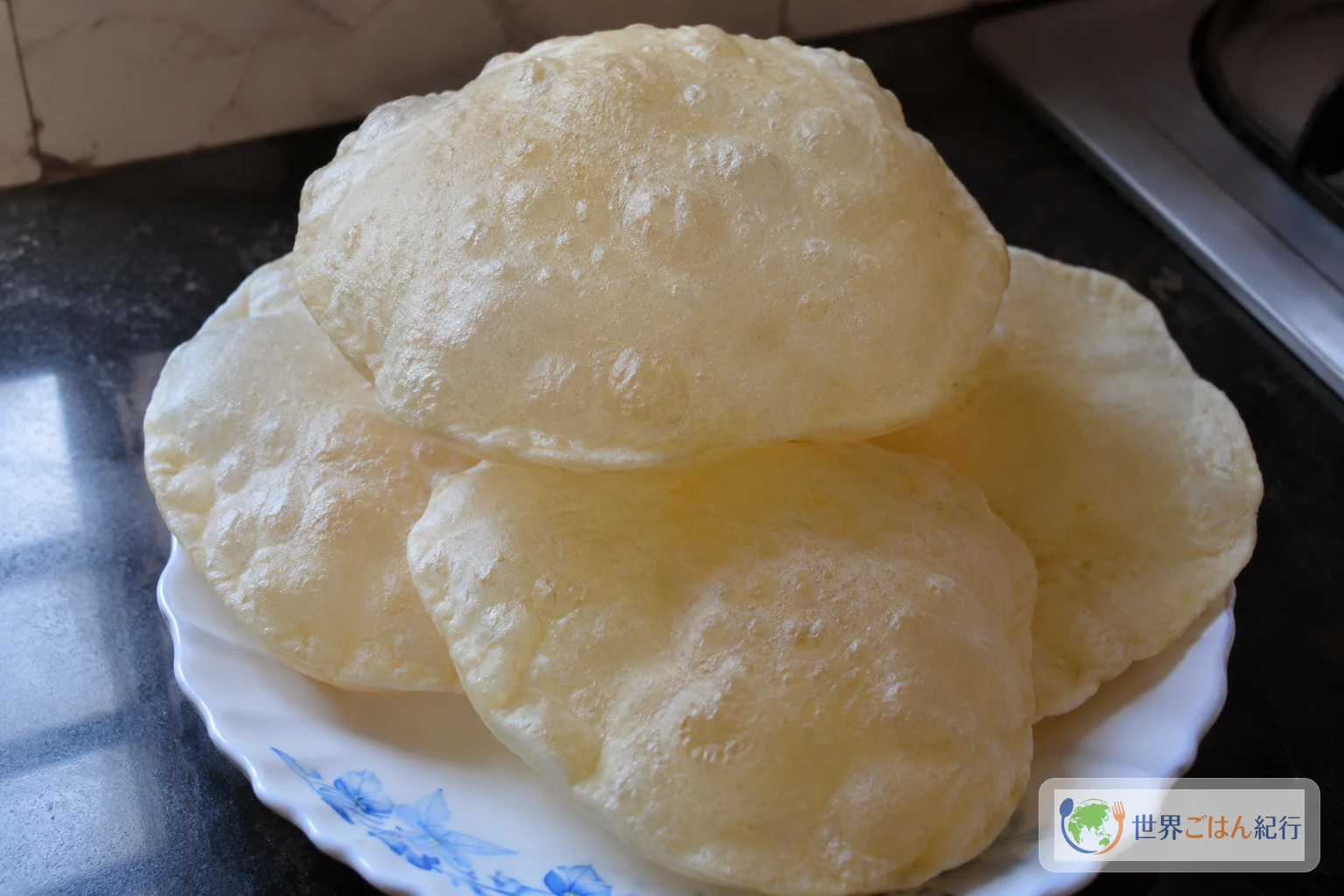
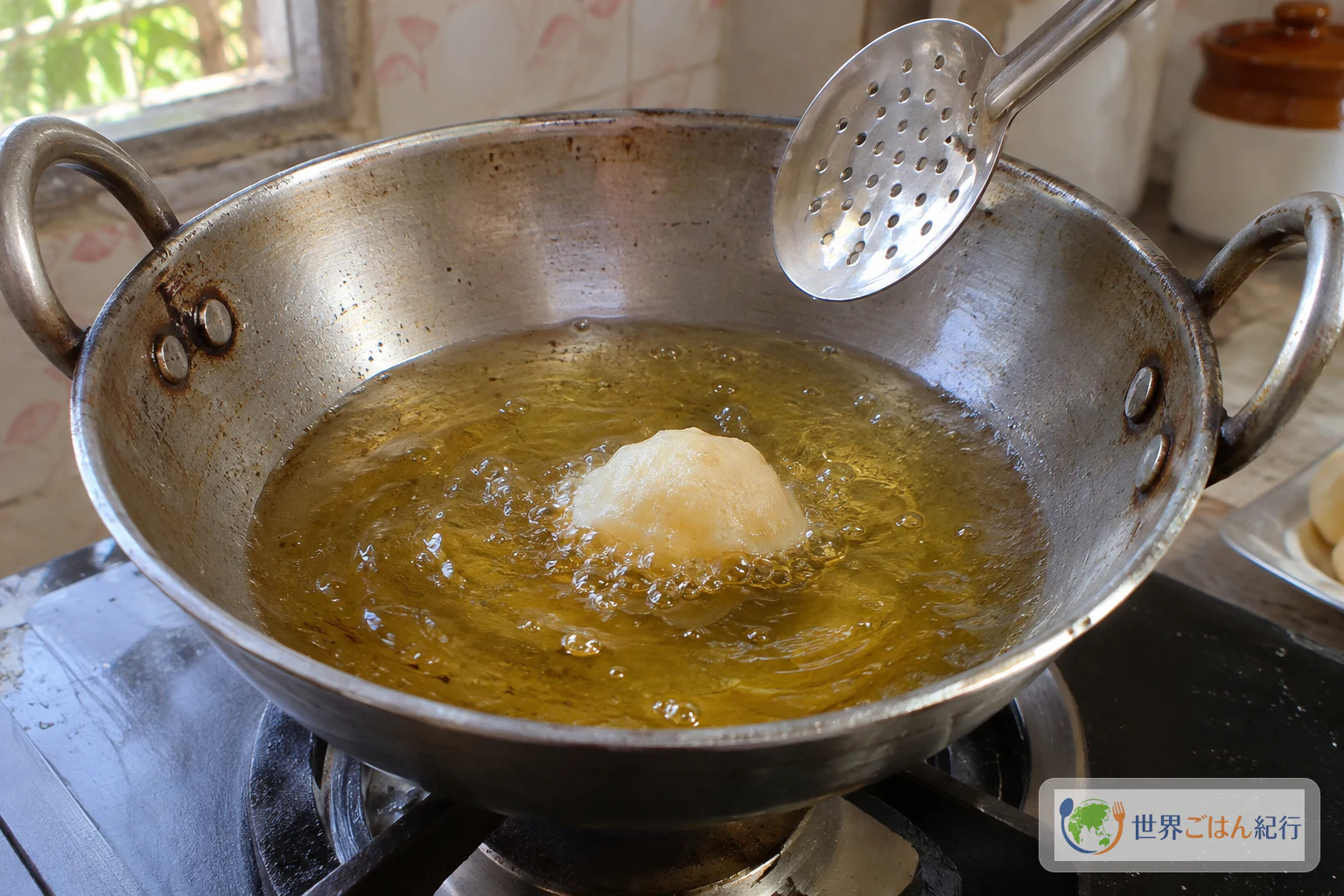
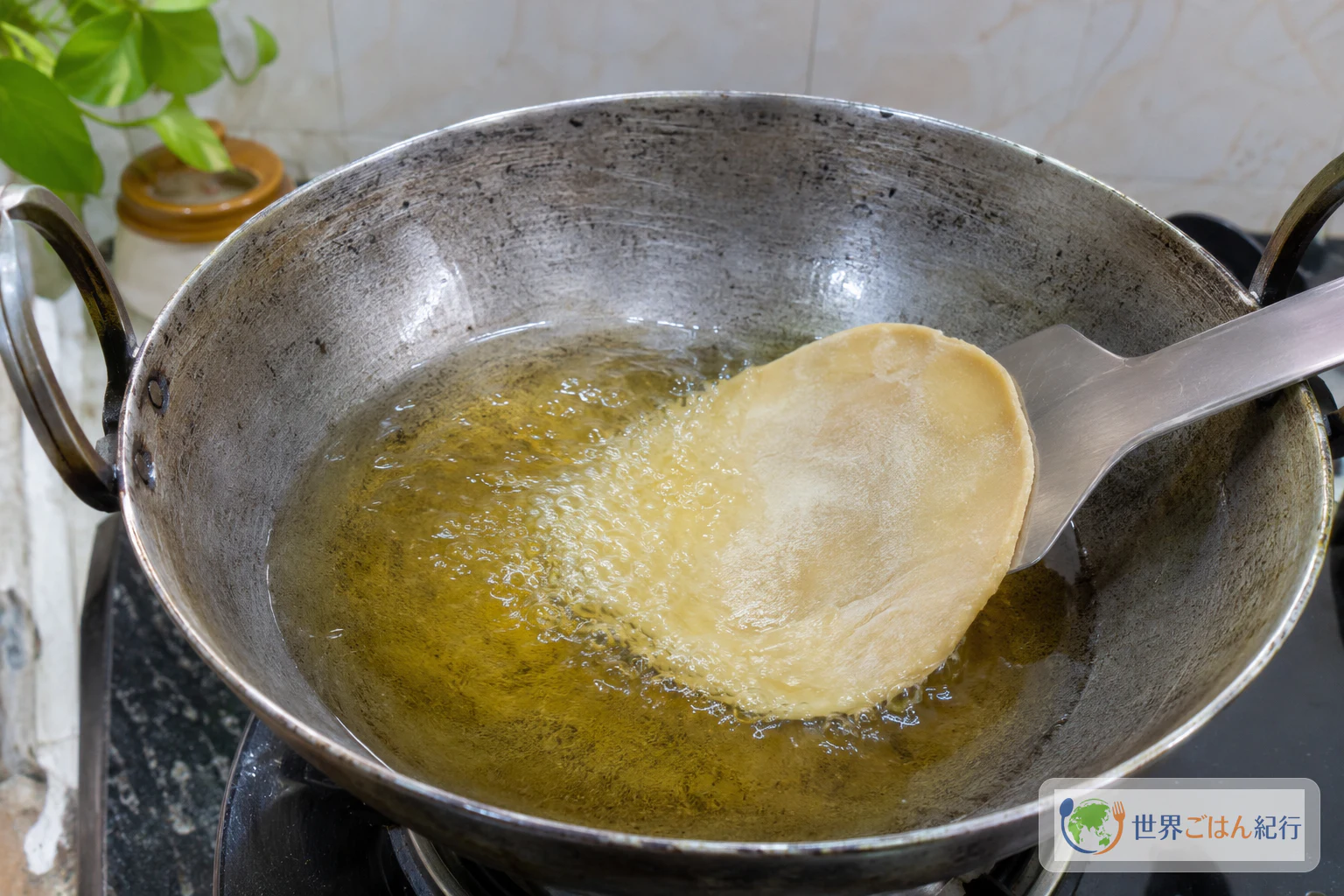
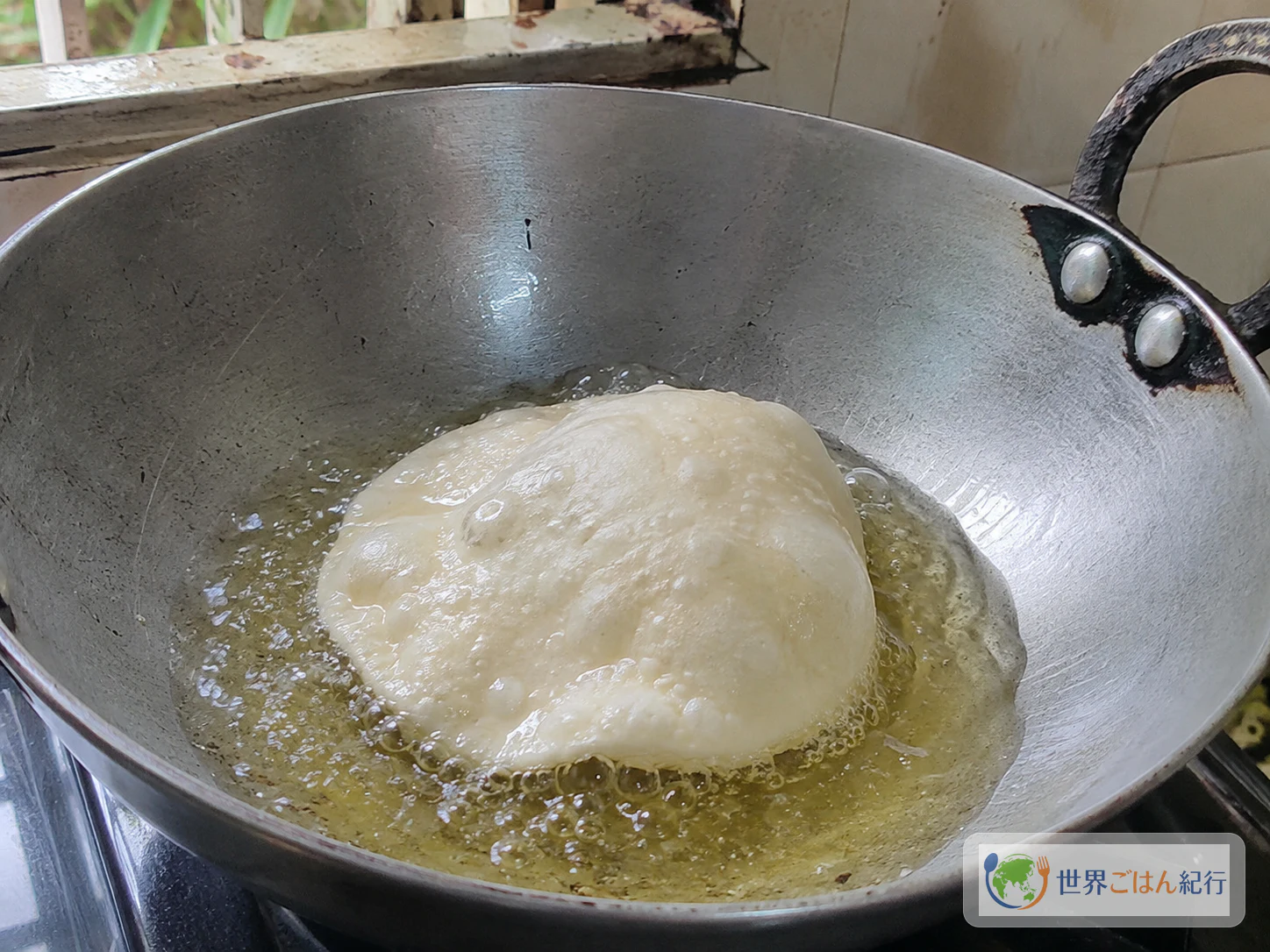
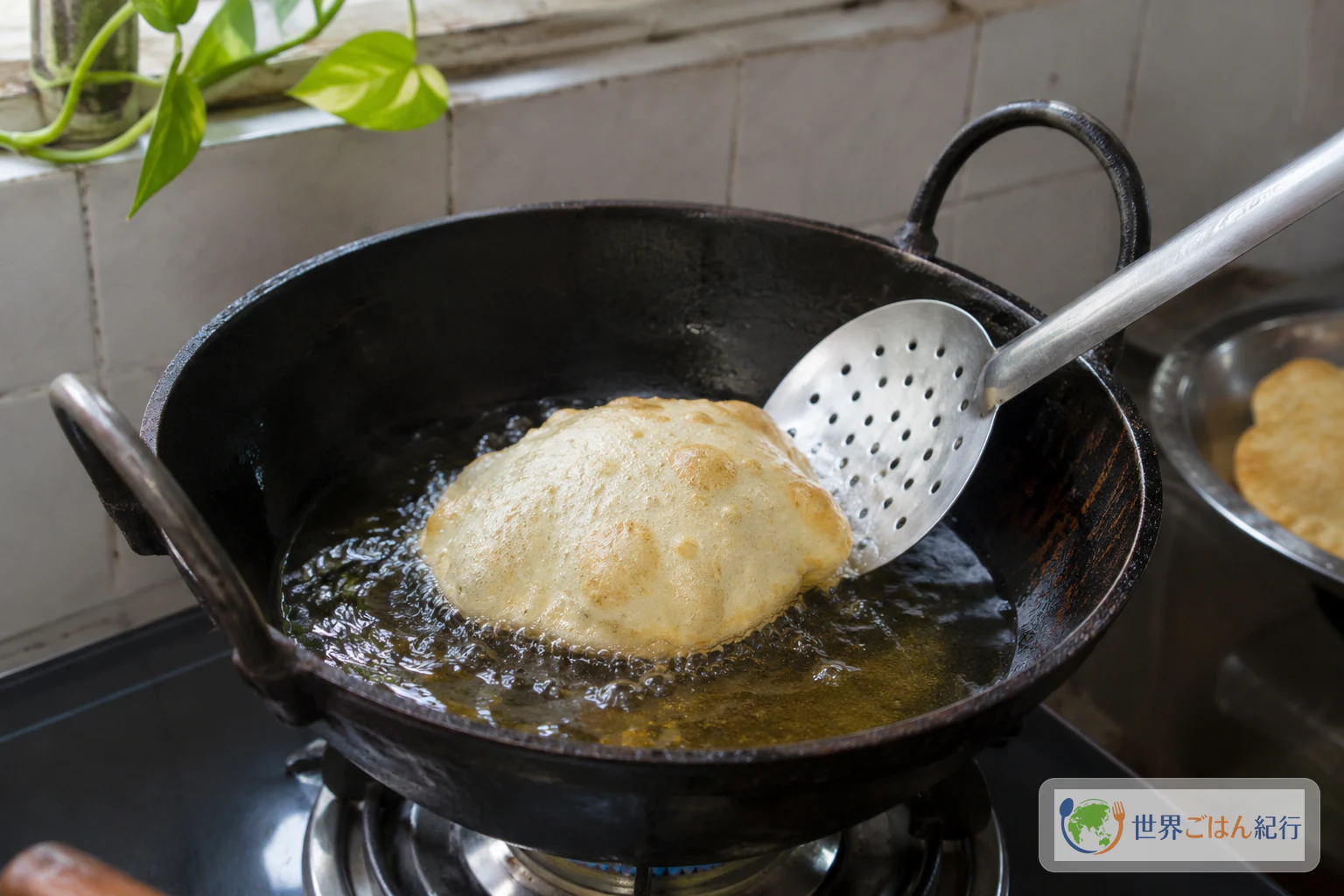
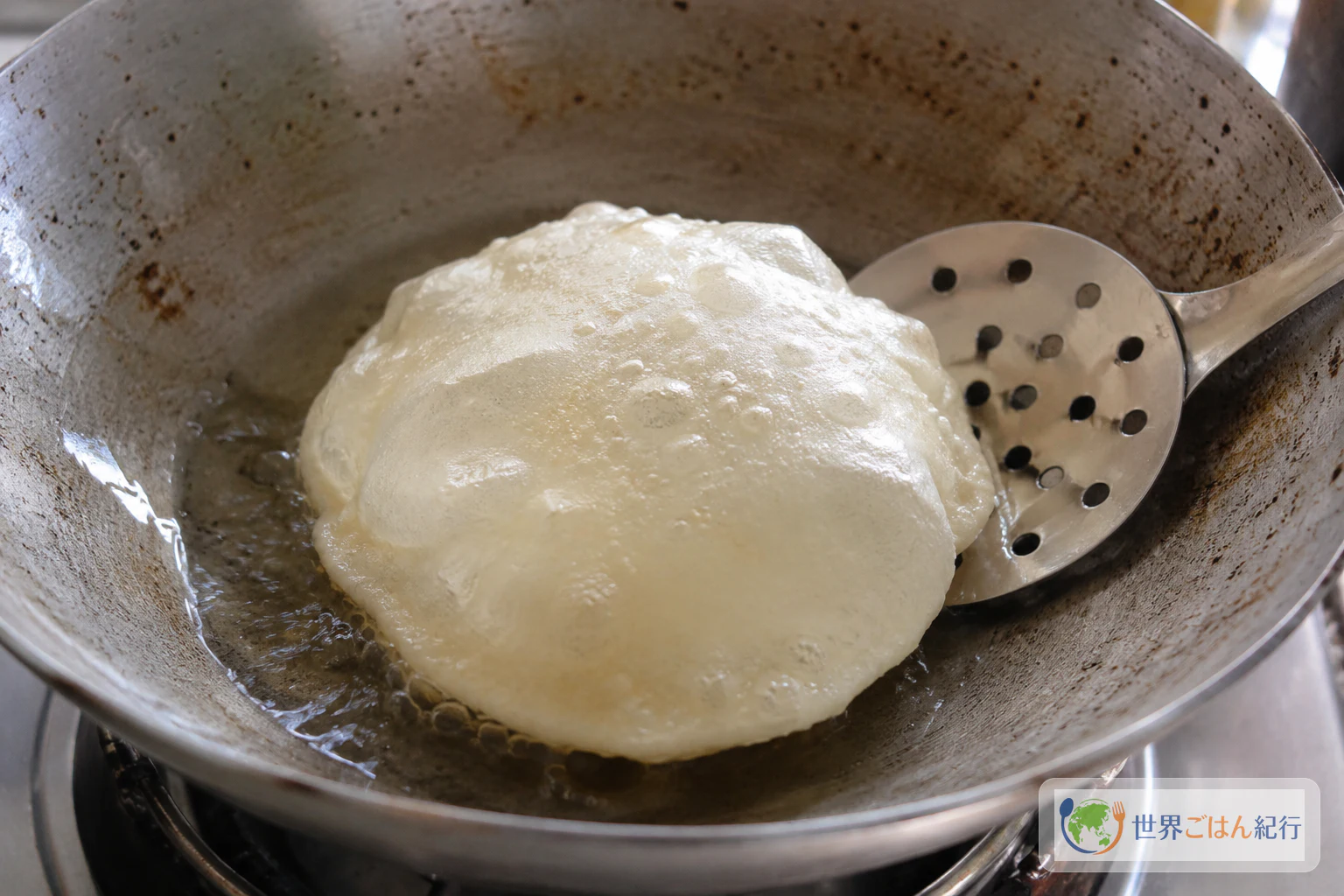
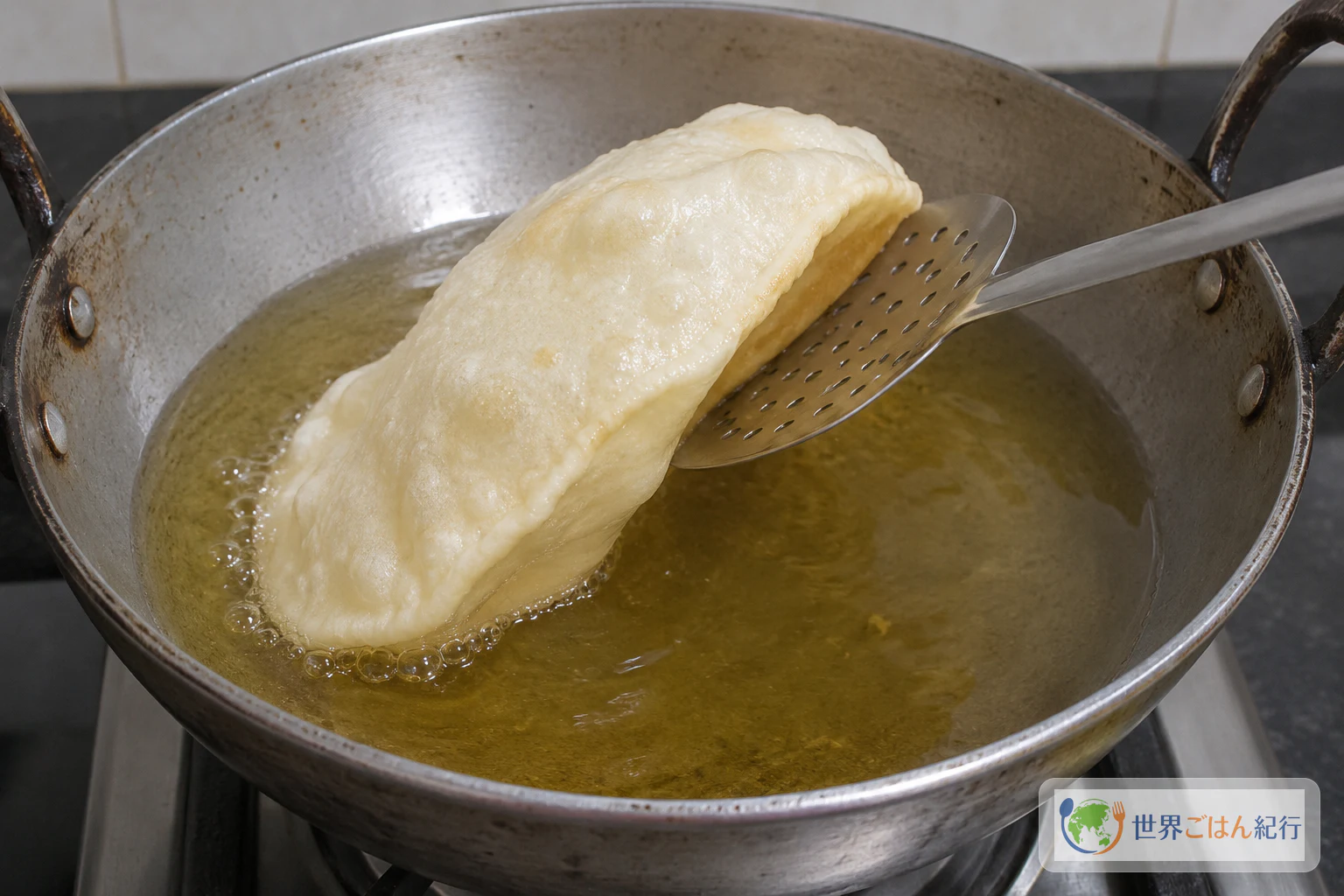
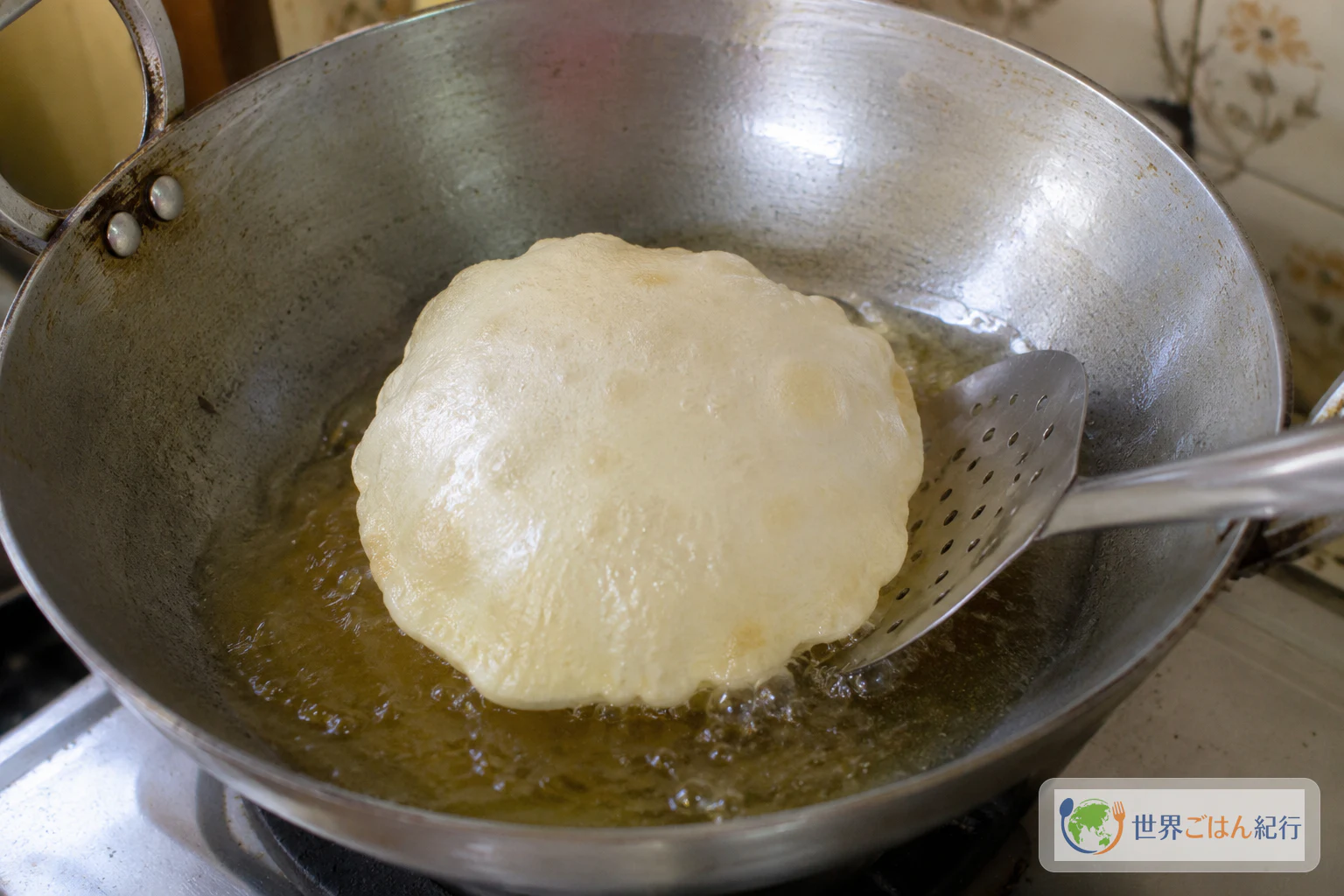
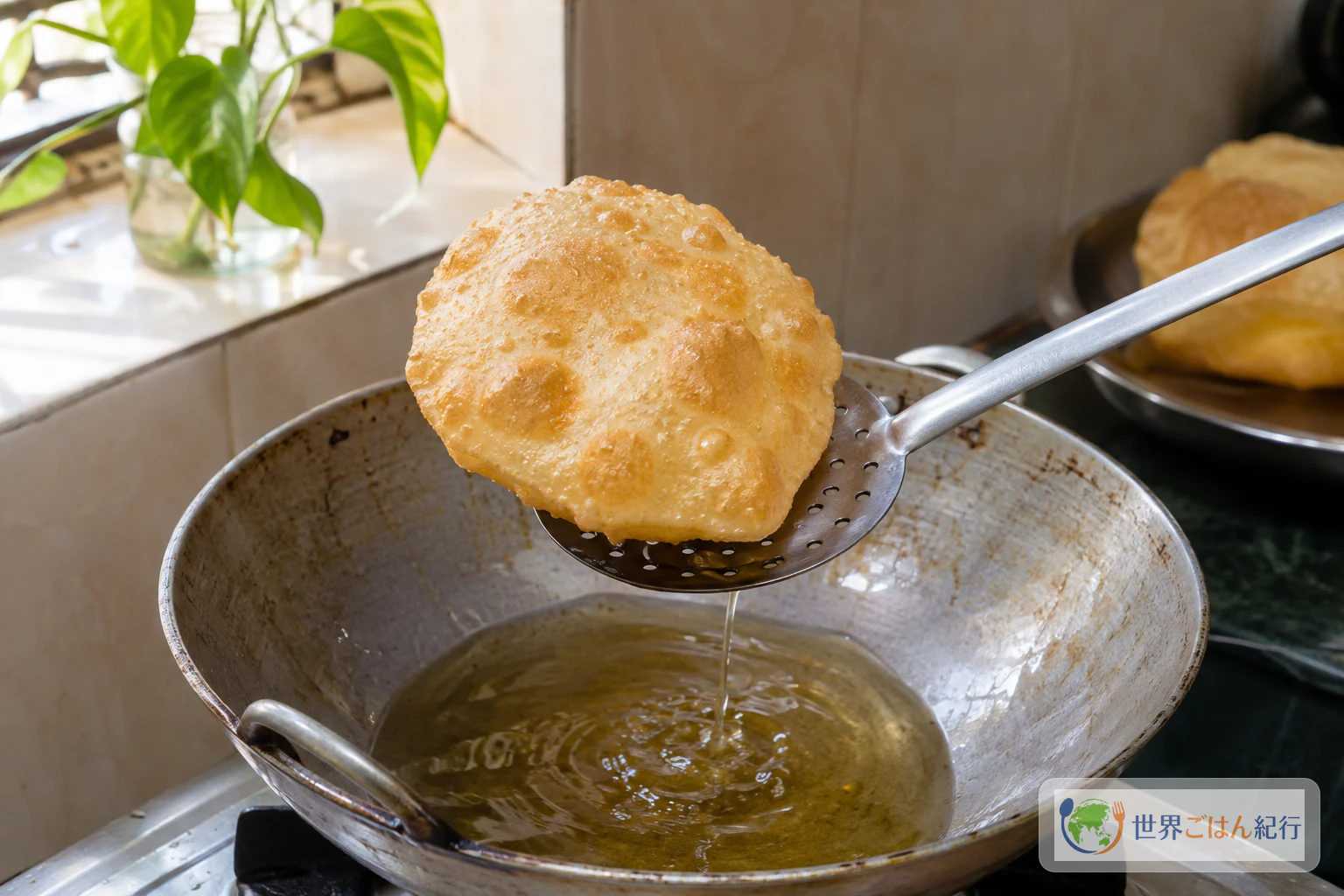
A flat, pale round of dough slides into the oil. Nudged with a slotted spoon, it starts to swell. It is turned when the first side looks creamy and the sizzling dies down. That is luchi, a thin, puffed fried bread made with refined wheat flour.
Dassana's Veg Recipes and Onmanorama both set Bengali luchi, made with maida, apart from poori made with atta. NDTV Food describes luchi as a yeast-free fried bread that puffs. No single formula speaks for every household, so this article follows one version: the plain maida and ghee dough from Dassana Amit's recipe, without any yeast.
Two editorial choices shape this version. Dassana rests the dough for 30 to 60 minutes, and this article uses 30 minutes. Dassana's card also lists oil or ghee for frying, and this article uses a neutral oil. The card does not define its cup, so the amounts below remain in cups and tablespoons with no gram or milliliter conversions.
Ingredients: Plain Maida and Ghee Dough
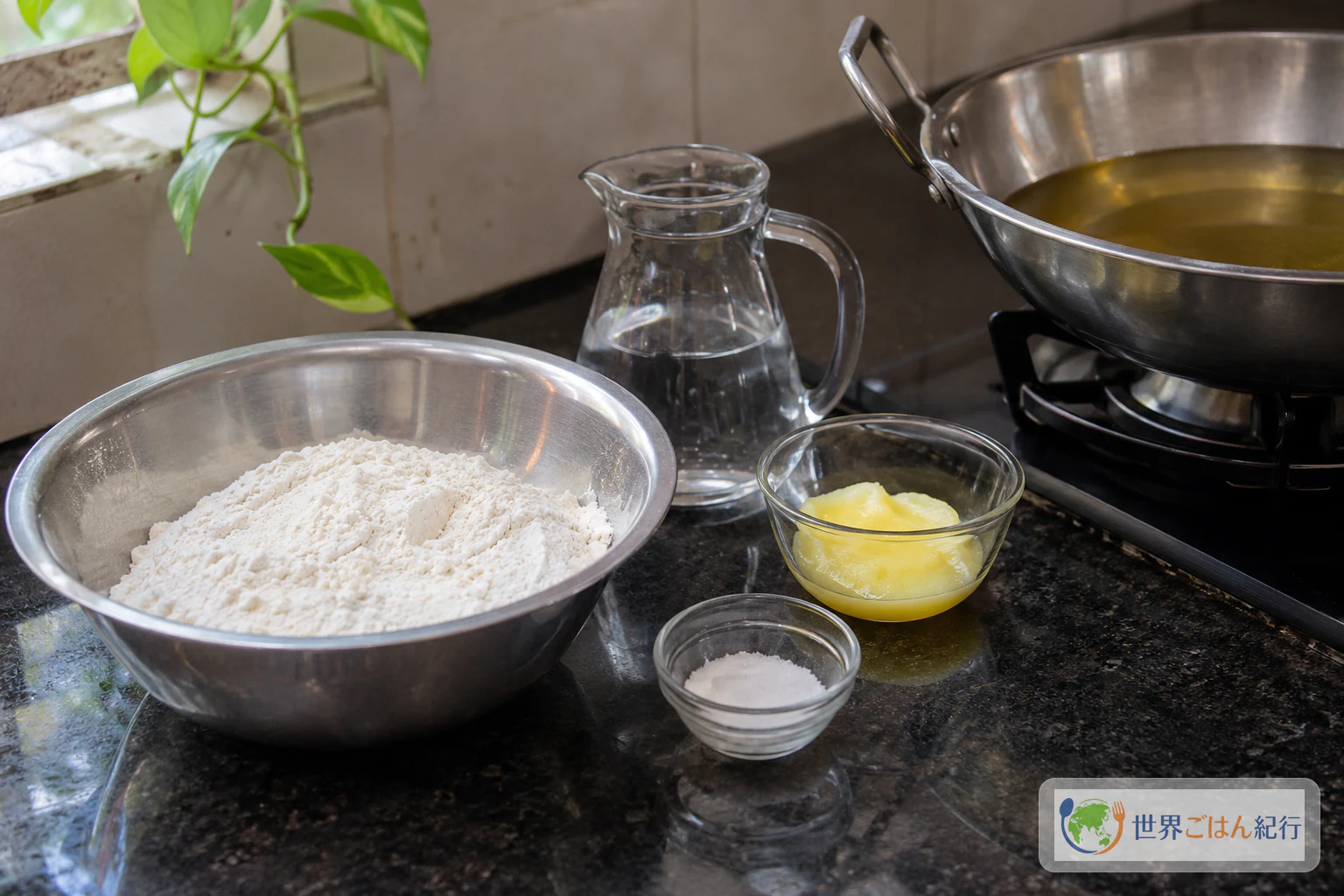
Equipment
- Mixing bowl
- Cup and tablespoon measures
- Small vessel for pouring water
- Prep board
- Clean, damp cloth
- Rolling pin
- Stable, deep frying pan
- Dry, heat-proof slotted spoon with a long handle
- Absorbent kitchen paper
- Serving plate
Choosing Flour, Fat and Oil
Flour: Use refined flour. Whole wheat flour moves away from this pale bread and is not part of this recipe.
Ghee: This dough is made with ghee. Oil is not a same-amount swap for the 2 tbsp of ghee, so this recipe does not offer it as a direct substitute.
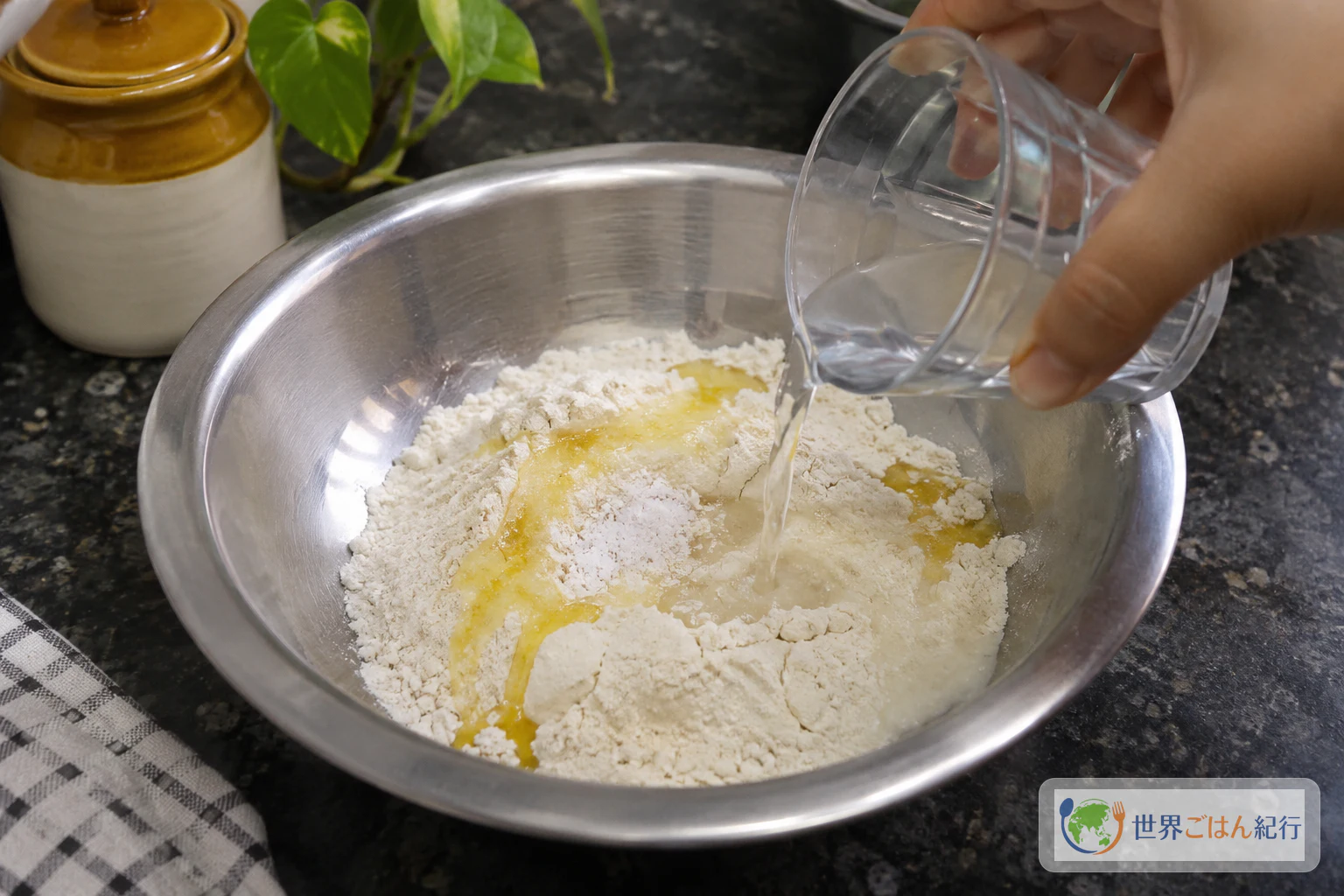
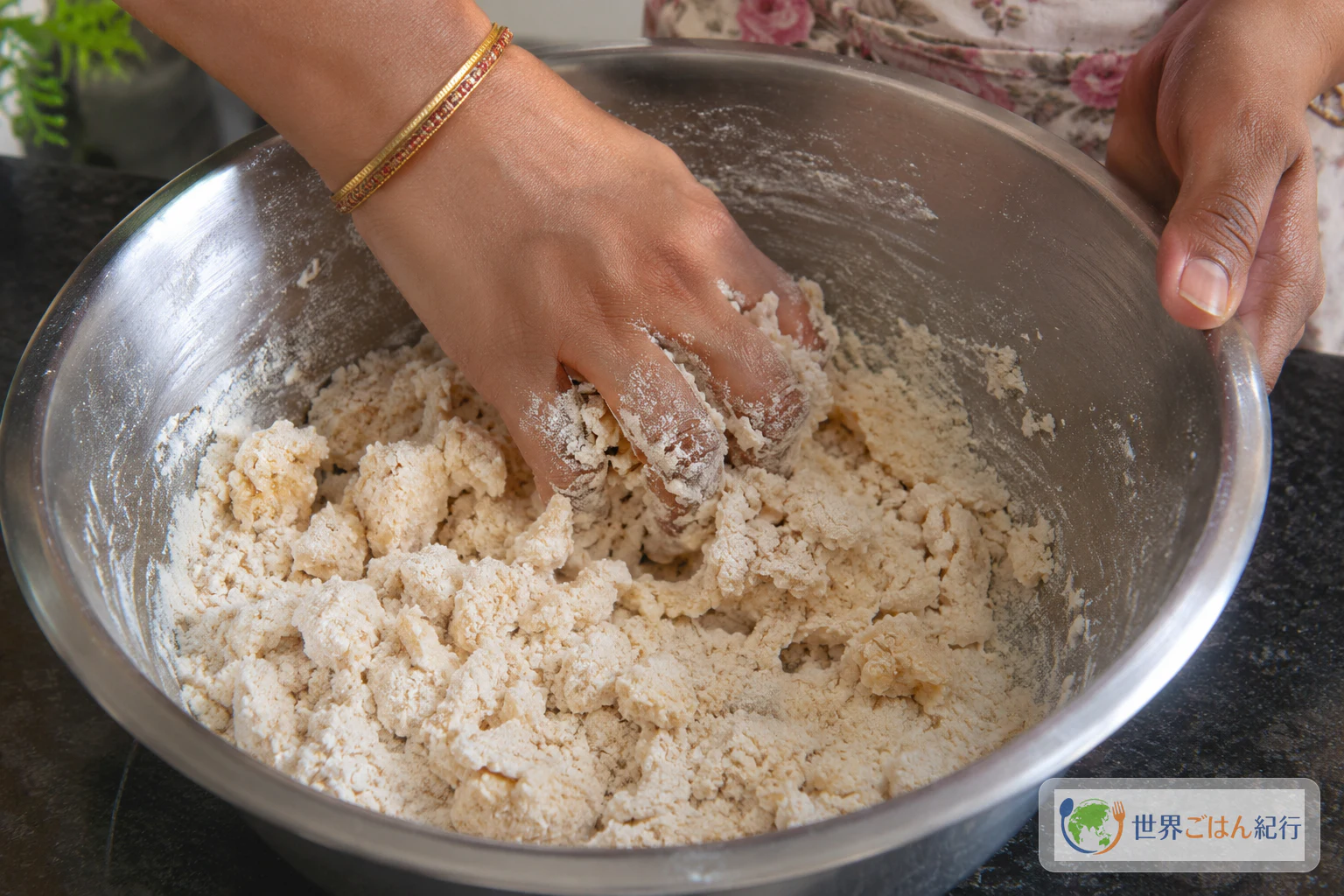
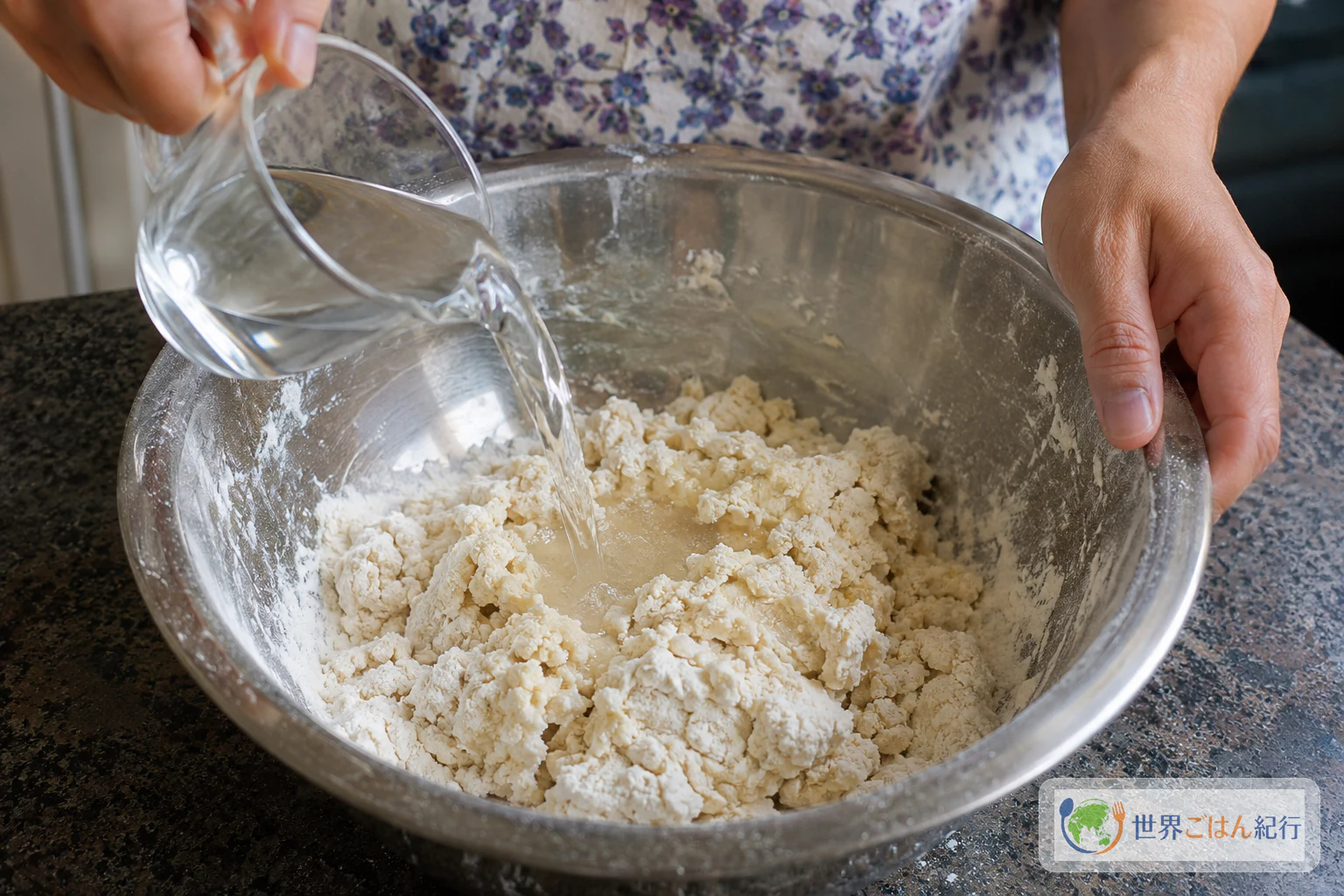
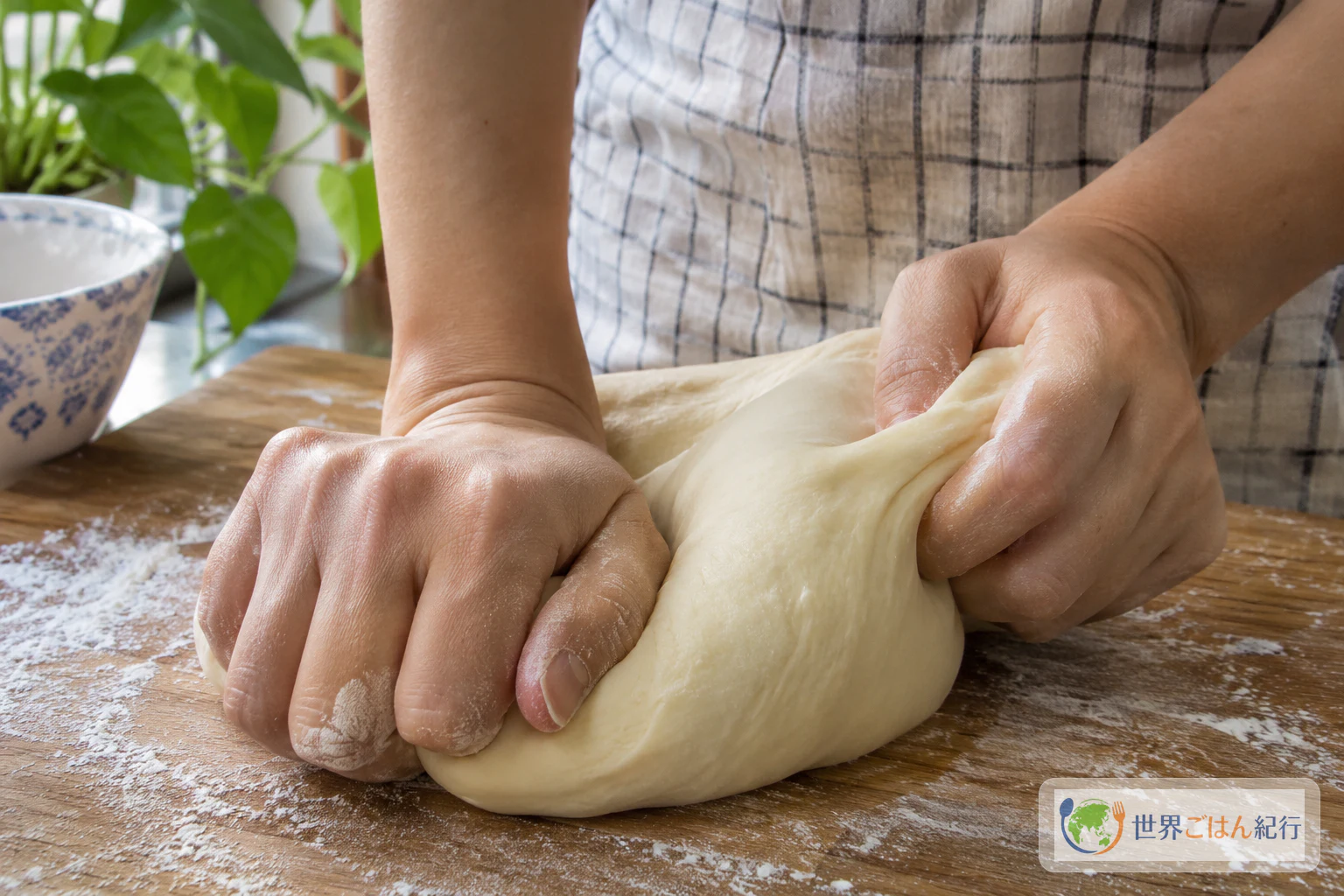
Water: The dough decides how much you need. Stop adding water when it can be kneaded soft and smooth.
Additions: This is a plain bread, with no sugar, yeast, sesame, seeds or filling.
Method: From Soft Dough to Cream-Colored Bread
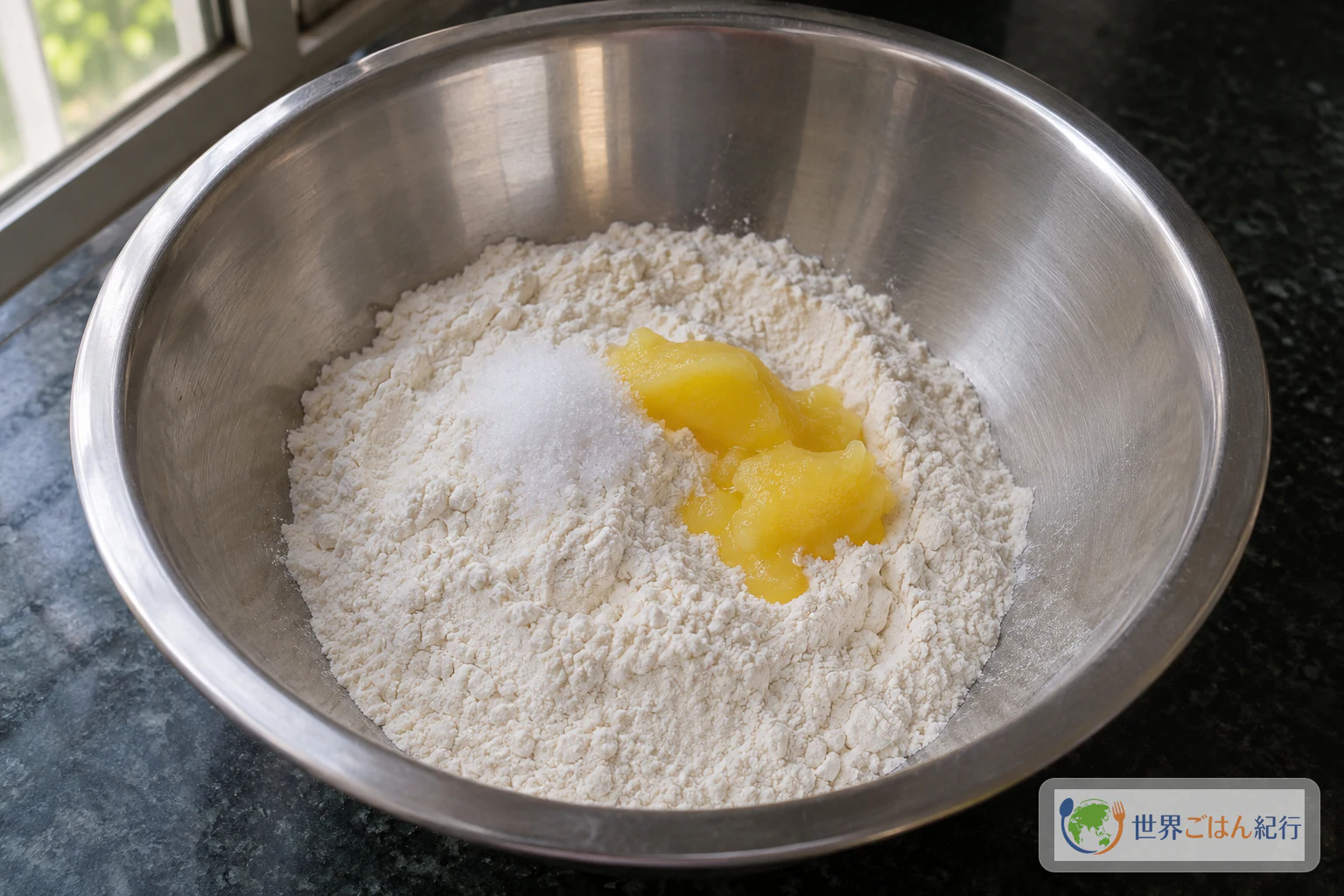
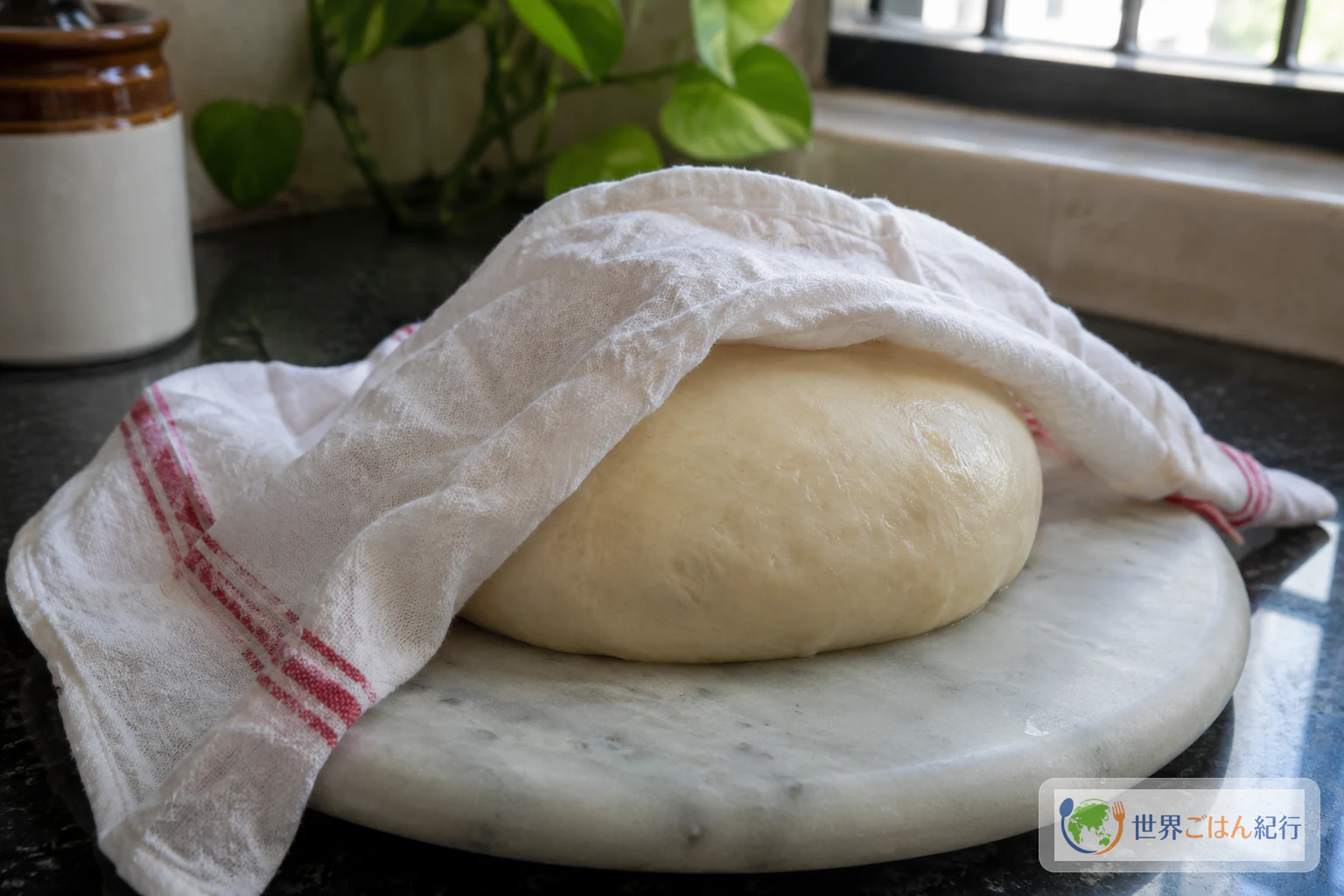
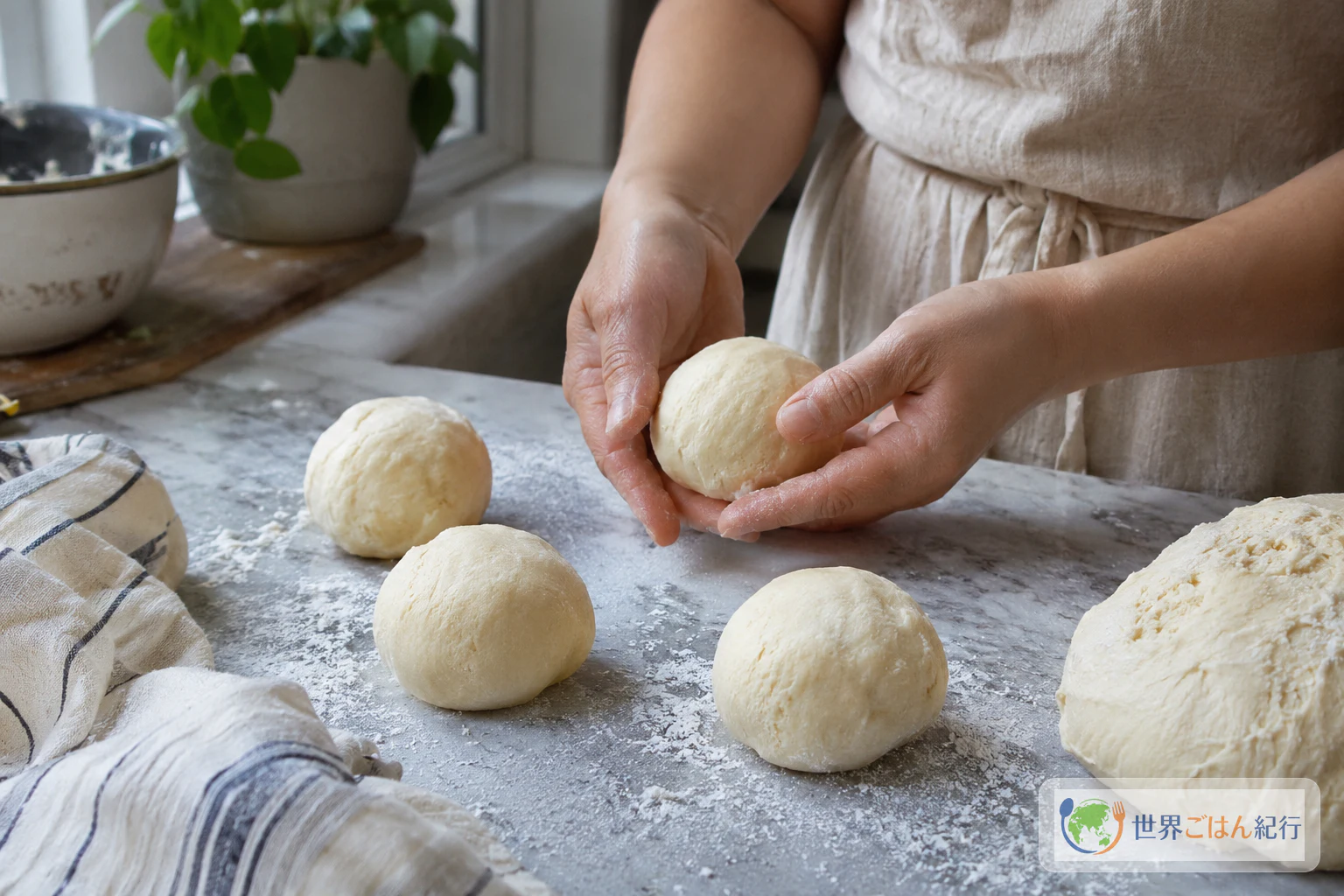
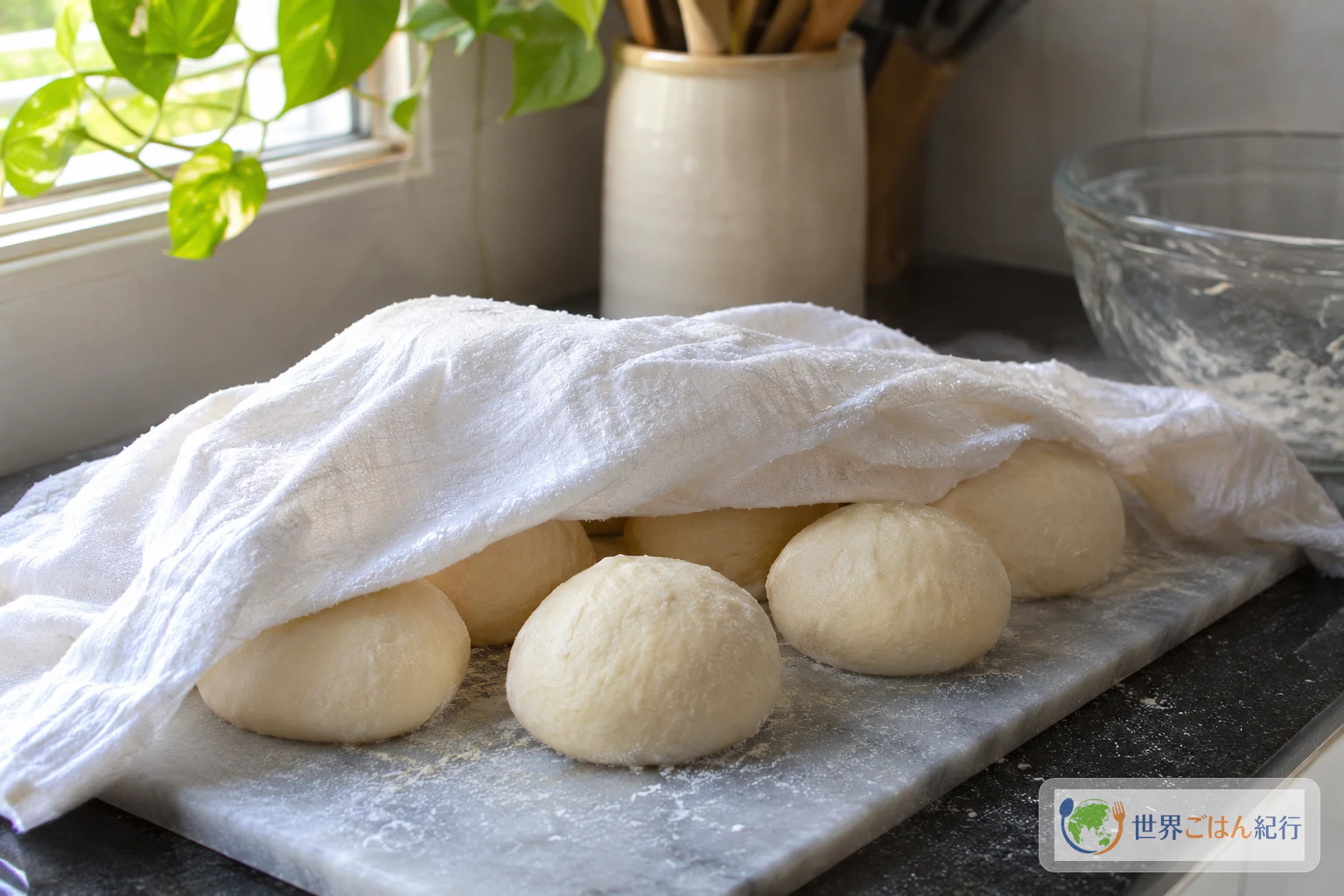
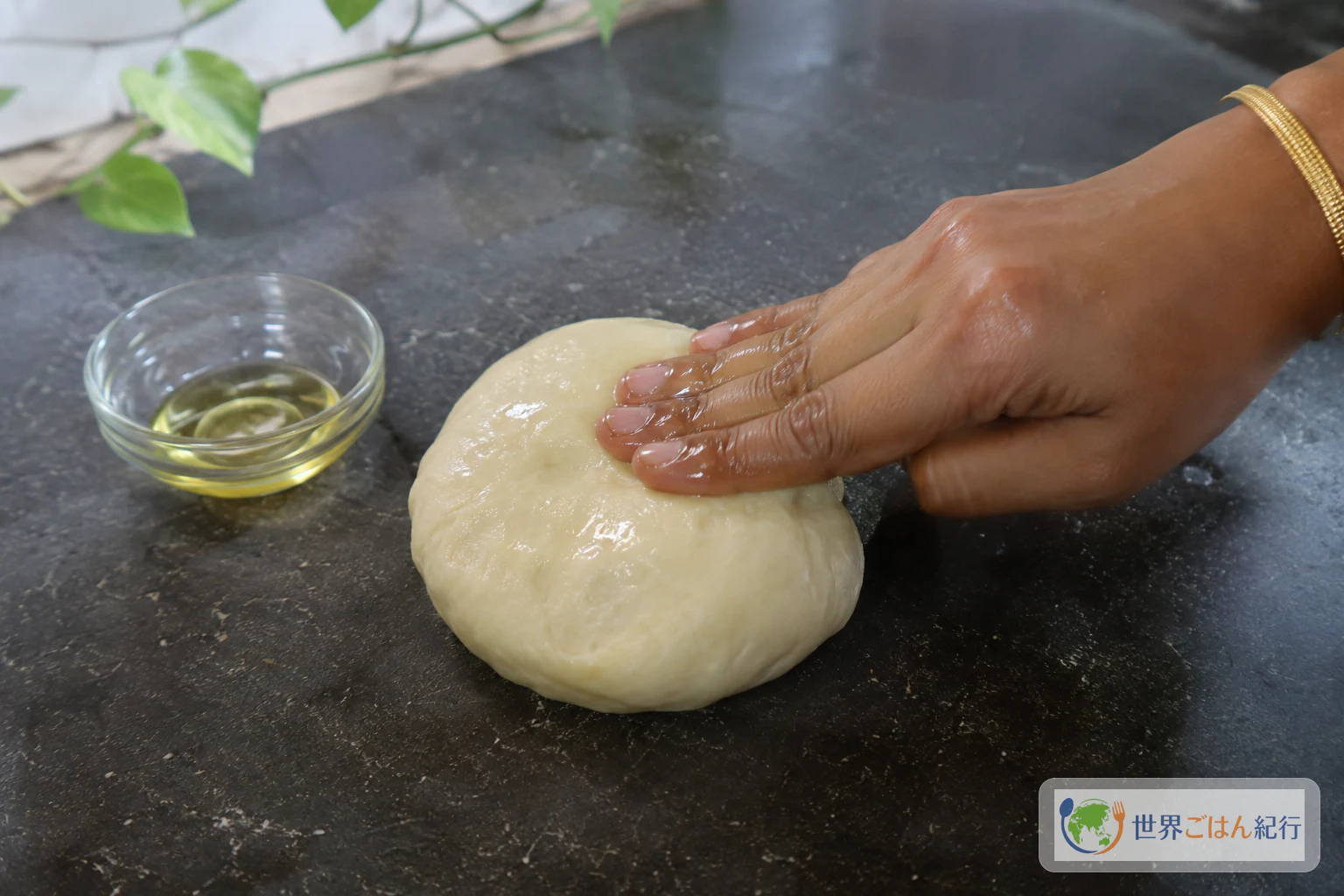
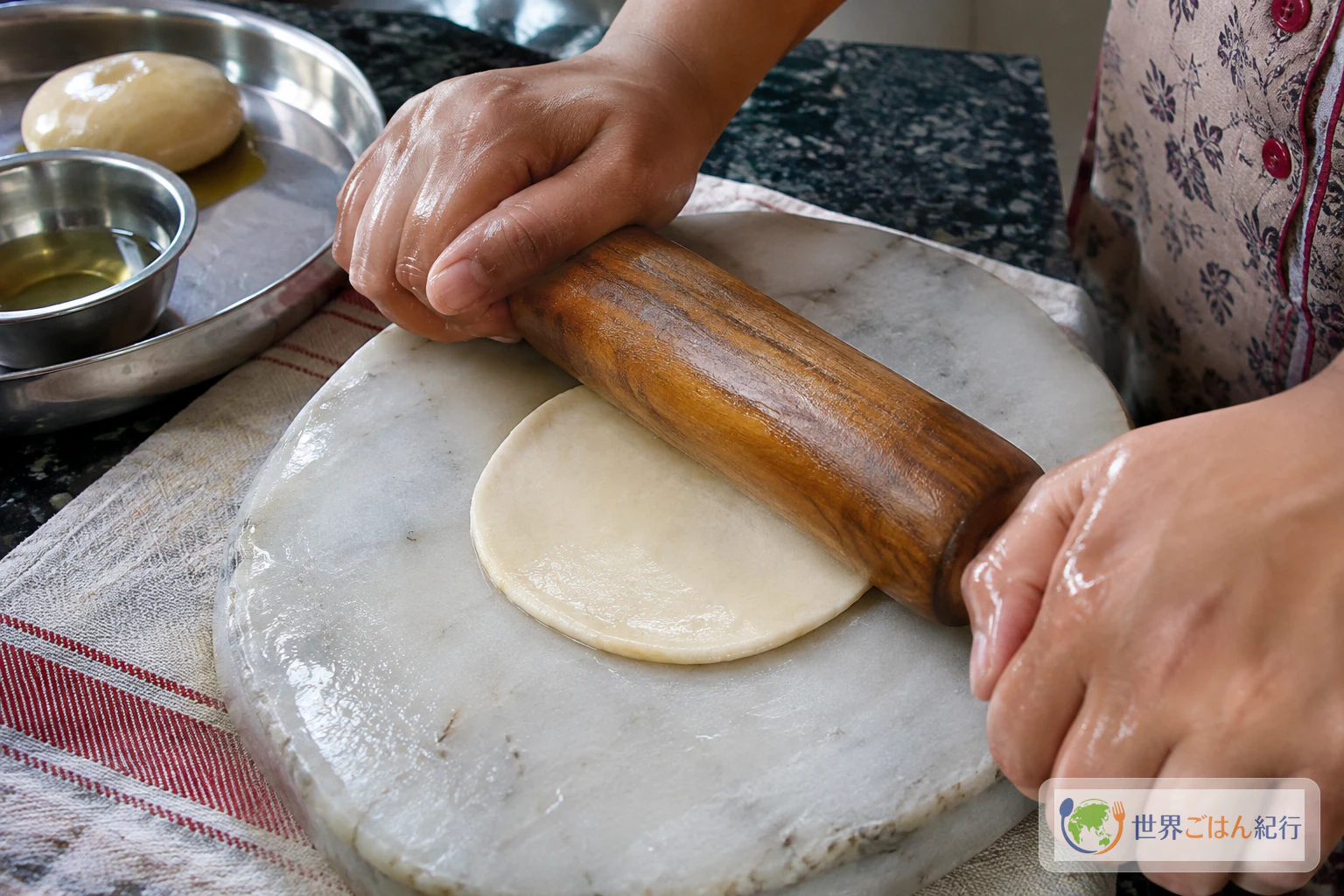
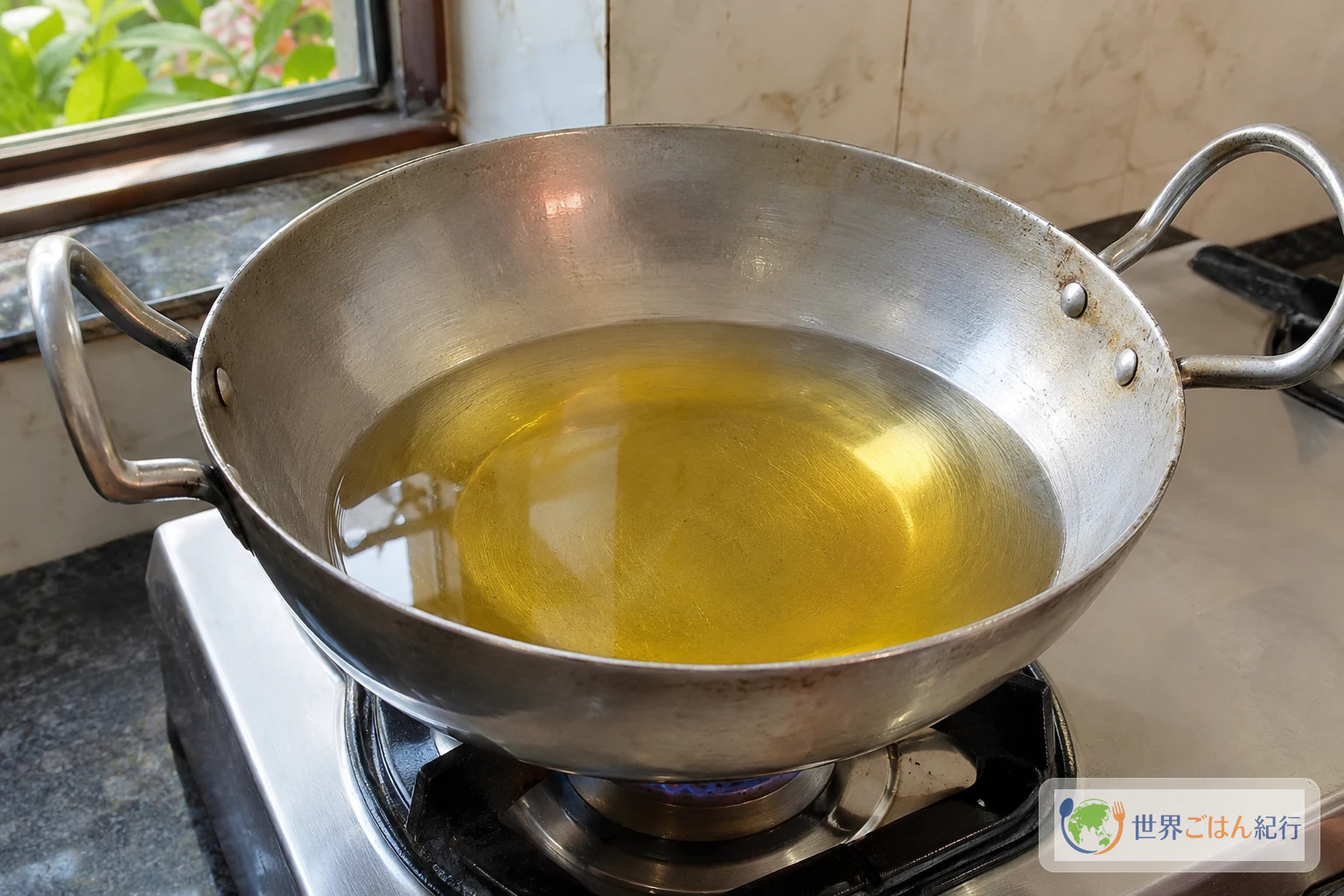
The work falls into three stages. First comes a soft dough with a covered rest, which gives the flour time to absorb water. It is not a yeast rise. Next, the dough balls stay covered until you oil and roll them evenly. Finally, the rounds are fried and judged by how they look and sound.
Use a stable, deep pan and dry, heat-proof utensils. Keep the damp cloth with the cool dough, well away from the oil pan, and do not let water drip into the oil. Judge the oil with the small dough test in step 12 and by the look of the bread, not by a set temperature, time per piece or oil quantity. The images illustrate each stage, but they do not prove quantity, time, temperature or safety.
Troubleshooting
| What you see | What to check | What to do |
|---|---|---|
| The dough feels stiff | Whether it has had enough water | Add a little more water and knead until soft and smooth |
| The dough balls are drying out | Whether they are fully covered | Keep the waiting balls under the damp cloth |
| The dough is hard to roll | Whether the ball is oiled | Add a little more oil rather than dusting flour |
| The test piece does not rise steadily | Whether the oil has heated enough | Keep heating and test with another small piece |
| The round does not puff fully | Whether the dough rested and the round was rolled evenly | Nudge it gently, then check the rest and rolling on the next batch. Full puffing is not guaranteed |
| The bread is turning dark brown | Whether it stayed in the oil past the creamy stage | Turn it when the first side is creamy and the sizzling dies down |
How Other Recipes Differ
These three recipes are separate formulas, and their amounts should not be mixed.
| Recipe | Dough | Other differences |
|---|---|---|
| Dassana's Veg Recipes (followed here) | 2 cups all-purpose flour, 2 tbsp ghee, salt as required, 1/2 cup + 2 tbsp water or as required | 30–60 minute covered rest and moderately hot oil, with a cream rather than brown finish |
| NDTV Food | 1 cup flour, 1/2 tsp salt, 1 tsp ghee, 1/2 cup water | Uses high heat, with no precise oil temperature |
| Onmanorama | 2 cups maida, 2 tbsp ghee, with unquantified salt and water | Covered rest, with frying until puffed and cream-colored |
Dassana's card also includes an option to use oil in the dough, at 2.5 tbsp rather than the 2 tbsp used for ghee. This article stays with ghee.
Where Luchi Sits on the Table
Dassana discusses luchi in the context of Durga Puja and serves it with Bengali curries. Onmanorama names aloo dum, cholar dal, and fish or meat curries as accompaniments, and mentions festive occasions. NDTV Food also notes curries, gravy and festivals, although its broad claims about popularity are not a complete cultural history.
Origin stories appear on some of these pages without references, so this article makes no claim about where luchi began. Accompaniments are part of the wider context, but this recipe covers only the plain bread. You can explore more of the country's food through our India page.
Frequently Asked Questions
How is luchi different from poori?
Dassana's Veg Recipes and Onmanorama distinguish Bengali luchi, made with maida, from poori made with atta. This version also aims for a cream color, not a dark-brown crust.
How many does this make, and how long does it take?
Dassana's card lists 10 luchi, with 1 hour of prep, 30 minutes of cooking and 90 minutes in total. Those are its published figures. They do not mean 10 servings, they are not new measurements, and they were not recalculated for the 30-minute rest used here. The instructions do not set a strict count or ball weight, so your number may differ.
What temperature should the oil be?
Dassana's recipe says moderately hot and gives no exact temperature or time per piece, so this article does not add any. Use the small dough test in step 12 and the visual cues in the later steps.
Will every luchi puff?
There is no guarantee. Dassana's guide says resting the dough and rolling it evenly improve puffing, and the nudge in step 15 encourages it.
Is the rest a fermentation?
No. There is no yeast in this dough. The covered rest gives the flour time to absorb water. Dassana gives a range of 30 to 60 minutes, and this article uses 30.
Can I store or reheat luchi?
This recipe gives no storage or reheating guidance, and no storage time. It is meant to be served hot, right after draining.
Is nutrition information available?
No. This article gives no nutrition figures or health claims.
Sources
- Dassana Amit, "Luchi Recipe | Bengali Luchi," Dassana's Veg Recipes. The recipe followed in this article, including its ingredients, method and published yield and times; the distinction from atta poori; ghee and oil options; serving with Bengali curries; the effect of resting and even rolling on puffing; and the cream rather than brown finish. https://www.vegrecipesofindia.com/luchi-recipe-bengali-luchi-recipe/
- NDTV Food, "Luchi Recipe." Used for comparison only: luchi as a yeast-free fried bread that puffs, serving with curries or gravy, festival context, and a different set of proportions. https://food.ndtv.com/recipe-luchi-951769
- Onmanorama, "Ever tasted mouth-watering Bengali puri luchi? Try it at home." Used for comparison only: maida luchi in contrast with atta poori, the cream-colored puffed finish, accompaniments, festive occasions, and a separate recipe. https://www.onmanorama.com/food/recipe/2023/11/27/bengali-luchi-breafkast-puri-easy-recipe.html