Beetroot Pachadi: A Magenta Spoonful of Yogurt, Coconut and Mustard
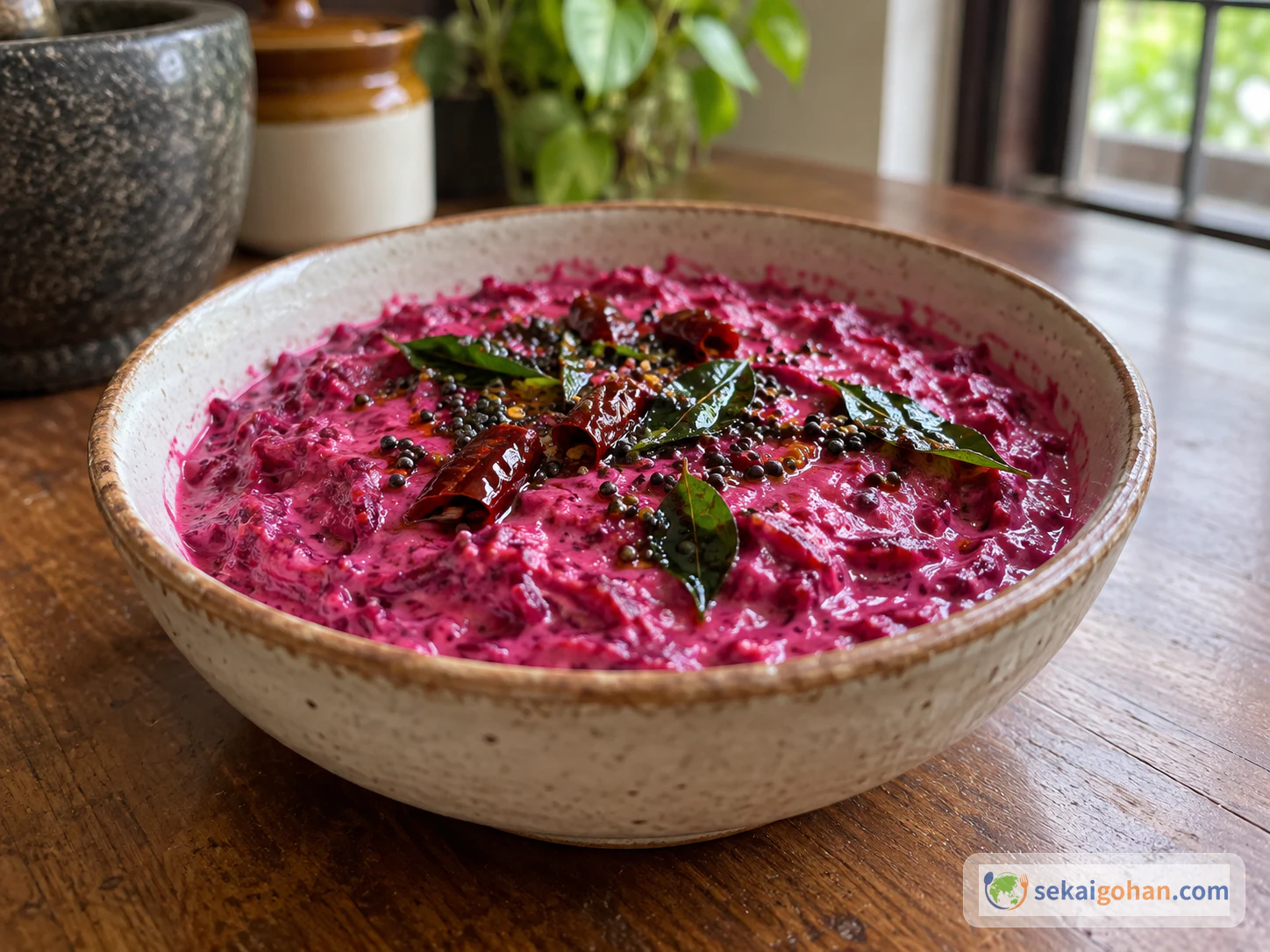
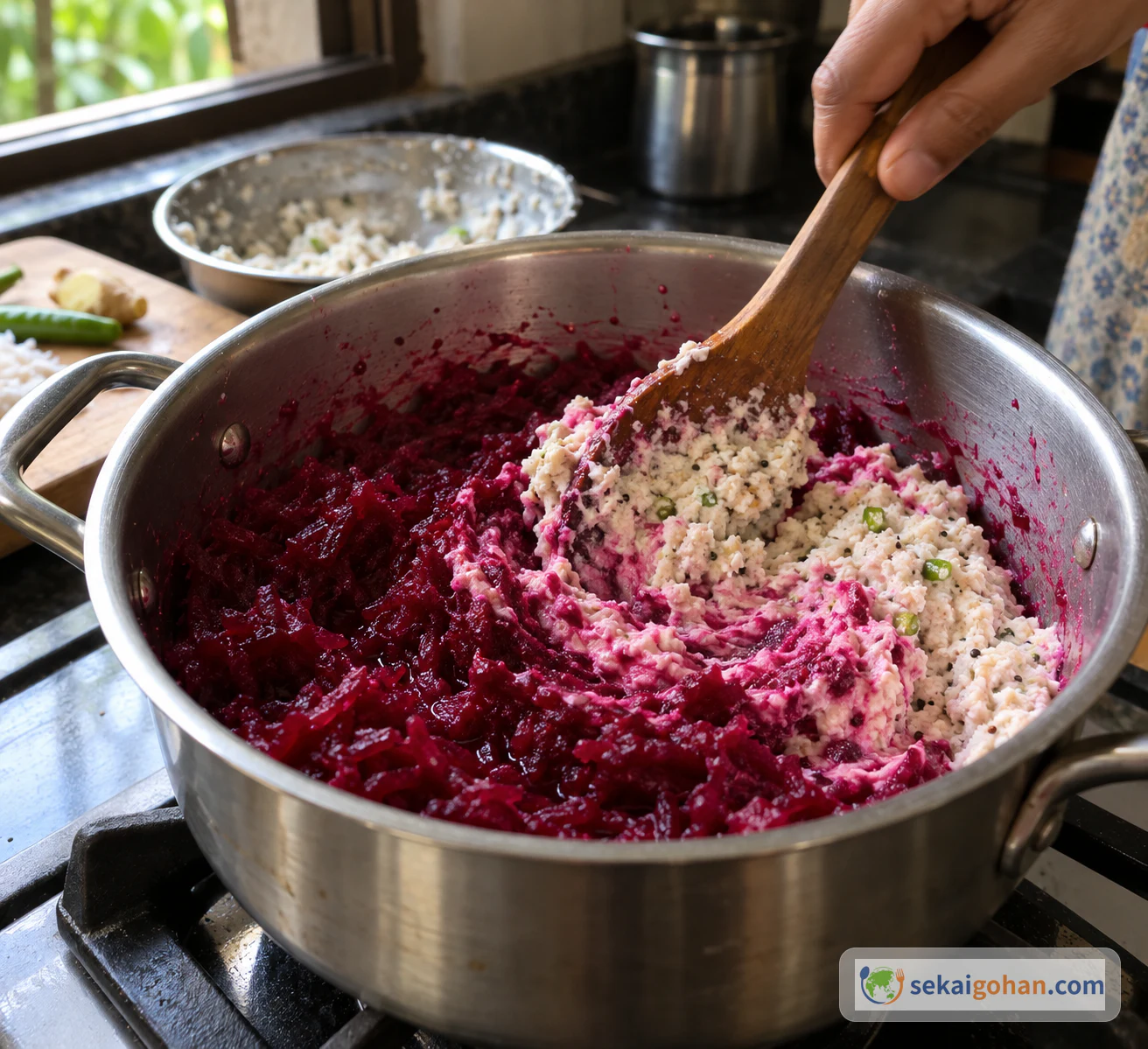
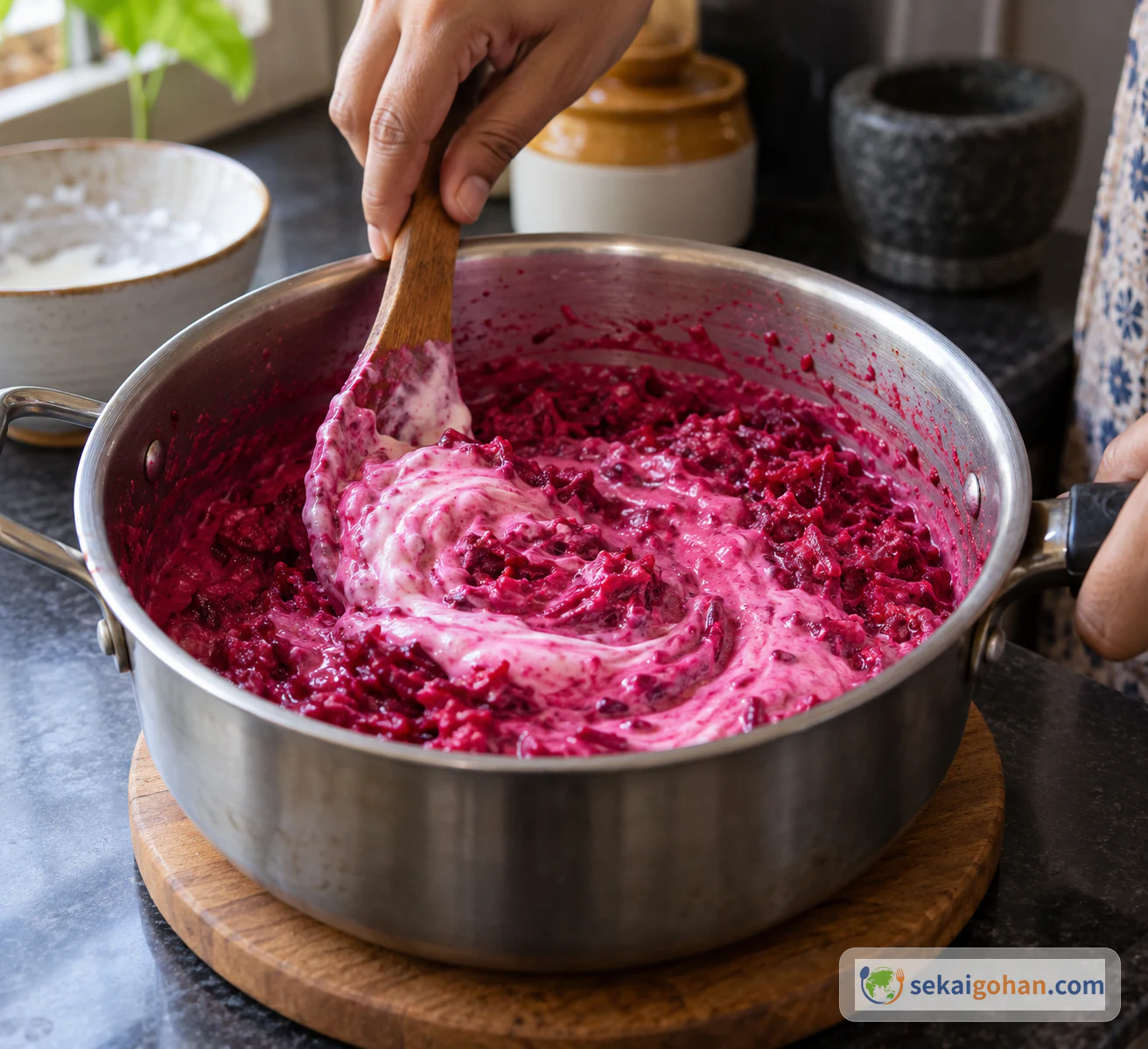
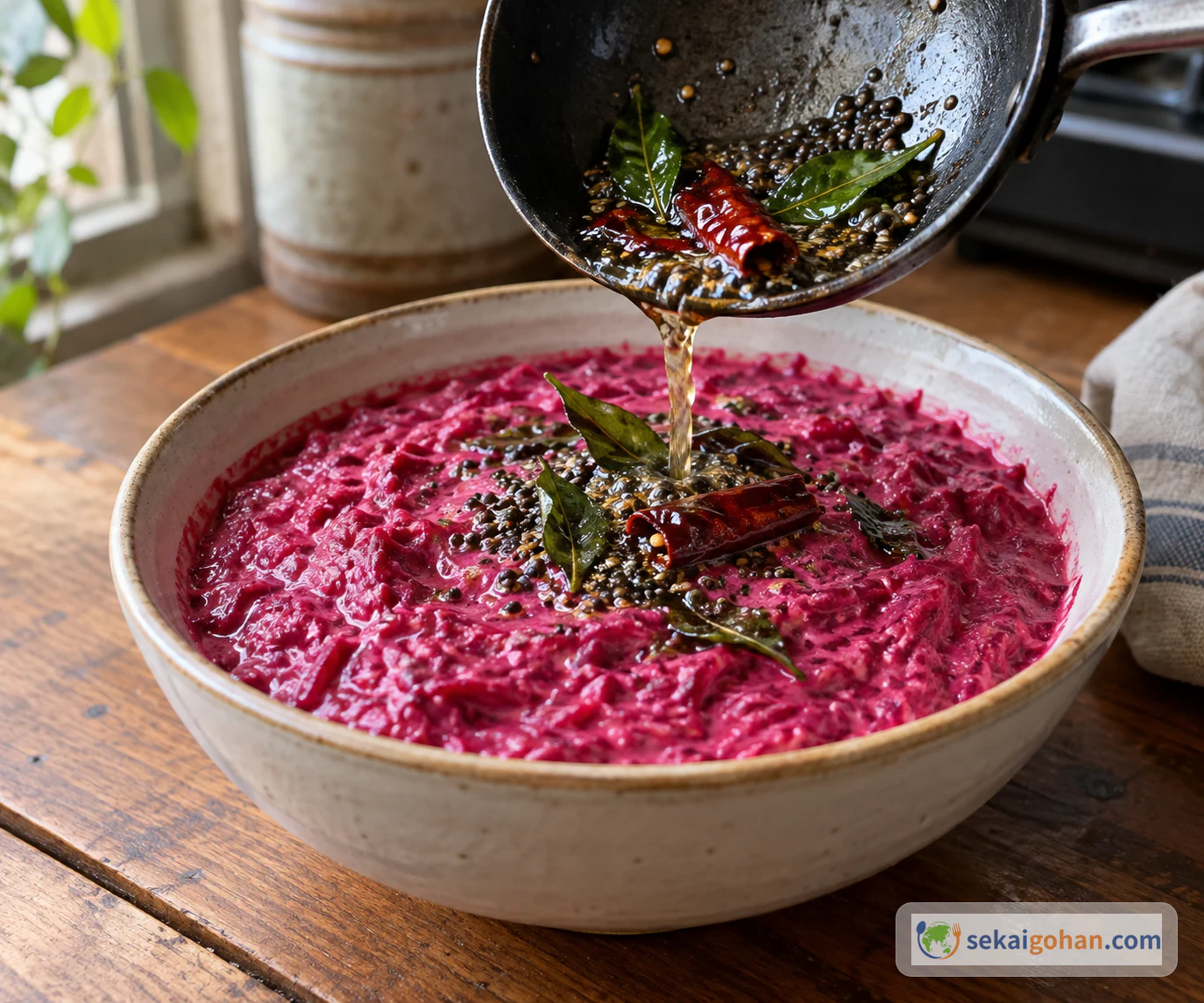
Softened grated beetroot, a fine coconut paste, yogurt stirred in off the heat, and a crackling tempering poured over at the end. It is a side dish, not a saucy stew.
On a Kerala table, among white rice and an array of other dishes, a spoonful of something startlingly pink stands out. That is beetroot pachadi: grated beetroot cooked soft, bound with a paste of coconut, green chili, ginger, mustard and cumin, mellowed with yogurt, and finished with mustard seeds, dried red chilies and curry leaves sizzled in coconut oil.
The dish is often listed under the general name "beetroot curry," but it is not the thick, gravy-laden curry that name may bring to mind. It is closer to a yogurt-based side or relish, eaten in small amounts alongside rice and other dishes. In Malayalam it is written ബീറ്റ്റൂട്ട് പച്ചടി (beetroot pachadi). For more dishes from the country, see our India page.
This recipe follows one published home-style version, Ammini Aunty's A Pinch of Kerala, without mixing in amounts from other recipes. That version gives amounts in cups, spoons and pieces, and does not state a number of servings, ingredient weights, a serving temperature or storage guidance, so none of those appear here. Sekai Gohan has not kitchen-tested this recipe.
What Pachadi Is: A Yogurt Dish in the Kerala Sadya
Pachadi is one of the yogurt-based dishes of Kerala's Sadya. According to Kerala Tourism, Sadya means "banquet" in Malayalam. It is a feast served on banana leaves for occasions such as Onam, Vishu and weddings, and among its many dishes, pachadi is described as a yogurt-based dish made with vegetables or fruit.
Beetroot is one of the vegetables that can fill that role. A Kerala Tourism cuisine-contest booklet presents a beetroot and yogurt relish under the name Beetroot Kichadi and describes it as an integral element of the Sadya. Its proportions differ from the recipe used here (it lists 1 cup grated beetroot, 1/2 cup slightly sour curd and 3/4 cup grated coconut, among other ingredients), and the name differs too. Names for these yogurt dishes are not strictly fixed, so this article uses "Beetroot Pachadi," the name of the recipe it follows. That booklet is used here only as cultural context, not as a second set of amounts.
It also helps to know what this dish is not. The word pachadi is used for different dishes in different regions; in Andhra and Telugu cooking, for example, it can refer to a chutney-style preparation. This article covers only the Kerala version built on beetroot, coconut, yogurt and mustard. It is also distinct from a North Indian-style beetroot curry and from a dry beetroot stir-fry made without yogurt. The dish's origin, age and inventor could not be confirmed, so they are not discussed here.
How the flavors stack
| Layer | What goes in | What it brings |
|---|---|---|
| Base | Grated beetroot cooked with water and salt | Deep pink color and the beet's own sweetness |
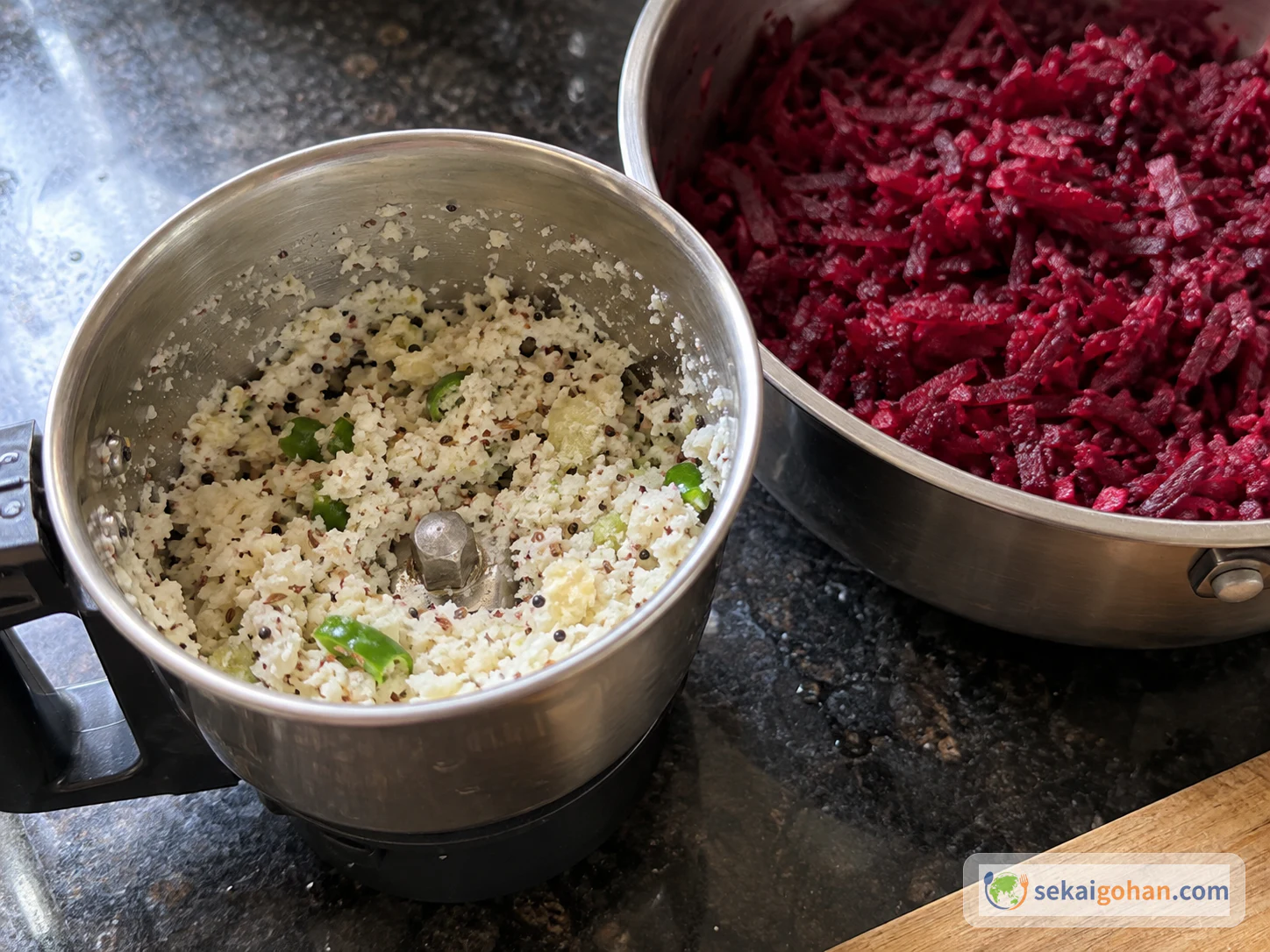
| Paste | Coconut, green chili, ginger, mustard, cumin | Body from the coconut, heat from the green chili, a warm spice note |
| Yogurt | Whisked yogurt, added off the heat | Tang and a creamy finish that turns the color lighter pink |
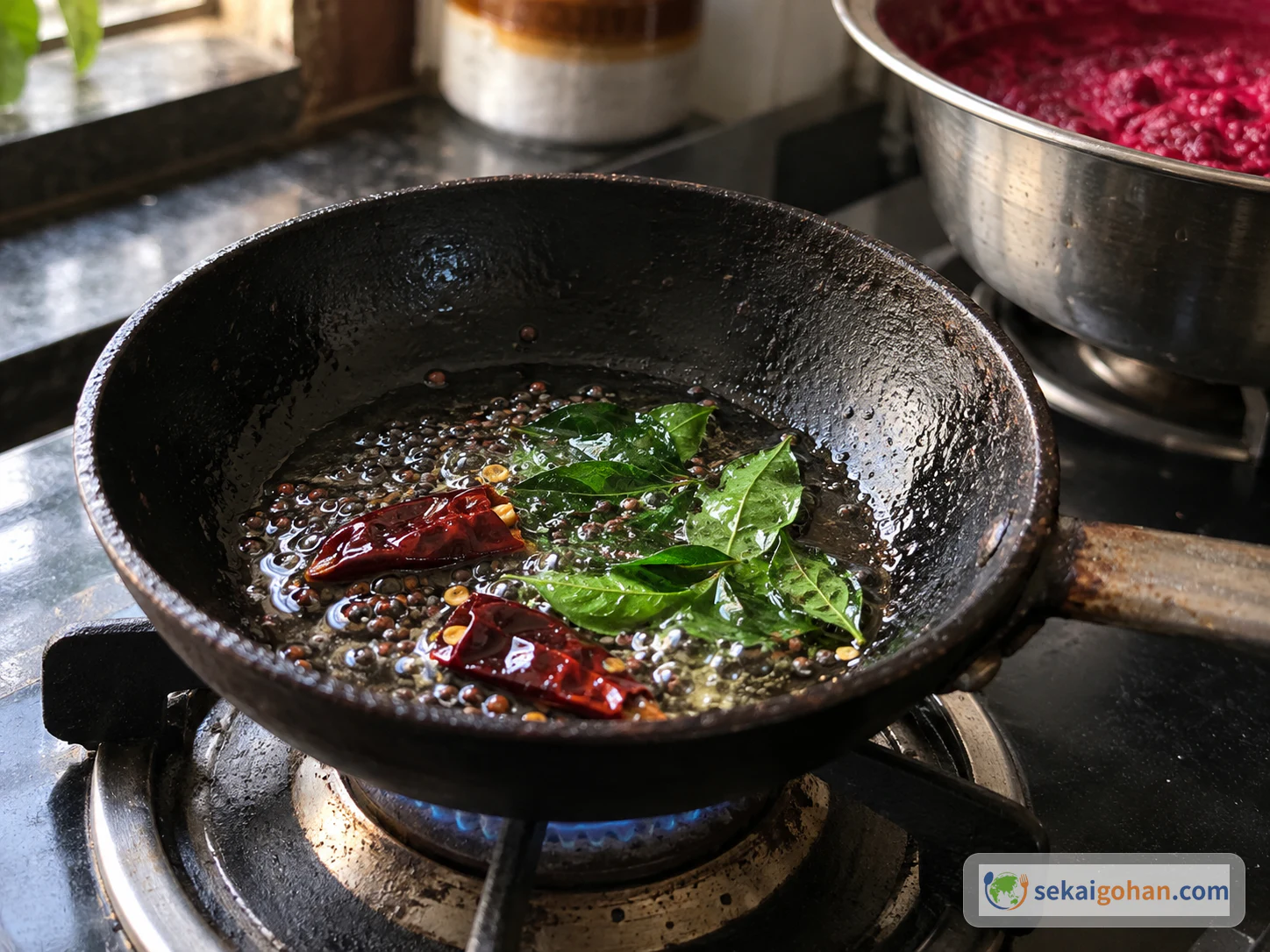
| Tempering | Coconut oil, mustard seeds, dried red chilies, curry leaves | A fragrant, toasty top note poured over at the end |
Ingredients: Beetroot, Coconut Paste, Yogurt and Tempering
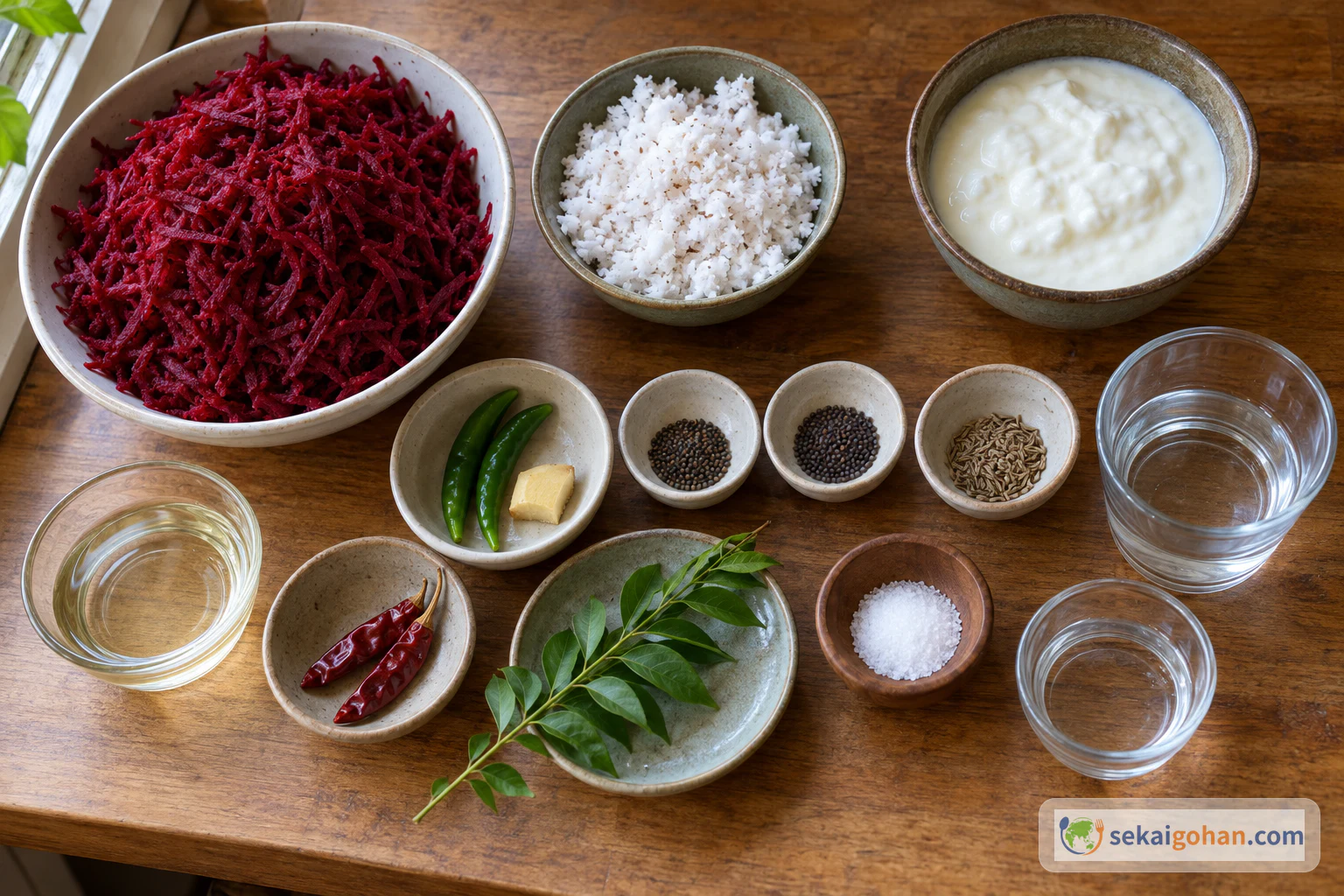
The two water amounts and the two mustard amounts each have their own job. Measure them separately so they don't get mixed up.
Green chilies go into the paste; dried red chilies go into the tempering. They are different ingredients with different jobs.
Yogurt is a dairy product. Also check the labels of every product you use, including coconut, coconut oil and spices, for allergen information.
Equipment
- Grater (a box grater works well)
- Small blender or spice grinder for the paste
- Saucepan with a lid
- Small pan for the tempering
- Whisk or fork for the yogurt
Choosing and Substituting Ingredients Outside India
Coconut. Use freshly grated coconut. Fresh coconut isn't always available in ordinary supermarkets; Indian and Asian grocers or online shops are the places to look. Frozen grated coconut is a practical candidate, though its flavor and moisture can differ from freshly grated. Dried (desiccated) coconut is not an equivalent: it is drier and will change the paste.
Yogurt. Plain unsweetened yogurt is a practical choice. Thick strained yogurt or a more sour yogurt will change the texture and tang of the finished dish, so treat that as a variation rather than a straight swap.
Curry leaves. These carry much of the tempering's aroma and are worth seeking out at Indian grocers, fresh or frozen. No other leaf gives the same fragrance, so this article doesn't name one as a substitute; if you leave them out, expect a different finish.
Chilies. Heat varies from chili to chili.
Method: Cook, Bind, Cool the Heat, Temper
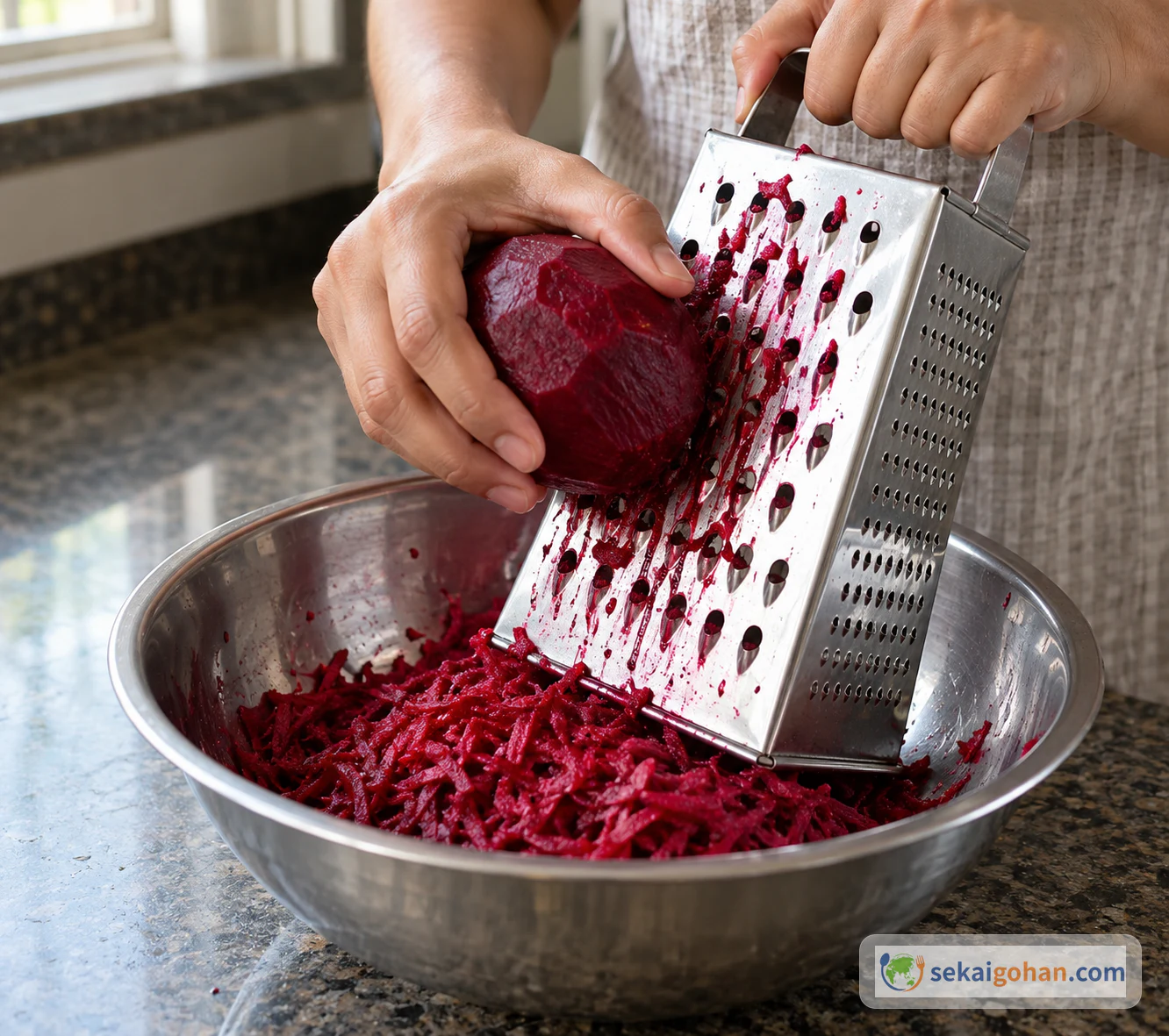
Grate the beetroot and measure the paste ingredients and tempering ingredients into separate groups before you turn on the heat. The tempering goes fast once the oil is hot.
Troubleshooting: Scorching, Too Much Liquid, Split Yogurt
Because this recipe has not been kitchen-tested by Sekai Gohan, the table below is general cooking guidance rather than results from our own trials.
| Problem | Likely cause | What to try |
|---|---|---|
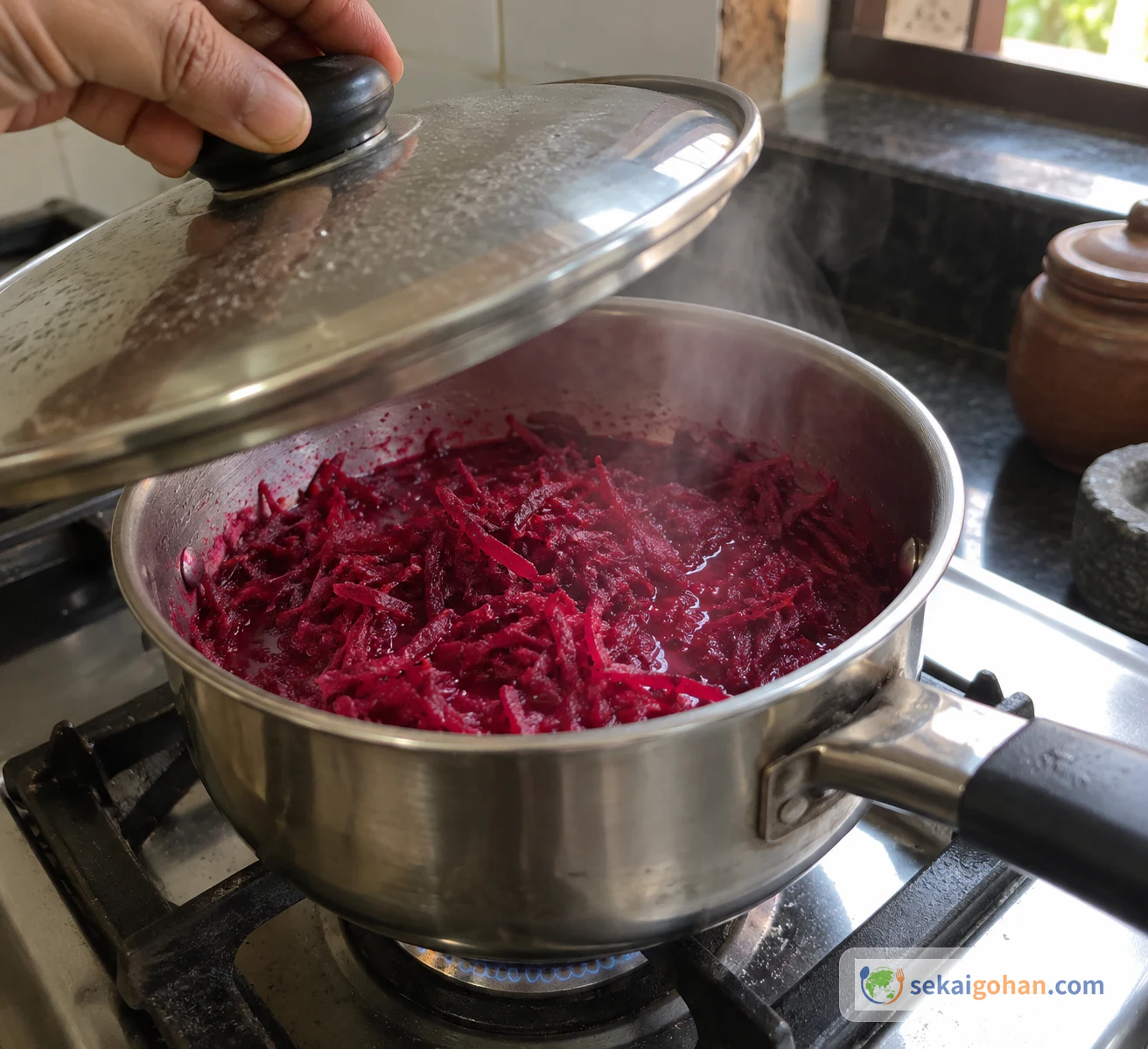
| Beetroot catching on the bottom of the pan | Heat too high, or the water cooked off | Lower the heat and stir more often. Keep the lid on while the beetroot softens |
| Beetroot still firm after about 10 minutes | Coarse grating, a thin pan or low heat | Keep cooking covered and check again; judge by softness, not the clock |
| Paste is gritty | Too little water to grind, or ground too briefly | Grind longer, adding water a little at a time until it moves freely |
| Pachadi is watery | The beetroot released a lot of liquid before the paste went in | Let the beetroot and paste cook uncovered a little longer before turning off the heat and adding the yogurt |
| Yogurt looks curdled or split | Added while the pan was still on the heat, or the mixture boiled | Always turn the heat off first and whisk the yogurt smooth beforehand. Adding yogurt off the heat helps reduce the risk, though it is not a guarantee |
| Tempering tastes bitter | Mustard seeds or curry leaves burned | Lower the heat as soon as the mustard pops, and keep the final fry to about 30 seconds |
Variations: Other Versions of Beetroot and Yogurt
The recipe above is one fixed version. Other published recipes vary, and they are described here separately rather than blended in.
- Archana's Kitchen version. Another recipe published as Kerala Style Beetroot Pachadi uses beetroot counted by the piece rather than by the cup, adds turmeric, and covers and cooks the grated beetroot before adding curd after it has cooled. Its ingredient list places the curd with the paste while its method adds it after cooling, so it is not followed here.
- Kerala Tourism's Beetroot Kichadi. A Sadya recipe from a Kerala Tourism contest booklet uses slightly sour curd and a higher proportion of coconut to beetroot. If you prefer a sharper, richer relish, that is the direction it points, but it is a different recipe with its own proportions.
- Heat level. Green chilies in the paste and dried red chilies in the tempering both contribute heat. Choosing milder chilies is one way to make a gentler pachadi; the tempering will still bring aroma.
Frequently Asked Questions
Is beetroot pachadi a curry?
It is often listed as "beetroot curry," but the result is a yogurt-based side dish or relish, not a saucy stew. It is served in small amounts with rice and other dishes, as pachadi is in a Kerala Sadya.
Why does the yogurt go in after the heat is off?
The recipe adds whisked yogurt only after the heat is turned off, and the mixture should not boil. Keeping yogurt away from direct heat is a common way to reduce the chance of it splitting.
Should I serve it hot, warm or cold?
The recipe followed here does not specify a serving temperature, so this article does not state one.
How many people does this serve?
The recipe gives no servings or yield, so none is stated here. As a side dish, it is eaten in small portions alongside rice and other dishes.
Is beetroot pachadi the same as beetroot kichadi?
They are closely related yogurt-based beetroot dishes from Kerala, and Kerala Tourism describes a Beetroot Kichadi as part of the Sadya. The two recipes referred to in this article use different names and different proportions, so they are treated as separate recipes here.
Is the Andhra pachadi the same dish?
No. In Andhra and Telugu cooking, pachadi can refer to chutney-style preparations. This article covers only the Kerala beetroot, coconut and yogurt version.
Sources
- Ammini Aunty's A Pinch of Kerala, "Beetroot Pachadi." The recipe followed in this article: dish name, ingredients and amounts, order of steps, approximate cooking times for the beetroot, paste and tempering, and its description as a side dish for festive meals. It does not state servings or ingredient weights. https://aaapinchofkerala.com/beetroot-pachadi/
- Kerala Tourism, "What is Kerala Sadya and what is special about it?" The Sadya as a banquet served on banana leaves for occasions including Onam, Vishu and weddings, the meaning of Sadya in Malayalam, and pachadi as a yogurt-based dish with vegetables or fruit. https://www.keralatourism.org/faq/what-is-kerala-sadya-and-what-is-special-about-it
- Kerala Tourism, "Kerala Cuisine Contest 2020 - Vegetarian recipes." Beetroot Kichadi presented as an integral Sadya element and a yogurt relish, with its own beetroot, curd and coconut proportions; used for comparison only. https://www.keralatourism.org/images/cuisine2020/Kerala%20Cuisine%20Contest%202020-Veg.pdf
- Archana's Kitchen, "Kerala Style Beetroot Pachadi Recipe." An independent version with turmeric, different quantities and curd added after cooling; used for comparison only. https://www.archanaskitchen.com/recipe/kerala-style-beetroot-pachadi-recipe