Saja Pakhala: Rice, Cold Water and a Squeeze of Lemon
This is one unfermented style of Pakhala, chilled in the fridge and eaten the same day. It is not the only standard version of the dish. This recipe has not been kitchen-tested, and no temperature, pH, bacterial or storage tests have been carried out on it.
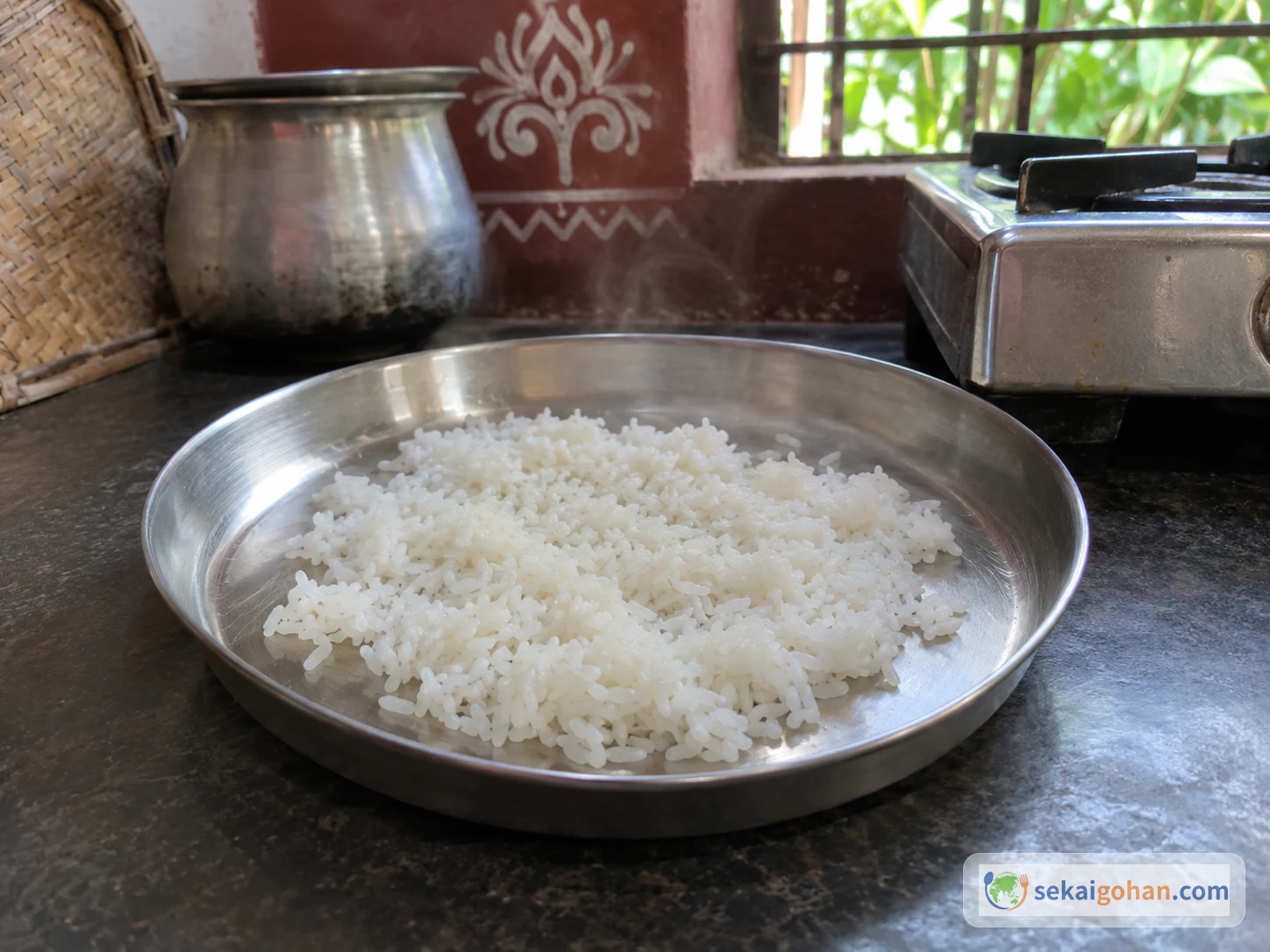
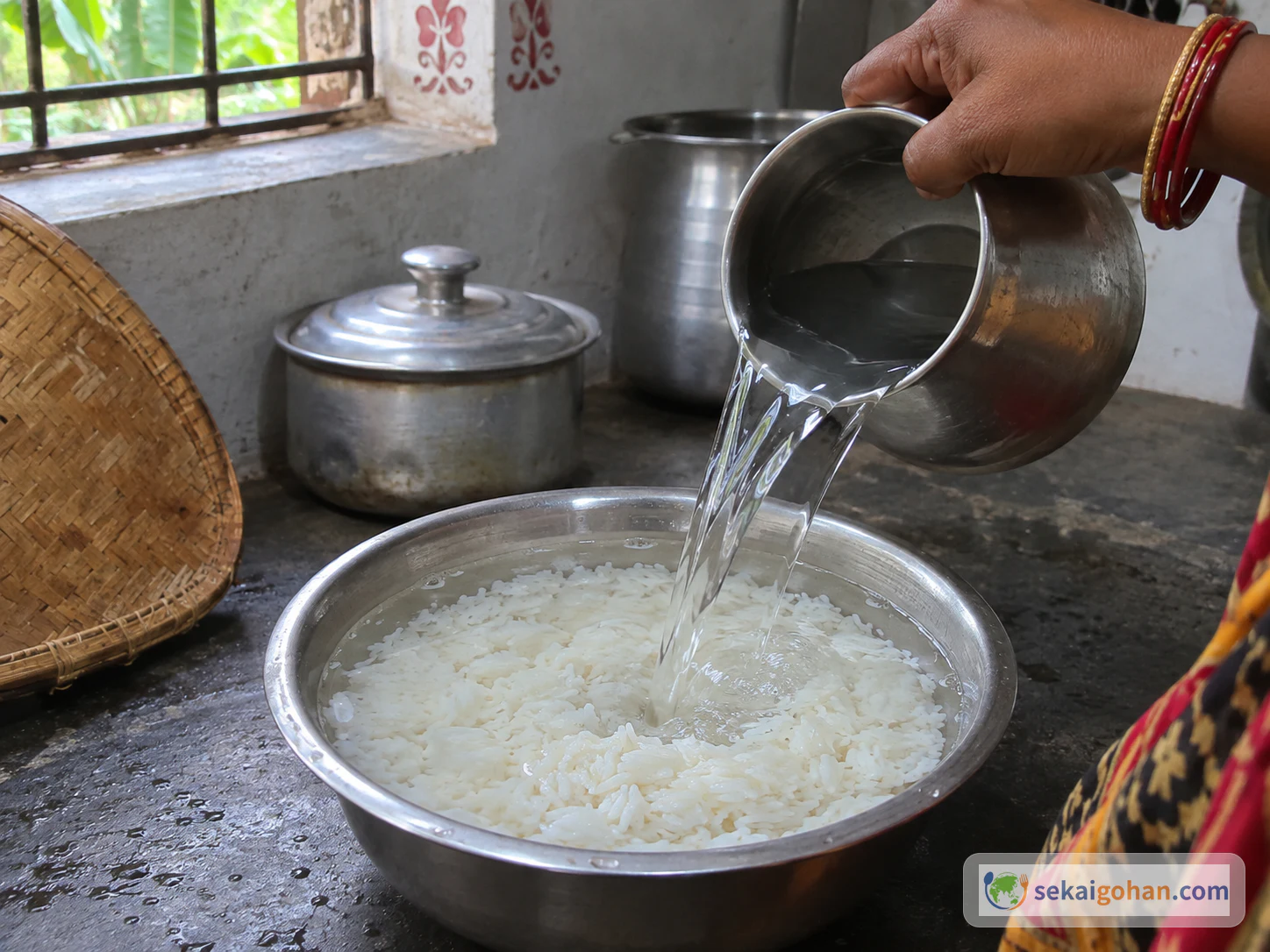
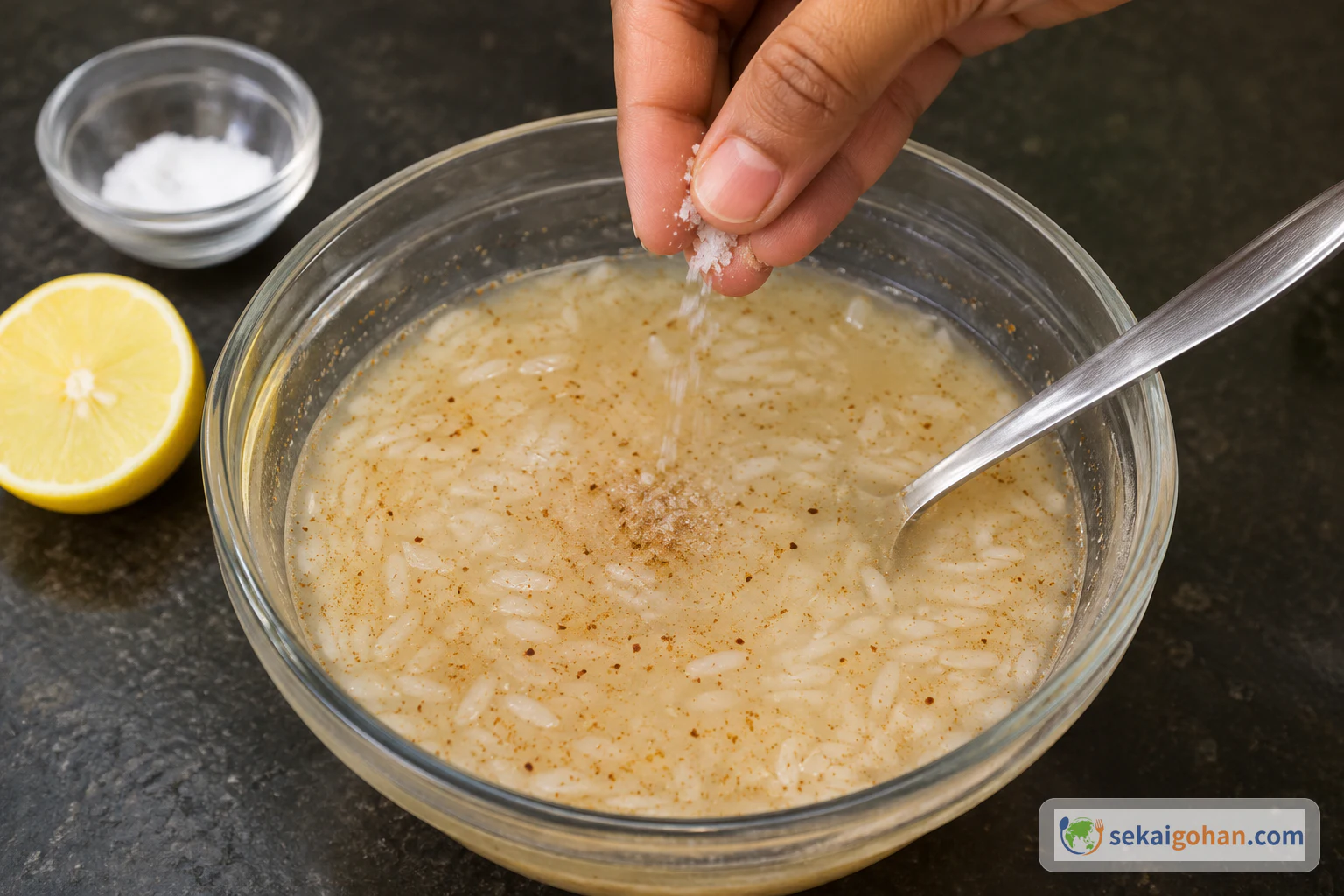
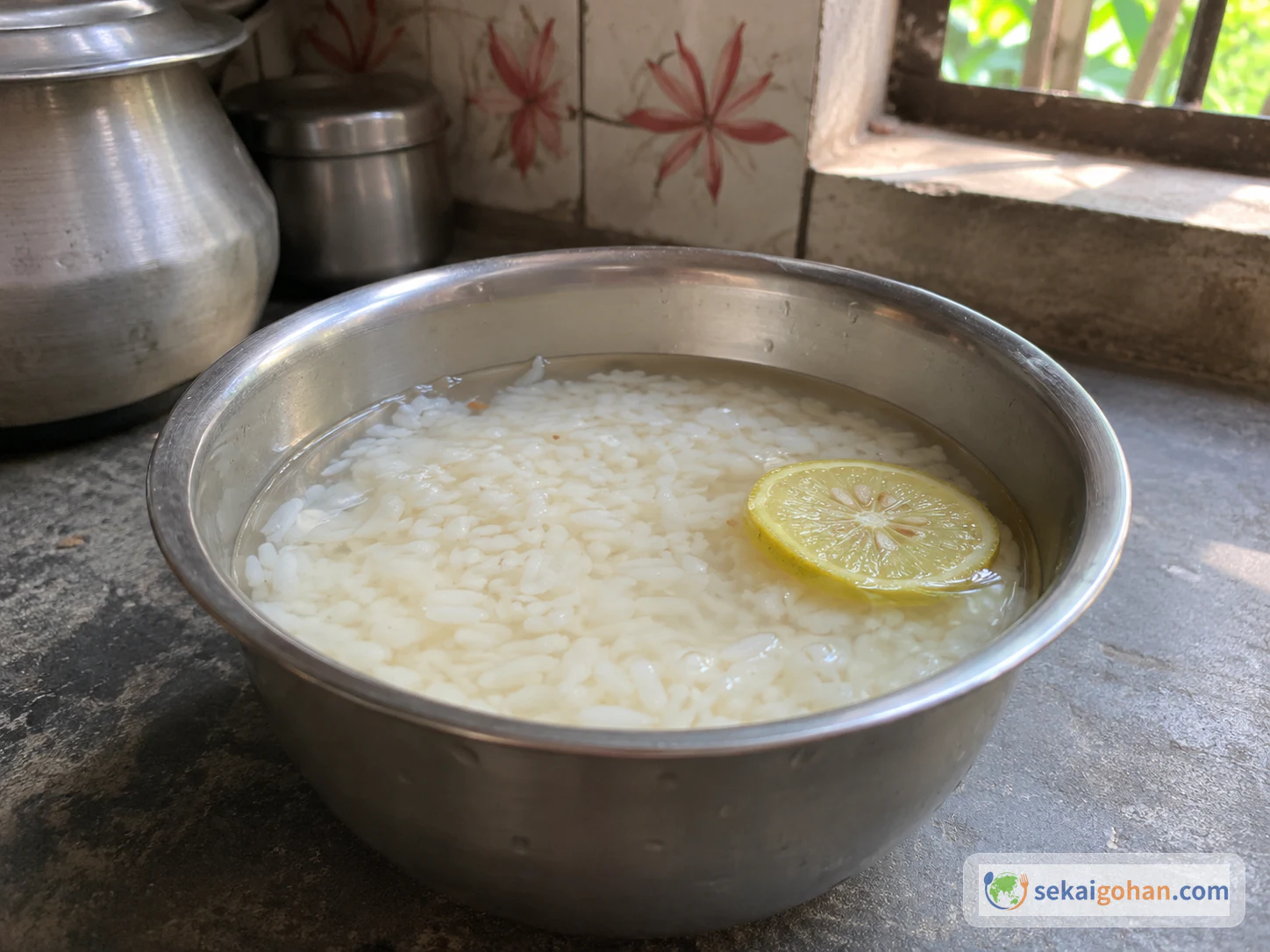
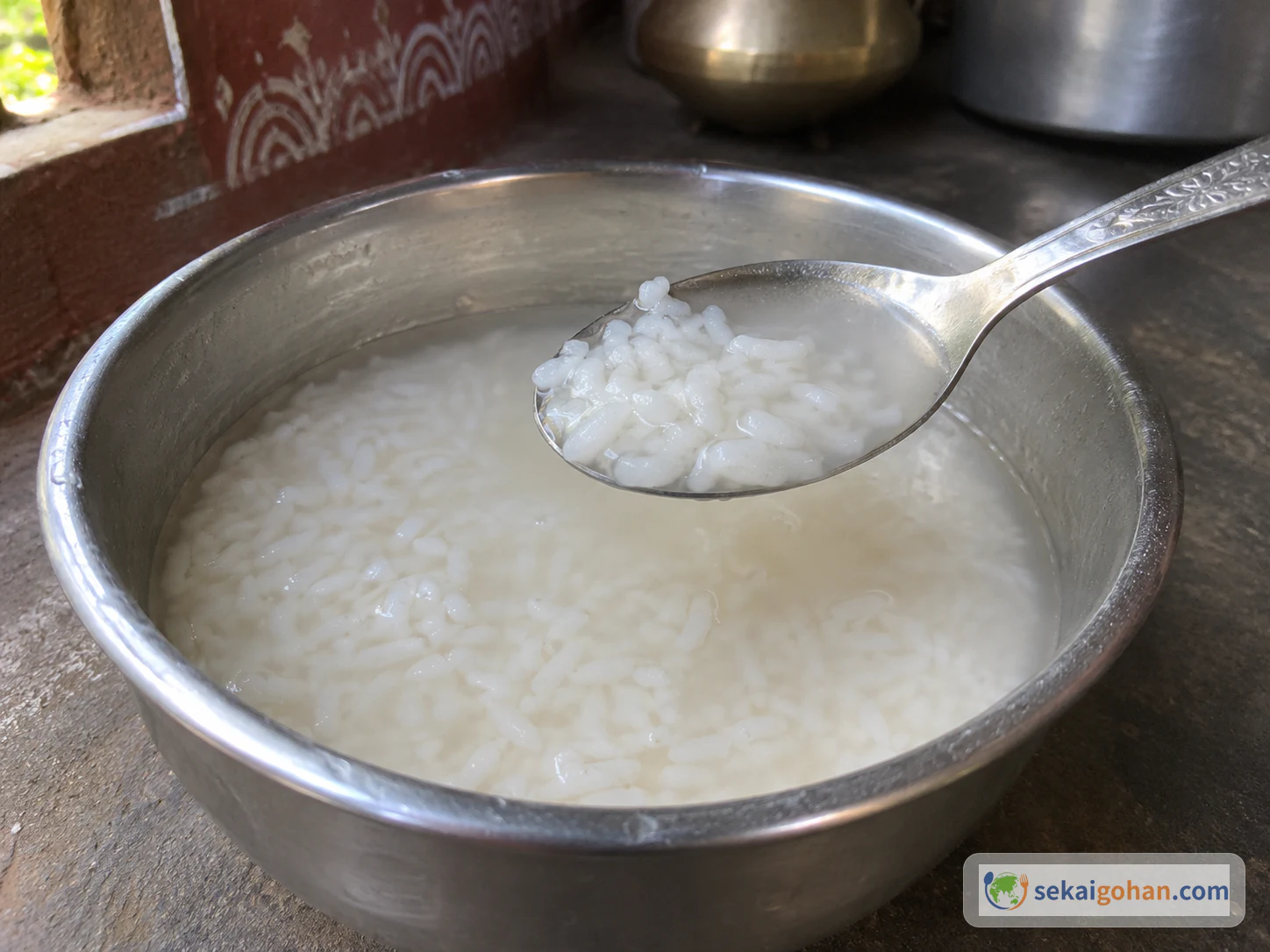
Odisha Tourism describes Pakhala in a single plain image: cooked rice is cooled, then added to a bowl of water. Around that bowl, the same page names foods such as baadi chura, vegetables and fish.
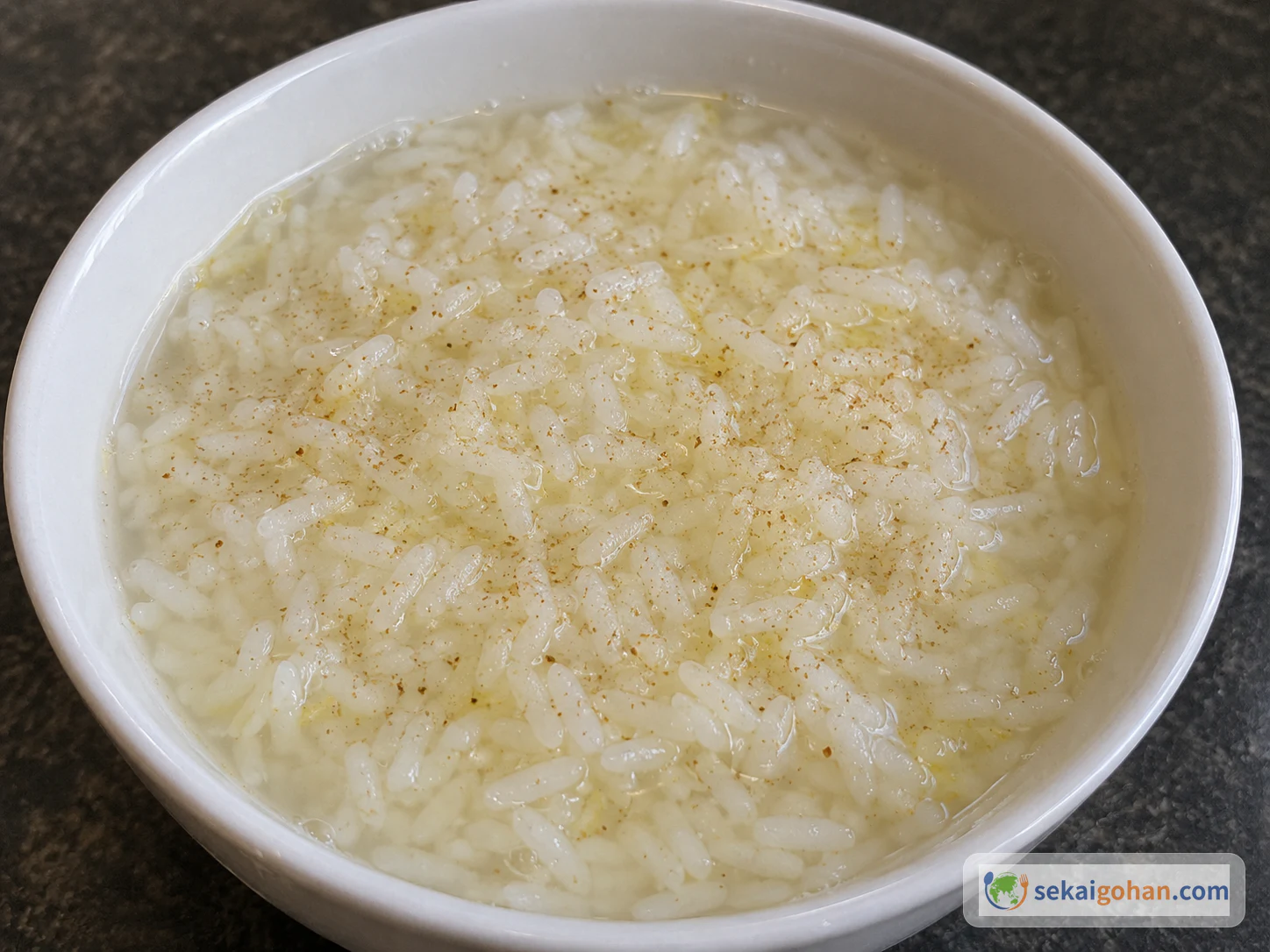
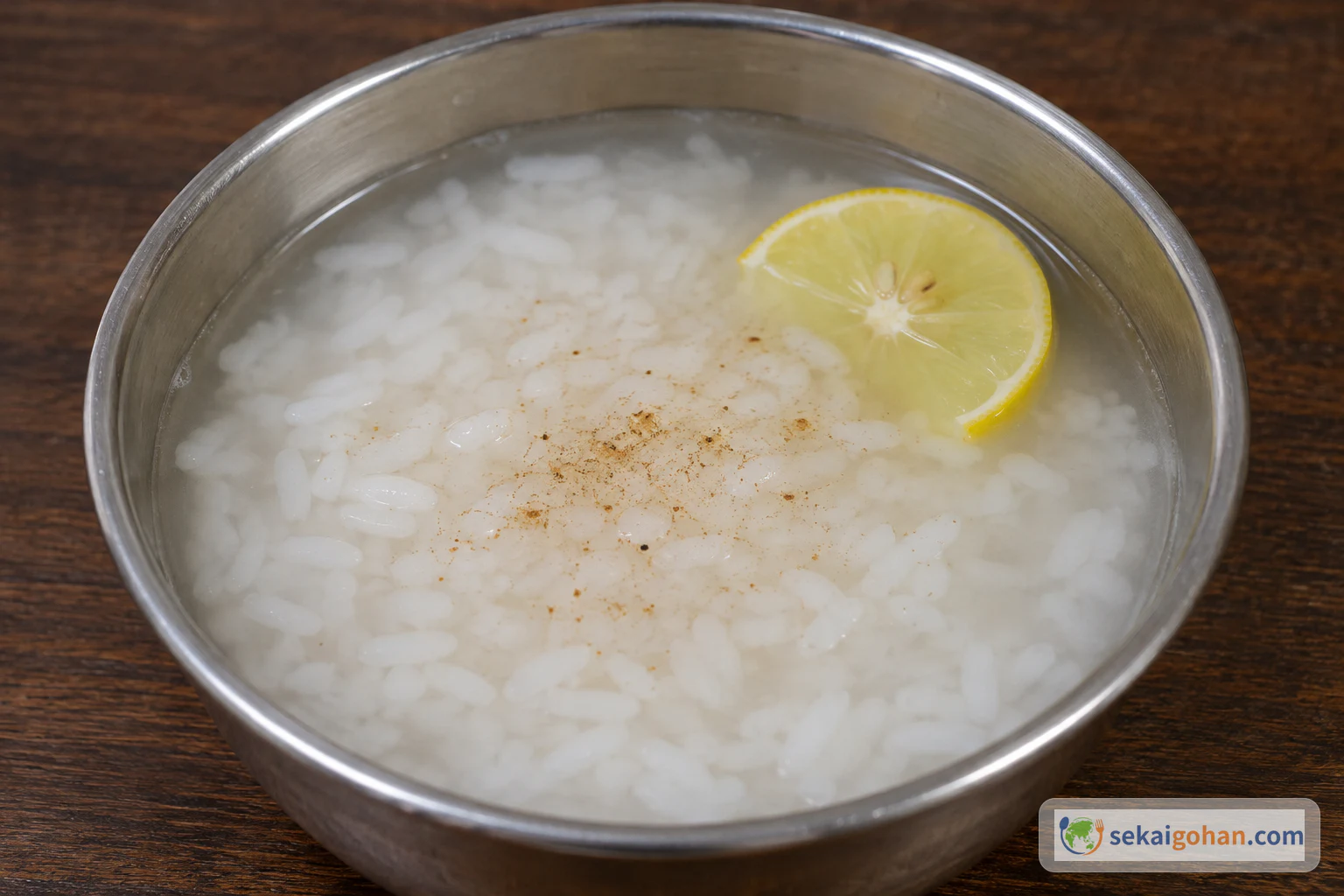
Pakhala comes in several styles. Sambad English lists Basi, Saja, Dahi, Sugandhi, Chupuda and Mitha, and each year's Pakhala Dibasa on March 20 gives the dish its own day. Traditional Basi Pakhala is left to stand in water overnight. Saja, as Sambad English explains it, is freshly cooked rice with water and a few drops of lemon, and it needs no fermentation.
This article teaches Saja only. We could not confirm public guidance on the temperature, time and endpoint for fermenting cooked rice safely at home, so Basi appears here as culture and not as a method.
What was adapted, and why
No consistent primary recipe with quantities for Saja turned up, so this version is an editorial adaptation:
- Amounts and seasoning are borrowed from Shristi Sahoo's Pakhala Bhata recipe on Rediff, which is a fermented recipe. That article says it serves 3–4; this is its own figure and has not been measured here. Its fermentation step is not used.
- The water amount is in line with a Saja method from Republic World, which uses 1 bowl of rice to 2 bowls of water. That version also includes curd and tempering, and those are not merged into this recipe.
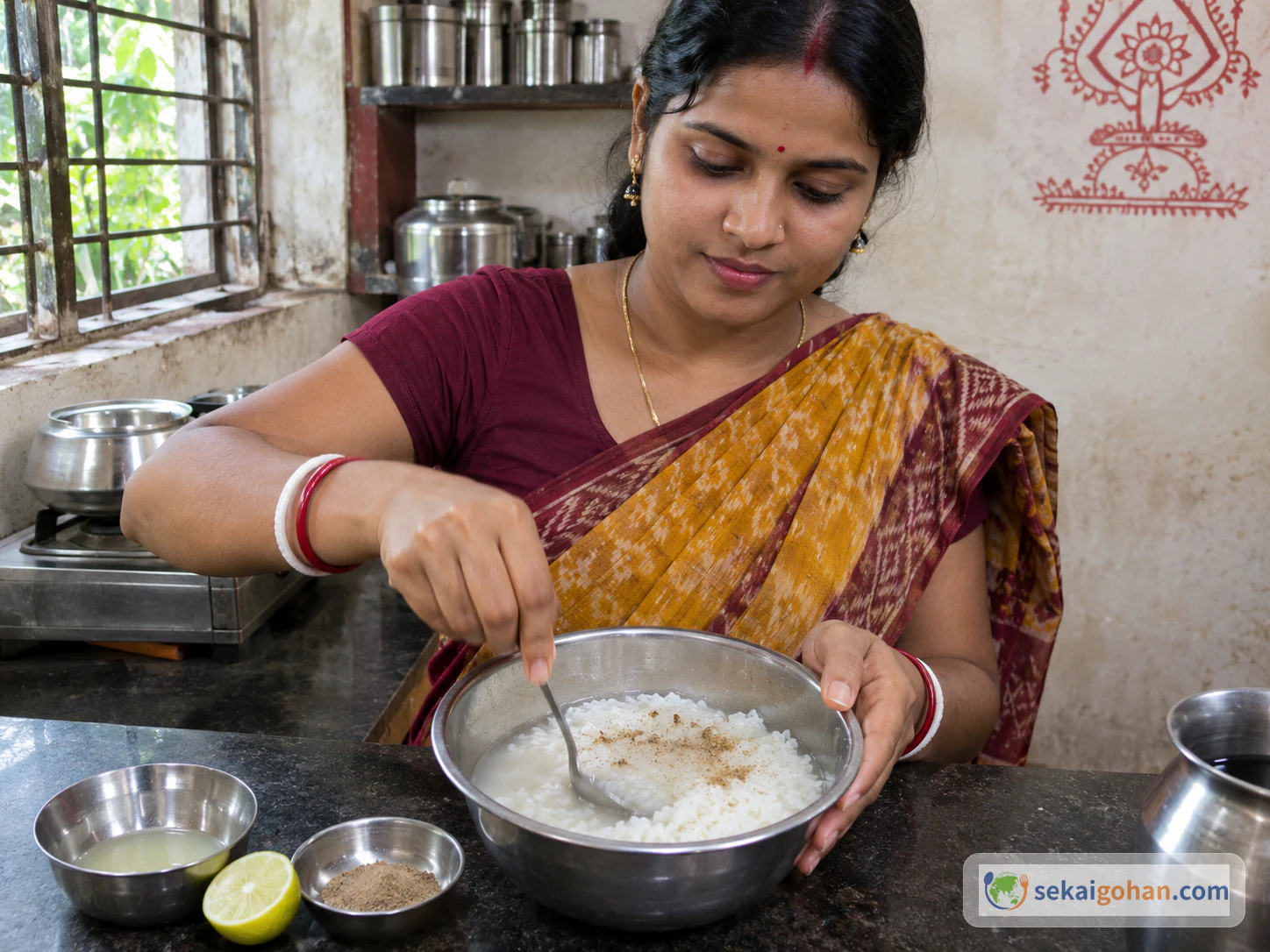
- Chaat masala comes from the Rediff recipe. It is not a standard Saja seasoning.
- Chilling in the fridge is this article's own safety decision. Neither Sambad English nor Odisha Tourism instructs it.
- The order of the lemon is also an editorial choice. Sambad English adds it with the water, while here it goes in as part of the finishing.
Ingredients
Choosing the Rice, Lemon and Chaat Masala
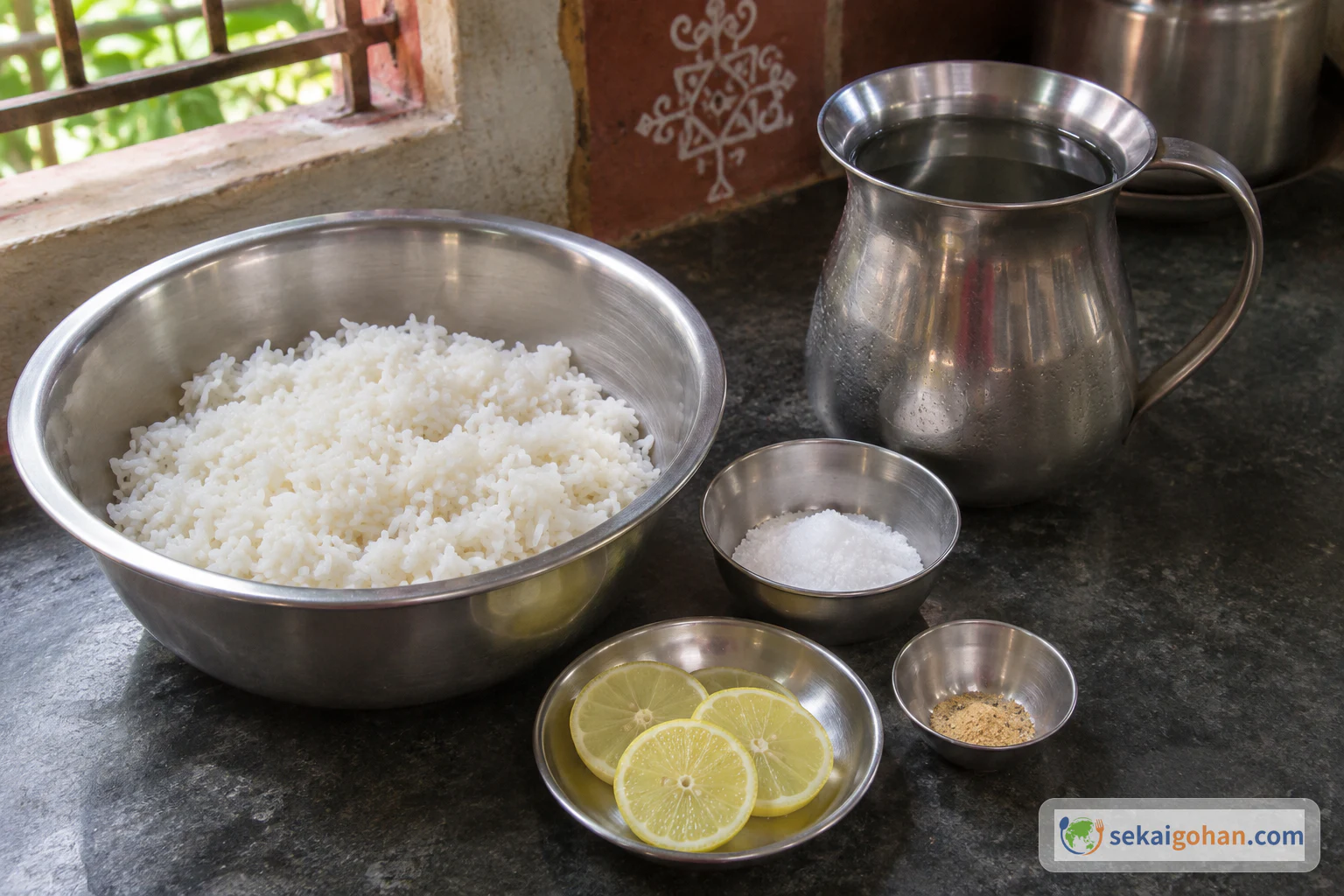
Rice: Cook it fresh for this dish, and don't use rice made ahead or left over from the day before.
Water: The amount is flexible. What matters is that the rice ends up completely submerged, so there is no fixed ratio to hit.
Chaat masala: Blends differ by product, so check the label for allergens.
Left out on purpose: Yogurt, tempering and coriander all appear in other recipes but are not part of this one.
Equipment
- Clean shallow dish
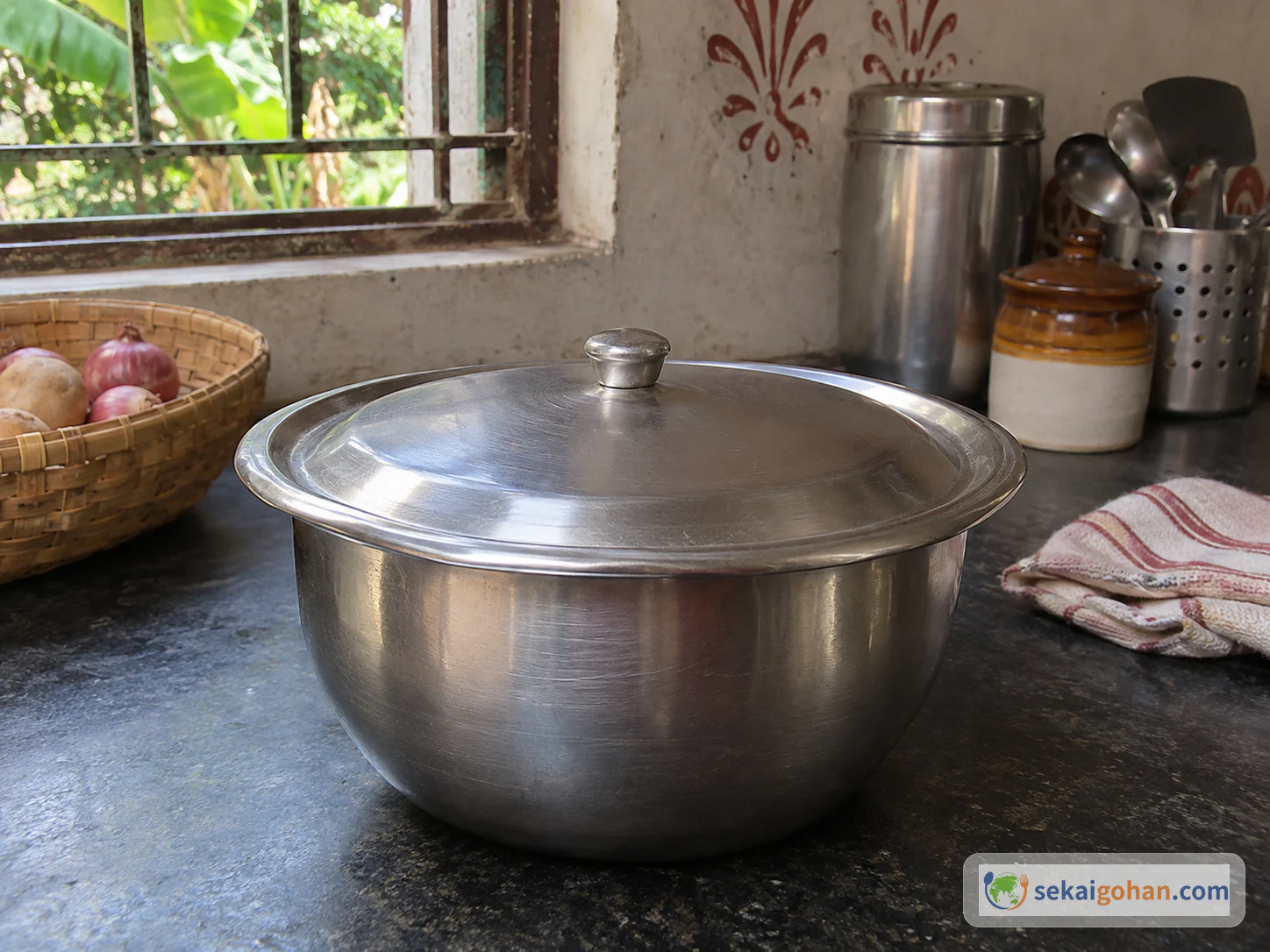
- Clean container with a lid
- Knife and cutting board
- Spoon
- Serving bowls
- Refrigerator at 10°C or below
Method
Bacillus cereus spores can survive cooking. In rice left at room temperature for a long time they multiply and produce a toxin that heating does not readily destroy. Keep the rice moving from pot to fridge, and don't leave it standing on the counter. Lemon acid, smell, bubbles, taste and reheating cannot tell you the rice is safe.
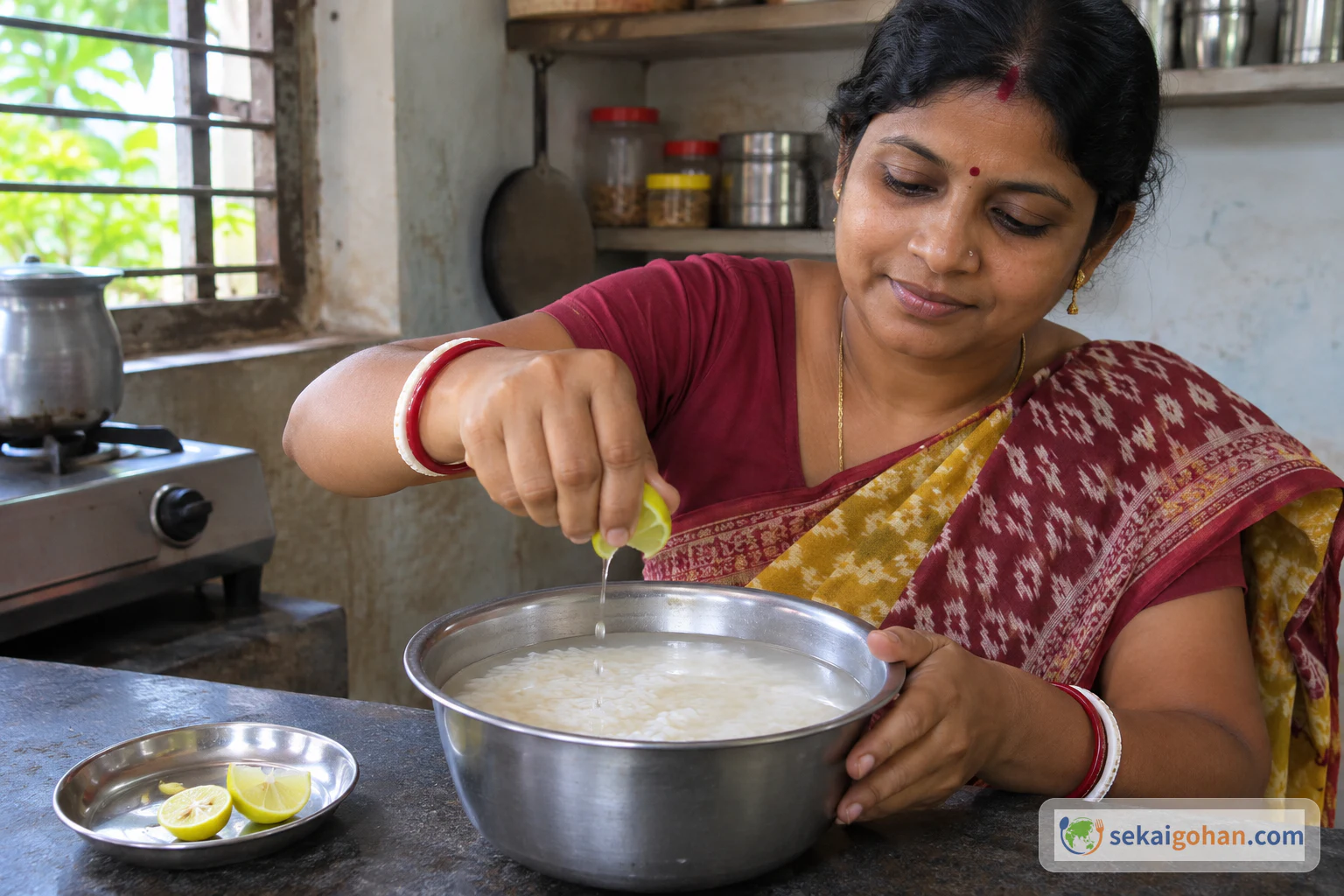
Wash the lemon peel well before you cut it, since the juice runs over the peel as you squeeze. Check that the rice is fully under water before you put the lid on.
Leftovers: Finish It the Same Day
Eat it all on the day you make it, and don't carry it over to the next day. Until you eat it, keep it covered in the refrigerator at 10°C or below. Throw away anything that has sat at room temperature for a long time, or that you have any doubt about.
The same-day limit is a deliberate editorial choice. Food Standards Scotland says cold cooked rice is safe to eat if it is cooled quickly, stored in the fridge and eaten within 24 hours. That advice covers cooked rice in general and is not a test result for rice sitting in water, so this recipe takes the shorter limit. Because this is a cold dish, there is no reheating step. Warming it would not rescue rice left out too long, since the toxin resists heat.
If Something Goes Wrong
| What happened | What to do |
|---|---|
| Rice is poking above the water | Add more cold drinking water until it is fully covered |
| The bowl tastes flat | Add salt a little at a time |
| It is too sharp with lemon | Add a little more cold drinking water, and use fewer slices next time |
| You only have leftover rice | Make this another day with freshly cooked rice |
| The covered rice sat out on the counter for a long time | Throw it away. Reheating or adding lemon won't fix it |
| It smells and tastes fine, but it is from yesterday | Don't eat it. Smell and taste are not safety checks |
Other Styles of Pakhala
These are here for context. This article gives no method for them, and none has been tested for it.
| Style or addition | What the materials say | Status here |
|---|---|---|
| Basi | The traditional style left to stand in water; Sambad English says it is served with badi-chura | Described only |
| Dahi, Sugandhi, Chupuda, Mitha | Named by Sambad English as further styles | Names only |
| Yogurt instead of lemon | An alternative in Shristi Sahoo's recipe | Not used |
| Tempering and coriander | Optional in Shristi Sahoo's recipe; Republic World's Saja also uses curd and tempering | Not used |
Pazhaya Soru, Panta Bhat and curd rice are separate dishes and are not treated as the same thing here.
Pakhala at the Odisha Table
What the sources record is variety: several styles of the dish, a range of foods served beside it, and a named day. Odisha Tourism mentions baadi chura, vegetables and fish alongside it, as well as torani. Sambad English pairs Basi with badi-chura and reports Pakhala Dibasa on March 20. Happy Tummy, a consumer site from ITC's Aashirvaad brand, also notes that some forms can be freshly prepared and not fermented.
These accompaniments are options, not a fixed set. The sources here do not establish where the dish began or how widely it is eaten, so this article makes no claims on either. For more dishes from around the country, see India.
Frequently Asked Questions
What is Pakhala?
It is a dish from Odisha of cooked rice soaked in water. It has several styles, including Basi and Saja.
How much water should I use?
The Rediff recipe gives 2–3 cups, but what counts is covering the rice completely. Treat it as a flexible amount, not a fixed ratio.
Can I leave it out overnight at room temperature?
Traditional Basi Pakhala is made that way. We could not confirm public guidance on the temperature, time and endpoint for doing it safely at home, so this article does not give those instructions. That isn't a judgment that the tradition is dangerous, only that we can't give you safe conditions for it.
Can I use leftover rice?
Shristi Sahoo's fermented recipe prefers day-old rice while also saying fresh rice works best. This recipe uses freshly cooked rice only, because it keeps the rice from sitting around before it is chilled.
Can I keep it until the next day?
No. Finish it the day you make it.
What should I serve with it?
Odisha Tourism names baadi chura, vegetables and fish among its examples. All are optional, and there is no single standard set.
Is chaat masala traditional in Saja Pakhala?
It isn't presented that way here. It comes from Shristi Sahoo's recipe, while Sambad English describes Saja with lemon.
Sources
- Shristi Sahoo, "Odia Recipe: Shristi's Pakhala Bhata," Rediff Get Ahead. A fermented recipe, used only for quantities, the serving claim and seasoning order in this adapted version. https://www.rediff.com/getahead/report/odia-recipe-shristis-pakhala-bhata/20241210.htm
- Pritisha Das, "The soul food of Odisha," Odisha Tourism, Department of Tourism. Describes cooling cooked rice and adding it to water, and names foods served alongside. It is a tourism page, not a recipe or food-safety method. https://apps.odishatourism.gov.in/blog-detail/the-soul-food-of-odisha
- Sambad English Bureau, "On Pakhala Dibasa, try these varieties of the popular Odia delicacy," Sambad English, 2025. Describes Saja and lists the styles of Pakhala and the context of Pakhala Dibasa. Read through the Samaja e-paper copy. https://dev.samajaepaper.in/article/miscellany/on-pakhala-dibasa-try-these-varieties-of-the-popular-odia-delicacy-8871540/8385734
- "Pakhala Bhata recipe: know steps to prepare this Odisha delicacy," Republic World, 2020. Used only to corroborate the proportion of 1 bowl of rice to 2 bowls of water for Saja. https://www.republicworld.com/lifestyle/food/pakhala-bhata-recipe-know-steps-to-prepare-this-odisha-delicacy
- Adrija Regmi, "Panta Bhat, Pakhala & Poita Bhat: India's Fermented Rice Traditions, Explained," Happy Tummy by Aashirvaad (ITC), 2026. Notes that some forms of Pakhala can be freshly prepared and not fermented. https://happytummy.aashirvaad.com/en/healthy-eating/panta-bhat-pakhala-poita-bhat-fermented-rice/
- Food Standards Scotland, "Rice (food safety at home)." Guidance on chilling cooked rice quickly, ideally within 1 hour, and eating it within 24 hours. It covers cooked rice in general, not soaked rice. https://foodstandards.gov.scot/consumers/food-safety/at-home/rice
- Ministry of Agriculture, Forestry and Fisheries of Japan, Bacillus cereus guidance (in Japanese). Advises against making rice ahead in large amounts, and covers portioning, refrigerating quickly and covering cooked food. https://www.maff.go.jp/j/syouan/seisaku/foodpoisoning/f_encyclopedia/bacillus.cereus.html
- Ministry of Health, Labour and Welfare of Japan, six points for preventing food poisoning at home (in Japanese). Covers the 10°C fridge guide, not leaving food at room temperature for long, handwashing, shallow containers and throwing away food in doubt. https://www.mhlw.go.jp/www1/houdou/0903/h0331-1.html
- Japan Institute of Baking and the All Nippon Bread Cooperative Federation, guide on hazards in school-lunch cooked rice (in Japanese), hosted by the Ministry of Health, Labour and Welfare. Used only for the hazard explanation: spores that survive cooking, growth at room temperature and a heat-stable toxin. It is not a home fermentation method. https://www.mhlw.go.jp/content/11130500/000785942.pdf
- FoodSafety.gov, "Bacillus cereus." Lists rice and leftovers held too long at room temperature as sources, and advises quick refrigeration in a wide, shallow container. https://www.foodsafety.gov/print/pdf/node/14?id=bacillus-cereus-table