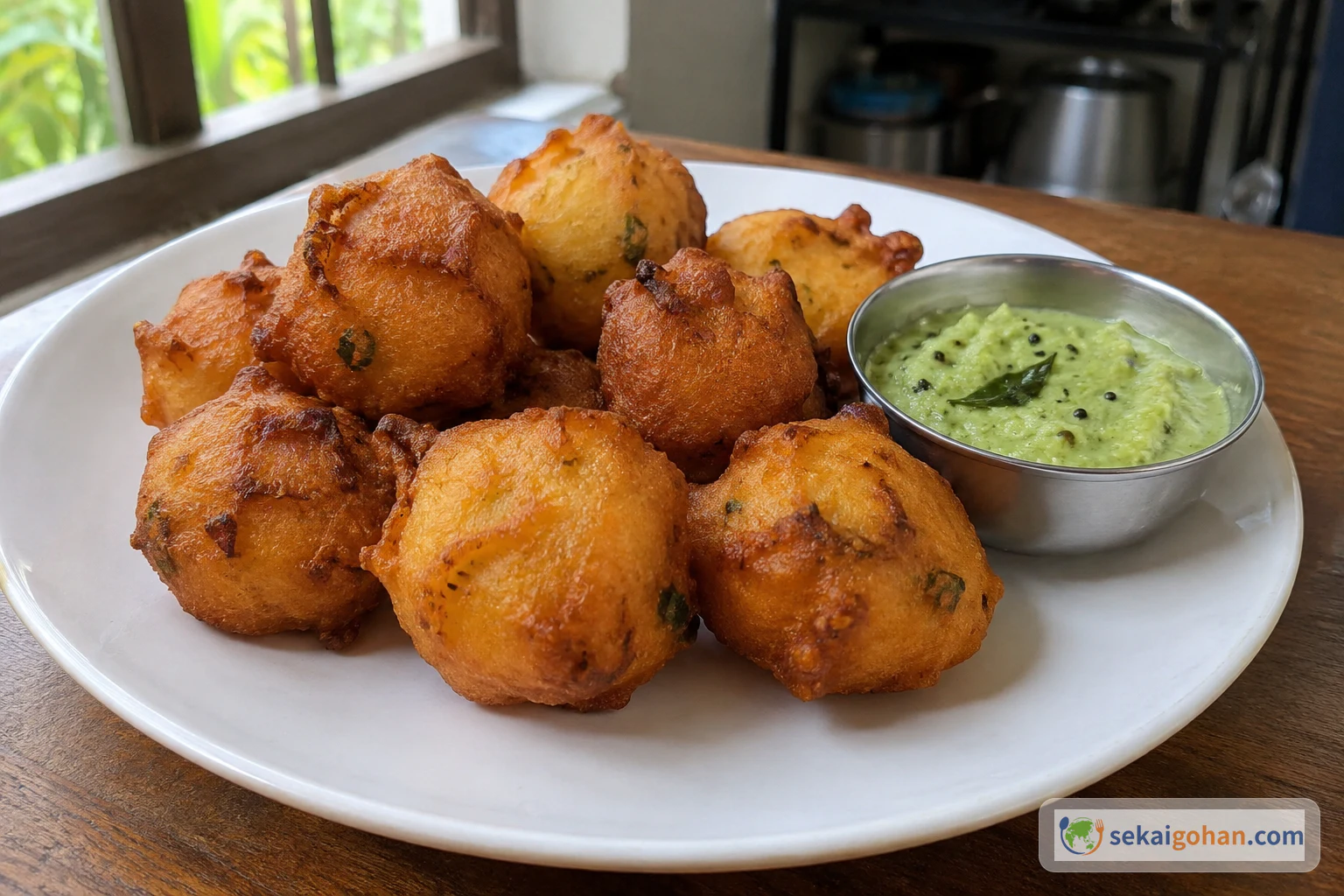
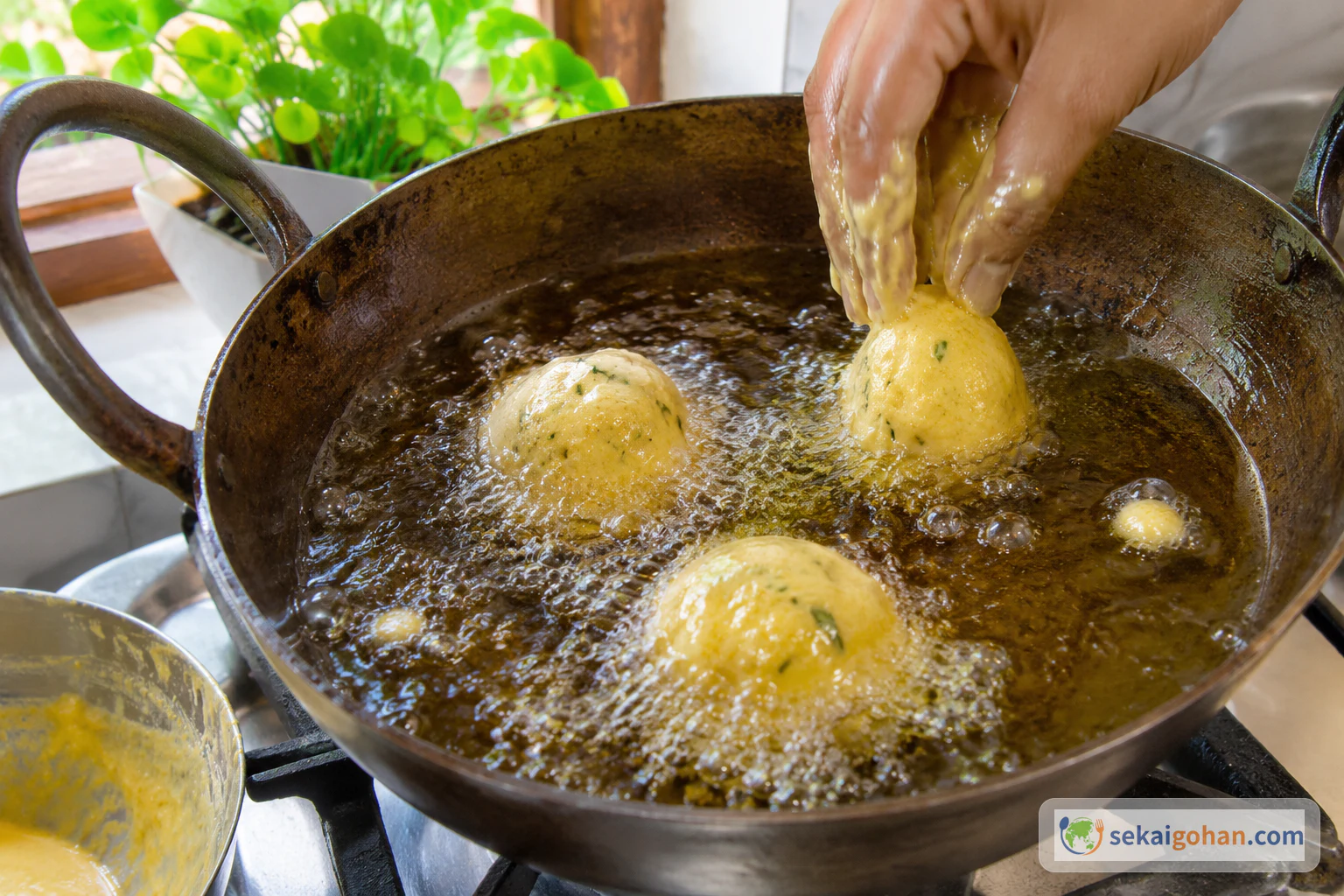
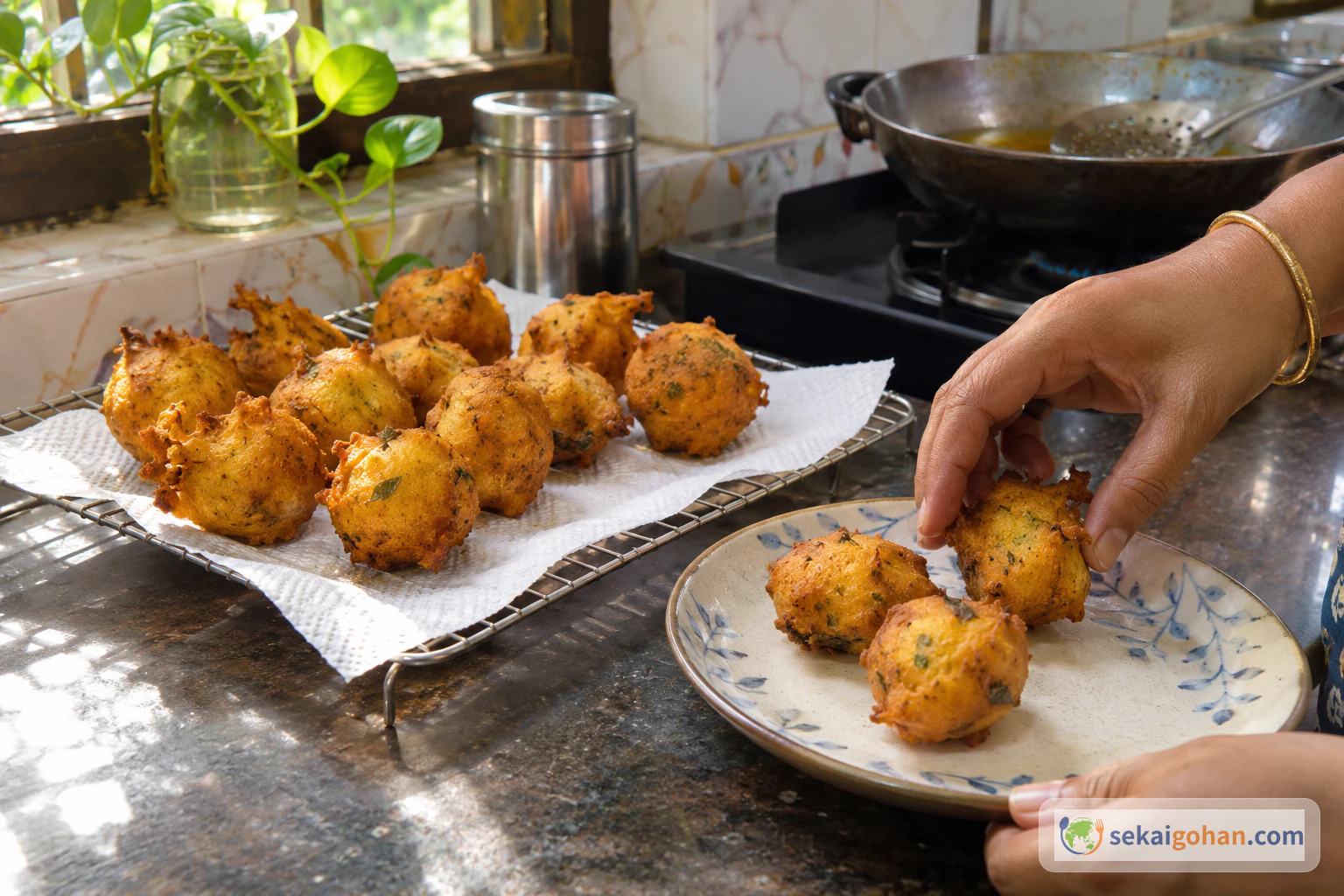
A ball of batter-coated potato slides into the oil, sinks for a heartbeat, then rises with a ring of bubbles around it. A minute later it turns over, and the yellow batter begins to go golden and crisp. Aloo bonda is a South Indian fritter: mashed potato tempered with mustard seeds, urad dal, curry leaves, green chilli and ginger, rolled into balls and fried in a thick chickpea-flour batter. It comes to the plate hot and is eaten with coconut chutney and a glass of tea. Break one open and you find a crackling shell around a soft, lemony, gently spiced filling that is still steaming.
Tea Stalls, Evening Snacks and a Name That Covers Many Fritters
In Tamil Nadu, bondas are a common sight in tea stalls and homes alike. They are the evening snack of restaurants and roadside shops, the thing people stop for between work and dinner, and they also turn up at weddings, festivals and celebrations. In Karnataka they are served at tiffin centres and restaurants as an evening snack too. The scene is the same in both places: a hot batch out of the oil, a little chutney, and tea.
Where the potato bonda began is not settled. It is often linked to the hotels of Udupi, on the Karnataka coast, and to Udupi cooking more broadly, but the exact history is still debated and no single shop or date can be pinned to it.
In Tamil, aloo bonda is called Urulaikizhangu Bonda, which means potato bonda. "Aloo" is the Hindi word for potato, so both names say the same thing: this is the bonda with potato inside.
Telling bondas apart
"Bonda" is a family name for South Indian fried balls, and the members differ in what goes inside and what goes around. Aloo bonda, the potato kind, is the most common. Mysore bonda from Karnataka has no potato at all: it is a batter of all-purpose flour, yogurt and spices fried into balls that are crisp outside and fluffy inside, sold as an evening snack on the street. In Tamil Nadu there is also a bonda made from a batter of ground urad dal (ulundu). The potato vada or batata vada of western India sits close by in name and idea, and is a dish of its own.
The quickest test is to bite in. If the centre is spiced mashed potato inside a besan and rice-flour shell, it is aloo bonda. Proportions shift from kitchen to kitchen, with more or less batter, peas or cashews in the filling, chilli powder in the coating, but that potato centre stays. For more dishes from across the country, see Indian food on Sekai Gohan.
Ingredients (serves 4)
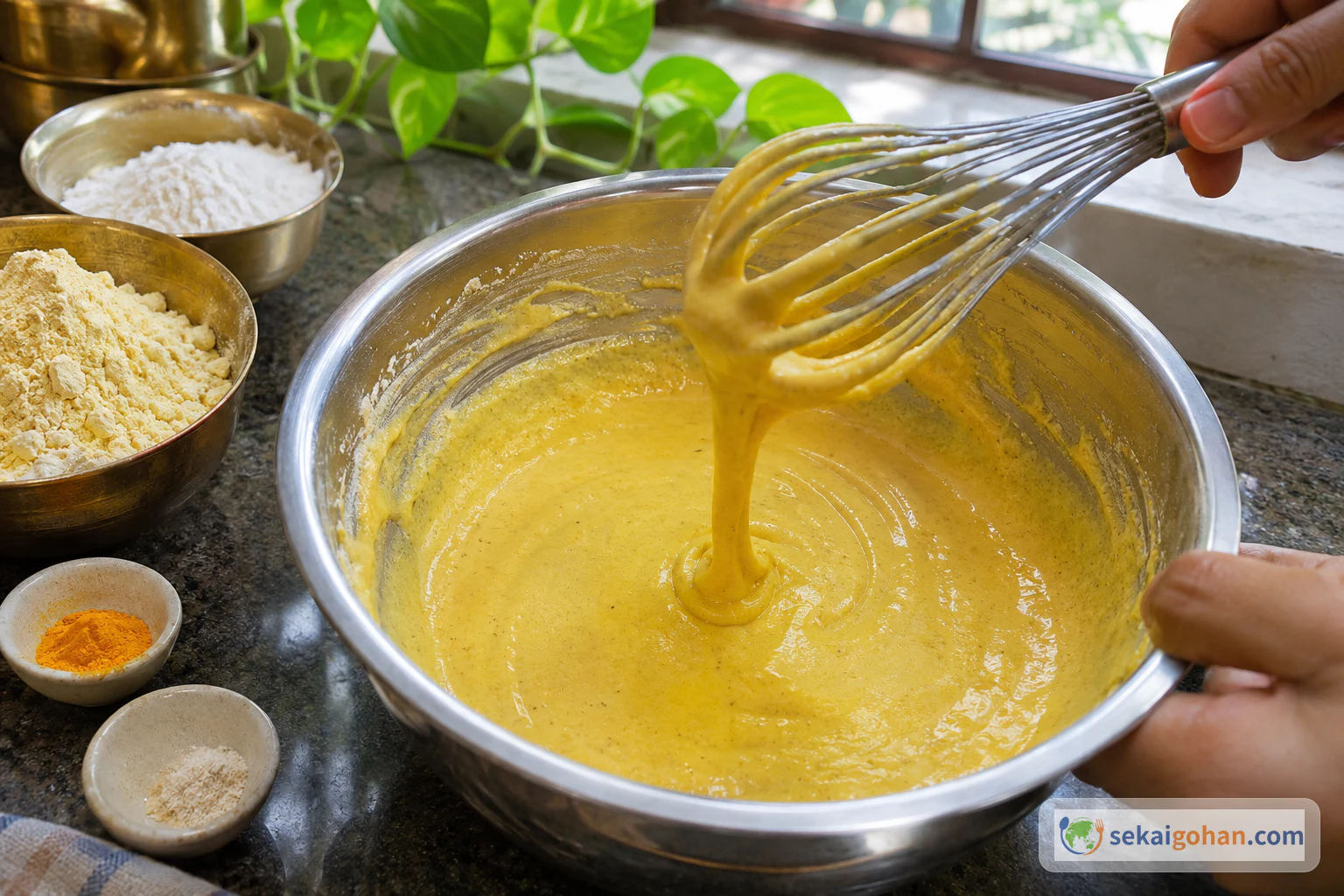
Add the water a little at a time. The batter has to be thick, or it slides off the potato and the bondas lose their round shape in the oil. It should coat a ball in one dip and hang on.
Besan is made from chickpeas and urad dal is a legume. Ghee is a dairy product. The cashew variation adds tree nuts. Check the labels on packaged spices and flours for wheat and for shared-facility statements.
Equipment
- Pot for boiling the potatoes, and a skewer to test them
- Potato masher or fork
- Frying pan for the tempering and filling
- Flat plate or tray for cooling the filling
- Mixing bowl and whisk for the batter
- Deep pan or kadai for frying
- Frying thermometer (useful, though the batter test works without one)
- Slotted spoon
- Wire rack or kitchen paper for draining
Buying and Substituting
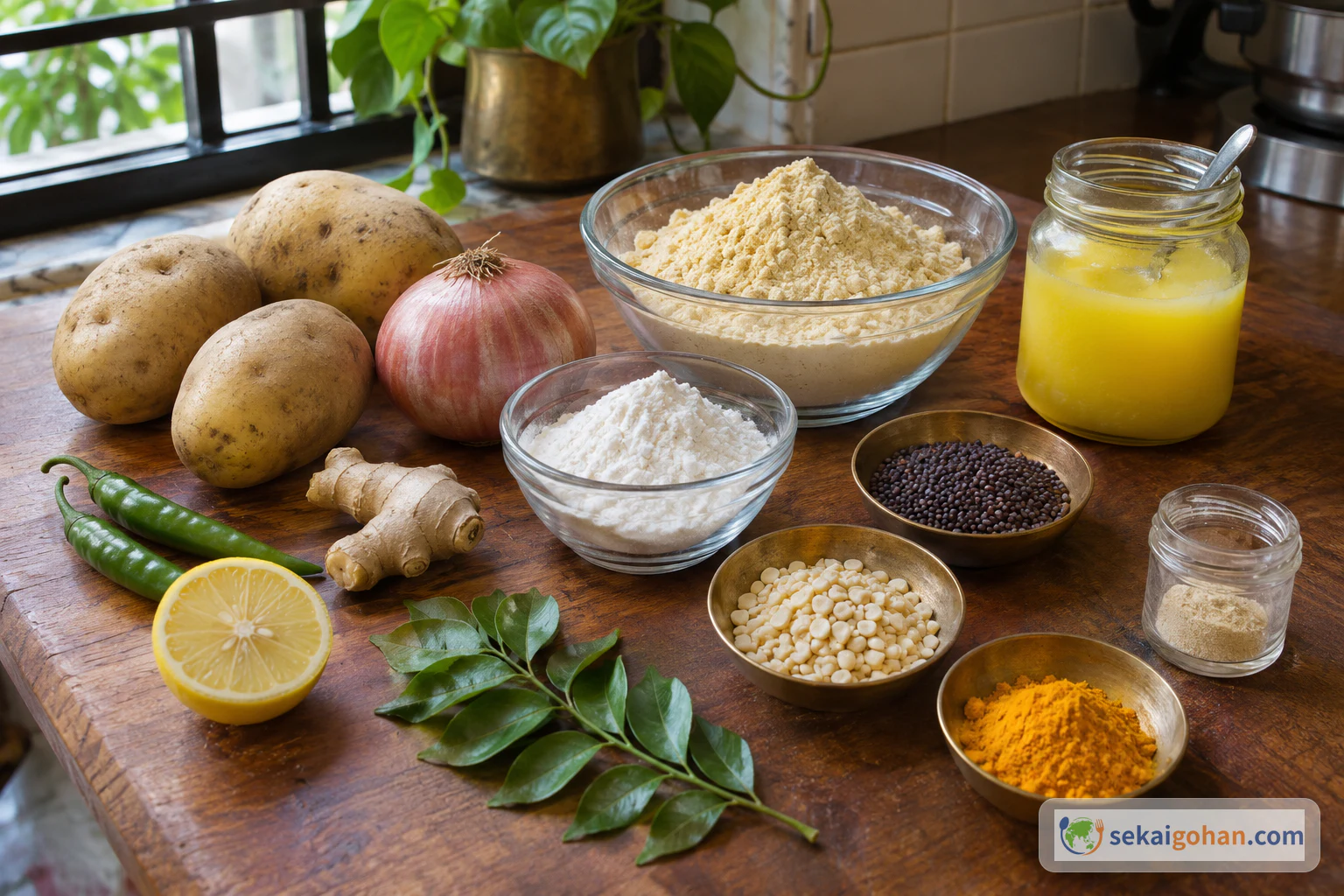
Most of this list comes from an ordinary supermarket. What is worth a trip to an Indian grocer or an online order is besan, split urad dal, asafoetida and curry leaves. Besan is sold as gram flour, besan or chickpea flour; any of the three works. Asafoetida is strong, so a small jar lasts a very long time.
| Ingredient | If you can't find it | What changes |
|---|---|---|
| Curry leaves | Fresh or dried both work; leave out if you have neither | Without them the filling loses its South Indian fragrance |
| Urad dal | Leave it out | The filling loses its toasty notes and its little crunchy bits |
| Asafoetida | Leave it out | The batter loses its savoury depth |
| Ghee | Unsalted butter | The toasty flavour softens; the batter still contains dairy |
| Green chillies | A small dried red chilli, used sparingly | Sharper heat, less fresh green aroma |
| Lemon juice | Bottled lemon juice | No real change |
| Rice flour | Any plain rice flour for cooking or baking | Keep it in: it is what makes the shell crisp |
The potato, the tempering and the besan batter are the dish. Everything else on the table above can bend to what your shop has.
Method
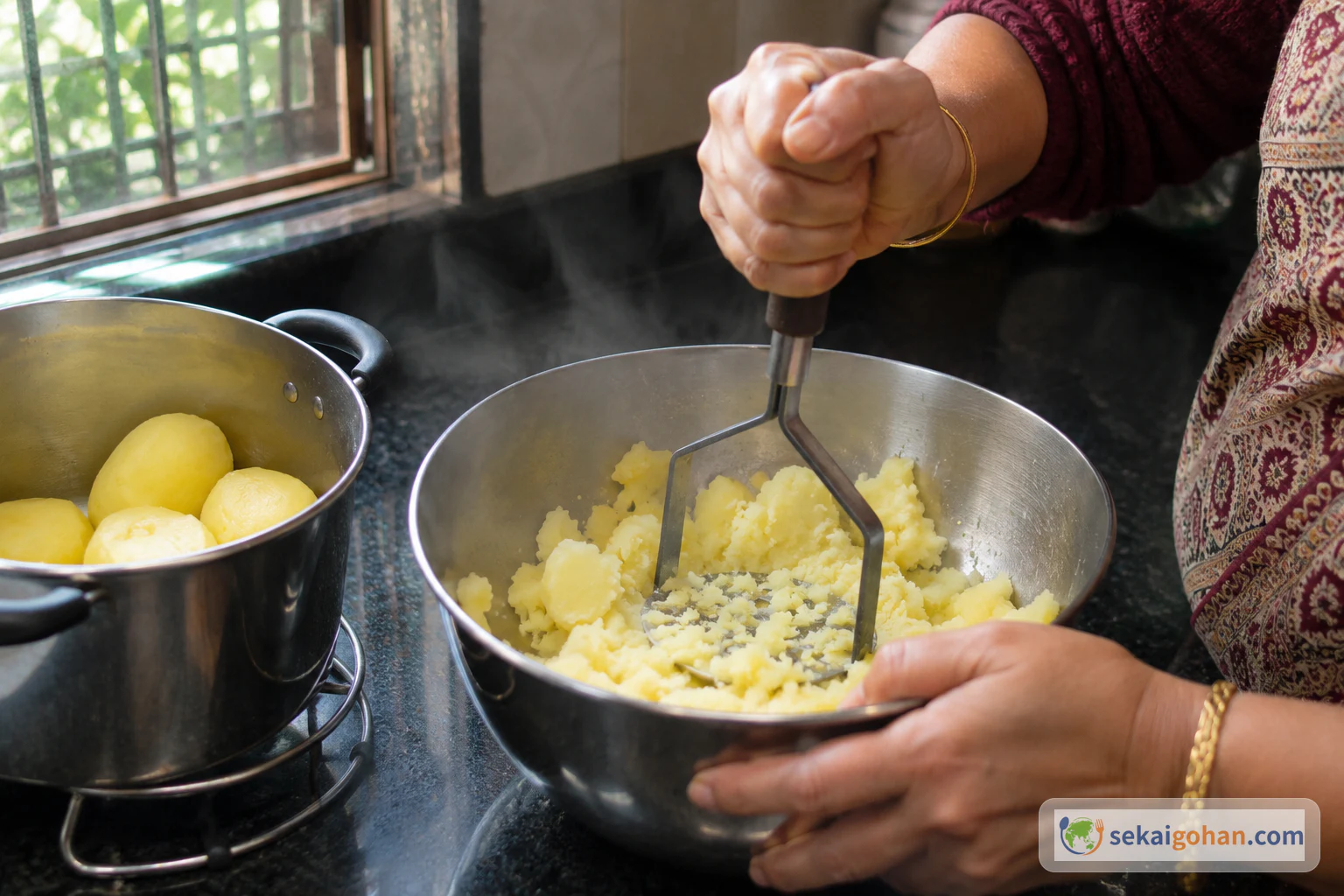
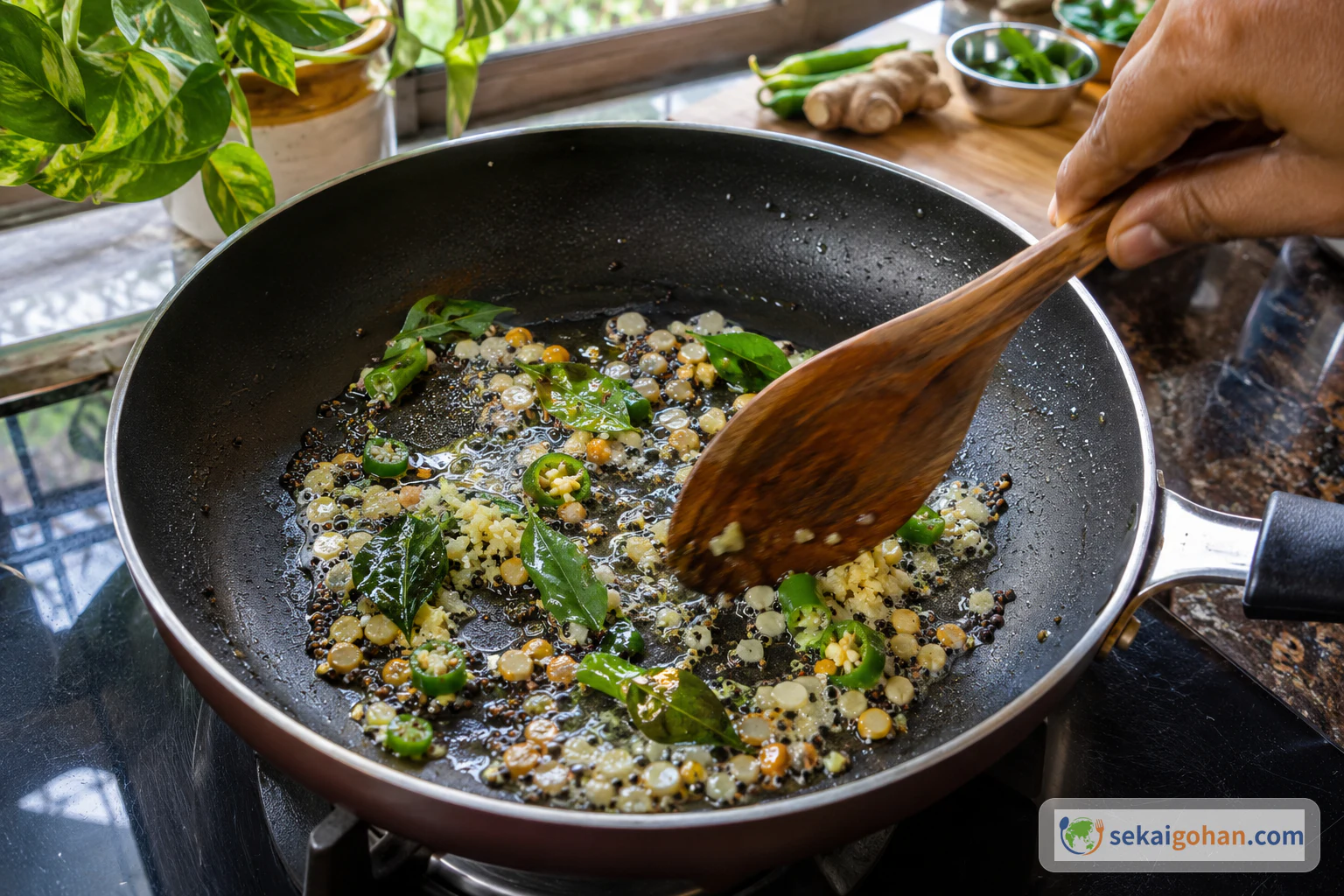
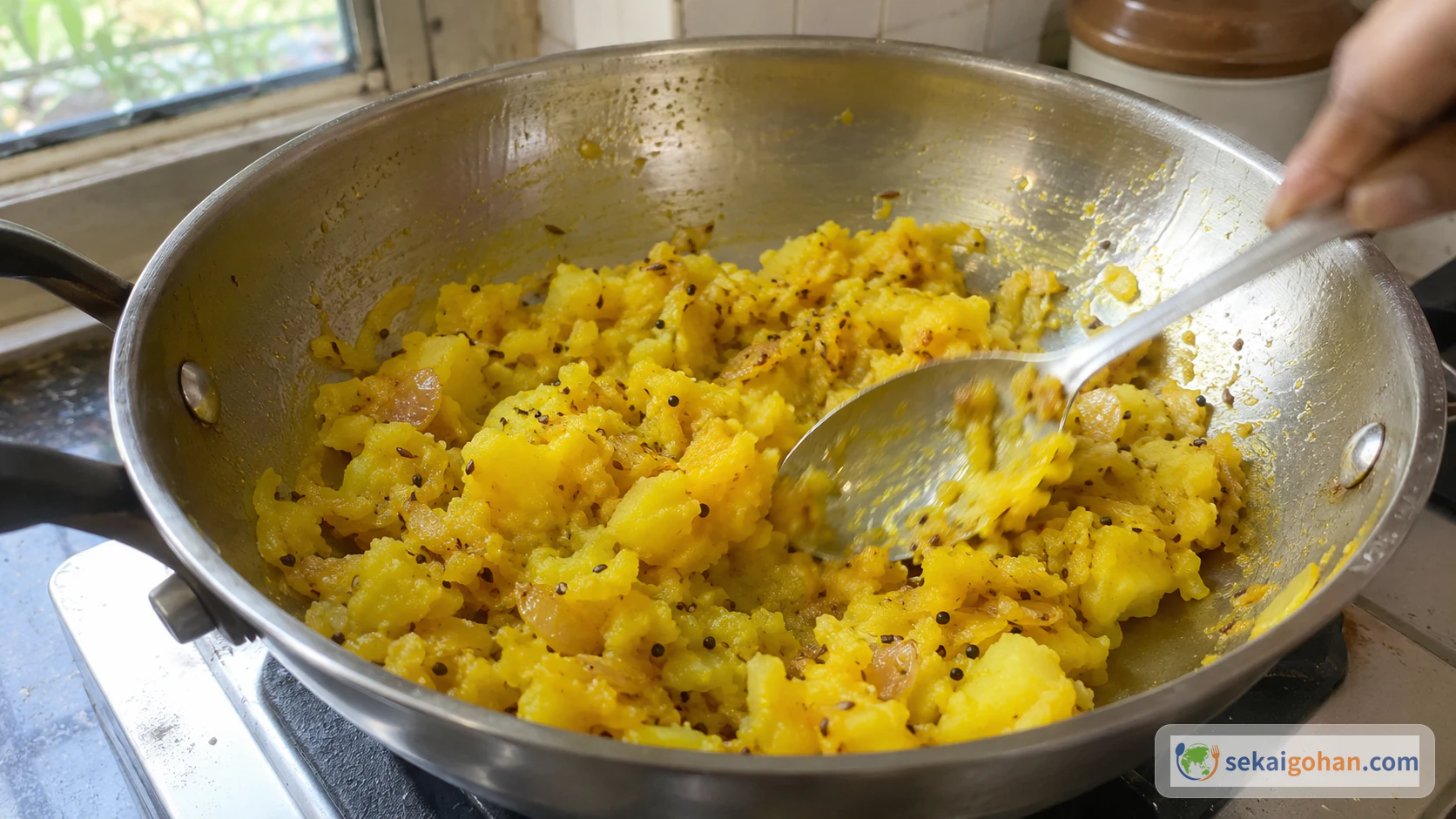
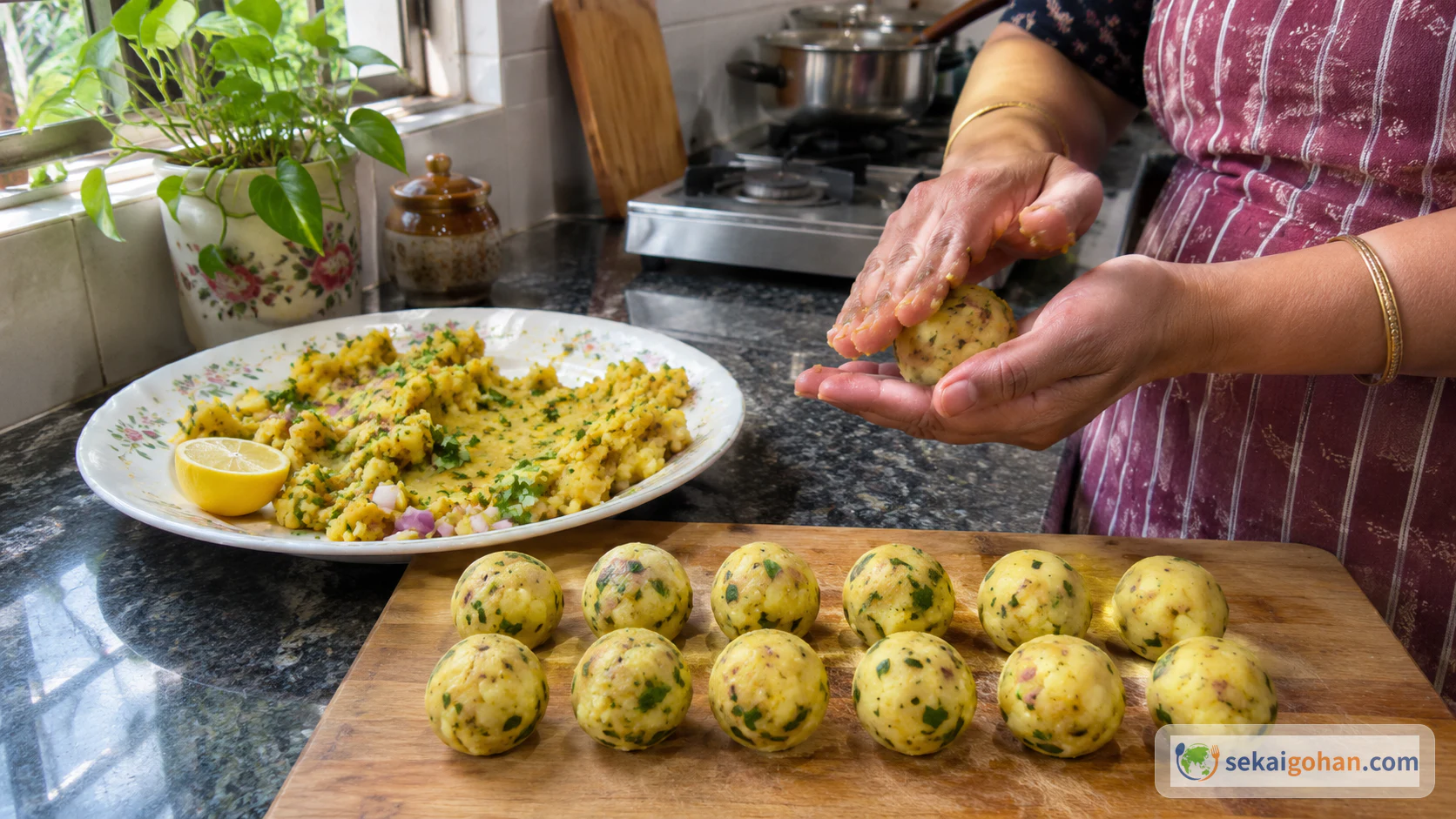
The filling comes first, because it has to cool before you can shape it. Boil the potatoes, build the tempering, fold everything together, then spread the filling out. While it cools is the time to mix the batter and set up the frying station. The frying itself goes fast, so have the shaped balls, the batter, the oil and a draining rack ready before the first bonda goes in.
Warm filling is sticky and slumps in your palms. Wait until it is cool enough to handle comfortably, then shape. The balls hold their round shape and take the batter evenly.
Stay at the stove the whole time the oil is on the heat and keep the flame under control. Lower each ball in gently from close to the surface so the oil does not splash, and keep children and loose sleeves away from the pan.
When It Goes Wrong
| What you see | Why | What to do |
|---|---|---|
| Batter slides off or the bondas won't stay round | The batter is too thin | Whisk in more besan until it clings; thick batter holds its shape in the oil |
| The balls are sticky and won't hold their shape | The filling was shaped while still warm | Let it cool fully on the plate, then roll with oiled hands |
| The filling is too soft to shape | The mash is watery | Return it to the pan and stir over the heat to drive off moisture, then cool again |
| The shell darkens fast and the batter underneath is raw | The oil is too hot | Lower the heat, check with a test drop and fry the next batch more gently |
| The bondas come out heavy and oily | The oil is too cool, so the batter soaks it up | Raise the heat until a test drop rises slowly and steadily, and fry fewer at a time |
Serving and Variations
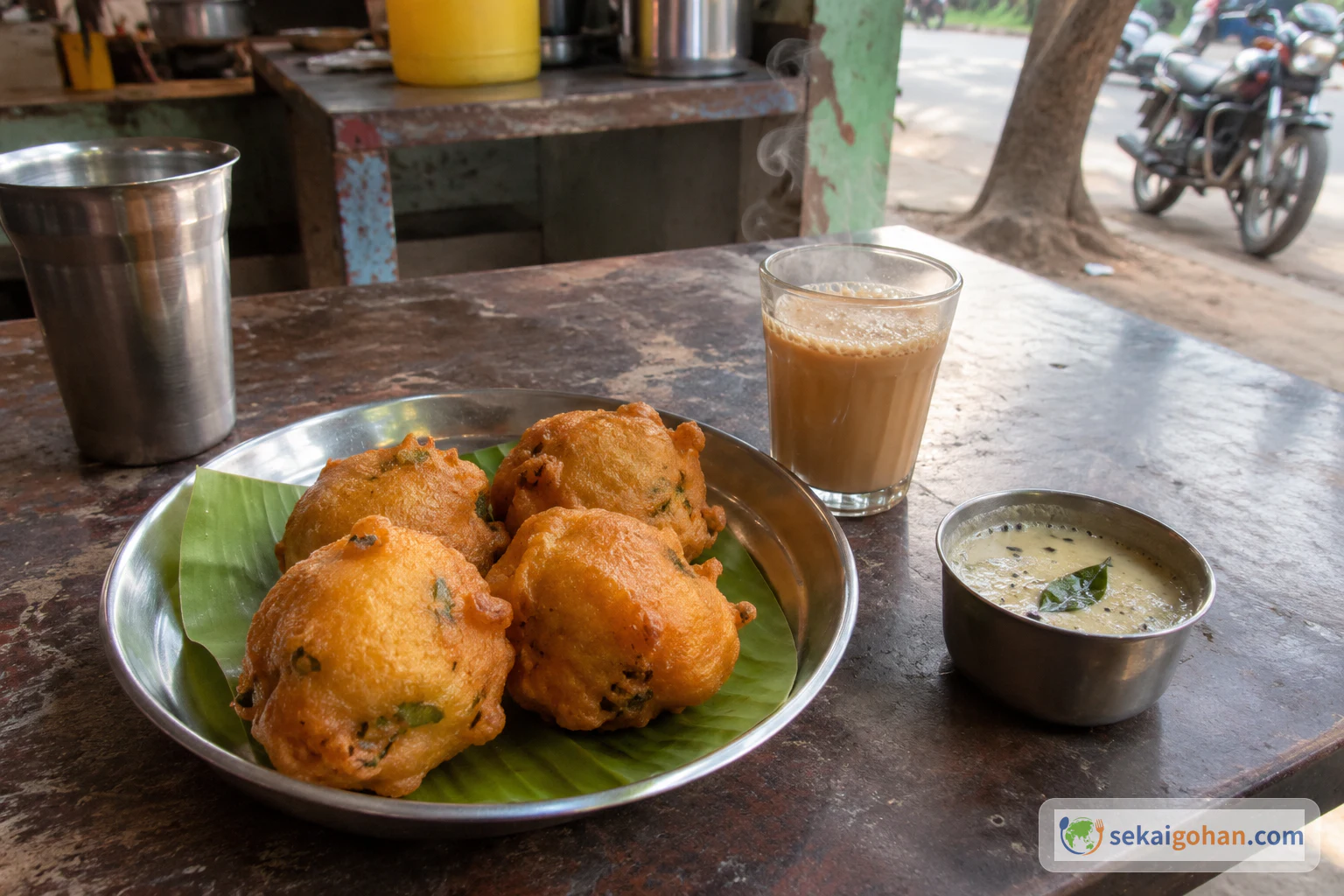
Aloo bonda belongs to the late afternoon and early evening, with coconut chutney and a cup of masala chai. Any chutney you like works, and tomato ketchup is a common partner too. Put them out as soon as they leave the oil and let everyone pull one apart while it is still steaming. Bondas are at their best hot and fresh, so fry only as many as the table will finish.
Variations
- Red chilli in the batter. A little red chilli powder in the coating gives a deeper orange colour and more heat on the outside.
- Green peas in the filling. Stir in ¼ cup (60 ml) green peas with the potato for sweetness and flecks of colour.
- Cashews in the tempering. Fry 1 tbsp cashews with the mustard seeds for a toasty, rich crunch. This adds tree nuts to the allergen list.
- Mint in the filling. Chopped mint folded into the potato brings a cool, fresh edge against the chilli.
- Double-fried. Fry the bondas twice for an extra-crisp shell. It takes more oil time, so make your first batch with a single fry.
Frequently asked questions
Do I need a thermometer?
No. The batter test does the job: a drop that sinks briefly and then rises slowly means the oil is ready. A thermometer helps on your first try and when the heat drifts between batches.
Why does the batter use both besan and rice flour?
Besan gives the coating its body and nutty taste. Rice flour is what makes it crisp. With besan alone, the shell turns out softer.
How large should the balls be?
Divide the filling into 12 equal balls. Larger balls need longer on each side in the oil, so keep them even and fry them by colour.
Can I make them less spicy?
Yes. Use one green chilli instead of two, or remove the seeds before chopping, and leave the red chilli powder out of the batter. The ginger and mustard seeds keep the filling lively.