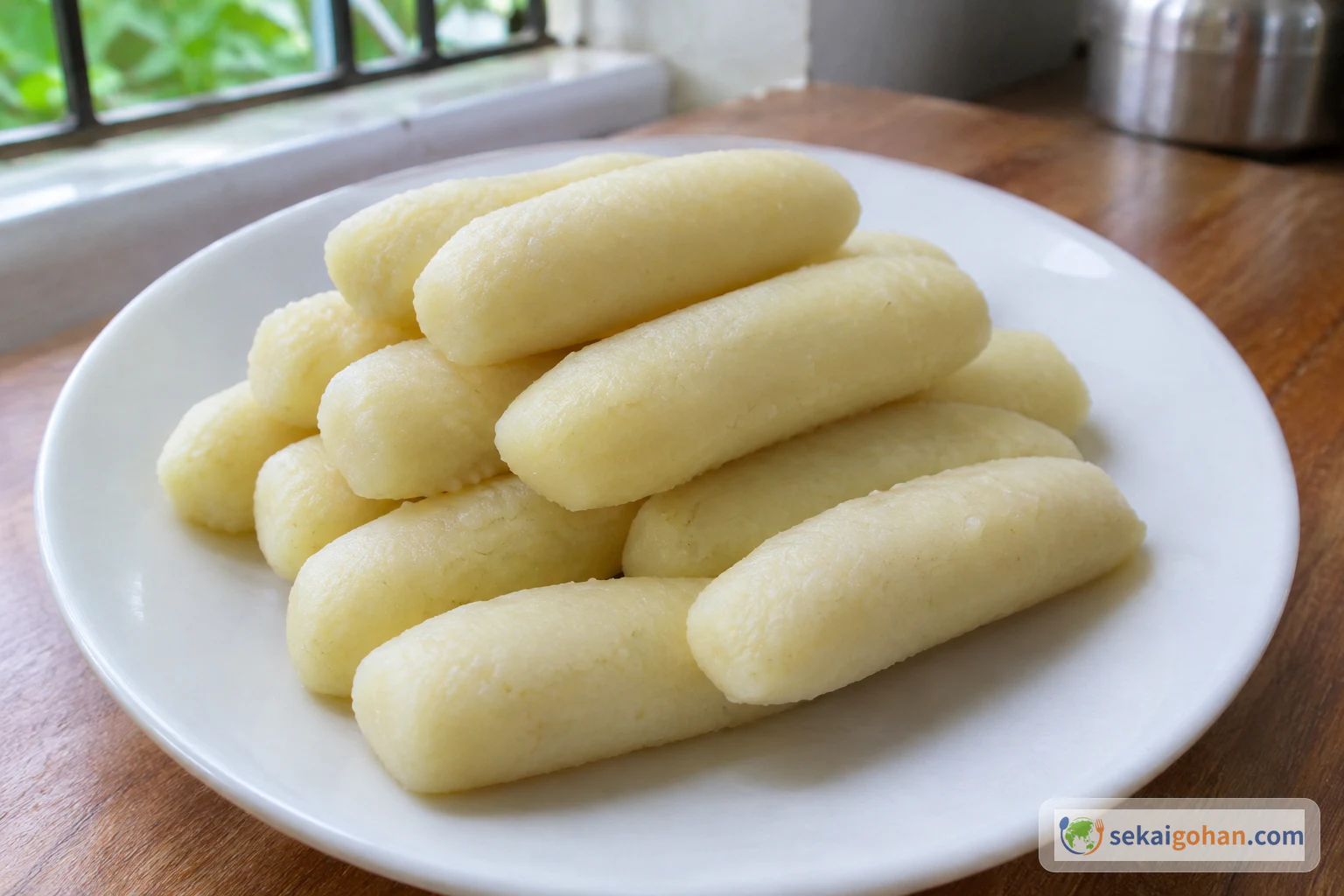
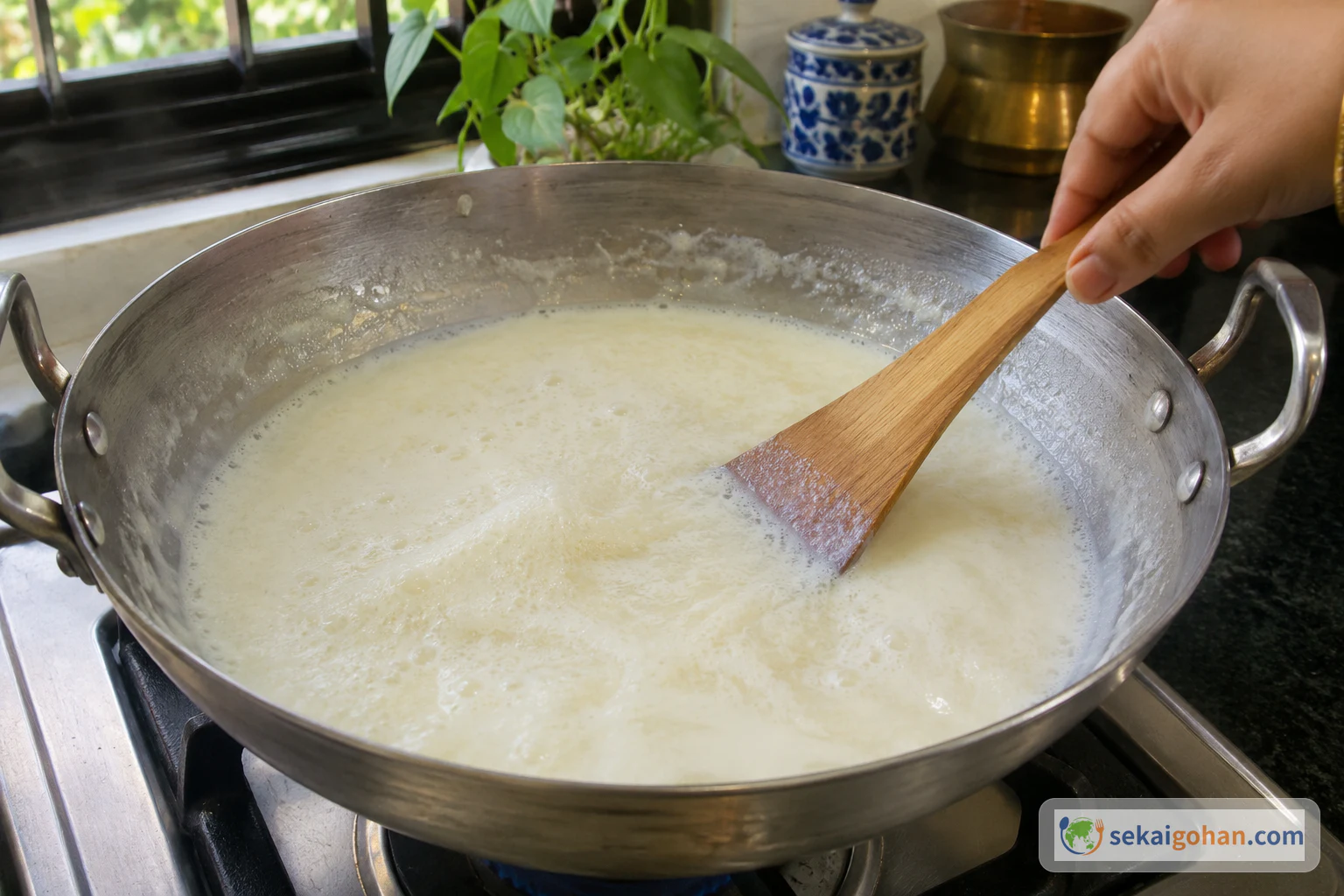
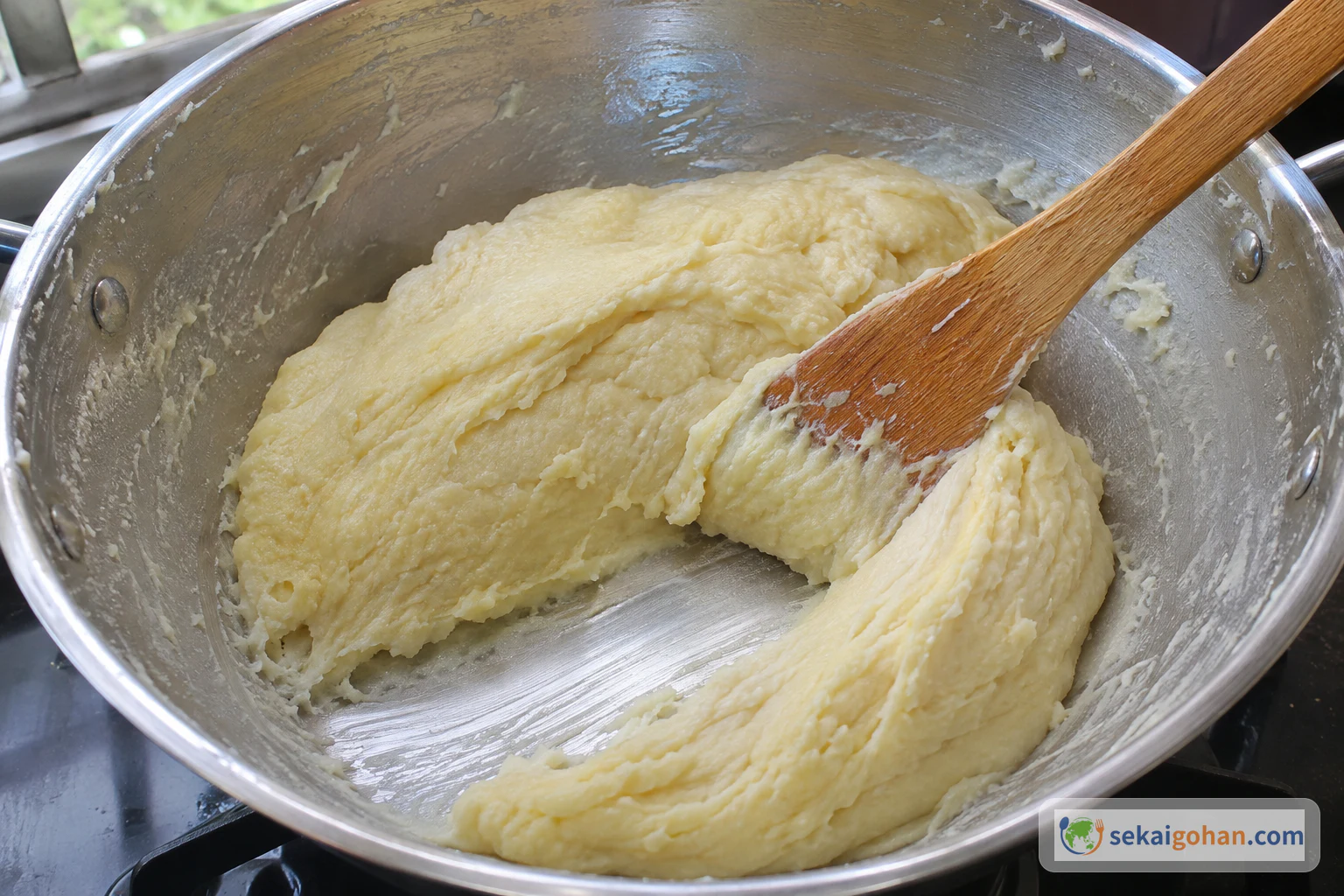
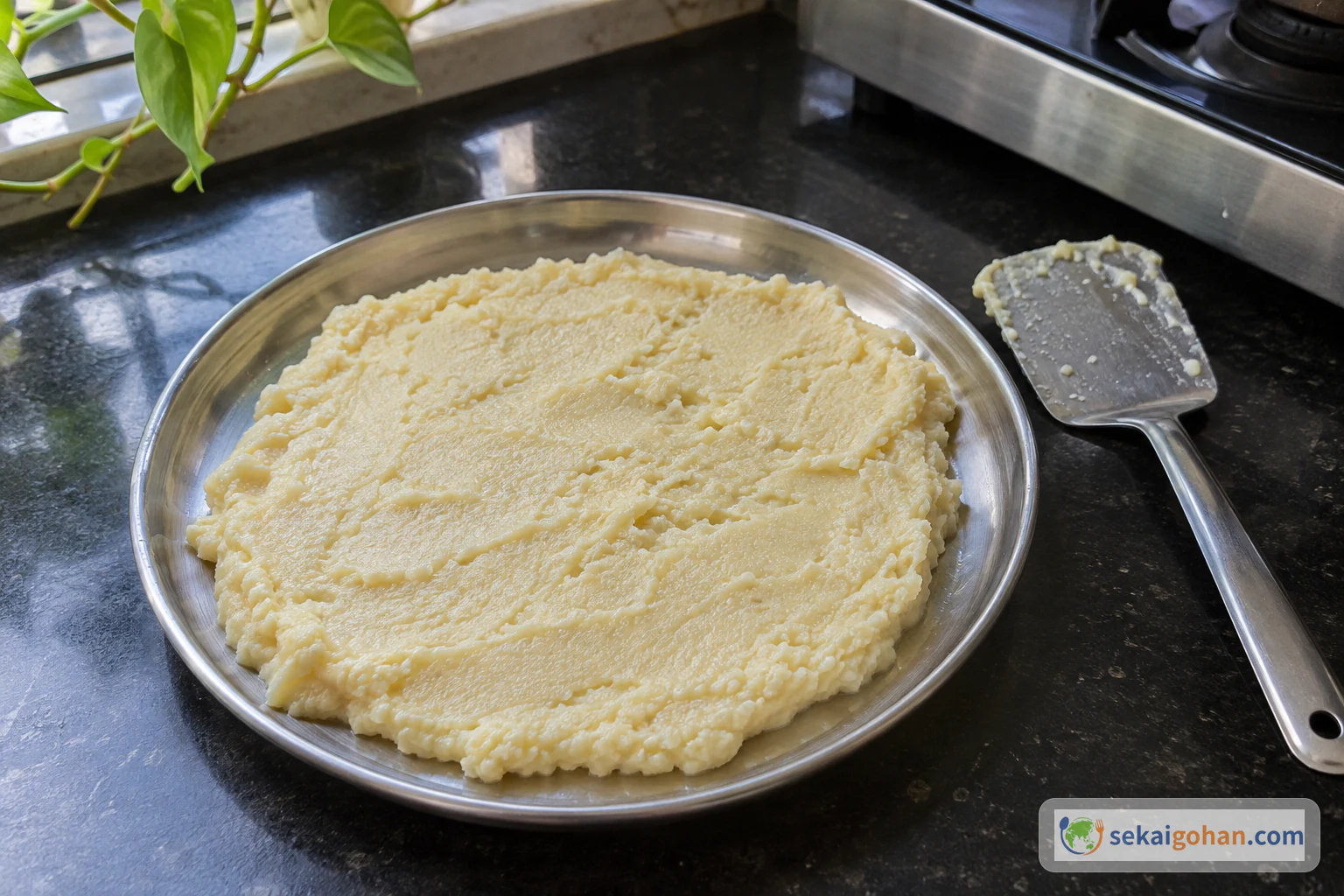
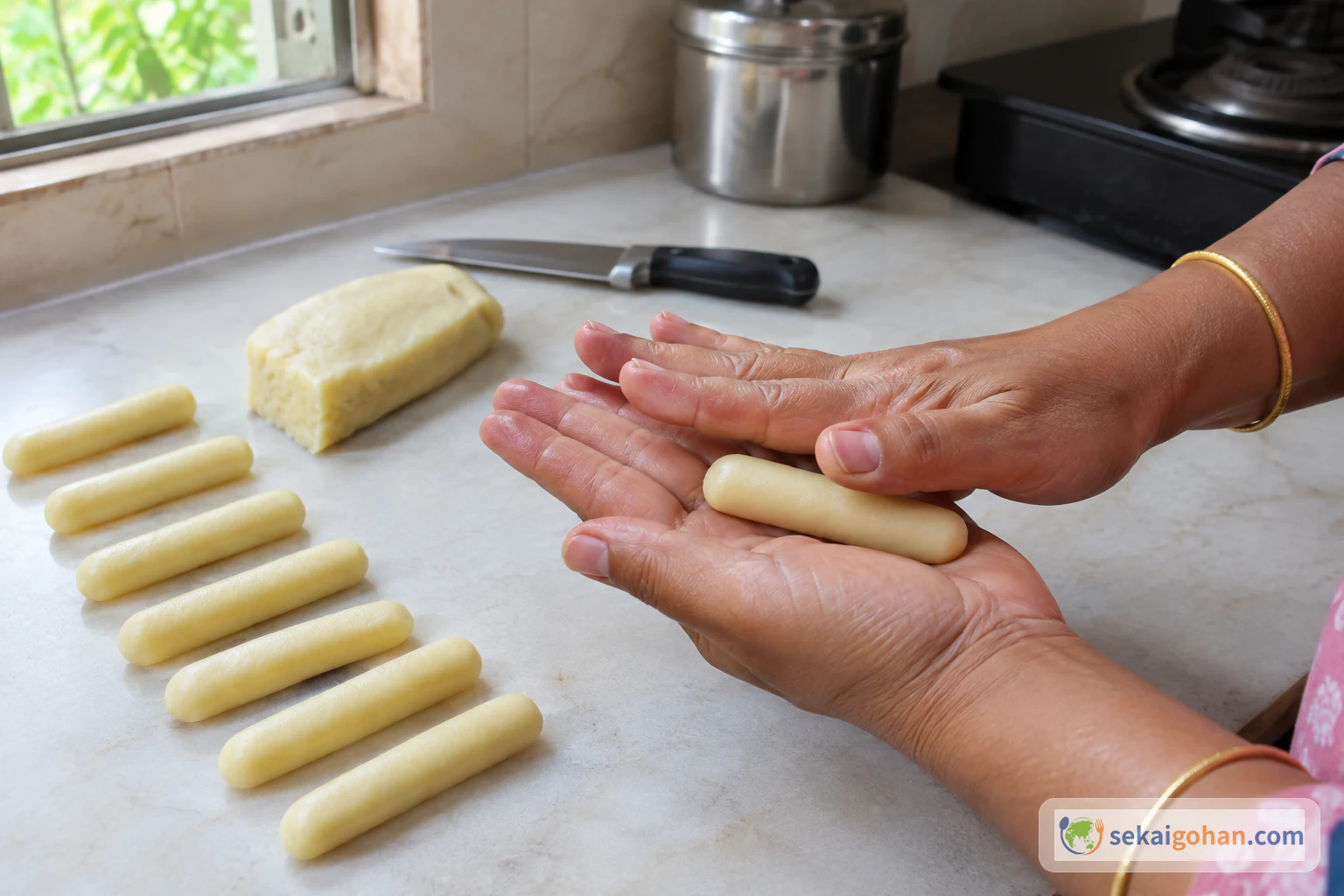
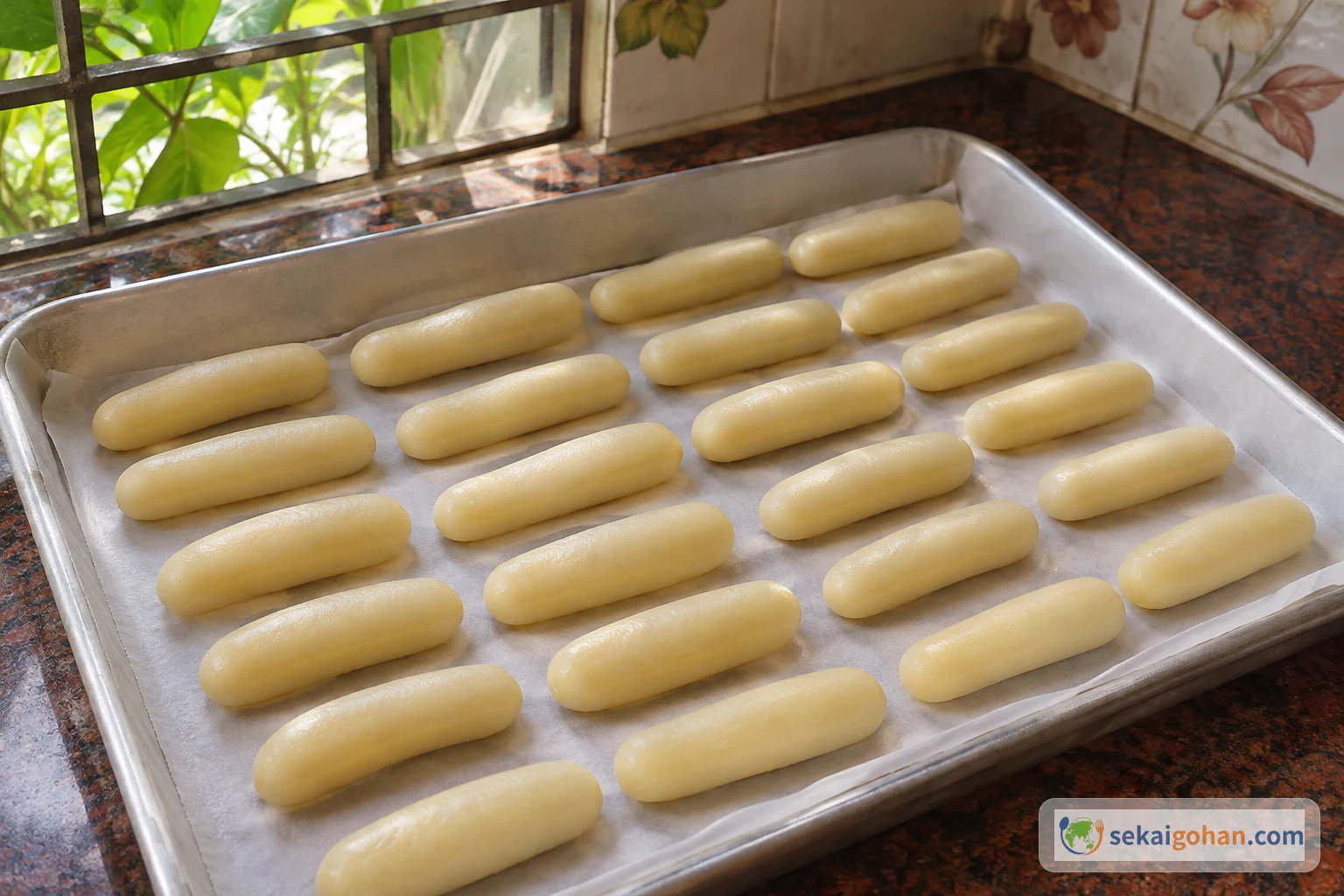
The moment comes late, after a long stretch of stirring. The milk has shrunk to a fraction of what went into the pan. It stops behaving like a liquid, gathers into one pale, heavy mass and pulls away from the sides, and the spatula leaves a clean trail across the bottom. That thick kheer, cooled and rolled between the palms into short sticks, is pera. In Naogaon in northern Bangladesh it is called pera sondesh, or para sondesh, and it holds nothing but milk and sugar. The taste is the deep, rounded sweetness of milk cooked down a long way, with no spice or nut to hide behind.
A Temple Sweet from Kalitala
Naogaon and the legend of Mahendra Das
Naogaon lies in the north of the country, in Rajshahi Division. The story told there goes back more than a hundred years to Mahendra Das, a confectioner who had worked for a ruler in Bihar. He settled in Kalitala and sold his sweets to the temple, where they were offered as bhog, food given to the deity and then shared out. That is how the sweet is said to have started. People also point to the area near the Buraka Kali Mata temple as its birthplace. All of this is local legend, kept by the town, and it is not settled history. What can be seen today is how far the sweet has spread beyond Naogaon, to Rajshahi, Bogura and Joypurhat.
The shape has stayed the same: a stick about 2 inches long and ½ inch wide (5 cm by 1.3 cm), rolled by hand rather than pressed into a mould. Pera still belongs at the temple. Small offering portions sell for only a few taka each, somewhere between Tk5 and Tk11.
The pera of Mymensingh
Further east, Mymensingh has its own pera, also made by setting milk, but pressed into moulds and patterned shapes. Confectioner families there have made it for about a century. Their forebears came from Cumilla. Their pera is offered as bhog at Durga Puja and other festivals, and in 2024 it sold for Tk550 to 600 a kilo. Fewer young people are taking up the trade, and fewer people outside the region know the sweet. Whether Mymensingh pera uses the same mix as Naogaon's is not settled, so the recipe here sticks to the Naogaon stick.
Not peda, and a sondesh without chhana
The name sounds close to Indian peda, but peda comes from a different line of sweets made with khoya, mawa or milk powder. Pera starts from liquid milk and sugar alone. Bangladesh's other familiar reduced-milk sweet is kheer sandesh, which is cooked to the same thick kheer and then mixed with coconut and pressed into moulds. That is a separate dish. It shows the same technique, but it does not belong in this pan.
Most sondesh in Bengal is made from chhana, fresh curd made by splitting milk. Naogaon's pera sondesh carries the name, but it is built on milk cooked down to kheer, with no curd at all. Where the name came from is not settled. In Naogaon, pera and sondesh are simply said together.
You can find more of the country's cooking on the Bangladesh page.
Ingredients
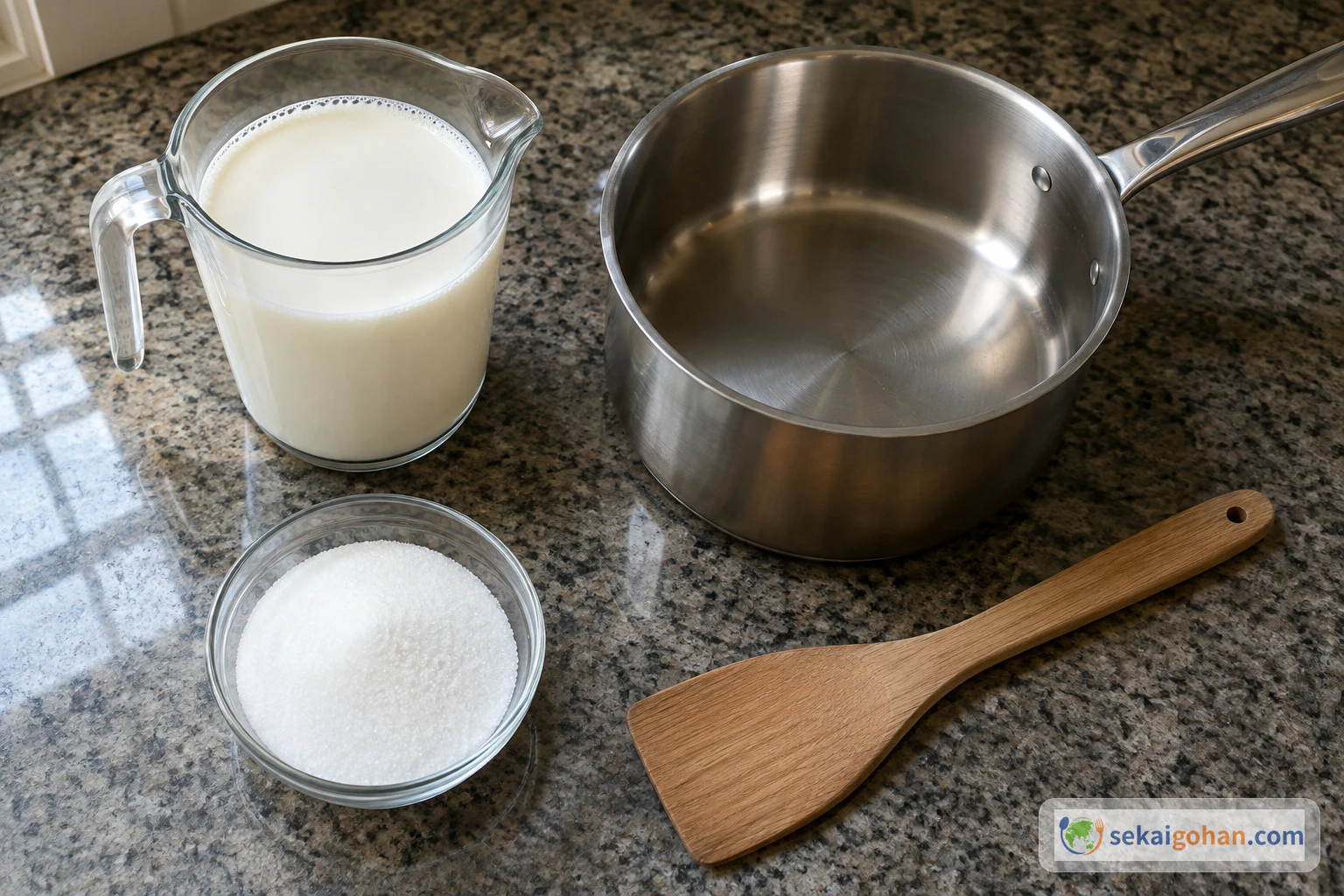
Pera is made almost entirely of milk. It is not suitable for anyone with a milk allergy. People with lactose intolerance should also be careful with it.
Equipment
- A heavy-bottomed, wide pan (a multi-ply stainless steel pan or a sturdy milk pan)
- A heat-resistant flat spatula (silicone or wooden)
- A digital kitchen scale
- A shallow plate for spreading and cooling the kheer
- A knife for trimming
- A tray, lined, for firming the sticks
Choosing the Milk and Sugar
With only two ingredients, each one shows in the result. Buy ordinary full-fat whole milk. Low-fat milk and "adjusted" milks have less of the solids that the reduction depends on. Milk powder and condensed milk belong to the peda family of sweets, so leave them out. Plain white granulated sugar keeps the sticks ivory-pale. Brown sugar and other less-refined sugars change the color, and they are not used here.
Everything else stays out too. No cardamom, no ghee, no nuts, no coconut. None of them are part of Naogaon pera, and each one would push the sweet toward a different one. You need no specialty shop for this dish. Any supermarket sells both ingredients.
A heavy, wide pan spreads the heat across the bottom so the milk reduces without catching. A wide pan also gives the steam more surface to escape from. A thin, narrow saucepan is where scorched milk comes from.
Method
The work is one long reduction at the stove, then a short pause while the kheer cools, then quick handwork. Weigh the sugar and set out the plate, knife and tray before you light the burner, because once the milk is on, you stay with the pan. The only hands-off time is the cooling and the final firming on the tray.
Constant scraping of the bottom and sides is what keeps the milk pale and clean-tasting. Milk that sits still on hot metal browns and sticks, and a scorched taste runs through the whole batch.
When It Goes Wrong
| What you see | Why | What to do |
|---|---|---|
| Brown flecks or a burnt smell | The heat was too high, the pan too thin, or the stirring paused | Lower the heat, keep scraping without a break, and use a heavy, wide pan next time |
| Milk rising toward the rim | The heat is too high as the milk comes to a simmer | Turn the heat down at once and keep stirring. A wider pan gives more room |
| The kheer is too soft to roll and slumps on the plate | It was not cooked down far enough | Return it to the pan over gentle heat and keep stirring until it pulls away from the sides and leaves a trail |
| The kheer sticks to your hands | The kheer is still soft or warm, or your hands are not clean and dry | Wash and dry your hands. If it still sticks, cook it down further rather than adding oil or flour |
Serving and Keeping
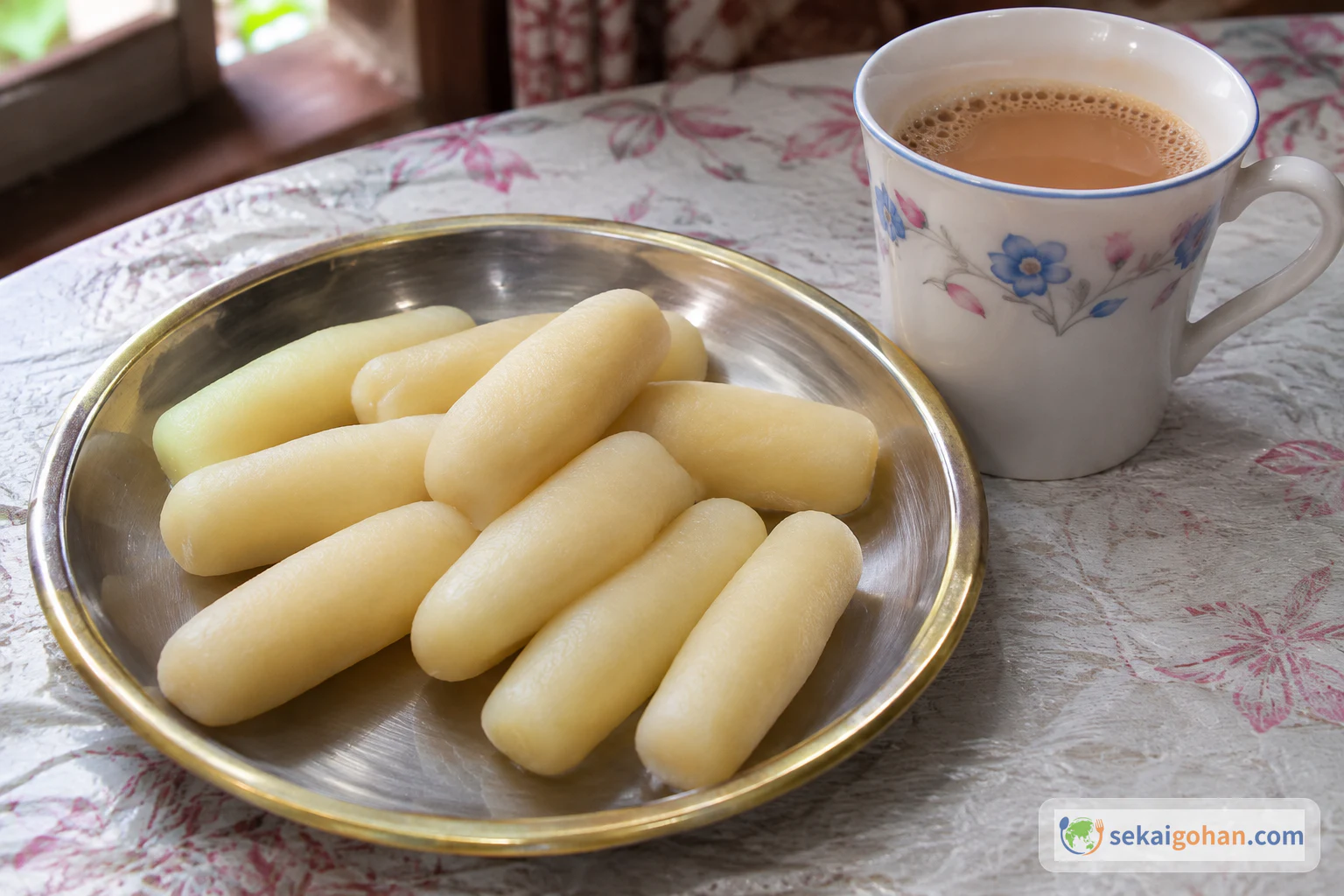
In Naogaon and Mymensingh pera is a sweet for offering. It is laid out as bhog at the temple and at Durga Puja, then shared. At home, set a few sticks on a small plate and serve them as they are, with a cup of tea. Pera needs no garnish. Its plain color is part of what makes it look right.
Naogaon sweet shops keep their pera at room temperature for 10 to 15 days. That is the shopkeepers' practice for their own sweets, not a guide for a home kitchen. Pera made at home is a fresh milk sweet, so eat it soon after it has firmed.
Frequently Asked Questions
Can I make a larger batch?
Yes, as long as you keep the ratio of 9 oz (250 g) sugar to every 4¼ cups (1 L) of milk. Naogaon confectioners work at the scale of about 4¼ quarts (4 L) of milk to 2.2 lb (1 kg) of sugar. A bigger batch needs a wider pan and a much longer reduction, and it is harder to keep the bottom from catching.
Why do the amounts of milk seem to differ from shop to shop?
Some Naogaon makers talk of about 4 L of milk for each kilo of pera, while others say about 6 L. The difference probably comes from how dry each maker cooks the kheer and how much they get out of it, but the reason is not settled. Go by the doneness cue rather than the milk's volume.
Can I add cardamom, nuts or coconut?
Those would make a different sweet. Naogaon pera is milk and sugar only, and the flavor is meant to be reduced milk and nothing else. Coconut takes you to kheer sandesh, a related sweet in its own right.
Can I press it into moulds instead of rolling it?
Mymensingh pera is shaped in moulds and patterns, so moulded pera does exist in Bangladesh. Whether it uses the same mix as the Naogaon stick is not settled. Rolling by hand gives you the Naogaon shape.