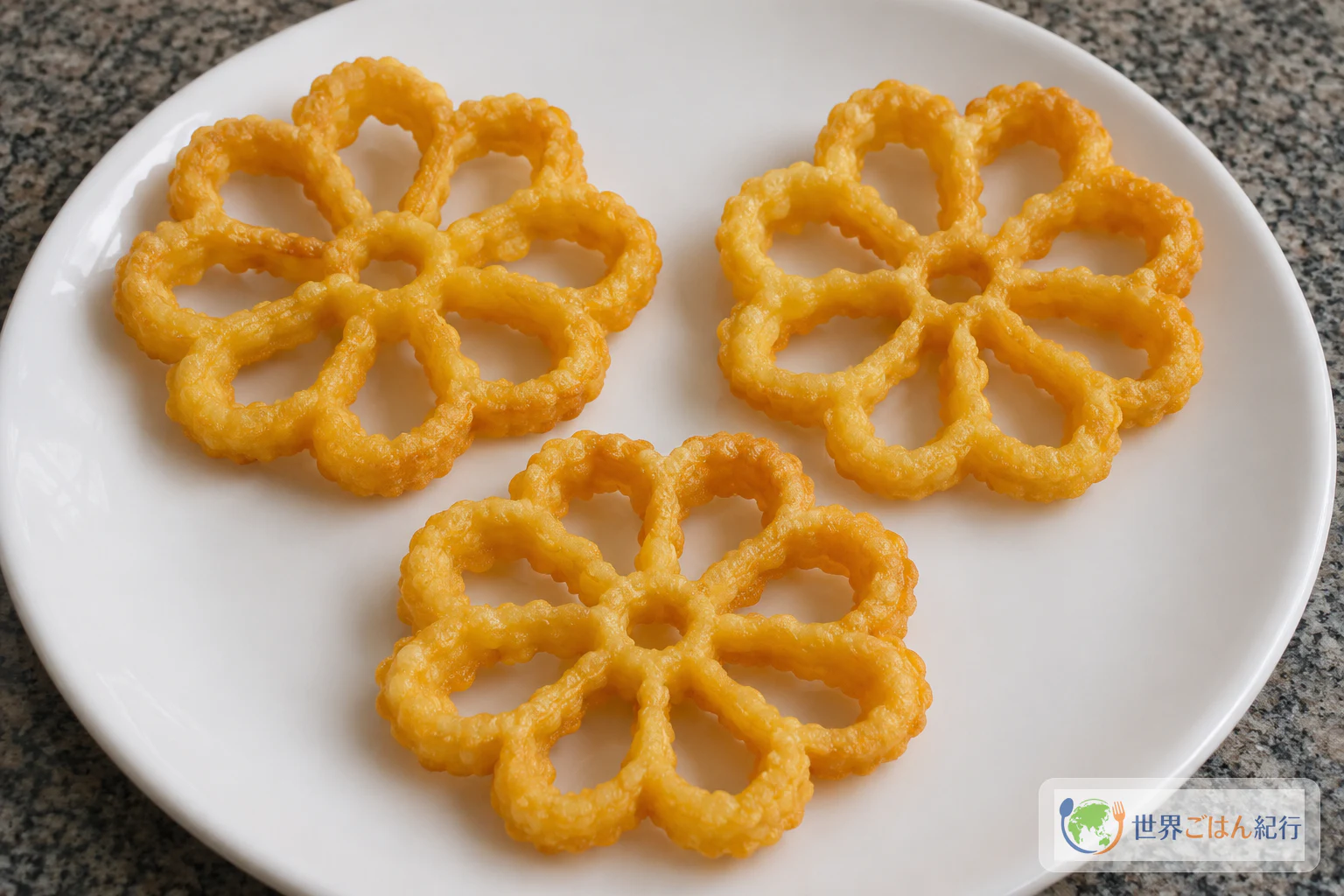
Kokis: A Thin Golden Flower Fried on a Mold
This article follows one version: Roshani Wickramasinghe's egg-free kokis, published on Hungry Lankan on April 3, 2025, made with canned coconut milk and a non-stick mold. Sekai Gohan has not kitchen-tested this recipe as a whole, and its times and temperature have not been independently measured.
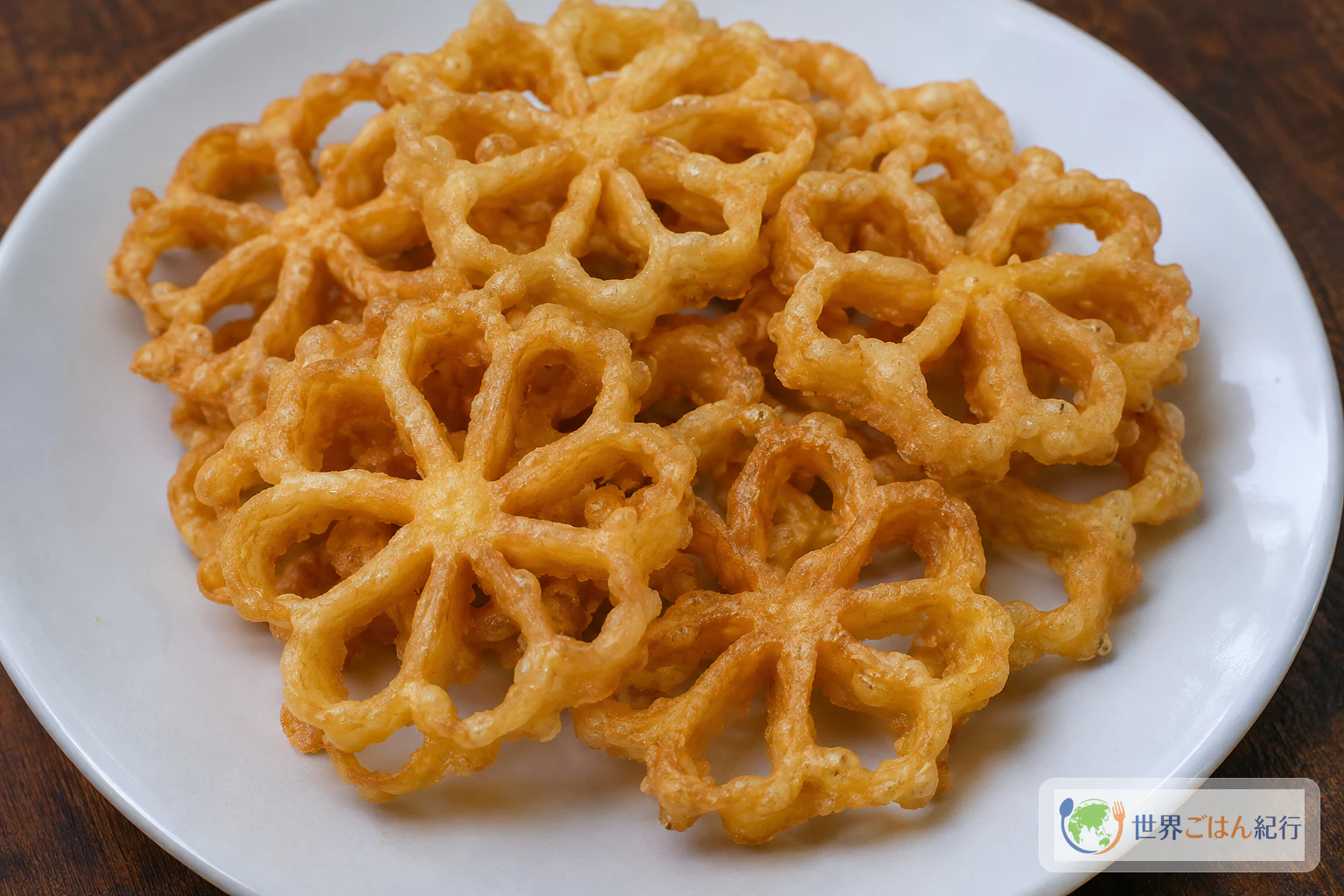
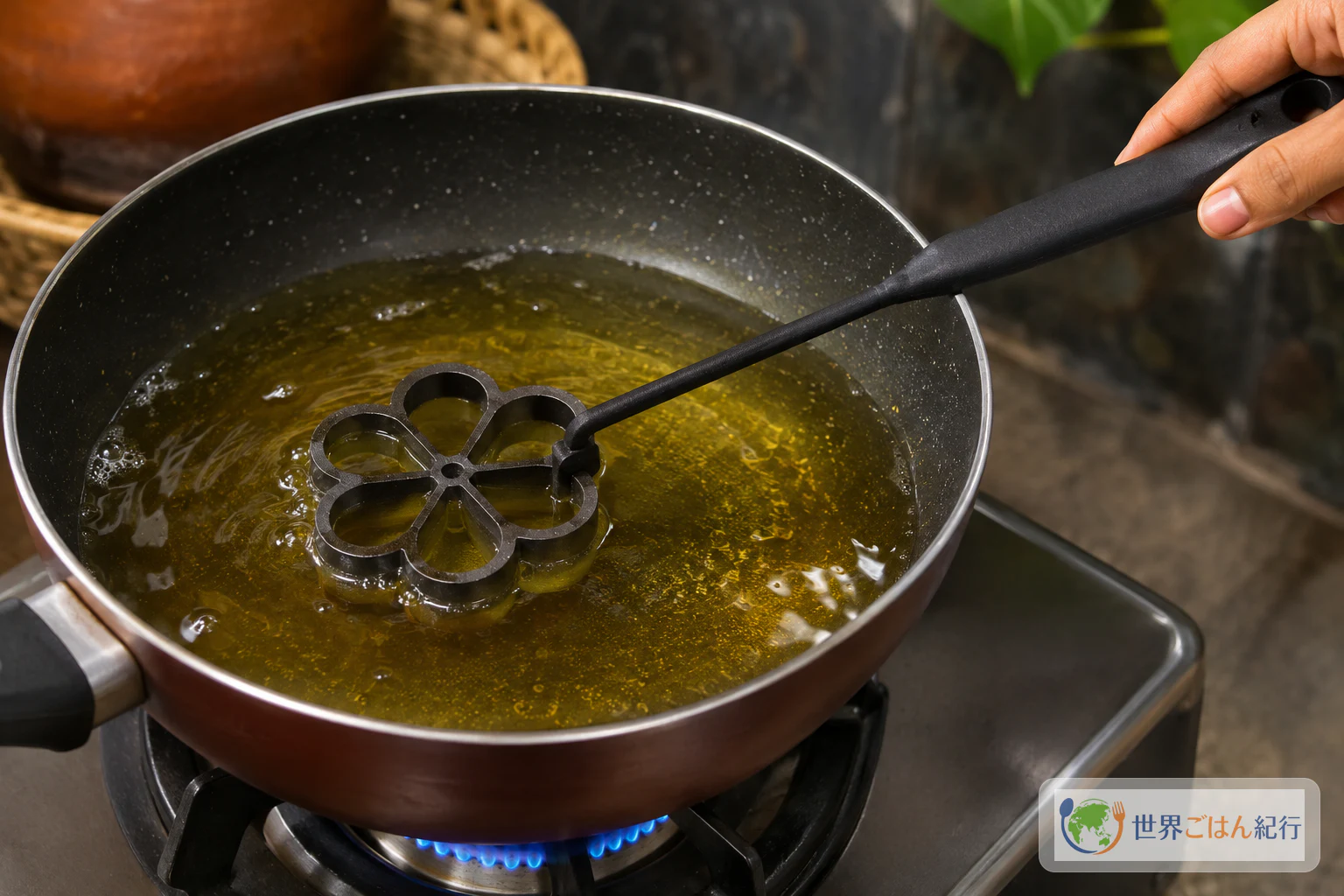
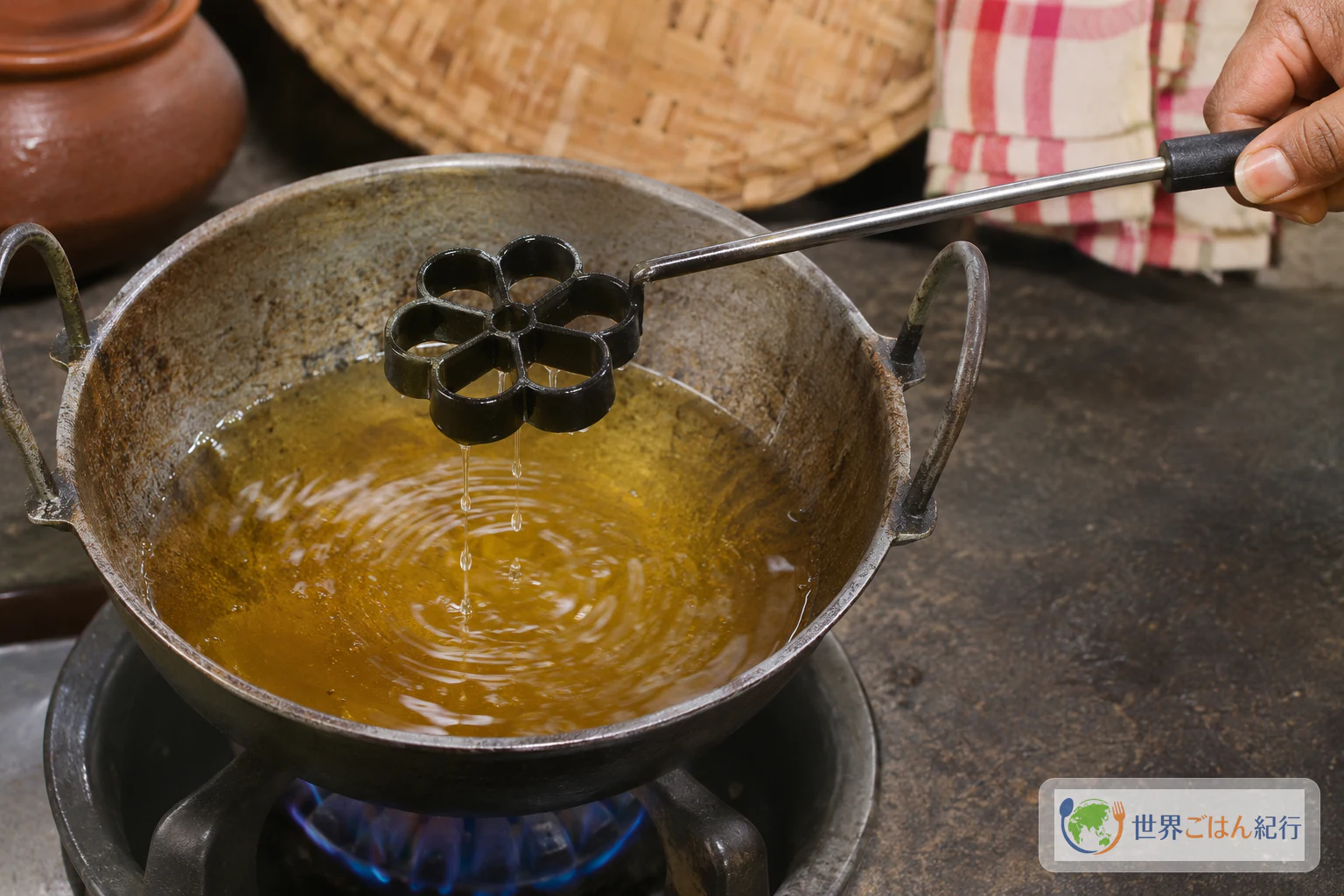
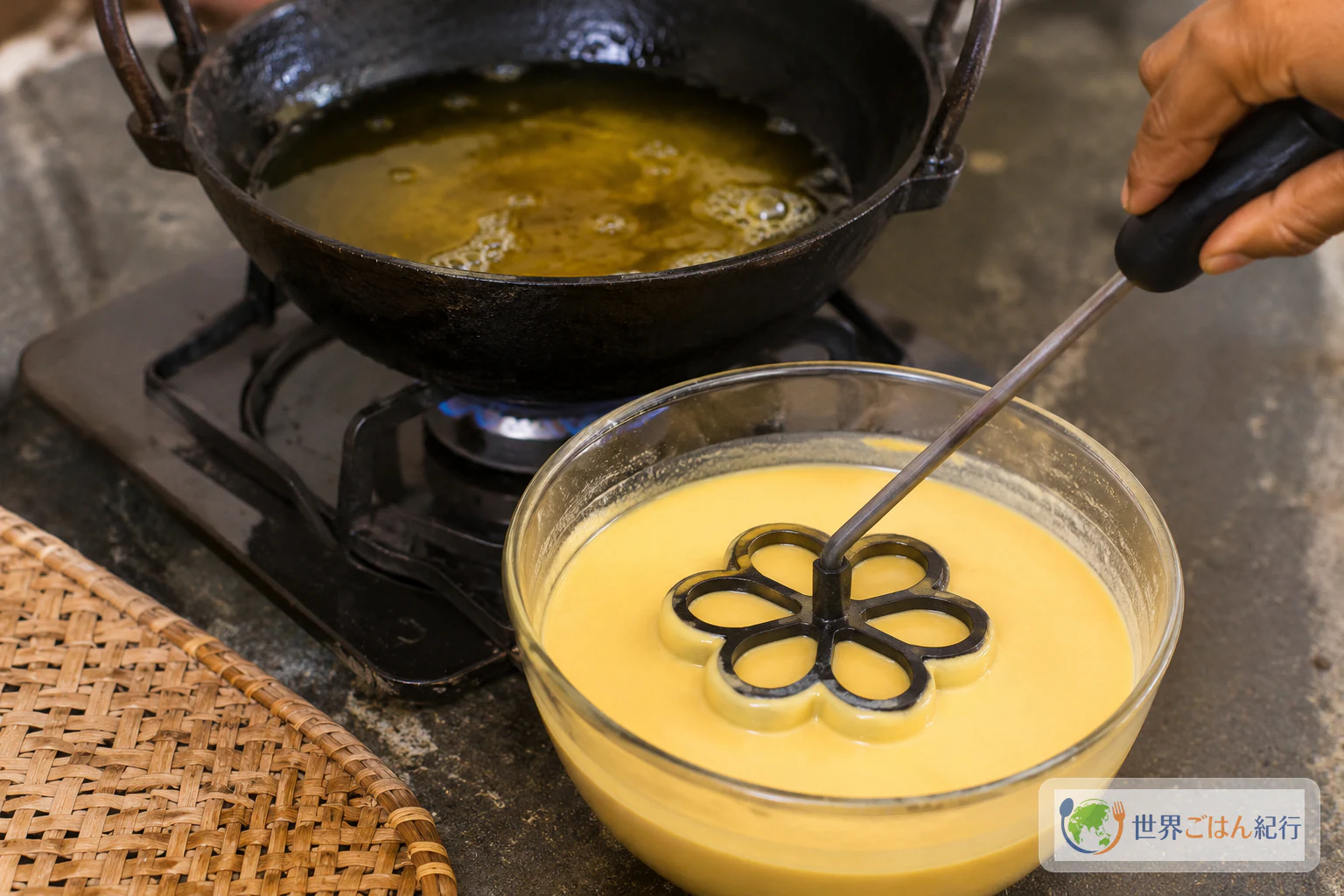
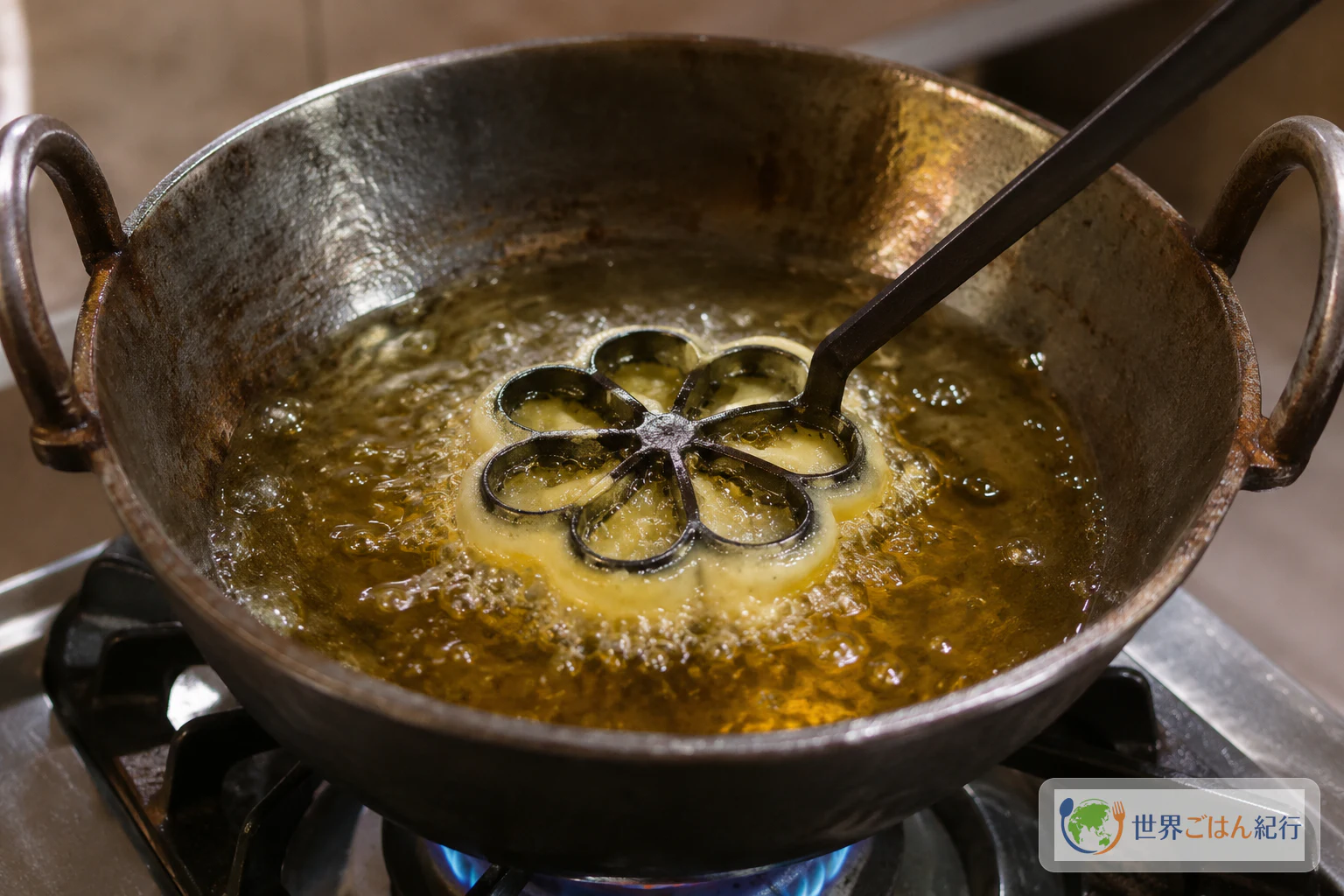
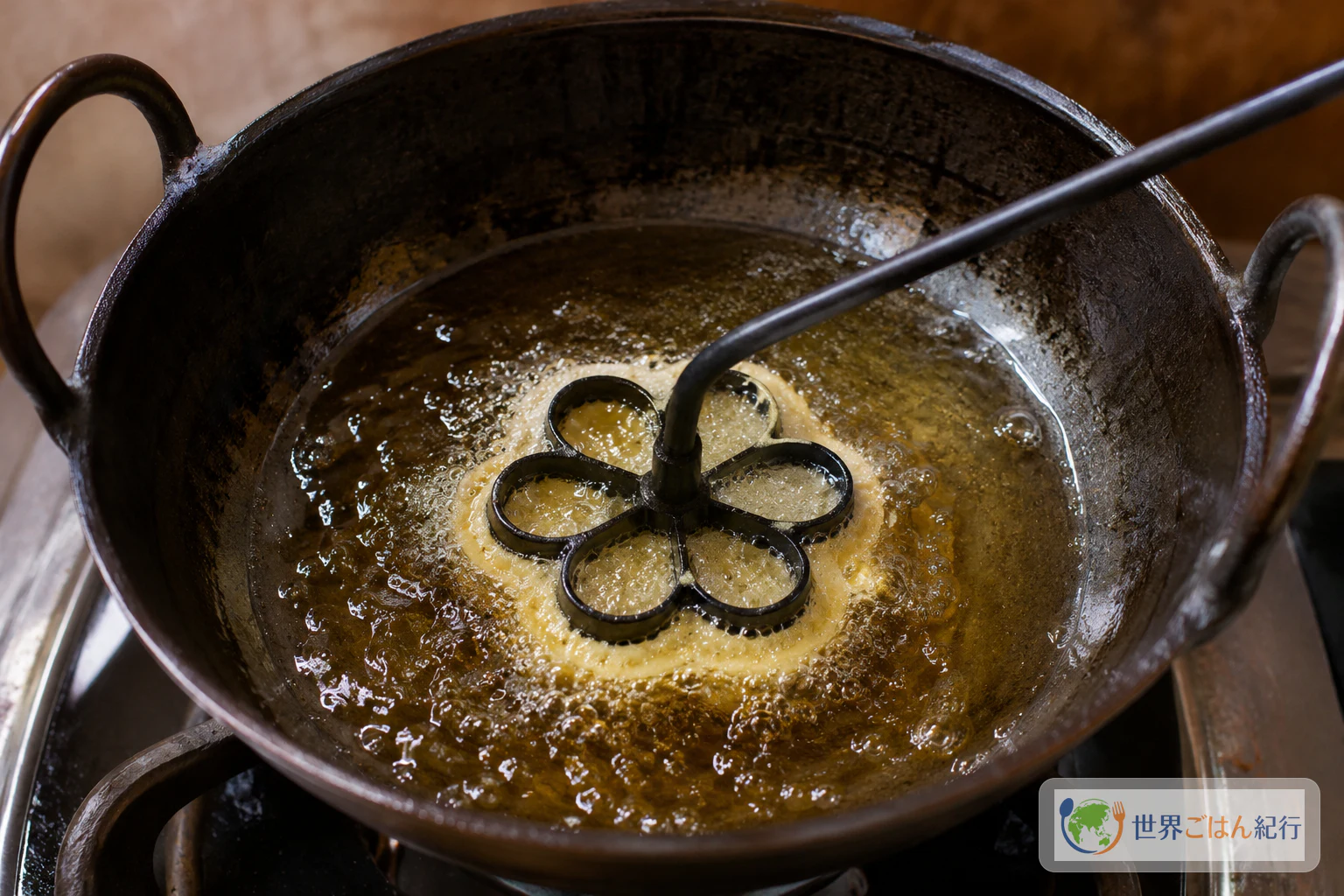
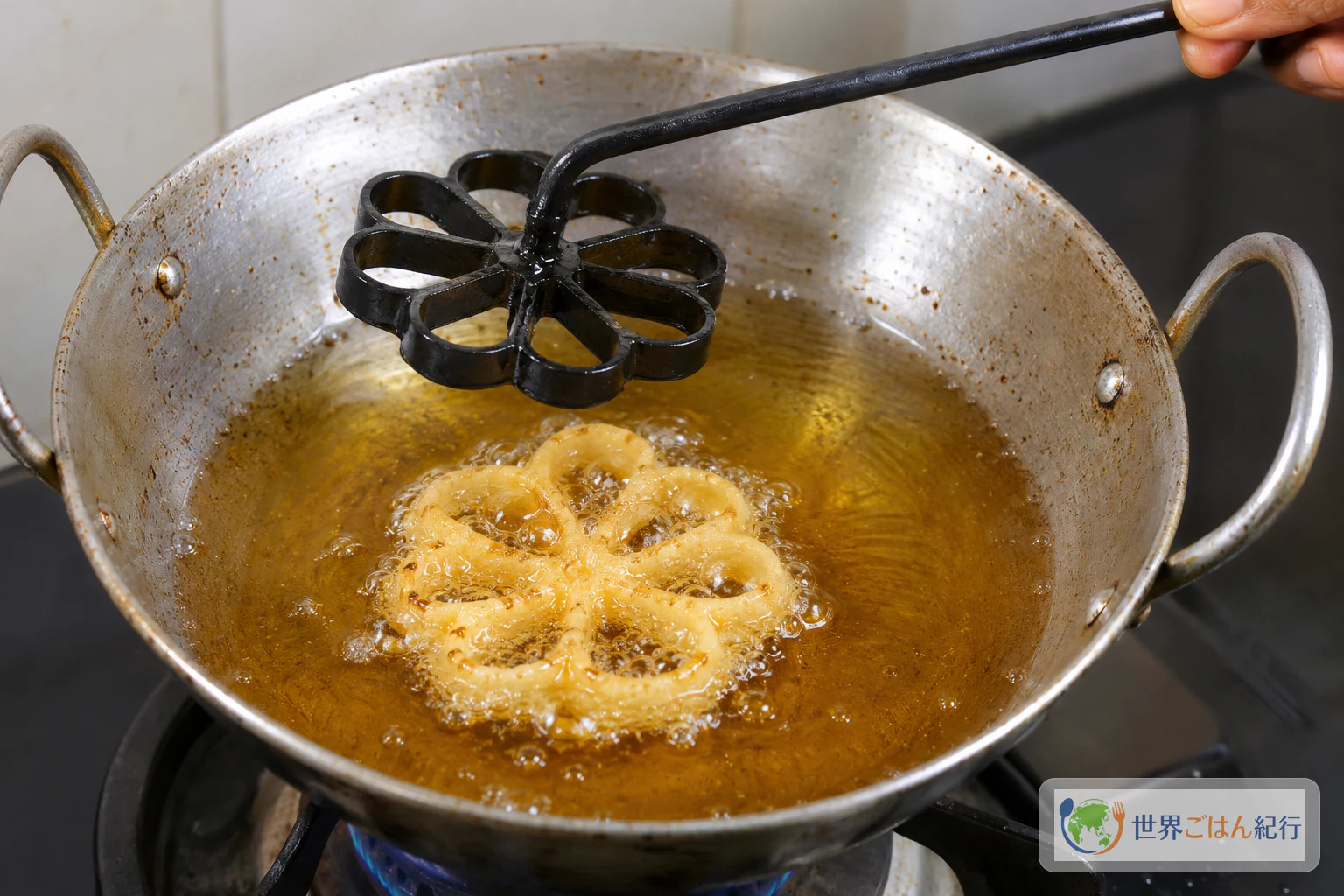
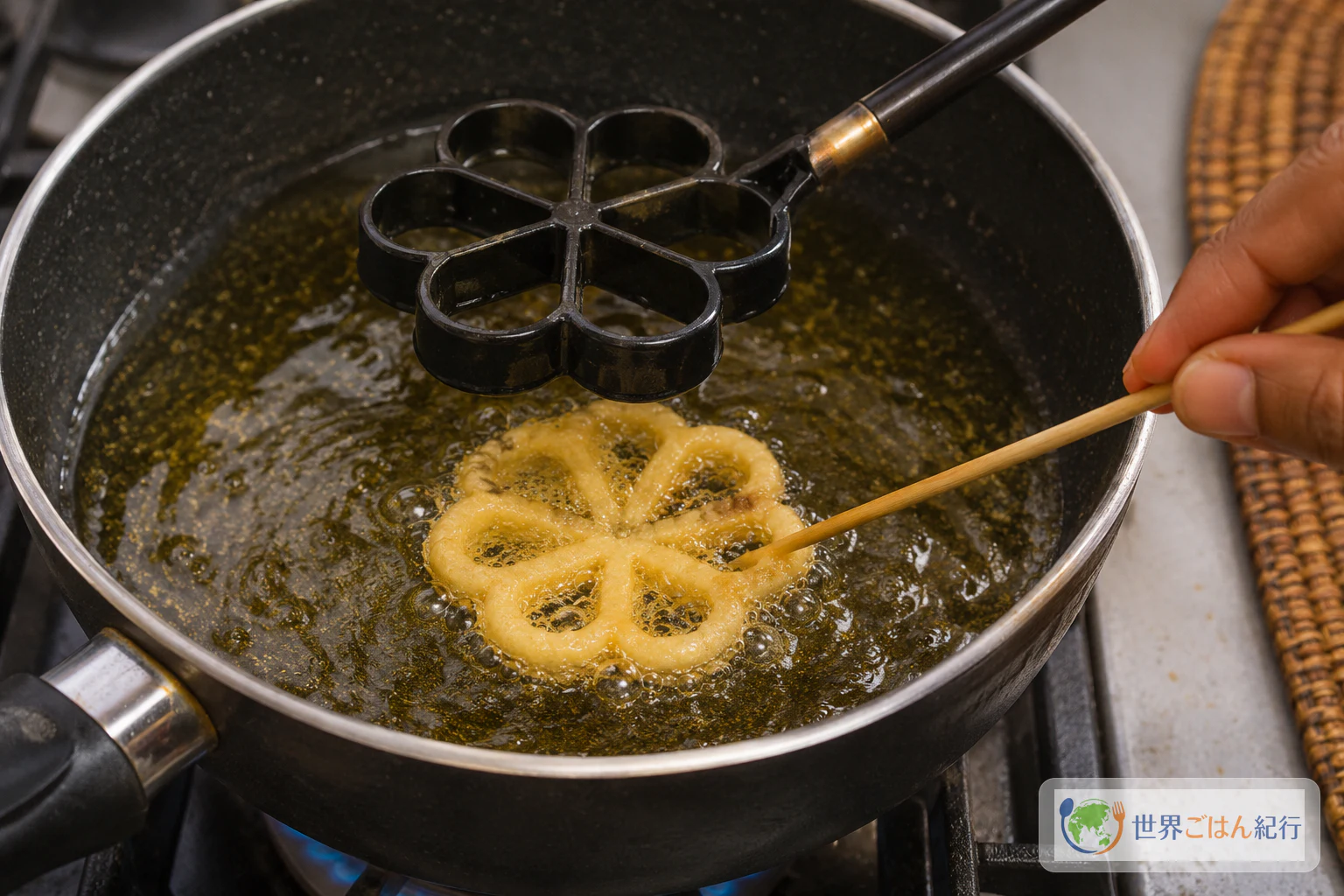
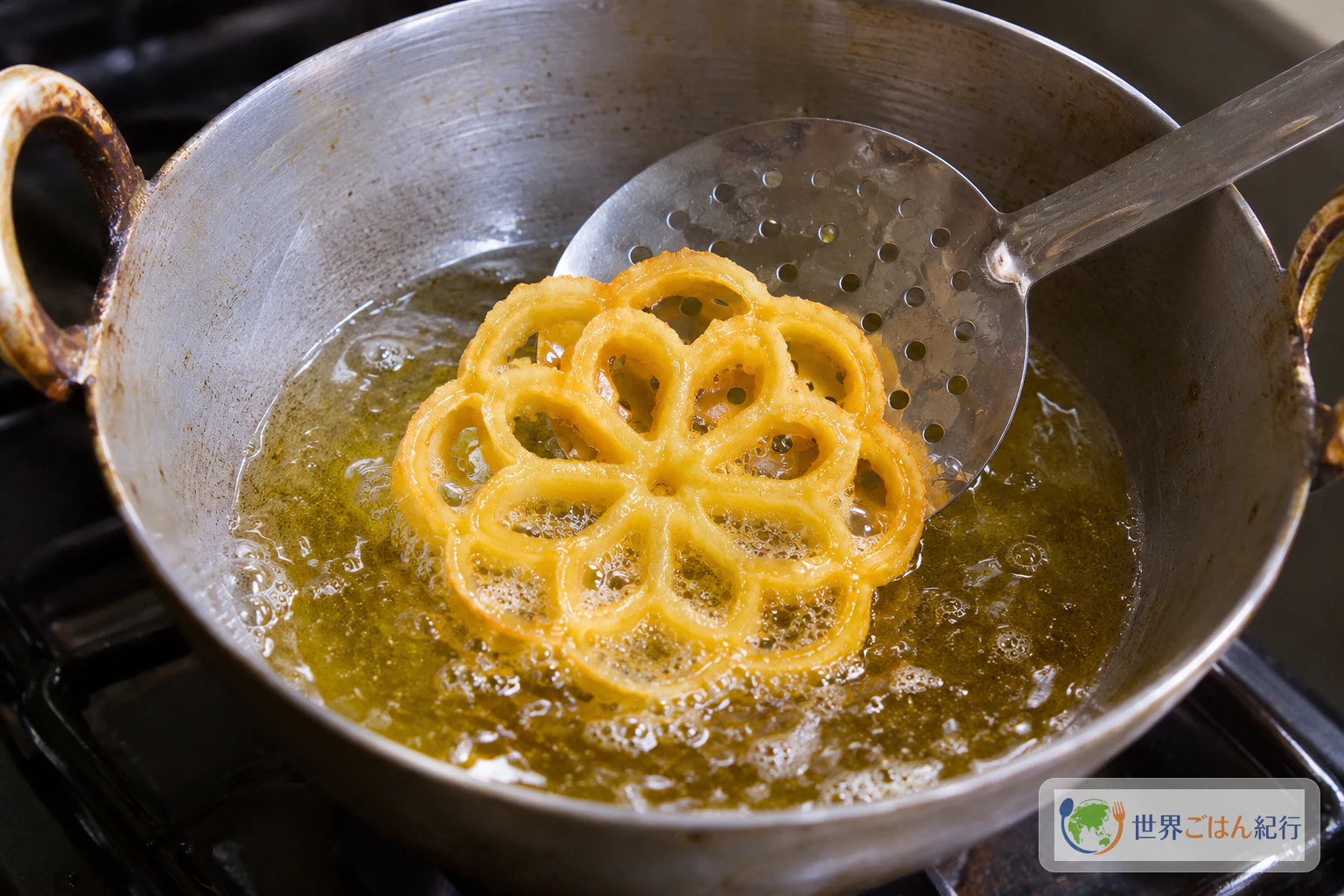
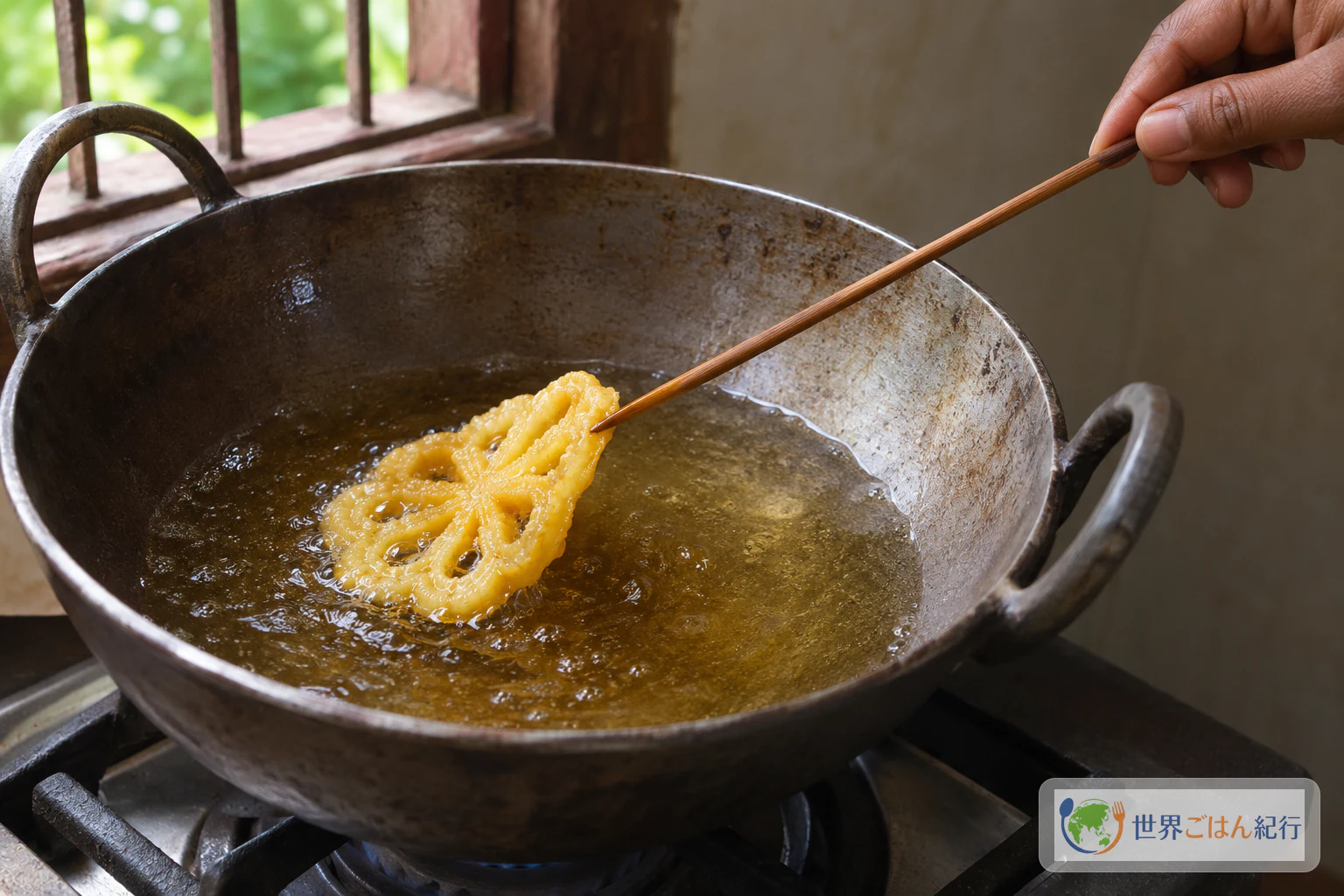
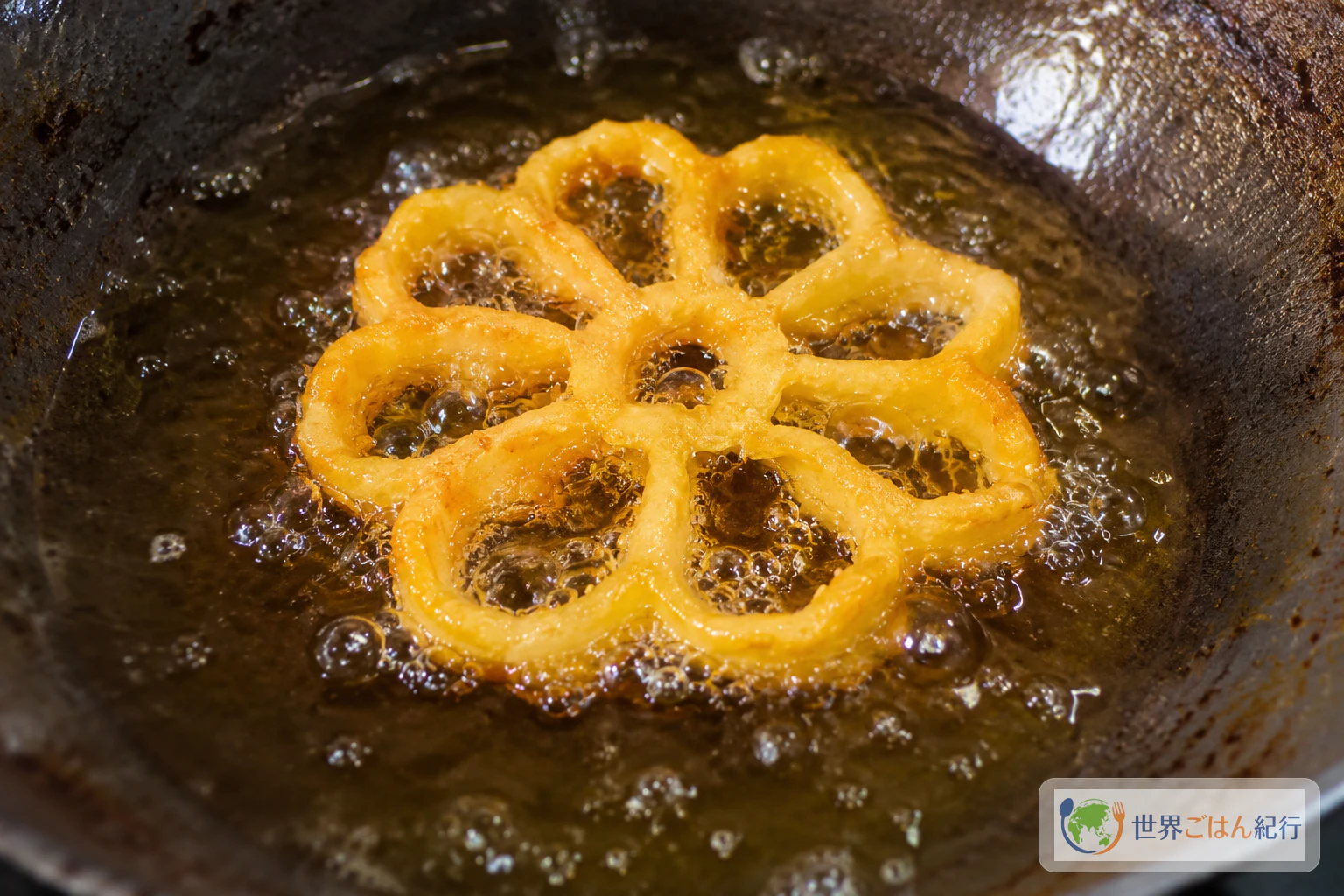
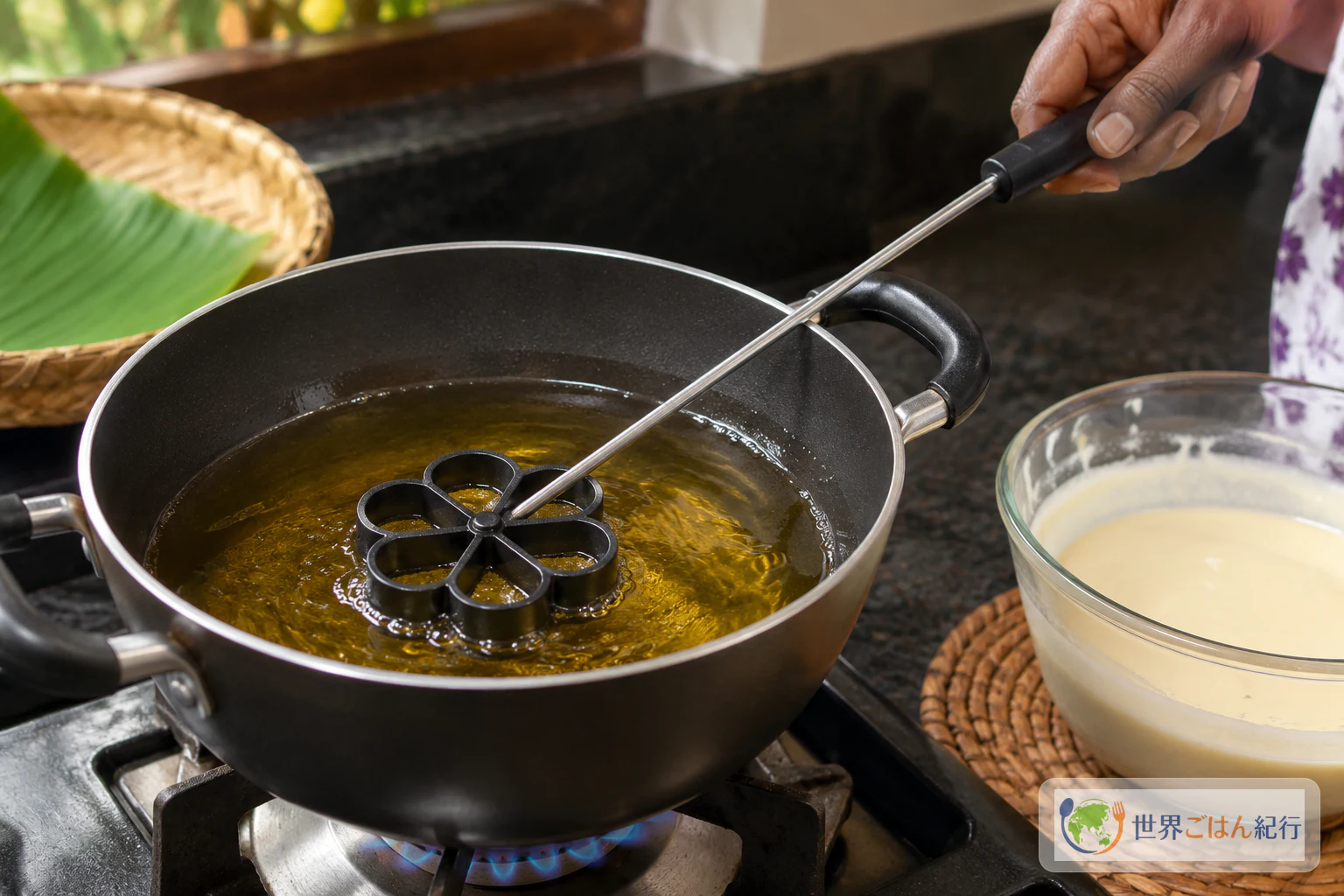
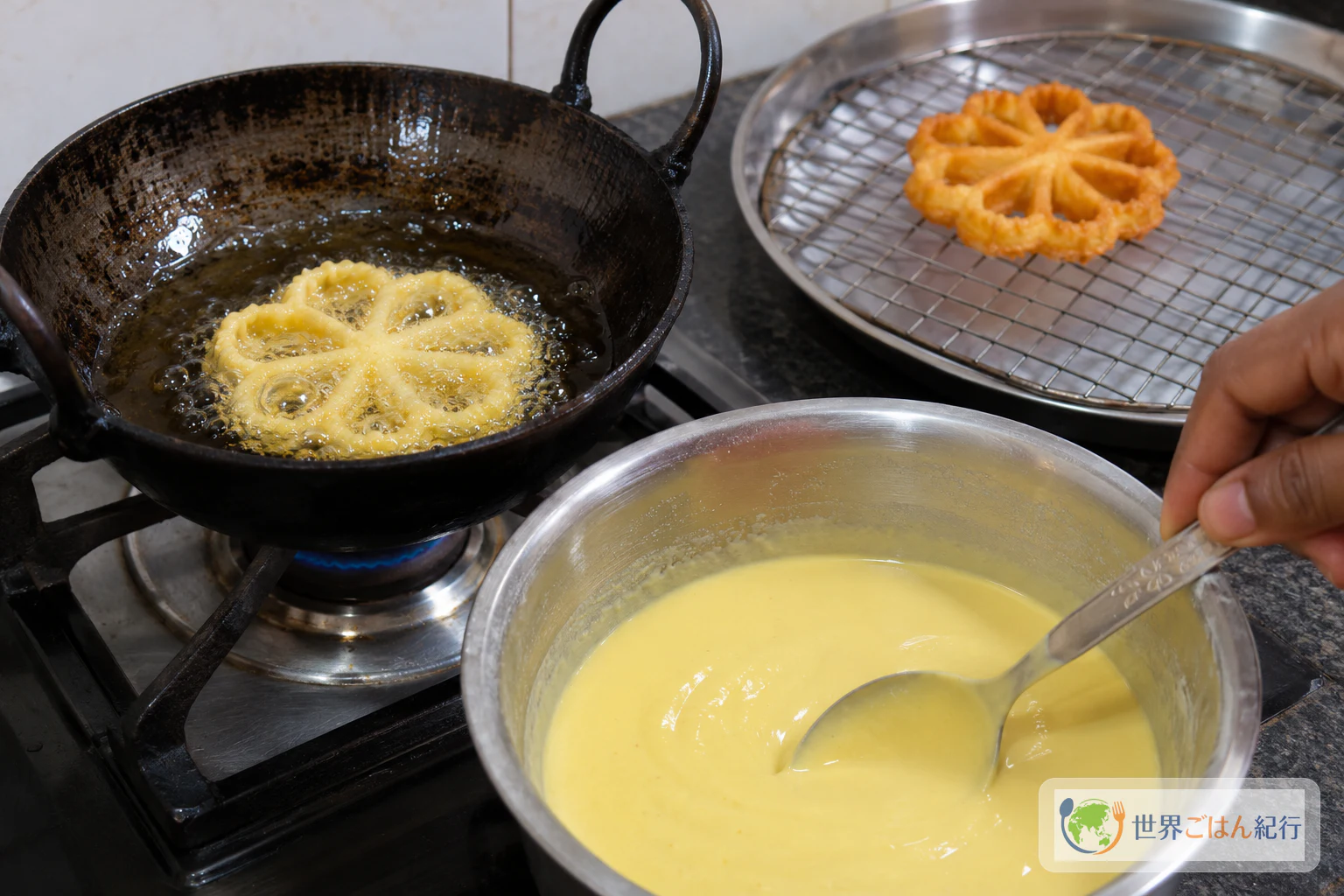
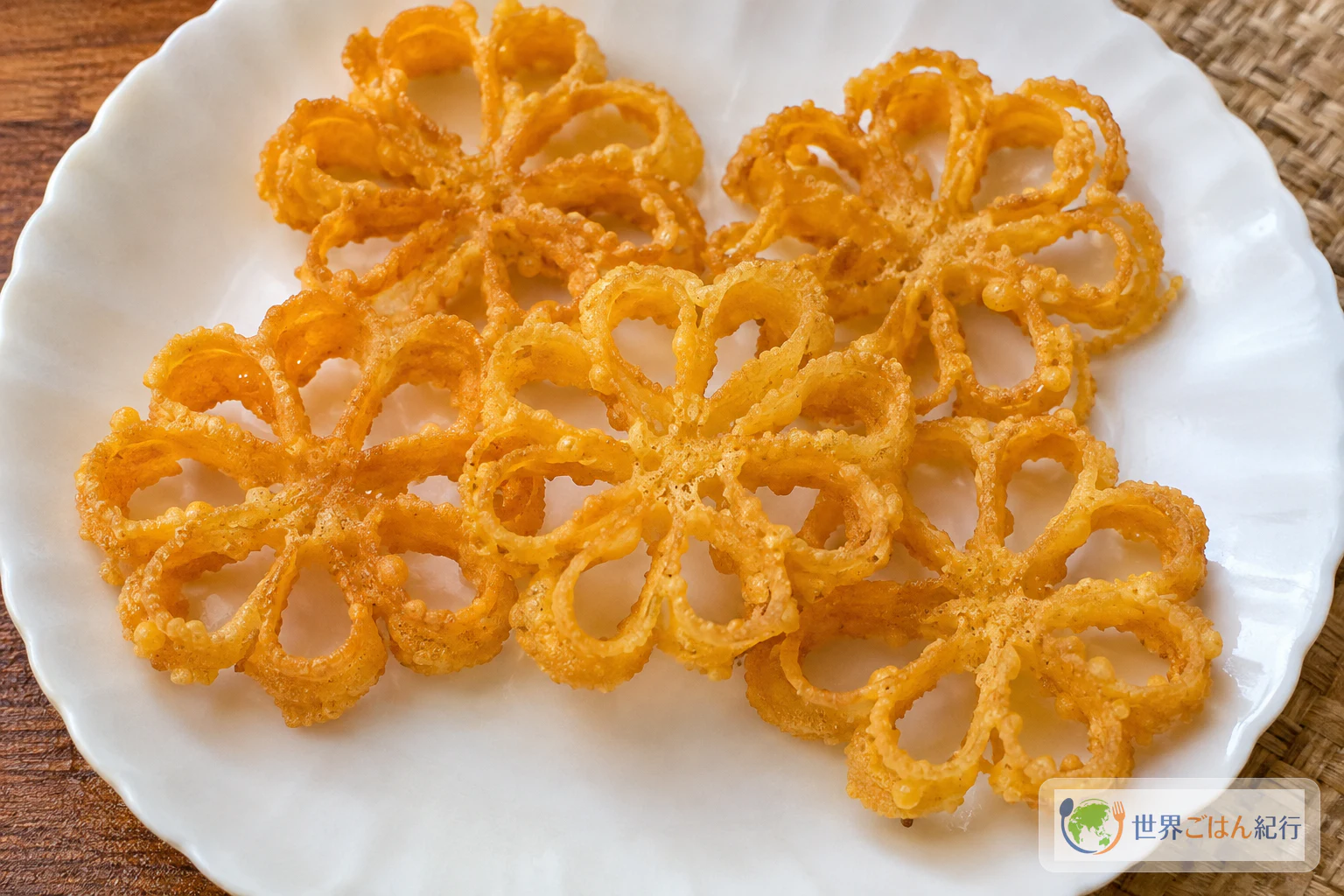
A flower mold on a long handle dips into batter, goes into the hot oil, and comes up again leaving a thin, lacy rosette behind. The rosette is fried until golden yellow, a thin, lacy flower rather than a solid, flat biscuit. That is kokis, a molded fried cookie that the Sri Lanka Tourism portal associates with Sinhala and Tamil New Year.
The batter itself is simple. What takes attention is the rhythm at the stove: warm the mold, let the excess oil drip off, dip, fry, release, and start again. The batter also needs a stir now and then, because the rice flour settles. For more dishes from the same country, browse our Sri Lankan recipes.
Ingredients
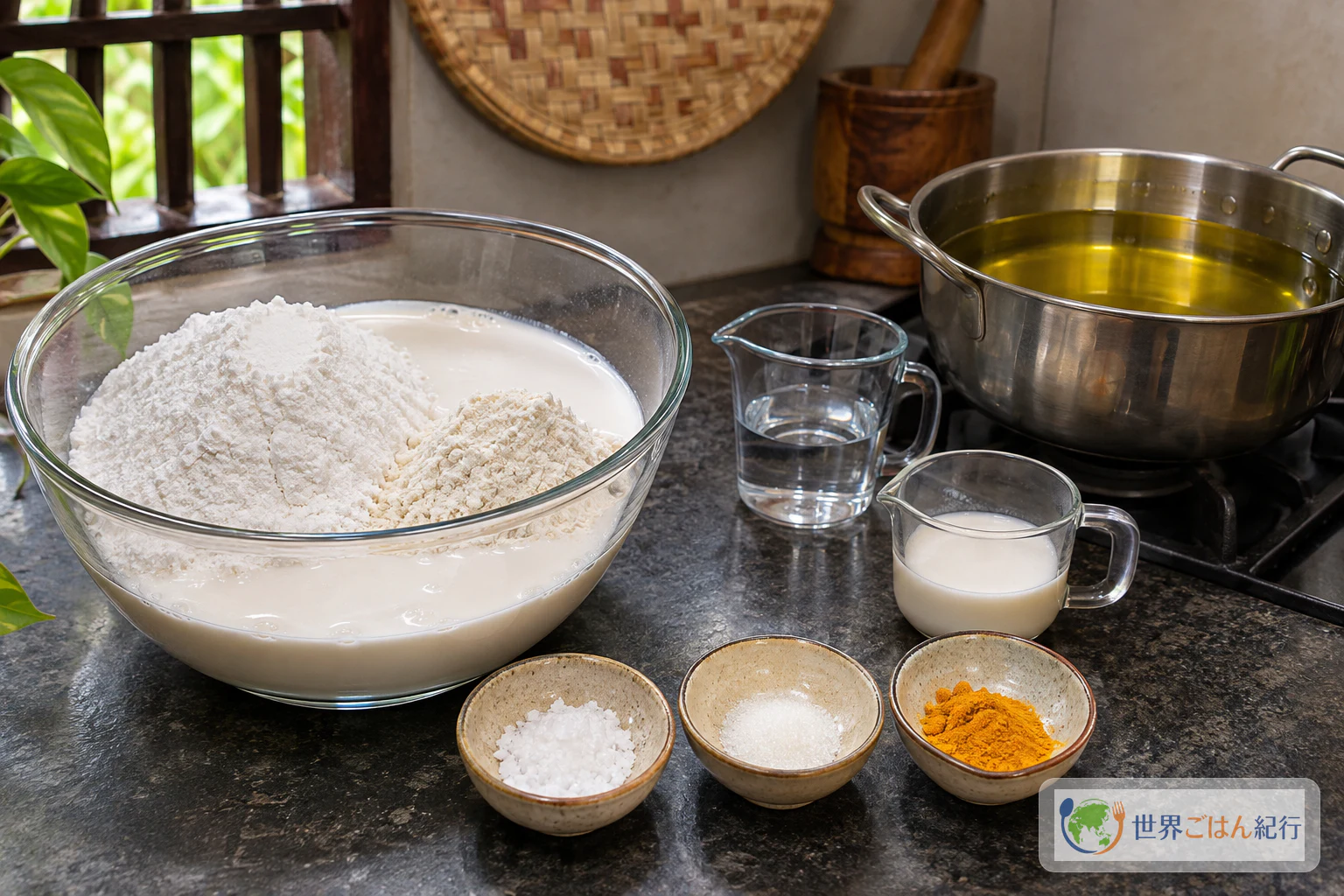
Equipment
- Non-stick flower-pattern kokis mold with a long handle, made commercially for food use
- Deep pot for frying
- Large mixing bowl and whisk
- Spoon for stirring
- Small deep bowl for dipping (optional)
- Pointed wooden stick
- Tool for lifting the cookies out of the oil
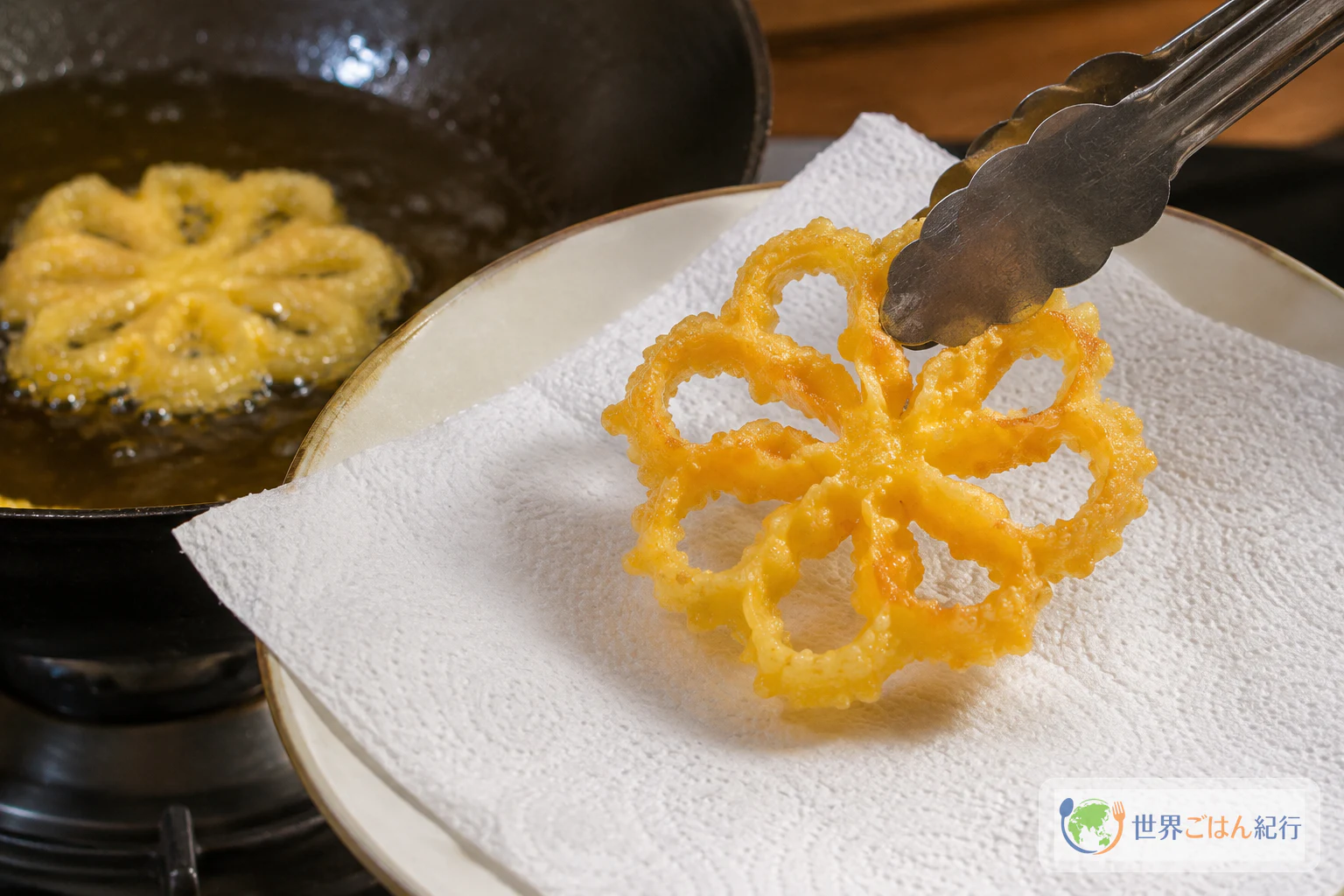
- Paper-lined plate for draining
- Clean plate for cooling
- Scale, measuring cups and measuring spoons
Choosing the Flour, Milk and Mold
Flour: Use both rice flour and all-purpose flour. Do not swap in cake flour for the all-purpose flour. The all-purpose flour also means these cookies are not gluten-free.
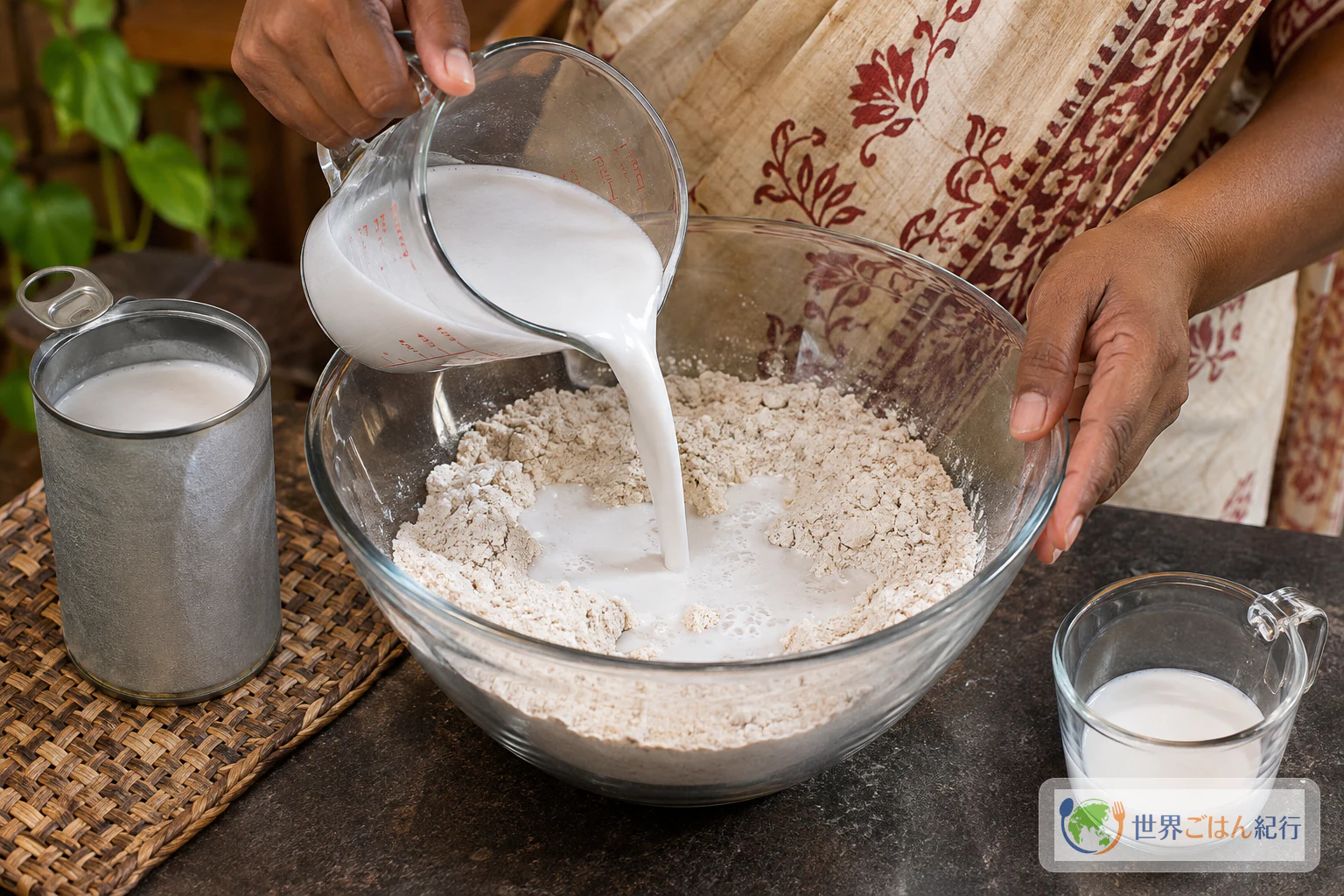
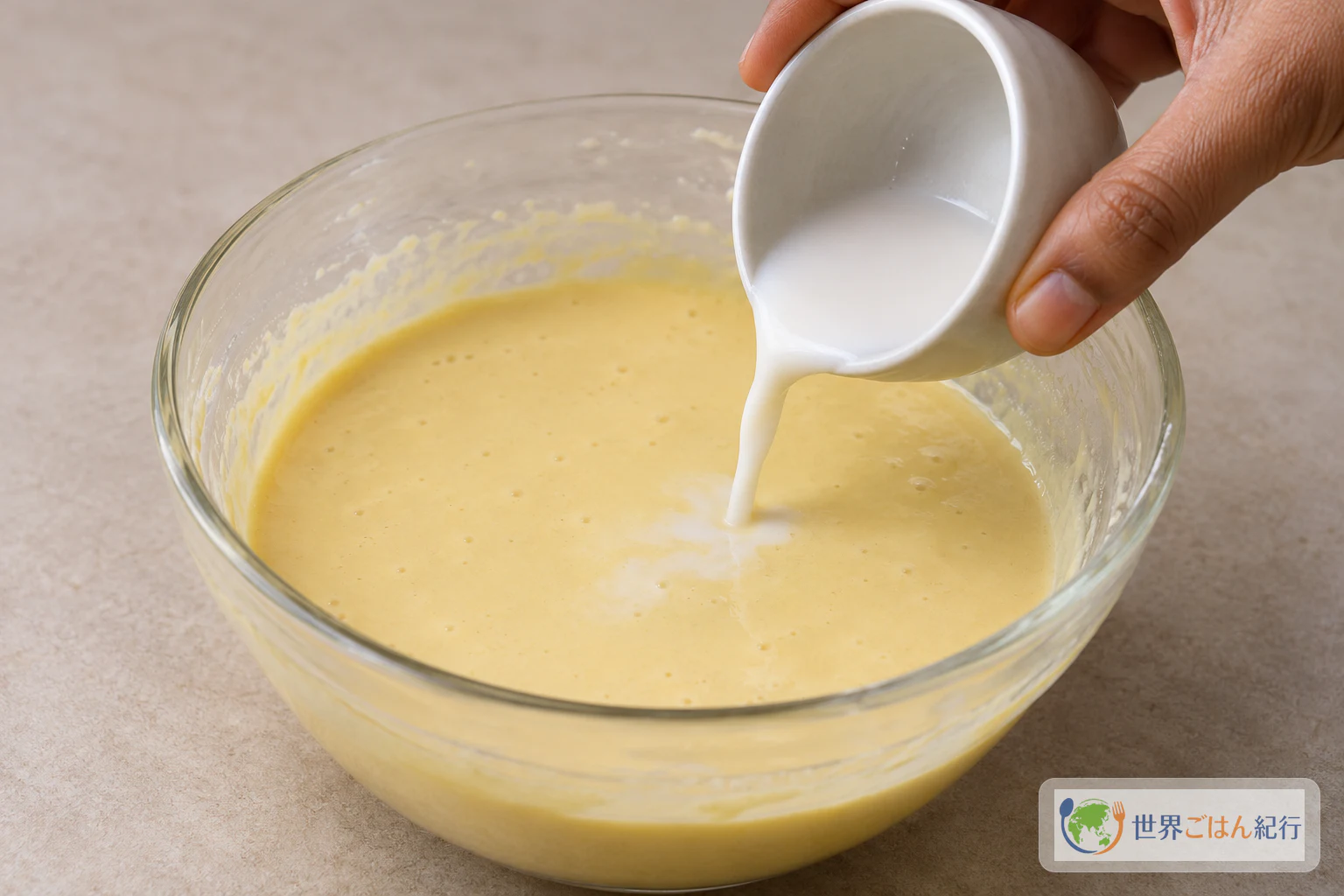
Coconut milk: Use canned coconut milk for both the batter and the reserve. Measure the additional 1/4 cup into its own cup before you start so it does not end up in the bowl by mistake.
Mold: Use a commercial non-stick kokis mold made for food. These instructions apply only to that type. They do not cover preparing or seasoning other molds.
Normal hot-oil precautions apply. Stay with the pot, keep children and pets away, and move gently to avoid splashing. Time, temperature and color are cooking cues, not proof of safety. This recipe contains wheat and coconut, and it is not a guaranteed allergen-free recipe, so check your product labels if allergies are a concern.
Method: From Smooth Batter to Golden Flower
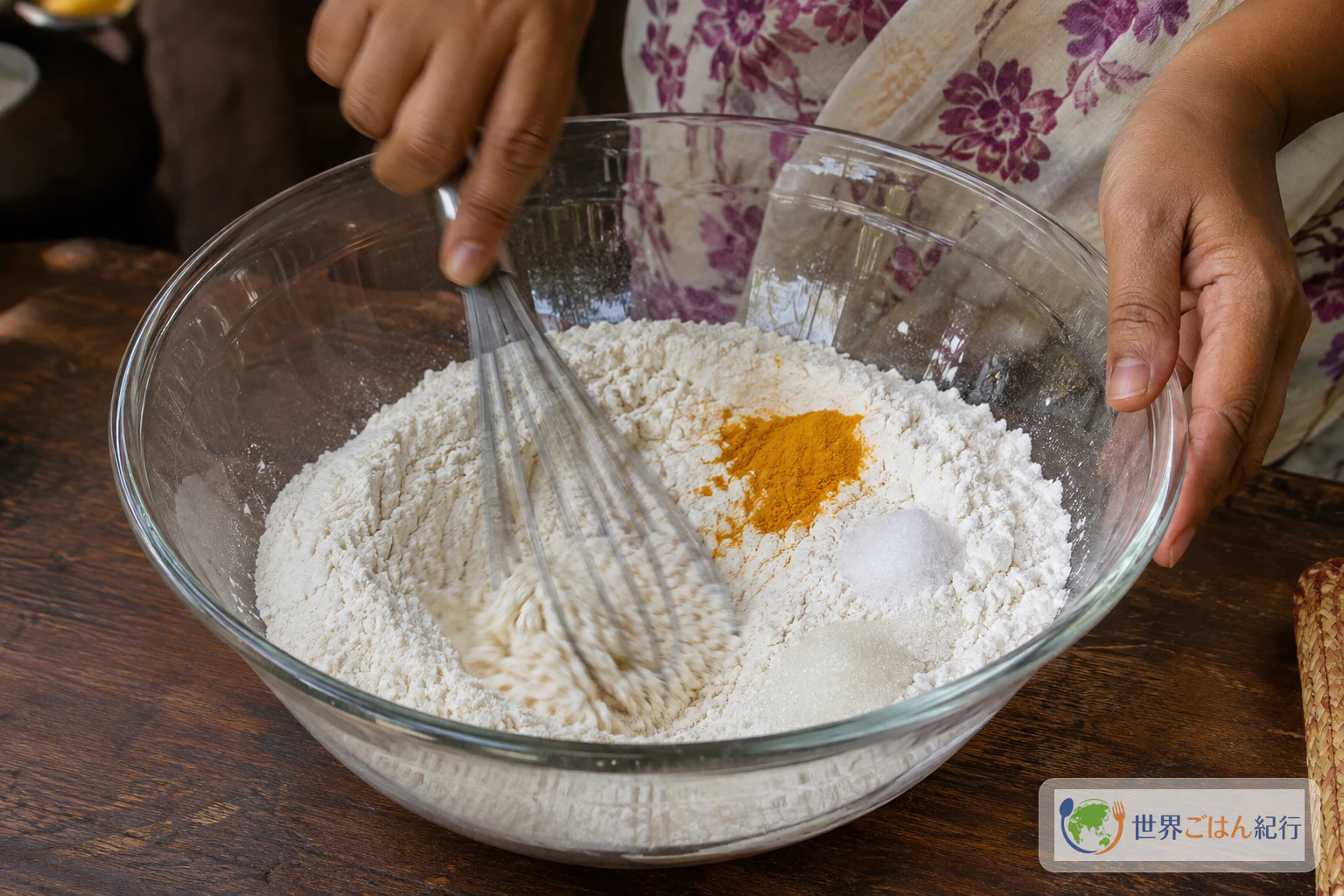
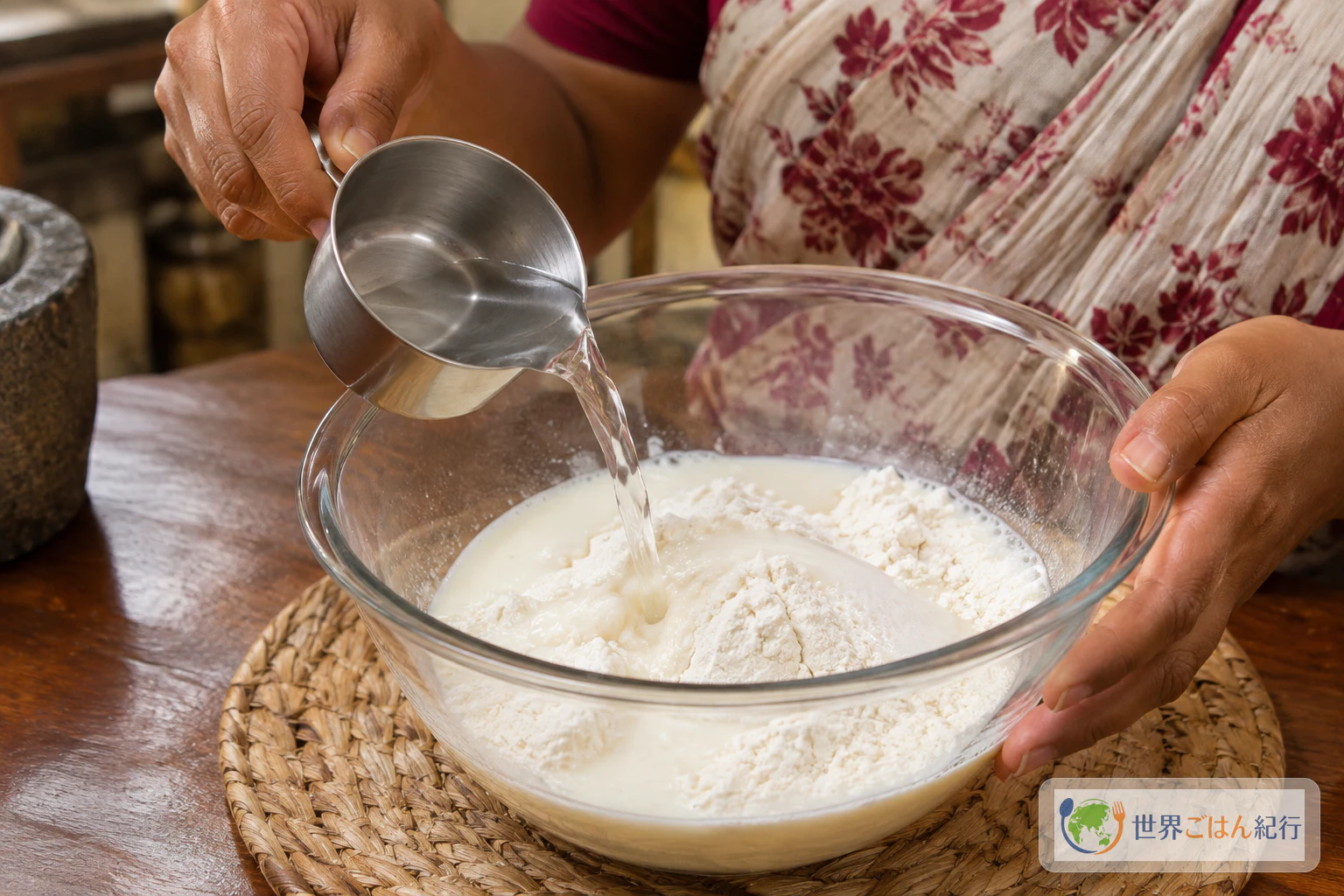
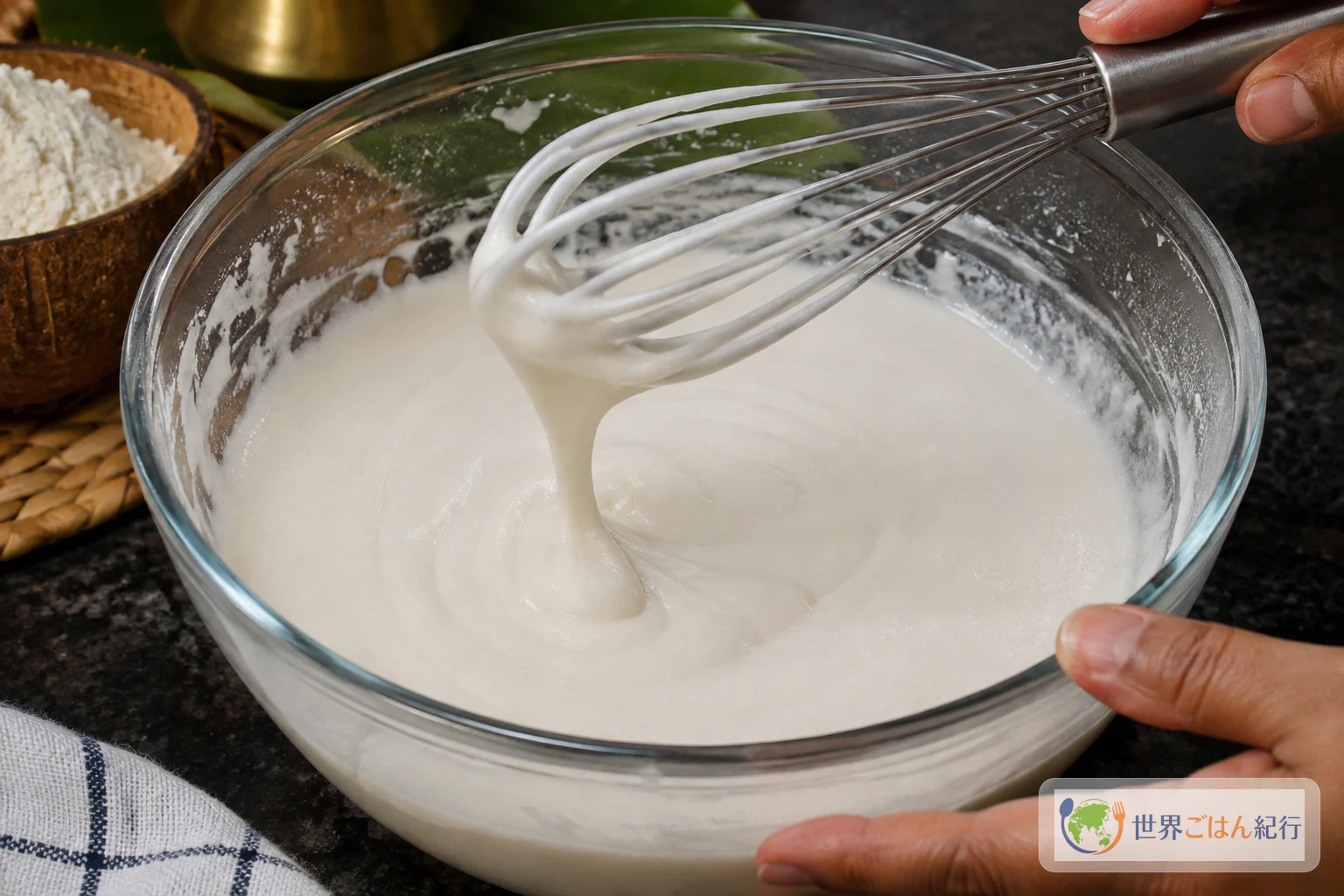
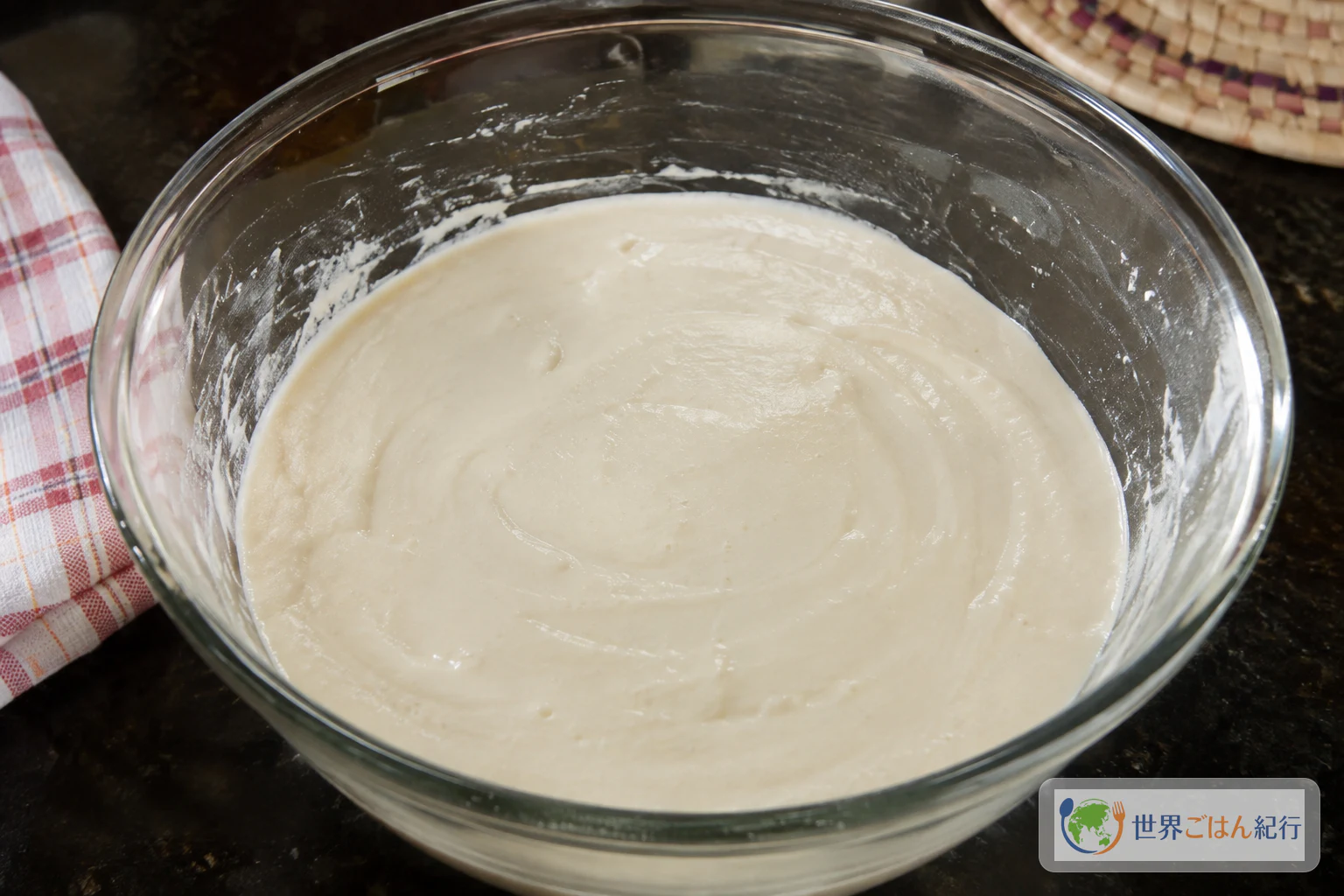
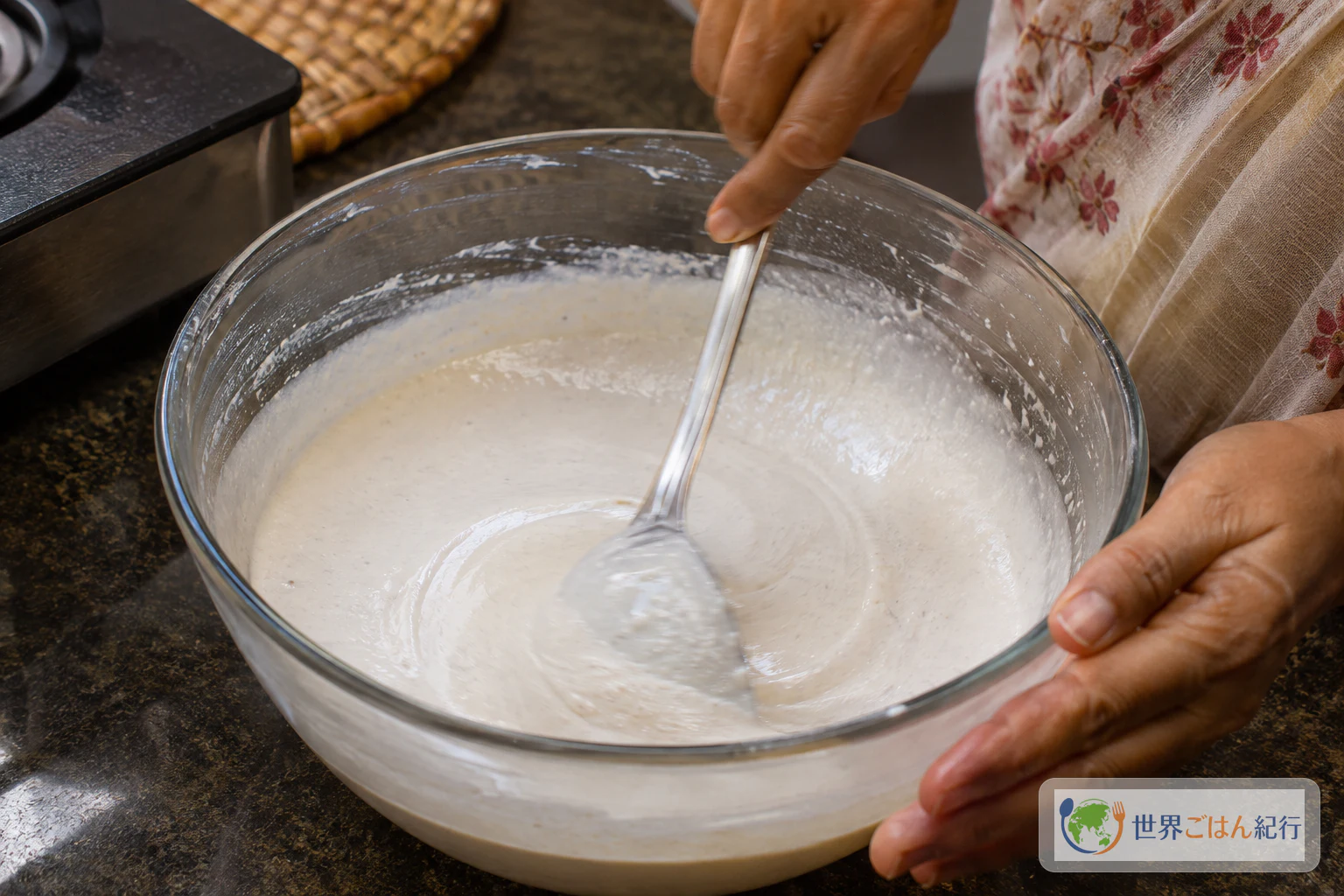
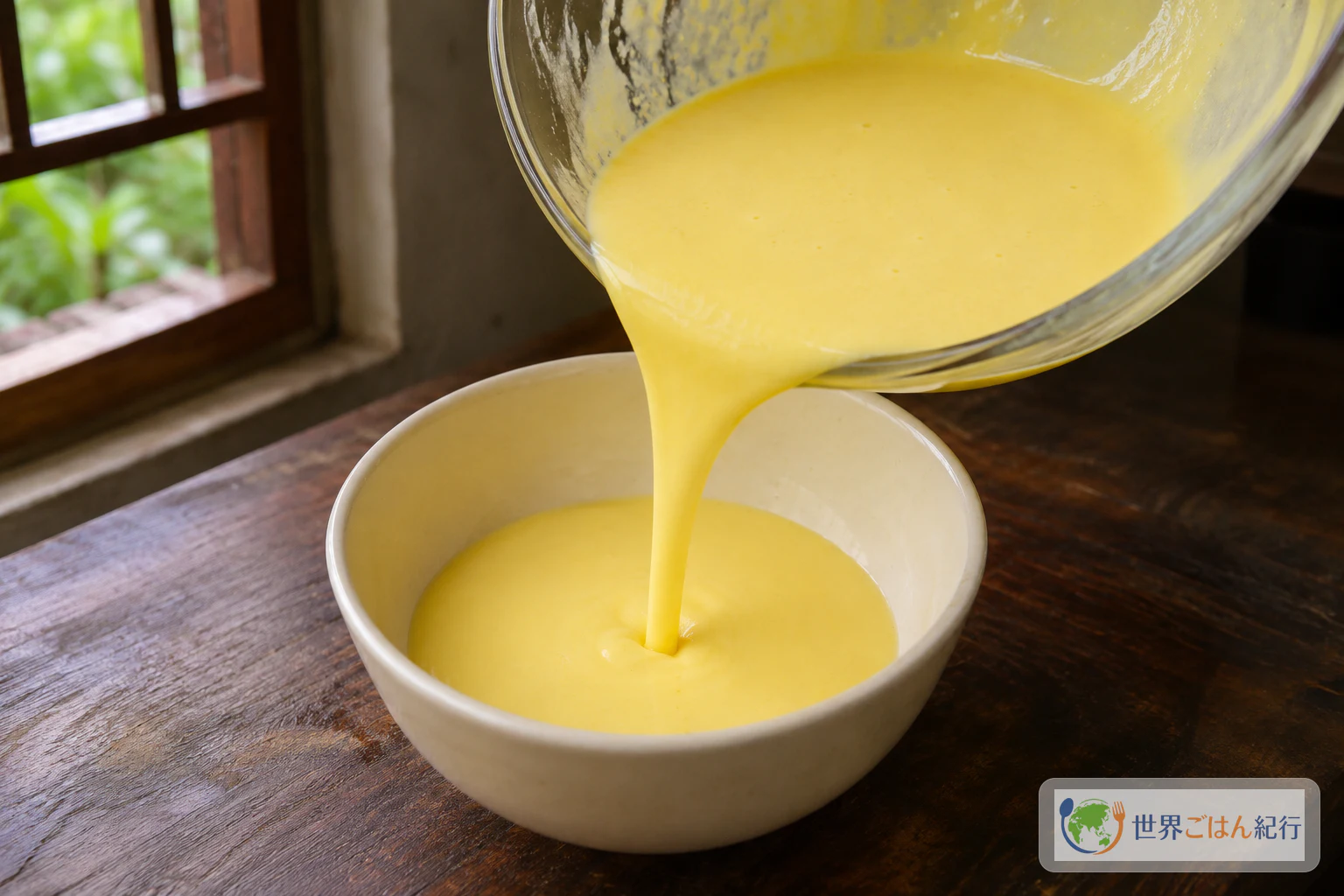
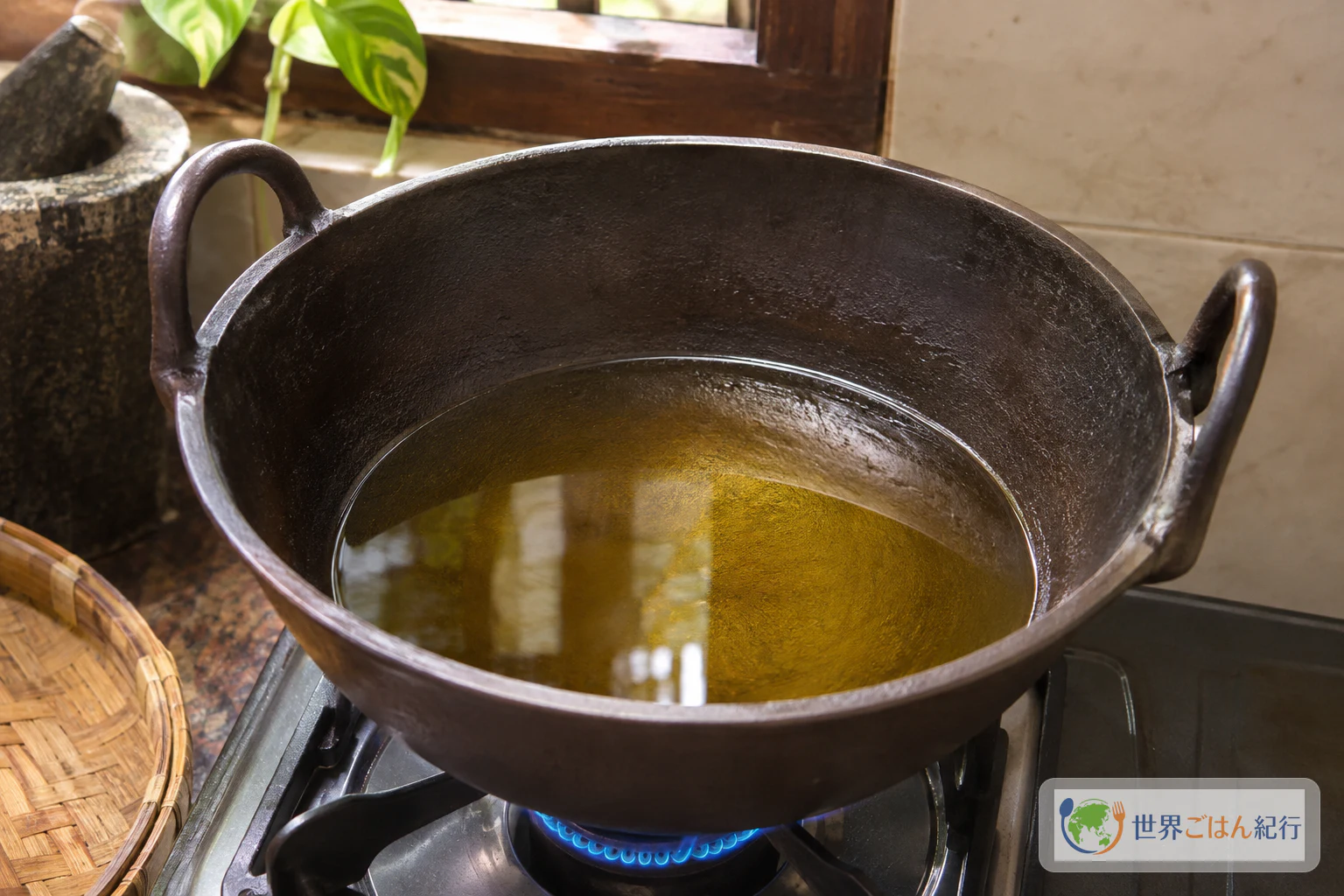
The step pictures illustrate each action. They do not show exact amounts, ingredient identity, time, temperature or safety. If a picture and the written step seem to differ, follow the written step, especially about keeping the mold off the bottom of the pot.
When Something Goes Wrong
| What you notice | What to check | What to do |
|---|---|---|
| The batter has lumps | Whether it has been whisked long enough | Keep whisking until smooth and slightly thicker than heavy whipping cream |
| Flour has settled at the bottom of the bowl | How long since the last stir | Stir the batter before the next dip |
| The batter has thickened during frying | Whether it has gone beyond its earlier thickness | Stir in a little of the reserved coconut milk, not the full amount by default |
| The batter covers the top of the mold | How deep you dipped | On the next dip, leave the top uncovered and a margin at the edge |
| Too much oil is dripping into the batter | Whether the mold dripped over the pot first | Let the excess oil fall back into the pot before dipping |
| The batter has not kept its shape | How long the mold has been in the oil | Keep the mold in the oil, within the 45 seconds to 1 minute guide, or until the shape holds |
| The cookie stays on the mold | Whether the shape has set | Ease it off gently with a pointed wooden stick |
| The cookie darkens past golden yellow | Whether the oil has stayed within 160–175°C (320–350°F) | Adjust the heat and take the next cookie out as soon as it is golden yellow |
| The mold is touching the pot | How low you are holding the handle | Raise the head so it stays clear of the bottom |
Other Versions of Kokis
Kokis is not limited to one formula, and versions should not be mixed amount by amount. Lakpura, a commercial travel and sales site, publishes a different recipe that uses egg and sesame, with its own quantities, mold handling and timing. None of those details are used here.
Roshani Wickramasinghe's page also discusses paths this article does not take, including traditional molds, an optional egg, overnight batter and fresh coconut milk. This article stays with the canned-milk, non-stick, egg-free version. If you want to try one of the others, follow that recipe as a whole rather than borrowing a single step.
Kokis and the New Year Table
The Sri Lanka Tourism portal's food page links kokis with Sinhala and Tamil New Year. It describes the food as made from rice flour and coconut milk, formed with molds, and served warm or cooled.
The same page presents a Dutch origin as a belief. That is worth repeating only as a belief, because it does not establish a proven origin or inventor. The portal's cultural description is useful context, but it is not a recipe authority or proof of the dish's history.
Frequently Asked Questions
How many does this make, and how long does it take?
We don't state a yield. The Hungry Lankan recipe card displays 20 servings without saying whether that means people or pieces. The three cookies in the final picture are simply a plate arrangement.
The card also displays prep 10 minutes, cook 40 minutes and total 50 minutes. These are the publisher's estimates, not measured times, so treat them as a rough guide only.
Why are the cups not converted to milliliters?
The recipe gives cups without naming a cup standard, so a milliliter figure would be a guess. The amounts are left as written.
How many times should I turn each cookie?
The recipe says to fry both sides for about 30 seconds more in total, or until golden yellow. It does not fix a number of turns. The single turn in step 17 and its picture are our way of illustrating both-sides frying.
Can I add the extra coconut milk at the start?
No. The additional 1/4 cup is a separate reserve for later, and only for batter that has thickened. You may not need all of it.
Can I use cake flour instead of all-purpose flour?
This recipe calls for all-purpose flour, and we have no basis for presenting cake flour as an equivalent.
Are kokis served warm or cooled?
The Sri Lanka Tourism portal describes them as served warm or cooled. For this version, we follow the Hungry Lankan author's comment guidance to cool them completely, then serve them fresh.
How long do kokis keep?
This article gives no storage period or reheating method. Lakpura's page has storage wording for its own egg-based recipe, but we don't apply it to this formula. Cool the cookies completely and serve them fresh.
Are these gluten-free or free of allergens?
They are not gluten-free, because the batter contains all-purpose flour. The ingredient list has no egg, but we make no allergen-free or vegan guarantee. Check the labels on the products you buy.
Sources
- Roshani Wickramasinghe, "Sri Lankan Kokis," Hungry Lankan, April 3, 2025. The sole recipe version used here, including ingredients, amounts, method, displayed estimates and cooling guidance. https://www.hungrylankan.com/recipes/sri-lankan-kokis/
- Sri Lanka Tourism portal, "So Rich In Flavours." Cultural context only: the association with Sinhala and Tamil New Year, rice flour and coconut milk, molded forms, serving warm or cooled, and the Dutch origin presented as a belief. The portal's operating agency has not been verified. https://www.srilanka.travel/culinary-tourism/food-range.php
- Lakpura, "Kokis (Sri Lankan New Year Rosette Cookie)." A commercial page used only for comparison as a different version of kokis; no ingredients, amounts, times or storage guidance are taken from it. https://www.lakpura.com/pages/kokis-recipe