Boondi Raita: Soft Little Pearls Resting in Cool Yogurt
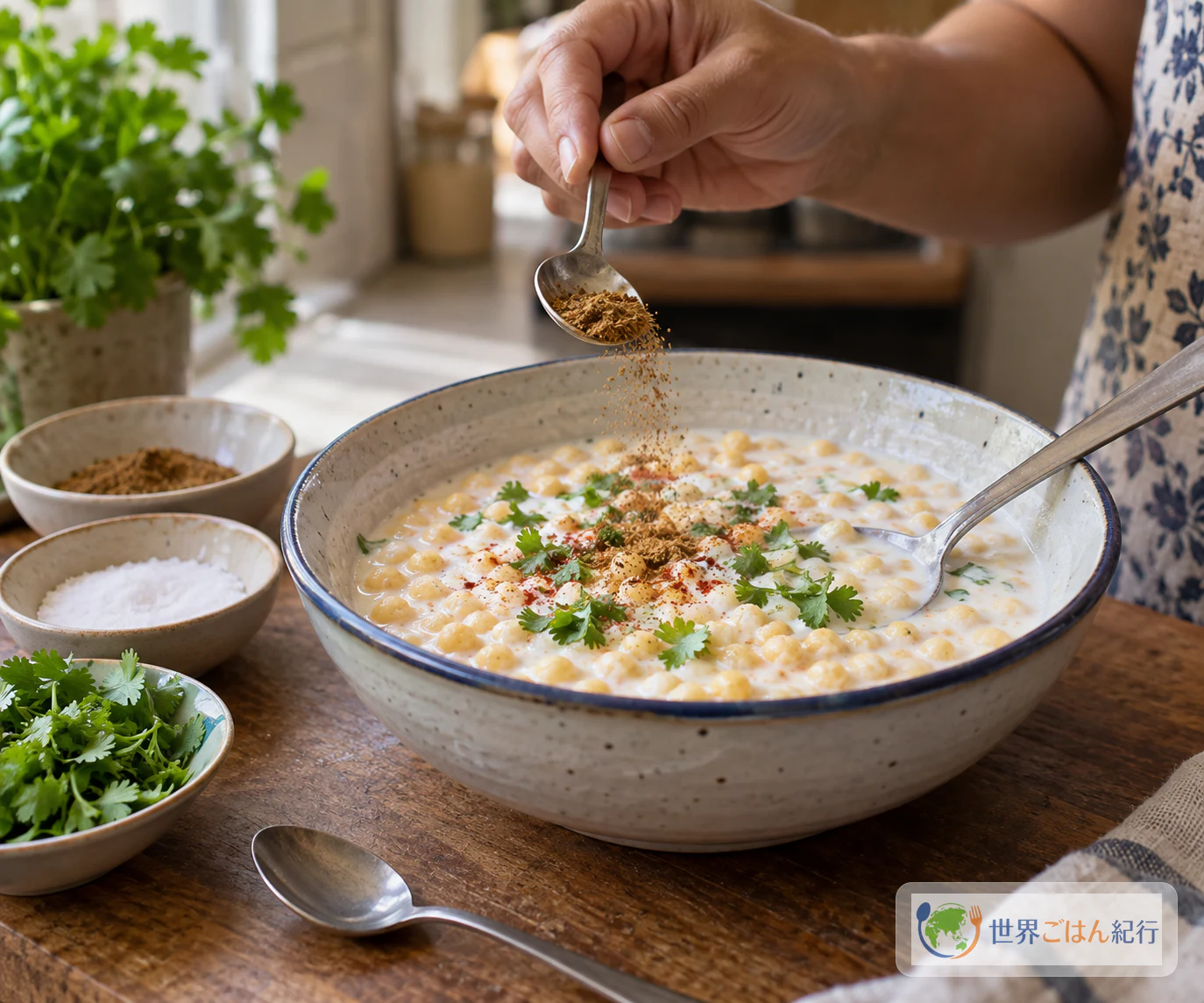
Keep the boondi as small, whole pearls that have softened but not turned to paste. Let the plain yogurt's tang, the aroma of roasted cumin and a careful hand with salt do the rest.
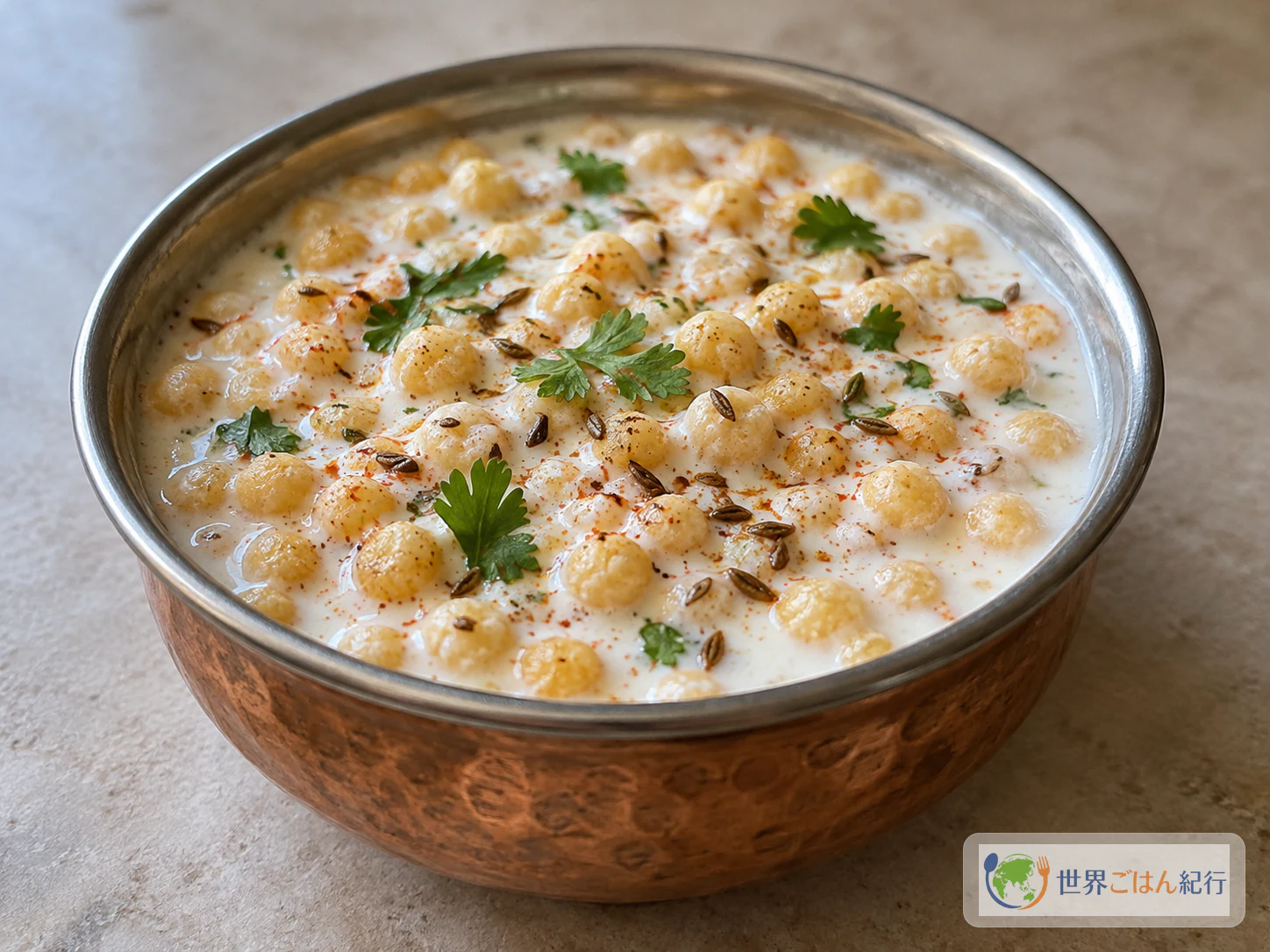
Picture a table set with a fragrant plate of biryani or pulao. Beside it sits a small bowl of cool yogurt, and in that yogurt are dozens of tiny, pale golden pearls, each one swollen just a little. Every spoonful catches some of the spice from the rice and softens it. That small bowl is boondi raita (बूंदी का रायता, boondi ka raita).
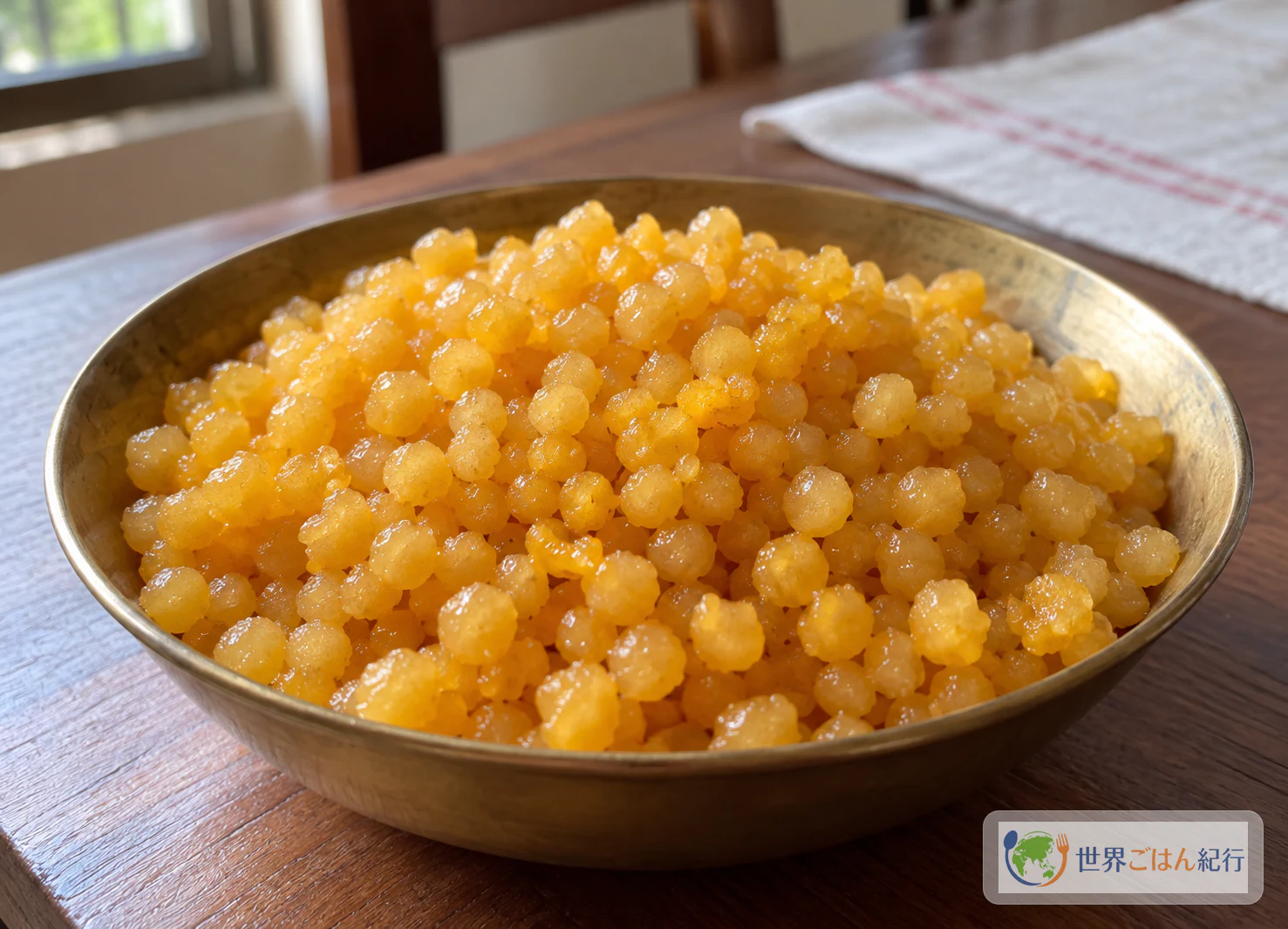
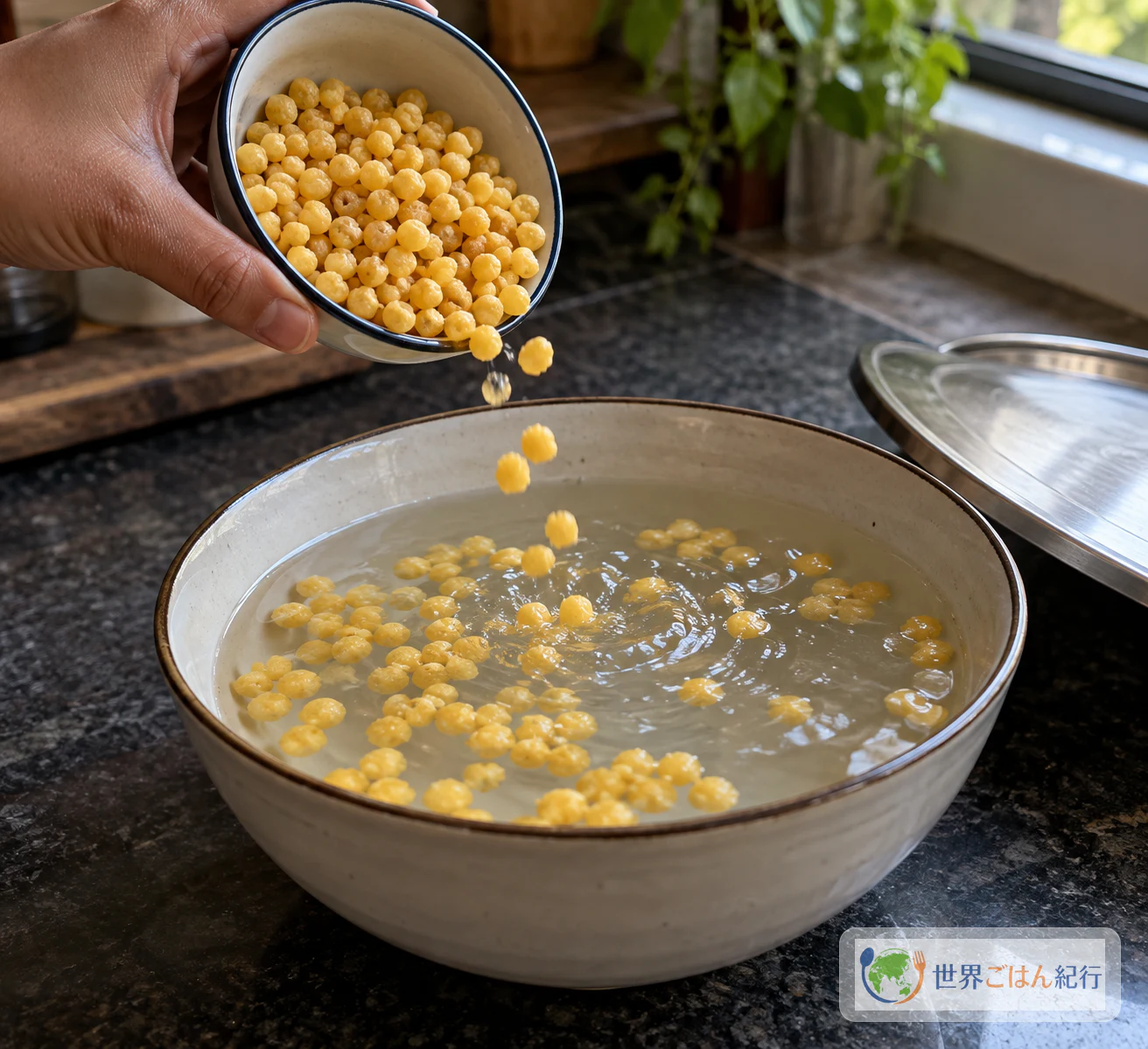
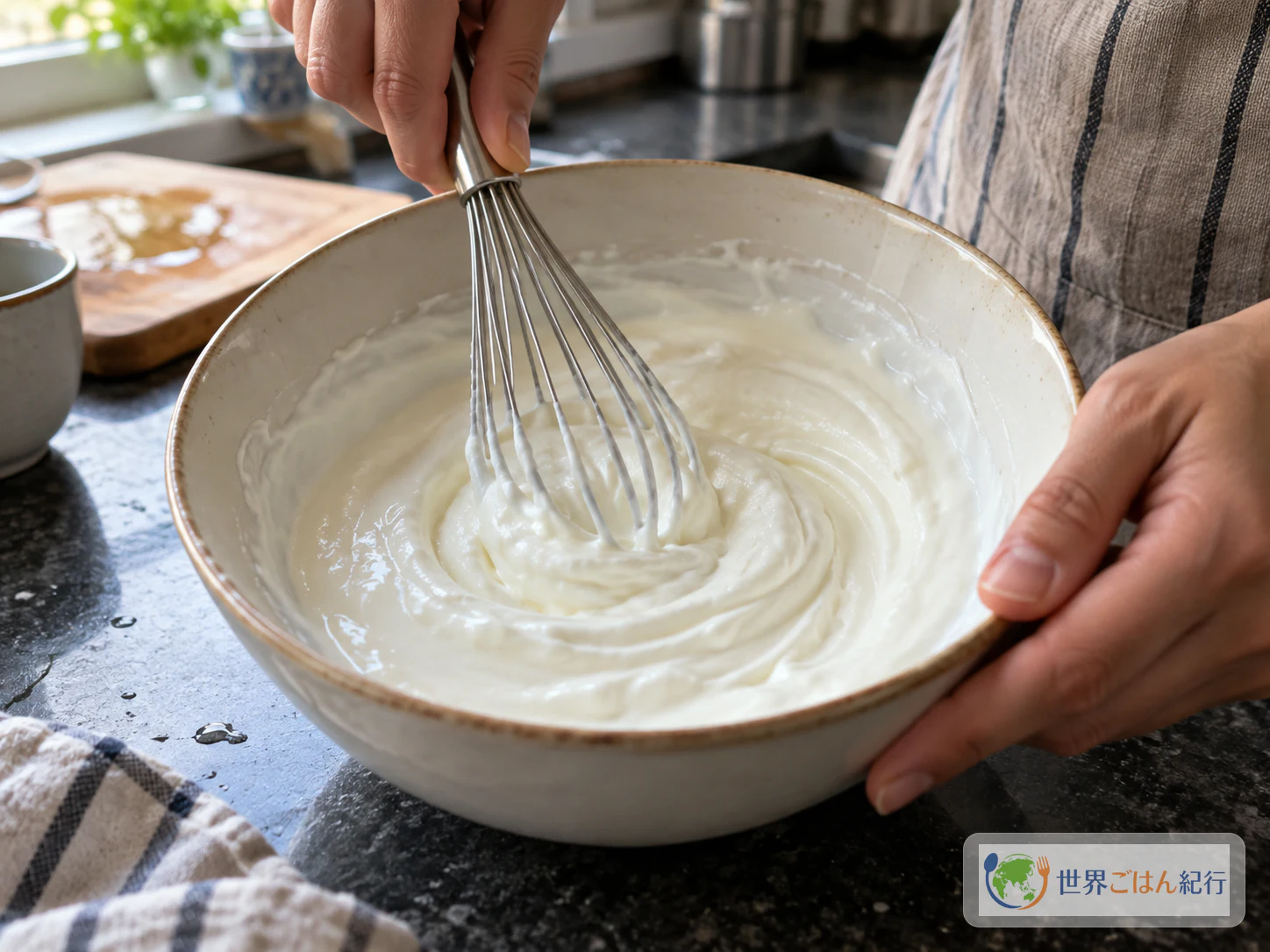
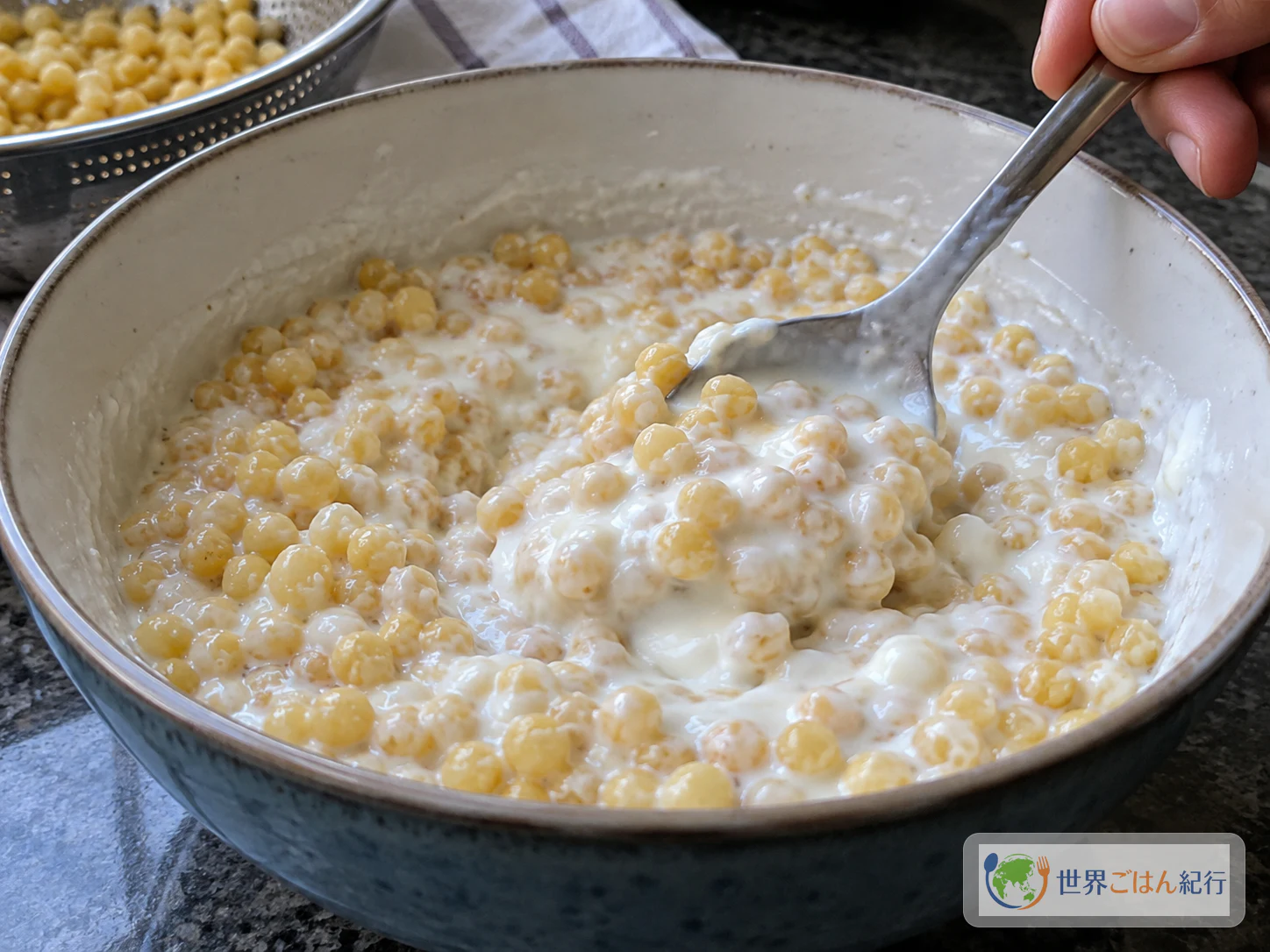
Boondi are small fried pearls made from besan (gram flour). In boondi raita, they are softened in warm water, drained, and folded into whisked curd (yogurt) seasoned with chaat masala, roasted cumin, red chili and fresh herbs. You may also see the dish listed as "boondi salad," or under spellings such as Boondhi Raita, Dahi Boondhi, Dahi Bundi and Boondhi Ka Raita.
This article follows one recipe: the classic 2-serving version from the recipe site Dassana's Veg Recipes, made the soft way with store-bought plain boondi and coriander. The amounts are kept in the source's own cups and spoons. Sekai Gohan has not kitchen-tested this recipe; the method and amounts below are the source recipe's, not results from our own kitchen. For more dishes from the same country, see India.
What Boondi Raita Is, and How It Differs from Cucumber Raita
Boondi raita is a raita built around texture rather than fresh vegetables. The source recipe presents it as a North Indian raita of curd, fried gram-flour boondi, spices and herbs. A cucumber raita gets its body and freshness from grated or chopped cucumber; boondi raita has no cucumber at all, and its character comes from the pearls themselves, which drink up moisture and turn soft and plump.
That thirst for moisture is the whole craft of the dish. Soaked briefly in warm water, the pearls soften while keeping their round shape. Left too long, the source warns, they turn pasty and mushy. Once they are in the yogurt, they keep absorbing liquid, which is why one recipe site advises making the raita close to serving time. Most of the decisions in this recipe come back to that one fact: how much water the boondi takes in, and when.
The same author also describes boondi turning up in other chaat preparations, so a bag of plain boondi is a pantry item with more than one use. Here it has one job: to give the yogurt small, soft pearls.
Ingredients for 2 Servings
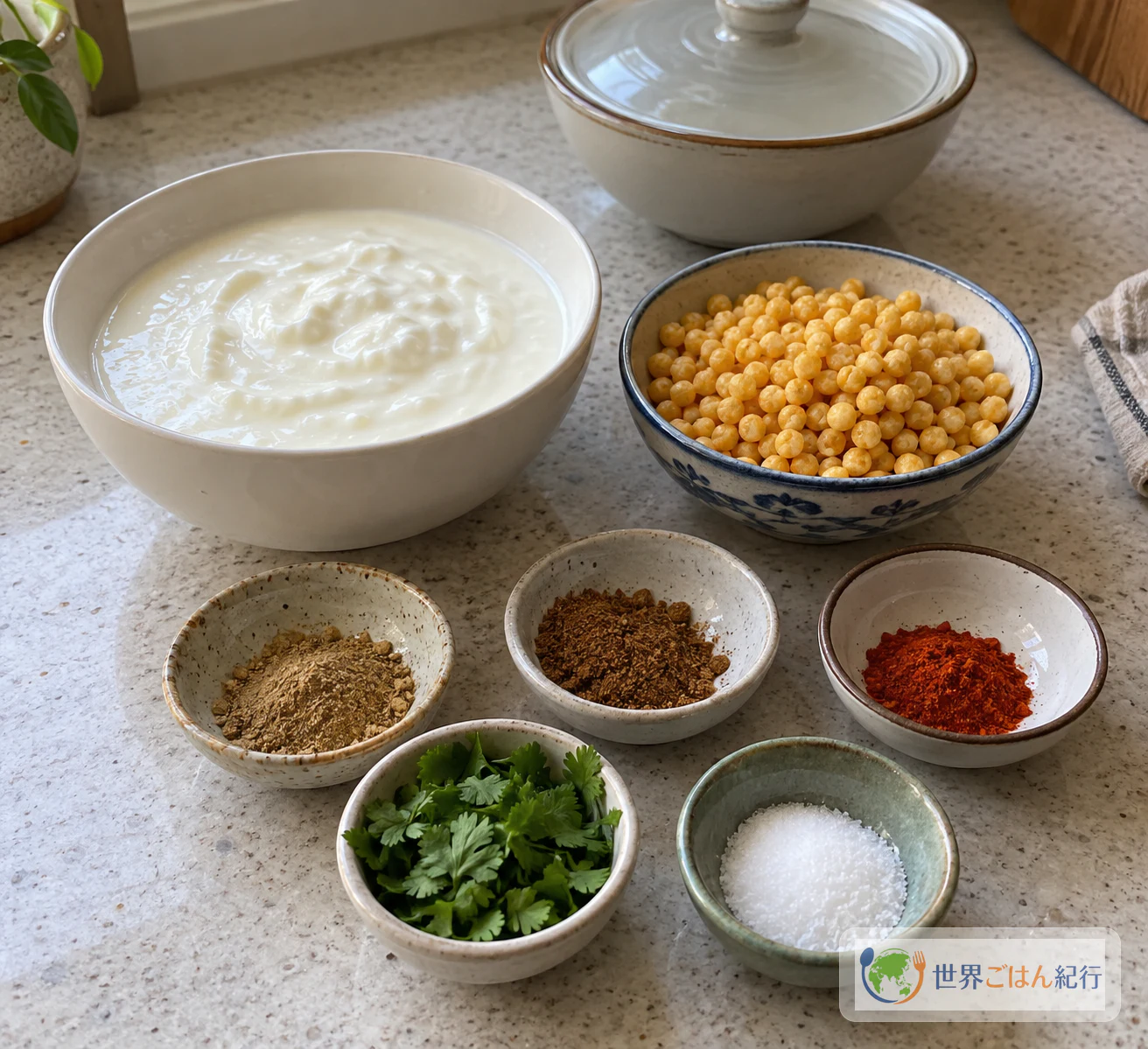
This version uses coriander as the herb and leaves out the two optional spices (fennel powder and black pepper); see the notes after the table for those choices.
The soaking water is used in the method only. It never goes into the yogurt.
Equipment
- A bowl for soaking the boondi, with a lid
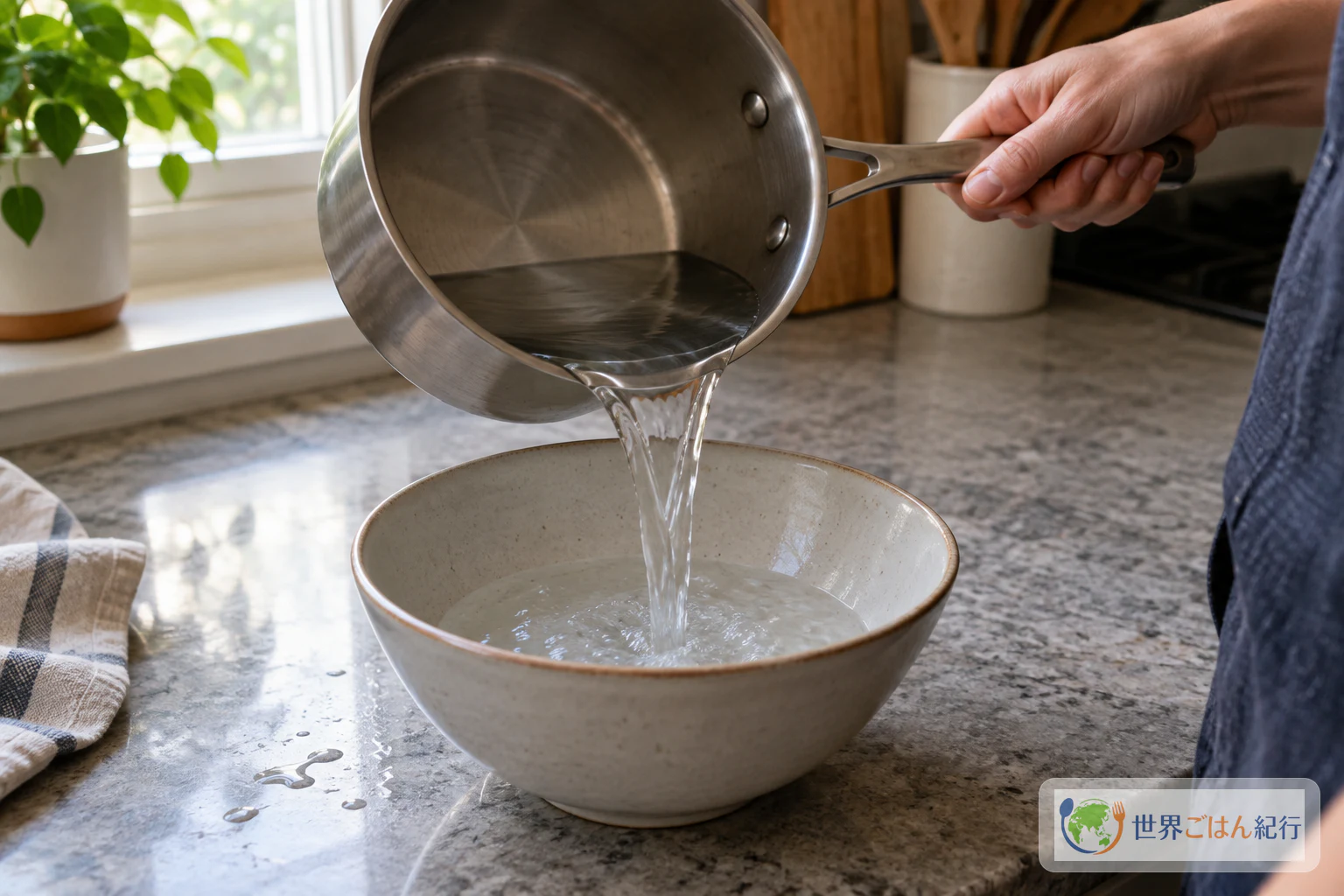
- A saucepan, microwave-safe container or electric kettle for warming the water
- A strainer (a fine-mesh one makes draining the small pearls easier)
- A mixing bowl
- A whisk or spoon
Choosing and Substituting: Boondi, Yogurt, Herbs and Spices
Boondi. Use plain or salted boondi. Look for it at Indian grocery shops under the name "boondi." Make sure you are buying the savory fried gram-flour pearls, not a sweet boondi. Salted boondi already brings salt, so hold back on chaat masala and salt until you have tasted. Spiced (masala) boondi adds its own salt and spice as well, so the same tasting rule applies even more. Check the bag's ingredient and allergen labeling, since products differ.
Yogurt. Use plain, unsweetened dairy yogurt that is fresh and not overly sour. Plant-based yogurt also works, but it will not necessarily have the same tang or thickness, so taste and adjust, and check its label for allergens.
Coriander or mint. Use 1–2 tbsp chopped coriander leaves, or 1 tbsp mint. Use one or the other, not both. This version uses coriander.
Optional spices. Fennel (saunf) powder 1/2 tsp and black pepper powder 1/4 tsp are both optional. This version leaves both out. If you want them, they go in at the seasoning step with the other spices.
Roasted cumin. Roasted cumin powder smells different from plain, unroasted ground cumin. One recipe writer specifically contrasts the aroma of cumin roasted and ground at home with packaged unroasted powder. If you only have ordinary ground cumin, the raita will still work, but the toasty note will be quieter.
Chaat masala. If you don't have it, don't swap in a guessed amount of something else. Build the flavor with the roasted cumin and red chili alone, and adjust the salt by taste.
Method: Soften, Drain Gently, Fold, Then Season
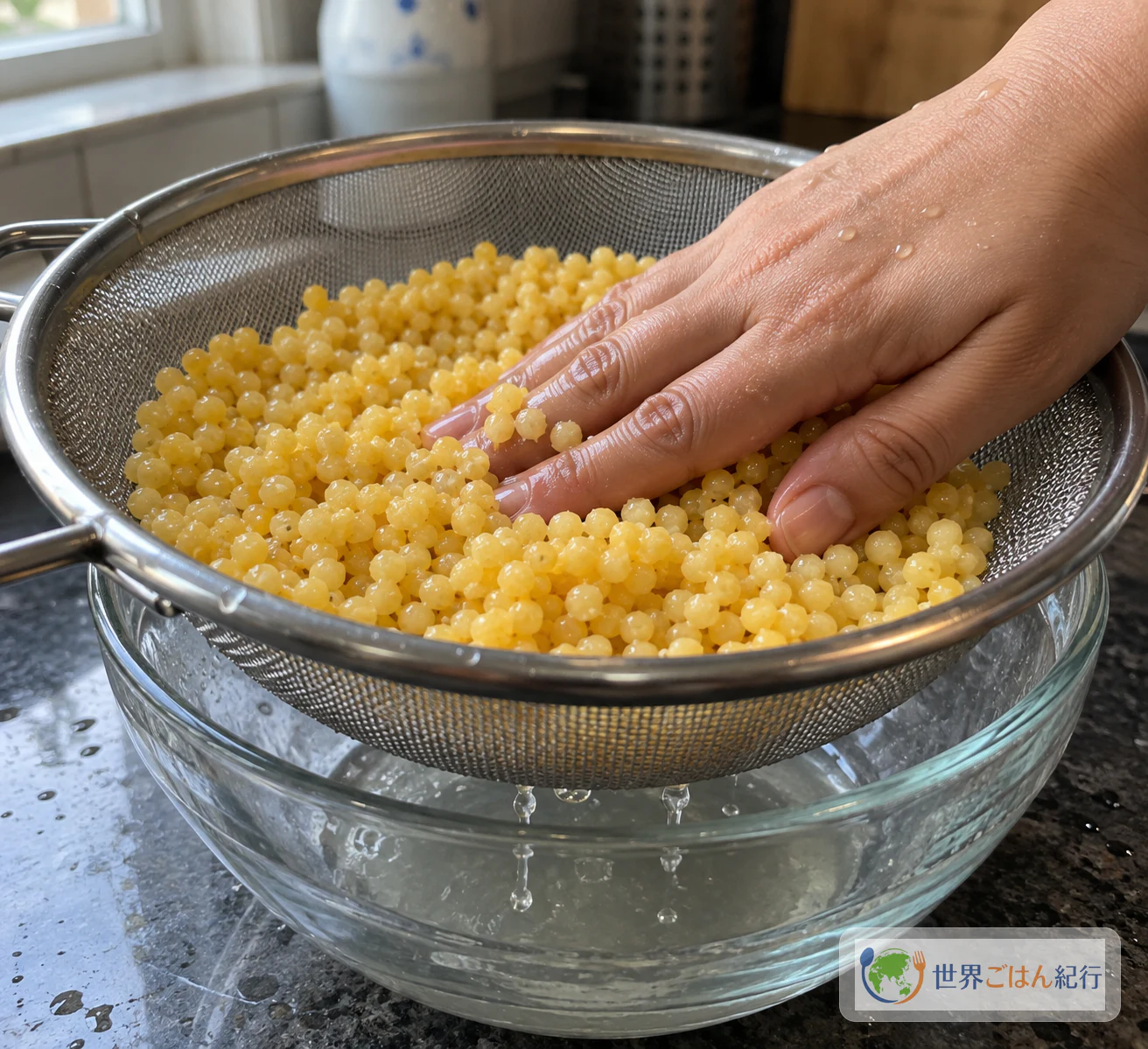
Keep the soak within 9–12 minutes, and press the drained boondi only lightly. Both protect the round pearls from turning into paste.
Start the boondi soaking first, and whisk the yogurt while it waits.
Soft or Crisp, Salty or Flat: Adjusting Texture and Taste
| Condition | Likely cause | What to do |
|---|---|---|
| Sticky or pasty pearls | Soaked longer than 9–12 minutes, or pressed too hard | Keep the soak within the range and press only lightly |
| Watery raita | Soaking water got into the yogurt, or the boondi wasn't drained | Always discard all the soaking water and drain the boondi before folding it in |
| Too thick | Very thick yogurt, and the boondi keeps absorbing moisture | Loosen with a little water, a small amount at a time, tasting and checking as you go |
| Too salty | Salted boondi plus chaat masala plus added salt | Next time, check whether the boondi is salted, start at 1/4 tsp chaat masala, and add salt only after tasting |
| Weak aroma | Unroasted ground cumin | Use roasted cumin powder |
| Want more bite | Soft is the base version | Try the crisp variation below |
Ways to vary the bowl
| Variation | How | What changes |
|---|---|---|
| Soft (this recipe) | Soak in warm water 9–12 minutes, drain, press lightly | Plump, soft pearls that blend with the yogurt |
| Crisp | Add the boondi straight to the yogurt without soaking (an option the source gives) | The pearls keep some crunch; a different texture from the soft version |
| Salted vs plain boondi | Choose by what you can find | With salted boondi, go lighter on chaat masala and salt and taste first |
| Coriander or mint | 1–2 tbsp coriander, or 1 tbsp mint | Use one herb, not both |
| Spice profile | Add the optional fennel powder 1/2 tsp and/or black pepper 1/4 tsp; adjust chili to taste | Fennel adds a sweet, fresh aroma; black pepper adds extra heat |
Other home recipes season boondi raita differently. One uses dried mint and an optional green chili and lets the raita rest after mixing; another soaks the boondi for a shorter time and recommends serving soon after making. These are separate recipes with their own amounts, so treat them as other households' versions rather than adjustments to this one.
How It Is Eaten: A Cool Side for Rice Dishes and Stuffed Breads
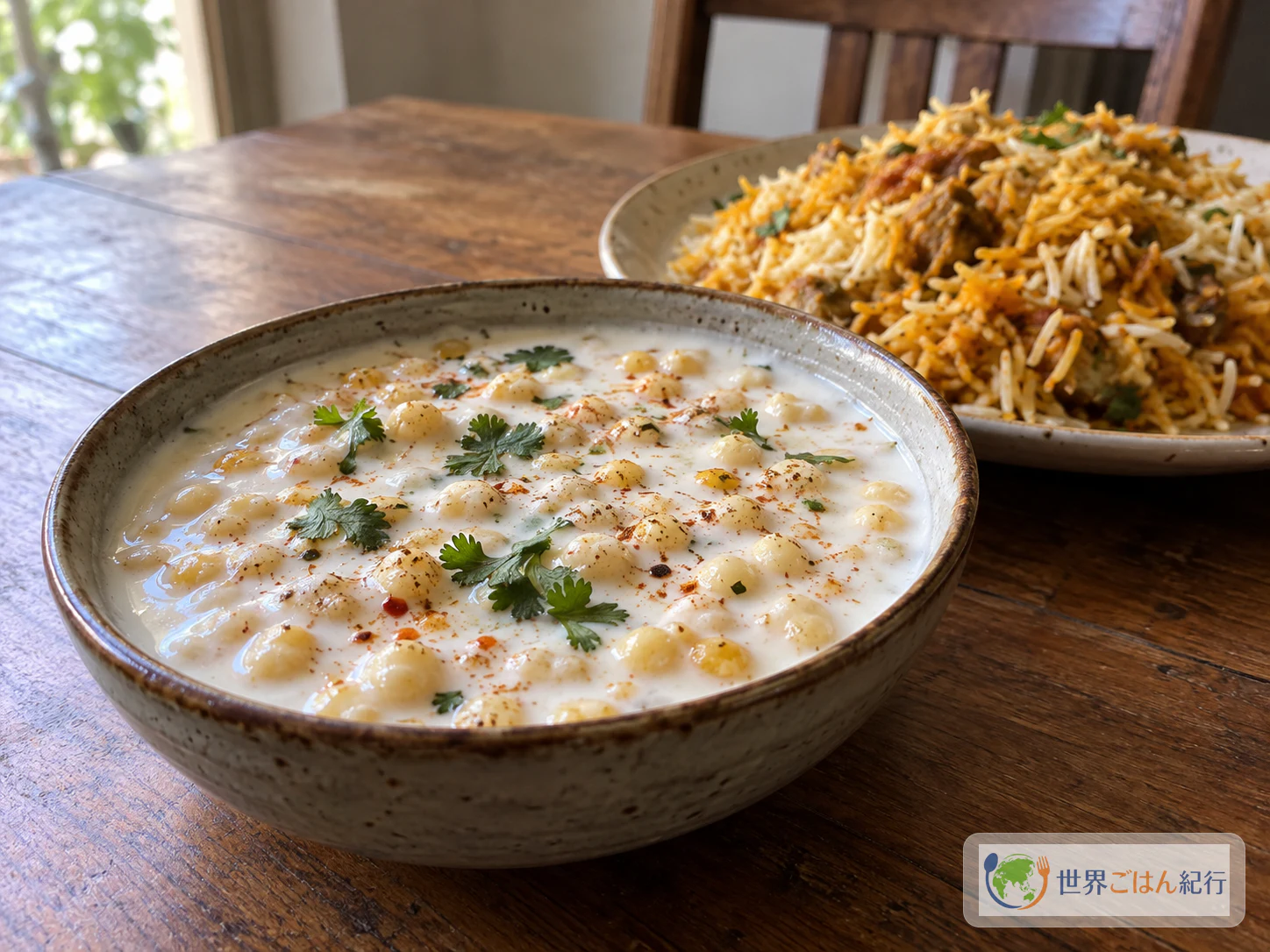
The recipe sources agree on its role: boondi raita is a side, served with biryani, pulao and other rice dishes, and with stuffed parathas. One recipe site calls it a condiment for pulao and parathas. Serve it in its own bowl rather than mixing it into the rice, so each spoonful keeps the cool yogurt and soft pearls distinct.
Store-bought boondi is the usual starting point in these recipes. One writer recalls a family table rooted in Punjabi cooking, where boondi was sometimes made at home from leftover besan batter and sometimes bought from a bakery in New Delhi, and eaten as a snack as well as in raita. That is one family's memory, not a description of every Punjabi home. This recipe uses ready-made boondi.
The source author explains the name as coming from the Hindi word boond, meaning a drop of water, which suits the tiny round pearls. That explanation comes from a recipe writer rather than a language reference, so take it as the author's account. The origins and history of the dish are not covered by the sources here.
Hygiene, Storage and Allergies
Boondi raita is never heated, so start with clean hands, utensils and surfaces, and rinse the coriander under running water before chopping it. Refrigerate the raita within 2 hours of making it, or within 1 hour if the air temperature is above 32°C (90°F), and keep your refrigerator at 4°C (40°F) or below. This is the household guidance from FoodSafety.gov, a U.S. government food-safety resource, not an India-specific rule. Serving "cold or at room temperature" does not mean the bowl can sit out for a long time.
Leftovers. If you won't serve it right away, refrigerate it. The source's author recommends eating it the same day, or at most the next day, kept in the refrigerator. That is the author's quality advice. The boondi keeps absorbing moisture as it sits, so the pearls get softer and the texture changes; for the best texture, eat it soon.
Allergies. The standard recipe contains dairy (yogurt). Boondi is made from gram flour (chickpea flour), and packaged boondi, chaat masala and plant-based yogurts vary by product, so check each label for allergens.
Frequently Asked Questions
How long should I soak the boondi?
9–12 minutes in warm water, covered. Longer than that and the source warns the pearls can turn pasty and mushy. Drain them, discard the water, and press lightly.
Can I make it without soaking the boondi?
Yes. The source gives an option of adding the boondi straight to the yogurt without soaking, which keeps more crunch. It is a different texture from the soft version in this recipe.
I only have salted boondi. How much salt should I add?
Add the spices first, taste, and only then add salt, if any. Salted boondi and chaat masala both bring salt, so the recipe leaves the salt "as required" rather than giving a fixed amount.
What do I serve boondi raita with?
Rice dishes such as biryani and pulao, and stuffed parathas. Keep it in its own bowl as a cool side.
Can I keep it until the next day?
The source's author suggests eating it the same day, or at most the next day, refrigerated. For safety, refrigerate it within 2 hours (1 hour above 32°C/90°F) in a refrigerator at 4°C (40°F) or below. The boondi will keep softening as it sits, so the texture is best soon after making.
Sources
- Dassana's Veg Recipes, "Boondi Raita Recipe (Classic)." The adopted 2-serving recipe: amounts, warm-water soaking for 9–12 minutes, gentle draining, the crisp unsoaked option, plain or salted boondi, serving with rice dishes and stuffed paratha, the author's explanation of the name, and the author's refrigeration advice. https://www.vegrecipesofindia.com/boondi-raita/
- Indishious, "Boondi Raita." One writer's family memory of Punjabi cooking and New Delhi, boondi as both a snack and a raita ingredient, the aroma of roasted versus unroasted cumin, loosening thick yogurt, and a separate recipe version. https://indishious.com/en/recipes/boondi-raita/
- Simple Indian Recipes, "Boondi Raita (Yogurt Dip)." Alternate names and spellings, serving with pulao and parathas, use of store-bought boondi, a separate recipe version, and the advice to prepare close to serving because boondi keeps absorbing moisture. https://simpleindianrecipes.com/More/Boondhi-Raita.aspx
- FoodSafety.gov (U.S. Department of Health and Human Services), "4 Steps to Food Safety." Refrigerating perishable food within 2 hours (1 hour above 32°C/90°F), keeping the refrigerator at 4°C/40°F or below, and washing hands, utensils, surfaces and produce. https://www.foodsafety.gov/keep-food-safe/4-steps-to-food-safety