Farsi Puri: A Flat Gujarati Snack Speckled with Black Pepper
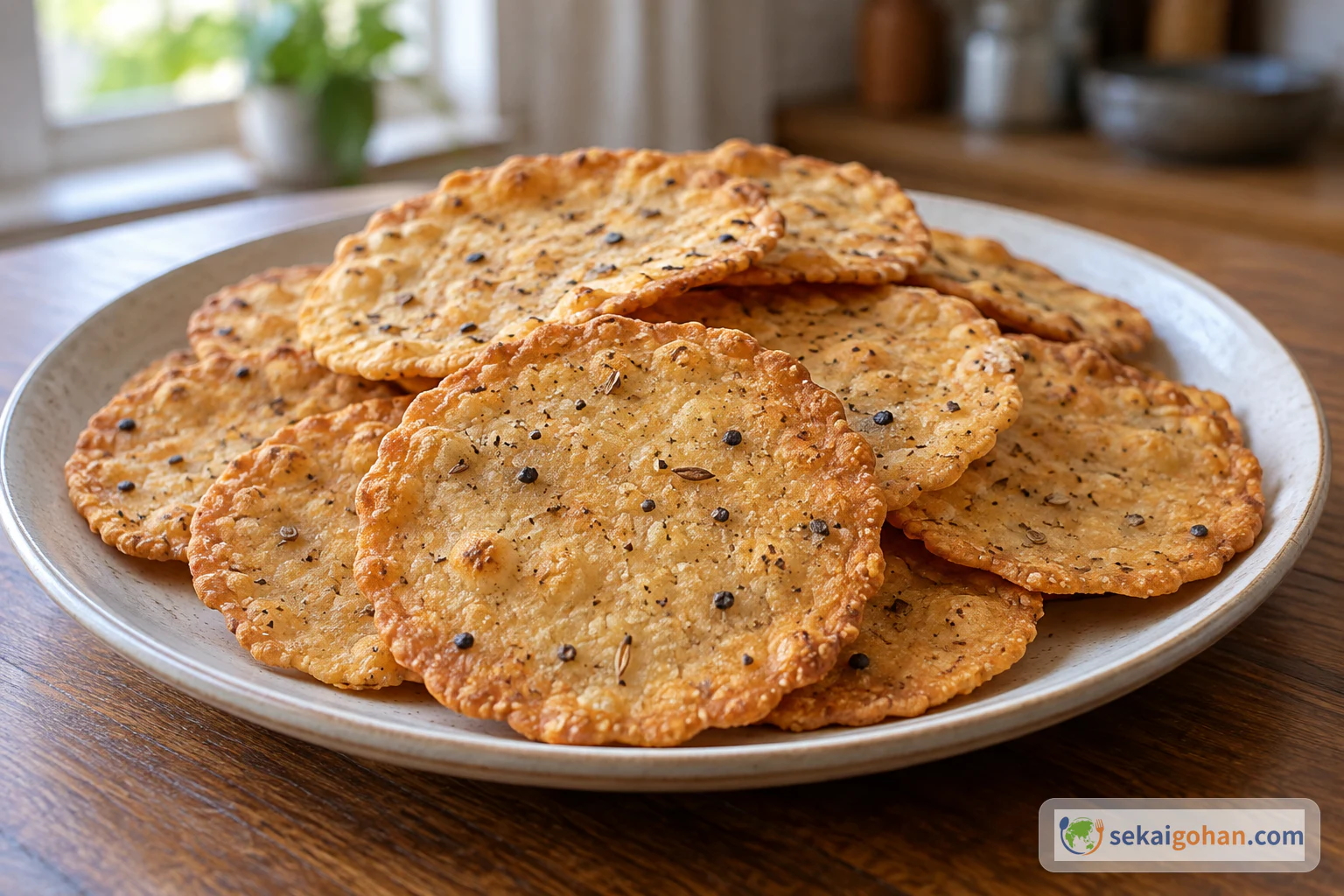
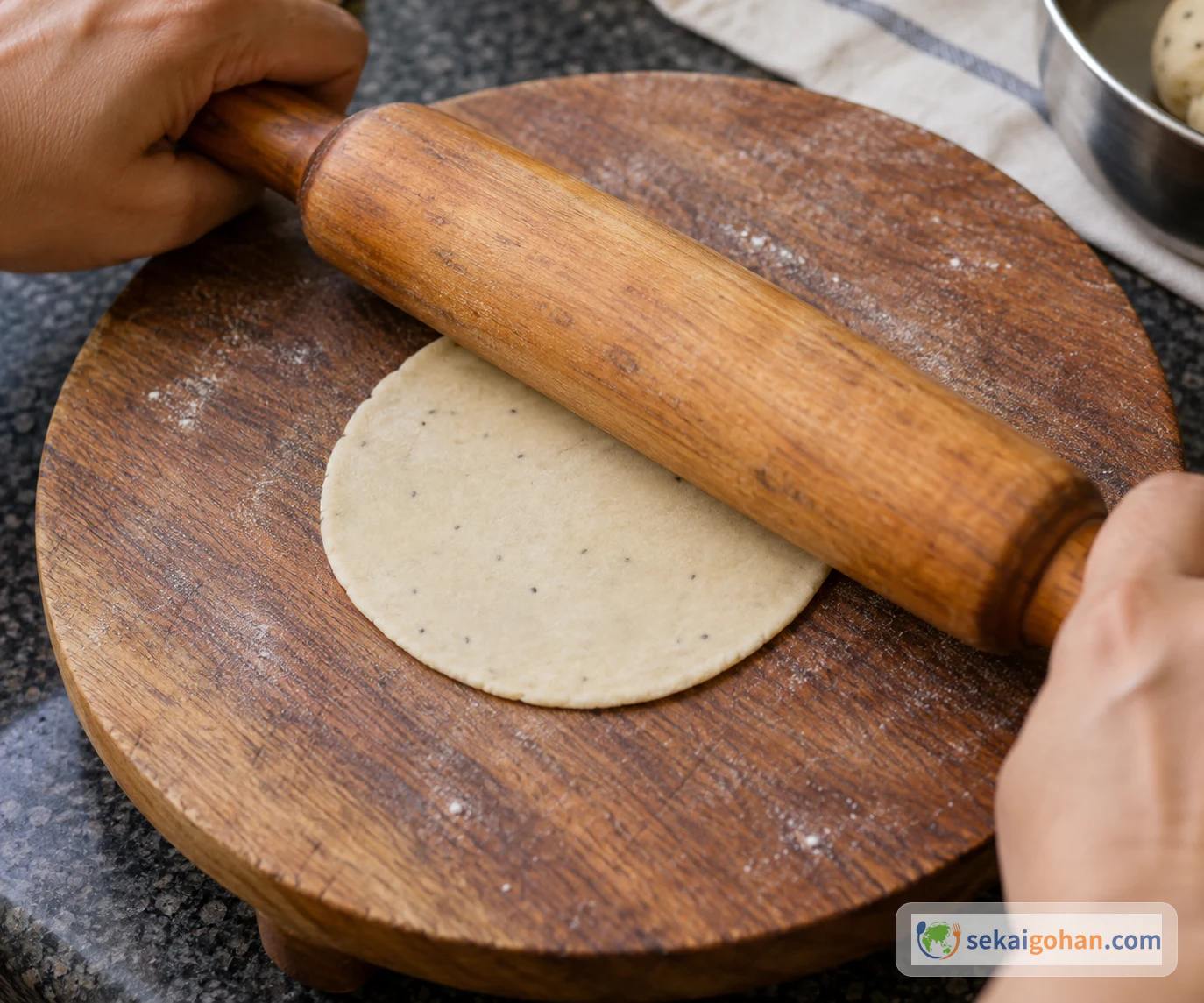
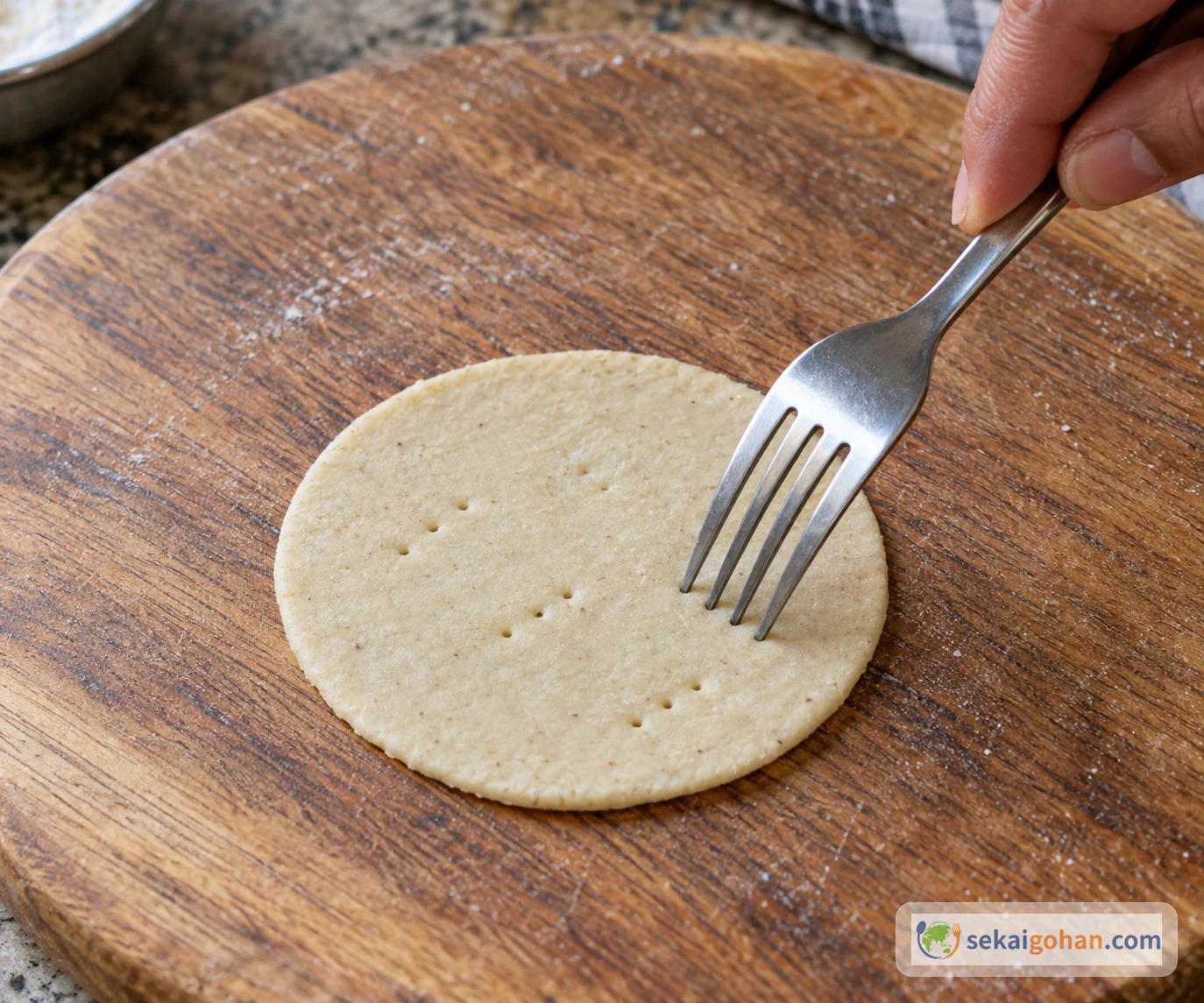
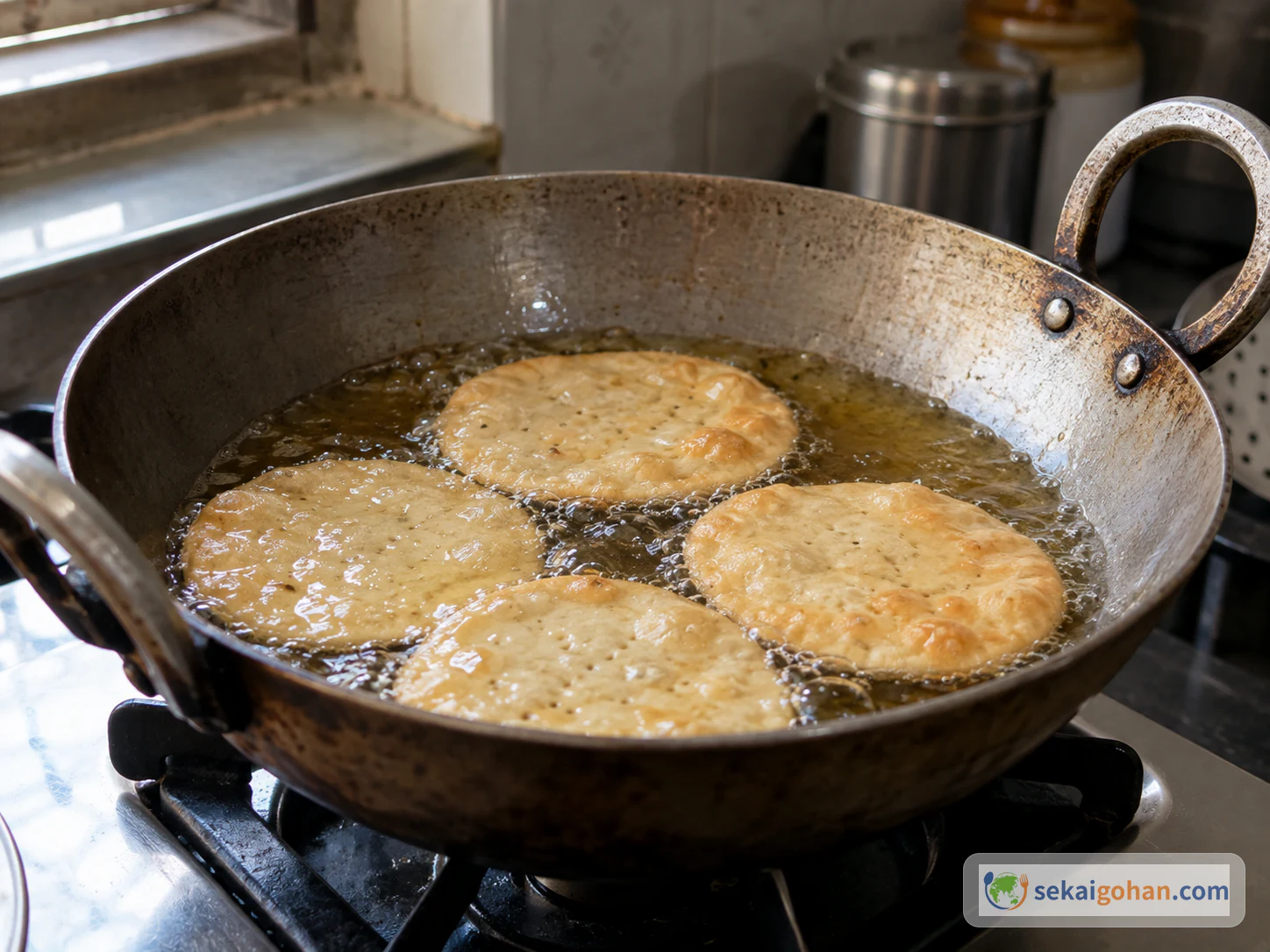
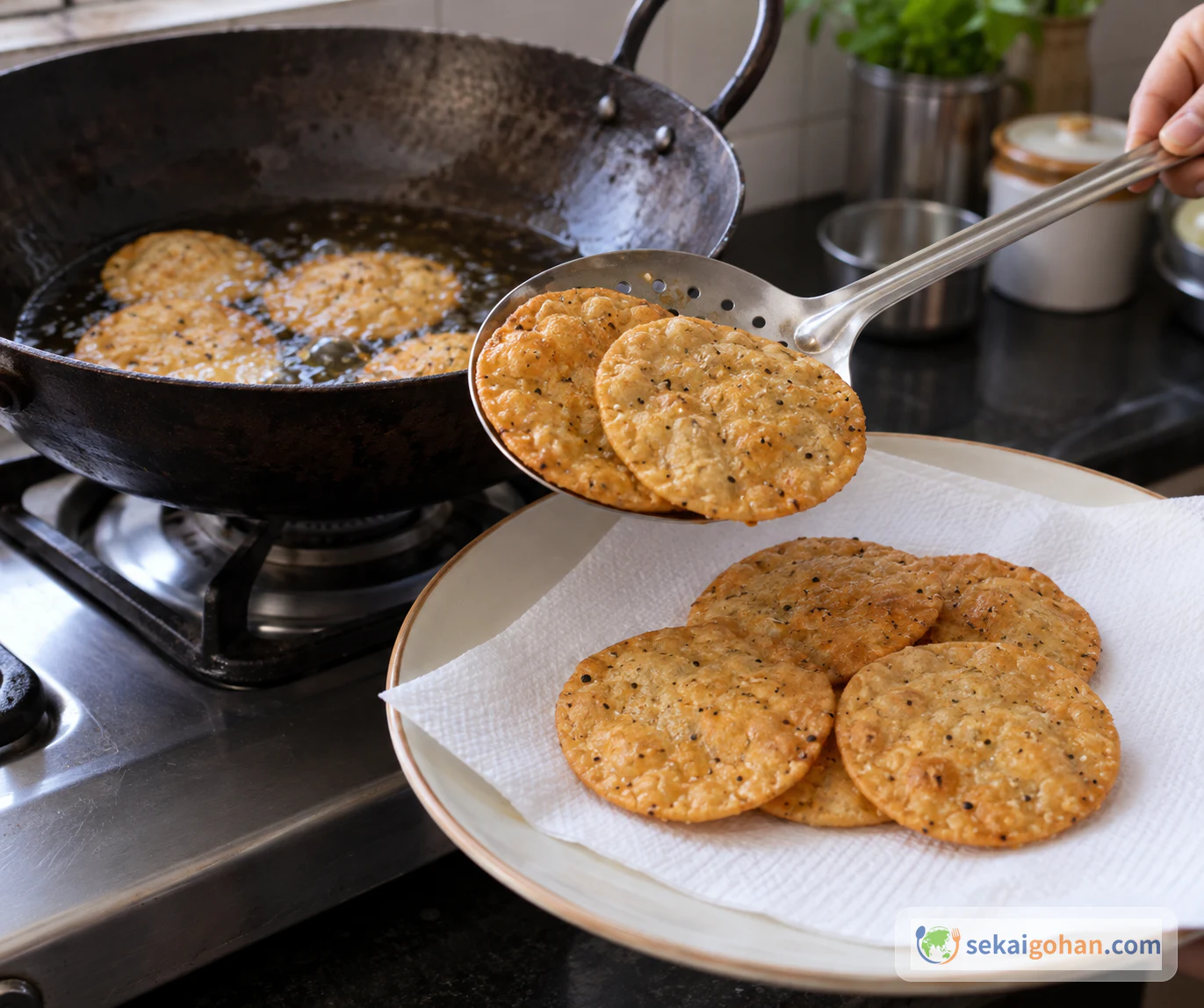
Small, flat, unfilled discs that stay crisp, with whole cumin seeds and coarse black pepper you can see and taste. Prick each disc before frying so it does not puff.
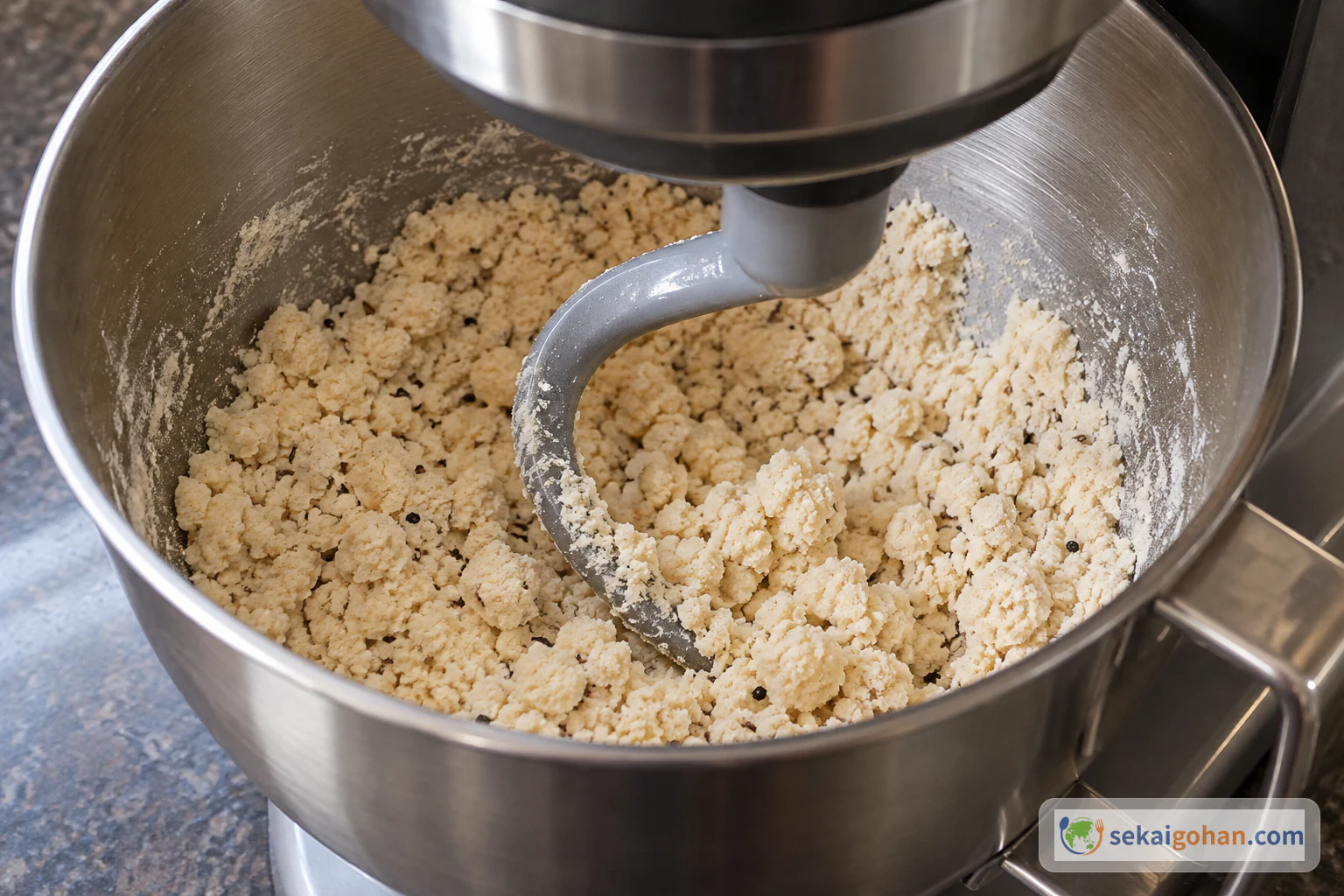
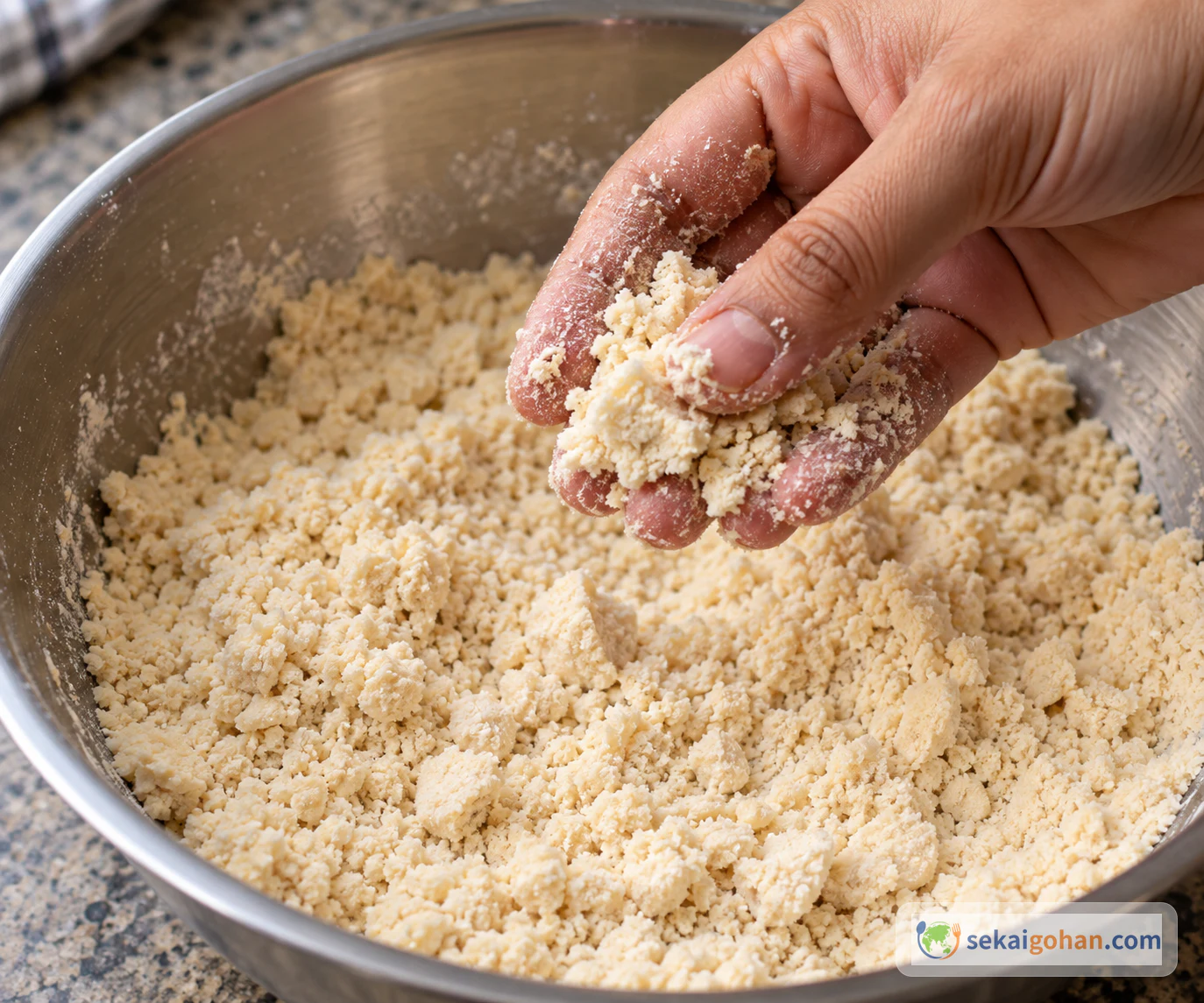
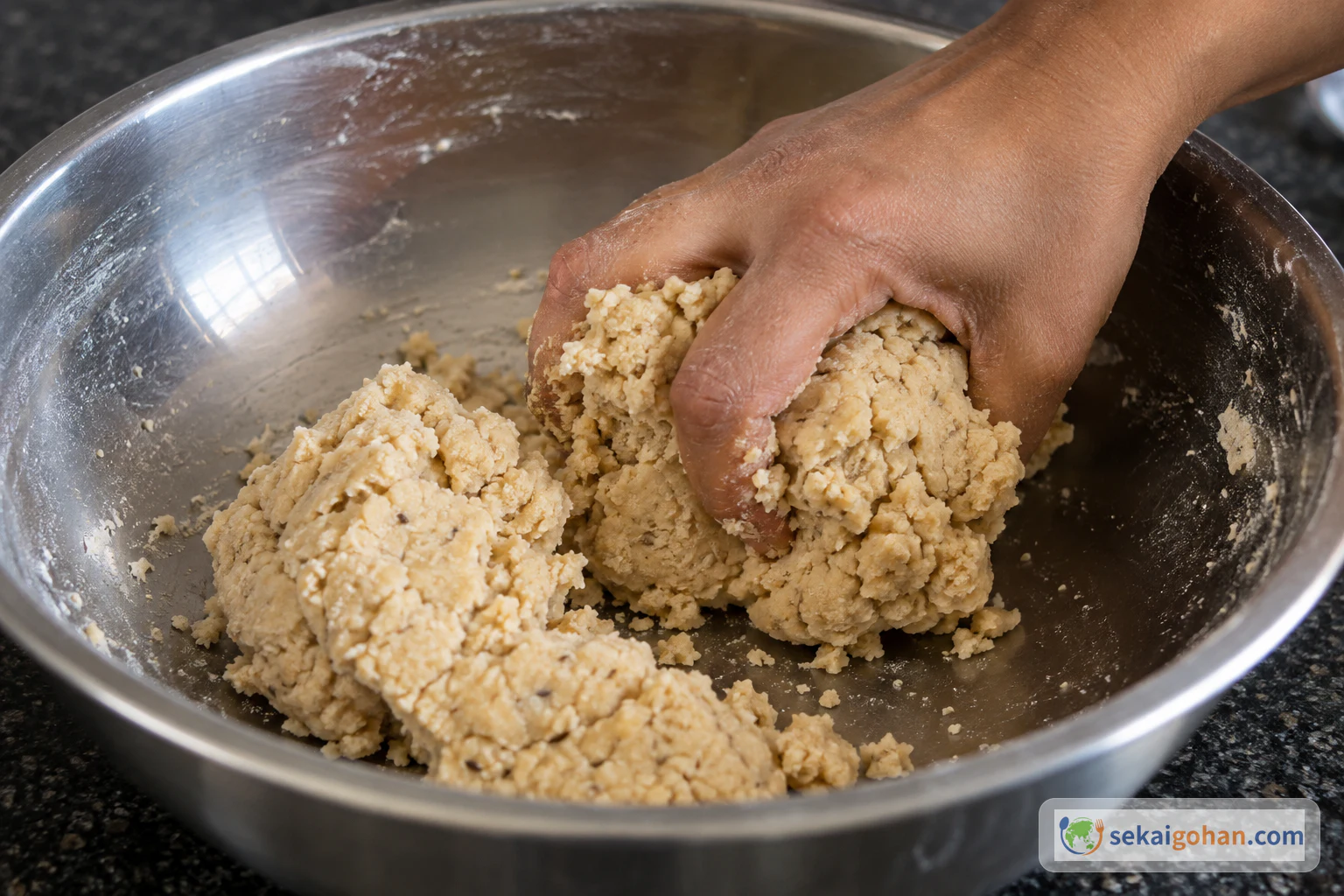
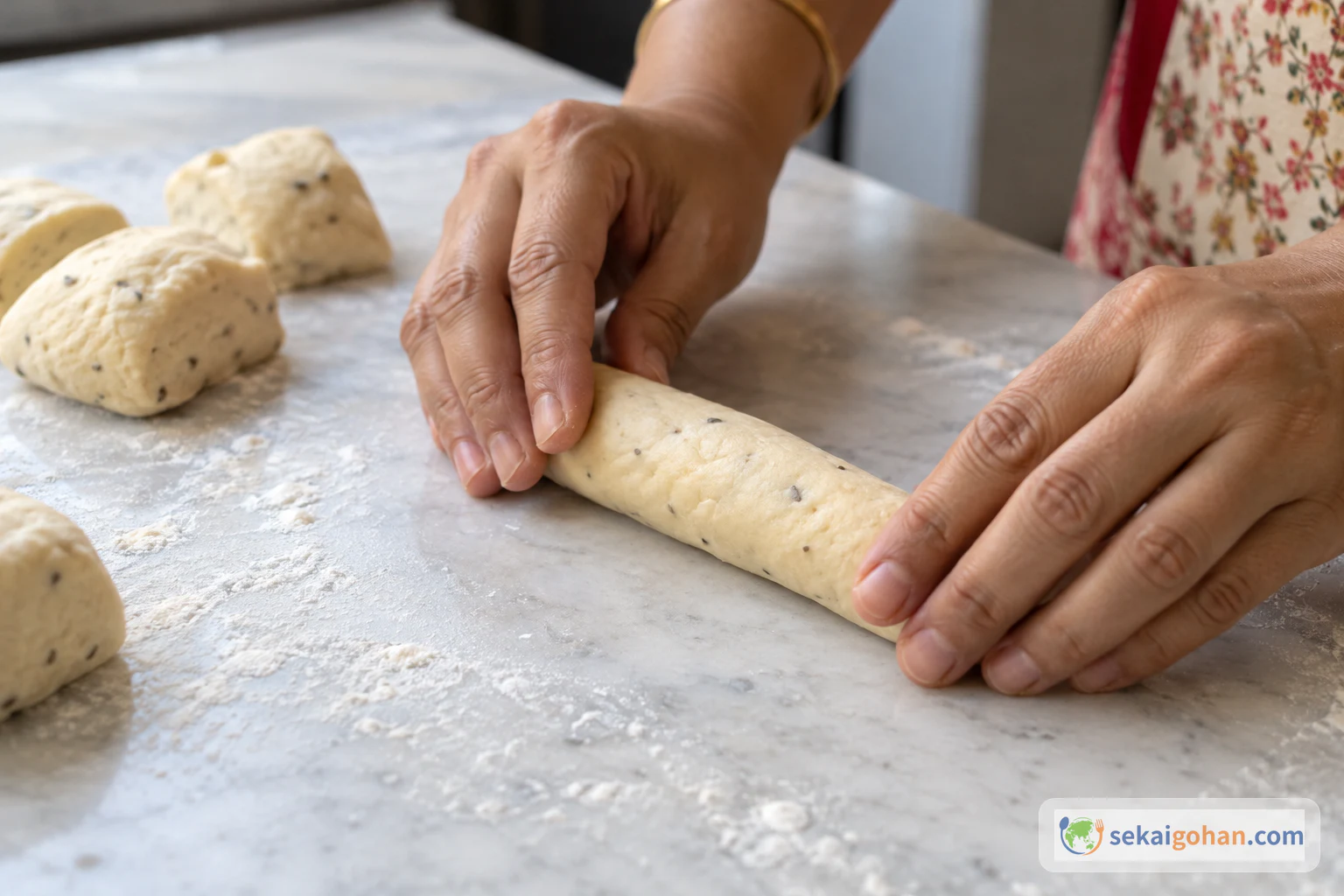
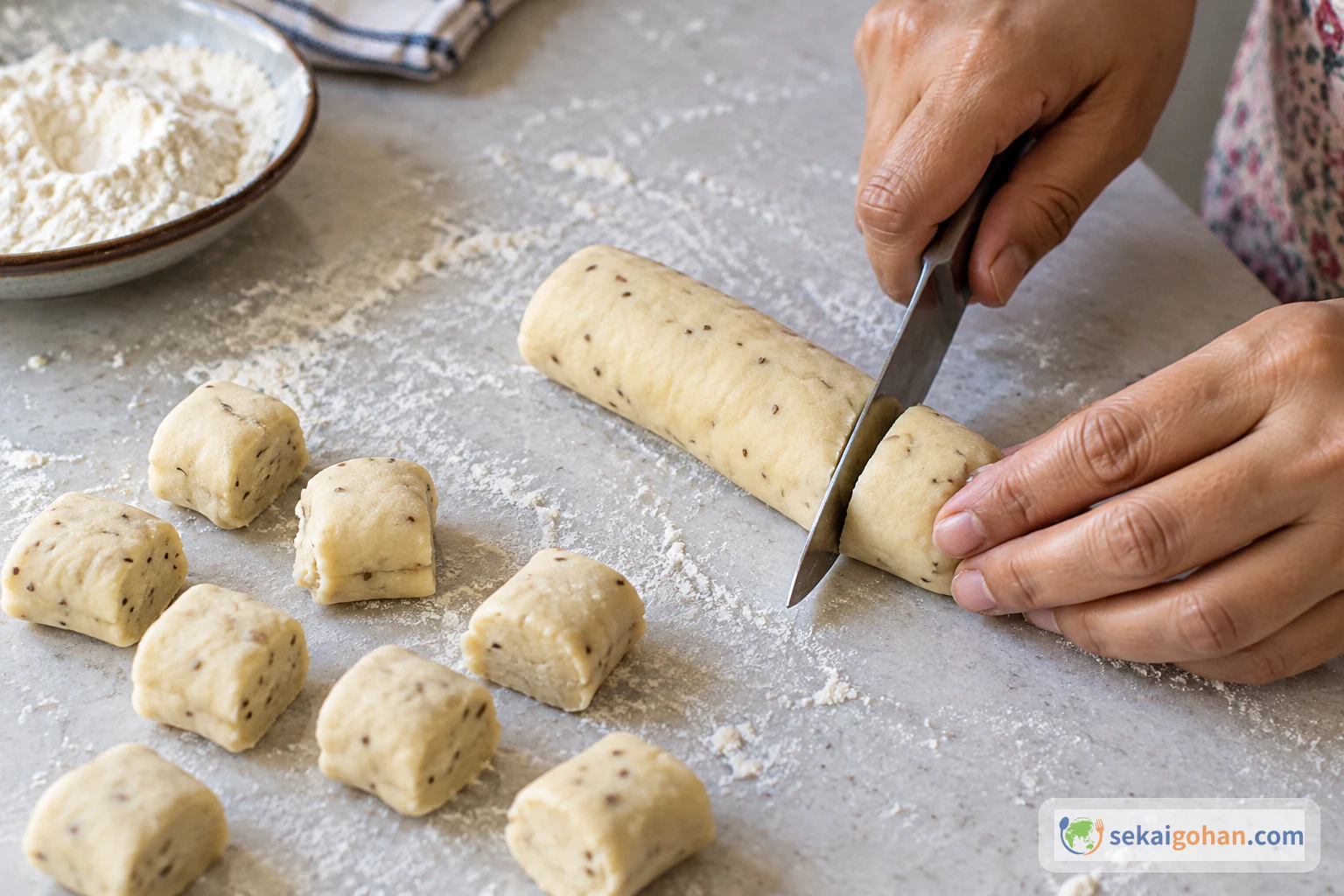
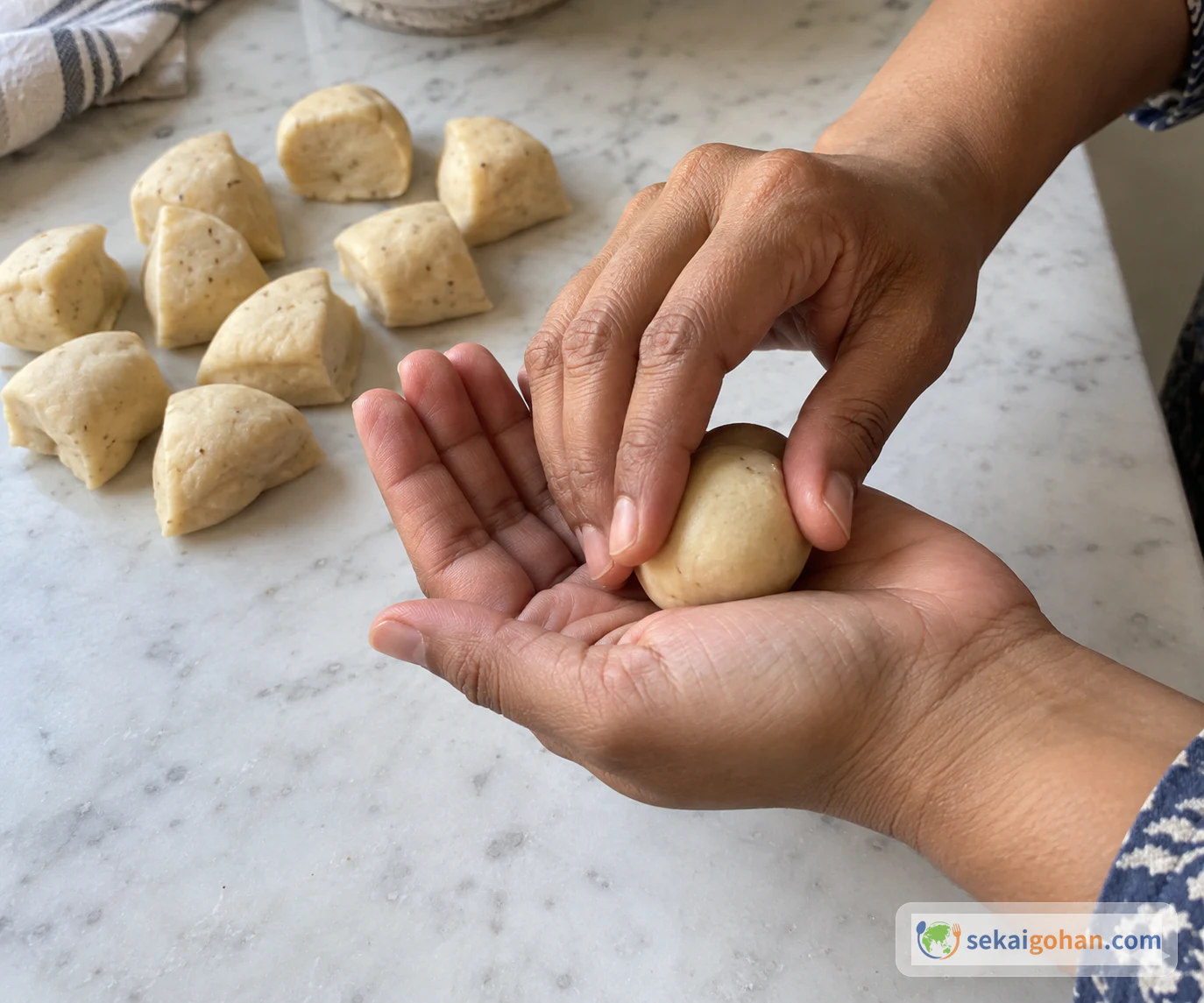
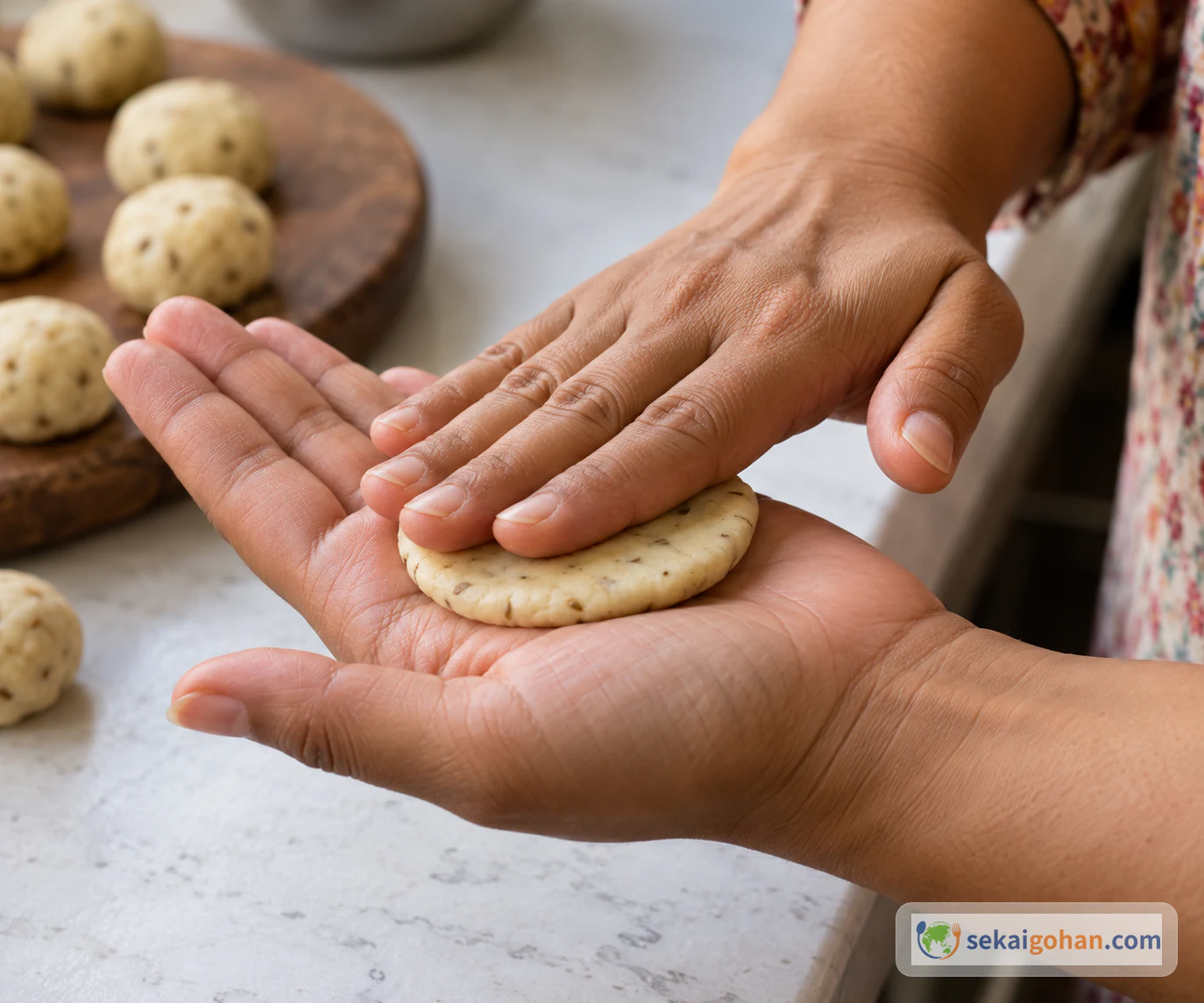
Flour rubbed with melted ghee turns to soft crumbs. When you pinch a little between your fingers, it holds a crumbly shape instead of falling back into powder. That rich, short crumb is where Farsi Puri begins. Later, the dough is rolled into small rounds, pricked with a fork and fried slowly until golden, with flecks of cracked black pepper and whole cumin showing through the surface.
Farsi Puri is a dry, deep-fried snack from Gujarat in western India. The recipe in this article follows a single published recipe, Kanan Patel's "Farsi Puri" on Spice Up The Curry. It uses all-purpose flour (maida), semolina, ghee, whole cumin seeds, coarsely crushed black peppercorns, salt and water. Patel presents it as a Gujarati snack to make for Diwali and to eat with tea. The puris are pricked so they stay flat, which sets them apart from puffed puris and from the hollow shells used for panipuri.
The quantities and steps below come only from Patel's recipe and are not mixed with other versions. Her US measuring cup holds 240 ml; flour, semolina and ghee are measured by volume. This differs from the common Japanese 200 ml cup; use the listed milliliter amounts if your cup holds a different volume. Her recipe card lists "Serving Size 10" but does not say how many puris that makes. It also lists 20 minutes of preparation, 20 minutes of cooking and 40 minutes in total. Treat those times as her estimate, because the method also includes a separate 15–20 minute rest for the dough.
Sekai Gohan has not kitchen-tested this recipe as a whole.
Where Farsi Puri Belongs: Tea Time, Diwali and a Gujarati Snack Tin
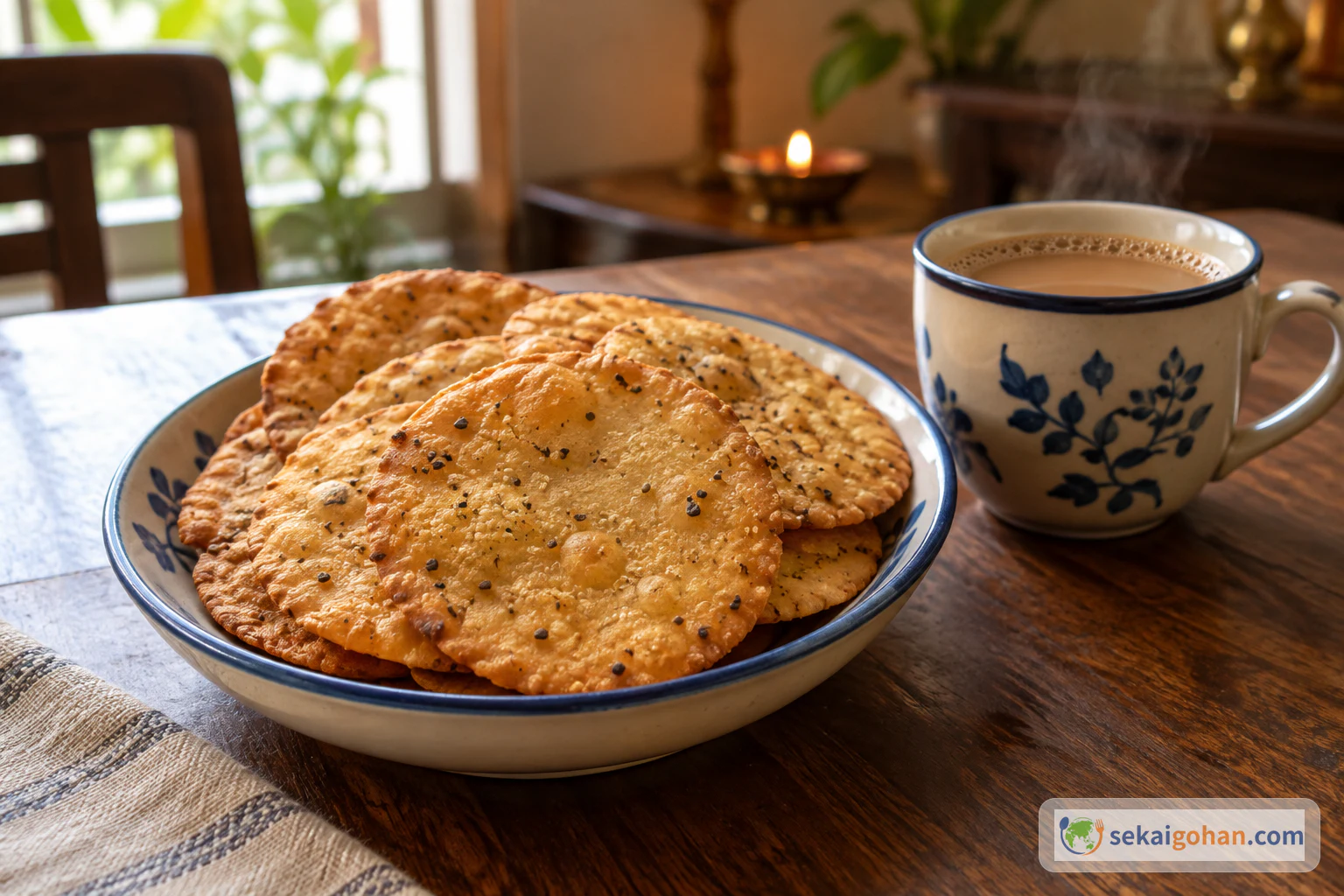
Farsi Puri is a snack you fry ahead and keep, not a bread for a meal. Kanan Patel describes it as a Gujarati snack connected with Diwali and with tea. Milhaan Home, a separate home-cooking page, also presents its own Farsi Puri as a Diwali and tea-time snack. These pages describe the context in which their authors make it. They do not show that every Gujarati household makes it the same way or at the same time of year.
A food and nutrition reference gives a similar picture. The Gujarati Diet chapter of the Multicultural Handbook of Food, Nutrition and Dietetics (Blackwell/Wiley, 2012) includes a glossary of Gujarati foods. One entry, spelled "Furshi puri," describes a snack made from plain flour and semolina with salt, cumin and crushed black pepper, rolled into small rounds, scored and fried until crisp. The ingredients and the scored, crisp-fried form match closely. The spelling is different, though, so this article does not claim that "Furshi" and "Farsi" are settled transliterations of the same word.
The name itself is a common question. Patel's page and other recipe pages say that "Farsi" means flaky or crisp (khasta) in Gujarati. The sources gathered here do not confirm that meaning independently, and they say nothing about a Persian origin or a date when the snack appeared. This article leaves those questions open. For more dishes from the same country, see the India country page.
Ingredients
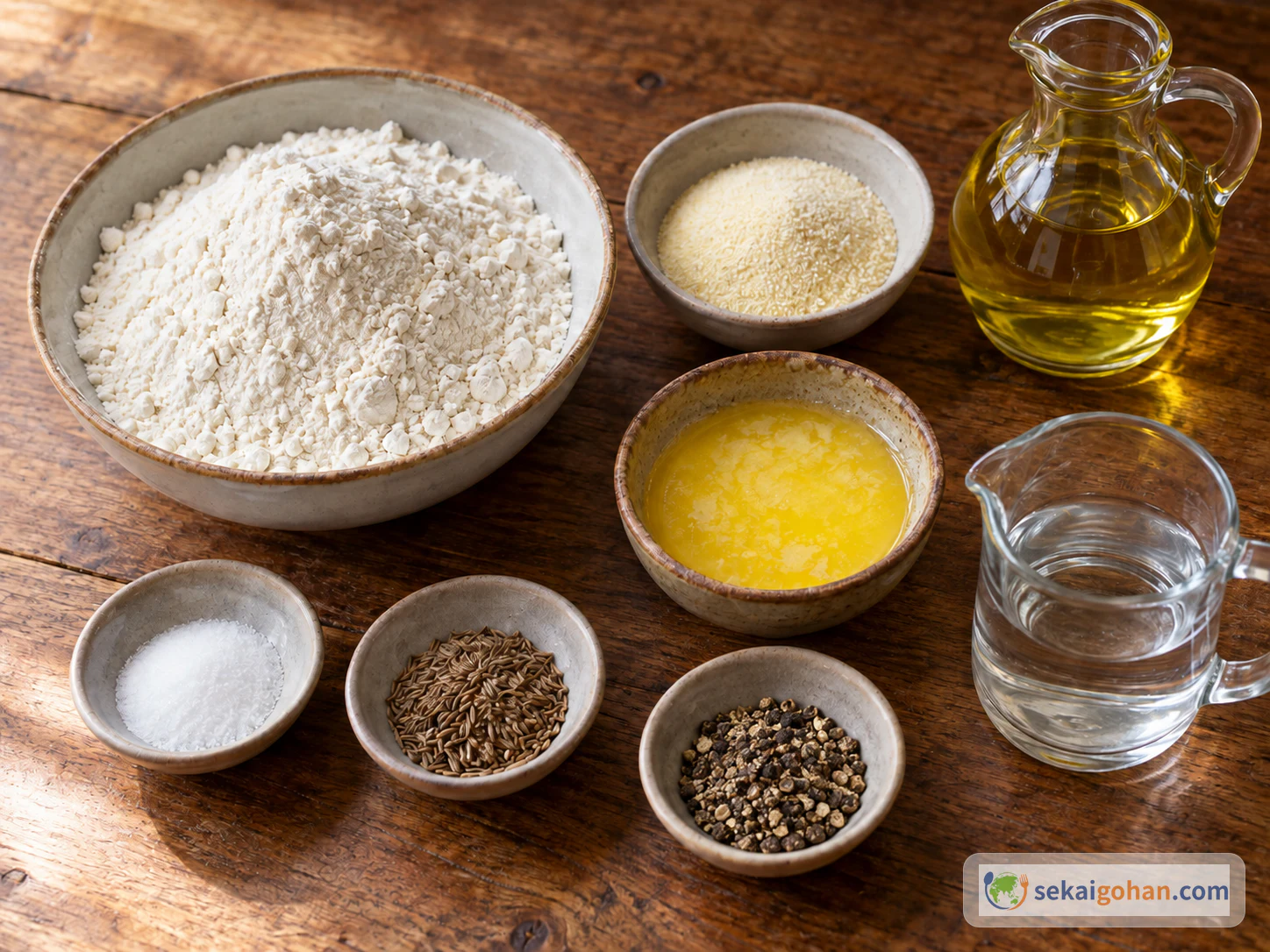
This recipe contains wheat (maida and semolina) and milk (ghee). Ghee is made from milk and is not dairy-free. If you are cooking for someone with a wheat or cow's-milk allergy, this recipe is not suitable as written.
Equipment
- Stand mixer with a dough hook, and its mixing bowl
- Spatula
- Something to crush peppercorns coarsely, such as a mortar and pestle
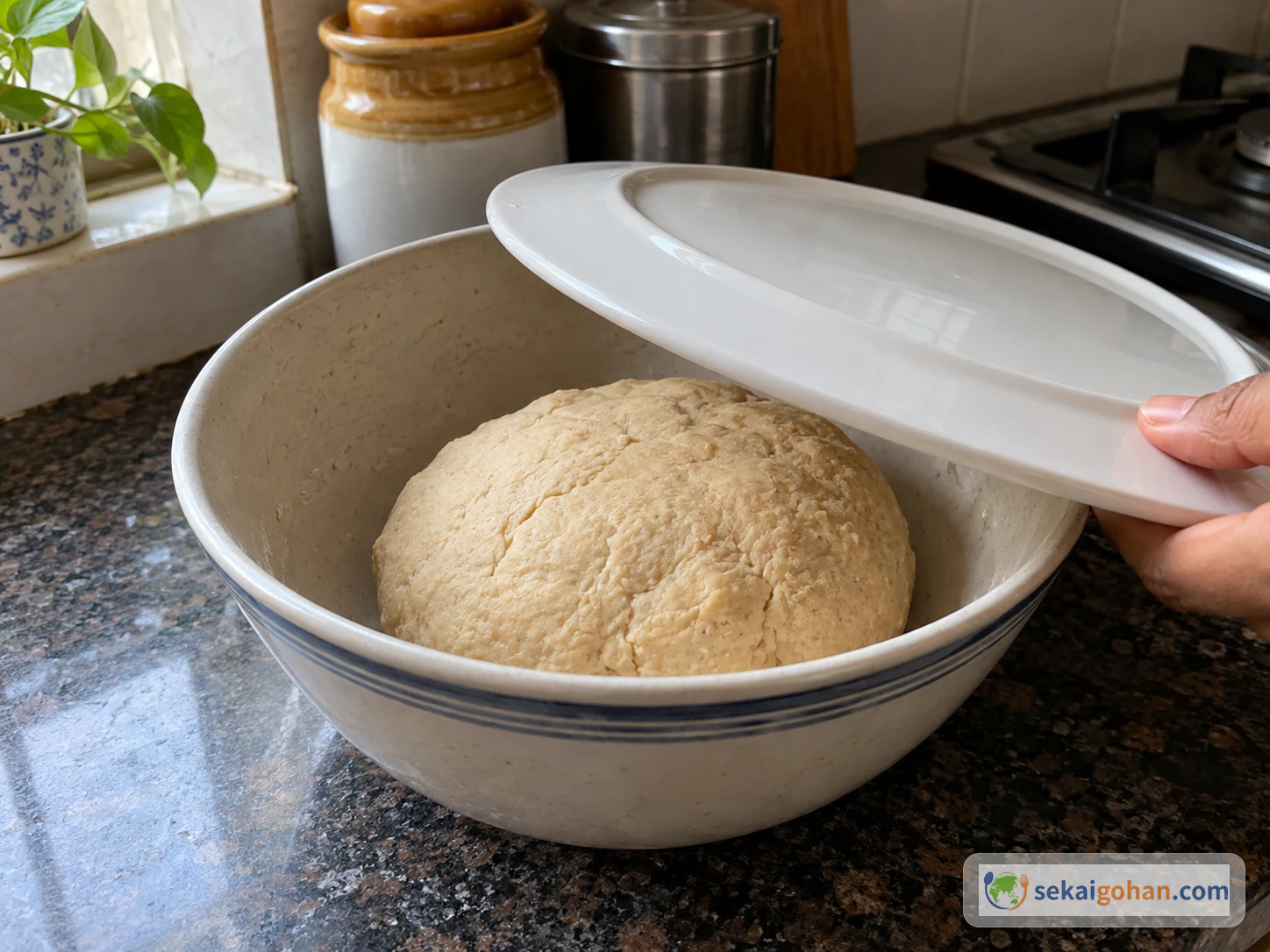
- Bowl or plate to cover the resting dough
- Rolling pin
- Fork
- Kadai or deep pot for frying
- Slotted spoon
- Plate for cooling
- Airtight container
Choosing Flour, Semolina, Ghee and Spices
Flour. Use maida (all-purpose flour), the refined white wheat flour sold in Indian shops. Whole-wheat atta gives denser puris. Treat atta as a different texture, not a drop-in replacement. This article does not name a specific supermarket flour as an exact match for maida.
Semolina. Look for semolina, also sold as sooji or rava.
Ghee. The dough uses ghee, melted or semi-melted, not oil. As noted above, ghee is a dairy product.
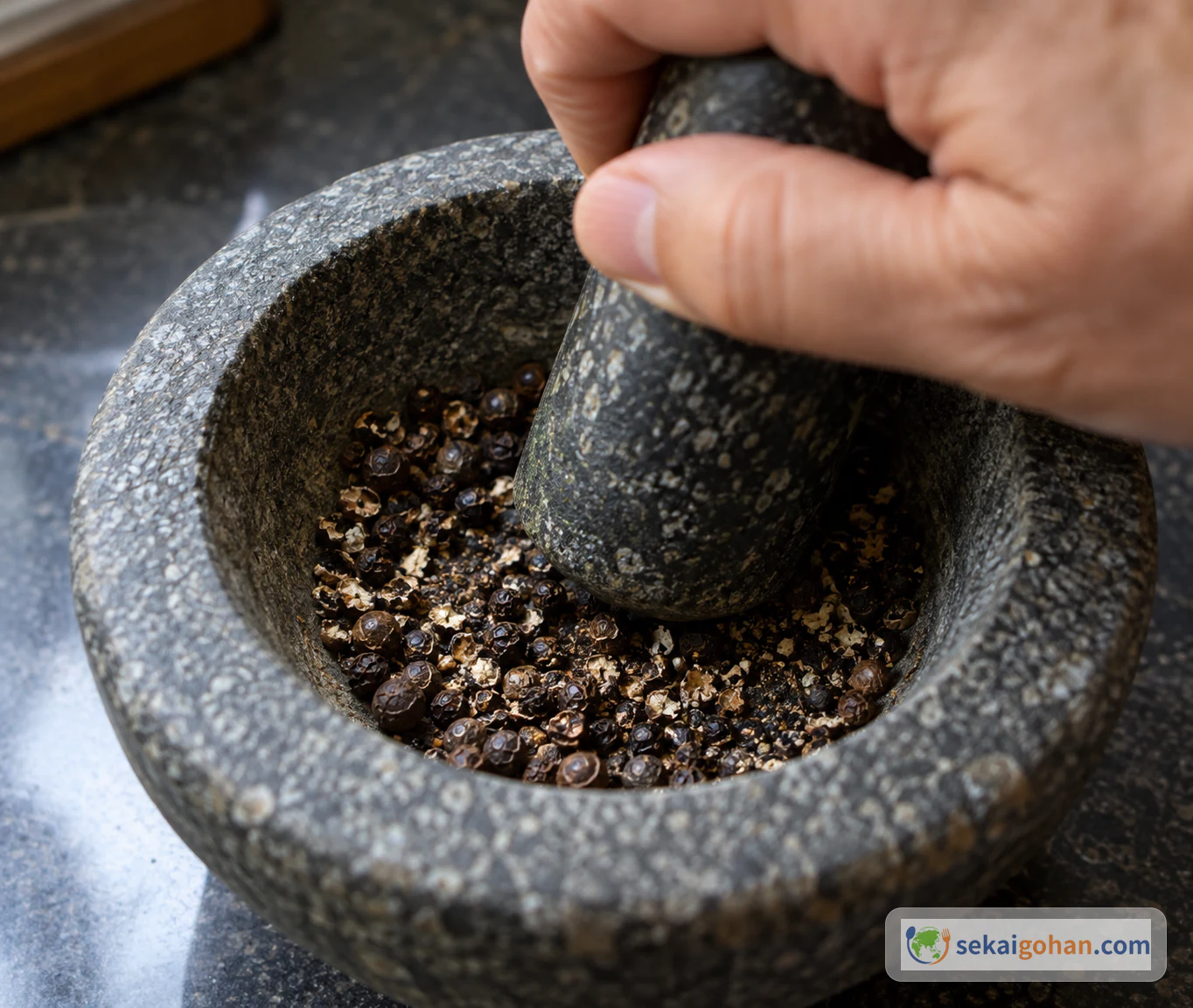
Cumin and pepper. Buy whole cumin seeds and whole black peppercorns. The cumin stays whole. The pepper is crushed coarsely just before mixing, and those visible pieces are a defining feature of this version.
When shopping, these search terms help: maida or all-purpose flour, semolina / sooji / rava, ghee, whole cumin seeds and black peppercorns.
Method: A Firm Dough, Small Pricked Discs, a Gentle Fry
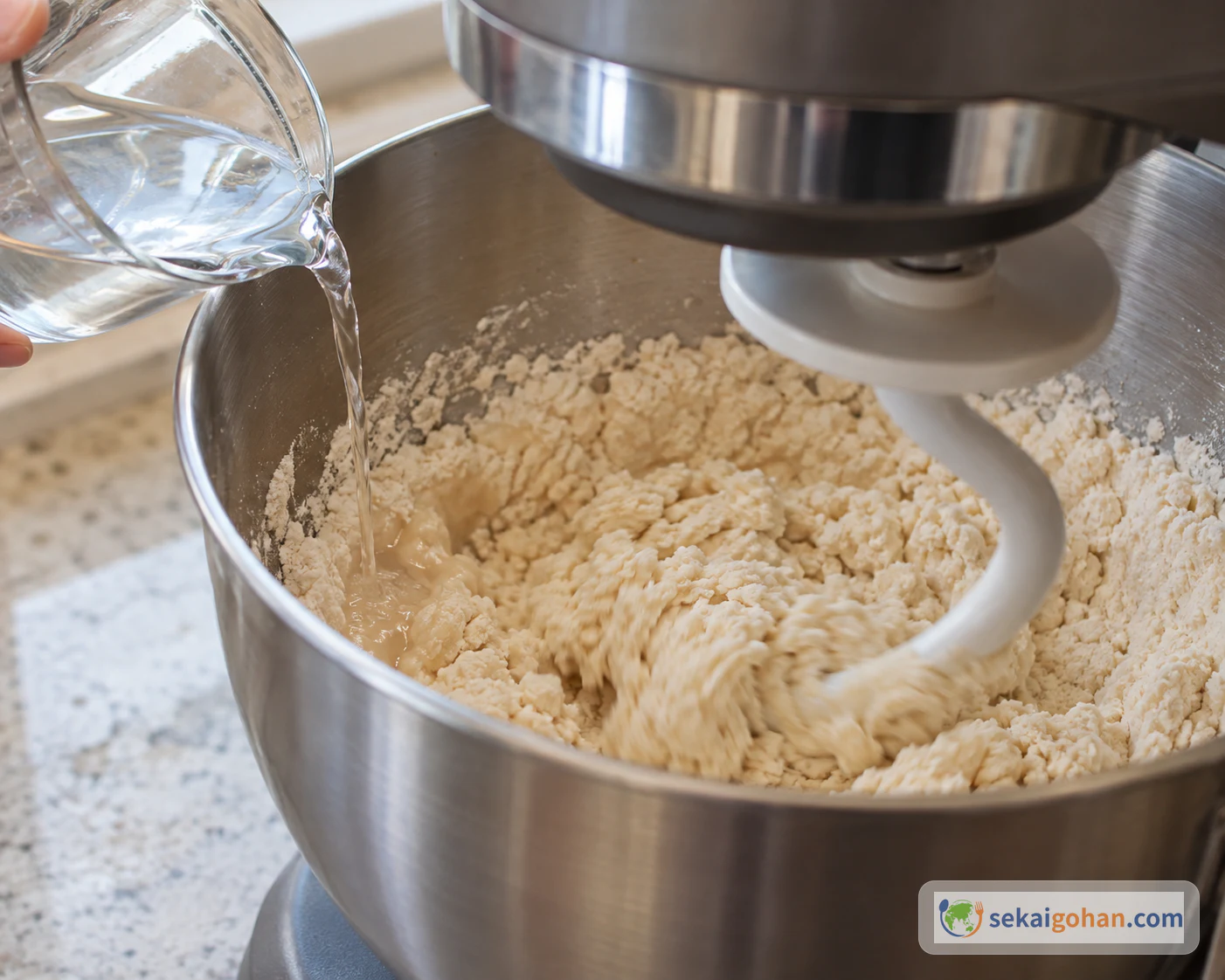
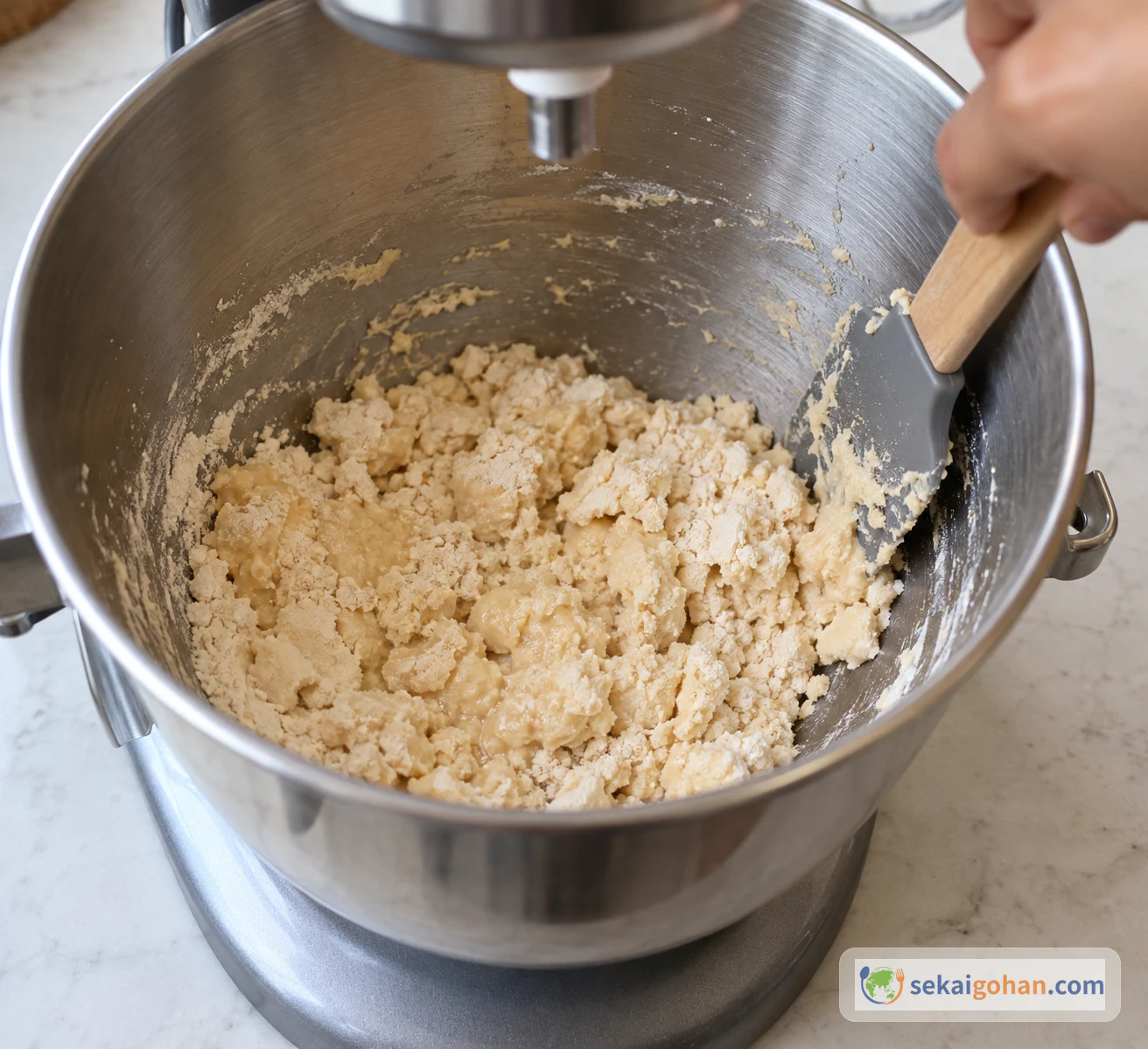
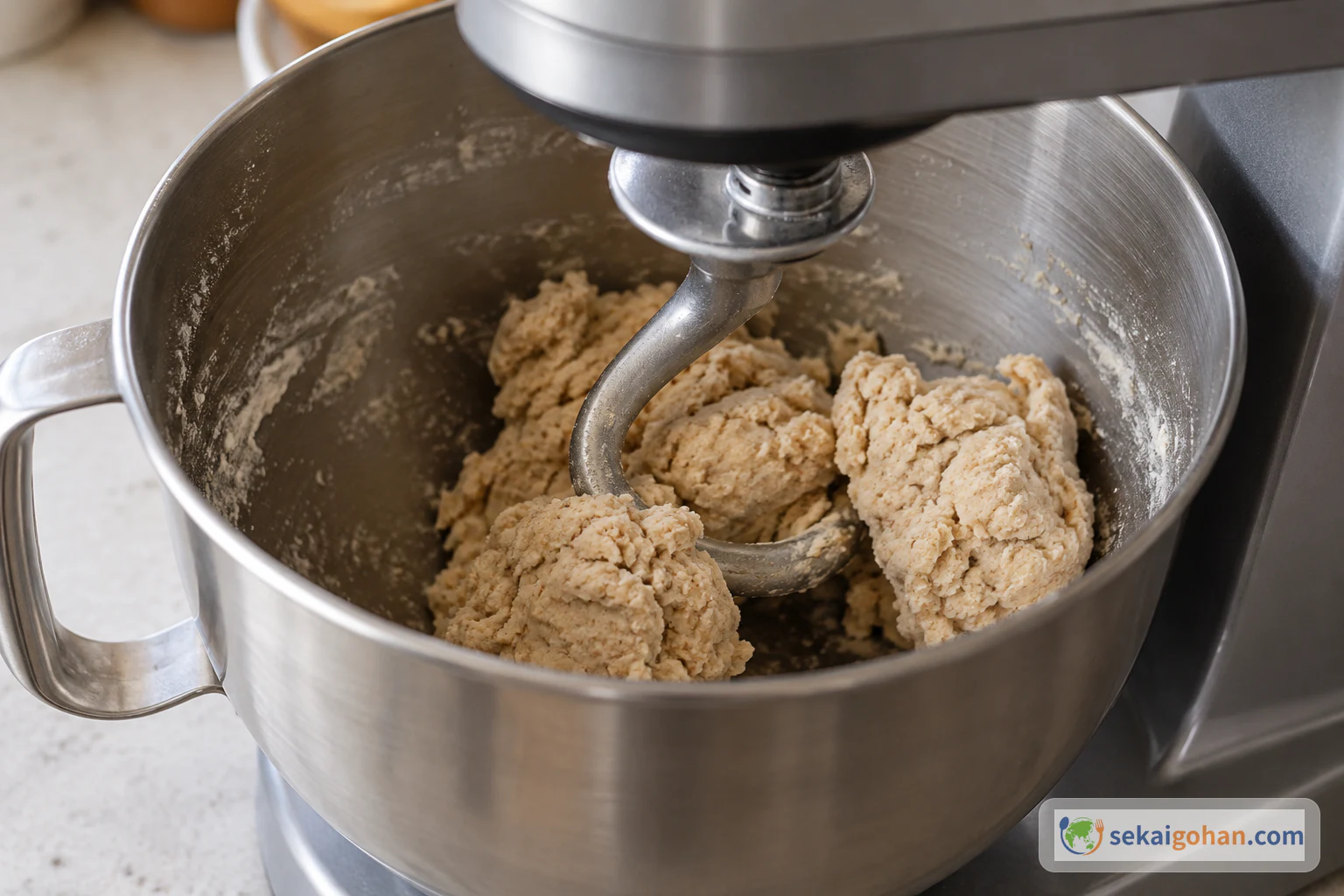
Use a stand mixer with a dough hook. Judge the oil with a small test piece of dough and judge the puris by their color and crispness.
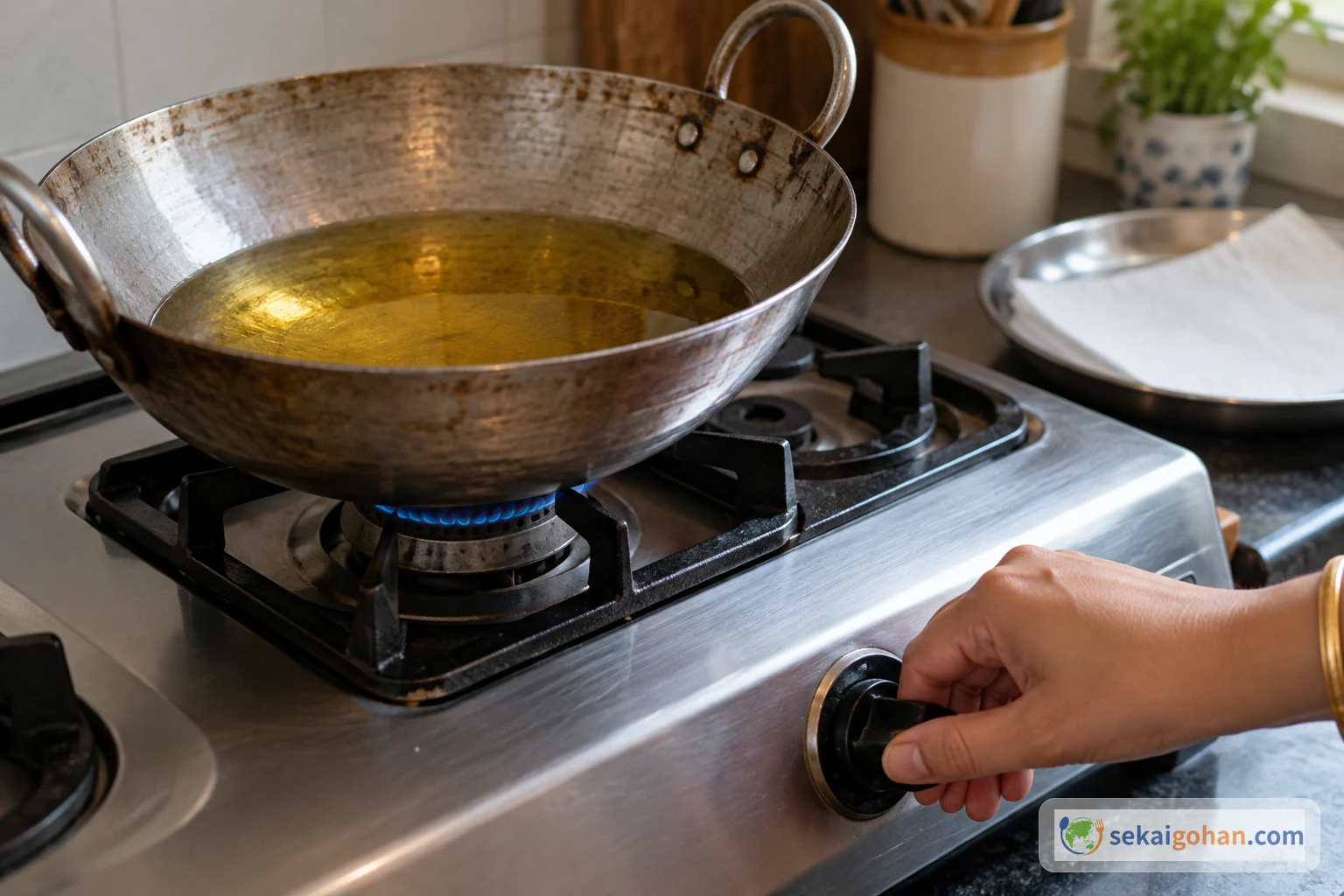
Stay at the stove the whole time you are deep-frying and turn off the heat if you have to step away. Never pour water on burning oil: it turns to steam instantly and throws hot oil outward.
When Something Looks Wrong
| What you see | What to check | What to do |
|---|---|---|
| The pinched mixture falls apart in step 3 | The ghee has not fully coated the flour | Work in a little more ghee, then pinch again. Patel gives no exact amount for this adjustment |
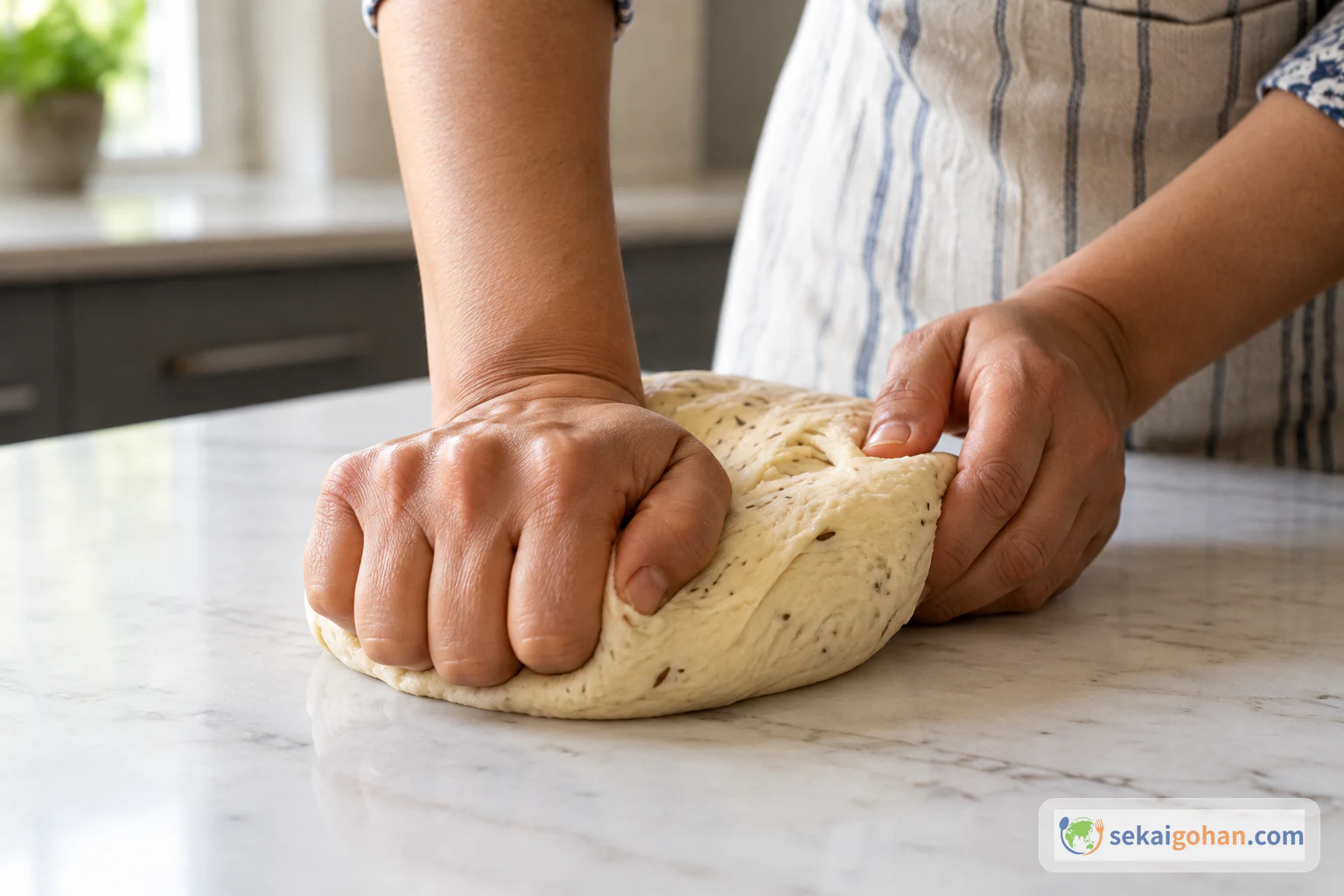
| The dough looks rough, not smooth | Nothing; this is expected | Move on. The dough only needs to hold together and be firmer than roti dough |
| A puri puffs up in the oil | Whether that disc was pricked | Prick each disc 4–5 times before frying. Pricking is what keeps them flat |
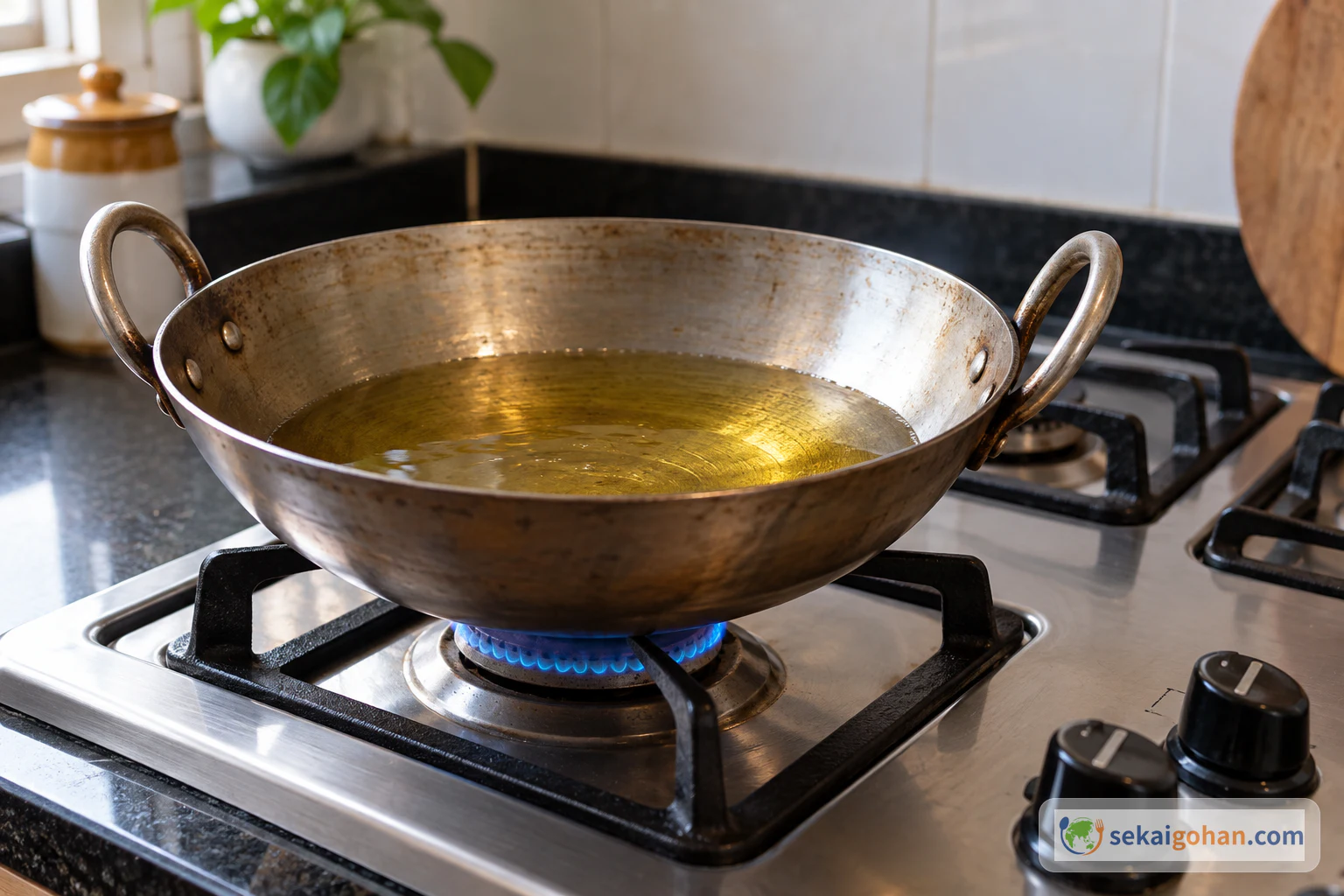
| The test piece of dough rises immediately | The oil is too hot | Keep the heat low, then test again. It should sink briefly before rising |
| The kadai is crowded | Too many puris at once | Fry only a few at a time |
| The puris are denser than expected | Whether atta was used in place of maida | Patel notes that atta makes a denser puri. Use maida for the lighter result |
Variations: How Other Farsi Puri Recipes Differ
These are separate recipes by other authors. They show how Farsi Puri varies from kitchen to kitchen. They have not been combined into a new formula here, and swapping their elements into Patel's recipe has not been tested.
| Point | Kanan Patel (this recipe) | Other published versions |
|---|---|---|
| Flour | Maida; notes that atta gives a denser result | Milhaan Home uses plain flour |
| Semolina | Included | Hari Chandana Ponnaluri (Blend with Spices) includes it; Milhaan Home's ingredient list has none. The Wiley handbook entry for "Furshi puri" also includes semolina |
| Spices | Coarsely crushed black pepper and whole cumin | Ponnaluri grinds black pepper, cumin and ajwain to a powder. Milhaan Home uses roasted cumin powder with coarsely ground black pepper |
| Fat | Ghee mixed into the flour | Ponnaluri uses oil in a soft dough. Milhaan Home spreads extra ghee between layers |
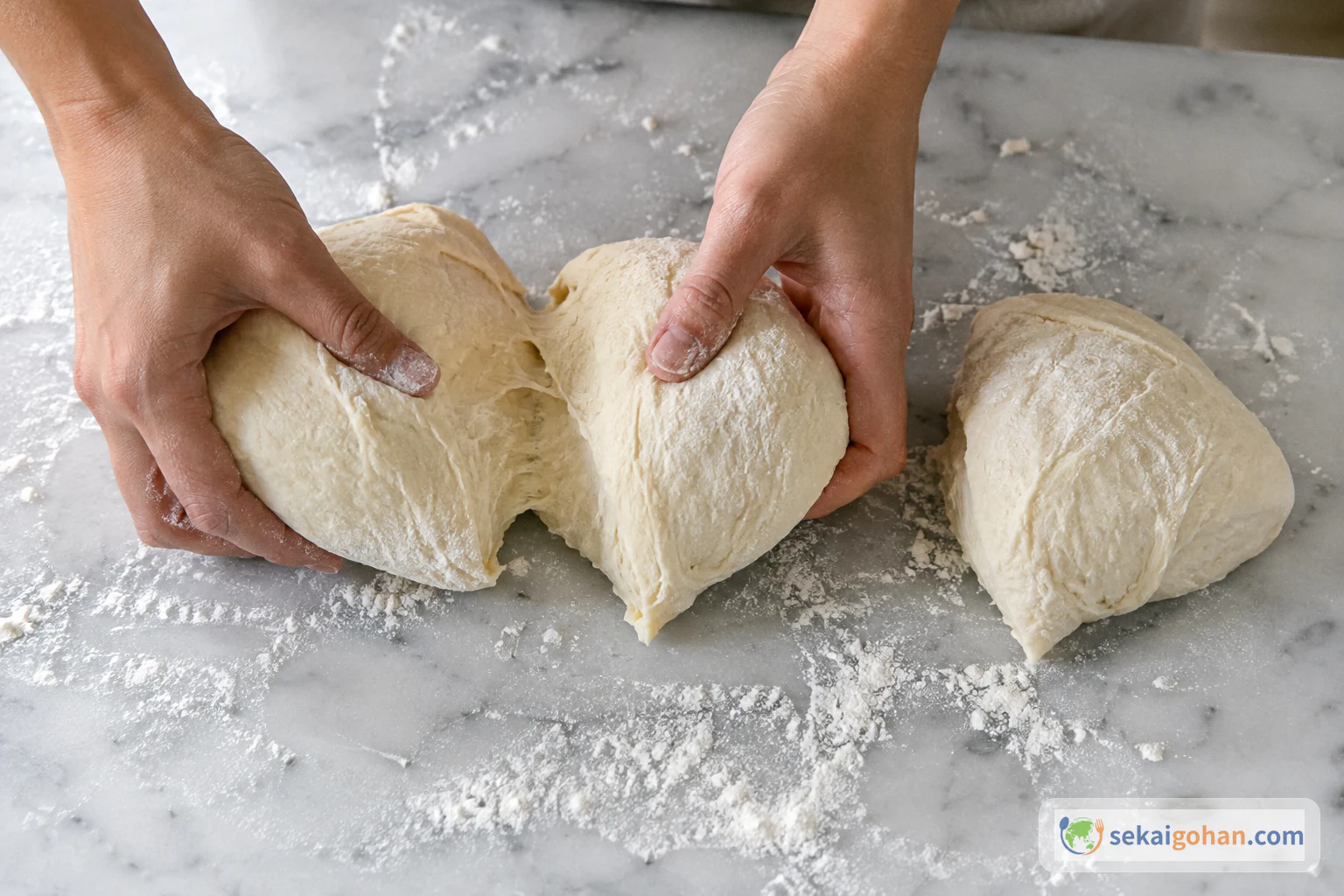
| Shaping | Small pieces rolled directly into 3-inch discs and pricked | Ponnaluri and Milhaan Home both roll a large disc into a cylinder, cut it, and roll the pieces out again |
Two figures from those versions are best left alone. Milhaan Home lists "2 Tbsp (60 ml)" of ghee, and those two units do not agree, so that amount is not used here. Its stated yield of 16 pieces belongs to its own recipe and does not tell you how many Patel's recipe makes.
Not the Same Puri: Dalpuri, Panipuri and Dholl Puri
The word "puri" appears in many dish names, but the shape, filling and cooking method can be completely different.
| Dish | What it is | How it differs from Farsi Puri |
|---|---|---|
| Farsi Puri | A flat, unfilled Gujarati snack with cumin and black pepper, pricked and deep-fried until crisp | — |
| Dalpuri | An Indian puri stuffed with seasoned dal | Has a lentil filling |
| Panipuri | Hollow fried shells filled with potato or chickpeas and flavored pani, eaten at once | The shell is meant to puff and be hollow; Farsi Puri is pricked so it does not puff |
| Dholl Puri | A Mauritian thin flatbread with yellow split peas in the dough, cooked on a tawa and eaten as a wrap with curry | Cooked on a griddle, not deep-fried, and served as part of a meal |
Frequently Asked Questions
Why prick the dough?
Pricking each disc 4–5 times keeps it from puffing in the oil, so it fries flat and crisp. This is the opposite of panipuri shells, which are meant to puff up hollow.
Can I use whole-wheat atta instead of maida?
Patel says atta can be used but makes a denser puri. Expect a different texture from the version made with maida.
How many puris does this make?
Patel's recipe card lists "Serving Size 10," but it does not say how many pieces you get. No piece count is given.
How long do they keep?
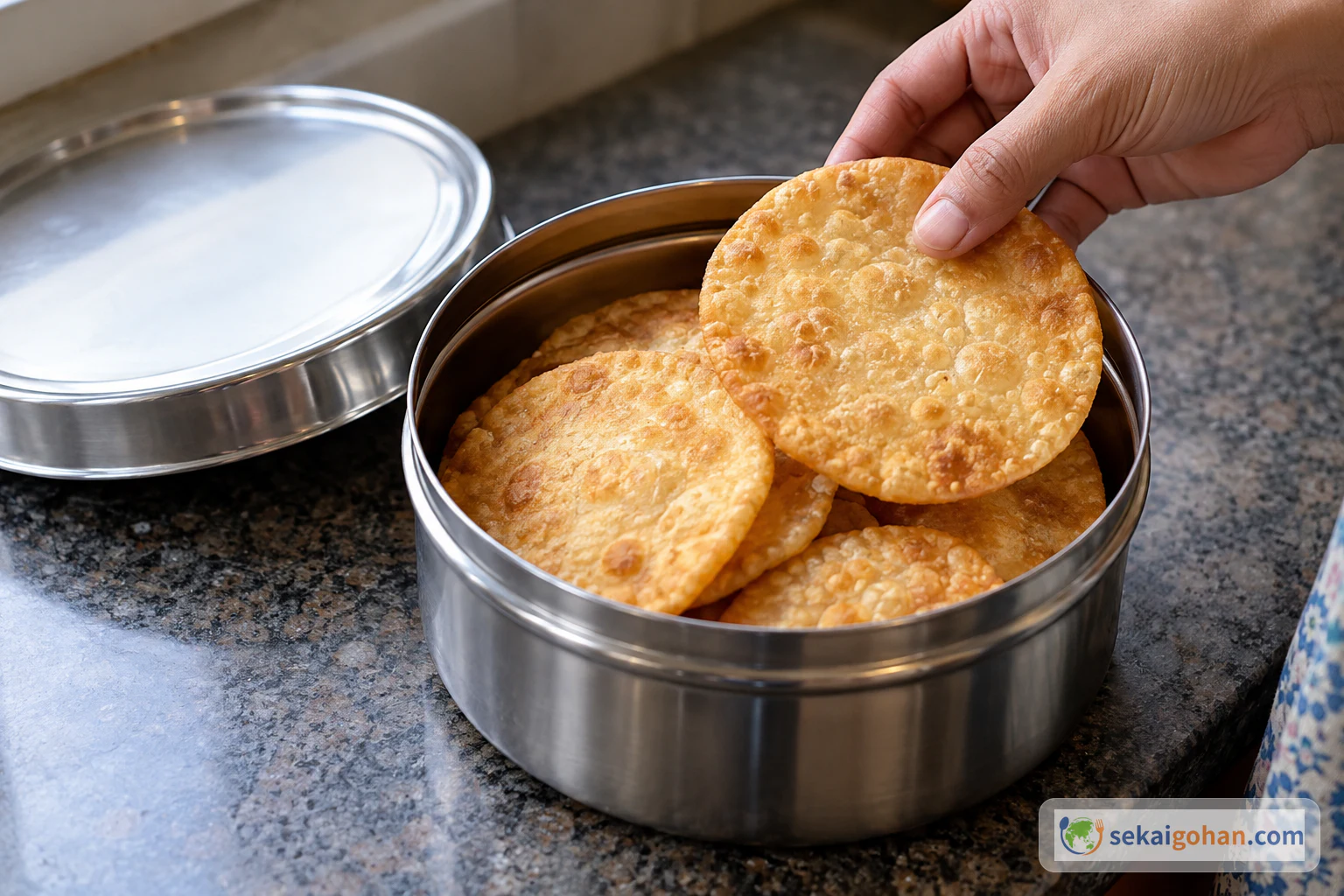
Cool them completely, then store them in an airtight container. Patel estimates they keep for about 3–4 weeks. That is her estimate, not an independently verified guarantee of quality or safety.
How much ghee should I add if the pinch test fails?
Patel says to adjust the ghee if the pinched mixture falls apart, but she gives no extra amount. Start from the listed 1/3 cup and add only a little more if needed.
Can I make it without a stand mixer?
Patel's method is written for a stand mixer with a dough hook. Mixing by hand has not been tested for this article, so no hand method is given here.
What temperature should the oil be?
The recipe gives no numeric temperature. Heat the oil over medium, turn it down to low once hot, and use the test piece: it should sink briefly and then rise. Fry at low-medium heat until golden and crisp.
Does "Farsi" mean Persian, or "crispy"?
Recipe pages, including Patel's, say "Farsi" means flaky or crisp in Gujarati. The sources used for this article do not confirm that independently, and none of them supports a Persian origin. The Wiley handbook spells a closely matching snack "Furshi puri," so the spelling history is also unresolved.
Sources
- Kanan Patel, "Farsi Puri," Spice Up The Curry. The recipe followed in this article: ingredients, amounts, US cup of 240 ml, method, oil test, cooling and storage, the 3–4 week storage estimate, the note on atta, recipe-card servings and times, and the Diwali and tea-time context. https://www.spiceupthecurry.com/farsi-puri-recipe/
- Aruna Thaker and Arlene Barton (eds.), Multicultural Handbook of Food, Nutrition and Dietetics, "South Asian Sub-continent, Gujarati Diet," Blackwell Publishing / Wiley, 2012 (excerpt). The glossary entry for "Furshi puri" as a Gujarati snack of plain flour, semolina, salt, cumin and crushed black pepper, rolled, scored and fried crisp. https://catalogimages.wiley.com/images/db/pdf/9781405173582.excerpt.pdf
- Hari Chandana Ponnaluri, "Farsi Poori / Puri - A Gujarati Snack Recipe," Blend with Spices. A separate version with ground spices including ajwain, oil in the dough and rolled-cylinder shaping, used only for comparison. https://www.blendwithspices.com/farsi-poori-puri-gujarati-snack-recipe/
- Milhaan Home, "Farsi Puri Recipe | Gujarati Snack | Jeera Mari Puri | Diwali Snack | Crispy Puri | Gujarati Puri." A separate Diwali and tea-time version without semolina, with layered ghee and rolled-cylinder shaping, used only for comparison. https://www.milhaan.com/post/farsi-puri-recipe-gujarati-snack-jeera-mari-puri-diwali-snack-crispy-puri-gujarati-puri
- Fire and Disaster Management Agency (Japan), Disaster Management e-College, "1. 火災" (Fires). General advice to stay at the stove while deep-frying and to turn off the heat when stepping away. https://www.fdma.go.jp/relocation/e-college/cat67/cat49/cat42/1-36.html
- National Research Institute of Fire and Disaster, Fire and Disaster Management Agency (Japan), "天ぷら油火災(マヨネーズでの消火)" (Tempura oil fires). Why pouring water on burning frying oil is dangerous. https://nrifd.fdma.go.jp/public_info/faq/tenpura_mayonnaise/index.html
- Consumer Affairs Agency (Japan), "加工食品の食物アレルギー表示ハンドブック" (Food Allergy Labeling Handbook for Processed Foods), April 2026. Wheat and milk among Japan's designated allergens. https://www.caa.go.jp/policies/policy/food_labeling/food_sanitation/allergy/assets/food_labeling_cms204_260401_02.pdf
- Australasian Society of Clinical Immunology and Allergy (ASCIA), "ASCIA Dietary Avoidance for Food Allergy FAQ: Cow's Milk Protein (Dairy)." Ghee listed among foods containing cow's milk protein. https://www.allergy.org.au/patients/food-allergy/ascia-dietary-avoidance-for-food-allergy/cows-milk-dairy