Cutting white diamonds in the morning kitchen
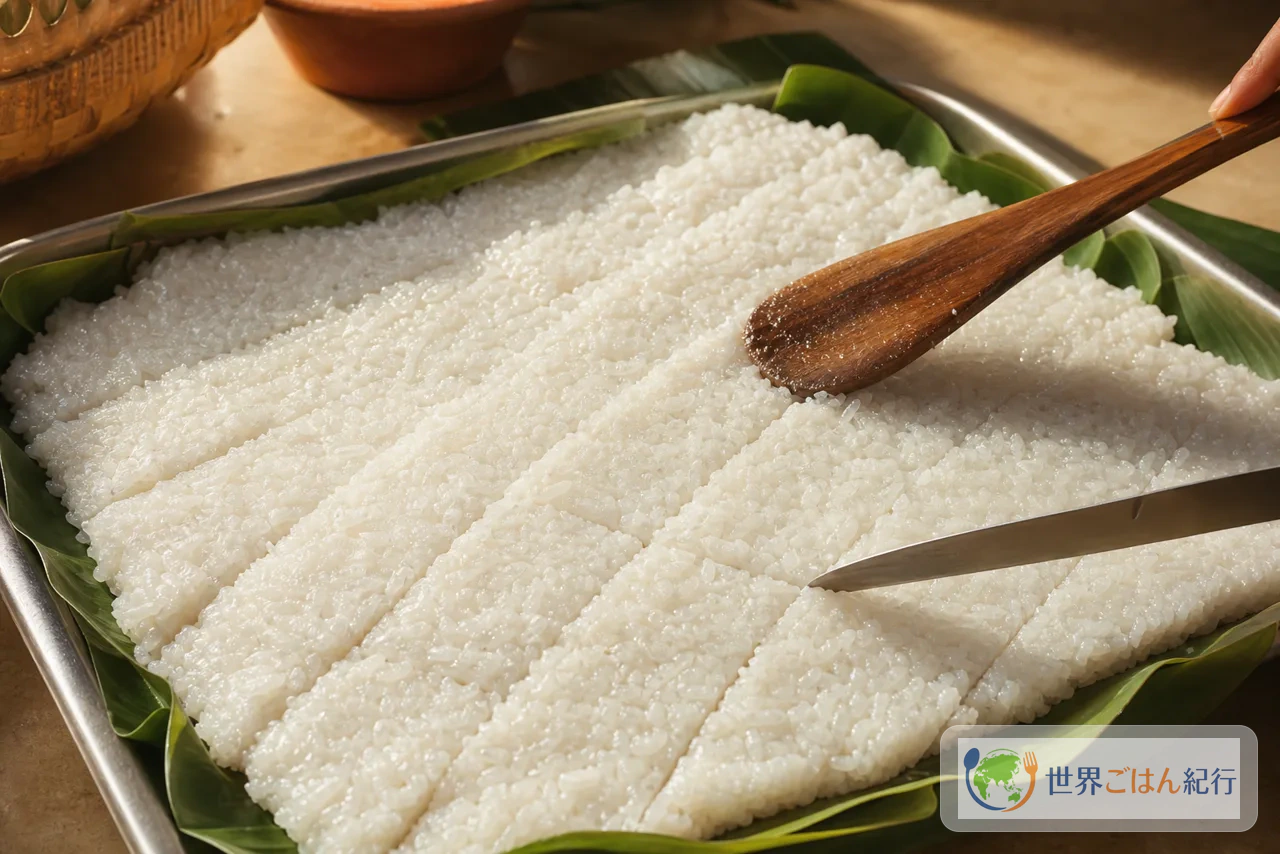
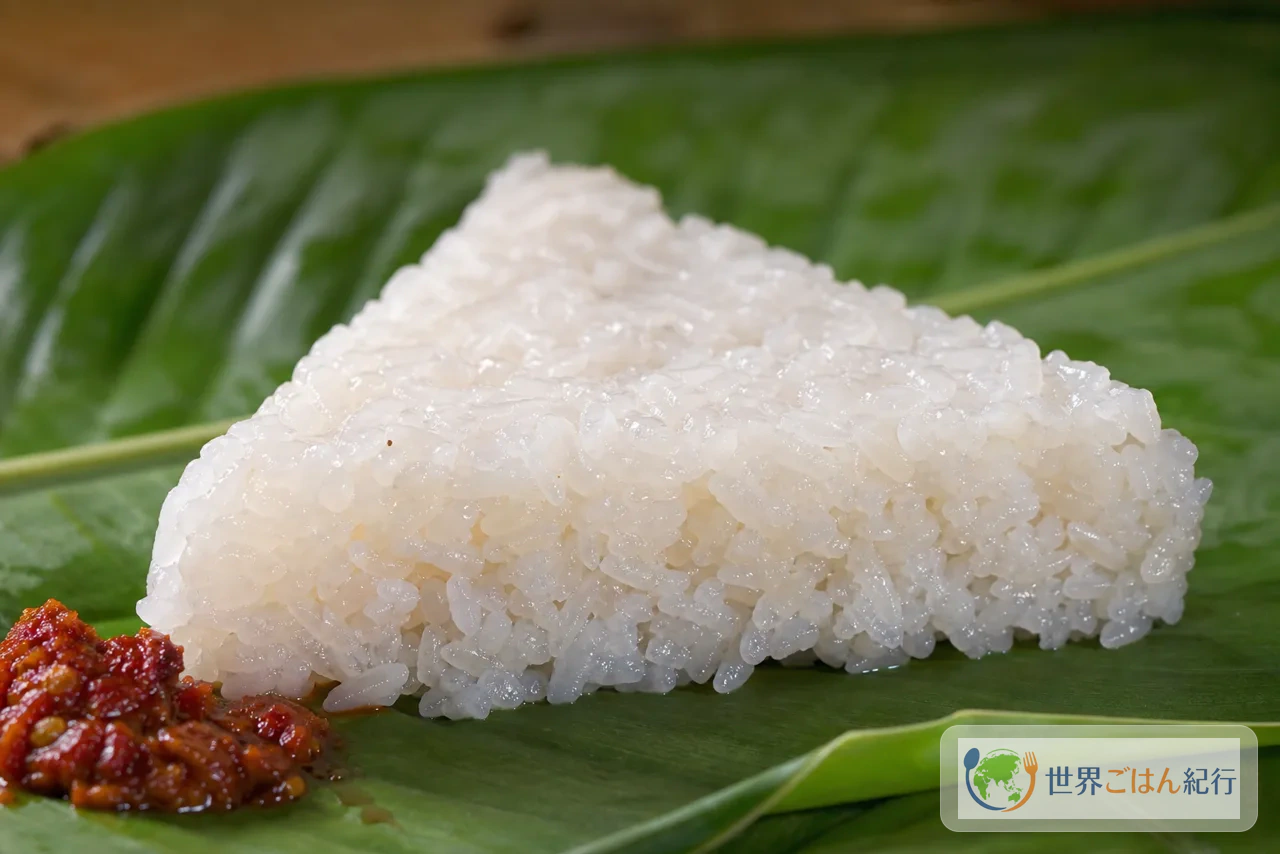
The moment the coconut milk goes into the pot, the steam from the freshly cooked rice turns a little sweet. In many kitchens you might hesitate for a second at "milk in the rice?", but Sri Lankan kiribath is not a sweet porridge. It is a celebratory staple in which rice is bound with coconut milk, pressed flat before it cools and cut into white diamonds.
The local name in Sinhala is කිරිබත්, written in English as Kiribath or Milk Rice. "Kiri" is milk and "bath" is rice. In the food-culture introduction by Sri Lanka Tourism, kiribath is described as a rice dish cooked with coconut milk, served at New Year and celebrations, as an infant's first solid food, and at weddings.
The key to making it elsewhere is not adding unusual ingredients but taking the rice from a "porridge with distinct grains" to a "sliceable slab of rice." Samba rice is ideal if you can get it, but for the first time ordinary short-grain rice is plenty. Long-grain rice such as basmati or jasmine, with its fluffy-loosening strength, works against you in this dish.
In "kiribath," kiri means milk and bath means rice. As the name says, it is a savory rice dish cooked in coconut milk.
Why it is eaten at celebrations
Kiribath is a dish placed on the table on a "morning when something begins." At Aluth Avurudda, the Sinhala and Tamil New Year, the house is cleaned, lamps are lit, and the family waits for the appointed hour before opening the New Year table. Articles from Sri Lankan embassies from the Ministry of Foreign Affairs also describe traditional sweets and milk rice appearing after the seasonal rituals and becoming the first meal of the new year. Because it is spread flat on a large plate and cut into diamonds, it is easy for a family to share from the same plate. It is simple as cooking, but a shape that sits easily at the center of an occasion.
Sri Lanka Tourism's introduction describes kiribath as connected with celebrations, the New Year, an infant's first solid food, weddings and the morning of the first of the month. In other words, it is less an everyday side-dish rice than a rice that signals "we begin here." Just as seeing mochi or sekihan at New Year in Japan sets the mood a little, in Sri Lanka white rice that has absorbed the aroma of coconut has the job of arranging the air of the morning.
The origin of the name is just what it says: in Sinhala, kiri is milk and bath is rice. It is not the name of a special spice, but a name that states the ingredients straight. That simplicity is part of what's interesting: even though it is a festive dish with a long history, what you do in the kitchen is cook rice, let it absorb coconut milk and press it while hot. It can be called a dish that brings the weight of ritual down to a procedure you can do in a home pot.
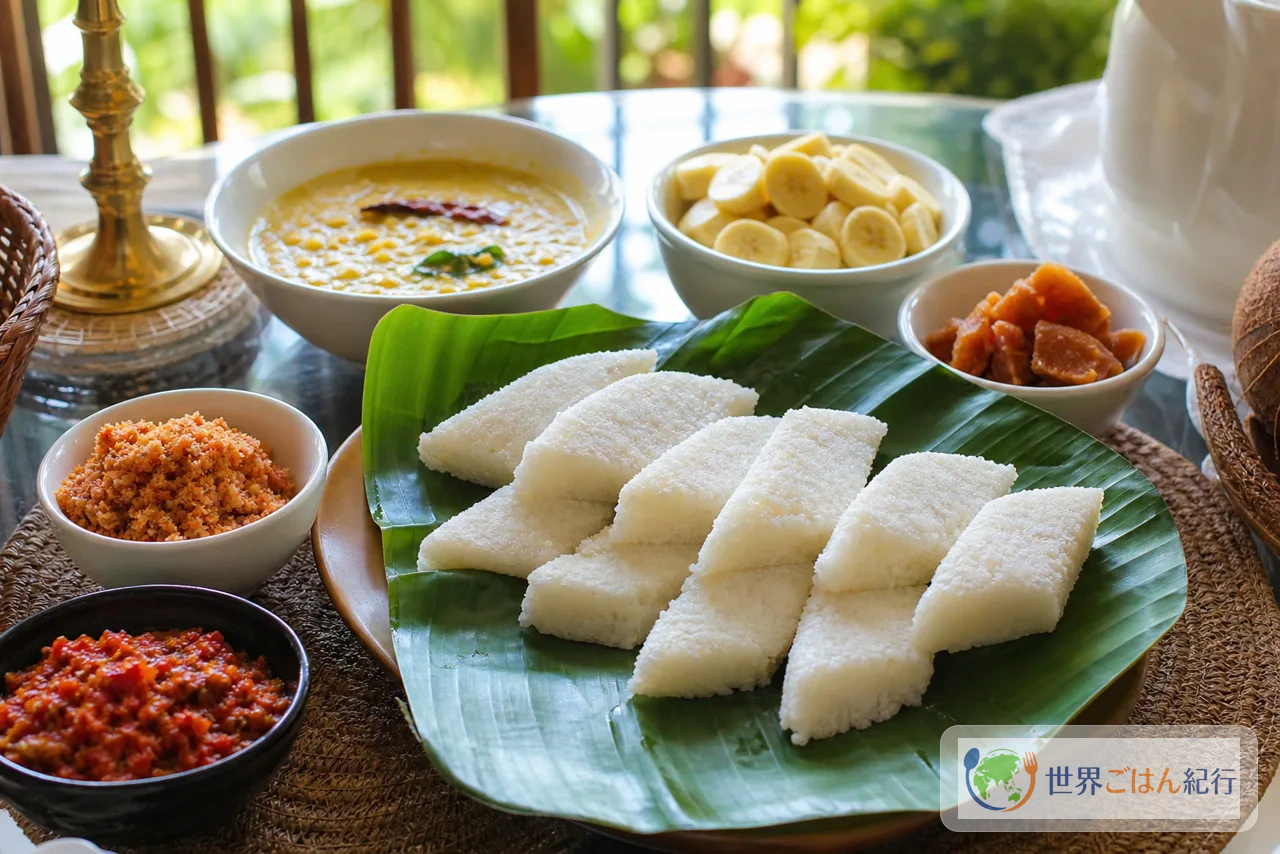
Among festive tables, aasmi (in Japanese) and bibikkan are sweet plates. Kiribath is the staple before you get to them, a quiet base with a little saltiness. On a table in Sri Lanka, beside it are placed not only sweets but lunu miris, which crushes red onion and chili, jaggery close to dark brown sugar, bananas and seeni sambol. You can swing between spicy and sweet with each piece, so it fits both breakfast and the celebration table.
Regional differences do not make it a separate dish so much as the sides and how much sweetness change household to household. For children you add jaggery or bananas, and adults make the lunu miris stronger. There are variations too, like mung kiribath with mung beans and imbul kiribath rolled around sweet coconut filling, branching from the same white rice base into breakfast, festival or sweet-leaning plates. To make it elsewhere, learn the basic diamond first, then serve sweet and spicy plates separately to feel the local range.
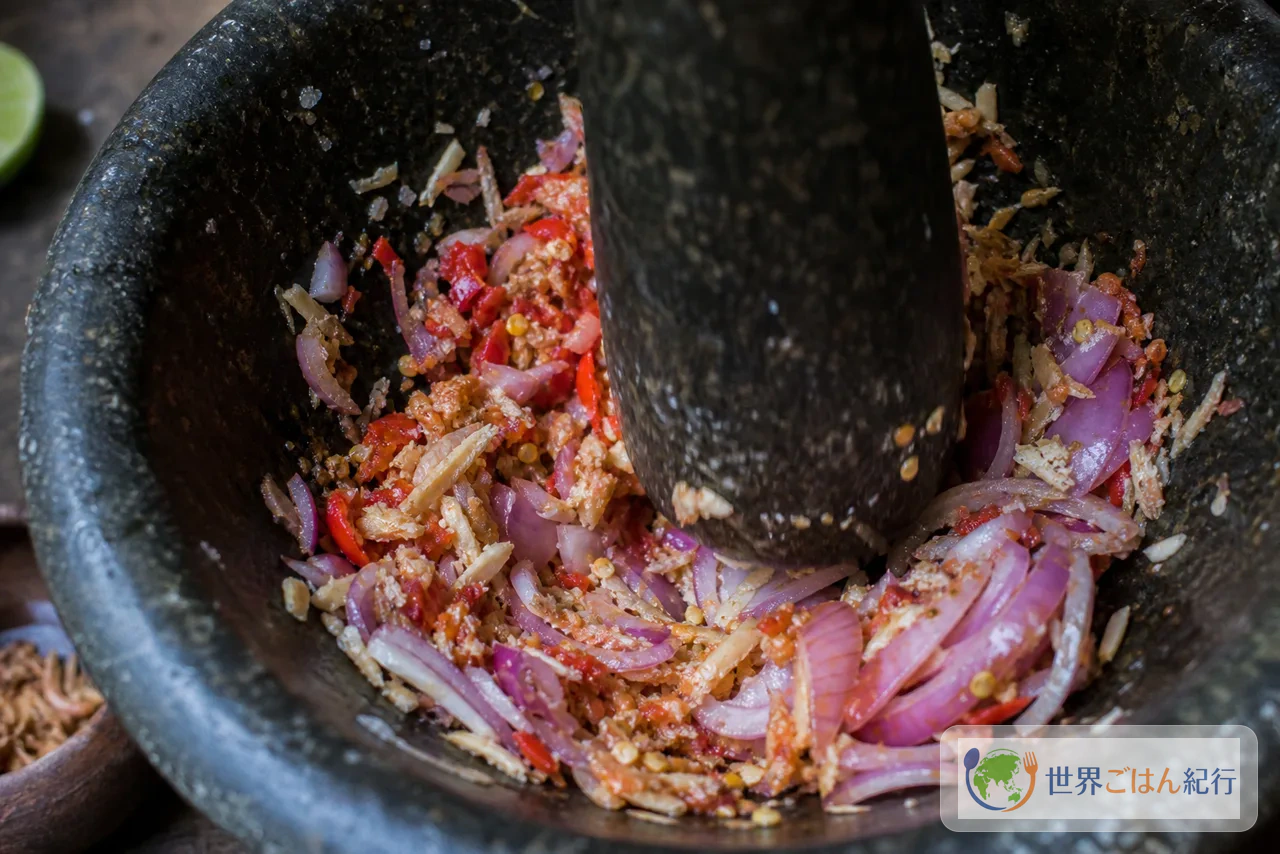
Its companion in flavor is lunu miris, crushing red onion and chili. Kiribath alone is salted coconut rice. Put just a little lunu miris on it and the sharpness of onion, the heat of chili, the acidity of lime and the savor of fish pierce the white rice. For breakfast, it has a strong profile. Leave that out and you can still eat it as sweet coconut rice, but it moves a little away from the Sri Lankan plate.
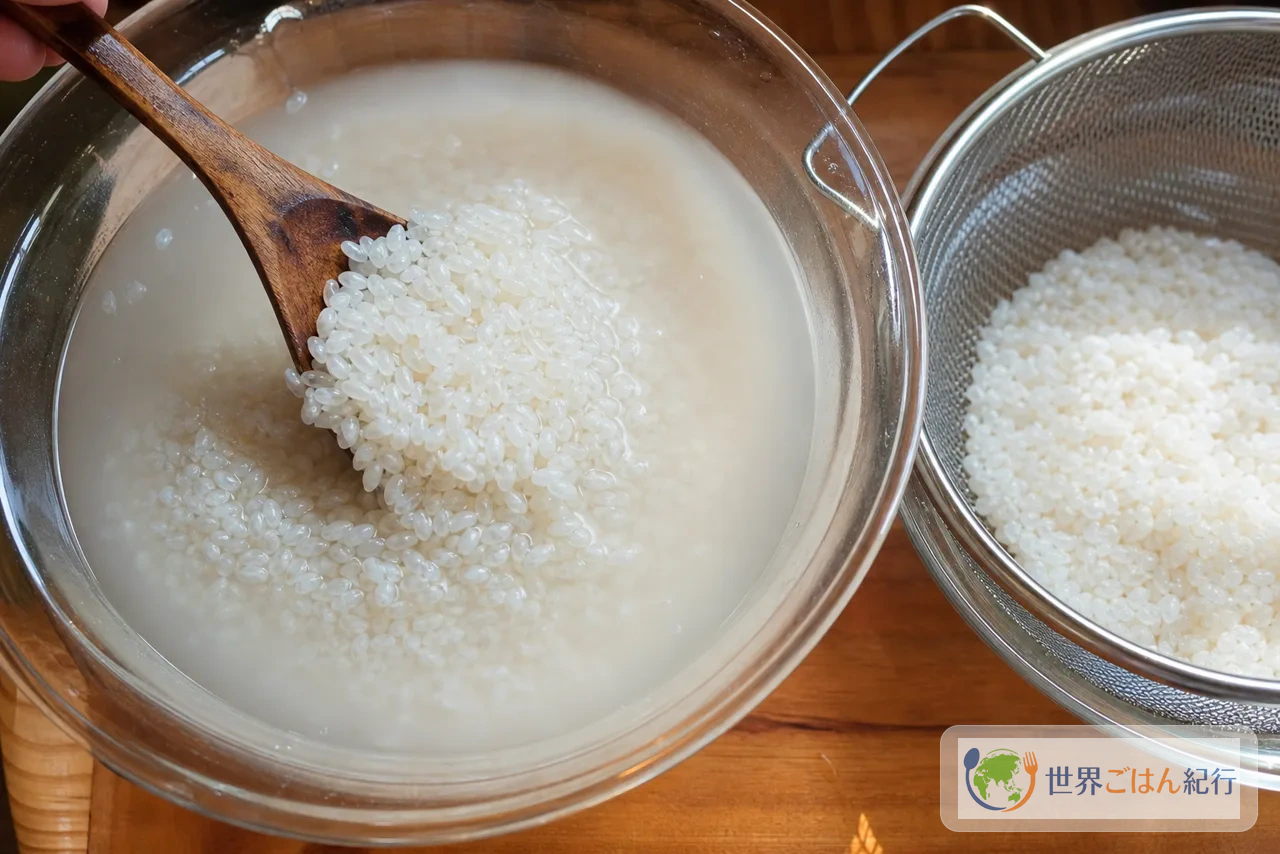
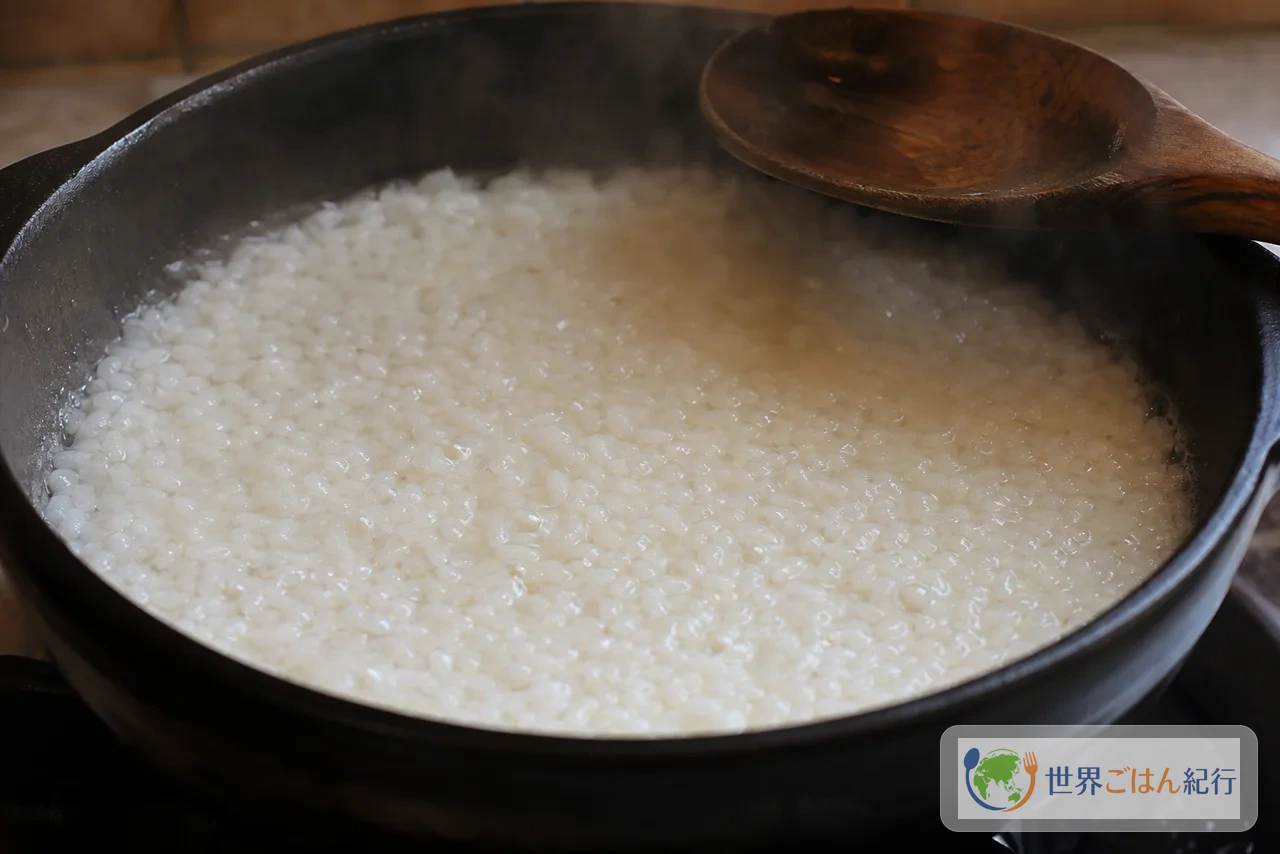
Short-grain rice is enough the first time. Cook the rice in water until quite soft before adding the coconut milk and it will set into a slab.
Ingredients (serves 4)
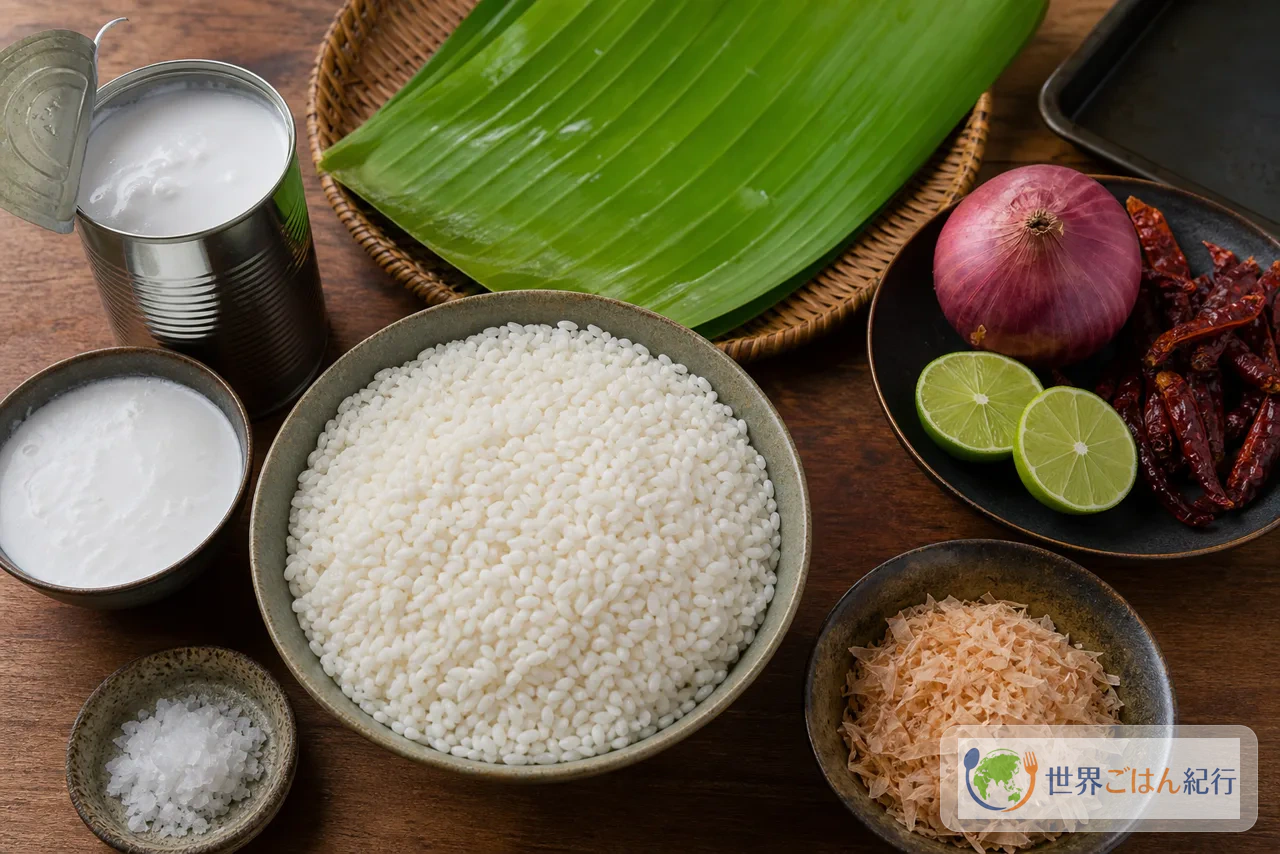
This uses coconut, fish and chili. If you have allergies or are sensitive to heat, serve the lunu miris on a separate plate and start with only 1/2 tsp.
Where ingredient choices make a difference
The first thing worth looking for is the canned coconut milk. With a thin coconut beverage the rice does not hold together and the aroma is weak.
If crushing lunu miris from scratch is too much on a given day, stretching 1 tsp sambal oelek with onion, bonito flakes and lime gets you close in direction.
You can make it with ordinary short-grain rice alone. Only if you are practicing with a variety that falls apart easily, replacing 2 tbsp of the 2 cups with glutinous rice lets you check how well it holds when cooled. Treat it as a small amount used in the search for a samba rice substitute. Using all glutinous rice turns it from celebration milk rice into something closer to a rice cake in weight.
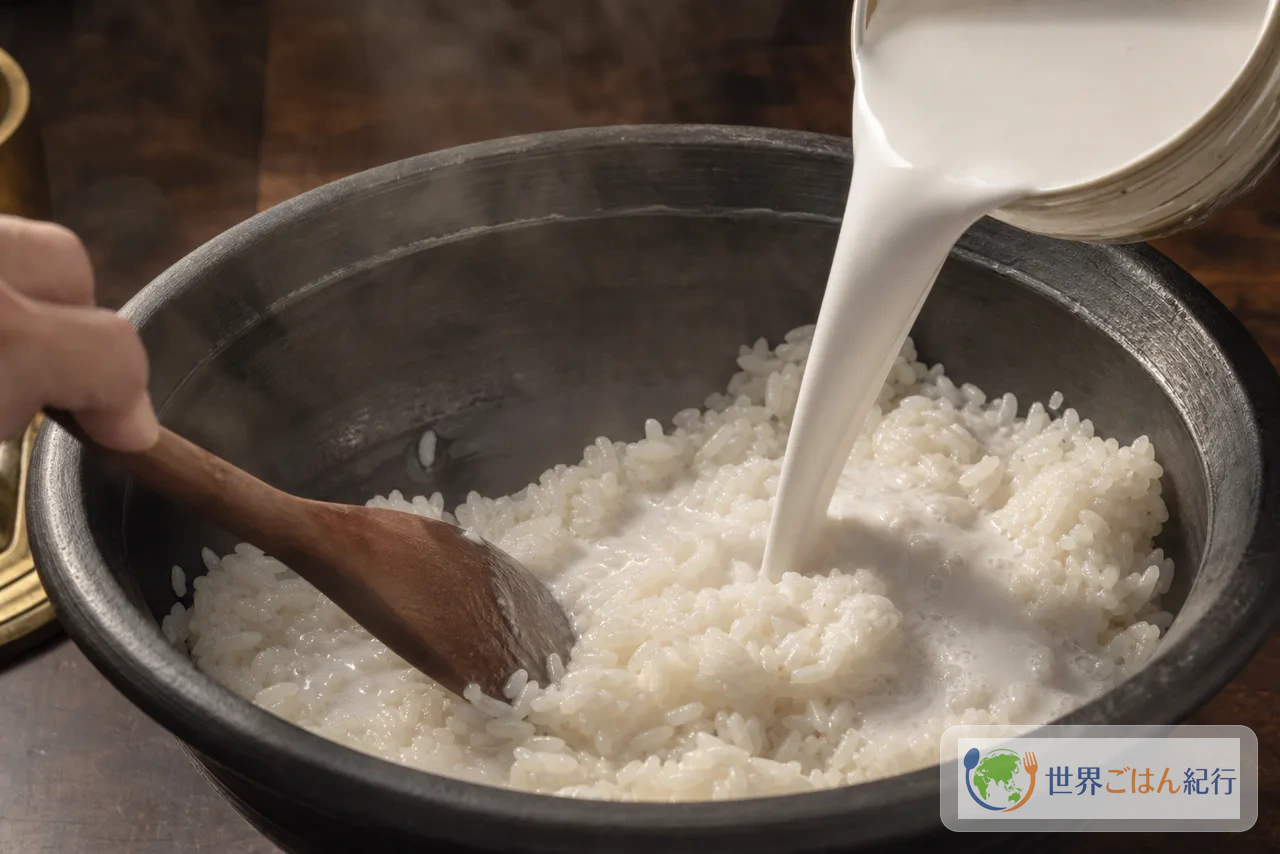
Right after the coconut milk goes in, the pot splatters easily and scorches on the bottom. Use a heavy pot, keep the heat low, and keep the wooden spatula moving.
A decision table for getting closer to the original with ordinary ingredients
| Question | Closer to local | Practical solution | Direction to avoid |
|---|---|---|---|
| Rice | Samba rice, short- or medium-grain rice | Ordinary short-grain rice. Ordinary over pre-rinsed | Making it with only basmati or jasmine |
| Coconut | Rich first-press coconut milk | Canned coconut milk, stirred well | Coconut water, thin beverages |
| Shaping | Spread on a banana leaf | A tray lined with parchment | Spreading directly on a plate and making it too thin |
| Lunu miris | With Maldive fish | Substitute 6 g bonito flakes | Making it only a hot chili sauce |
| How to eat | Spicy lunu miris, jaggery, banana | Dark brown sugar, banana, with dhal | Mixing sugar into the rice |
Short-grain rice is fine. But just mixing coconut milk afterward into rice cooked in a rice cooker gives little of the unity needed to be sliceable. Cook in a pot while watching the liquid, and at the end work it over low heat. This step makes the texture of kiribath.
What you will hesitate over most is whether to look for samba rice. If a Sri Lankan restaurant or South Asian grocery is near, it is worth trying, but you don't need to go out of your way to make it once at home. The priority is rich coconut milk, short-grain rice, then the savor of lunu miris. More than the variety of rice, the step that leads directly to failure is driving off moisture over low heat after the coconut milk goes in and pressing it firm while hot.
On the other hand, taking the fish savor out of the lunu miris flattens the flavor. If you can't get Maldive fish, finely crushed bonito flakes make a core of saltiness and umami in an ordinary kitchen too. On days when someone at home dislikes heat, serve the lunu miris on a separate plate instead of mixing it in. A celebration plate doesn't require everyone to eat with the same heat, and the handy part is that the white base of kiribath can be adjusted in each person's amount.
Common failures
| Symptom | Cause | Fix |
|---|---|---|
| Crumbles when cut | Too little low-heat cooking after the coconut milk | Add 3 more minutes over low heat, turning from the bottom to drive off liquid |
| Scorched bottom | Heat too high, bottom not turned | Use a heavy pot and keep the heat low after the coconut |
| Sticky and heavy | The rice overcooked to mush | Next time reduce the water to 480 ml and shorten the simmer by 2 minutes |
| Weak aroma | Used a coconut beverage | Switch to cooking coconut milk in a can. After opening, mix the fat evenly |
| Too spicy | Left the seeds in the dried chilies | Remove half of the seeds and add 20 g more onion |
The most common failure is cutting the water too much from the start in the wish to firm it. If you add coconut milk while the rice still has a core, only the outside turns pasty and the center stays hard. Keep the order of softening well with water first and binding with coconut milk.
Cut once the rice has cooled a little and the corners stay sharp. If you cut while it is hot, wet the knife and wipe it after every cut.
Storage and eating the next day
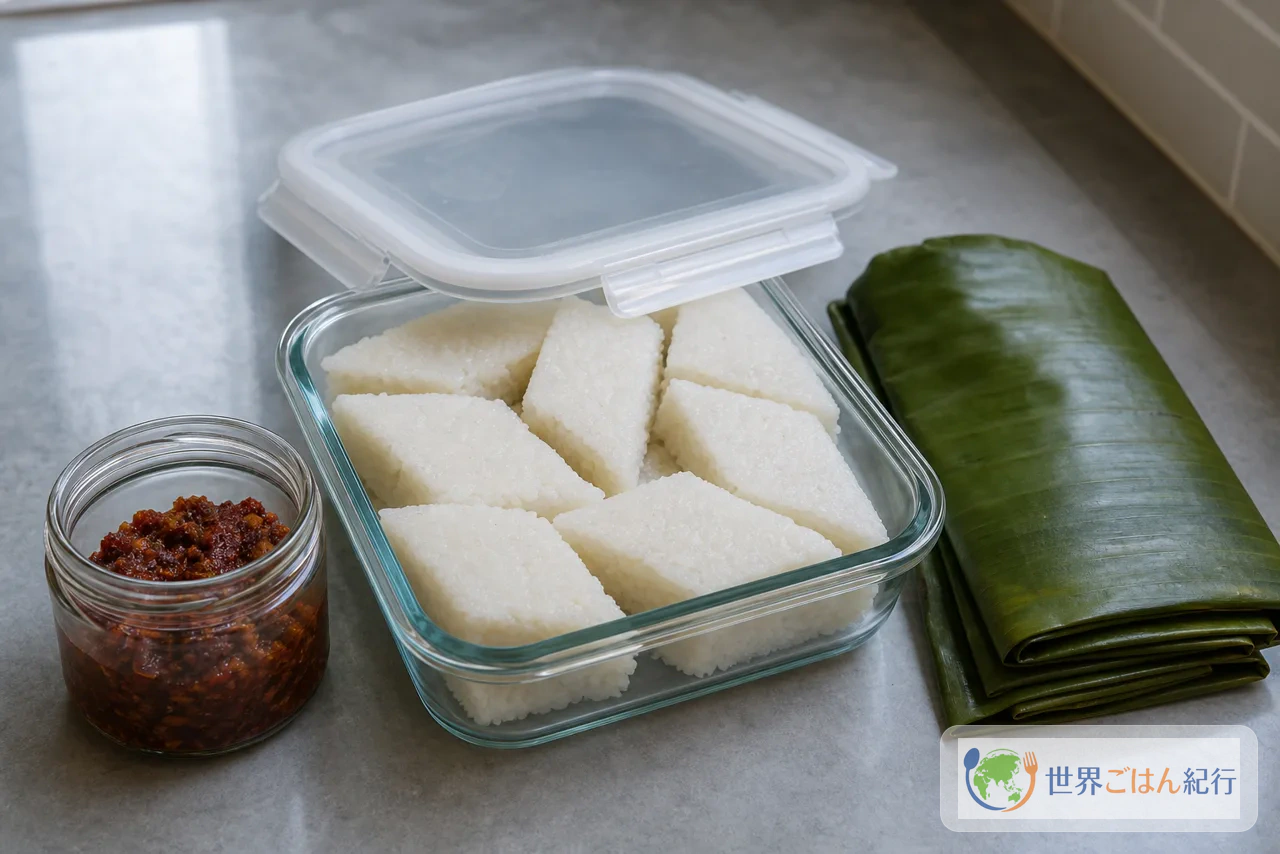
When the kiribath has cooled slightly, cut it into pieces and lay them in a container without overlapping. Refrigerated, plan on 2 days. Put the lunu miris in a separate small jar and also finish it within 2 days in the refrigerator.
To reheat, put 2 pieces of kiribath on a heatproof plate, sprinkle with 2 tsp water, cover loosely with plastic wrap and microwave at 600 W for 50 seconds. To make the surface toasty, warm a skillet over low heat for 2 minutes, spread 1/2 tsp oil thinly and cook 1 minute 30 seconds per side. Stop when a faint browning appears and the coconut sweetness at the center remains.
Leftover kiribath goes back to breakfast easily if you add dhal or coconut sambol, as with Sri Lankan hoppers and kottu. To compare it as a South Asian rice dish, Nepali dal bhat, which makes beans and rice the daily meal, is also enjoyable in a similar context.
FAQ
Can I make it in a rice cooker?
Part of the way. Cook 2 cups of rice with 470 ml water on a soft setting, then move it to a pot, add 300 ml coconut milk and salt, and work it over low heat for 8 to 10 minutes. Working it in the rice cooker's inner pot can scratch it, so move it to a pot to finish.
Can I use coconut milk powder?
Yes. Dissolve 50 g powder in 300 ml lukewarm water and mix so no lumps remain before using. The aroma is lighter than canned, but a product with some fat can be shaped.
Does it work without lunu miris?
It works, but the flavor is much milder. On days you avoid heat, make a non-spicy onion salad of 80 g onion, 1 tbsp lime juice, 4 g bonito flakes and 1/4 tsp salt, and serve it separately. If eating it sweet, adding dark brown sugar and banana makes it feel like breakfast.
Without the banana leaf, does it lose the atmosphere?
Banana leaf is better for aroma and appearance, but for shaping alone parchment is enough. If you use banana leaf, pour boiling water over it and wipe dry to make it supple, and the rice comes away more easily.
Local sources consulted
- Sri Lanka Tourism, "So Rich In Flavours": https://srilanka.travel/culinary-tourism/food-range.php
- Nestlé Sri Lanka, "Kiribath": https://www.nestle.lk/en/cooking/recipes/festive/avurudu/kiribath
- ProperMasala, "Kiribath (Sri Lankan Milk Rice)": https://propermasala.com/recipes/kiribath/
- Ministry of Foreign Affairs, Foreign Employment & Tourism, Sri Lanka, "Celebration of Sinhala and Tamil New Year in the United States": https://mfa.gov.lk/en/celebration-of-sinhala-and-tamil-new-year-in-the-united-states/
What to make next
To widen a Sri Lankan breakfast, hoppers, from the same coconut-and-rice culture, are the next step. To move to evening street food, kottu is fun for the sound of chopping on a griddle. If kiribath makes "South Asian dishes with rice as the star" interesting, moving on to dal bhat, which combines beans and rice, shows the difference between celebration rice and everyday rice. To move toward a light plate eaten by hand, India's pani puri also changes the mood of the table.