Chhena Mudki: A Sugar Coat That Dries White Around Each Cube
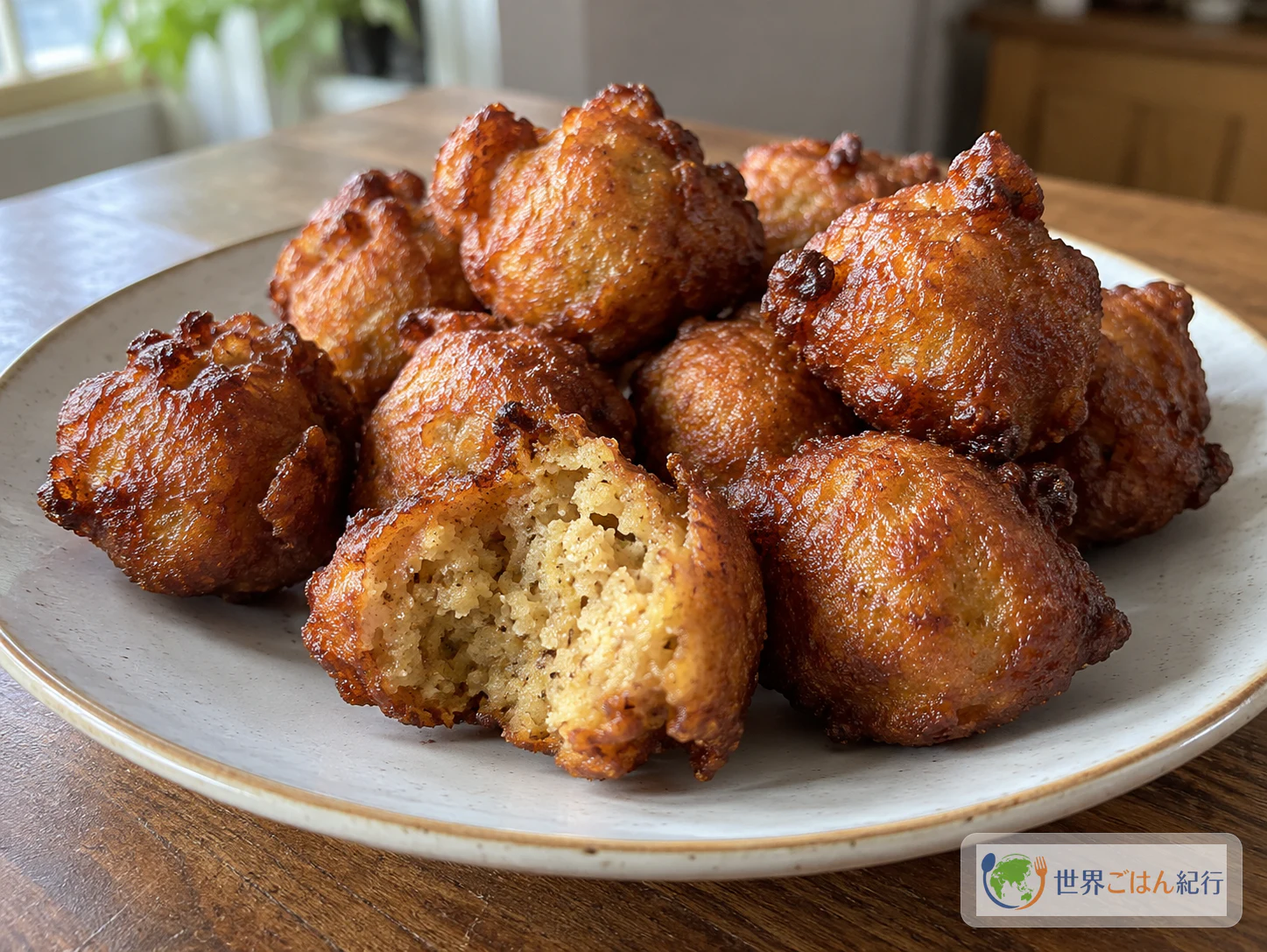
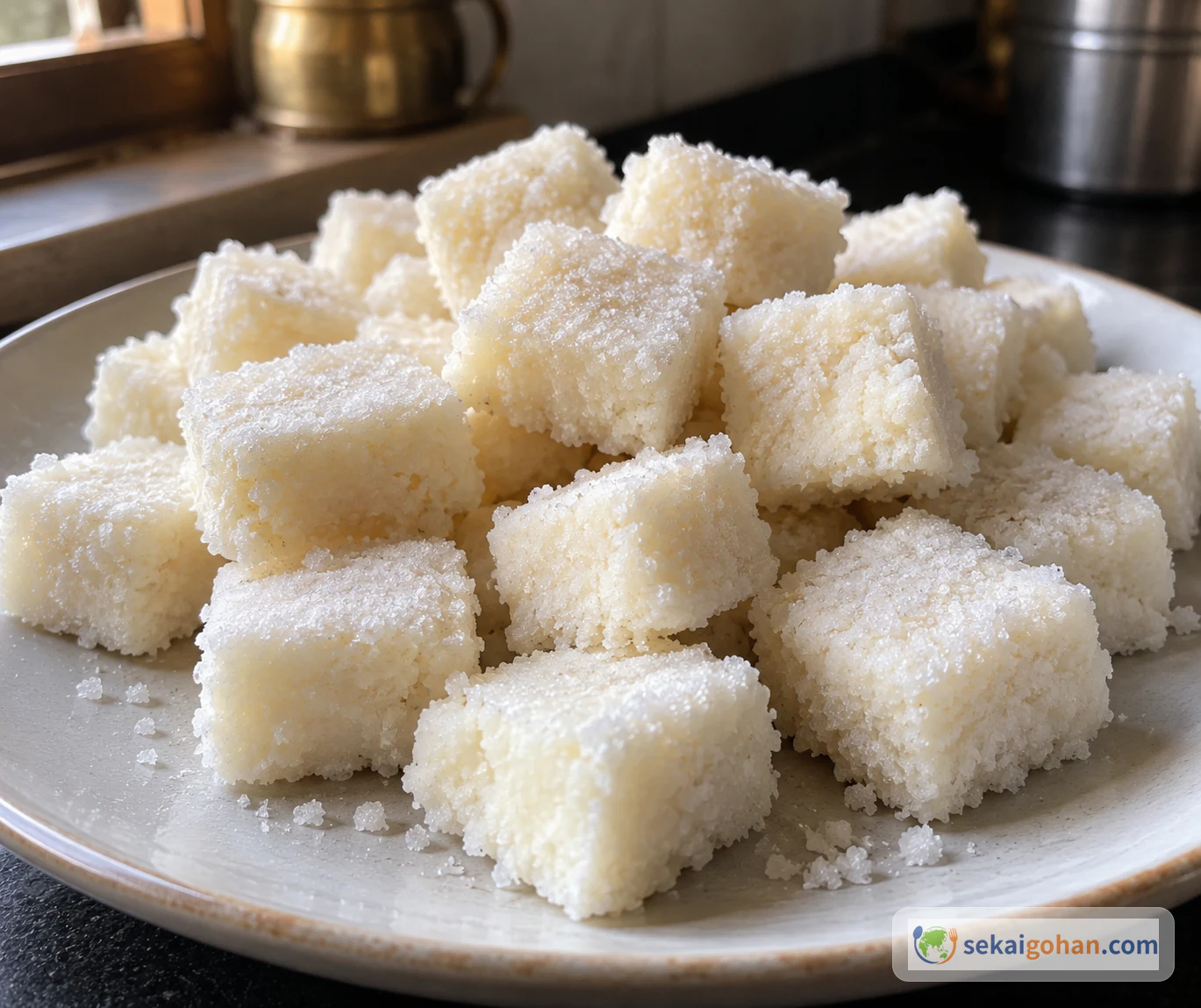
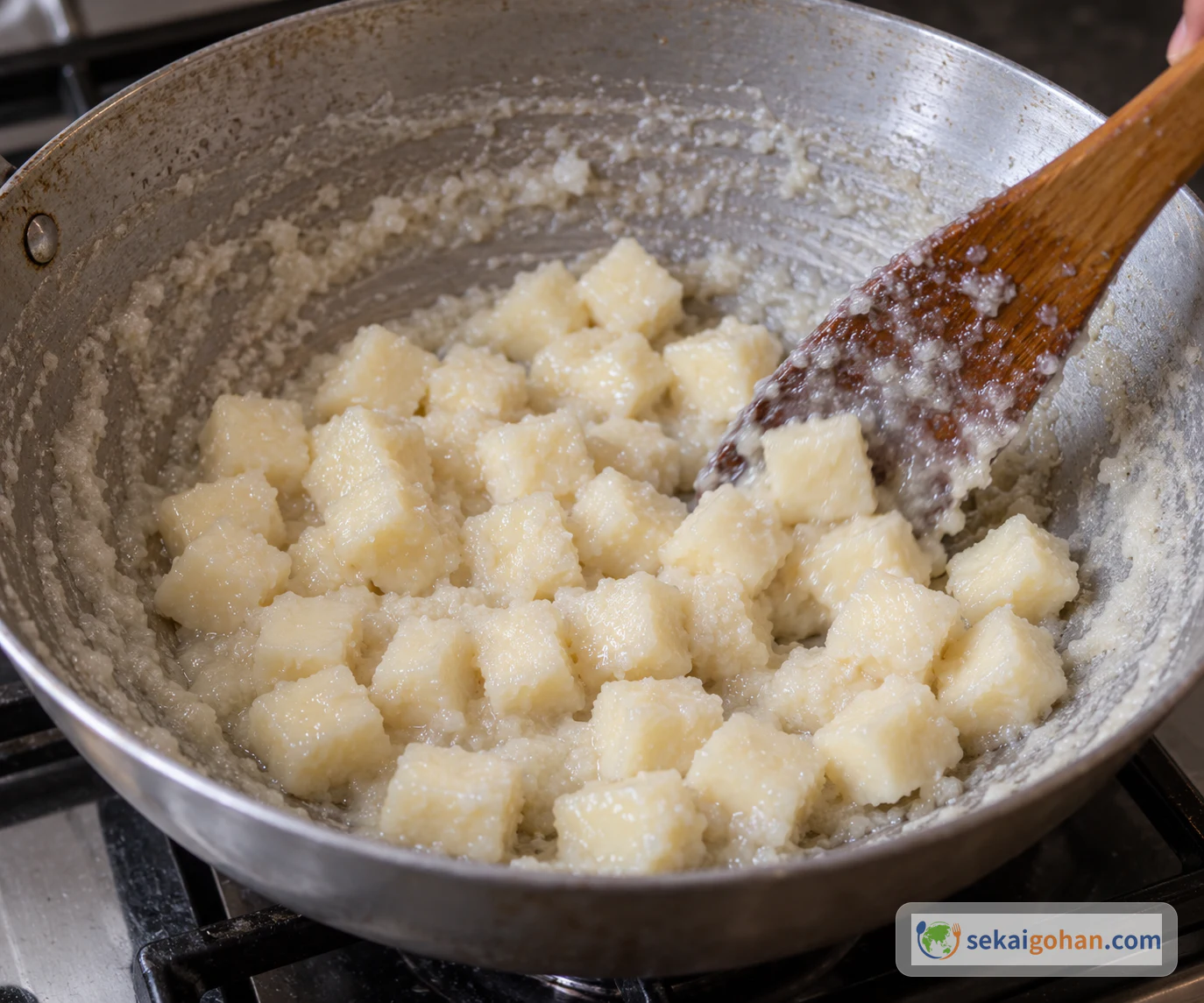
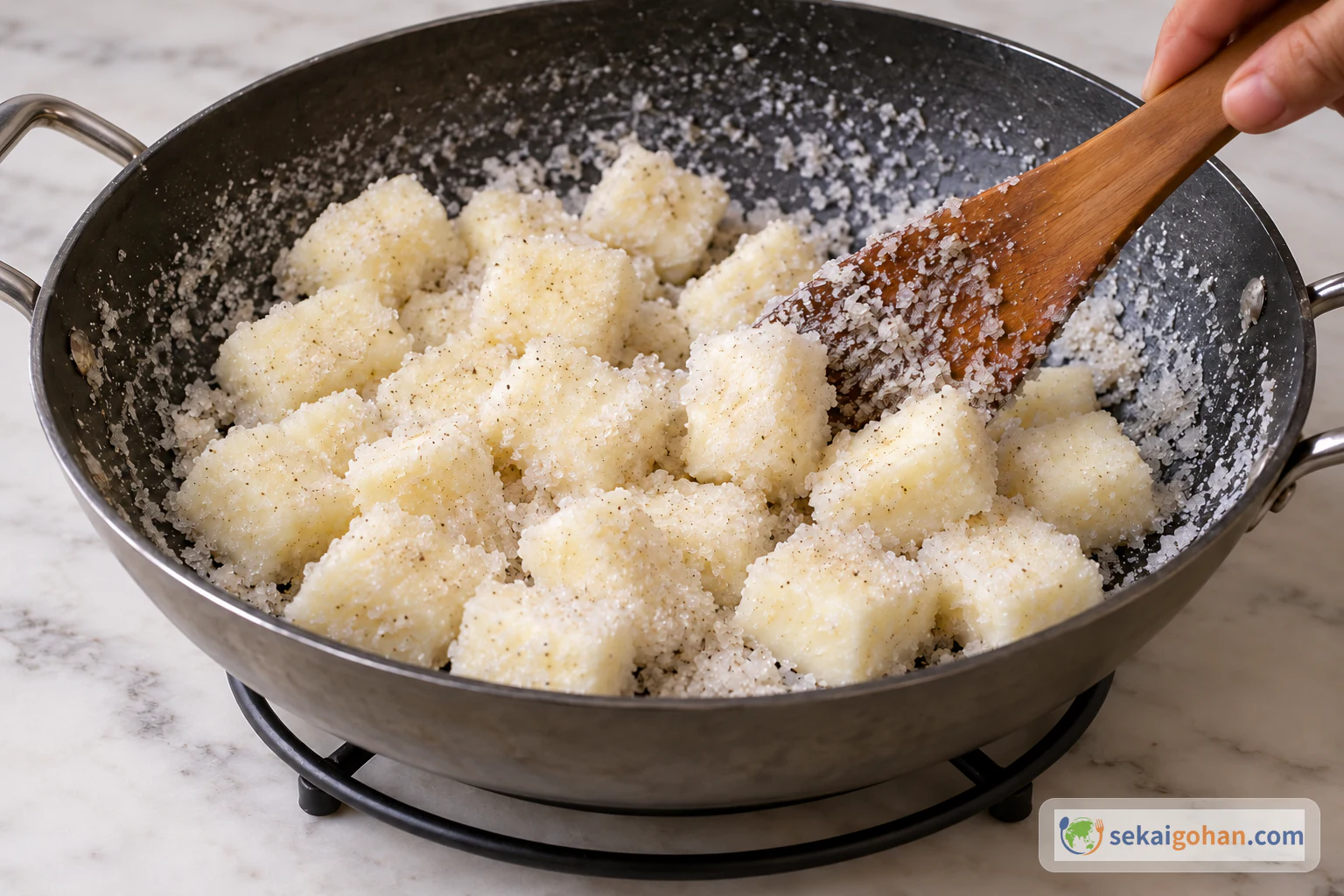
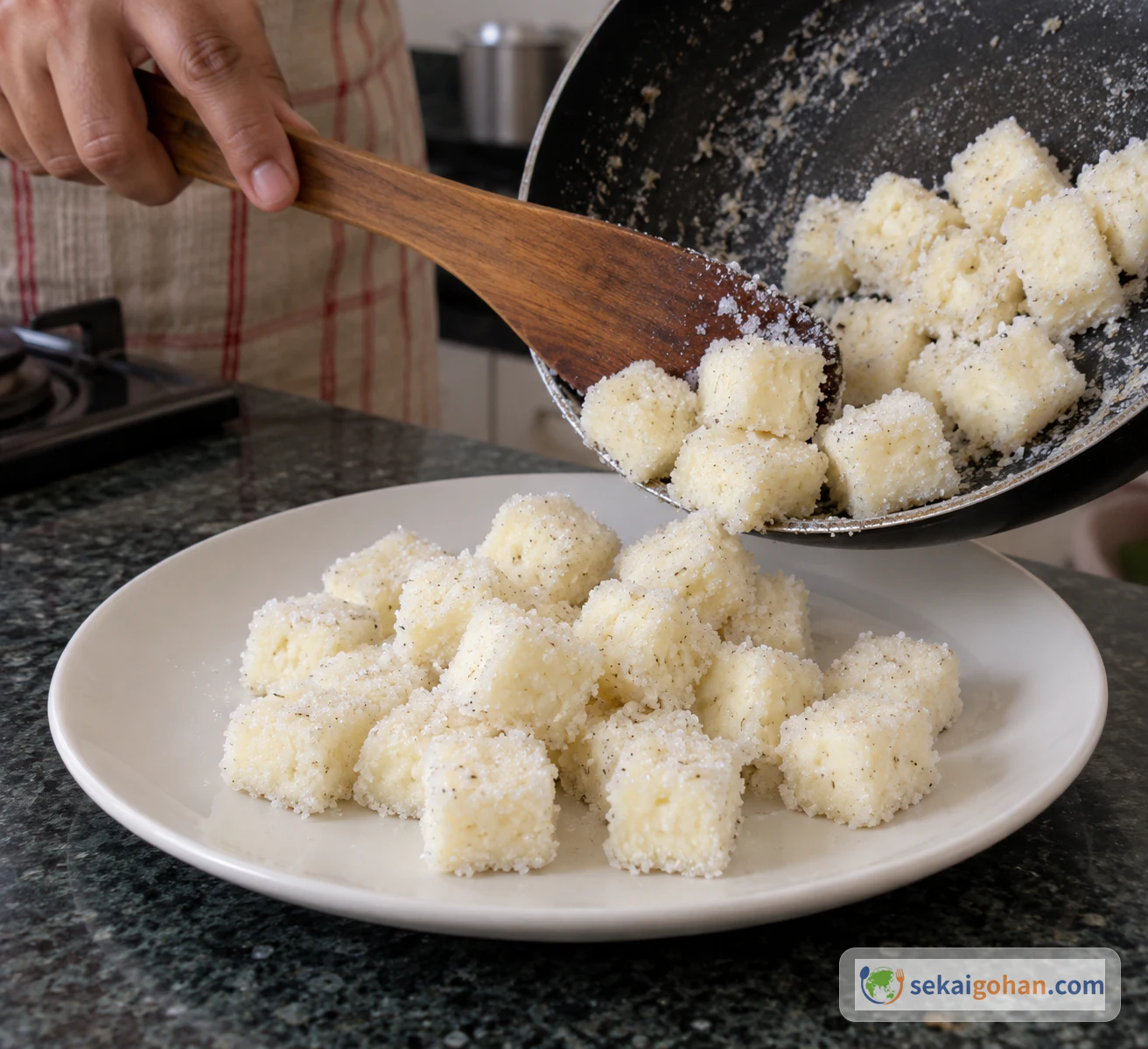
Small cubes of soft cheese, each wrapped in a dry, matte, white sugar coat, with no syrup left pooling in the pan or on the plate. If the cubes are still sitting in clear syrup, the sweet is not finished yet.
Chhena Mudki is a sweet built from small cubes of fresh cheese and sugar. Dairy-technology texts describe chhana-murki as small cubes evenly coated in sugar, with a firm, close-knit texture. The cubes are first cooked in a sugar syrup. Then the pan comes off the heat, and steady stirring turns that syrup into a crystalline white shell. The result looks dusty and dry rather than glossy. It belongs to a different family of sweets from rasgulla, whose round chhena balls are cooked in syrup and stay soaked with it.
The recipe in this article is one home version: a Bengali Chena Murki published by the food author Rumki Paul. It uses five ingredients: paneer, sugar, water, cardamom powder and rose water. Nothing else goes in. Bhadrak District in Odisha names Chena Mudki among its famous sweets, but this recipe is not an official Bhadrak formula or a reconstruction of one. The section on names and records below explains how the written descriptions differ.
Sekai Gohan has not kitchen-tested this recipe. The amounts, times and serving count come from the published recipe card, and the cues for each stage come from that recipe and from dairy-technology descriptions of the same sugar-coating process.
You will see Chhena Mudki, Chena Mudki, Chhena Muduki, Chhena Murki and Chena Murki. The version made with paneer is also called paneer murki. Searching with several spellings brings up more recipes and descriptions, but the spellings do not all refer to one fixed formula.
Names and Records: Bhadrak's Sweet and the Sugar-Coated Cube
The name is tied to Bhadrak, but the written descriptions do not all describe the same sweet. The Bhadrak District Administration's culture page lists Chena Mudki, together with Palua Ladu, among the sweets the district is famous for. That page gives no recipe.
An indexed passage from the Bhadrak District Gazetteer gives an older, different picture. It places chhena mudki among the cakes made for Bhadrak's seafarers and traders, and describes it as roasted cottage cheese with sugar, ghee and rice powder. Only that short passage is relied on here. Its method, proportions and date cannot be inferred from those few words, and it is not the recipe below.
A regional-cuisine course text from Uttarakhand Open University describes Chhena Murki as a sweet that originated in coastal Bhadrak and is now available across Odisha. It describes cheese pieces, which may be round, cube-shaped, cuboid or other shapes, combined with a thick milk-and-sugar preparation. It also mentions weddings and feasts, but only in general terms about the sweet, not about a specific Bhadrak occasion.
The recipe here comes from a third direction. Rumki Paul presents Chena Murki as a Bengali sweet and notes that paneer murki is also sold in Odisha and other regions. Its ingredients and finish follow the sugar-coated-cube family in the dairy texts, not the Gazetteer's ghee and rice powder. These are kept here as separate records of related sweets rather than merged into one "authentic" version. For more dishes from across the country, see India.
| Record | What it describes | How this article uses it |
|---|---|---|
| Bhadrak District Administration | Chena Mudki as a famous sweet of the district | Regional identity only. No recipe |
| Bhadrak District Gazetteer (indexed passage) | Roasted cottage cheese with sugar, ghee and rice powder, made for seafarers and traders | Background on an older local description. Not mixed into the recipe |
| Uttarakhand Open University course text | Chhena Murki from coastal Bhadrak, now across Odisha; cheese shapes in a thick sugar preparation | Regional origin as the course text tells it. Its own recipe card is not used |
| Dairy-technology texts | Small chhana or paneer cubes, cooked in syrup, then stirred off the heat until the sugar crystallizes into a coat | Cross-check for the dry, crystalline finish |
| Rumki Paul's Chena Murki | Paneer, sugar, water, cardamom powder, rose water; dry sugar-coated cubes | The recipe followed in this article |
Chhena and Paneer: Related Curds, Not the Same Ingredient
Both chhena and paneer start the same way: hot milk is curdled with acid and the curds are separated from the whey. They part ways at draining. Chhena is collected in muslin and hung to drain, with no outside pressure, which leaves a soft curd. Paneer curds are drained in muslin and then pressed to push out extra water.
This recipe calls for 225 g of paneer. That is not the same as 225 g of loose, freshly made chhena. The recipe gives no milk, acid, draining time or yield for making chhena. So this article does not convert it into a homemade-chhena recipe or suggest swapping one for the other by weight.
Ingredients (4 servings)
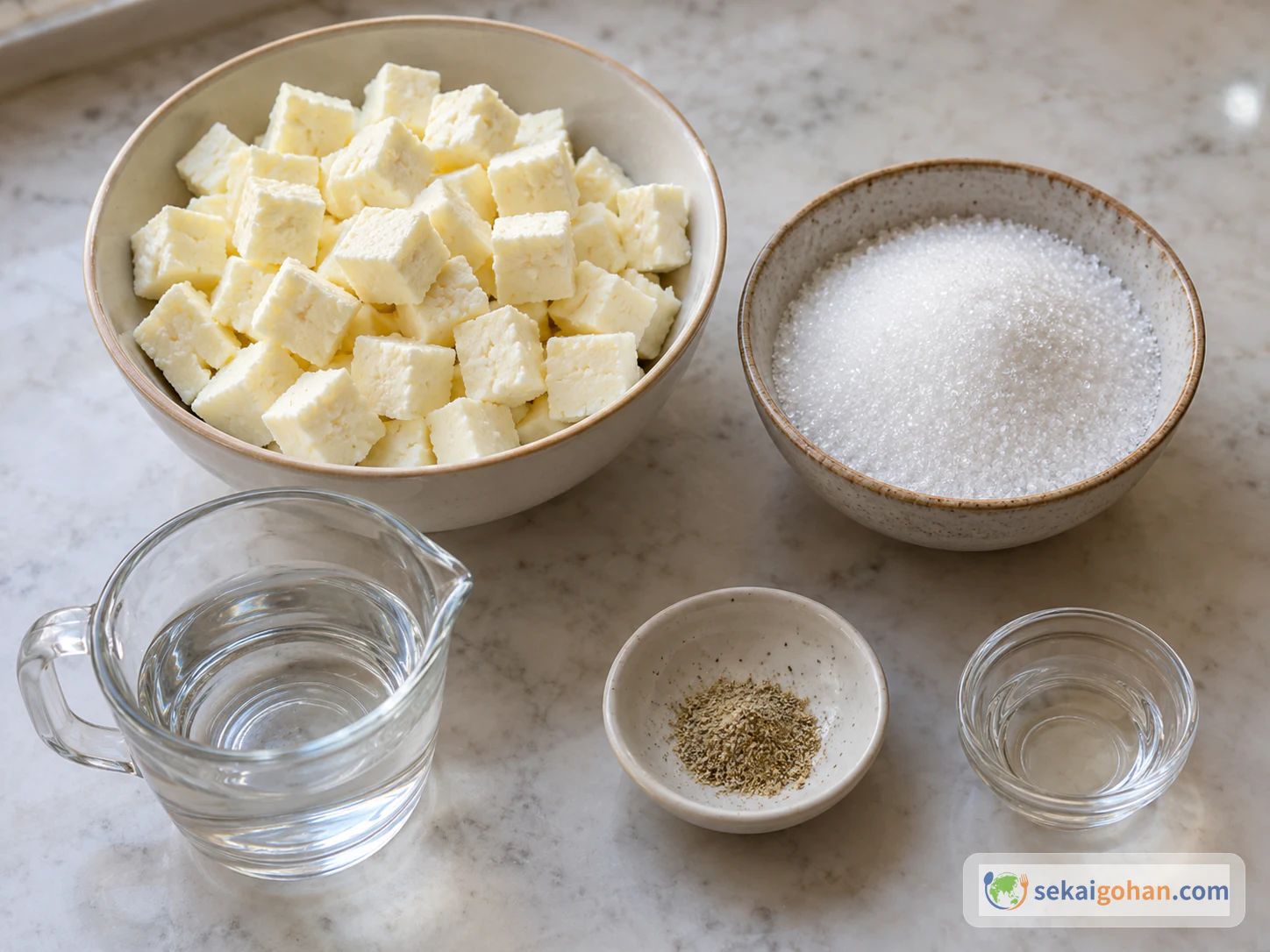
1 cup = 250 ml.
The recipe uses no ghee, frying oil, semolina, milk, nuts, saffron, food coloring or kewra.
Equipment
- Knife and cutting board
- Wide pan or heavy, shallow pan
- Wooden spatula or heatproof spatula
- Measuring cup and measuring spoons
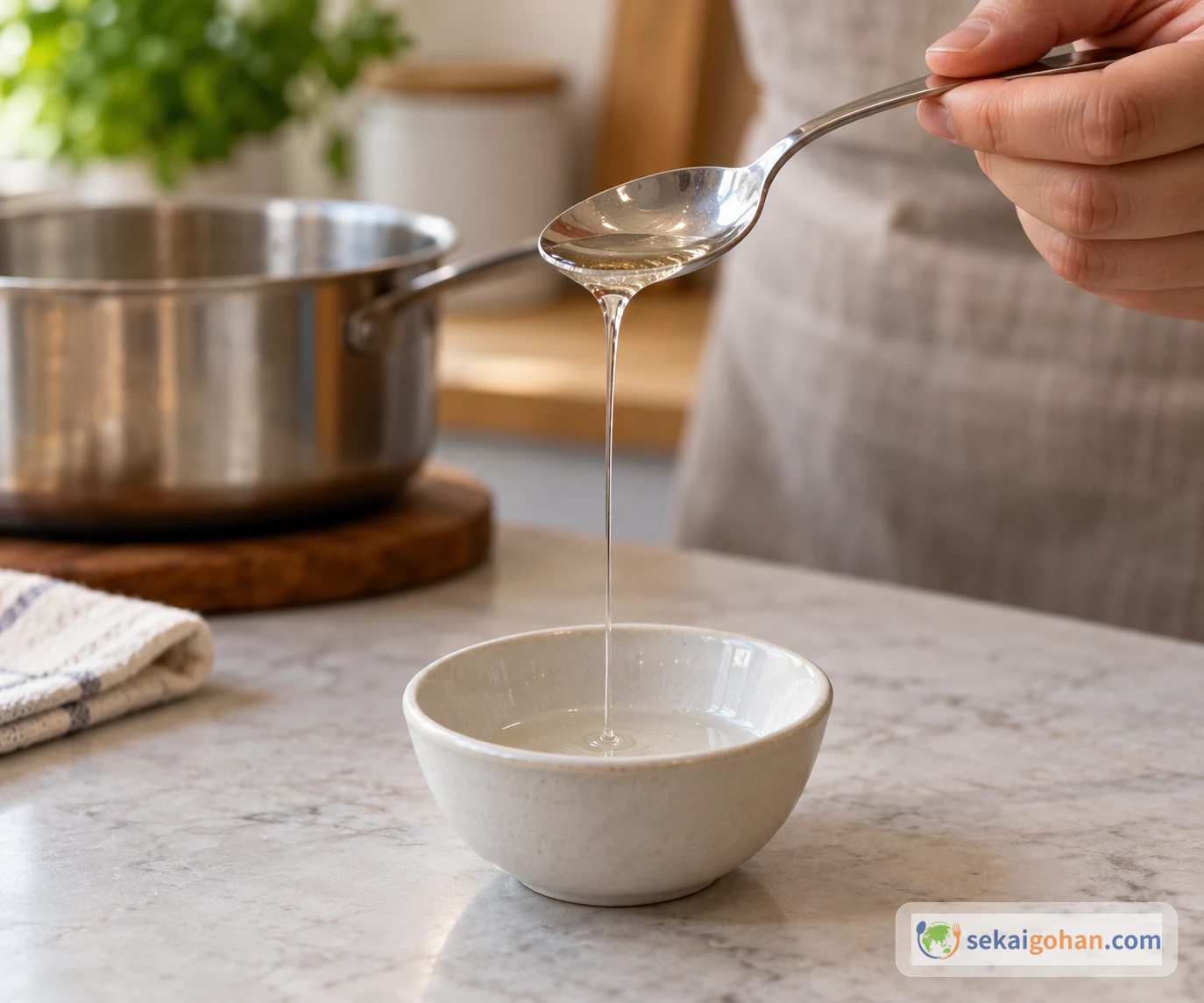
- Small spoon and small bowl, for looking at the syrup
- Heatproof trivet or stand to rest the hot pan on
- Plate for the finished cubes
You don't need a sugar thermometer or a frying pot. The recipe judges the syrup by how it looks, not by a temperature.
Choosing Paneer: Soft and Fresh Over Hard and Packaged
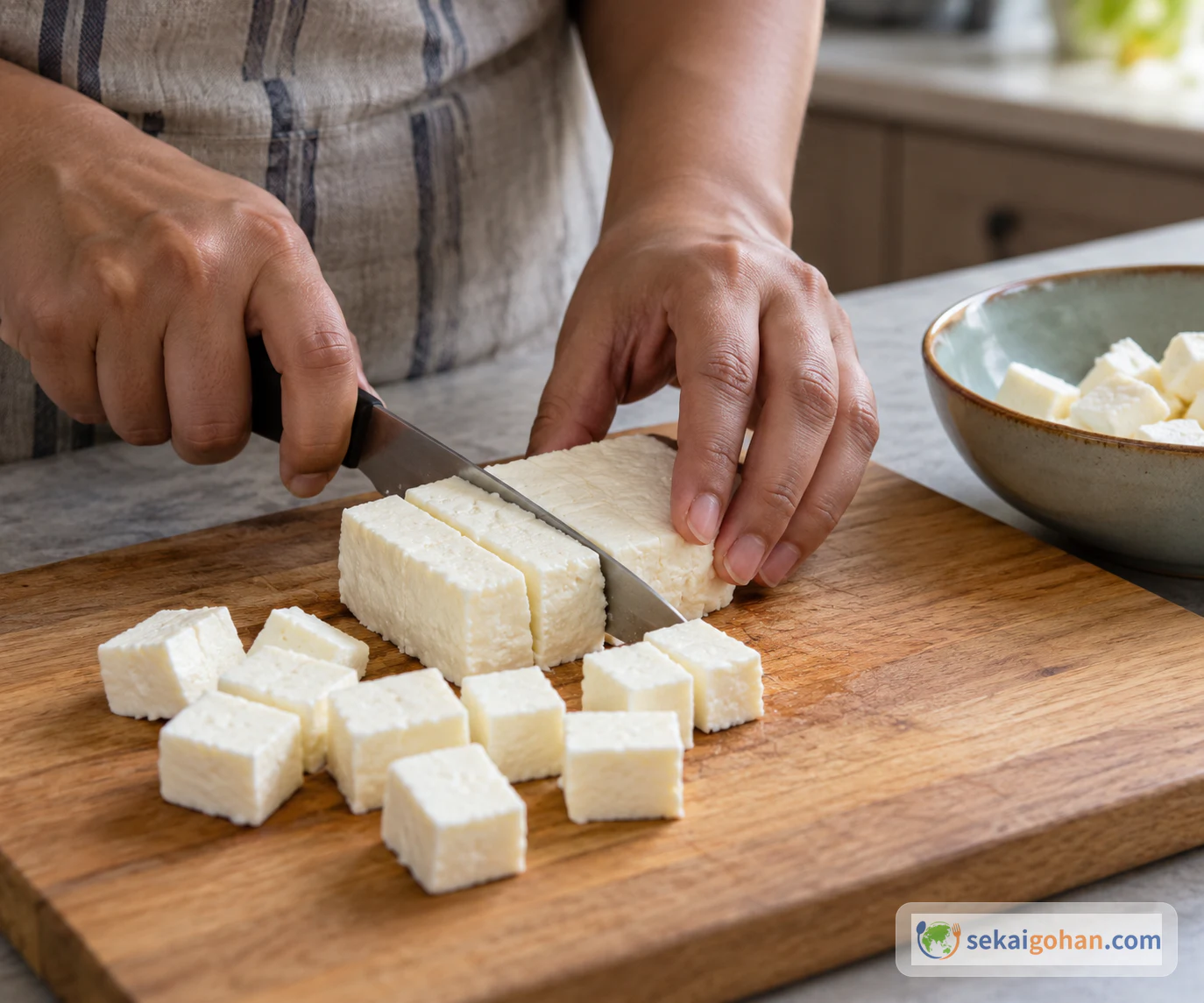
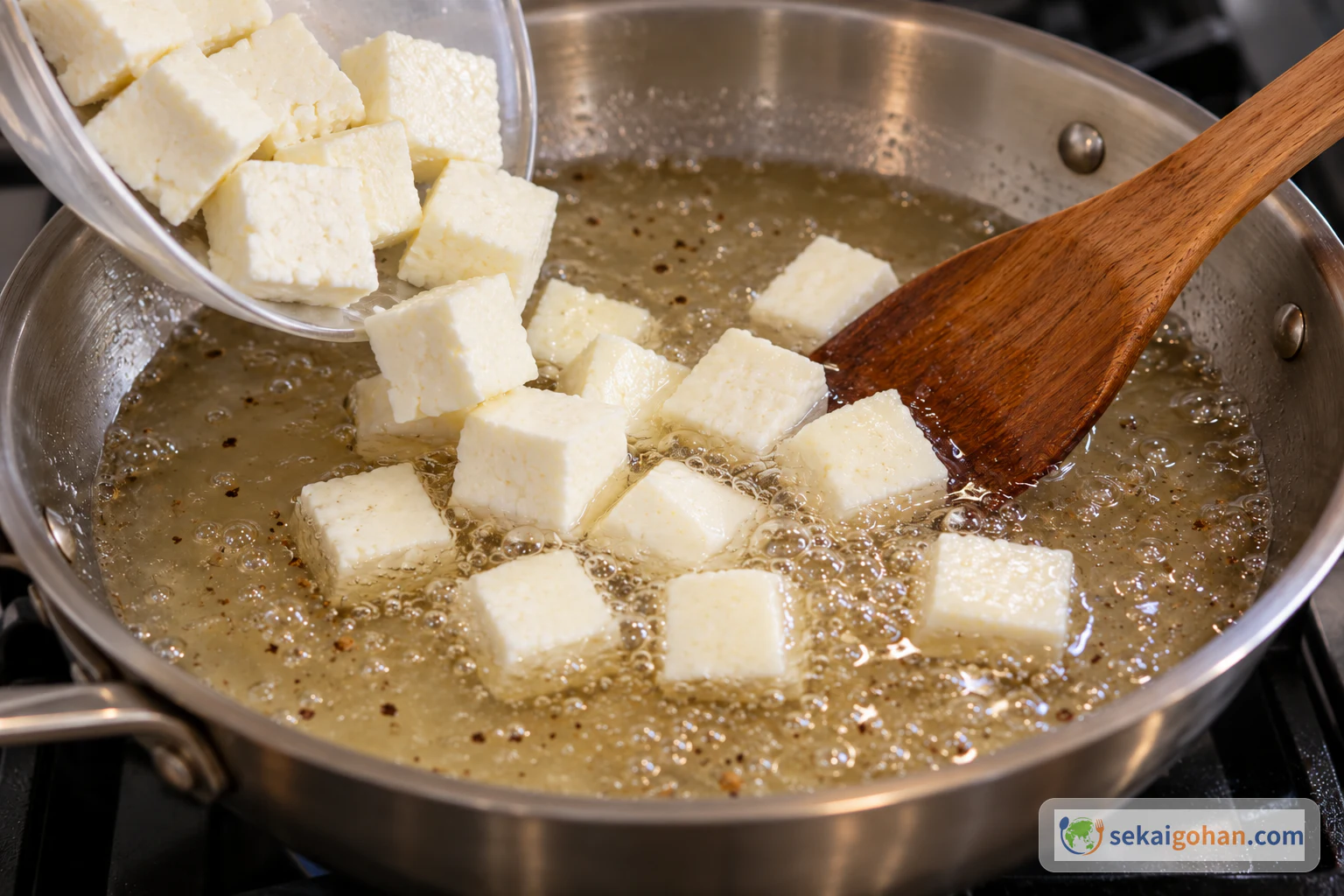
Use fresh paneer or the soft paneer sold by sweet shops. Ordinary shop-bought paneer can also be used, though hard, refrigerated, packaged paneer is less suitable. If you have a choice, buy the softest, freshest paneer you can find.
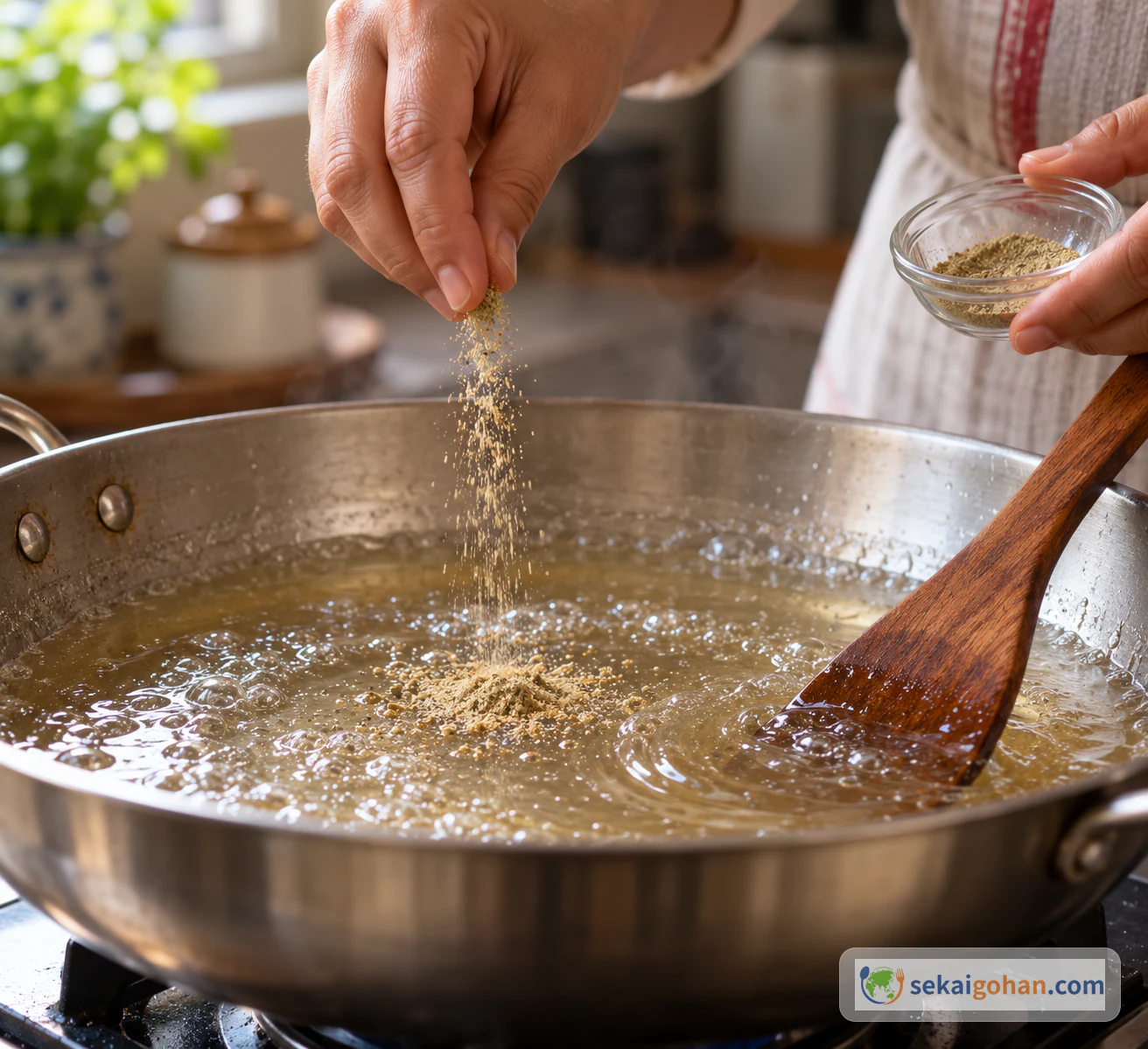
The recipe does not suggest substitutes for cardamom or rose water. Both are part of this version, so keep both. Other flavorings that appear in technical descriptions, such as kewra, belong to other preparations and are not used here.
Sugar syrup that has boiled down is much hotter than boiling water and sticks to skin. Never touch the syrup in the pan, or syrup on a spoon, with your fingers. Use a long-handled spatula, and have the trivet ready before the pan comes off the heat. This sweet is made from paneer, a milk product.
Method: From One Thread of Syrup to a Dry White Coat
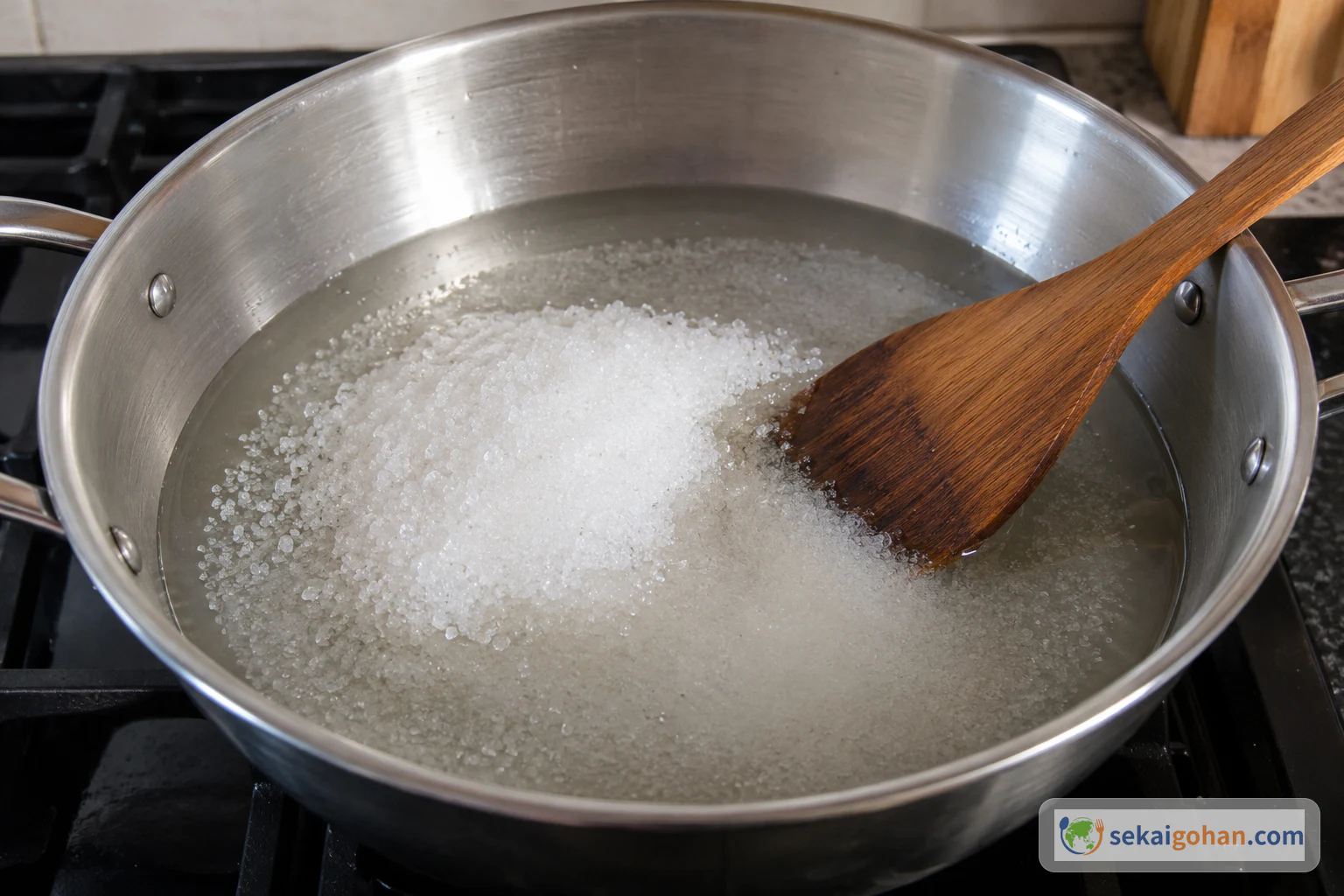
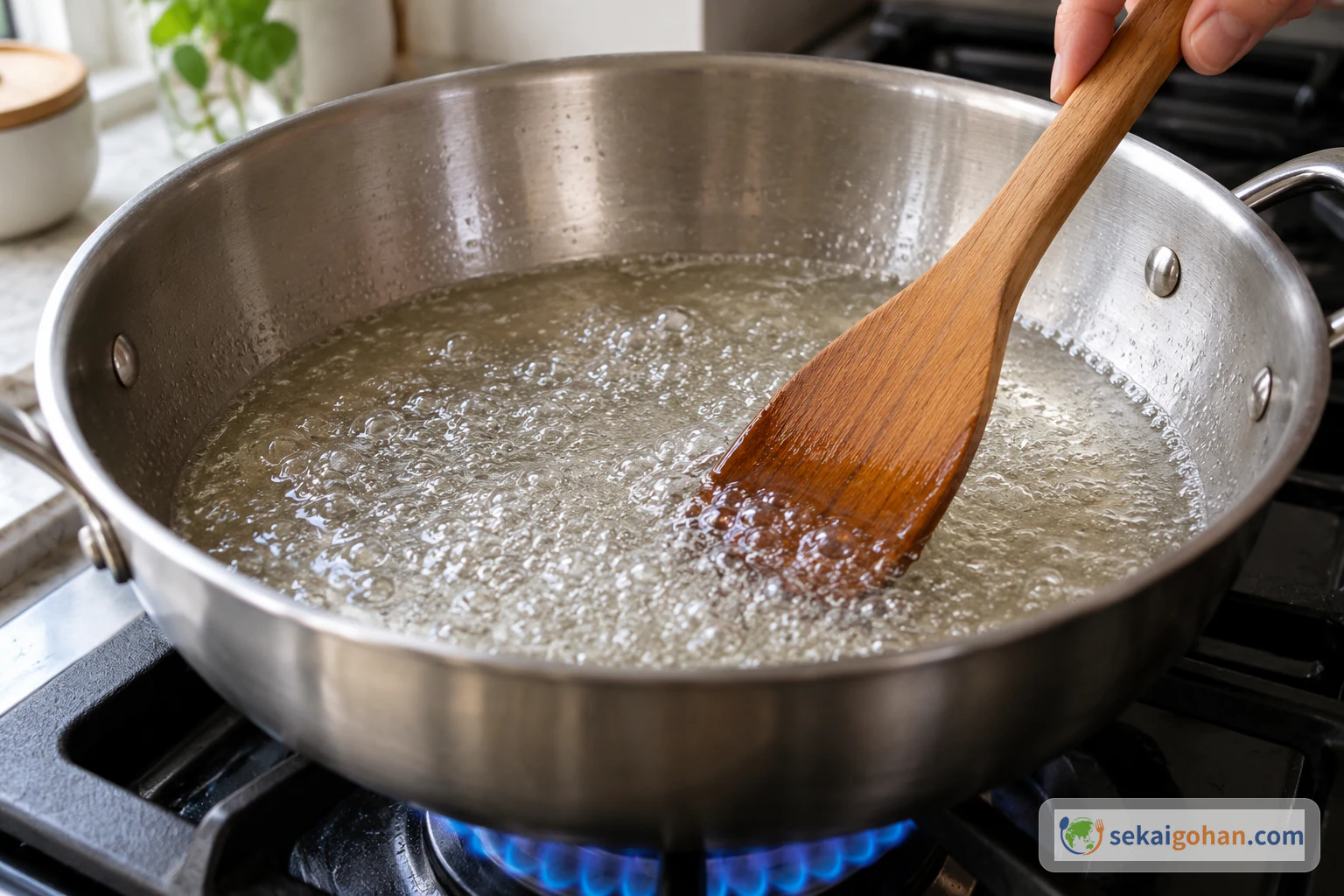
Allow 5 minutes of prep and 15 minutes of cooking (20 minutes in total) for 4 servings. Boil the syrup for 1–2 minutes and cook the paneer for 5 minutes. Judge the reduction and drying stages by eye.
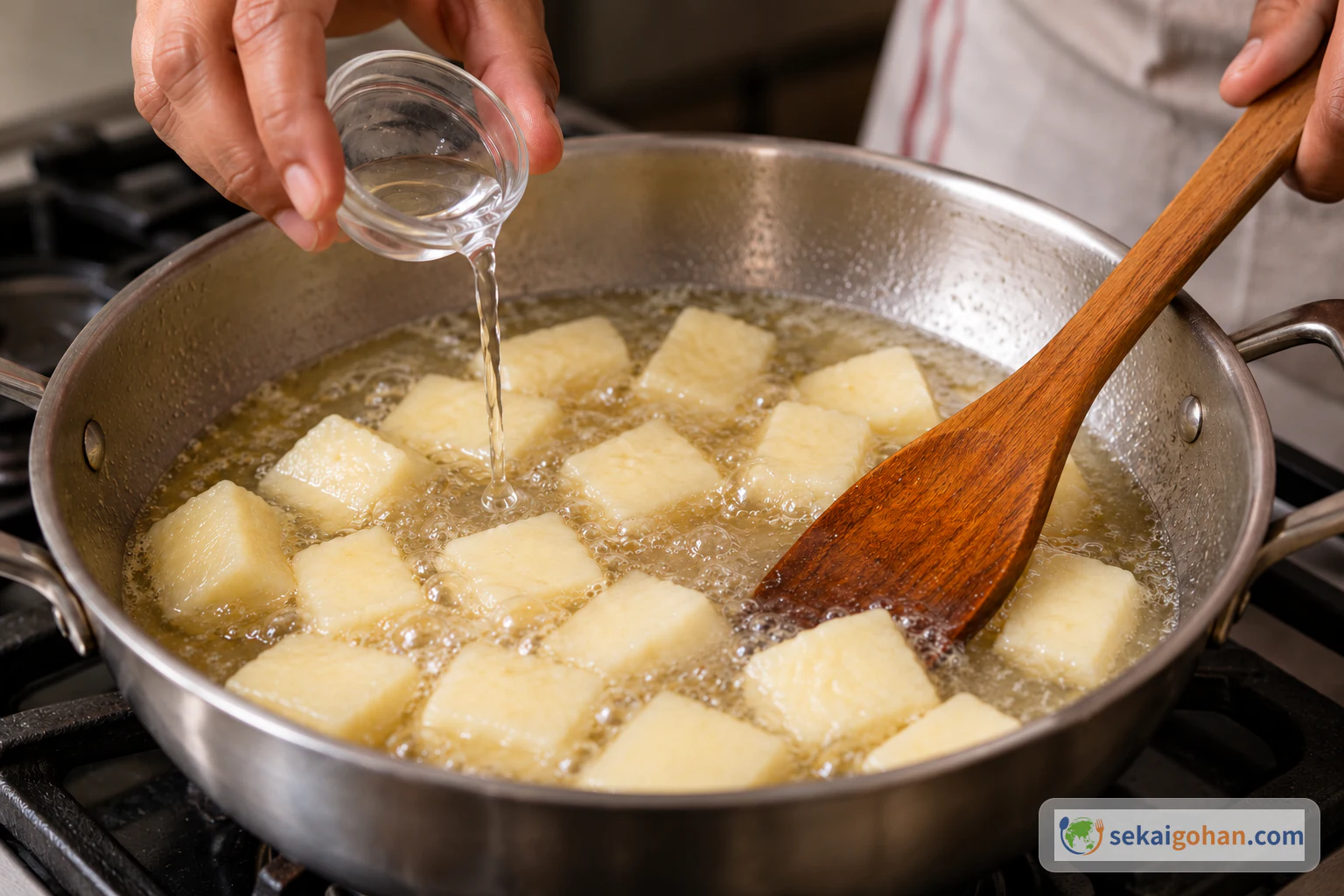
Add the rose water right after the 5-minute paneer stage, before the final reduction.
When It Doesn't Look Right
| What you see | What to look at | What to do |
|---|---|---|
| Clear syrup still pools around the cubes at step 8 | The moisture has not cooked off yet | Stay on medium heat and keep stirring until the syrup turns thick and white. Don't move to step 9 while it is still clear |
| The coat is still sticky or glossy after the pan comes off the heat | The drying stage isn't finished | Keep stirring on the trivet until the syrup dries into a matte coat on every cube |
| Some cubes are coated more thickly or cooked differently from others | Mixed cube sizes | Next time, cut the paneer into pieces of similar size |
| The paneer seems firm and tight rather than soft | The type of paneer | The author advises against hard, refrigerated, packaged paneer. Look for fresh or soft sweet-shop paneer next time |
| The result looks like cheese soaking in syrup | The coat never formed | That wet, syrup-soaked finish belongs to sweets like rasgulla. Chhena Mudki ends with a dry sugar coat |
Keeping Leftovers
The home recipe gives no storage guidance. The dairy-technology process description cools the coated cubes and then stores them at 4–6 °C, but it gives no keeping period. So cool the cubes, then keep them chilled, in line with that description. This article does not suggest how long they keep, because none of the sources say.
Other Written Forms of the Sweet
These are not options for the recipe above. They show how far descriptions of Chhena Mudki and Chhena Murki range.
- The Gazetteer's description: roasted cottage cheese with sugar, ghee and rice powder, recorded among the cakes made for Bhadrak's seafarers and traders. No method or proportions are given.
- The course text's description: cheese in round, cube, cuboid or other shapes, combined with a thick milk-and-sugar preparation. It also mentions other flavors and spices.
- The dairy-technology descriptions: chhana or paneer cubes coated in crystallized sugar, with flavor, color or nut flakes listed as later additions. Kewra is named as one such flavor.
The recipe in this article stays with Rumki Paul's five ingredients and dry white finish.
Frequently Asked Questions
The one thing to judge is the finish: each cube should carry a dry, white, crystalline coat, with no syrup left on the plate.
Is this the traditional Bhadrak recipe?
No. It is a Bengali home recipe for Chena Murki by Rumki Paul. Bhadrak's district administration names Chena Mudki as a local specialty. The Gazetteer passage describes a roasted cheese sweet with ghee and rice powder, and the course text describes cheese pieces in a thick sugar preparation from coastal Bhadrak. This recipe belongs with the sugar-coated cubes and does not claim to reproduce any official Bhadrak formula.
Can I use homemade chhena instead of paneer?
This recipe is written for paneer. Chhena is drained without pressing and is softer, while paneer is pressed to remove extra water. The recipe gives no amounts or method for chhena, so it can't tell you how much chhena would replace 225 g of paneer, or how it would behave in the syrup.
Why does the rose water go in before the syrup turns white?
That is the order on the numbered recipe card, which this article follows. The author's written explanation adds the rose water later, after the syrup has turned thick and white. The two orders differ; this article uses the card's order consistently rather than mixing them.
Do I need a thermometer for the syrup?
No. The recipe uses a one-thread consistency after 1–2 minutes of boiling on high, and gives no temperature. Watch a small cooled sample fall from a spoon, and never touch the syrup.
How is this different from rasgulla?
Rasgulla is made from soft, round chhena balls that are cooked in syrup and stay soaked with it. Chhena Mudki is made from small cubes, and the syrup is cooked down and stirred off the heat until it dries into a sugar coat.
Sources
- Rumki Paul, "Chena murki recipe | Chenna murki | Paneer murki | Bengali sweet recipe," Rumki's Golden Spoon. The selected recipe: 225 g paneer, ¾ cup sugar, ⅓ cup water, 1 tsp rose water, ¼ tsp cardamom powder, with a 250 ml cup; prep 5 minutes, cooking 15 minutes, total 20 minutes, 4 servings; the numbered method; the preference for fresh or soft paneer; and the note that paneer murki is also sold in Odisha and other regions. The author's prose and numbered card differ on when to add rose water; this article follows the numbered card. https://rumkisgoldenspoon.com/chena-murki-recipe/
- Uttarakhand Open University, "Regional Cuisines of India – II (BHM-602AT)," Chhenamurki section. Describes Chhena Murki as originating in coastal Bhadrak and now available across Odisha, with cheese shapes combined with a thick sugar preparation. Its own recipe card is not used here. https://uou.ac.in/sites/default/files/slm/BHM-602AT.pdf
- AgriMoon.com, "Traditional Dairy Products," section 20.3 Chhana-murki. Describes sugar-coated small cubes, cooking in syrup, then stirring off the heat until the sugar crystallizes and coats the cubes, then cooling and storage at 4–6 °C with no shelf-life period given. https://www.agrimoon.com/wp-content/uploads/TRADITIONAL-DAIRY-PRODUCTS-1.0.pdf
- INFLIBNET Centre / e-PG Pathshala, "Traditional Indian dairy products – Chhana based sweetmeats," Technology of Milk and Milk Products. Defines chhana as acid- and heat-coagulated milk hung in muslin to drain without pressure; defines chhana-murki as small sugar-coated cubes with a firm, close-knit texture; and distinguishes rasgulla as chhana balls soaked in syrup. https://ebooks.inflibnet.ac.in/ftp04/chapter/traditional-indian-dairy-products-chhana-based-sweetmeats/
- Directorate of Dairy Development, Government of Assam, "Processor, Trader & Consumers' Corner: Manufacture of Traditional Dairy Products." Describes paneer as acid-coagulated hot milk whose curd is drained in muslin and pressed to remove excess water. https://dairy.assam.gov.in/portlets/processor-trader-consumers%E2%80%99-corner
- Bhadrak District Administration, Government of Odisha, "Culture & Heritage | Bhadrak." Lists Palua Ladu and Chena Mudki among the sweets Bhadrak is famous for. https://bhadrak.odisha.gov.in/en/tourism/culture-Heritage
- Bhadrak District Administration, Government of Odisha, Bhadrak District Gazetteer. Cited only for a short indexed passage that places chhena mudki among cakes made for Bhadrak's seafarers and traders and describes it as roasted cottage cheese with sugar, ghee and rice powder. No method, proportions or dates are drawn from it. https://bhadrak.odisha.gov.in/sites/default/files/2023-06/2020120281%20%281%29.pdf