Gushtaba: The Meatballs That Close the Wazwan's Main Courses
Keep the meatballs small and even. Simmer them with the tied spice bag, then remove the bag before adding the yogurt. Check that the center of each meatball is cooked through. The time alone does not prove that.
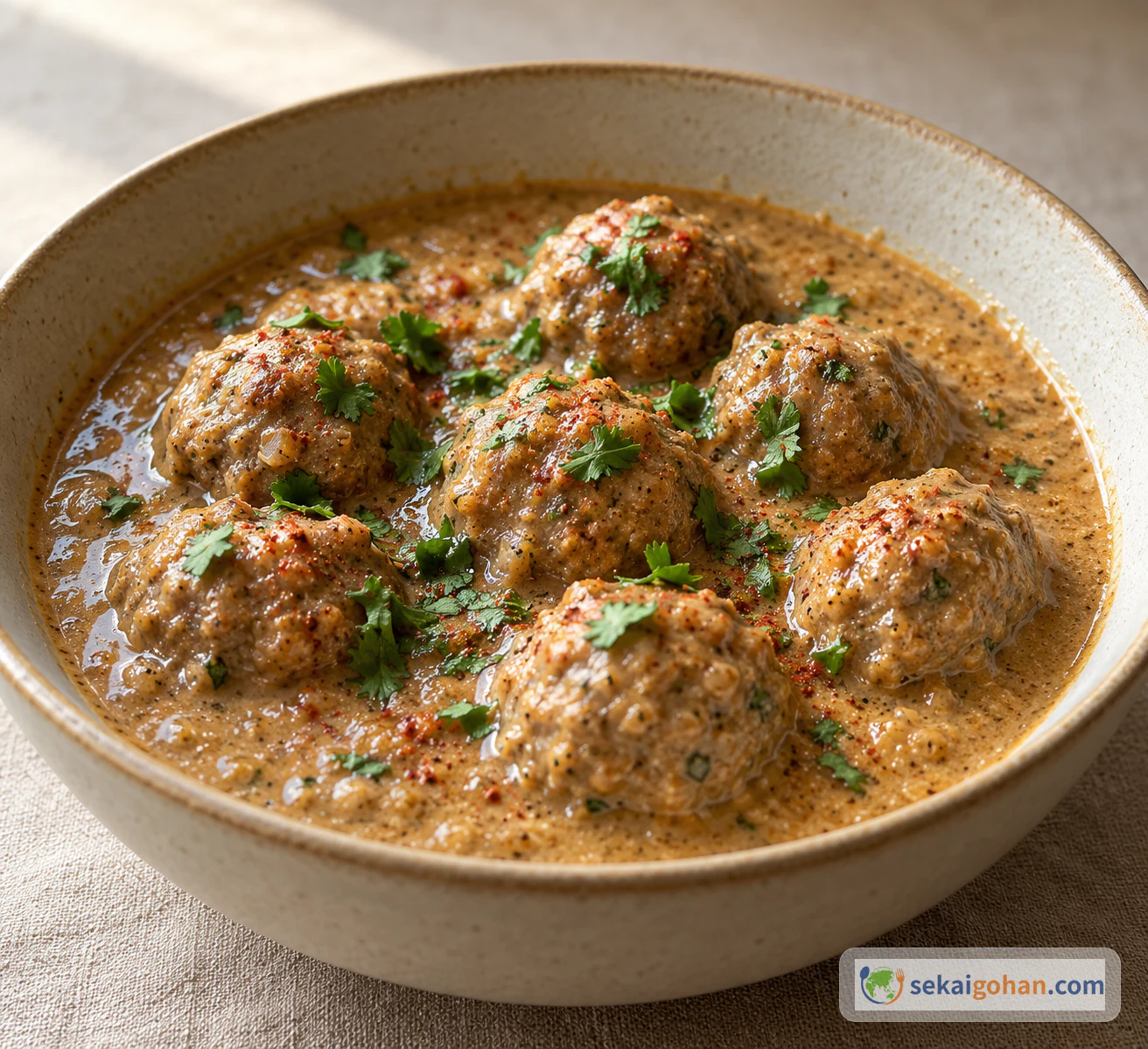
In Kashmir, the Wazwan is a multi-course meal and a point of cultural pride. According to the District Administration of Budgam, the main courses usually end with gushtaba, meatballs cooked in a spicy yogurt gravy. After that, the meal moves on to dessert. It's the dish that brings the savory part of the feast to a close.
Sekai Gohan has not kitchen-tested this recipe.
The spelling varies. FoodFood writes it Goshtaba, the Budgam district page writes Gushtaba, and you'll also see Gushtab. These are all names for the same dish.
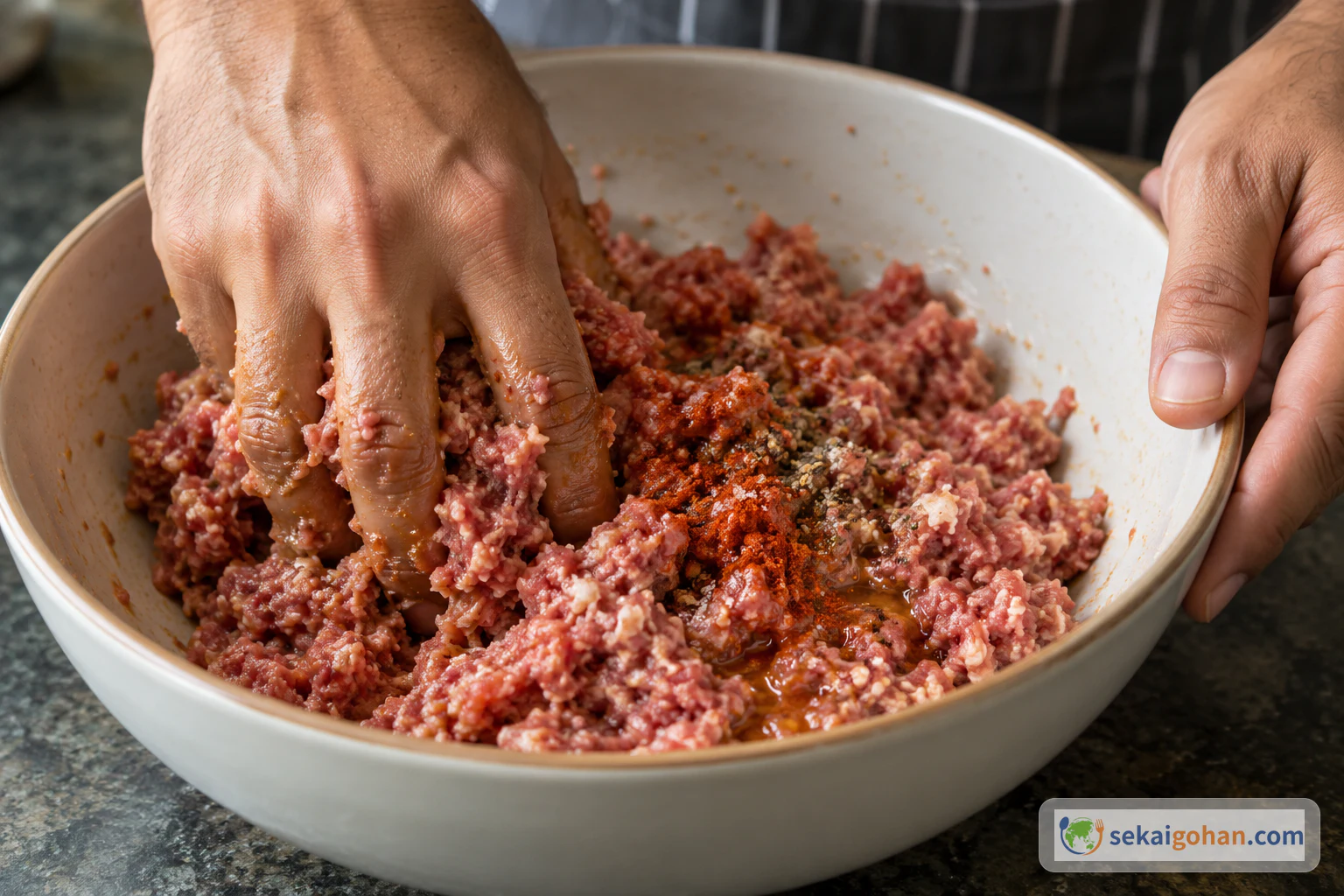
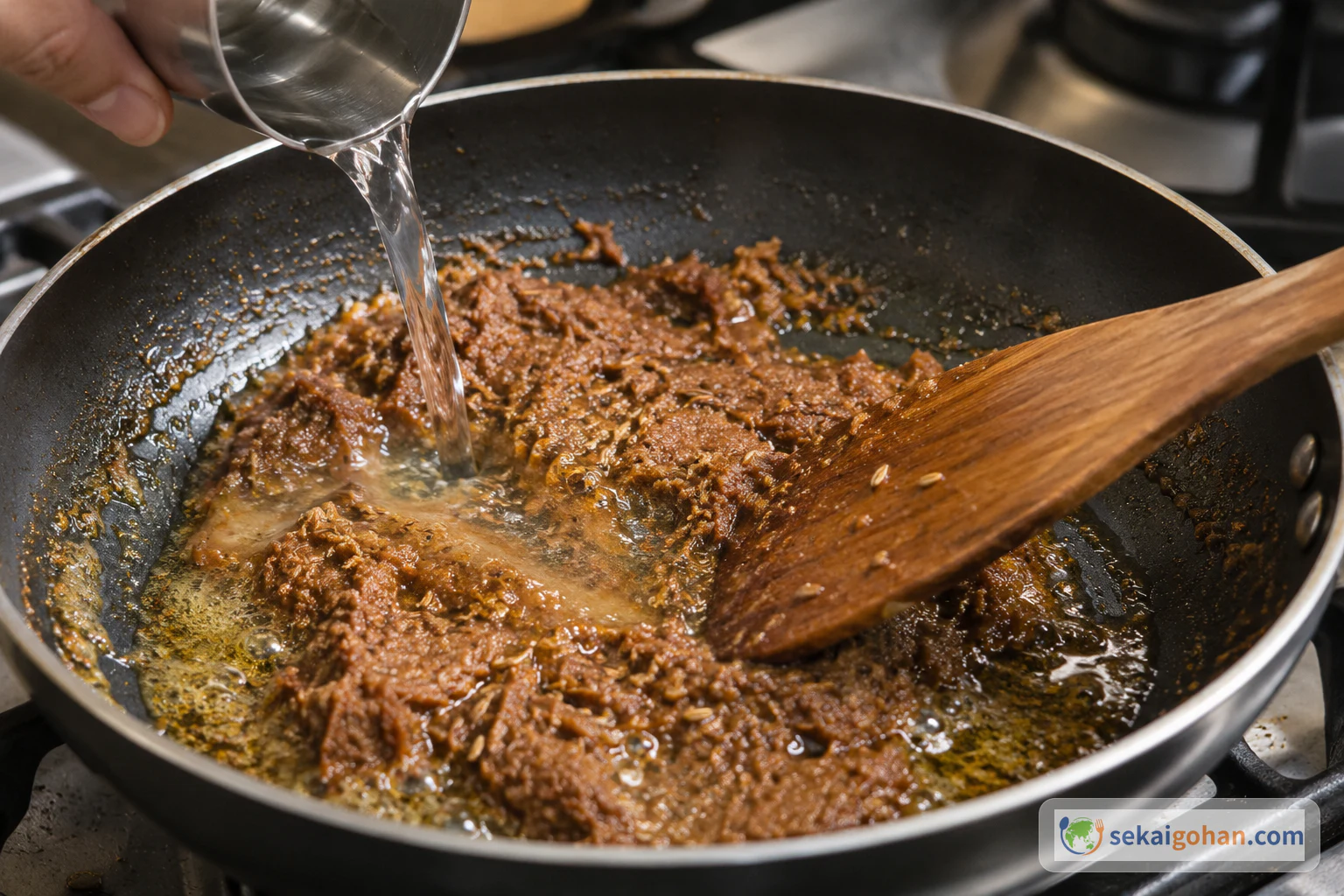
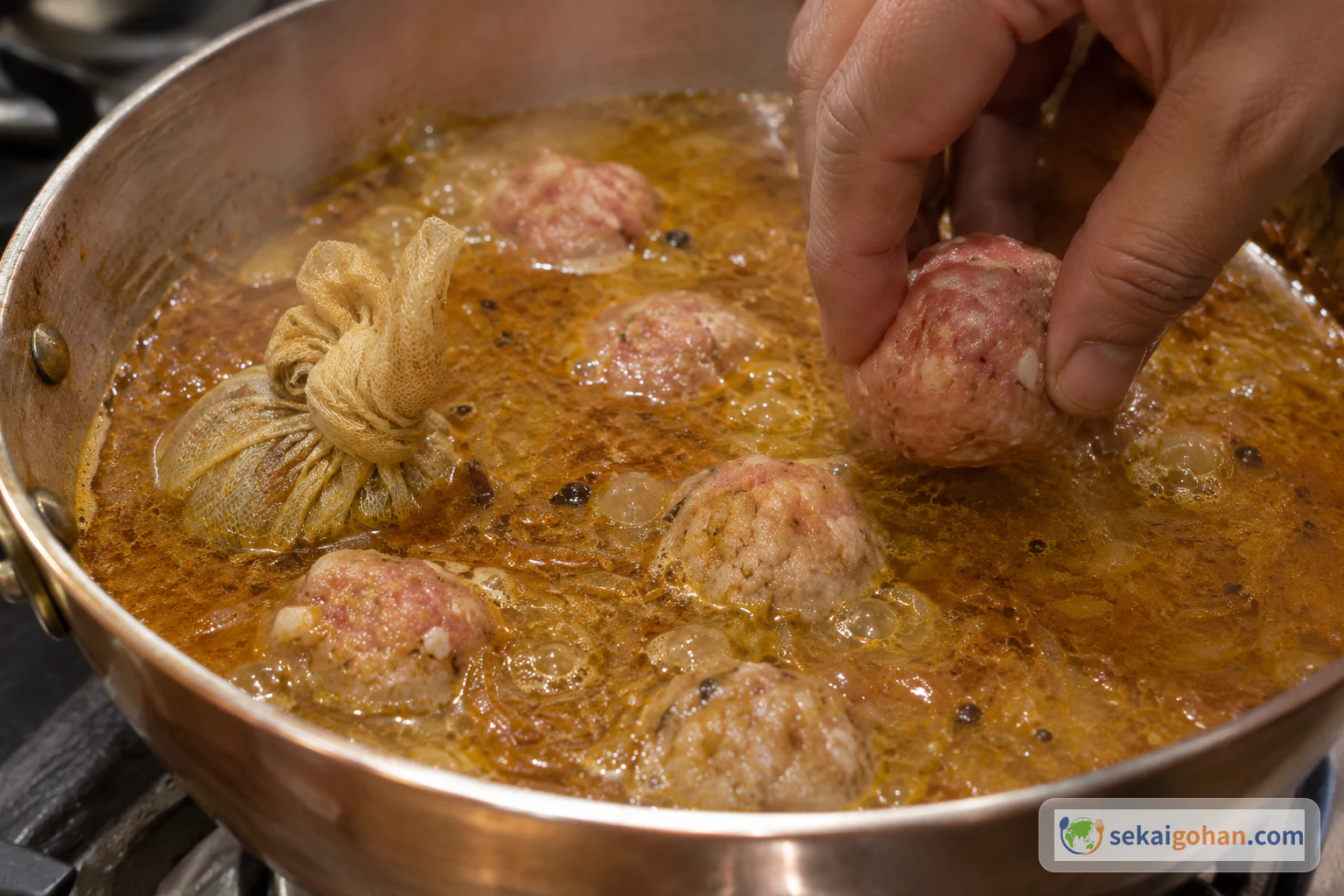
This article follows one specific written recipe, the Goshtaba by Chef Shantanu Gupte from India Unlimited published on FoodFood. It's a quick home version. You mix 250 g of mutton mince (keema) with an egg white, roll it into small balls and simmer them in a gravy of ghee, browned onion paste and cumin. A muslin bag of ground spices sits in the gravy while the meatballs cook, and a little whisked yogurt goes in at the end. This is one chef's version, not a standard formula for every Wazwan kitchen or the only traditional form of the dish.
FoodFood's recipe card lists 15 minutes of prep and 20 minutes of cooking. The method separately gives 10–15 minutes on low heat for simmering the meatballs. These are two separate figures from the recipe, and neither one replaces checking the meatballs' internal temperature. The recipe doesn't give a number of servings, a meatball count or a meatball size, so this article doesn't either.
For more dishes from the country, see the India recipes page.
Both are Kashmiri meatball dishes served at the Wazwan, but their gravies differ. The Budgam district page describes rista as meatballs in a red gravy made with paprika, saffron and fennel, and gushtaba as meatballs in a yogurt gravy. This recipe's gravy is built on browned onion paste with a small amount of yogurt, so expect a natural tan-to-brown color rather than red.
What Sets This Chef's Version Apart
Many descriptions of gushtaba focus on Wazwan technique. This written version is simpler and starts from mince that is already ground:
- Meat mixture: mutton mince mixed in a bowl with egg white, salt, red chili powder, black cardamom seeds and mustard oil. The method has no pounding step and adds no separate fat.
- Gravy base: ghee, ready-made browned onion paste, cumin seeds and a little water.
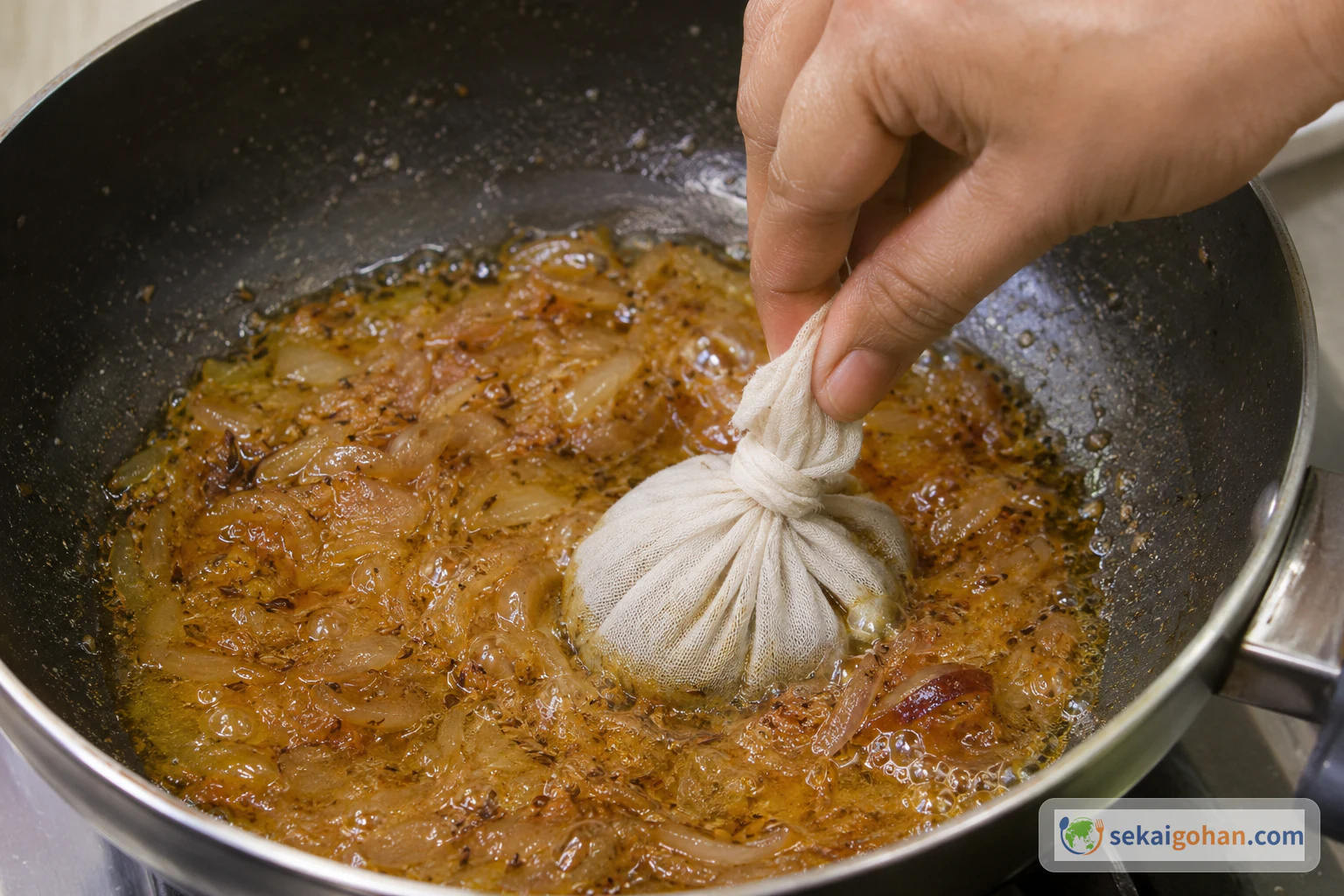
- Spice bag (potli): eight ground or crushed spices tied in muslin and dipped into the gravy.
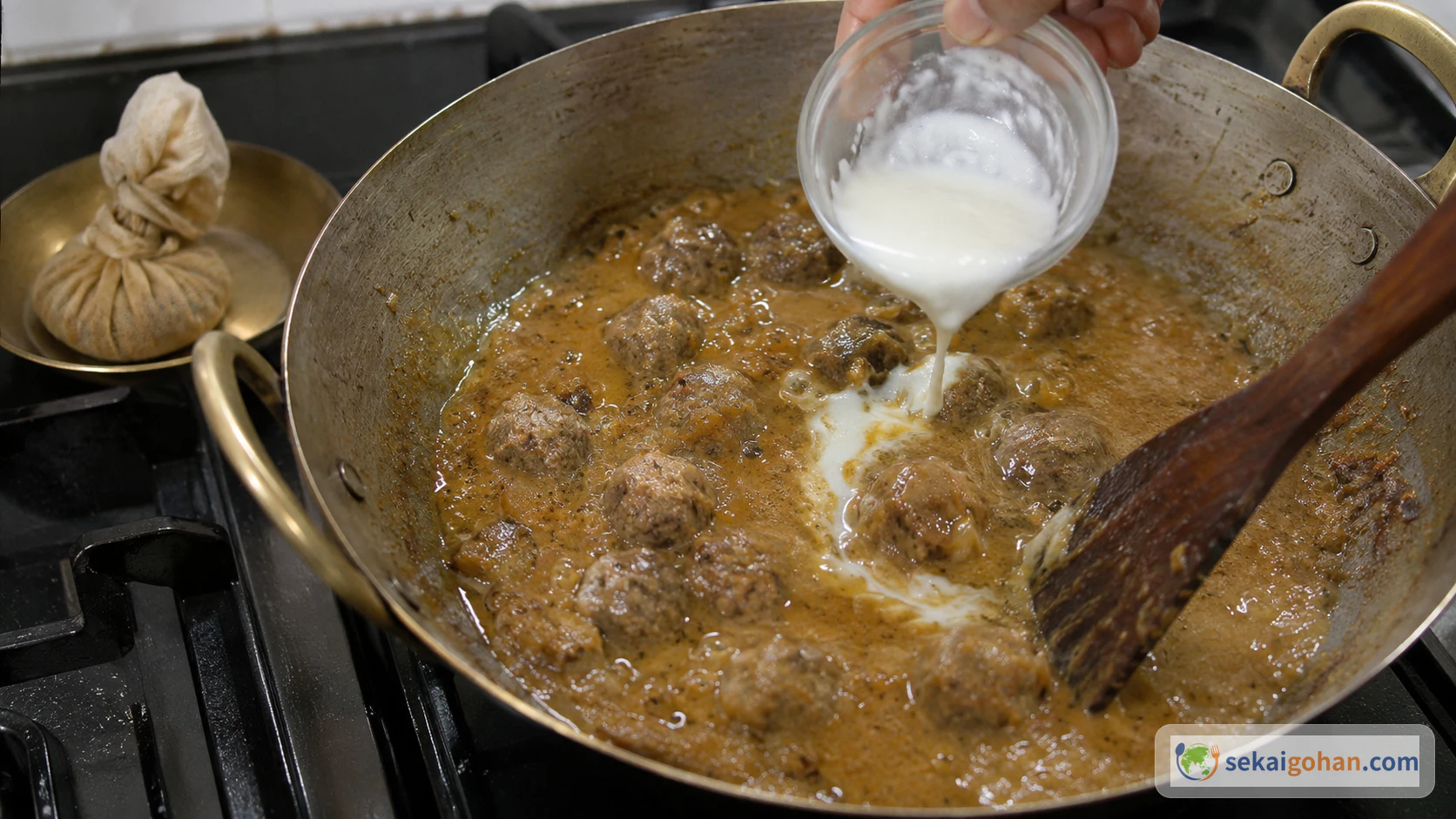
- Finish: after the meatballs simmer, you squeeze out the spice bag, then add salt and whisked yogurt.
Each ingredient goes into a set part of the dish. The egg white goes into the meat, and the yogurt goes into the gravy at the end. Black cardamom appears twice in different forms: the seeds go into the meat, and the powder goes into the spice bag.
Ingredients
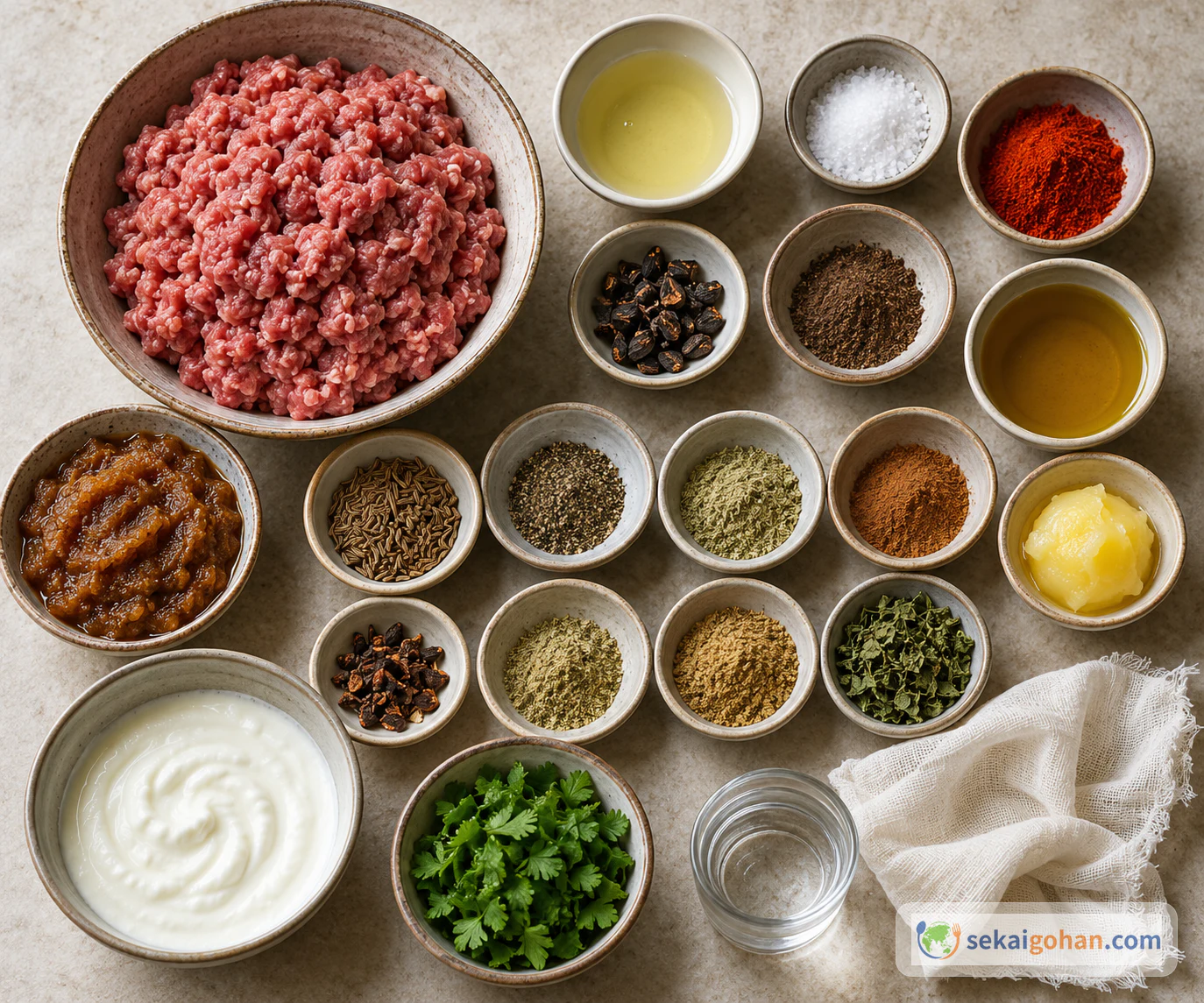
Contains egg (egg white) and milk (ghee and yogurt). Because the meat is ground, check the center of the meatballs with a food thermometer before serving (see step 4).
Equipment
- Mixing bowl
- Non-stick pan
- Muslin cloth or a food-safe spice bag, plus string to tie it
- Food thermometer
Choosing and Substituting
Meat. Choose ground mutton (mutton keema) and check the label to confirm what you are buying. Ground lamb can stand in for mutton. Beef is not a substitute.
Browned onion paste. Use 2 tbsp of ready-made browned onion paste. Raw or boiled onion is different; do not substitute it.
Mustard oil. Use mustard oil labeled for cooking or eating. Rapeseed (canola) oil has a different aroma. You can use it in a pinch, but it won't taste the same.
Spice bag. Use muslin cloth or a food-safe mesh spice bag. Put the same eight spices in the bag and add them at the same point in the method.
Specialty items. Search for black cardamom (seeds and powder), kasuri methi powder, ghee and mustard oil under these names at South Asian grocers.
The 10–15 minute simmer is a cooking guide; it does not by itself confirm that the meatballs are safe to eat. Ground meat should reach 160°F (71°C), measured at the center with a food thermometer. Continue cooking and check again if needed. The color of the meatballs or gravy cannot establish their internal temperature.
Troubleshooting
| What you notice | Why it may happen | What to do |
|---|---|---|
| The center of a meatball hasn't reached 160°F (71°C) after 10–15 minutes | Cooking time alone does not confirm the center temperature | Keep cooking on low heat and check again with the thermometer |
| The gravy is tan, beige or brown rather than red | Browned onion paste and a little yogurt may produce a tan-to-brown gravy | Don't add tomato, paprika or saffron. Rista is a different meatball dish with red gravy |
| The finished dish is too hot | The chili garnish is added on top of the chili in the meat | Keep the 1 tsp in the meat mixture and use less garnish chili, or leave it out |
| The flavor seems flat | Salt may need adjustment after the yogurt goes in | Taste after the yogurt goes in and add salt a little at a time |
| You can't find browned onion paste and only have raw onions | Raw or boiled onion is a different ingredient | Use prepared browned onion paste; do not substitute raw or boiled onion |
| Seeds and powder got mixed up | Black cardamom appears in two forms | Seeds go into the meat (step 1). Powder goes into the spice bag (step 3) |
Variations That Keep the Base Recipe Intact
These adjustments change the heat, seasoning or serving, but not the base recipe.
- Heat level. Keep the 1 tsp red chili powder in the meat mixture. Leave out the garnish sprinkle, use less, or add more to taste.
- Salt. Season the meat as directed, then adjust once more by tasting after the yogurt is stirred in.
- Spice bag. A food-safe mesh spice bag can replace the muslin, as long as the eight spices and their timing stay the same.
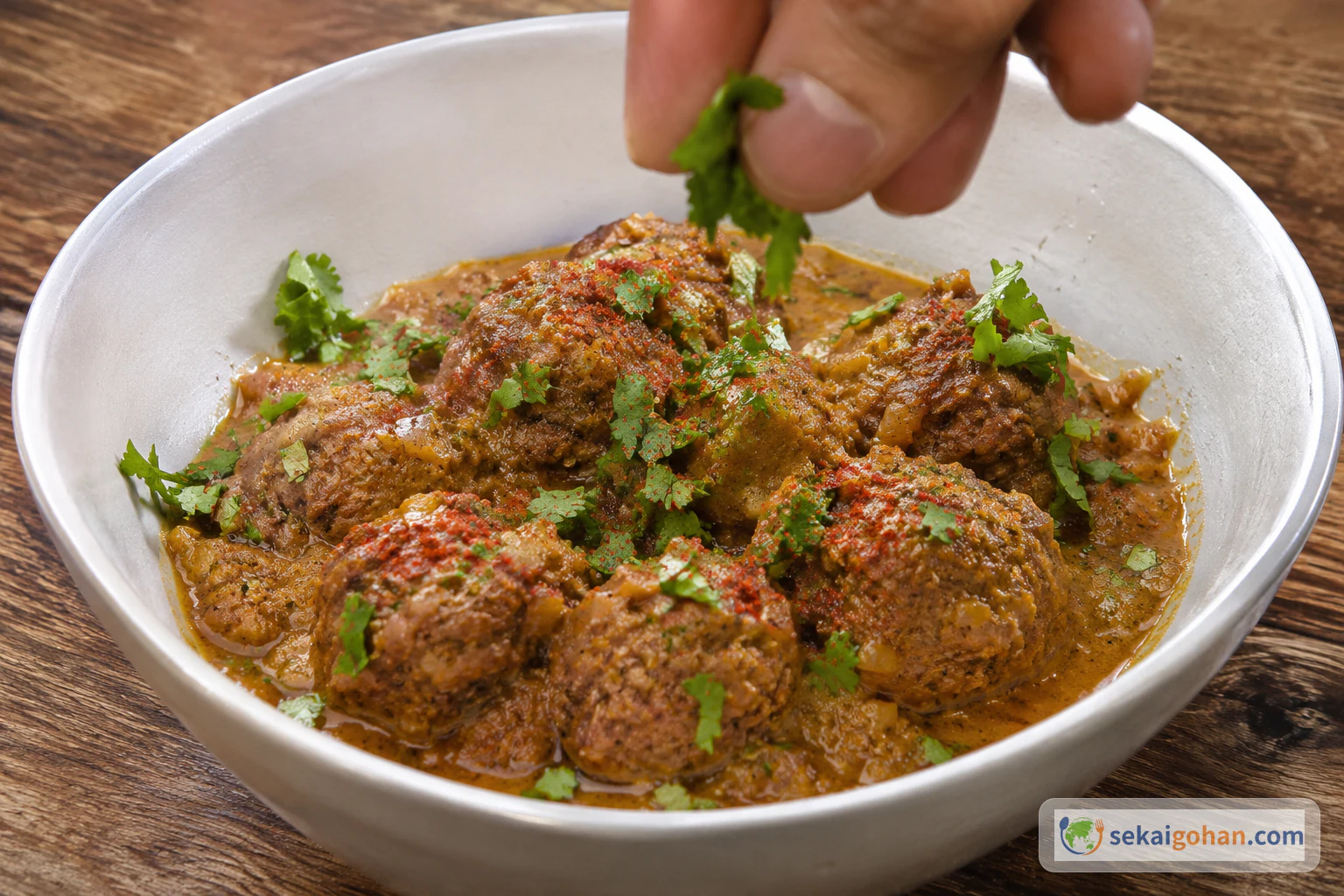
- Serving. Serve it in a single bowl, or set it beside plain rice to suggest the Wazwan table (see below). This changes only the presentation.
Keep the egg white in the meat mixture, use no added meat fat, mix the mince rather than pounding it, keep the stated meat and yogurt amounts, and use prepared browned onion paste.
On the Wazwan Table: Where Gushtaba Belongs
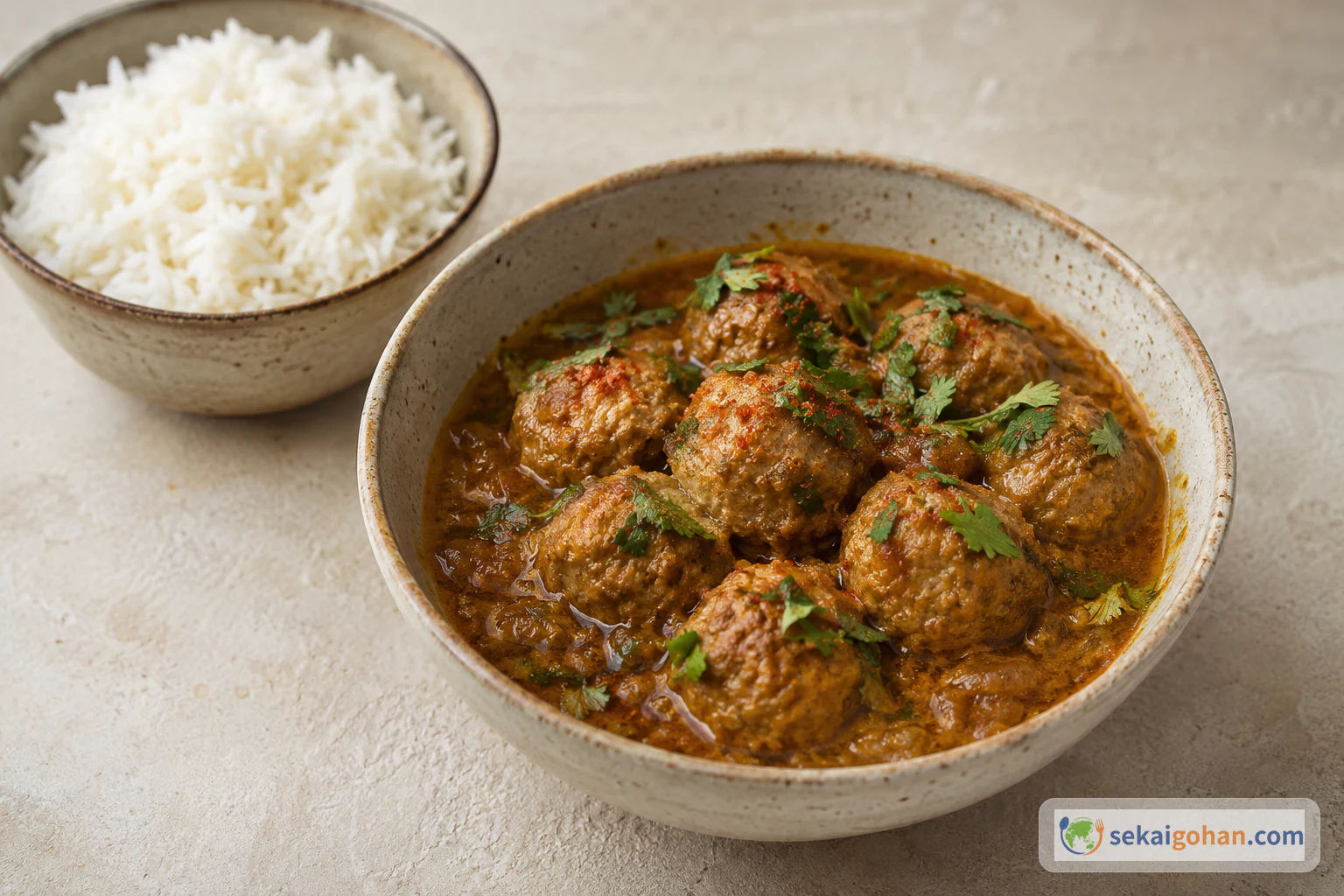
The District Administration of Budgam describes the Wazwan as a multi-course meal and a source of pride in Kashmiri cuisine. On that page, gushtaba is the meatball dish in spicy yogurt gravy that usually closes the main courses before dessert. Rista is the other meatball dish, cooked in a red gravy with paprika, saffron and fennel. The gravy distinguishes the two dishes.
The same page describes rice on a large shared platter as part of the Wazwan meal. Chef Shantanu Gupte's written recipe doesn't include rice in its ingredients or method, so rice here is only a serving suggestion. A small bowl of plain steamed rice next to the meatballs is a simple way to bring the dish closer to that table.
Frequently Asked Questions
Are gushtaba and rista the same dish?
No. Both are meatball dishes served at the Wazwan. The Budgam district page describes rista as meatballs in a red paprika, saffron and fennel gravy, and gushtaba as meatballs in a spicy yogurt gravy.
What meat should I use?
FoodFood's recipe calls for mutton mince (mutton keema) and doesn't name the animal or its age. Use ground mutton or lamb and check the label. Beef is not part of this recipe.
Do I need to pound the meat with a stone or mallet?
Not for this version. Chef Shantanu Gupte's method starts with ready-ground keema, mixes it in a bowl and rolls it into small balls. There is no pounding step.
When do the egg white and the yogurt go in?
The egg white goes into the meat mixture in step 1. The yogurt, 2 tbsp whisked, goes into the gravy in step 5, after the meatballs have simmered and you've taken out and squeezed the spice bag.
How many servings does this make?
The recipe doesn't give a number of servings, a meatball count or a meatball size, so this article doesn't give them either.
Is 10–15 minutes of simmering enough to make it safe?
The simmering time alone doesn't guarantee it. Check the center of the meatballs with a food thermometer. FoodSafety.gov lists 160°F (71°C) for ground meat. If they haven't reached it, keep cooking and check again.
How should I store leftovers?
The recipe gives no storage or reheating guidance, so this article doesn't add any.
Sources
- FoodFood, "Goshtaba," recipe credited to Chef Shantanu Gupte from India Unlimited. The basis for every ingredient, amount and step in this article: the Kashmiri cuisine label, the 15-minute prep and 20-minute cook times on the recipe card, the 10–15 minute low-heat meatball simmer, and the use of black cardamom seeds in the meat and black cardamom powder in the spice bag. https://www.foodfood.com/recipe/goshtaba/
- District Administration Budgam, Government of Jammu & Kashmir, "Wazwan." Food-culture context: the Wazwan as a multi-course Kashmiri meal, gushtaba as meatballs in spicy yogurt gravy that usually end the main courses before dessert, rista as meatballs in a red paprika, saffron and fennel gravy, and rice served on a large shared platter. https://budgam.nic.in/culinary-delight/wazwan/
- FoodSafety.gov, U.S. Department of Health and Human Services, "Cook to a Safe Minimum Internal Temperature." General public guidance listing 160°F (71°C) for ground meat and advising the use of a food thermometer. It is not part of the chef's recipe. https://www.foodsafety.gov//food-safety-charts//safe-minimum-internal-temperatures