Mas Huni: Lime-Softened Onion, Grated Coconut and Flaked Tuna on Warm Bread
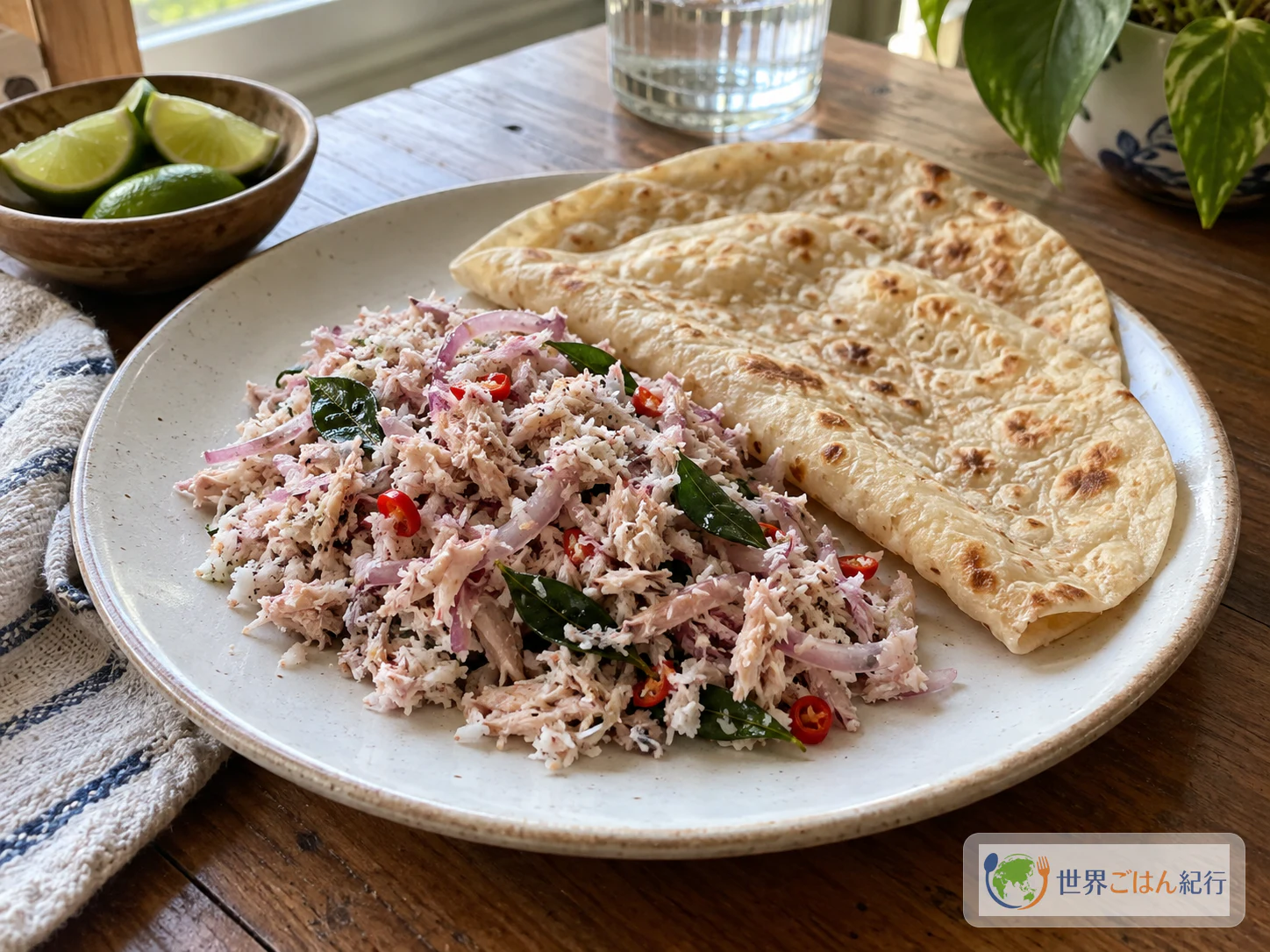
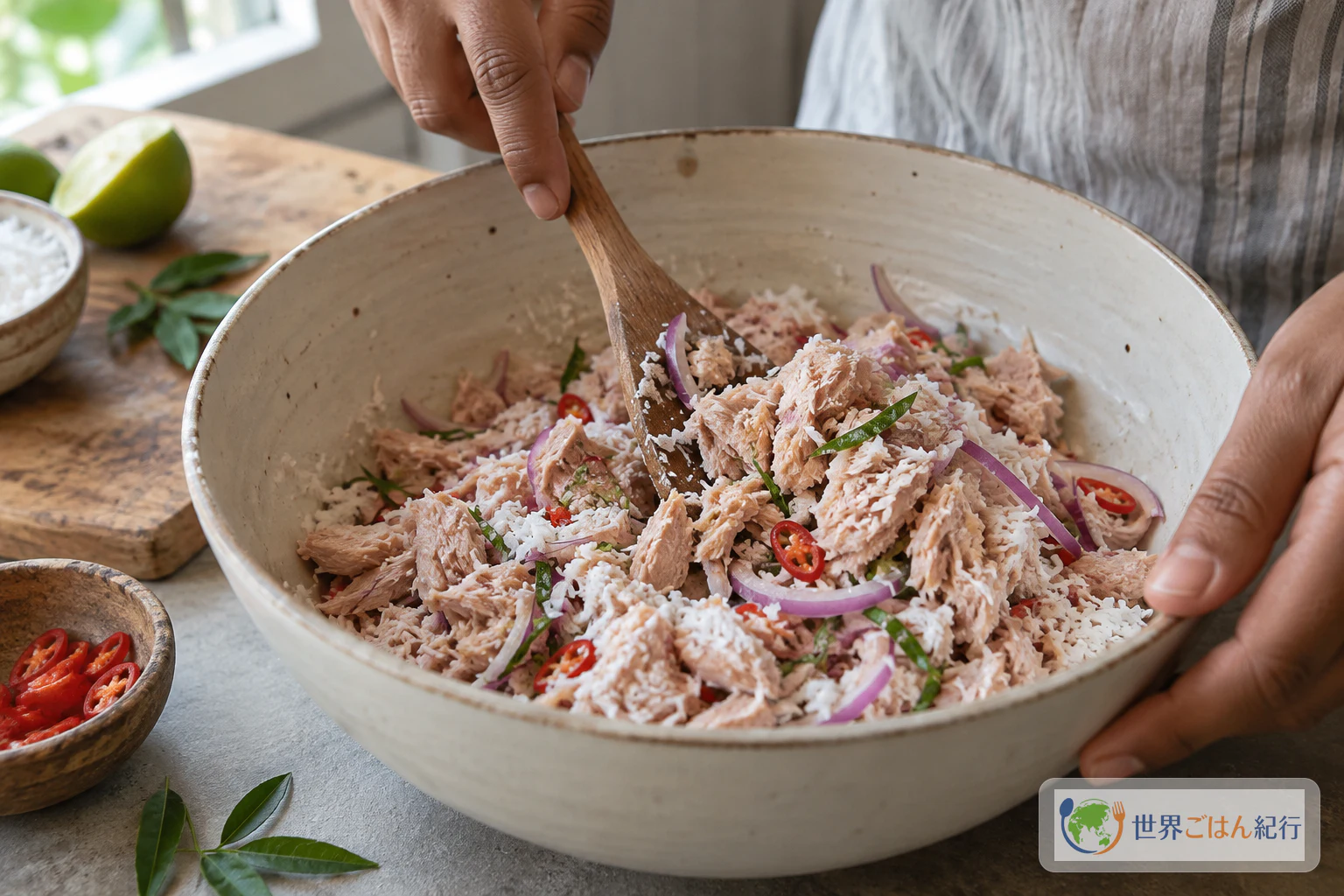
Keep the tuna in visible flakes, the coconut in distinct shreds, and the onion with a little bite. Mas huni is a coarse mix, not a paste, and it is eaten cool with bread that is still warm.
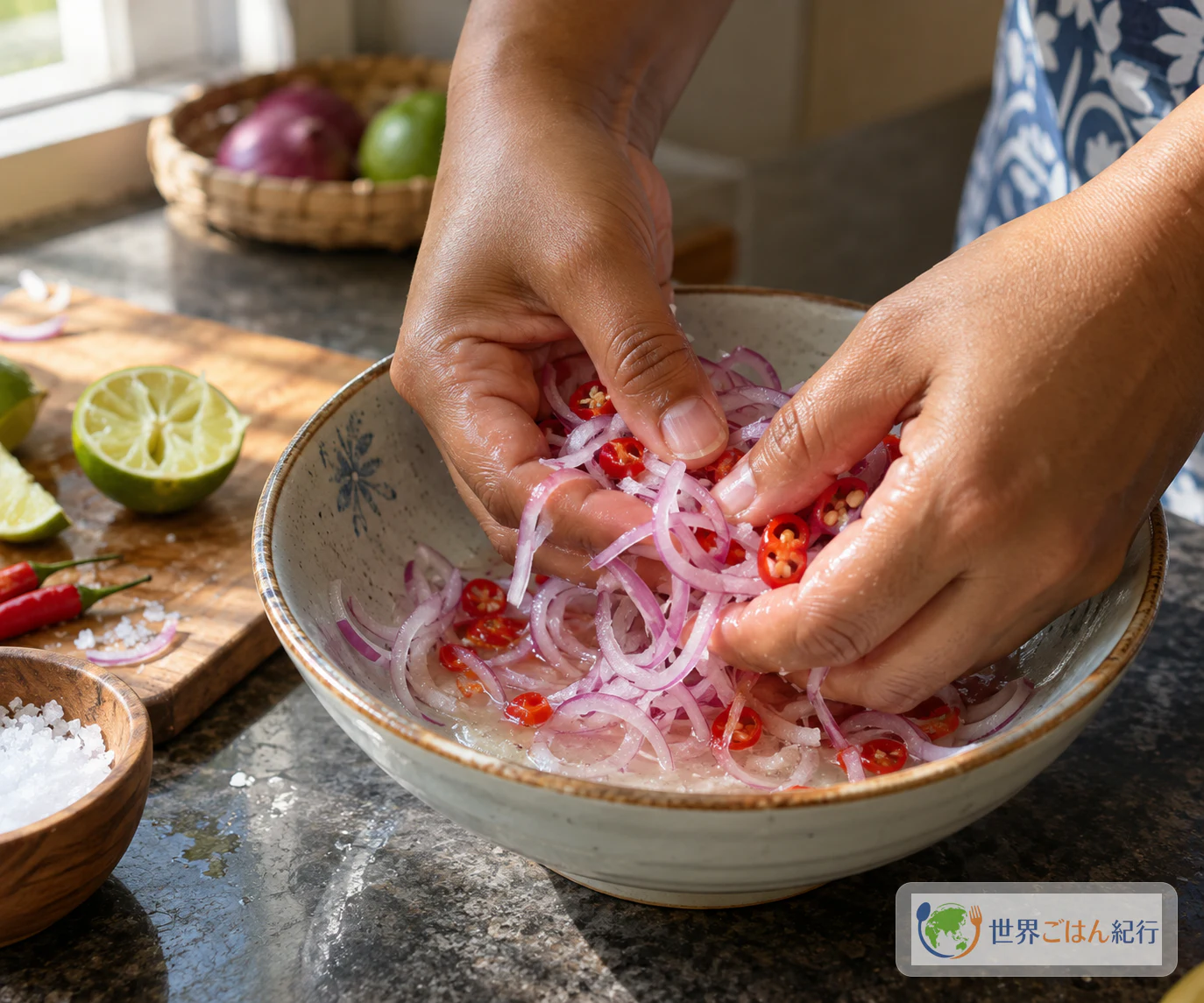
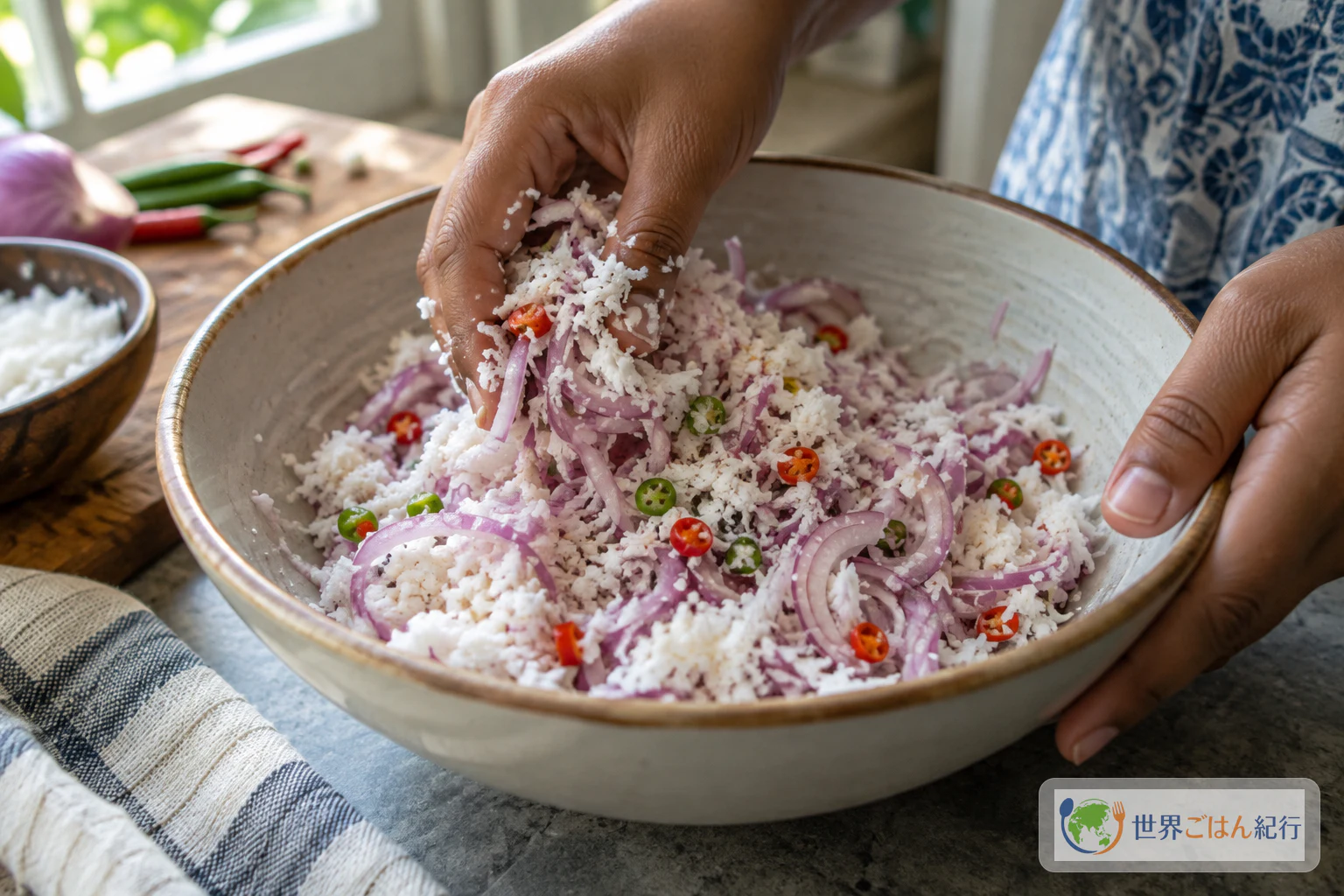
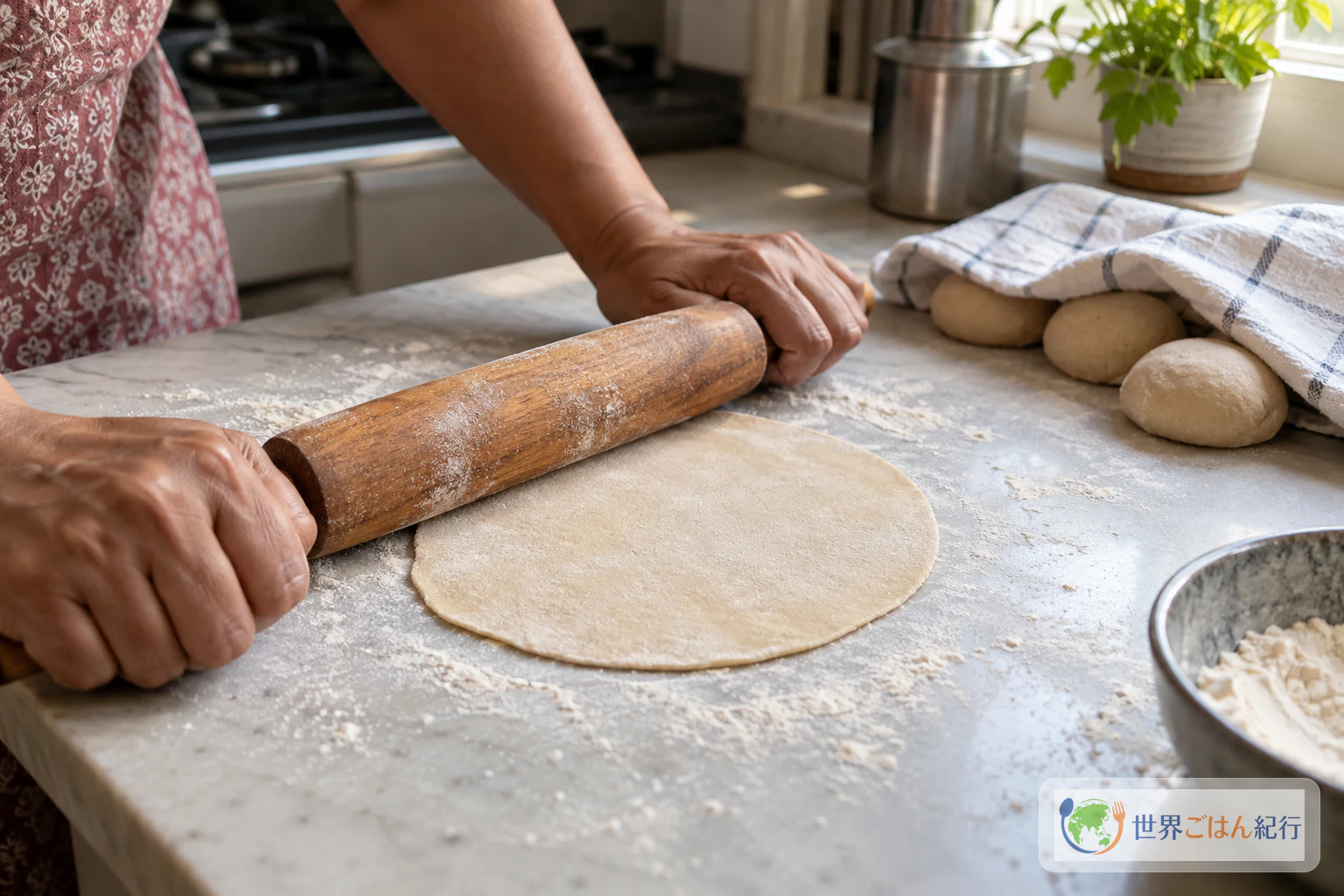
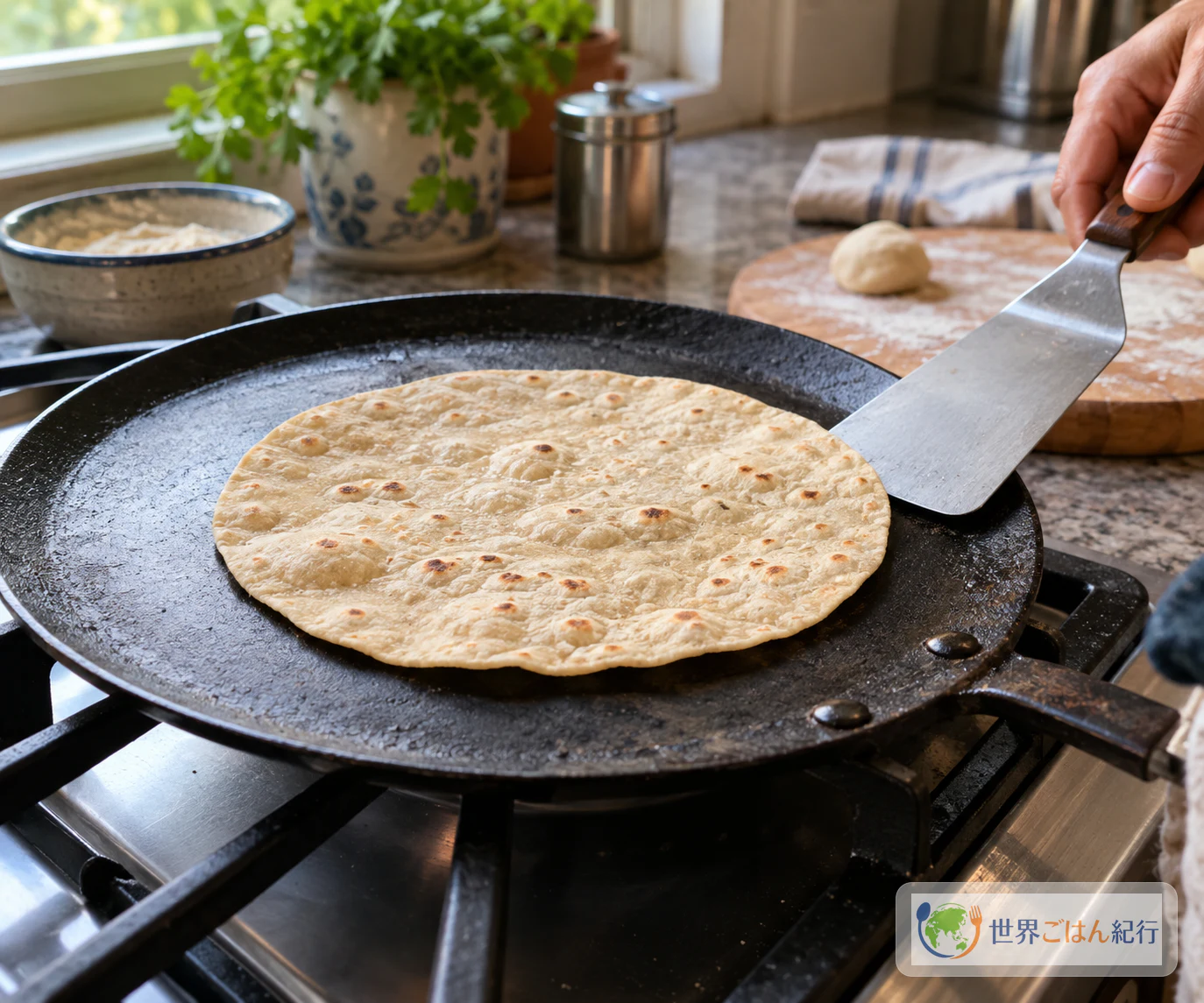
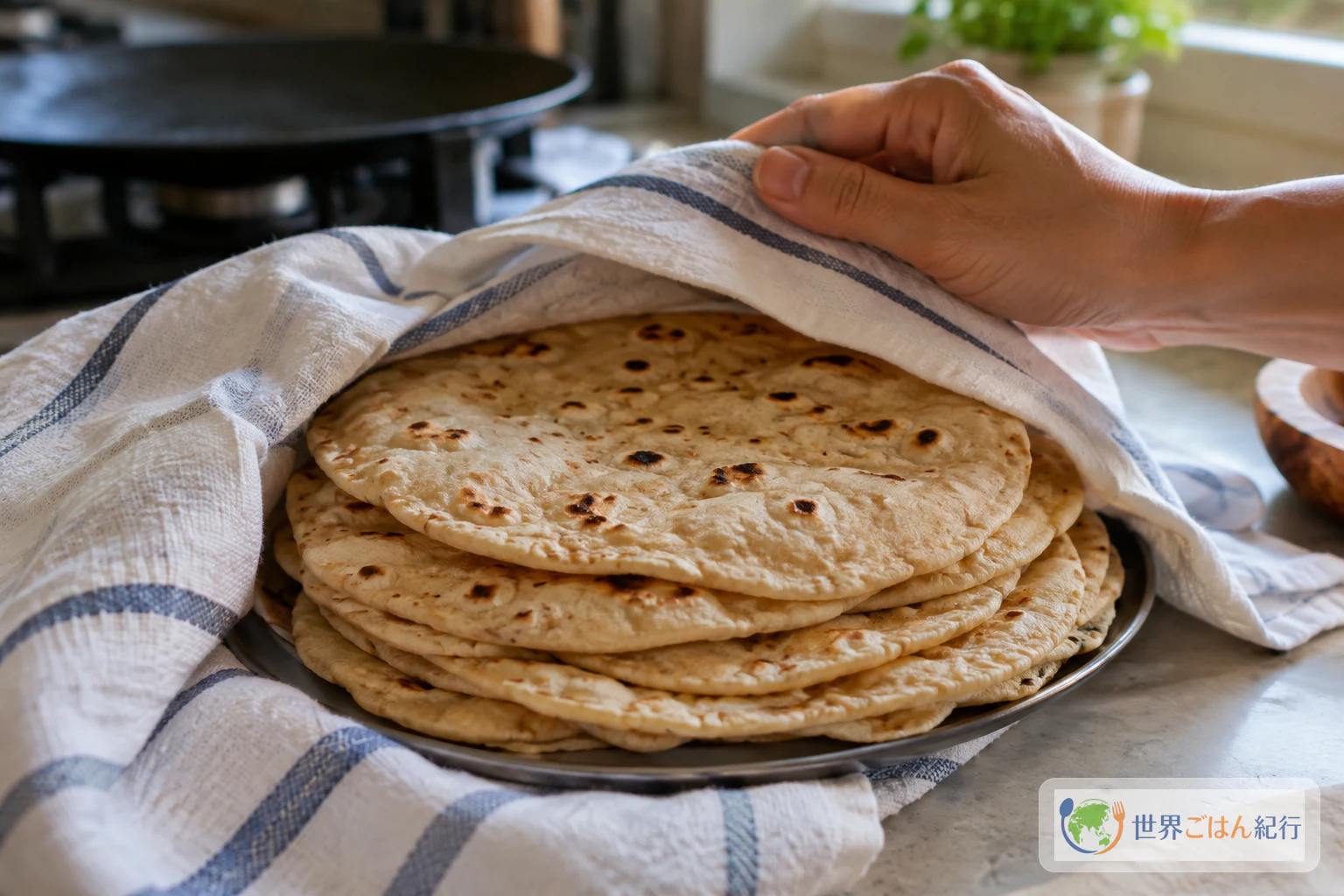
Thin red onion and sliced chilli are squeezed by hand with lime juice and salt until the onion just starts to soften. Freshly grated coconut goes in next, then drained, flaked tuna, folded in gently so the fish stays in pieces. The bowl is kept cool until breakfast, and it is eaten with roshi, a soft, thin wheat flatbread cooked in a flat pan.
This recipe follows the Maldives Chefs' Forum version, "Mashuni with Homemade Roshi," for 4 servings: a no-cook mas huni made with canned tuna, and eight roshi made from scratch. The source lists 25 minutes of prep and 20 minutes of cooking. You will also find the dish spelled two ways, Mas Huni and Mashuni; more on that below.
A Maldivian Breakfast of Tuna and Coconut
Mas huni brings together tuna, grated coconut, onion, chilli and citrus, and is eaten with roshi. The World Tourism Organization's 2021 overview of gastronomy in the Maldives names fish, coconut and rice as key elements of traditional Maldivian cuisine and describes tuna as the main fish staple. Its Mashuni section presents the dish as a breakfast of boiled, canned or smoked tuna with shredded coconut, sliced onion, lime and chillies, and recommends serving it with roshi and strong black tea. That describes a national overview, not proof that every household eats it the same way.
The spelling varies between sources. Visit Maldives writes Mas Huni, while the Maldives Chefs' Forum and the UNWTO brochure write Mashuni. These are spellings of the same dish, so it helps to search with both. Because the sources mention boiled, canned and smoked tuna, this recipe uses canned tuna, one of the two options the Chefs' Forum recipe gives ("canned or cooked tuna, drained and flaked").
Sekai Gohan also has a recipe for mas kurolhi, another Maldivian dish that uses close ingredients such as fish and coconut. Mas kurolhi is served alongside baiypen, a rice porridge; mas huni is eaten with roshi. Similar ingredients do not make them the same dish.
Ingredients for Mas Huni and Roshi (Serves 4)
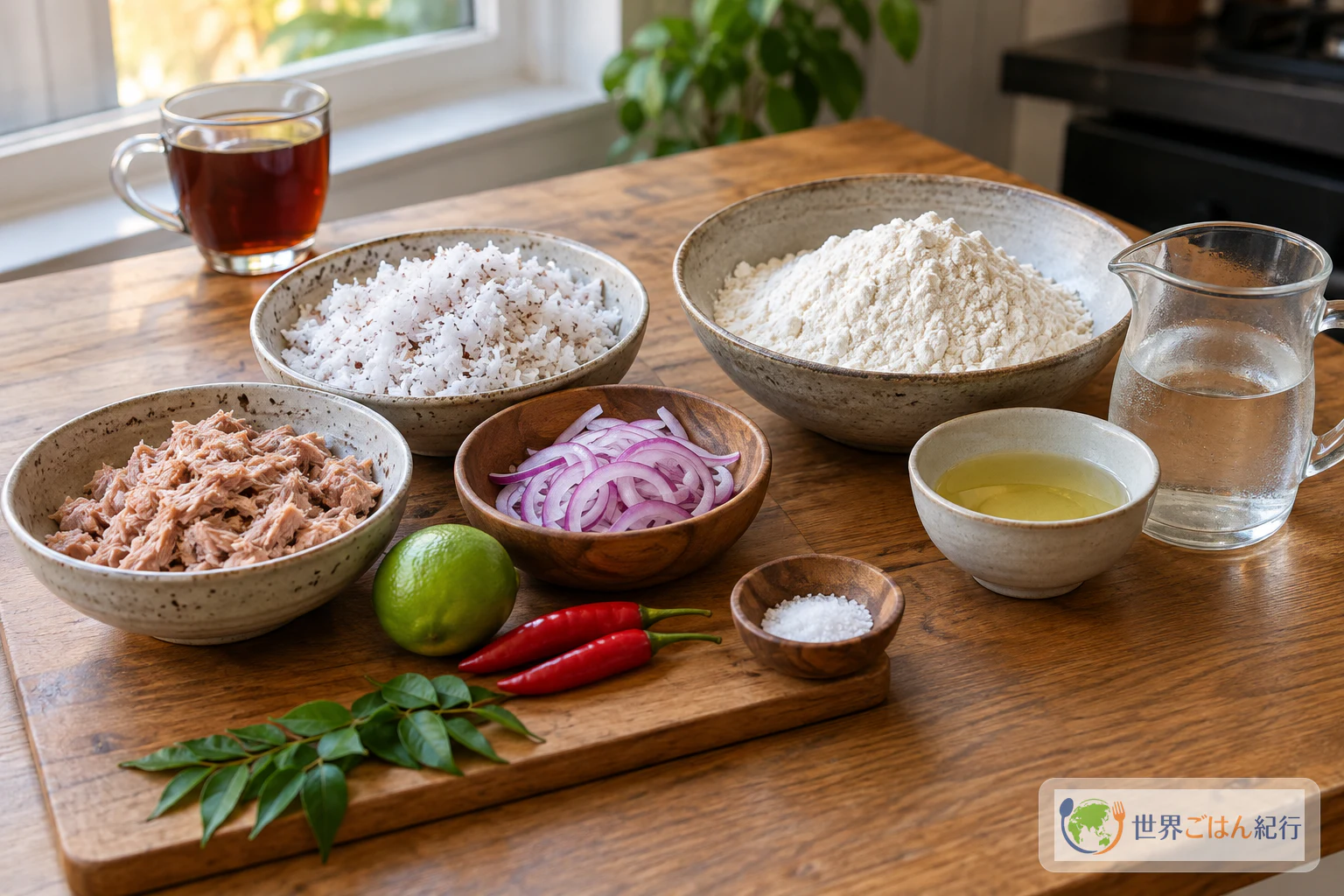
Both parts come from the same Chefs' Forum recipe. There are two separate 5 g portions of salt, one for the mas huni and one for the roshi dough; weigh them separately so they don't get mixed up. Weigh the tuna after draining it.
This dish contains fish (tuna) and wheat (roshi). Optional boiled eggs add egg. The mas huni is not cooked, so use only canned tuna or tuna that is already fully cooked; do not swap in raw fish. Handle the opened tuna with clean utensils and a clean bowl, and keep the finished mas huni in the refrigerator until you serve it.
Equipment
- Two bowls (one for mas huni, one wide bowl for the dough)
- Measuring scale and measuring jug
- Rolling pin
- Flat frying pan or griddle
- Spatula for turning the bread
- Clean kitchen cloth (to cover the dough and keep the cooked roshi warm)
Choosing and Substituting: Coconut, Chillies, Lime and Flour
Coconut. Freshly grated coconut is best for its texture and flavor. If you can't get it, frozen grated coconut is an option. Choose unsweetened grated coconut rather than sweetened baking coconut, thaw it, and check that it hasn't released a lot of water before you weigh it. Expect the aroma to be a little different from fresh. Dried, desiccated coconut is not part of this recipe.
Chillies. Chillies vary widely in size and heat. If you prefer it milder, remove the seeds or use fewer. A Scotch bonnet (local name Githeyo Mirus) can be much hotter; don't treat it as an equal swap for ordinary red chillies.
Lime. The Visit Maldives version uses lemon juice, in a very different amount. Lemon works as a substitute but changes the aroma, so it won't taste the same as lime.
Canned tuna. Saltiness differs by product. Weigh out the full 5 g of salt, but add it with a light hand if your tuna is already salty, and taste before adding the rest.
Onion. Slice it thinly. Soaking or rinsing the onion in water changes its moisture and flavor, so this recipe skips it and relies on the squeeze with lime instead.
Curry leaves. They are optional. If you can't find them, simply leave them out rather than substituting another herb.
Flour and oil. Use plain flour; switching to bread flour changes the dough. A strongly flavored oil will change the aroma of the roshi.
Method: Make the Mas Huni, Then Cook the Roshi
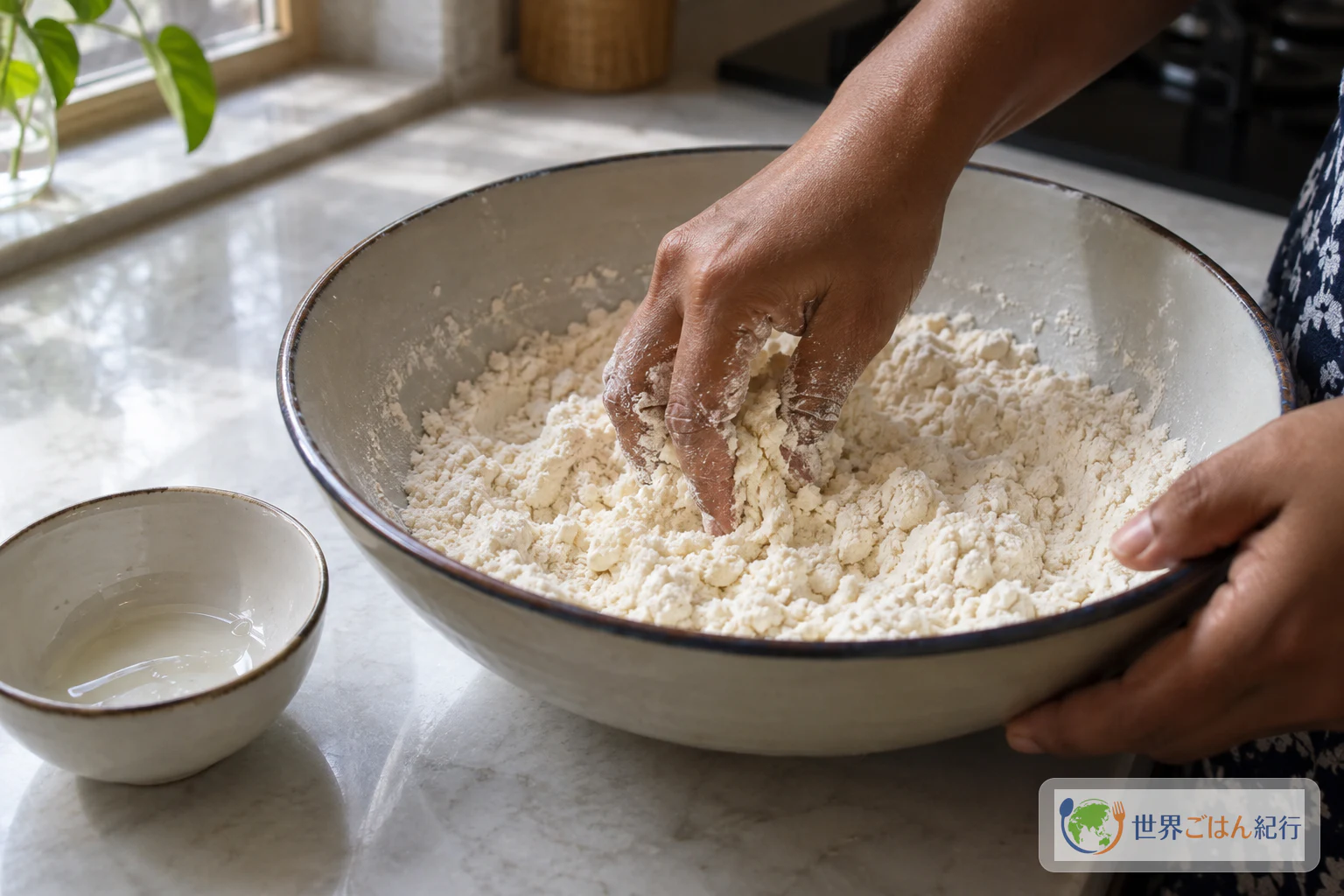
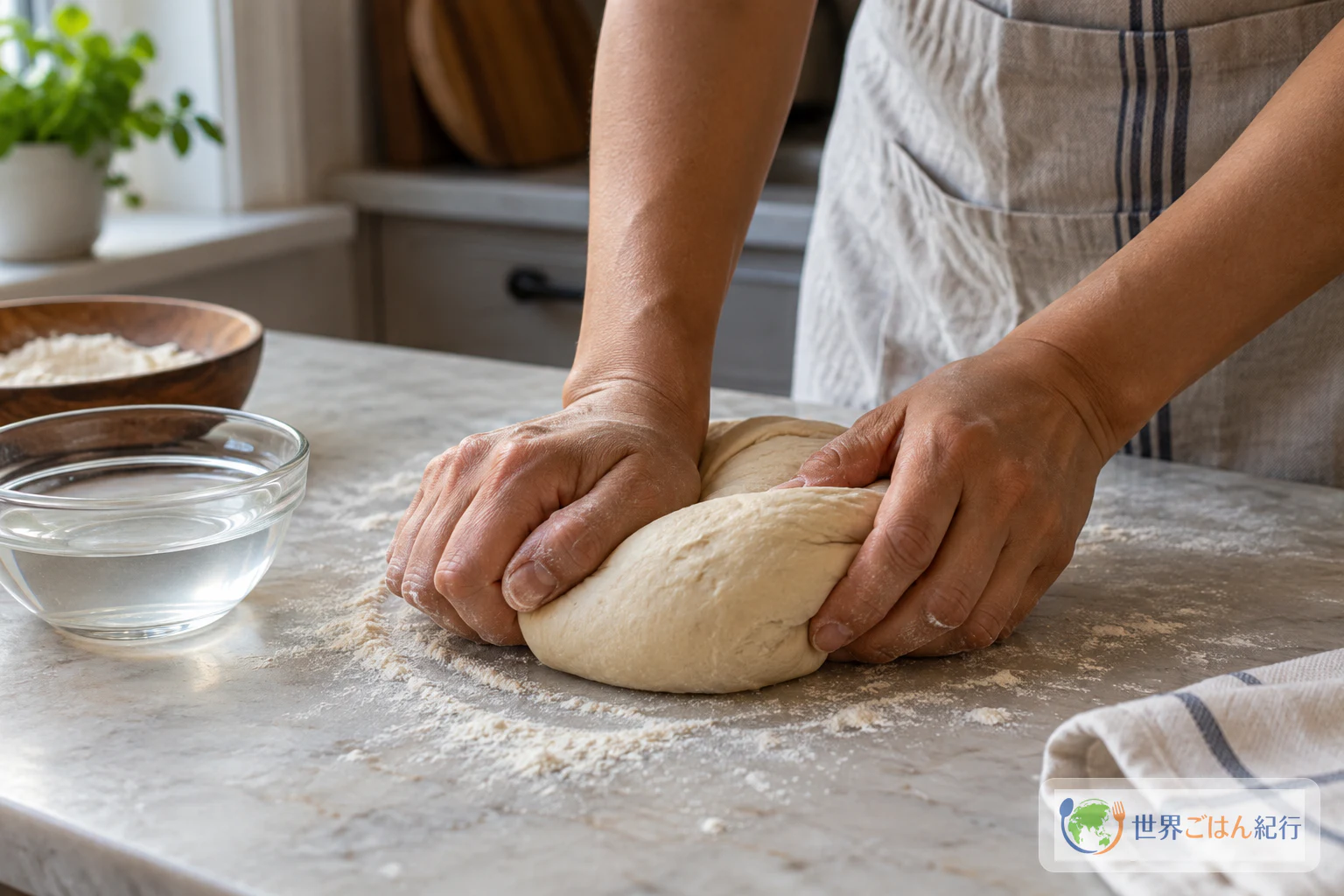
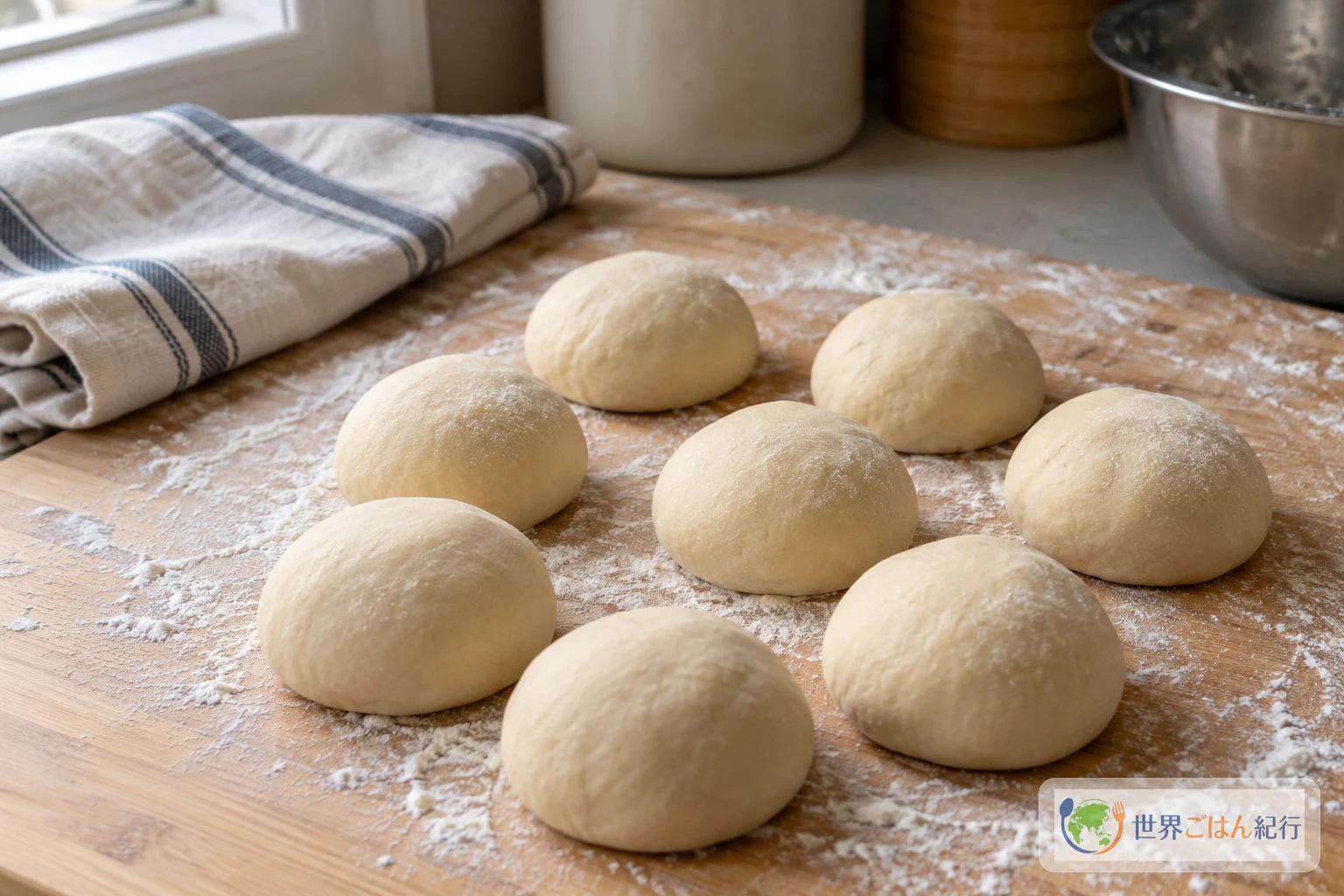
Make the mas huni first and keep it in the refrigerator, then make, roll and cook the roshi so the bread reaches the table warm. Cooking all eight roshi one after another takes roughly 10–14 minutes on the pan, plus the time to move each one in and out.
Fixing Watery Mas Huni, Too Much Heat and Dry Roshi
| What happens | Likely cause | What to do |
|---|---|---|
| Mas huni is watery | Moisture from the coconut; tuna not drained well | Drain the tuna thoroughly and don't crush it. Check thawed frozen coconut for excess water. Don't add coconut milk |
| Onion tastes too sharp | Slices too thick; onions vary | Slice thinly and give it the full minute of squeezing with lime and salt |
| Too hot | Chilli variety; amount of seeds and membrane | Remove the seeds or use fewer chillies next time. Don't treat Scotch bonnets and ordinary red chillies as equally hot |
| Turned into a fish paste | Overmixed | Add the tuna last, after the coconut, and fold gently |
| Too salty | Salty canned tuna | Weigh the salt separately and add it gradually, tasting as you go |
| Roshi is stiff or dry | Too little water, rolled too thin, overcooked, or left uncovered | Start with 160 ml water and go up to 180 ml for a soft dough, watch the time on each side, and cover the cooked breads with a cloth |
Variations: Smoked Tuna, Hotter Chillies and Vegetables
Smoked tuna. Visit Maldives lists smoked or canned tuna. Smoked tuna brings a stronger flavor and more salt, so taste before adding salt. Weight and moisture differ from drained canned tuna, so don't assume the amounts in this recipe carry over directly.
Scotch bonnet (Githeyo Mirus). The Visit Maldives recipe uses this chilli by its local name. It may be very hot; there is no one-for-one conversion from ordinary red chillies, so start small.
With vegetables. The UNWTO brochure notes that local vegetables such as pumpkin, gourd, aubergine and greens may be mixed into mashuni. The sources give no amounts or method for these, so treat them as a sign of how households and regions vary rather than part of this recipe.
Without curry leaves. They are optional in the base recipe, so leaving them out is fine.
If you want to prepare the mas huni in advance, the recipe author suggests adding the lime close to serving. That is a make-ahead adjustment; the base method above, made and served the same day, squeezes the lime in at the start.
Serving Warm Roshi with Cool Mas Huni
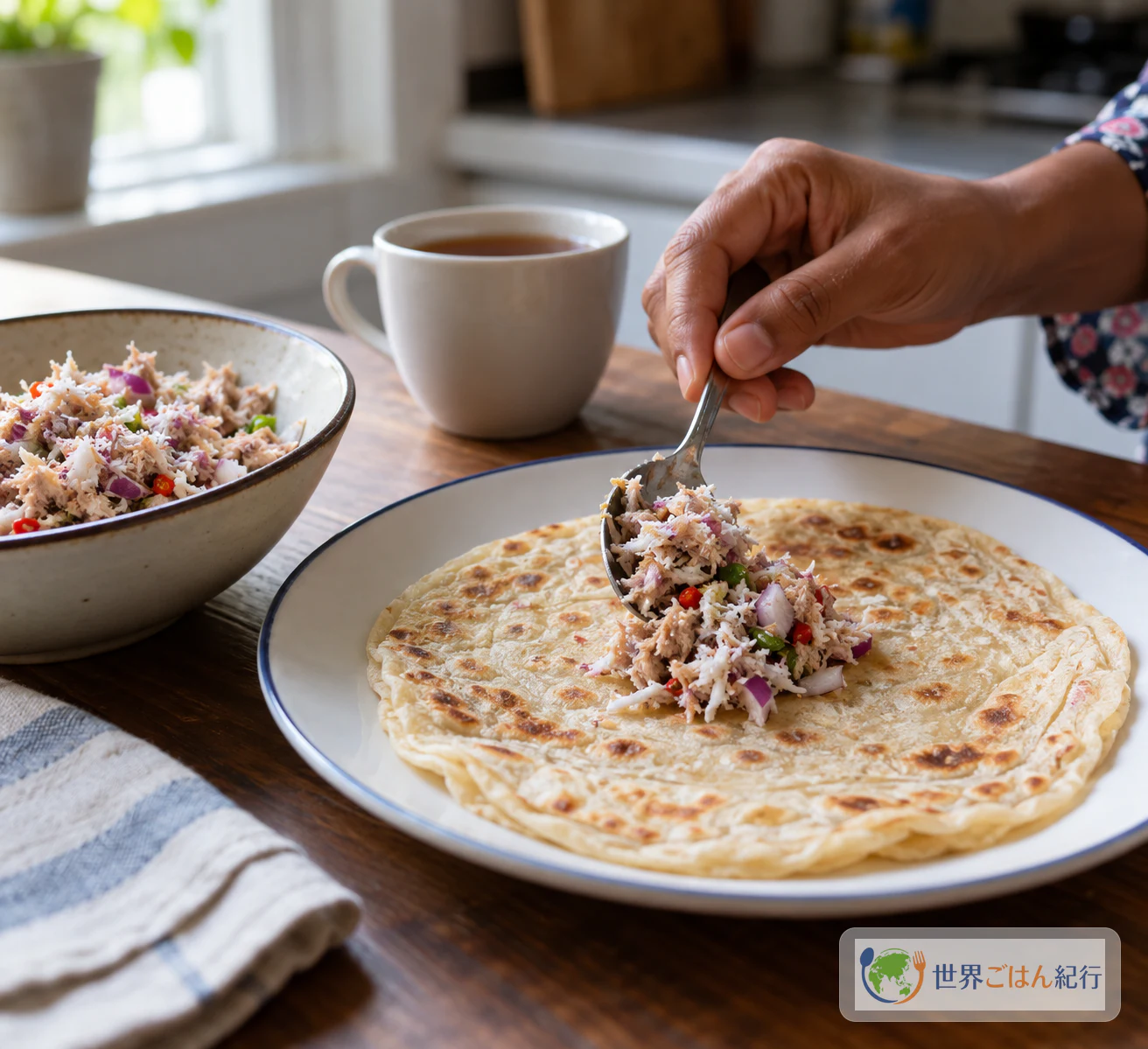
The recipe makes 4 servings and 8 roshi, which works out to 2 roshi each, though how much people eat varies. Bring the mas huni to the table lightly chilled or at room temperature, with the roshi still warm under its cloth. Put a little mas huni on a piece of roshi at a time and wrap or scoop it up; that is one easy way to eat it, not the only one. The Chefs' Forum lists black tea, boiled eggs or lime wedges as optional additions, and the UNWTO brochure suggests strong black tea. Visit Maldives serves mas huni with roshi or farata.
An older Visit Maldives page describes cafés in Malé and teashops on inhabited islands as places where people eat hedhikaa, or small snacks, and names valoamas (smoked tuna) and hikimas (smoked and sun-dried tuna). That page has no visible date, so read it as background rather than a picture of how households eat today.
Frequently Asked Questions
Are mas huni and mashuni different dishes?
No. They are two spellings of the same dish: Visit Maldives writes Mas Huni, while the Maldives Chefs' Forum and the UNWTO brochure write Mashuni.
Can I make it with canned tuna?
Yes. The base recipe allows canned or cooked tuna. Drain canned tuna well and flake it before weighing out 250 g. Don't substitute raw fish.
Can I use dried coconut?
This recipe uses freshly grated coconut. How to rehydrate dried coconut, and how much water to use, isn't established in the sources, so it isn't recommended here. If you can find frozen grated coconut, thaw it and check its moisture; it works, though the aroma and texture differ slightly from fresh.
How is it different from mas kurolhi?
Some ingredients overlap, such as fish and coconut, but they are different dishes. Mas kurolhi is served with baiypen, a rice porridge; mas huni is a breakfast eaten with roshi.
How many people do 8 roshi feed?
The source gives 8 roshi for 4 servings. Two per person is simply that number divided evenly; appetites vary.
Sources
- Maldives Chefs' Forum, "Mashuni with Homemade Roshi." The base recipe: 4 servings, 25 minutes prep and 20 minutes cooking, all mas huni and roshi ingredients and amounts, the mixing order, chilling until serving, the roshi kneading, resting, dividing, rolling and cooking times, serving suggestions, the recommendation for freshly grated coconut, and adding lime close to serving when preparing ahead. https://maldiveschefsforum.com/recipes/mashuni-with-homemade-roshi/
- Visit Maldives Corporation, "Recipe: Mas Huni." A separate version using smoked or canned tuna, Scotch bonnet (Githeyo Mirus) and lemon juice, served with roshi or farata. Its amounts are not combined with the base recipe. https://visitmaldives.com/en/experience/mas-huni-recipe
- World Tourism Organization (UNWTO), "A Tour Around the World's Gastronomy: Maldives," 2021. Fish, coconut and rice as key elements, tuna as the main fish, mashuni as a breakfast of boiled, canned or smoked tuna served with roshi and strong black tea, and vegetables that may be mixed in. https://webunwto.s3.eu-west-1.amazonaws.com/s3fs-public/webimages/UNWTO_Maldivas_final.pdf
- Visit Maldives (legacy site), "Maldivian Side of Life." Undated supplementary background on mas huni with roshi, cafés and teashops serving hedhikaa, and the tuna products valoamas and hikimas. https://old.visitmaldives.com/portfolio-item/maldivian-side-of-life/
- Saveur, "Maldivian Breakfast (Mas Huni)," recipe by Farideh Sadeghin. A separate recipe listing freshly grated or frozen coconut, used here only to support frozen grated coconut as an alternative. https://www.saveur.com/maldivian-breakfast-mas-huni-recipe/