Chicken Tikka Masala: Grilled Chicken Returned to a Sauce from Another Pan
Keep the two parts separate until the very end: chicken browned under strong heat, and a sauce built slowly from browned onion, spices, yoghurt and tomato. The dish comes together only when the grilled chicken goes into the reheated sauce.
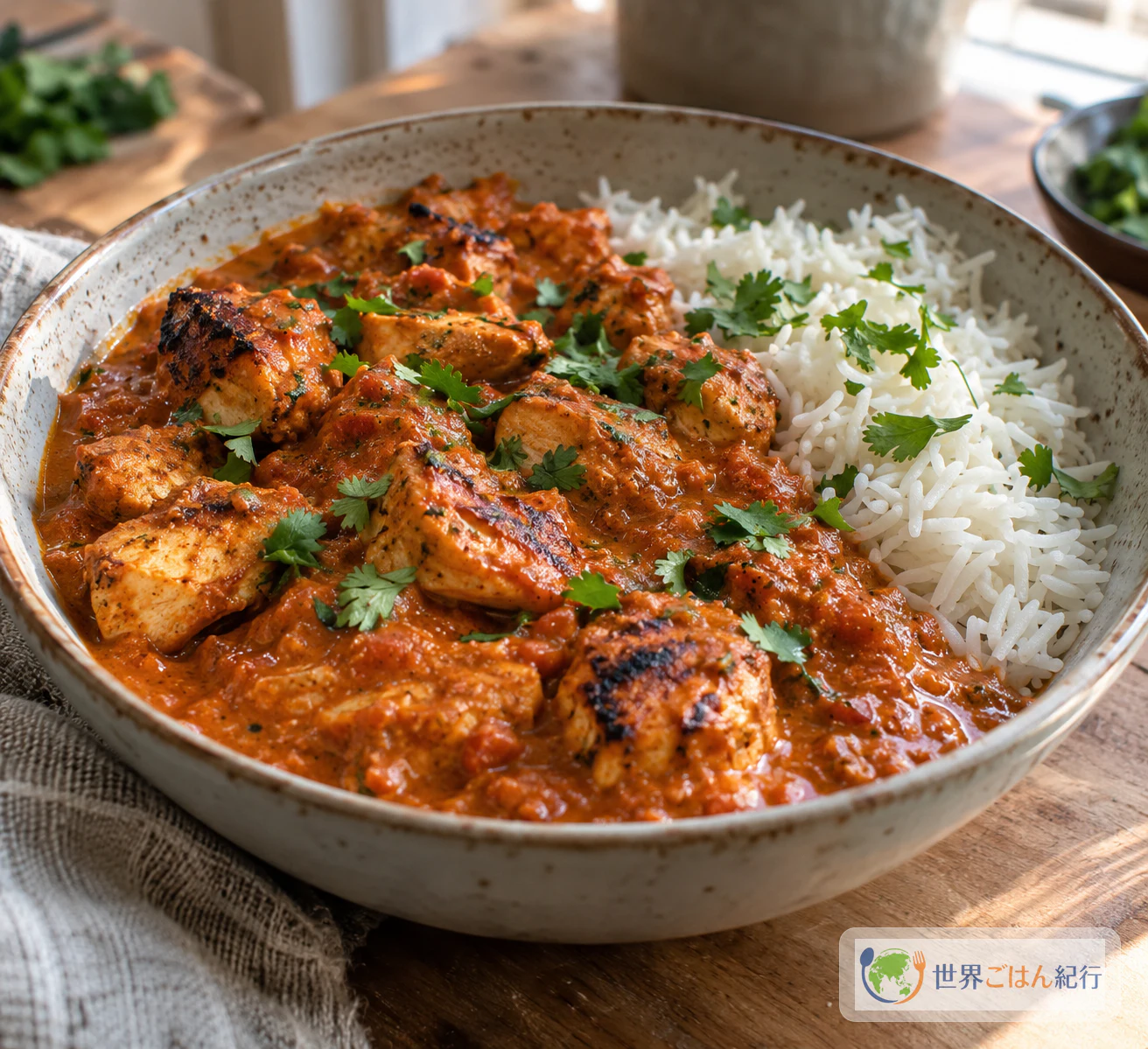
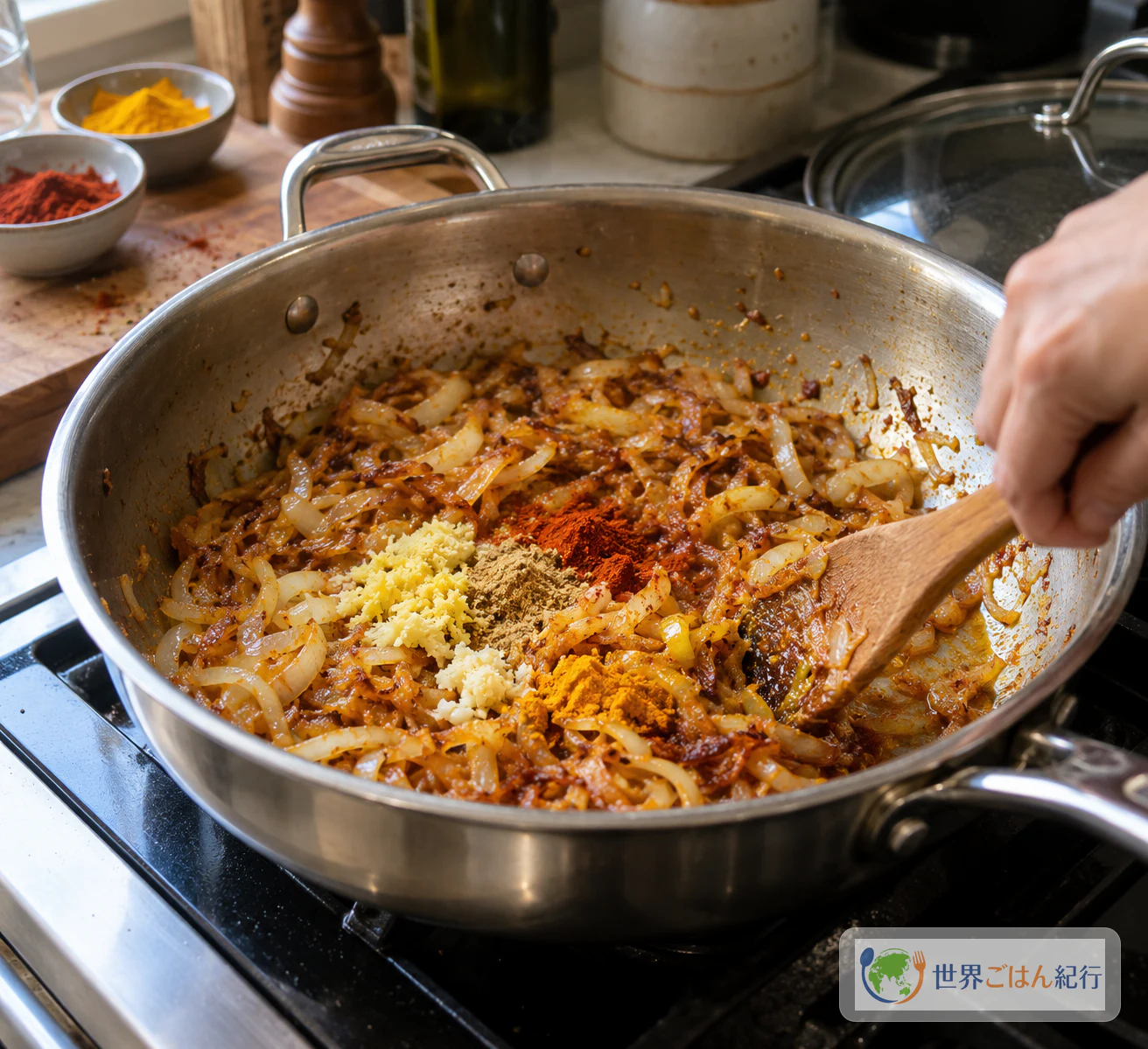
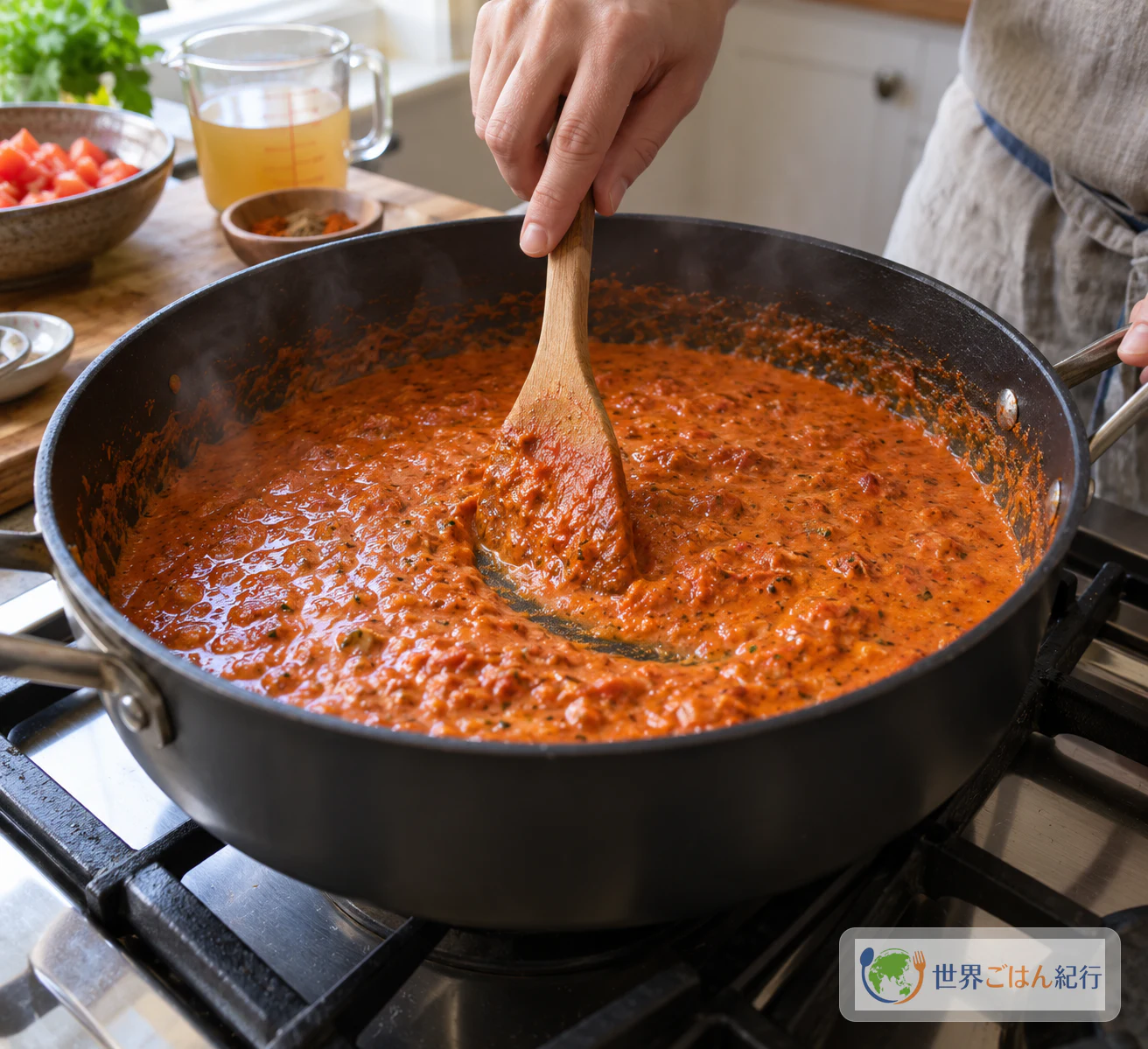
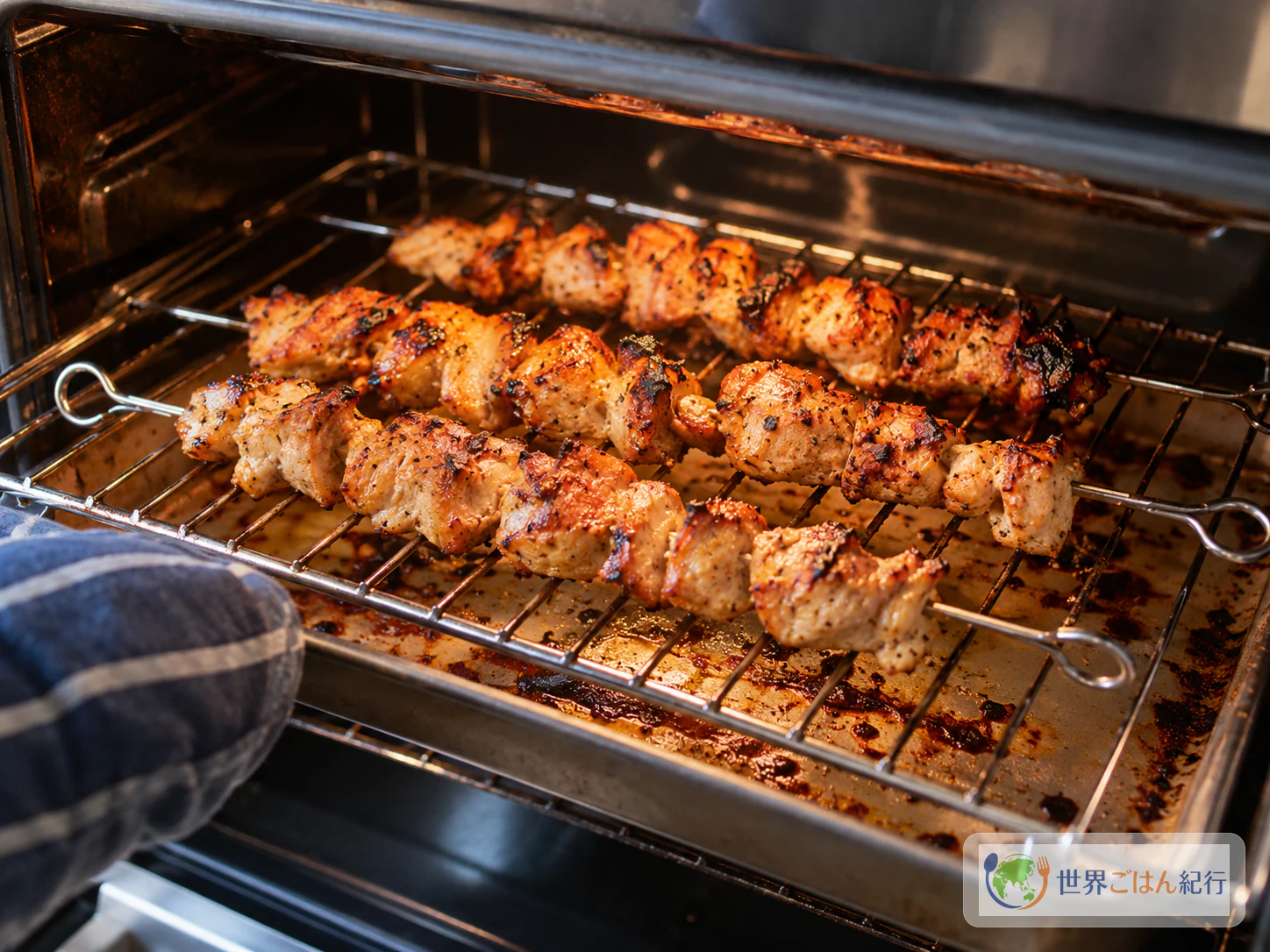
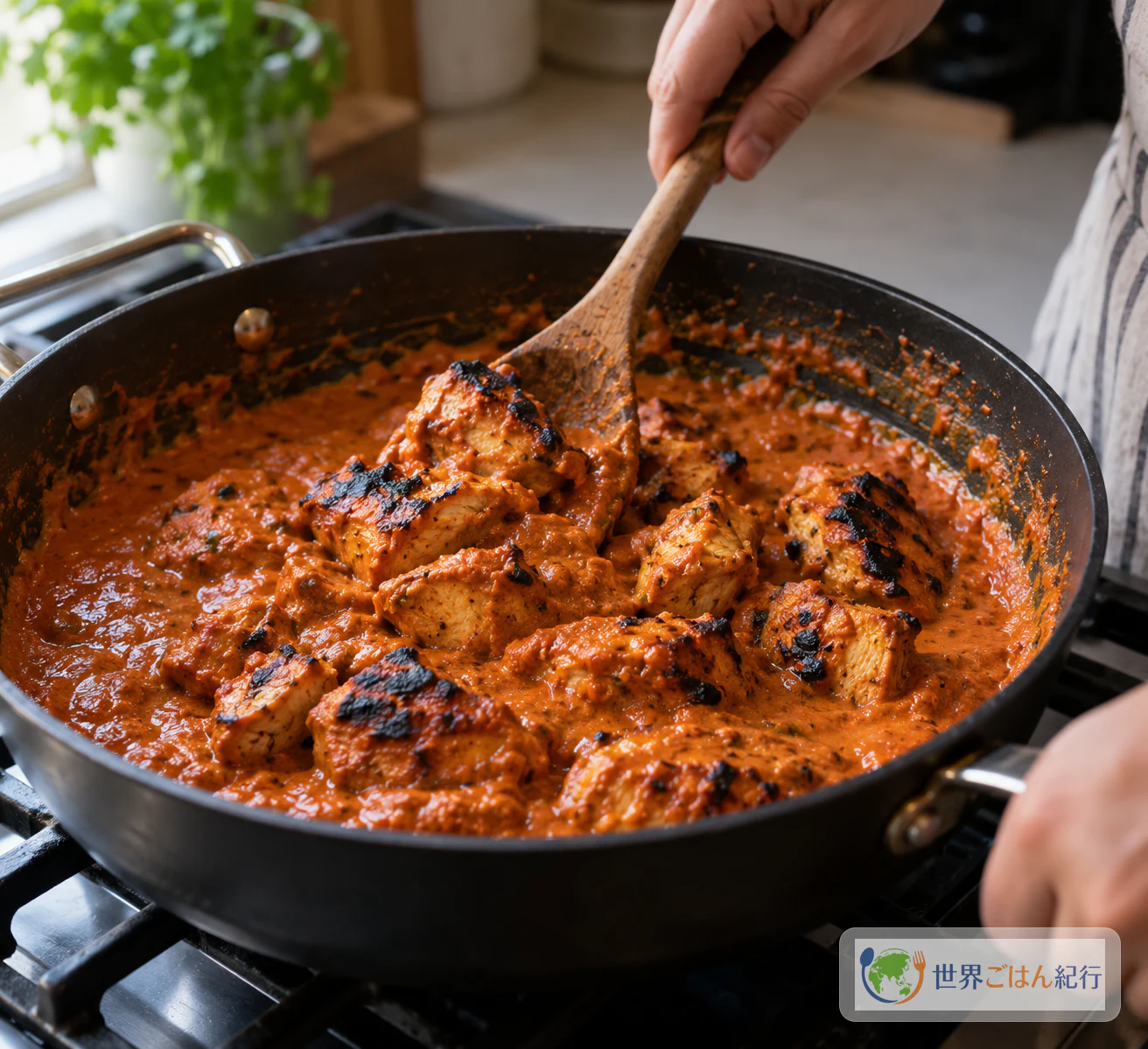
The skewers come out from under a hot grill with their edges browned and lightly charred. In another pan, a sauce of browned onion, ginger, garlic, ground spices, yoghurt and tomato has been simmering with stock until it thickens. The chicken pieces slide off the skewers and are folded gently into that sauce, and the dish is served straight away. That is the shape of chicken tikka masala: skewered, grilled chicken tikka combined with a separately made masala sauce.
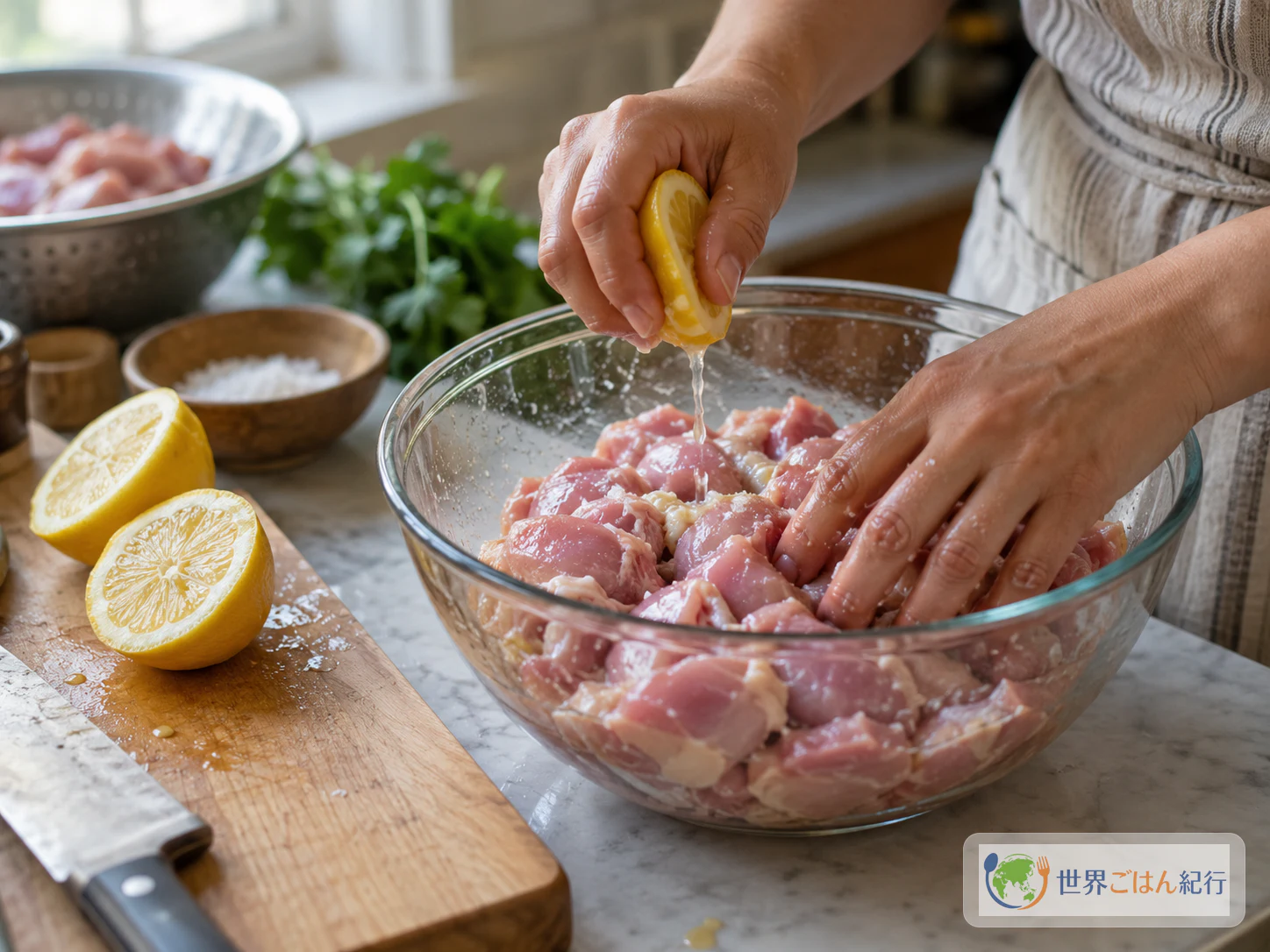
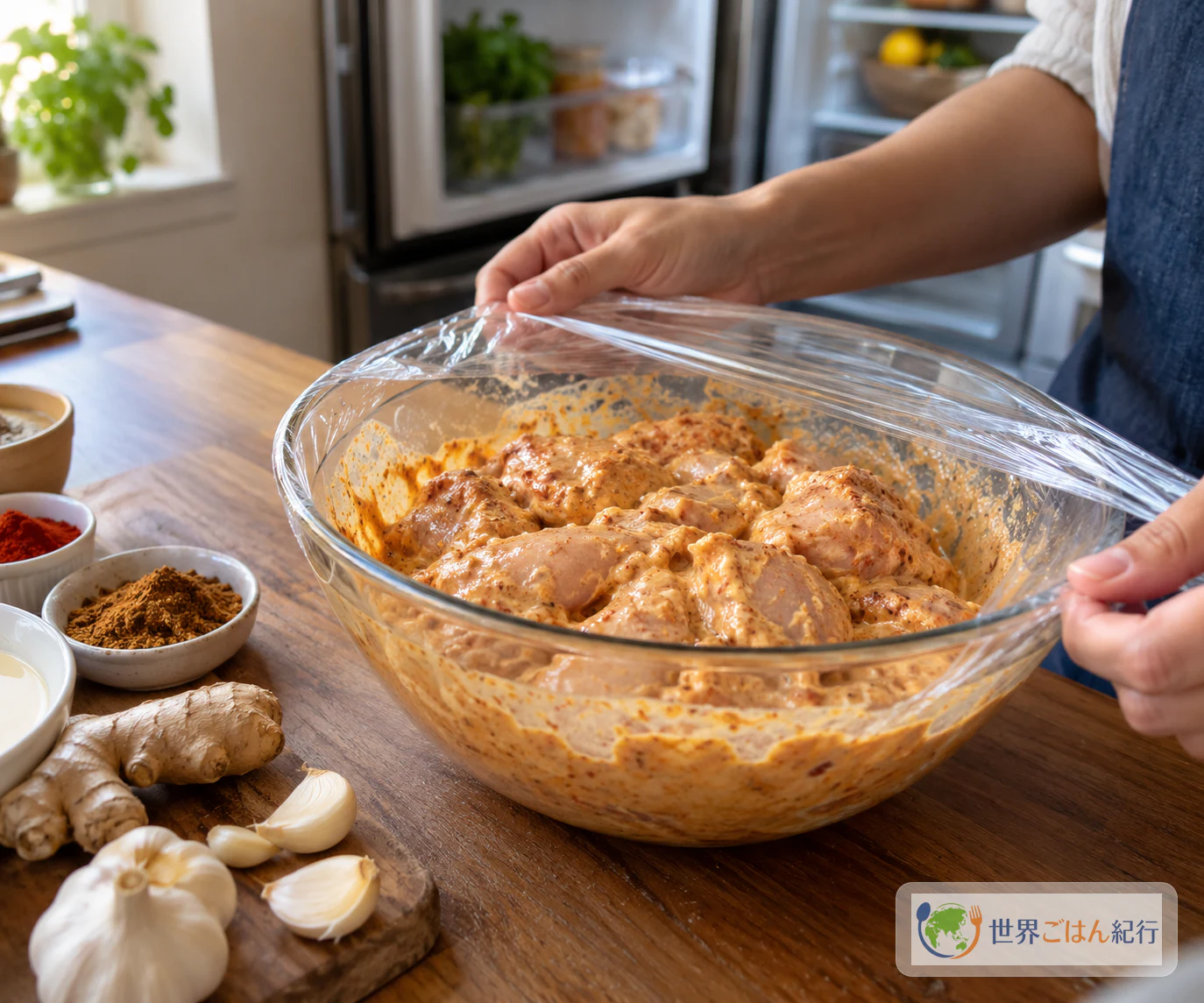
This recipe follows the version by Madhur Jaffrey published from her book Curry Nation, which serves 4–6 and starts with 675g of boneless chicken thighs. In this version the chicken is marinated in lemon, salt, aromatics, spices and whipping cream before grilling; the yoghurt belongs to the sauce, not to the marinade. Jaffrey presents the dish as one that is widely eaten in Britain, and notes that its origins are not clear. It is one well-defined recipe among many, not the single standard for the dish.
Why No One Origin Story Settles It
The best-known claim comes from Glasgow. According to the account associated with the Shish Mahal restaurant, its owner Ali Ahmed Aslam created the dish in the 1970s when a customer asked for something to go with chicken tikka, combining tomato soup, cream and spices. That is the restaurant's own story, and a 2022 report published after Aslam's death describes how it revived an old debate rather than ending it.
The same report notes that a bid to give Glasgow a protected status for the dish was turned down after objections from several other restaurants, and that some argue for a South Asian origin instead. Chicken tikka itself is described there as a dish eaten across a wide area of South Asia. So the name of the inventor, and even the place, remain open questions.
What can be described clearly is the structure: bite-size grilled chicken and a separately cooked, spiced tomato sauce, joined at the end. That structure, more than any origin story, is what decides whether the dish turns out well in a home kitchen.
Tandoori chicken centres on the grilled chicken itself, with no separate sauce. Murgh makhani (butter chicken) is a different dish built on a tomato sauce that includes butter. Restaurant versions of these dishes can come close to one another in flavour and name, but the version here uses no butter, and its chicken marinade is based on cream and spices.
Ingredients: Serves 4–6, Split Between Marinade and Sauce
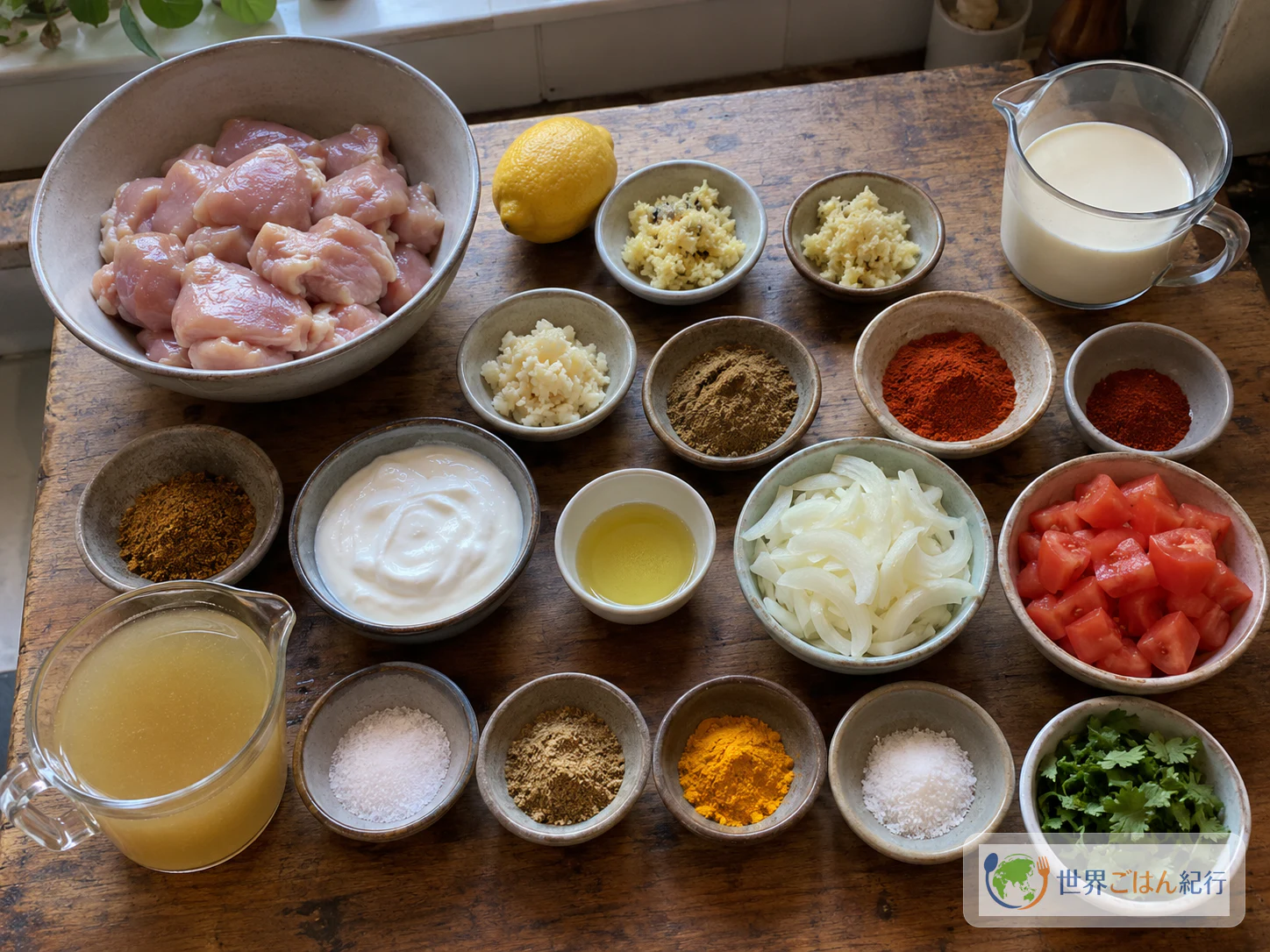
Ginger, garlic, paprika, chilli powder, garam masala, oil and salt each appear in both groups, so measure them out separately for the marinade and the sauce.
Choosing and Substituting: What Changes the Dish
- Chicken: Thighs are the better choice. Breast works, but dries out more easily; cut it to the same size and avoid overcooking, while still meeting the safe core temperature.
- Salt: Coarse and fine salts taste different by the spoon, so season the sauce at the end by tasting rather than by converting to weight.
- Lemon juice: Bottled lemon juice can be used, with a weaker aroma.
- Ginger and garlic: Tube pastes have a rounder aroma, and ginger paste carries more moisture. Treat a like-for-like swap as a starting point and adjust, since products vary.
- Cumin: Whole cumin seeds need a different method, so they are not a simple swap for ground cumin.
- Paprika: Use sweet paprika. Smoked paprika pushes a smoky aroma to the front and makes a different variation.
- Chilli powder: Chilli powders vary in heat. Start with the smaller amount. Cayenne is not a 1:1 swap; add it gradually.
- Cream: Creams with different fat contents change the browning and richness. Dairy-free alternatives will not give the same result, and none is offered here as an equivalent.
- Garam masala: Choose an unsalted blend. Curry powder has a different mix and aroma and does not produce the same dish.
- Oil: A neutral vegetable oil works. Olive oil adds its own aroma.
- Onion: Use yellow or brown onions. Red onions change the colour and aroma.
- Turmeric: Leaving it out makes the sauce paler. Replacing it with curry powder changes the whole spice balance.
- Yoghurt: Use unsweetened plain yoghurt. Greek yoghurt is thicker; loosen it bit by bit as you add it.
- Tomatoes: Ripe tomatoes are best. Canned tomatoes differ in moisture and acidity, so they are not an equal swap; watch how the sauce reduces.
- Stock: Unsalted or low-salt stock is easiest to control. If you use stock granules, reduce the salt accordingly.
- Not in this recipe: Cashews, coconut milk, butter and dried fenugreek leaves (kasuri methi) appear in other recipes but are not part of this one. Naan, if you serve it, is an optional side, not an ingredient.
Most of the shopping is ordinary supermarket fare: chicken thighs, plain yoghurt, lemons, onions, tomatoes and cream. The items that may need a special trip are garam masala, paprika and chilli powder; small packs are enough, and it is worth checking the labels for heat level.
This recipe contains chicken and milk (cream and yoghurt). Naan served alongside may contain wheat. Check spice blends and stock for allergen labelling and shared-facility statements.
Equipment
- A non-reactive bowl (glass or similar) for marinating
- A large frying pan or sauté pan with a lid
- Long metal skewers
- A tray or rack that can support the skewers so the meat does not touch the tray; check that it fits your grill before you start
- A probe or instant-read thermometer for checking the core temperature of the chicken
- A separate chopping board, bowl and tongs for raw chicken, kept apart from those used for cooked food
Bamboo skewers can scorch close to a grill element, so they are not recommended unless you know they suit your appliance.
Method: Marinate the Tikka, Simmer the Sauce, Then Grill
The chicken needs 20 minutes in salt and lemon, then 6–8 hours in the refrigerator with the rest of the marinade. Make the sauce while the grill heats, or ahead of grilling, and reheat it before the chicken goes in.
Chicken is not safe just because it is fresh. Avoid raw or undercooked chicken, and cook it until the centre reaches 75°C for at least 1 minute. Keep raw chicken and its bowls, boards and tools apart from other foods; wash your hands after handling it, and wash and sanitise the tools. Do not leave the marinating chicken or the finished dish standing at room temperature.
When Things Go Wrong
| Problem | Likely cause | What to do |
|---|---|---|
| The chicken doesn't brown | Skewers packed too tightly, or marinade pooled thickly on the surface | Space the pieces apart and let excess marinade drip off. Home grills differ in power, so check both browning and core temperature |
| The chicken is dry | Uneven pieces, or grilling on for colour after it was cooked | Cut the pieces evenly. Move the chicken to the sauce once the centre has held 75°C for 1 minute. Never lower the safety standard to keep it tender |
| The sauce is watery | Tomatoes not cooked to a pulp, or very juicy tomatoes | Cook the tomatoes to a pulp before the stock, then simmer covered on low. If it is still thin, take the lid off and reduce briefly; the exact time varies |
| The yoghurt looks grainy | Added all at once, or boiled hard | Keep to adding 1 tbsp at a time, and avoid a fierce boil |
| The heat is too strong | Hot chilli powder | Use less chilli powder next time, starting with the smaller marinade amount |
Variations That Change Something Meaningful
- Milder heat: Reduce the chilli powder. The structure of the dish stays, but the overall flavour loses some of its edge, not just its heat.
- Chicken breast instead of thighs: Leaner and quicker to dry out. Cut evenly and watch the core temperature closely.
- Oven grill: The oven's top grill element is the closest home equivalent to the source's grilling step. Shelf position and timing depend on your oven.
- A small grill in batches: If your grill compartment is compact, grill in smaller batches, but only if the skewers and tray fit safely. Check doneness by temperature for every batch.
- Rice or bread on the side: Bread is good for scooping up the sauce, while rice soaks it up. Naan is a separate recipe and an optional side.
At the Table
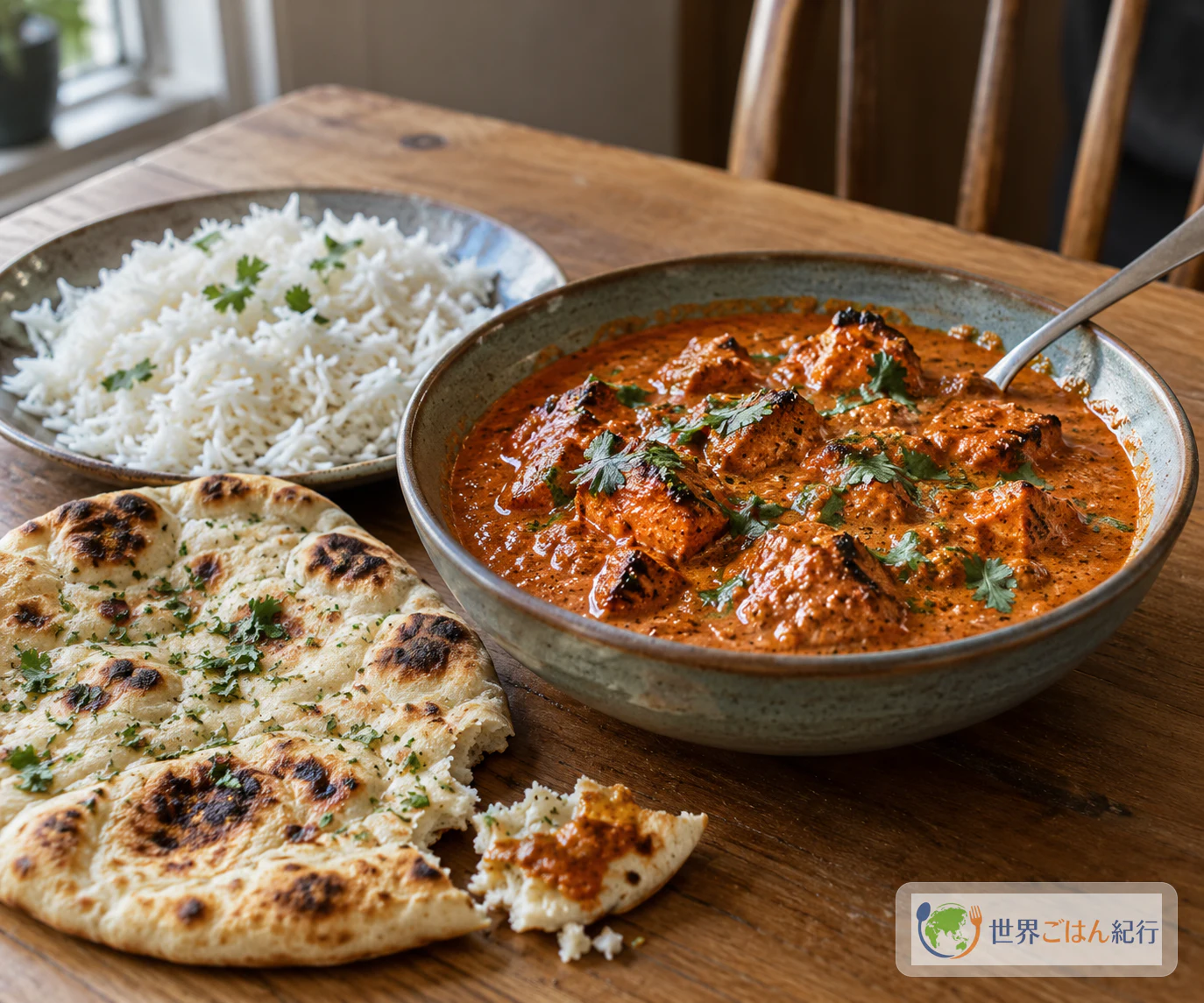
The source recipe suggests serving the dish with Indian-style breads such as naan, or with rice. Bring it to the table as soon as the chicken has gone into the sauce, while the grilled surfaces still have their bite.
Frequently Asked Questions
Was chicken tikka masala invented in Glasgow?
The Glasgow story, told by the Shish Mahal restaurant about Ali Ahmed Aslam, is the best-known claim. Other restaurants dispute it, and some argue for a South Asian origin. The origin has not been settled.
Is it the same as butter chicken?
Not as defined here. Restaurant versions can come close, but this recipe uses no butter. Its chicken is marinated in cream and spices and grilled, then combined with an onion, tomato and yoghurt sauce. Murgh makhani is treated as a separate dish.
Can I adjust the heat?
Yes. Reducing the chilli powder lowers the heat, though it also shifts the flavour away from the original.
How long should I grill the chicken?
The source recipe gives about 6 minutes per side, but grills vary. The deciding test is the thickest piece reaching 75°C at the centre for at least 1 minute.
Can I make it without dairy?
Removing the cream and yoghurt changes both the flavour and the way the chicken browns. No tested dairy-free version is offered here, so a substitute should not be treated as the same recipe.
Can I marinate it for less time?
The recipe calls for 6–8 hours in the refrigerator after the salt and lemon stage. The cited recipe does not provide a shorter marinade schedule, so none is specified here.
Find more recipes in the India collection.
Sources
- Madhur Jaffrey, "Madhur's Chicken Tikka Masala," The Happy Foodie / Penguin (from Curry Nation). The recipe used here: 4–6 servings, 675g chicken, the cream-and-spice marinade, the onion, ginger, garlic, spice, yoghurt, tomato and stock sauce, the marinating, simmering and grilling steps, and serving with bread or rice; also the note that the dish is widely eaten in Britain and that its origins are unclear. https://thehappyfoodie.co.uk/recipes/madhurs-chicken-tikka-masala/
- Georgia Public Broadcasting / NPR, "Who created chicken tikka masala? The death of a curry king is reviving a debate," 2022. The Shish Mahal account of Ali Ahmed Aslam's claim, the rejected bid for protected status after objections from other restaurants, the South Asian origin argument, and chicken tikka as a dish eaten widely in South Asia. https://www.gpb.org/news/2022/12/23/who-created-chicken-tikka-masala-the-death-of-a-curry-king-is-reviving-debate
- Ministry of Health, Labour and Welfare (Japan), "Campylobacter Food Poisoning Prevention (Q&A)" (in Japanese). Avoiding raw or undercooked chicken, cooking chicken to 75°C at the centre for at least 1 minute, and keeping raw meat apart from other foods, with handwashing and cleaning and sanitising of tools. https://www.mhlw.go.jp/stf/seisakunitsuite/bunya/kenkou_iryou/shokuhin/syokuchu/campylobacterqa.html