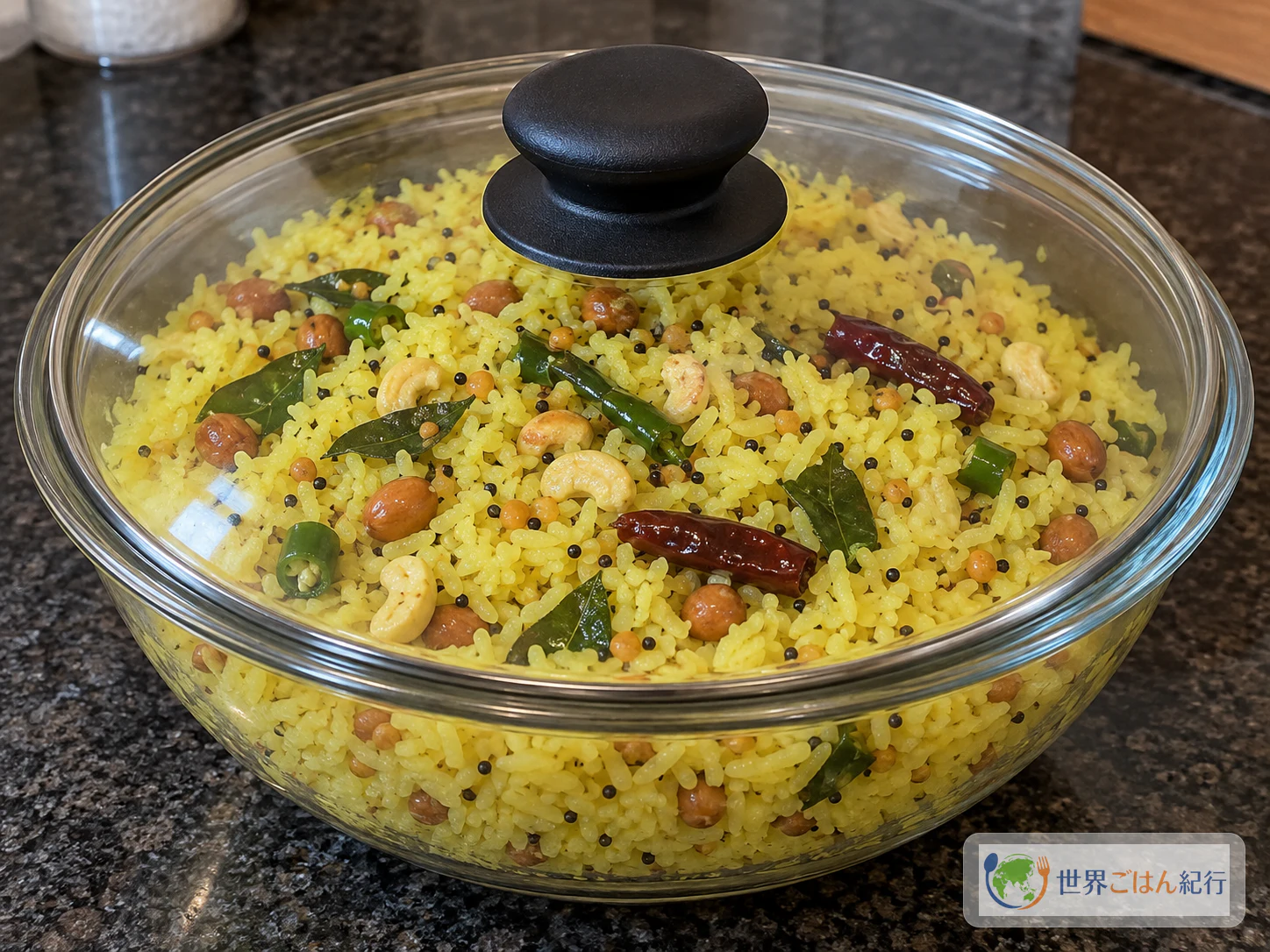
Chitranna: Sizzling Tempering Over Cooked Rice, Lemon Last
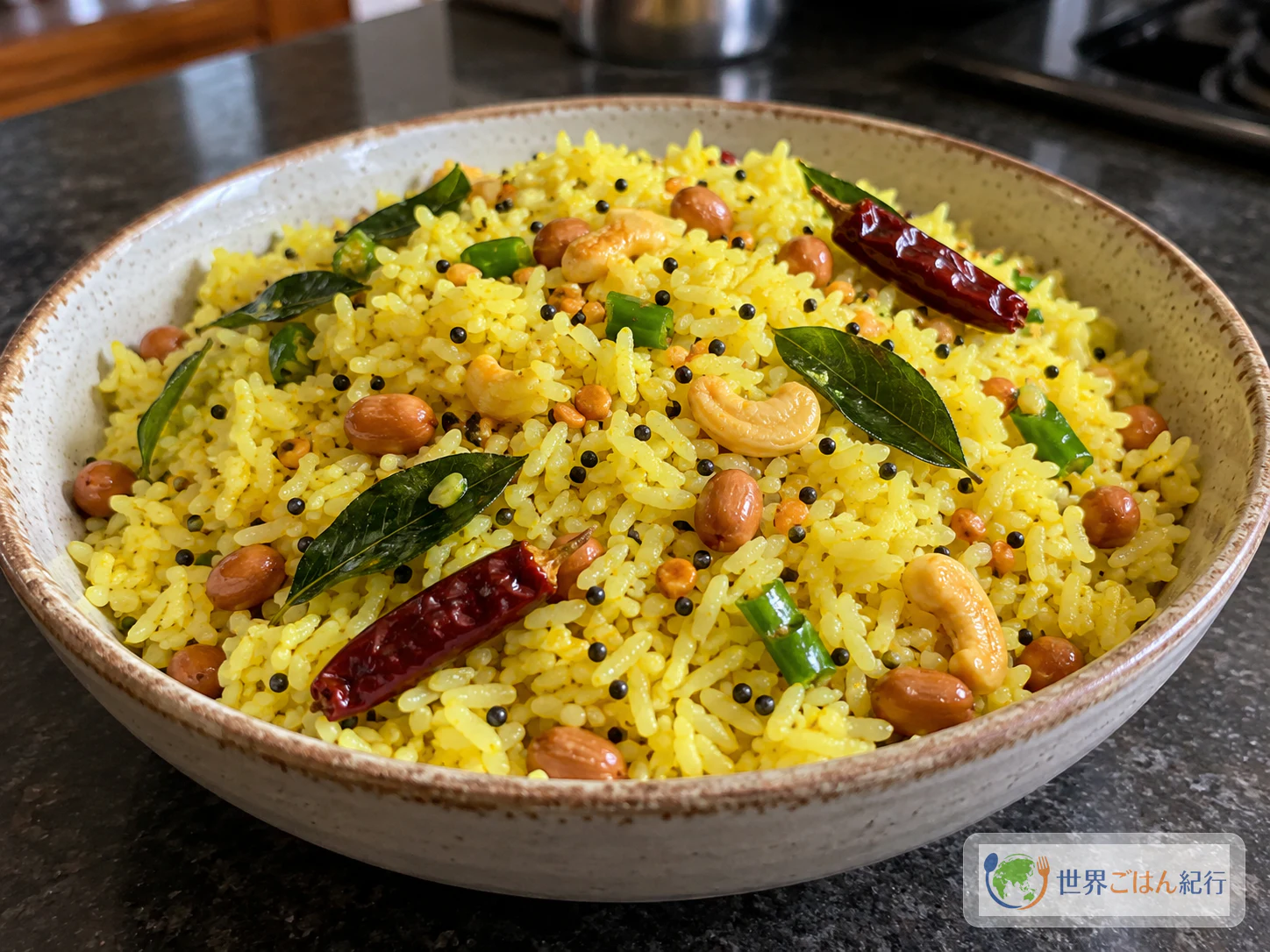
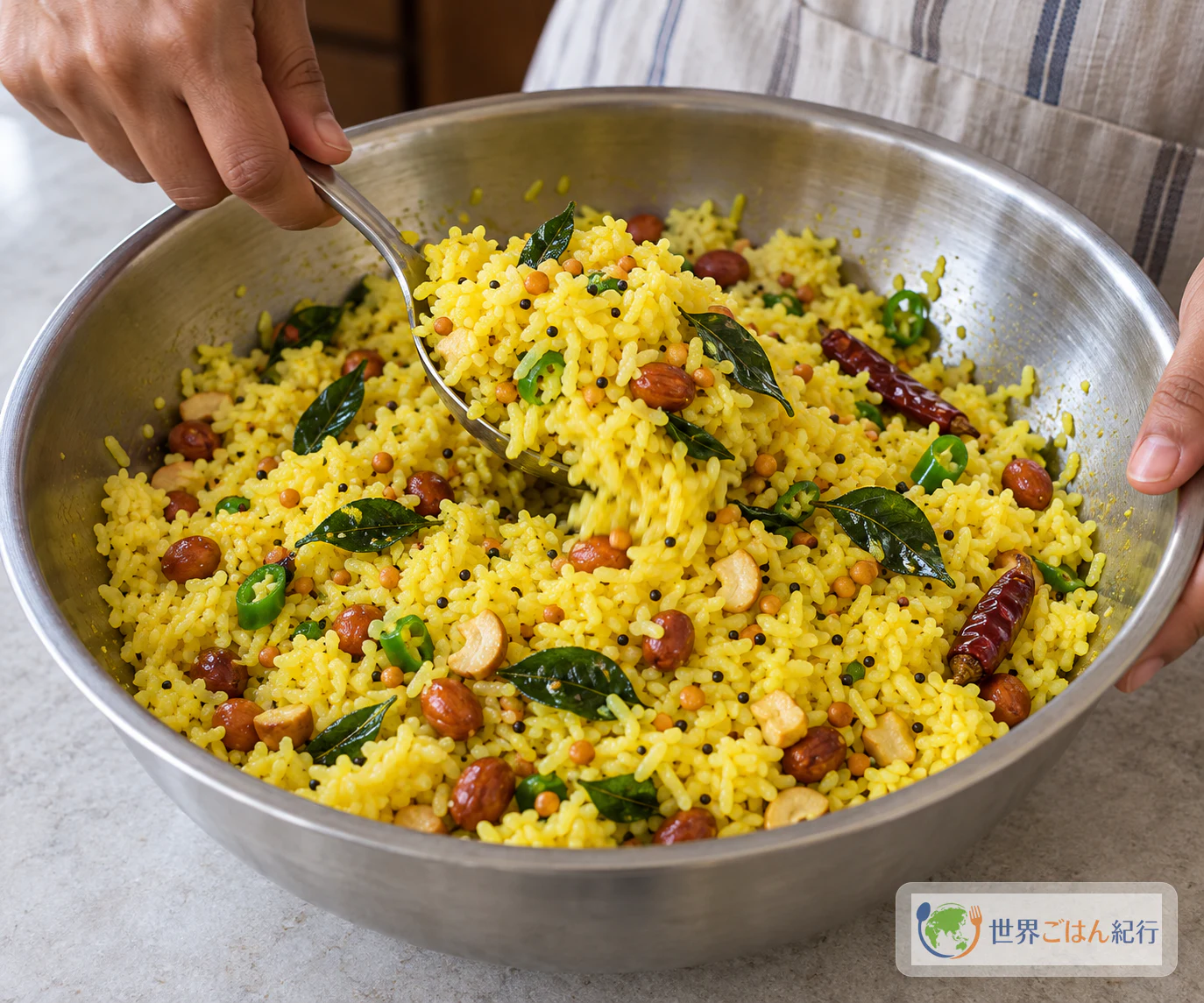
Separate, unbroken grains of rice coated in turmeric-yellow oil, a crunch of fried peanuts and cashews, and a bright lemon tang. Turmeric and hing go in after the heat is off, and the lemon juice goes into the rice, not into the hot pan.
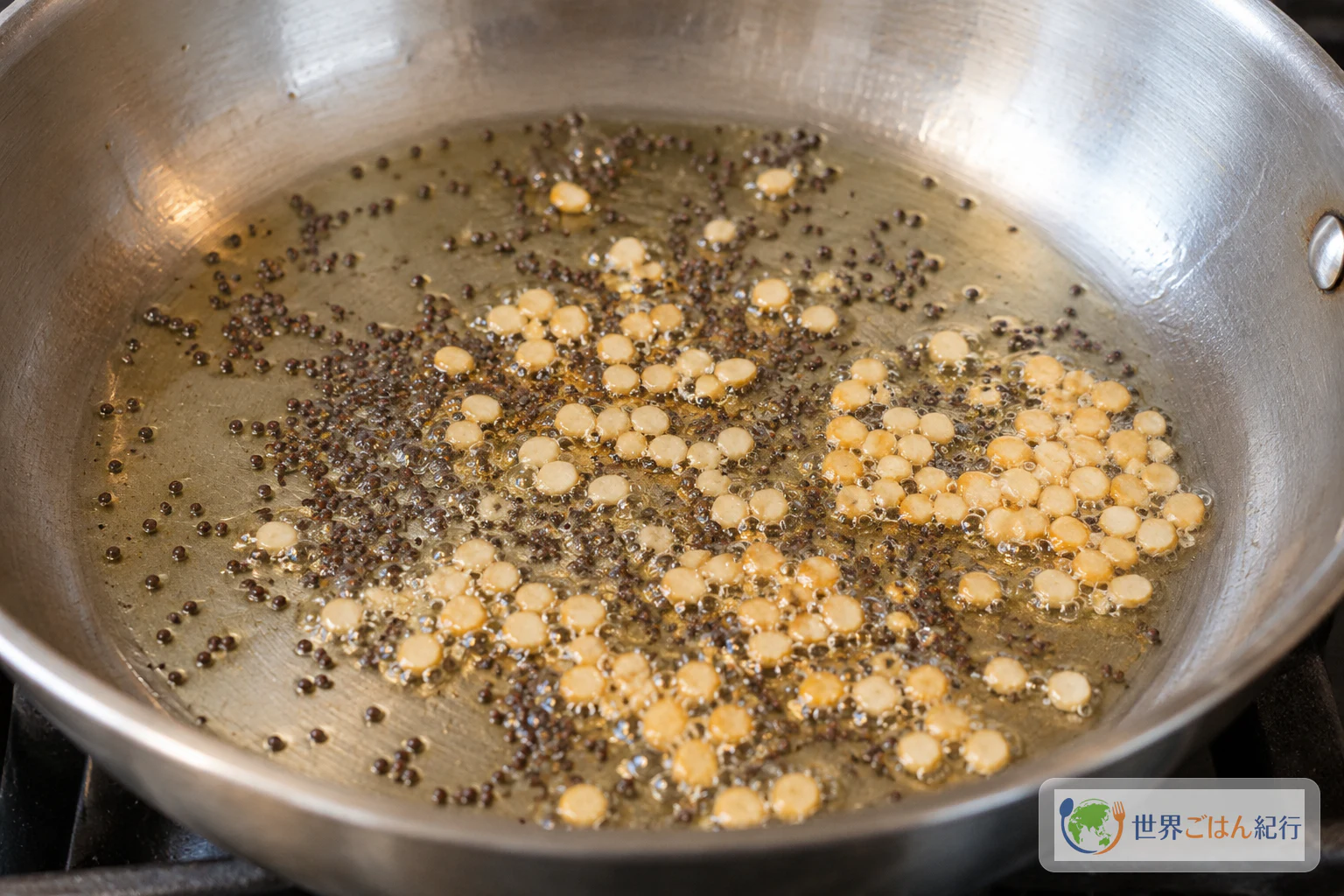
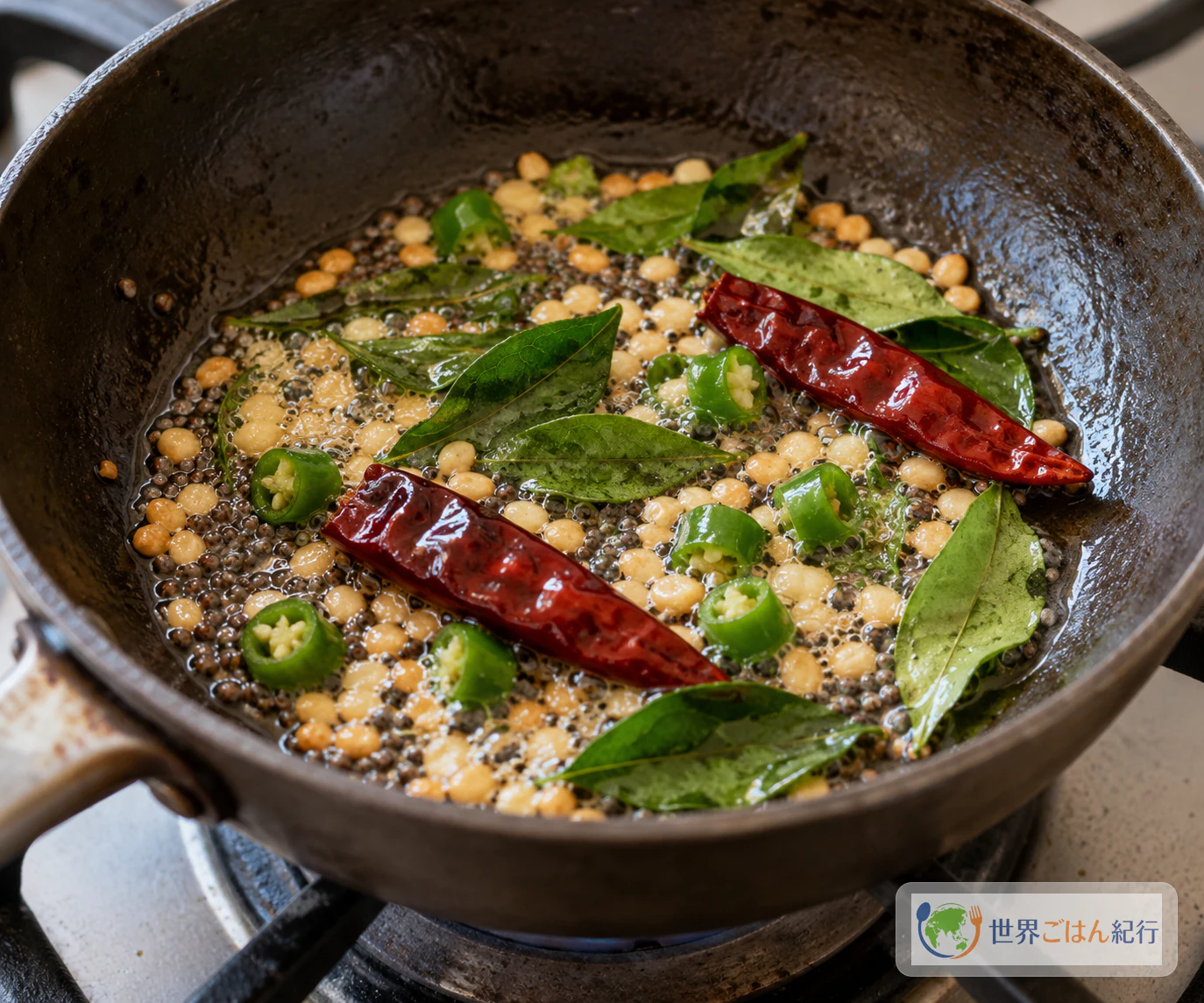
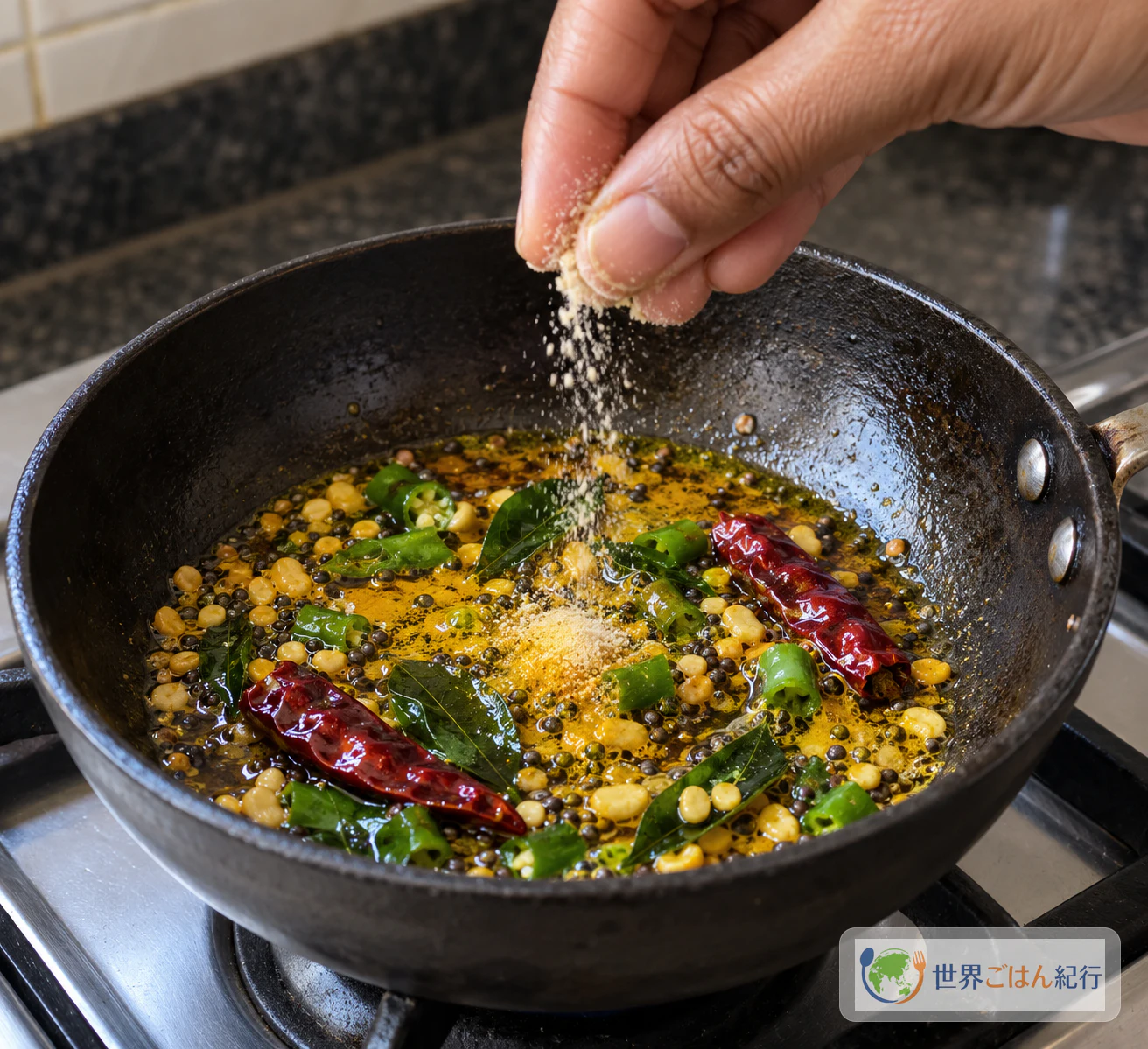
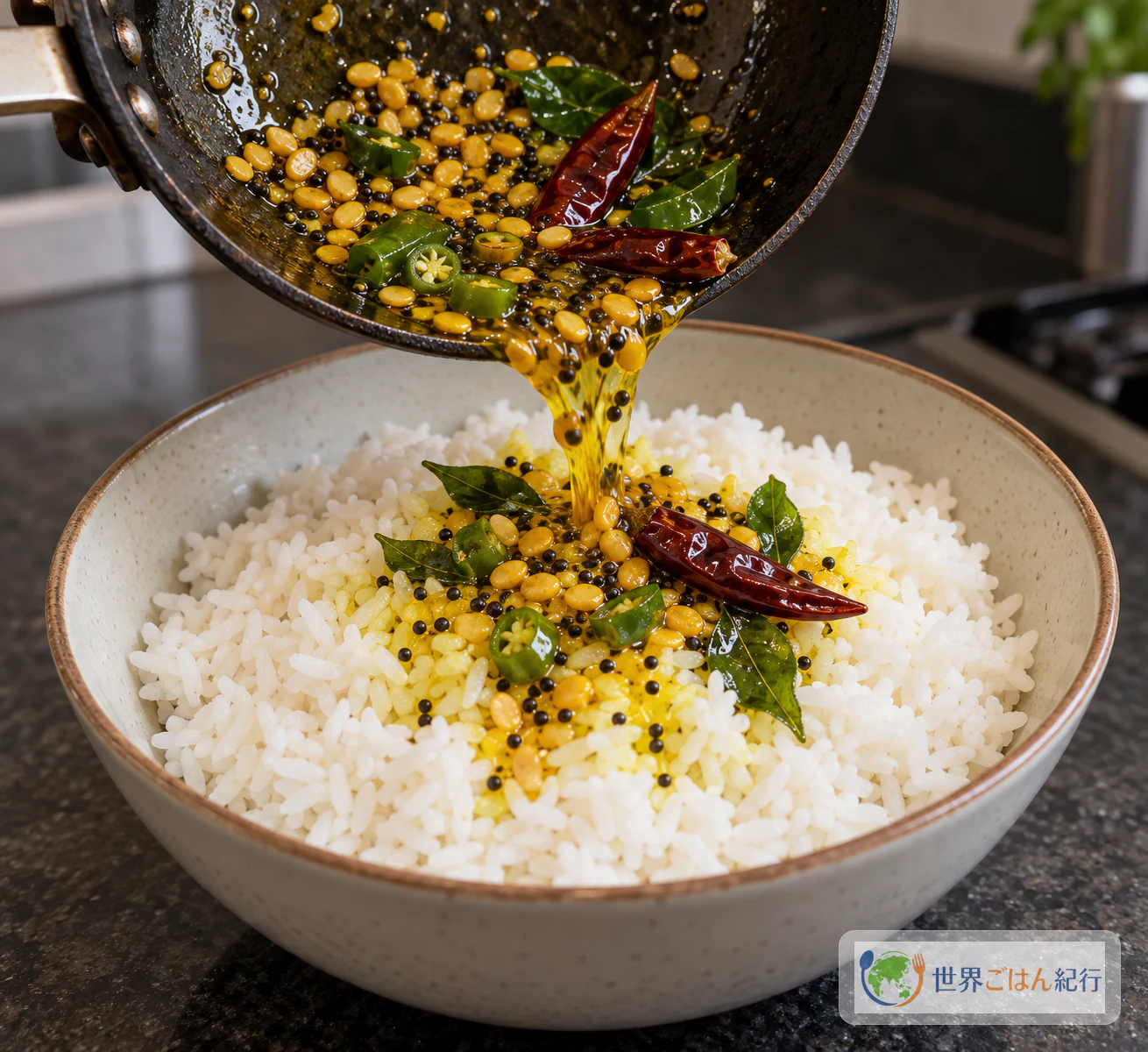
Mustard seeds crackle in a thin film of sesame oil, the urad dal turns golden, and curry leaves and chilies hiss for just a few seconds. With the heat switched off, turmeric and a pinch of hing go into the pan, and the whole tempering is poured over a bowl of plain cooked rice. Then come the fried nuts, the lemon juice and salt, one gentle fold, and a lid for a few minutes. That is chitranna (ಚಿತ್ರಾನ್ನ).
Karnataka Tourism, the state government's tourism site, introduces chitranna as lemon rice and calls it a popular Karnataka rice dish. This article follows one fixed version of the "Lemon Rice Recipe (Chitranna)" published by Dassana Amit on Dassana's Veg Recipes: the version made with rice that has already been cooked. The author gives ranges and optional ingredients; here one amount has been chosen within each range and both optional nuts are included, so the recipe below is one version among several, not the only correct one.
For more dishes from the same country, see the India country page.
The recipe page uses the English name Chitranna alongside "Lemon Rice." Karnataka Tourism's Kannada-language page writes it as ಚಿತ್ರಾನ್ನ.
Ingredients: One Fixed Version from Dassana Amit's Recipe
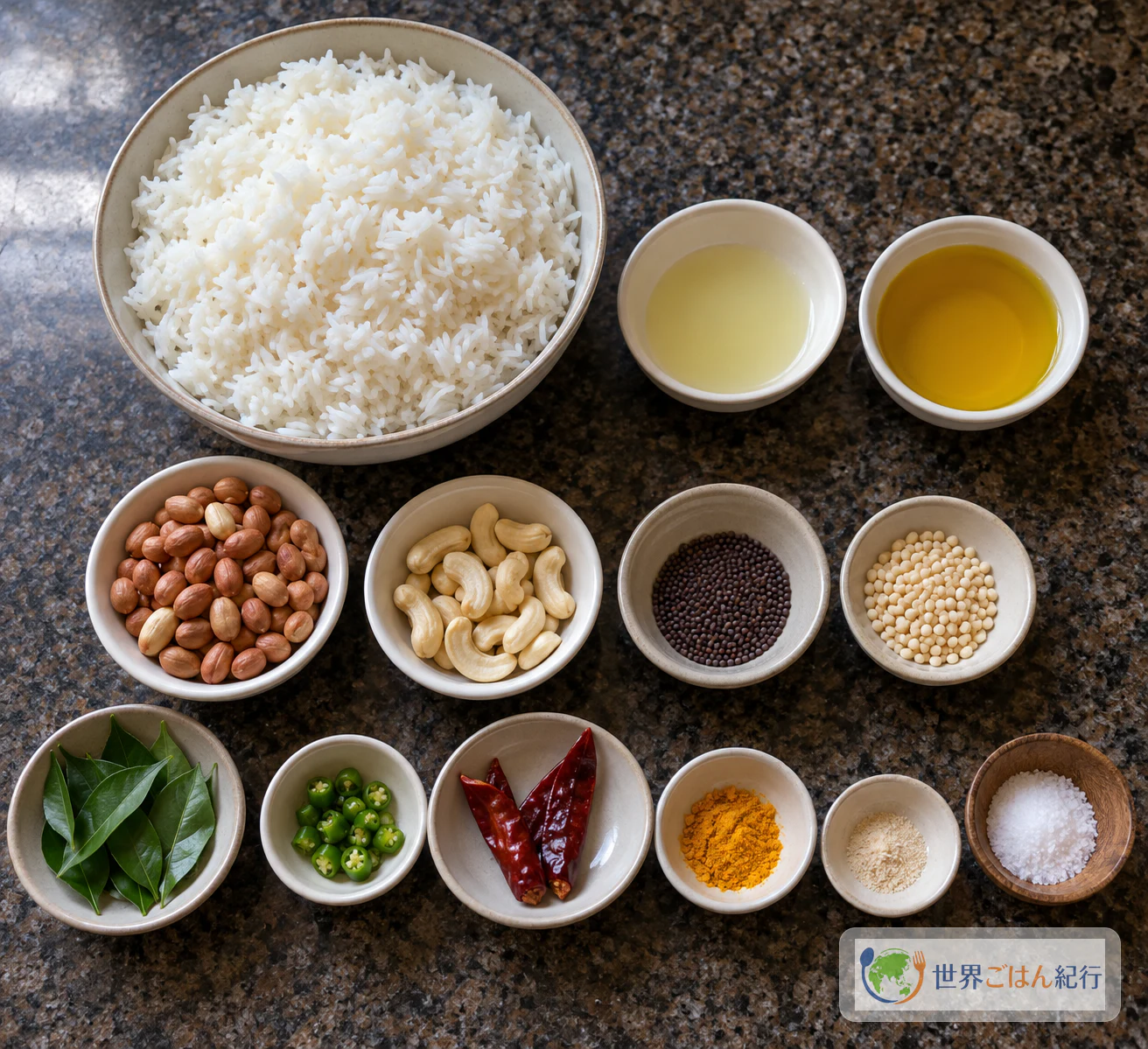
Salt is added as required.
Equipment
- A large bowl to hold the rice, with a lid or cover
- A frying pan or small skillet for the nuts and tempering
- A spoon or spatula for frying and for folding the rice
- A small plate or bowl for the fried nuts
Choosing and Swapping: What This Version Holds Fixed
Sesame oil. Use raw-seed sesame oil, also sold as gingelly oil. It is not the same as dark toasted sesame oil, whose strong roasted aroma is a different flavor. This article does not recommend swapping in toasted sesame oil or another oil as an equivalent.
Nuts. Peanuts and cashews are optional. This version includes both.
Rice. This version starts from rice that was cooked earlier, cooled, and used the same day. What matters is cooked rice whose grains stay separate rather than sticky.
What is not added. Some other descriptions and household recipes for chitranna include onion, garlic, coconut, chana dal, ginger or cilantro. None of those are in this version, and there is no garnish. Curry leaves are part of the tempering itself, so they stay in.
Method: Nuts, Tempering, Rice, Lemon
Have the cooked rice loosened in its bowl and every tempering ingredient measured out before the oil goes in the pan. The tempering moves quickly, and turmeric and hing go in only after the heat is switched off.
The steps below are guided by what you see and hear in the pan rather than by the clock. The only timed stage is the covered rest at the end.
This recipe uses rice that was cooked earlier, cooled, and used the same day. This article gives no storage time for the rice or for finished chitranna. Handle cooked rice and the finished dish according to your usual food-safety practice.
When It Goes Wrong: Fixing Chitranna in the Bowl
| Problem | Likely cause | What to do |
|---|---|---|
| The lemon tastes bitter or the tang is muted | Lemon juice added too early, such as into the hot pan | Following the author's advice, add the lemon juice only after the tempering has been poured over the rice |
| The rice is broken or mushy in places | Grains crushed while loosening or mixing | Break up clumps gently in step 1, and in step 6 fold rather than stir hard |
| The urad dal is pale | Moved on before it turned golden | Keep it on low heat until golden before adding the leaves and chilies |
| The flavor seems flat | Not enough salt | Salt is "as required" in this recipe; taste after the covered rest and add a little at a time |
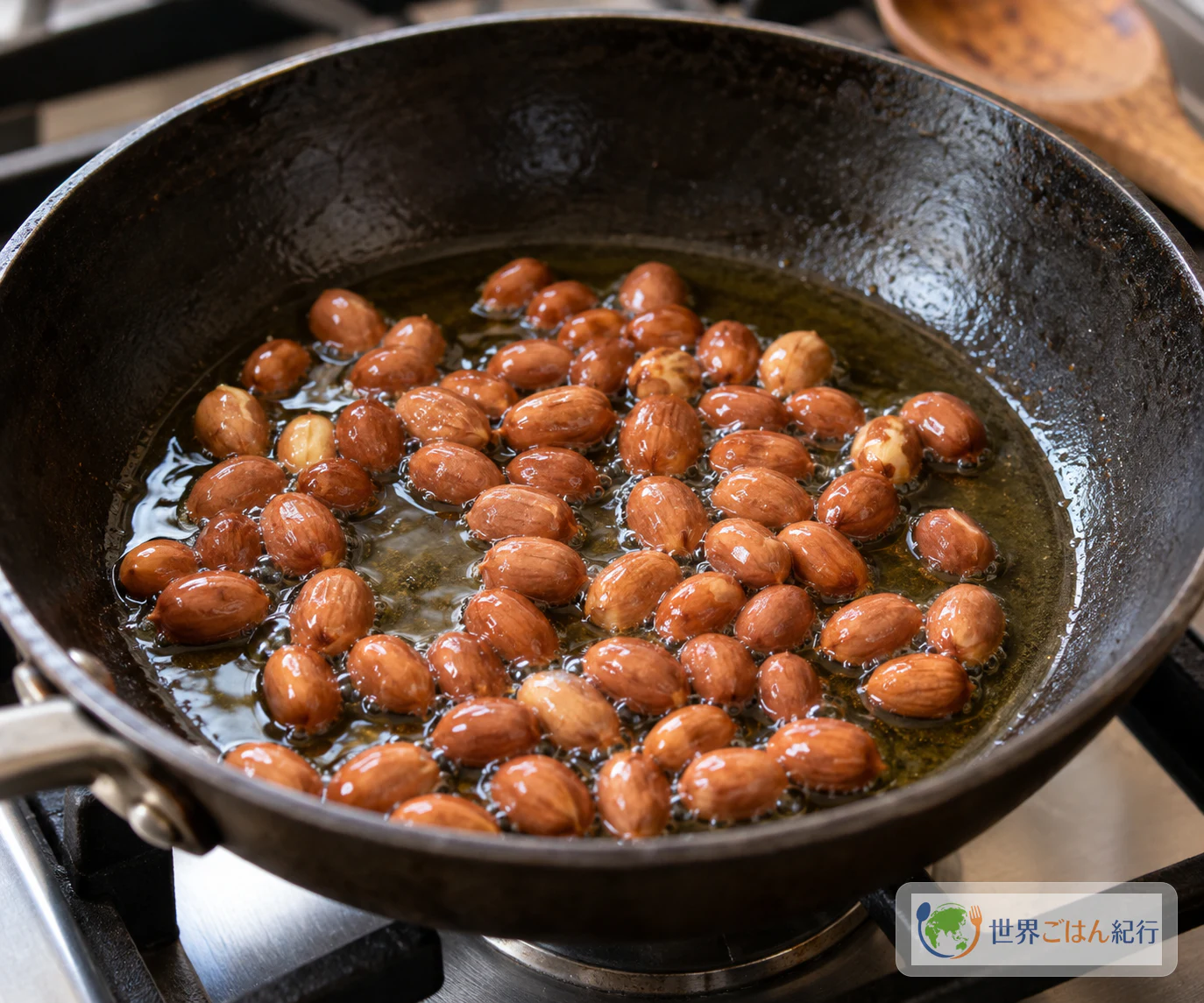
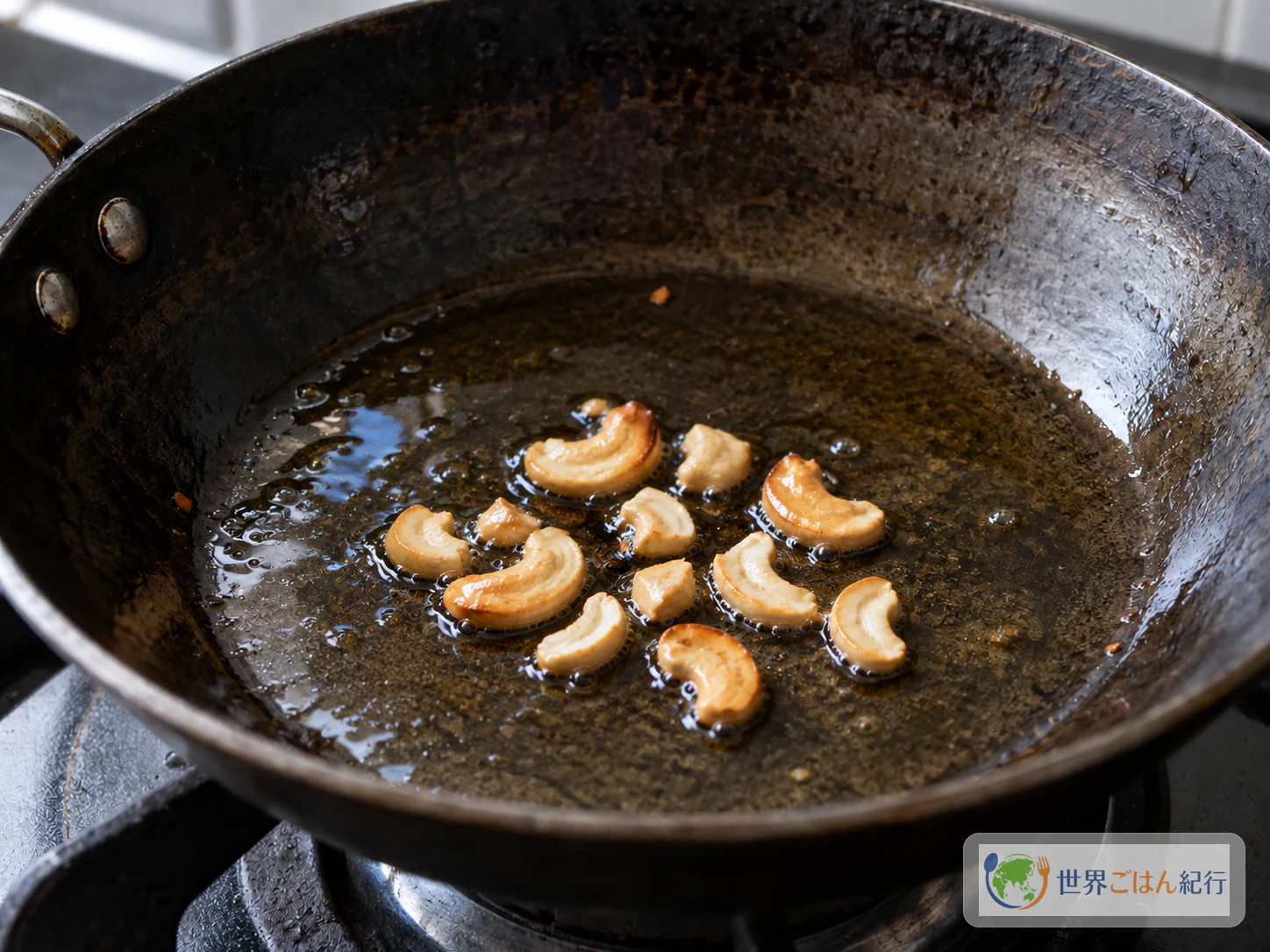
| The nuts are soft | Fried too briefly | Fry the peanuts until crunchy and the cashews until golden before removing them |
Variations Within the Author's Ranges
The recipe page gives ranges, and this article fixes one point within each. Within the author's own recipe, the range runs up to 4 cups of cooked rice, about 2 tbsp of lemon juice and 15 curry leaves. The peanuts and cashews are both optional on the source's list. The same page also offers a separate method that starts from raw rice; that is a different route with its own amounts and is not covered here.
Beyond that one recipe, chitranna varies from kitchen to kitchen. Chitra's Food Book shares a household version of chitranna (also called nimbehannu chitranna) that offers options such as onion, garlic and coconut. Those options belong to that recipe and are not folded into the version above.
Chitranna in Karnataka
Karnataka Tourism's English page describes chitranna as lemon rice and a popular rice dish in Karnataka. It sketches the dish in general terms, with cooked rice, lemon, nuts and a tempering, and mentions that using leftover rice is common in households. Its Kannada-language page gives the name as ಚಿತ್ರಾನ್ನ.
Household recipes show how the dish travels between kitchens. On Chitra's Food Book, the author describes having learned their chitranna from a Kannadiga friend named Megha, and notes uses for it such as breakfast, lunch and pooja. That page is one household's account; it does not mean a single preparation is universal across Karnataka.
The recipe this article follows comes from Dassana Amit, who, in the site's own about page, describes herself as a vegetarian chef and recipe developer and says the recipes are made and tested at home. That is the author's self-description, not an independent credential check.
The sources used here do not establish an origin, inventor or date for chitranna, so none is given.
Frequently Asked Questions
Can I use toasted sesame oil?
The source uses raw-seed sesame oil, also called gingelly oil, which is different from dark toasted sesame oil. This article does not recommend treating toasted sesame oil as a substitute, since its roasted aroma would change the dish.
Why does the lemon go in last?
Dassana Amit's note says that adding lemon earlier may make it bitter or mellow the taste, while adding it after the tempering has been poured over the rice keeps a brighter tang. That is the author's cooking advice.
What kind of rice should I use?
This version uses 3 cups of non-sticky cooked rice that was cooked earlier, cooled and used the same day. The source does not name a variety for this method, and this article does not add one.
Can I leave out the nuts?
The source lists peanuts and cashews as optional. This version includes both: 1/4 cup peanuts and 1 tbsp halved or chopped cashews. Leaving them out moves you to another of the author's options.
Can I add onion, coconut or cilantro?
Some other chitranna recipes include ingredients like these, but this version does not. The tempering here is mustard seeds, urad dal, curry leaves, green chili and dried red chilies, with turmeric and hing added off the heat, and there is no garnish.
Does this recipe cover cooking the rice from raw?
No. The source page has a separate raw-rice method with its own amounts and steps. This article covers only the version that starts from already-cooked rice.
Sources
- Dassana Amit, "Lemon Rice Recipe (Chitranna)," Dassana's Veg Recipes. The primary recipe: the cooked-rice method with its ranges of rice, lemon juice and curry leaves, optional peanuts and cashews, raw-seed sesame/gingelly oil for frying the nuts and tempering, the order of the tempering, turmeric and hing added off the heat, lemon juice added after the tempering is poured over the rice, the 4–5 minute covered rest, and the author's note on lemon timing. https://www.vegrecipesofindia.com/lemon-rice/
- Dassana Amit, "About Dassana Amit," Dassana's Veg Recipes. The author's own description of herself as a vegetarian chef and recipe developer whose recipes are made and tested at home; a self-description, not independent verification. https://www.vegrecipesofindia.com/about/
- Karnataka Tourism, Government of Karnataka, "Chitranna." Identifies chitranna as lemon rice and a popular Karnataka rice dish, with general ingredient context and a note that leftover rice is common in households. Not the measured recipe used here. https://karnatakatourism.org/en/experiences/chitranna/
- Karnataka Tourism, Government of Karnataka, "ಚಿತ್ರಾನ್ನ" (Kannada-language page). The Kannada-script name and official tourism context for chitranna in Karnataka. https://karnatakatourism.org/kn/experiences/chitranna
- Chitra, "Chitranna Recipe | Nimbehannu Chitranna," Chitra's Food Book. A separate household version learned from a Kannadiga friend, with notes on uses such as breakfast, lunch and pooja and its own optional ingredients; used for context only, not merged into this recipe. https://chitrasfoodbook.com/chitranna-recipenimbehannu-chitranna/