Curd Rice: Soft Rice, Cool Curd and a Hot Tempering Poured Over the Top
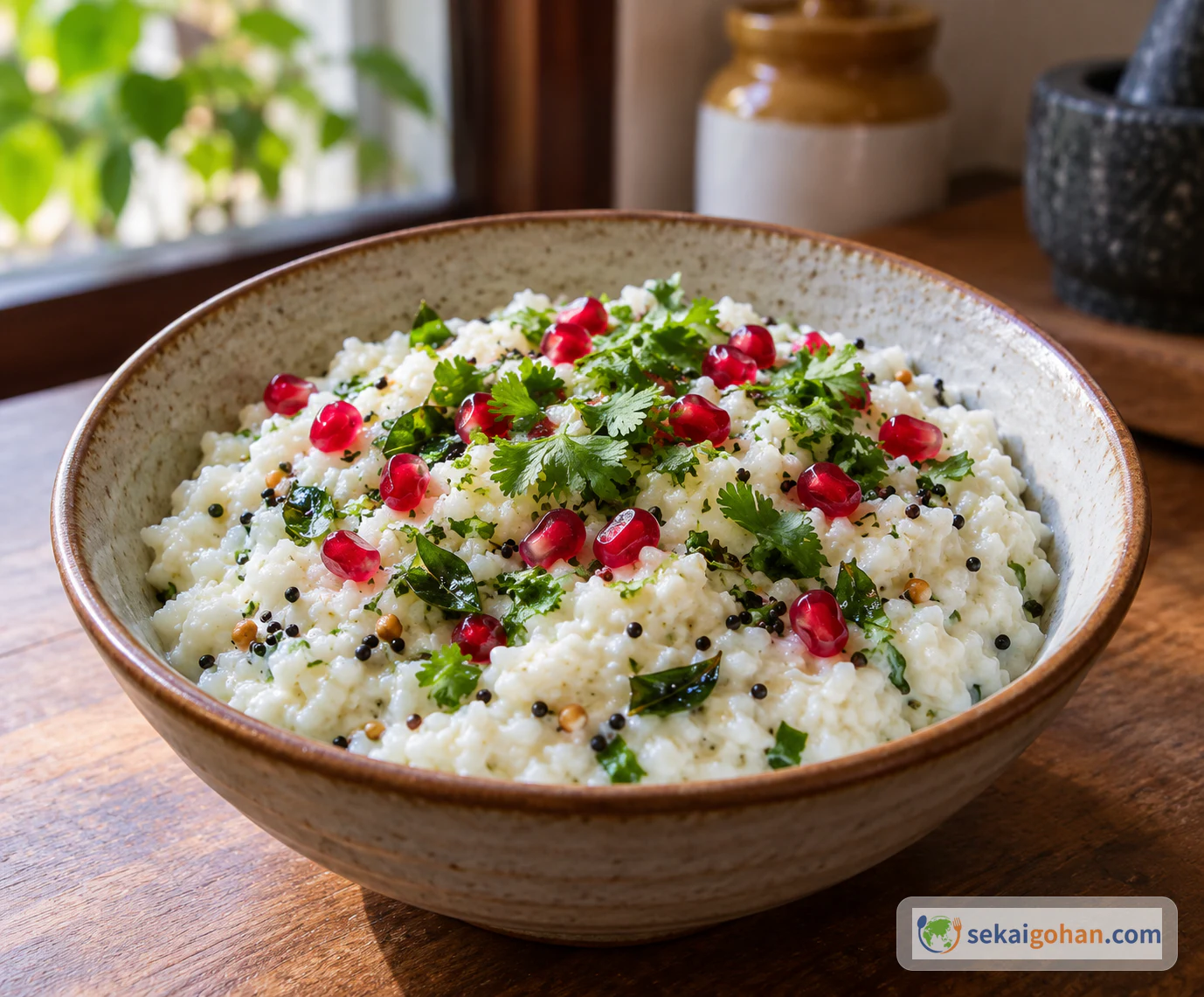
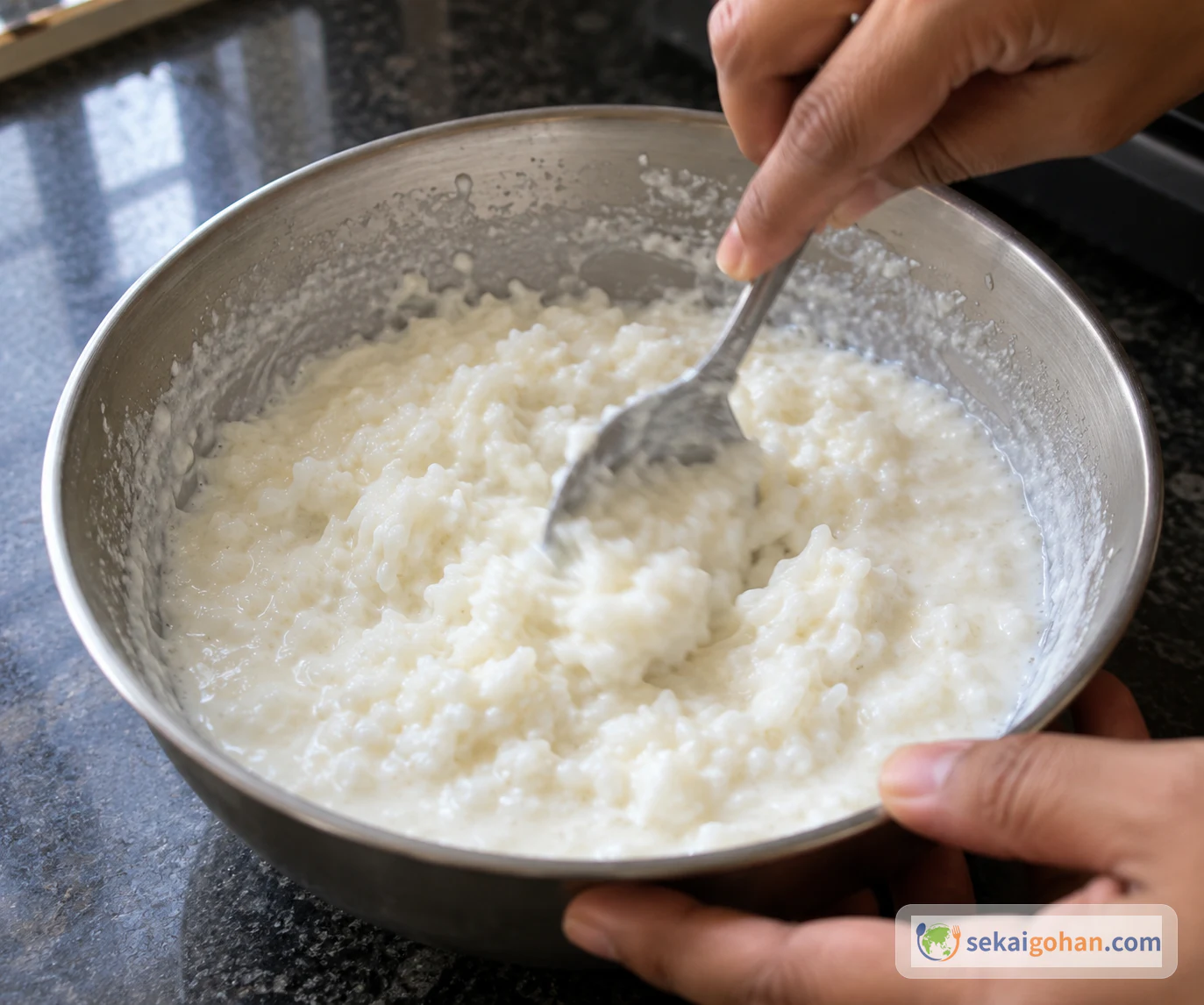
Cook the rice very soft and mash it, and let it cool completely before the curd goes in. Then finish with a tempering poured over straight from the pan, plus fresh coriander and pomegranate.
Curd rice brings together cooked rice and curd (plain yogurt), then adds a tempering of spices and herbs fried in oil. Dassana Amit, whose recipe this article follows, presents it on Veg Recipes of India as a South Indian dish and describes the version as the one made in the author's home. The page also mentions that curd rice is served in everyday meals and at festivals.
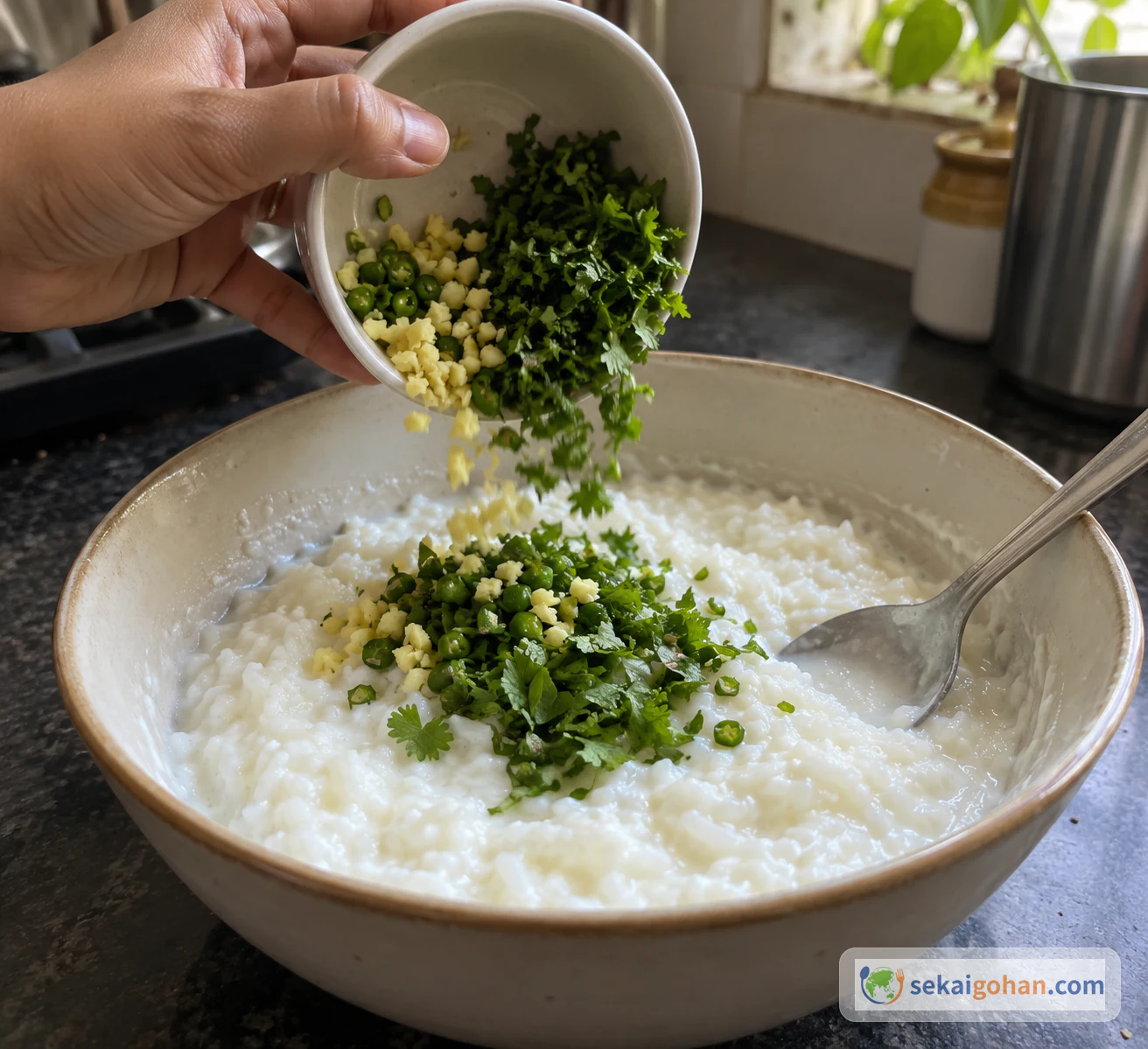
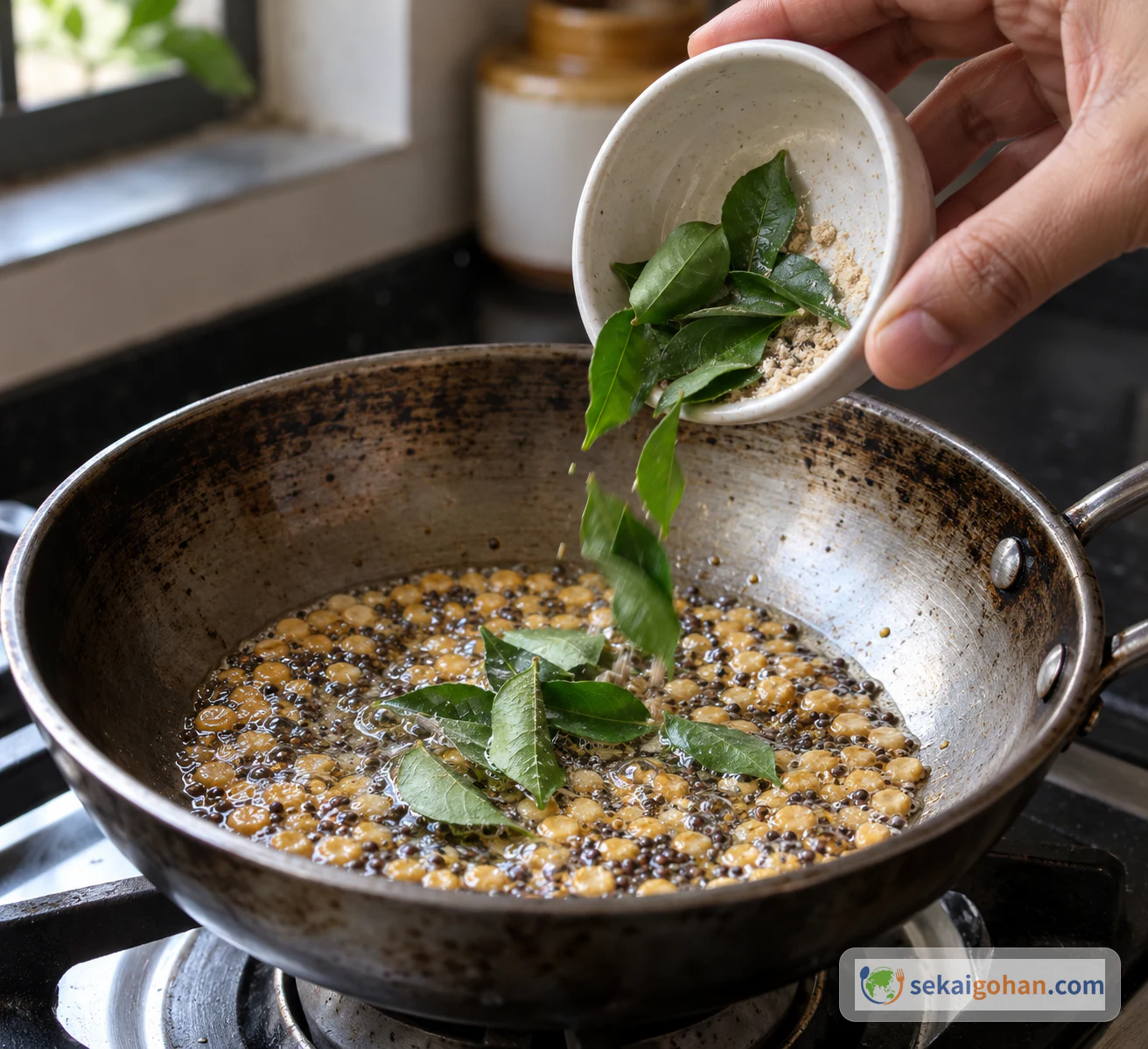
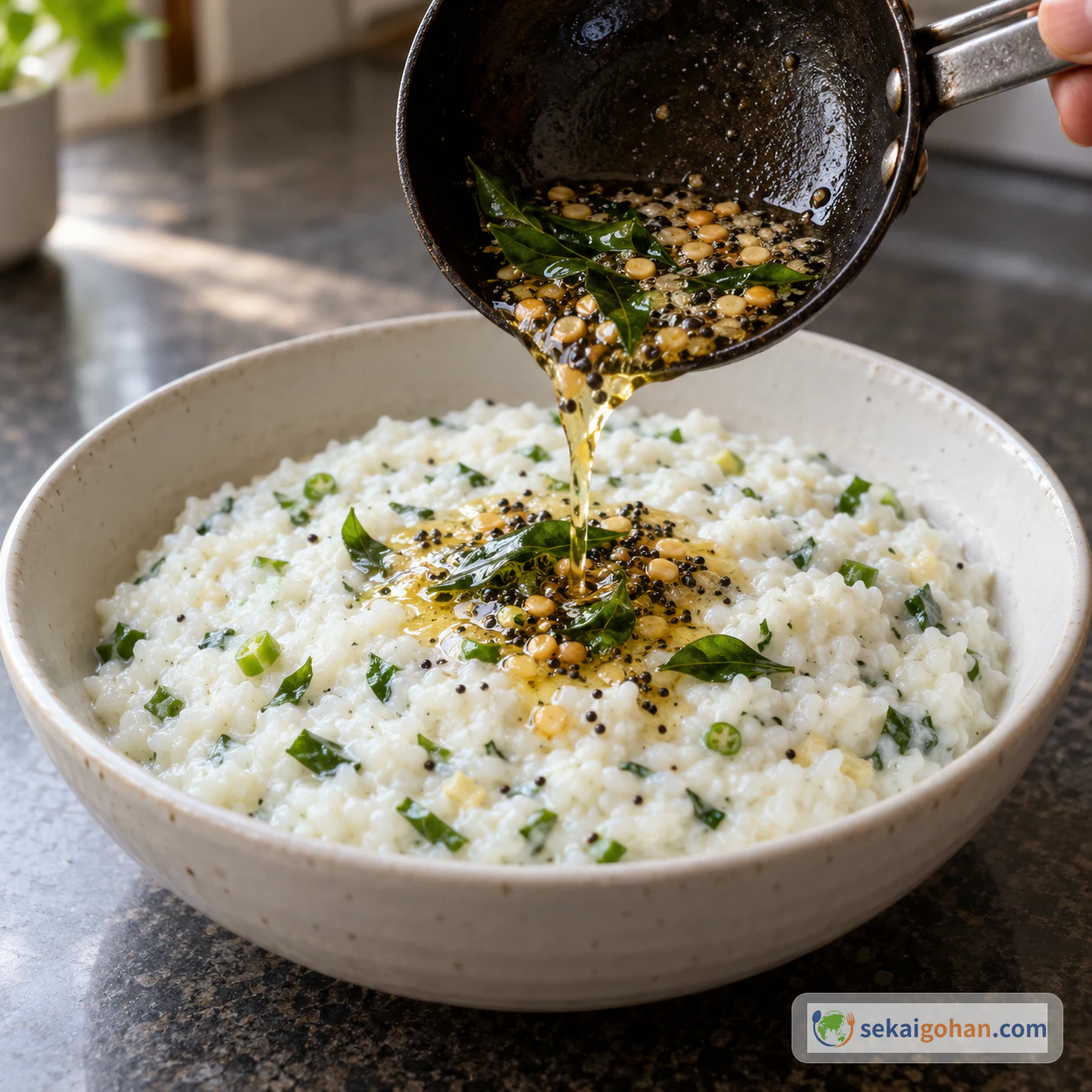
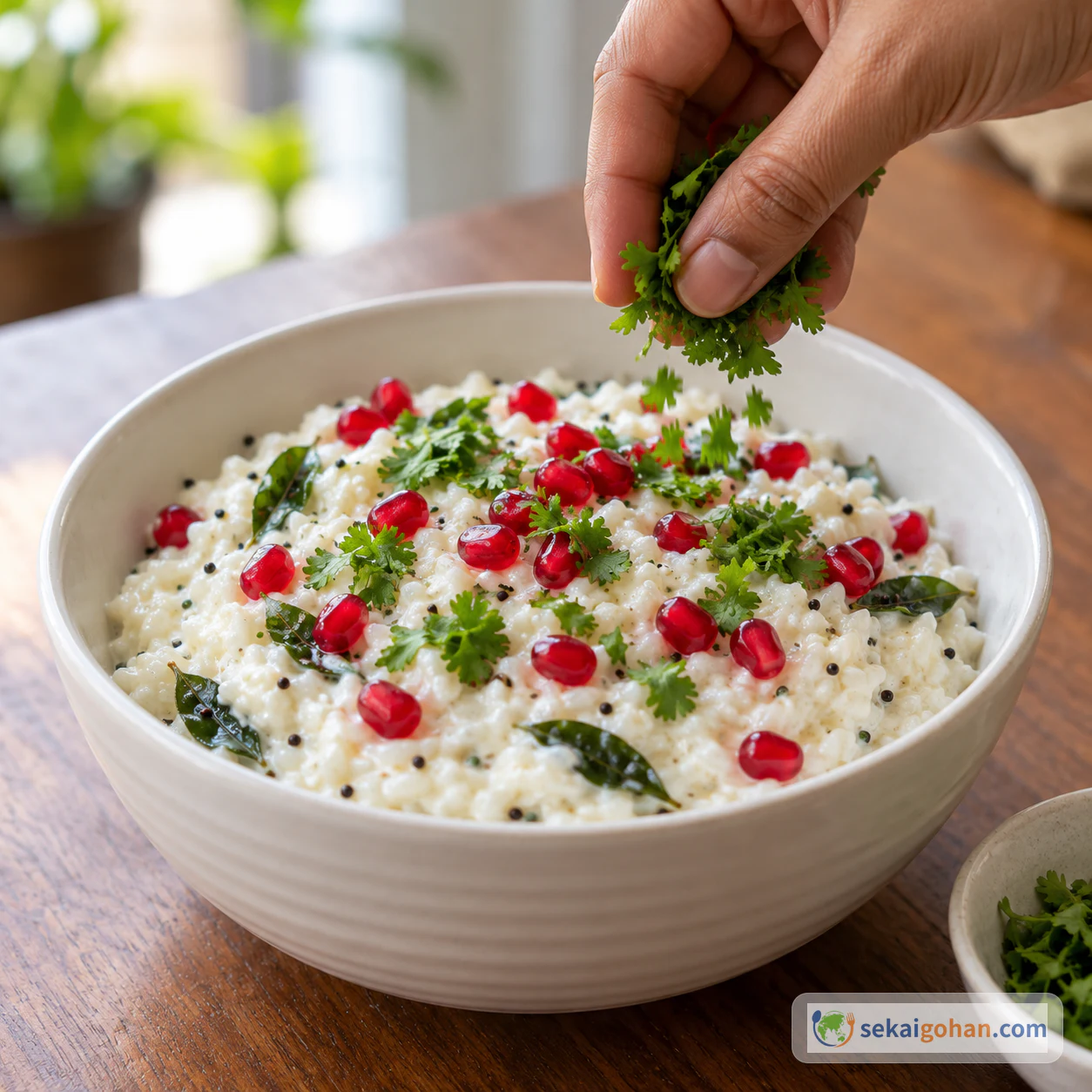
This version keeps the rice soft enough to mash, mixes in curd and a little milk, and adds chopped ginger, green chili, curry leaves and coriander. A small pan of sesame (gingelly) oil with mustard seeds, urad dal, whole curry leaves and asafoetida is poured over just before serving. Chopped coriander and pomegranate arils go on top.
This recipe has not been kitchen-tested by Sekai Gohan. It follows Dassana Amit's published method and amounts for 3 servings. For more dishes from the same country, see our India page.
Dassana Amit's page lists several regional names: Thayir Sadam or Bagala Bath in Tamil Nadu, Mosaranna in Karnataka, Thayir Choru in Kerala, Perugannam or Daddojanam in Telangana and Andhra Pradesh, and Dahi Bhat in Maharashtra. These are names given on that page. They do not mean every region or household uses the same recipe.
Two time listings that don't match
The recipe card on Dassana Amit's page lists prep 15 minutes, cook 5 minutes and total 20 minutes. The detailed method, however, pressure-cooks the rice on medium heat for 5–6 whistles or 8–9 minutes. The page does not explain the difference, and it gives no time for cooling the rice to room temperature. Both listings are shown here as they are printed. We do not offer a combined total, so allow for the cooling stage when you plan.
Ingredients (3 servings)
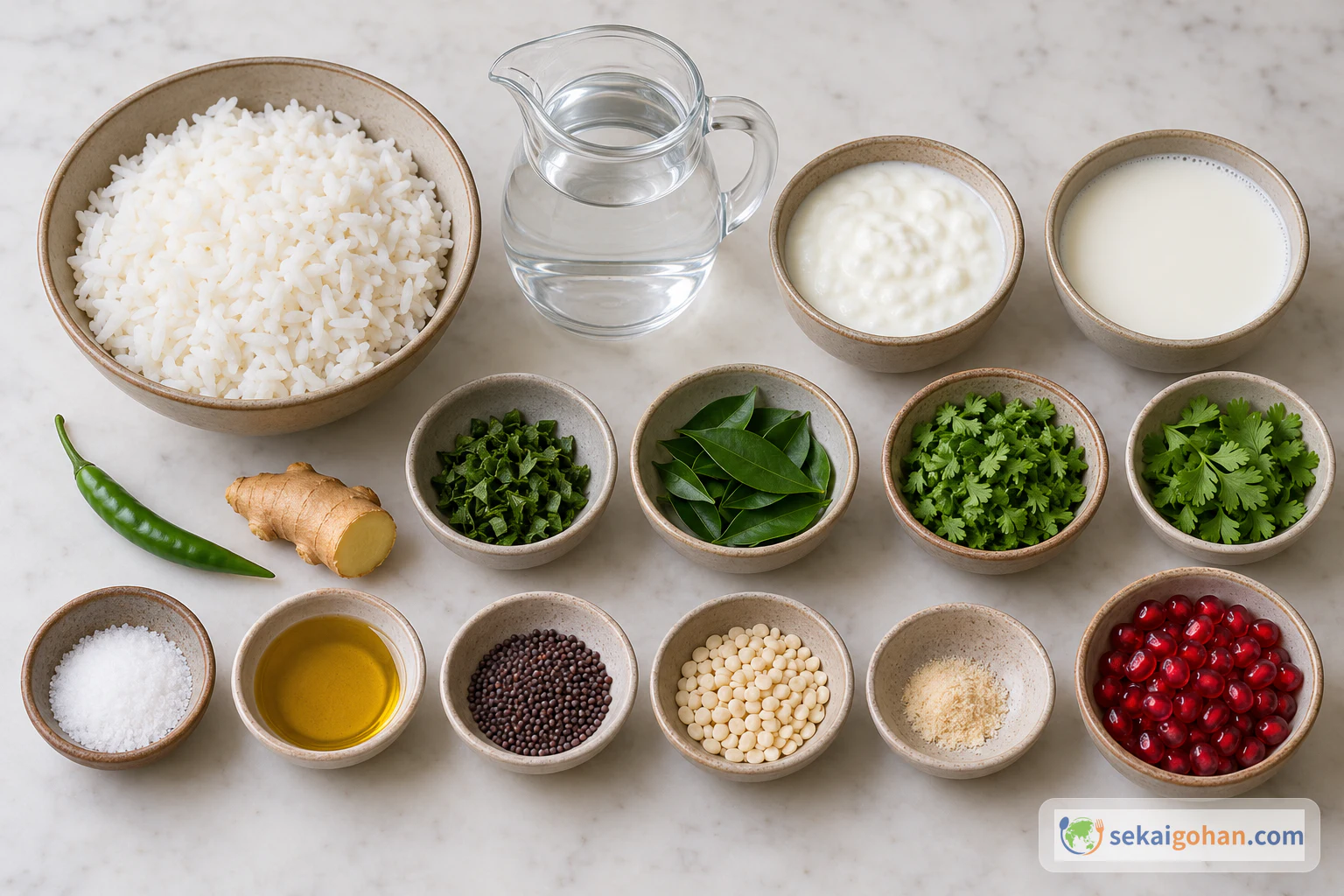
Set out the curry leaves and coriander as separate portions before you start. The finely chopped curry leaves go into the rice, and the whole leaves go into the tempering. One portion of coriander is mixed in, and the other is kept for the top.
Equipment
- 2-litre stovetop pressure cooker
- Spoon or masher
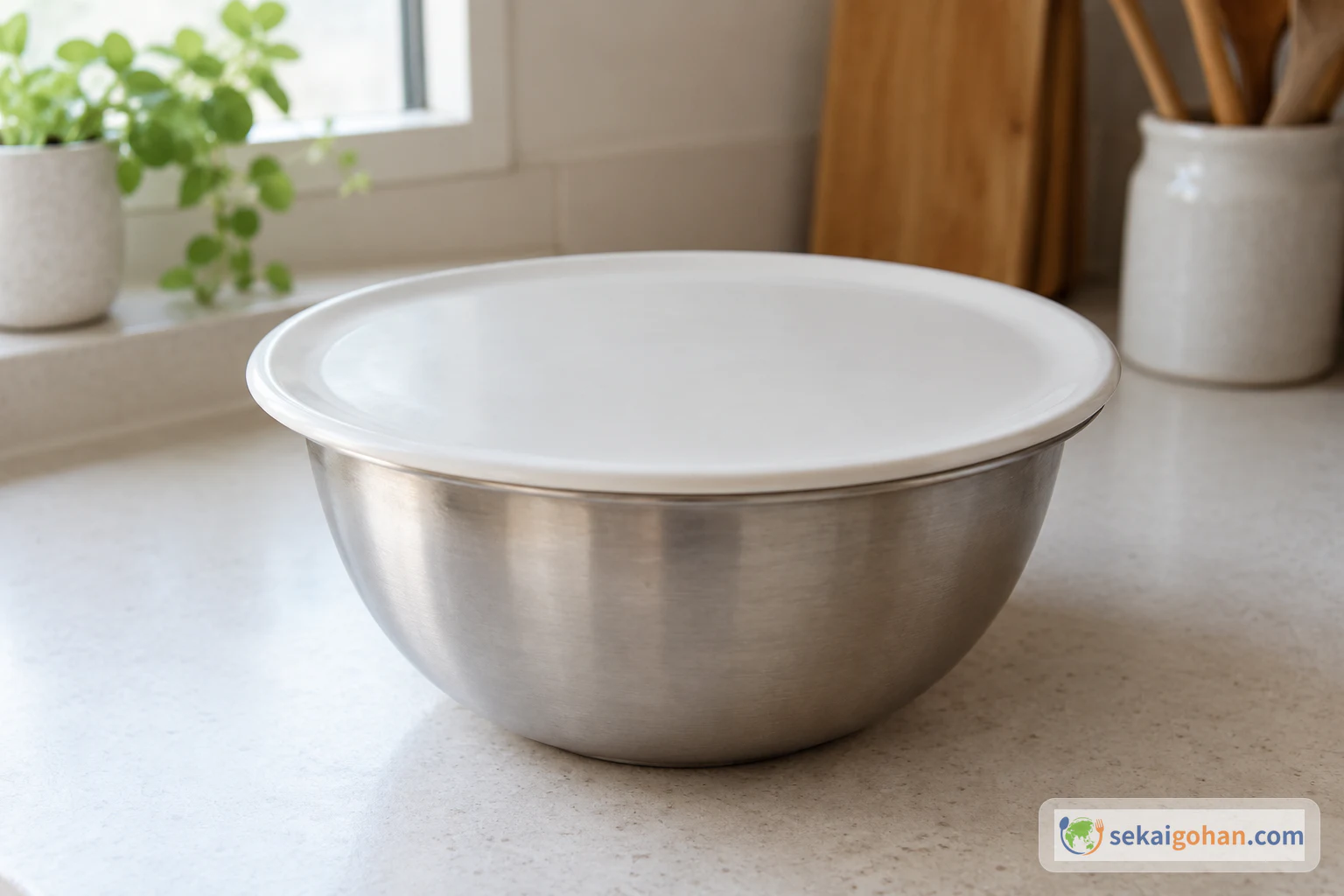
- Mixing bowl with a cover
- Small pan for the tempering
Choosing Your Rice, Curd and Dal
Rice: use an ordinary everyday rice. Sona Masuri is one example. The rice is meant to become softer than usual, so this is not a dish for keeping grains separate.
Curd: plain curd or plain yogurt.
Urad dal: look for the husked and split form. Whole black gram (with the dark skin) and chana dal are different ingredients.
Milk, urad dal and pomegranate: these can be left out.
What to Check at Each Stage
Watch for these signs at each stage.
| Stage | What to look for |
|---|---|
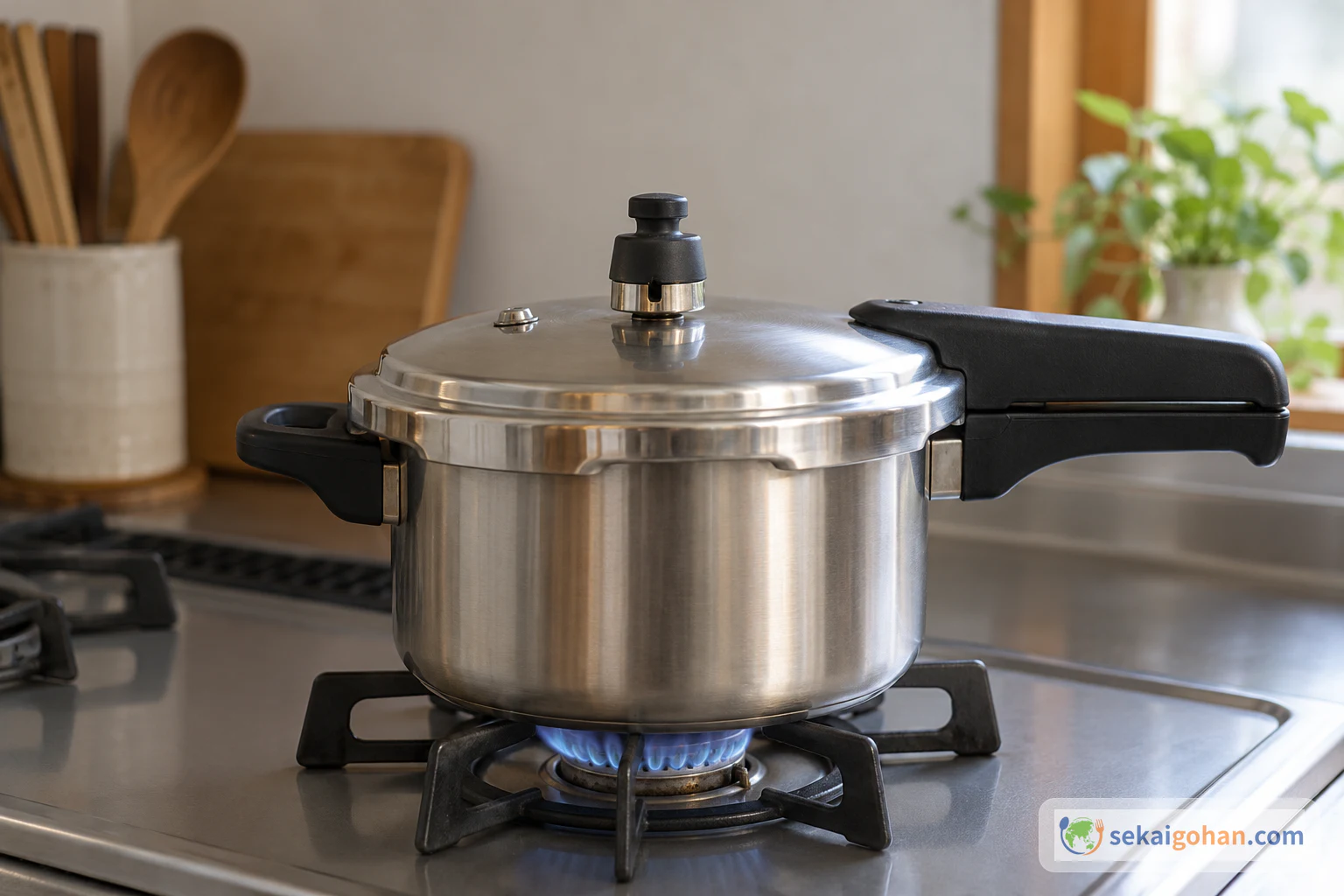
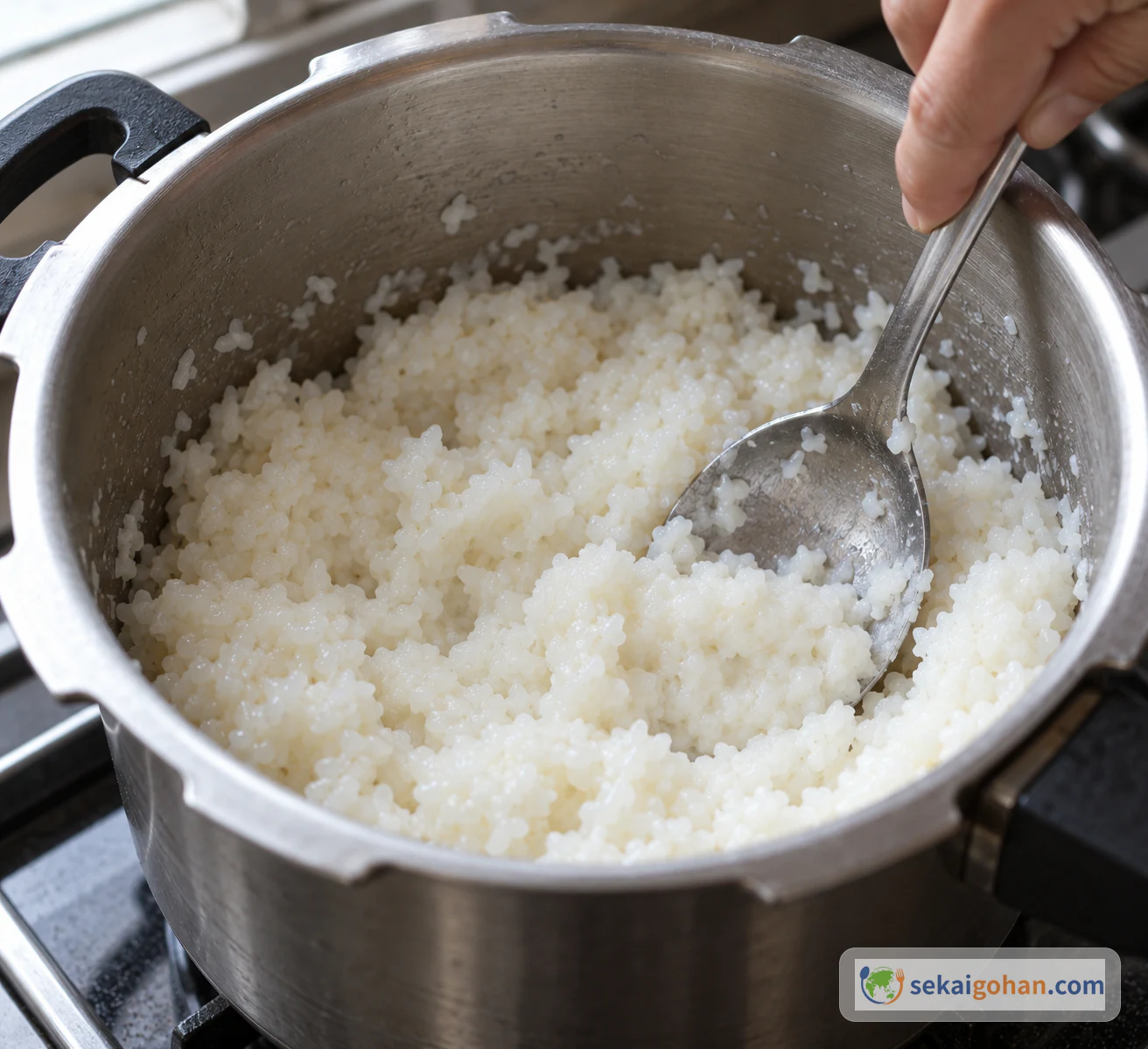
| After pressure-cooking | Wait for the pressure to settle on its own before opening. The rice should be very soft and mushy, softer than everyday rice |
| Before adding curd | The mashed rice should have cooled completely to room temperature |
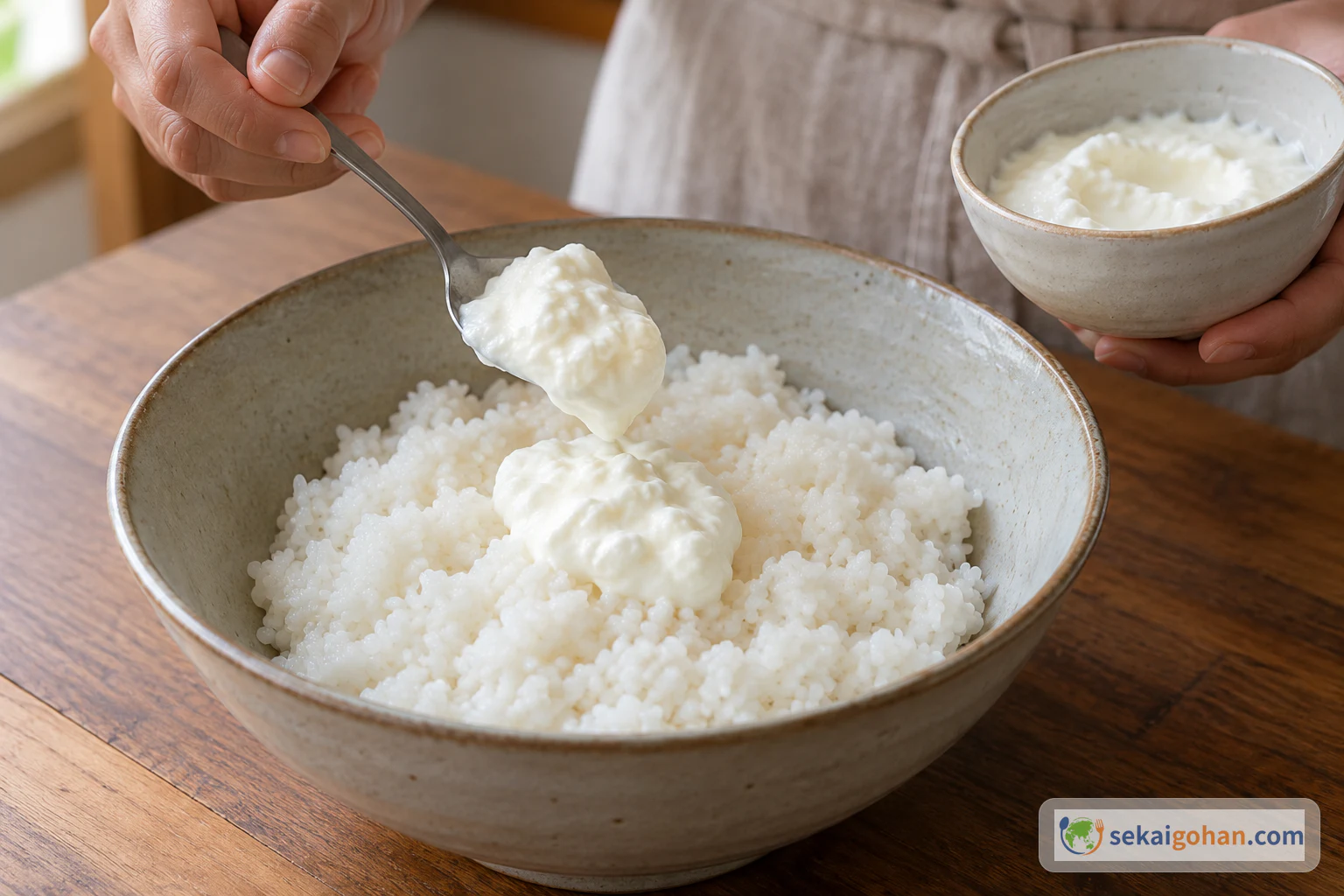
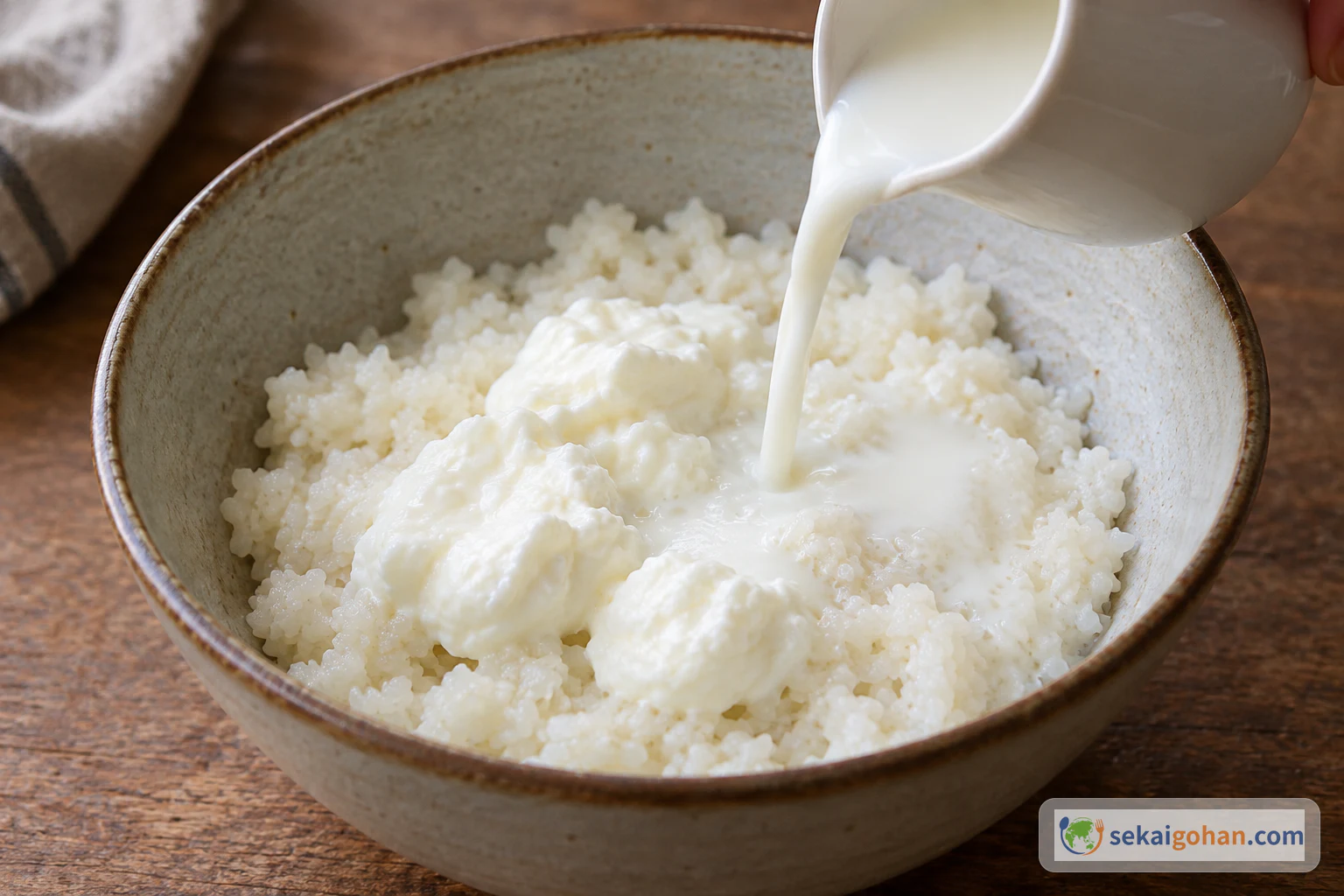
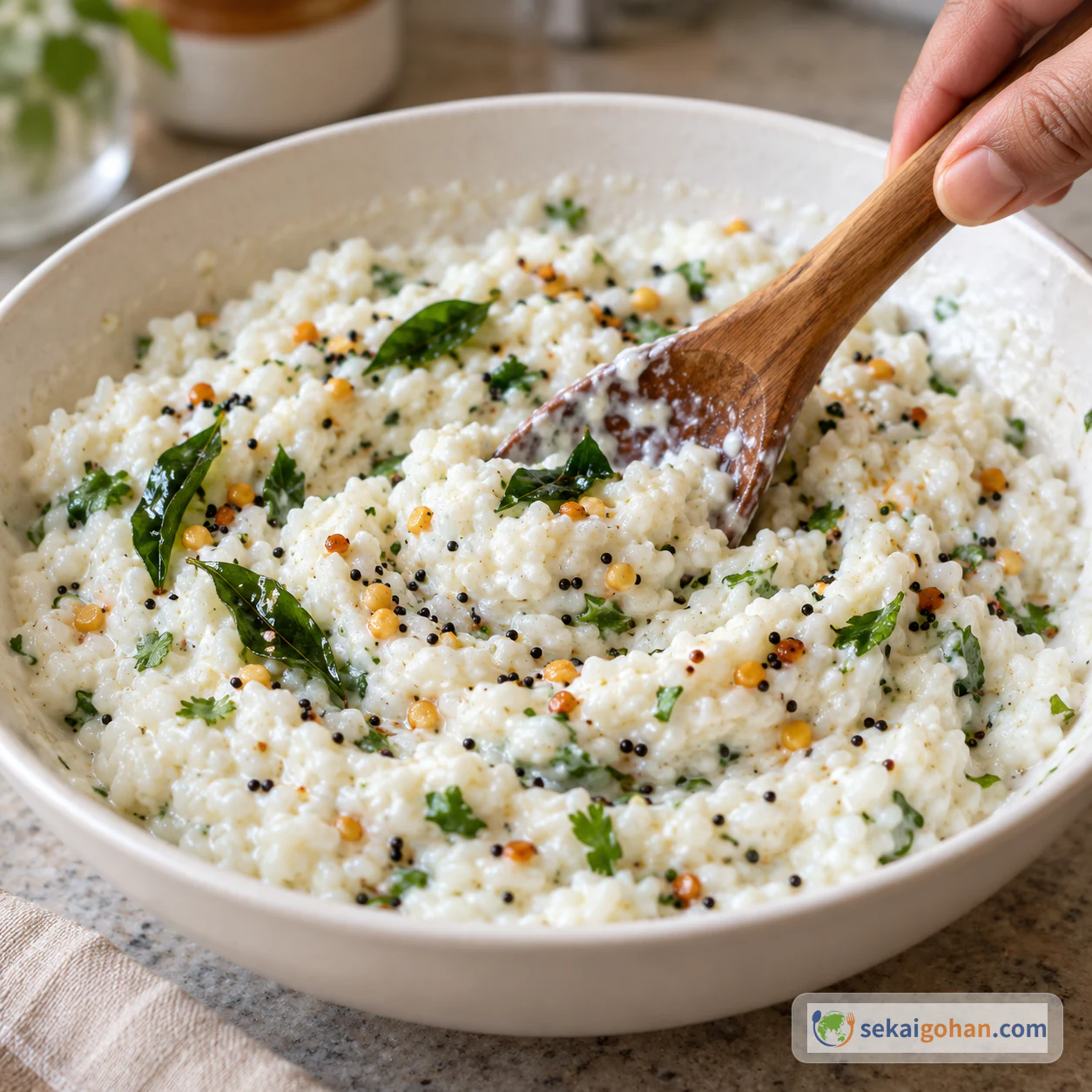
| After adding curd and milk | Mix until no lumps remain |
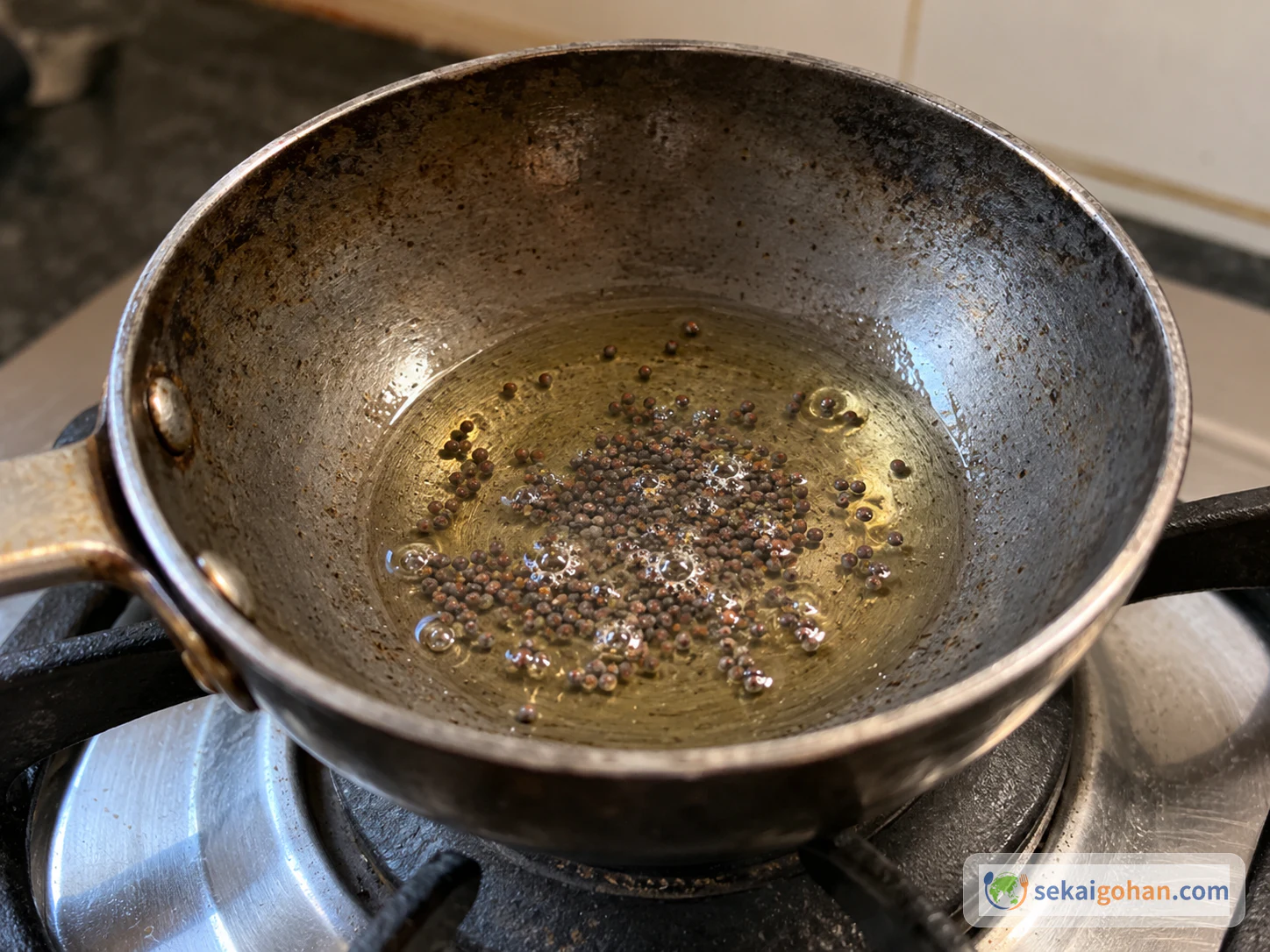
| Mustard seeds | Lower the heat once the oil is hot, then wait for the seeds to crackle before adding the dal |
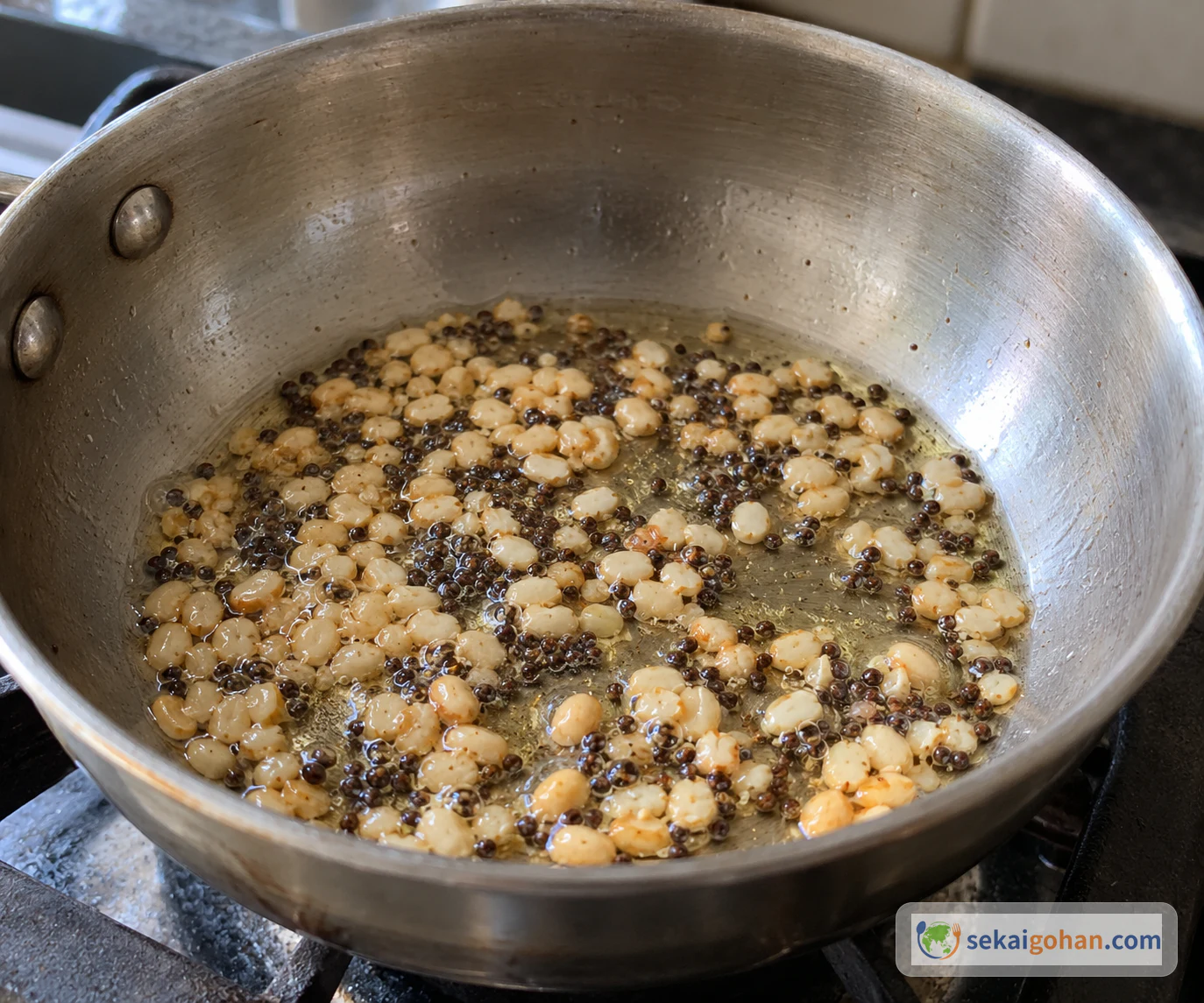
| Urad dal | Keep the heat low and stir until golden |
| Pouring the tempering | Turn off the heat and pour onto the rice right away, then mix |
Other Ways Curd Rice Is Written
Curd rice is published in many versions, and their proportions and methods differ. Two independently written recipes show how wide that range is. These are for comparison only; none of their amounts or ingredients are mixed into the version above.
- Sashi Recipes, "Creamy Curd Rice / Thayir Sadam": a recipe marked as serving 2. It uses 1 cup rice, 3 cups water, 3 cups curd and 3 tbsp ghee, among other ingredients, and its seasoning and optional creamy additions differ from Dassana Amit's version. It also tells you to cool the rice before adding the curd.
- Simple Indian Meals (Anushree Shetty), "Curd / Yogurt Rice Recipe (Thayir Sadam)": a recipe for 6 servings with different rice, water and yogurt proportions, an optional cucumber addition and a method that uses an electric pressure cooker and a separately prepared yogurt mixture.
Even within Dassana Amit's own page, some elements are optional, and the cook chooses among them. The milk, urad dal and pomegranate can be left out, and the page lets you cool the rice either in a mixing bowl or in the cooker. This article uses the mixing bowl and keeps the curry leaves for the tempering whole.
Frequently Asked Questions
How long does curd rice take?
The recipe card on Dassana Amit's page lists prep 15 minutes, cook 5 minutes and total 20 minutes. The detailed method, however, cooks the rice for 5–6 whistles or 8–9 minutes on medium heat, and the page does not reconcile the two. No time is given for cooling the rice to room temperature either, so the overall time is not stated here.
Should the sesame oil be toasted?
Dassana Amit's recipe calls for sesame or gingelly oil and does not say whether it is toasted. This article does not assume the dark toasted sesame oil sold as a finishing oil.
Can I leave out the milk, urad dal or pomegranate?
Yes. Dassana Amit's page marks all three as optional. The page also notes that the amount of milk can be adjusted, or the milk left out, depending on how sour the curd is. The amounts in this article are ¼ cup milk, ½ tsp urad dal and 1–2 tbsp pomegranate arils.
Why are there two portions of curry leaves and coriander?
The method uses each herb at two points. Finely chopped curry leaves are mixed into the rice, and whole leaves go into the tempering. One tablespoon of chopped coriander is mixed in, and another is kept for the garnish.
How much salt should I use?
The recipe gives salt only as "to taste," so add it gradually when you mix in the aromatics in step 9.
Is this the only way curd rice is made in South India?
No. Dassana Amit's page presents this as the author's home version. Other published recipes, such as those from Sashi Recipes and Simple Indian Meals, use different yields, proportions and methods. The regional names listed on Dassana Amit's page don't mean that every region uses one fixed recipe.
Sources
- Dassana Amit, "Curd Rice Recipe (Thayir Sadam | Daddojanam)," Dassana's Veg Recipes (Veg Recipes of India), updated 2023-02-21. The recipe followed in this article, with its 3-serving yield, ingredients and amounts, method order, the recipe card's time listings, the description of the dish as South Indian and its place in everyday meals and festivals, and the list of regional names. https://www.vegrecipesofindia.com/curd-rice/
- Sashi, "Creamy Curd Rice / Thayir Sadam," Sashi Recipes. A separate recipe for 2 servings with a different formula, including cooling the rice before adding curd. Used for comparison only. https://www.sashirecipes.com/curd-rice-thayir-sadam.html
- Anushree Shetty, "Curd / Yogurt Rice Recipe (Thayir Sadam)," Simple Indian Meals. A separate recipe with its own yield, proportions, optional cucumber and an electric pressure-cooker method. Used for comparison only. https://simpleindianmeals.com/curd-rice/