Chicken Rezala: A Thin, Pearly Gravy with Fat Floating on Top
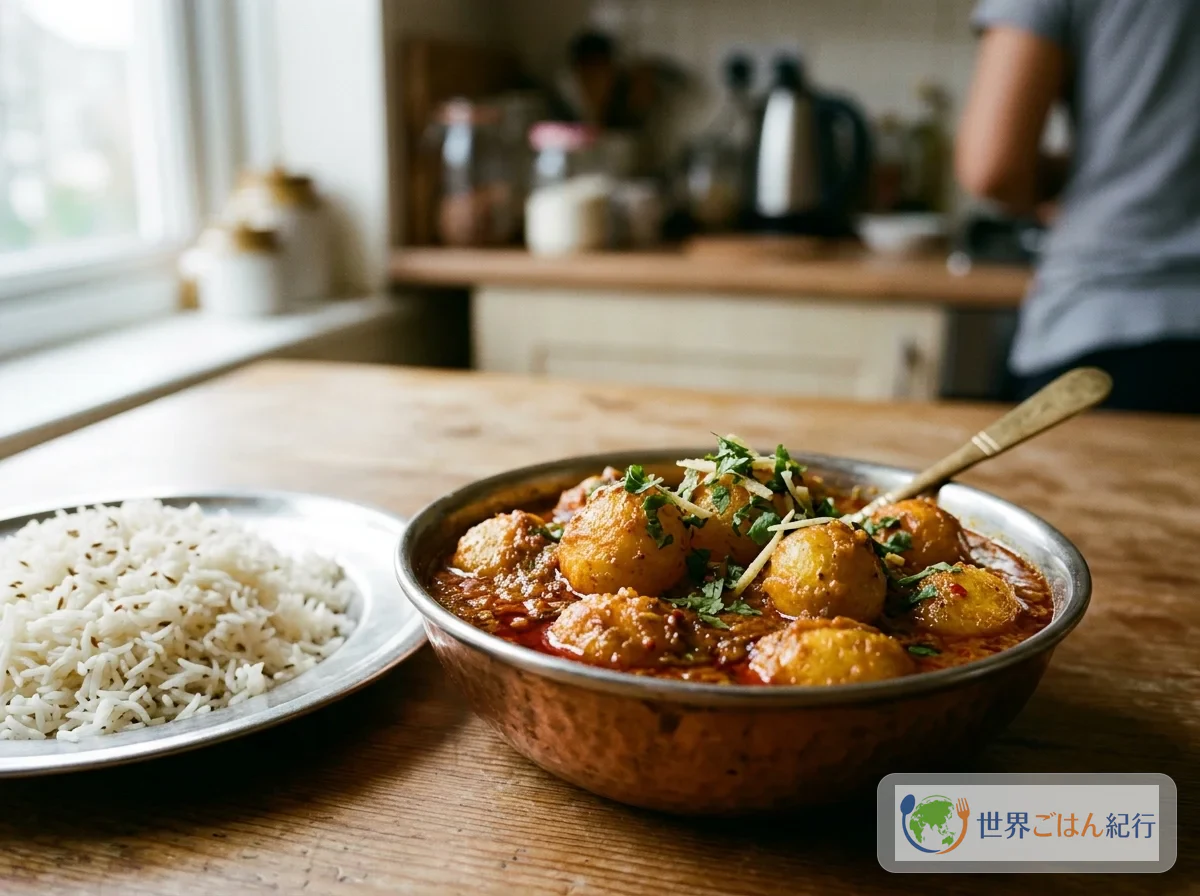
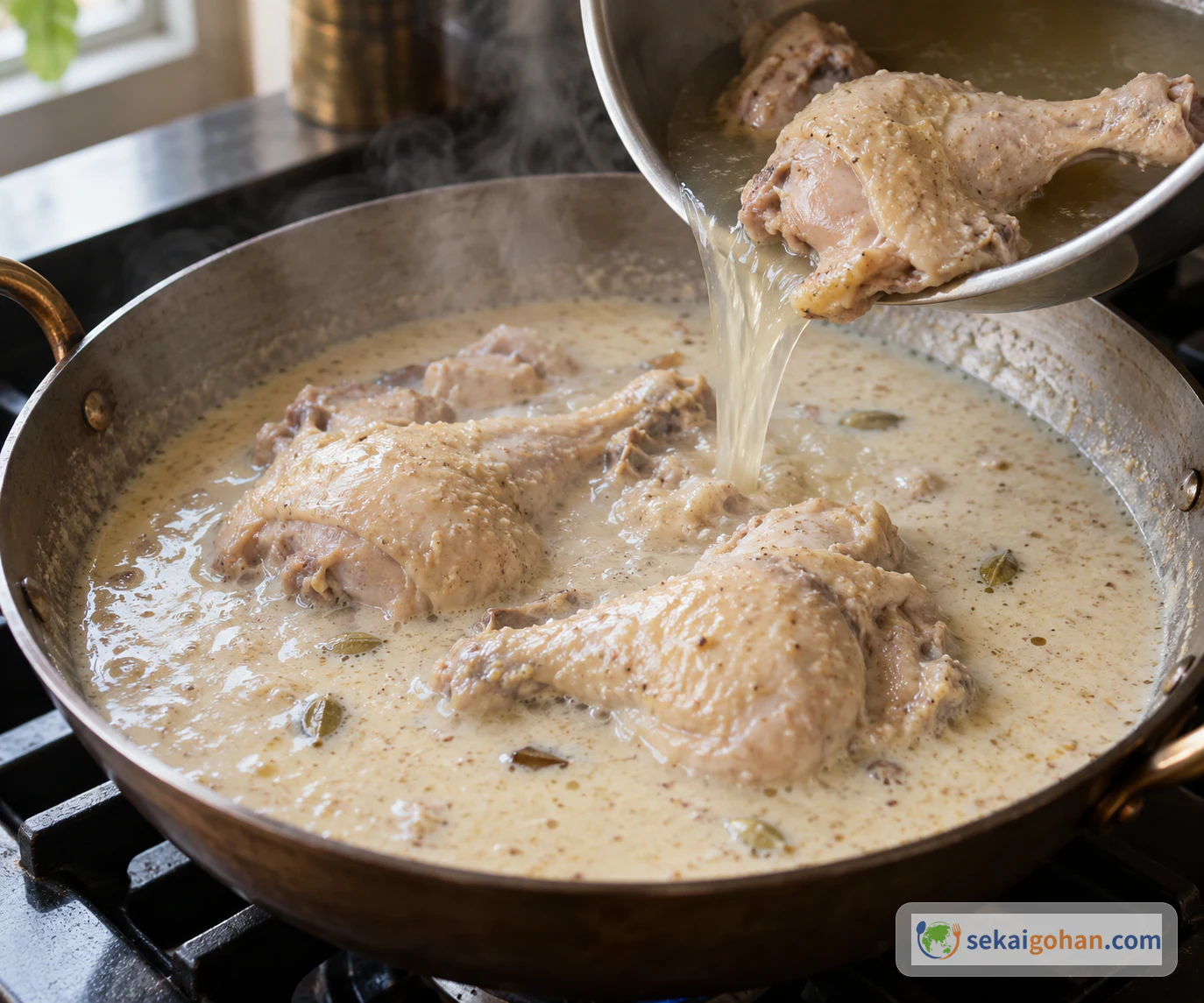
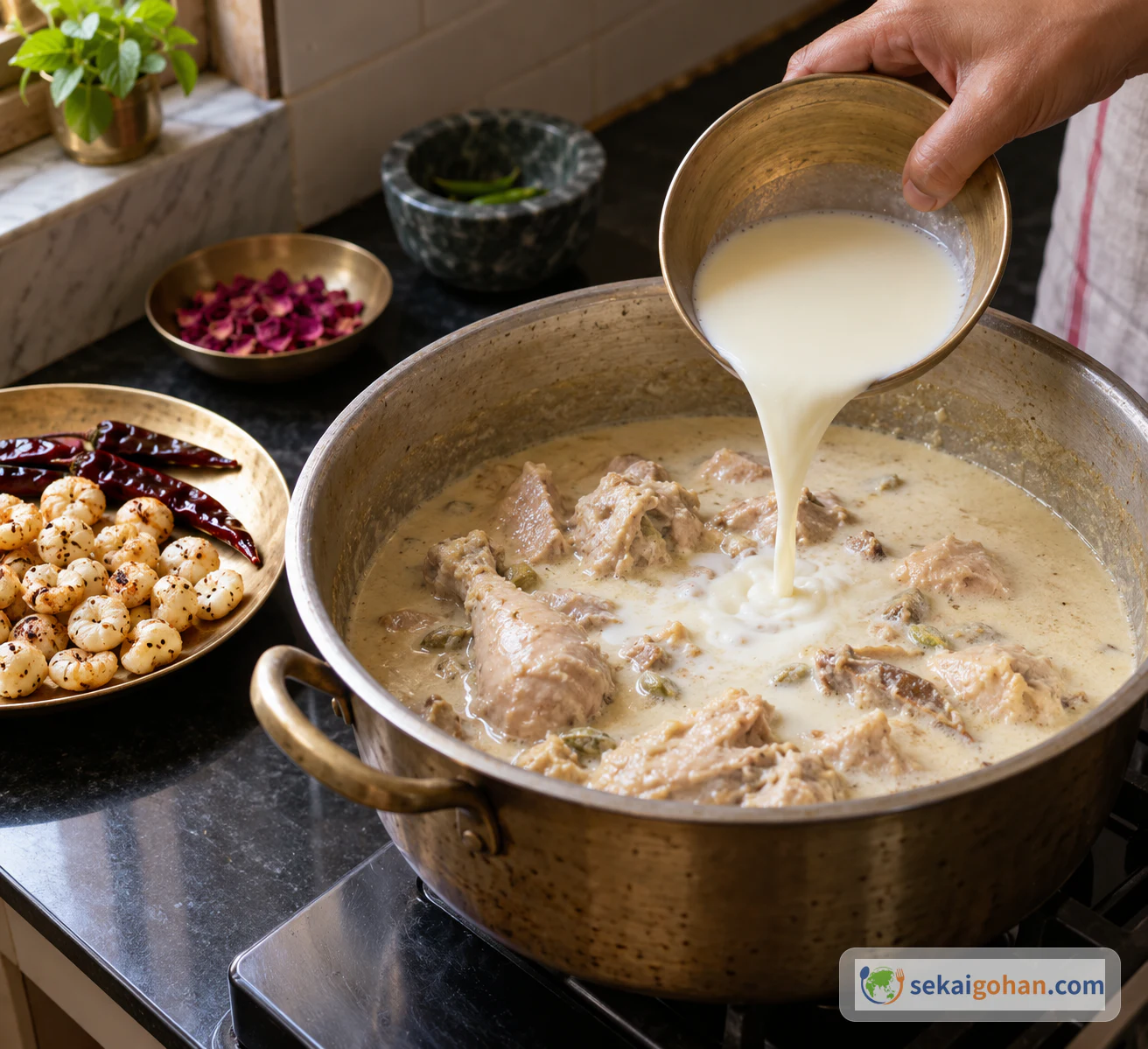
A thin gravy that stays pale and pearly, with a layer of fat at the surface. It should not be thick and creamy. Build it in layers: poach the chicken first, then cook the onion, juices, powders and yogurt one stage at a time, and add the fragrant milk only after the heat is off.
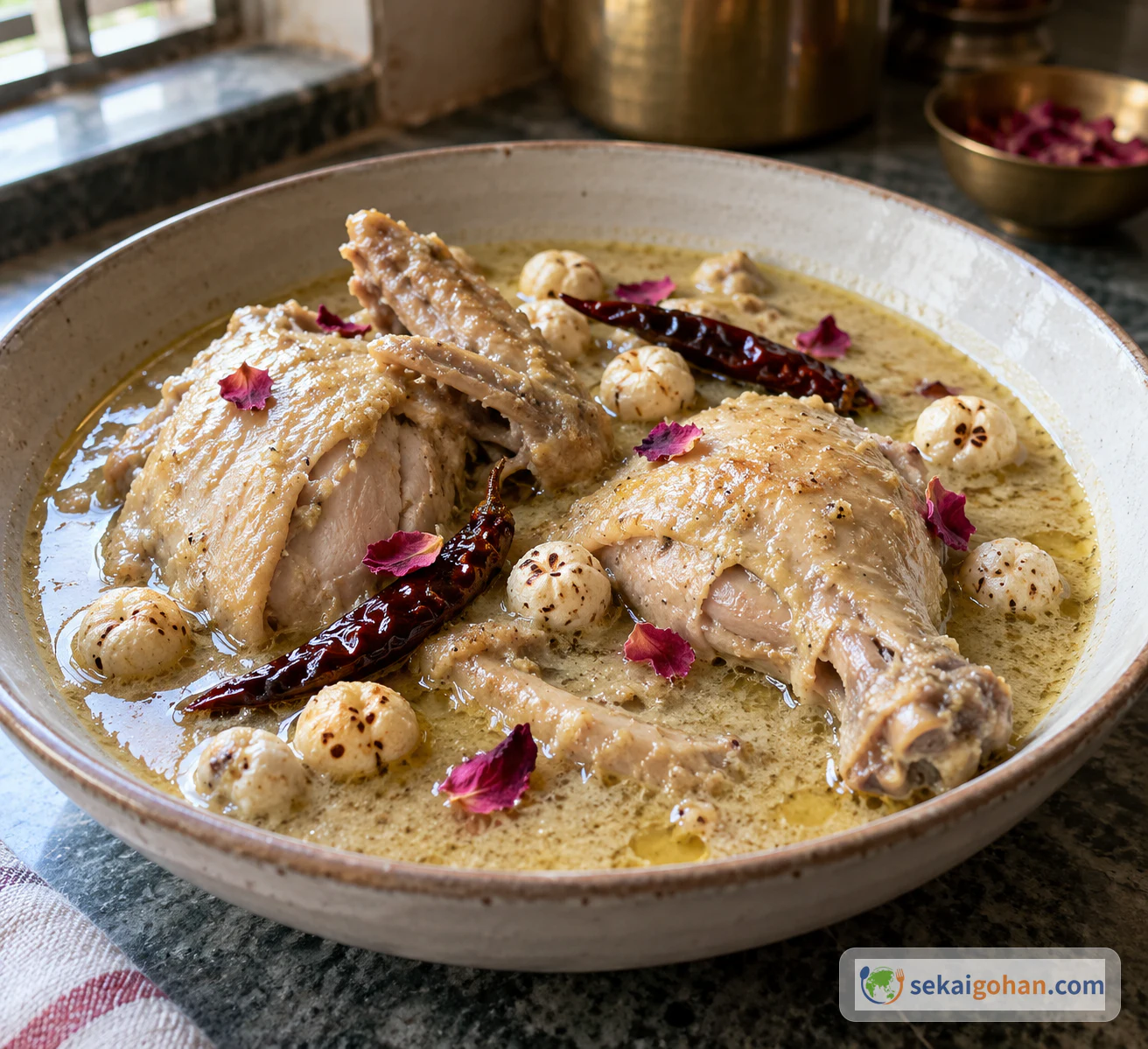
In the Mughlai restaurants of Calcutta (Kolkata), Bong Eats writes, chicken rezala comes to the table as a thin gravy, pearly white, with fat floating across its surface. Their version finishes the bowl with fried whole red chillies, crisp makhana (fox nuts) and a scatter of rose petals, so the pale color carries through from the first stage of cooking to the last.
The recipe in this article follows Bong Eats' "Calcutta Chicken Rezala," published in 2023. It is not an official recipe from any one restaurant. Bong Eats explains that its team tasted rezala at several Kolkata restaurants, whose versions differed, and worked through multiple batches to reverse-engineer a restaurant-style rezala for home cooks. A video by Mr. Nadim Amin served as one starting point. The team says plainly that this is not a homestyle dish. So read it as one careful reconstruction of a Calcutta restaurant rezala. It is neither the single authentic form nor the standard Bengali home version. Bong Eats lists the recipe at 6 servings and about 90 minutes.
One change from the published recipe is deliberate. Bong Eats tells cooks to wash the raw chicken first. This article does not. FoodSafety.gov advises against washing poultry, because splashing spreads harmful germs around the kitchen. The method below also uses a thermometer to check the chicken instead of relying on the stage times alone.
Sekai Gohan has not kitchen-tested this recipe. The stage times below are a cooking guide. They do not prove the chicken is safely cooked, so check the center of the thickest piece with a thermometer.
For more dishes from the country, see Indian recipes and food culture.
One Name, Many Pots: Where Rezala Varies
Rezala is a name shared by recipes that differ a great deal. Several recipe sources show that the ingredients and their order change from cook to cook and from region to region.
- Another Kolkata-style version. SBS Food publishes a "Chicken rezala Kolkata-style" credited to Will Meyrick. It serves 3–4 and uses 800 g of chicken. It is built on a mixed toasted spice-and-nut paste, coconut milk, blended green chilli and rosewater, and uses no yogurt or cornflour.
- A family-style recipe in a food-history essay. In GOYA's "The Rezala Route, From History to Plate," Tarana Husain Khan includes a recipe credited to Afreen Alvi. It adds onion paste, yogurt and poppy seeds in a different order from the version here.
- Bengal, Bangladesh and Bhopal. In Open Magazine, the same writer describes different Bengali, Bangladeshi and Bhopali rezalas, including a coriander-heavy Bhopali version that is distinct from the white Kolkata style.
- A restaurant's mutton rezala. A 2001 Times of India report on Sabir's, a Kolkata restaurant, relays a family member's account of their mutton rezala: dahi (yogurt), ghee, poppy seeds, saffron and mace, cooked over a charcoal fire.
None of these is mixed into the recipe below. They show how wide the name is. They are not a list of ingredients to add.
Not just "a white korma"
A pale color, yogurt and perfume are not enough to call a dish rezala, and they do not mark a clear line between rezala and qorma or other white curries. Bong Eats describes its own version as something like a white kaliya rather than a korma. That comparison is how this recipe's makers see their dish. It is not a definition for every rezala. What sets this particular version apart is its structure:
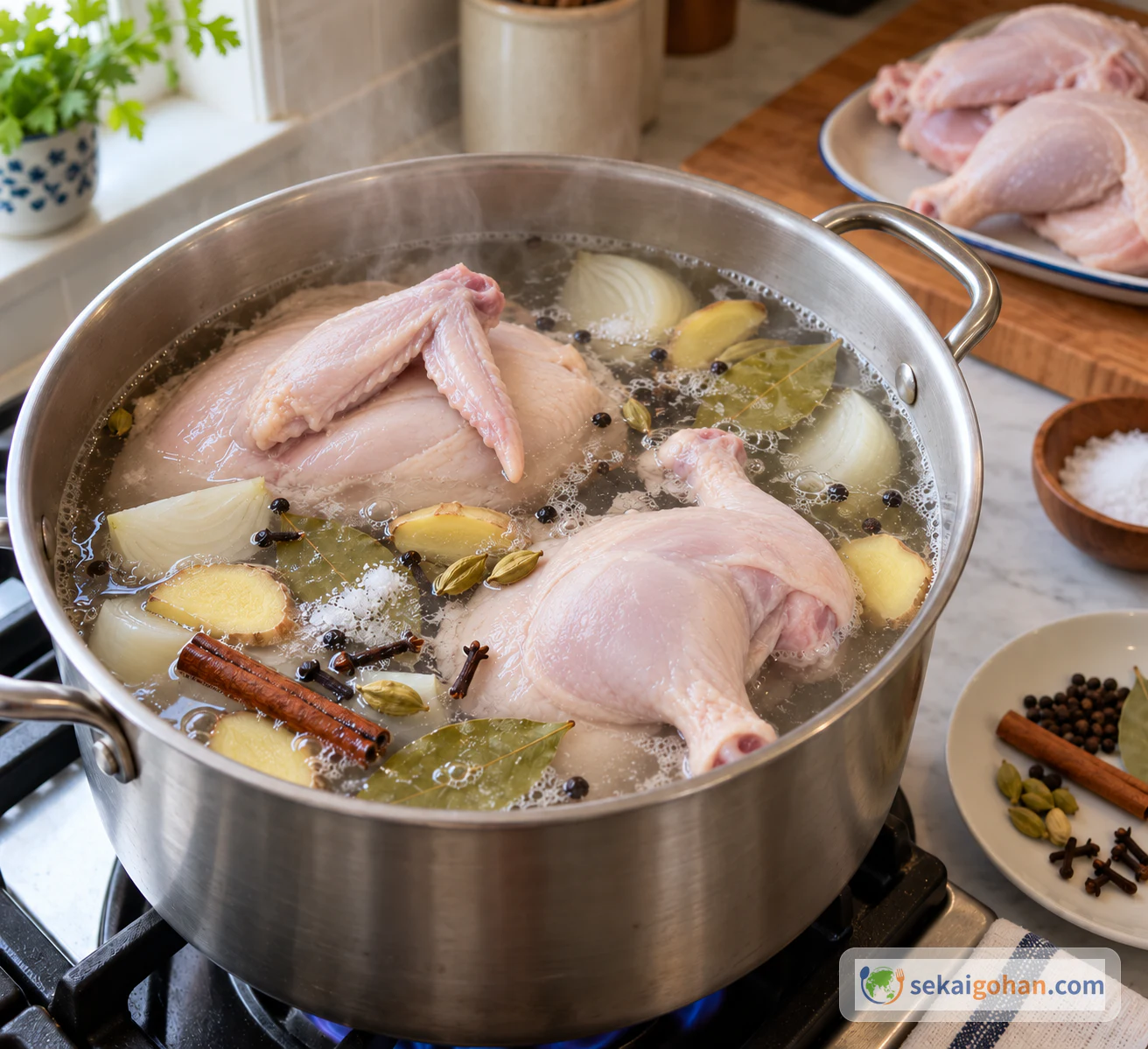
- chicken poached in aromatic water, with the stock strained and kept
- white onion paste and strained ginger-garlic juice, not paste
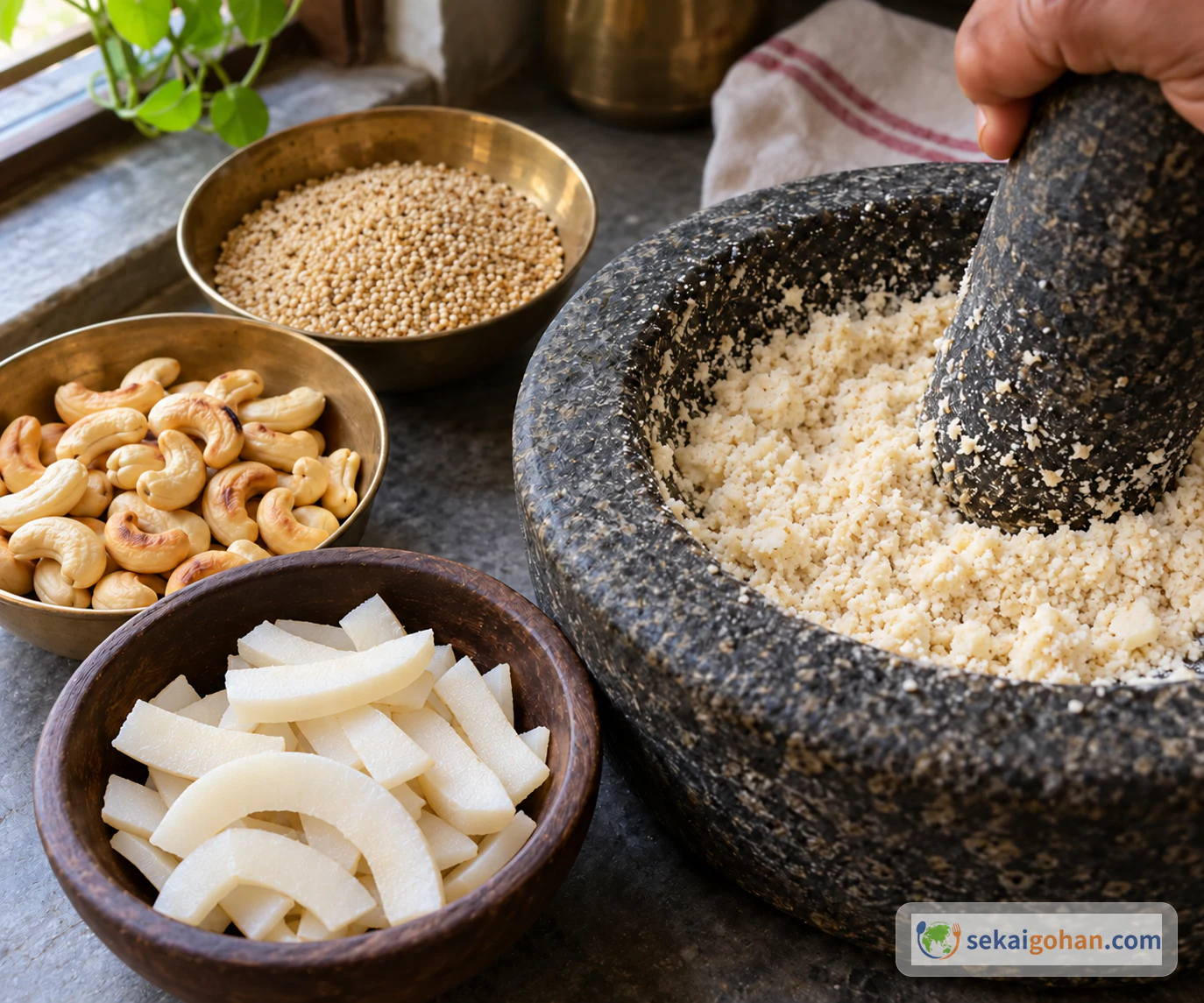
- a powder of white poppy seeds, cashews and khopra (peeled dried coconut)
- yogurt bound with a little cornflour
- warm milk with green chilli, kewra water and a tiny amount of meetha attar, added after the heat is off
Ingredients (6 servings)
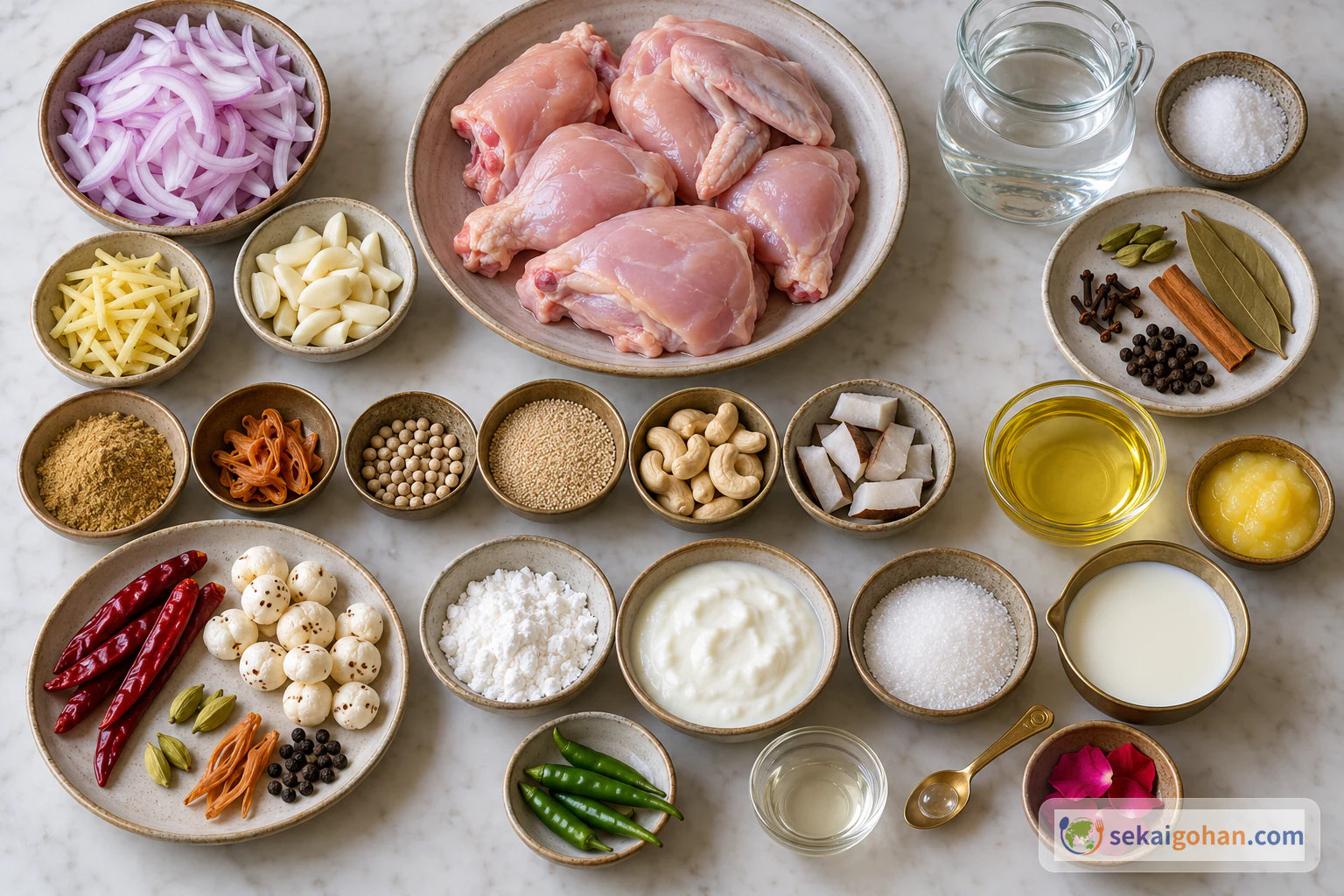
Each row starts with the stage where the ingredient is used.
Do not wash the raw chicken. Keep separate knives, boards and containers for raw meat. Wash your hands after handling it, and wash and sanitize any tools it touched. For meetha attar, use only a product clearly labeled for food use. Never use a perfume or cosmetic attar. If you cannot find a food-grade one, leave it out, and expect the aroma to change.
Equipment
- A pot for poaching the chicken
- A fine strainer (a tea strainer works) for the ginger-garlic juice, the stock and the green-chilli milk
- A spice grinder or stone mortar and pestle for the toasted spices, seeds, nuts and khopra
- A blender for the white onion paste and the green chillies
- A wide pan for frying and simmering
- A whisk for the yogurt
- A food thermometer
- Separate boards, knives and containers for raw chicken
Choosing the Chicken and Specialty Items
Chicken. The 1 kg is the total for the whole recipe. If you cut the birds yourself, choose small birds: under 800 g whole, or under 600 g dressed, per bird. Several small birds can make up the 1 kg, so the two figures work together. Cut each bird into quarters: two breast pieces with the wing attached and two leg pieces with the thigh. Remove the skin. This article does not cover boneless cubes, because their cooking times are not confirmed here.
Khopra. This is dried coconut. Use pieces with the brown outer peel removed, so the powder and the gravy stay pale. It is not a stand-in for coconut milk. Coconut milk belongs to a different version of rezala and is not used here.
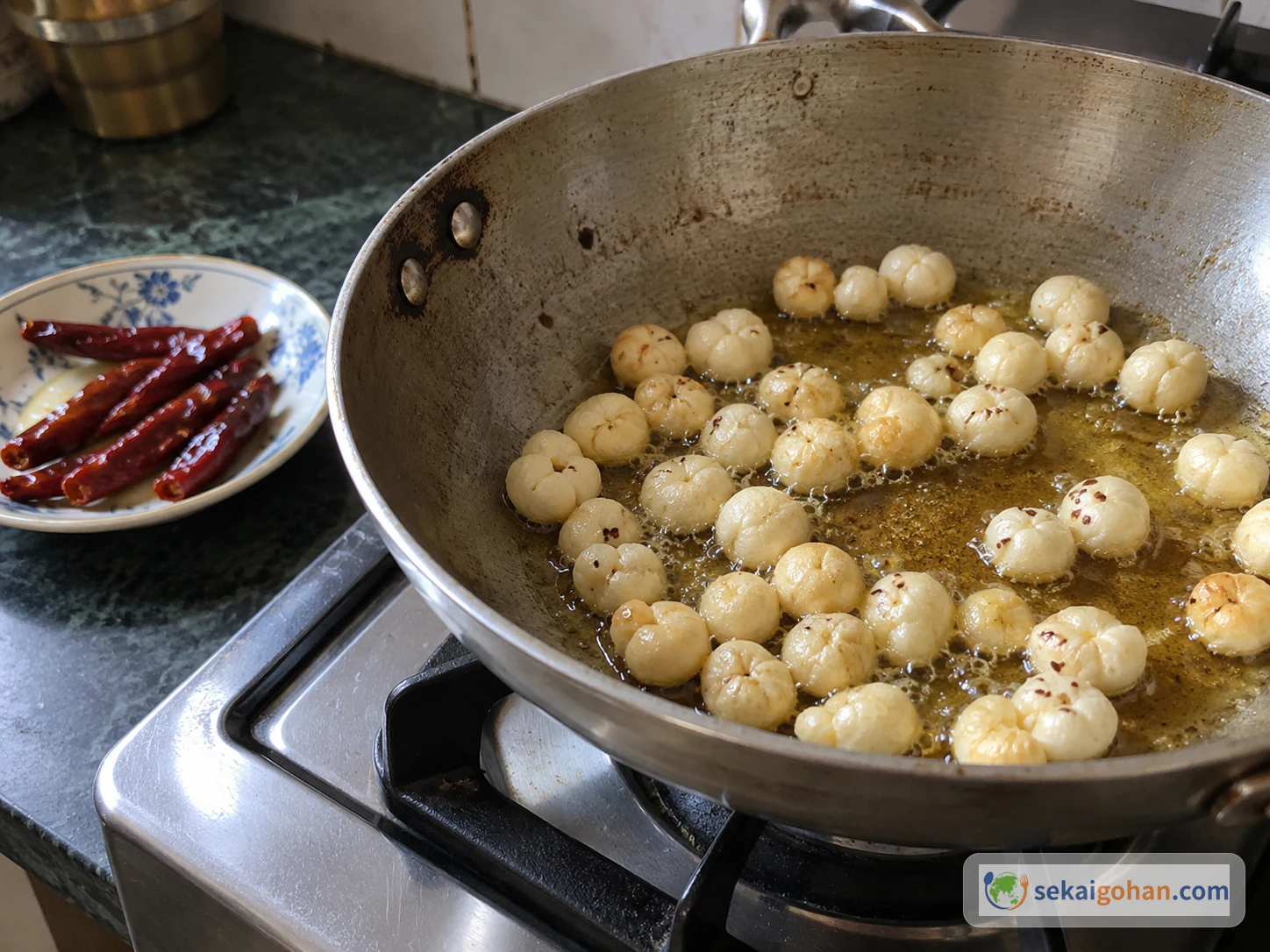
Makhana. Also sold as fox nuts or water-lily seeds. Here they are fried until crisp and go on top at the end.
Meetha attar and kewra water. Meetha attar is an essence used in the Mughlai cooking of Bengal, and only half a drop is used. This article recommends no brand and no substitute. Use it only if you can confirm from the label that it is a food product. Without it, the dish is a changed version with a different aroma, not a matching one. Kewra water is used here at ¼ tsp. Do not replace either one with rosewater, which belongs to a different rezala recipe.
Ghee. A white buffalo-milk ghee is the kind this recipe has in mind. This article does not claim that another ghee gives the same result.
Method: Poach, Layer, Then Perfume Off the Heat
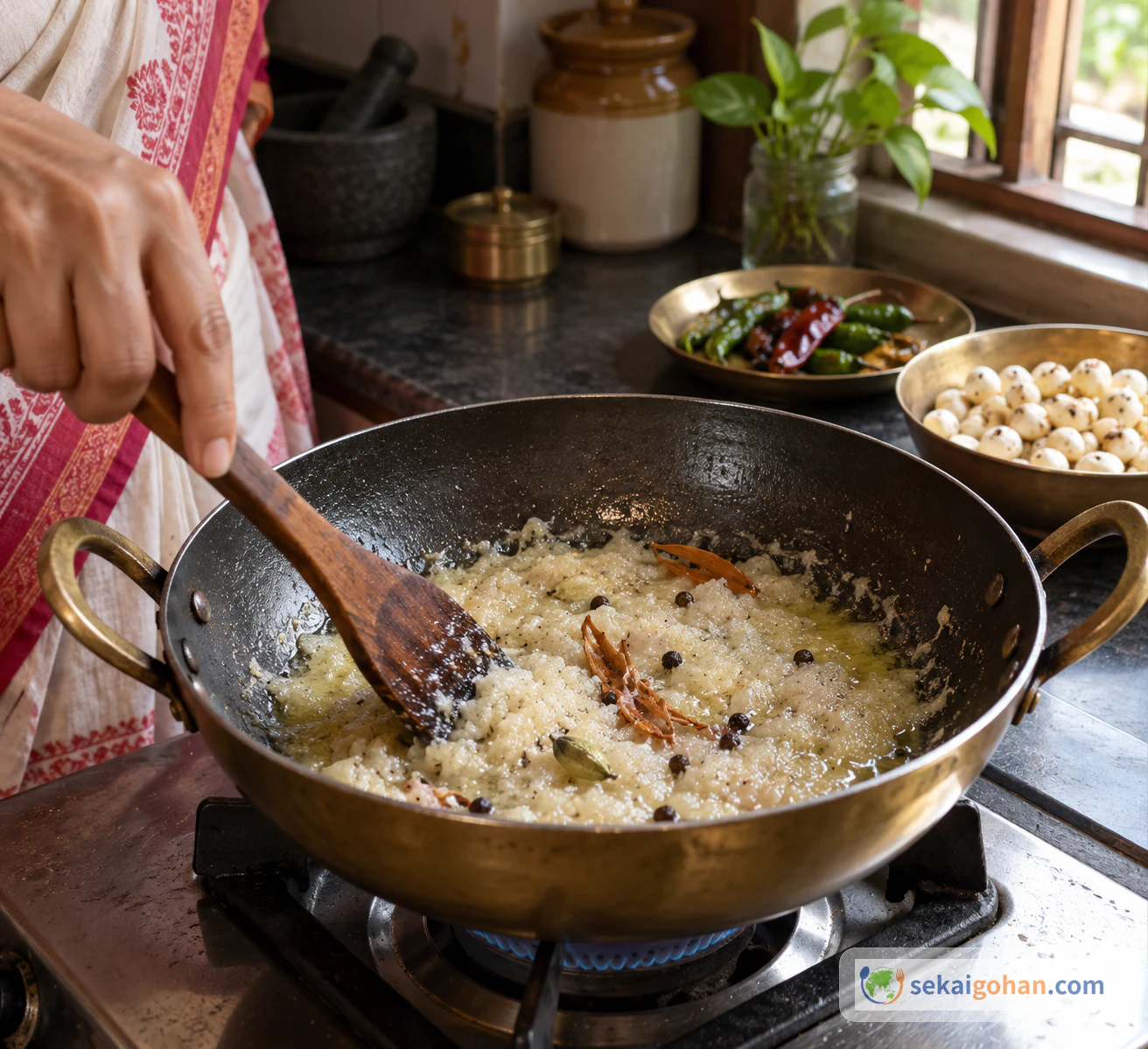
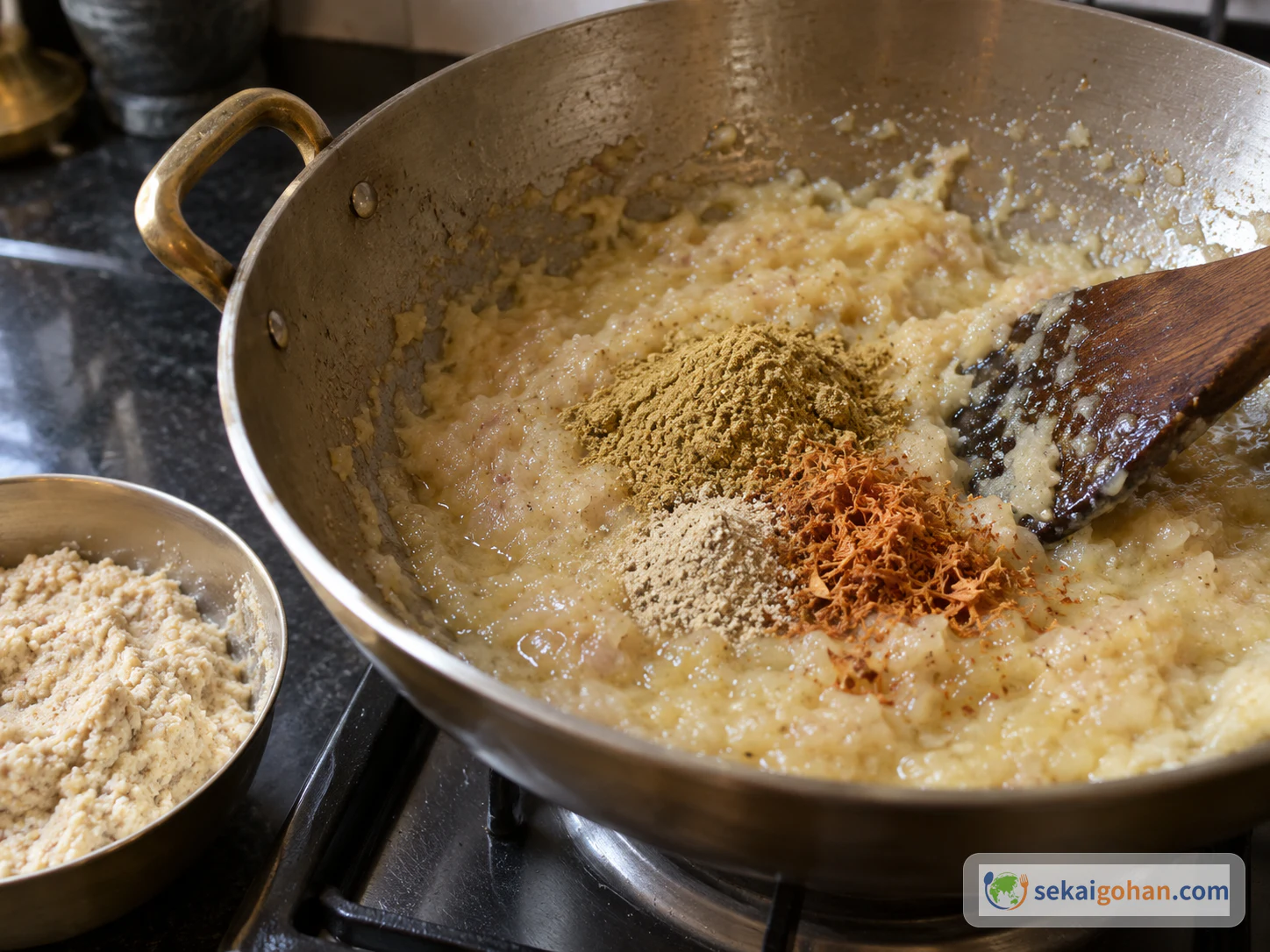
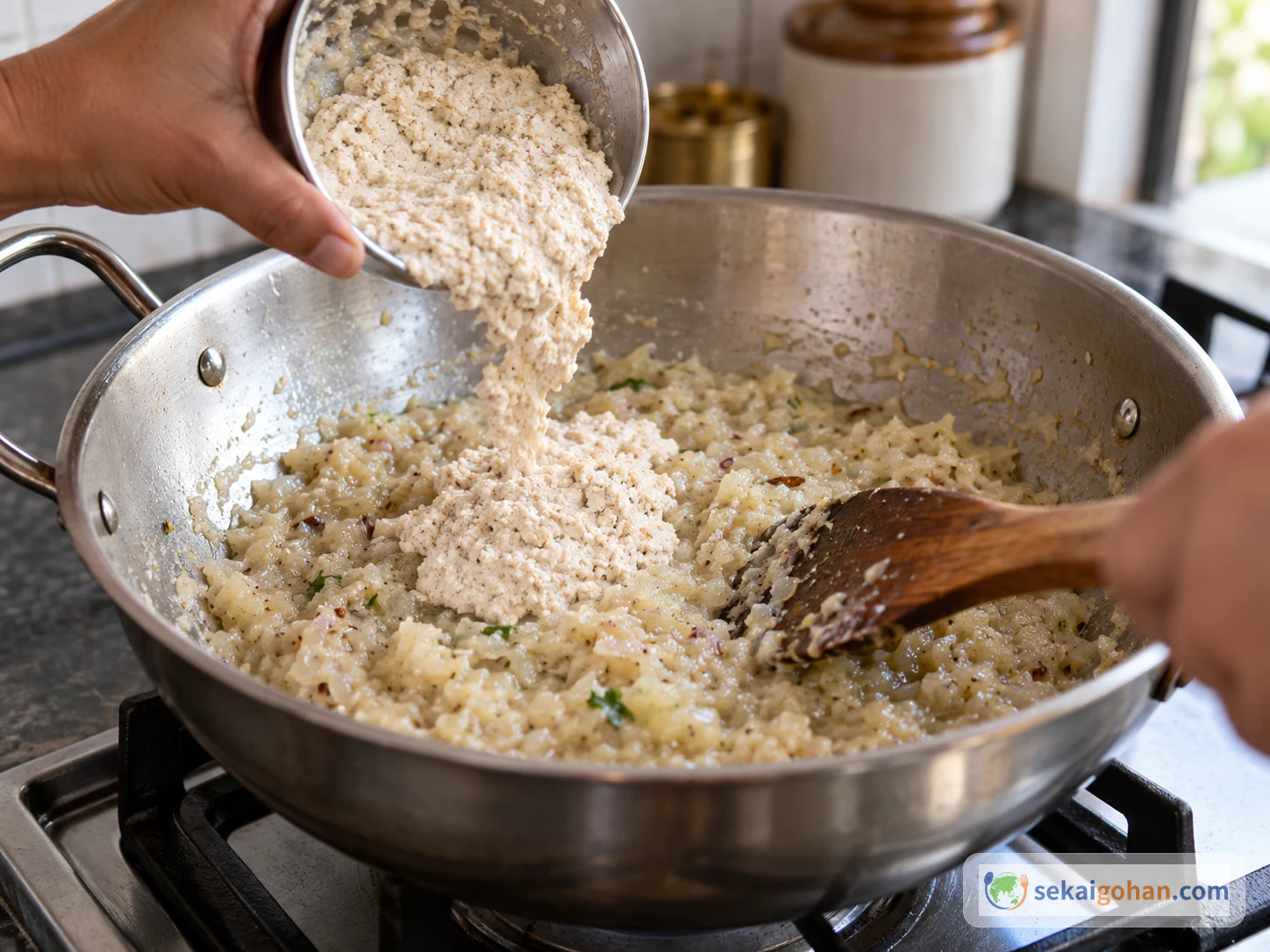
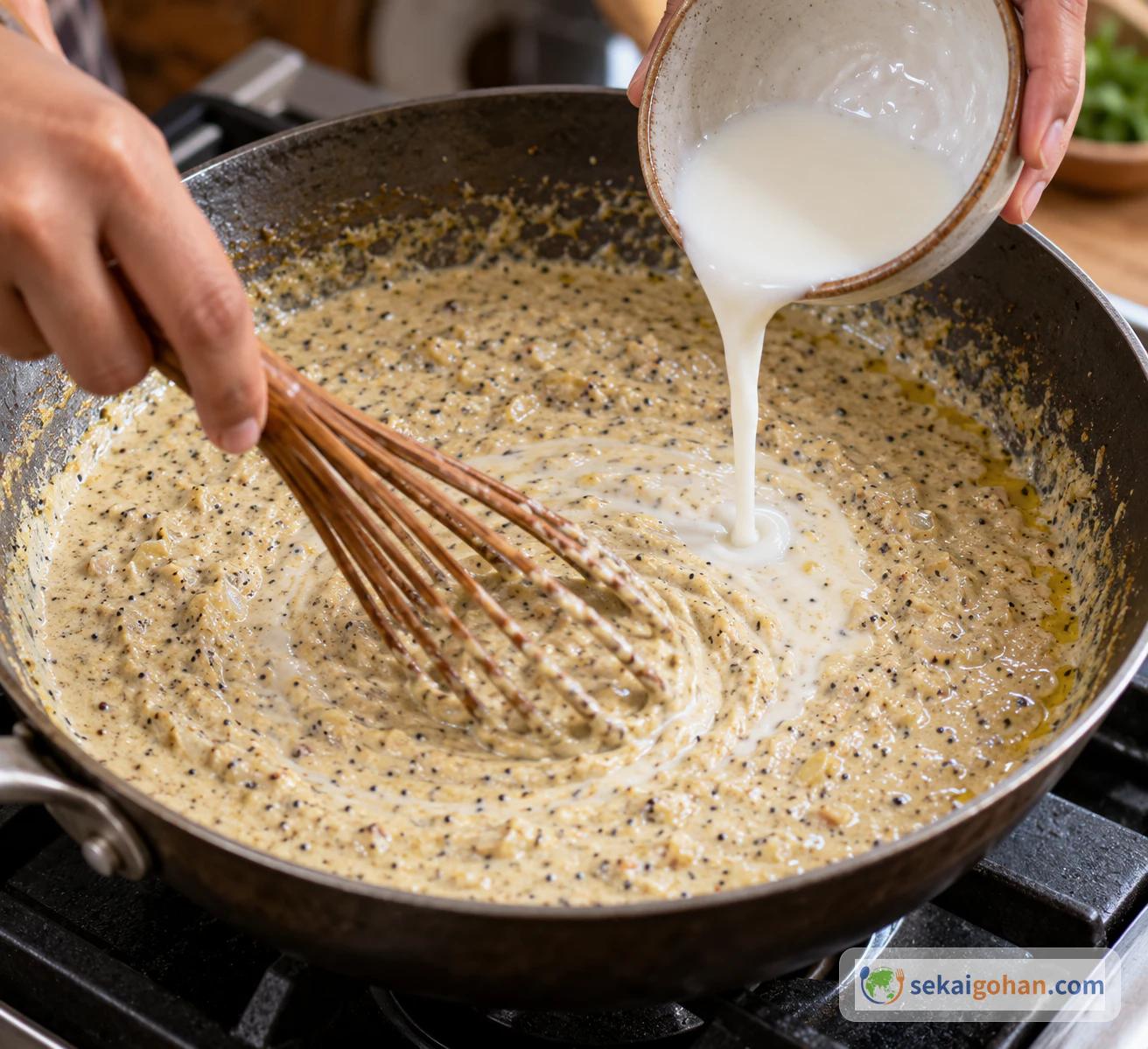
Each stage goes into the pot separately: poach the chicken, prepare the powders and juices, fry the toppings, cook the onion, then the ginger-garlic juice, the dry spices, the nut powder and the yogurt, then the chicken and stock. The milk and aromatics go in after the heat is off, and the toppings go on after that.
When the Pot Goes Off Course
| Condition | Likely cause | What to do |
|---|---|---|
| The yogurt splits | Added without cornflour, or not stirred | Whisk the cornflour slurry into the yogurt until smooth before it goes in, and stir constantly once it is in the pan |
| The base turns brown | Onion cooked over high heat, or spices and nuts toasted dark | Cook the onion paste over low heat, and toast the spices, seeds and nuts only lightly |
| The gravy looks speckled or brown | Khopra peel left on, or ginger-garlic fibers in the pot | Use peeled khopra, and strain the ginger-garlic juice through a fine strainer |
| The gravy is thick, like a korma | Paste added instead of juice, or other liquids or creams added | Follow the ingredient list as given. Use the strained juice and the reserved stock, and add no coconut milk or cream |
| The chicken has not reached 75°C after 30 minutes | Large pieces, or lower heat than expected | Keep cooking until the center of the thickest piece reaches 75°C and holds for at least 1 minute, then move on to the finish |
| No food-grade meetha attar | Not available locally | Leave it out rather than using a perfume. The aroma will be different |
Serving
Serve the rezala in shallow bowls so the thin, pale gravy and the floating fat stay visible, with the red chillies, makhana and rose petals on top. Phirni is the suggested accompaniment. No other side dishes are added.
Frequently Asked Questions
Is chicken rezala just a white korma?
Not by color alone. Rezala recipes vary widely, and a pale yogurt gravy does not decide the name. Bong Eats compares its own version to a white kaliya rather than a korma. That is how this recipe's makers describe their dish, not a rule for every rezala. This version stands out for its poached chicken and reserved stock, its strained ginger-garlic juice, its powder of poppy seeds, cashews and khopra, and its off-heat milk with green chilli and kewra water.
Can I skip the poaching?
Bong Eats' FAQ offers shortcuts. One adds raw chicken directly to a prepared base. Another combines everything and cooks it over low heat. These are separate methods with their own steps. This article follows the full staged method with poaching and does not combine it with either shortcut.
Why not wash the chicken, when the published recipe says to?
FoodSafety.gov advises against washing poultry, because splashing spreads harmful germs around the kitchen. Japan's Ministry of Health, Labour and Welfare recommends cooking meat, including chicken, until the center reaches 75°C for at least 1 minute. It also advises keeping raw-meat tools separate, washing hands, and washing and sanitizing tools that touched raw meat. This article follows that advice and does not rely on the stage times alone.
Can I use boneless chicken?
This version uses skinless bone-in quarter pieces, as described in Bong Eats' FAQ. Cooking times for boneless pieces are not confirmed here, so this article does not offer that swap.
What is meetha attar, and what can I use instead?
Bong Eats describes it as an essence used in the Mughlai cooking of Bengal, and its recipe calls for only half a drop. Use a product only if it is clearly labeled as food. Never use a perfume or cosmetic attar. This article recommends no substitute. If you leave it out, the finished aroma changes.
How many does it serve, and how long does it take?
Bong Eats lists the recipe at 6 servings and about 90 minutes. The time is their figure for the full method. Let the thermometer check, not the clock, tell you when the chicken is done.
Where does rezala come from?
There is no settled answer. In GOYA and Open Magazine, Tarana Husain Khan sets out competing origin and name stories, linked to the Mughal court, Dhaka and Awadh (including Wajid Ali Shah), and cites different books and oral accounts. A 2001 Times of India report relays a family account that Sabir Ali came from Lucknow to Kolkata and opened Sabir's in 1948. None of these sources establishes where rezala was first made or traces this chicken version back to it.
Sources
- Bong Eats, "Calcutta Chicken Rezala" (2023). The recipe followed here: 6 servings, ingredient amounts, staged method, the 90-minute time, the phirni serving suggestion, the description of a thin, pearly-white Calcutta restaurant-style gravy, the team's account of reverse-engineering it after tasting several Kolkata restaurant versions, the white-kaliya comparison, the FAQ on bird size, quarter pieces, shortcut methods and meetha attar. The recipe's instruction to wash raw chicken is not followed. https://www.bongeats.com/recipe/chicken-rezala/
- Bong Eats, "About Bong Eats—What is it? Who Runs it?" The publisher's description of its site as covering Bengali home-style family recipes and dishes from Kolkata's streets, cabins and restaurants. https://www.bongeats.com/about/
- SBS Food / Will Meyrick, "Chicken rezala Kolkata-style." A different Kolkata-style recipe for 3–4 servings with 800 g chicken, coconut milk, blended green chilli and rosewater. Cited as a variant only. https://www.sbs.com.au/food/recipe/chicken-rezala-kolkata-style/2xep5txi6
- GOYA / Tarana Husain Khan, "The Rezala Route, From History to Plate." Regional and household versions, a separate recipe credited to Afreen Alvi, and competing origin and name stories. https://www.goya.in/blog/the-rezala-route-from-history-to-plate
- The Times of India, "A taste of Rezala at Sabir's" (2001). A reported family account of Sabir Ali and Sabir's restaurant, and the ingredients of its mutton rezala. https://timesofindia.indiatimes.com/calcutta-times/a-taste-of-rezala-at-sabirs/articleshow/1885223942.cms
- Open Magazine / Tarana Husain Khan, "The Rezala Route." Bengali, Bangladeshi and Bhopali versions, including a coriander-heavy Bhopali rezala, and differing origin accounts. https://openthemagazine.com/cover-stories/the-rezala-route
- Ministry of Health, Labour and Welfare (Japan), "カンピロバクター食中毒予防について(Q&A)" (Campylobacter food poisoning prevention Q&A). Cooking meat until the center reaches 75°C for at least 1 minute, separating raw-meat tools, handwashing, and washing and sanitizing tools. https://www.mhlw.go.jp/stf/seisakunitsuite/bunya/kenkou_iryou/shokuhin/syokuchu/campylobacterqa.html
- FoodSafety.gov / U.S. Department of Health and Human Services, "4 Steps to Food Safety." Advice not to wash poultry, to avoid spreading harmful germs. https://www.foodsafety.gov/keep-food-safe/4-steps-to-food-safety