Dal Makhani: Black Beans That Hold Their Shape Until They Melt into Butter
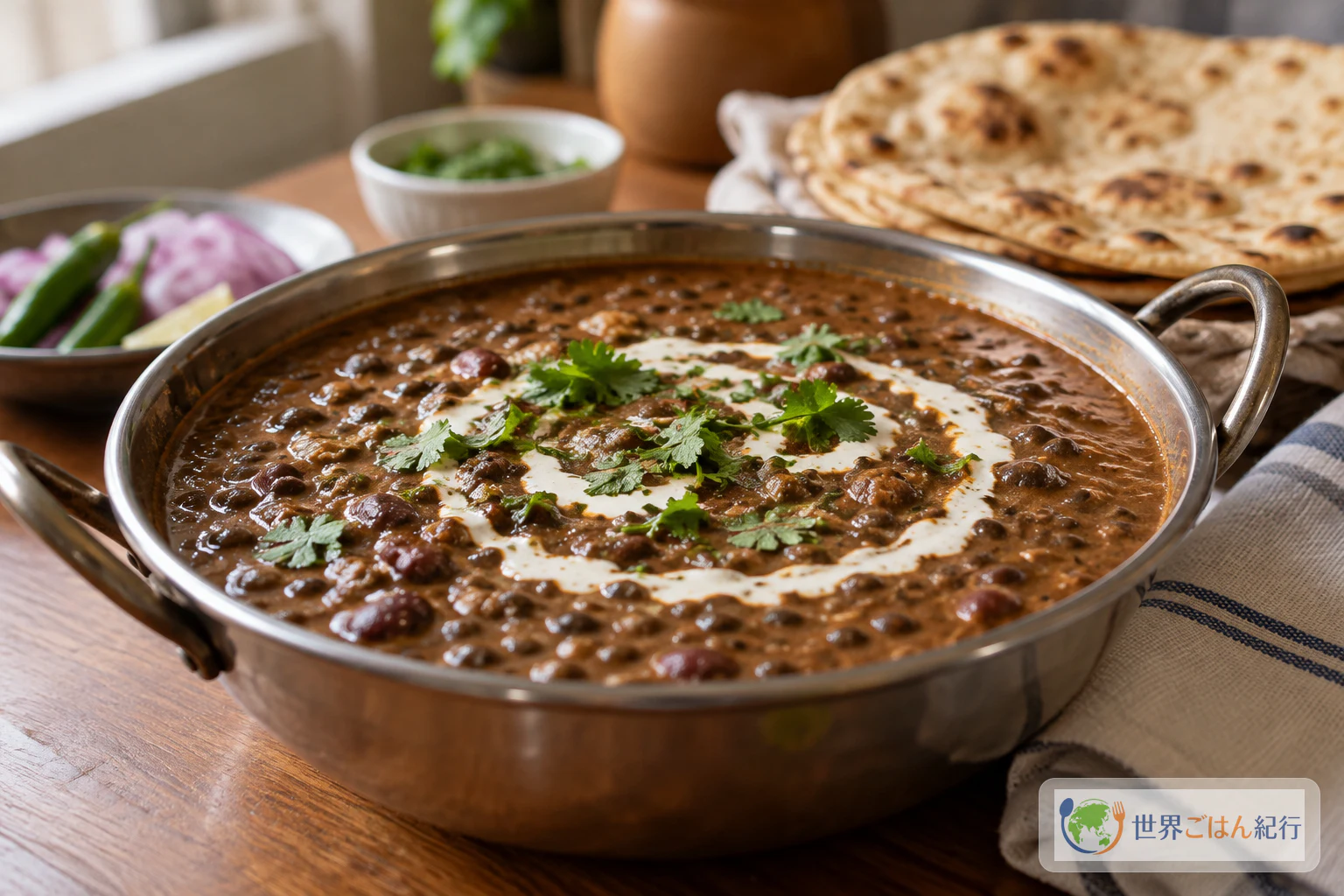
Cook every bean until no hard core remains, then let the whole black urad soften further in a tomato and butter base. The richness comes from patient simmering, not from piling on cream.
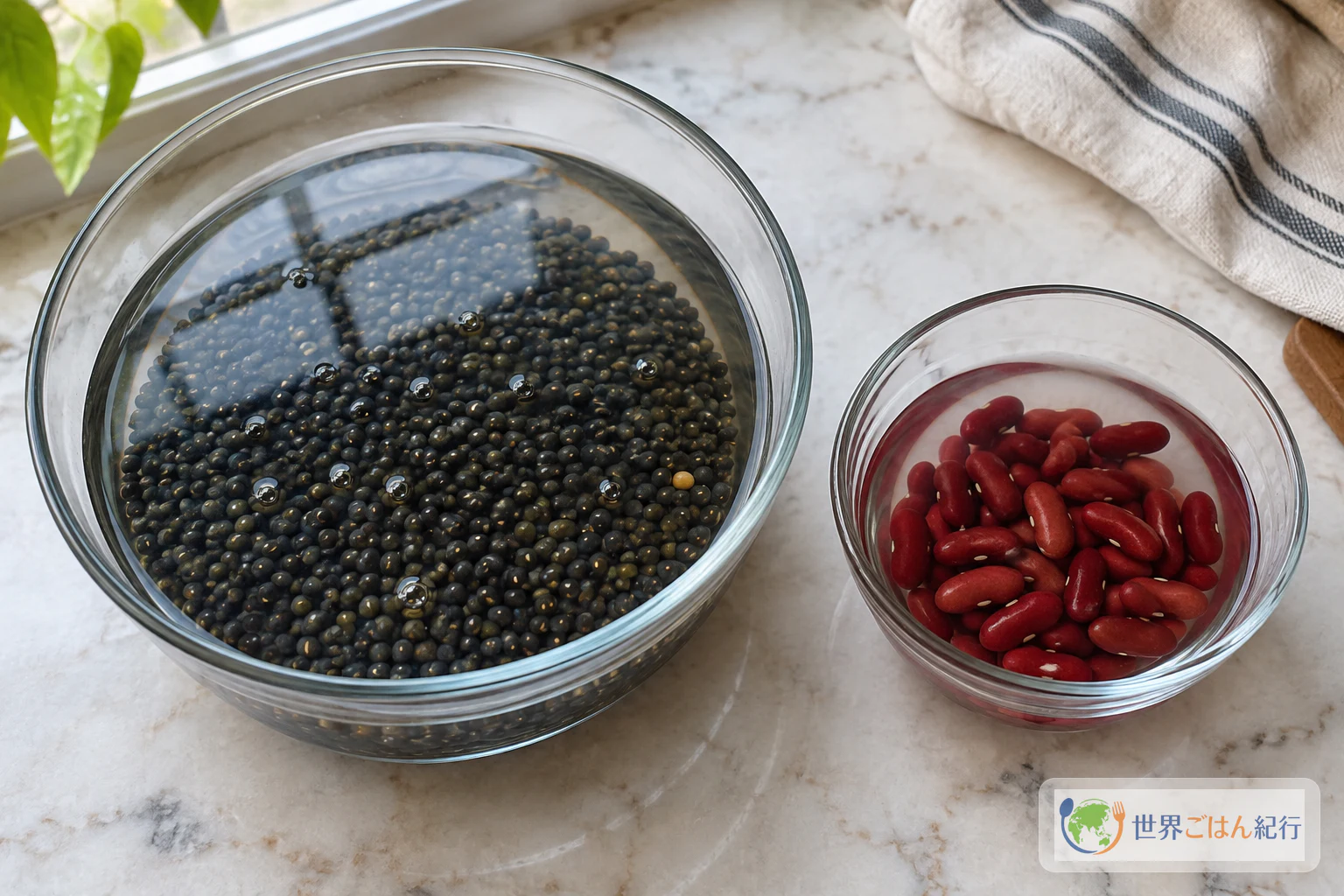
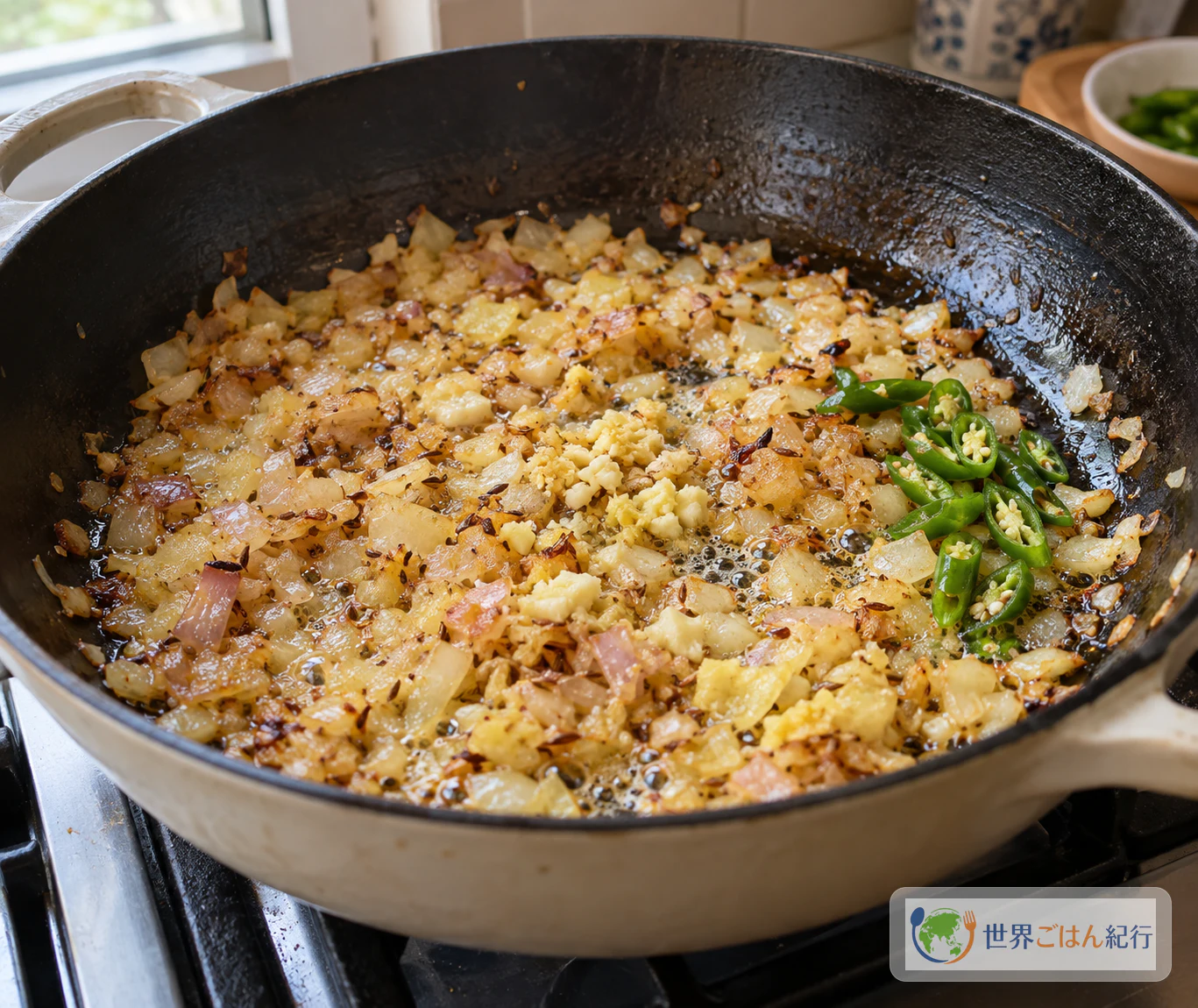
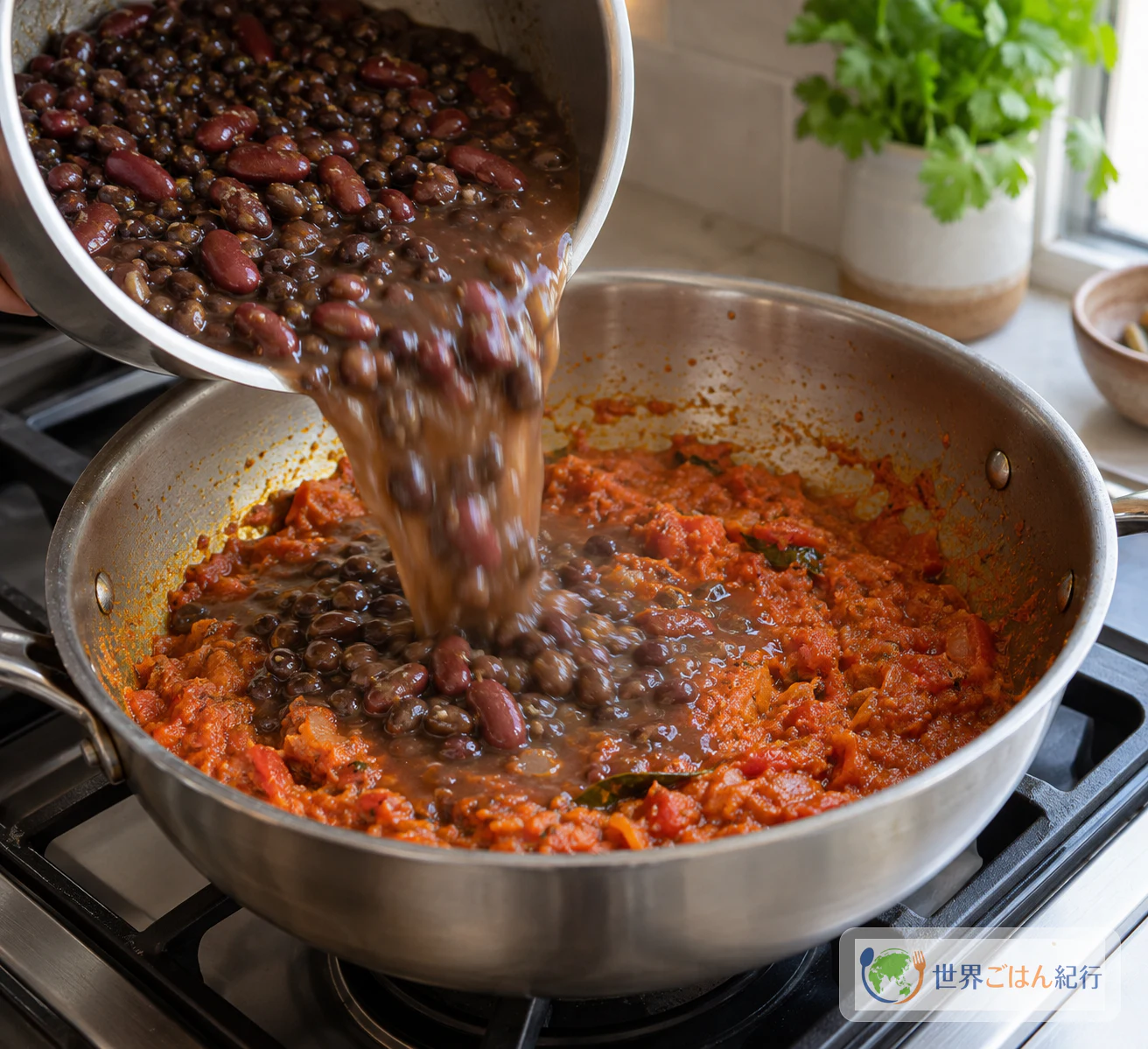
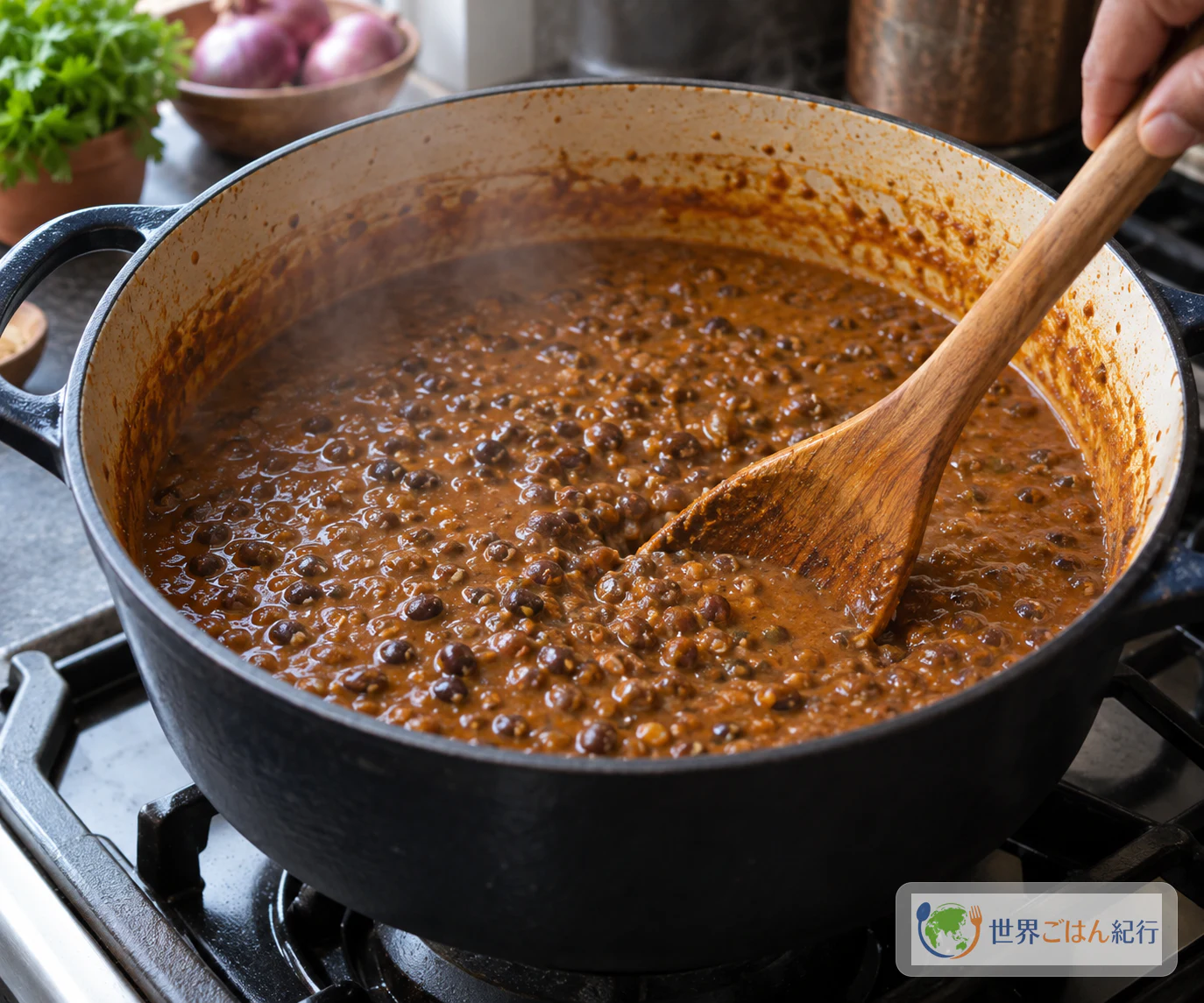
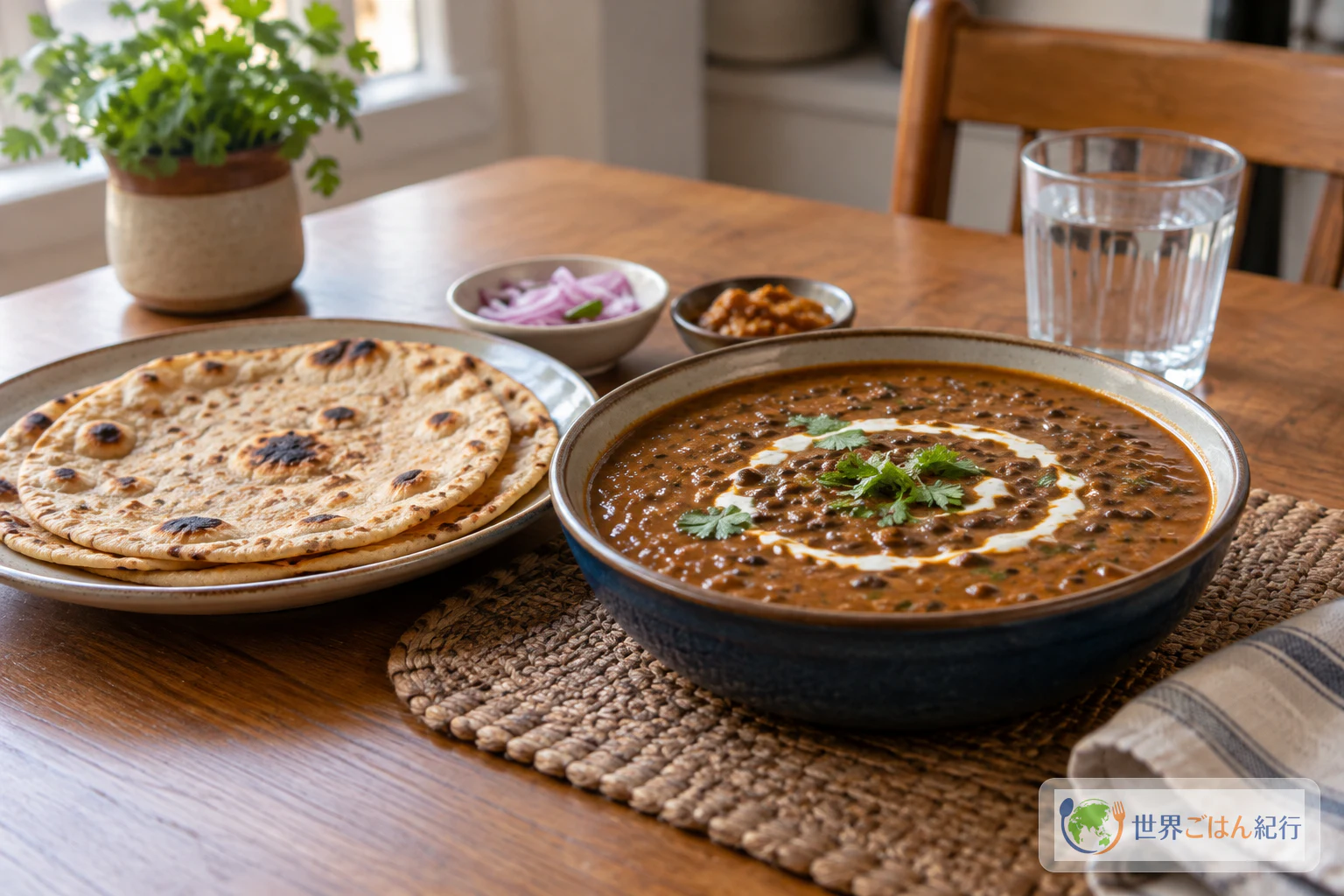
The beans go into water the night before. By the next day, the small black urad have swelled, the few red rajma beside them have softened their skins, and the real work can begin. The beans are cooked until tender, then returned to a pan of cumin, onion and tomato. There they simmer slowly, some keeping their shape and some breaking down into the sauce, until a dark, butter-scented dal is ready to sit at the center of the table.
Dal makhani is built on whole black gram with its skin on, plus butter for depth. The hard part is not the spicing. It is bringing the beans to soft all the way through, and the red kidney beans need a specific boiling step for safety before they join the pressure cooker. This recipe walks through that step, and through how to judge doneness by pressing a bean rather than by counting whistles.
What Dal Makhani Is: Whole Black Urad Simmered the Punjabi Way
The chef Ranveer Brar's published recipe classifies dal makhani as Punjabi cuisine. It uses whole black gram (sabut urad, written sabuturad in the recipe) as the main bean, with a small amount of red kidney beans (rajma) alongside. This article follows that two-serving version.
It is one documented version, not the only correct form. The ratio of beans, the amount of butter and cream, and how the tomato is handled vary between cooks, homes and restaurants. Other rich black-bean dishes exist under different names, and they are not treated here as the same recipe. Dal makhani today is often linked to a particular restaurant story, which is worth knowing before you cook.
The 1947 Origin Story and Maa Ki Dal
Accounts of where dal makhani began usually lead back to Delhi in 1947. According to The Indian Express, the restaurant Moti Mahal opened in Daryaganj that year, with founders including Kundan Lal Jaggi. The article retells a story in which a regular customer suggested cooking urad dal slowly with tomato and butter as a vegetarian counterpart on the menu, and reports that the dish went on to become a staple of North Indian restaurants.
The Daryaganj restaurant's own account tells the story from the family's side. It places Kundan Lal Jaggi in a Punjabi family from Peshawar who moved to Delhi after the 1947 Partition, and says dal makhani grew out of maa ki dal: black lentils, tomato, white butter, herbs and spices slow-cooked overnight. The restaurant also links the name to makhan, butter.
The two versions do not match in every detail, and the second comes from a party with an interest in the story. Both are best read as restaurant lore and press retelling, not as settled proof of a single inventor or an exact date of origin.
Ingredients for 2 Servings: Whole Black Urad First
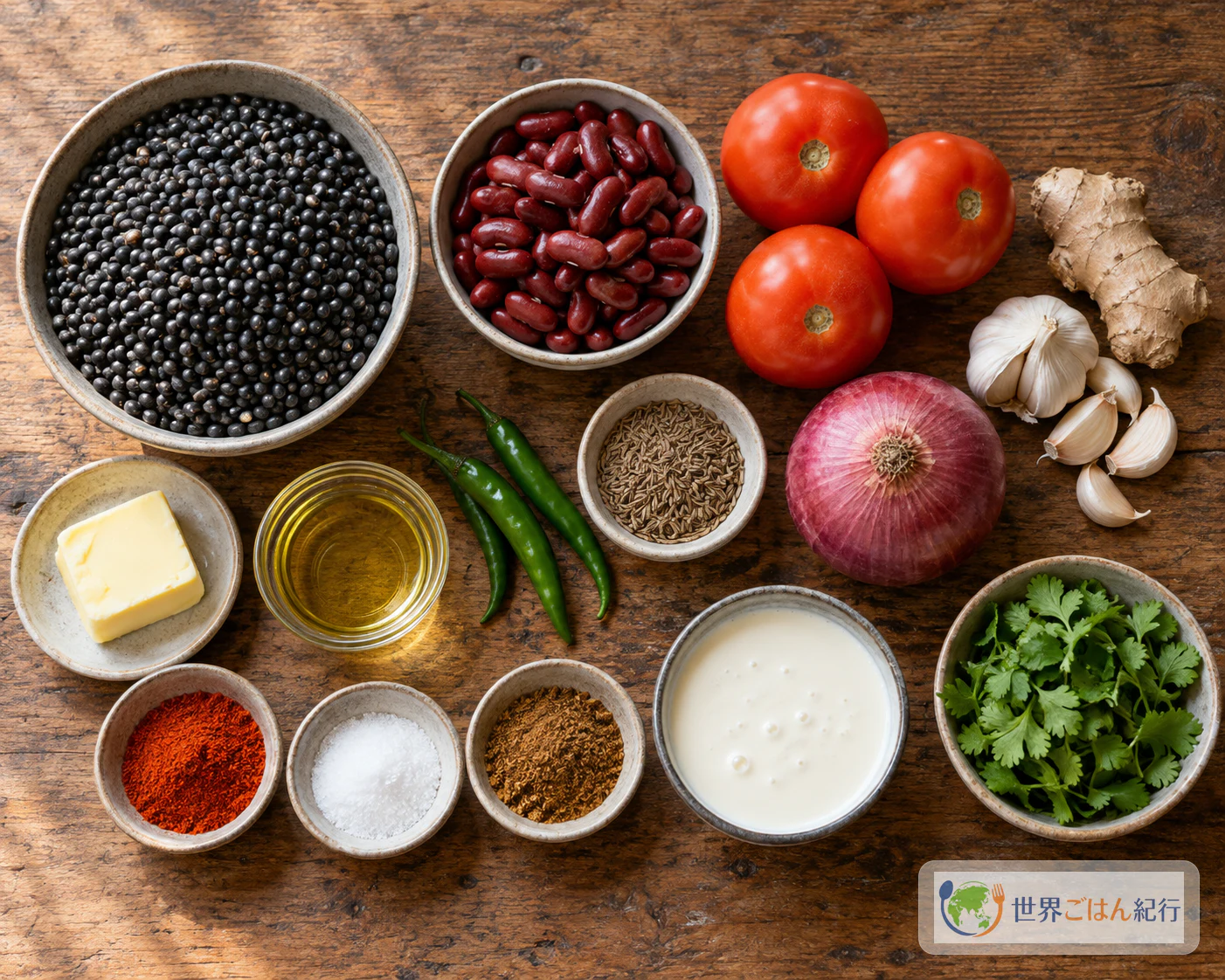
Use the same cup and spoons throughout so the proportions stay consistent.
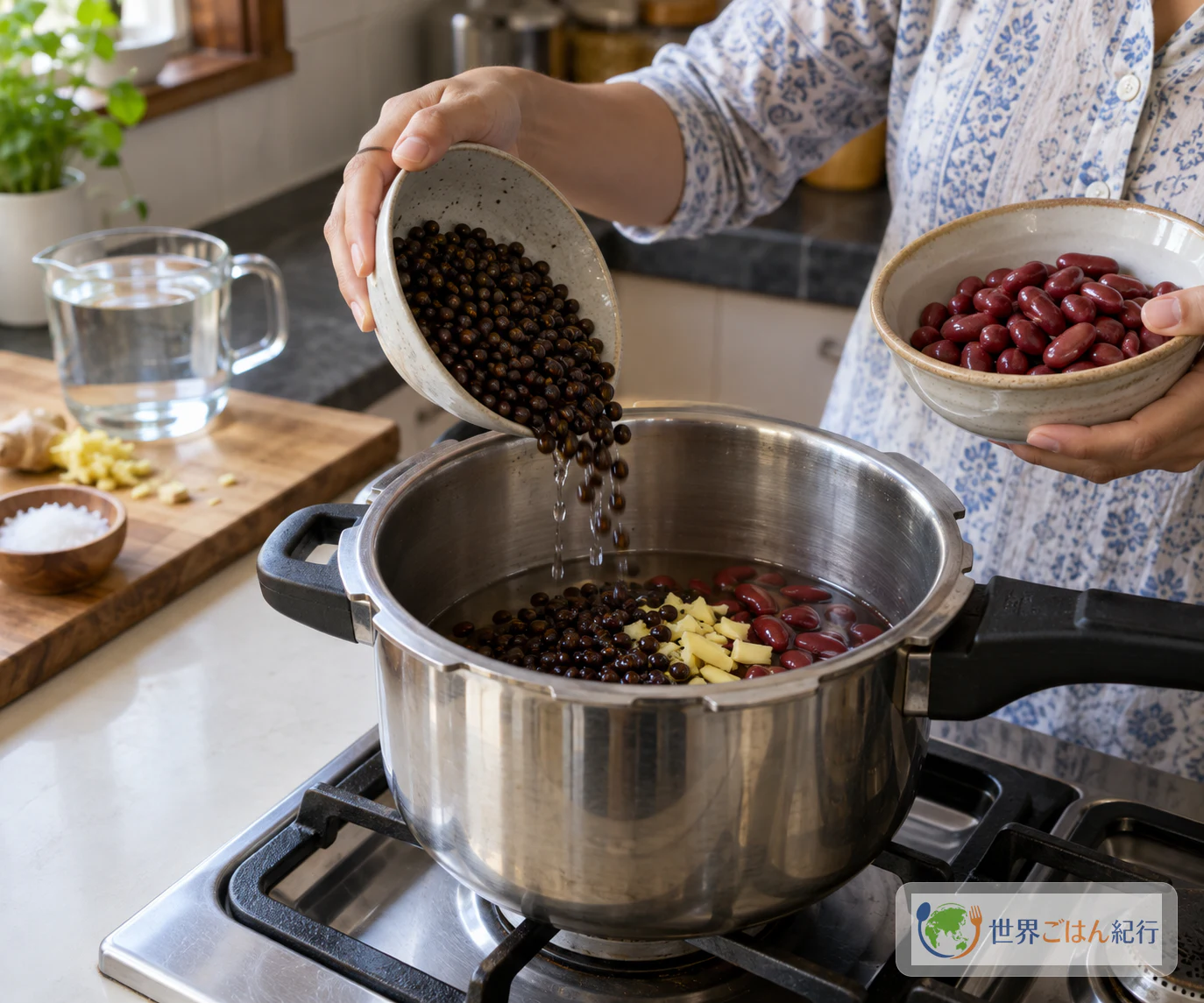
Health Canada advises soaking dried red kidney beans for at least 5 hours in water 2–3 times their volume, discarding that water, and then boiling them vigorously in fresh water for at least 10 minutes. In this recipe the rajma soaks from the night before and gets that boil in a separate ordinary pot before joining the urad in the pressure cooker. If your bag of beans gives longer preparation instructions, follow the bag. The 10-minute boil does not necessarily make the beans soft; keep cooking until there is no hard core. Do not cook dried rajma only by gentle simmering or in a slow cooker, and do not taste undercooked beans to decide whether they are safe.
Choosing Beans and Substitutes
Black urad. Look for whole black urad, skin on, sold as sabut urad or whole urad at Indian grocers or online. Split, skinned urad changes the color, the texture and how the dal breaks down, so it is not treated as the same dish. Ordinary lentils will not give the same bite or body either.
Rajma. These are dried red kidney beans. Canned rajma has already been heated during canning, but it is not a like-for-like swap for the same volume of dried beans: the soaking, pressure cooking and liquid all change. A canned version would be a separate recipe, and it is not covered here.
Chilli. The recipe uses Indian red chilli powder. Cayenne and other chilli powders differ in heat, so start with less. Green chillies can also be adjusted to taste.
Ginger. Use a 2 inch piece. Chop it all, then divide it in half: one half goes in with the beans, the other into the masala.
Butter and cream. If you use unsalted butter, adjust the salt separately. Ghee changes both the aroma and the moisture. For the finish, a little fresh cream works; plant-based creams change the flavor.
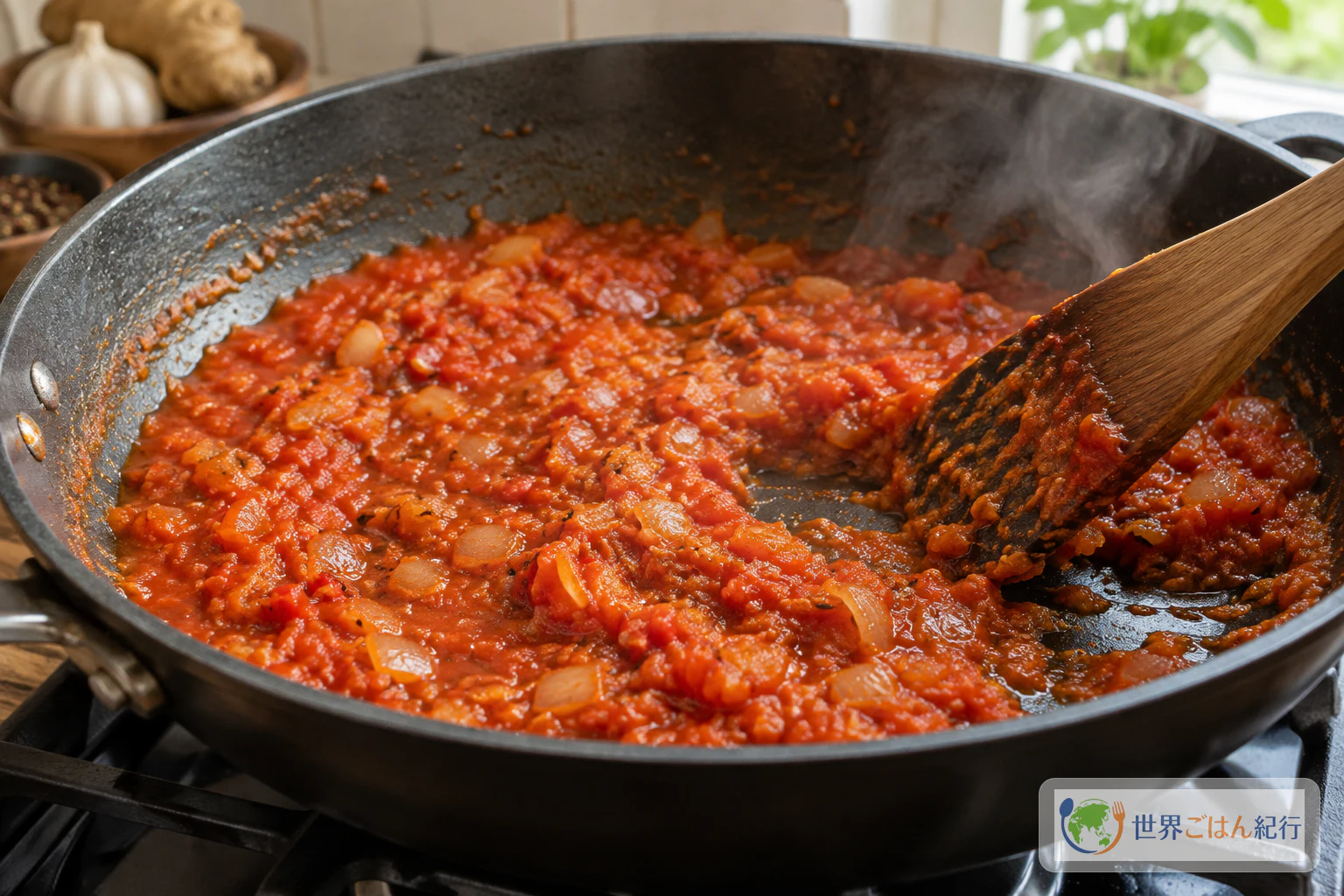
Tomatoes. Ripe fresh tomatoes are puréed for the base. Canned tomatoes differ in acidity and moisture.
Coriander. You can leave it out if you dislike it, though the aroma of the finished dish changes.
Equipment
- Two bowls for soaking the urad and rajma separately
- An ordinary pot for boiling the rajma
- A pressure cooker, used according to its manufacturer's instructions
- A heavy pan and a wooden spatula for the masala and the long simmer
- Measuring cup and spoons
- A clean spoon for pressing beans to check doneness
Method: From Overnight Soak to a Slow Butter Simmer
Pressure cook for "3 whistles" or until the rajma is completely soft. Whistle counts do not mean the same cooking conditions from one cooker to another, so treat them only as a reference. Follow your cooker's instructions, release the pressure fully, and judge by pressing a bean.
Fixing Problems in the Pot
The first priority is always safety: release the pressure the way your cooker's instructions say, and make sure every bean is fully cooked.
| What you notice | Likely cause | What to do |
|---|---|---|
| Beans still have a hard core | Old beans, too little soaking, not enough cooking | Press a few with a spoon after cooking. If any are hard, cook again following your pressure cooker's instructions. Never judge rajma by tasting it undercooked |
| The bottom catches, or the dal feels heavy | A thick simmer sticks to the pan easily | Keep the heat low, stir the bottom often, and add a little hot water |
| The acidity stands out | The tomato went in with the beans before it was cooked down | Next time, cook the tomato to a paste before adding the beans. Rather than masking the acidity with salt, butter or cream, reduce the tomato properly |
Ways to Change It at Home
These are directions, not tested formulas. Where a change alters the balance of the recipe, treat it as a new version you will need to try out yourself.
- Adjust the heat. Change the red chilli powder and green chillies to suit who is eating. Start low if you are using a different chilli powder.
- A lighter finish. Hold back on the cream and keep the butter as the main richness.
- Softer tomato acidity. Very ripe tomatoes can make the base gentler. This changes the balance and is a separate version to work out.
- Without a pressure cooker. The beans can be cooked in a heavy pot, but this recipe gives no time for that route. The rajma still needs its separate vigorous boil first, and every bean must be cooked until there is no hard core.
- A different rajma ratio. More or less rajma changes the dish. Treat it as clearly separate from the standard version here.
A restaurant-style dal makhani and an everyday home pot are not the same thing. It is fine to cook either, as long as you know which one you are making.
Allergies and Storage
Dal makhani contains dairy in both the butter and the cream. For a milk allergy, simply leaving out the cream is not enough; the butter needs to be replaced too, and the flavor will change. The dish is built on legumes, so anyone with a legume allergy should take care. Check the ingredient labels on packaged spices and other products.
This recipe does not give a storage period or reheating times. For keeping and reheating leftovers, follow your local food safety authority's guidance.
Frequently Asked Questions
What is black urad?
Whole black gram, a small black bean with its skin on, sold as sabut urad or whole urad. It is the main bean in this dal and gives it its dark color and texture.
Can I use ordinary lentils instead?
You can make a dal, but not the same one. Split, skinned urad and common lentils change the color, the bite and how thick the dal becomes.
Can I make it without a pressure cooker?
The beans can be cooked in a heavy pot, but this recipe gives no time for that method. Whatever pot you use, boil the rajma vigorously on its own first, and do not cook dried rajma only by gentle simmering or in a slow cooker. Keep cooking until no bean has a hard core.
Can I leave out the rajma?
Rajma is a small supporting amount in this version, so you can omit it. The result is a different version from the recipe documented here.
Does it need cream?
No. The cream is a small finishing swirl. Butter is the core of the makhani richness, so a version with less cream and the butter kept still holds its character.
Can I use canned rajma?
Canned red kidney beans have been heated during canning. However, swapping them in for the same volume of dried beans changes the soaking, cooking and liquid. A canned version needs its own recipe and is not covered here.
Sources
- Ranveer Brar, "Easy Dal Makhani दाल मखनी Recipe." The Punjabi cuisine classification, the two-serving ingredient list and amounts, overnight soaking, pressure cooking until the rajma is soft, the cumin, aromatics and tomato masala, the low simmer, and the cream and coriander finish. Cup and spoon sizes, and the cooker's pressure and time, are not specified. https://ranveerbrar.com/recipes/dal-makhani/
- The Indian Express, "The legend of Daal Makhani." Moti Mahal's opening in Daryaganj in 1947 with founders including Kundan Lal Jaggi, the reported story that a regular suggested slow-cooking urad dal with tomato and butter, and the dish becoming a North Indian restaurant staple. A retelling of a restaurant story, not independent proof of invention. https://indianexpress.com/article/lifestyle/food-wine/the-legend-of-daal-makhani-moti-mahal-daryaganj-6197058/
- Daryaganj restaurant (official site), "Daryaganj Legacy." The restaurant family's account of Kundan Lal Jaggi's Punjabi family in Peshawar and move to Delhi after the 1947 Partition, the dish growing out of maa ki dal slow-cooked overnight, and the link between the name and makhan. Presented as the restaurant's own version. https://www.daryaganj.com/about-daryaganj-legacy
- Health Canada, "Lectins in Dry Legumes." Soaking dried red kidney beans for at least 5 hours, discarding the water, and boiling vigorously in fresh water for at least 10 minutes; slow cookers not being suitable; canned beans being heat-treated. It does not cover cooking times for black urad or pressure cooker settings. https://www.canada.ca/en/health-canada/services/food-nutrition/food-safety/chemical-contaminants/natural-toxins/lectins-legumes.html