Daab Chingri: When the Green Coconut Is the Pot
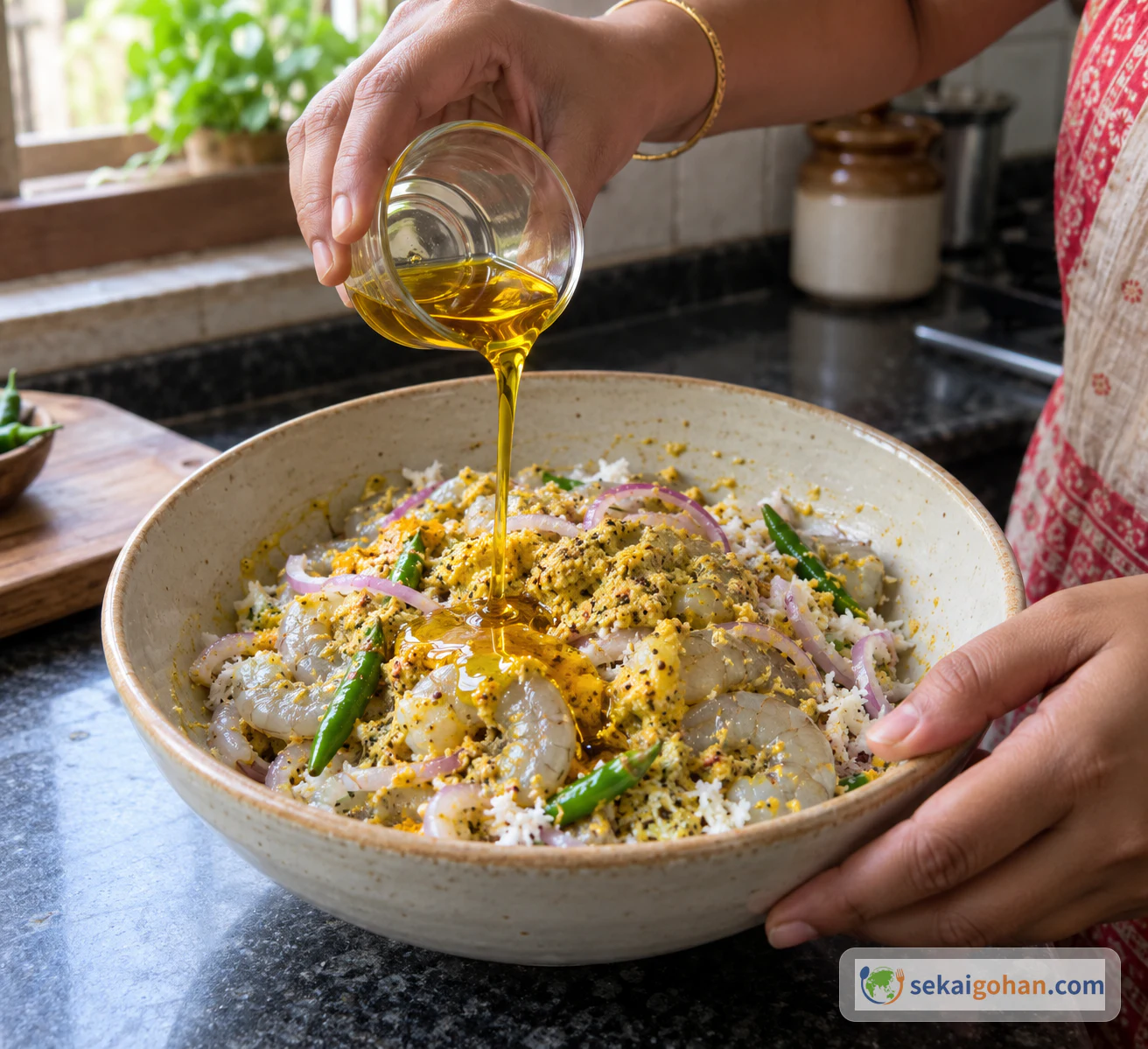
The tender green coconut is not a serving bowl added at the end. It is the vessel the prawns cook in. Keep the separate grated coconut, the mustard seed paste and the mustard oil added last, and seal only the top of the shell before it goes into the oven.
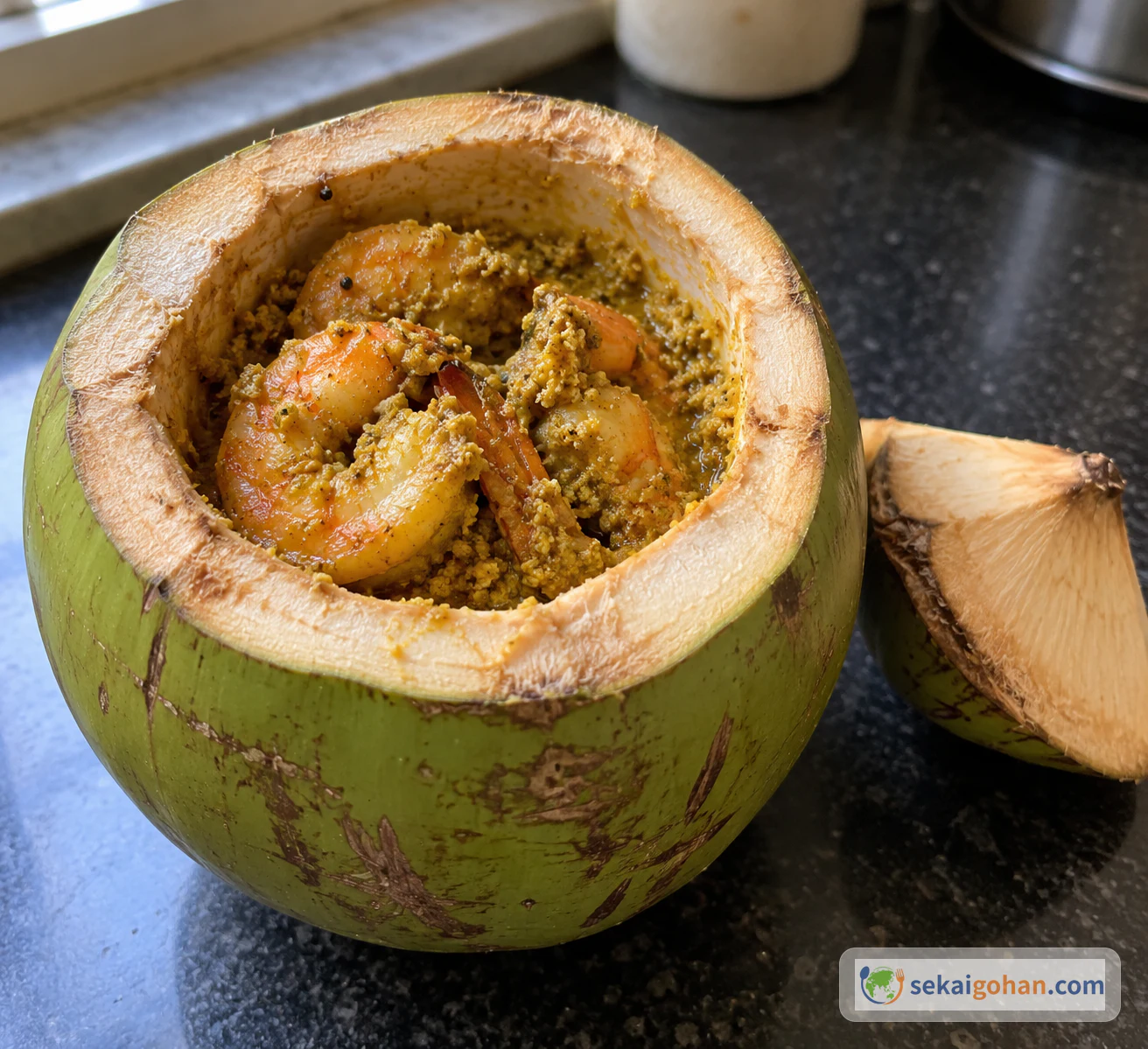
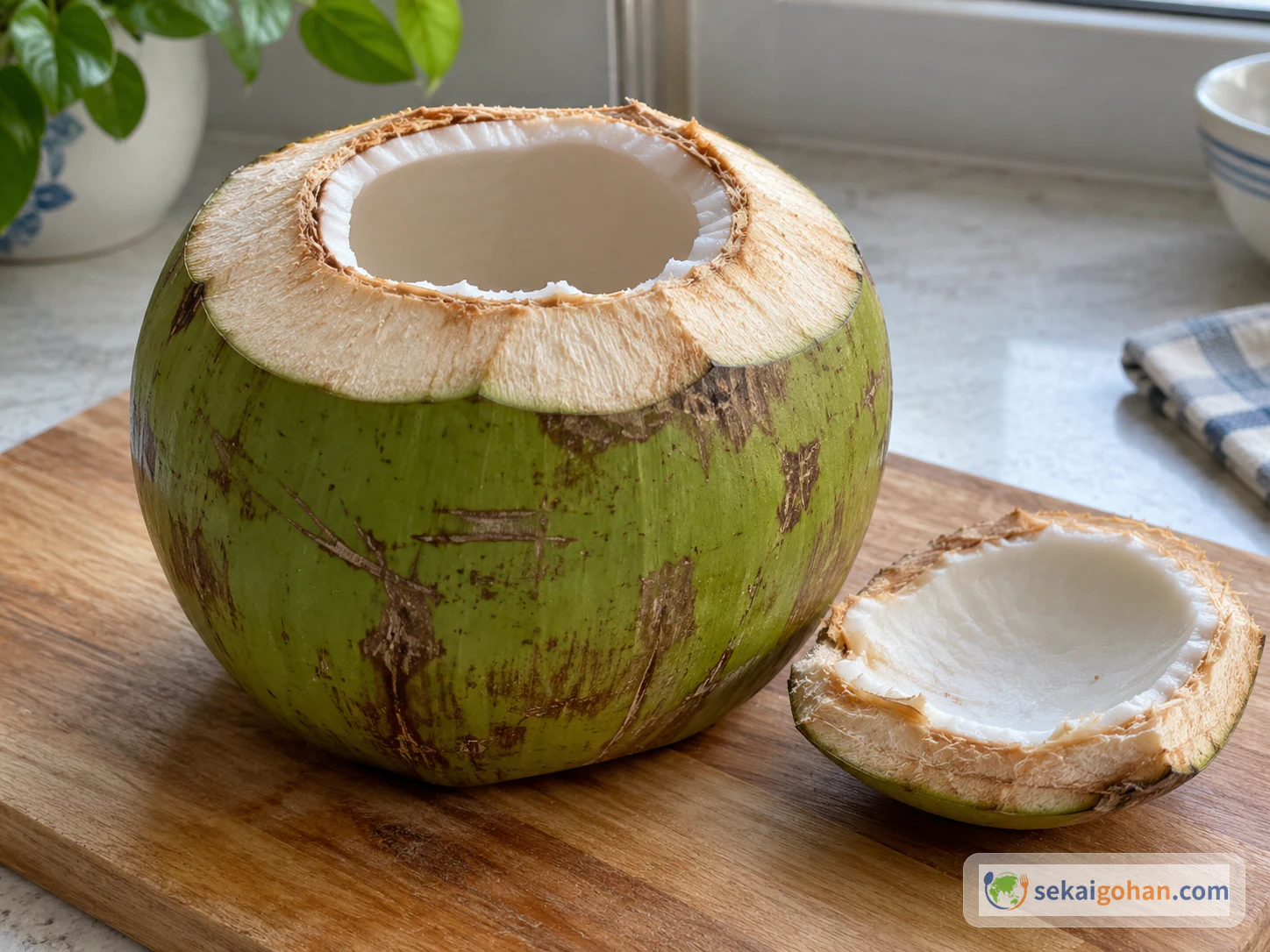
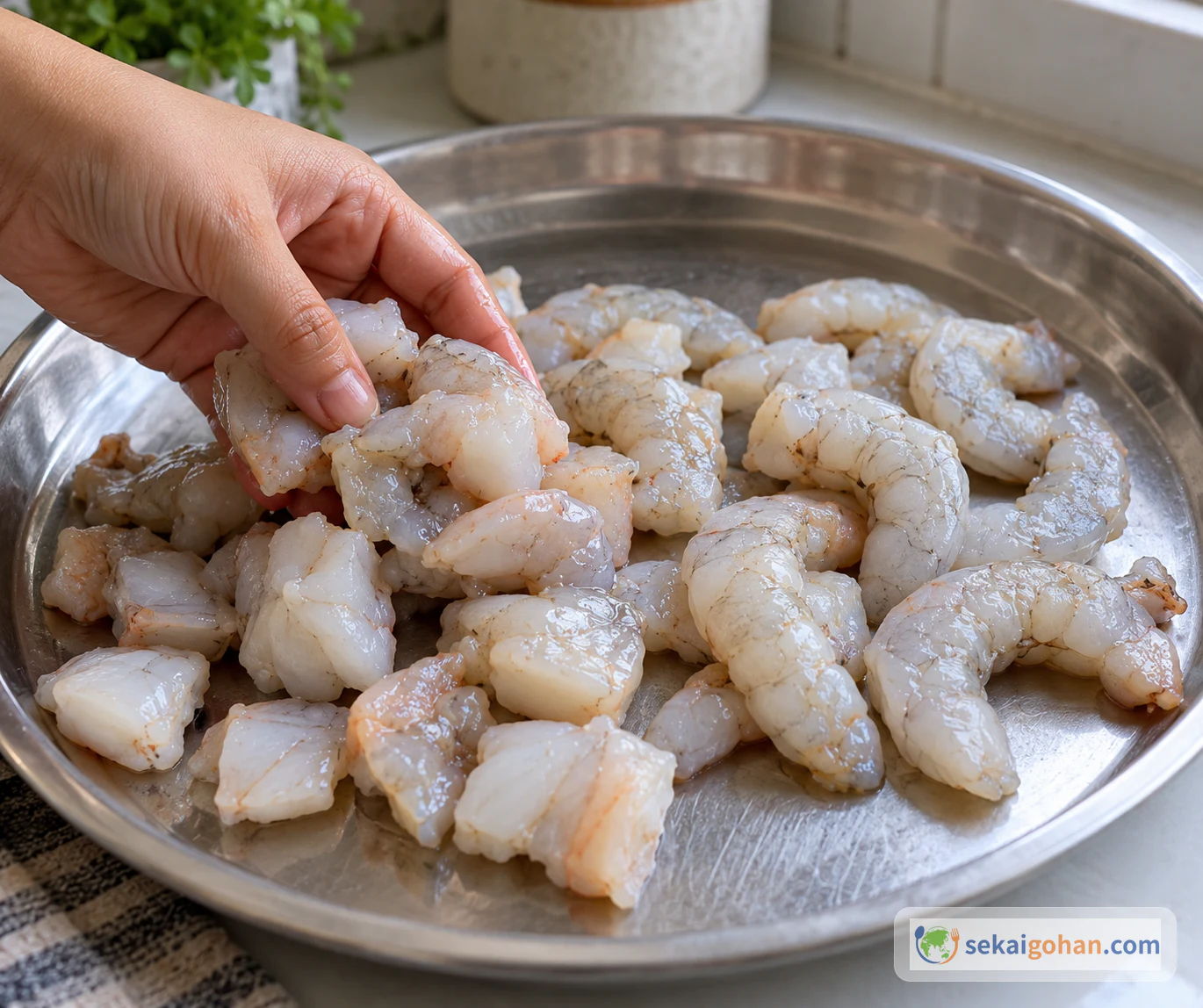
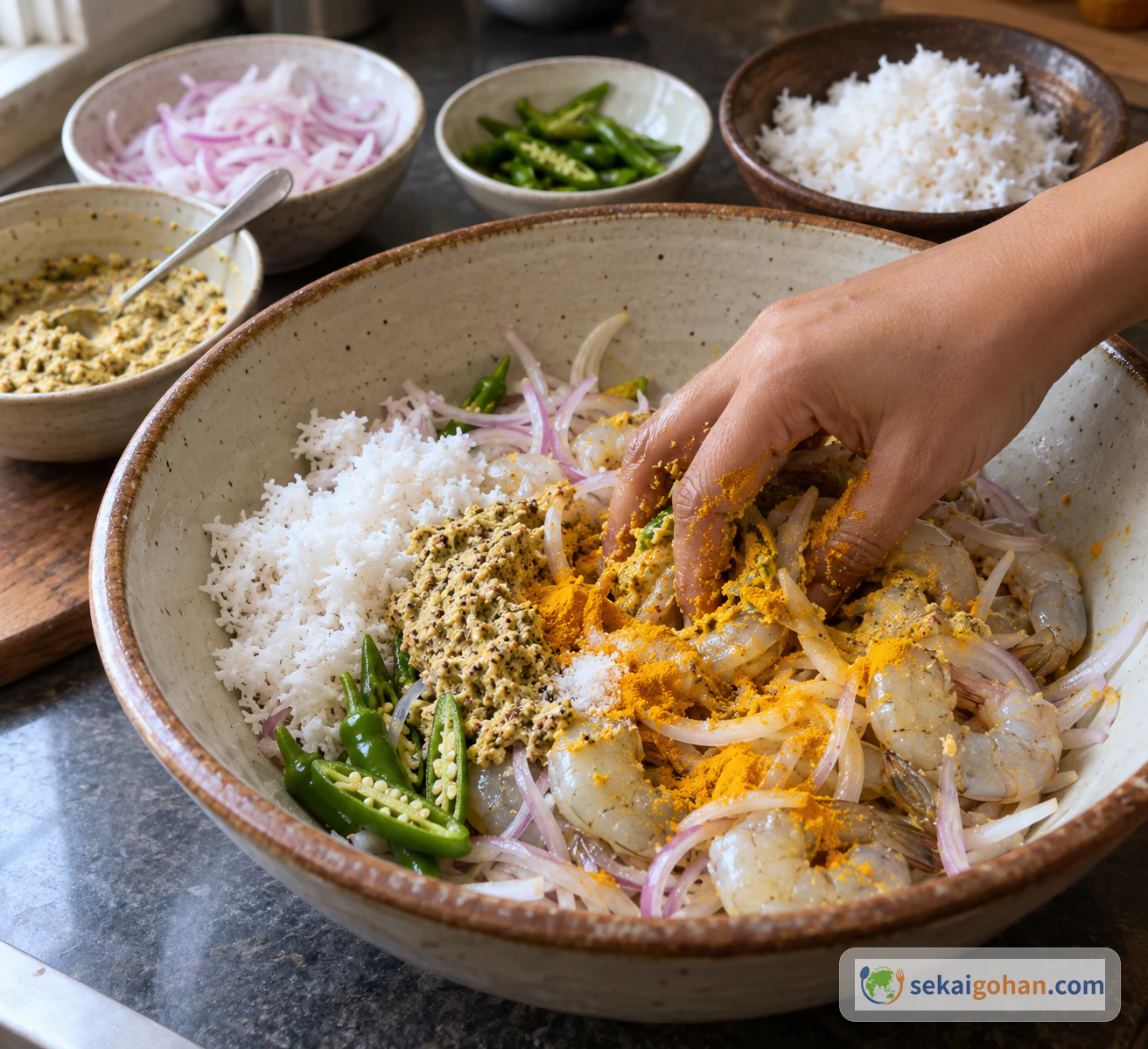
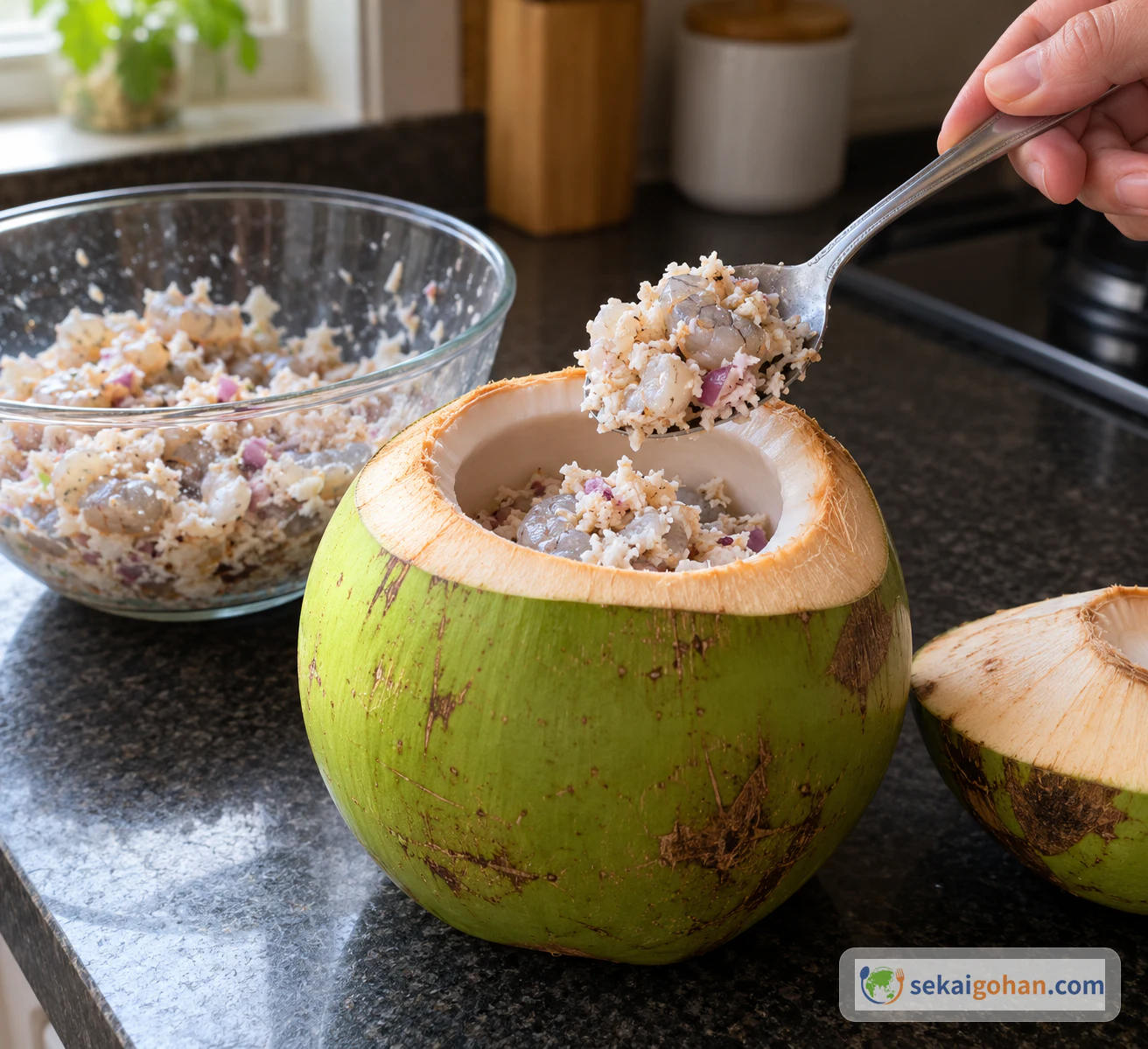
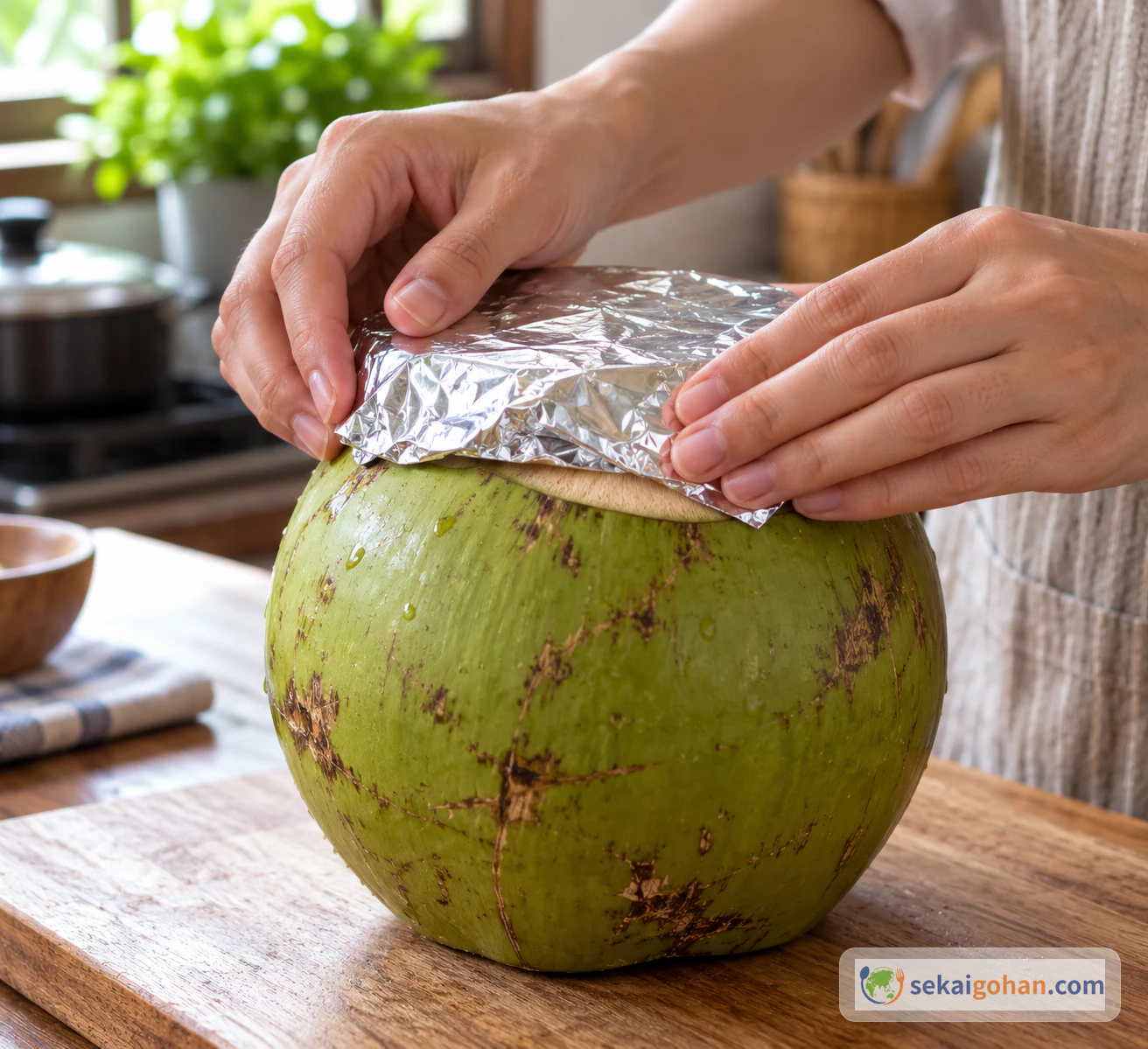
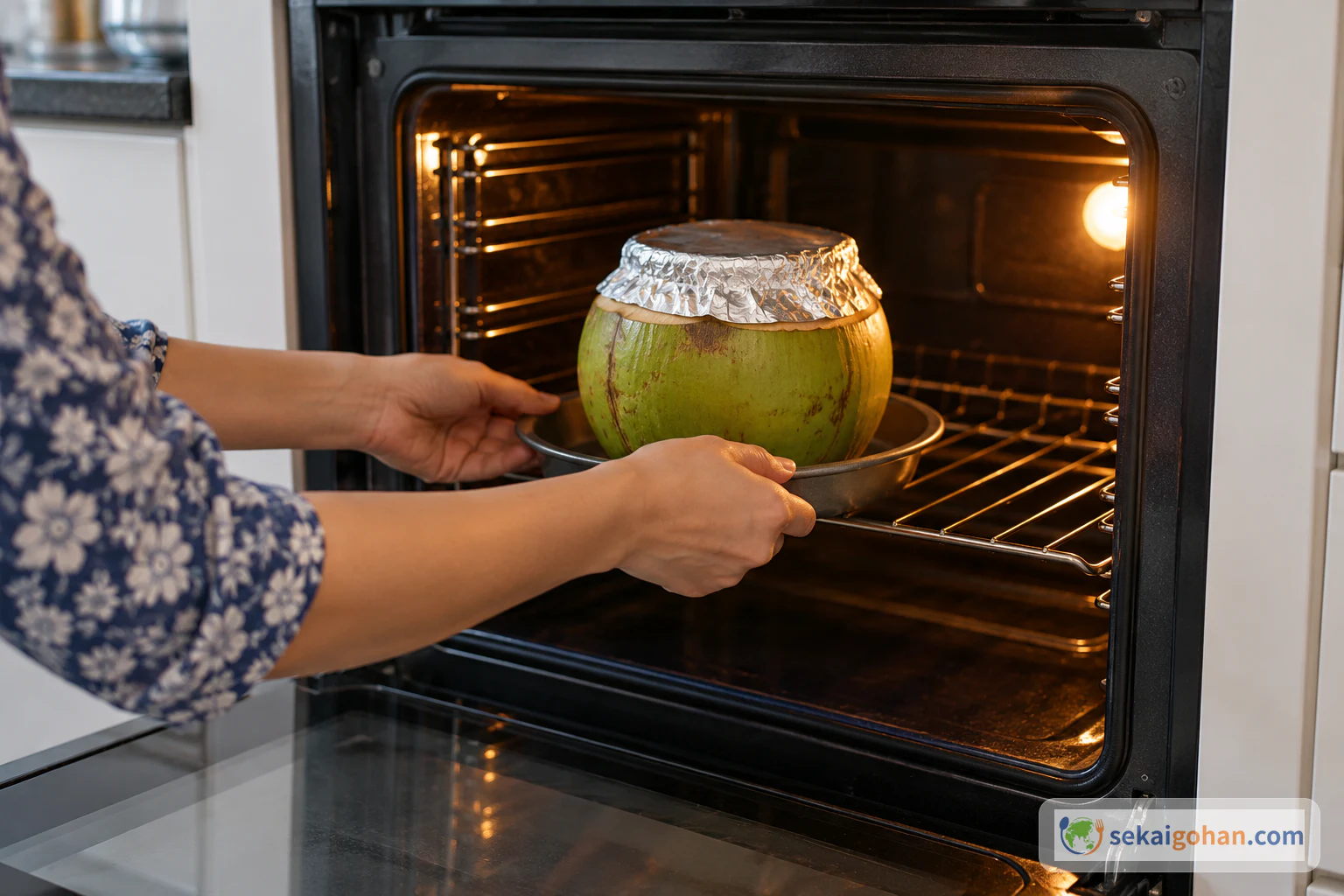
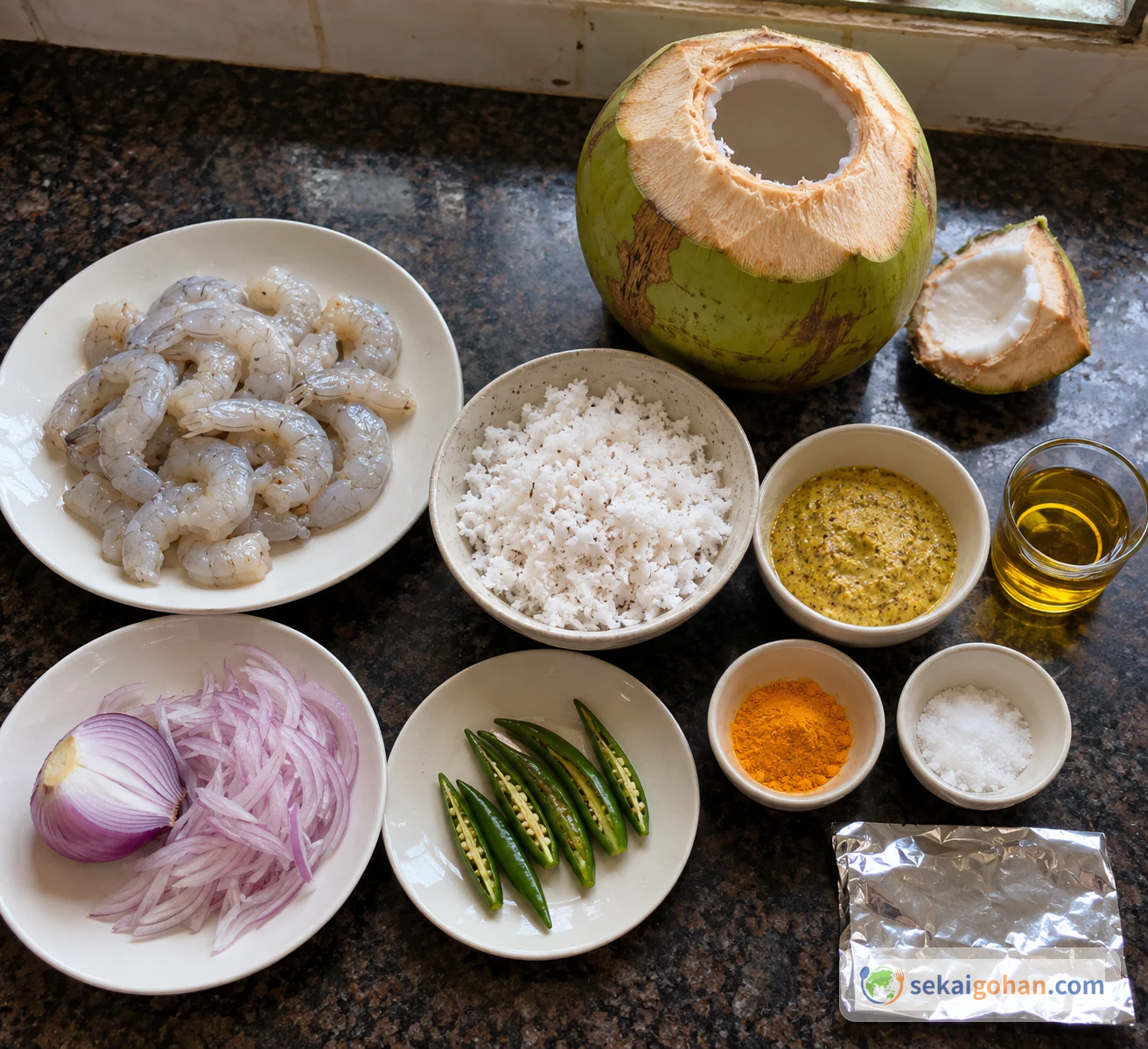
A young green coconut has its top sliced off, its water poured away, and its hollow filled with raw prawns, thinly sliced onion, slit green chilies, grated coconut and mustard. The cut top goes back on as a lid, a piece of foil seals the opening, and the whole coconut bakes. This is daab chingri, a Bengali prawn dish described by Rituparna Roy in a 2020 Condé Nast Traveller India article as cooked inside a tender green coconut.
In that article, chingri is explained as the Bengali word for prawns, and daab appears in the ingredient list as tender coconut. The point is the cooking method: rather than making a coconut curry and spooning it into a shell afterwards, the coconut itself holds the food while it cooks.
The recipe on this page is the one reprinted in Roy's article and credited there to Minakshie DasGupta's Bangla Ranna: The Bengal Cookbook. The book itself has not been consulted; the author, title and dates are given here as the article presents them. This recipe has not been kitchen-tested for this page. Where amounts were given as a range, a single value has been chosen and the range is shown alongside it.
For more dishes from the country, see Indian recipes.
In English it is usually written daab chingri; in Bengali script, ডাব চিংড়ি.
Where Daab Chingri Sits Among Bengali Prawn and Coconut Dishes
Roy's article places daab chingri within a wider family of Bengali dishes that pair prawns with coconut. It mentions narkel chingri, made with ground mustard and fresh coconut; bhapa chingri, in which similar ingredients are steamed in a pressure cooker; and chingri maacher malaikari, made with coconut milk. Daab chingri is set apart from these because the green coconut is the cooking vessel.
These are the comparisons the article draws, not a fixed definition shared by every region or household. If you already know the coconut-milk prawn curry often called chingri malai curry, or mustard fish dishes such as sorshe ilish, daab chingri differs in method: no coconut milk here, and the dish bakes in its shell.
Ingredients: One Daab, Prawns, Coconut and Mustard
Equipment
- A mixing bowl
- One piece of aluminum foil, enough to cover the top opening of the coconut
- An oven
Choosing the Coconuts and Mustard
Two coconuts are involved, and they do different jobs. The tender green coconut (daab) is the pot: it is drained and filled, and its own flesh stays in place as part of the shell. The grated coconut is a separate coconut, grated and mixed into the filling. Don't replace the grated coconut with flesh scraped from the daab, and don't replace it with coconut milk.
The mustard seed paste goes in already made, in paste form.
Do not swap in cream, coconut milk or a different mustard.
Method: Fill the Drained Daab and Bake
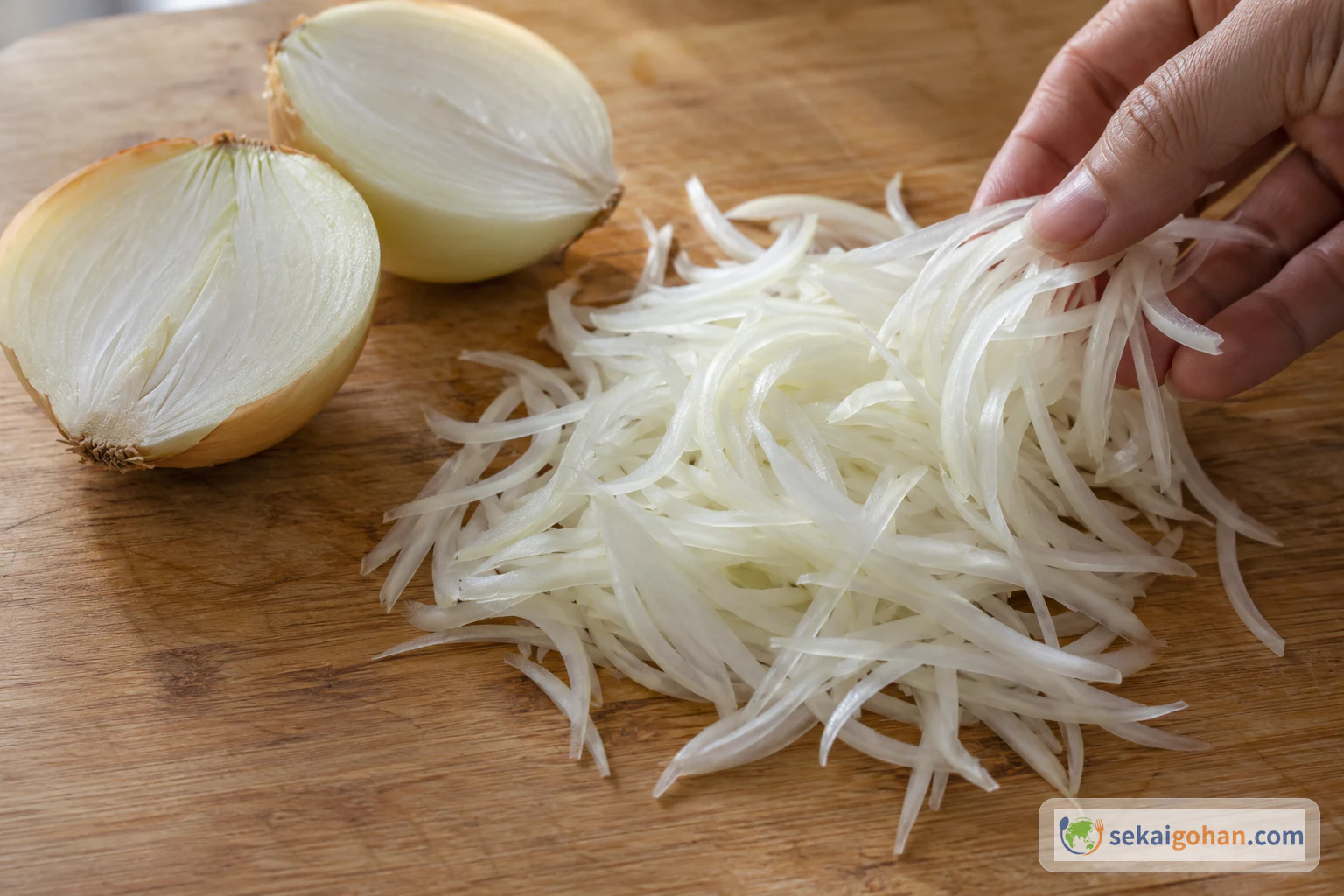
Open and drain the daab; prepare the prawns and onion; mix everything except the oil; add the mustard oil last; fill the daab; replace the lid and seal the top with foil; bake at 350°F for about 1 hour. Nothing is fried beforehand.
This recipe has not been kitchen-tested, and it has not been confirmed that the full mixture fits inside one daab. Don't treat the oil rising in the shell as proof that seafood is safely cooked. No storage, reheating or internal-temperature guidance comes with this recipe; for those, follow your national food-safety authority's guidance for seafood.
Common Mix-ups and How to Stay on Course
Because several different recipes share the name daab chingri, it is easy to blend steps from one into another. These are the points where this version differs.
| Tempting step | In this version | Why it matters |
|---|---|---|
| Adding coconut milk | Not used | Coconut milk moves the dish toward a malai curry |
| Scraping out the daab's flesh to add to the filling | Not done; the flesh stays as part of the shell | The grated coconut comes from a separate coconut |
| Using the coconut water | Drained and not used | No liquid is added to the filling |
| Frying the onion or heating the oil first | Everything goes in raw; oil is added last | The mixture cooks only inside the coconut |
| Sealing with dough or wrapping the whole coconut in foil | Lid back on, one piece of foil over the top only | Keeps the method as given |
| The mixture seems too much for one daab | Unconfirmed | There is no tested answer for splitting, scaling or leftovers here |
Bengali Celebrations and the Story of the Foil Lid
Roy's 2020 article links daab chingri with birthdays, weddings, Bengali New Year and Durga Puja. That is the article's account; it does not mean every Bengali household cooks the dish for these occasions.
The article also traces how the cooking method changed. It describes a technique from rural Bengal in which tender coconuts coated with clay were slow-roasted over a wood fire, and mentions a recipe using a half-ripe coconut shell in a cookbook from 1902. In cities, it says, aluminum foil and the oven took the place of these methods. The article shares Pia Promina's recollection that in the 1960s, Minakshie DasGupta used aluminum foil instead of dough and tried baking the coconut in an oven. According to the article, the technique and recipe were recorded in Bangla Ranna in 1982, and the family opened Kewpie's in 1998.
These dates and stories are reported by the article and its interviewee; the 1902 cookbook, Bangla Ranna and the restaurant's records have not been consulted here, so they should not be read as a confirmed history of the dish's invention. The article also notes how laborious the preparation was at home and how the dish moved across different cooking methods over time.
Other Versions of Daab Chingri
The versions below are different recipes. Their ingredients, temperatures and equipment are not interchangeable with the method on this page.
NDTV Food (Tanushri Jash). This version uses onion, garlic, green chili paste, panch phoron, mustard paste and mustard oil, and scrapes the flesh from the tender coconut to grind into a paste with its water. It seals the coconut with dough and bakes at 220 with no temperature unit given, for about 45 minutes, and also offers a pressure-cooker method.
Subha's Food Diaries. Presented as the author's mother-in-law's version, with a mention that it differs from household to household. It includes black mustard, poppy seeds, 100 ml coconut milk, the coconut's own flesh and water, and sugar; the prawns rest in the paste for 10 minutes and the dish is cooked in a pressure cooker. Equipment changes described there are not repeated here.
The recipe in Roy's article also mentions a microwave alternative, which this page does not use.
Frequently Asked Questions
Does daab chingri use coconut milk?
Not in this version. The recipe credited to Bangla Ranna in Roy's article uses grated coconut from a separate coconut, with no coconut milk. Coconut milk appears in the Subha's Food Diaries version, which is a different recipe.
Do I use the daab's water or flesh?
The water is drained and not used, and there is no step for scraping out the flesh and adding it. The flesh simply stays in place as part of the shell. Using the flesh and water belongs to other versions.
Can I make it in a pressure cooker or microwave?
The reprinted recipe mentions a microwave alternative, and the NDTV and Subha's Food Diaries versions use pressure cookers, but this page follows only the oven method. No advice is given here on the safety of those other methods.
How many servings does it make, and how long does it take?
The recipe gives no number of servings, no preparation time and no total time. The only time given is the bake: about 1 hour at 350°F.
Will 1 kg of prawns fit in one daab?
The recipe lists 1 kg of prawns and one daab together, but gives no capacity for the coconut. That fit has not been tested or confirmed, and the photographs on this page show illustrative amounts, not a measured batch.
Is this the recipe from the book?
It is the recipe as reprinted in Rituparna Roy's Condé Nast Traveller India article, where it is credited to Minakshie DasGupta's Bangla Ranna: The Bengal Cookbook. The book itself has not been consulted. Whether the 1 kg of prawns is weighed before or after peeling, and which prawns are meant, is not stated.
How do I store or reheat leftovers?
No storage or reheating guidance comes with this recipe. For seafood, follow your national food-safety authority's guidance.
Sources
- Rituparna Roy, "How the Bengali daab chingri became a best-selling restaurant dish," Condé Nast Traveller India, 2020. The recipe credited to Minakshie DasGupta's Bangla Ranna (ingredients, amounts and oven method), the meaning of the name, the related Bengali prawn and coconut dishes, the link with celebrations, and the reported family recollections and dates. The original book was not consulted. https://www.cntraveller.in/story/bengali-daab-chingri-best-selling-restaurant-dish-durga-puja-kolkata/
- Tanushri Jash, "Daab Chingri Recipe," NDTV Food. A separate version, used only for comparison: its ingredients, dough seal, oven and pressure-cooker methods. https://food.ndtv.com/recipe-daab-chingri-625691
- Subha's Food Diaries, "DAAB CHINGRI." A separate household version, used only for comparison: its ingredients, marinating and pressure-cooker method. https://subhasfooddiaries.com/recepie.php?id=33