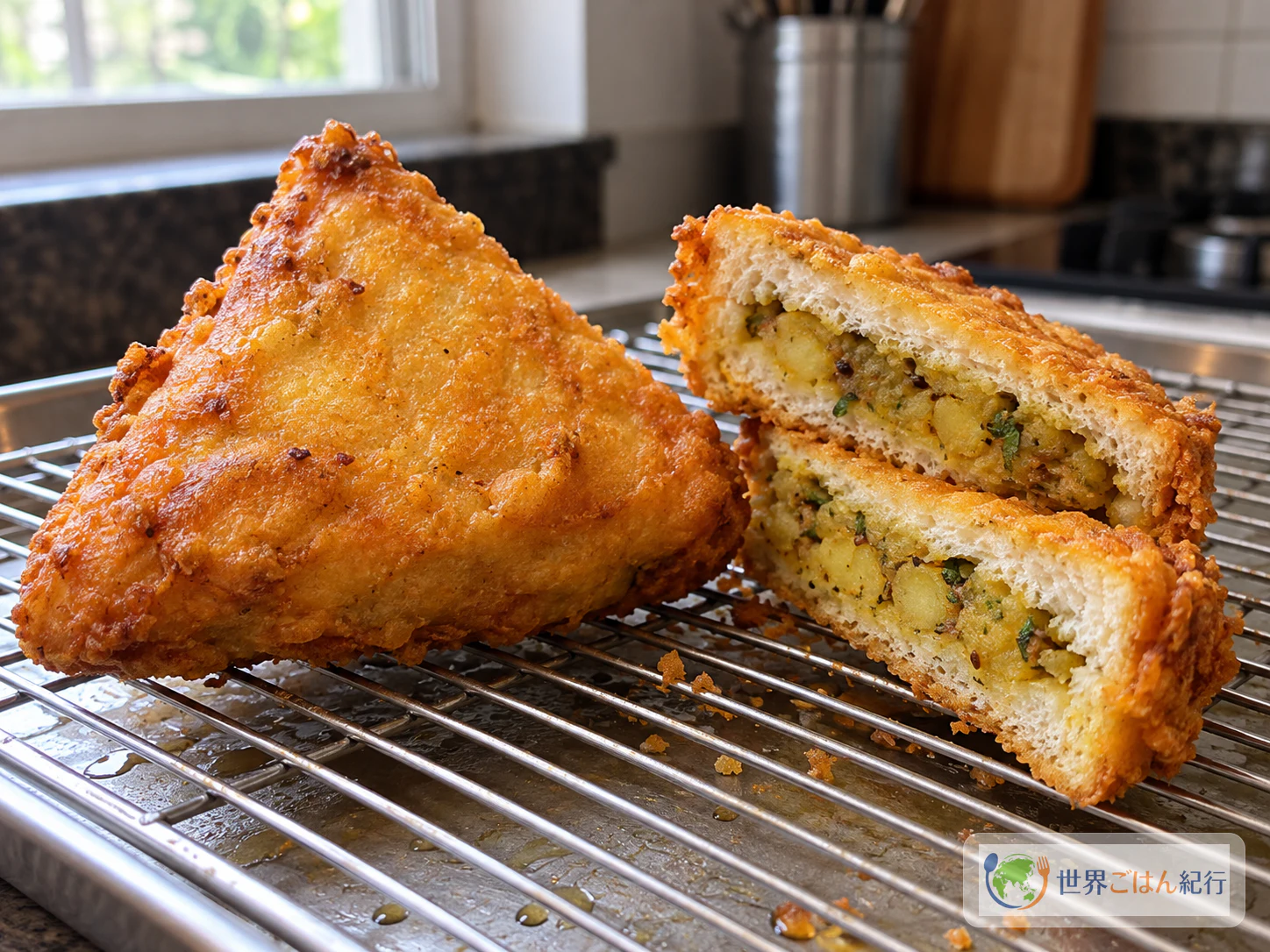
Bread Pakora: Soft Potato Inside, Crisp Gram-Flour Crust Outside
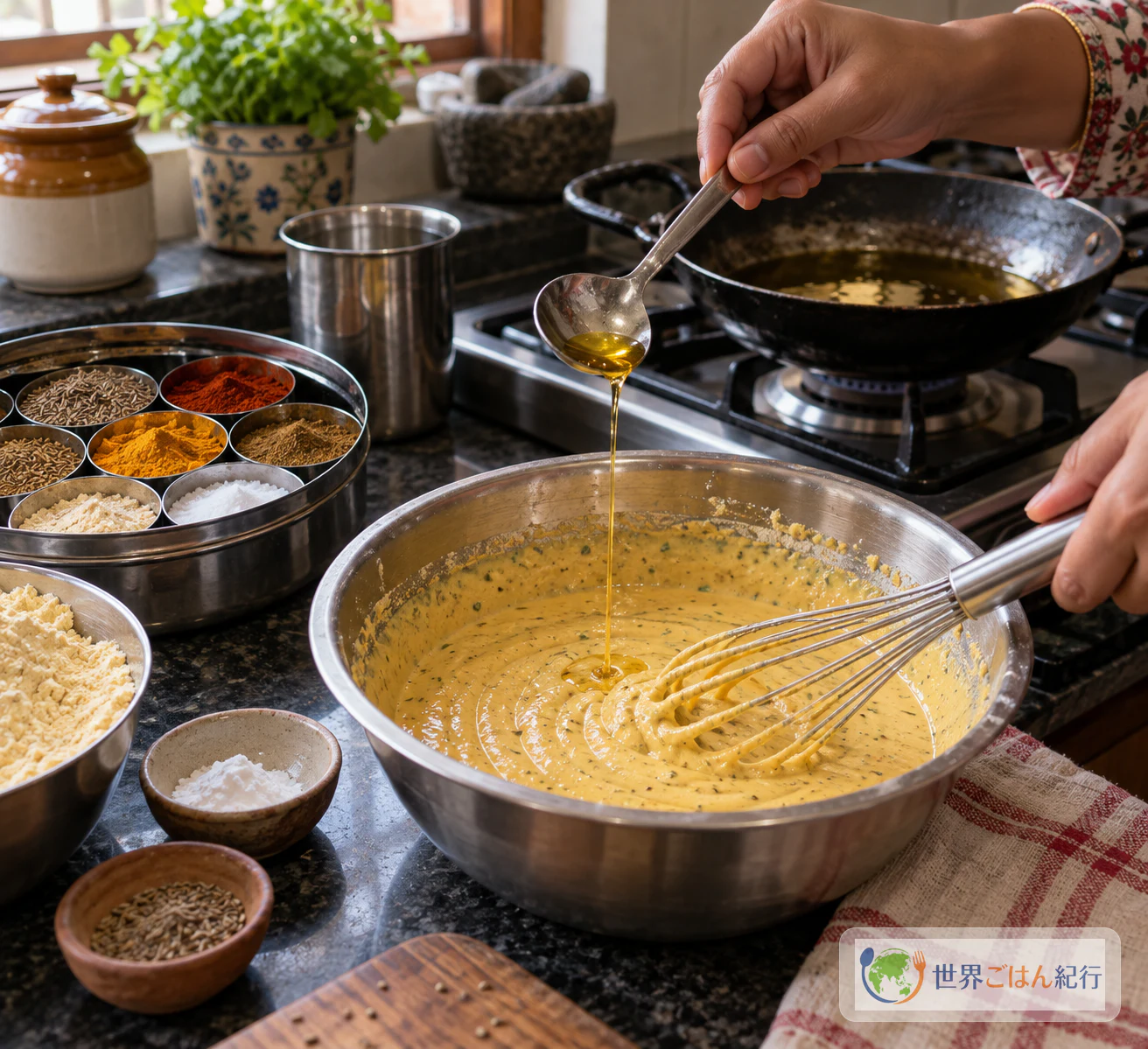
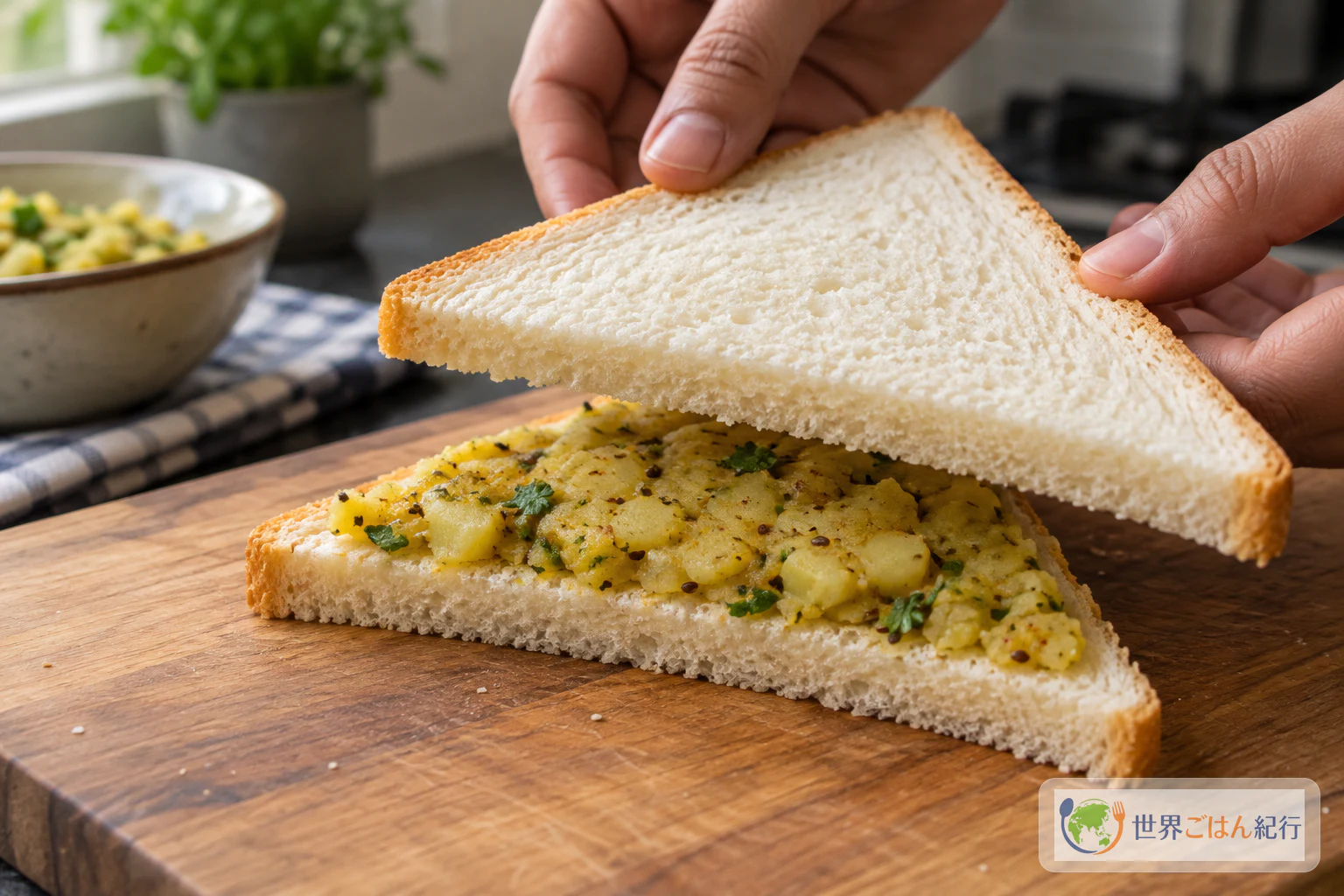
A thin, even layer of spiced potato between two slices of white bread, a medium-thick besan batter, and a short dip just before the sandwich goes into the oil. Those three things hold the pakora together.
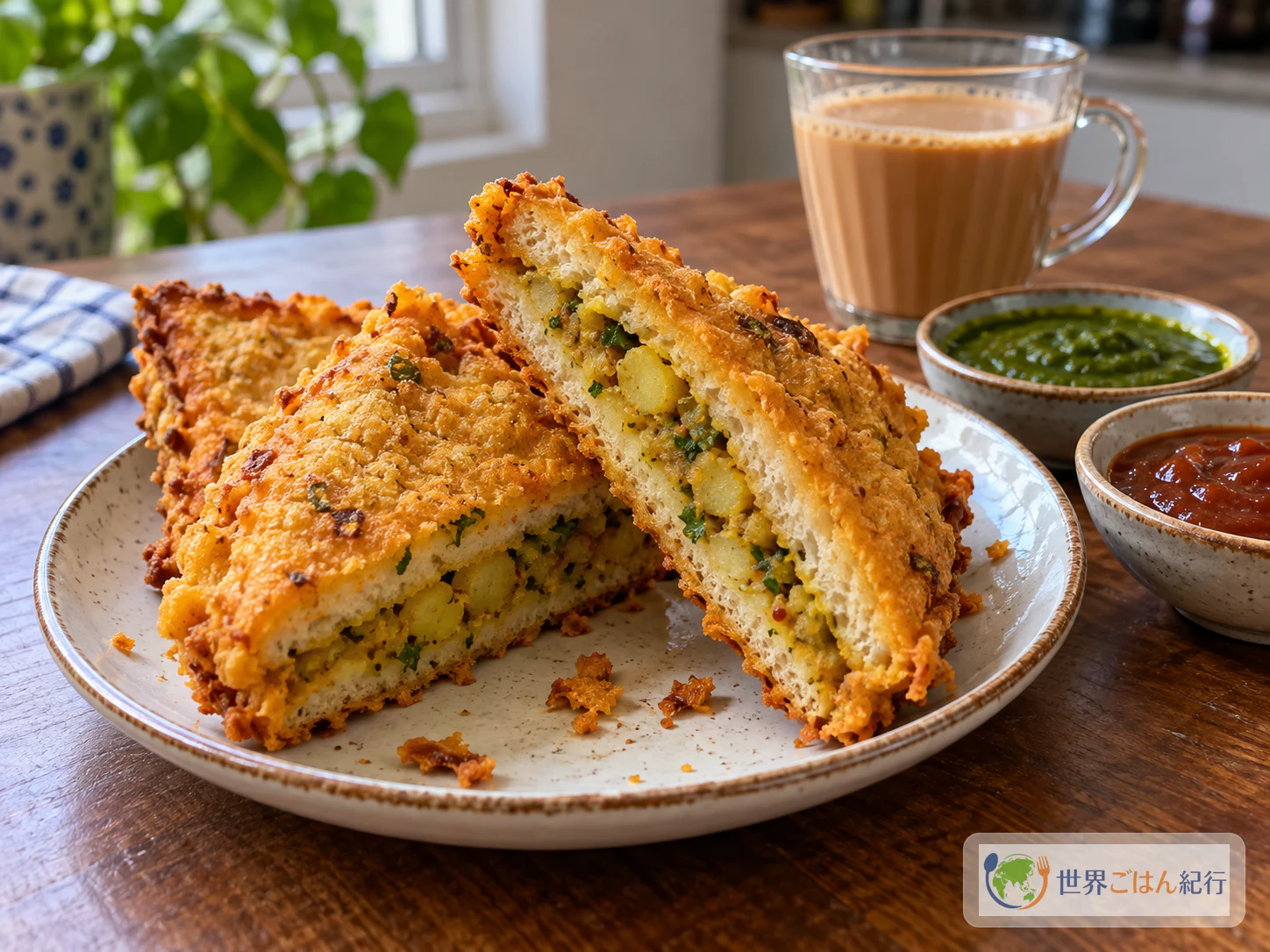
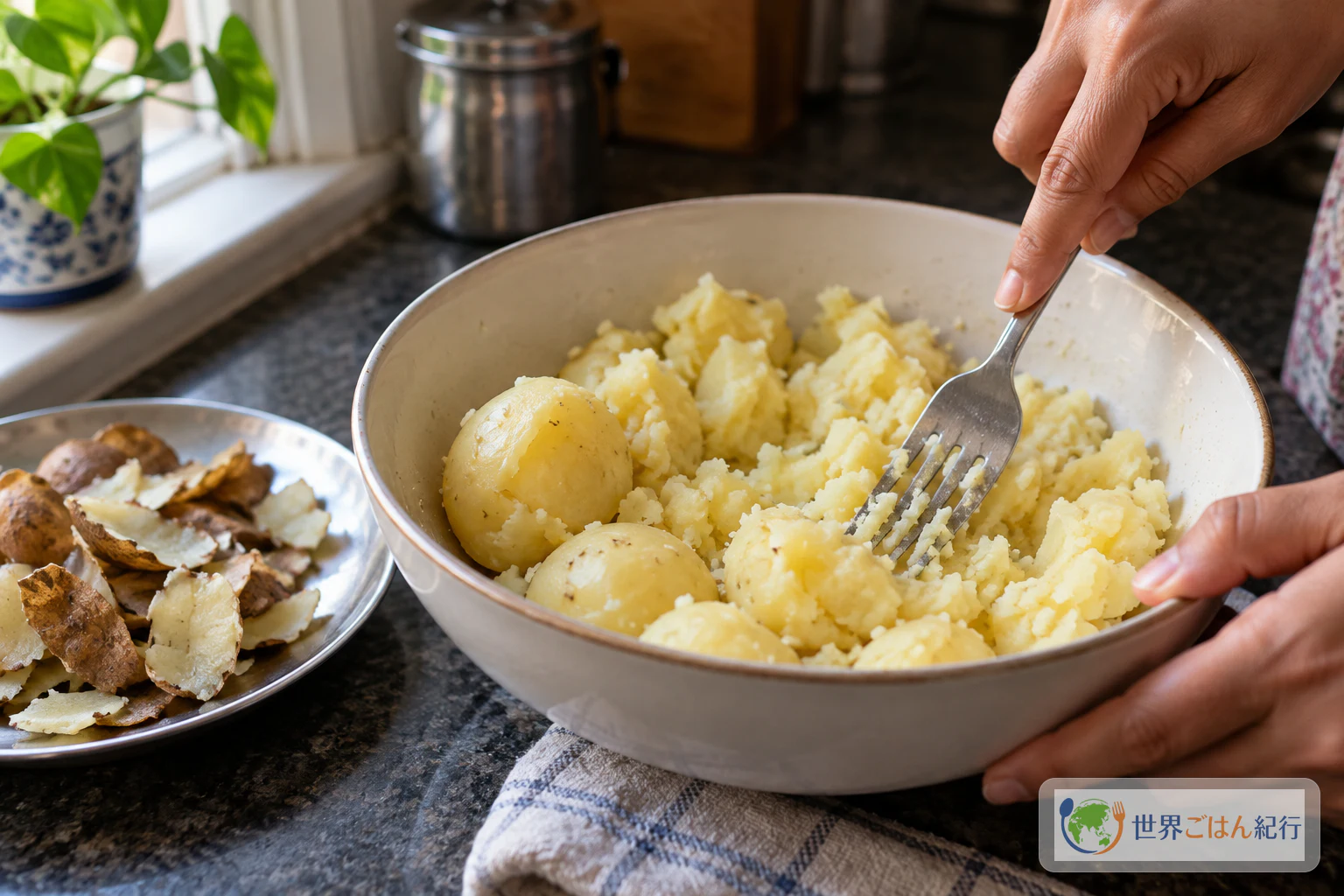
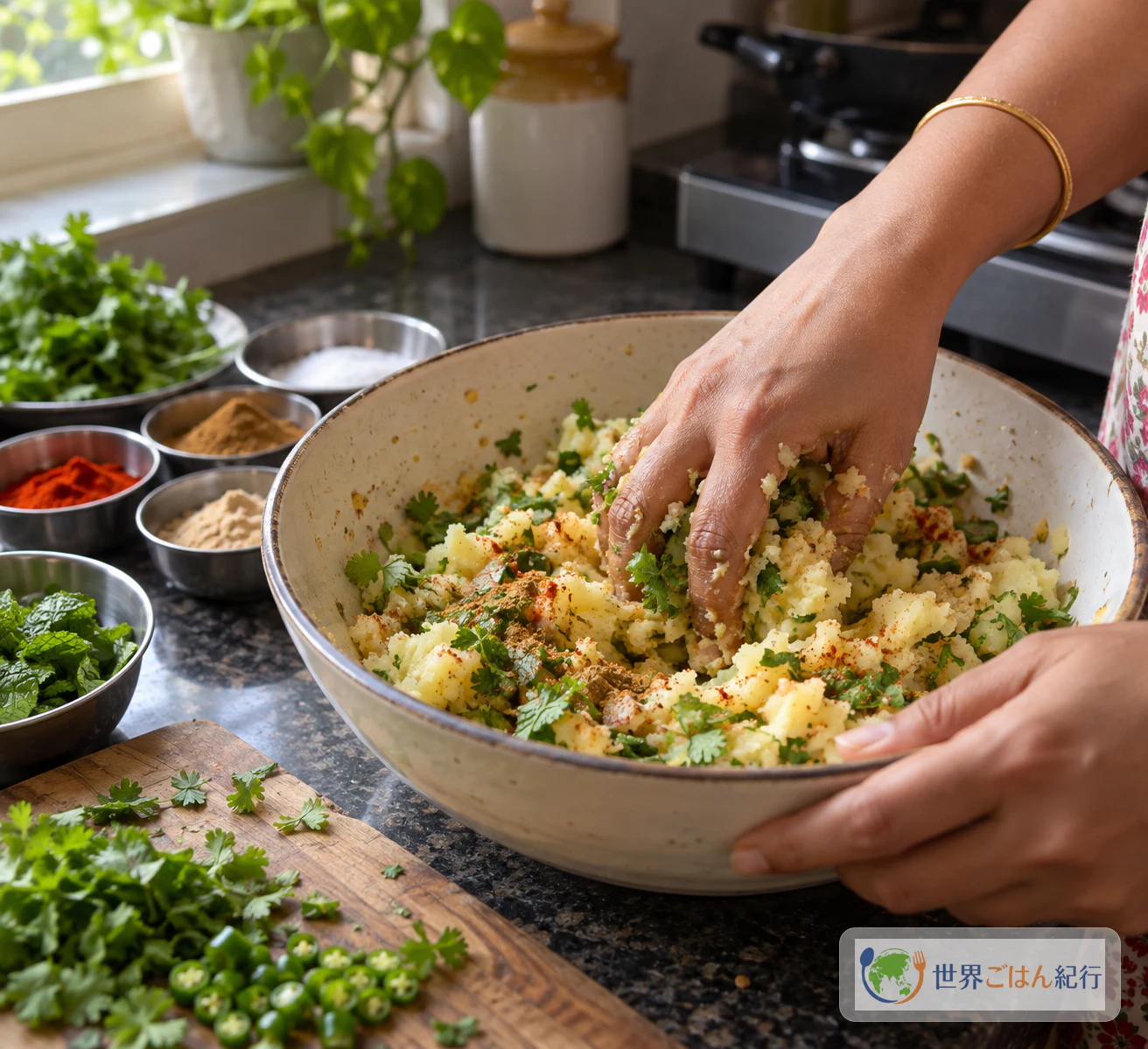
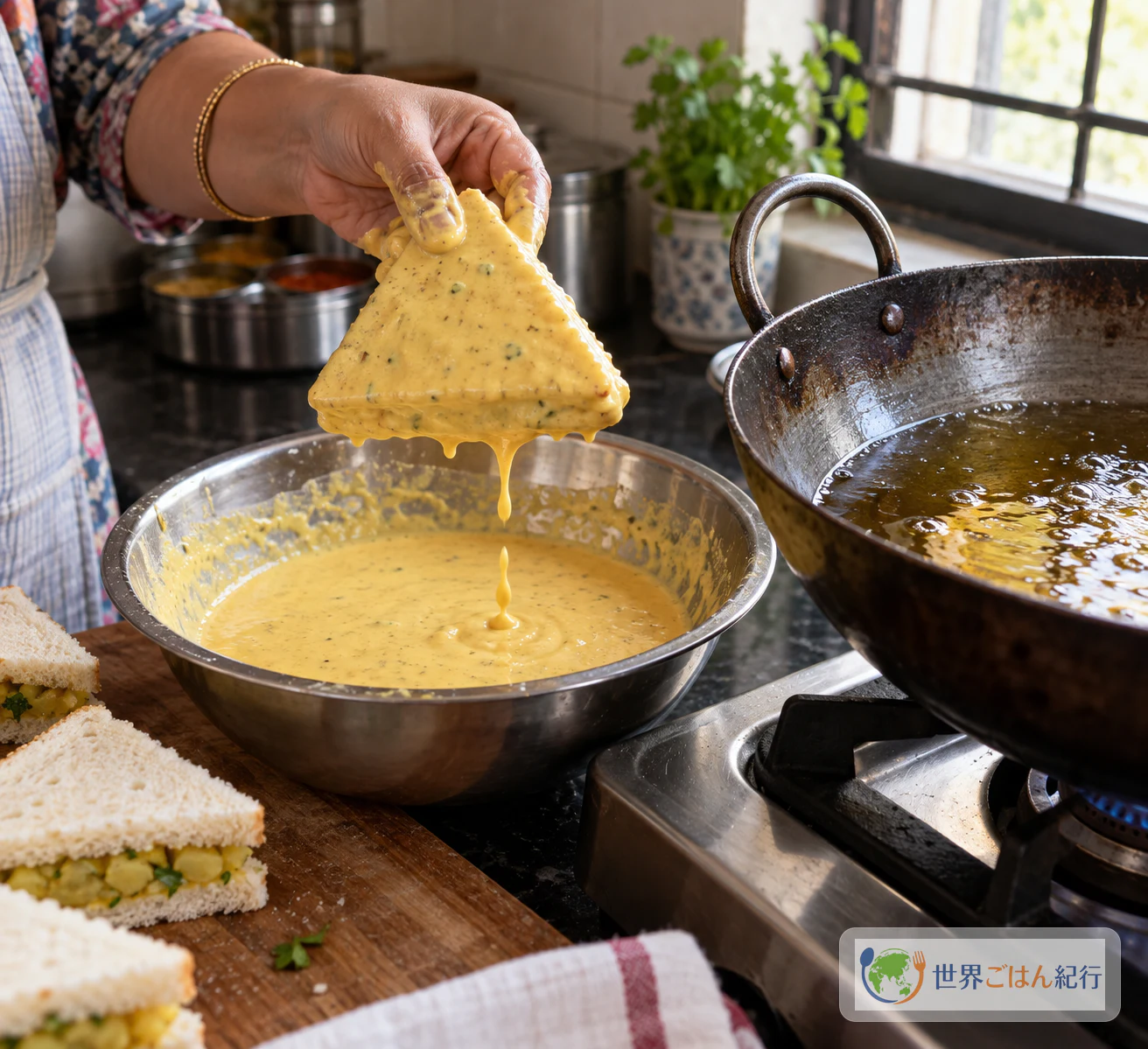
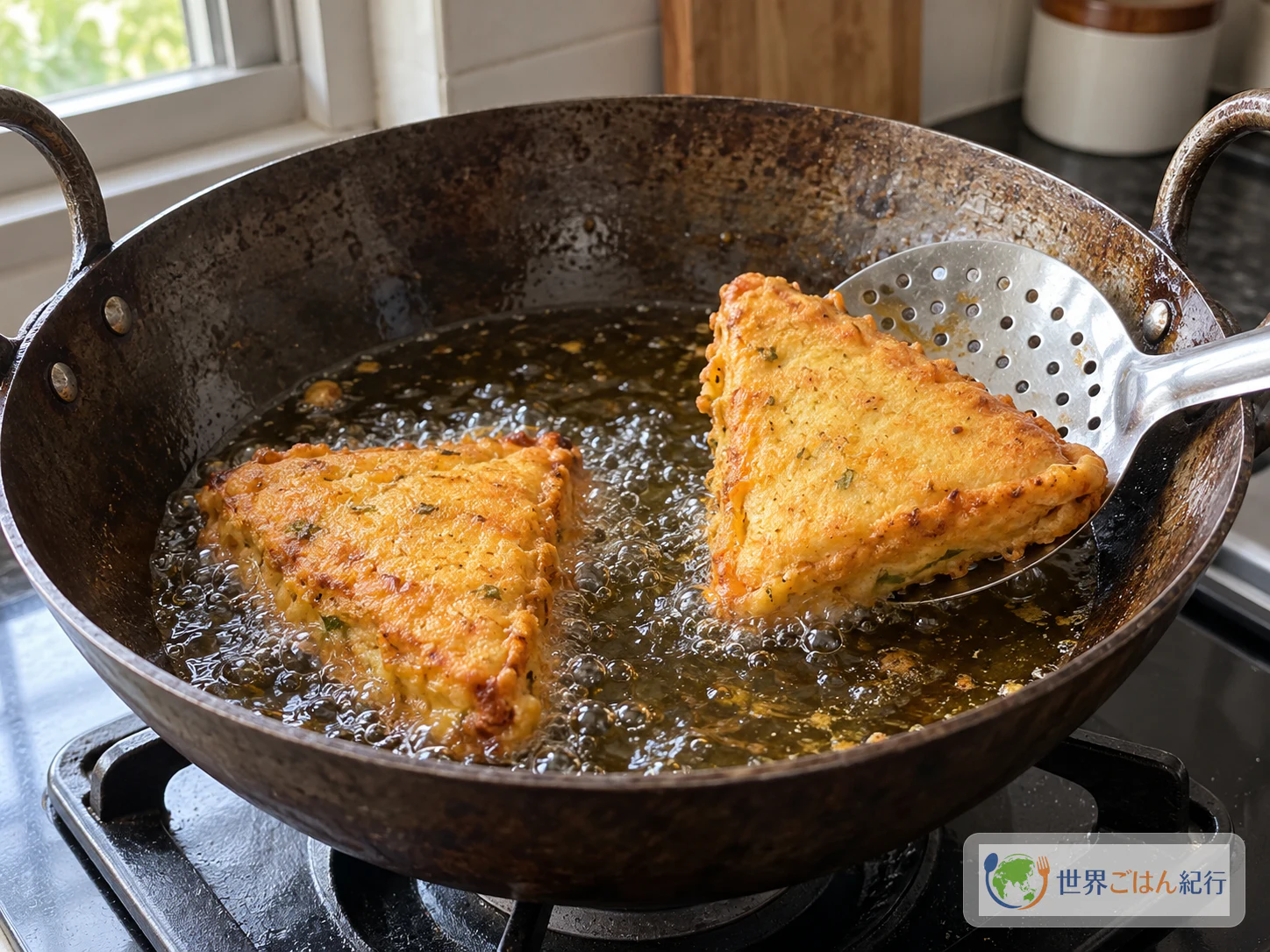
Spiced mashed potato is spread over a slice of white bread and closed with a second slice, then the sandwich passes briefly through a yellow batter of gram flour and slides into the oil, where the coating turns golden. Dassana Amit, whose recipe this article follows, presents bread pakora as a Delhi street-style snack eaten at breakfast or with evening tea, and NDTV Food introduces it as a chai-time snack.
Bread pakora (also written bread pakoda; in Hindi, ब्रेड पकोड़ा) is a broad name for bread coated in a spiced besan batter and fried. Some versions fry plain bread, some fold onion into the batter, and some sandwich a filling inside. This recipe focuses on one form: the North Indian stuffed version, with spiced potato between two slices of bread. For more dishes from the same country, see India.
The amounts and steps below follow one published recipe (Dassana's Veg Recipes) and have not been kitchen-tested for this article. The "3 servings" figure is the source recipe's own label, not a measured number of pieces, and no frying times or oil absorption have been measured.
What Bread Pakora Is: Bread Fried in a Spiced Batter
The basic structure is simple: bread, a besan batter seasoned with spices, and hot oil. What changes from one cook to the next is what goes inside or around the bread.
| Style | What it looks like | In this article |
|---|---|---|
| Potato-stuffed (North Indian / Delhi street style) | Spiced mashed potato sandwiched between two slices, coated in besan batter | The recipe below |
| Halwai-style with green chutney | Bread spread with green chutney, then filled with seasoned potato | Described only; a separate recipe |
| Unstuffed, with onion in the batter | Bread dipped in a batter mixed with onion, green chili and coriander | Described only; a separate recipe |
In an essay on Indian street food published in the January 2020 newsletter of the Food Safety and Standards Authority of India (FSSAI), Vir Sanghvi names bread pakora as an example of store-bought sliced white bread finding its way into Indian street snacks. That essay is about food culture; it is not evidence of when or where the dish began, or who first made it. No origin date or inventor is given here.
Bread pakora is also a different dish from [onion-based] pyaaz pakora, where clusters of onion are bound in batter rather than bread being stuffed and coated.
Ingredients: The Source Recipe's Amounts for 3 Servings
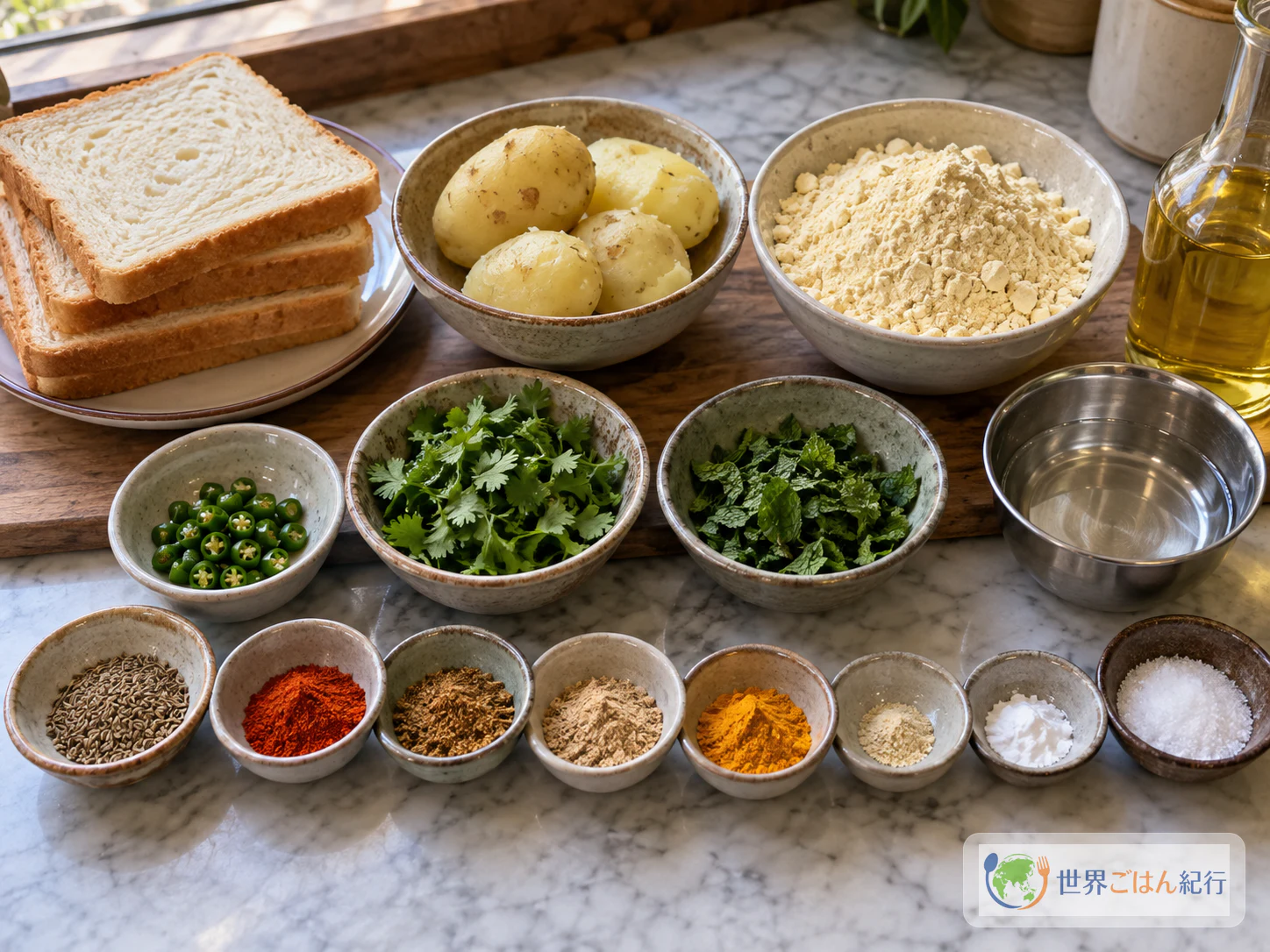
This makes 3 servings, using 4–5 slices of bread, with two slices making one sandwich.
The frying oil is listed once. In step 3, 1–2 tsp of that same oil goes into the batter, so it is not a separate ingredient.
Equipment
- Pressure cooker, steamer or a pot for cooking the potatoes
- Potato masher or fork
- Two mixing bowls (one for the filling, one for the batter)
- Whisk
- Knife and cutting board
- Deep pan or kadai for frying
- Slotted spoon
- Deep-frying thermometer (optional)
- Wire rack or paper for draining
Choosing and Substituting
Gram flour (besan). Besan is flour made from chana dal. Flour from white chickpeas can also be used, but the aroma and color will differ. Wheat flour and potato or corn starch are not equivalent substitutes and will not give the same coating. When shopping, look for packages labeled "besan" or "gram flour."
Dried mango powder (amchur). It gives the filling a dry tartness. 1/2 tsp lemon juice can replace it; the result is a little wetter and the sourness reads differently.
Carom seeds (ajwain) and asafoetida (hing). Ajwain has an aroma somewhat like caraway, and hing adds a sharp savory accent. Both are optional, though leaving them out changes the batter's aroma. Hing is often sold blended with a carrier flour, so check the label.
Potatoes. Use starchy potatoes. Waxy new potatoes can bind and feel different in the filling.
Bread. White sandwich bread holds a neat shape. Whole wheat or brown bread also works; the flavor, how much batter it soaks up, and the look of the finished pakora will change.
Salt. Add salt as needed. Adjust the cooked potato filling to taste; do not taste the uncooked besan batter.
Besan is made from a legume, and ordinary sandwich bread contains wheat. Depending on the product, bread may also contain milk, egg or soy, and hing may contain wheat flour as a carrier. Check the labels, and keep in mind cross-contact from shared frying oil.
Method: Filling, Batter, Assembly, Frying
The two decisions that matter most are the batter's thickness (medium, not thick and heavy) and how long the sandwich sits in it (briefly). Fry by heat level rather than a set time. Color and crispness describe the outside; they do not show that the coating has cooked through and the filling is hot throughout.
Stay with the pan while the oil is on the heat. Don't let water or wet ingredients drop into the hot oil.
Troubleshooting: Thick Batter, Soggy Bread, Greasy Crust
| Condition | Likely cause | What to do |
|---|---|---|
| The filling is watery | The potatoes weren't drained well | Drain the cooked potatoes thoroughly before mashing |
| The filling is stiff and hard to spread | It cooled down too much | Spread it by hand, a little at a time |
| The batter is thick and heavy | Not enough water for that flour | Add water in small amounts until medium-thick. Flours absorb water differently |
| The batter is too thin | Too much water went in | Mix in a little more besan at a time (a small fix not given in the source recipe) |
| The bread goes soggy or breaks apart | It sat in the batter too long | Dip briefly and fry right away |
| The pakora is greasy | Too many pieces at once, so the oil cooled | Fry fewer pieces at a time. The source explains that oil that is not hot enough is absorbed more easily |
| The outside browns before the inside warms | The heat is too high | Lower the heat a little |
Making Ahead and Leftovers
The source recipe says the potato filling can be made up to a day ahead and refrigerated. No storage time for the fried pakora is given, so none is stated here. The crust is at its best straight from the oil, so fry what you plan to eat. If you rewarm leftovers in an oven or toaster oven, don't expect the same texture as freshly fried.
Serving and Variations Within This Recipe
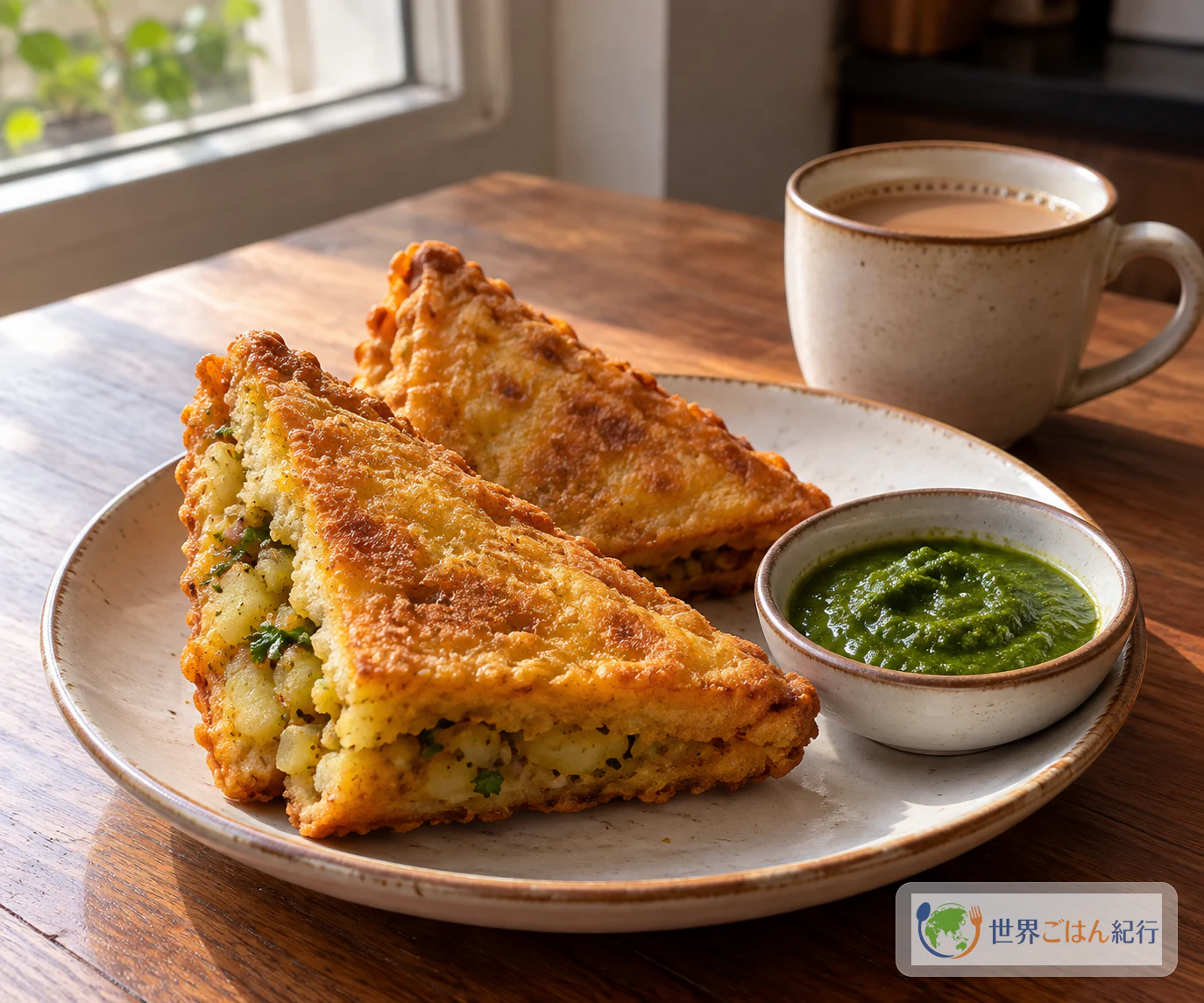
The source suggests serving bread pakora with a green chutney made with coriander or mint, a sweet-sour tamarind chutney, or ketchup. Chai is the pairing both the source recipe and NDTV Food mention. Chutney goes on the side; it is not part of this filling.
- Milder (editorial adjustment): use less green chili and let each person add heat with chutney.
- Coriander only: leave out the optional mint.
- No amchur: use 1/2 tsp lemon juice instead; the filling is a little wetter and the sourness is different.
- Whole wheat or brown bread: allowed by the source, though flavor, batter absorption and look change.
Other Bread Pakoras: Separate Recipes, Not Mixed In Here
NDTV Food describes a halwai-style bread pakora, from a video recipe, in which the bread is spread with green chutney and then filled with potato seasoned with amchur and other spices. Its amounts are not complete on the article page, and it is a different version, so it is not blended into this recipe.
Chef Suvir Saran's recipe, published on Scroll.in, does not stuff the bread. Instead, onion, green chili and coriander go into the batter. In that piece, Suvir Saran recalls being drawn out of bed in the morning by the smell of pakoras frying in the kitchen. It is one cook's personal memory, not a description of every Indian household.
Frequently Asked Questions
What if I can't find besan?
The source says flour from white chickpeas can be used, with a different aroma and color. Wheat flour or starch will not give the same coating, so don't treat them as equivalent.
What if I don't have amchur?
Use 1/2 tsp lemon juice, as the source suggests. It adds a little moisture and the tartness comes through differently.
Why does my bread fall apart?
It most likely sat in the batter too long and absorbed moisture. Dip briefly, let the excess drip off and put it into the oil right away.
Can I bake it or use an air fryer?
The source says this is possible, but the texture will differ from deep-fried pakora. This article covers only the fried method.
How many pieces does this make?
The source labels it 3 servings, using 4–5 slices of bread with two slices per sandwich. The number of pieces depends on how you cut and fill the bread and has not been measured.
Sources
- Food Safety and Standards Authority of India (FSSAI), "FSSAI Newsletter, January 2020," including Vir Sanghvi's essay on street food. Cited for bread pakora as an example of store-bought sliced white bread used in Indian street food; not a source on the dish's origin or inventor. https://fssai.gov.in/upload/uploadfiles/files/FSSAI_January_Newsletter_17_02_2020.pdf
- Dassana Amit, "Bread Pakora Recipe (Street Style Bread Pakoda)," Dassana's Veg Recipes. The recipe followed here: filling and batter ingredients and amounts, 3 servings, method, the description of North Indian / Delhi street style, eating at breakfast or tea time, notes on besan and its substitute, the amchur substitute, batter thickness, the effect of oil temperature, the general frying-temperature guide, serving suggestions, making the filling ahead, and baking or air-frying. https://www.vegrecipesofindia.com/bread-pakora/
- NDTV Food, "Sunday Special: How To Make Halwai-Style Bread Pakora At Home." Cited for bread pakora as a chai-time snack and for the separate halwai-style version with green chutney and potato. https://food.ndtv.com/food-drinks/how-to-make-bread-pakora-bread-pakoda-recipe-2467981/amp/1
- Suvir Saran, "Indian street food: Bread Pakora Recipe by Chef Suvir Saran," Scroll.in. Cited for the separate unstuffed version with onion, green chili and coriander in the batter, and for the chef's personal breakfast memory. https://scroll.in/food/967735/bread-pakoras